



Flat hair can make even a sharp bob look tired by lunchtime. Layered bob cuts fix that faster than most people expect, because they remove dead weight, build lift where the hair wants to collapse, and keep the ends from hanging like a curtain.
The trick is not layering everything to death. A good bob has a backbone. The best versions keep enough length around the perimeter to look intentional, then use shorter pieces inside the cut to create volume and movement without that helmet shape people dread.
I’ve always thought bob haircuts live or die on balance. Too blunt, and the shape can feel boxy. Too many layers, and the whole thing turns wispy in the wrong places. Get the proportions right, though, and you get a haircut that swings when you turn your head, sits well after air-drying, and still looks polished when you bother to blow it out.
That’s the sweet spot here: styles that give your hair body, not just more pieces. Some of these bobs are soft and wearable. Some lean sharper or more fashion-forward. All of them can work hard for volume if the cut and styling match the hair you actually have.
1. Chin-Length Layered Bob with Crown Lift
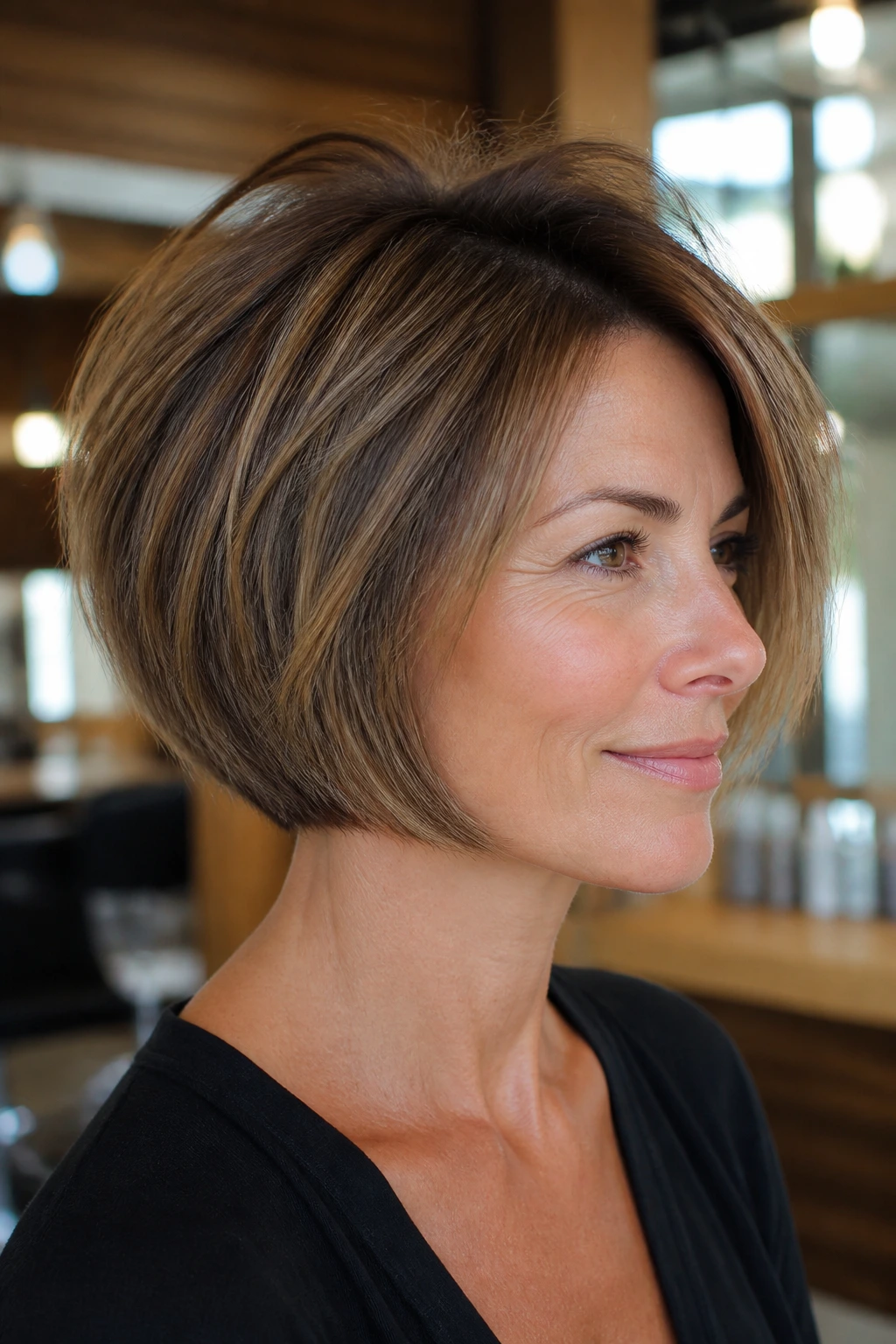
A chin-length layered bob is one of those cuts that looks simple until you see what the layers are doing. The shape lands right where the jaw starts to show, which makes the neck look longer and the crown look fuller if the layers are placed well. On fine hair, this is a small miracle. On medium hair, it gives structure without bulk.
Why It Works
The crown is where most flat bobs fail. If the top is too heavy, the whole style droops. A chin-length version with short internal layers near the crown creates that subtle push-up effect without screaming “styled.” You get lift, but it still moves.
Ask for the shortest layers to start just under the crown, not halfway down the head. That keeps the top from looking choppy. The perimeter should stay clean around the chin, or the cut loses its shape fast.
- Best for fine to medium hair that needs lift at the roots
- Looks strong with a center part or a soft off-center part
- Works well with a round brush and a 1.25-inch blowout brush
- Needs a trim every 6 to 8 weeks to keep the line crisp
Pro tip: blow-dry the crown in the opposite direction first, then flip it back into place. That little zigzag at the roots makes a bigger difference than most styling products ever will.
2. Stacked Bob with Tapered Nape
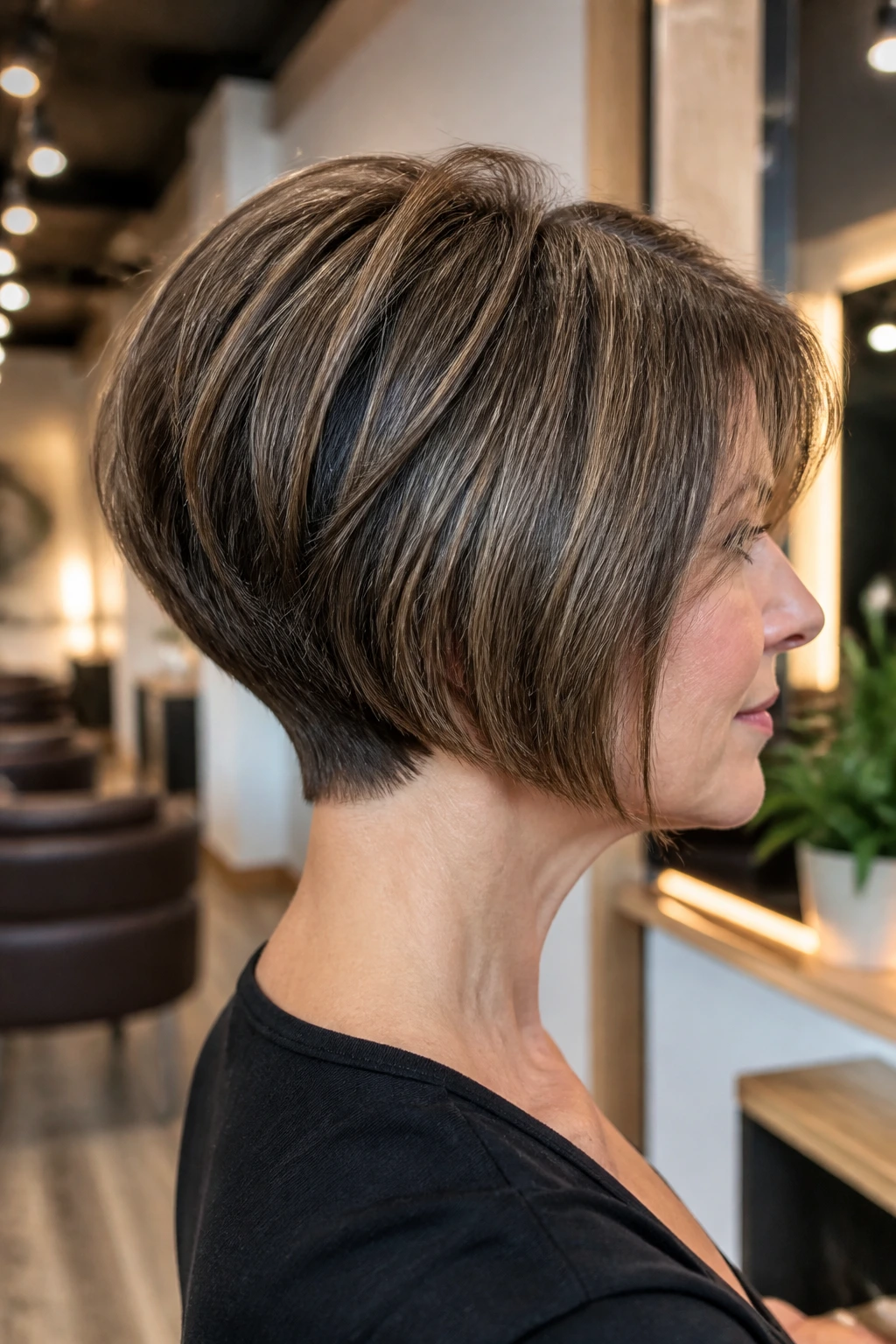
A stacked bob is the loudest way to get volume without adding much length. The back is cut shorter and built up in gradual steps, so the nape sits neat while the crown gets a fuller shape. It is a strong choice for people who want their hair to look done even when the rest of their routine is pretty bare-bones.
The magic is in the angle. The stacked back supports the top layers, and the front stays a little longer so the whole thing doesn’t feel too severe. If you have thick hair, this cut can take out a huge chunk of weight while keeping the shape tidy. If your hair is straight, it gives the blunt surface some life.
It does have a personality, though. This is not a shy haircut. You’ll notice the shape from the side, and that’s the point.
For styling, a small amount of smoothing cream at the roots and a paddle brush or round brush is usually enough. Keep the blow-dryer aimed downward on the nape so the back hugs the neck instead of puffing out. That detail matters more than people think.
3. Feathered Bob for Fine Hair
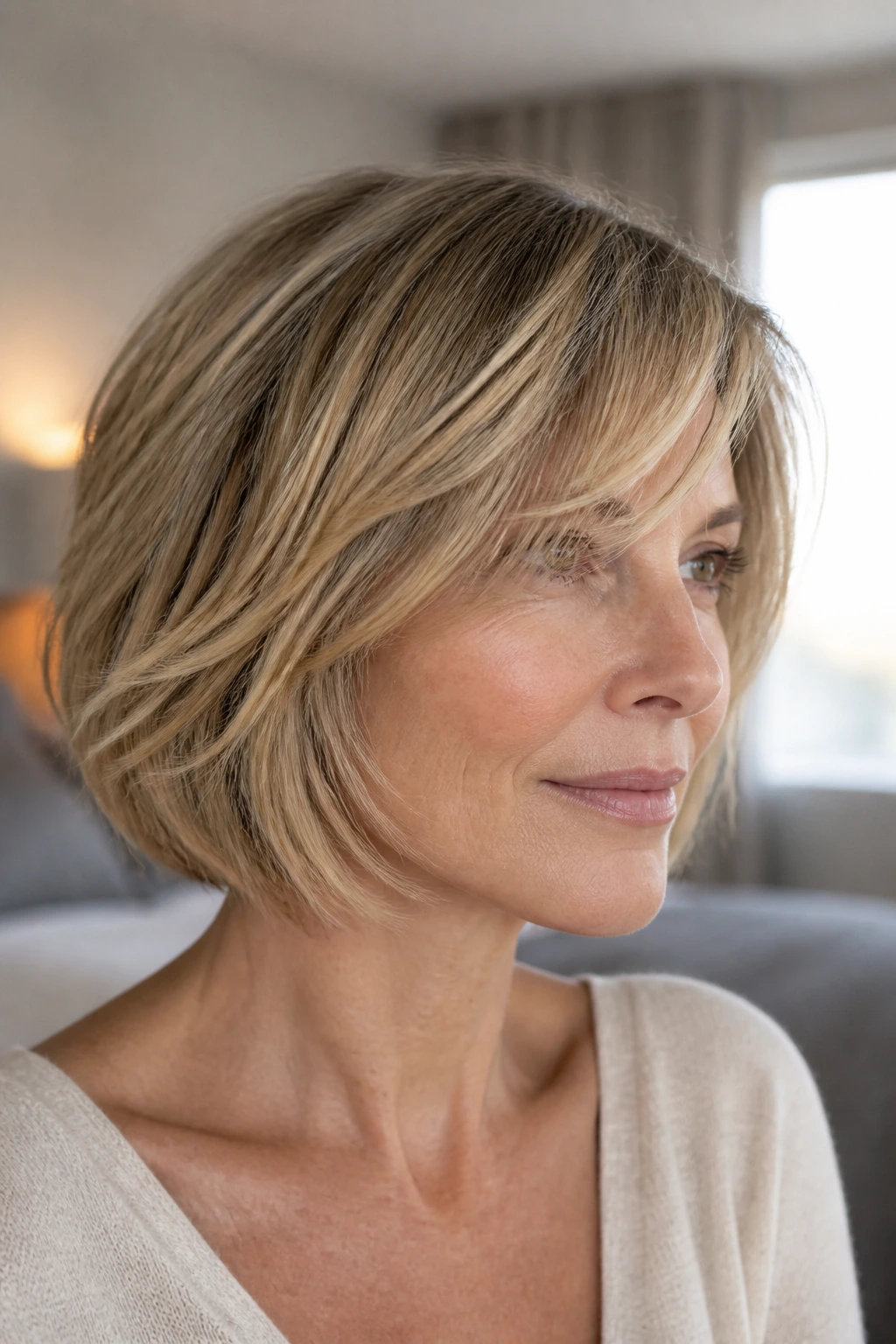
Can fine hair look fuller without teasing it into a nest? Yes. A feathered bob can do it, and it does it by making the ends look soft and airy instead of blunt and sparse.
What Makes It Different
Feathering takes the edge off a hard line. Instead of chunky, obvious layers, the ends are lightly textured so the hair catches air as it moves. That softens the silhouette and keeps the bob from looking heavy at the bottom.
This is a smart cut if your hair tends to separate or fall flat under its own weight. The key is restraint. You want enough layering to create movement, but not so much that the ends look see-through. A stylist who works with a razor or slide-cutting technique can help here, but the hand has to be light.
How to Style It
- Use a pea-sized amount of volumizing mousse at the roots
- Blow-dry with a medium round brush, rolling the ends under just a touch
- Finish with a mist of lightweight texture spray, not sticky hairspray
- Skip thick oils near the bottom; they can flatten the feathered ends
The result should feel floaty, not frizzy. If the ends look stringy, the layering went too far. That’s the line to watch.
4. Piecey Layered Bob with Razored Ends

You know that kind of bob that looks a little undone in the best way? That’s the piecey version. It works because the cut gives the hair little separations instead of one solid block, and the razored ends keep the movement visible even when the rest of the hair is straight.
This style suits people who don’t want a haircut that behaves too politely. There’s a bit of edge to it. The layers are usually short enough to show definition, but not so short that the shape falls apart. On hair that likes to hold texture, this can be a very easy cut to live with.
The styling part is half the fun. Work a small amount of matte paste through the ends while the hair is still warm from the blow-dryer. Then twist a few sections around your fingers and let them fall where they want. Don’t chase perfect symmetry. That’s not what this bob is about.
- Best on straight to wavy hair
- Looks sharper with a side part
- Wants a 1-inch curling iron or wand for a few bent pieces
- Needs dry shampoo near the roots if you want the piecey look to last
Watch out for over-thinning. If the ends get too wispy, the whole cut starts looking tired instead of textured.
5. Curved Bob with Face-Framing Layers
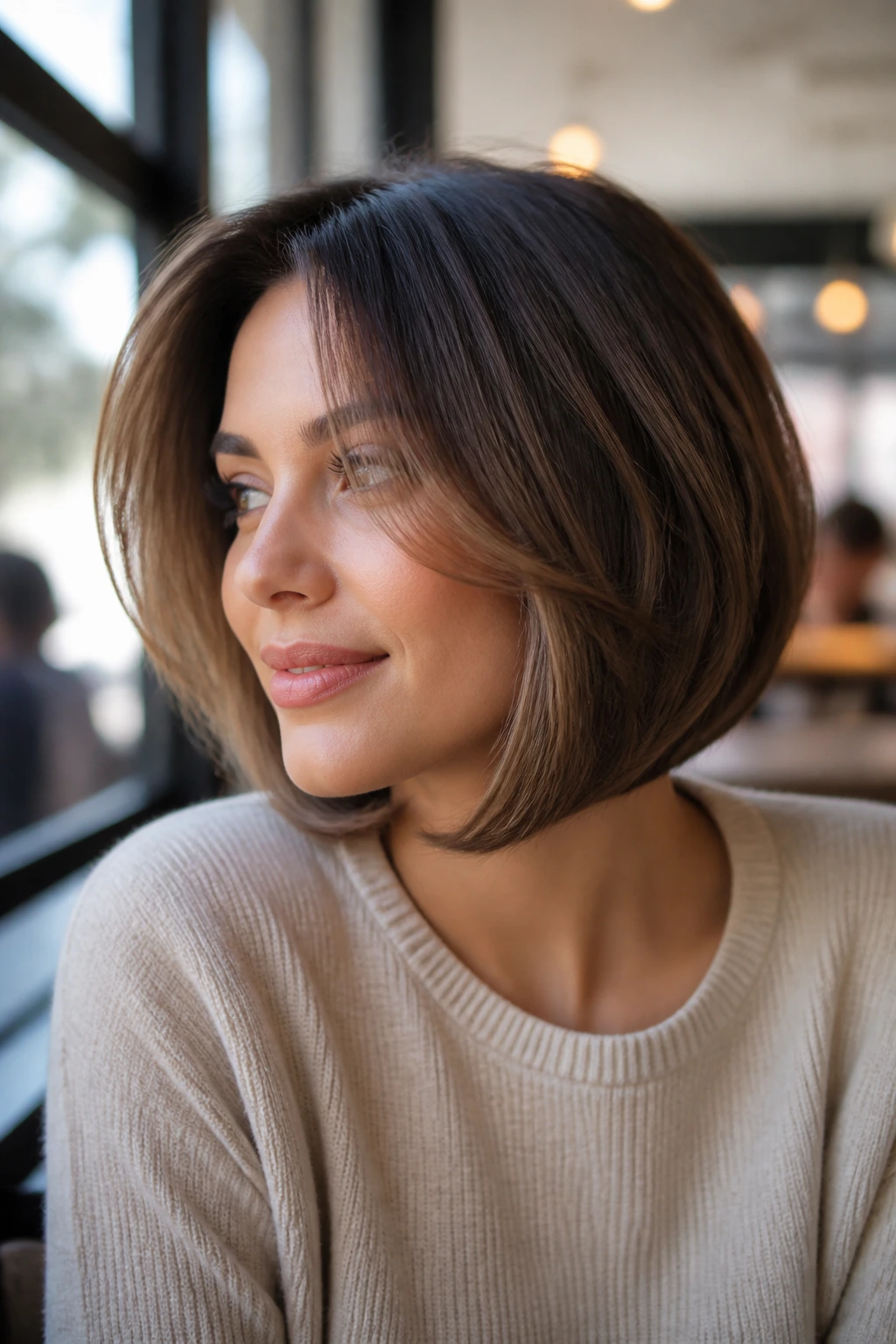
A curved bob is one of my favorite shapes because it does so much work quietly. The outline bends inward toward the jaw, then opens a little around the face, which gives the haircut a natural swing when you turn your head. It’s soft, but not bland.
The face-framing layers matter most here. They should start around the cheekbone or just below the eyes if you want the cut to pull attention upward. Start them too low and the bob loses its lift; start them too high and the front can look too chopped up. There’s a narrow sweet spot, and a good stylist will adjust it to your face shape.
This cut is especially kind to square and round faces because the curve softens strong edges without hiding them. It also works on medium-density hair that needs movement but not a huge change in length. A smoothing blowout cream and a medium round brush are enough most days.
If you like hair that falls back into place after you tuck it behind your ears, this is a very good one. It feels casual, but there’s a lot of shape built in.
6. Collarbone Bob with Long Layers

Unlike a chin-length bob, a collarbone bob gives you room to breathe. The length hits around the collarbone, which means you can still pull it back, clip it up, or tuck it under a jacket collar without feeling like your haircut disappeared. The longer layers keep the movement alive without chopping away too much length.
That extra length makes this cut a smart middle ground for anyone nervous about going short. You still get the clean outline of a bob, but the layers can start lower and blend more softly. Fine hair gets some lift near the mid-lengths. Thick hair gets relief without looking overcut. Straight hair gets bend. Wavy hair gets shape.
It’s also one of the easier layered bob cuts to style when you’re in a hurry. Air-dry it with a leave-in cream and a little scrunching, or hit just the front pieces with a curling iron and call it done. The cut does not demand a perfect blowout to look finished.
If you want something that works at a desk, at dinner, and on a day you can’t be bothered to fuss, this one is hard to argue with. It’s practical without feeling plain.
7. Shaggy Bob with Curtain Bangs

Want a bob that looks better when it’s a little messy? The shaggy version has that built in. The layers are more obvious, the texture is looser, and the curtain bangs fold into the sides so the whole haircut feels lived-in instead of stiff.
What keeps this from turning into a mullet is the balance. The bangs soften the face, but the bob still needs enough length through the sides to hold the shape. You want the layers to move, not explode. That means a smart amount of texturizing, not aggressive razor work everywhere.
How to Style It
- Blow-dry the bangs first with a small round brush, pushing them away from the face
- Use a diffuser if your hair is wavy
- Add a touch of mousse at the roots and a light cream through the ends
- Scrunch the mid-lengths with your hands, then leave them alone
The best part? It tolerates a bit of chaos. That said, if your hair is pin-straight and heavy, you may need more styling than you expect. This cut loves movement. It does not create it out of thin air.
8. Asymmetrical Layered Bob

One side longer can look sharp, but only if the layers are calm enough to keep the shape from looking lopsided. That’s the whole game with an asymmetrical layered bob. The length difference gives the cut attitude, while the layers stop it from feeling rigid or blocky.
I like this style on people who want something noticeable without going all the way into fashion-editor territory. A difference of about 1 to 1.5 inches between sides is enough to read as deliberate. Much more than that, and you start fighting styling issues every morning. Keep the longer side soft around the jawline, and the shorter side tucked closer to the neck.
It also has a useful side effect: asymmetry can make one side of the face look a little longer or leaner. That’s handy if you have a strong jaw or a face that feels too even with a straight-across bob.
Use a side part that follows the longer side. Then bend just the ends with a flat iron or curling iron so the line stays visible. If the ends are too curled, the shape gets lost. Clean, not fussy. That’s the trick.
9. Inverted Bob with Heavy Back Layers
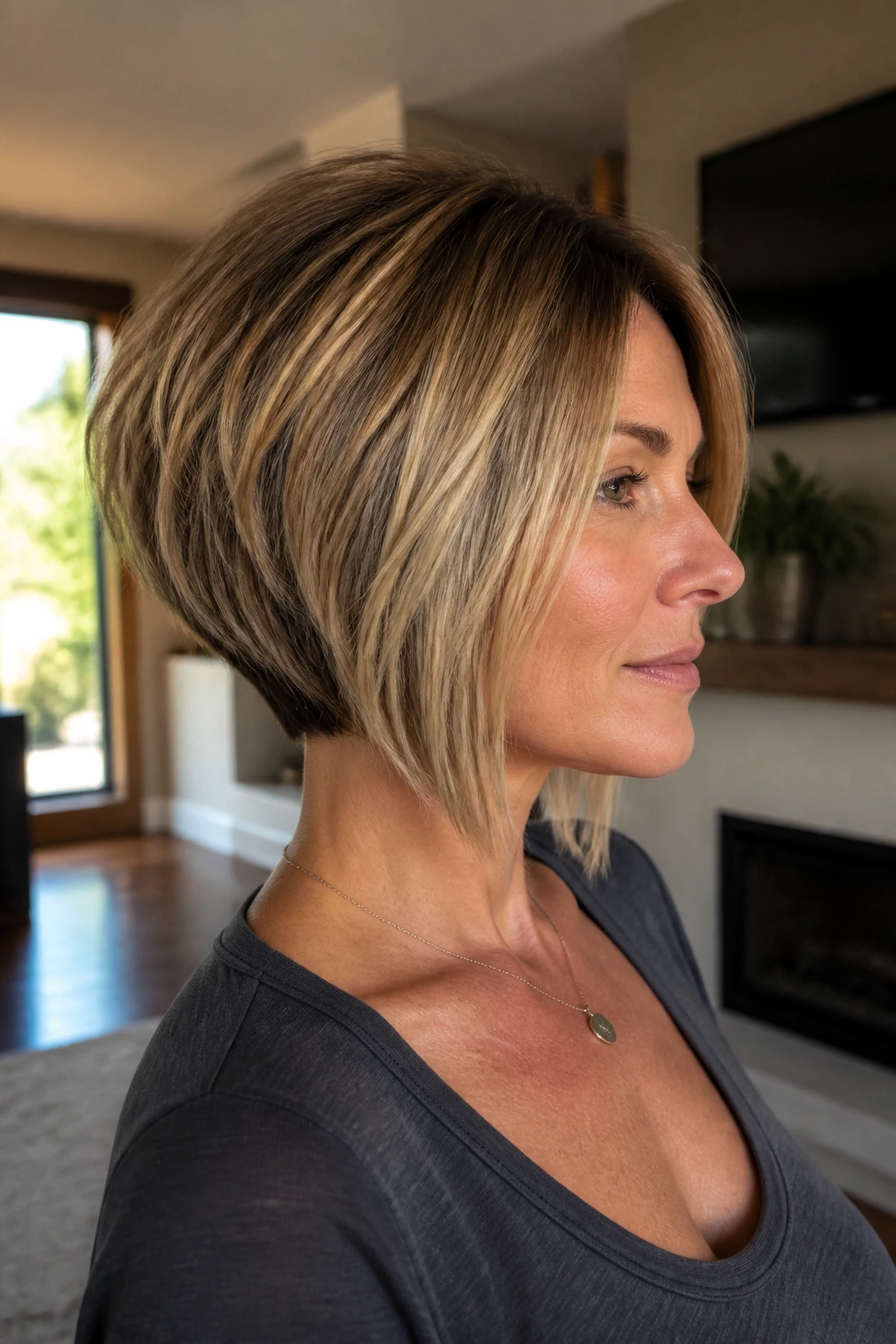
A sharply inverted bob gives volume where you want it and keeps the front from swallowing your face. The back is shorter and more layered, while the front falls longer toward the chin. It creates a slope that can make the hair look denser and more lifted at once.
This cut is especially useful for thick hair that gets bulky fast. The heavy back layers remove weight from the crown and nape, which helps the shape sit instead of ballooning out. On straight hair, the angle looks crisp. On wavy hair, it has a little more softness, which can be nice if you do not want the line to feel severe.
Ask For This
- A short, stacked back that hugs the head
- Longer front pieces that graze the jaw or chin
- Interior layering to remove bulk without destroying the outline
- A clean neckline so the shape stays tidy between trims
Styling matters here. A round brush helps the back curve under, and a flat iron can refine the front pieces if they kick out. If you leave the back to air-dry on its own, the stack can puff up at the wrong spots. That’s easy to avoid, but it needs a little attention.
10. Blunt-Perimeter Bob with Internal Layers
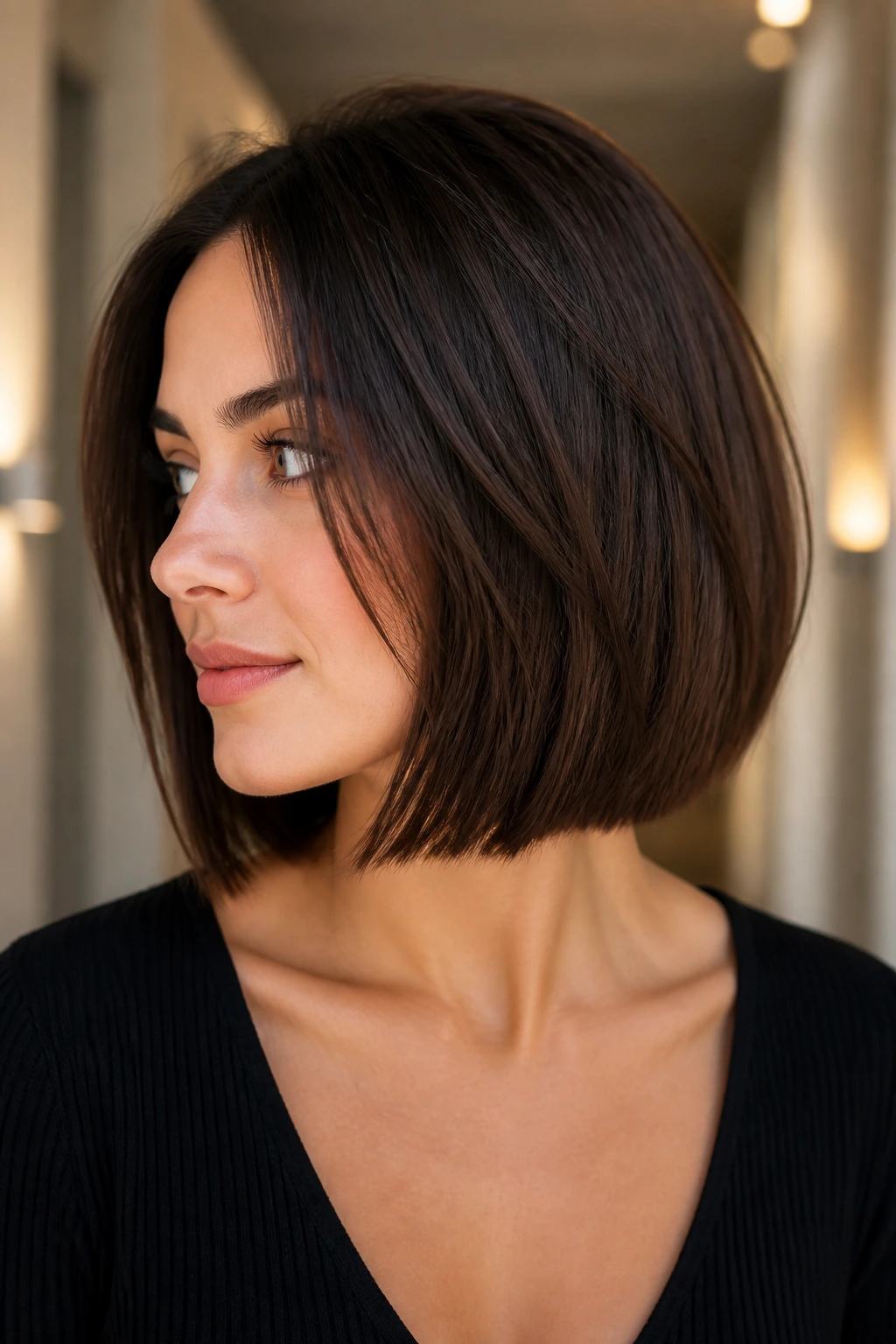
A blunt bob can still have movement if the layers stay hidden. That’s the part people miss. You keep a clean outer line so the haircut looks full, then build soft internal layers underneath to stop it from feeling like one heavy block.
This is a clever choice for thick or straight hair. The blunt perimeter gives you density at the edge, which makes the cut look lush instead of see-through. The internal layers take out weight so the hair doesn’t sit like a helmet. You get the polish of a straight line with the motion of a more layered cut.
It also wears well if you like a middle part and a smooth finish. There’s no need to rough it up with texture spray unless you want more separation. A blow-dry with a paddle brush and a tiny bit of serum on the ends is often enough.
The warning is simple: do not let someone thin the ends too much. If the perimeter gets too ragged, the whole point is gone. A blunt outline needs respect.
11. French Bob with Soft Layers

A French bob lands somewhere between effortless and intentional, which is exactly why people keep coming back to it. The cut usually sits around the jaw or lip line, with soft layers tucked in just enough to keep the shape from looking boxy. It moves when you walk. That’s part of the charm.
The version I like best has a little bend in the ends and a fringe that sits airy rather than heavy. The layers should not shout. They should just keep the bob from looking like it was cut with a ruler and left there. On finer hair, this creates lift around the face. On thicker hair, it keeps the shape from becoming too round.
A tiny bit of styling cream goes a long way. Work it through damp hair, then rough-dry until about 80 percent dry before finishing with your fingers or a brush. If you overstyle a French bob, you lose the point. It wants a touch of looseness.
It also looks good on people who wear glasses, because the soft layers keep the frames from fighting the haircut. Small detail. Big difference.
12. Wavy Layered Bob with Air-Dried Texture
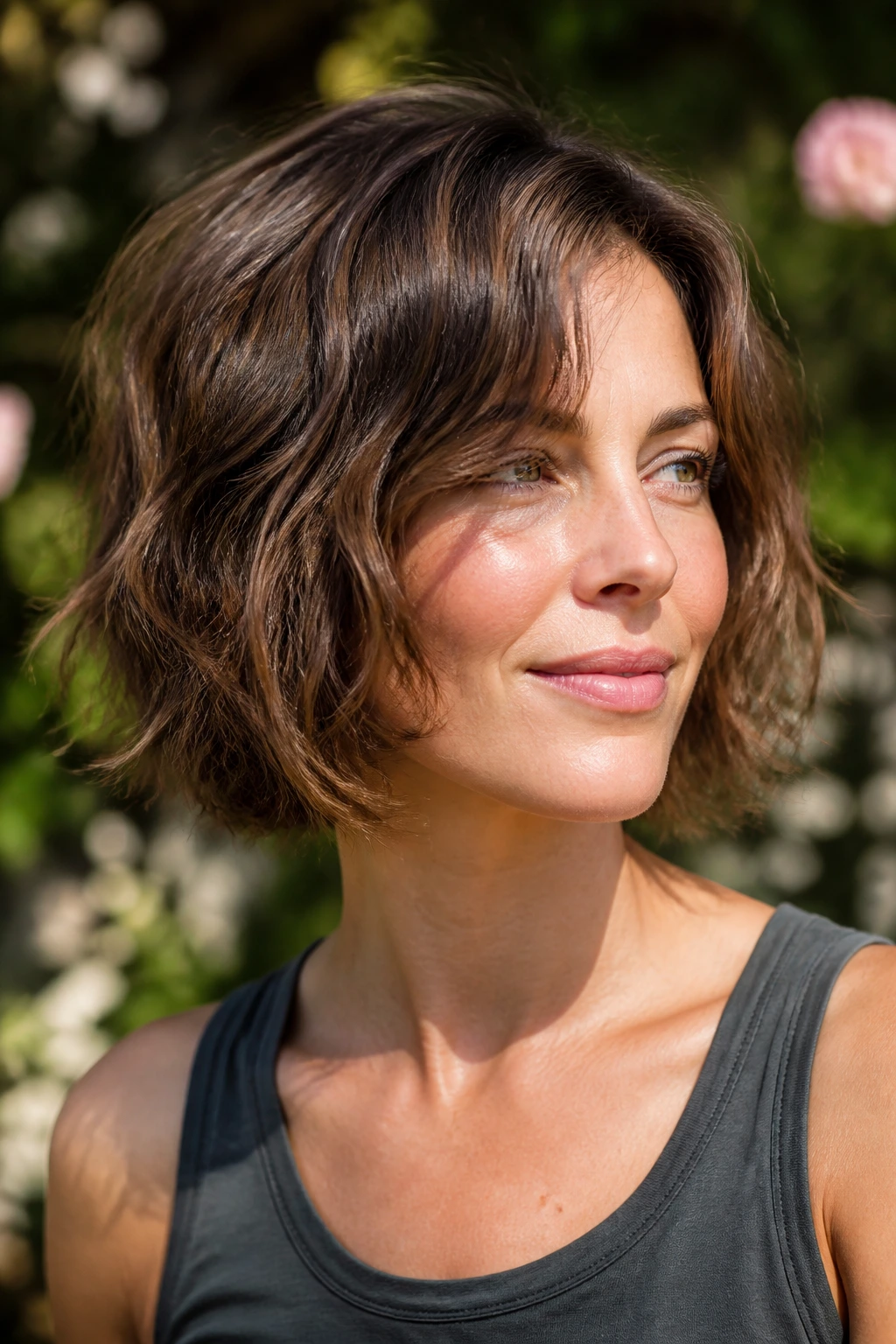
Why fight your natural wave if it already wants to move? A wavy layered bob lets the texture do half the work, and that usually means less heat, less fuss, and a shape that looks better when it’s not perfect. The layers should be placed so the wave can stack softly, not puff out at the sides.
The best versions keep enough weight at the bottom to stop the ends from fraying. Too many short layers on wavy hair can make the style expand in weird places. You want the wave pattern to read as loose and lived-in, not blown apart. A shoulder-grazing or jaw-length cut usually behaves well here.
Use a leave-in conditioner, then a small amount of gel or cream while the hair is damp. Scrunch upward, then leave it alone as it dries. If you touch it too much, frizz moves in. If you want a little more shape, twist two-inch sections around your fingers near the front and let the rest dry on its own.
This is a very forgiving style on busy mornings. It looks especially good when the hair has a natural bend that doesn’t need a full blowout.
13. Curly Layered Bob for Shape and Bounce

Curly hair without layers can turn into a triangle fast. That’s the honest problem, and it’s why a layered bob can be such a relief. The right layers let curls stack on themselves instead of sitting all heavy at the bottom, so the shape feels round, springy, and balanced.
A good curly bob is usually cut with shrinkage in mind. If your curls shrink a lot when dry, the stylist needs to account for that before taking off length. Dry cutting is common for curly hair because it shows the real pattern, not a wet guess. That matters. A bob that looks fine wet can end up much shorter than expected once it dries.
What to Tell Your Stylist
- Your curl pattern, from loose waves to tight coils
- How much shrinkage you get when the hair dries
- Whether you want the bob to land at the chin, jaw, or collarbone
- How much time you want to spend diffusing or air-drying
Keep the products light if your curls are fine, and a bit richer if they are coarse or dry. A curl cream plus gel often works better than one heavy product. The point is bounce, not buildup. If your curls feel sticky, the cut will not move well.
14. Side-Part Layered Bob with Sweep

If your roots go flat by lunch, the part may be the whole problem. A deep side part gives a layered bob an instant lift at the crown because the hair has to fall over a built-in ridge instead of lying flat in one direction. It is one of the simplest volume tricks out there.
The side sweep also softens the face. Hair that falls across the forehead and cheekbone creates movement without requiring short bangs or dramatic layering. This works especially well on medium hair that needs lift but not too much texture. The shape feels polished and a little old-school in the best way.
Use a blow-dryer to direct the roots upward and away from the part first. Then clip the heavier side up for a few minutes while it cools. That sets the bend. Finish with a small round brush at the front so the sweep lands cleanly instead of collapsing halfway down.
This style pairs well with a bob that has subtle layers through the mid-lengths. If the cut is too blunt, the side part can feel heavy. If it has some interior movement, the part does the rest.
15. Layered Bob with Micro Bangs

Micro bangs are not shy. They pull the eye straight to the face and make the layered bob feel sharper, younger, and a little more daring. The layers need to soften the rest of the shape, because the bangs already bring plenty of attention on their own.
This is a cut for someone who likes contrast. Tiny bangs on top, movement through the bob, and a neat line around the cheeks can make the haircut feel very deliberate. It works especially well when the layers are light around the face and a bit fuller at the back, so the eye has somewhere to travel.
The upkeep is the catch. Micro bangs need trims more often than a regular fringe, and they can grow awkwardly fast. If you’re okay with that, fine. If you hate maintenance, skip them.
- Best on straight to slightly wavy hair
- Looks strongest on oval and heart-shaped faces
- Needs a quick bang trim every few weeks
- Works better with soft layers than with choppy ones
The styling should stay simple. A quick blow-dry with a flat brush and a tiny bit of pomade on the fringe is enough. Too much product makes the bangs look greasy, and that kills the point.
16. Graduated Bob for Thick Hair
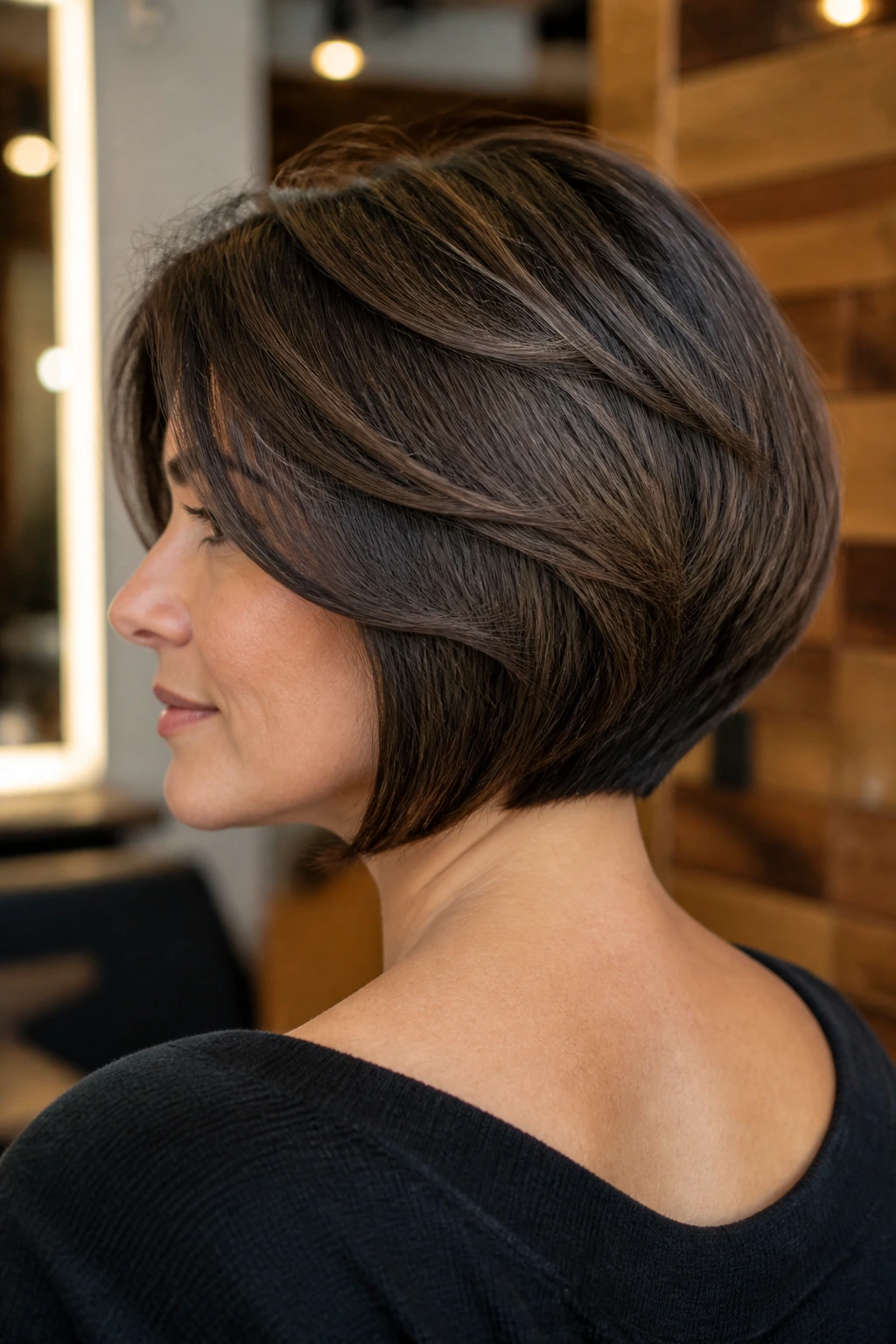
Thick hair does not need more layers; it needs better ones. A graduated bob removes bulk where it piles up and builds shape in a way that keeps the haircut controlled. The back is cut shorter and gradually lengthens toward the front, which helps the hair sit close to the head instead of ballooning out.
This style is a lifesaver if your hair feels too heavy at the nape or turns wide at the sides. The graduation gives the illusion of shape without shredding the ends. That matters because over-thinning thick hair can create a rough, puffy finish that takes months to grow out nicely.
A good stylist will use weight removal carefully. Not every thick bob needs aggressive texturizing. Sometimes the best move is a cleaner internal shape and a sharper outline. That way, you get movement without losing density.
It also handles humidity better than a lot of softer cuts. The structure keeps the hair from expanding in every direction. If you live with thick hair, you know how valuable that is.
17. Messy Textured Bob with Choppy Layers
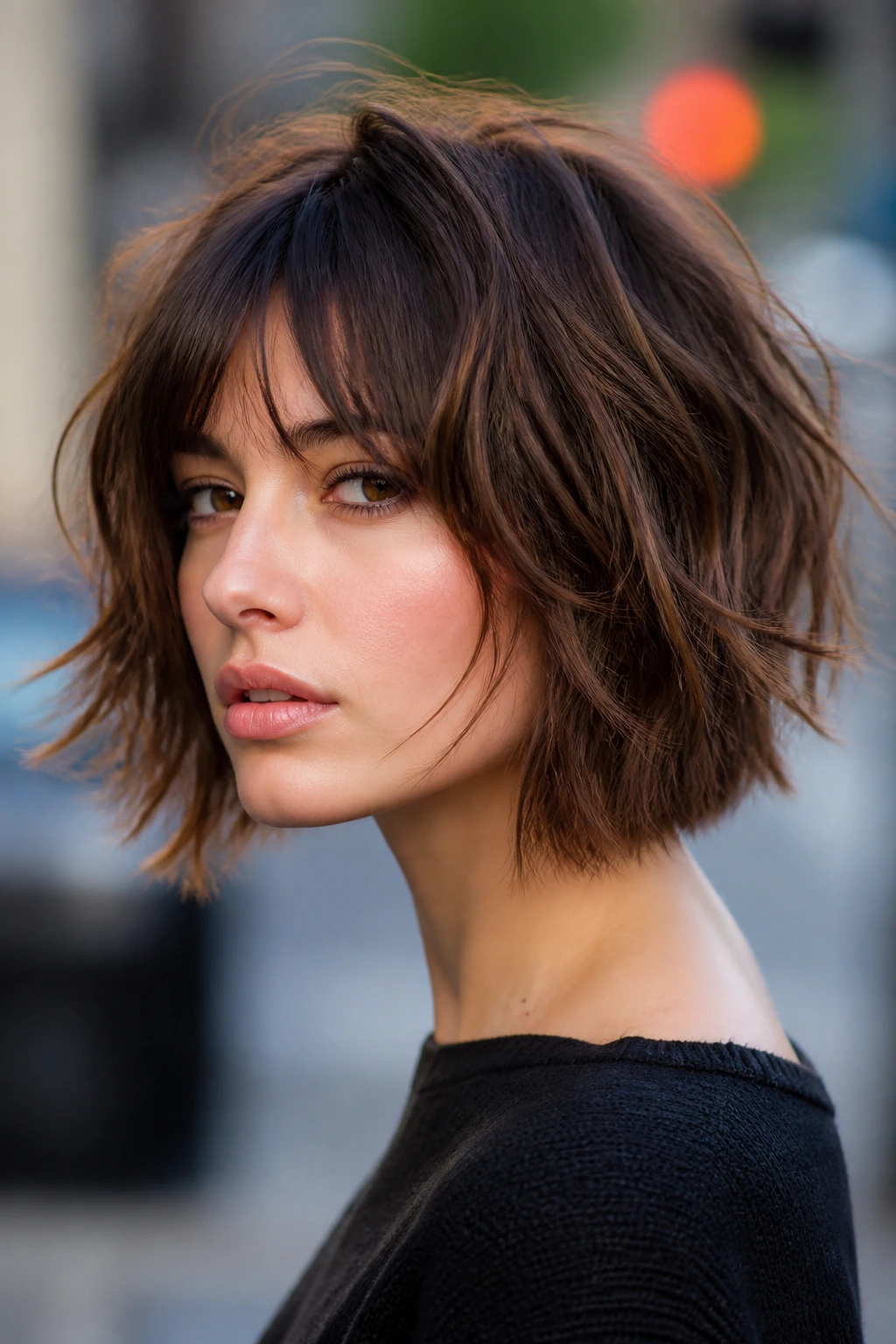
You can blow-dry this haircut, rough it up with paste, and walk out looking like you spent five minutes on it — if the cut is right. The messy textured bob depends on choppy layers that create little broken edges throughout the shape, so the style never looks too neat, even on a good hair day.
I like this cut for people who want movement without a polished finish. It has a bit of attitude, but it’s not as severe as a razor-heavy style. The ends should be broken up enough to separate with your fingers, not so shredded that they look thin. That line matters.
A sea salt spray can help, but don’t drown the hair in it. Use it mainly on the mid-lengths, then scrunch and let it dry. A matte paste on the ends gives you that piecey, separated finish that makes the layers show. Too much gloss, and the texture disappears.
This is one of those cuts that looks better the second day. A little sleep, a little dry shampoo, and a quick tousle usually bring it back to life. Some haircuts get precious. This one doesn’t.
18. Soft A-Line Bob with Subtle Movement
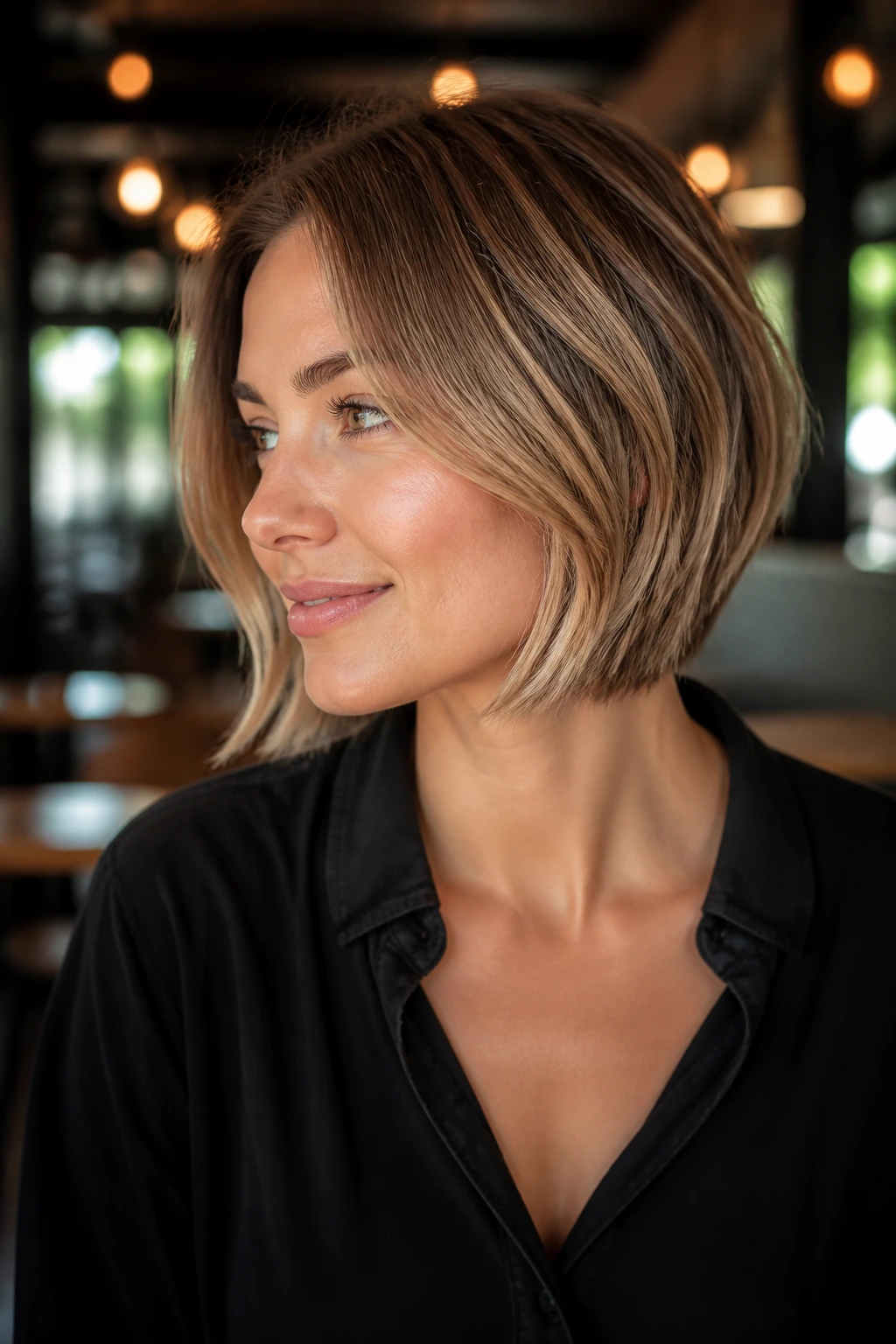
Need polish without stiffness? A soft A-line bob keeps the front a touch longer than the back, which gives the cut a gentle slope and enough movement to keep it from looking frozen in place. It is one of the easiest layered bob cuts to wear if you want something flattering but not too loud.
The front pieces usually skim the jaw or collarbone, while the back stays slightly shorter and lighter. That shift gives the haircut a built-in swing. Add a few soft internal layers and the shape breathes a little more when you move. It’s not dramatic. That’s exactly why it works so well.
This version is especially kind to people who want a haircut that behaves at work, at home, and when they throw it behind one ear. It reads neat, but not stiff. The style also grows out in a nicer way than some sharper bobs, which means you can stretch the trims a bit longer if you’re careful.
I keep coming back to this one for a reason. It gives volume, yes, but it also gives ease — and that combination is harder to find than it should be.
