



A flipped bob cut lives or dies by the last inch of hair. That tiny bend at the ends is what gives the haircut its retro charge; without it, you just have a short bob that forgot to finish dressing.
The best versions look clean, a little glossy, and shaped with intent. The flip can be soft or sharp, but it needs a line underneath it — chin-length, jaw-length, or shoulder-skimming — plus ends that turn out with a clear direction. That is what makes the style read as vintage instead of random.
People often blame the wrong thing when a flipped bob looks off. The real problem is usually the shape: too much layering, a weak neckline, or a part that fights the cut. Product matters, sure, but a good bob still looks like a good bob after the spray wears off.
These ten versions cover the cuts that actually hold up in real life. Some add height at the crown, some soften a square jaw, and some are just a smart way to wear shorter hair without losing that old-school kick at the bottom.
1. Chin-Length Classic Flipped Bob Cut
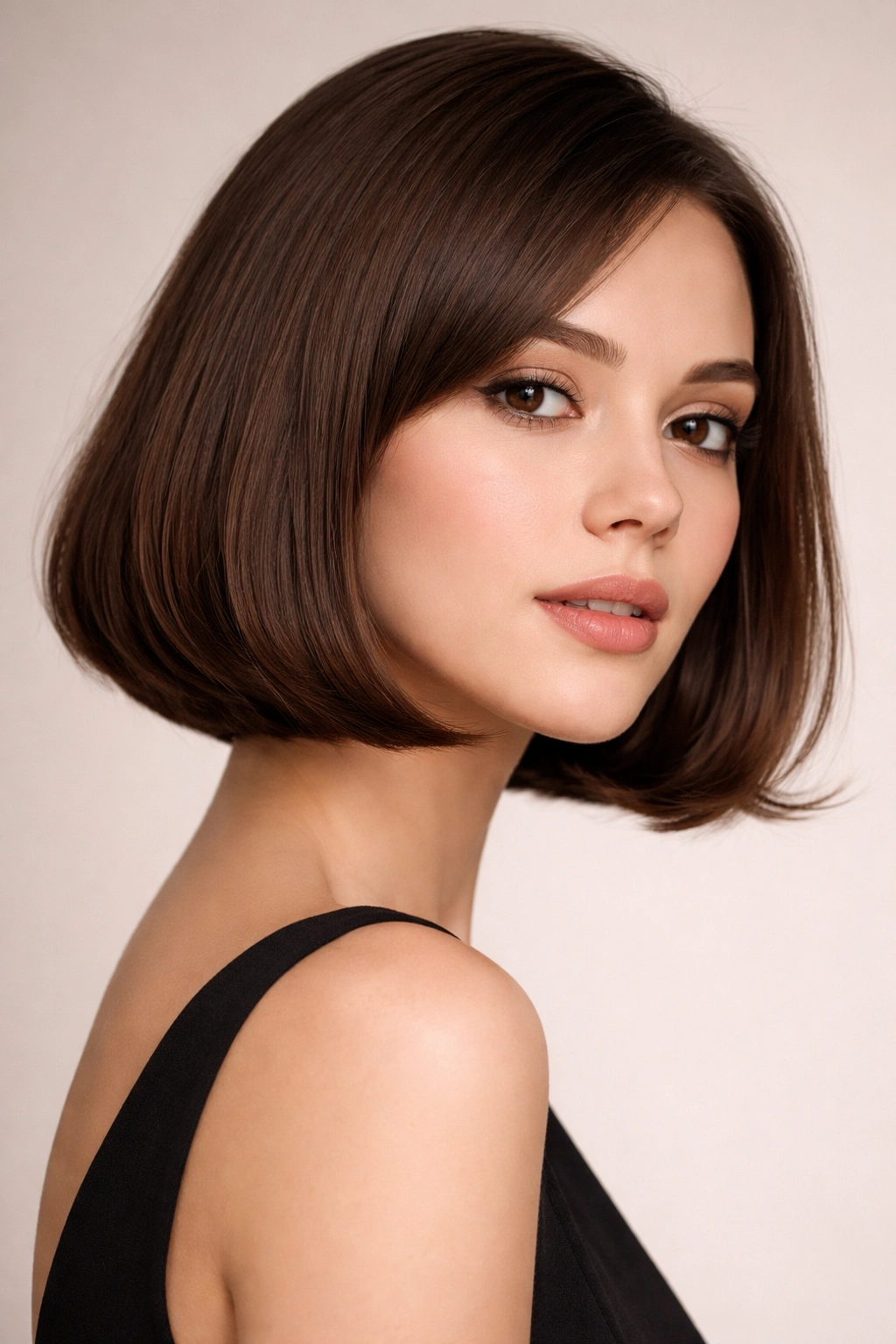
This is the version most people picture first. The chin-length classic flipped bob cut sits right at the jaw, with a blunt-looking perimeter and just enough bevel at the ends to make the hair flick outward instead of curling under. It has that neat, polished shape that shows off the neck and keeps the whole haircut looking intentional.
Why the line matters
The length should land at the chin or a whisper below it. Any shorter and the flip can start to look puffy; any longer and you drift into lob territory, which is a different mood entirely. The magic here is the clean edge. It gives the bob a little discipline, and that discipline is what makes the retro feel believable.
I like this version on fine to medium hair because it does not need a lot of natural body to work. A quick blow-dry with a round brush and a touch of mousse at the roots is usually enough. If your hair is thick, ask for a blunt perimeter with only minimal internal layering, or the ends will fight the shape.
- Best length: chin to just below the jaw
- Best brush: 1.25-inch round brush
- Best finish: light shine spray, not heavy oil
- Trim schedule: every 4 to 6 weeks
Keep the flip at the ends only. If the bend starts halfway up the hair shaft, the whole cut loses that crisp bob shape and starts looking overstyled.
2. Deep Side-Part Marilyn Flipped Bob Cut
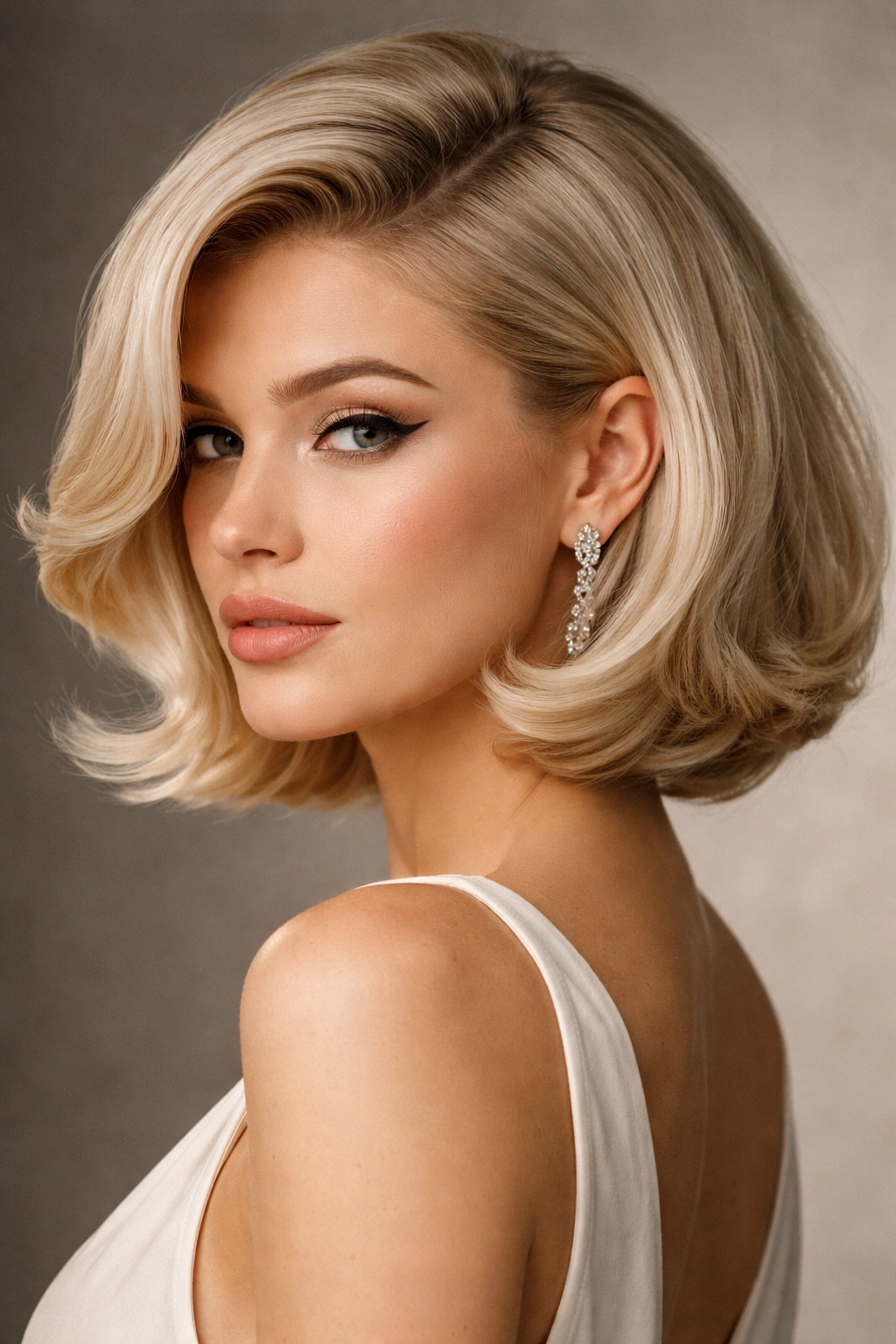
The side part does more heavy lifting than the flip. A deep side-part Marilyn flipped bob cut gets its old-Hollywood feel from the crown first and the ends second. The part shifts the volume to one side, opens the face, and gives the bob a little attitude before the hair even moves.
That matters because a flipped bob can fall flat fast if everything is centered and symmetrical. A deep side part breaks the outline in a way that feels lively. It also helps if your hair tends to lie limp at the roots, since the heavier side can be lifted with a bit of root spray and a quick blast from the dryer.
This version looks especially good on oval, heart, and longer face shapes. The soft sweep across the forehead can balance a wider forehead, while the flicked ends keep the shape from feeling severe. If your jawline is sharp, the curve at the bottom softens it just enough.
The styling is straightforward. Blow-dry the part first, clip the heavier side up while it cools, then direct the ends outward with a round brush or a flat iron bend. Use flexible hairspray, not shellac. You want movement when you turn your head, not a helmet.
3. Shoulder-Skimming Flipped Bob Cut
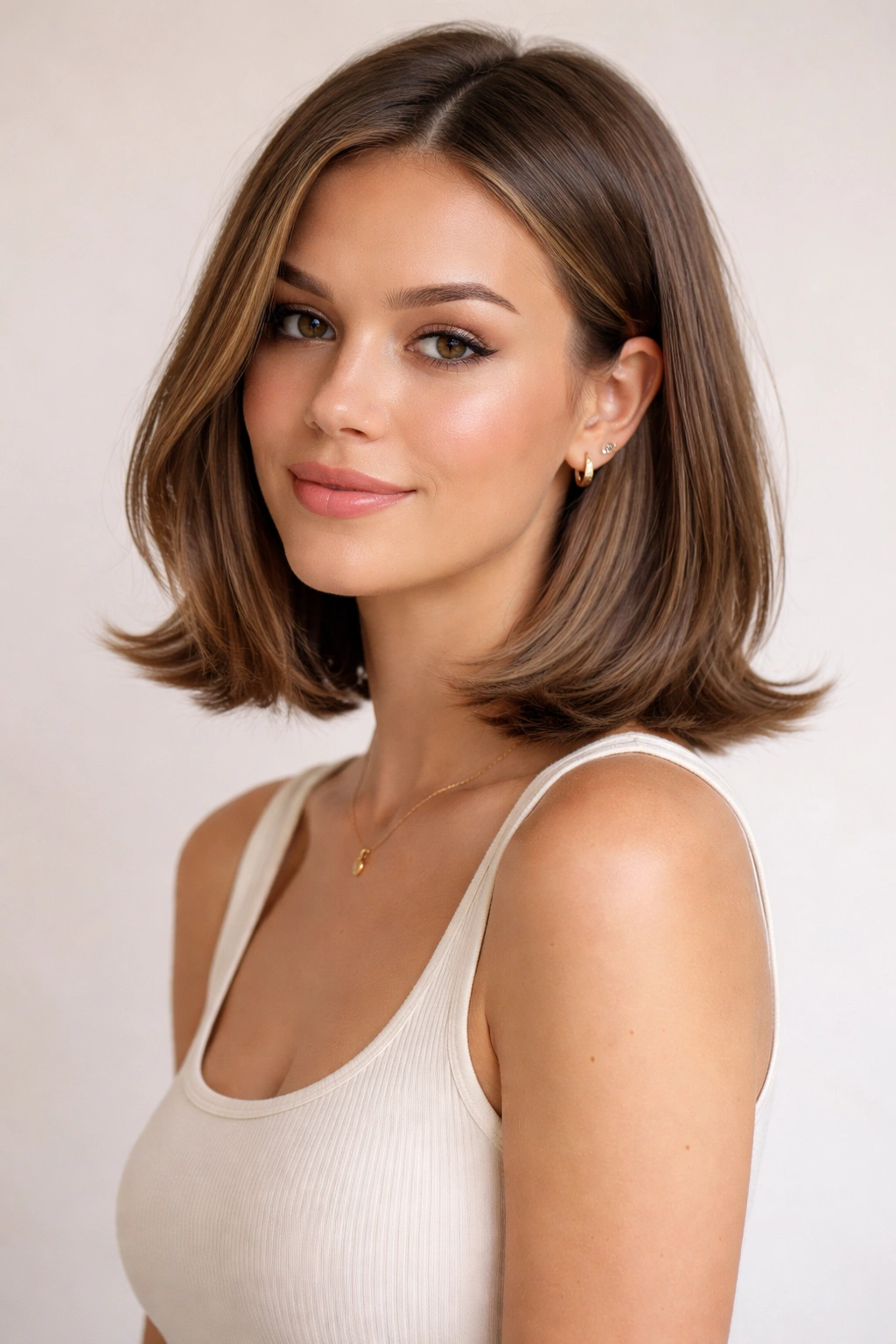
Can a bob still count if it brushes the shoulders? Yes, and this is the easiest place to wear a flipped bob cut if you do not want to go short-short. The shoulder-skimming version keeps the retro shape but adds a little length, which makes it feel softer and less severe.
The bigger length gives you room to play with the ends. A small outward bend at the bottom looks polished; a slightly stronger flip reads more playful. Either way, the shape stays recognizable because the cut still follows the collarbone and the front pieces can be nudged just a bit longer than the back.
How to style it
- Start with a smoothing cream on damp hair.
- Dry the roots first so the crown does not collapse.
- Use a 1-inch curling iron or flat iron only on the last 1 to 1.5 inches of the ends.
- Brush the ends out with a paddle brush once they cool.
This cut works well for people who like the look of a bob but do not want to sacrifice ponytail length entirely. It is also friendly to hair that has a slight wave, because the movement keeps the flip from looking rigid. The only catch is upkeep: once the ends start getting too long, the shape loses its bounce and turns into a plain lob with a funny finish.
4. Flipped Bob Cut with Curtain Bangs
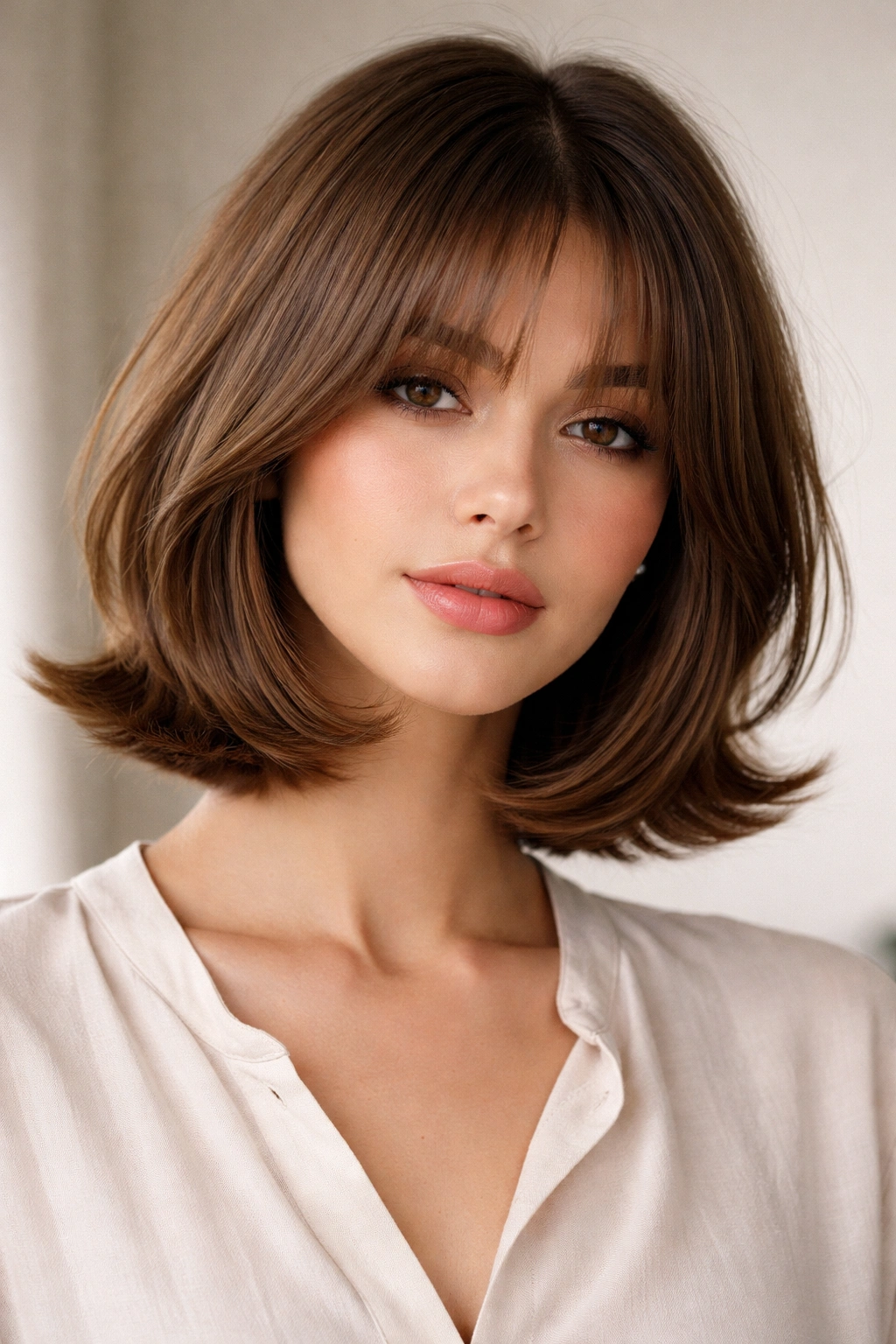
If you have ever grown out bangs and thought, “Wait, this actually looks better,” that feeling is the whole point here. A flipped bob cut with curtain bangs blends a retro shape with a softer fringe, and the result is less rigid than a blunt fringe bob. The bangs open the face at the center, then slide away toward the cheekbones, which keeps the haircut from feeling boxed in.
The cut works because it gives you two different curves at once. The bangs frame the top half of the face, and the flipped ends finish the bottom half. That balance matters. Without it, a bob can feel bottom-heavy, especially if your hair is thick or your jawline is strong.
A few details make or break this version:
- Keep the curtain bangs around cheekbone length.
- Ask for a soft center split, not a heavy curtain that covers the eyes.
- Let the ends flip out a little more than usual to echo the movement in the fringe.
- Use a round brush on the bangs while they are still warm from the dryer.
The trick is not to overthink it. Curtain bangs should look like they belong to the haircut, not like they were pasted on top of it. When the bangs and the flip share the same softness, the whole style gets that easy, slightly French feel without turning precious.
5. Stacked Nape Flipped Bob Cut
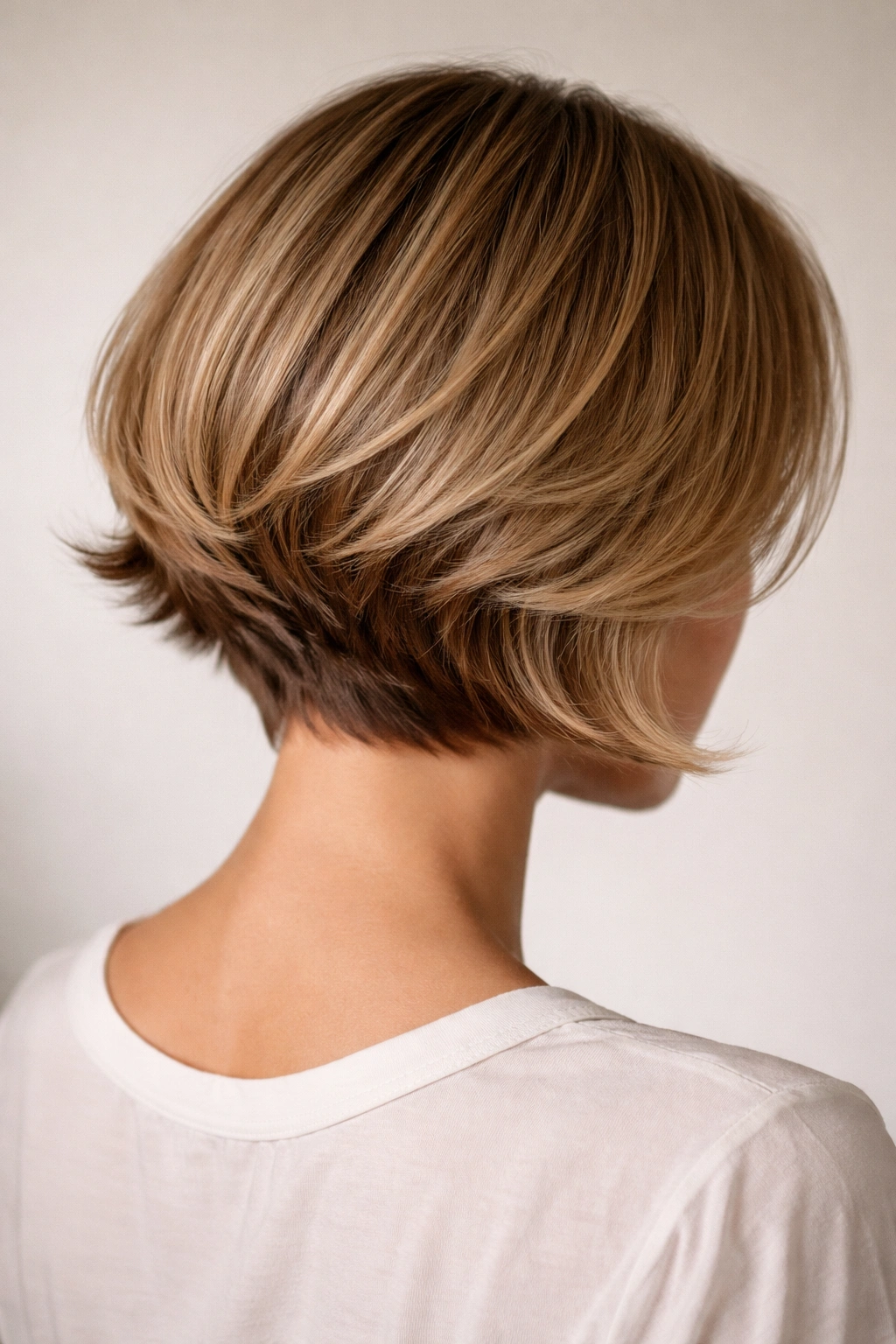
A stacked nape turns a bob from tidy to sculpted. This version builds its shape with shorter layers at the back of the head, usually around the occipital bone and nape, so the hair lifts away from the neck instead of hanging in one heavy line. The flip at the ends finishes the look, but the stack is what gives it body.
Unlike a one-length bob, the stacked nape version creates natural lift without needing a ton of backcombing or spray. That makes it a smart choice for finer hair that goes flat by lunchtime. It also keeps the neckline neat, which is part of why the style has such a clean retro feel.
What to ask your stylist
- Keep the stack subtle, not sharp.
- Let the shortest back layers sit about 1 to 2 inches shorter than the front.
- Preserve a clean, blunt edge around the outer line.
- Check the shape from the side before the cut is finished.
Go too high with the stack and the haircut starts looking dated in the wrong way. The best version still feels modern in the way it grows out. You can wear it smooth for a polished look, or push the crown up a little more if you want extra drama. Either way, the back should look lifted, not bulky.
6. Feathered Flipped Bob Cut for Thick Hair
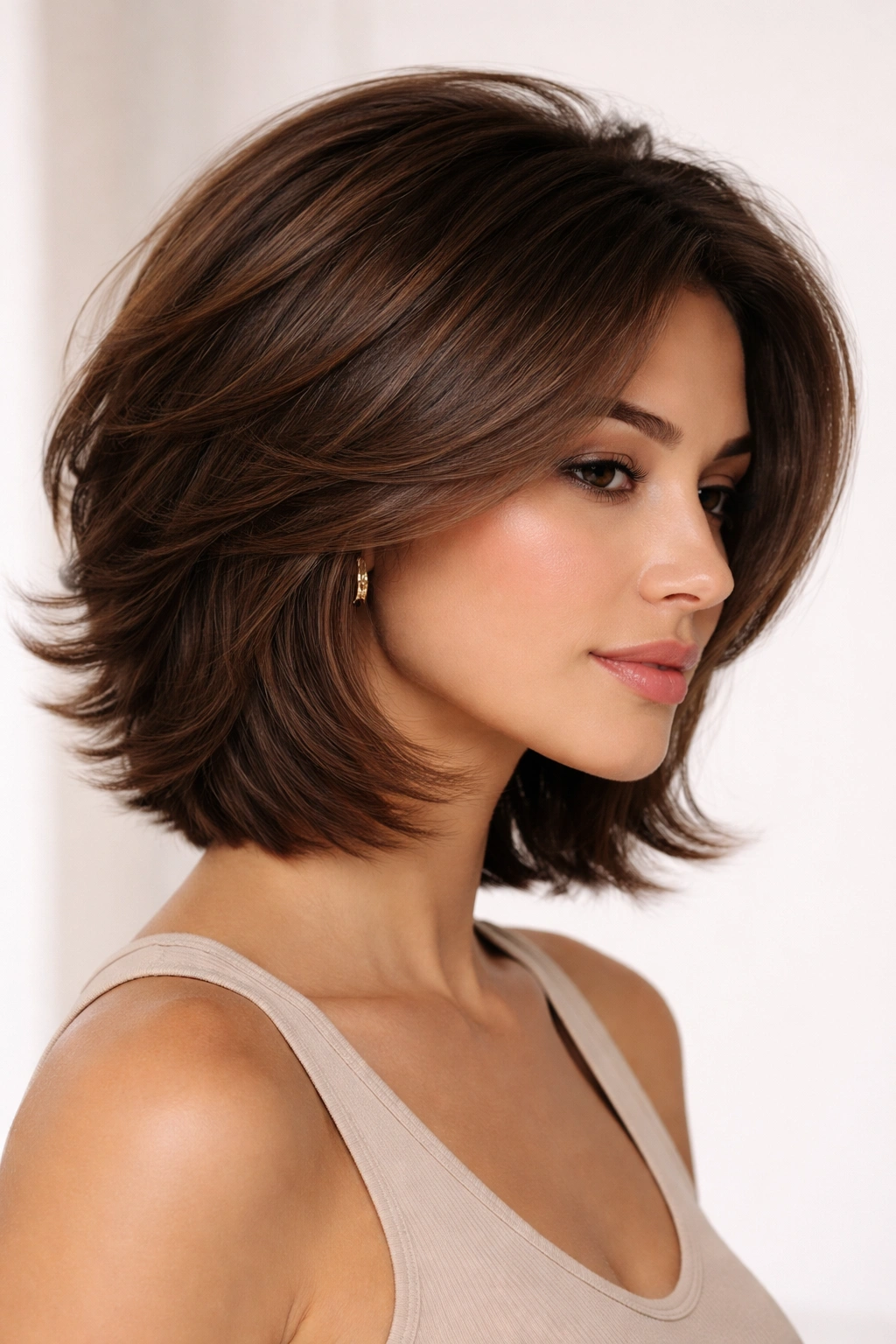
Thick hair changes the game. A feathered flipped bob cut for thick hair works because it removes weight without wrecking the outline, which is the part most stylists get wrong when they try to “thin things out.” If the ends are stripped too much, they lose their shape and turn fuzzy. If the interior is left too heavy, the flip never shows up at all.
The sweet spot is long internal layering. You want the bulk taken out where the head needs it most — around the crown, through the middle, and sometimes just behind the ears — while keeping the perimeter strong. That lets the ends move without collapsing. A slight feather through the sides helps the bob turn outward instead of ballooning.
Heavy hair needs room to move.
I prefer this version with a blow-dry that starts at the roots and finishes with a big round brush on the ends. The brush should glide, not fight. If you yank thick hair through a tiny brush, the cuticle gets rough and the finish loses that smooth swing. A nozzle on the dryer helps a lot, too, because thick hair needs directed airflow or it puffs where it wants.
The payoff is real. Thick hair in a flipped bob can look expensive in the plainest sense of the word: clean, controlled, and full of shape. It just asks for a stylist who knows where to remove weight and where to leave the line alone.
7. Soft Wavy Flipped Bob Cut
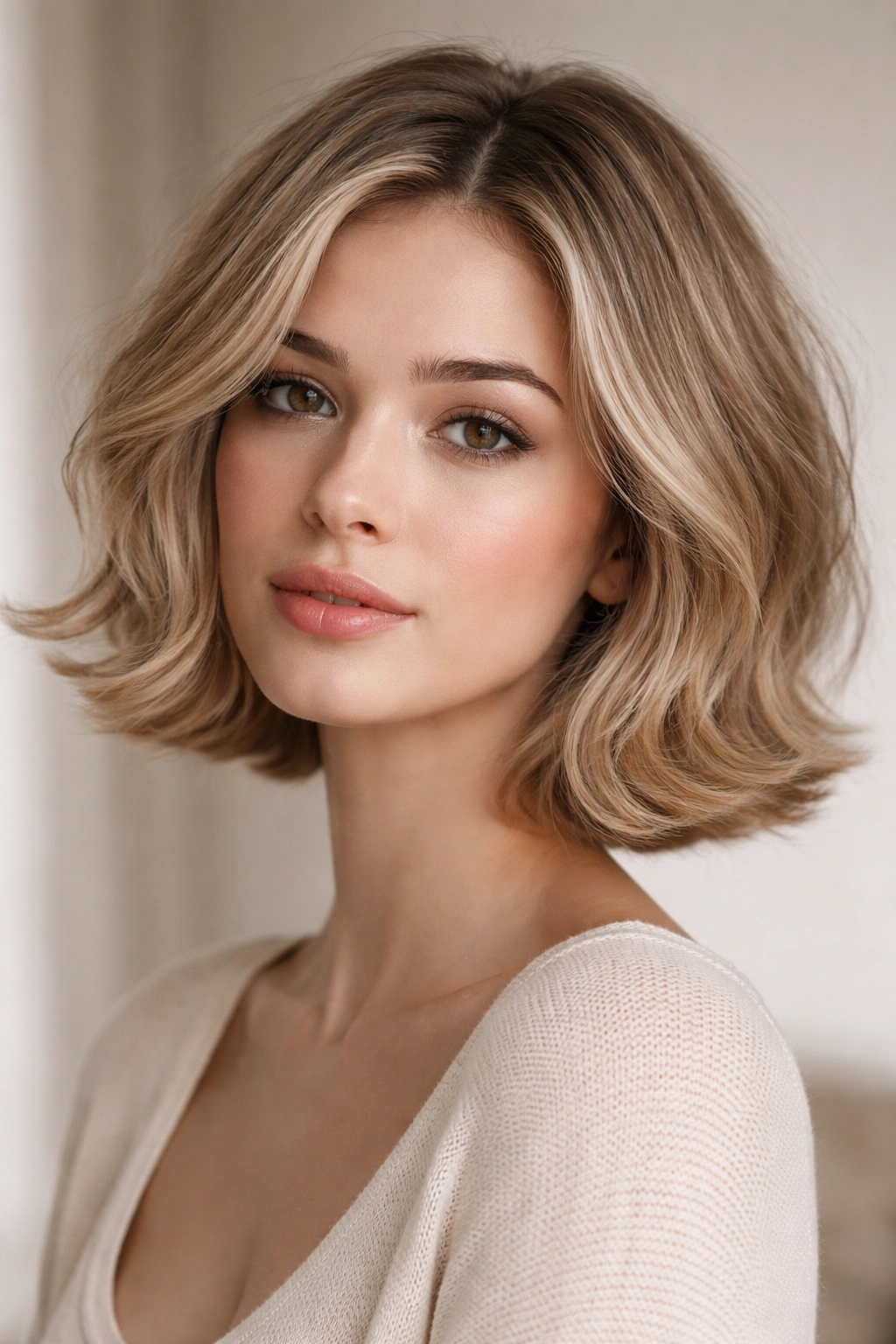
What if your hair refuses to lie flat? Good. That can work in your favor. A soft wavy flipped bob cut leans into natural bend instead of fighting it, which makes the style feel looser and a little more lived-in than the sharper versions.
The key is to keep the wave under control near the roots and let the ends do the talking. If the whole head is too curly, the flip gets buried. If the roots are smooth and the bottom edge is slightly bent out, the retro shape still reads clearly. This version is especially kind to hair that is somewhere between straight and wavy, because it does not ask for a perfectly smooth blowout.
How to keep it from frizzing
- Work a light mousse through damp roots.
- Dry about 80 percent of the hair before touching the ends with a brush.
- Use a 1.25-inch iron only on the last inch of the length.
- Finish with a soft brush-through so the wave stays relaxed.
A little frizz is not the enemy here. The problem is uncontrolled frizz at the ends, where it fights the flip and blurs the outline. A touch of shine cream on the mid-lengths can help, but keep it light. Too much product makes the hair droop, and droopy ends kill the shape faster than anything.
This is the version I’d pick if you want the retro look without the strictness. It has movement. It breathes.
8. Sleek Blunt Flipped Bob Cut
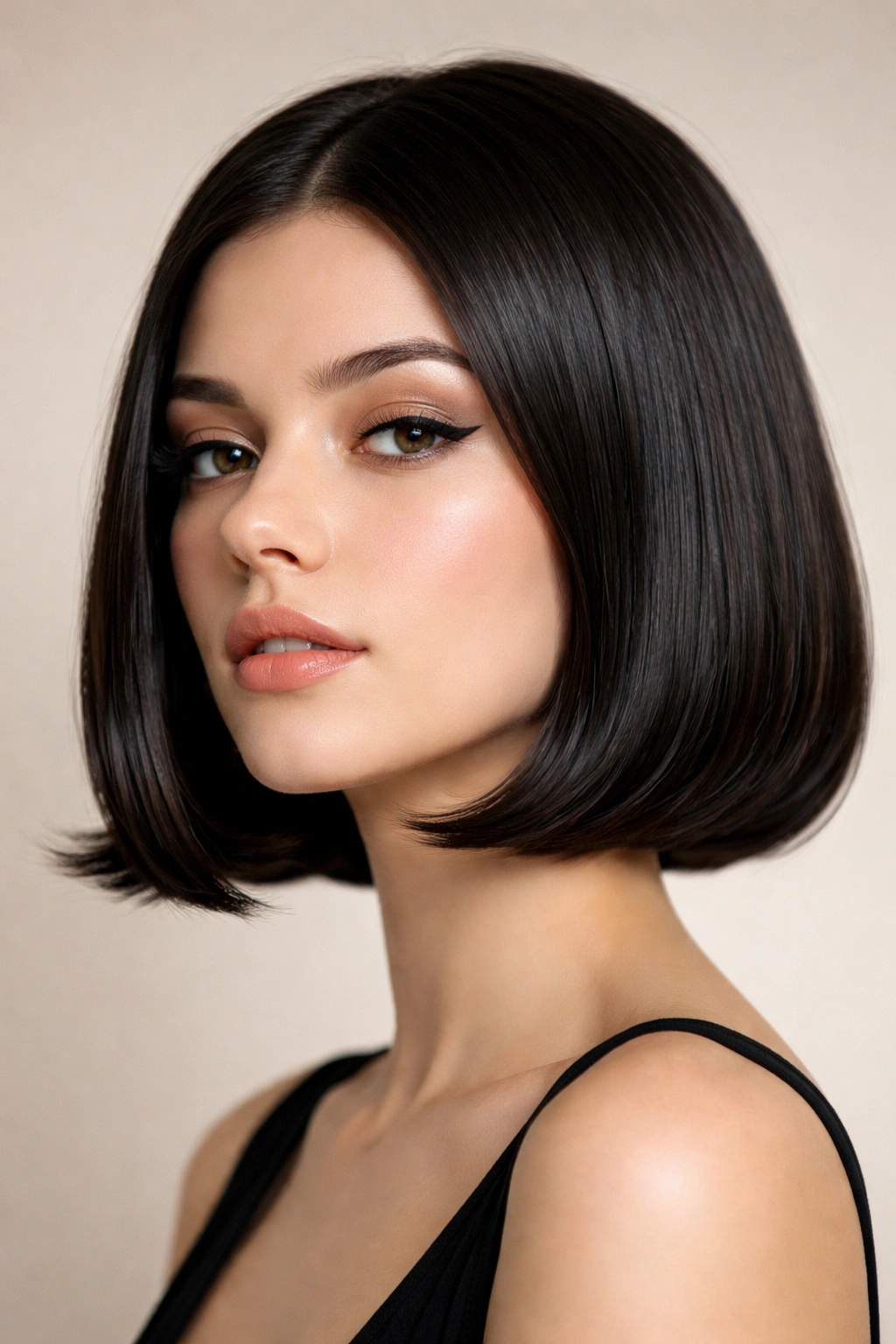
A sleek blunt flip looks sharp in a way the softer versions do not. The edges stay clean, the hair sits close to the head, and the outward turn at the bottom is tiny — often no more than half an inch to an inch. That restraint is the whole point. The style feels polished because it never tries too hard.
This cut is a good match for straight hair that already wants to lie smooth. It is also the version that tends to show off shine the best, because there is less texture competing with the line. If your hair is coarse, you can still wear it this way, but the finish needs more smoothing and more patience with the dryer.
The trick is restraint
A blunt bob with a giant flip can look costume-like fast. Keep the bend subtle. Use a flat iron or round brush just on the ends, and stop before the flip becomes a curl. The shape should feel deliberate, not theatrical.
A few practical notes help here:
- Use heat protectant before every hot tool pass.
- Keep iron heat around 300 to 325°F for fine hair, slightly higher for coarse hair.
- Finish with a light serum only on the last 2 inches.
- Avoid heavy creams near the roots.
This is the bob I reach for when I want the haircut itself to do the work. No extra volume at the crown. No messy texture. Just a crisp line, a clean side or center part, and that tiny flick at the bottom that gives the whole thing its retro spine.
9. A-Line Flipped Bob Cut with Longer Front Pieces
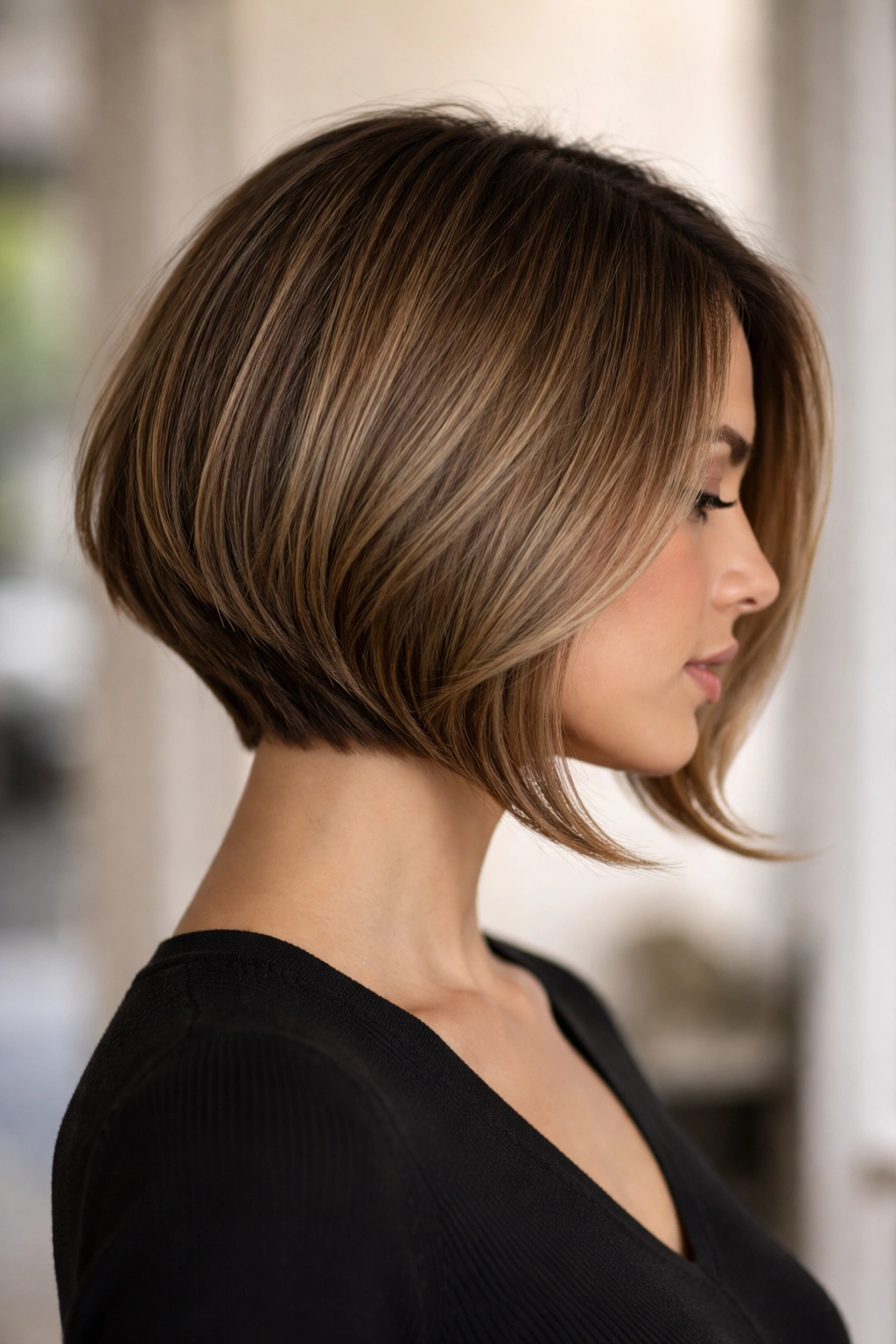
If your face feels broad around the cheeks, the A-line version is the smartest shape to try. The back stays shorter, the front stretches a bit longer, and the diagonal line makes the haircut feel lighter around the face. The flip at the ends adds the retro note, but the A-line shape is what keeps it from looking boxy.
Compared with a straight, even bob, the A-line gives you more room in the front. That matters if you wear glasses, if your jaw is strong, or if you want a little length without losing the bob identity. The front pieces can hit right at the jaw or fall an inch below it, while the back sits higher at the nape. That angle does a lot of work.
How long is long enough
A mild A-line is usually enough. You do not need a dramatic wedge. In fact, too steep an angle can make the haircut look older than you want it to. The sweet spot is a clean slope that you can see from the side, but not one that shouts from across the room.
This shape is especially useful if you grow bored with one-length cuts fast. The front stays interesting as it grows, and the flip gives the ends a little bounce even when the cut is between appointments. Ask for a soft bevel at the bottom so the outward turn feels smooth instead of kicked out harshly.
A-line bobs can be a little underappreciated. They sound plain on paper, then you see one moving and realize how much the angle changes the whole face.
10. Rounded Pageboy Flipped Bob Cut
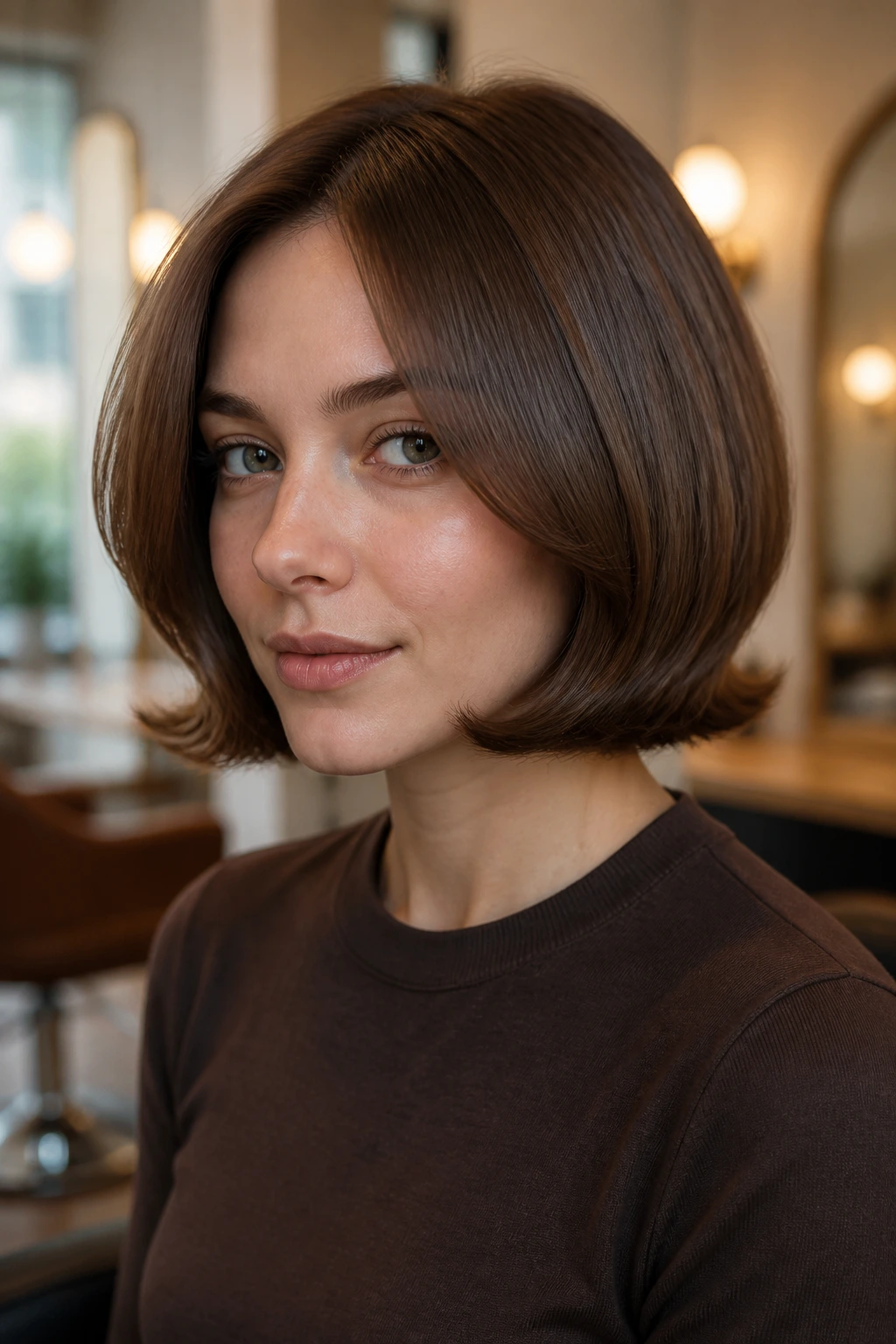
A rounded pageboy flipped bob cut has the strongest retro read of the bunch. The shape curves gently around the head, often with a smooth crown and a tucked-in interior that finishes in a flip at the bottom edge. It feels more sculpted than a standard bob, and that is exactly why it works.
The pageboy influence gives the style its old-school structure. Hair hugs the head more closely near the top, then breaks into that outward kick right at the hem. That contrast is what makes the cut so recognizable. If the top gets too airy or too layered, the whole thing loses its pageboy character and turns into a generic short cut with a bent end.
I like this version with a clean side part or a slightly off-center part. It keeps the face from looking too round and helps the rounded outline feel intentional. Ears can be partly visible or fully tucked, depending on how polished you want the finish. A crisp neckline helps too, because the nape acts like the base of the sculpture.
This is also the style where product can sabotage you fast. Too much serum flattens the top, and too much spray makes the ends stiff. A light mousse at the roots, a round brush through the crown, and a soft bend on the bottom edge are enough. The haircut should still move when you turn your head.
If you want the most convincing retro version, ask for a rounded interior, a clean neckline, and a flip that starts only at the last inch of hair. Everything else is noise.
