



A curly bob can look crisp at the sink and lose its shape by lunchtime. Not because the cut is wrong. Because curly hair changes the rules the second it starts drying.
That’s where wash and go styles for natural curly hair earn their keep. A center part can sharpen a chin-length cut, a side part can lift the crown, and one well-placed clip can change the whole outline without asking for an hour of styling.
Shorter curls are a little fussy about shape. I say that with affection. A bob shows everything: root volume, part placement, product weight, and where your curls decide to clump or separate. The upside is that you can get a lot of look from a few small changes.
So if your hair lives anywhere between chin length and a longer bob, these styles give you room to work with your texture instead of arguing with it.
1. Classic Wash-and-Go Style for Natural Curly Hair
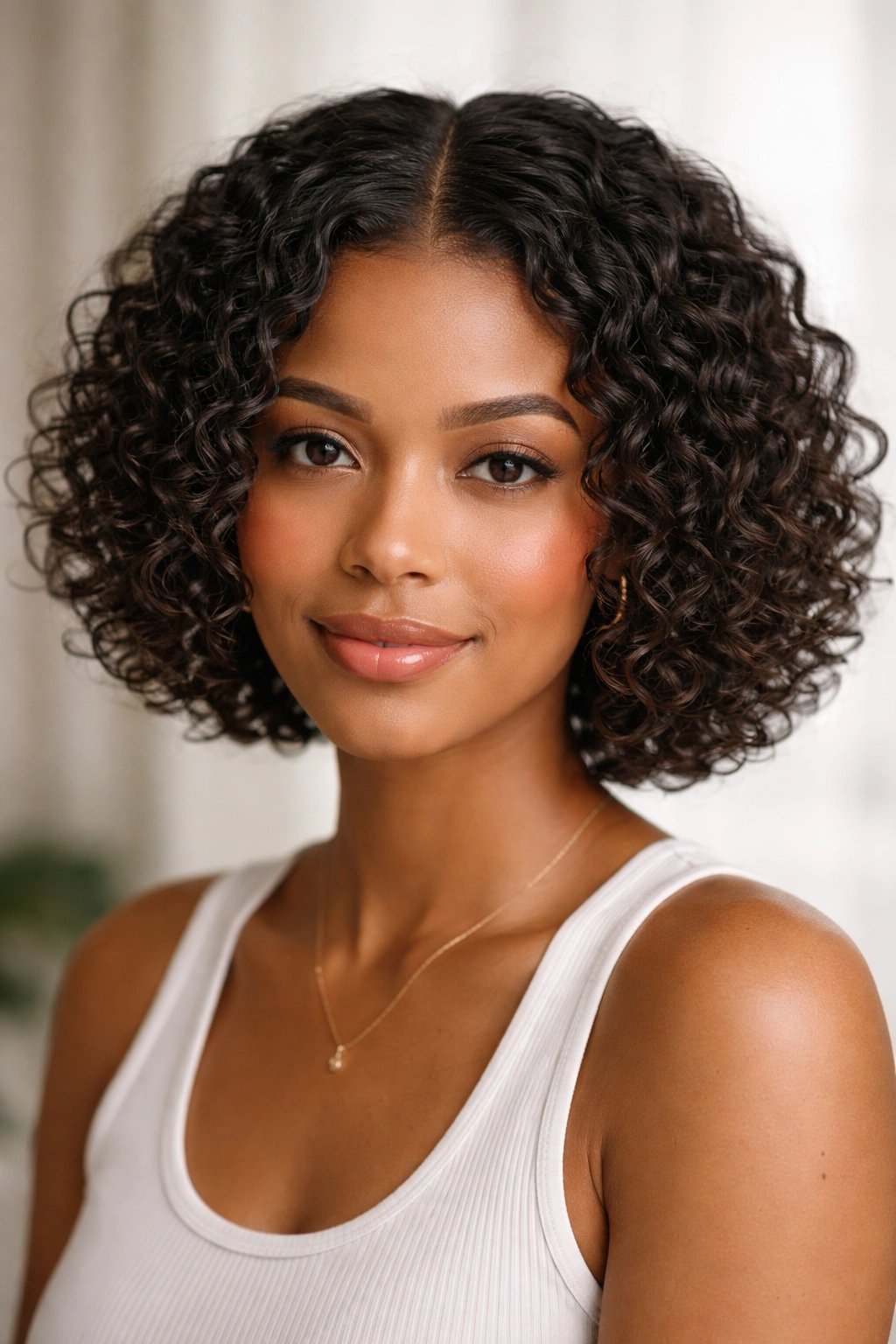
A clean center part is still the easiest way to make a curly bob look intentional. It gives the eye a straight line to follow, and that line helps the curl shape feel tidy even when the texture itself is loose and airy.
Why It Works
The middle part does a lot of quiet work. It balances both sides of the face, shows off curl symmetry, and makes short curls look fuller at the jaw instead of fuzzy at the edges. On a bob, that matters more than people expect.
The trick is to keep the roots calm and the ends defined. A small amount of leave-in on soaking wet hair, followed by a gel with enough hold to form a cast, usually gives the best result. Too much cream can make the bob sink at the crown. Too little product, and the shape spreads out before lunch.
How I’d Style It
Use a rat-tail comb to create a straight center part while your hair is still wet. Then rake a light curl cream through the mid-lengths and seal with gel from roots to ends.
Clip the roots at both temples for 10 to 15 minutes while the curls start setting. That small step keeps the part from drifting and stops the front from drying flat.
- Best for curl patterns that clump easily, from loose spirals to tight coils
- Works well on chin-length and collarbone bobs
- Needs medium to strong hold if your hair frizzes fast
- Keeps the silhouette neat without making the curls stiff
Tip: do not break the cast until the hair is fully dry. Half-dry curls lose the shape you just built.
2. The Deep Side-Part Volume Bob
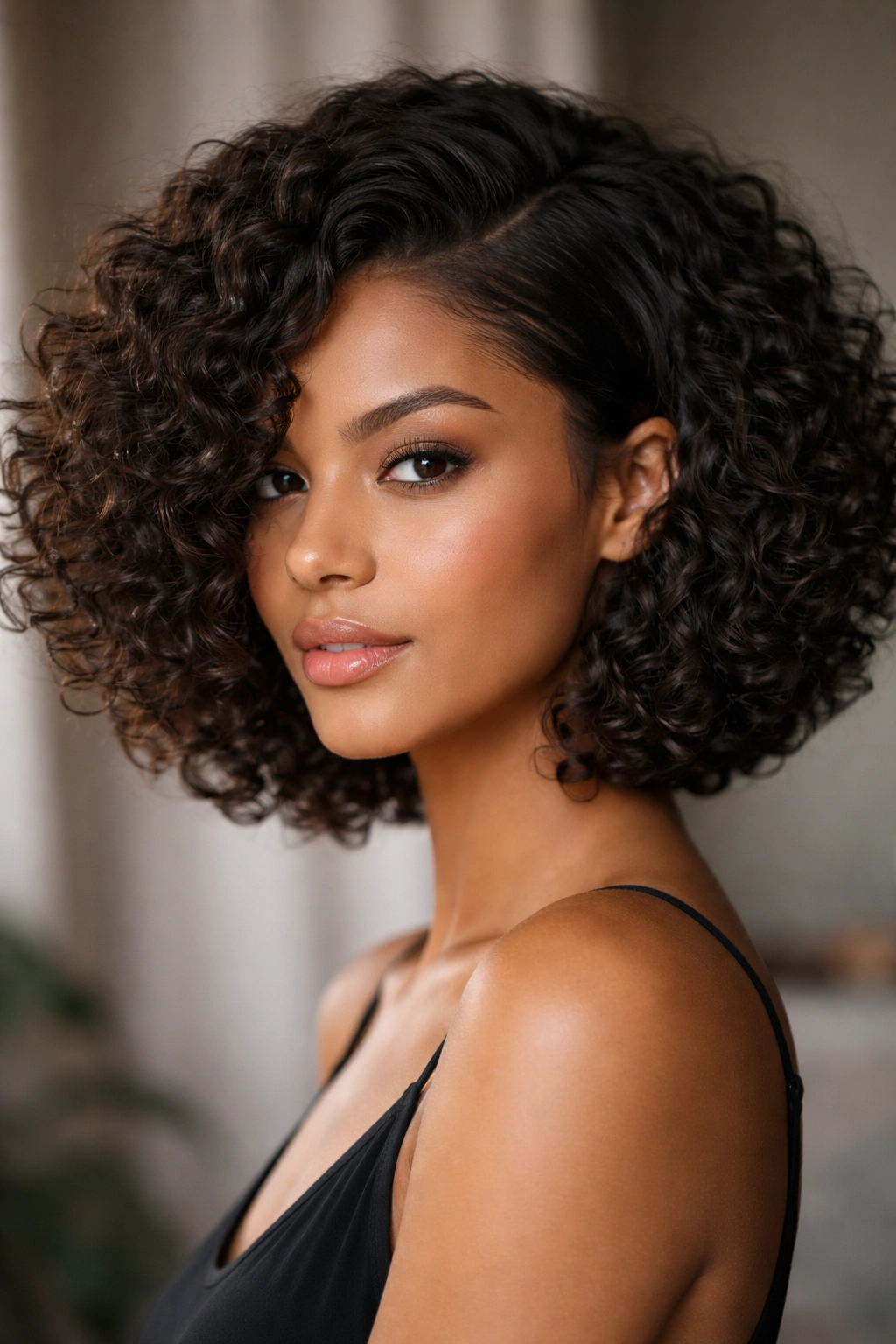
Why does a side part change a bob so fast? Because it shifts weight. One side gets more hair, more lift, and more movement, while the other side settles into a cleaner frame near the cheekbone.
That unevenness is the point. A deep side part works especially well when the crown is flat or when the bob feels a little too square. It gives the haircut a diagonal line, and diagonal lines are kinder to curly hair than stiff straight ones.
I like this look when the top needs help but the ends are already doing enough. A little mousse at the root, worked into the heavier side, usually gives just enough push without turning the front into a crunchy helmet.
The side part also softens a bob that lands right at the jaw. One side brushes the face, the other side opens it up. That tiny asymmetry keeps the style from feeling severe.
3. The Rounded Fluffy Bob
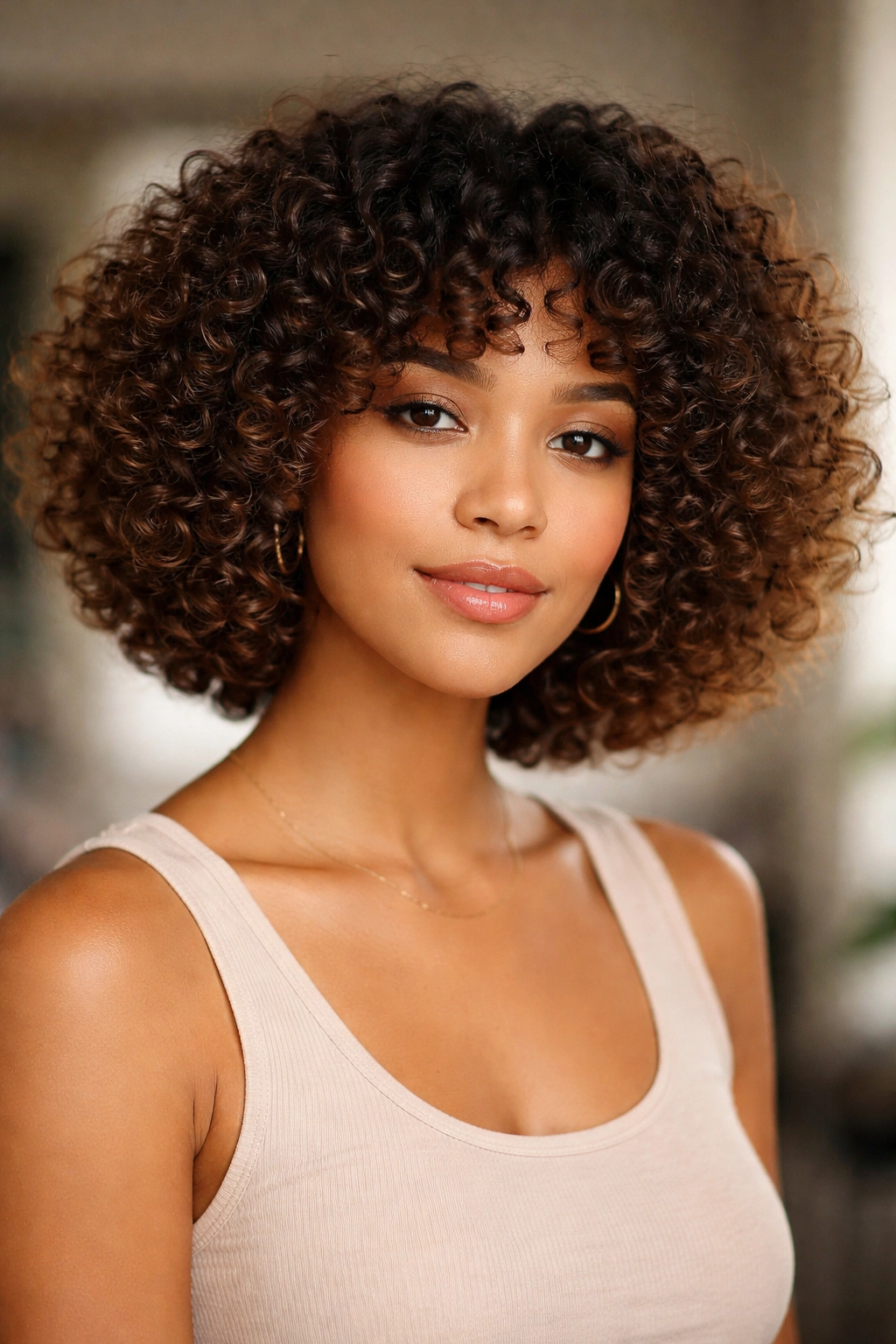
When a bob gets too triangular, round it out. That’s the whole job here.
A rounded fluffy bob lets the curls sit in a soft halo shape instead of trying to fall flat along the sides. It works beautifully on dense hair, especially if your curls have a lot of spring and naturally shrink into a fuller outline. The shape should feel deliberate, not puffy in a random way.
What Makes It Different
This style is less about definition and more about balance. You still want curl clumps, but you also want the outer edge to feel soft and even. That usually means using less cream and a touch more lightweight gel or mousse, because heavy butter-based products can make the sides droop.
If the bob is cut with some layers, even better. The layers stop the shape from turning into a helmet and give the crown room to breathe. If the cut is blunt, you can still do it, but you’ll need to fluff the roots after drying.
How to Keep It From Getting Too Big
Dry about 80 percent of the way, then lift the roots with your fingers or a pick. Don’t tease the hair. Just encourage it.
- Use a lightweight styler on the mid-lengths
- Diffuse on low heat if you want more lift
- Separate only the outermost curls once dry
- Avoid heavy oils at the roots
Small change. Big payoff. A little root lift changes the whole silhouette.
4. The Tucked-Behind-the-Ear Asymmetrical Bob
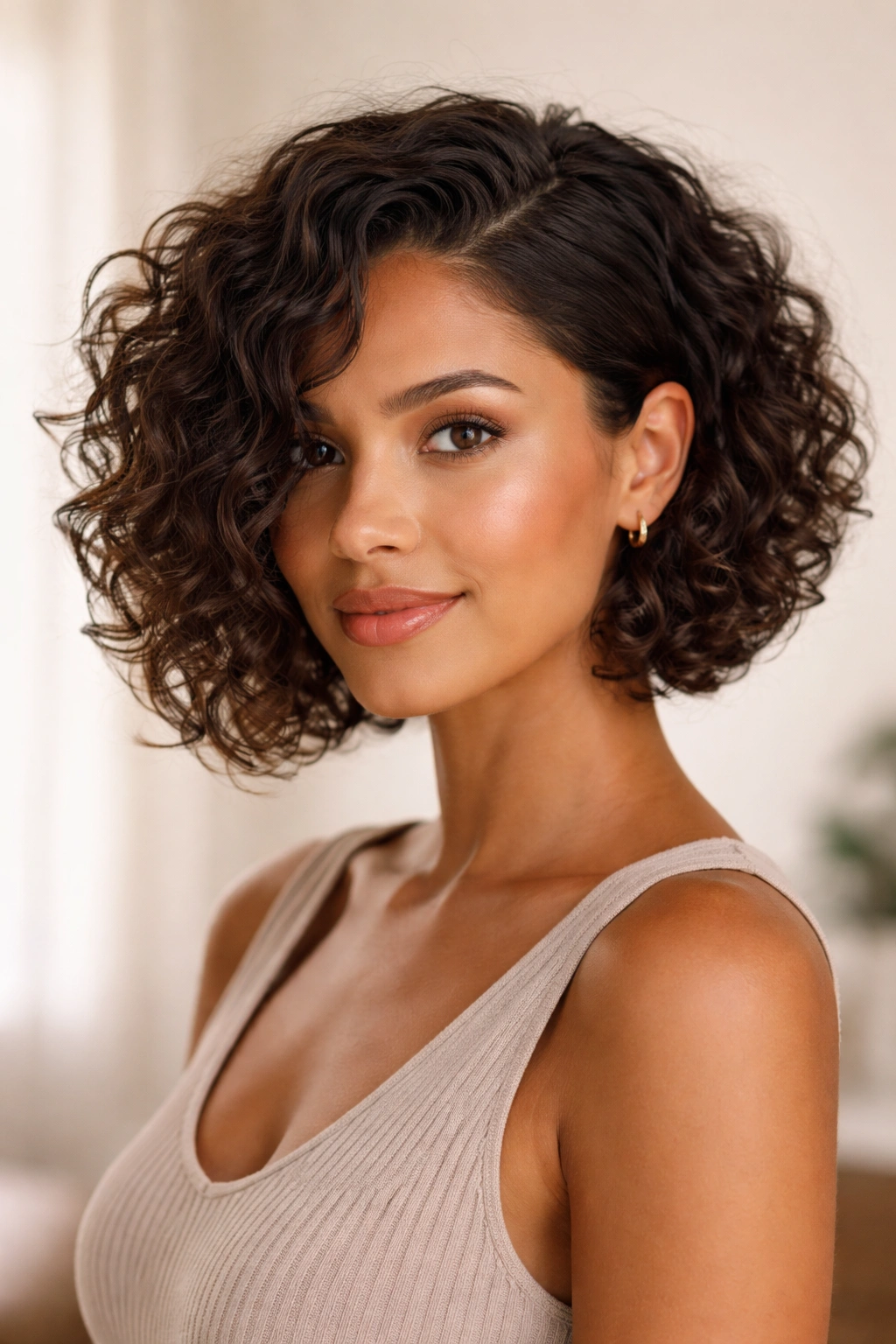
A tucked side gives a curly bob instant shape. It also makes the haircut look longer on one side, which is useful if your curls bounce up higher than you planned.
This is one of my favorite ways to wear a bob when I want the face open but not completely exposed. The tucked side shows off cheekbones, earrings, or just a clean line at the temple, while the loose side keeps the texture front and center.
The best part is that it doesn’t need extra product everywhere. You only need enough control on the tucked side to keep the curls from springing loose. A light gel at the ear line and a clip, pin, or even a tucked curl behind the ear can hold it in place for hours.
There’s a nice side effect too: the asymmetry makes the bob look more tailored. Not perfect. Tailored. That’s a better word for curly hair anyway.
5. Wet-Look Wash-and-Go Style for Natural Curly Hair
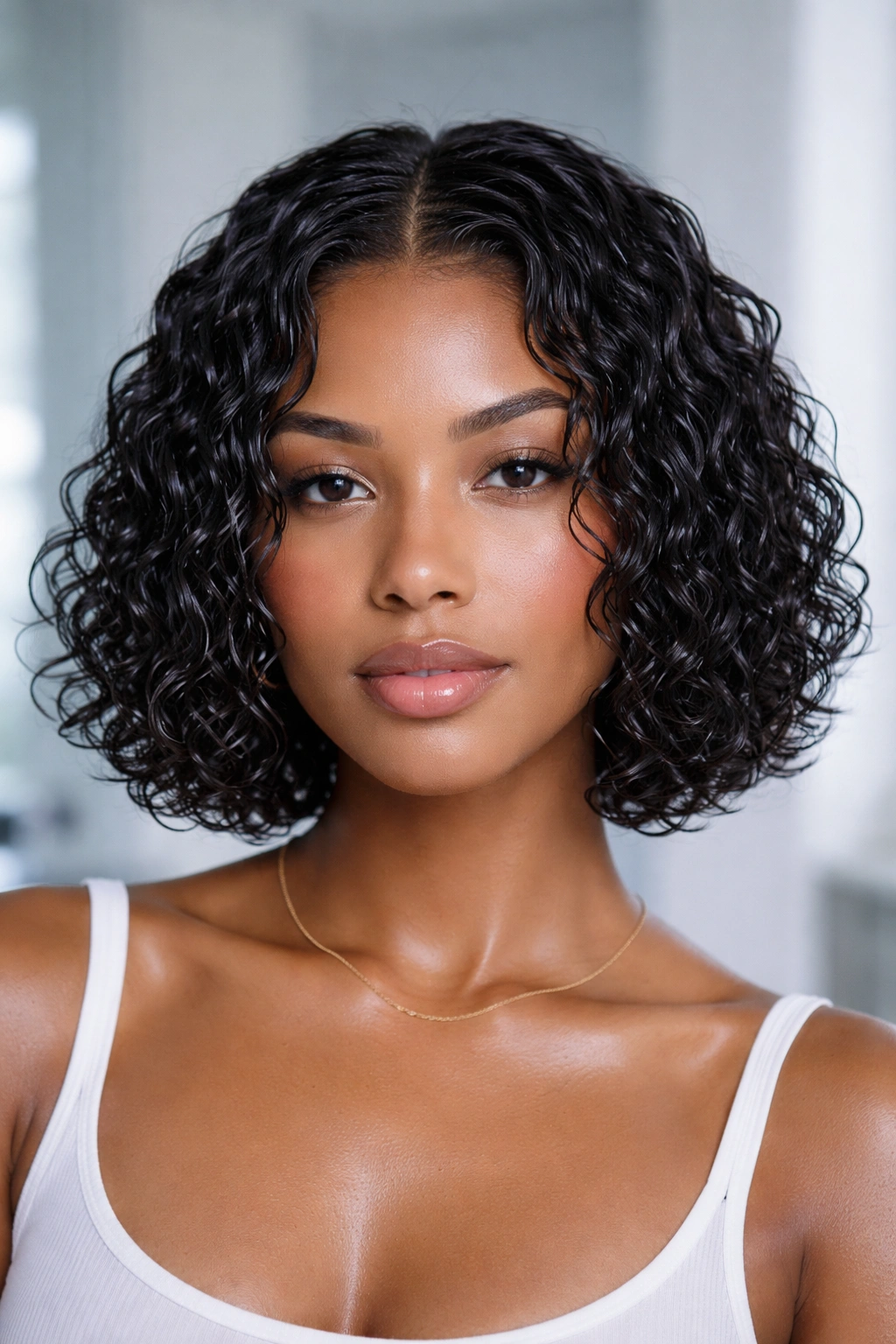
The wet look can be gorgeous on a bob because the shorter length keeps the shine concentrated. Instead of looking weighed down, the curls read as glossy, compact, and neat around the face.
For this style, the hair needs to be truly soaking wet when the styling product goes in. That matters. If the hair is only damp, the gel tends to sit on top of the strands instead of coating them evenly, and the result looks patchy. Use a strong-hold gel, rake it through in sections, then smooth the outer layer with prayer hands so the clumps stay together.
Do not touch the hair while it dries. Seriously. The whole point is to let the cast form cleanly. Once dry, you can scrunch out a little stiffness if you want the style to feel softer, but some people leave the cast in on purpose because the shine is part of the look.
A wet-look bob is not high-maintenance once it is done. It just asks for patience at the start. If you’re the type who likes polished edges and a little drama, this is a good one to keep in rotation.
6. The Half-Up Mini Puff Bob
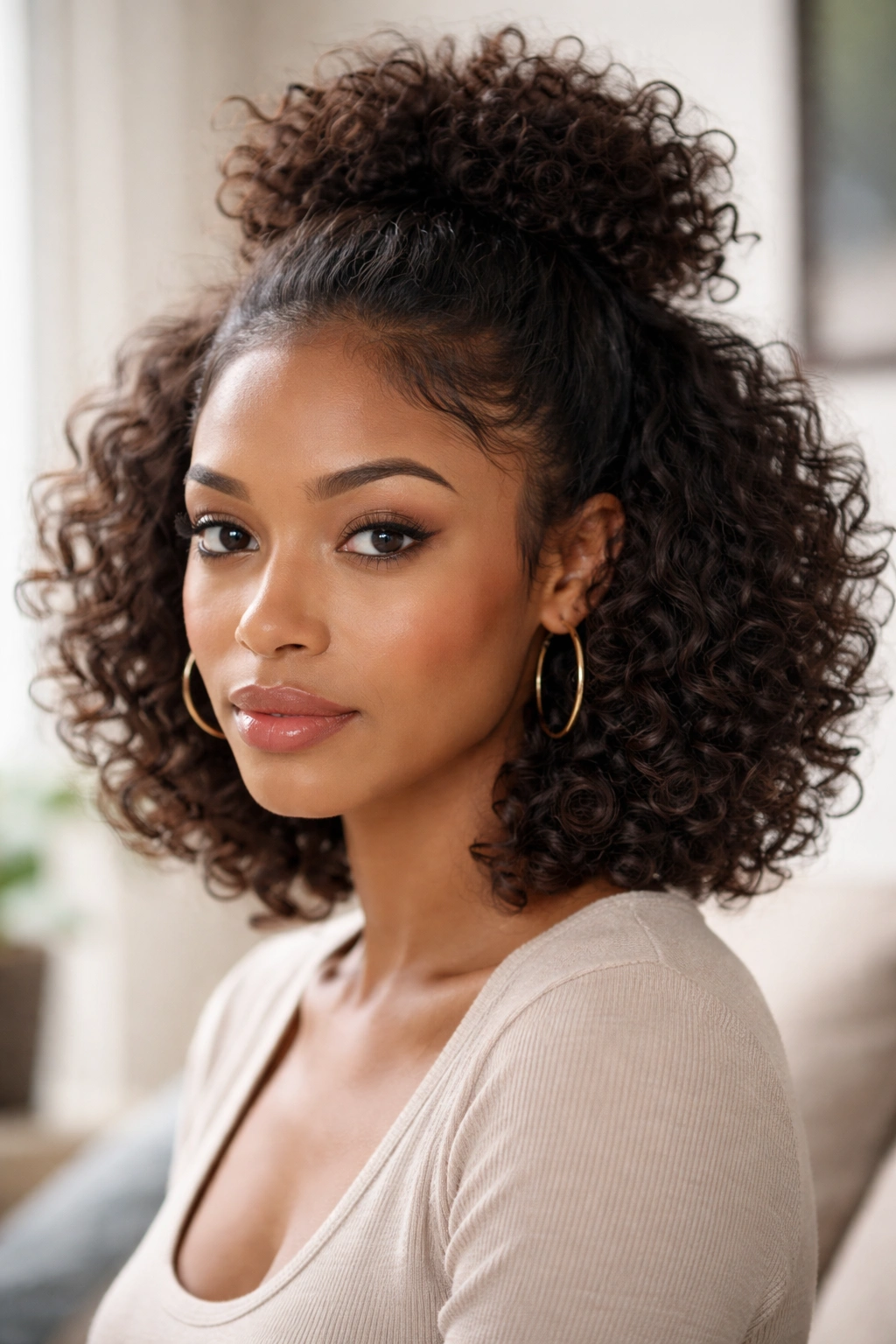
Can you even do a half-up style on a bob? Yes. And on curly hair, it usually looks better than you expect.
The trick is not to try for a full ponytail. There usually isn’t enough length for that, and trying to force it pulls the curl shape apart. Instead, gather the top section from temple to temple, leave the bottom layer loose, and secure the crown with a silk scrunchie or small clip. The result is a mini puff that lifts the front without hiding the bob.
How to Make It Work
Use your fingers, not a brush, to section the hair. Brushes tend to flatten the curls you want to keep. Pull the top just tight enough to sit up without dragging the sides back.
A few face-framing curls should stay out. If every front piece gets swallowed into the puff, the style loses its shape and starts looking accidental.
- Best on chin-length and longer bobs
- Works well when the crown gets flat by midday
- Use a small scrunchie so the base doesn’t look bulky
- Leave the bottom curls loose for contrast
Tip: pinch the puff upward once it’s secured. That tiny lift keeps the style from sitting low and sleepy.
7. The Side-Swept Fringe Bob
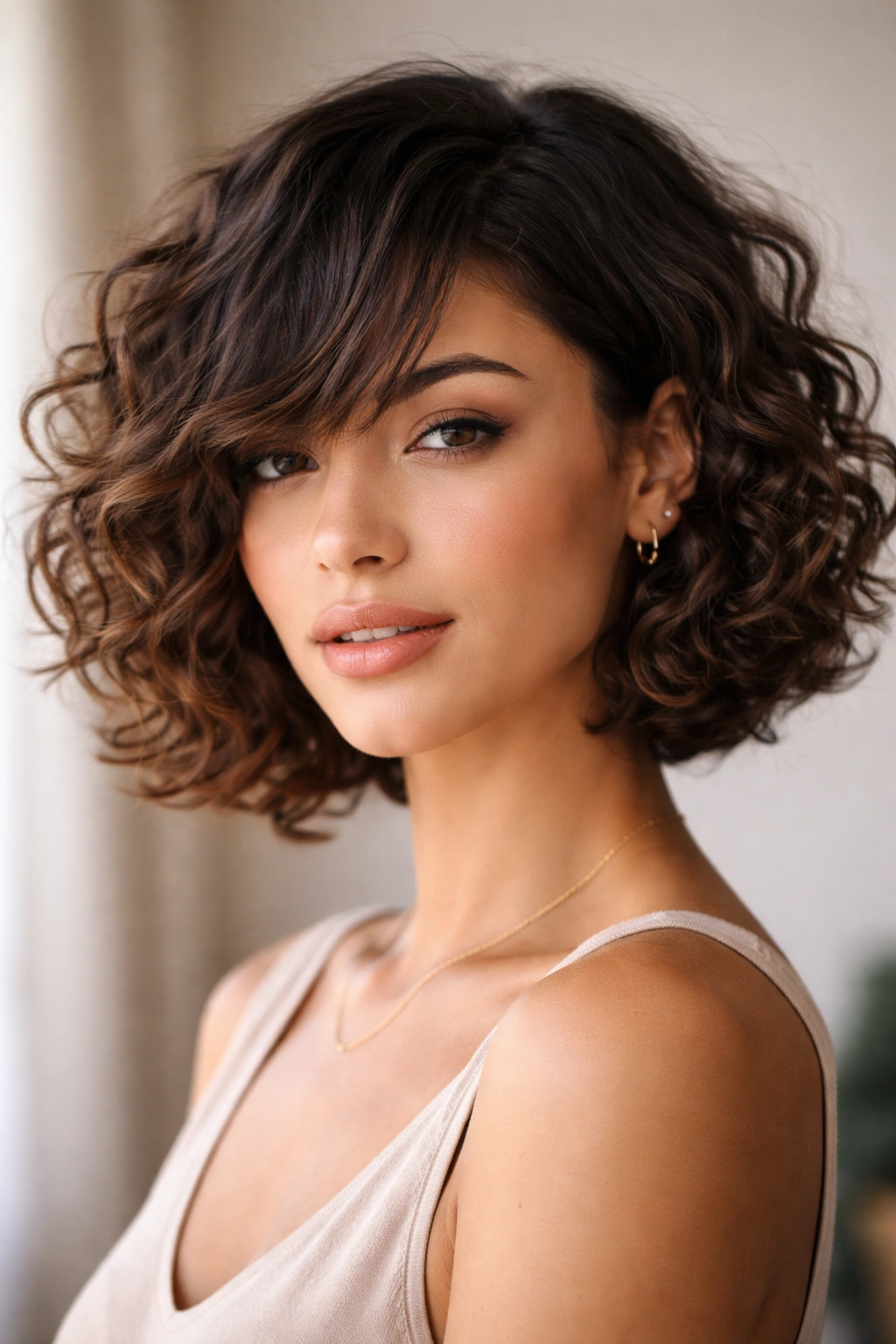
A side-swept fringe can rescue a bob that feels too open across the forehead. It softens the top edge, gives the haircut a little movement, and keeps the whole style from looking boxy.
I like this approach when the front curls grow in a way that never quite lands evenly. Instead of fighting them straight down, sweep them over to one side and let them fall into a loose fringe. A little foam or light gel on the front sections helps them stay where you place them, but the idea is not to freeze them. The fringe should move when you turn your head.
What Makes It Different
This is one of those styles that looks more styled than it actually is. The side-swept front creates a diagonal across the face, which is flattering on shorter cuts because it breaks up the roundness around the cheeks.
If the fringe keeps separating, clip it while it dries. If it dries in the wrong direction, wet the front only, reshape it, and leave the rest alone. You do not need to redo the whole bob.
A side-swept fringe also works well when you want the bob to feel softer without adding volume everywhere. It gives you shape at the front and leaves the rest of the cut free.
8. The Finger-Coiled Front Pieces
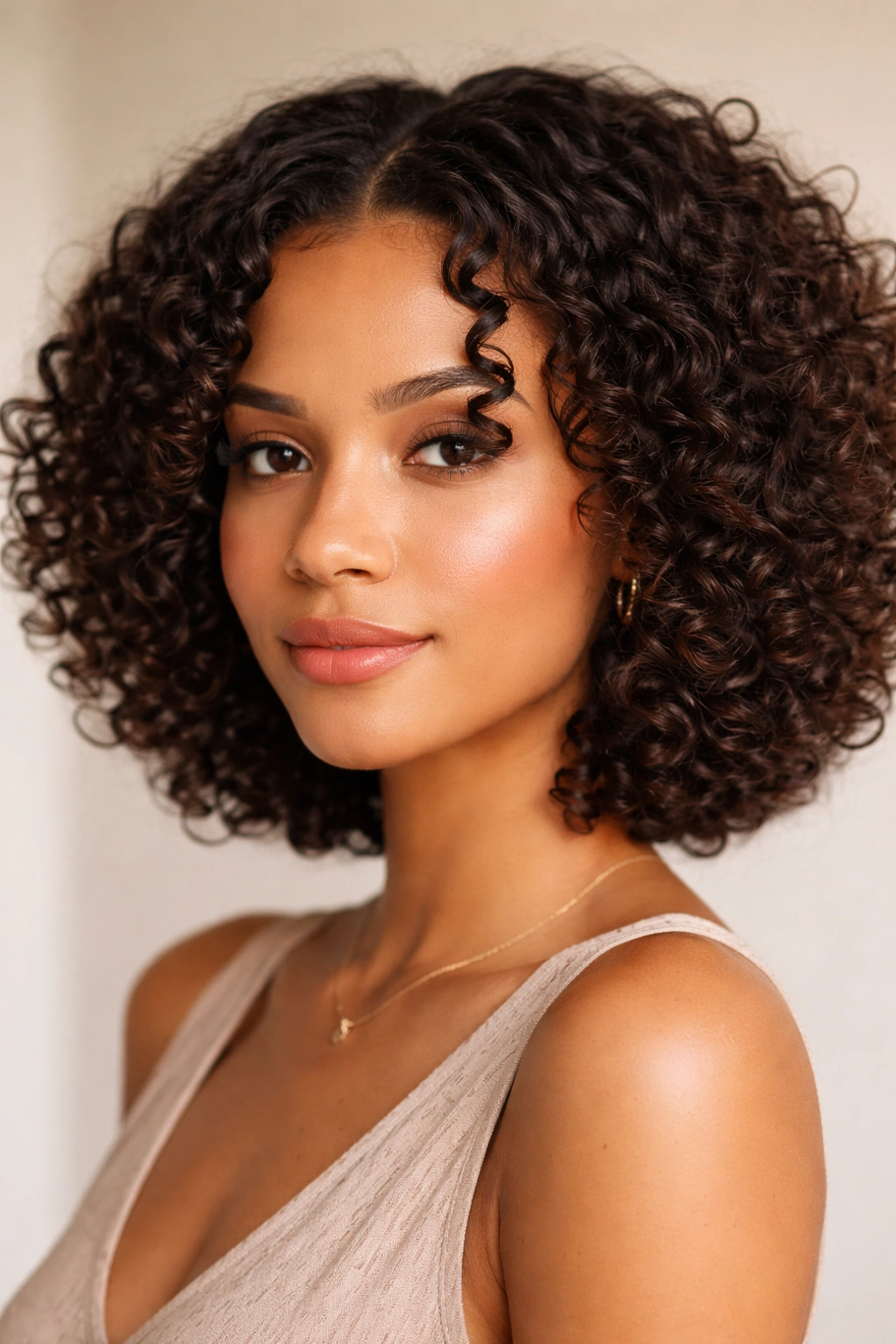
The front two or four curls are the ones people notice first. That’s why finger-coiling them can change the entire look without touching the rest of the head.
This works especially well when the back of the bob already has a nice shape but the front pieces keep behaving differently. Maybe one curl bends outward. Maybe the other sits flat against the cheek. Finger-coiling gives you control where you need it most.
Use a tiny amount of gel on each chosen section, wrap the curl around your finger once or twice, and let it spring back into place. Don’t overdo it. Two or three front coils are usually enough.
Quick Rules That Save Time
- Coil only the curls that frame the face
- Use more water than product
- Keep the section size small, about the width of a pencil
- Let the coils dry fully before separating them
The rest of the bob can stay loose and natural. That contrast is what makes the style feel fresh. And if you want even more definition near the face, you can repeat the same process on the other side the next time you wash.
9. The Diffused Stretch-and-Shape Bob
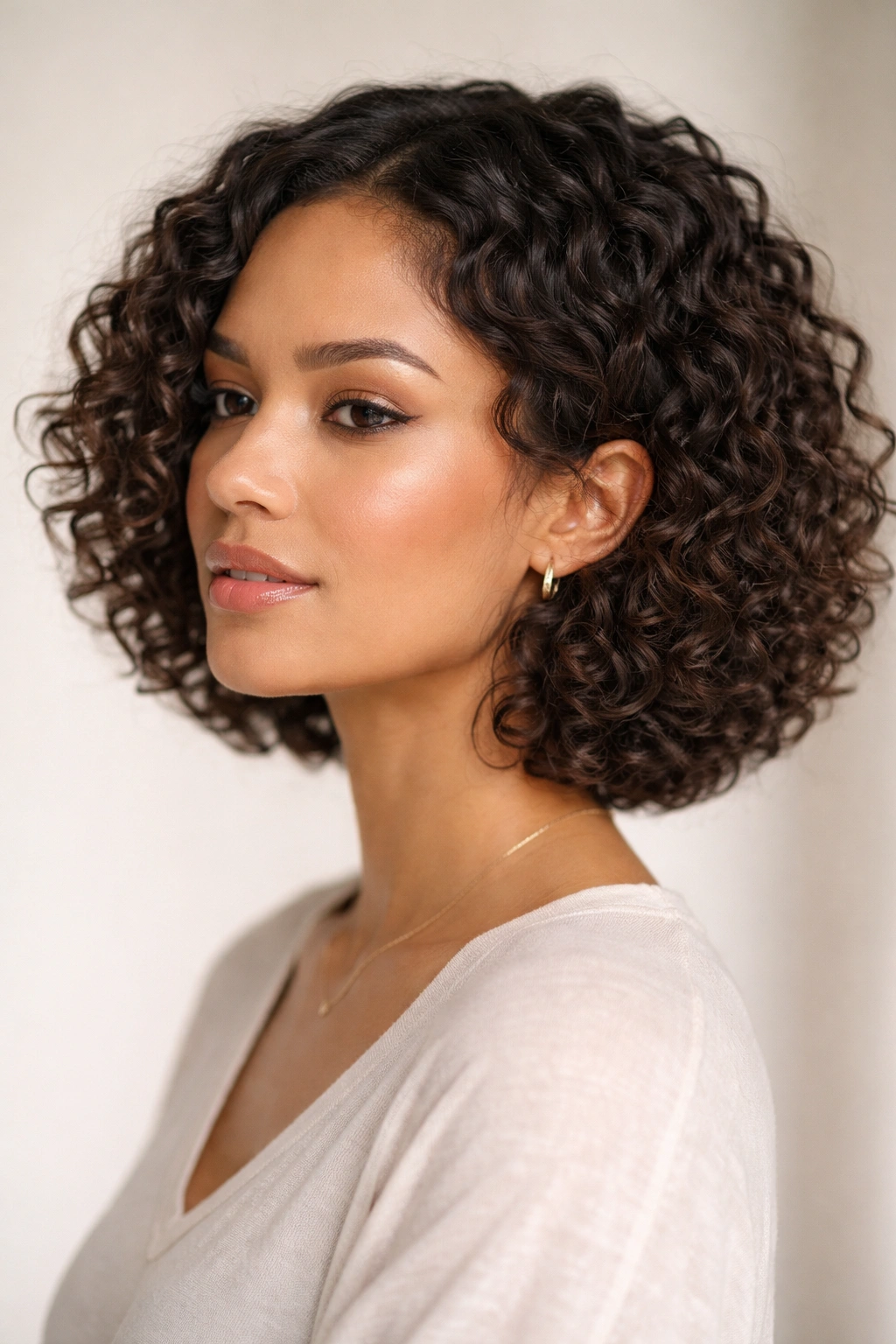
Not every wash-and-go has to dry tiny. Some bobs look better with a little stretch at the root and a cleaner fall through the length.
A diffuser helps here, especially if your curls shrink a lot and the bob ends up sitting higher than you want. Use low heat or cool air, hover at the roots first, then cup the ends only after the cast starts to form. The goal is gentle shape, not blown-out volume. If you blast the hair with high heat, the top frizzes and the whole outline gets rough.
When It Makes Sense
This style is smart when your bob is layered or angled and you want the cut line to show. It also works if the curls look great when wet but dry too compact. A little stretch keeps the length visible around the jaw and neck.
The diffuser does not have to touch every section for long. In fact, moving it around too much can make the surface look fuzzy. Short passes, low setting, stop when the hair is about 90 percent dry.
What to Watch For
- Use a heat protectant if you diffuse often
- Stop before the hair feels hot to the touch
- Hold the diffuser still around the crown for better lift
- Scrunch once at the end, not five times
This is the style for people who like shape more than volume.
10. The Cloud-Fresh Wash-and-Go Style for Natural Curly Hair
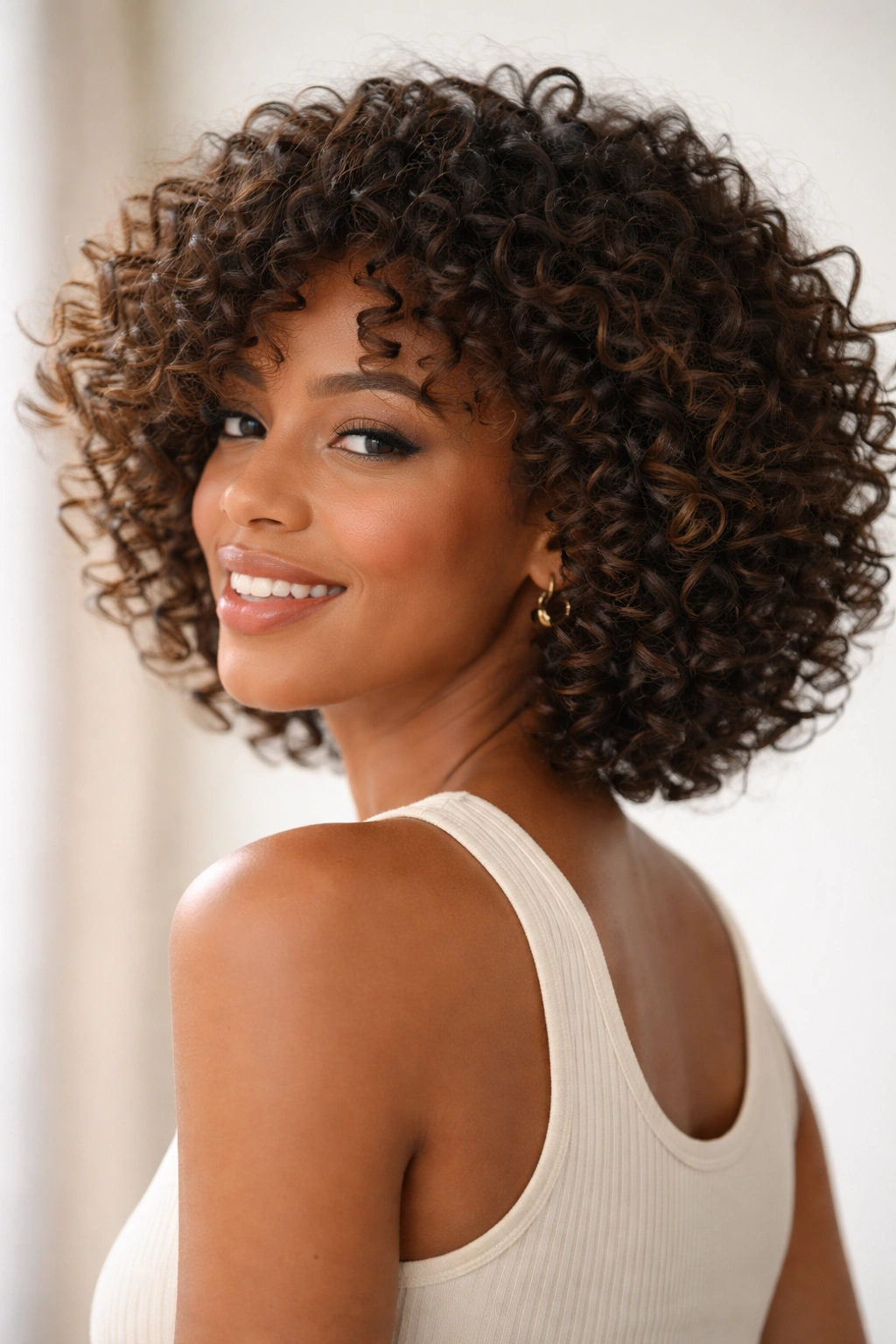
If the wet look is sleek, cloud-fresh is airy. The curls are fully dry, fully separated, and soft enough to move when you turn your head.
This style asks for a different finish than the wet-look bob. Instead of keeping the curl clumps tight, you break them apart gently with oiled hands or a pick once the hair is dry. The result is lighter, bigger, and a little softer around the edges. On a bob, that can be beautiful because the cut still keeps its outline while the curl texture gets room to breathe.
I prefer this when the bob starts feeling too dense near the sides. A few careful passes at the root can open the shape without wrecking the curl pattern. The ends should stay intact. That’s the part many people rush and then regret.
How to Get the Most From It
Keep the product load lighter from the start. A heavy cream can make the cloud-fresh finish collapse instead of float. Use gel where you need hold, then wait until the hair is fully dry before you separate anything.
- Works well on medium-density curls
- Needs a good cast before fluffing
- Best refreshed with a light mist, not a soak
- Keep oils off the roots if you want lift
This is the curly bob I reach for when I want softness instead of strict definition.
11. The Scarf-Banded Wash-and-Go Bob
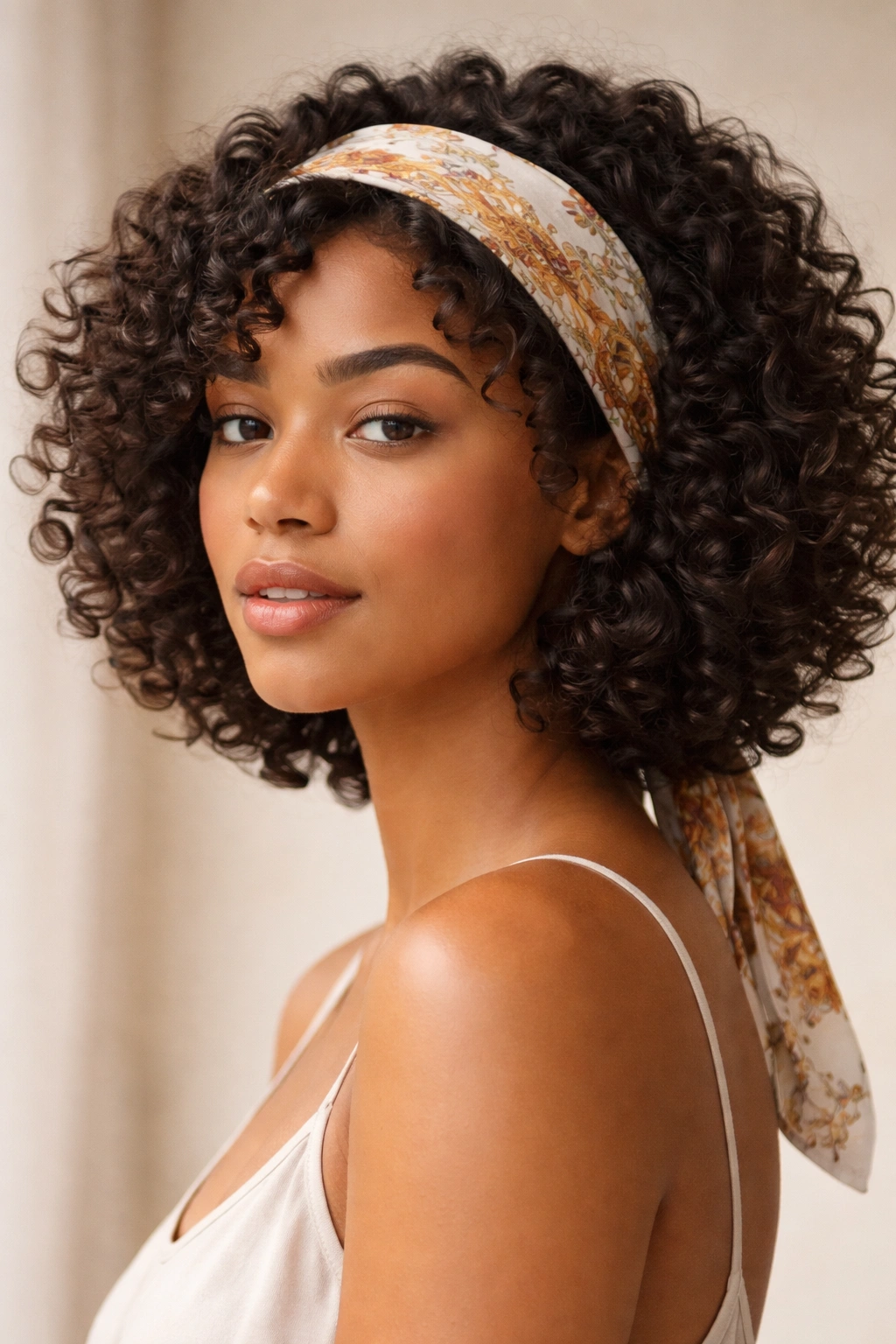
A narrow silk scarf can rescue a bob that looks heavy at the temples. It can also make a wash-and-go feel planned in about ten seconds.
Wrap the scarf around the crown, the hairline, or just behind the front hairline, depending on what you want to shape. A crown wrap pushes the roots up a bit. A low headband placement can smooth the front and let the curls fan out below it. Both work. Neither needs a perfect technique to look good.
The reason this style works so well on curly bobs is simple: the bob already has a built-in shape, so the scarf only has to refine it. You are not building the whole style from scratch.
Three Places to Put It
- Across the hairline for a sporty, pulled-together look
- At the crown for more root lift
- Low on the head to tame frizz around the forehead
Pick a silk or satin scarf if you can. Rough fabric creates extra friction, and curly hair does not need that. A scarf band also buys you time on days when your edges are doing their own thing.
12. The Clipped Side-Part Bob
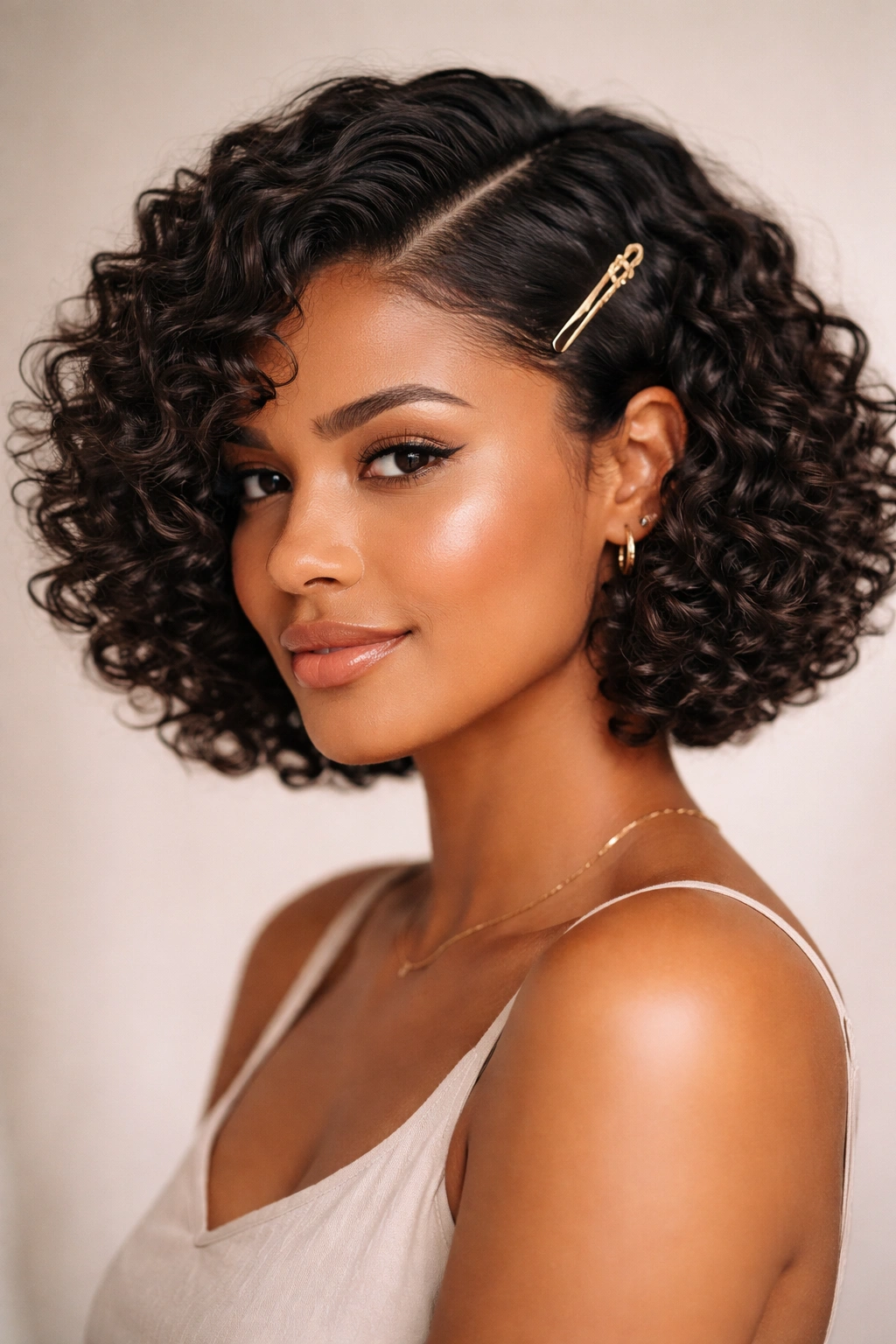
A clip is not decoration here. It is structure.
That matters on curly bobs because side parts can collapse when the hair is dense or when the front section keeps falling back into the middle. A strong clip gives the side part a place to rest, and the whole style looks more anchored. Use an acetate clip, a small metal barrette, or a claw clip with teeth that can actually grip curls instead of sliding over them.
This is one of the easiest styles to wear when you want the bob to feel finished without making the front too precious. The clip can sit near the temple, hold one side back, or pin a small section just above the ear so the curl pattern stays visible.
And yes, a clip can look grown-up. That old idea that clips belong only in messy buns is tired. On a bob, the right clip gives shape without hiding texture.
Where to Place It
Try the clip an inch above the ear if you want to keep the cheekbone clear. Put it closer to the part if you need help holding the front flat. If the clip slides, reduce the amount of product near that section. Product build-up is often the real problem.
13. The Tapered Shape with Soft Crown Lift
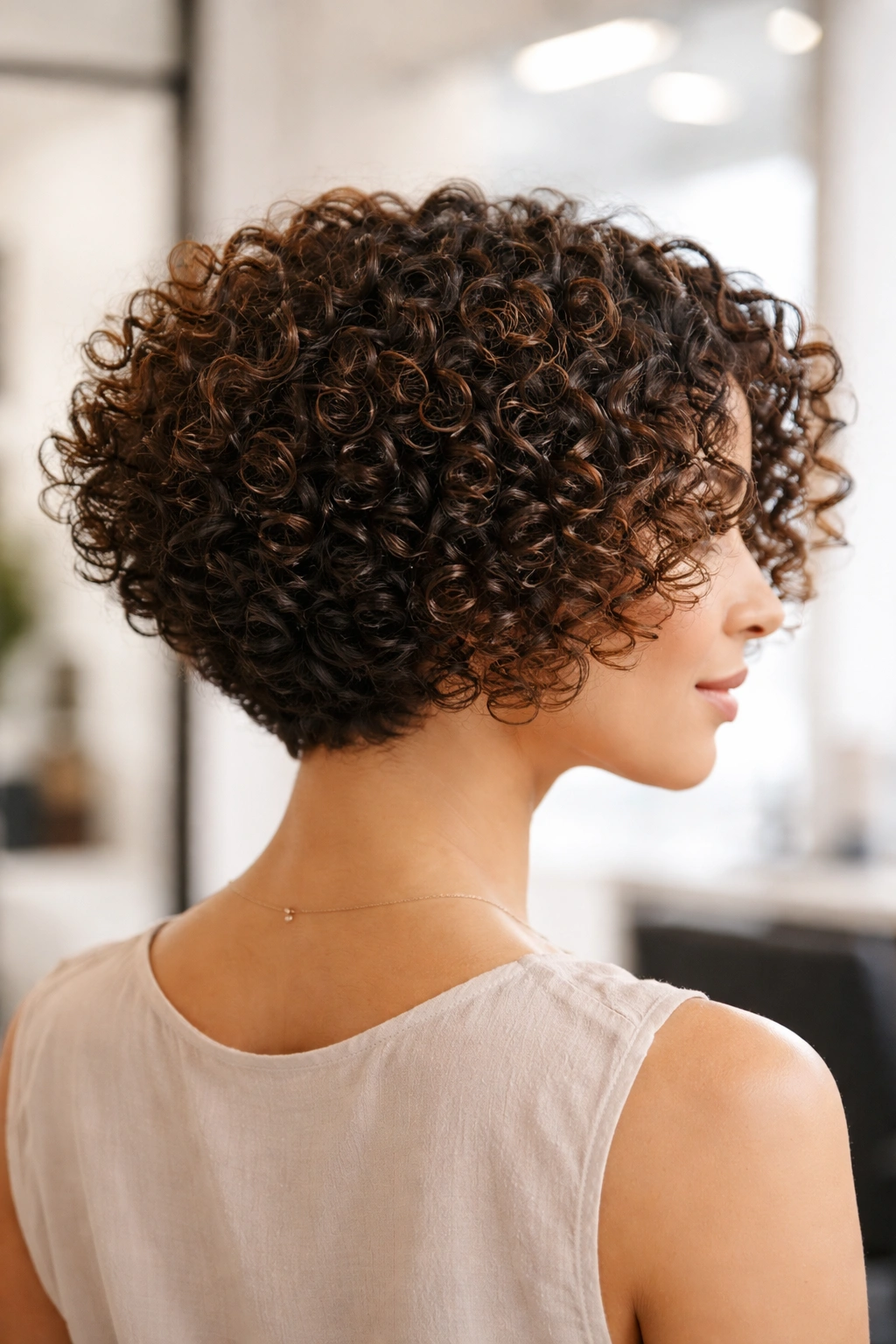
A tapered bob gives you cleaner lines at the back and a little more lift on top, which is handy if your curls are thick enough to sit heavy near the neck.
This style works best when the cut is shorter at the nape or naturally narrows toward the back. The styling job is to keep the crown from going flat while the lower layers stay neat. A small amount of mousse at the roots and a diffuser on low heat usually does the trick.
The crown lift matters more than people think. Without it, a tapered bob can look compressed from above and bulky from the side. With it, the shape opens up and the neckline stays visible.
How to Shape It
Focus product at the roots, not the ends. The ends already have curl. The roots need help standing up.
Use clips at the crown while the hair dries, then remove them once the root pattern sets. If the back starts puffing too much, smooth it down with wet hands rather than adding more product. More product there usually makes the back heavier, not cleaner.
This is a good style when you want the bob to look neat but not stiff.
14. The Piecey Airy-End Wash-and-Go Bob
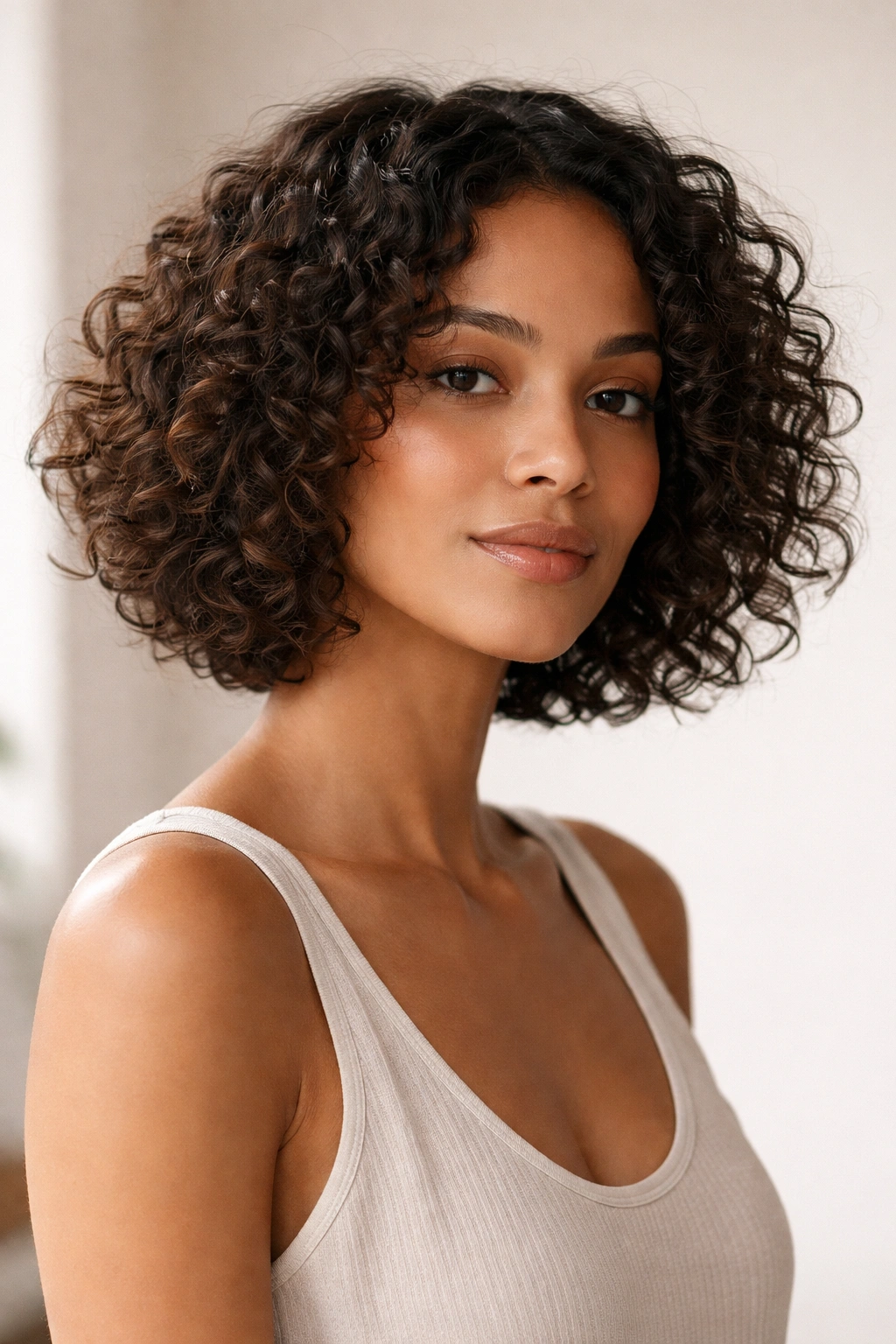
What if the ends are the part you want people to notice? Then keep them light.
A piecey airy-end bob works best when the lower half of the hair is separated enough to show movement, but not so much that it turns frizzy. It’s a nice fit for looser curls and elongated bob cuts, especially when the length starts brushing the neck and you want the ends to feel soft instead of blunt.
The styling trick is to use less cream on the last couple of inches. Concentrate the richer product higher up, where the hair needs help clumping. Then use your fingers to separate only the tips once the hair dries. That keeps the outline tidy while the ends stay lively.
This style can look a bit more casual than a rounded bob, and that is the point. It feels lighter. Less heavy. More movement.
A Simple Way to Build It
- Apply most of the product through the mid-lengths
- Use water to reactivate the ends if they dry too stiff
- Scrunch upward once, then stop
- Pick apart only the curl groups that feel too chunky
The ends should move when you turn your head. If they don’t, you probably used too much butter or cream near the bottom.
15. The Soft Second-Day Fluff Bob
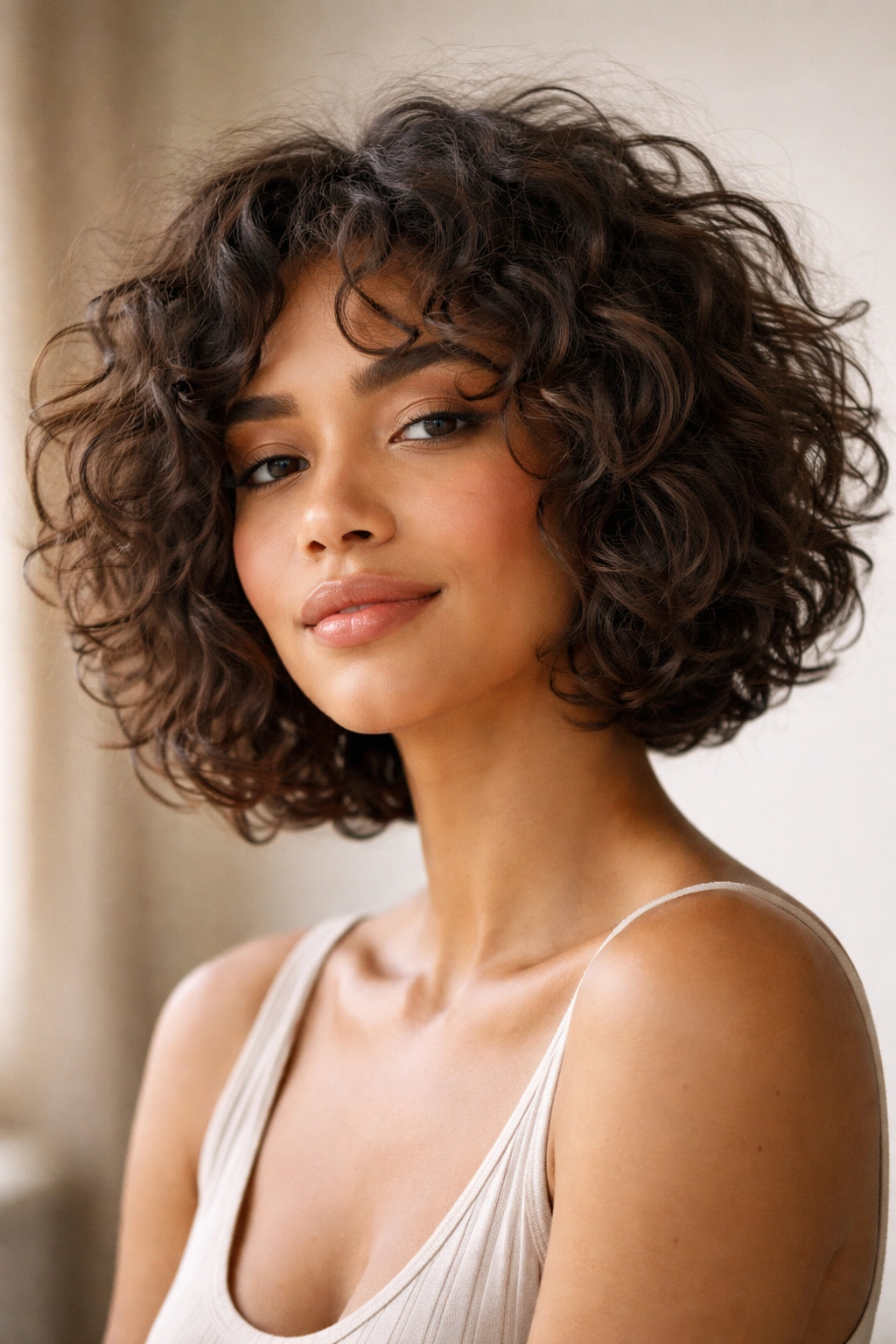
The best curly bob is not always the one you leave the house with on wash day. Sometimes it’s the softer version that shows up after a night’s sleep and a quick refresh.
This style keeps enough definition to look styled, but it loosens the curls just enough to feel lived-in. Start with a light mist of water, then smooth a little leave-in diluted with water through the top layer. A 3:1 water-to-leave-in mix usually keeps things from getting heavy. Scrunch gently, pick up the roots, and shape the front pieces with your fingers.
The second-day fluff bob is useful because it hides a lot of small mistakes. A curl that dried a little crooked yesterday may sit better today. A root that was too flat on wash day often has a better bend after sleeping on it. That kind of shift can be annoying if you want perfection, but it is useful if you want a softer shape with less effort.
A lot of people treat day-two hair like a problem. I don’t. Sometimes it’s the better style.
Final Thoughts
The curly bob works best when you stop asking it to do one thing every day. A center part, a side part, a clipped temple, a soft puff — each one changes where the weight sits and how the curls frame your face.
That’s the real trick with wash and go styles for natural curly hair. Shape matters more than fuss. Product matters, sure, but only because it supports the outline you want.
Pick the version that matches your curl pattern, your cut, and how much volume you’re willing to live with. A bob that feels good on a busy morning is the one that earns repeat wear, and that’s the one worth keeping.
