



The best gym hairstyles for natural curly hair are the ones that survive sweat, friction, and the awkward moment when your headphones slide halfway off.
Curly hair does not need to be “fixed” before a workout. It needs a shape that stays friendly once your scalp warms up and the tiny hairs around your hairline start doing their own thing. A style that looks polished in a mirror can fall apart the second you lie on a mat or bend under a barbell, and that is usually because the base was too loose, too tight, or both.
Sweat itself isn’t the villain. The rubbing is. Elastic bands that snag, clips that poke, and styles that pull at the temples will make even cooperative curls feel like a bad idea by the end of a session.
So the smartest workout hairstyles for curly hair do three things at once: they keep the curls contained, they reduce repeated touching, and they leave your edges and scalp with enough breathing room to handle a hard class. The first style earns its spot because it solves the biggest problem most curlies know well — keeping the curl mass up and out of the way without turning the whole day into a headache.
1. High Puff That Keeps Curls Off Your Neck
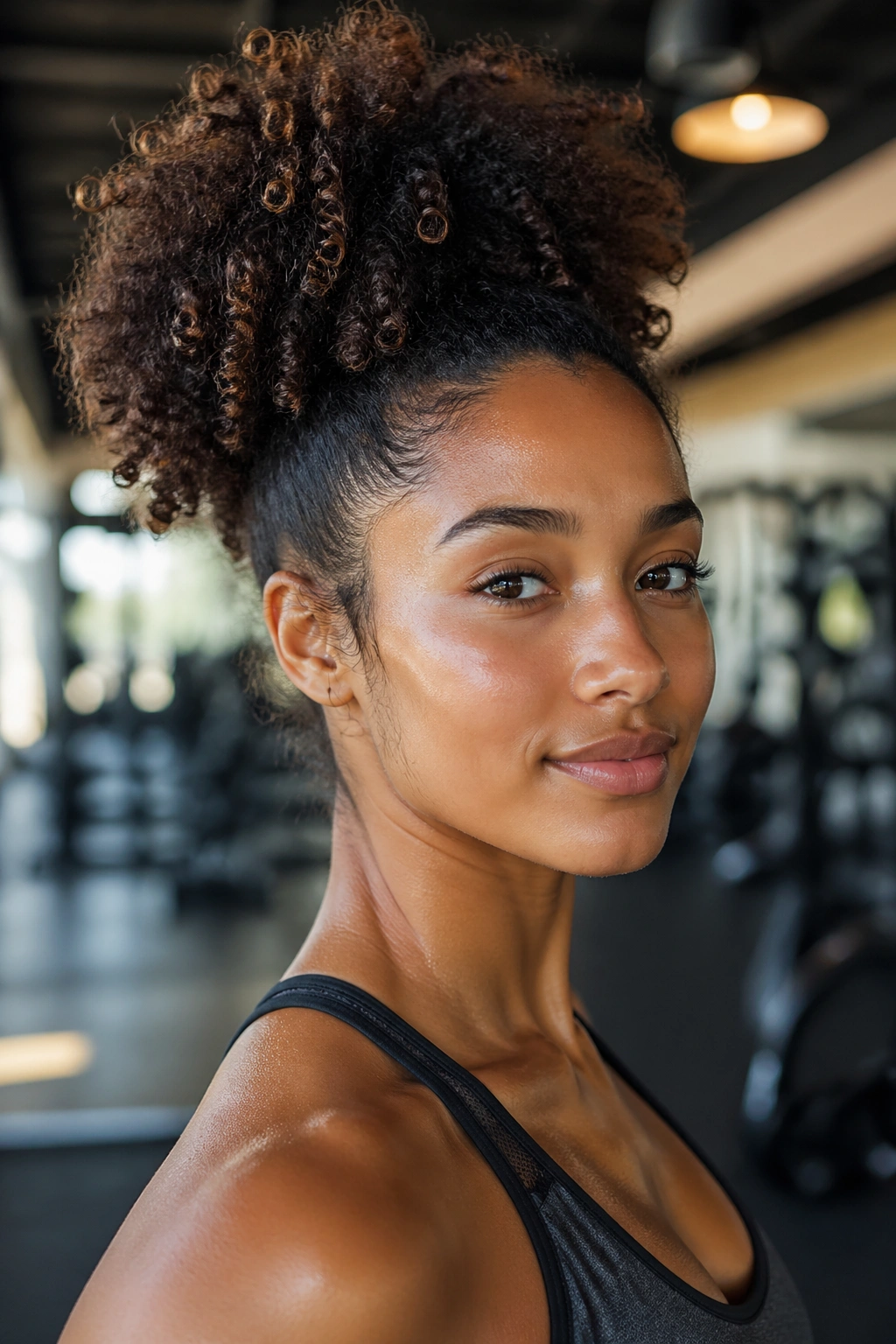
A high puff is the old reliable of natural curly hair gym styles, and I mean that in the best way. It takes the weight of your curls, moves it upward, and clears your neck before your workout even starts. That matters more than people think. A sweaty neck is annoying; a sweaty neck with curls sticking to it is worse.
Why It Works So Well
The shape of the puff keeps most of the hair compressed at the crown while letting the curl pattern stay intact. You’re not flattening the texture into obedience. You’re gathering it into one strong point and letting the curls fan out on top, where they’re less likely to get crushed by a bench or a floor mat.
Best for: medium to long curls, dense coils, and hair that already has some lift at the root.
What to use: a coil tie, a snag-free elastic, or a soft scrunchie with enough stretch to hold thick hair.
Watch out for: pulling the front too tight. That’s where people get the headache. Keep the tension firm at the base and gentle at the hairline.
If your curls are short, don’t force the puff to sit huge and dramatic. A smaller puff that sits a little higher can be much more comfortable and still does the job. And if you like a clean finish after class, a satin scrunchie in your bag helps the puff hold its shape when you take it down.
My favorite rule: secure it once, adjust it once, and leave it alone.
2. Pineapple Ponytail for Preserving Curl Pattern
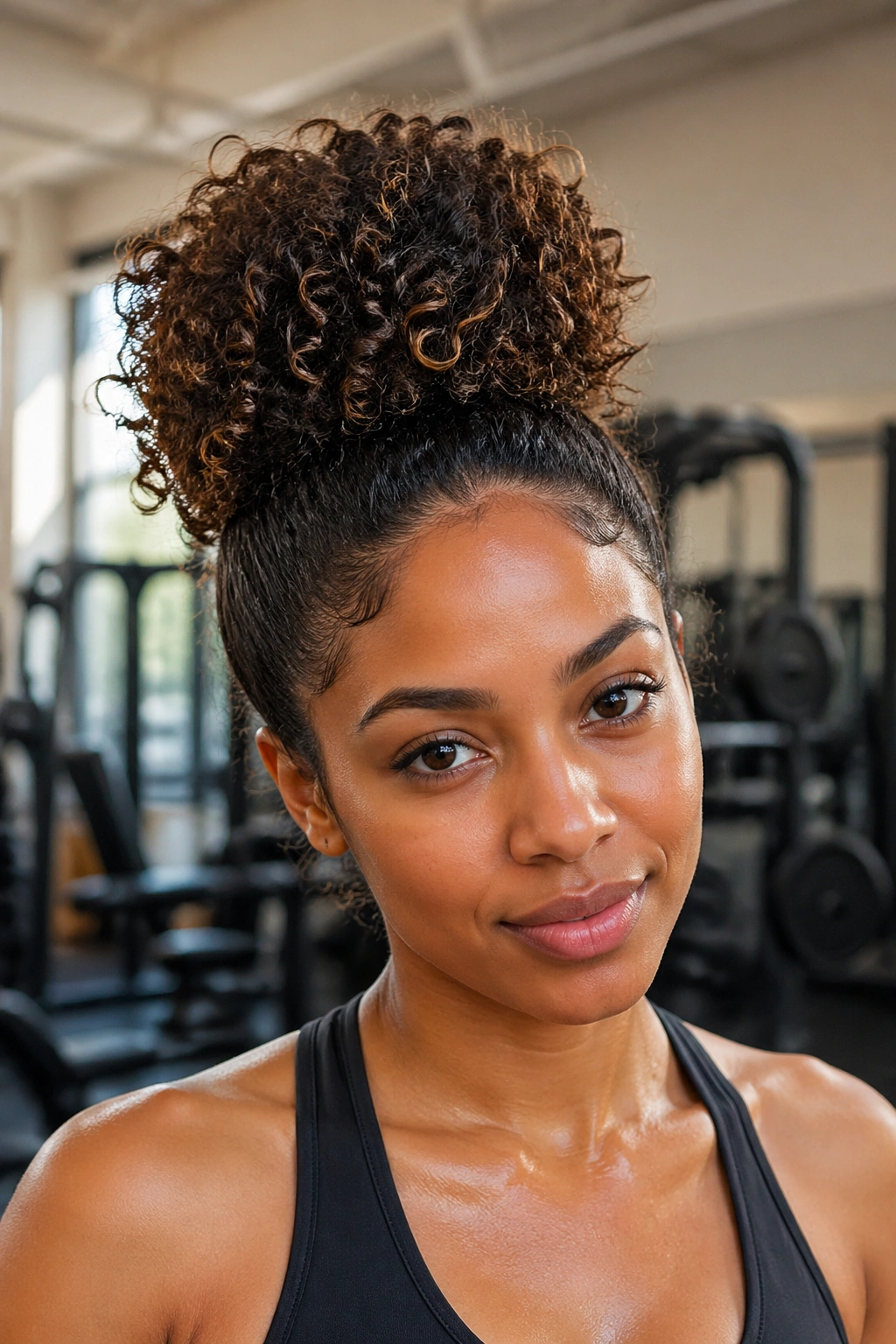
A pineapple ponytail is what I reach for when I want my curls to look decent after the workout instead of starting from scratch. The name sounds playful, but the logic is solid: you gather the hair at the very top of the head so the curls stack instead of getting crushed flat.
That high placement keeps the ends away from your shoulders, which helps during treadmill runs and rower sessions. It also works nicely if you want to keep the curl definition for later. A low ponytail can leave a flat dent in the back. A pineapple usually leaves the curl shape more intact.
The trick is to keep the base soft. Use one stretchy tie, or a loose scrunchie, and avoid dragging the front back too hard. You want the crown lifted, not ironed down. A lot of people overdo the smoothing and end up with tension at the temples, which is a terrible trade for a 45-minute workout.
This style is especially good if you already wear your curls stretched or defined. It keeps the shape recognizable without making you baby the hair during the class. And if a few curls pop free? Fine. That’s part of the look.
3. Two Dutch Braids That Stay Tight Without Feeling Rigid
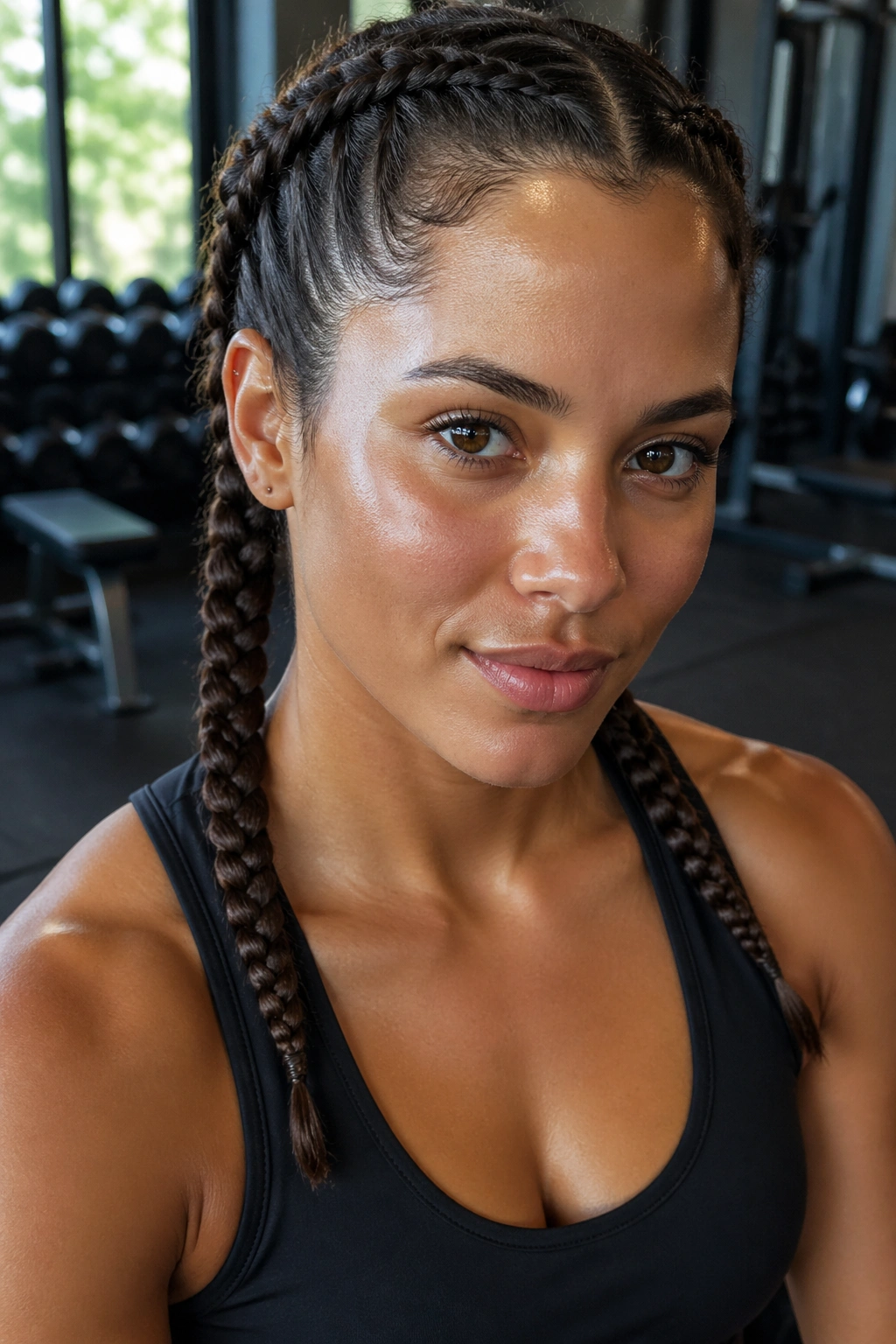
Why do Dutch braids hold up so well when sweat starts running and your shirt is sticking to your back?
Because the braid locks the hair close to the scalp, which cuts down on movement. Less movement means less frizz, less tangling, and fewer moments where you reach back to fix your hair instead of finishing the set. It’s one of the best gym hairstyles for natural curly hair when you know the workout will involve jumping, running, or anything that makes your head bounce around.
How to Wear It to the Gym
Part the hair down the middle and braid each side from the front hairline to the nape. Keep the braid snug enough that it won’t slide, but not so tight that your scalp feels stretched. That tension line matters. If your braids feel sore before you even pick up a weight, they’re too tight.
A lot of curly hair textures hold Dutch braids beautifully because the braid has something to grip. You do not need glassy-smooth hair to make them work. In fact, a little texture helps. Slightly day-old curls can make the braid easier to build and less slippery.
Tie the ends with small elastics, then tuck them into a low bun if the length is extra long. That keeps the braid ends from brushing your neck during cardio. The style is especially handy for people who hate hair touching their face but still want something more secure than a ponytail.
4. Low Braided Bun for Heavy Sweat Sessions
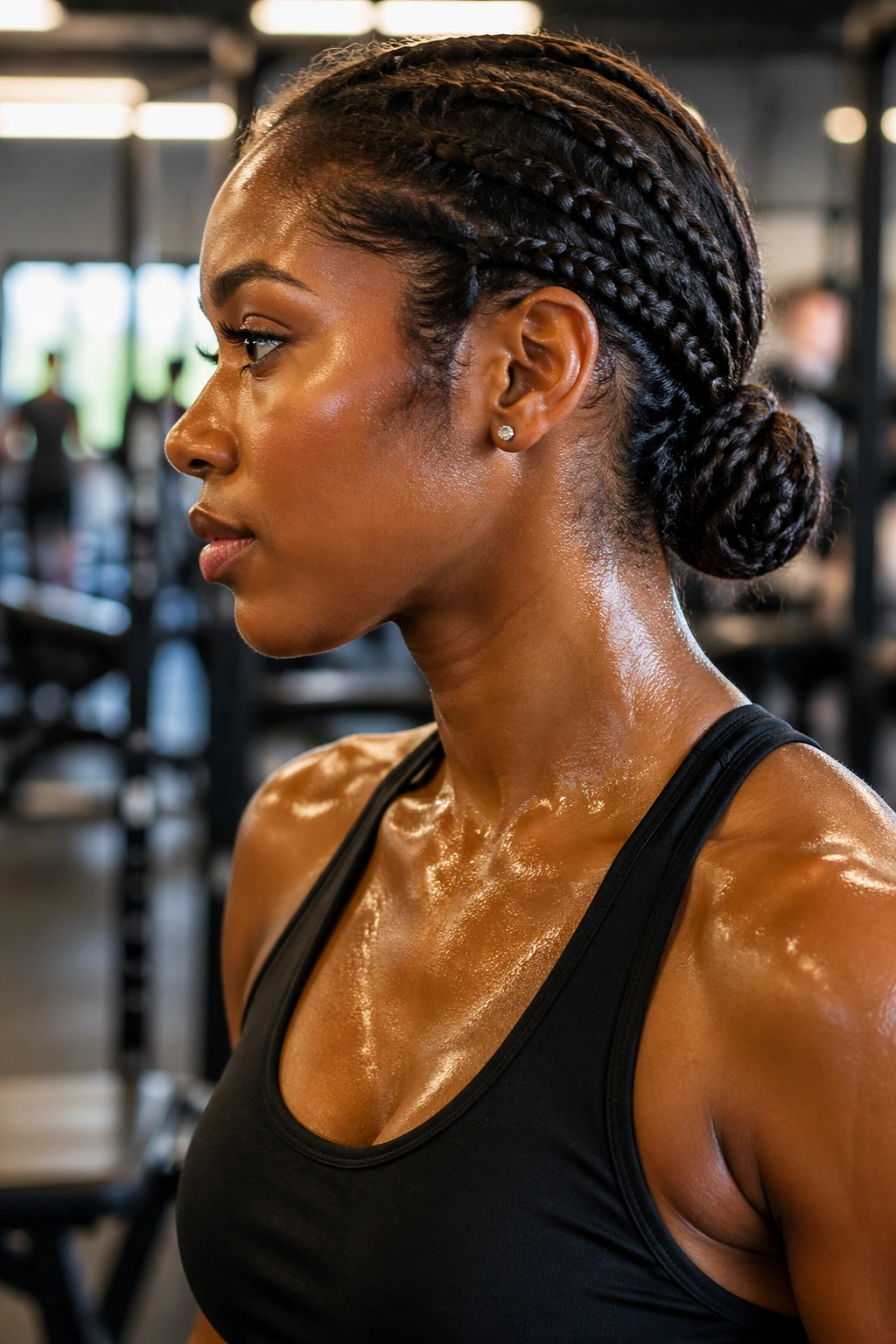
Picture this: you’re halfway through a hard lower-body workout, and every time you hinge forward, your ponytail swings into your face like it owns the place. A low braided bun fixes that fast.
The braid gives the bun a tighter, cleaner base, and the bun keeps the whole thing anchored at the nape where it won’t bounce around. It’s not flashy. It doesn’t try to be. It just works, which is exactly what you want on a day when you are already thinking about your form, your breathing, and whether your water bottle is somewhere nearby.
Key Details That Matter
- Start with a low ponytail at the nape.
- Braid the ponytail all the way down.
- Wrap the braid into a small bun and pin it flat.
- Use two to four bobby pins, depending on thickness.
- Place the bun below the occipital bone so it doesn’t press awkwardly against your head when you lean back.
This style is especially helpful for rowing, cycling, Pilates, and strength training. Anything with repeated head movement benefits from the lower profile. If your curls are dense, the braided base stops the bun from turning into a giant knot that slumps by the end of class.
The downside is that it takes a few more seconds to set up than a plain bun. Worth it, though. Easily.
5. Space Buns That Split the Weight Evenly
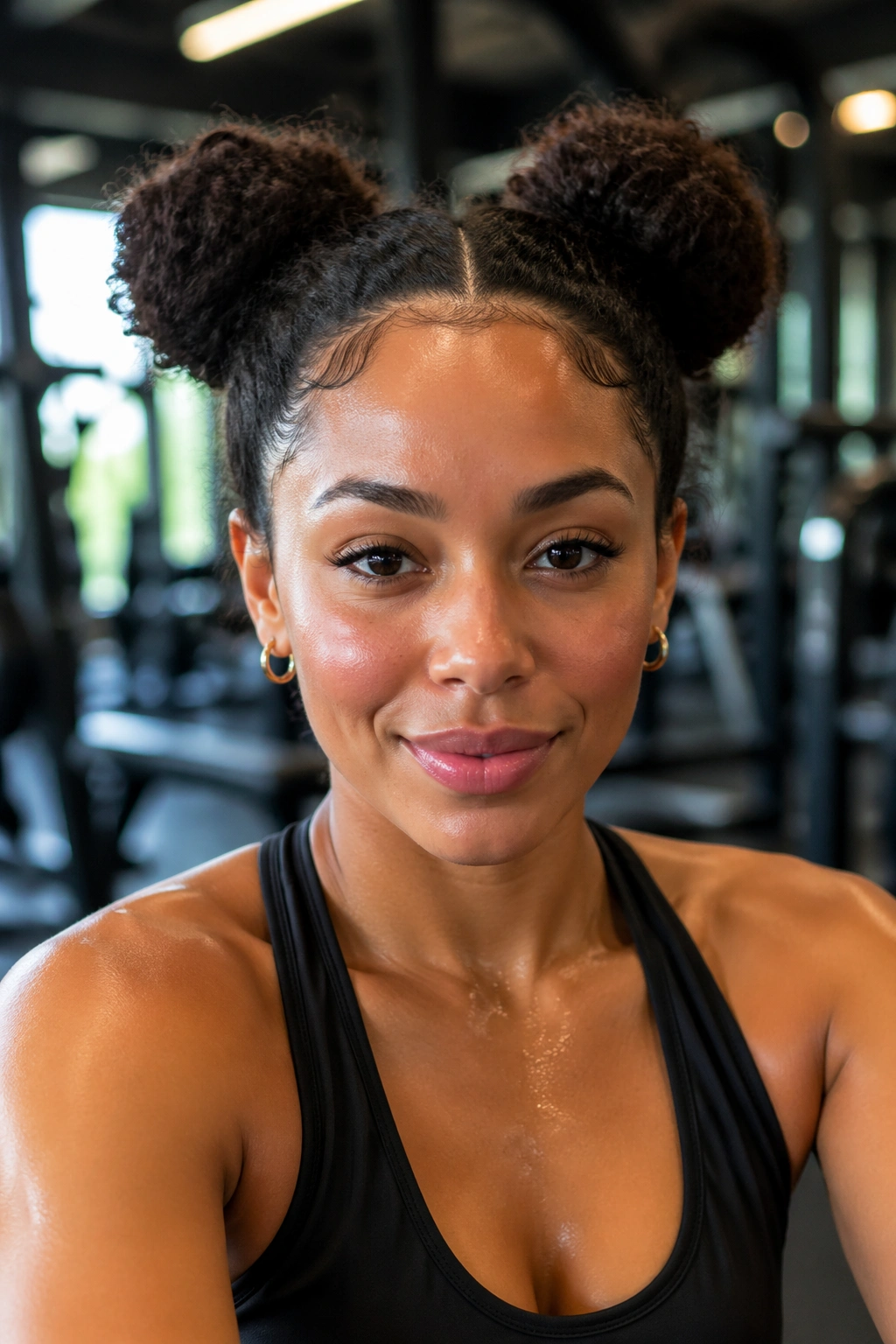
Space buns are not just cute. They’re practical when your curls are thick and you want to distribute the weight instead of stacking everything in one spot at the back of your head. Two buns mean less pulling on any one section, which can feel kinder during a long session.
They also keep curls from slapping your neck, which sounds small until you’ve done enough burpees to get annoyed by every loose end. The style works especially well if your hair has medium length and enough density to fill both buns without looking pinched.
I like this option for days when I want a little bit of shape without a full puff. You can make the buns high and playful, or lower and more controlled. The lower version tends to stay put better under headphones, while the higher version keeps the neck even cooler.
A small warning: don’t stretch the buns so far apart that the scalp feels yanked in two directions. That’s the fastest way to turn a fun style into a migraine starter. Leave the front section soft, twist each side loosely, and let a little texture spill out. Curly hair looks better with some breathing room anyway.
6. Claw Clip Twist for Shorter Curly Lengths
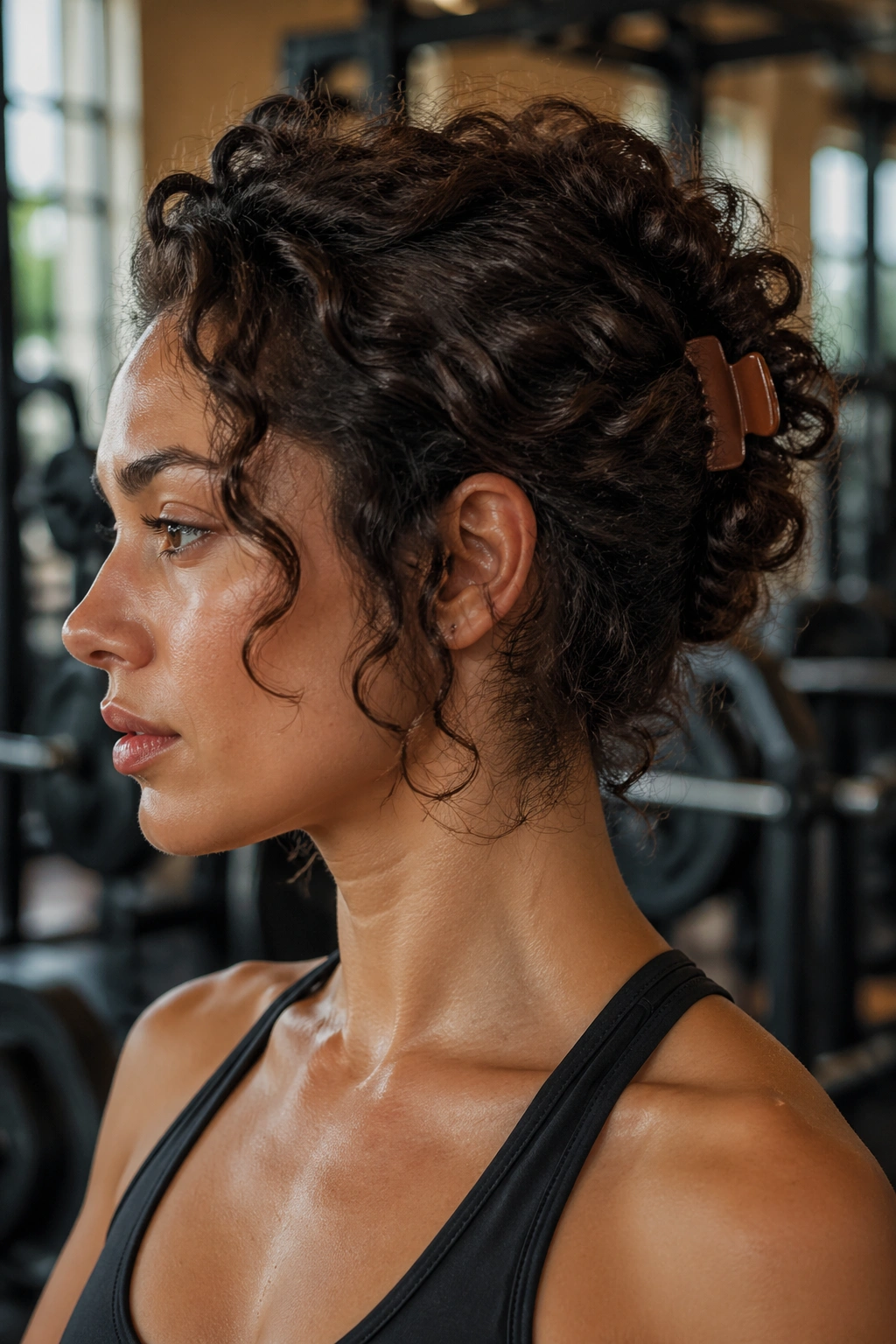
A claw clip twist is the answer when you want your hair off your neck but don’t want to spend five minutes wrestling with elastics. It’s faster than a bun, gentler than a tight ponytail, and much easier to undo if you’re heading straight from the gym to errands.
Unlike a standard ponytail, the clip doesn’t squeeze every strand through one point. The pressure spreads across the twist, which can feel easier on the roots. That makes it a good pick for curly bobs, shoulder-length cuts, and those in-between stages where your hair is too short for some updos and too thick to leave loose.
The key is choosing a clip with a strong hinge and enough width to hold the full twist. Tiny clips look cute until the first squat set. Then they fail. A medium or oversized claw clip usually does the trick better for curly hair because the volume needs more room than straight hair does.
Who it suits: busy mornings, lighter gym sessions, and hair that hits the collarbone when loose.
Who should skip it: anyone doing a lot of floor work or intense intervals, since the clip can poke if you’re lying back on a mat.
One good twist, one good clip, done.
7. Half-Up Top Knot for Wash-and-Go Days
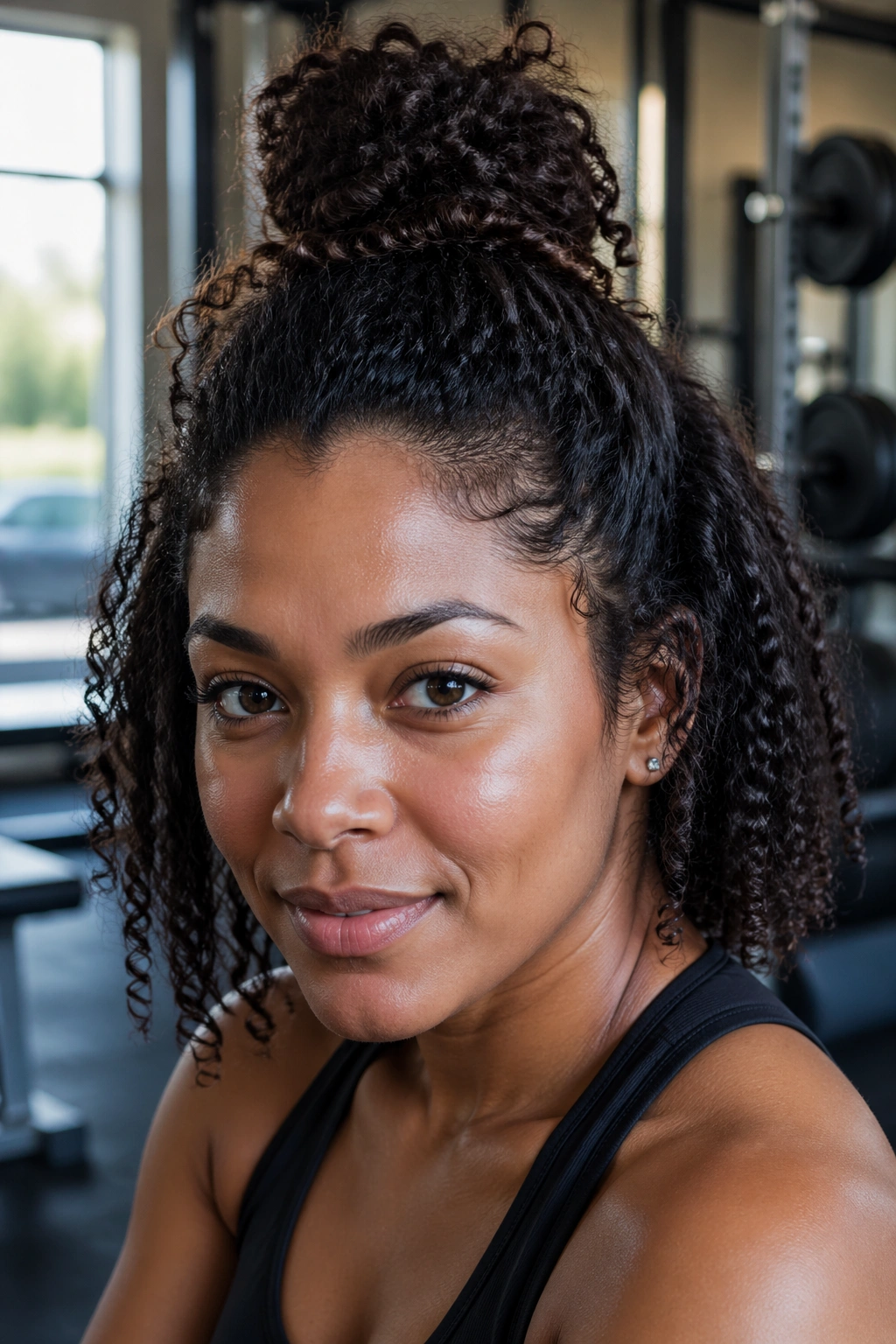
The half-up top knot is the style I see people underestimate all the time. They think it’s only for casual days, but for natural curls at the gym, it’s one of the smartest middle-ground options. It keeps the front and crown off your face while letting the rest of the curls keep their shape.
That matters if your lengths are defined and you do not want to flatten the whole head just to stay comfortable. A full ponytail can stretch out a wash-and-go faster than you expect. A half-up knot solves the front-half problem and leaves the rest alone. The back still bounces, but it doesn’t get in the way the way loose hair does.
Keep the knot small. That’s the part people get wrong. A giant top knot pulls too hard at the crown and can collapse into a sad lump once you start sweating. A compact knot, secured with a small elastic, sits better and feels lighter.
This style works especially well for workouts where you want to look decent after class, because the loose half can still frame the face when you take it out. It’s not the most secure option for sprint intervals, but for lifting, barre, and moderate cardio, it’s a solid compromise.
8. Crown Braid That Keeps the Hairline Calm
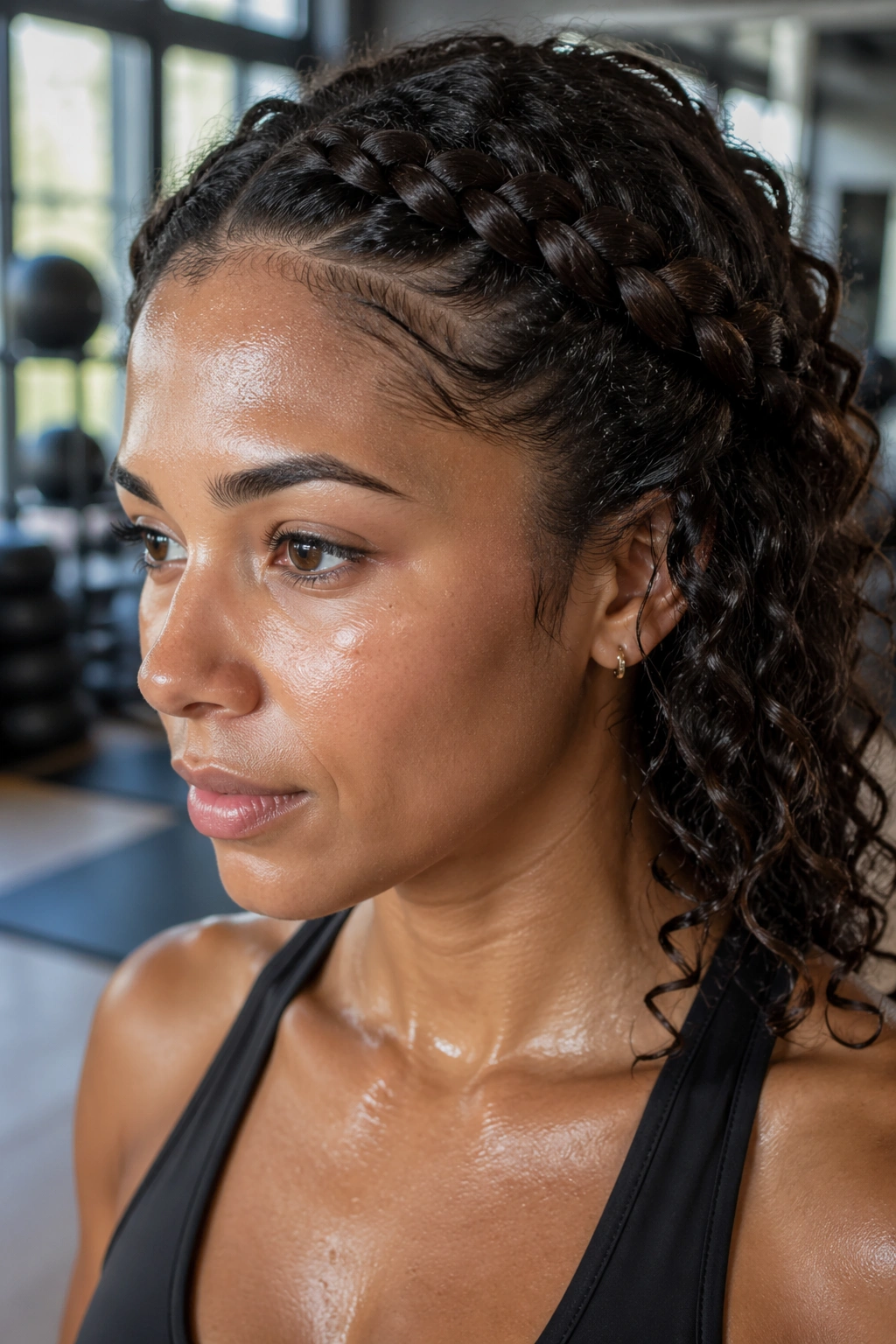
A crown braid is slower to make, and I won’t pretend otherwise. But once it’s in, it has a clean, almost stubborn hold that’s hard to beat. The braid sits around the head like a built-in frame, which keeps flyaways and front pieces under control without using a lot of extra product.
That front-hairline control is a big deal for curly hair. Sweat tends to show up there first. So do frizz and tiny curl halos. A crown braid keeps those sections contained while giving the rest of the hair a stable shape. If you wear over-ear headphones, this style tends to play nicely with them, which is more useful than people expect.
What Makes It Different
- It keeps the front perimeter in place for the whole workout.
- It spreads tension around the head instead of loading one spot.
- It works well with stretched curls, second-day curls, and coily textures.
- It can end in a tucked bun or a pinned tail, depending on length.
The main thing to watch is tightness near the temples. A crown braid should feel secure, not pinching. If the braid line starts to dig in, loosen it and redo that section. The style is supposed to help you forget about your hair, not remind you of it every time you turn your head.
9. Bubble Ponytail for Thick, Springy Curls
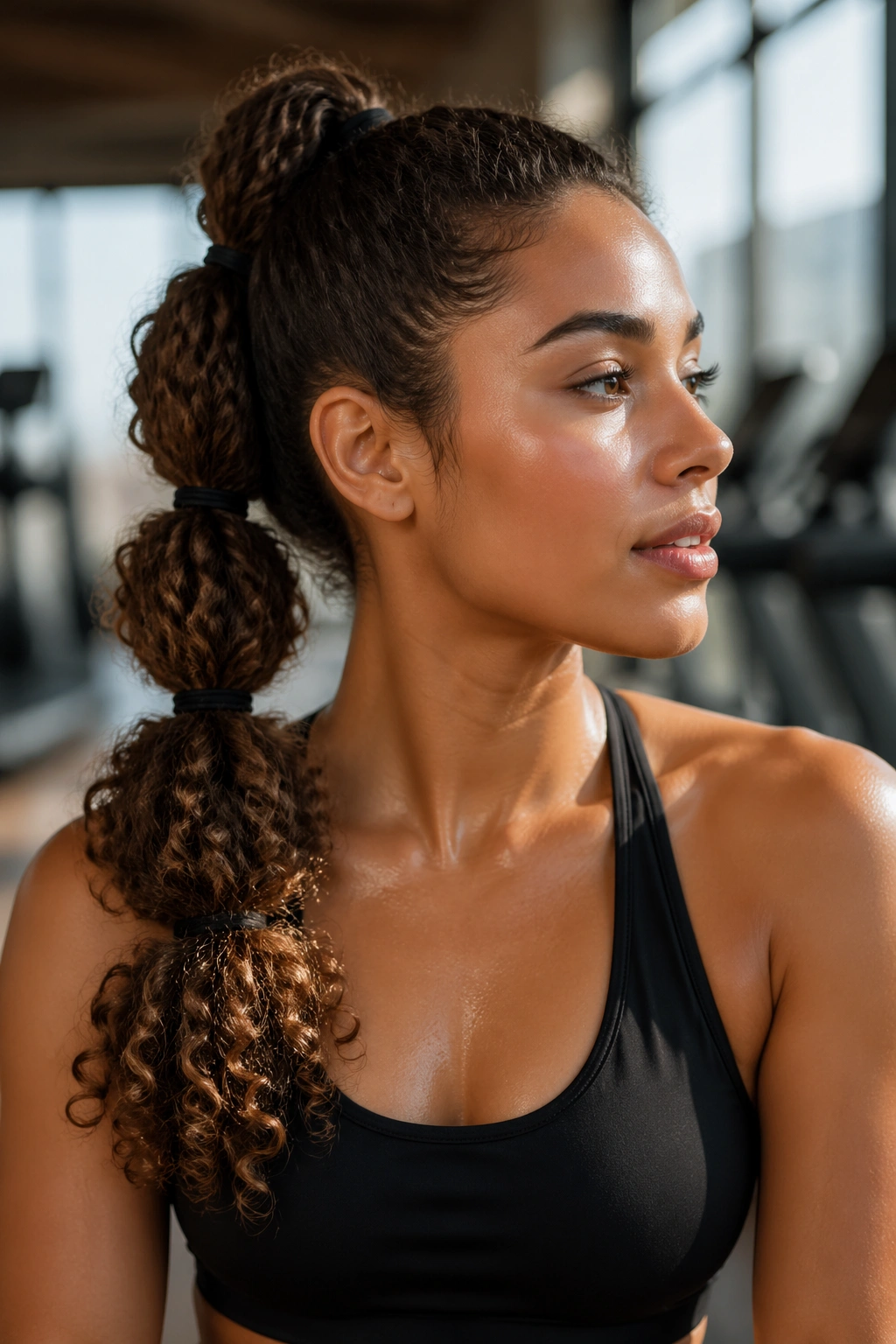
Want a style that stays neat even when your curls are thick and springy? Bubble ponytail.
This one works because it breaks the hair into sections, which reduces the amount of swinging and tangling in one long tail. Instead of one heavy ponytail bouncing everywhere, you get a series of controlled “bubbles” held in place with small elastics every few inches. That structure is especially useful for long curly hair, because curls can start to knot together when the whole length moves as a single unit.
How to Set the Bubbles
Tie the first ponytail where you want it to sit. Then add another elastic about 2 to 3 inches lower, and another one below that. Gently tug the sections between elastics outward until they puff a little. Don’t yank. You want shape, not a stretched-out mess.
This style looks best when the curls have enough length to show the bubbles clearly. If the hair is too short, the sections can disappear into each other. For longer curls, though, it’s a neat way to keep the tail contained without crushing the curl pattern completely.
It’s a strong choice for dance cardio, treadmill work, and any workout where you’re moving a lot but don’t want a braid. Use snag-free bands if you can. The wrong elastics will catch on the hair and make the whole thing feel rough by the time you get home.
10. Twisted Headband Tuck for Bob Length and Layers
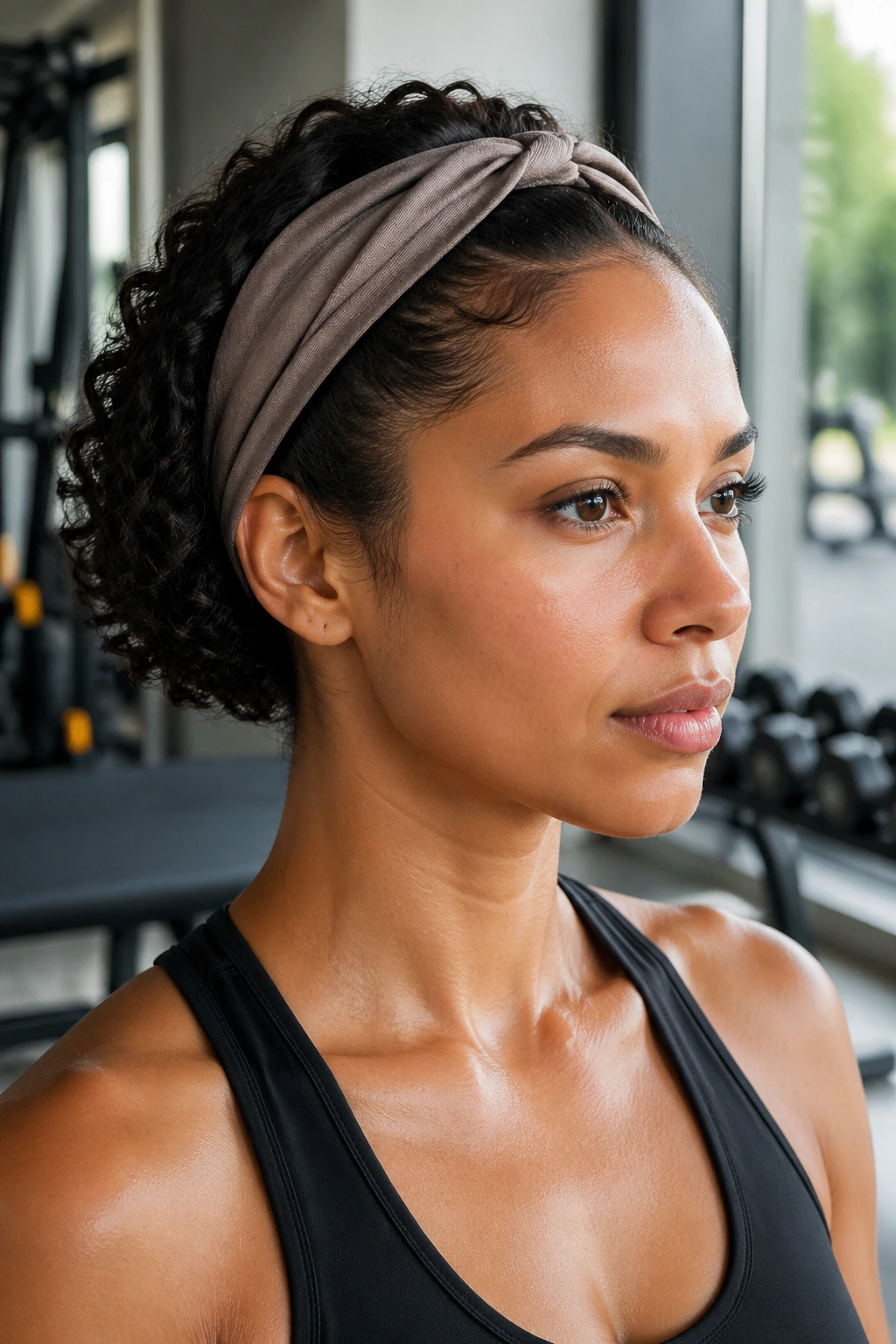
Sometimes the gym problem is not volume. It’s length. Curly bobs and layered cuts can be awkward at the gym because the hair is just long enough to fall forward, but not always long enough for a full secure bun. The twisted headband tuck solves that neatly.
A stretchy band sits around the head, and the curls are tucked and rolled into it from the back. The result is low and compact, with the front kept smooth and the ends safely out of the way. It feels gentler than a tight ponytail, and that matters if your hairline is sensitive or your cut sits right at the jaw.
The style also works on day-two curls that have lost a little shape. You don’t need perfect definition for it to look intentional. You need a band with enough grip to hold the front and enough stretch to stay comfortable. Soft athletic bands or wider jersey headbands usually work better than thin ones that dig behind the ears.
This is one of those styles that looks modest in photos and feels much better in real life. No swinging. No neck contact. No ends catching in your shirt collar. Just a clean tuck and a calm workout.
11. Cornrow Front with Curly Back for Mixed Control
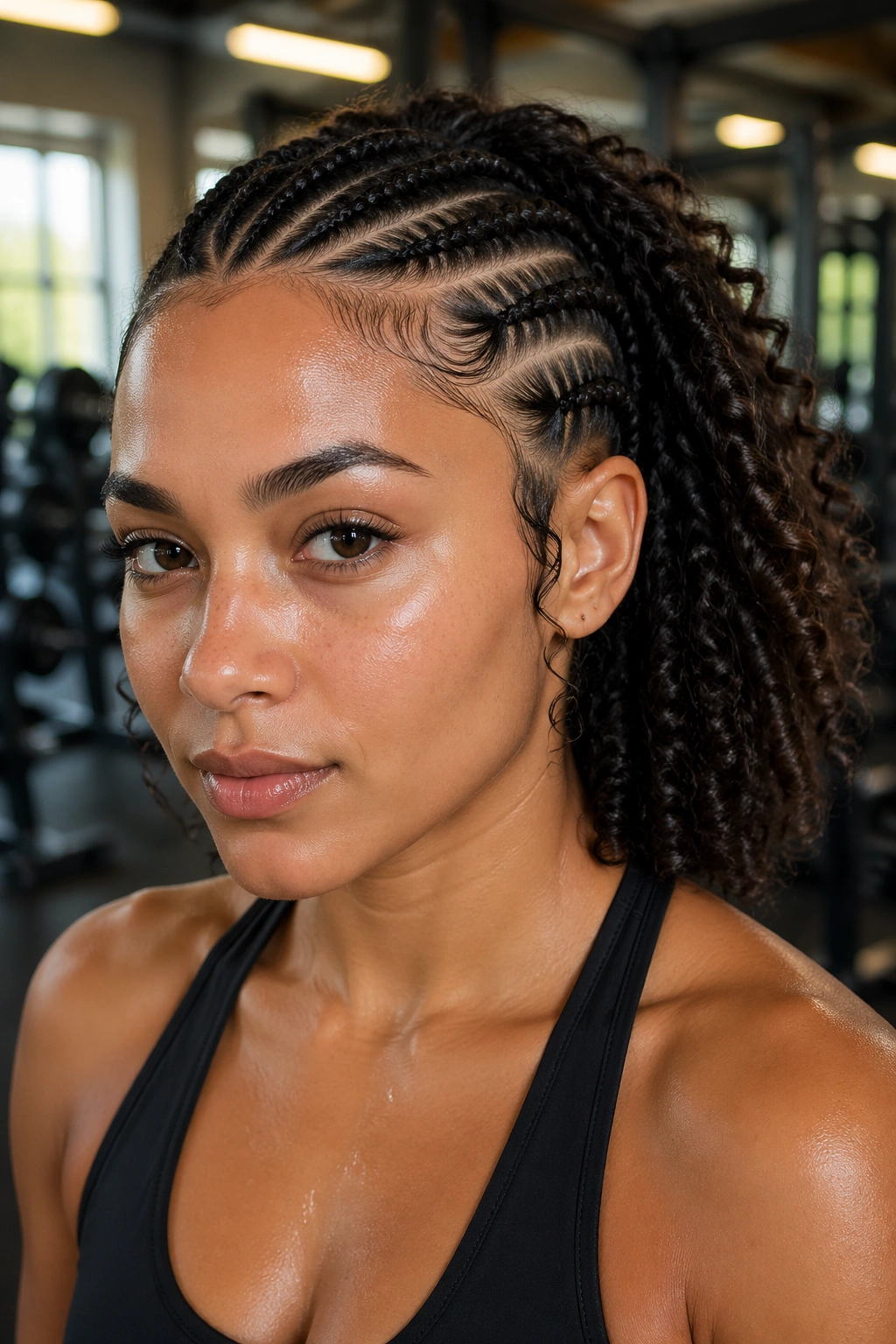
Not every workout hairstyle has to choose between “all braided” and “all loose.” Cornrows in the front with curly hair left free in the back give you a middle option that handles sweat at the hairline while letting your texture stay visible.
That front control helps a lot during cardio or classes where the first thing to frizz up is the perimeter around the forehead and temples. The braided front stays close to the scalp and keeps those pieces from escaping. The back can still puff, curl, and move a little, which keeps the style from feeling too locked down.
This one is a favorite for longer hair and for people who like the look of a defined front section with a fuller back. It also saves time on refresh days, because the front already looks neat when you take the style out. If you’ve ever had to re-wet your front pieces after a workout, you know why that matters.
The parting needs to be clean, and the braids should not be too tight. A row of cornrows that pulls at the hairline is not worth the neat look. Keep the rows medium-sized, especially if your curls are fragile at the front from previous styling. The back can be gathered later into a puff, left loose, or pinned up if you want more control.
12. Mini Twist Bun for Dense Natural Hair
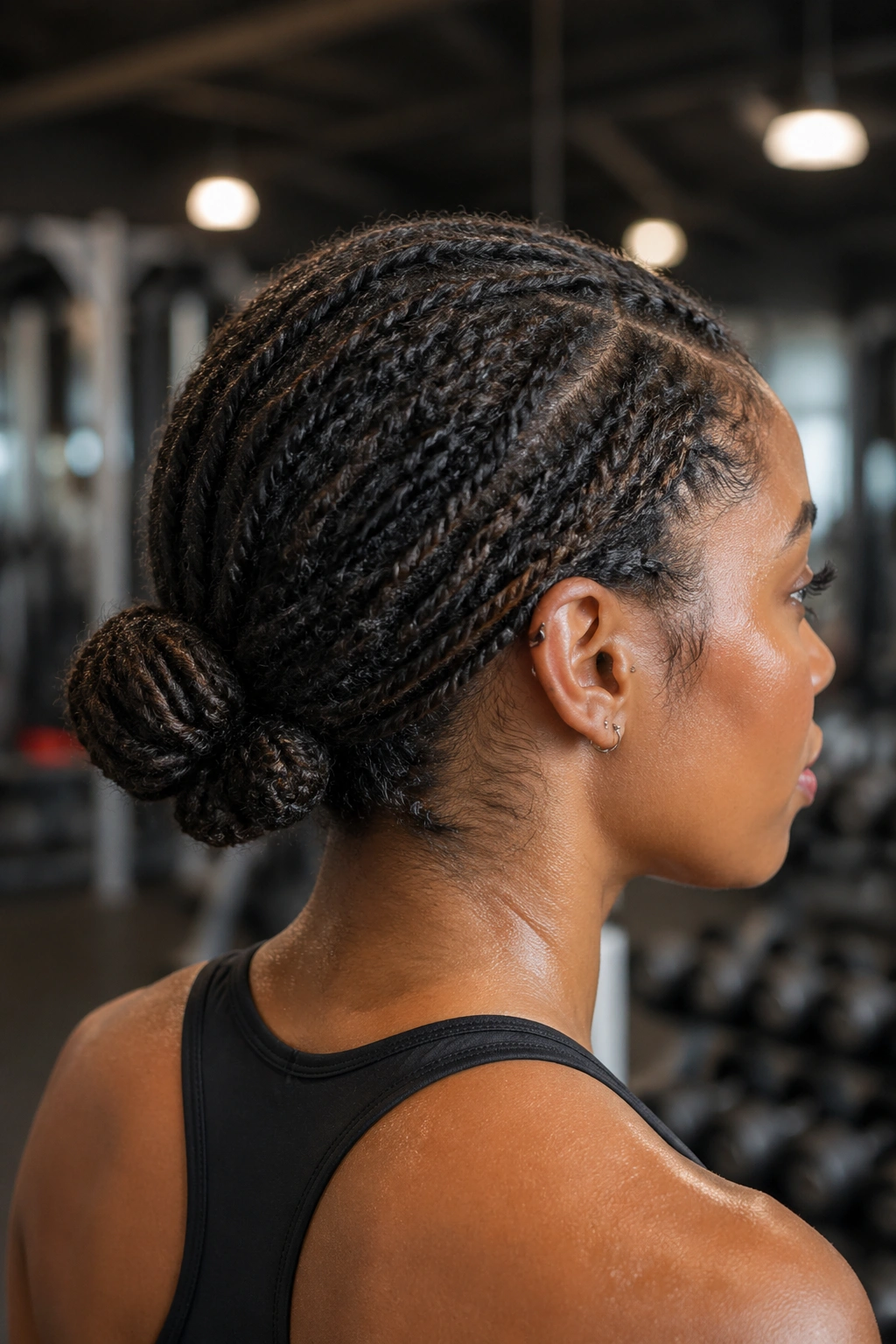
Unlike one big bun, a mini twist bun spreads the work across several smaller sections, which makes it easier on dense natural hair. That’s the real advantage here. Instead of forcing all the volume into one knot, you twist a few smaller pieces and wrap them together into a bun or low chignon.
The style feels less bulky and tends to hold better through a sweaty session because each twist helps anchor the next one. It also keeps the roots from puffing up too fast, which is handy if your hair gets frizzy the second moisture shows up. If your hair is dense, this is one of the few styles that can hold all of it without turning into a giant dome.
It does take more time to set than a basic ponytail. That’s the trade-off. But the finish is worth it if you want something stable for the gym and neat enough to wear afterward without a full redo. A little leave-in on the lengths before twisting helps the hair glide better and cuts down on friction.
Best for: 4A to 4C textures, shoulder-length curls, and anyone who likes low, secure styles.
Not ideal for: rushed mornings when you only have ninety seconds. This one wants a little patience.
13. Low Puff with a Wide Sweatband
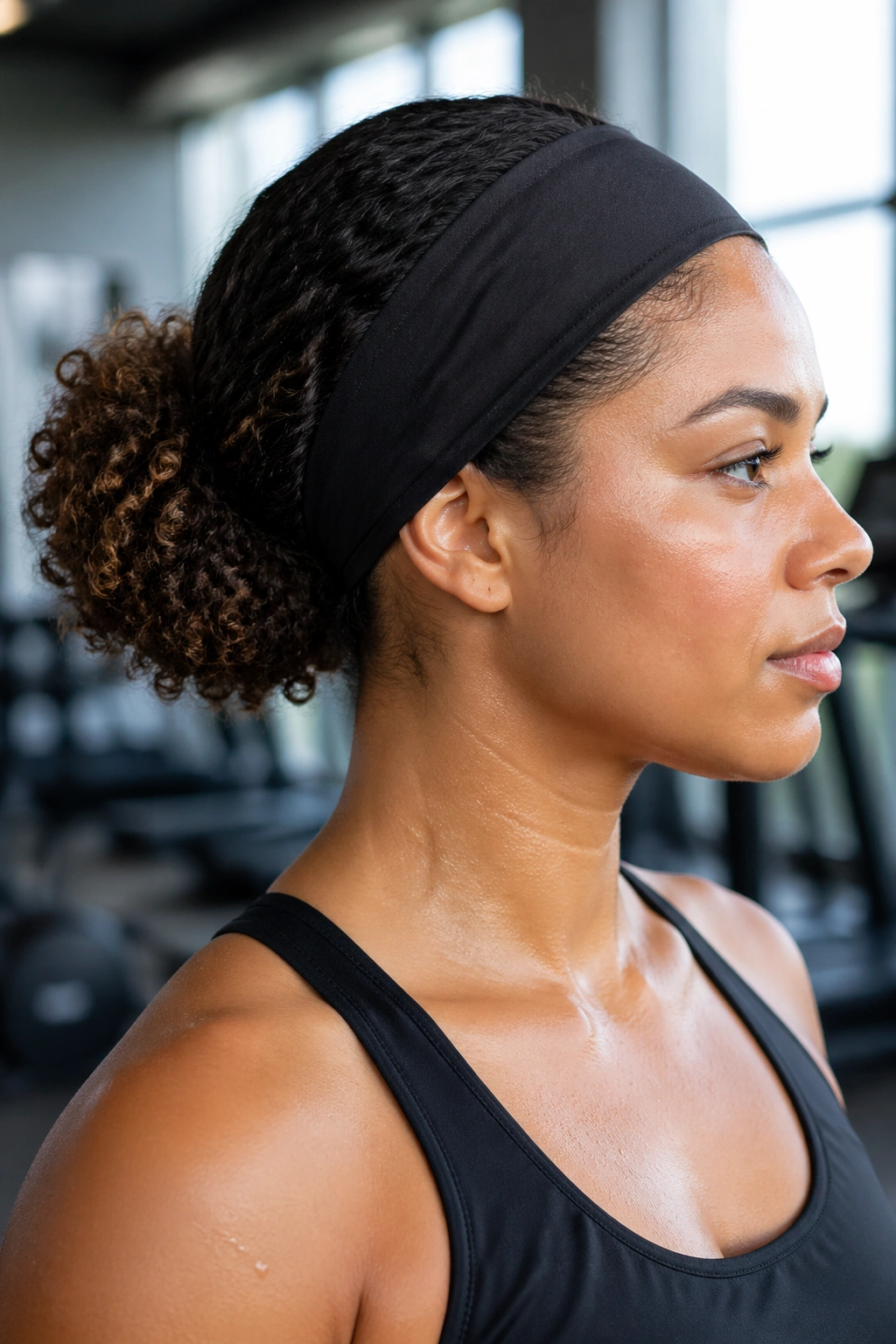
A low puff is the calmer cousin of the high puff, and it has its own place in the gym. Sitting lower at the back of the head, it keeps the curls off the neck while putting less pressure on the crown. That can feel better if your scalp is sensitive or if high styles give you a headache.
Add a wide sweatband, and the whole thing gets even more practical. The band catches moisture at the hairline, keeps the front from frizzing too fast, and helps hold the puff in place without a row of pins. The wider band matters. Thin bands tend to slide, pinch, or leave that annoying line across the forehead.
Quick Fit Notes
- Place the band about 1 inch behind the hairline.
- Use a soft elastic at the base so the puff sits low and stable.
- Pick a band that doesn’t snag when you pull it off after class.
- Keep the front section smooth enough to stay put, but not so tight that it feels strained.
This is a good style for spin, yoga, and circuit training. It keeps the shape clean and gives the face a little room. If you want to look pulled together without doing much, this is one of the easiest ways to get there.
14. Scarf-Wrapped Bun for Frizz Control
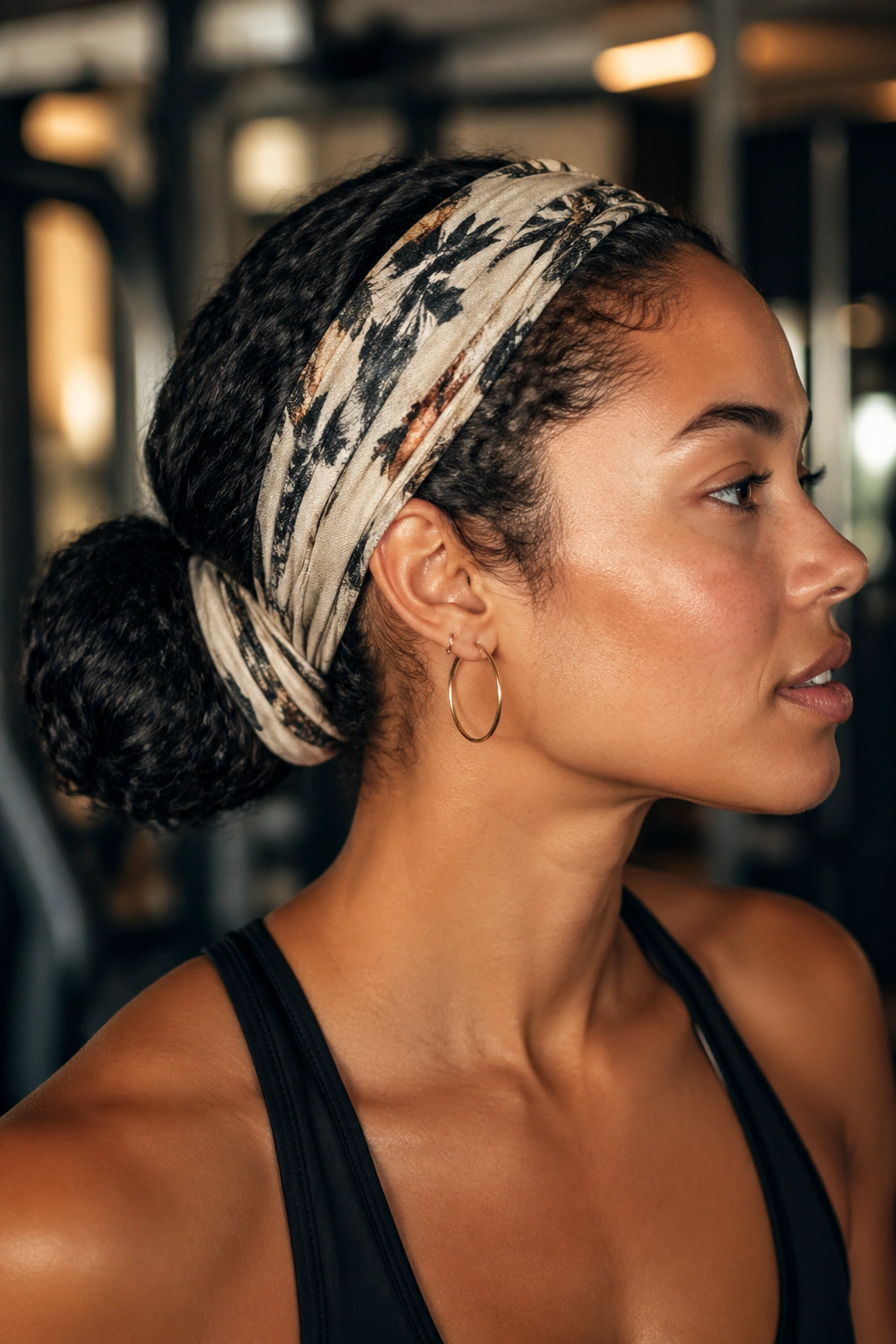
A scarf-wrapped bun does two jobs at once: it keeps the bun secure and it stops the halo of frizz from taking over by the end of the workout. That’s why I like it for curls that puff up fast. The scarf gives the style a little compression, and that compression helps the bun stay neater than it would on its own.
Use a breathable cotton or jersey scarf rather than something slippery. A satin scarf is lovely for sleep, but at the gym it can slide around too much. You want a wrap that stays put when you move. Tie the hair into a low bun first, then wrap the scarf around the base and knot it firmly enough to stay, but not so tightly that it digs in.
This style is especially nice on days when you want a more finished look without spending extra time with gel or edge control. It also works well if you’re preserving a twist-out or braid-out and want to protect the texture from the rougher side of gym life.
A small truth: the scarf is as much about containment as it is about style. It keeps the flyaways from getting louder than the workout. That alone makes it worth keeping in your bag.
15. Flat Twist Updo for High-Movement Workouts
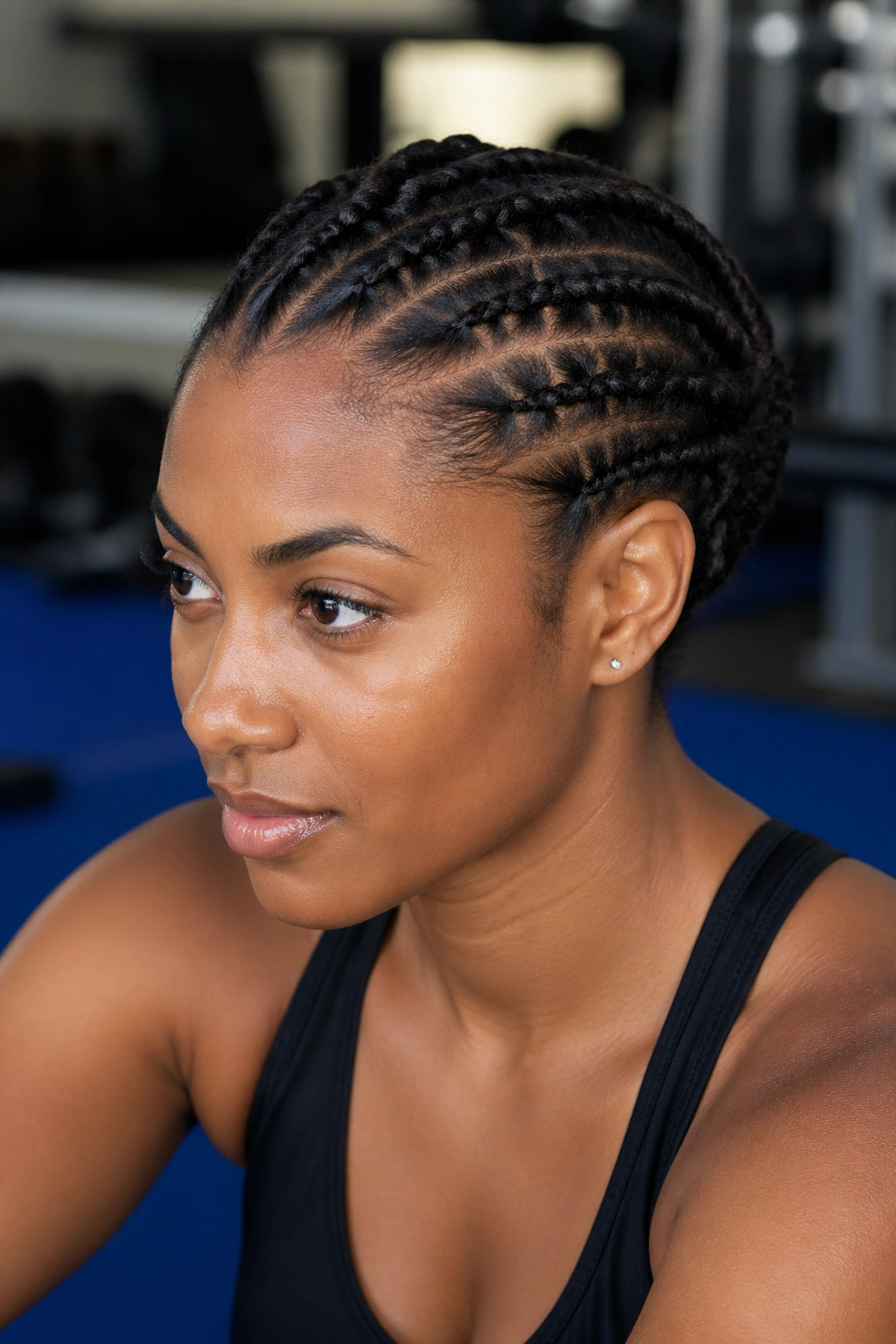
Why does the flat twist updo earn a place near the top of the list? Because it holds close to the scalp, which is exactly what you want when the workout is going to be bouncy, sweaty, or both.
The style uses flat twists from the front or sides, then gathers the ends into a tucked bun or pinned roll. That gives you a clean outline without putting all the tension in one spot. It’s a strong choice for natural curly hair because the twists grip the texture well, and the finished style doesn’t move much once it’s set.
It’s especially good for people who hate hair getting stuck to the back of the neck. The flatter shape keeps the profile low, which helps during jumps, burpees, and mat work. If you have a curly bob or layered cut, the ends can be pinned in place without needing a long tail, which is a real advantage when the length is awkward.
How to Keep It Comfortable
Keep the twists snug, not sharp. If your scalp feels tight right away, loosen and redo them. A style that looks neat but hurts is a bad trade. You can add a little curl cream or leave-in to the sections before twisting if your hair gets fuzzy fast, but don’t overdo it. Too much product can make the style feel heavy once sweat hits.
Final Thoughts
The best gym style for curly hair is the one you can forget about halfway through the workout. That’s the real test. If you keep touching it, fixing it, or mentally negotiating with it, the style has already lost.
Some days call for a high puff. Other days want braids, a clip, or a low bun that stays out of the way and gives your scalp a break. The point is not to force one answer on every workout. It’s to match the hairstyle to the kind of movement you’re doing and the amount of time you want to spend on your hair afterward.
Keep a few tools in your bag — a snag-free elastic, two coil ties, a wide band, and a couple of bobby pins. That tiny stash solves more curly-hair gym problems than any complicated routine ever will.
