



One bad headband can ruin a good curl day fast. The front gets flattened, the temples puff out oddly, and by noon you’ve got a dent across your hairline that refuses to blend back in. With natural curls, that matters more than people think. The wrong band can fight your texture, while the right one can hold everything in place and still leave your curl pattern looking soft, full, and alive.
Curly hair doesn’t lie. If a headband is too tight, too slick, too narrow, or too stiff, your hair will show it within minutes. The front bends in one direction, the crown loses shape, and anything with rough seams can cause frizz right where you notice it most. So when people say a headband “doesn’t work” for curly hair, I usually think, no — the style was wrong for the job.
The best headband styles for natural curly hair do one of three things well: they spread pressure, protect the hairline, or frame the curls without trying to flatten them. That’s the sweet spot. And once you start looking at bands that way, the choices get a lot easier.
1. Wide Stretch Headbands That Hold Curls Without Crushing Them
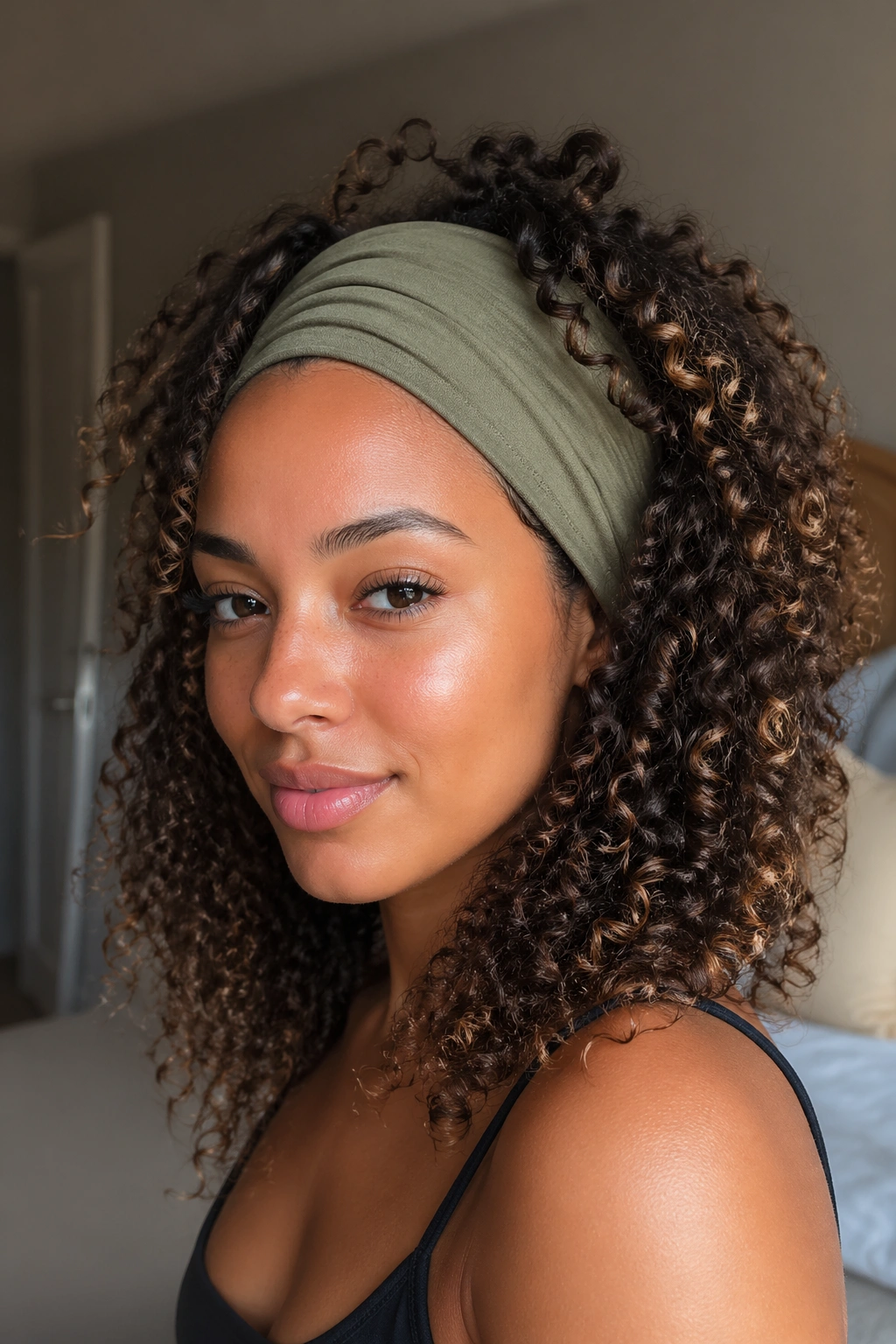
Wide stretch headbands are the workhorse of curly hair accessories. They sit broad across the front, usually somewhere around 2 to 4 inches, which means the pressure isn’t concentrated in one tiny strip across your hairline. That matters. A narrow band can leave a harsh line in five minutes; a wider one usually gives your curls room to breathe.
Why the width matters
A wide band doesn’t just hold hair back. It also helps keep the front section smooth without pinning every curl flat against your scalp. That’s a better trade for wash-and-go styles, braid-outs, and twist-outs, where you want the front to stay controlled but not squashed.
Look for soft stretch fabric with a decent amount of recovery. If the band feels loose in your hands, it will slide. If it feels like a rubber band for your forehead, pass. The sweet spot is snug enough to stay put, but soft enough that you forget about it after ten minutes.
- Best for medium to high-volume curls
- Works well with loose, fluffy styles
- Easier to wear for long stretches than stiff bands
- Good choice if you hate hairline dents
My blunt advice: if you have dense curls, start with a wider band before you try anything decorative.
The only real catch is placement. Sit it too far forward and you’ll flatten the front curls. Push it back a little, let a few face-framing pieces fall loose, and the whole style looks more relaxed.
2. Satin-Lined Headbands That Cut Down on Frizz
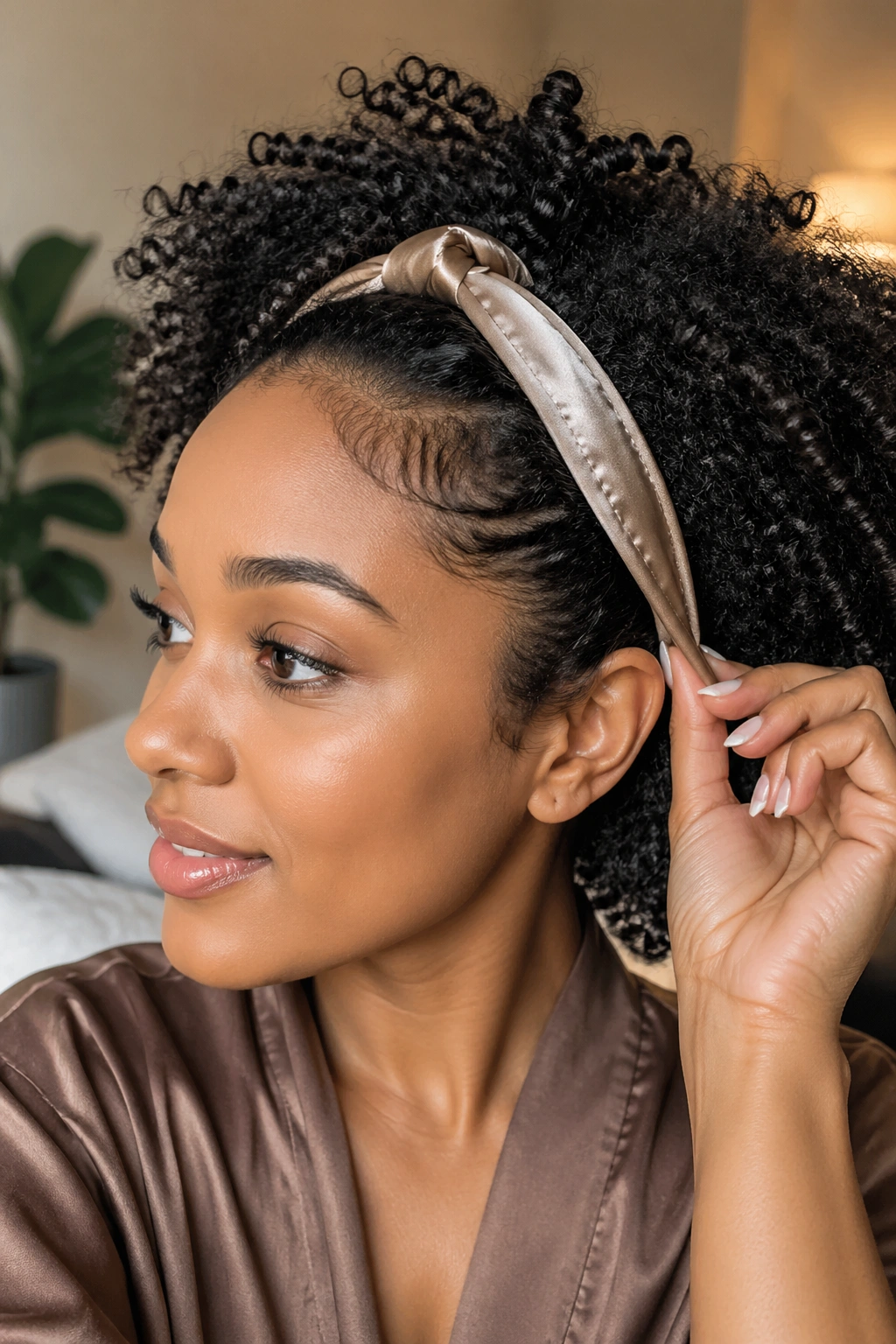
Satin-lined headbands are the ones I reach for when the front of my hair has already done enough work. They’re made for the curl pattern that hates friction. Cotton can feel cozy, but it grabs. Satin slides instead, and that small difference can save the edges of a twist-out or keep a pineapplied puff from turning fuzzy by lunch.
A satin lining also helps when your hair is dry or fine on the surface but thick underneath. The outside texture may look full, but the strands near the hairline are still exposed to every rub and scrape. A smooth inner lining keeps that area calmer, especially if you wear a headband for hours.
Plain cotton isn’t the friend here.
What I like about a satin-lined band is that it gives you a little polish without forcing your curls into a stiff shape. It’s especially useful with side parts, because the smooth lining doesn’t snag as the band shifts slightly through the day. You still need a decent fit, though. Satin cuts down on friction; it does not fix a band that is simply too loose.
If you shop for one, check the underside, not just the pretty top. Some bands look soft from the front and hide a scratchy seam underneath. That seam is the part that ends up bothering you.
3. Knotted Fabric Headbands That Add Shape Up Top
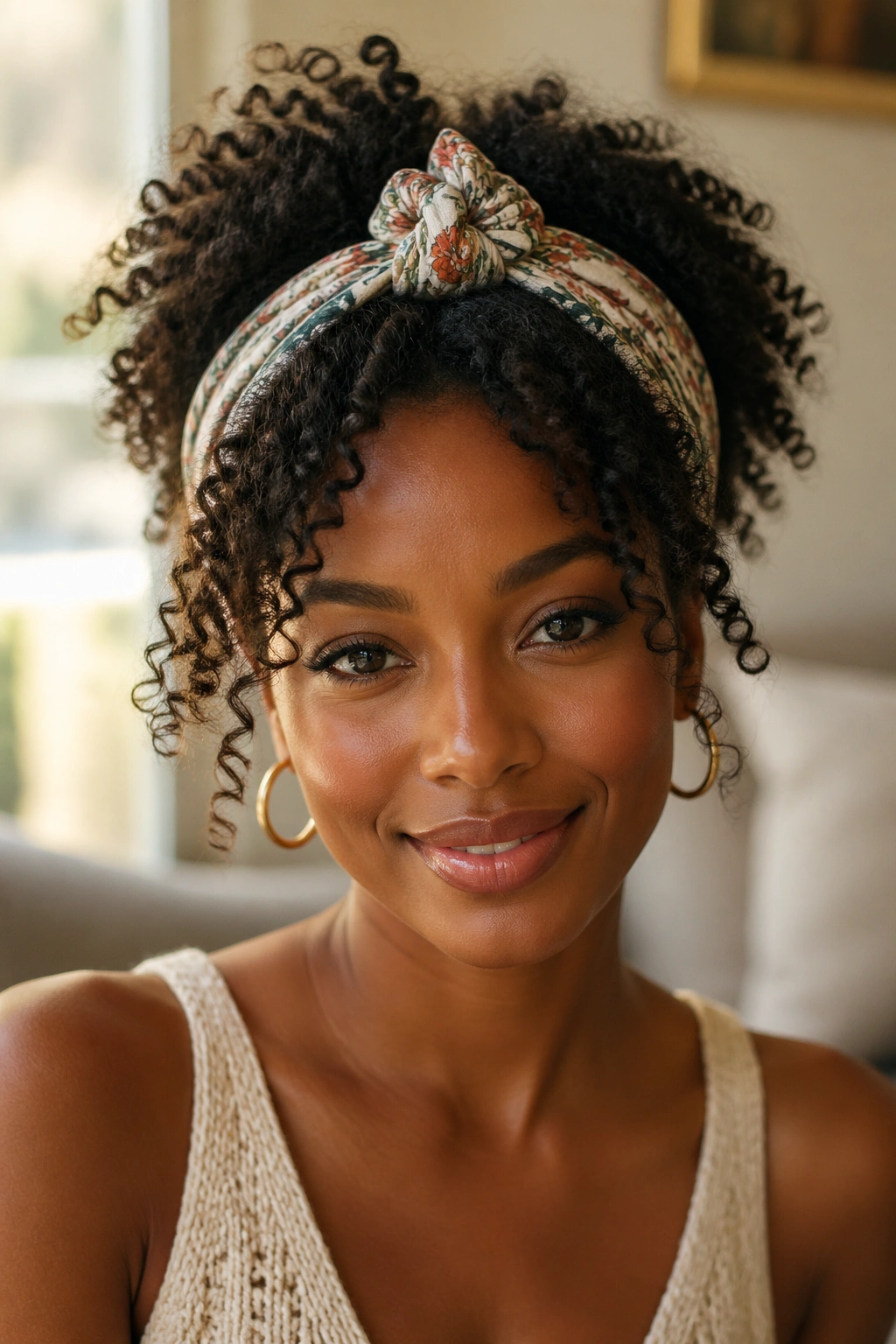
Why does a knotted headband work so well on curls? Because it gives your hair a bit of architecture without taking over the whole head. The knot adds visual weight up top, which makes the band look intentional even when the rest of your hair is loose and full.
Knotted styles are especially useful when your curls have a lot of volume on the sides. The knot draws the eye to the center, so the style feels balanced rather than bulky. I also like them for second- or third-day hair, when the roots need a little help but you do not want a full wrap or turban.
How to keep the knot from fighting your volume
Place the knot slightly off-center if your face is round or square. Keep it centered if you want the style to feel neat and symmetrical. A knot that sits too far forward can crowd the forehead; one that sits too far back disappears into the hair and loses the point.
- Works best with soft jersey or cotton blends
- Choose a band with some stretch, not a rigid seam
- Slightly puffed crown volume usually looks better than a slicked-back front
- A knot with a flat base stays put longer than a chunky decorative one
The nice thing here is that you can make the look casual or dressed up just by changing the fabric. Heathered jersey feels laid-back. A smoother finish looks cleaner and sharper. Same basic shape, different mood.
4. Scarf Headbands That Let You Play With Color and Texture
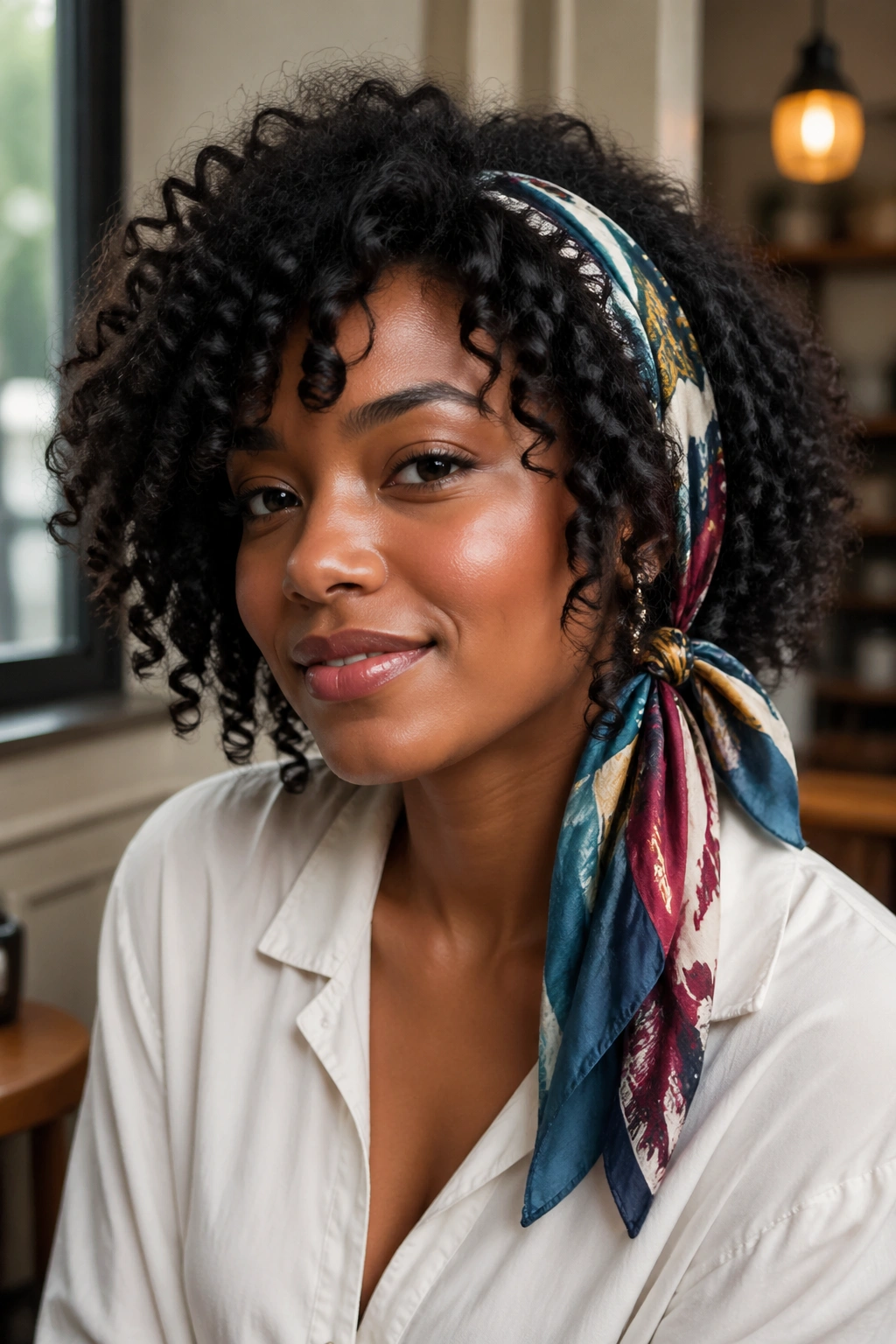
You can do a lot with a scarf headband and very little effort. That’s why I keep coming back to them for natural curly hair. They can hide a frizzy front, add color to a plain outfit, or give shape to a high puff without making the whole style feel overdone.
A scarf folded into a band gives you control over width, which is a bigger deal than it sounds. Fold it narrow if you want a delicate line near the hairline. Fold it broad if your curls are thick and need more surface area. The fabric matters too: silk and satin slide smoothly, while lightweight cotton holds a knot better but can rough up the front a little more.
I like a scarf when the rest of the hair is doing the heavy lifting. Loose curls spilling around the shoulders? Great. A braid-out with a little crown volume? Even better. The scarf becomes the frame, not the main event.
- Best when you want adjustable width
- Easy to match with outfits or lip color
- Useful for hiding a stretched hairline or uneven roots
- Better if tied low and slightly to the side for all-day comfort
The one thing to watch is bulk at the knot. If you tie it too high or too tight, it can feel like a helmet. Soft knot, low tension, and a little slack at the nape usually look better.
5. Turban-Style Wraps That Handle Big Volume
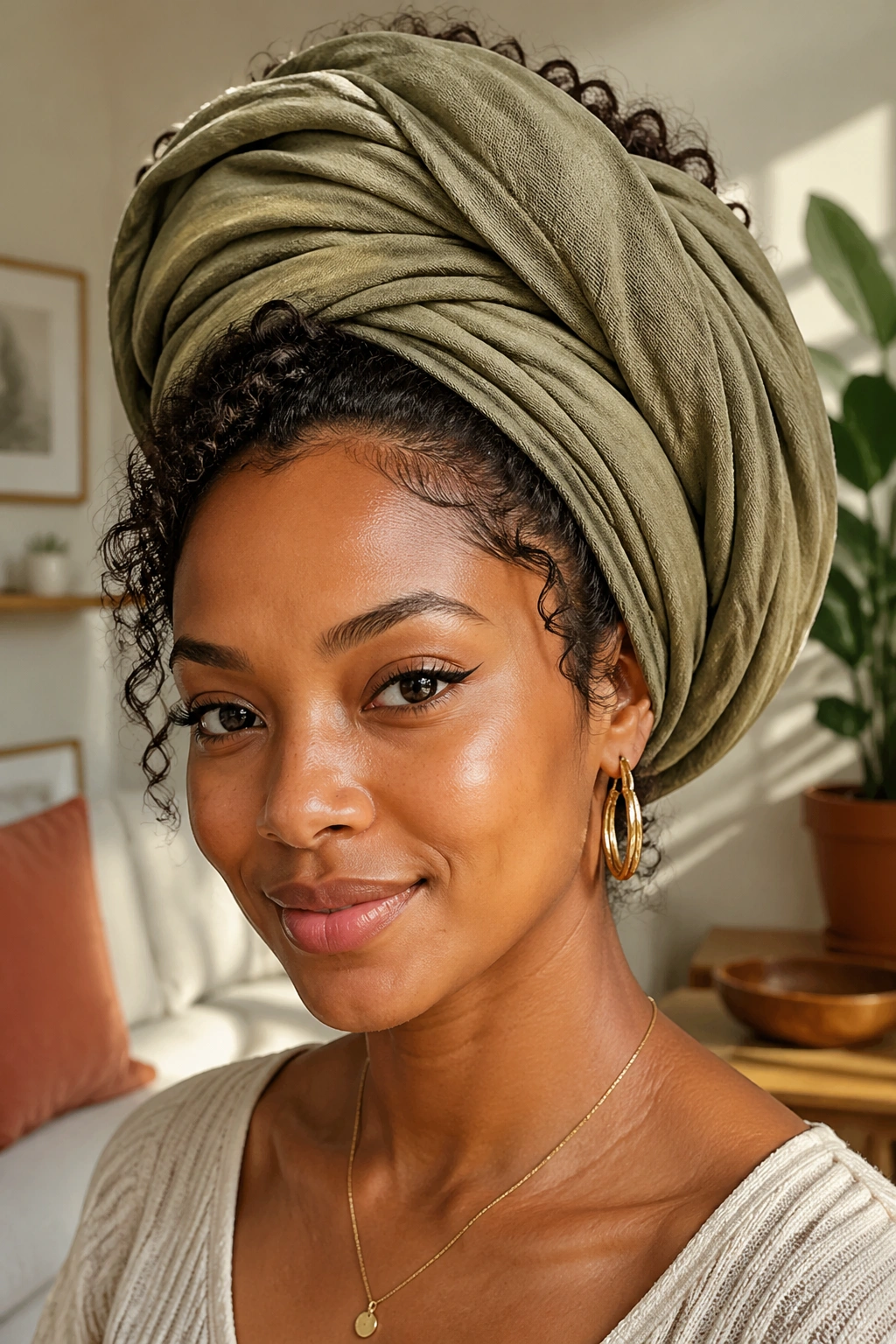
Turban-style wraps are for the days when your curls want space, and frankly, they deserve it. A good wrap can hold a lot of hair without forcing it into a shape that doesn’t suit the texture. That makes them a strong choice for thick coils, stretched styles, protective styles, and hair that puffs up at the crown no matter how many pins you use.
They also solve a different problem: unevenness. If one side is flatter than the other, or if your roots are still drying and you need a clean finish, a wrap hides the mess in a way that looks deliberate. Not every headband style is subtle. This one isn’t. That’s part of the appeal.
It is a lot of fabric, and that is the point.
A turban works best when the wrap sits secure at the nape and not so tight at the front that it squeezes the curls down. If your hair is very dense, leave more room at the top so the fabric doesn’t create a hard ridge. For finer curls, a lighter wrap can keep the style from looking bulky.
I also like this style for days when you want to protect a hairstyle between outings. You can remove the wrap, fluff the curls, and go. If you’ve ever spent twenty minutes fixing your hair only to flatten it with a poor accessory, you know why that matters.
6. Braided Fabric Headbands That Look Polished Without Feeling Fussy
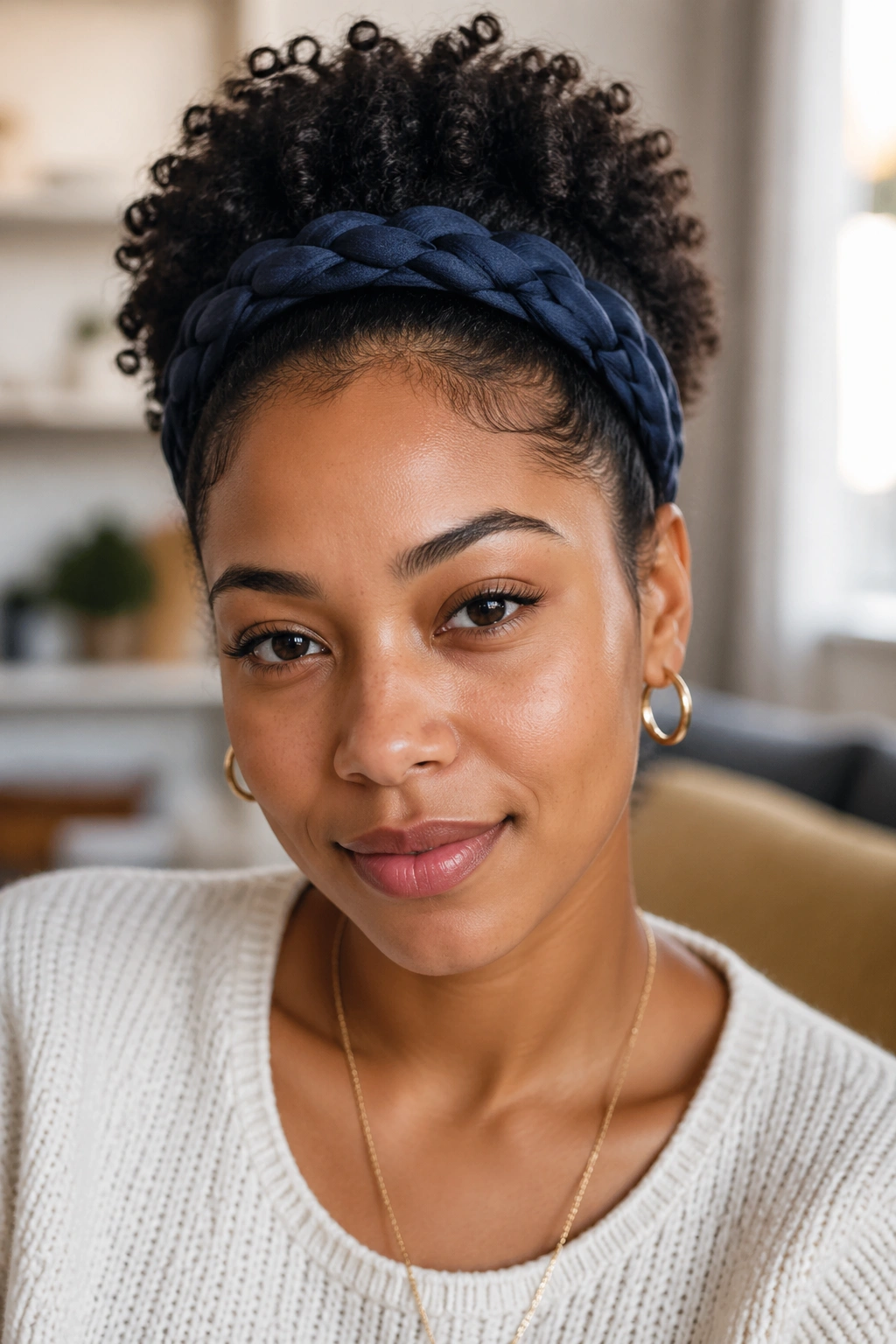
Unlike flat elastic bands, braided headbands bring texture before your curls even start talking. That sounds dramatic, but it’s true. The braid itself adds depth and shape, so the accessory looks finished even when the rest of the hair is simple.
Braided bands are a nice middle ground. They feel more styled than a plain stretch band, but they’re usually softer than a hard plastic piece. For curly hair, that makes them a safe bet when you want to look put together without flattening the front. I especially like them with half-up styles, where the braid can sit just behind the hairline and help the face-framing curls stand out.
The braid can be thick or thin, but the stitching matters more than the decoration. If the strands of the braid are glued, rough, or oddly stiff, the band tends to sit awkwardly and can tug at fine curls. A sewn or woven finish usually moves better with the hair.
Best for these situations
- Workdays when you want a neat frame around loose curls
- School or errands when comfort matters more than sparkle
- Styles that need a little visual detail near the crown
- Hair that slips out of plain bands too easily
If you want one accessory that can move from jeans to a blazer without feeling out of place, this is the one I’d pick first.
7. Padded Headbands That Give the Crown Some Lift
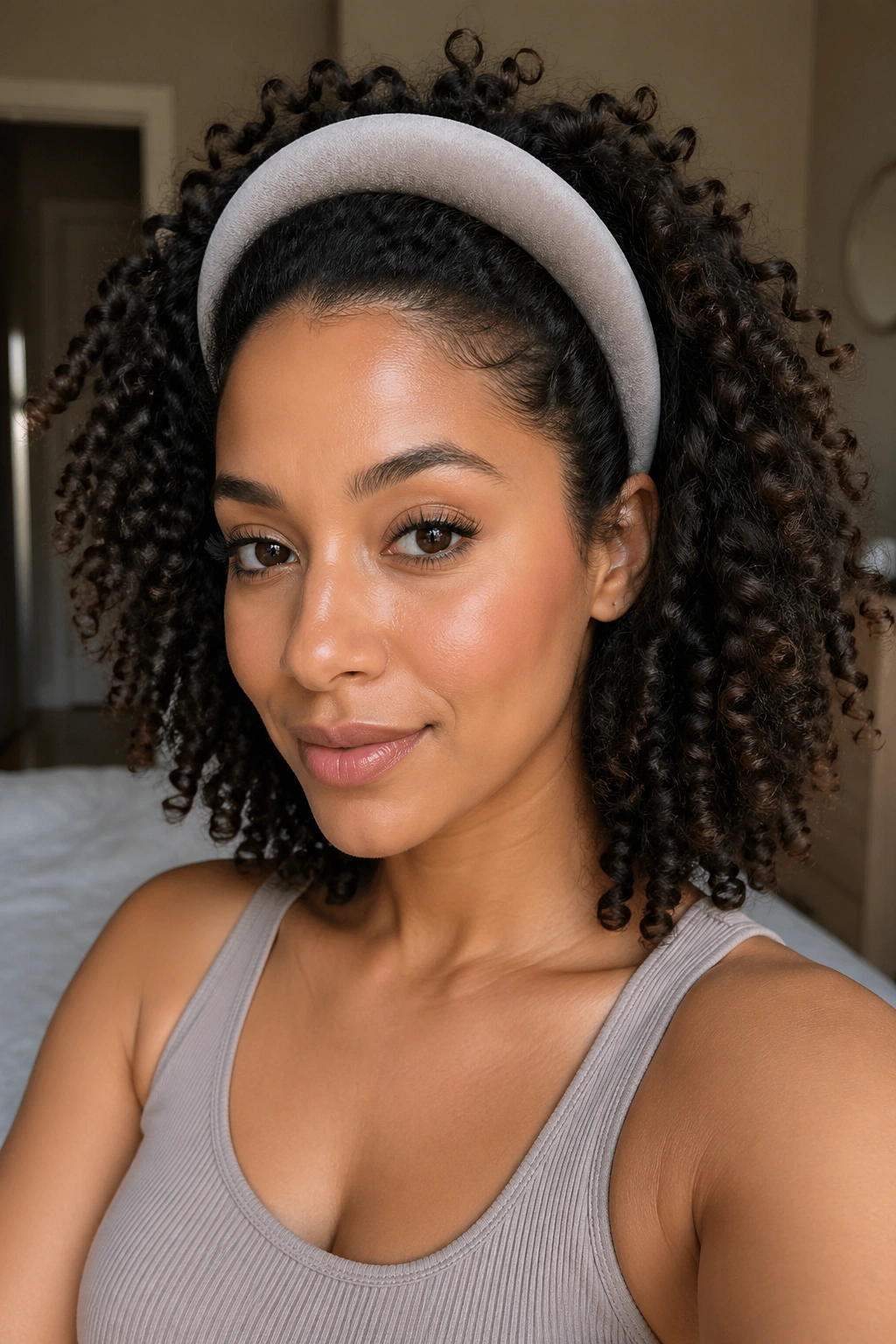
Padded headbands are the easiest way to make curls look intentional, not accidental. The padding gives structure, so instead of your hair looking like it was pushed back in a rush, it looks shaped on purpose. That little bit of lift at the crown can make a huge difference on curly hair, especially when the top tends to collapse.
They work best when the padding is firm but not stiff. You want enough body to hold the shape, not so much that the band feels like a costume piece. A narrow padded band can be cute, but on dense curls it often disappears. A medium-width padded band — usually around 1 to 2 inches — reads more clearly and balances the volume better.
What to watch for
- Padding that is too high can look top-heavy
- A slick lining helps the band slide into place without snagging
- Hard inner edges can press into the temples after an hour or two
- Too much shine can clash with very soft, matte curls
I’m picky about these, because a padded headband either looks chic or it looks like it’s trying too hard. There’s not much middle ground. Choose one with a calm color and a clean shape, and let the curl texture do the rest.
8. Skinny Elastic Headbands That Work With Half-Up Styles
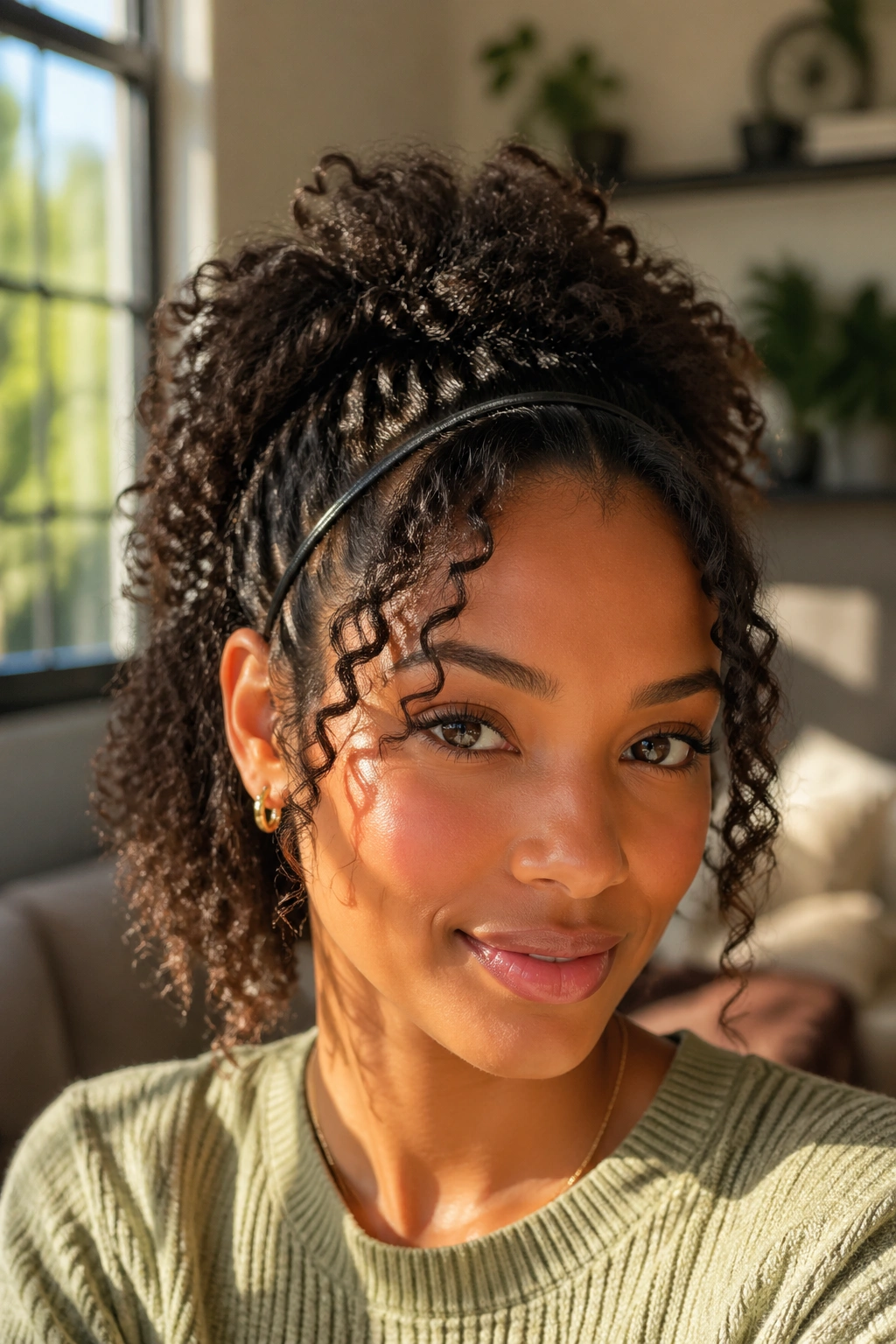
Can a skinny headband work on thick curls? Yes, if you treat it like an accent, not a clamp. That is the whole trick. Skinny elastic bands are best when you want to show off your curl pattern instead of controlling every strand.
They shine in half-up styles, where the front section gets a small bit of definition and the rest of the hair stays loose. A skinny band can separate the front curls from the crown, which helps a wash-and-go look feel cleaner. It also works nicely when you want the band to disappear a little and the curls to stay center stage.
How to use it
- Place the band about 1 inch behind the hairline
- Leave a few curls out near the temples so the front doesn’t look too tight
- Keep the crown soft instead of pulling everything straight back
- Choose a band with a soft elastic cover, not bare rubber
The downside is obvious: skinny bands can dig in. If your curls are very thick or your hairline is sensitive, you may only get an hour or two before it starts bothering you. For that reason, I think of these as styling pieces more than all-day accessories.
Used right, though, they’re clean, light, and easy.
9. Sport Headbands That Keep Sweat and Frizz in Check
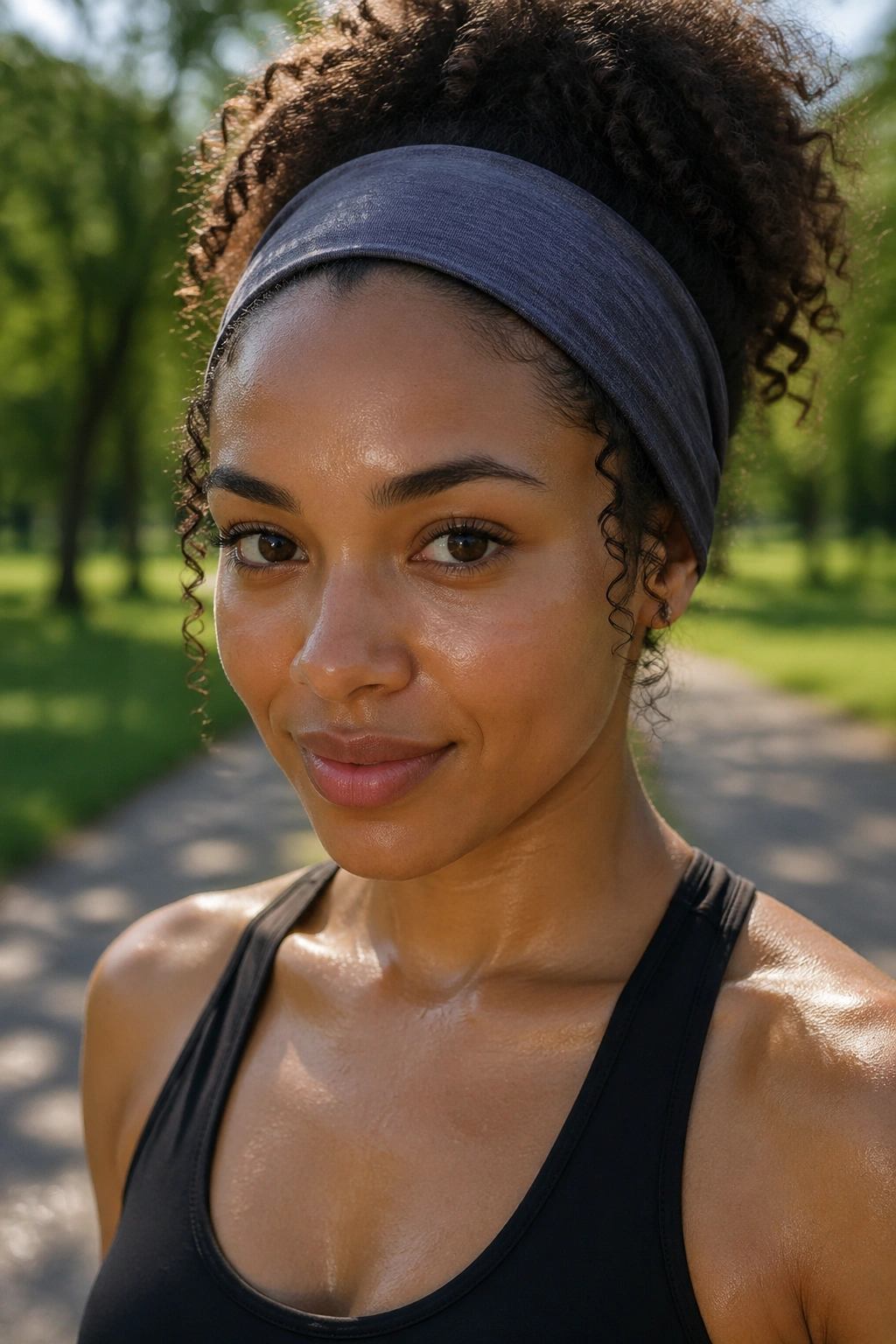
A sport headband earns its place when your curls need to stay out of your face and the weather, workout, or daily life is making everything damp. Sweat at the forehead can turn the front of curly hair stringy fast, and a good athletic band gives you a barrier before that happens.
The best ones are soft on the inside and grippy enough to stay put without chewing up the hairline. Terrycloth can absorb moisture well, but rough loops can snag delicate curls if the band shifts a lot. Smooth performance fabric or a lined stretch band usually feels better for natural curls, especially if the hair around the temples is fine or fragile.
I like sport bands for more than exercise. They’re useful for walking in warm weather, cooking over a hot stove, cleaning, or anything where the front of the hair is the first thing to get sweaty. If you wear your curls in a puff, a high pony, or a pineapple, the band can keep the front neat while the rest stays airy.
- Best with wash-and-go styles that need forehead control
- Good for puffs, ponytails, and twisted-up hair
- Look for a band that stays flat at the back of the head
- Avoid anything that leaves a deep ridge across the temples
You do not need a giant logo or a neon stripe. You need a band that stays comfortable when the sweat starts.
10. Jewel-Trimmed Headbands That Dress Up Curls Without Hiding Them
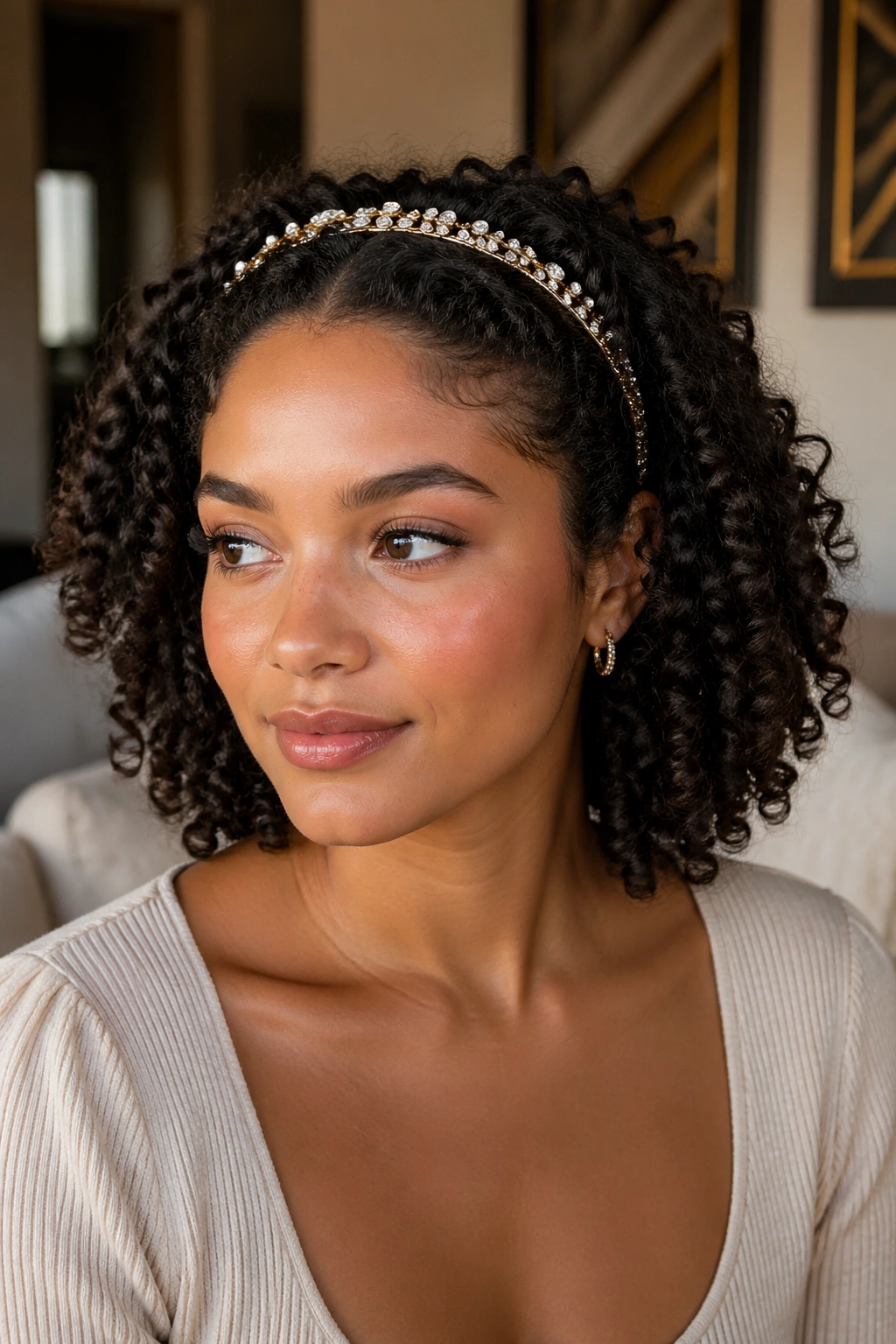
A jewel-trimmed headband looks best on curls when the sparkle stays on top and the fit stays soft. That sounds picky, because it is. With natural curly hair, the accessory should add a little shine, not bulldoze the texture underneath it. The curls are already doing most of the visual work.
These bands are strong for dinners, parties, photos, and any moment where you want the face framed neatly while keeping the hair big. The trick is weight. Too much embellishment pulls the band down and makes the front feel heavy. Small beads, short crystal sections, or a single row of detail usually work better than thick, clunky decoration.
How to keep the shine from feeling fussy
Choose a band with a smooth underside so the embellishment doesn’t rub the hairline. Place it so the jeweled section sits where it can be seen without pushing the front curls flat. If your hair is very voluminous, a slimmer decorative band can get lost, so a medium-width base gives the style more balance.
I’m not a fan of overbuilt versions with sharp backs or heavy metal settings. They look pretty for ten minutes, then they start annoying you. The best ones are the ones you can wear without constantly checking in a mirror.
11. Wire-Edge Headbands That Let You Shape the Front
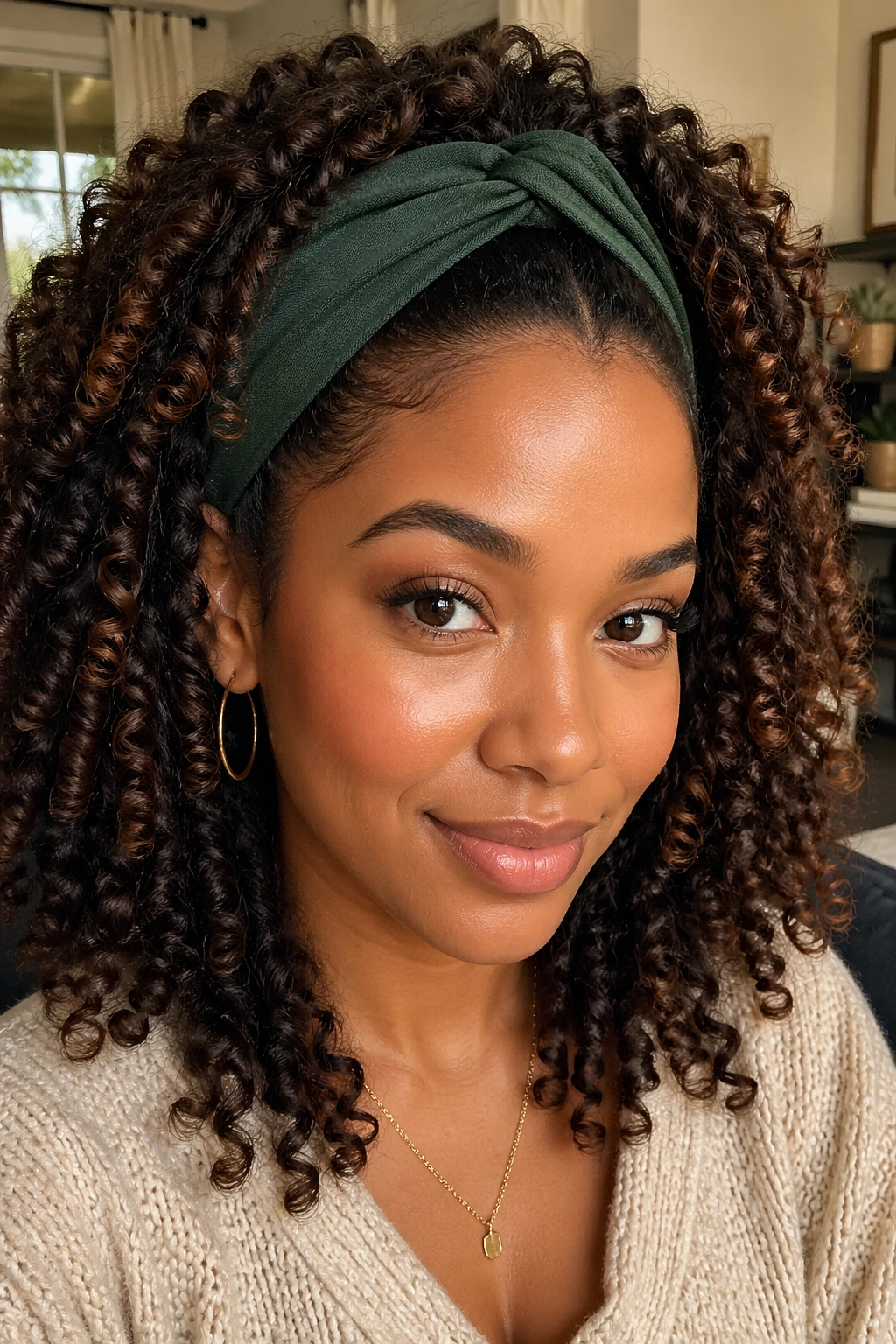
Wire-edge headbands bend differently from rigid plastic ones, and that’s why they’re useful on curly hair. You can shape them to follow the head instead of forcing your curls to follow the band. That small bit of flexibility makes them handy when your hair has a mind of its own, which, let’s be honest, is most curly hair most days.
They’re especially nice if you like asymmetry. You can twist one side a touch higher, leave the other lower, and create a softer line around the face. Some wire-edge styles also let you tie a bow, which can make the whole thing feel more playful without needing a separate accessory.
The main thing to avoid is over-tightening. If the wire gets twisted too hard, it can create pressure points and leave dents near the temples. You want the band to feel shaped, not squeezed. A soft fabric cover around the wire helps too, since bare wire can feel scratchy when the curls shift against it.
I’d recommend this style for people who change their part a lot, like side parts one day and middle parts the next. Wire-edge bands adjust quickly, and that makes them one of the more adaptable headband styles for natural curly hair.
12. Halo Headbands That Frame Big Curls Beautifully
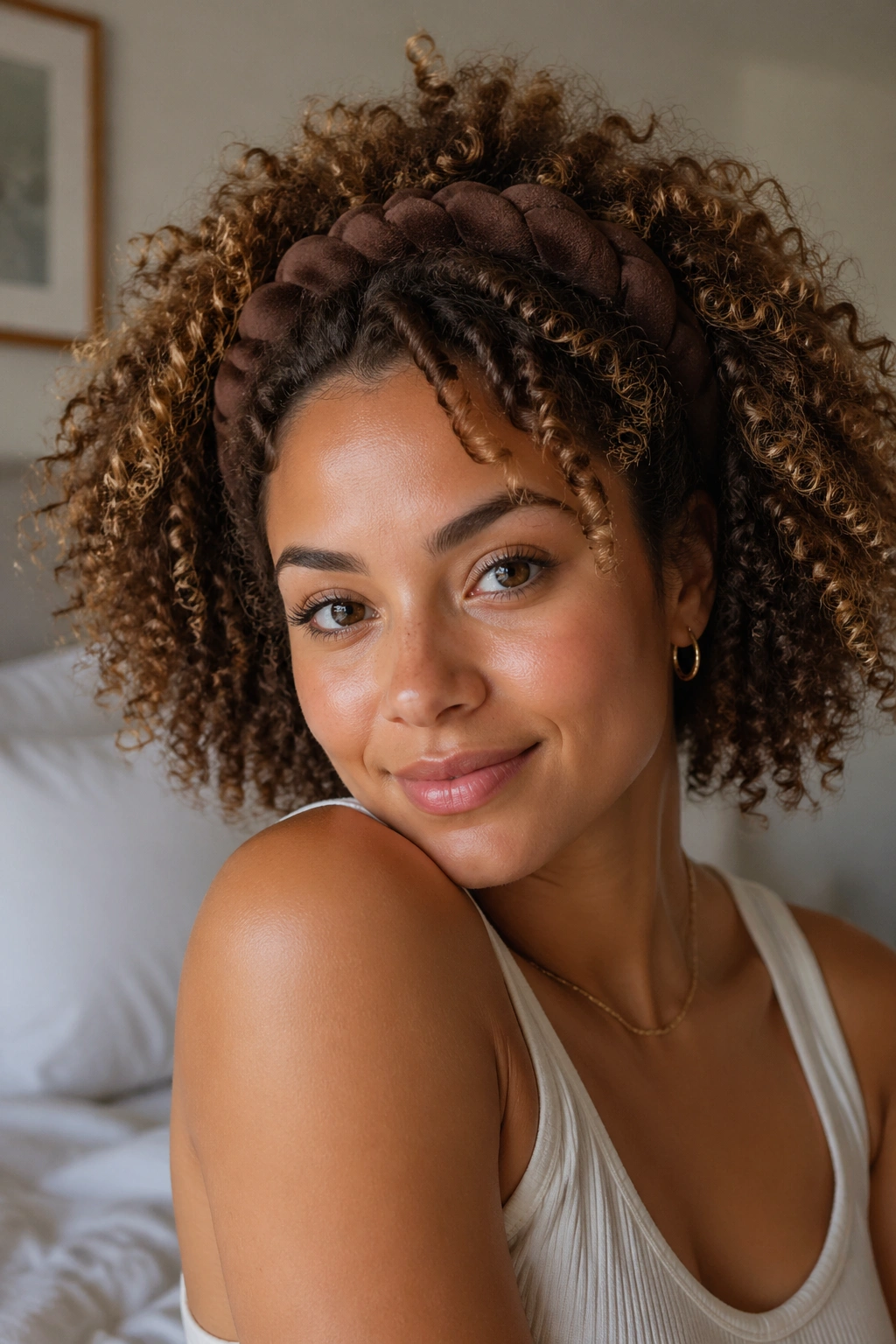
Halo headbands are the ones that let your curls stay the headline while the band quietly does its job. They rest higher on the head, often like a soft crown, and they can frame a puff, a twist-out, or a big wash-and-go without flattening the sides. If you like volume — real volume, not half-hearted fluff — this style makes sense.
The halo shape works because it keeps the band away from the strongest part of the curl pattern. Instead of pressing straight across the front, it sits around the crown and lets the hair rise around it. That makes it a strong choice for longer coils, stretched curls, and styles that look better with a lifted silhouette.
I also think halo bands are underrated for special occasions. They can look elegant without being stiff, and they often photograph in a calmer way than a heavy jeweled band. The hair still looks like hair. That part matters more than people admit.
If you have a lot of shrinkage, look for a halo band with a flexible base and a smooth finish. Too much rigidity makes it poke out at odd angles. Too little structure and it starts slipping back. That balance is the whole game here. Get it right, and the band disappears into the shape of the curls instead of competing with them.
Final Thoughts
The best headband styles for natural curly hair do not fight the texture. They respect it. That usually means a softer fabric, a smarter width, and a shape that works with volume instead of trying to pin it into something smaller.
If you’re choosing between styles, start with the job. Everyday hold calls for wide stretch bands. Frizz control points toward satin-lined pieces. Dressy moments and big-volume days can handle halos, wraps, or a little sparkle. Easy.
And if a headband makes you keep adjusting it every ten minutes, that’s your answer right there. Put it back in the drawer and try a different shape.
