



Claw clip styles for curly hair work best when you stop trying to cram every curl into the same loop.
That sounds almost too simple, but curly texture has its own rules. A clip that’s gorgeous on straight hair can flatten a curl crown, snag the ends, or leave you with a lopsided shape that looks accidental instead of styled. With a curly bob, the margin for error is even smaller. There’s less hair to hide the clip, which means placement matters more than the clip itself.
The sweet spot is usually somewhere between “secure” and “too neat.” You want enough hold that the style stays put, but enough slack that the curl pattern still looks alive. A good claw clip style should leave some lift at the roots, some shape around the face, and a little bit of motion through the ends. Flat. Stiff. Helmet-like. No thanks.
1. The Mid-Crown Twist Clip
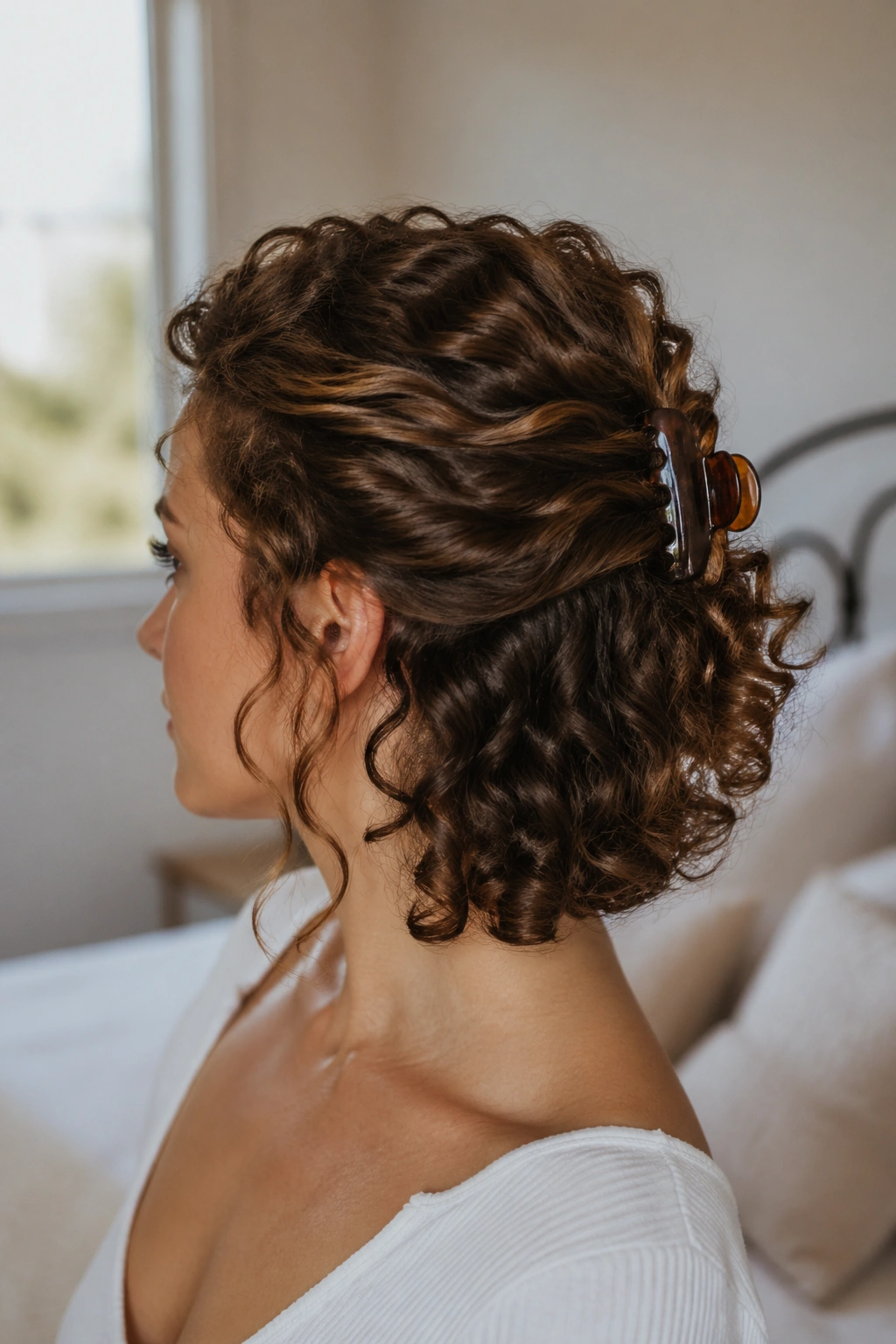
This is the style I reach for when curls feel puffy but not worth a full updo. The mid-crown twist keeps the top layers controlled while letting the lower curls keep their shape, which is exactly why it works so well on curly bobs and shoulder-length cuts.
The move is simple: gather the hair from just above the ears, twist it once or twice, and secure it at the back of the crown with a medium claw clip. Not high. Not low. Right in that middle zone where the clip can grip without dragging the whole style down. If your curls are dense, leave the ends loose instead of forcing them into the clip. That’s where the shape stays nicest.
How to place the clip
- Start on dry or mostly dry curls so the shape you see is the shape you keep.
- Twist from the temples back toward the crown, not straight up from the nape.
- Place the clip vertically if you want height, or slightly angled if you want the style to sit flatter.
- Leave a few face pieces free if your bob ends around the jawline.
One thing people get wrong: they twist too tightly. Tight twisting pulls the curl pattern apart and makes the top look stringy. A looser twist gives you better texture and fewer dents.
Best tip: use a clip with deeper teeth if your curls are coarse or springy; shallow teeth slide right out of them.
2. The Half-Up Puff
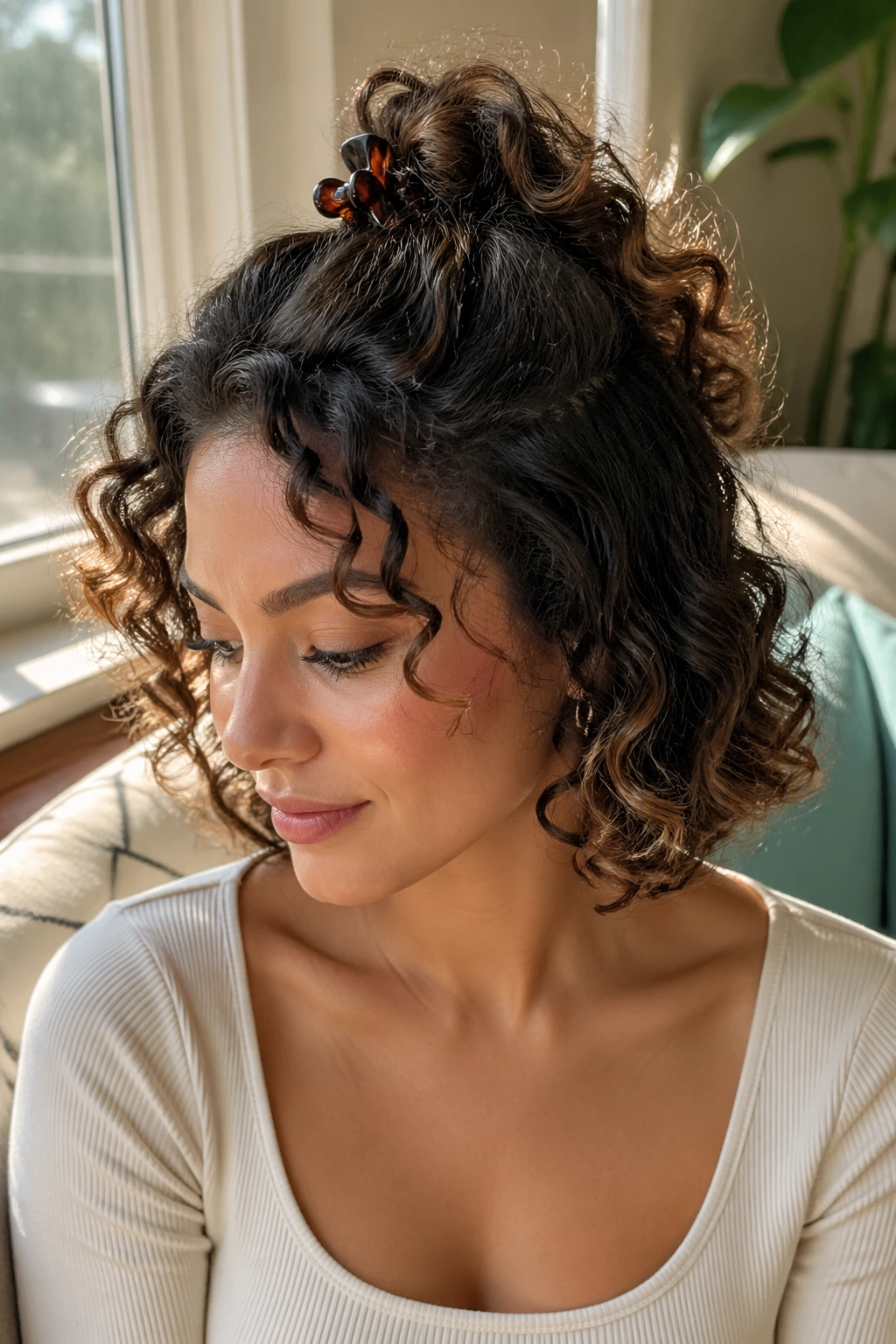
Why does a half-up puff look so good on curly hair? Because curls naturally build their own shape, and this style lets them do it without asking for symmetry. The top section gets lift, the bottom section stays loose, and the whole style looks fuller than it actually is.
Gather hair from the temples back to the crown, then let the top section puff up a little before clipping it. Don’t flatten it with your palm. Use your fingers. That little pocket of air is what keeps the style from looking pressed down. On a curly bob, this can be the difference between “cute” and “I tried too hard.”
Why it flatters curly bobs
Shorter curls often have a lot of personality around the jaw and cheeks. The half-up puff shows that off instead of hiding it. It also keeps hair off the face without yanking the entire cut upward, which is a common mistake with small clips.
A medium or mini claw clip works here, depending on thickness. If your hair is dense, two clips back to back can hold the section better than one oversized clip that keeps slipping open. That sounds fussy, but it’s easier than redoing the whole thing every hour.
The best version leaves the ends soft and a little uneven. That’s the point. Crisp edges can be a bit harsh on curls, and this style wants softness more than polish.
3. The Low Nape Loop
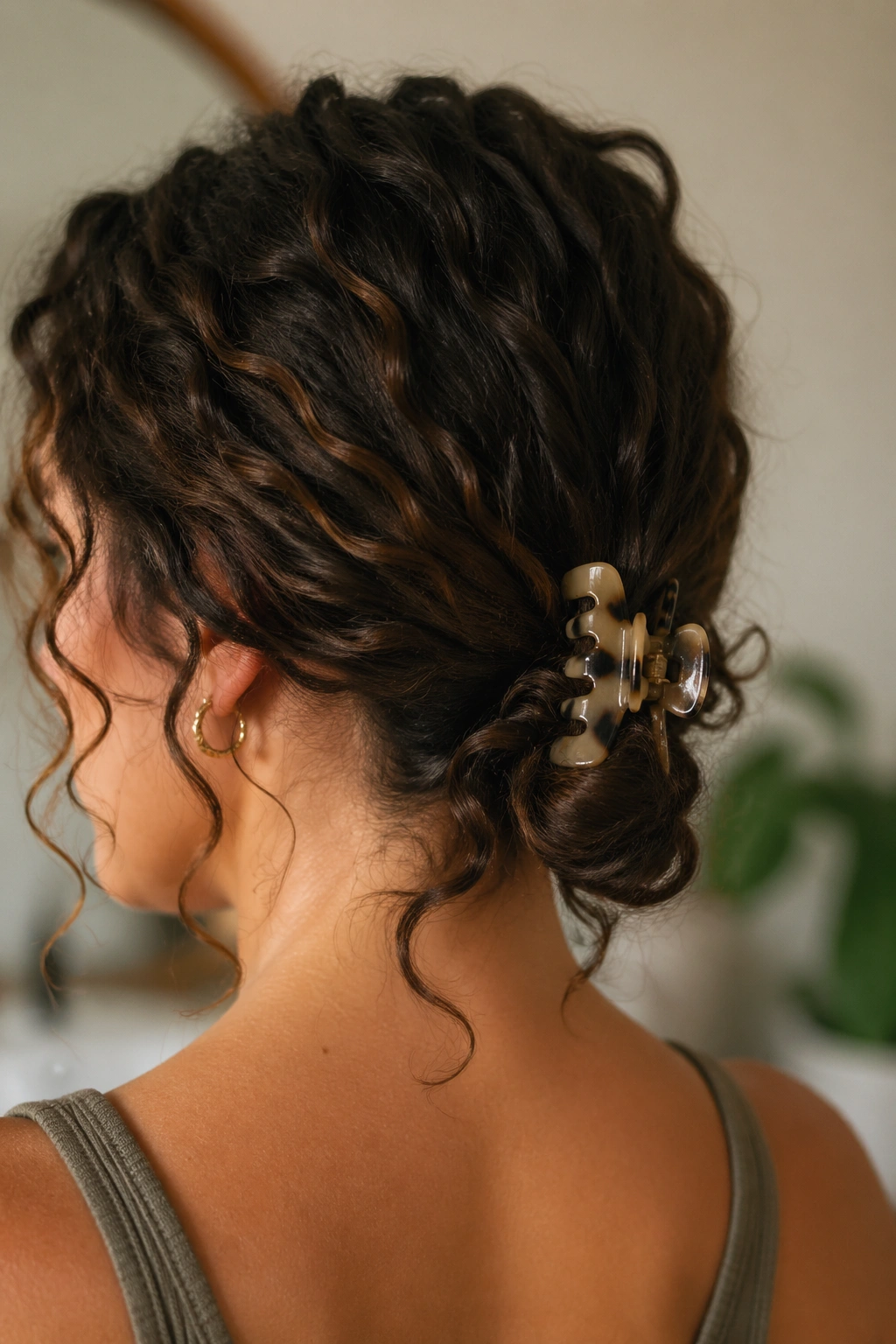
If your curls swell as the day goes on, the low nape loop is a smart answer. It sits low enough to stay stable, but it still keeps the shape loose and curly instead of pinning everything into one hard knot.
Start by gathering the hair at the nape of the neck, then twist it into a loose loop. The ends can tuck under the clip or spill out a little, depending on how much length you have. For a curly bob, the spill is often better. A bob that’s just long enough to catch in a low clip can look cleaner if the ends are allowed to fan out instead of getting jammed in.
Key details that matter
- Keep the clip horizontal at the nape for better grip.
- Use a medium-to-large clip if your hair is thick, even if the style itself looks small.
- Leave the crown slightly lifted so the style doesn’t sit heavy.
- Works especially well with second-day curls that have a little more texture and less slip.
This is one of those styles that looks understated in a good way. Not bare. Not fancy. Just practical and tidy, which is often exactly what curly hair needs when you want it off your neck without losing the curl shape.
And yes, it’s a good one for hot kitchens, crowded commutes, or any day when you do not want hair touching your collar. Simple fix. Nice result.
4. The Side-Swept Anchor
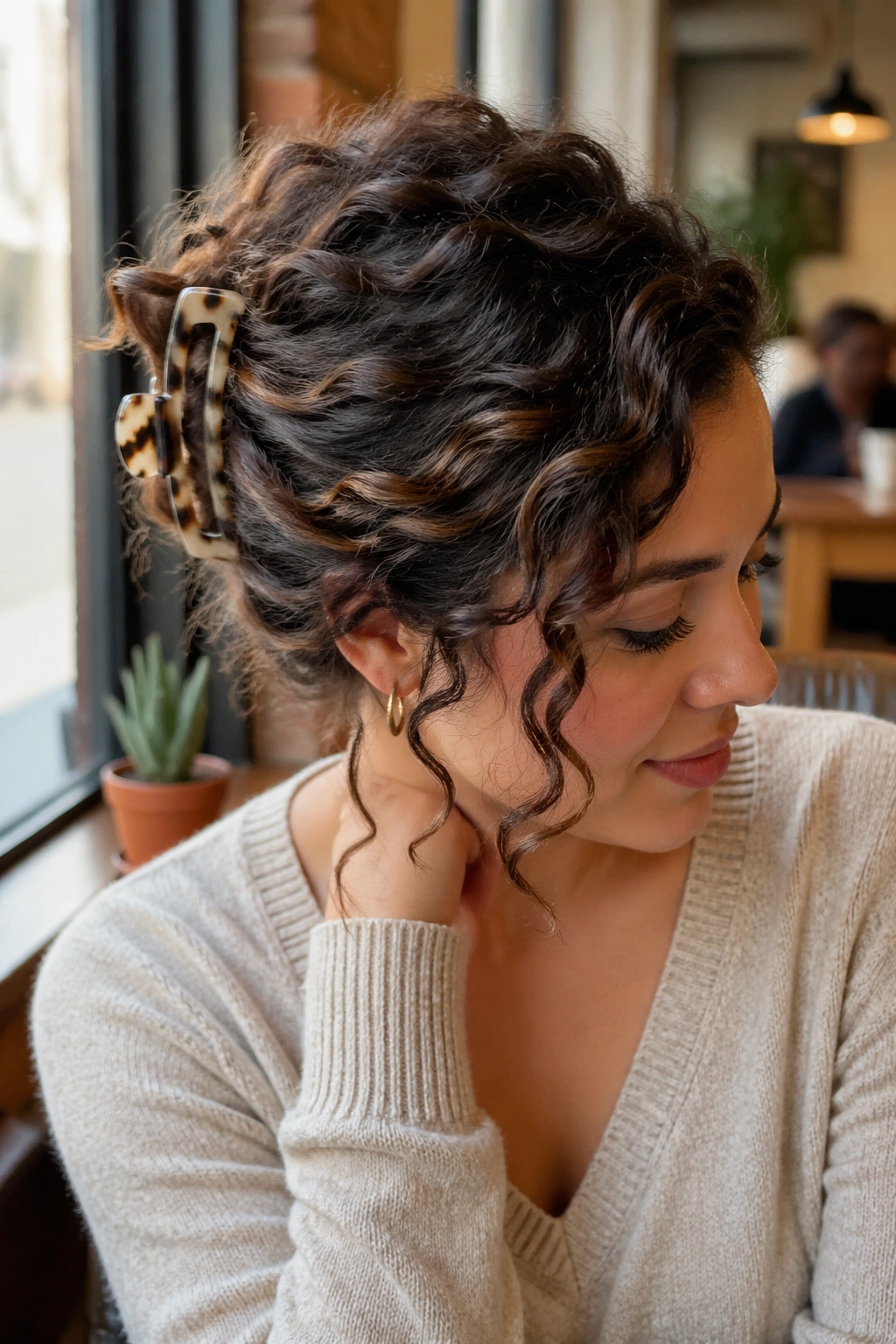
A side sweep is not a lazy updo. It’s a shape choice. Pulling curls to one side gives them room to stack and move instead of spreading out into a bulky triangle at the back of the head.
Take hair from one temple and sweep it diagonally toward the opposite side of the nape or mid-back. Secure it with a claw clip so the teeth catch both the top layer and the denser section underneath. The result is a soft, off-center fall that feels a little more styled than the usual pull-back clip.
Curly hair likes asymmetry more than people think. A side-swept clip can make a bob look intentional even when the cut is a little uneven from shrinkage. That matters with curls. The shape is rarely identical on both sides, and pretending it is can make the style look stiff.
What I like most here is the face line. One side stays open, the other gets a little curtain of curls. It gives you movement without needing a lot of work. If you have a curl pattern that expands outward rather than down, this style helps contain the spread without flattening the roots.
Skip the urge to make both sides match too closely. That’s how you lose the charm.
5. The Pineapple Lift
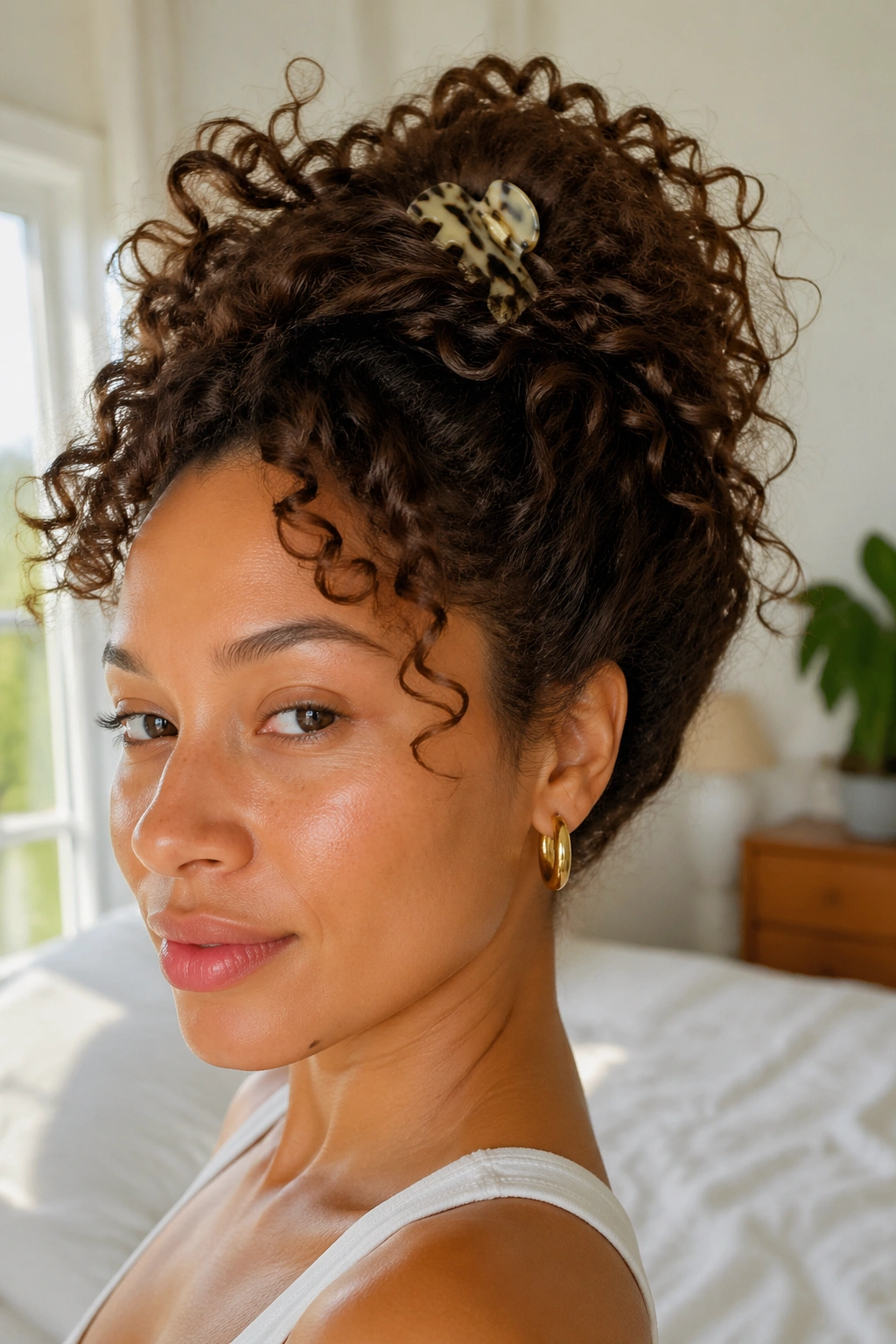
The pineapple lift is the style that keeps curls from getting crushed, and it does it with almost no drama. Hair is gathered high, usually near the crown, so the ends can sit above the shoulders and the curl pattern keeps its bounce.
For curly hair, especially medium to long bobs, this is one of the gentlest ways to get the hair off the neck. Pull the curls upward with your fingers, not a brush, and let the top section sit loose before clipping it. You want lift, not tension. If the roots are pulled tight, the style loses the whole point.
The pineapple lift also happens to be a handy choice when you want to keep curl definition intact between wash days. The higher placement reduces the way hair rubs against jackets, collars, and chair backs. That friction is what usually roughs up the ends first.
One small warning: don’t place the clip directly on a tight coil of roots. That can leave a hard dent that lingers longer than you want. Shift the clip slightly off center, and let the hair breathe a little around it. A loose hold often looks better than a tight one.
This style is especially useful when your bob has layers. Layers can pop out at different lengths, which sounds messy, but in a pineapple clip it reads as shape. Good shape.
6. The Faux Bob Tuck
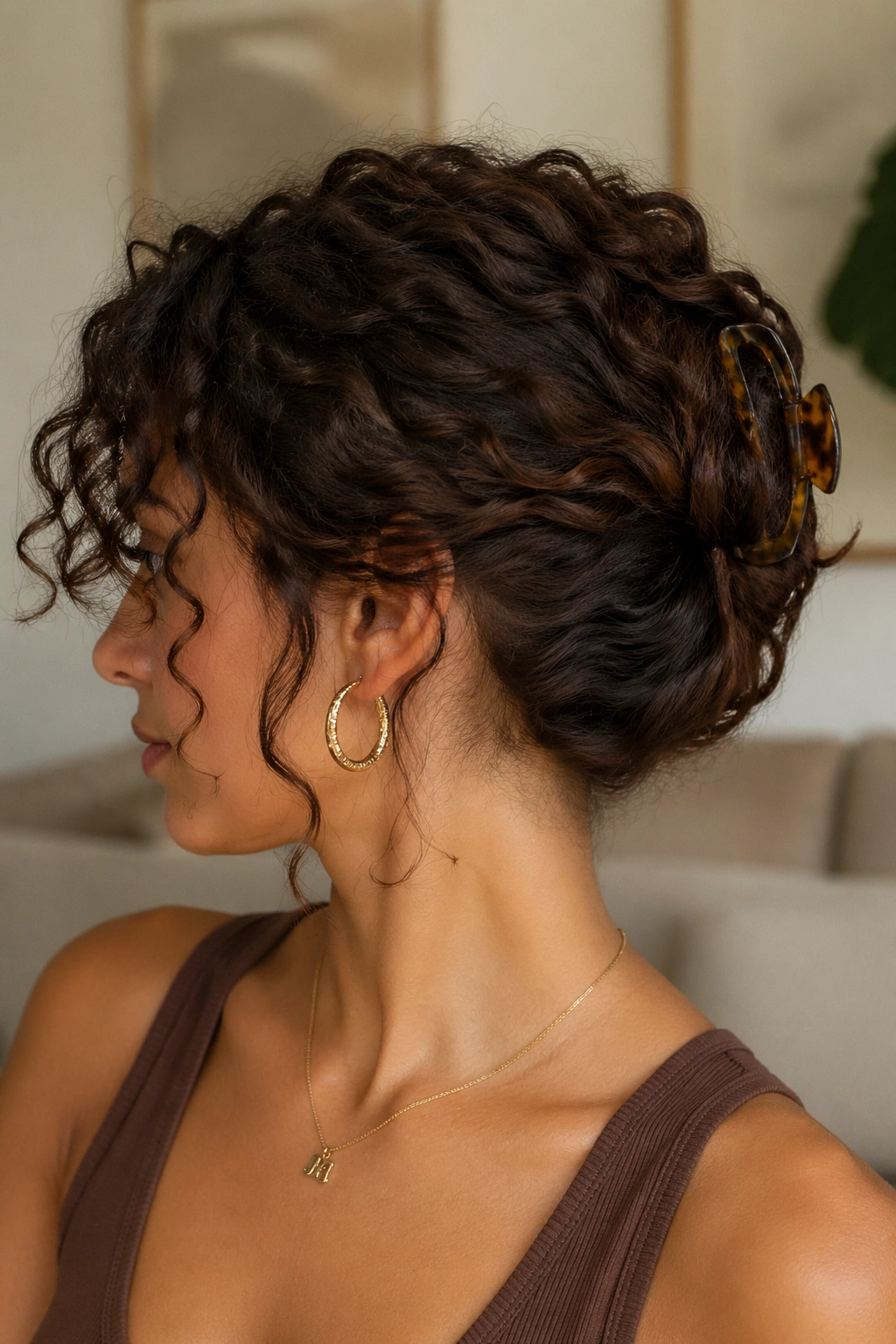
A faux bob is one of those styles that sounds more complicated than it is. In practice, it’s mostly about tucking and hiding the ends in a way that makes the haircut look shorter and neater for a few hours.
Start by folding the ends upward at the nape or just under the crown, then clip the folded section so the curl mass sits tucked under itself. The top layers stay visible, so the style still looks like curls, not a shell of hair pinned flat to the head. On a shoulder-length cut, this can mimic the compact feel of a chin-length bob without actually cutting anything.
How to keep it from collapsing
Use your fingers to create a pocket before you clip. That pocket gives the ends somewhere to rest instead of letting them slip sideways. A medium clip works for fine curls, but thick curls usually need a larger claw with deeper teeth so the tucked section doesn’t pop loose.
This style gets especially useful if you’re growing out a bob and the length feels awkward. You know the stage I mean. Hair that’s too short for a proper bun, too long to ignore, and somehow always catching on your coat. A faux bob tuck fixes that for a while.
It’s not a style for every day if you like your curls free. But for dinners, photos, or any situation where you want a cleaner outline, it’s a very good move.
7. The Double-Clip Split Hold
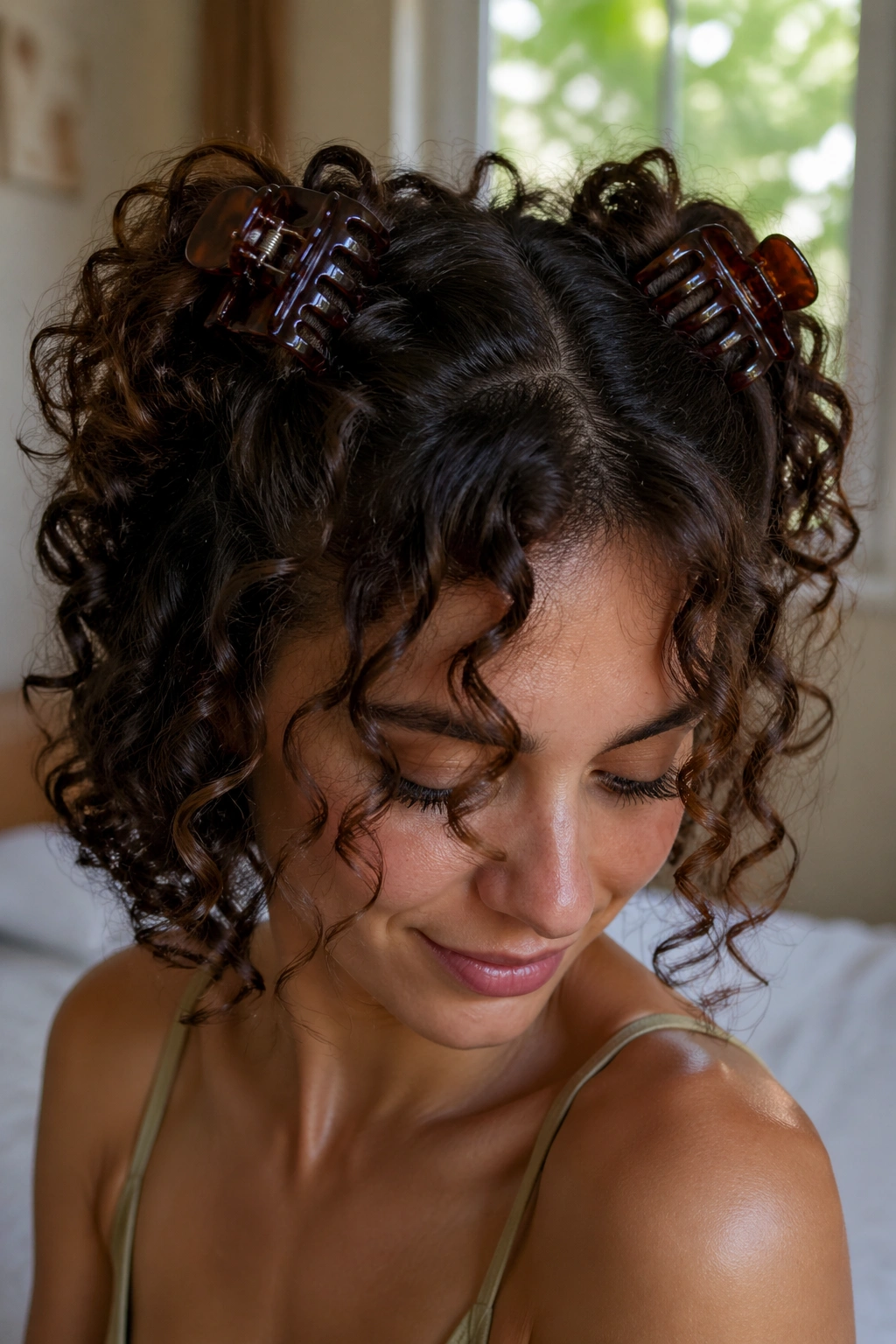
Two clips are often better than one when the hair is thick, springy, or packed with layers. The double-clip split hold spreads the weight across two anchor points, which means less slipping and less pulling at the roots.
Here’s how it works: split the hair into two loose sections, either side by side or top and bottom, then secure each section with its own clip. You can stack the clips vertically if you want the style to sit compact, or place them slightly apart if the hair is dense and needs room.
What makes it different
- One clip can twist the curls unevenly.
- Two clips let you keep the curl pattern looser.
- The style is easier to adjust if one section starts sagging.
- It works well on short curly bobs that need help holding shape at the back.
This is a good option when a single clip keeps slipping out no matter how carefully you place it. Sometimes the problem is not your hair. Sometimes the clip just can’t hold that much texture in one bite.
I also like this style for uneven cuts. Curls rarely sit in a perfectly even curtain, and two clips can balance the visual weight better than one central clip. It looks deliberate, not fussy. And if one side is tighter than the other, you can fix that without starting over. Small mercy.
8. The Loose Mini-Bun Clip
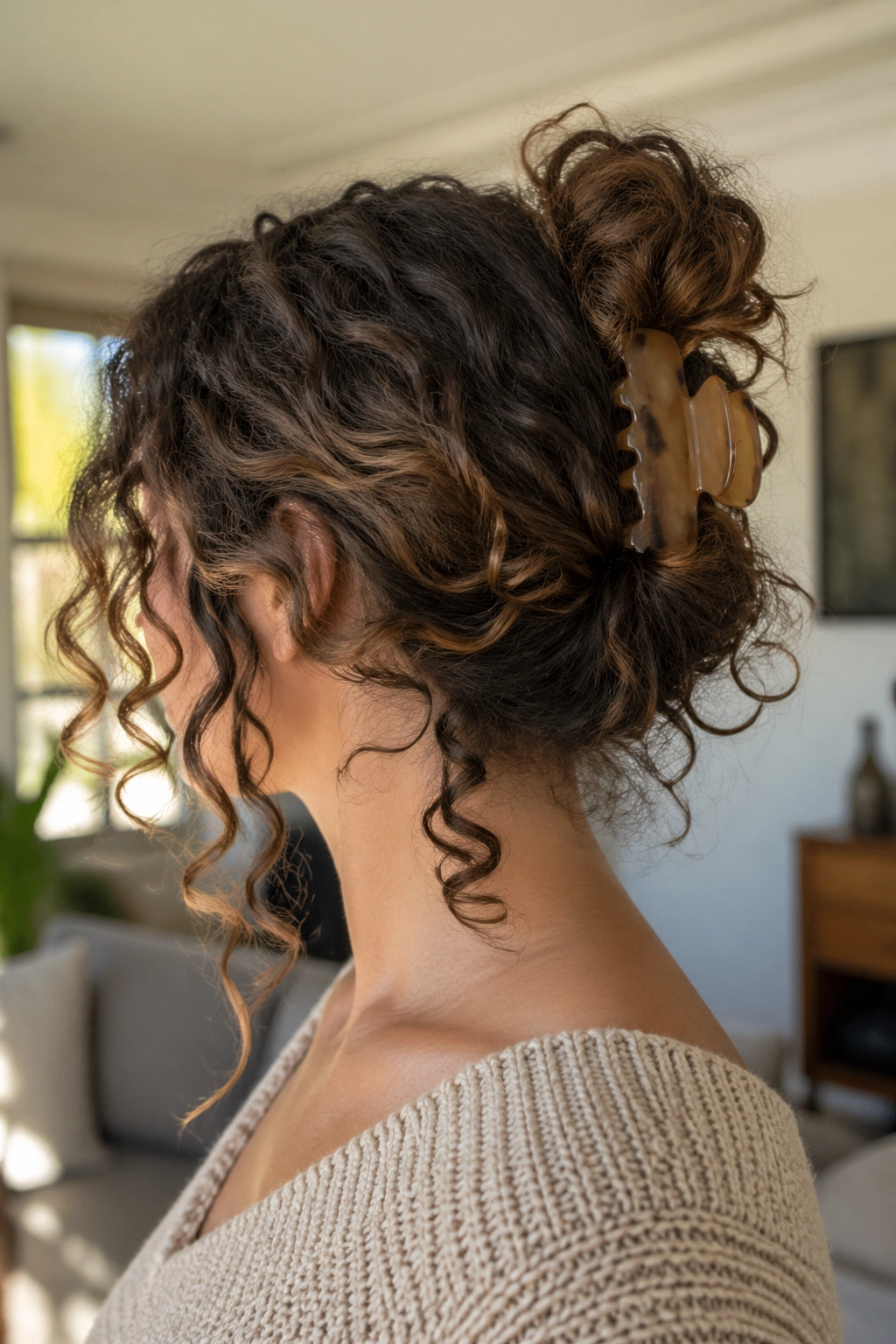
A loose mini-bun clip is the style you reach for when you want your hair up, but you still want to see your curls. It gathers the lengths into a soft bun shape, then uses the clip to hold the bun without flattening the texture into a hard knot.
This works especially well on bobs that touch the shoulders or just skim the neck. Bring the hair up gently, twist it once, and fold the ends into a little bun. Don’t chase perfection. The more uniform the bun looks, the less curly it tends to feel. A bit of unevenness is fine here. Better than fine, actually. It gives the style some life.
The mini-bun clip is one of those styles that can shift from casual to tidy depending on where you place it. Low at the back, and it feels relaxed. A touch higher, and it looks more lifted. The curls around the bun do a lot of the work on their own, which is nice when you do not want to fuss with shaping every piece.
Use a clip with a wide opening if your curls are dense. Tiny clips can pinch the bun and make it bulge in odd places. A slightly larger clip spreads the hold and gives the bun room to breathe.
9. The Front-Roll Clip for Bangs and Short Layers
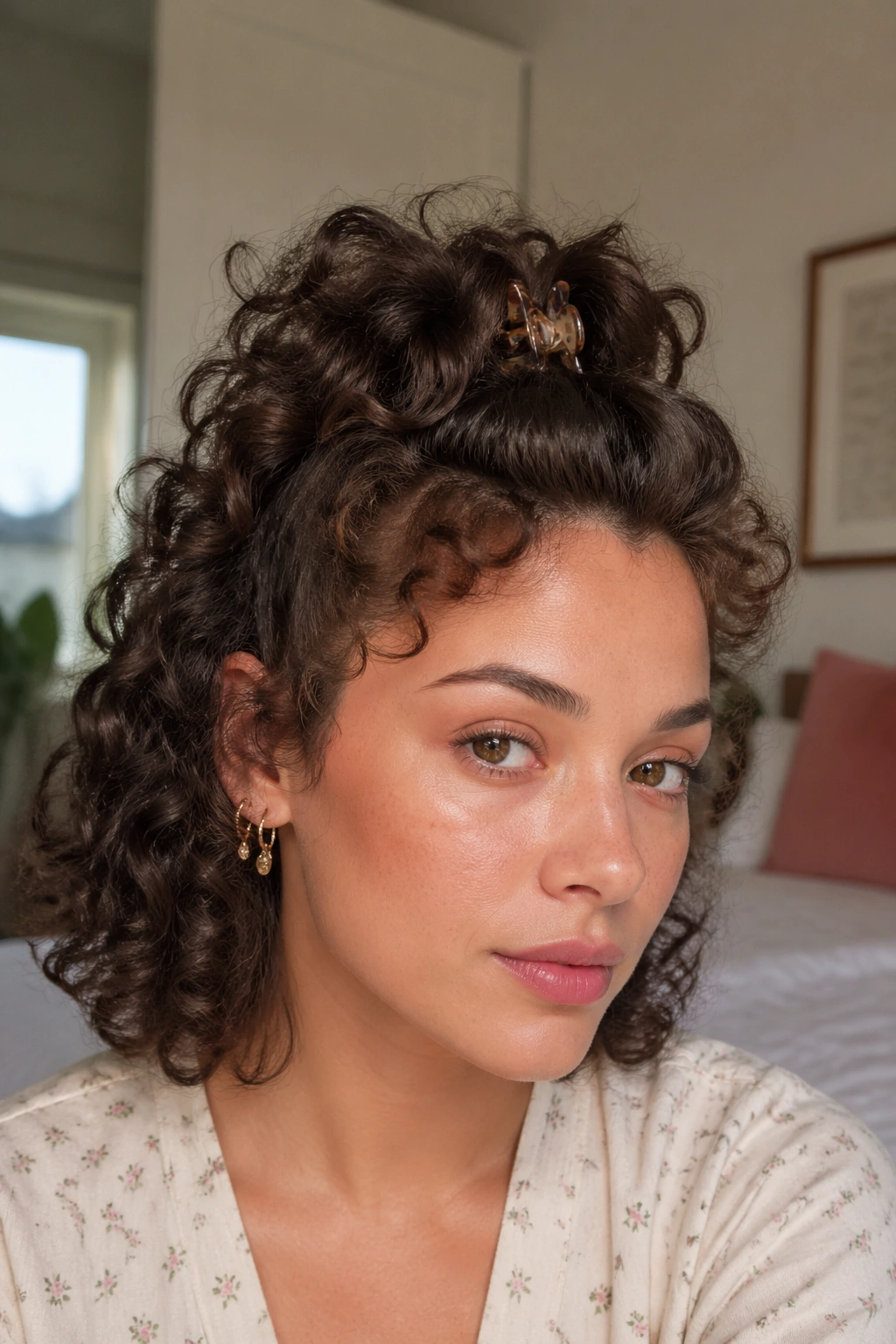
Need to keep bangs out of your eyes without flattening them? The front-roll clip does that job better than a lot of people expect. It gathers only the front section, rolls it back once, and clips it near the crown so the rest of the hair stays loose.
This is a good move for curly bangs, curtain bangs, and those short face-framing layers that never quite stay put. Instead of forcing them straight back, roll them toward the side or slightly upward and let the clip hold the curve. The line stays soft, which matters. Straightening those front pieces into a tight pullback can make the whole haircut look harsher than it is.
When to skip it
If your front layers are very short, this style can leave them poking out in odd directions. In that case, a side-swept anchor or a tiny clip at the temple tends to work better. You want enough length for the roll to make sense.
I like this style because it solves a real problem without changing the rest of the hair. The back stays loose. The top still has volume. The face gets a little opening around the eyes and cheekbones, which is often all you need.
A small clip with strong teeth is usually enough here. Big clips can overwhelm the front section and make it sit too high.
10. The Side Pony Cascade
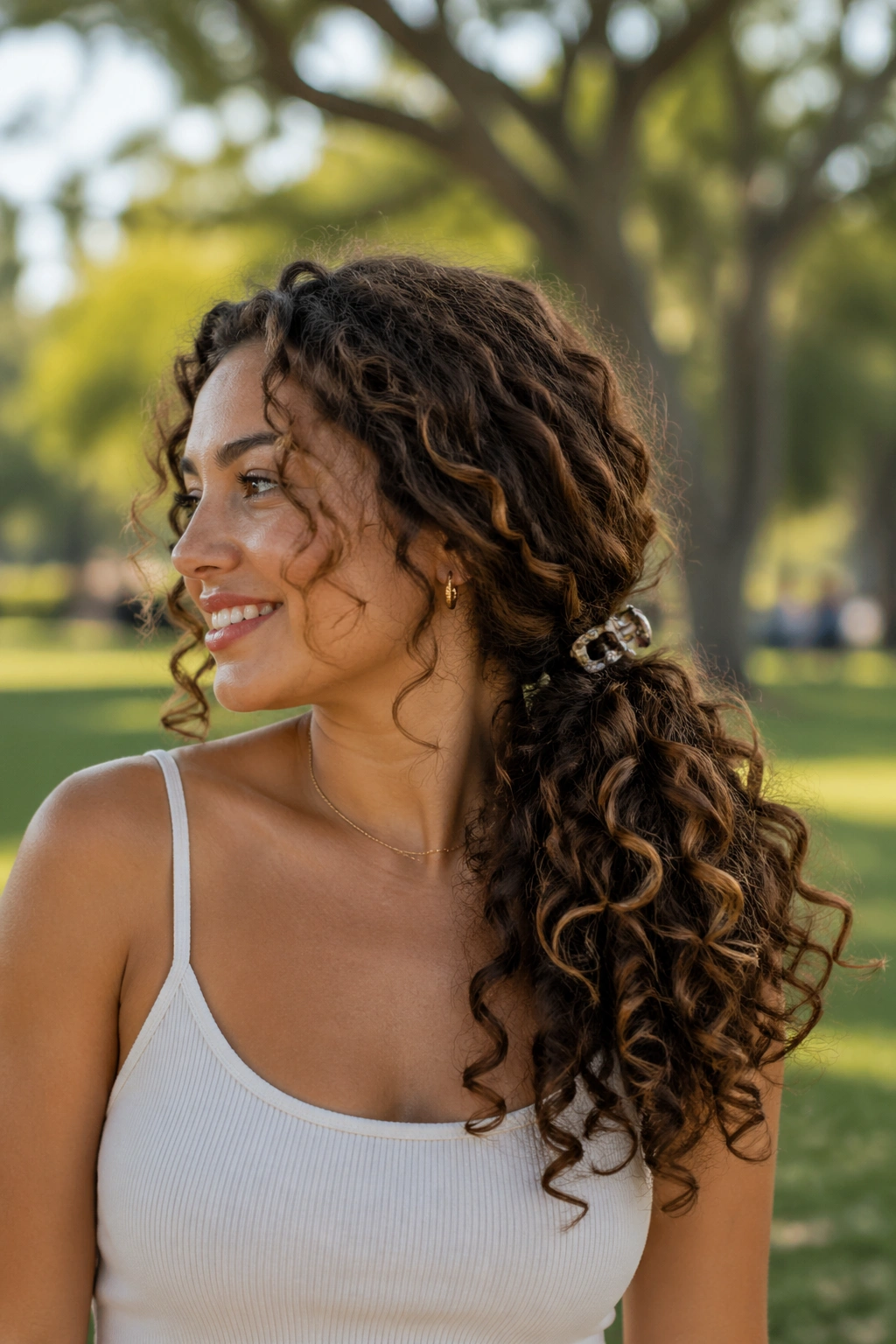
A side pony cascade gives curls a place to fall, not a place to fight. It pulls the hair into a low side position, then lets the curls spill over one shoulder in a line that feels easy and a little playful.
The base of the style sits near one ear or just behind it, where a claw clip can catch the gathered section without digging into the scalp. The pony itself stays loose, so the curls can keep their shape instead of getting compressed into a rope. If your bob is long enough to reach the shoulder, this style can make the cut look fuller on one side and lighter on the other, which is part of the charm.
It’s a good style for days when your hair is too fuzzy for a clean updo but too lively to leave fully down. The clip holds the roots back, the ends stay visible, and the curl pattern gets to be the main event.
A small note: if the pony feels too low, move it up half an inch. That tiny shift can change the whole line of the style. Too low, and it can droop. Too high, and it starts behaving like a different look entirely.
This is a good example of how curl styling often comes down to inches, not big dramatic moves.
11. The Flat Twist Crown Hold
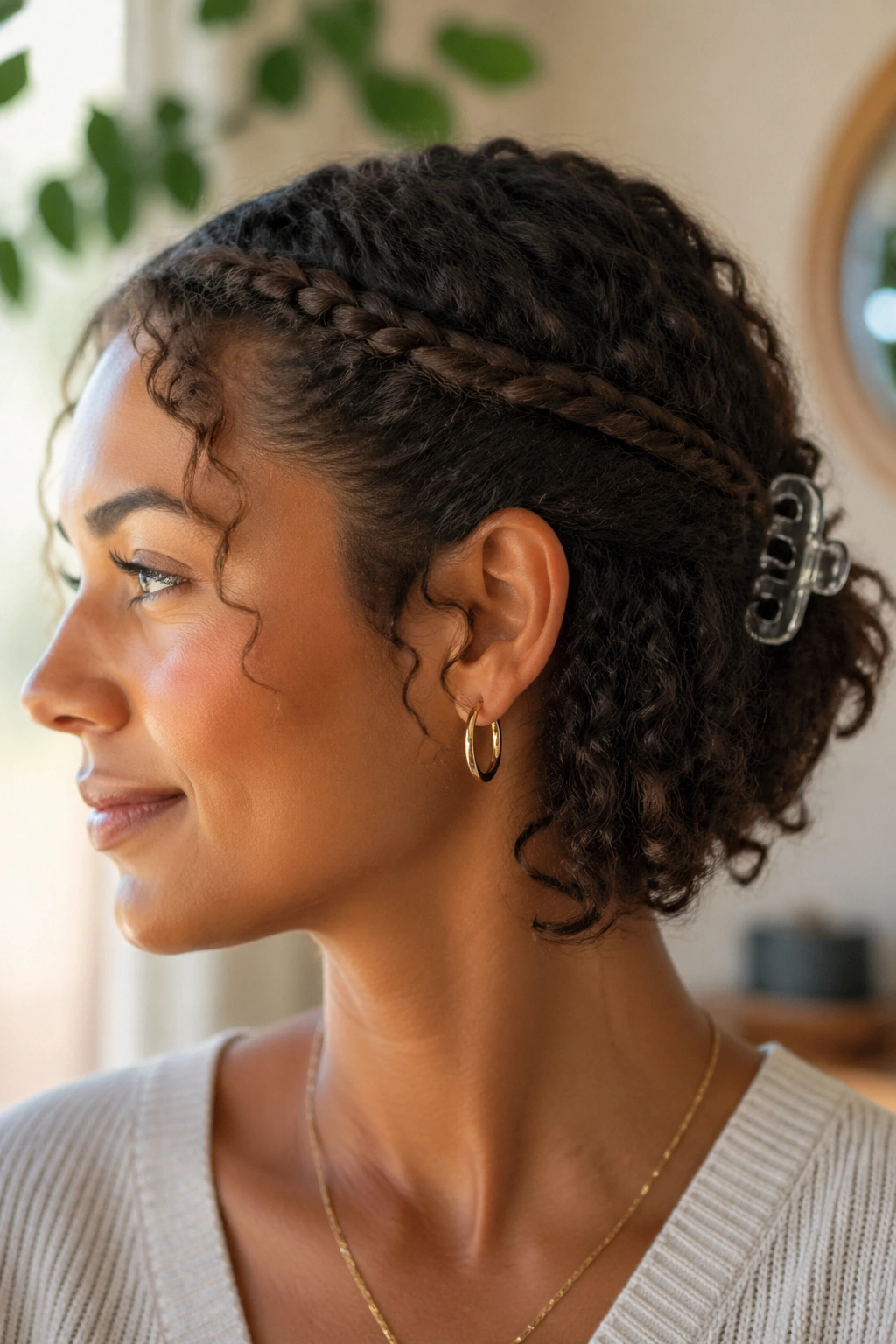
Two flat twists can do more than a full updo, and they do it with less fuss. The flat twist crown hold brings hair back from both temples, keeps the texture visible, and lets the clip sit low enough that the style doesn’t feel heavy.
Start near the hairline on each side, twist the sections back along the head, and meet them at the back crown or upper nape. Secure both together with a claw clip. The twists stay visible, which I like. They give the style shape before the clip even does its work. On curly hair, that matters because the texture itself becomes part of the design.
Unlike a style that sweeps everything into one big bundle, this one keeps the front line open. The forehead stays soft, the sides stay controlled, and the curls at the back keep their spring. It’s a strong choice for a curly bob that tends to puff around the temples.
One thing to watch: don’t make the twists too tight. Tight twists can leave the hair looking frayed by the time you take the clip out. Loose twists hold better than people expect. They also sit closer to the head, which helps if your hair is short enough that you want the clip to blend in a little.
This is one of my favorite styles for when curls need a bit of structure but not a full makeover.
12. The Jawline Clip With Tendrils
If your bob lands right around the jaw, this is the style that usually feels the most natural. The jawline clip with tendrils keeps the bulk low, leaves a couple of face pieces free, and works with the haircut instead of fighting its shape.
Pull back only the center and back sections, then clip them just behind one side of the jawline or slightly below it. Leave two front tendrils loose. Not more. Two is enough. Those pieces soften the line near the face and keep the style from looking severe. On a curly bob, that little bit of framing can make the whole cut feel lighter.
What I like here is how forgiving it is. If one curl wants to spring free, it fits the style. If the clip sits a little off-center, that can look better than perfect symmetry anyway. Curly hair tends to show its best side when it’s allowed one small irregularity.
Use this when you want an everyday style that doesn’t shout. It’s good for errands, work, school runs, or any day that asks for hair out of the way but still visible. And if you’ve got a bob that flips out at the ends, this is one of the easiest ways to keep the shape tidy without crushing the bend.
A little asymmetry helps here. A lot, sometimes.
