



A job interview is not the place to wrestle with your hair in the parking lot.
When you’re choosing curly hair styles for a job interview, you’re really looking for control without stiffness. You want something that keeps curls off your face, stays neat under pressure, and still looks like your hair — not a helmet, not a puff of sprayed-down disappointment, not a style that starts sagging the second you sit down.
Curly hair has a mind of its own. That’s the charm. It’s also the problem. A style that looks polished on straight hair can collapse on curls in a way that feels unfairly dramatic, which is why the smartest interview looks work with shrinkage, volume, and texture instead of fighting them. A little softness reads as human. A lot of flyaways in your eyes reads as distracted.
The best options usually do three things at once: frame your face cleanly, hold their shape for a few hours, and make you feel steady when you’re answering hard questions. Some lean formal. Some feel modern and relaxed. All of them can work if you keep the finish tidy and the shape intentional.
1. The Low Twisted Bun With a Curly Crown
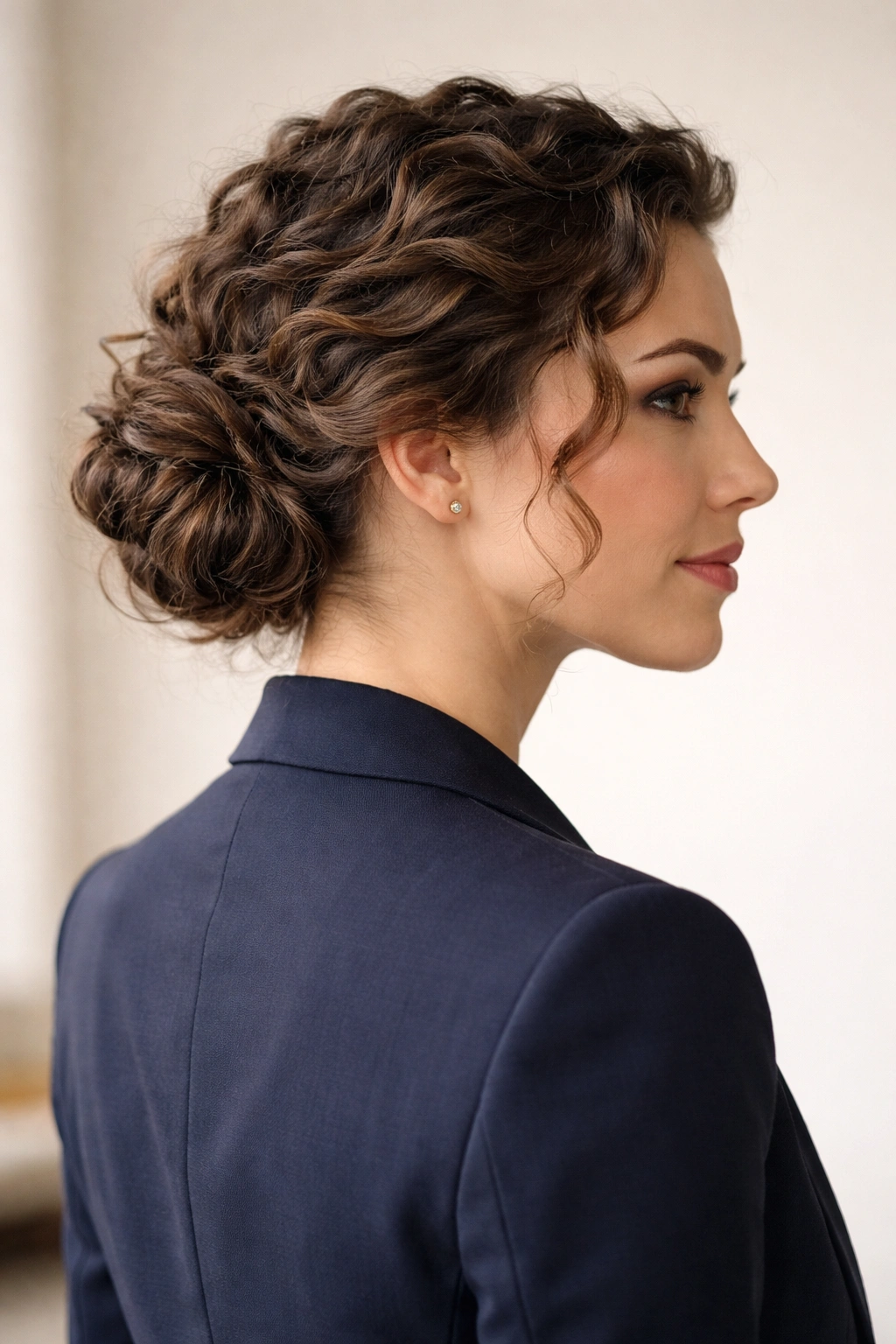
The low twisted bun is the quiet workhorse here. It keeps the focus on your face, not on your hair doing cartwheels every time you move your head. If your curls are medium to long, this style gives you structure without flattening everything into a smooth shell.
Why It Works
What makes this style so good for an interview is that it lets the top stay soft while the back stays controlled. The crown can keep a little volume, which prevents the style from looking severe, and the twists at the nape feel neat without needing a dozen pins. That balance matters more than people think. Too tight, and you look tense. Too loose, and the whole thing starts to drift.
A low twisted bun also works well when your curls are not cooperating all over the same way. Some pieces can be stretched, some can be left more natural, and the bun still reads as deliberate. That’s useful if your curl pattern is different at the front and the back, which is common and honestly annoying.
- Best for medium to long curls
- Works especially well on shoulder-length bobs that can tuck
- Good when you want a formal look without flat ironing
- Holds up better than a loose bun in humid rooms
Pro tip: leave two or three soft curls out around the temples. They keep the style from looking severe and help the whole look feel less pinned-down.
2. The Half-Up Twist That Keeps Your Face Open
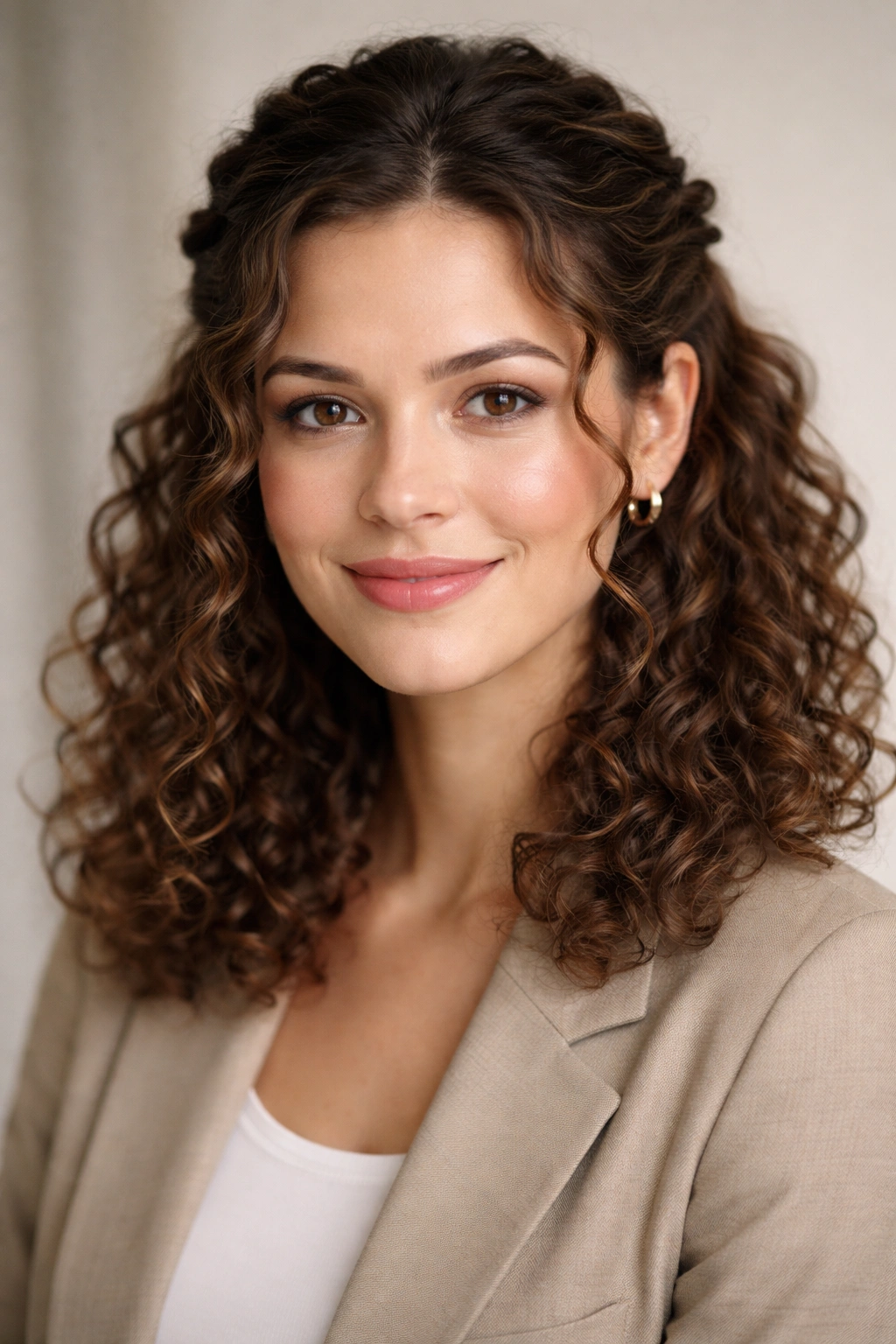
If you want one style that looks calm from the front and still lets your curls show, this is the one I’d pick first. The half-up twist keeps the hair away from your eyes, which matters more than most people admit, and it does it without hiding your texture.
The trick is to take only the top third of your hair, twist it back on each side, and secure it where the twists meet. That leaves the lower section free, so you still get movement and shape. It works especially well if your curls are bouncy and your ends look nice on their own. No need to overcomplicate it.
This style has a practical advantage too: it makes your face look open in person and on video. You can nod, lean forward, and turn your head without hair sliding across your cheeks. That sounds small. It isn’t. Interview nerves are already enough without your curls becoming a curtain.
Use a small matte clip, two hidden pins, or a slim elastic covered by a curl wrap. Keep the top section smooth, but do not slick it so hard that the twist loses all shape. A little softness at the roots reads better than a stiff, overworked finish.
3. The Curly Ponytail With a Wrapped Base
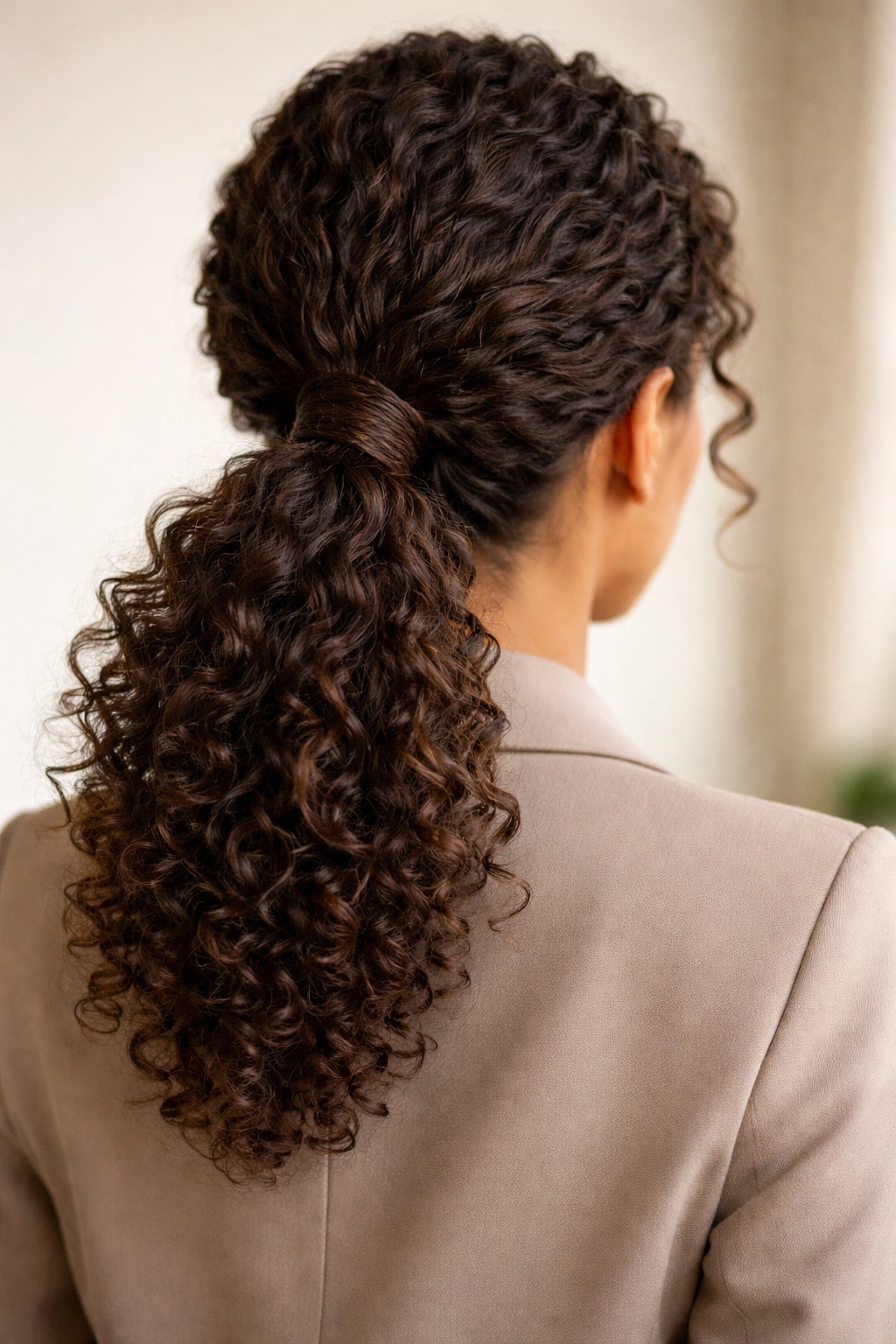
Can a ponytail look interview-ready on curls? Absolutely — if the base is clean and the tail is defined. A low or mid ponytail can look polished fast, which is why it’s one of the smartest choices when your morning is already crowded.
The wrapped base is what makes the difference. Instead of leaving a plain elastic exposed, take a small curl or a narrow strip of hair, wrap it around the band, and pin it underneath. That one move takes the style from “I threw my hair back” to “I paid attention.” The tail itself should be brushed smooth only at the surface. You still want the curl pattern to live in the length.
How to Use It
If your curls are thick, gather them with your hands first and use a soft brush only at the hairline and crown. If your curls are finer or shorter, a low ponytail sits better than a high one because it pulls less and stays tidier on the neck. Either way, the elastic should be secure but not painful.
- Keep the base low enough that the style doesn’t lift at the crown
- Wrap the elastic with one curl or a narrow strand
- Let the ponytail keep its natural texture instead of brushing it flat
- Use a touch of serum on the ends if they look dry or fuzzy
A ponytail like this suits interviews where you want to look clean and direct. It’s not flashy. That’s the point.
4. The Side-Part Wash-and-Go With Defined Ends
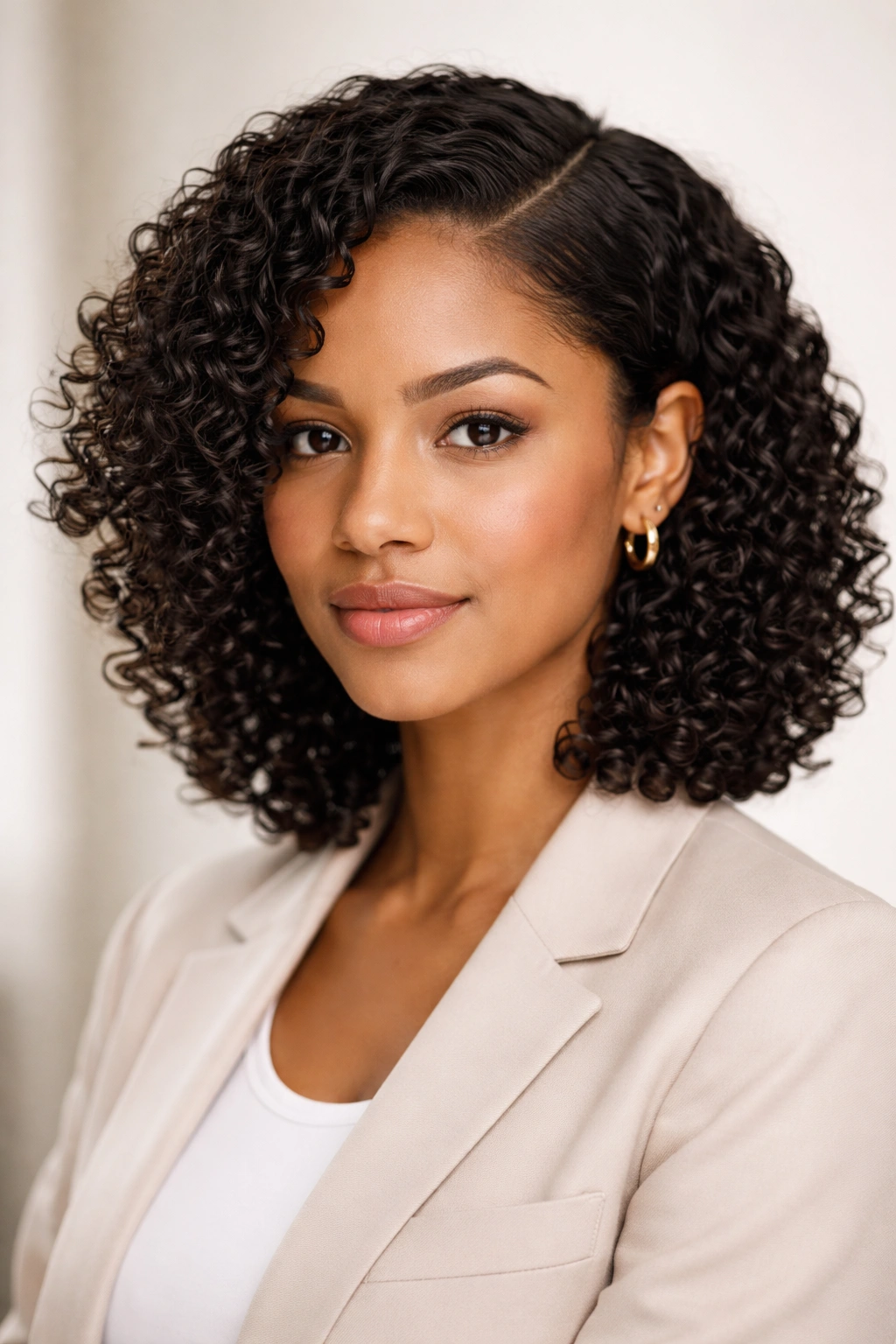
A lot of people think a wash-and-go is too casual for a job interview. That’s only true if it’s half-dry, undefined, or puffing out in every direction. A well-shaped wash-and-go with a deep or medium side part can look sharp, modern, and calm all at once.
Think of this as the “my curls, but on their best behavior” option. The side part gives the face structure. The defined ends show that you took time with your hair, and the controlled crown keeps the silhouette tidy. If you’ve ever watched a great curly haircut settle into place with a little gel and a diffuser, you already know how clean this can look.
The whole style depends on finish. You want the curls separated enough to show their shape, not dragged apart into frizz. A soft gel cast works better than heavy oil here. Let the hair dry fully, then scrunch once, lightly, with dry hands. That last part matters. If you start touching it constantly, the style gets bigger and less precise fast.
The side part also helps if your curls tend to fall forward. One side can tuck neatly behind the ear while the other keeps a little curve near the cheekbone. It’s a small thing, but it gives the impression that the hair was chosen, not merely survived.
5. The Low Chignon That Lets Texture Stay Soft
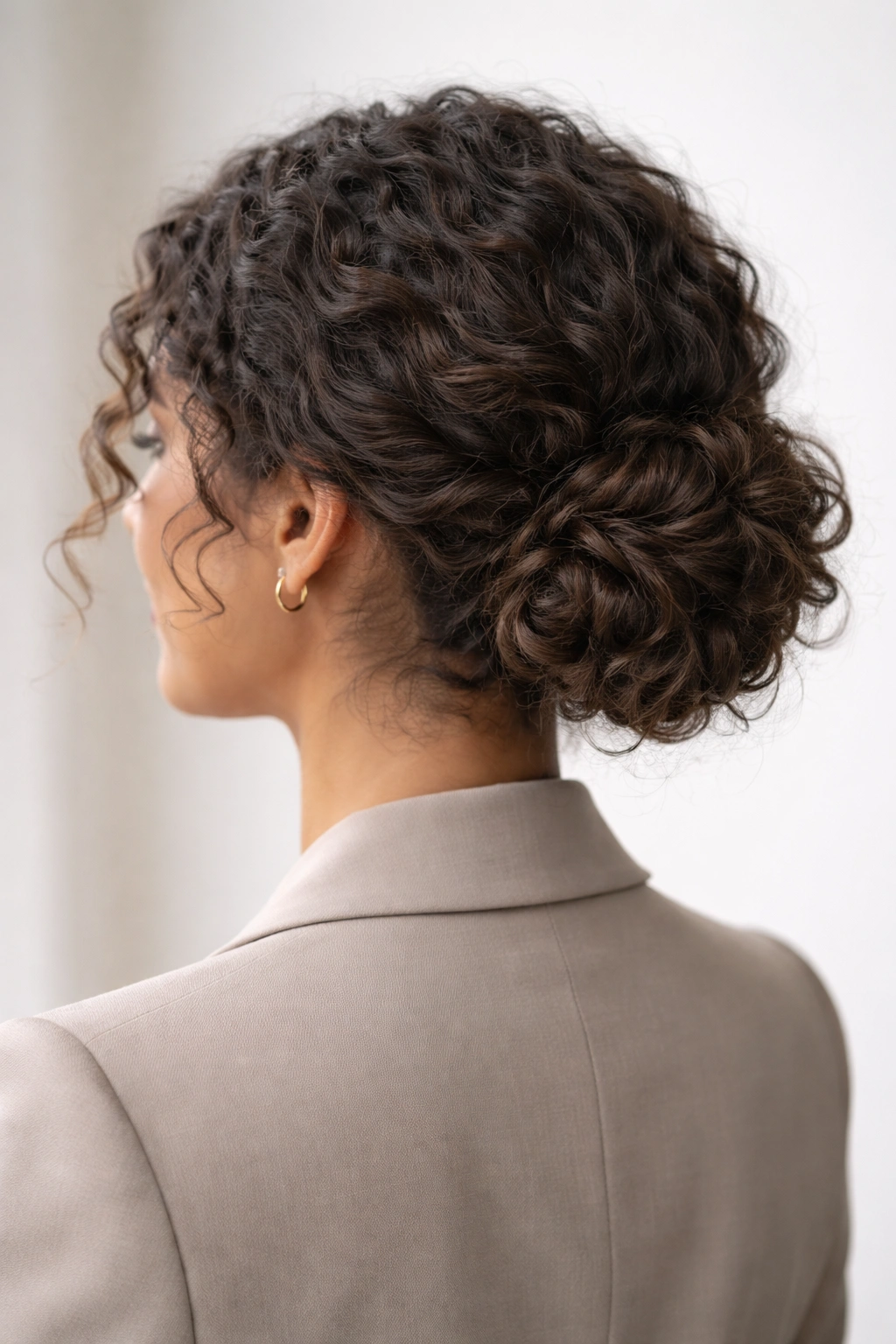
A low chignon has a little more formality than a plain bun, and that’s why it works so well for interviews where you want to look polished without looking rigid. It sits at the nape, keeps the neck clean, and gives the whole look a composed shape. Still, the best version of it on curly hair is never bone-straight or overly polished. It should keep a trace of texture in the twist.
The mistake people make is flattening the top too much. That can make curly hair look pressed into submission, which is not the same thing as neat. A better move is to smooth only the outer layer, then let the body of the bun stay a little soft. The result feels intentional instead of severe. And yes, the little flyaways around the hairline can stay if they’re controlled. Not every hair needs to be lashed into obedience.
Use pins, not a giant elastic, if your hair is dense. Pins let you shape the chignon so it sits low and round instead of lumping in one place. If your curls are shorter, tuck the ends under more tightly and pin the center first. That gives the style a steadier base.
A chignon like this shines in formal rooms, but it also works when you want the rest of your outfit to do the talking. Clean, quiet, and a little old-school. I mean that as a compliment.
6. The Pinned-Back Front Sections With Loose Length
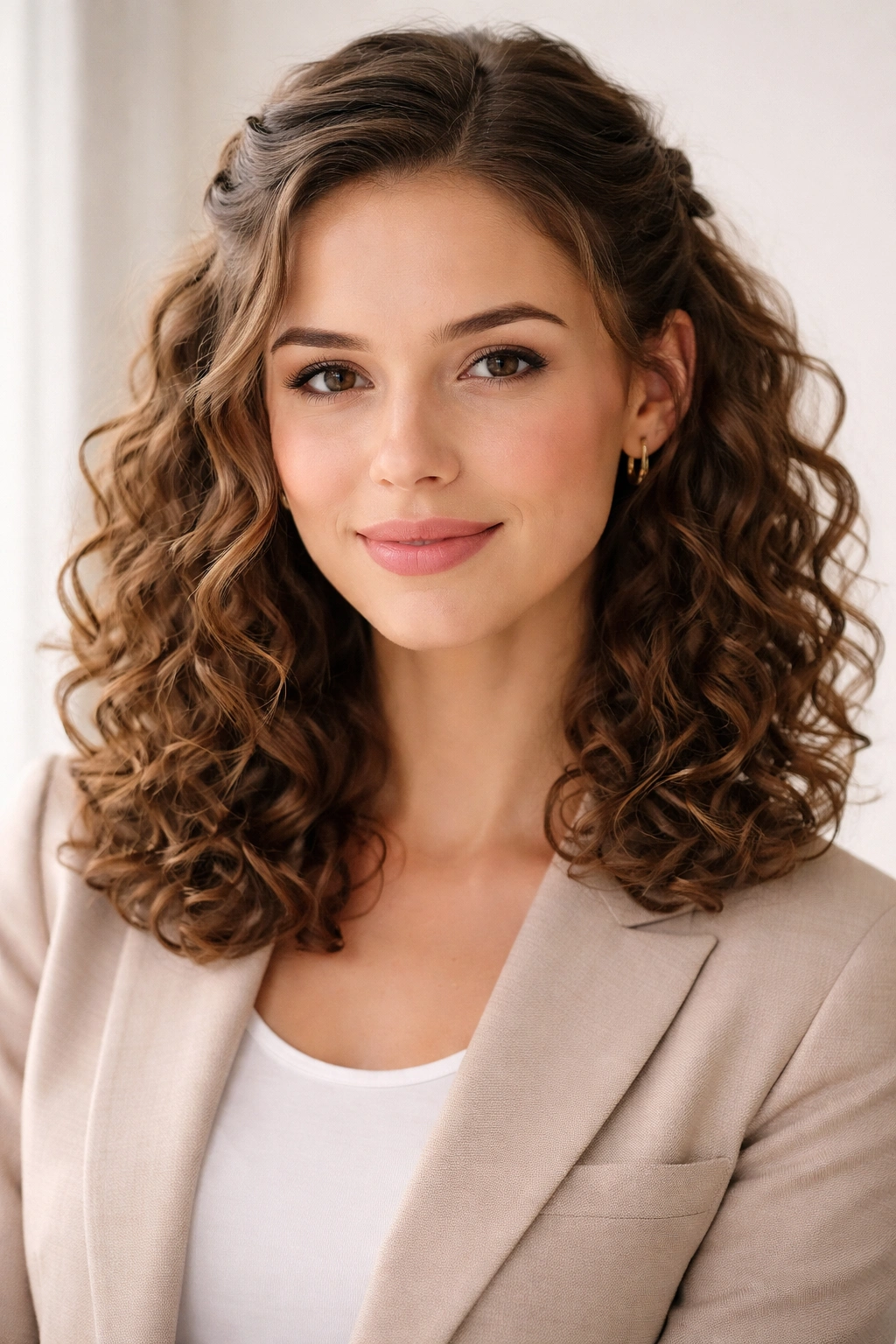
This style is different from a full half-up because it asks for less hair and gives you more freedom in the back. You pin back only the front sections — usually the temple pieces and a bit of the hair near the part — and leave the rest of your curls loose. That makes it a strong choice for curly bobs, shoulder-length cuts, and medium curls that look better when they move.
The reason it works is simple: your face stays visible, but your hair still keeps its natural shape. You don’t get the formality of a full updo, and you don’t get the drag of hair falling forward. What you do get is a style that feels light and practical. A pair of discreet pins can do a lot more than people expect.
This is also a good option when your curl pattern is strongest in the lengths and less cooperative at the front. Instead of forcing the whole head into one shape, you just tidy the pieces that tend to misbehave. That’s a saner use of time, and it usually looks better.
Go with matte bobby pins or small snap clips in a color close to your hair. Big decorative clips can work in casual settings, but in an interview they can start to look like an accessory wearing the outfit for you. Keep the pins hidden, or at least subtle.
7. The Braided Crown Into Loose Curls
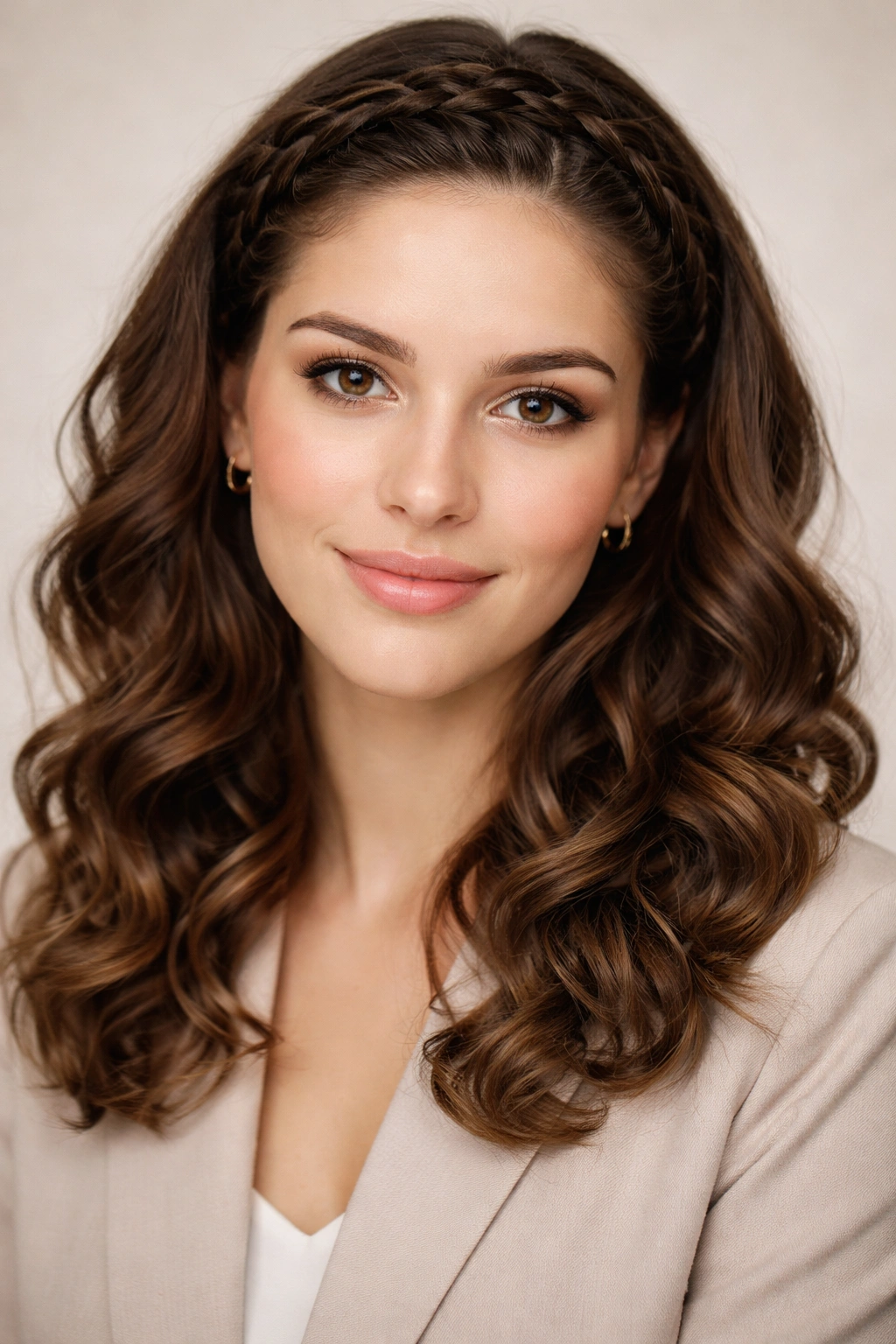
The braided crown feels a little more styled than a simple twist, which is useful if you want your hair to look cared for without appearing overdone. It’s especially good for curls that hold a braid well at the hairline but still want to keep their length out in the open. The braid gives the top a clean frame. The loose curls below keep the style from getting stiff.
Why It Stands Out
A braid across the front works because it controls the area people see first: the part, the forehead, the temples. Once that zone is settled, the rest of the curl pattern can do its thing without looking messy. On shoulder-length curls, a single braid from one side to the other can look especially tidy. On longer hair, two narrower braids pinned back can do the same job with less weight.
Quick Details
- Keep the braid close to the head so it stays neat
- Braid only enough hair to shape the front, not so much that the crown gets flat
- Secure with a small pin under the braid if the ends want to slip
- Leave the lower curls defined and separated
Best move: mist the braid lightly with water or a curl refresher before you begin. Dry, fuzzy hair is harder to braid cleanly, and the crown can start to look bulky fast.
This style is a good pick when you want a little personality without losing polish. It says you know how to handle texture, which is a nice signal to send.
8. The Clip-Tucked Half-Up Style With a Clean Finish
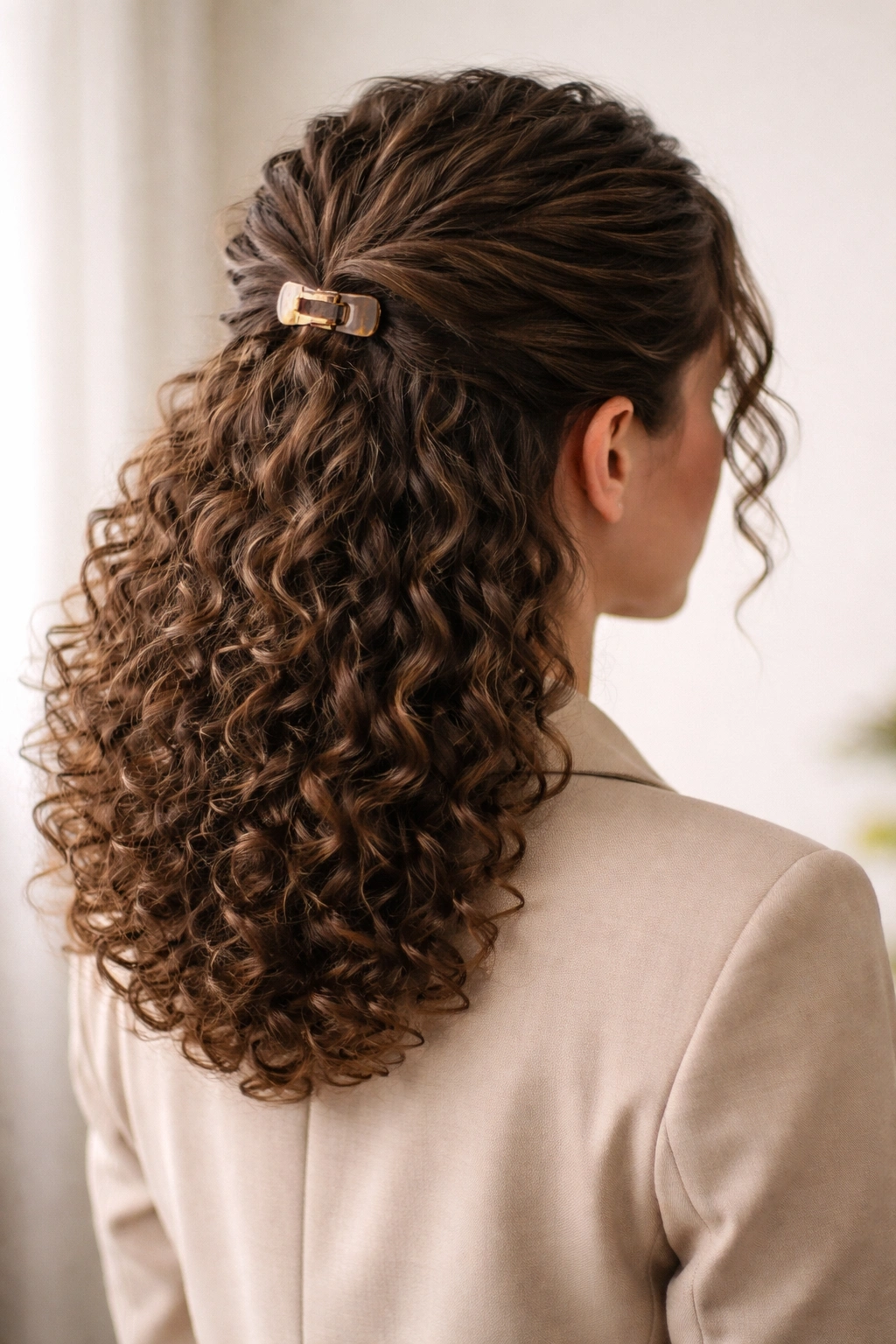
A good claw clip can save your morning, but the size and shape matter. A sleek half-up clip tuck keeps the top section controlled and gives the style a neat, almost architectural look without making your curls disappear.
The best version is not the giant chunky clip that grabs half your head like a claw machine prize. Use a medium clip, gather the top section, twist once, and tuck the ends in so the clip holds the twist close to the scalp. That makes the back sit flatter and keeps the whole shape compact. If you have a curly bob, this can look especially sharp because the shorter length doesn’t compete with the clip.
What I like about this option is the speed. It’s one of the fastest ways to make curls look chosen. And if your hair gets wider than you want at the crown, the clip helps control the upper half without forcing the rest of the hair to shrink into place.
Keep the finish smooth around the face and a little textured at the back. A tiny amount of cream on the palms can tame frizz, but use too much and the clip starts sliding. That happens more often than people think. Hair that looks neat in the mirror can change after ten minutes of wear, so test the clip before you leave.
9. The High Puff With Sleek Edges
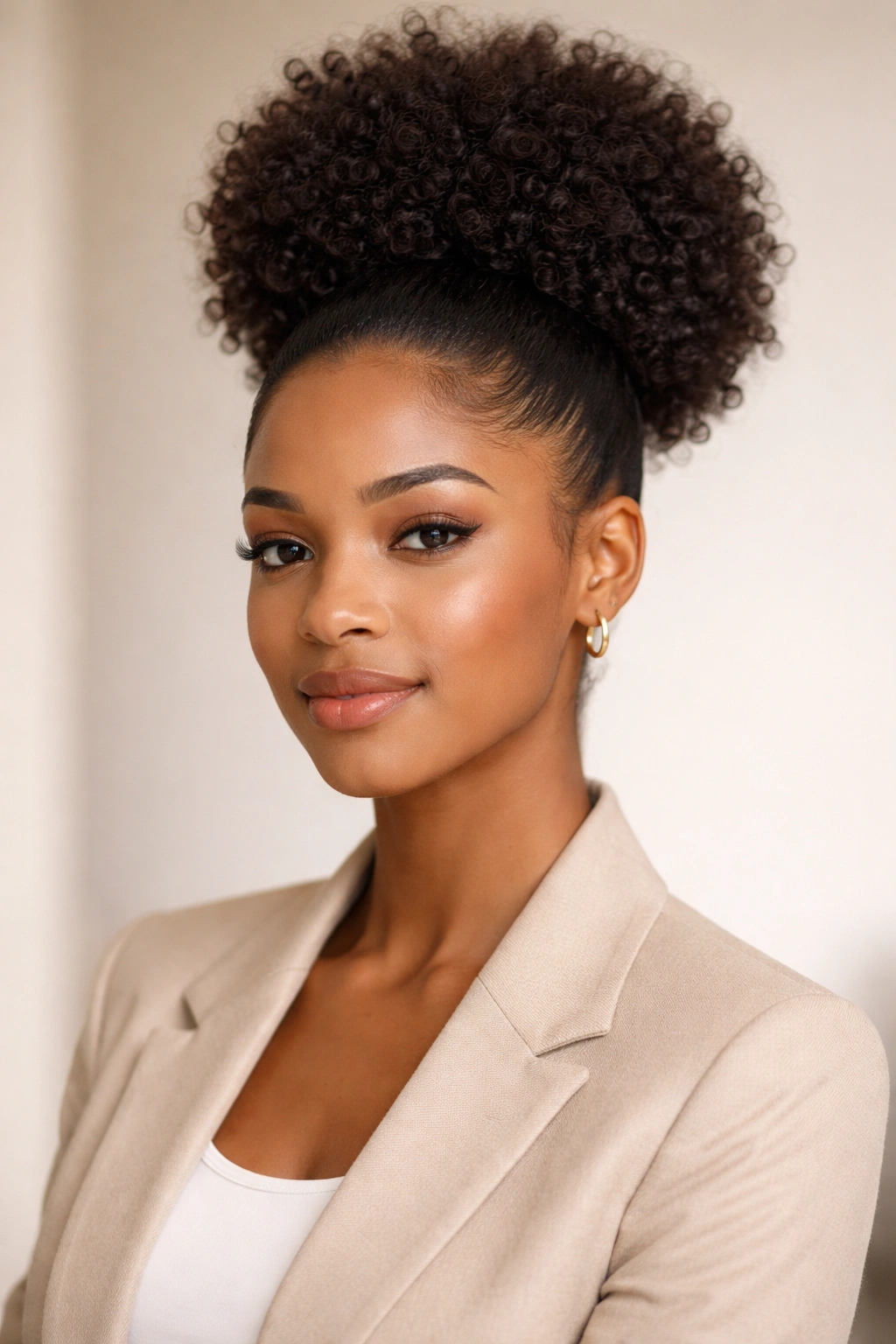
Can a high puff work for an interview? Yes, if it’s shaped cleanly and the edges are calm, not painted on. For natural curls and coils, a high puff can look very polished because it lifts the hair away from the face and shows confidence in the texture instead of hiding it.
The key is balance. The puff should be rounded, not stretched into a towering shape that feels too dramatic for the room. Use a soft brush or your hands to gather the hair, then smooth the sides with a light gel or edge control only where needed. The crown should still have some softness. A puff that is too tight at the base can start to look strained, and it can be uncomfortable by the end of the interview. No one needs that distraction.
How to Wear It in a Professional Setting
A satin scarf can help set the front for 10 to 15 minutes before you leave, which keeps the hairline neater without overloading it with product. If you wear makeup, this style also keeps the face open, which is useful when you want your expressions to carry the conversation. The puff itself should sit high enough to feel lifted but not so high that it turns into a statement piece.
A lot of people overthink this style. Don’t. Clean sides, a round puff, and tidy edges are enough. It reads as confident when it is shaped with care.
10. The Faux Bob for Long Curls
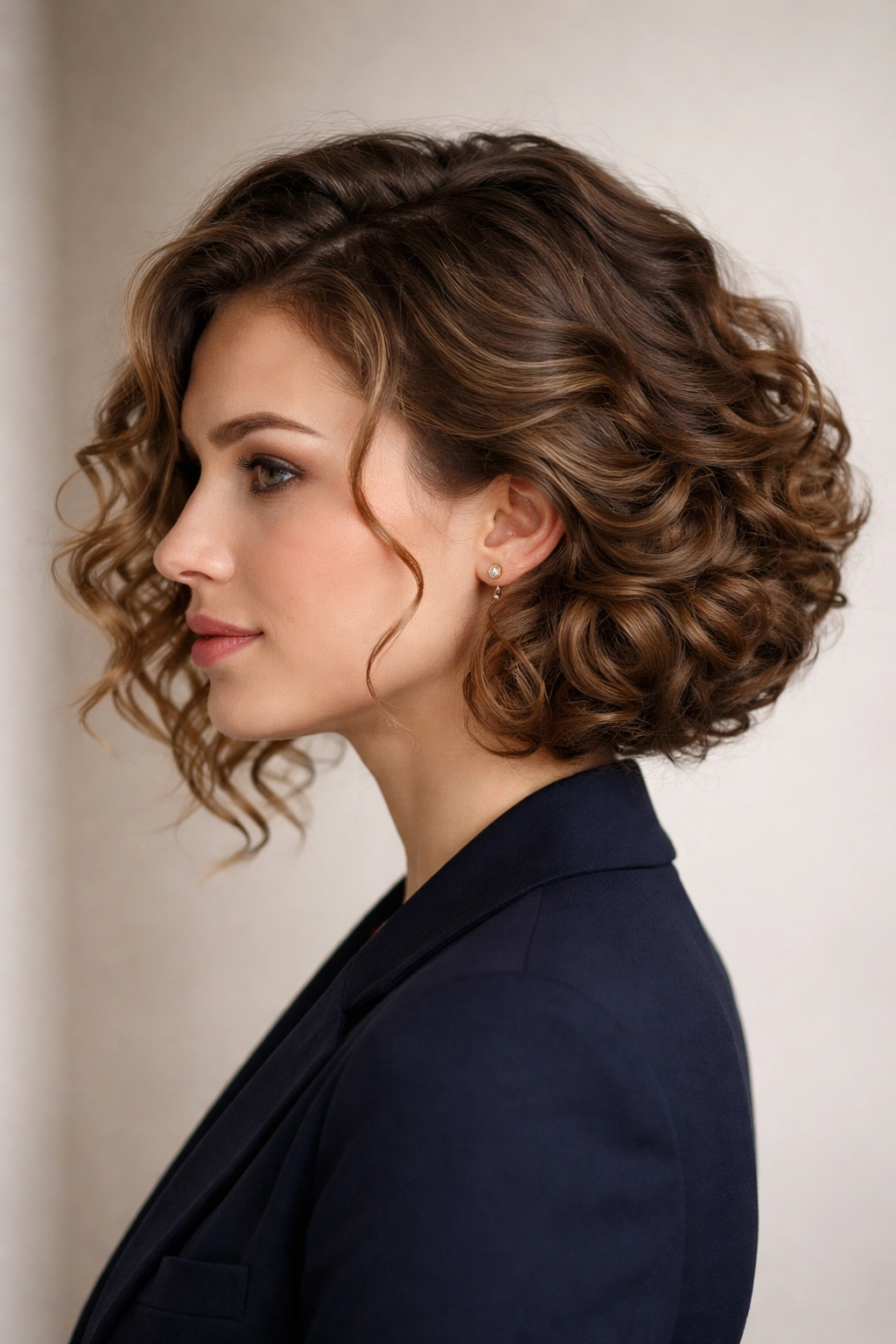
A faux bob is one of those styles that sounds complicated and looks fussy until you actually do it once. Then you realise it’s mostly about pinning the lengths under themselves in a way that makes the hair look shorter and neater. If your curls are long and you want a more refined profile, this can be a smart interview choice.
The style works especially well when you want your shoulders free and your hair not competing with a collar or blazer. The tucked-under shape gives the impression of a bob without the commitment. That can look crisp in a formal setting, and it keeps the curls from spreading outward when you sit or turn your head.
Use a few long bobby pins to anchor the ends underneath, starting from the nape and working upward. Don’t try to stuff the whole length under at once. That’s how you get lumps. Small sections fold better, and the end result sits closer to the head. If the front curls are shorter, leave them out so they can frame your face naturally. It softens the whole thing.
- Best for long curls or stretched curls
- Works well with a side part or a soft center part
- Needs enough pinning underneath to stay put
- Looks cleaner when the ends are hydrated and not frayed
If you’ve never worn a faux bob before, test it once at home. It can be a little weird the first time. Then it gets easy.
11. The Low Ponytail With S-Shaped Tendrils
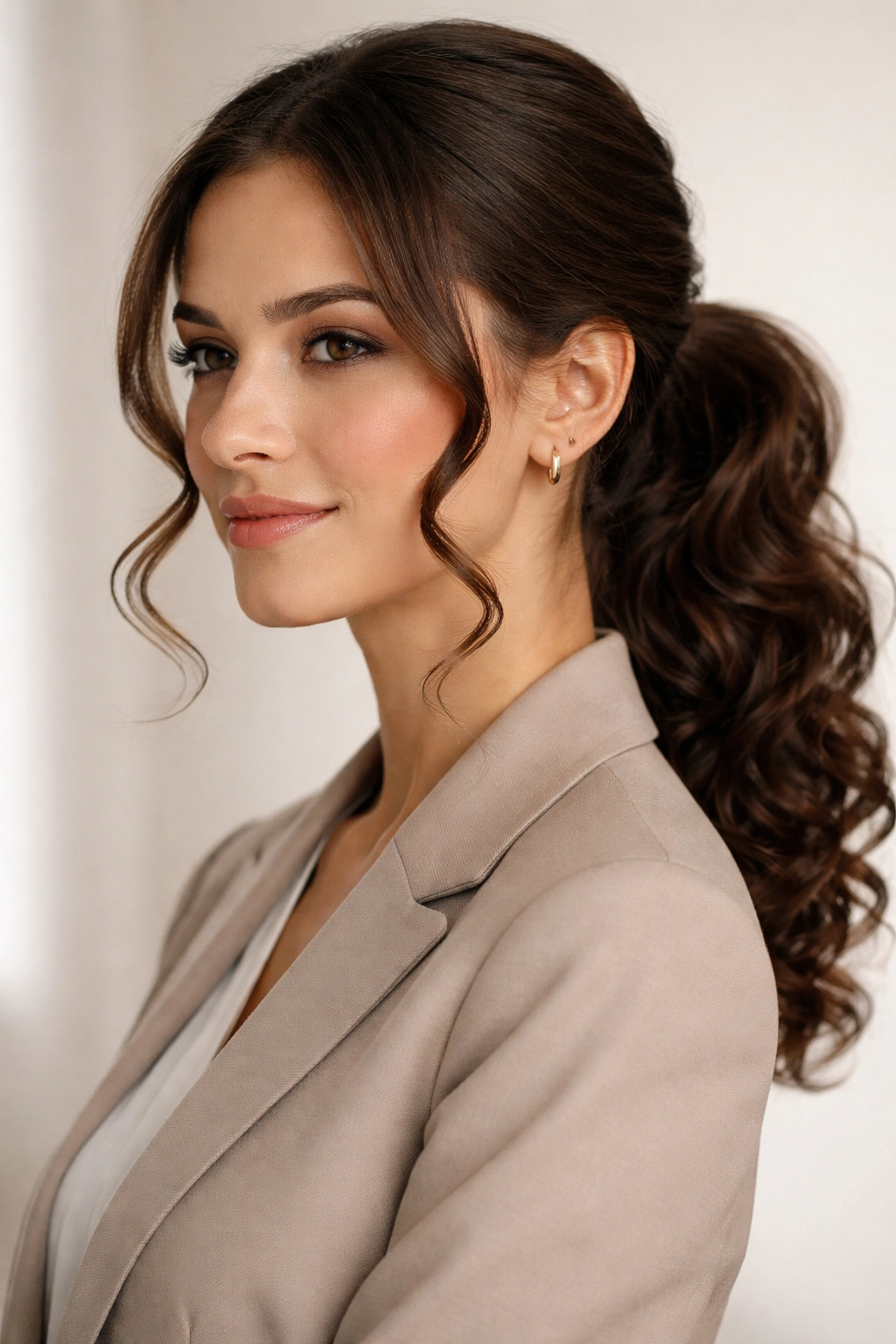
A low ponytail can look plain, but it becomes much more interesting when you let a few S-shaped tendrils fall around the face. That little detail keeps the style from feeling too severe, and it adds softness without sacrificing control.
This is the right move if you want your hair tucked back but not fully hidden. The ponytail sits low at the nape, which keeps the silhouette clean. The tendrils near the cheeks and temples break up the shape and make the style feel more personal. You don’t need many. Two on each side is usually enough. Too many and it starts to look like you meant to do a prom hairstyle, which is not the same brief.
The best version of this style comes from working with your own curl pattern. If a few strands naturally fall in a wave, let them. If they’re too straight, wrap them loosely around a small curling iron or even twist them around your finger while damp and let them set. You are not trying to create a perfect ringlet factory. You just want a gentle frame.
This one works well for interviews that are serious but not stiff. It has structure. It also has a little life, which is usually better than trying to look perfectly controlled.
12. The Side Bun That Keeps Texture in View

A side bun gives you a different kind of polish than a centered low bun. It sits off to one side, which makes the style feel a little softer and less formal, while still keeping the hair secure and off your face. For curls, that offset shape can be a blessing. It lets some texture stay visible instead of disappearing into a tight knot at the nape.
What makes this style different from the low bun above is the mood. A centered bun says tidy and traditional. A side bun says tidy, but with a little more ease. That’s useful if your outfit is structured and you want the hair to feel less strict. It also plays nicely with bob-length curls that can be pinned into a side roll or with longer curls that can be coiled over one shoulder.
The easiest way to make it look clean is to smooth the side closest to the face and keep the bun itself compact. Use pins that match your hair color, and anchor the base first so the bun does not slide downward during the day. If a few curls escape around the ear, that can actually help the style. The goal is not perfection. The goal is a shape that looks steady when you shake hands, sit down, and answer the same question three different ways.
If I had to pick one thing to remember, it would be this: the best interview hair is the kind you stop thinking about five minutes after you leave the mirror. Not because it’s boring. Because it’s doing its job.
