



A diagonal bob can do something a blunt bob never quite manages: it gives the hair a built-in direction. The shape pulls the eye from the back of the head toward the front, so even a simple cut looks like it has movement, intention, and a little attitude.
That tilt matters more than people think. A good angled bob can make a jawline look cleaner, make fine hair look fuller at the ends, and take some of the heaviness out of thick hair without turning it into a shaggy mess. A bad one, though, can land in that awkward zone where the back looks too short and the front feels like it forgot what it was doing.
I like diagonal bob cuts because they do not rely on styling tricks to make sense. The shape is doing the heavy lifting. Straight hair can wear the line like a crisp side profile. Wavy hair can turn it into something soft and swingy. Curly hair needs a smarter cut, but once the shape is right, the angle gives each curl a place to sit instead of letting everything puff out in random directions.
The real trick is choosing the version that fits your hair density, texture, and maintenance tolerance. Some diagonal bob cuts are sharp and polished. Others are airy and lived-in. A few lean dramatic. A few are almost sneaky, which is exactly why they look so good from every angle.
1. The Classic A-Line Diagonal Bob
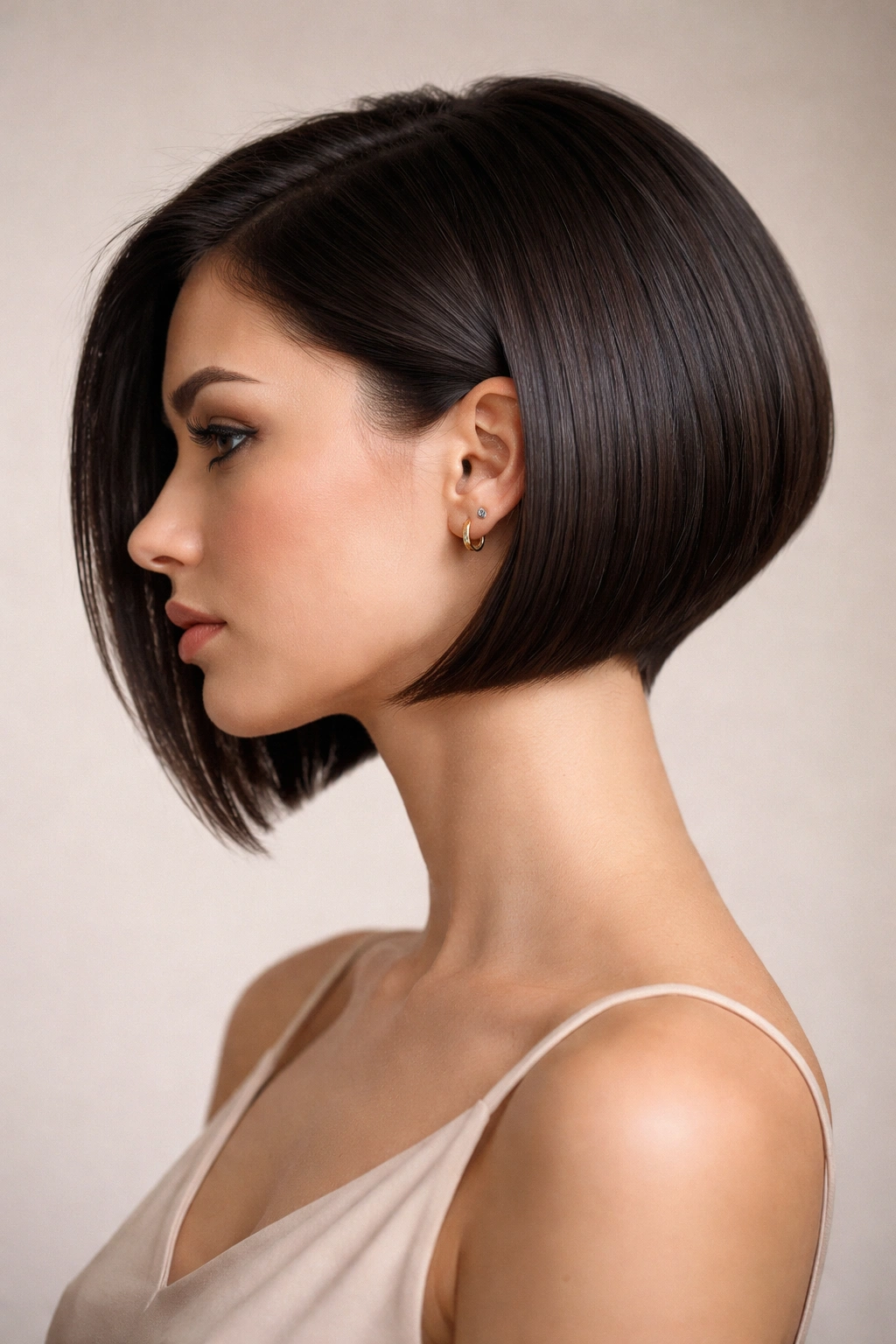
This is the cut most people picture when they hear diagonal bob: shorter at the nape, longer toward the front, with a clean line that slants forward in one smooth sweep. It is tidy without feeling stiff, and that forward angle gives the face a little lift even when the styling is bare-bones.
The best version usually keeps the back close to the neck and lets the front skim the jaw or land just below it. That difference does not need to be dramatic. In fact, a gap of 1 to 2 inches between the back and front is enough to create the shape without making the haircut feel theatrical.
What to Ask Your Stylist
Tell them you want a clean A-line bob with a visible forward angle, not a rounded bob that stacks up in the back. If your hair is fine, ask for a soft perimeter so the ends do not look wispy. If your hair is thick, ask for a little internal removal in the back so the line sits flat instead of kicking out.
- Keep the nape snug.
- Let the front graze the jawline.
- Ask for a dry check before the final trim if your hair grows in a cowlick at the neck.
- Skip heavy layering unless your hair is dense enough to need it.
Best for: straight hair, fine hair, and anyone who wants a bob that looks neat even on a rushed morning. It’s the version I’d send to someone who wants angled hair but does not want a haircut that screams for a round brush every day.
2. The Long Diagonal Lob
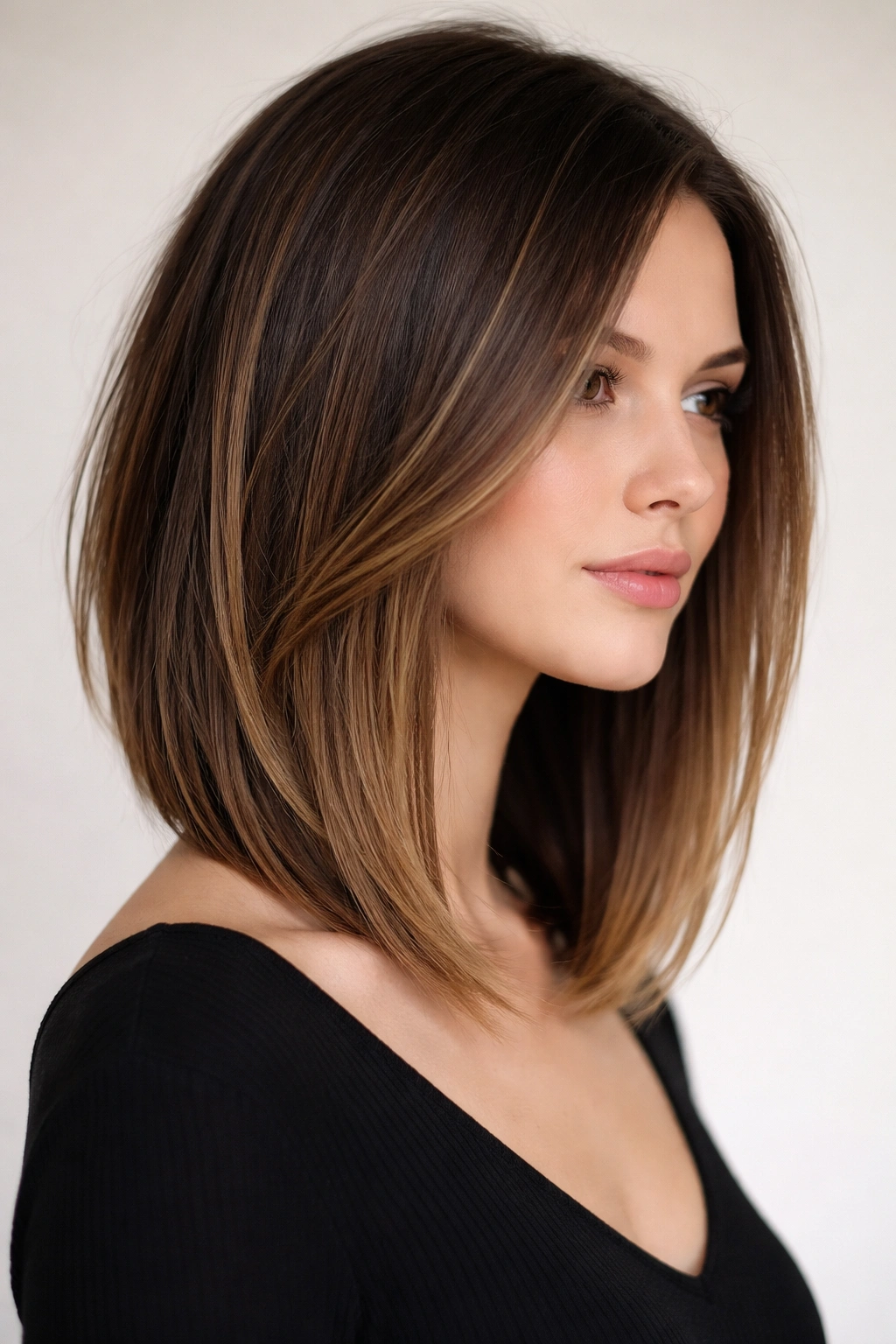
A long diagonal bob gives you the angle without giving up the shoulder-skimming length people love. The back still sits a little shorter, but the front can reach the collarbone or even hover just above it. That extra length makes the cut softer, and it also makes grow-out much less annoying.
This one has a nice trick to it. From the front, it reads as a lob. From the side, the diagonal line shows up and suddenly the whole haircut looks more deliberate. That is why it flatters people who want movement but are nervous about going too short.
It is especially good if your hair has a little natural wave or a bend at the ends. The line does not need much help. A 1-inch curling iron or a quick blow-dry with a medium round brush is usually enough to make the front pieces flick forward instead of hanging dead straight. If your hair is very flat, keep the layers long and subtle. Too much cutting here kills the swing.
And there is a practical bonus. This is one of the easiest angled bobs to tuck behind one ear, pin back, or wear half-hidden under a sweater collar. It is casual in a way that still looks considered.
Shorter bobs can feel strict. This one does not.
3. The Stacked Diagonal Bob with Lift at the Crown
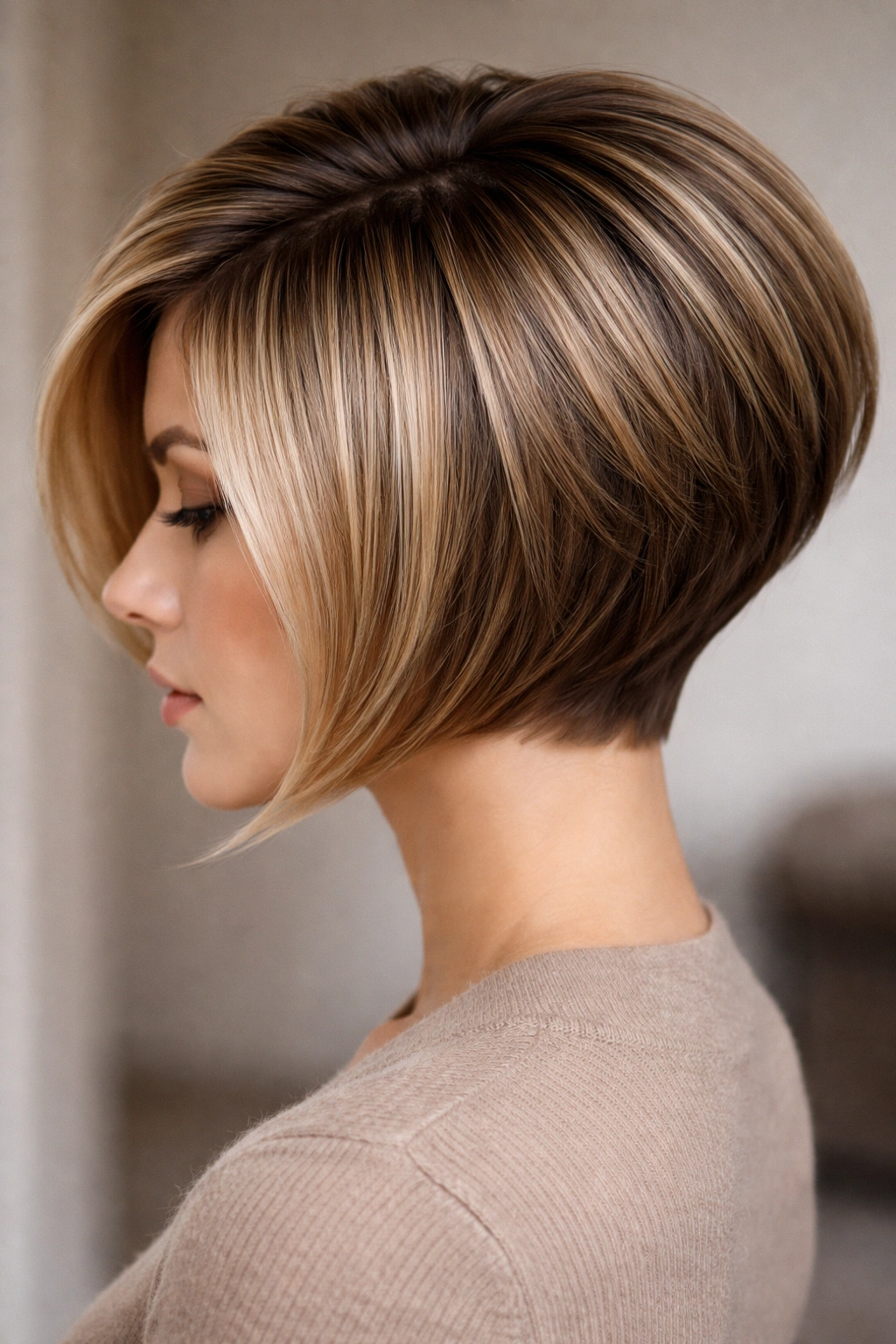
A stacked diagonal bob is the answer when someone says their hair falls flat at the back and they need more shape near the crown. The graduation in the back creates lift, and the diagonal front keeps it from turning into a mushroom. That balance is the whole point.
The cut works by building short-to-shorter layers in the back so the nape has support and the crown has a little height. Then the front is left longer, which keeps the silhouette sleek instead of puffy. On thick hair, this can remove a lot of bulk. On finer hair, it can create the illusion of volume where there was not much to start with.
The Salon Details That Matter
Do not ask for aggressive stacking unless you want the back to look visibly shorter. A good stacked diagonal bob should still have a smooth transition from the crown to the front. The line should feel intentional, not chopped up.
- Keep the stack moderate if your hair is fine.
- Ask for weight removal only in the dense areas.
- Leave the front long enough to hit the cheekbone or jaw.
- Let the stylist check the balance while your head is upright, not tilted forward.
This is the cut for someone who wants the back of the head to look polished from every angle. It can be neat, a little dramatic, and surprisingly easy to style once the shape is right.
4. The Blunt Diagonal Bob with a Sharp Edge
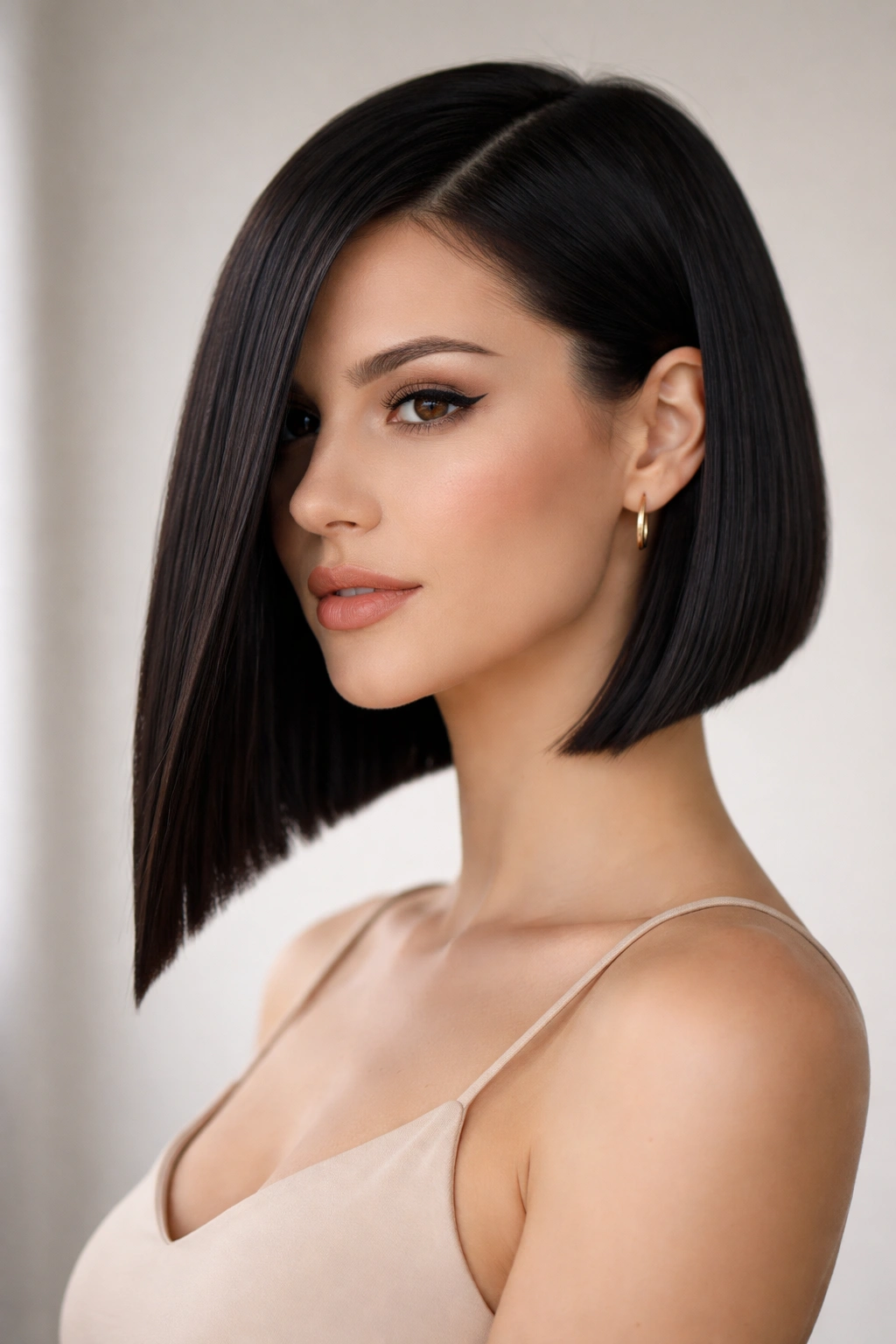
Sharp does not mean severe. A blunt diagonal bob can look sleek, expensive in the plainest sense of the word, and weirdly fresh because the edge is so clean. The perimeter is cut with very little softness, so the front line reads like a clear diagonal slash instead of a feathered fade.
Compared with textured diagonal bobs, this one leans more graphic. That makes it a good fit for straight hair or hair that can be smoothed quickly with a blow-dryer and a paddle brush. The blunt line also gives fine hair a bit more visual density at the ends, which matters more than people think. Wispy ends can make an angled bob look tired. A clean edge fixes that.
Why the Blunt Edge Matters
A crisp perimeter keeps the haircut from collapsing. When the ends are too thinned out, the front can look stringy and the angle loses its impact. You want the line to show up immediately.
- Best on hair that lies fairly flat.
- Great if you want a polished finish with minimal layering.
- Works well with a center part or a deep side part.
- Needs regular trims, because blunt edges lose their bite fast.
If you want a bob that can go from tucked behind the ear to fully down and still look deliberate, this is the one. It does not pretend to be soft. That is the charm.
5. The Textured Diagonal Bob for Wavy Hair
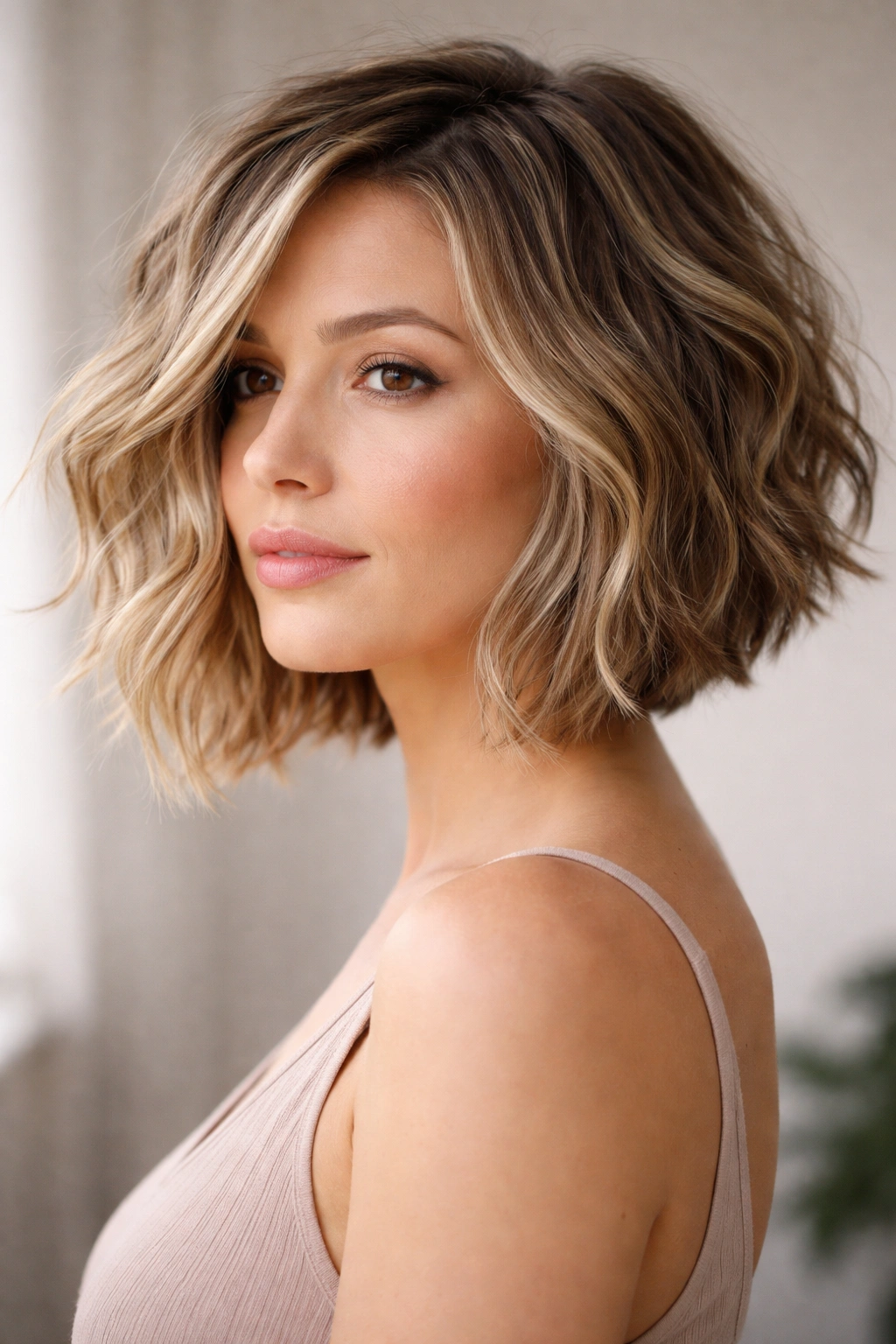
What happens when a diagonal bob is meant to move, not sit perfectly still? You get a textured version that lets waves do most of the work. Instead of a hard edge, the cut uses soft ends and a little internal movement so the hair bends naturally instead of fighting the shape.
Wavy hair is a good candidate for this because it already has a built-in curve. The diagonal line shows up in the silhouette, but the texture keeps it from looking stiff. On a good day, the ends look piecey and light. On an honest day, they still look better than a cut that was forced too flat.
How to Wear It
A little mousse at the roots and a touch of cream through the mids is usually enough. Scrunching helps, but only if your wave pattern already wants to hold. If not, use a diffuser on low heat and stop before the hair dries to the point of frizzing out.
The best textured diagonal bobs do not have a lot of short layers near the crown. That is where a lot of people go wrong. Too many short pieces can make the top poof while the angle in the front disappears. Keep the movement around the perimeter, where the eye actually lands.
This is the bob for people who like hair that looks touched, not shellacked. And yes, it can still be neat. Just not fake-neat.
6. The Deep Side-Part Diagonal Bob
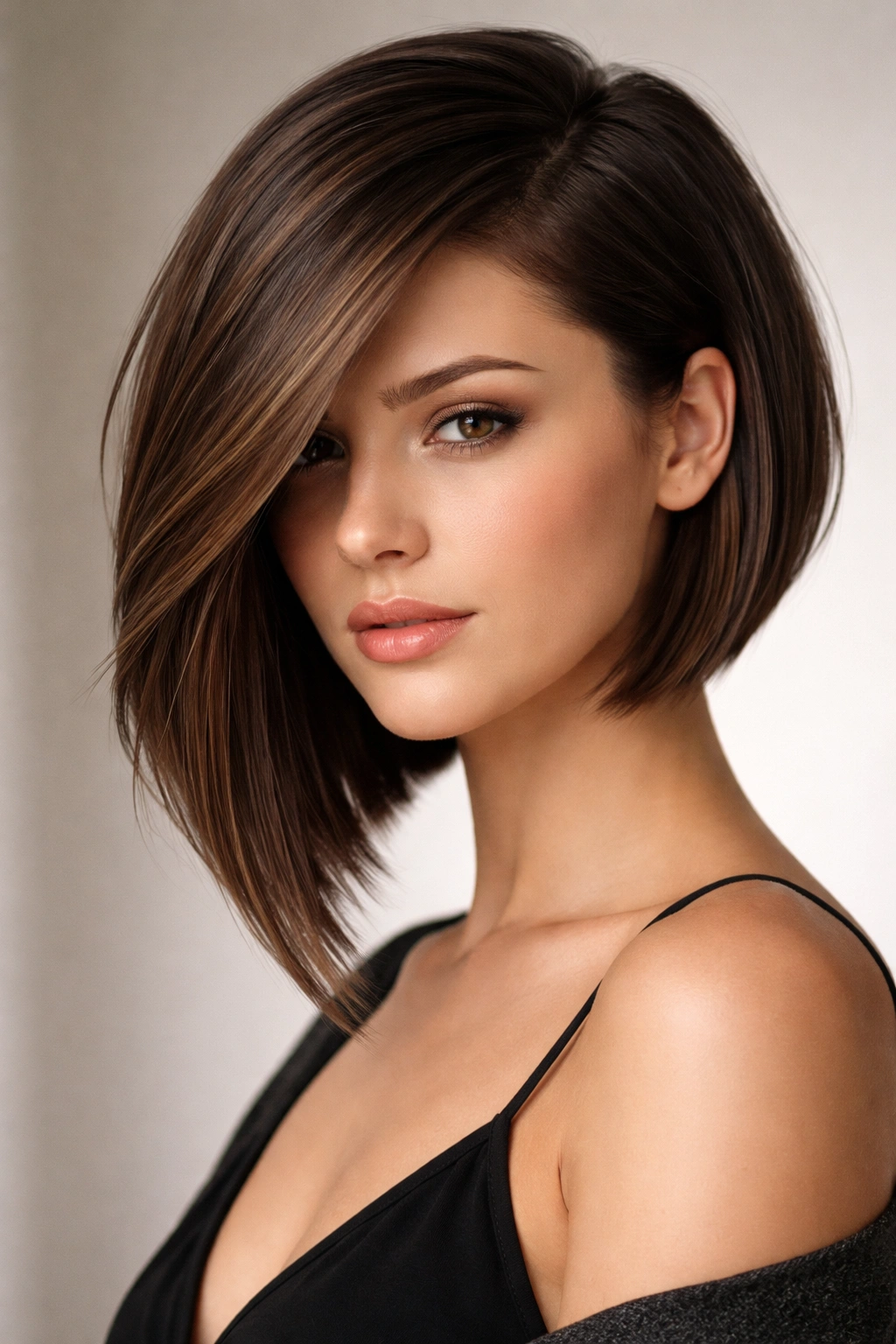
A deep side part changes the entire personality of a diagonal bob. The angle is still there, but the part pushes more hair to one side, so the line gets stronger and the face gets a bit more asymmetry. That is useful if your bob needs a little drama without a full-on makeover.
Think about the visual effect for a second. A center-parted diagonal bob reads balanced. A deep side part gives you a longer sweep across the forehead, more volume on one side, and a sharper drop on the other. It is a simple shift, but it makes the cut feel much more sculpted.
This is also a smart move if you have a cowlick near the front hairline. Sometimes the easiest way to deal with it is not to fight it. Let the part work with the growth pattern, then shape the front pieces so the longer side falls cleanly toward the collarbone or cheek.
- Great for round and heart-shaped faces.
- Good when you want more height at the root.
- Helpful if one side of your hair always lies flatter than the other.
- Looks best when the front is blow-dried away from the face, not plastered down.
The deep side part does one more thing I like: it makes a bob feel less precious. A little unevenness can be a relief.
7. The Curly Diagonal Bob That Follows the Curl Pattern
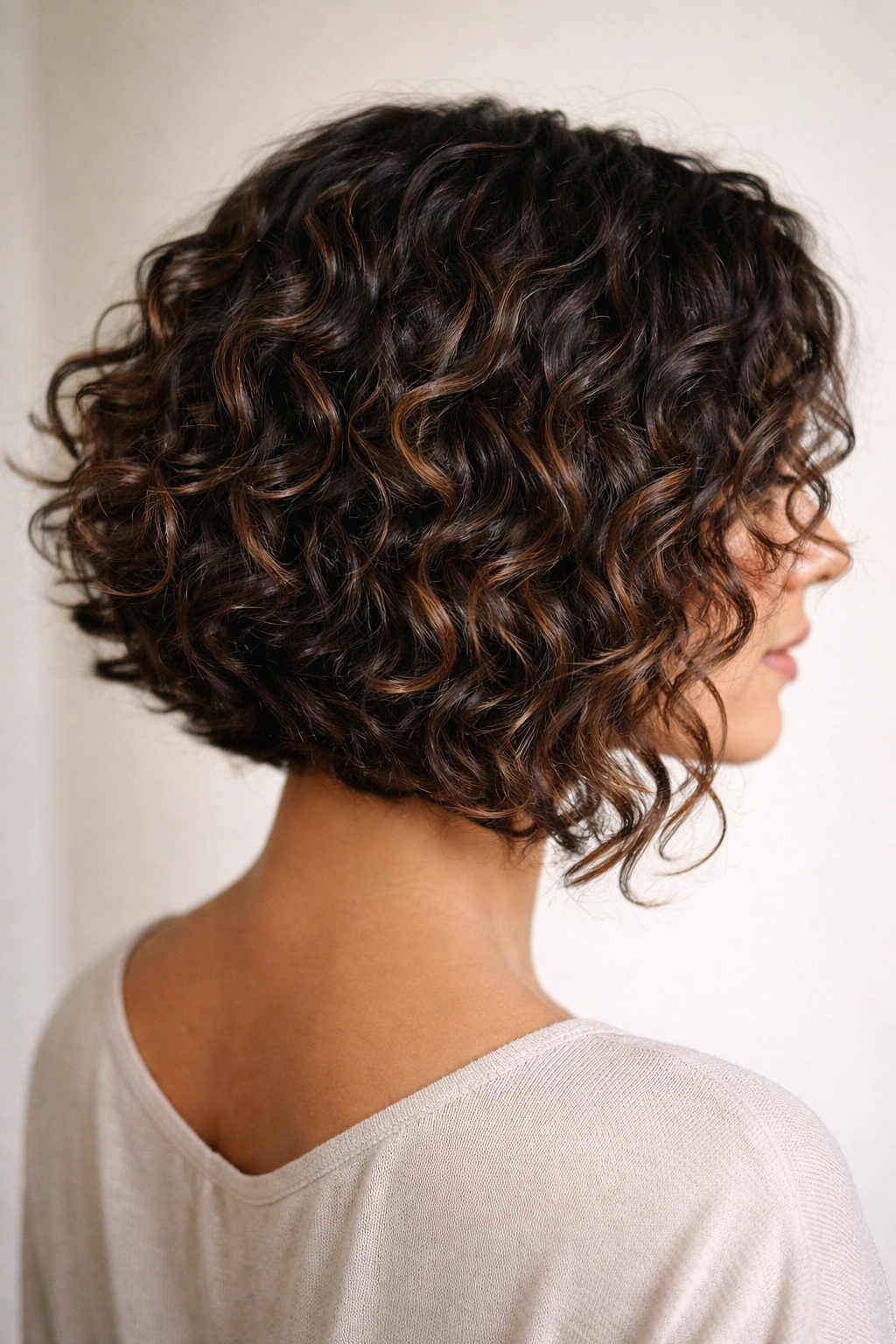
Curly diagonal bobs are where a lot of people finally stop forcing their hair into a shape it does not want. The angle still matters, but the cut has to respect shrinkage, curl spring, and the fact that curls do not fall in straight lines on the head. Cutting this style dry or nearly dry is often the smarter move because you can see where each curl is actually landing.
When the shape is done well, the front looks a touch longer and the back sits close enough to keep the bob from ballooning. The curls should stack in a soft arc, not a triangle. That sounds picky, but it is the difference between a bob that moves and one that just expands.
The feel of it matters too. Good curly diagonal bobs have ends that look springy, not chopped. You want the curls to bounce when you shake your head, and you want the line to show up when the hair settles. Heavy layering can ruin that, especially if the stylist cuts too much from the interior.
Do not let anyone rush this cut. Curly hair needs time, patience, and a little back-and-forth while the shape is being checked. The front pieces may need to be left longer than expected because curl shrinkage is sneaky. Very sneaky.
If your curls are loose, this can look soft and romantic. If they are tight, the angle becomes part of the structure, which is even better.
8. The Asymmetrical Diagonal Bob with One Longer Side
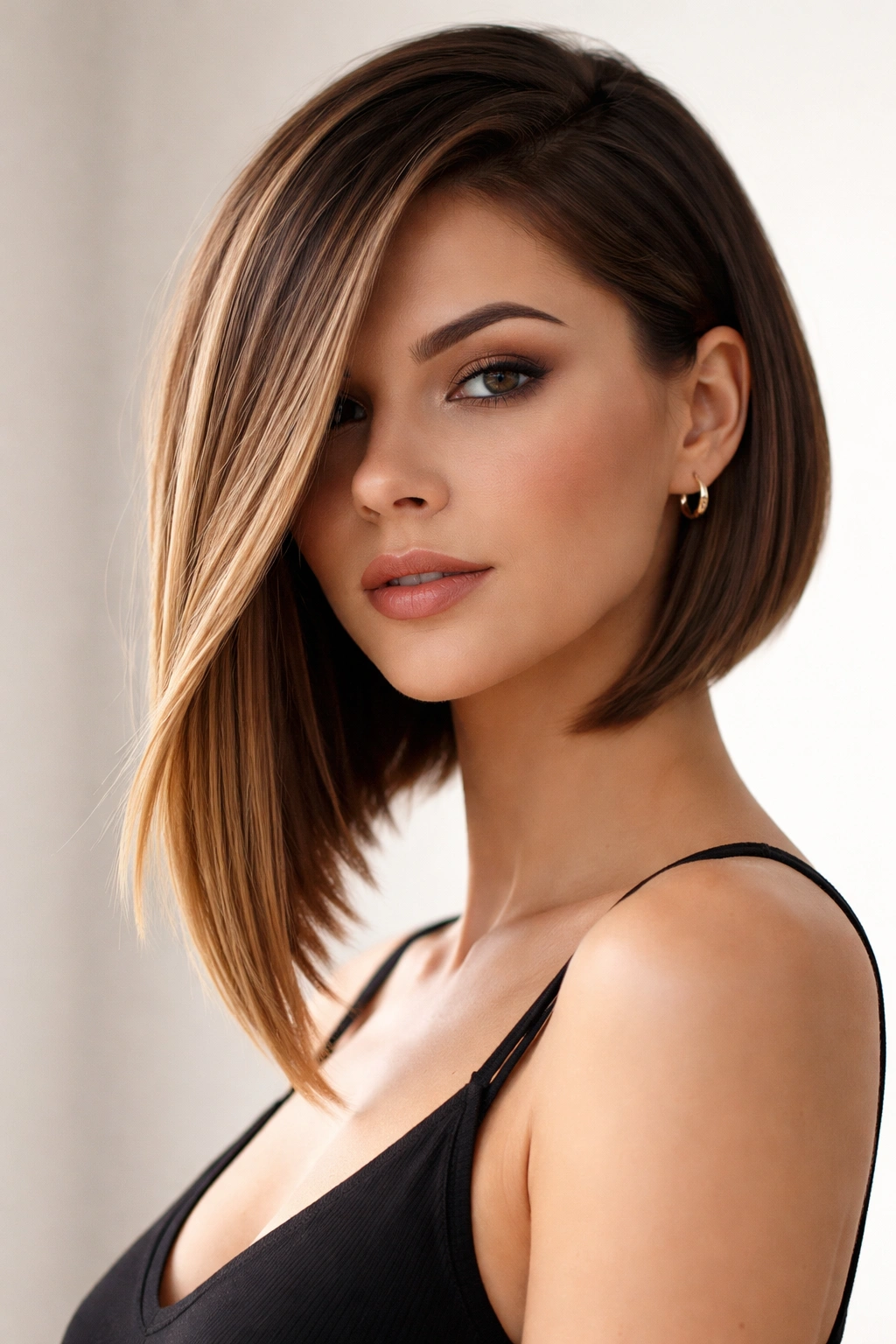
An asymmetrical diagonal bob takes the angle and pushes it further. Instead of the front being evenly longer on both sides, one side is cut noticeably longer than the other. It is bolder than a standard A-line bob, but not automatically edgy in a loud way. The effect depends on how much difference you build in.
A small asymmetry of half an inch to 1 inch reads subtle and modern. Push it to 2 inches or more, and the haircut becomes a statement. That can look fantastic on the right face shape, but it can also start to feel costume-like if the rest of the cut is too busy.
When It Makes Sense
This shape works well if you like one side of your face better, or if you want to soften a strong jawline without hiding it. It also pairs well with very straight hair because the line is obvious right away. Wavy hair can wear it too, but the asymmetry needs to be planned carefully or the waves will blur the difference.
A lot of people ask for asymmetry when what they really want is a stronger diagonal. Those are not the same thing. The asymmetrical version is about imbalance on purpose. The standard diagonal bob is about a forward-moving line. Tiny difference, big result.
Pick this one if you want your haircut to have personality built into the cut itself. Styling just supports it.
9. The Diagonal Bob with Curtain Bangs
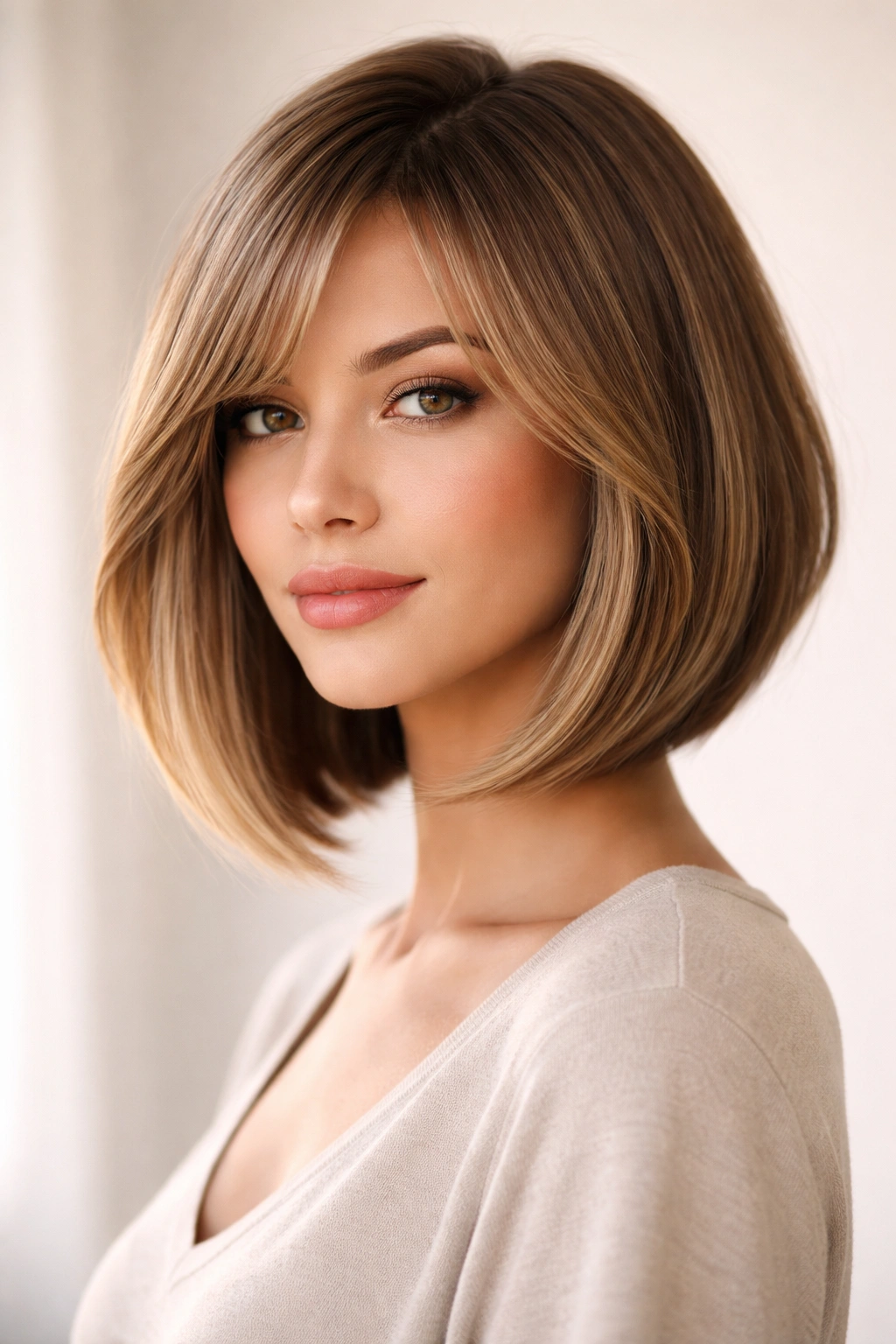
Curtain bangs can soften a diagonal bob in a way that feels flattering rather than fussy. The bangs split away from the face, so they do not fight the angled line. Instead, they frame it. The result is a bob that looks lighter around the front while still keeping that forward slant.
The sweet spot for curtain bangs is usually somewhere around the cheekbone or just below it, with the center area shorter and the sides blending into the front pieces. If the bangs are too short, they can compete with the bob and make the whole cut feel crowded. If they are too long, they lose the lift that makes this pairing work.
Who This Flatters Most
- Round faces that want some length at the cheeks.
- Foreheads that look better with soft framing instead of a blunt fringe.
- Hair that benefits from a little face movement near the front.
- People who want to grow out bangs without an ugly middle stage.
The trick is making sure the bangs and the bob are cut as one shape, not as two separate ideas. The front of the bob should blend into the curtain fringe so the eye keeps moving downward and forward. If there is a hard stop between the two, the haircut looks disconnected.
I like this version because it gives you softness without losing structure. That is rare.
10. The Undercut Diagonal Bob for Heavy Hair
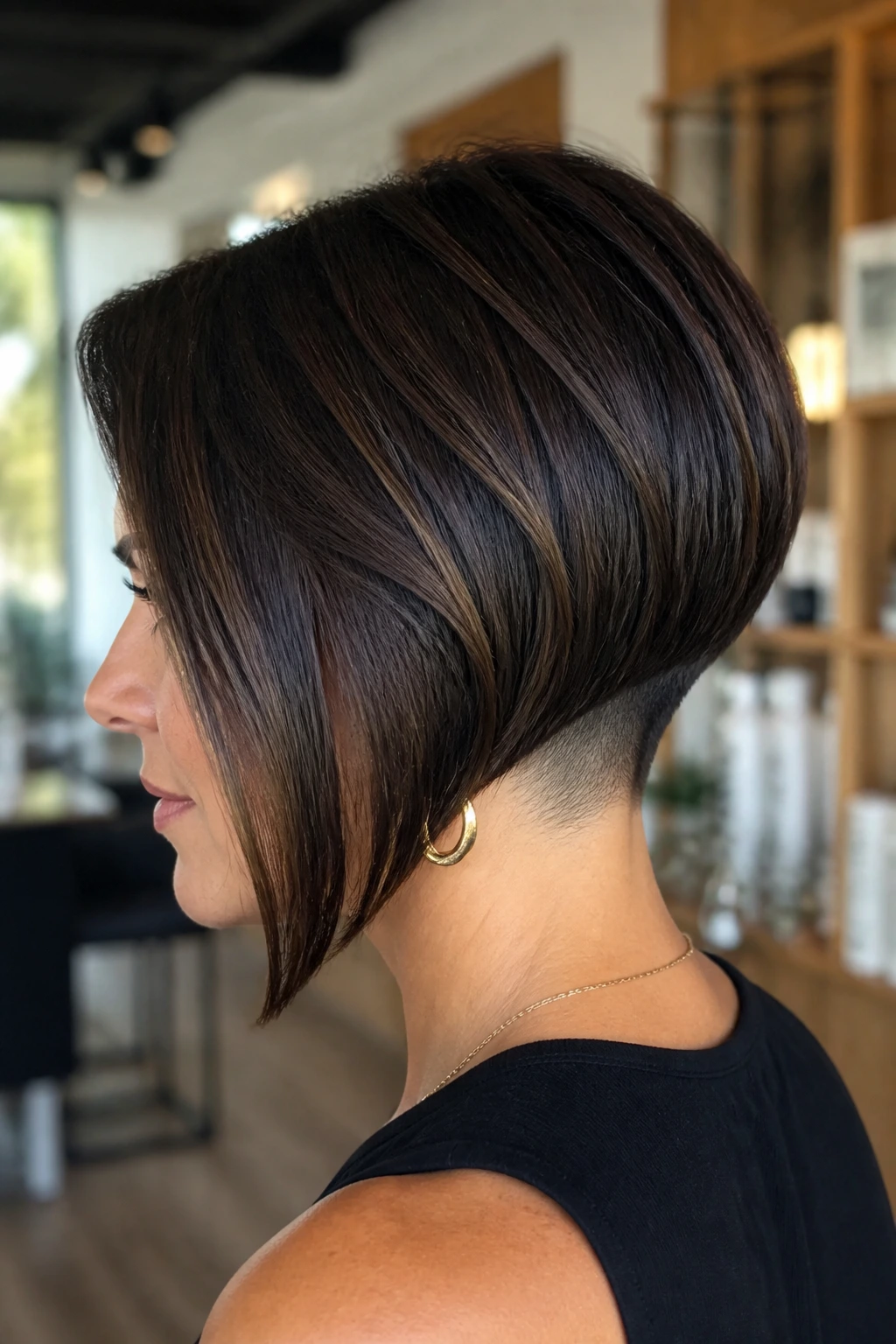
Heavy hair can swallow a bob if the interior is too bulky. An undercut diagonal bob solves that by removing weight underneath while keeping the visible outer shape clean and angled. It sounds dramatic, and it can be, but it does not have to show much at all. A hidden undercut near the nape is often enough.
This is one of those haircuts that makes daily life easier in a quiet way. The hair dries faster. The neck feels less hot. The back sits closer to the head instead of pushing out like a box. And the diagonal front still has room to swing, which is the whole point of the cut in the first place.
Why It Feels Different on Thick Hair
Thick hair tends to create its own volume, whether you asked for it or not. If the stylist leaves all of that bulk in place, the front angle can disappear under the weight. An undercut gives the shape some breathing room so the bob stays light enough to move.
A few specifics matter here:
- Ask for the undercut to stay hidden unless you want it visible.
- Keep the top layer long enough to cover the cut when the hair falls naturally.
- Schedule trims before the undercut grows fuzzy, because that line gets messy fast.
- If your hair is very coarse, keep some length in the front so the shape does not puff outward.
This version is not for everyone. It does require a stylist who knows how to balance structure with weight removal. Done well, though, it is one of the cleanest diagonal bob cuts around. The silhouette looks crisp, the neck stays lighter, and the angle stays readable even when you skip extra styling.
