



Short curls get better with age when the cut stops fighting the hair and starts working with it. Natural curl styles for short hair over 50 do that well because they make room for movement, soften the face, and keep the hair from piling up into a round, bulky shape that takes over the whole head.
The trick is not “more volume” and not “less texture.” It’s shape. Hair can get a little drier, a little finer, or a little wirier over time, and curl patterns can loosen in some spots while tightening in others. That is normal. A good short style reads those changes instead of pretending they are not there.
Silver curls, salt-and-pepper spirals, and warm brown ringlets all behave a little differently under a short cut, too. Gray hair often feels coarser and can show product buildup faster, so the best styles leave room for shine without loading the hair up with too much cream. If you wear glasses, if you have a strong jaw, if your crown flattens easily — all of that matters.
So the best place to start is with styles that already know how to flatter short curls, not styles that only look good in a filtered photo. Some are neat. Some are soft. Some are a little wild in the right way.
1. Soft Layered Pixie Curls
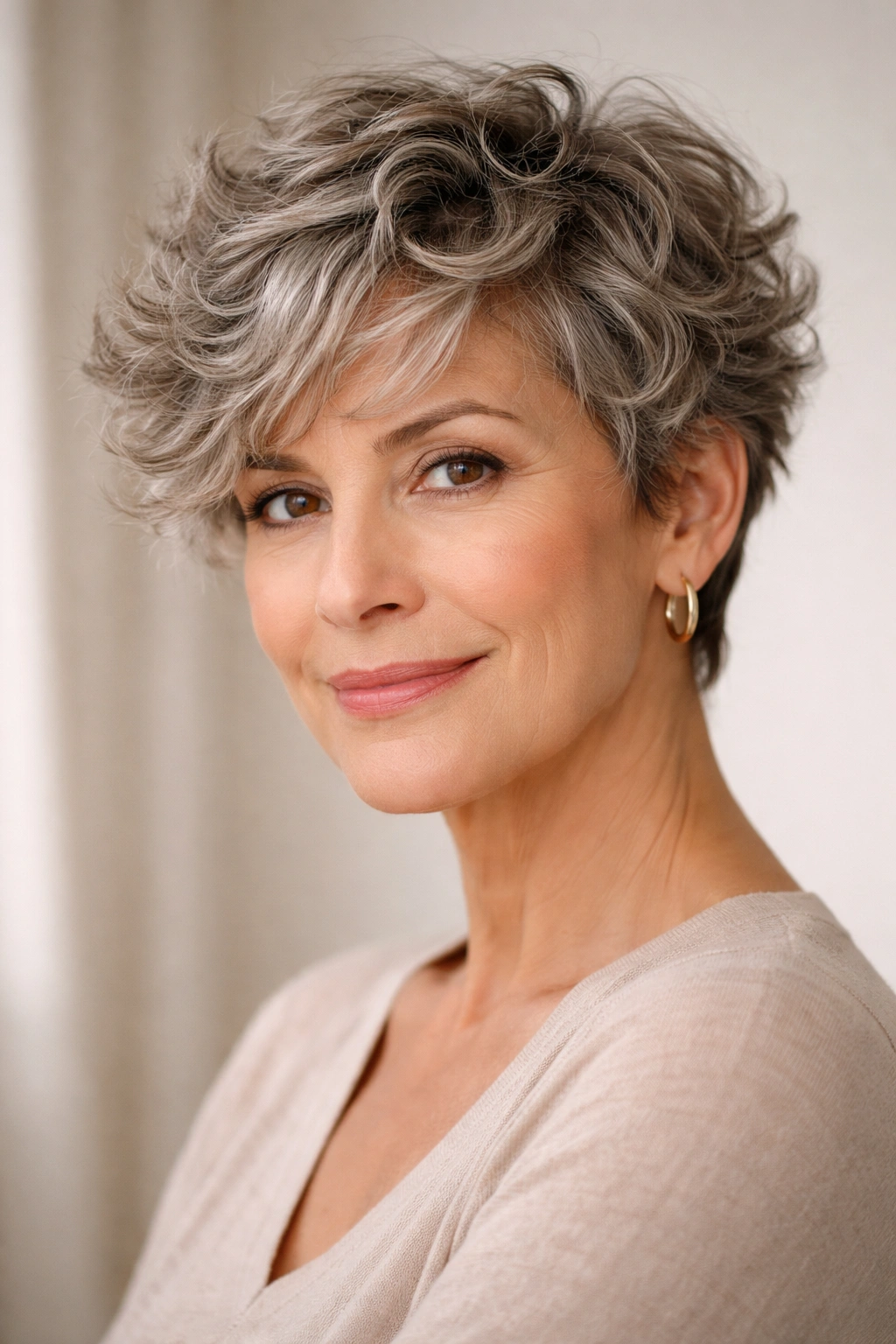
A layered pixie is one of the easiest ways to keep short curls lively instead of puffed out. The layers remove weight where curls stack up, especially around the crown and temples, and that keeps the shape airy without turning it into a helmet. It works especially well if your curl pattern is tighter on top and looser near the sides.
Why it flatters mature curls
The best layered pixie leaves enough length on top for the curl to bend, not break. If the top is cut too short, you lose the spring and end up with a fuzzy surface instead of a curl shape. A little length — often around 2 to 4 inches on top — gives the hair room to curve.
Around the ears and nape, softer tapering keeps the style neat. That’s the part a lot of people miss. The cut can be short and still feel feminine, but only if the outline is clean.
- Best for loose curls through tight spirals
- Works well with glasses because it keeps the sides compact
- Usually needs shaping every 5 to 7 weeks
- Looks polished with a small amount of curl cream or foam
Ask for light layers, not choppy thinning. Choppy thinning can leave curls frayed at the ends, and that is a bad trade.
2. Tapered Wash-and-Go Crop
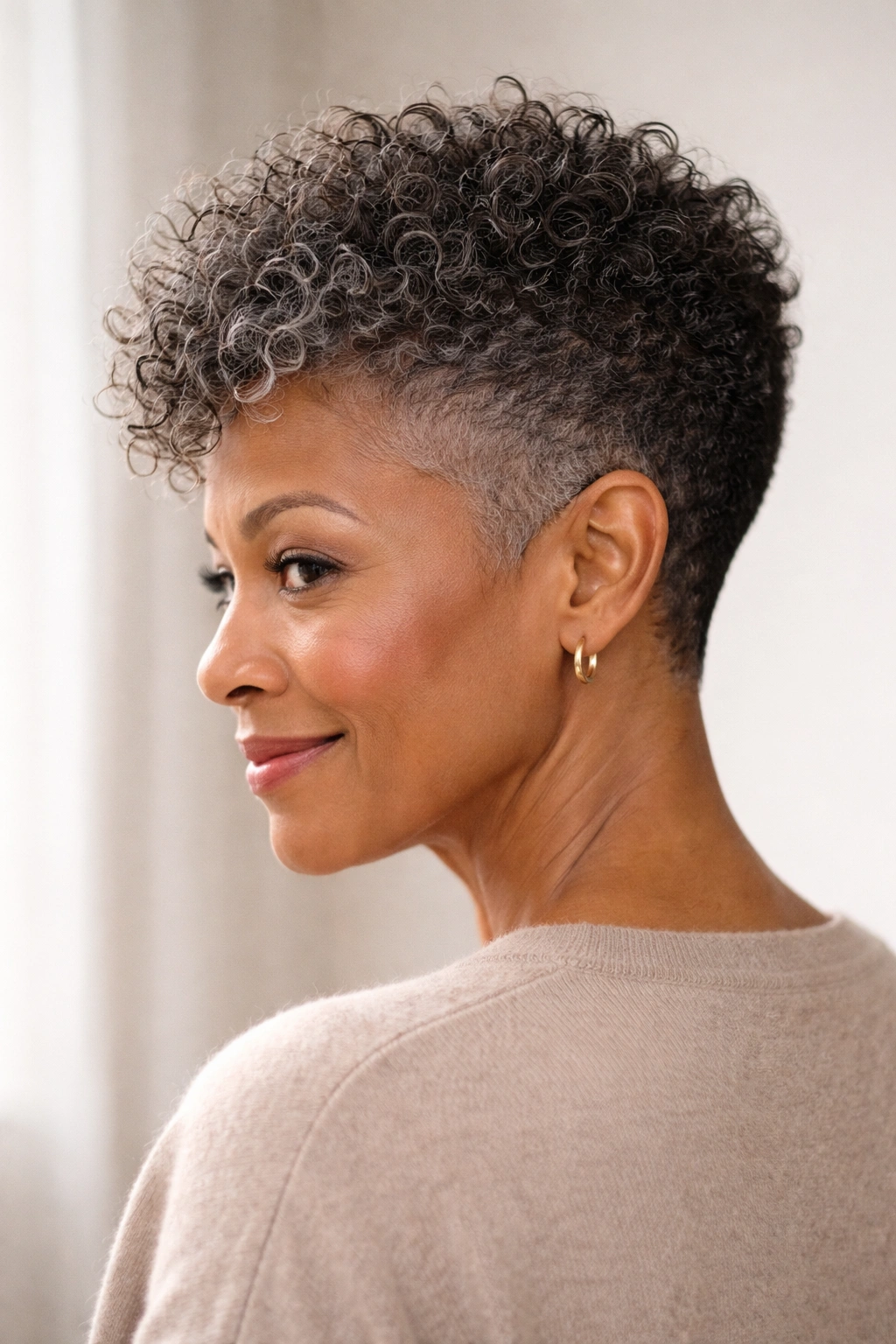
This is the style I’d pick for someone who wants the least fuss. A tapered crop keeps the shortest length at the nape and sides while letting the curls on top keep a little lift. The shape is clean, but it does not look stiff. That matters.
The taper does the heavy lifting. It removes bulk where short curls can get puffy, especially behind the ears and at the back of the neck. Then the top stays free enough to show curl pattern, whether that pattern is loose, tight, or somewhere in between.
A good tapered crop also makes gray curls look sharper. Silver strands reflect light, so a controlled outline keeps the whole cut from looking too wide. If you want a style that still looks intentional on day three, this is one of the better bets.
The styling is simple. Work a light leave-in through damp hair, add a curl foam or gel with medium hold, then air-dry or diffuse on low. Skip heavy oils at the roots. They flatten the lift fast.
3. Curly Shag With Crown Lift
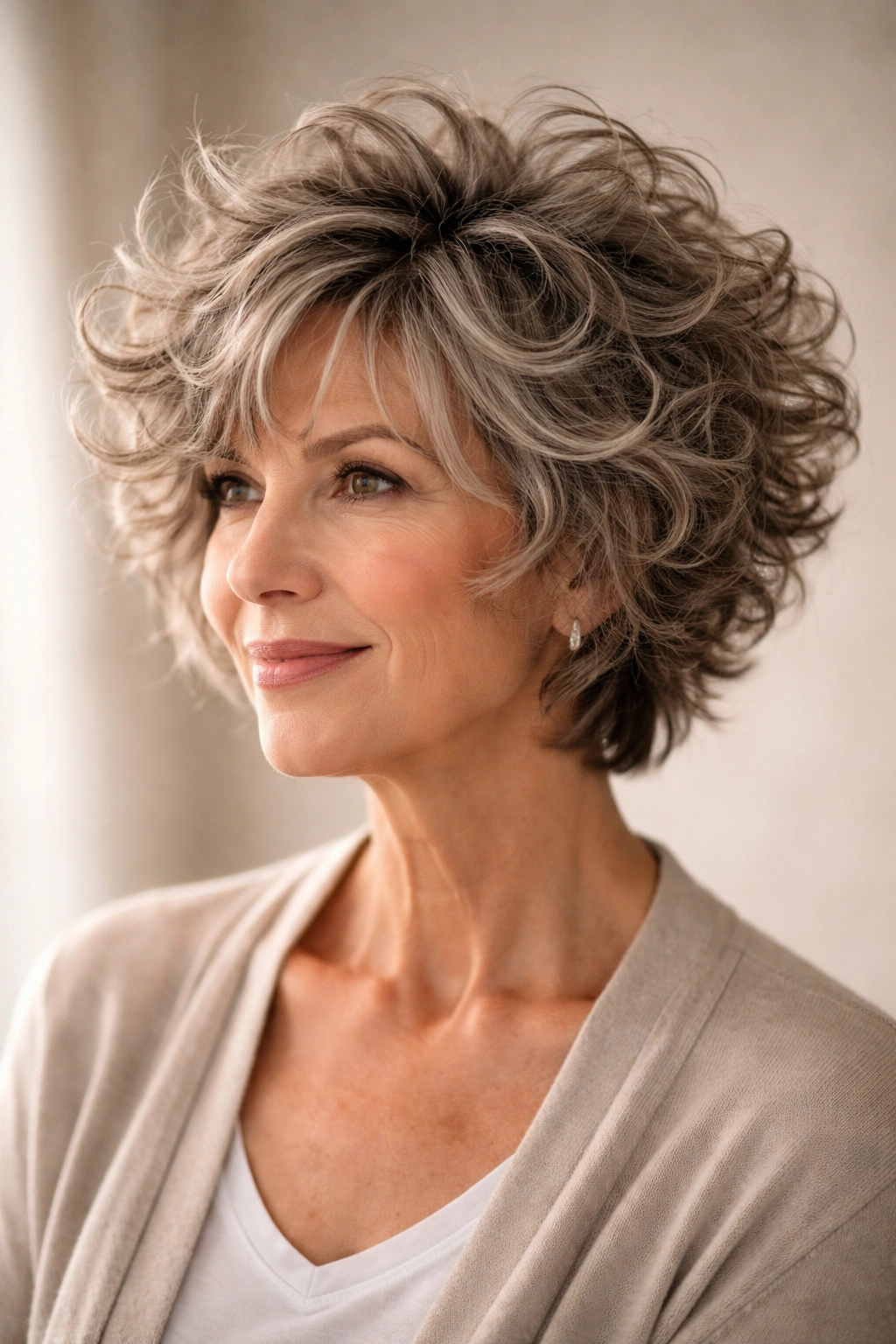
Why does a shag work so well on short curls? Because it gives the hair a chance to move in different directions without looking messy by accident. The crown gets a little extra height, the sides get broken up, and the whole shape feels softer than a blunt crop.
How to ask for it at the salon
Ask for a short shag with graduated layers through the crown and sides. That phrase matters. You want the top to hold some length, then the interior layers to take out bulk. If the cut is too heavily texturized, the curl ends can look stringy.
The best version keeps a bit of fullness around the cheekbone area. That helps the cut frame the face instead of just sitting on top of it. A shag on short curls can be playful, but it should still have structure.
How to wear it at home
Diffuse until the roots are about 80% dry, then stop touching it. Really. The shape does better when the curls set without being disturbed. If your crown tends to lie flat, clip the roots up while they dry.
A shag is forgiving on days when your curl pattern is uneven. That is part of its charm. It can take a little chaos and still look deliberate.
4. Rounded Curly Bob
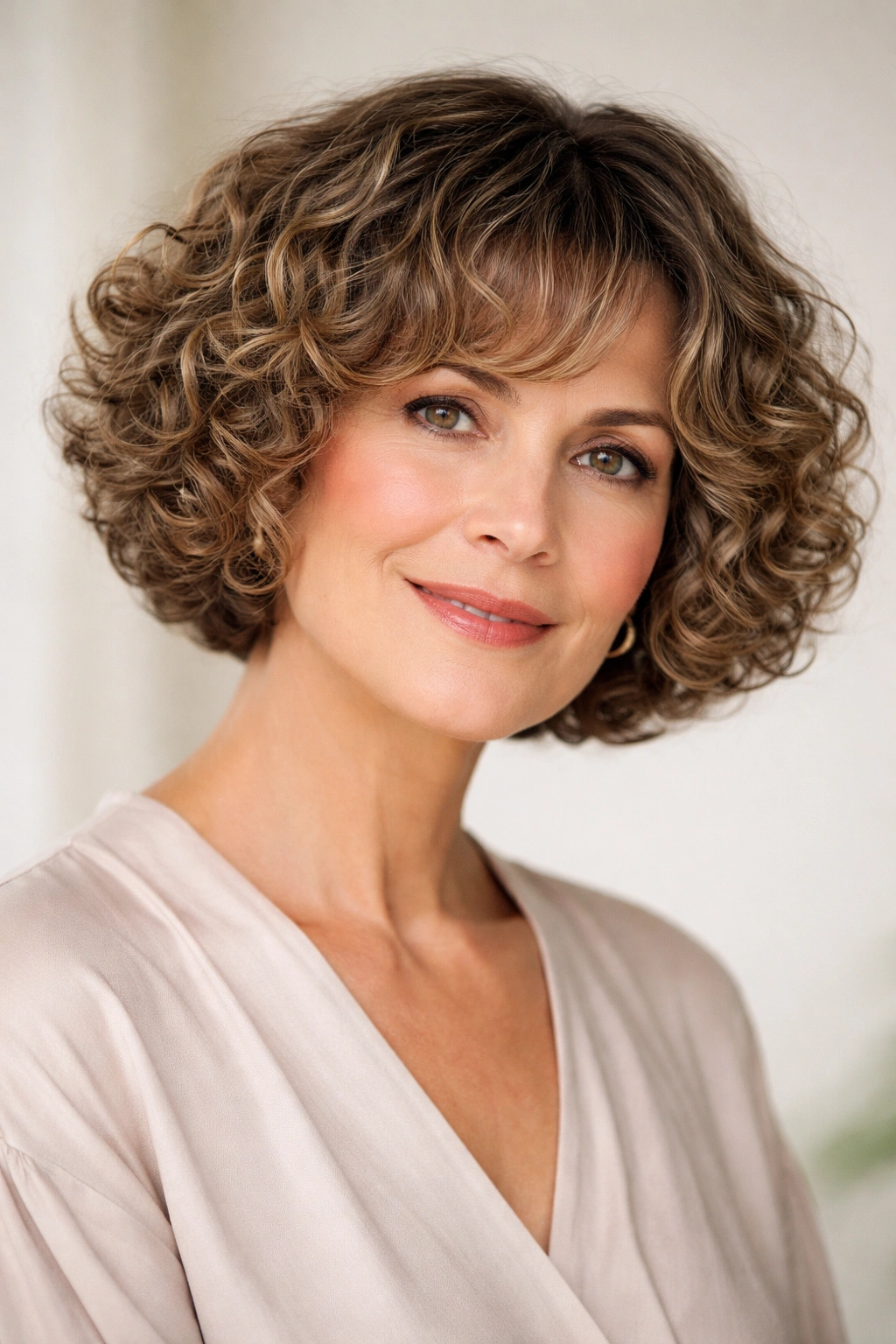
If your hair likes to spread outward at the sides, a rounded bob can pull everything back into place. The shape follows the head and keeps the widest point where you want it, which is usually a little below the cheekbone or just at the chin. That gives the curls a clear frame.
A rounded bob works best when the perimeter is not too wispy. A soft, slightly fuller edge helps the curls gather into one shape. Too much thinning at the bottom and the bob starts to look frayed.
What makes it useful
- Keeps the silhouette neat without flattening the curl pattern
- Works for medium-density hair that needs shape more than volume
- Looks good with a side part or a soft center part
- Pairs well with a diffuser when you want a smoother finish
The face effect is part of the appeal. A rounded bob softens the lower face and keeps attention near the eyes and cheekbones. If you want a style that feels grown-up without getting severe, this is a solid choice.
One small warning: if your curls are very springy, ask the stylist to leave a touch more length than you think you need. Shrinkage is real, and a chin-length bob can jump up faster than the mirror suggests.
5. Side-Parted Ringlet Crop
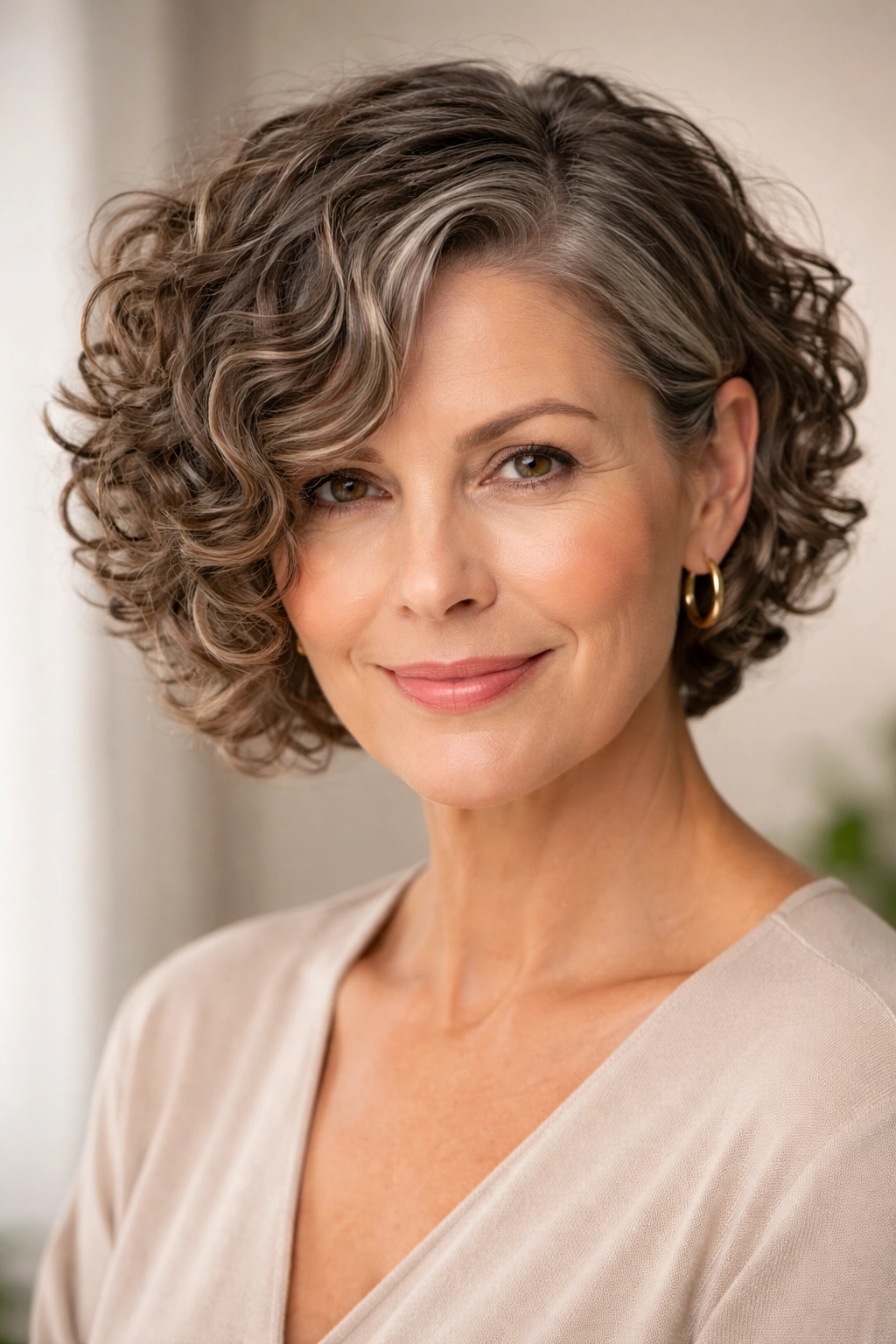
A side part can change a short curly cut more than almost anything else. It creates a diagonal line across the forehead, which breaks up width and gives the face a little lift. On short ringlets, that one move can make the style feel softer and more intentional.
The side-parted crop also gives you a place to tuck one side behind the ear without losing shape. That sounds small, but it changes the whole mood of the cut. One side can sit close to the cheek, the other can keep a little height and movement. It keeps things from feeling too symmetrical.
This style is especially useful if your curls form ringlets rather than tight coils. Ringlets hold their shape better when they are not forced into a uniform frame. A side part lets the curl clusters fall where they want, which usually looks better than a hard, centered shape.
For styling, use a lightweight cream or gel on soaking-wet hair, then scrunch gently from the ends upward. If your hair frizzes at the crown, smooth a tiny bit of product over the top with flat fingers. Tiny. A dime-sized amount is often enough for short hair, and more than that can weigh the whole thing down.
The nice part is how easy this style is to refresh. A little water, a little foam, a little finger shaping. Done.
6. Twist-Out on a Cropped Cut
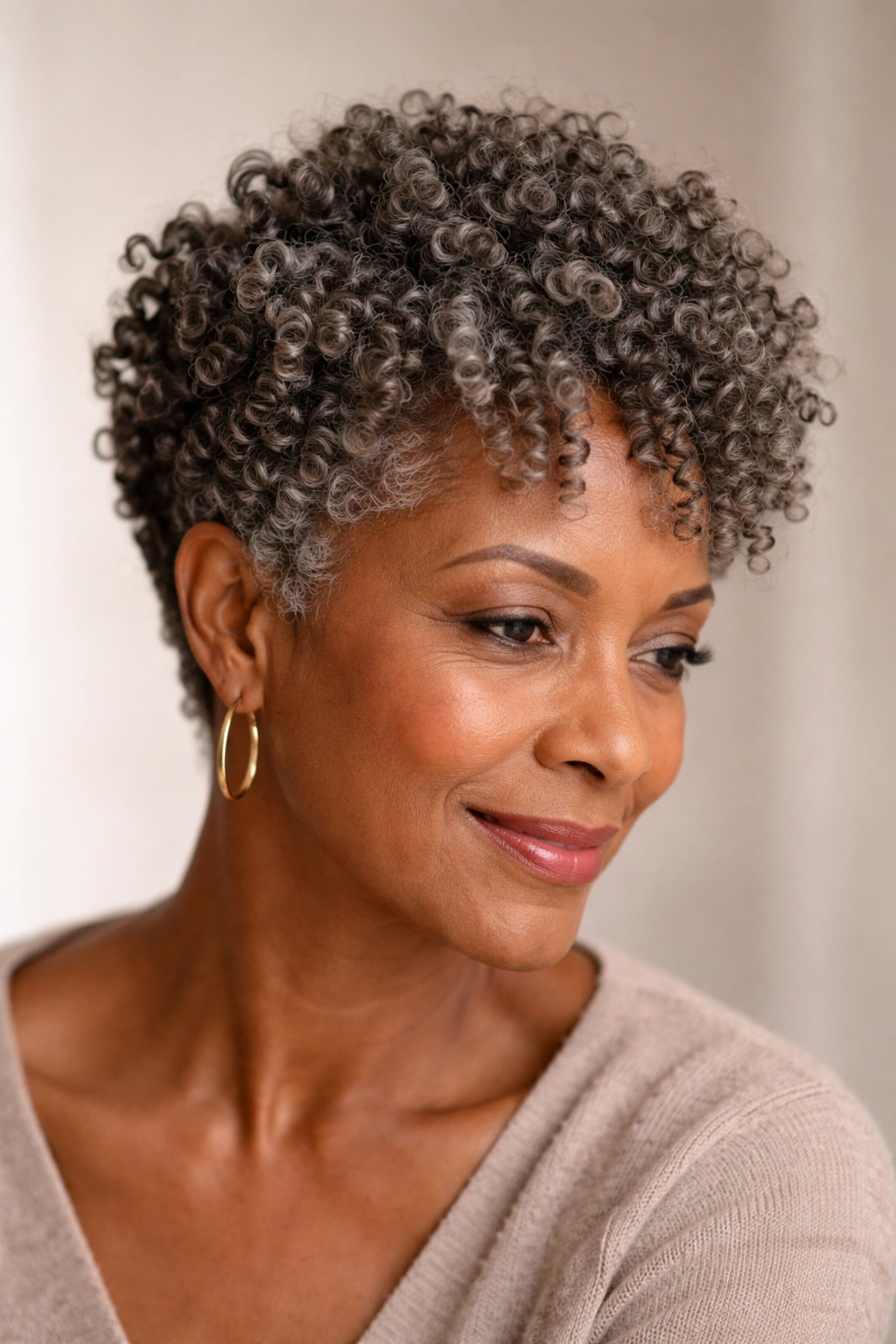
Unlike a wash-and-go, a twist-out gives you more control over the curl pattern and a little more body at the same time. That is why it works so well on short hair over 50, especially if the curl pattern is loose in one section and tighter in another. You get shape, not random puff.
A short twist-out also helps when the hair feels a bit fragile. The twists keep the ends tucked in while the hair dries, so you get a neater finish and less frizz than you would with loose drying. When you take the twists down, the curls can separate into soft, defined pieces.
This style is a good pick if you want to stretch the pattern slightly without blowing it straight. It gives the illusion of more length on a cut that sits near the jaw or above it. And yes, that can be useful when you want the neckline to look longer and the face a little narrower.
Best way to wear it
Use 8 to 12 medium-sized twists on a short head, depending on density. Twist each section with a leave-in and a cream or light gel, then let the hair dry fully before unraveling. Damp is not enough. Damp hair will frizz and flatten the twist pattern before it has a chance to set.
The finish can be soft and fluffy or more defined. If you want definition, separate the curls less. If you want softness, finger-fluff the roots and stop there.
7. Curly Caesar With Soft Fringe
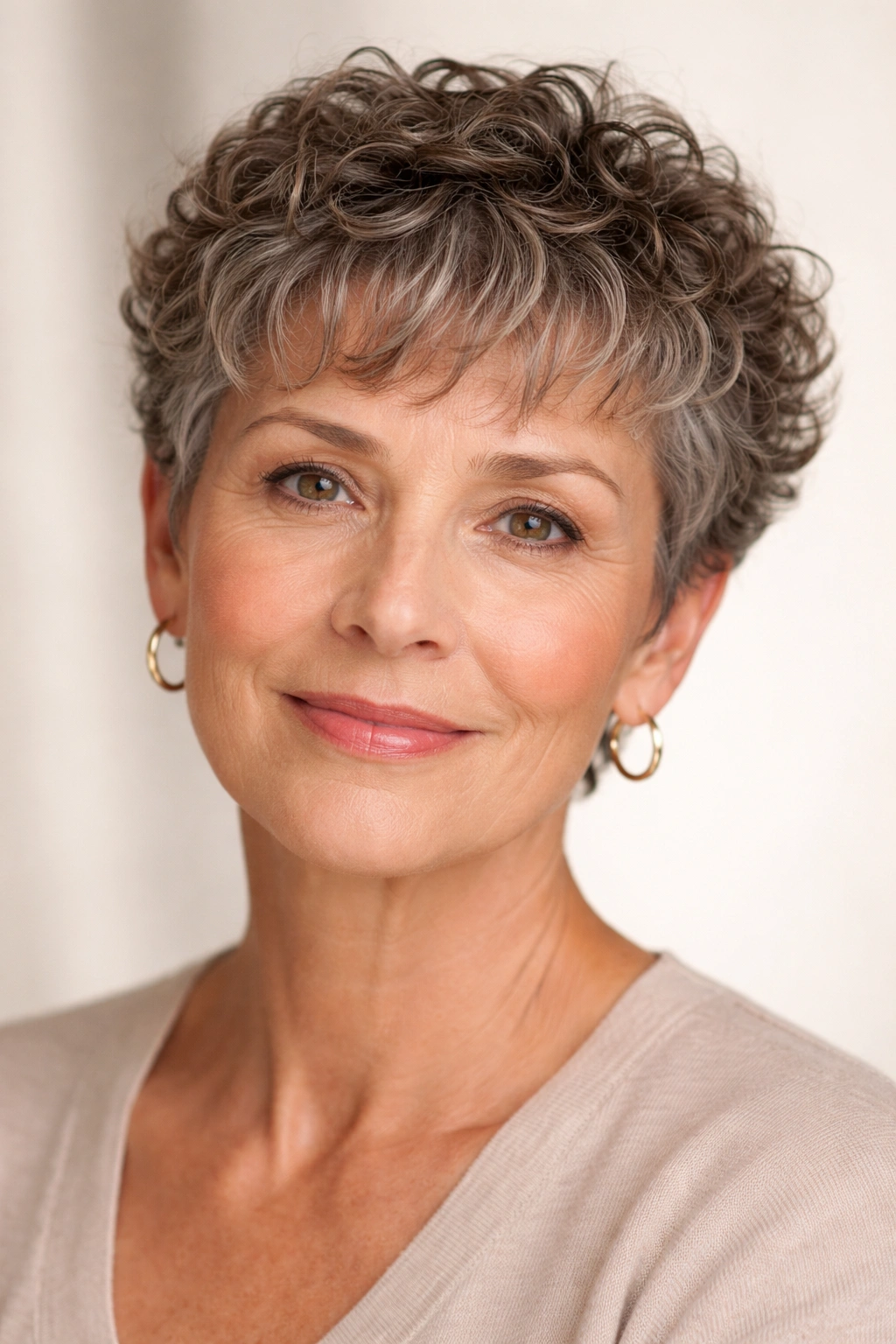
A curly Caesar sounds sharper than it is. The line is short, the fringe is light, and the curls sit close to the head without looking severe. On women over 50, that soft fringe can be a gift because it hides little forehead lines without burying the face.
The mistake here is cutting the fringe too blunt. A heavy straight line across the forehead can fight the curl pattern and create a shelf. What you want is a broken, textured edge that lets a few curls fall a little lower than the others.
What to watch for
If your hairline is strong or your forehead is short, keep the fringe slightly shorter in the middle and a touch longer at the corners. That stops the cut from swallowing the eyes. If the fringe grows forward fast, trim it every 4 to 6 weeks before it starts bending in odd directions.
How to style the fringe
Dry the fringe first if it tends to shrink up. Use your fingers, not a brush. A brush pulls curls flat, and then they spring back in all the wrong places. A pea-sized bit of curl cream can tame the front, but only if the hair is already damp and not dripping.
This style has edge, but not the loud kind. It feels neat, modern, and easy to keep under control.
8. Chin-Length Corkscrew Bob
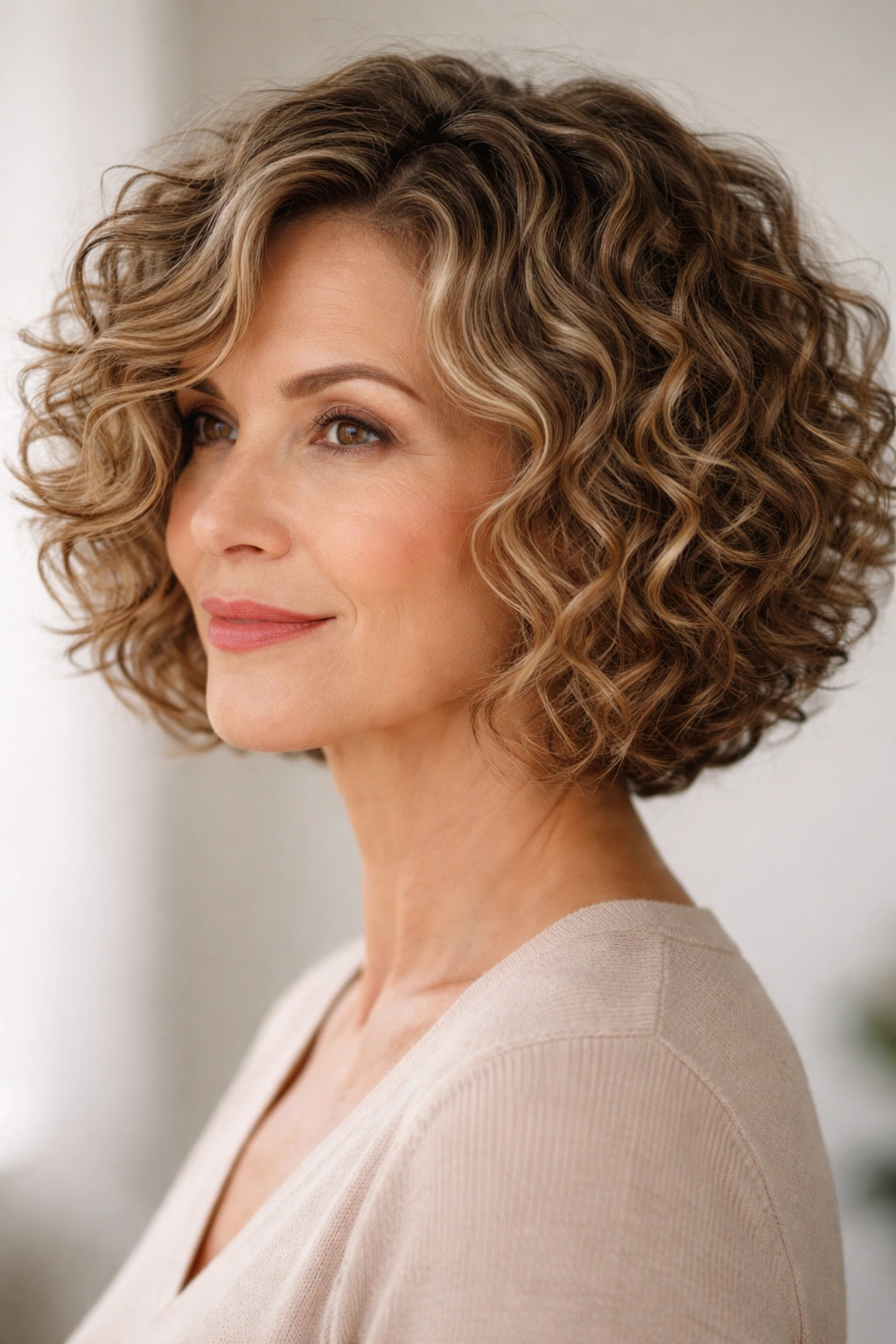
Can a bob still feel light when the curls are tight? Absolutely. The trick is to keep the perimeter blunt enough to hold shape while leaving enough room inside the cut for the corkscrews to move. That balance matters more than length alone.
Chin-length corkscrews have a nice way of opening the face. The ends sit close enough to the jaw to define it, but not so close that the curls bunch up into a triangle. If the interior is layered just a bit, the bob gets lift without losing its outline.
This style also handles shrinkage better than many people expect. Tight curls can bounce up two or three inches after drying, so the stylist should cut it dry or at least check the curl pattern in its natural state. Wet cutting alone can be a gamble.
Best cut details
- Leave the front slightly longer than the back if your curls spring up hard
- Keep layers soft through the interior, not shredded at the ends
- Ask for a shape that follows the jaw rather than sits above it
- Use a diffuser on low heat to preserve the corkscrew shape
For daily wear, this bob likes a medium-hold gel or foam more than a rich cream. Too much cream can blur the corkscrews into one soft cloud, and that is not always the look you want.
The charm here is the shape. It feels classic, but not old.
9. Diffused Pixie With Soft Edges
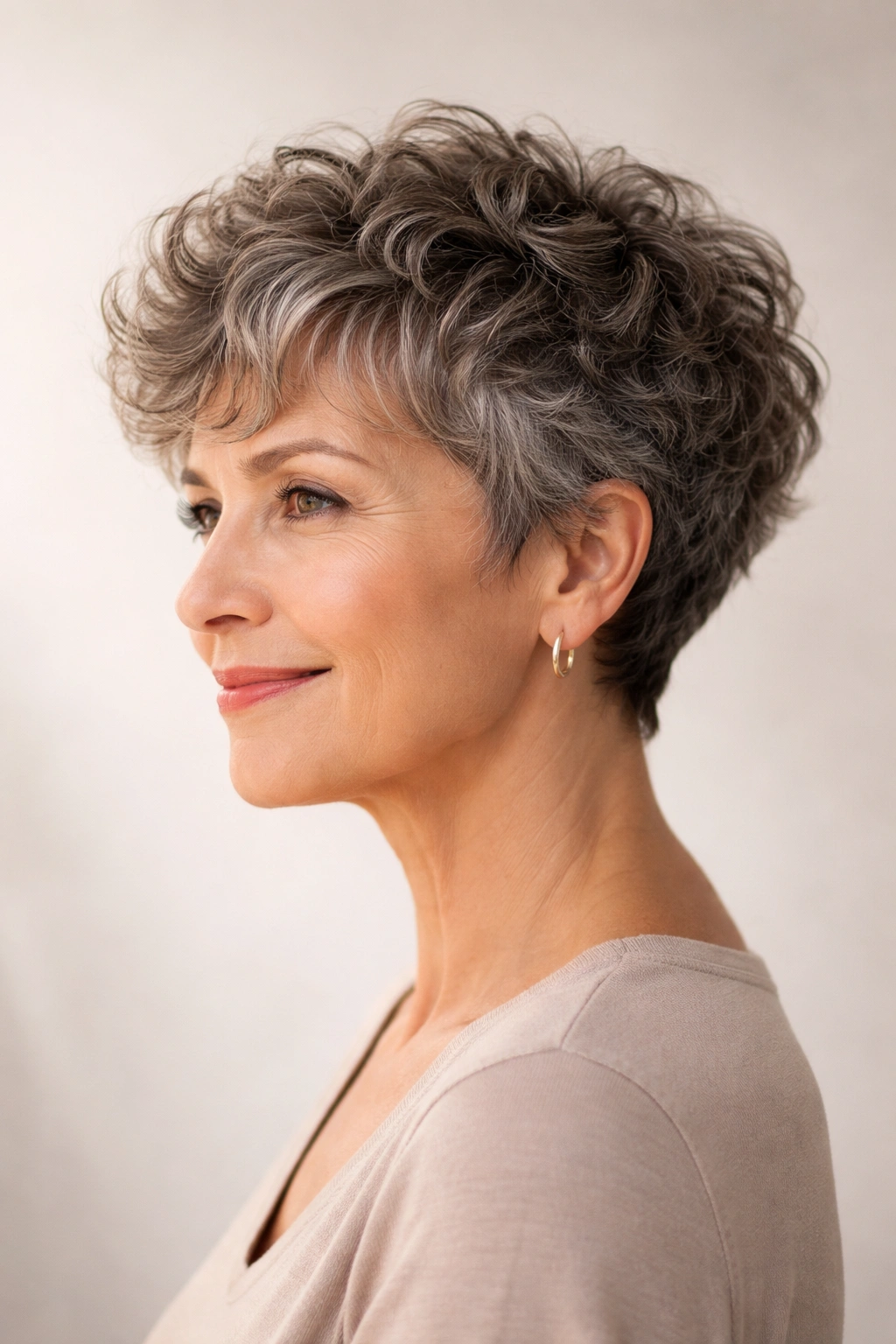
A diffused pixie is the style for people who want speed without giving up curl shape. The haircut itself is short and close, but the finish stays soft because the curls are dried with airflow rather than flattened into place. That means the ends keep their bend.
What makes this version work is edge control. The nape and sideburn area stay tidy, while the top keeps a little lift. The result looks clean from the side and still has some personality when you look straight on. If your hair is fine, this can be a smart move because it adds the illusion of density where you need it most.
It also plays well with natural gray. Short silver curls can get fuzzy if they’re overloaded with product, so a diffused pixie often looks better with a light mousse or gel than with a thick cream. Less residue. More shine.
You do need a decent cut, though. If the shape is off by even half an inch, the whole style can collapse into a flat patch on one side and a puff on the other. Short curls don’t hide bad structure.
A quick root lift at the crown and a low-heat diffuse for 8 to 12 minutes can be enough. After that, leave it alone.
10. Salt-and-Pepper Halo Crop
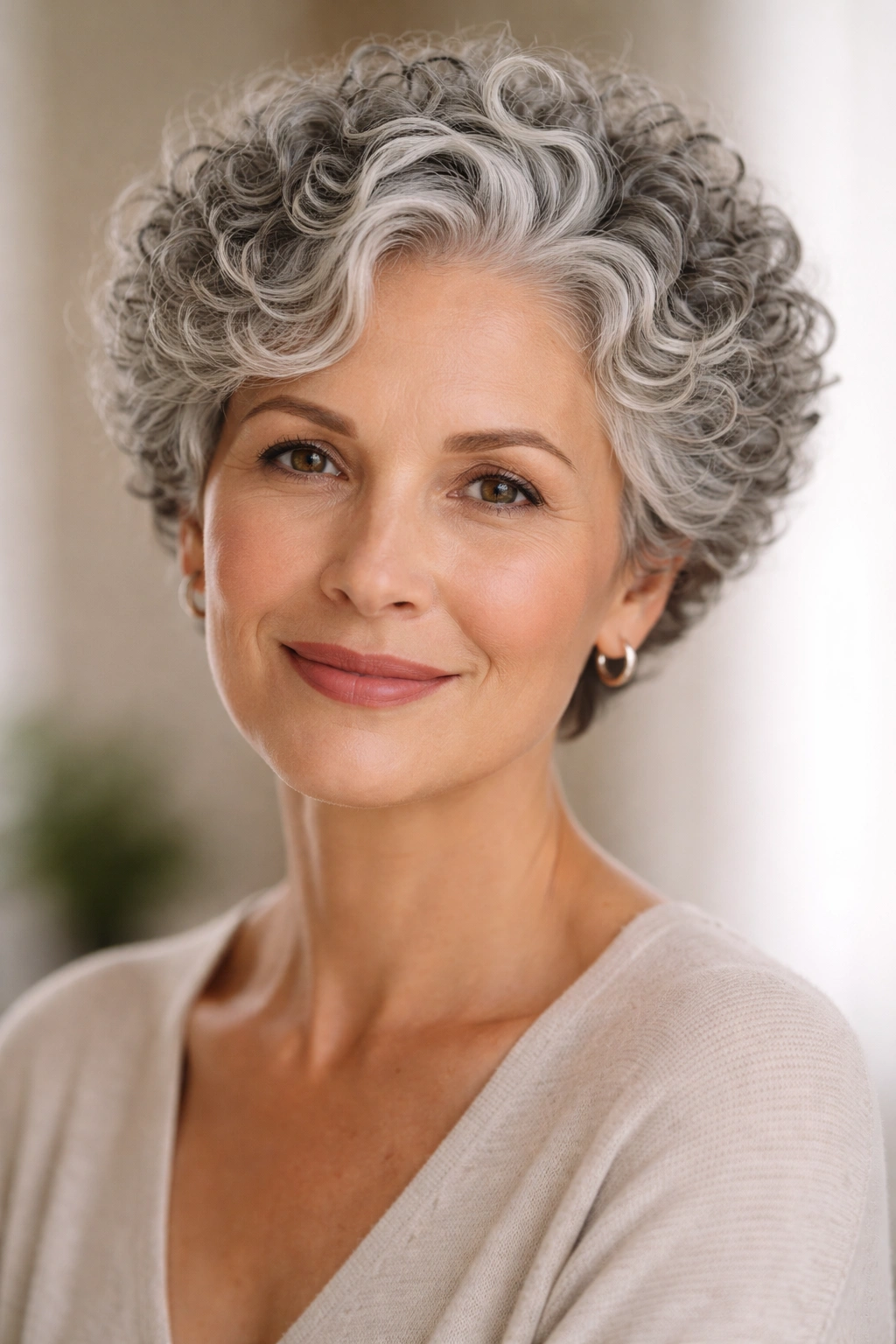
A halo crop is one of those cuts that looks better the more texture your hair has. The curls sit around the head in a soft ring, which is especially nice when the hair has naturally gone silver, white, or salt-and-pepper. The color itself does a lot of the work. The cut just gives it a frame.
The halo shape works because it keeps bulk balanced. Instead of building up heavy on the sides, the curls stay evenly distributed around the crown and temples. That makes the head shape look balanced, not bottom-heavy. On short hair, that matters a lot.
A good halo crop does not need sharp edges. It needs intention. If the curls are too tightly cropped around the neck, the style can look severe. If they are too long everywhere, the halo collapses. The sweet spot sits in the middle: soft layers, a rounded top, and enough length for the curls to coil naturally.
- Best on dense hair with strong curl springs
- Good for people who want to show off silver strands
- Looks better with shine than with heavy matte product
- Benefits from a trim every 6 to 8 weeks
The face opens up nicely with this cut. Cheekbones show. Earrings matter. And the curls get to be the thing, which is the whole point.
11. Short Curly Undercut
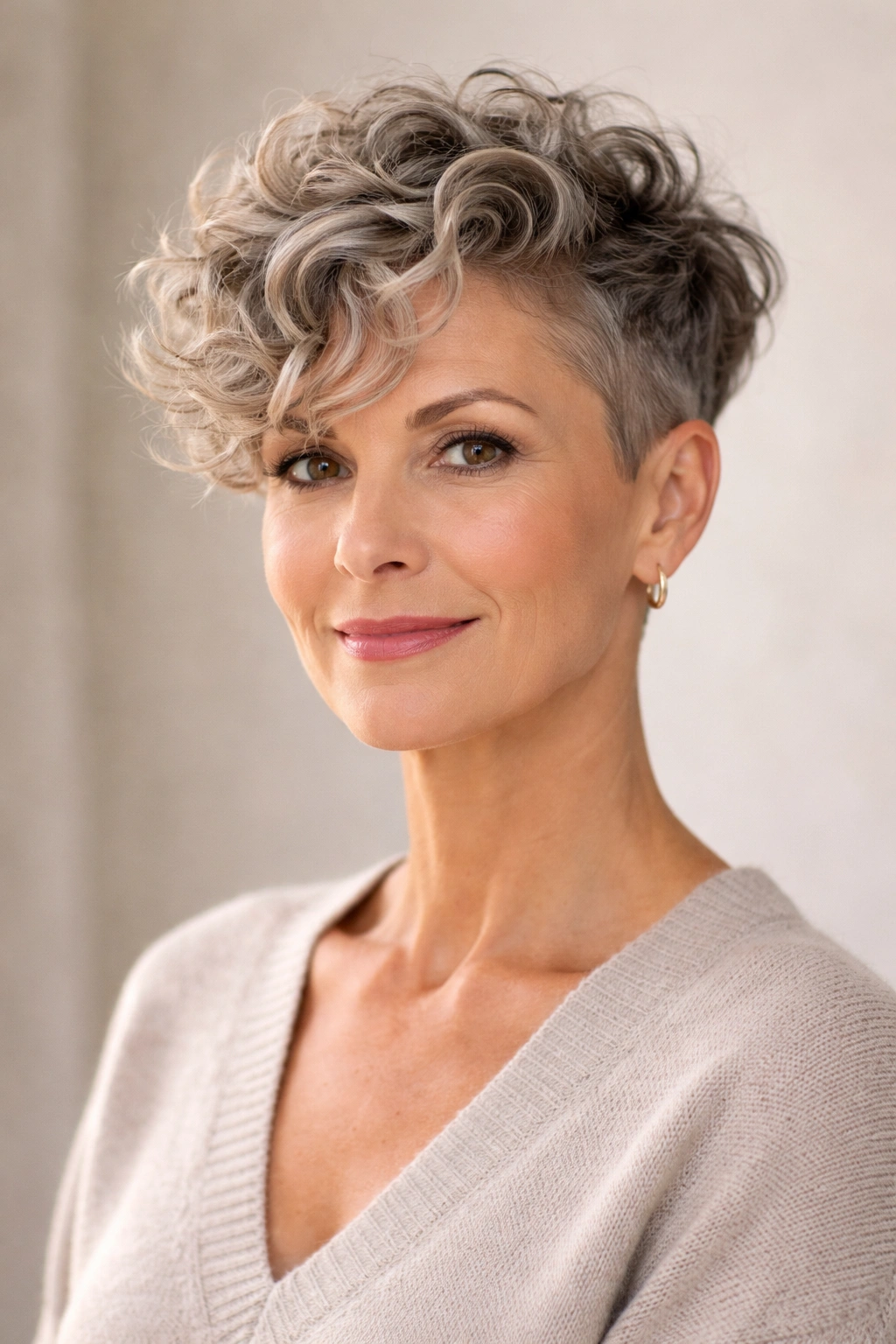
An undercut can sound edgy, but on short curls it often reads as practical first and stylish second. Removing bulk from the nape or lower sides keeps thick curls from ballooning out, especially if your hair grows wide at the back of the head. That makes the top look fuller without turning the whole cut into a mushroom.
The best part is how much it helps in warm weather or on humid days. Less hair against the neck means less sweating, less frizz at the nape, and less reshaping with your hands every ten minutes. If your curls are dense, this can feel like a relief.
It also gives older curls room to move. Thick natural hair can get heavy as it grows longer, even when the length is short. An undercut removes some of that drag. The top curls bounce better, and the shape stays cleaner through the day.
Who should consider it
- People with dense curls that puff at the neck
- Anyone tired of bulk behind the ears
- Short styles that need easier scalp access
- Curly cuts that lose shape fast at the nape
The catch is upkeep. An undercut grows out faster than a fully blended cut, so you need to stay on top of the trim schedule. If you let it go too long, the shape gets fuzzy and starts to lose the point.
Still, when it’s kept neat, it looks sharp in a quiet way.
12. Fluffed-Out Coil Crop
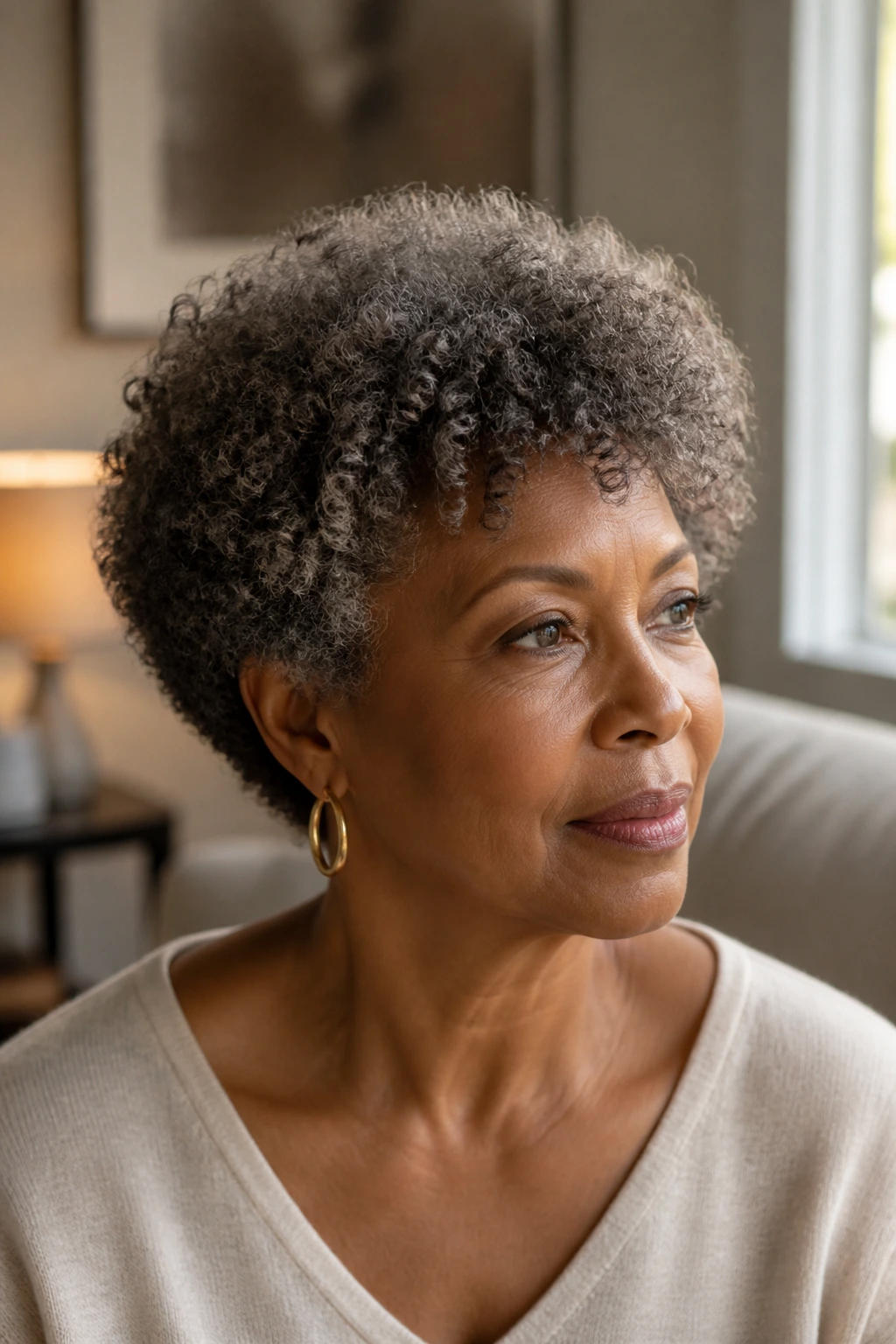
Some people want definition. Others want softness and movement. A fluffed-out coil crop is for the second group, and it can be a really good choice if your curls are tight, springy, and prone to shrinkage. The style keeps the top short, then lets the coils expand just enough to form a rounded little cloud around the head.
That shape can be very flattering over 50 because it doesn’t drag the face down. It lifts things up. The eyes feel more open, the cheek area looks softer, and the neck usually looks longer because the hair isn’t clinging to it. If your features are strong, the soft coil crop balances them nicely.
The key is not to overdefine every curl. A tiny bit of leave-in, a dab of gel, and a gentle pick at the roots can be enough. Once the coils dry, separate them a little with your fingers and stop before the shape gets frayed. There is a line between fluffy and fuzzy. Stay on the fluffy side.
This style is also a good one if your hair has a mix of textures. Short coils can hide a few uneven patches better than longer cuts can. You do not need perfect symmetry. You need a shape that looks alive and stays out of your face.
If I had to choose one thing to remember, it would be this: short natural curls over 50 look best when the cut respects shrinkage, density, and face shape at the same time. Not one of those things. All three.
A good short curl style does not try to make the hair behave like straight hair. It gives curls room to sit, spring, and settle where they want. That is why these cuts keep coming back into style — they work with real hair, not fantasy hair, and that is a much better deal.
