



Flat hair can make a good bob look tired before lunch. The shape is there, the cut is there, and still the hair sits close to the head like it missed the memo. Fluffy bob cuts for volume solve that by changing where the weight lives, where the movement starts, and how the ends behave when the hair settles.
A lot of people think volume comes from more layers. Sometimes it does. Sometimes that is exactly the wrong move. A blunt line can make fine hair look fuller, while a little crown layering can keep thick hair from turning into a triangle. The trick is not “more.” The trick is placement.
I’ve always liked bobs that look alive. Not crunchy. Not overworked. Just soft, airy, and a little lifted at the roots, with enough shape to feel intentional. That can mean a French bob, a rounded bob, a shaggy bob, or something longer and more polished. The best cut depends on what your hair does when it air-dries, what it does after a blow-dry, and where it tends to collapse.
So, if you’ve been staring at your mirror wondering why your bob keeps lying flat, start with the line first. The rest gets easier once the foundation is right.
1. Chin-Length Blunt Bob With Airy Ends
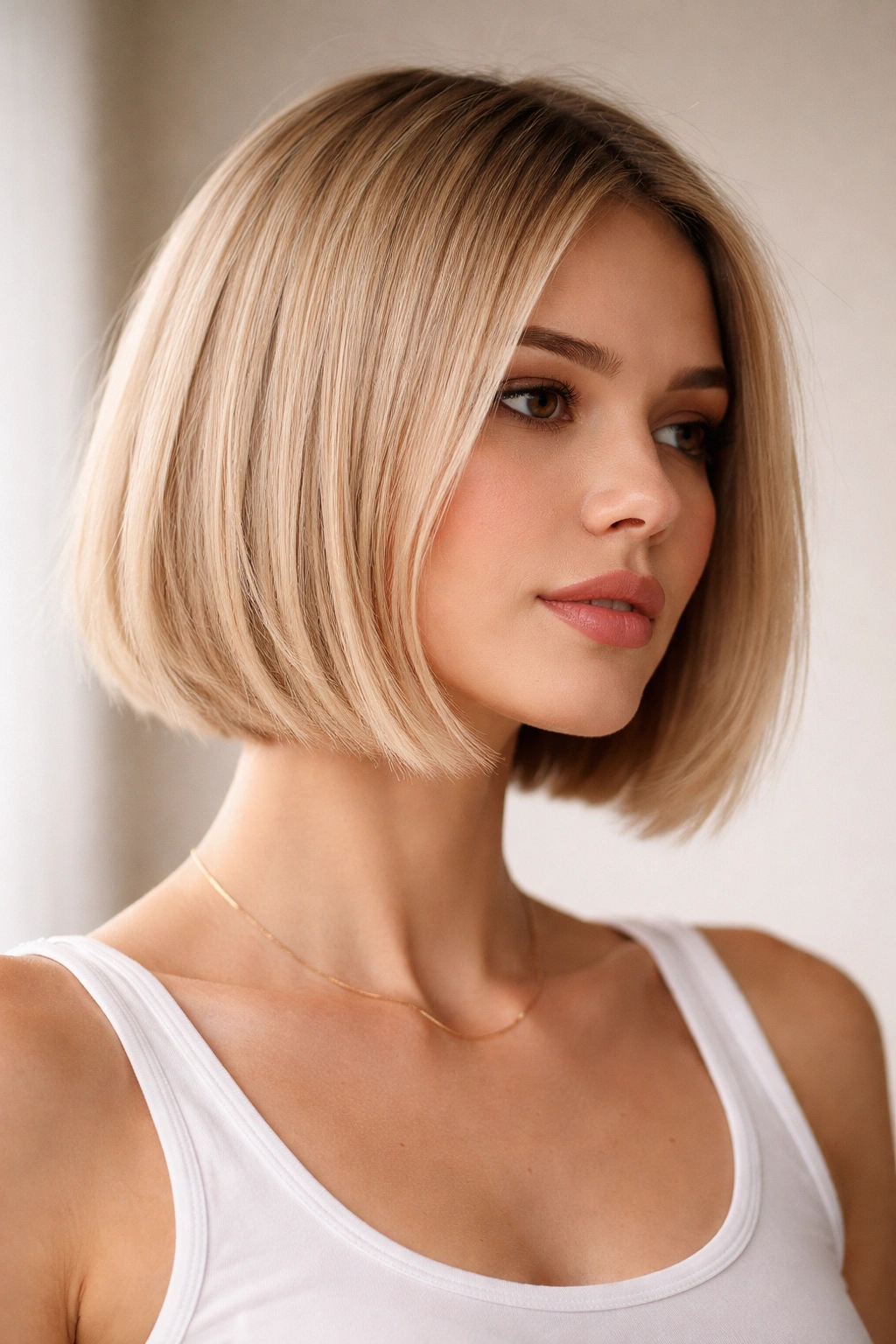
A blunt chin-length bob can create more volume than a heavily layered cut, and that surprises people. The clean perimeter gives the eye a strong line to follow, so the hair looks denser even when it isn’t. Then, if you soften the last half-inch at the ends, the shape stops feeling boxy and starts feeling light.
That balance is the whole point. The cut should look crisp from the front, but not stiff when you turn your head. I like this bob on fine, straight hair because the sharp edge keeps the outline full. It also works on hair that has a slight bend, since the movement sits right around the jaw instead of dropping into the neck.
The best version is usually cut at chin level or just below it. Too long, and the effect starts to sag. Too short, and it can feel like a helmet unless the stylist leaves a tiny bit of softness in the hemline. Point-cutting the last inch keeps it airy without shredding the shape.
A small round brush makes this cut sing. Lift the roots at the crown, bend the ends under once, and stop before the whole thing gets too polished. A little imperfection helps. Seriously.
2. French Bob With a Soft Micro Fringe
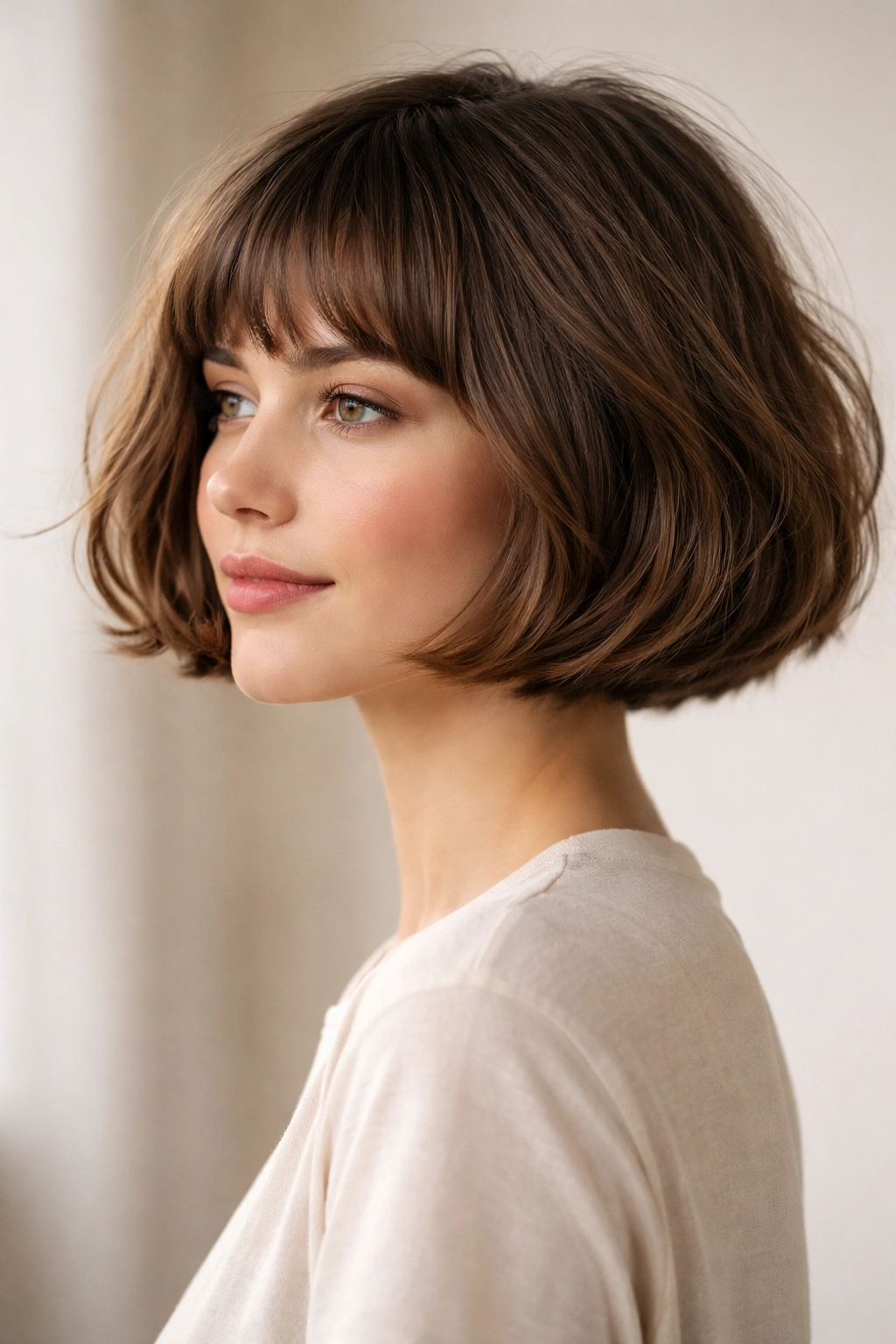
Can a short bob feel airy instead of severe? Absolutely. The French bob earns volume through cheekbone-length shape, a little lift at the crown, and a fringe that breaks up the forehead without swallowing the face.
The micro fringe is the part people get wrong. It should skim, not sit like a curtain. A softer, slightly broken fringe gives the cut movement near the eyes, which pulls attention upward and makes the whole style look lighter. If the bangs are cut too blunt or too thick, the bob can go heavy fast.
How to wear it
Keep the length near the mouth or just above the jaw if you want that lived-in softness. A little bend at the ends matters more here than perfect smoothness. If your hair has a natural wave, air-dry it with a dab of cream and scrunch the roots gently.
For straighter hair, a small brush and a side-to-side blow-dry can build the lift you need. Don’t flatten the crown while you’re taming the fringe. That’s the trap. Volume on this cut lives in the top third of the head.
This bob is a smart pick if you like a cut that looks easy but still has shape. It has attitude, but not the loud kind.
3. Layered Crown Bob for Fine Hair
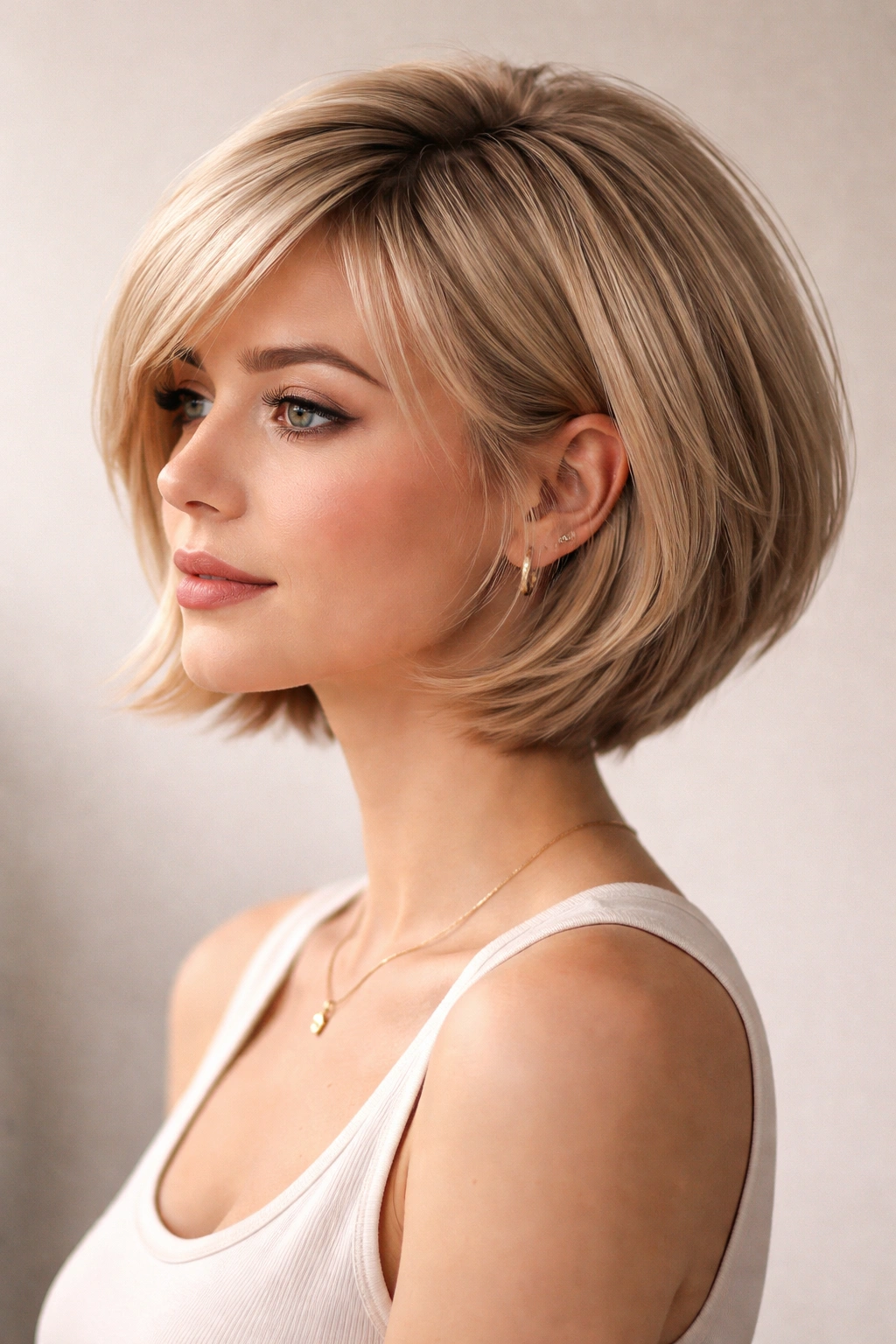
The crown is where a flat bob goes to die. That sounds dramatic, but it’s true. If the top sits close to the scalp, the whole haircut reads thinner than it is, no matter how healthy the ends look.
Why the crown matters
With this cut, the stylist keeps the bottom line clean and adds controlled layers through the top and upper sides. Those layers should start high enough to lift the silhouette, but not so high that the hair loses its body. I’d ask for internal layering rather than obvious choppy steps. The goal is lift you can feel, not little shelves you can see from across the room.
A side part can help, but the real work happens in the way the hair is dried. Aim the dryer at the roots, flip the front away from the face, and let the crown cool before touching it. That cooling step matters more than people think.
- Best for fine or medium-fine hair that collapses at the roots.
- Ask for soft internal layers through the crown, not thin wisps at the ends.
- Use a root-lifting mousse on damp hair, then blow-dry in sections.
- Keep the hemline blunt so the cut still feels full.
My blunt advice: if your stylist wants to thin out the ends a lot, stop them there.
4. Curly Bob With Diffused Lift
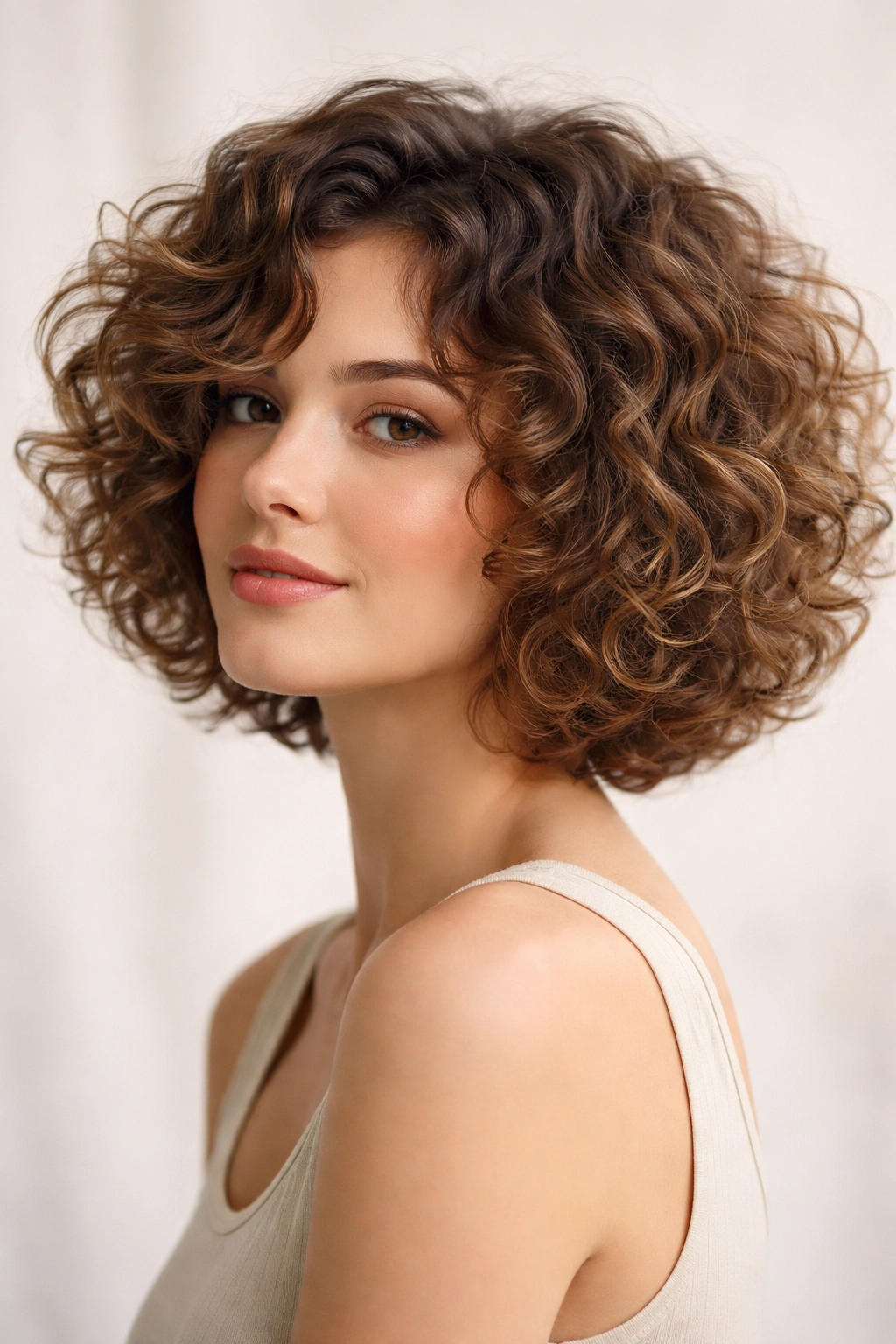
If your curls turn into a triangle every time you cut them short, this is the bob that usually fixes the shape. Curls need room, but they also need a little control, and that’s where a fluffy bob can work beautifully.
I’ve seen curly bobs go flat for one simple reason: they were cut like straight hair. Curly hair shrinks, springs, and bunches in ways that change the outline completely. A dry cut, or at least a cut done with curl pattern in mind, helps the stylist see where the volume actually lands. Otherwise you end up with too much bulk at the bottom and not enough lift near the top.
The diffuser matters too. Use low heat, low speed, and tip the curls at the roots while they’re drying. Don’t jam the diffuser into the hair and hold it there forever. That makes the curls frizz out around the face and leaves the crown limp.
- Best for loose curls, spirals, and strong waves that need shape.
- Keep the top a little shorter than the bottom to avoid a mushroom shape.
- Avoid heavy thinning shears near the ends; curls need some weight to bounce.
- Try a lightweight gel or curl cream with a soft cast.
The prettiest version looks touchable, not crispy. That’s the sweet spot.
5. A-Line Bob With a Hidden Back Angle
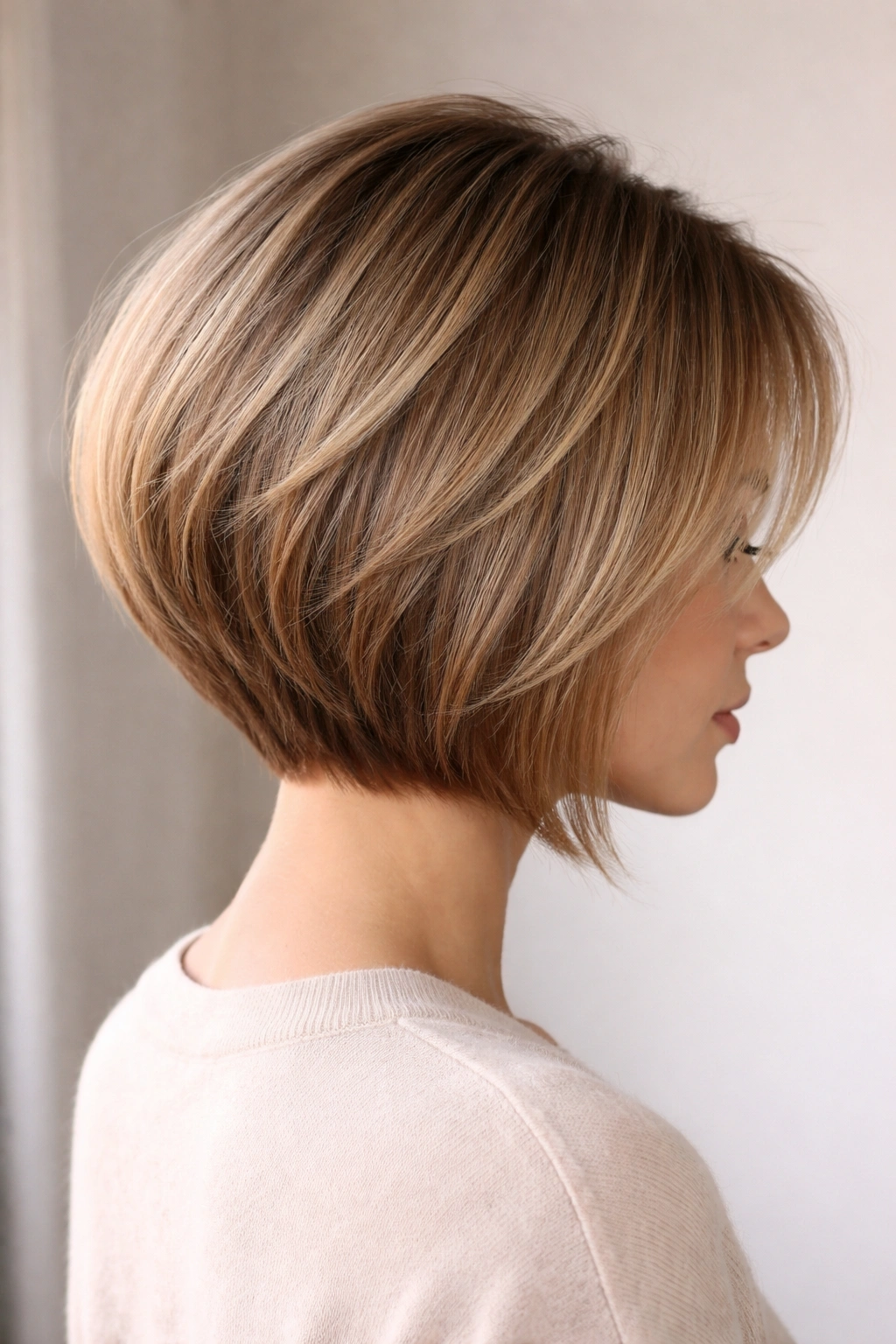
The A-line bob works because the geometry does half the work for you. Shorter in the back, longer in the front. Simple. Effective. And when the angle is done well, the haircut gives the illusion of lift without relying on a pile of visible layers.
The secret is in the back. A subtle graduation through the nape builds a little stack, so the crown looks fuller from the side. Meanwhile, the front pieces stay long enough to skim the jaw or collarbone, which keeps the whole thing from feeling too severe. I like this cut on hair that falls flat in the back but still needs some face-framing softness.
One sentence is enough here: the angle does the heavy lifting.
If your hair is thick, the cut can remove bulk where it builds up behind the ears. If your hair is fine, the front length keeps it from looking sparse. Either way, don’t ask for a dramatic wedge unless you want a sharper, more obvious shape. A softer A-line is easier to wear every day.
This is also a good cut if you tuck one side behind your ear a lot. It looks polished without trying too hard.
6. Shaggy Bob With Piecey Texture
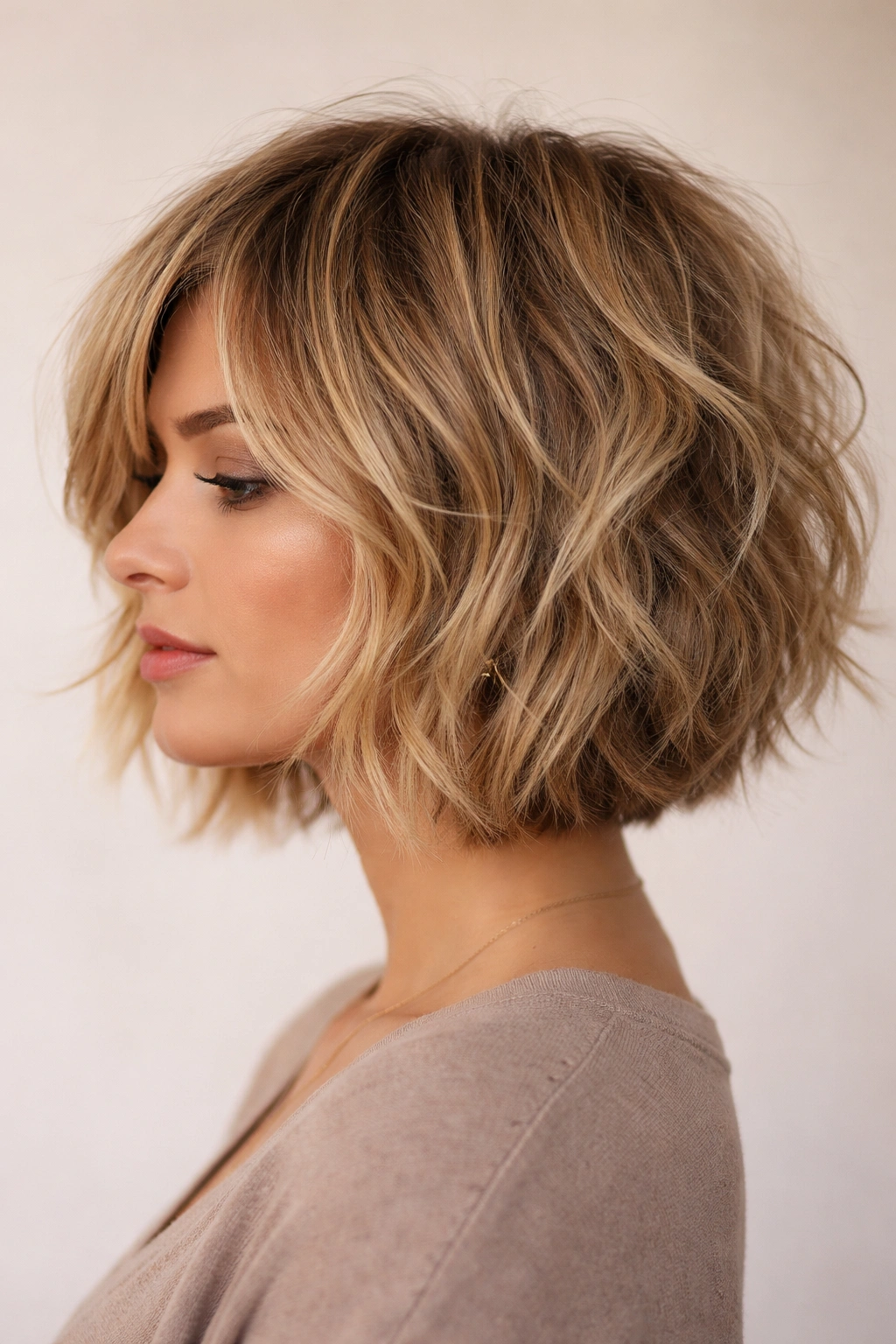
Unlike a classic bob, this one does not pretend to be tidy. That’s exactly why it works. A shaggy bob uses scattered layers and a little controlled mess to create air between the strands, and air is where volume happens.
The best shaggy bobs keep a clean enough outline that the haircut still reads as a bob, not a grown-out shag. Think of the ends as lightly separated, not chopped into fuzz. The layers should break up density around the crown and sides, then leave enough length at the bottom to keep the silhouette from collapsing.
If you hate spending ten minutes with a round brush, this cut is a gift. A bit of mousse, a quick scrunch, and maybe a few bends with a curling wand is often enough. The texture looks better when it isn’t overdone. I know that sounds obvious, but people keep reaching for too much product and flattening the whole thing.
Who is this for? People with naturally wavy hair, thick hair that feels heavy at the ends, and anyone who likes a slightly undone finish. If you want sleek perfection, skip it. If you want movement that looks casual but not sloppy, it’s a strong pick.
7. Rounded Bob With a Deep Side Part
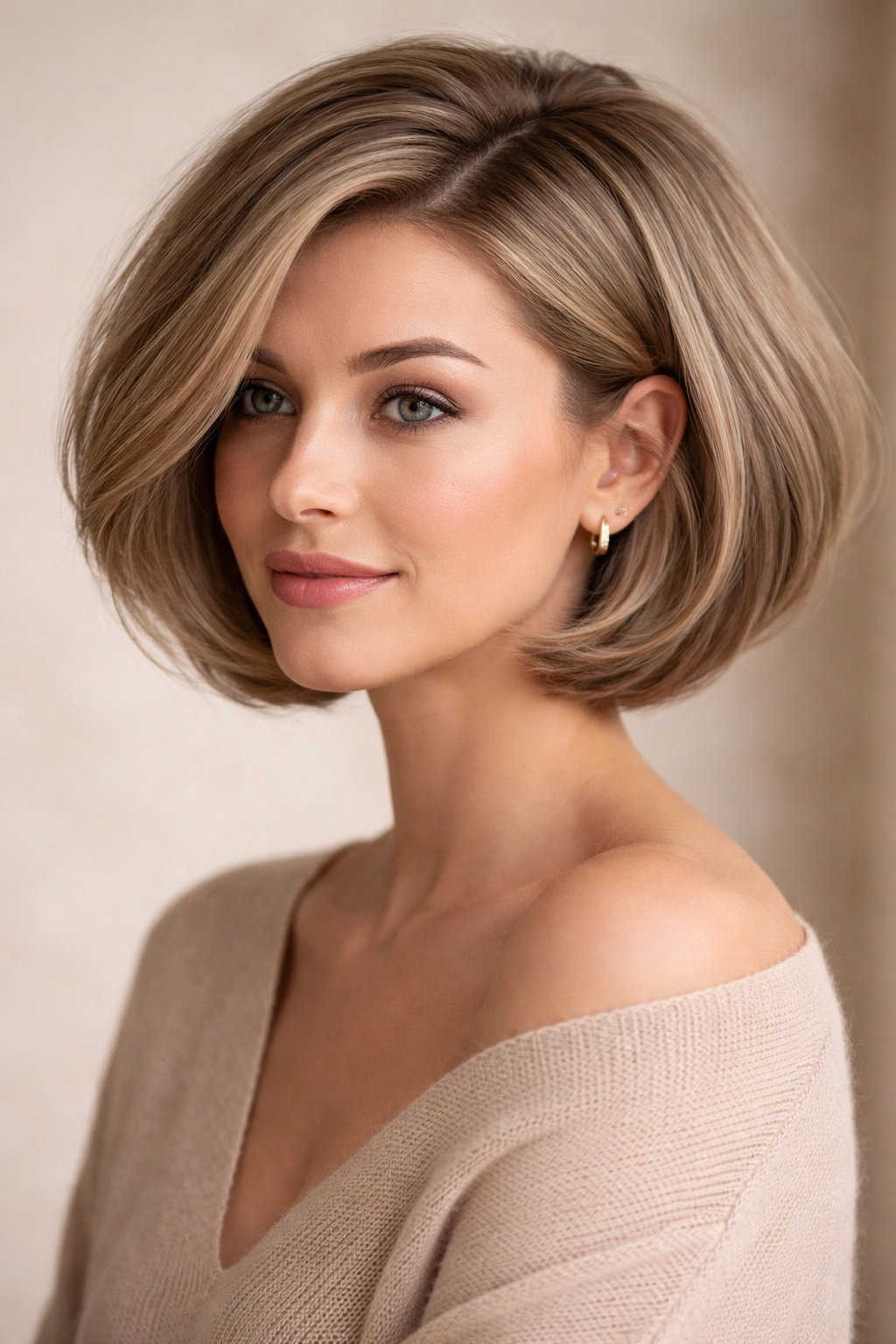
A rounded bob can make the head shape look fuller in the best way. The curve hugs the contour of the skull, then the deep side part lifts one side high enough to build instant body near the root. It’s one of those cuts that looks quiet from a distance and clever up close.
What I like most is the way it softens sharp angles in the face. The roundness around the jawline keeps the style from feeling rigid, while the side part gives it that little push of asymmetry that volume needs. If the part sits too centered, the cut can flatten. If it’s too extreme, the whole thing starts to wobble. There’s a sweet spot.
This bob works especially well on straight or slightly wavy hair because the shape stays visible. You can smooth the ends with a brush and still leave a little bend near the cheekbones. That small bend matters. It keeps the style from looking glued down.
A touch of root spray at the heavier side helps, too. Lift, dry, cool, and leave it alone for a minute. Don’t keep fussing with it. The hair usually behaves better when you let it settle.
8. Collarbone Bob With Invisible Layers
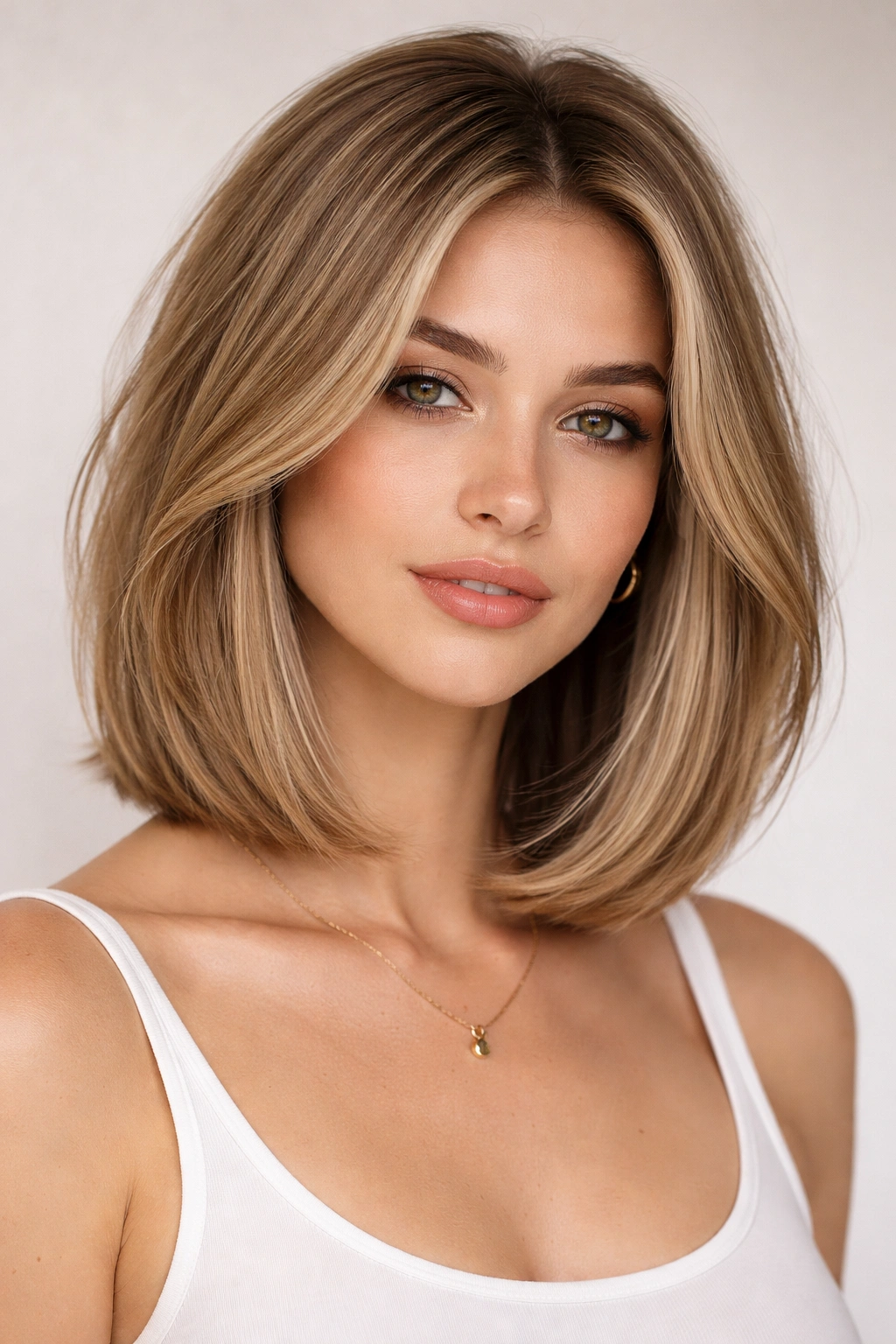
Why does a slightly longer bob sometimes look fuller than a shorter one? Because length can hide thin ends, and invisible layers can remove bulk without making the cut look chopped up. That combo gives the hair room to move while keeping a strong perimeter.
This is the cut I like for people who want volume but do not want to lose much length. The bob grazes the collarbone, so it has enough weight to swing, yet the hidden layers lift the inside of the shape. You don’t see the layering unless the hair moves. That’s the point.
How to get the most from it
Ask for soft internal layering through the mid-lengths and a blunt or softly beveled bottom edge. If the stylist starts slicing too high, the ends can get wispy fast. You want the haircut to keep its body when it dries naturally.
This bob is also nice for hair that grows out awkwardly. It bridges the gap between short and long without looking stuck in either place. If your hair lies flat when cut above the shoulders, keeping this length can solve a lot of that.
A center part gives it a clean, modern look. A slight off-center part gives it more lift. Pick the one that works with your cowlicks, not against them.
9. Box Bob With Clean Edges
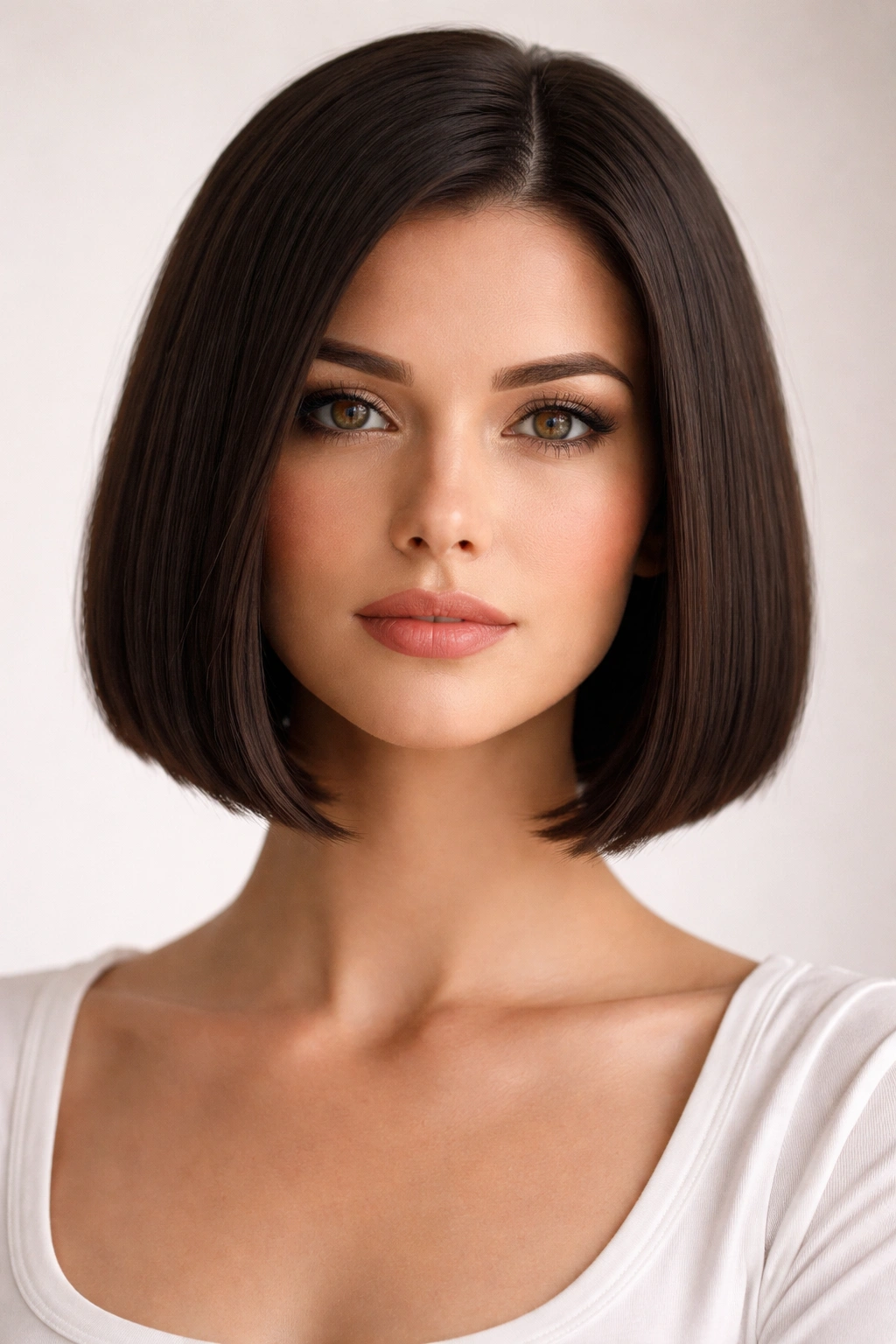
The box bob sounds severe, but the right version has a lot more life than people expect. The clean edges create a solid outline, and solid outlines can make hair look thicker instantly. Then a little hidden debulking inside the shape keeps it from turning bulky.
This cut is especially useful for thick, straight hair that wants to puff out at the sides. Instead of trying to fight the density with layers everywhere, the stylist keeps the perimeter strong and removes weight underneath. That keeps the silhouette square, sharp, and full.
What makes it different
- The bottom line is blunt and even.
- The sides sit wide enough to create a fuller profile.
- Internal weight removal keeps the shape from feeling heavy.
- It works best when the hair is worn smooth or with a tiny bend.
A box bob is not the cut if you want soft movement all over the place. It is the cut if you want the shape to do the talking. Think crisp, not fussy.
My favorite detail: a center part makes the geometry look deliberate, while a shallow side part softens it just enough for daily wear.
10. Wavy Bob With Curtain Bangs
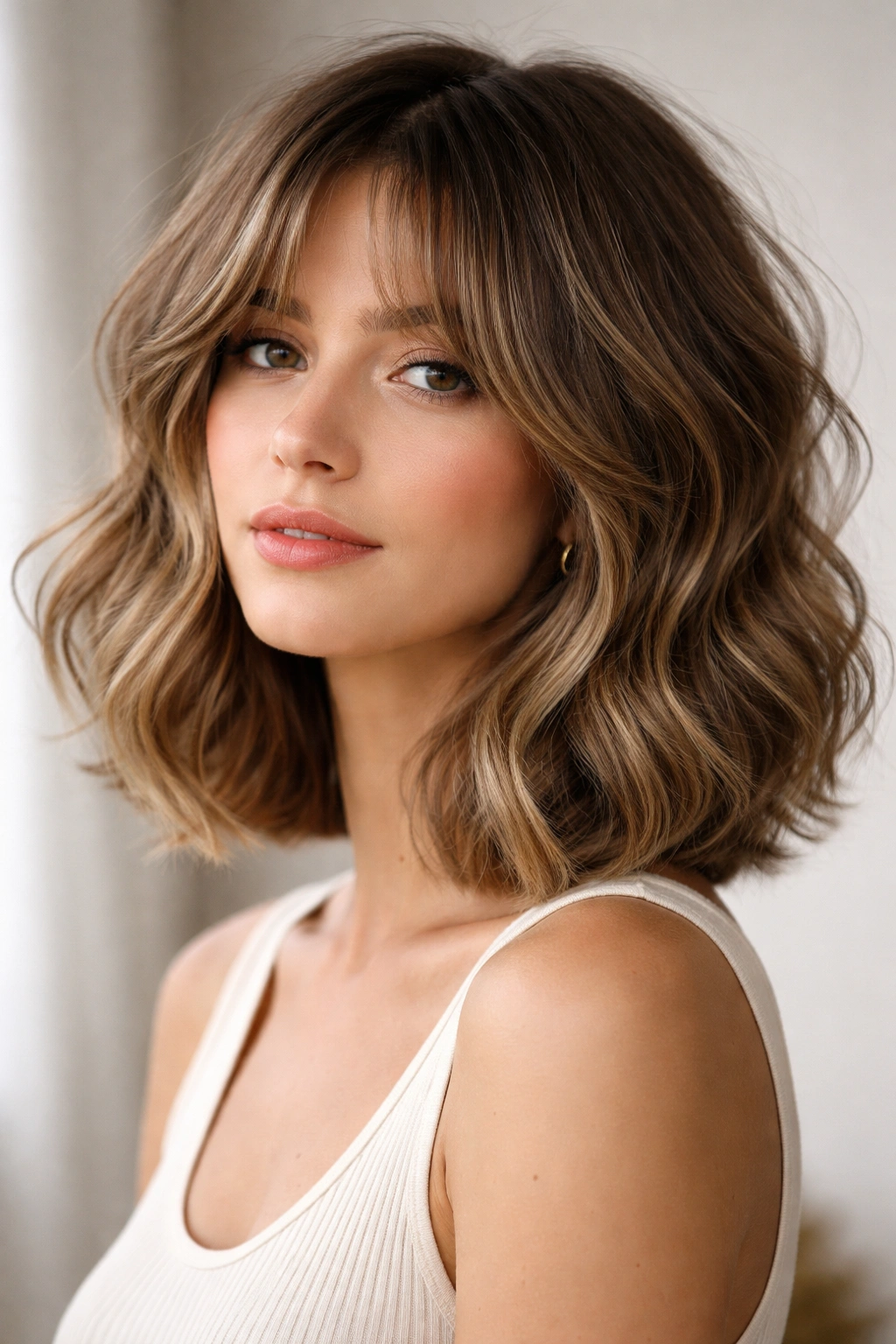
Picture soft waves, a cheekbone-grazing fringe, and ends that swing instead of hanging. That is the appeal here. The curtain bangs split the volume near the front, which keeps the hair from bunching into one heavy curtain across the face.
I like this cut because it gives you movement without asking for perfect styling. The waves can be loose, almost bendy rather than curly, and the bangs do a lot of the framing work. If your hair has a natural wave pattern, this bob can make it look fuller without adding a ton of layers.
The key is keeping the bangs long enough to blend into the front sections. Too short, and they take over. Too dense, and they swallow the softness. The best curtain bangs in a bob skim the brows or cheekbones and then taper down into the rest of the cut.
- Best for hair that bends easily with a blow-dryer or curling wand.
- Ask for long front pieces that start near the cheekbone.
- Use a medium-barrel iron, about 1 to 1.25 inches, for soft bends.
- Finish with a light mist of texturizing spray, not a stiff hairspray.
It has that easy, lived-in feel people keep chasing. Here, it actually makes sense.
11. Flipped-End Bob With Retro Bounce
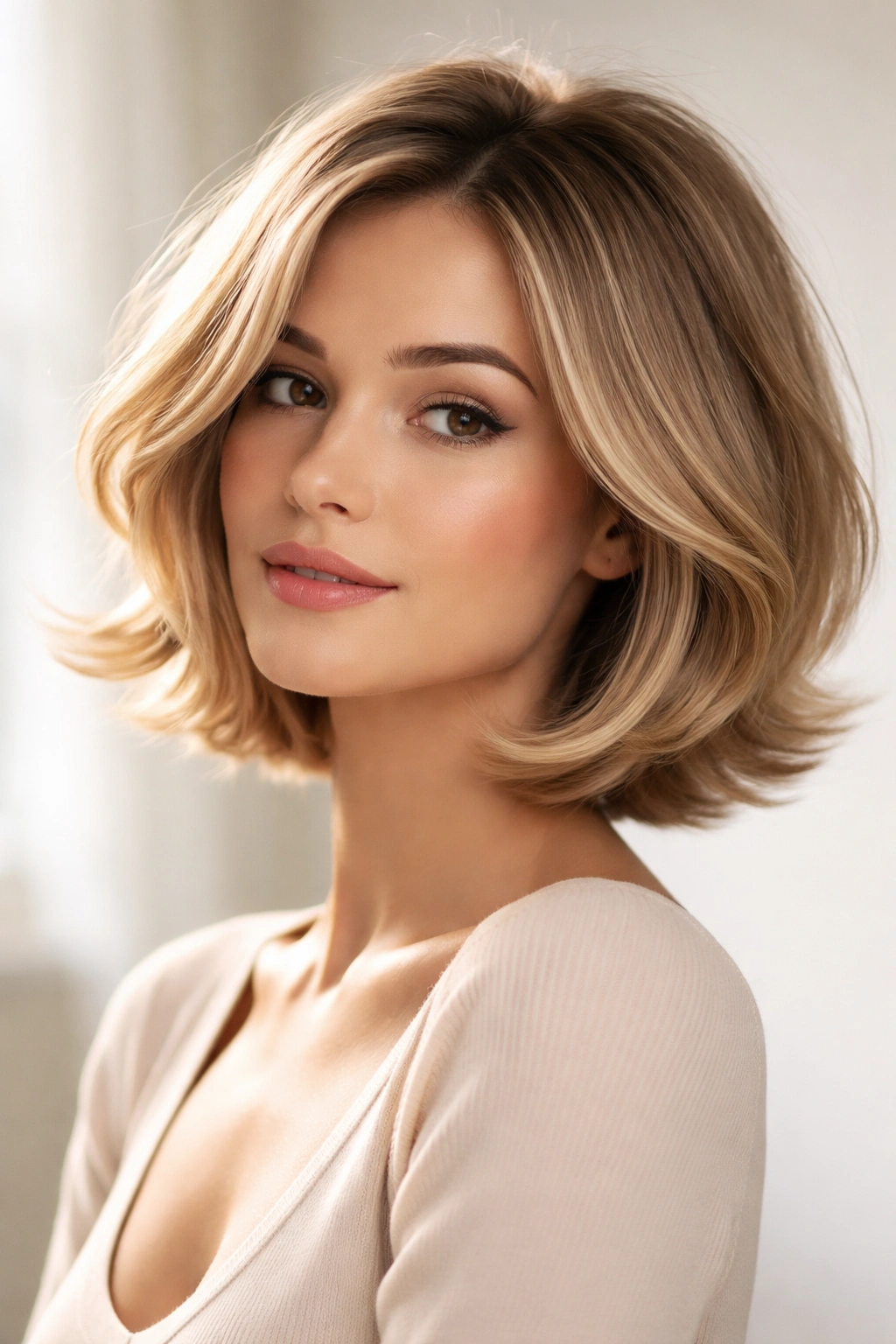
I have a soft spot for this one because it refuses to sit still. A flipped-end bob builds volume by turning the ends outward, which opens the silhouette and makes the haircut feel bouncy instead of flat.
The trick is to keep the roots lifted and the flip gentle. If the flip is too hard, the style starts looking costume-y. A soft outward bend at the bottom edge gives the bob a playful edge while still keeping it wearable. It works especially well on medium-density hair that needs a little help standing away from the neck.
A round brush or a blow-dry brush can create the shape fast. Aim the airflow down the shaft first, then roll the ends outward only at the last second. If you want more hold, set the front sections with velcro rollers while they cool. That small step can make a bigger difference than another spray ever will.
The best part is the movement around the jaw. The ends frame the face in a way that feels open, which is handy if your bob usually sits too close and heavy. This cut has a little throwback energy, but not in a dated way. Just enough bounce to keep things interesting.
12. Graduated Bob With a Built-In Stack
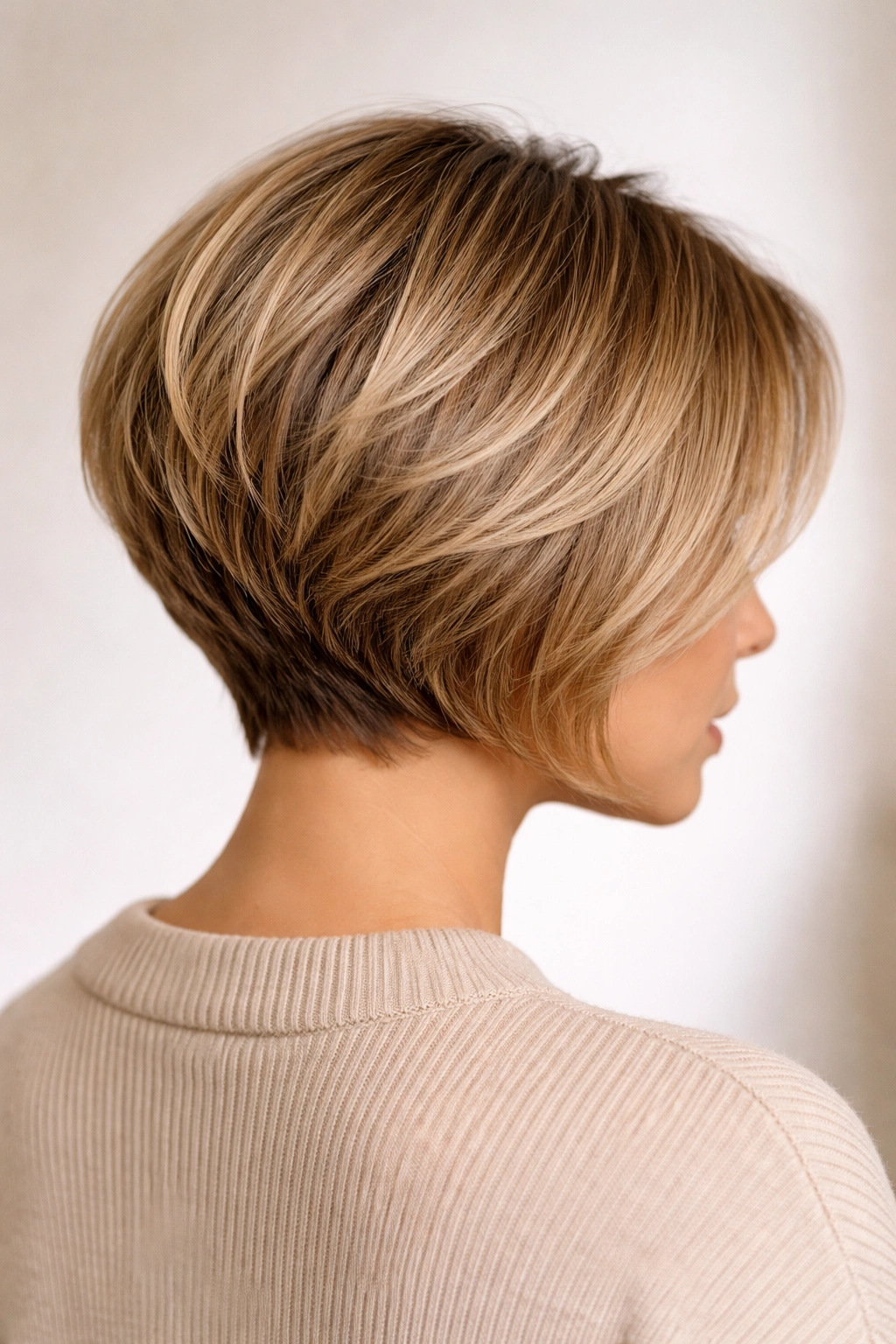
Unlike the A-line bob, which mainly lengthens the front, the graduated bob builds volume in the back. The layers stack through the nape, so the crown gets a lift from the cut itself instead of from styling tricks alone.
That makes it a strong choice for hair that lies flat at the back of the head. You know the look: smooth on top, collapsed underneath. A graduated bob fixes that by shifting the weight upward and creating a rounded back shape that looks fuller from every angle.
It’s a structured cut, so the lines need to be clean. If the graduation is too soft, the effect disappears. If it’s too steep, the bob can feel dated fast. The sweet spot is a smooth stack that gives height without turning into a wedge.
Who should ask for it? People with thick hair who want the back to feel lighter, and people with fine hair who need more body at the crown. It also works nicely when you wear earrings or tuck the sides behind your ears, because the lifted back gives the profile some shape.
There’s a reason this cut keeps showing up in salons. It works.
13. Feathered Bob With Soft Face Framing
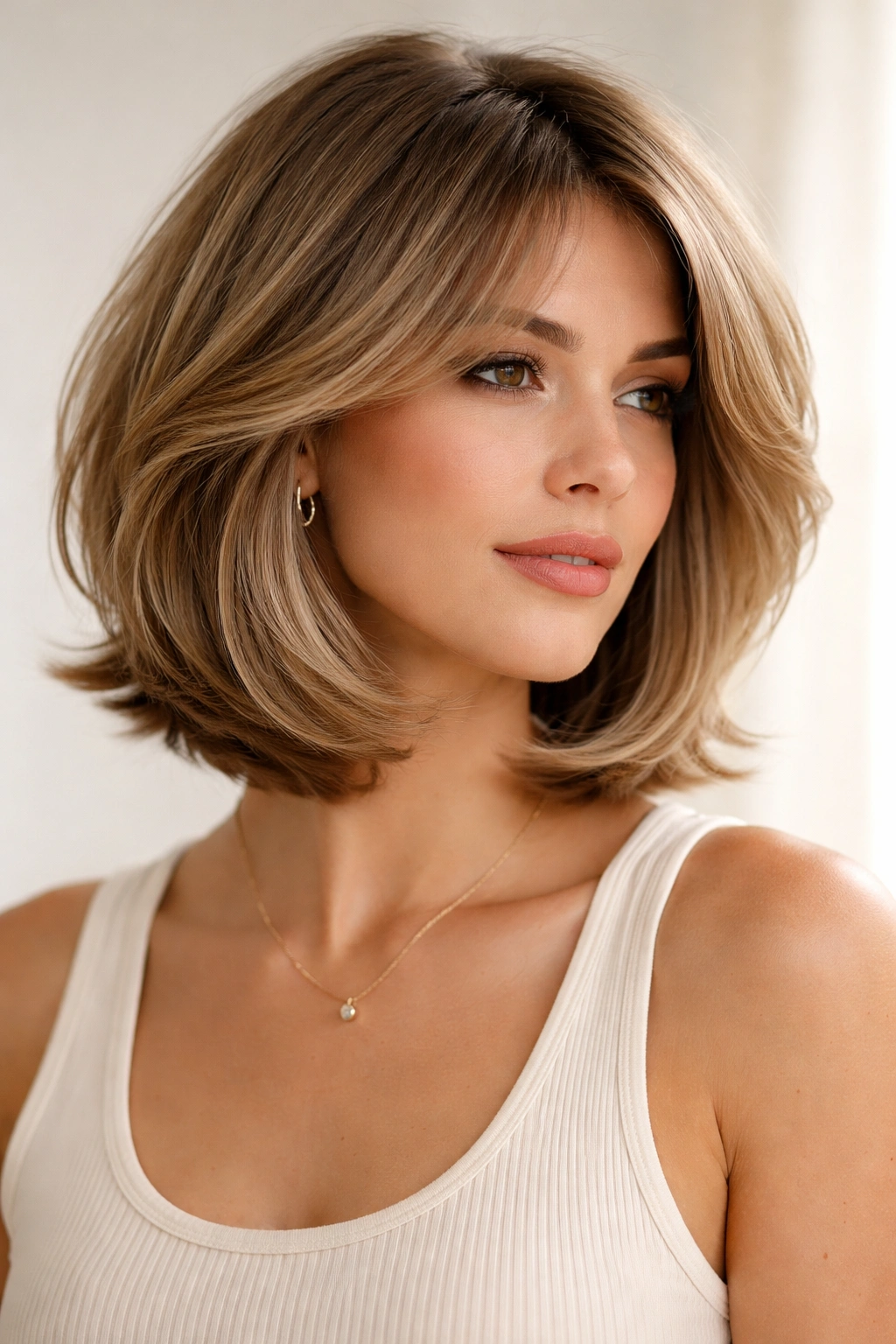
A feathered bob can look expensive in the plainest, least flashy way. The softness around the face and ends creates movement that feels feather-light, but the haircut still holds onto its shape. That matters. Feathering is not the same thing as thinning everything out until it goes wispy.
The best feathered bobs have a controlled, almost floating quality through the front and sides. The stylist may use slide cutting or point cutting near the cheekbones and jaw, leaving the perimeter intact. That gives the cut a little air where you see it most, while the lower edge stays strong enough to hold volume.
This one shines on hair that feels heavy or wide around the bottom. The feathering removes that blunt drag. It also softens strong jawlines and gives the face a bit more movement. Nothing fussy. Nothing stiff.
Do not ask for aggressive texturizing at the ends. That is the fastest way to turn a fluffy bob into a stringy one. You want softness near the front and body near the base. Not the other way around.
The style sits nicely with a side part, a loose blowout, or even a rough dry with a round brush at the ends. It’s flexible, which is part of the appeal.
14. Asymmetrical Bob With a Long Front Corner
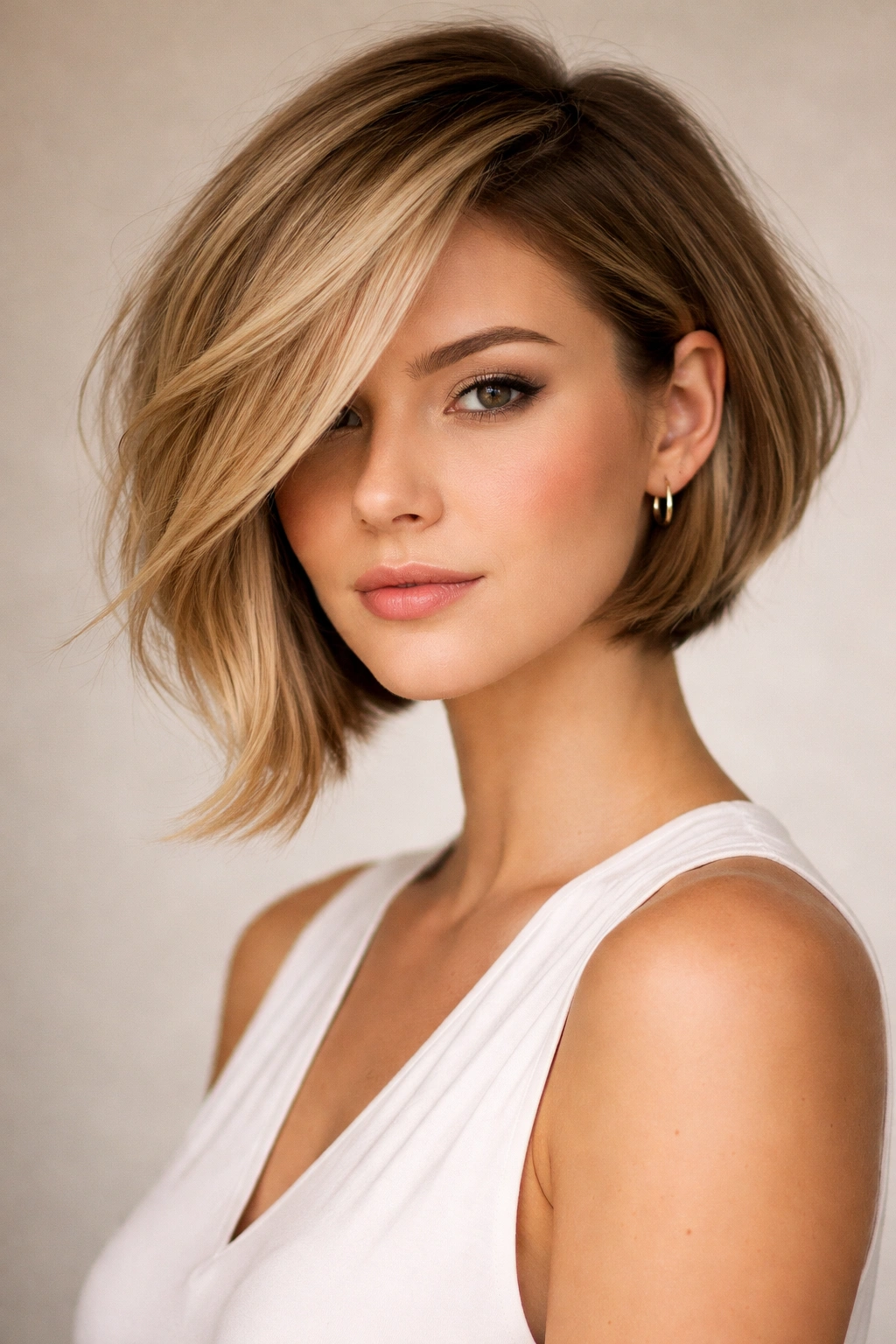
Why does asymmetry make a bob look fuller? Because the eye follows the longer line, and that diagonal lift keeps the haircut from reading heavy or boxed-in. A longer front corner also gives the shorter side more apparent height, which is a neat little trick.
The cut works best when the difference between sides is visible but not theatrical. One side may hit the jaw, while the other grazes the collarbone. That shape adds motion even when the hair is straight. On fine hair, the angled line can create the feeling of more density because the shorter side sits away from the head a little more.
How to use it
Style the longer side with a soft bend, not a hard curl. That keeps the asymmetry elegant instead of harsh. A side part usually supports the shape better than a center part, though a center part can work if the cut is subtle.
This is a strong option if you want a bob that feels modern without leaning into heavy layers. It also flatters people who like to tuck hair behind one ear, because the shape looks intentional either way. If your hair tends to fall limp on one side, the asymmetry can work with that instead of fighting it.
The cut has enough edge to feel current, but it is not a hairdo that screams for attention. That balance is rare.
15. Soft Razor Bob With a Fluffy Finish
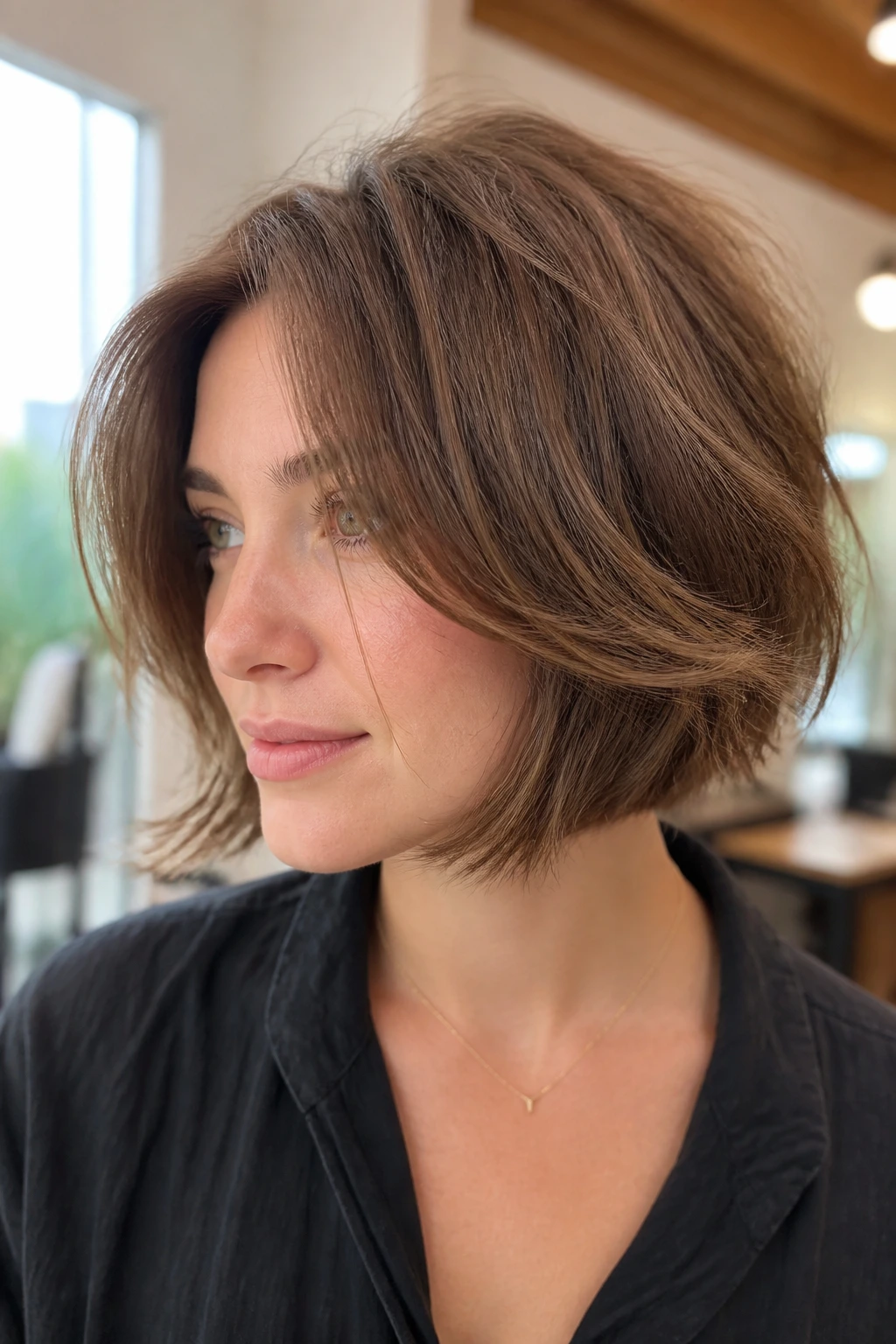
A razor bob can be a mess or a masterpiece. The difference is control. When the razor work is light and targeted, it creates a soft edge and a little bit of air between the strands, which gives the haircut a fluffy, easy finish.
I like this cut on medium to thick hair that feels heavy when left blunt. The razor removes weight without making the perimeter look chunky, and that means the bob can move. A good stylist will use it where the density needs release — around the sides, maybe through the front, and sometimes inside the shape — while keeping the bottom line from fraying.
What to ask for
- Soft razor work, not heavy shredding.
- A clean perimeter with movement inside the cut.
- Shorter pieces around the crown if the top falls flat.
- A finish that still looks full when air-dried.
The styling part matters here. Use a light mousse or a foam, then rough-dry the roots before smoothing the ends with a brush. If you overload the hair with cream, the softness disappears and the cut starts to look limp. A little grip is better than slickness.
This is the bob I’d point to if someone wants softness without losing shape. It feels touchable, a bit airy, and not too precious. And that’s probably why it works so well for people who want volume without a lot of fuss.
If you’re trying to choose between the 15 fluffy bob cuts for volume, start by looking at where your hair goes flat. At the roots? Choose something with crown lift, a deep part, or a built-in stack. At the ends? Go blunt or lightly beveled, then stop the layering before it chews up the outline.
Length matters too. Shorter bobs create a stronger lift, but longer bobs can hide thin ends and feel easier to wear. That’s the tradeoff. There isn’t one magic answer, and that’s fine.
The best bob is the one that works with your texture instead of pretending your hair is someone else’s. That part never goes out of style.
