



A soft face does not need a hard haircut.
What it needs is shape. A bob can do that better than almost any other cut, but only when the line is placed with some care. Too short in the wrong spot, too blunt through the wrong width, too full at the cheeks, and the whole thing can make soft features look rounder or flatter than they really are. Get the balance right, though, and the same haircut can sharpen a jawline, lift the cheekbones, and make the eyes look more open.
That is why feminine bob cuts for soft features are such a good conversation to have. The best ones do not fight the face. They frame it. A chin-length curve, a wispy fringe, a side part, a little internal layering — those small choices matter more than people think. They change how the eye moves across the face, and that is the whole game.
The other piece nobody likes to admit: texture changes everything. Fine hair needs a different bob than thick hair. Wavy hair wants a different finish than pin-straight hair. A cut that looks airy on one person can look puffy on another if the weight line is wrong. So these ten bobs are not just pretty ideas. They are the styles that tend to sit well on softer bone structure, gentle jaws, rounded cheeks, and delicate features without making the haircut feel stiff.
1. The Curved Chin-Length Bob That Hugs the Jaw
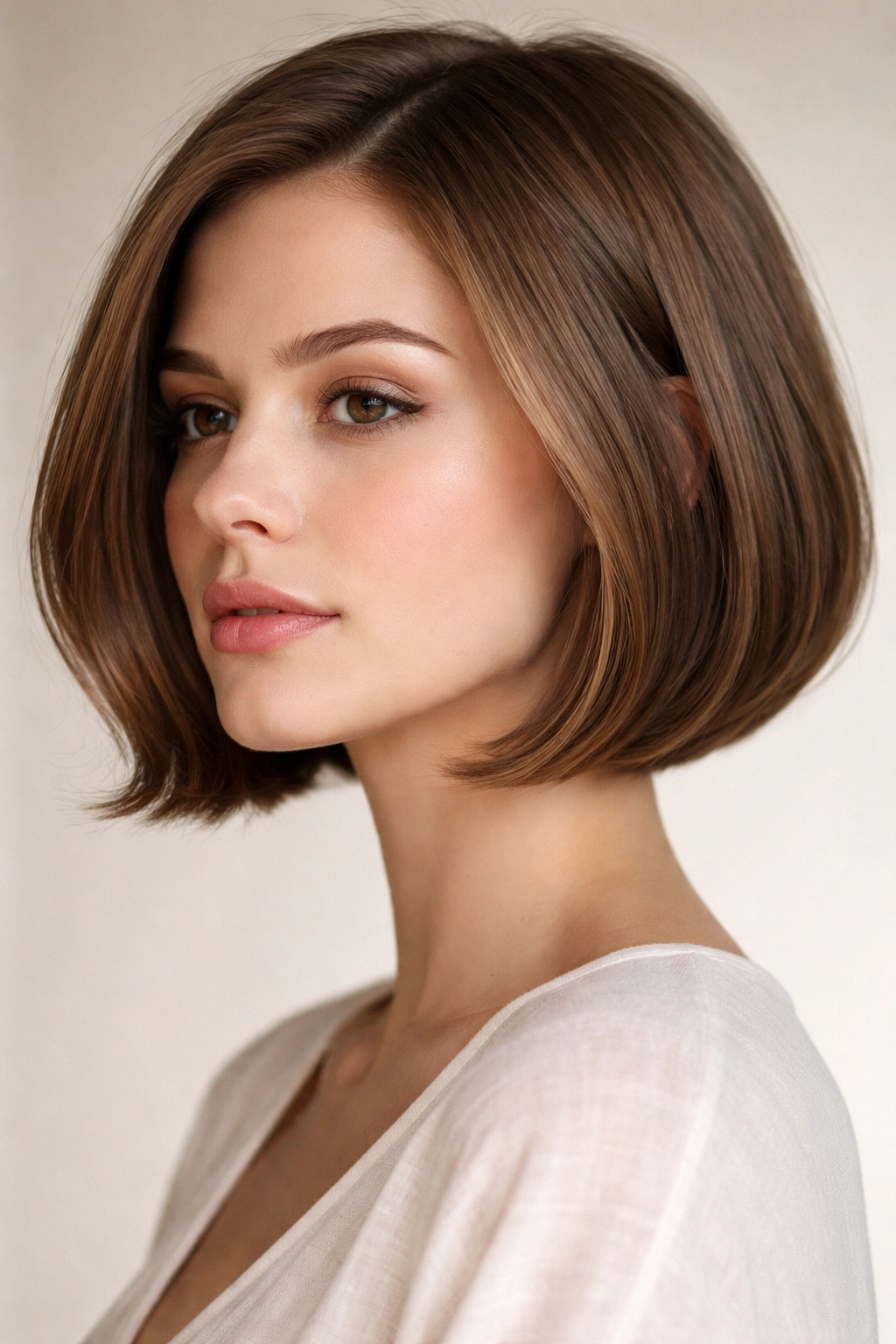
This is the bob I reach for when someone wants shape but does not want to look sharp or строг? No. Too stiff. Let me say it plainly: this cut gives the face a clean outline without turning it into a box. The length lands right around the jaw, then curves in slightly toward the chin, so the eye sees a gentle line instead of a blunt wall.
That curve matters. On a soft face, a straight, heavy line can look a little too flat. A soft inward bend keeps the haircut feminine and easy, especially when the ends are just a touch longer in front than in back. You get definition without losing the softness that makes the face appealing in the first place.
What to ask for
- Length: ask for the front pieces to sit just below the jawline, not right on top of it.
- Shape: request a slight A-line or curved perimeter, with the front a half inch to one inch longer than the nape.
- Ends: ask for a soft point-cut on the last quarter inch so the edge does not feel blunt and heavy.
- Styling: blow-dry with a round brush, turning the ends inward just enough to follow the jaw.
A little inward bend makes this cut look polished. Too much curl, though, and it starts to feel formal in a dated way. You want the ends to move, not flip.
Best for: round cheeks, small chins, and hair that needs a clear shape more than a lot of layers.
2. The French Bob With Brow-Grazing Bangs
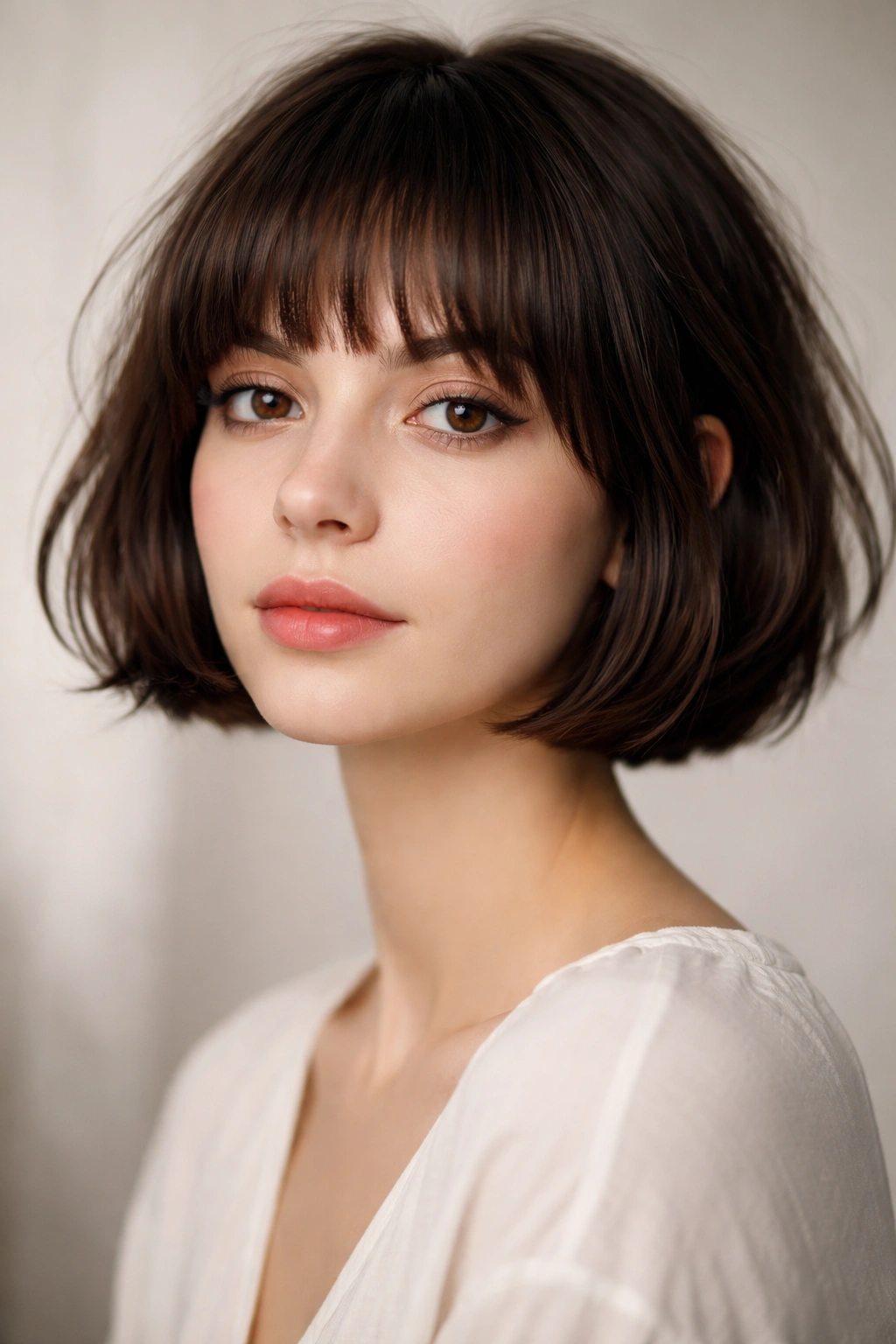
Can a short bob look soft? Absolutely — if the fringe is doing the heavy lifting. The French bob sits around lip to cheekbone length, and the bangs usually brush the brows or skim just above them. That tiny change shifts attention upward, which is a gift if your features are soft and you want the haircut to add a little edge without taking over.
This style works because it keeps the haircut close to the face. There is no long line pulling everything down. Instead, the bob opens the neck, shows the jaw, and lets the fringe add texture near the eyes. On delicate features, that can look very fresh. Not fussy. Not severe. Just confident.
Why the fringe matters
A thick, blunt fringe can be too much if your forehead is small or your features are already compact. A better version is lightly textured, with a bit of separation at the ends so it moves when you blink or tilt your head. That little bit of air keeps the cut from looking like a helmet.
If you want the French bob to stay feminine, keep the shape slightly undone. A straight blow-dry is fine, but a tiny bend at the bangs and a soft tuck behind one ear will make the whole thing feel less formal. It is a short cut, yes. It still needs breath.
Good pairing: a red lip, a knit sweater, and a tiny bit of shine serum on the ends. Simple. Clean. Very effective.
3. The Layered Airy Bob That Feathers the Cheeks
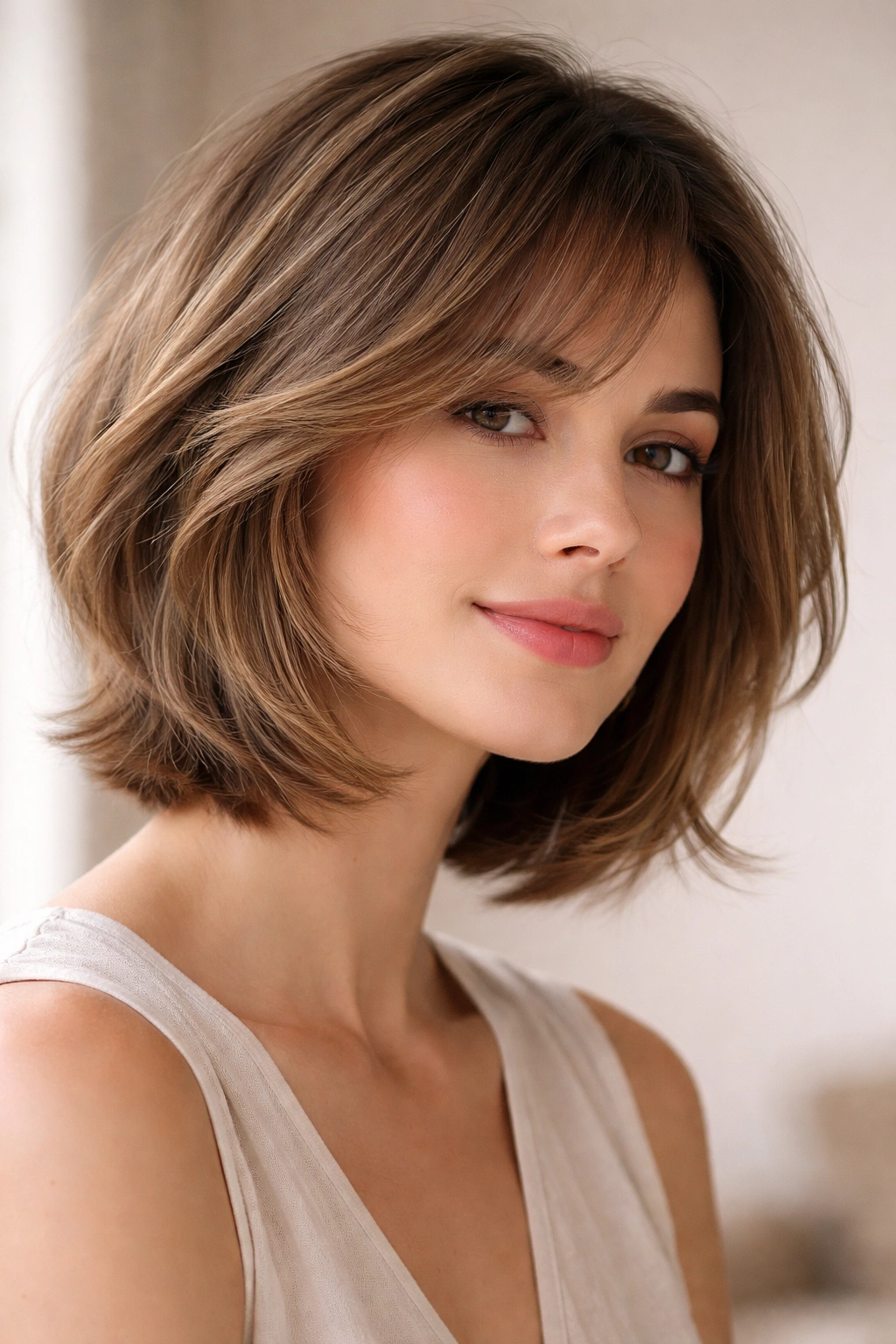
Fine hair can go flat in a standard bob. Thick hair can puff out at the sides. This cut solves both problems by keeping the perimeter clean while slipping a few internal layers inside the shape. The result is a bob that still looks full, but not bulky.
The trick is where those layers begin. If they start too high, the bob loses its body and starts to look choppy. If they start below the cheekbone, the cut keeps enough weight to frame soft features properly. That framing is the real point. It gives the cheeks a little structure without carving hard angles into the face.
Why it stays feminine instead of choppy
A lot of layered bobs go wrong because the layers are visible from the outside. You see the separation. You see the break. This version hides the work inside the haircut, so the edge stays smooth and the movement stays light.
- Best placement: layers should begin around the mouth or chin, depending on face length.
- Best texture: works especially well on wavy or slightly thick hair.
- Best finish: a soft bend from a 1-inch iron or a loose blowout with a paddle brush.
I like this cut on people who want movement but do not want the haircut to shout about it. It is a quiet shape. That sounds simple, but it is not easy to get right. The weight has to stay controlled, or the whole thing balloons out by noon.
4. The Side-Part Swoop Bob That Opens the Face
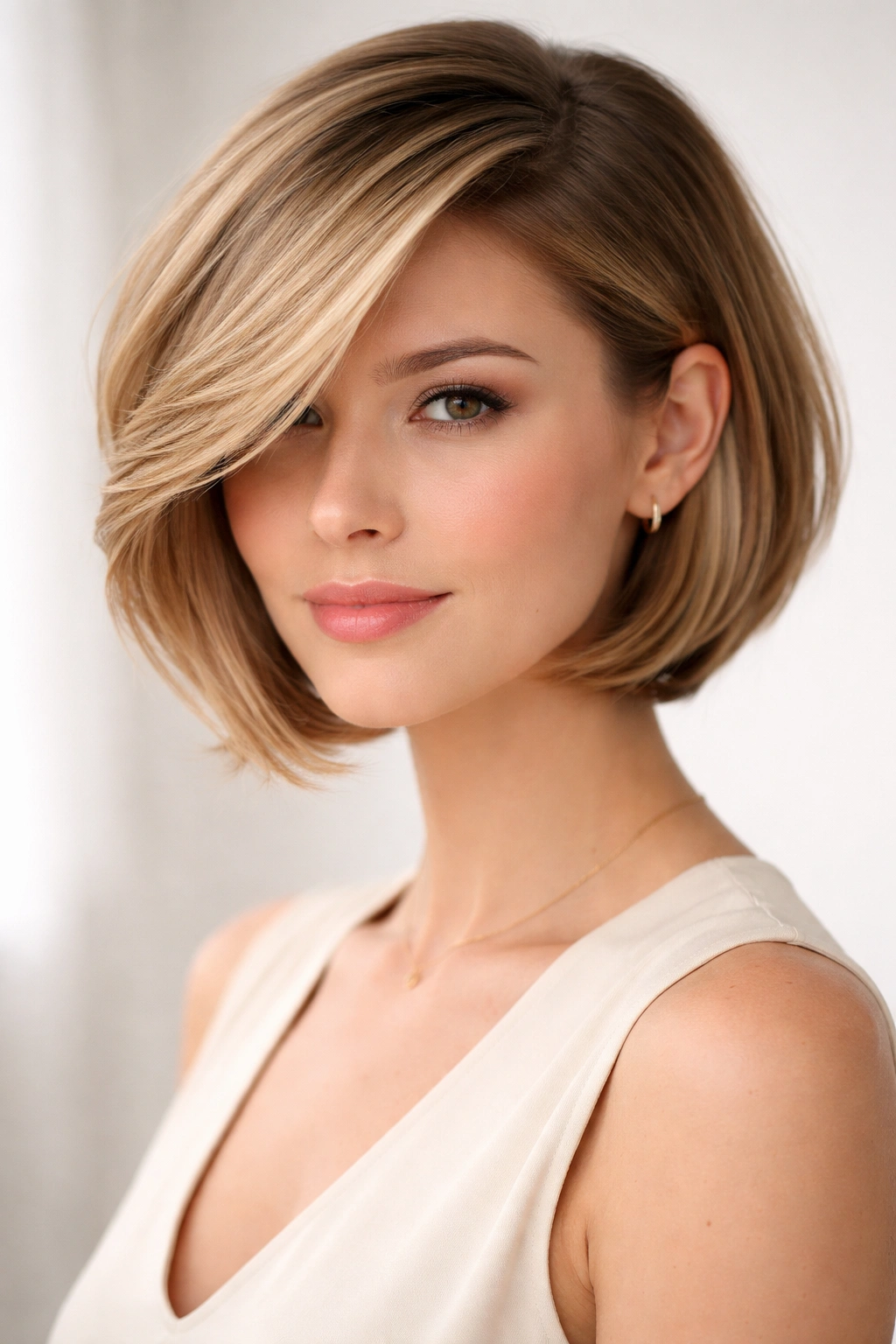
Unlike a center-part bob, this one shifts the whole mood with a single move. A deep or medium side part creates a diagonal line across the face, and diagonals are friendly to soft features because they break up roundness without making the haircut harsh. The eye travels upward instead of stopping at the widest part of the face.
That swoop also gives the crown a little lift. Nice side effect. If your hair tends to lie flat, especially near the roots, this shape adds height where it counts. The ends can stay chin-length or slightly longer, but the side part keeps the overall look from feeling too symmetrical or too plain.
One thing I love about this cut: it looks better when it is not overworked. A polished blowout is fine, yet a tiny bit of touchable texture at the front makes the style feel softer and more natural. The hair should fall, not stand at attention.
Where it shines
- Faces with soft jaws that need a bit more vertical line.
- Cheekbones that benefit from one side being lightly framed.
- Hair that looks best with volume at the roots and movement through the ends.
Styling note: blow-dry the front away from the part using a round brush, then tuck the lighter side behind one ear. That small asymmetry changes the whole balance of the cut.
5. The Collarbone Bob With Soft Ends
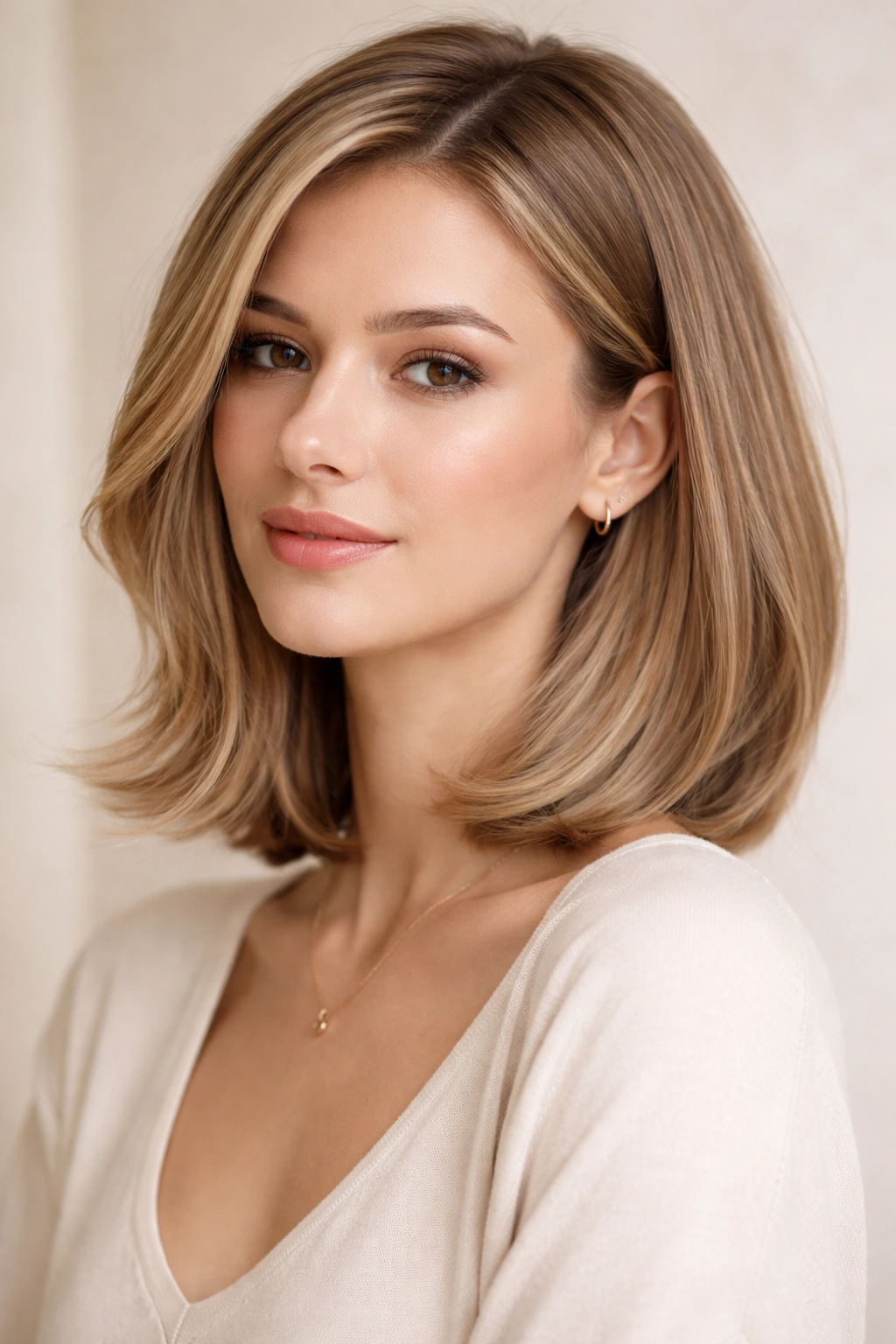
This is the bob for someone who wants to keep some length but still wants the clean feel of a shorter cut. It lands right at the collarbone or a hair above it, which gives you room to tuck it, wave it, braid it, or leave it loose without losing the bob shape. On soft features, that extra length can be useful because it keeps the face open rather than crowded.
Soft ends are what keep this from feeling heavy. A collarbone bob can go straight and blunt, and that is fine if you want a stronger look, but the feminine version needs a little bend. The edges should skim, not stab. If the hair is thick, ask for internal weight removal; if it is fine, keep the layers subtle so the perimeter still feels full.
A cut like this also grows out well. That sounds practical, because it is. You will not be trapped in one styling pattern, and you will not hit that awkward triangle stage as fast as you would with a shorter bob.
How to wear it
- Straight: use a flat brush and bend the last inch inward.
- Wavy: wrap 1-inch sections away from the face, leaving the ends out for a softer finish.
- Tucked: slide one side behind the ear to show the jawline.
This is one of those cuts that looks expensive even when the styling is plain. Not because it is flashy. Because the length sits in a smart place.
6. The Rounded Graduated Bob That Lifts at the Nape
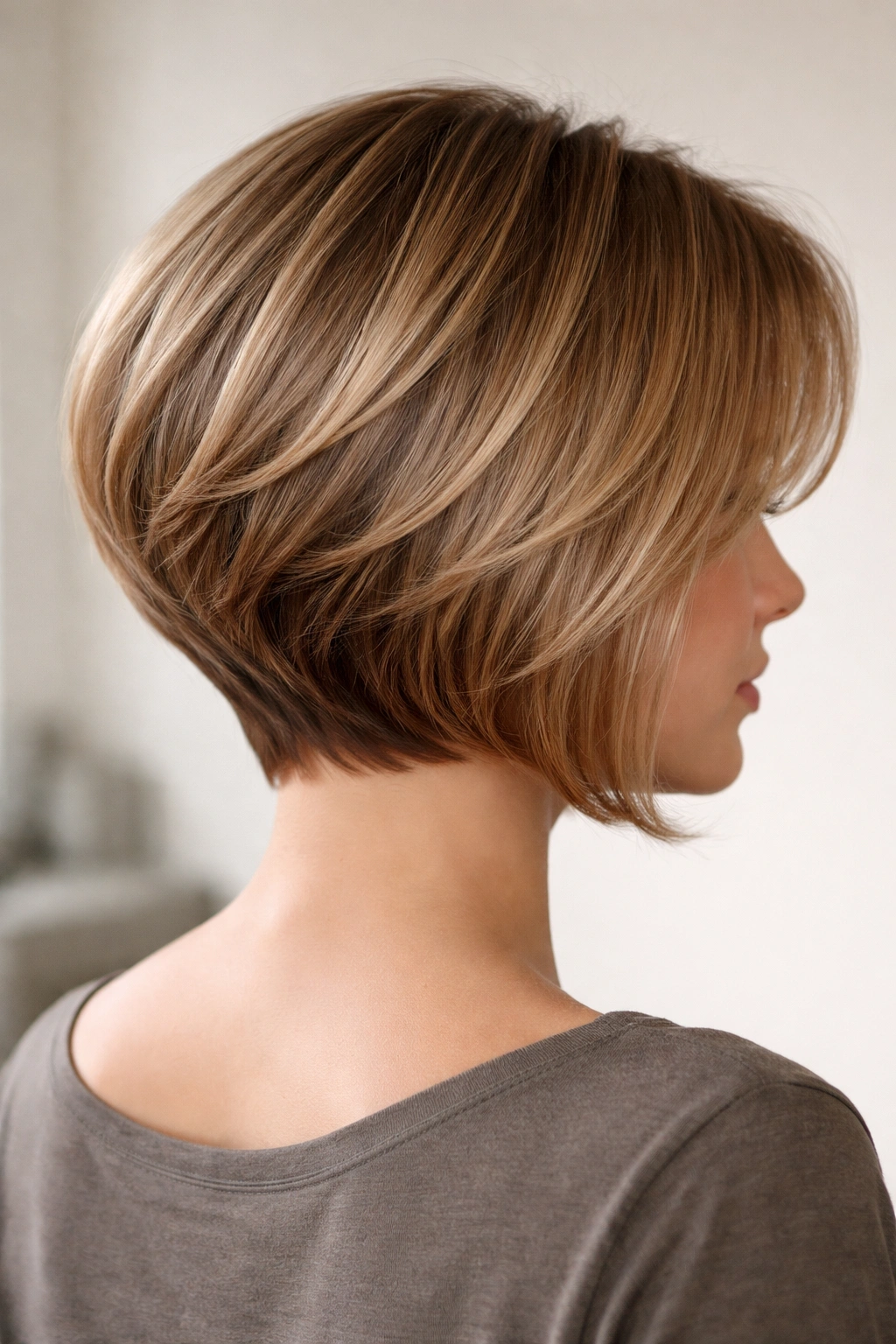
Why does this cut flatter soft features so well? Because it builds shape from the back forward. The nape is shorter and lightly stacked, then the length rounds out toward the front. That structure creates lift, and lift matters when the face itself is gentle. You want the haircut to support the face, not sit dead against it.
The rounded graduation gives the head shape too. A straight bob can sometimes make the sides feel too flat, especially if the hair is dense. A graduated shape hugs the skull at the back and keeps the outline neat. The front remains soft, which is the piece that keeps the whole look feminine rather than sharp.
Where the graduation should stop
- Nape: short enough to create lift, but not so short that it puffs.
- Sides: long enough to reach the cheek or chin, depending on face length.
- Top: kept soft so the crown does not look too tall.
A lot of people think graduation means heaviness. It can, if the stack is aggressive. But a good graduated bob is subtle. You should see a curve, not a shelf. If the back looks like it is pushing out from the head, the cut has gone too far.
This one is especially good for straight or slightly wavy hair that needs help holding a shape through the day. It gives you polish without making the face look boxed in.
7. The Wavy Bob With Invisible Layers
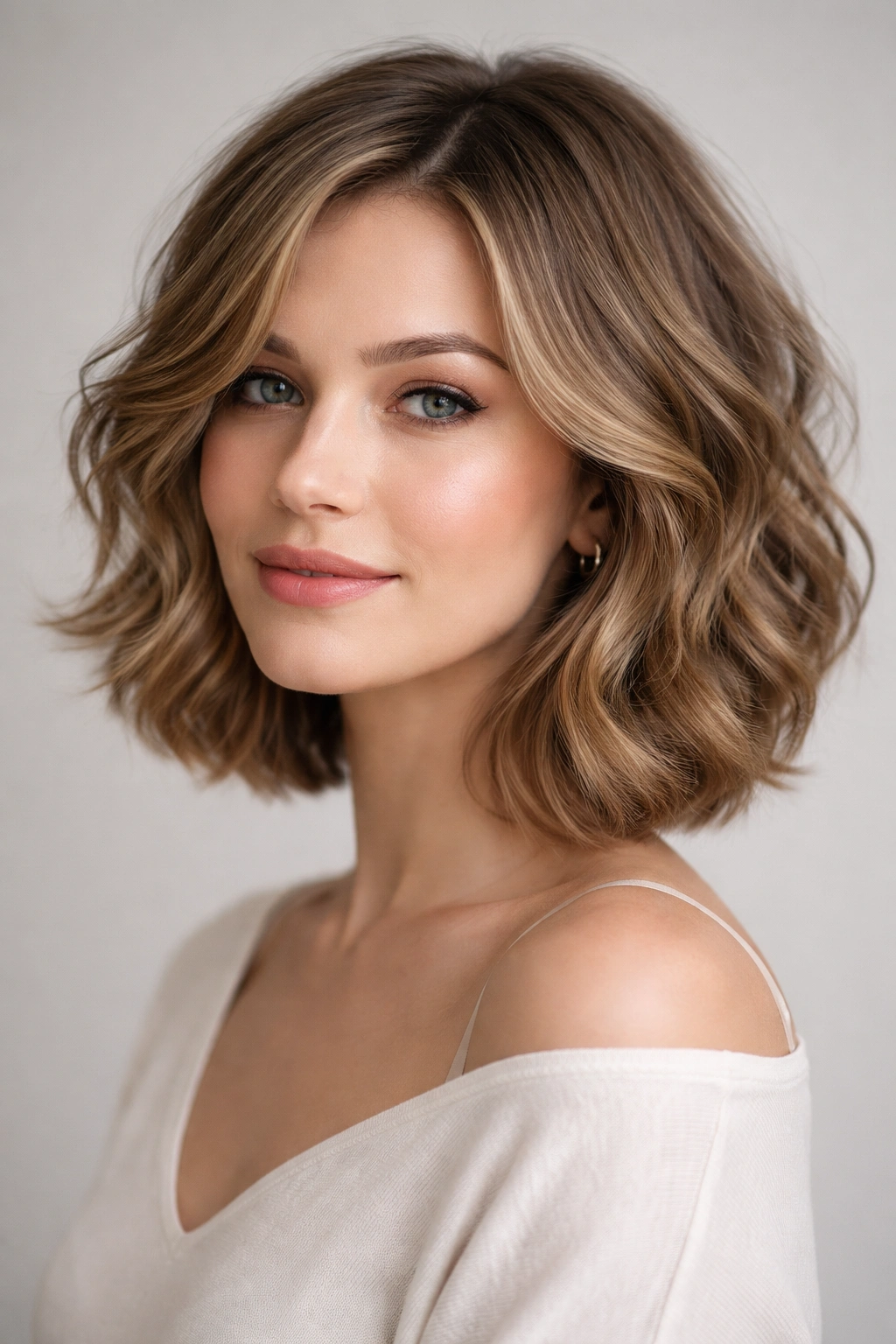
If your hair already bends a little, stop fighting it. A wavy bob can be one of the best feminine bob cuts for soft features because it adds movement exactly where the face needs it — around the cheeks, along the jaw, and through the sides. The trick is making the layers disappear into the wave pattern instead of slicing it apart.
Invisible layers do that. They remove bulk from the inside of the haircut, so the outer line still looks smooth. You do not see obvious steps. You just notice that the hair sits better. That matters a lot on soft features, because a heavy wave sitting right at cheek level can get too wide very fast.
What invisible layers actually do
- Reduce puffiness on thick or coarse hair.
- Keep fine waves from collapsing into one flat sheet.
- Let the ends move without making the perimeter look thin.
A 1-inch curling iron works well here, but you do not need perfect curls. Wrap the hair loosely, leave the last inch out, and alternate directions so the wave pattern does not become too uniform. Then break it up with your fingers and stop. Too much brushing will turn the style fuzzy.
This is the bob for a person who likes hair that feels lived-in, not built. It has enough structure to frame the face, but it still looks soft when you turn your head.
8. The Blunt Bob With a Soft Bend
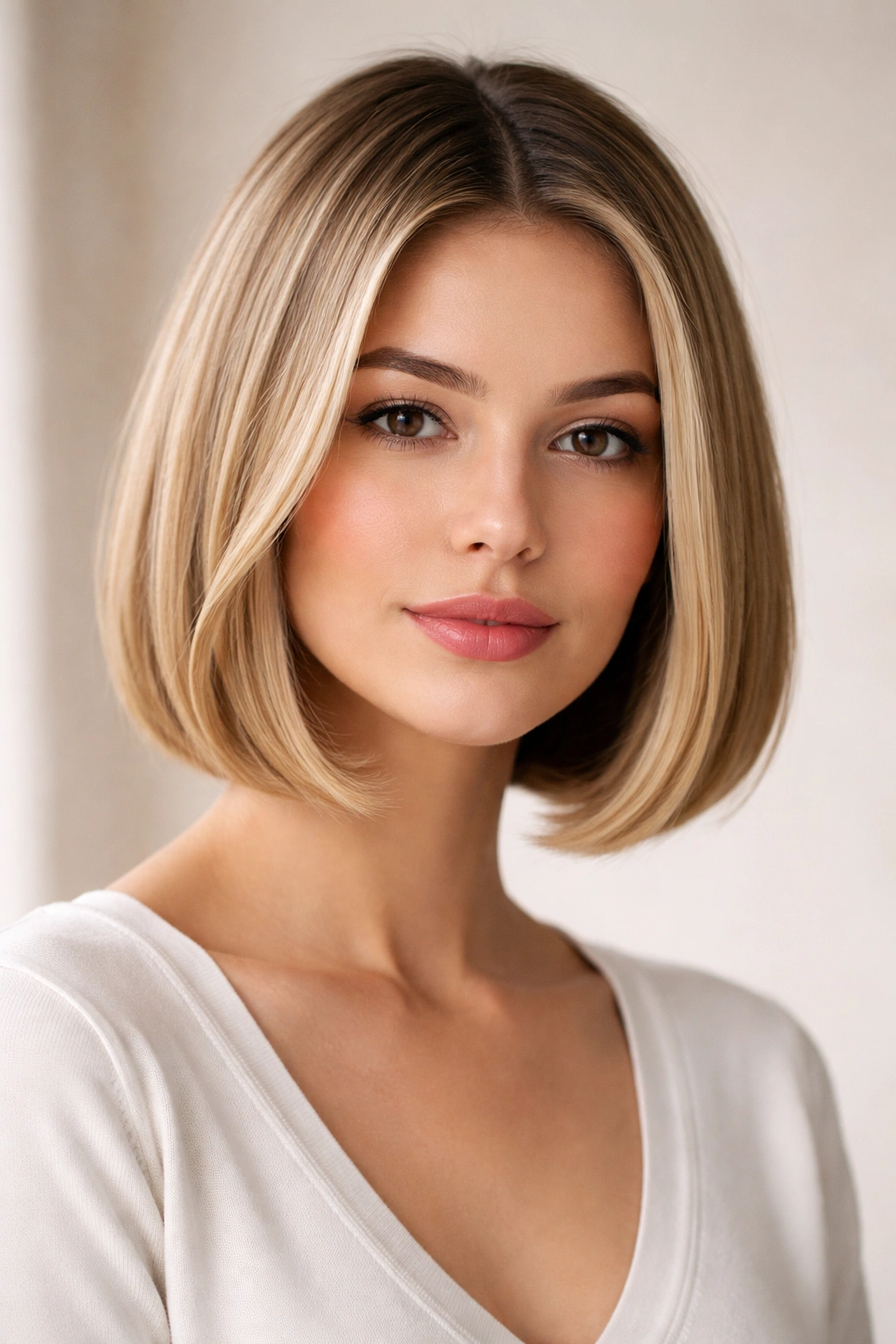
Blunt does not have to mean harsh. That is the mistake people keep making. A one-length bob with a tiny bevel at the ends can look polished and feminine at the same time, especially on soft features that need a little visual anchor. The blunt line gives the face order. The soft bend keeps it from feeling severe.
This style works best when the length sits right around the chin or just below it. Too short, and it starts to feel boxy. Too long, and you lose the power of the line. The bend at the ends should be subtle — enough to prevent the haircut from sticking straight out, not enough to turn it into a curl.
How to keep blunt from reading severe
- Ask for a clean perimeter with minimal layering.
- Use a flat brush or paddle brush to direct the ends slightly under.
- Keep the part soft, not exact.
- Add texture only at the very ends if the hair feels too rigid.
If your hair is fine, this is one of the best ways to make it look fuller. If it is thick, the cut needs careful debulking underneath so the edge does not balloon. That part gets missed a lot. People see the sleek outside and forget the inside has to work too.
The result is tidy, but not stiff. That line — tidy, not stiff — is the sweet spot.
9. The Italian Bob With Long Curtain Bangs
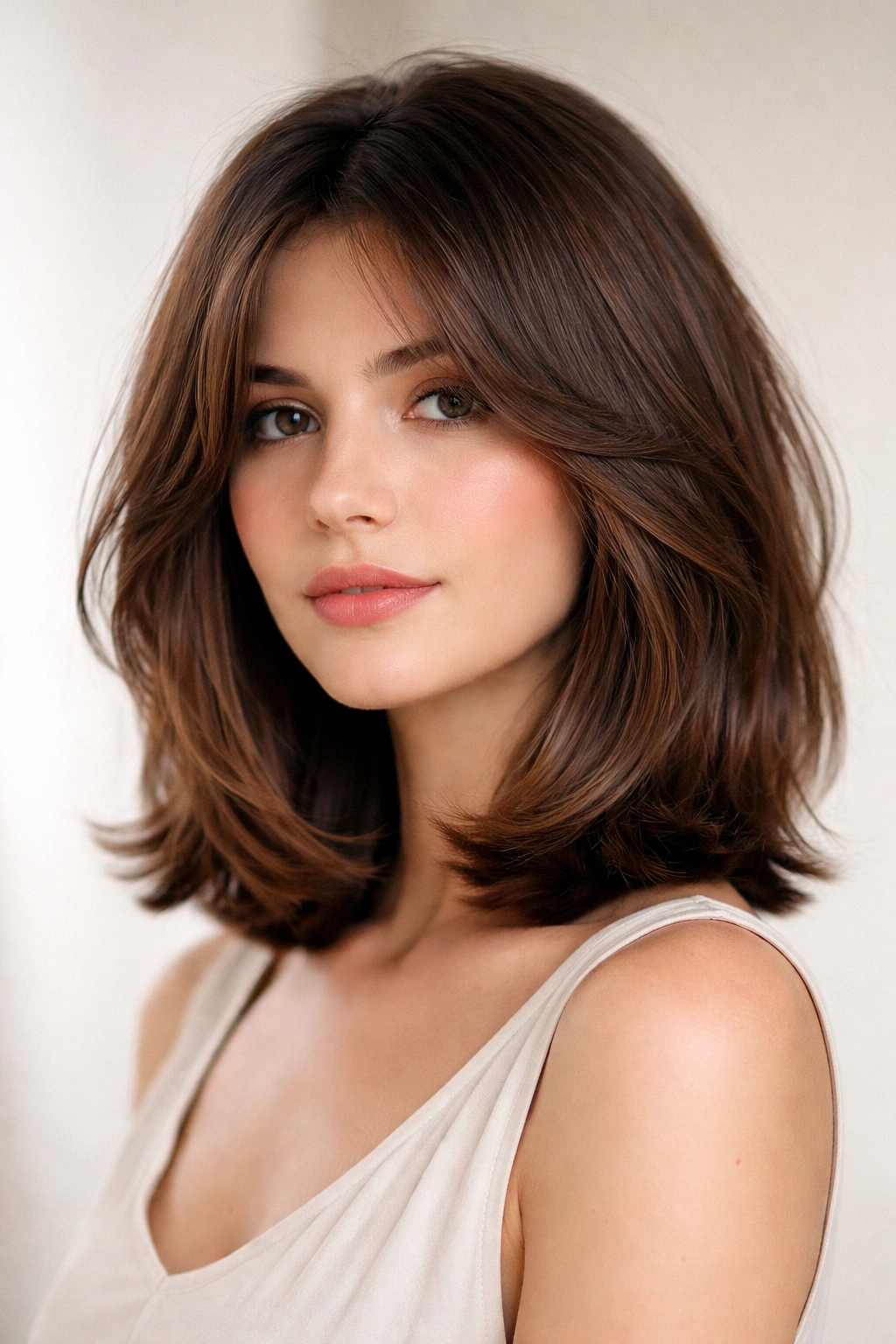
This cut has a little more drama, but not the loud kind. The Italian bob sits somewhere between the jaw and collarbone, with enough density to feel rich and enough movement to stay soft. The long curtain bangs are what make it especially kind to soft features. They open away from the center of the face, then fold back around the cheekbones like a frame that knows when to step aside.
That shape does a few useful things at once. It draws the eye vertically, which can slim a rounder face. It gives the forehead some interest without closing it off. And it keeps the sides from looking too wide, which is a common problem with fuller bobs on gentle bone structure.
The best version is not overlayered. Keep the body of the bob full and the bangs soft. If the fringe gets too short, the cut loses its elegance. If it gets too heavy, the whole style starts to feel overbuilt. You want movement, not bulk.
Best styling partners
- A root-lifting mousse applied at the crown before blow-drying.
- A round brush used only on the curtain bangs and front pieces.
- A small touch of serum on the ends, nothing more.
This is one of those cuts that looks expensive even when you do not spend much time on it. It has presence. It also has enough softness that it does not fight delicate facial features.
10. The Ear-Length Bob With Wispy Ends
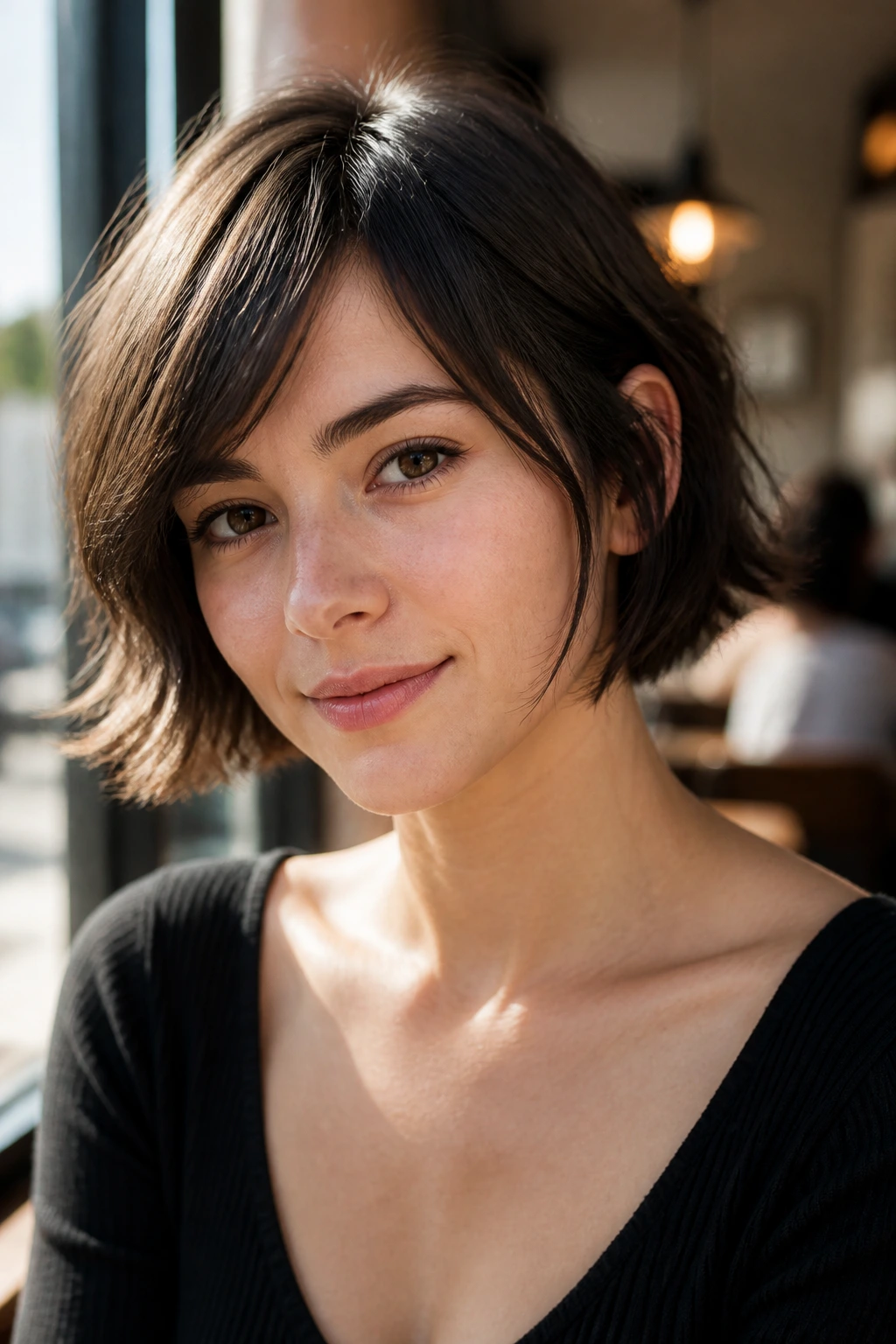
Shorter hair can look incredibly feminine on soft features when the cut is handled with care. The ear-length bob is the boldest shape on this list, but it earns its place because the softness comes from the edges. Wispy ends, a gentle side part, and a little movement near the cheeks keep it from feeling severe.
The danger with this length is obvious: if the line is too blunt or the hair is too thick, the cut can sit like a cap. Nobody wants that. So the better version uses point-cut ends and a bit of internal reduction, especially around the back and sides. You should still see the shape, just with some air in it.
This cut is especially good if your face is petite, your jaw is soft, or you want the neck to stay fully open. It can make the eyes and cheekbones read first, which is exactly why it suits soft features so well. The haircut is not doing too much. It is simply clearing space.
A few practical notes matter here:
- Ask for soft texturizing, not choppy razor work.
- Keep the fringe light if you want the face to stay open.
- Style with a tiny bend at the ends, not a sharp flip.
- Avoid heavy wax or paste, which can make short hair look flat and sticky.
This is the cut for someone who likes clean lines but still wants the hair to feel touchable. A lot of people assume soft features need more length to balance them. Usually, they need the opposite: a neat edge, a little lift, and enough movement that the haircut never feels locked in place.
