



A neat bob cut doesn’t hide behind layers or loose styling. It lives or dies by the line. If the perimeter is clean, the whole haircut looks polished in a way that feels almost unfair — like you spent 20 minutes getting ready when you actually spent five.
That’s why bob cuts keep showing up in salon chairs again and again. They’re sharp, tidy, and easier to keep looking deliberate than longer cuts that start to slouch the minute humidity shows up or your blow-dry goes a little flat. A good bob haircut also does something sneaky: it makes hair look denser at the ends, which is a big deal if your strands are fine or the tail ends have thinned out over time.
The catch is that not every bob gives the same finish. Some look crisp and tailored. Some look soft but still neat. Some need a round brush and a little patience, while others look better with air-dried texture and a dab of cream. The trick is choosing the shape that works with your hair’s natural fall instead of fighting it all morning.
1. Blunt Chin-Length Bob
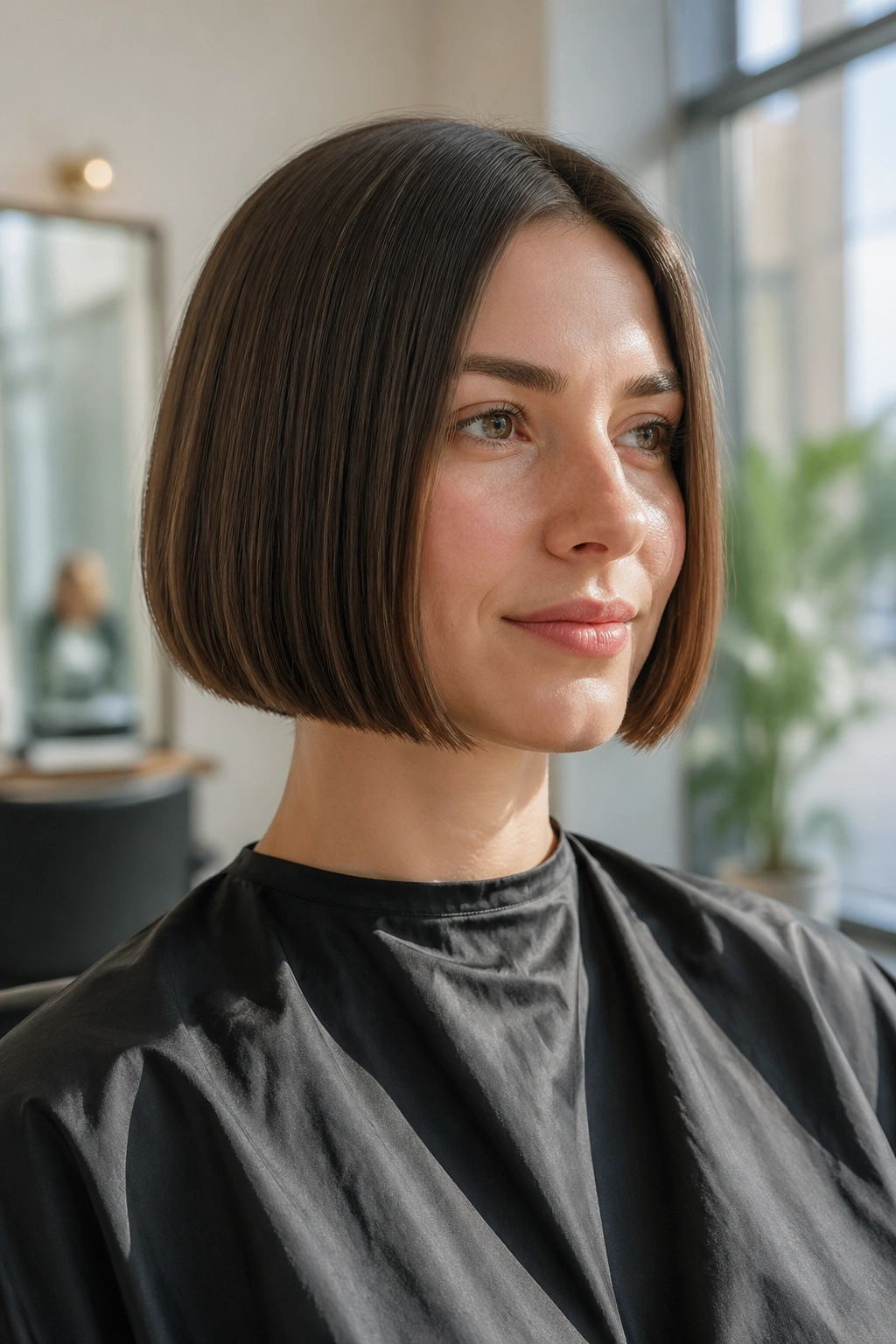
A blunt chin-length bob is the one I’d point to first if someone says, “I want my hair to look tidy without looking stiff.” The edge sits right around the jaw, and the ends are cut on one solid line, so the whole thing reads clean from every angle. No wispy business. No broken-up perimeter.
Why the blunt line matters
That straight edge does a lot of heavy lifting. It gives the haircut weight, which helps fine hair look fuller, and it keeps thick hair from spreading out into a fuzzy halo at the bottom. If your hair tends to puff at the ends, a blunt bob cut is often the fastest way to make it behave.
The best version usually lands at the chin or a hair above it. Too short and it can start to feel severe. Too long and you lose the crisp shape that makes the style work in the first place. I like it with a slight center part or a soft off-center part, because both keep the look polished without turning it into helmet hair.
What to ask for at the salon
- A blunt perimeter with no heavy layering at the ends
- Length that hits just at the chin or 1 inch below it
- Minimal texturizing at the bottom so the line stays full
- Slight internal shaping only if your hair is very thick
Tip: If you flat iron it, use one slow pass on each section and bend the ends under just a little. Too much curve makes the cut lose its sharp edge.
2. French Bob With Soft Fringe
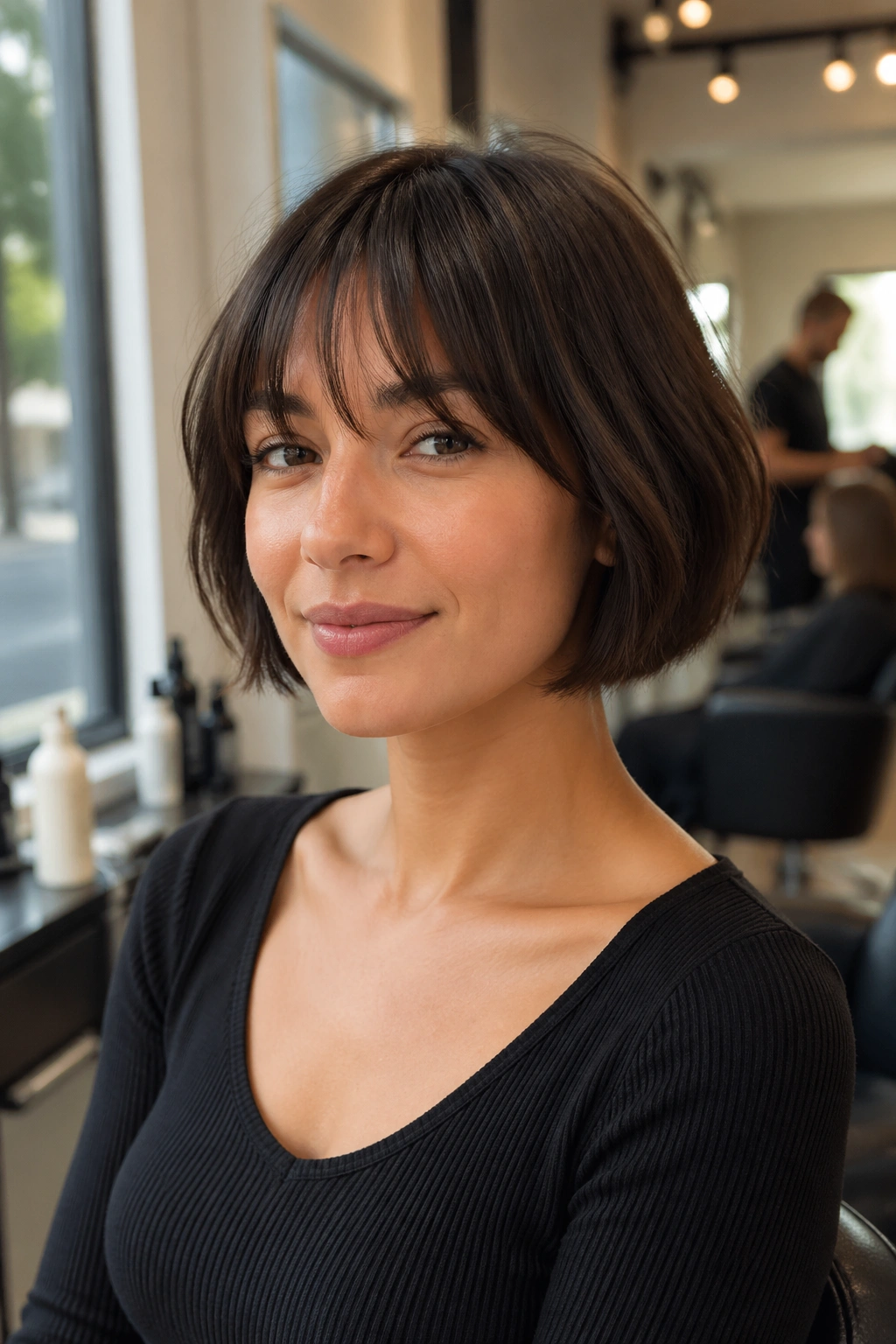
Why does the French bob keep looking chic even when it’s barely styled? Because the shape does most of the work before the products ever show up. It’s shorter than a classic bob, usually skimming the cheekbones or jaw, and the fringe softens the face without making the cut feel precious.
A French bob works especially well if you like hair that looks done but not fussy. The fringe can be airy, piecey, or slightly blunt, and the rest of the cut stays compact. That compactness matters. It keeps the style from ballooning out and makes even natural wave look intentional.
How to style the fringe
A tiny round brush can help, but you do not need to overwork it. Mist the front with a light heat spray, blow-dry the fringe from side to side, then tuck the rest behind the brush so it settles with a bend instead of a flip. The whole point is movement, not perfection.
A French bob looks especially good when the ends are touched with a little smoothing cream and the fringe is left slightly separated. That tiny bit of separation stops the haircut from reading too formal. It also makes the face look softer, which is why this cut flatters straight hair and loose waves so well.
If your hairline has cowlicks, ask the stylist to cut the fringe dry or nearly dry. Wet bangs can lie to everybody. They shrink, split, and suddenly your “soft fringe” becomes a project.
3. A-Line Bob With Longer Front Pieces
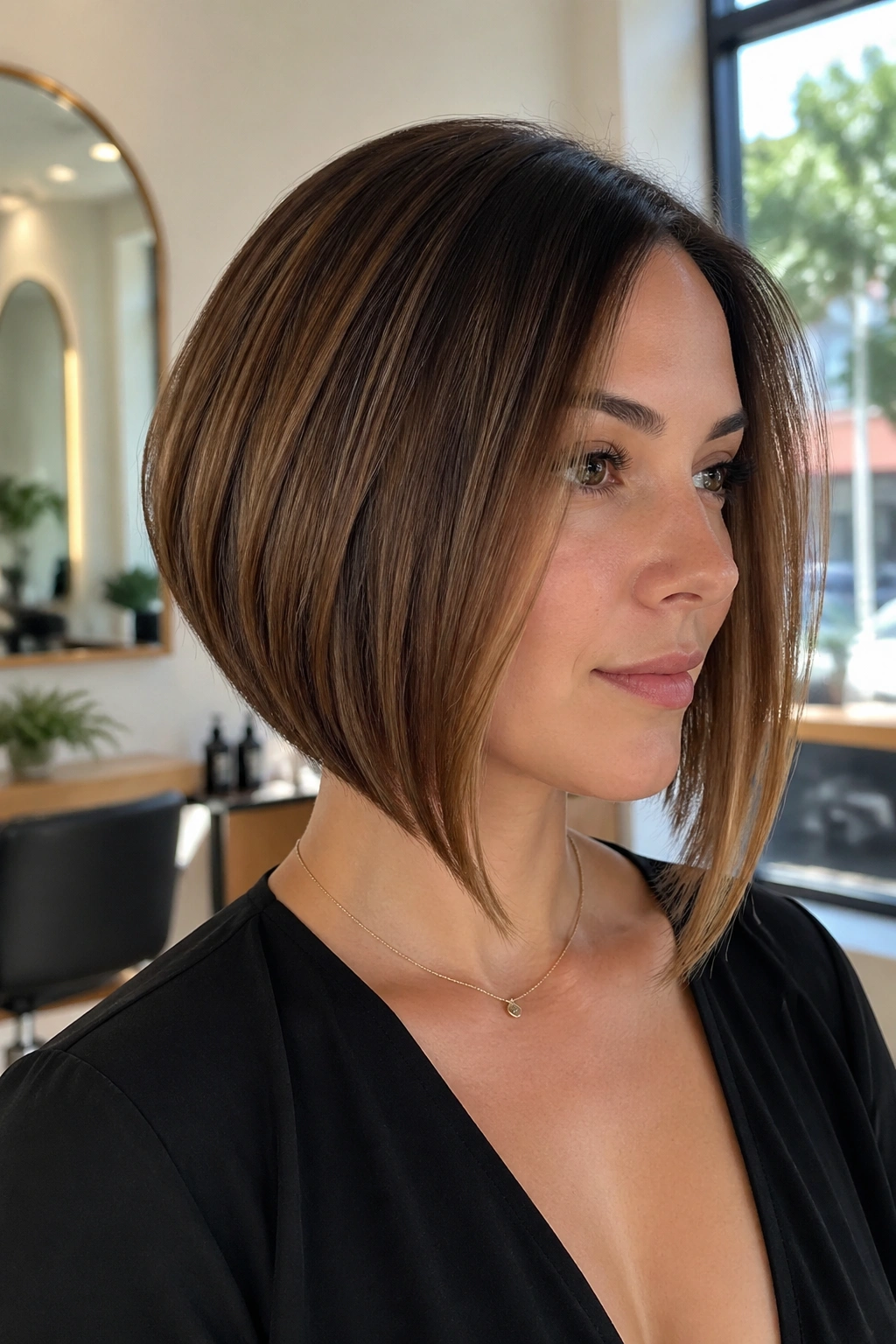
An A-line bob is one of those cuts that looks tailored from the first glance. The back sits shorter, the front angles longer, and that slope gives the haircut shape without relying on heavy layering. It’s neat, but it has motion. That combination is the whole reason people keep asking for it.
What makes it different
The front pieces frame the face in a way that feels clean, not choppy. That’s useful if you want your bob cut to sharpen the jaw or make the neck look longer. The angle also helps dense hair lie flatter at the back, which can be a blessing if your hair has a built-in triangle shape and likes to flare out.
This is one of the better choices for round or soft face shapes because the front length adds a little vertical line. It does not have to be dramatic. Even a subtle angle — half an inch shorter in the back and 2 inches longer near the front — can change the whole feel of the cut.
What to ask for at the salon
- A shorter nape with a gradual forward angle
- Front pieces that hit between the chin and collarbone
- A clean, blunt edge through the bottom
- Enough internal shape to keep the back from puffing
Pro tip: Style the front pieces with a round brush and point the dryer nozzle downward. That keeps the angles sleek and stops the ends from flipping in random directions.
4. Graduated Stacked Bob
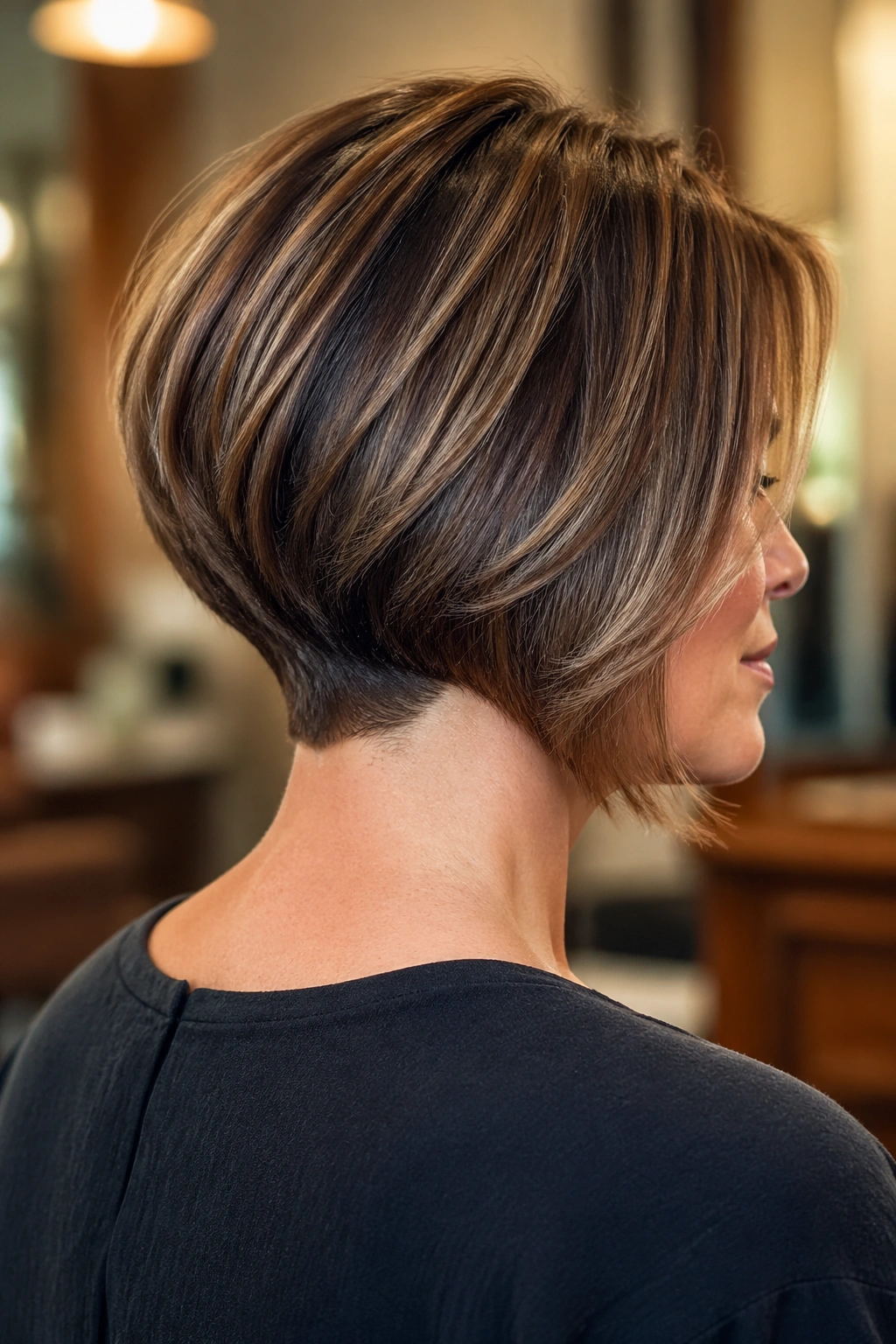
Picture a bob that sits snug at the nape, then lifts just enough in the back to give the haircut a little backbone. That’s the graduated stacked bob. It’s a favorite for anyone who likes structure, because the shape is built into the cut rather than created with product every morning.
The stacking at the back removes some bulk and creates height where hair often goes flat. That makes the cut look polished from the side and from behind — which sounds obvious until you notice how many haircuts only look good in the mirror. This one holds up from every angle.
Where it shines
A graduated stacked bob is a good match for thick hair, especially hair that grows out with weight in the nape. The stacked layers let that weight sit higher, so the head shape looks cleaner and more lifted. If you have very fine hair, the same cut can still work, but the stacking needs to be subtle or it can expose too much scalp at the crown.
Maintenance is the tradeoff. A stacked bob shows growth faster than a longer cut because the shape depends on that tight back line. If you like a crisp nape and a tidy silhouette, though, that’s the price of admission.
- Best with a round brush and a small amount of volumizing mousse
- Needs a trim every 6 to 8 weeks to keep the stack visible
- Looks especially neat with a tucked ear on one side
- Works well with straight to slightly wavy textures
Tiny detail. Huge payoff.
5. Box Bob
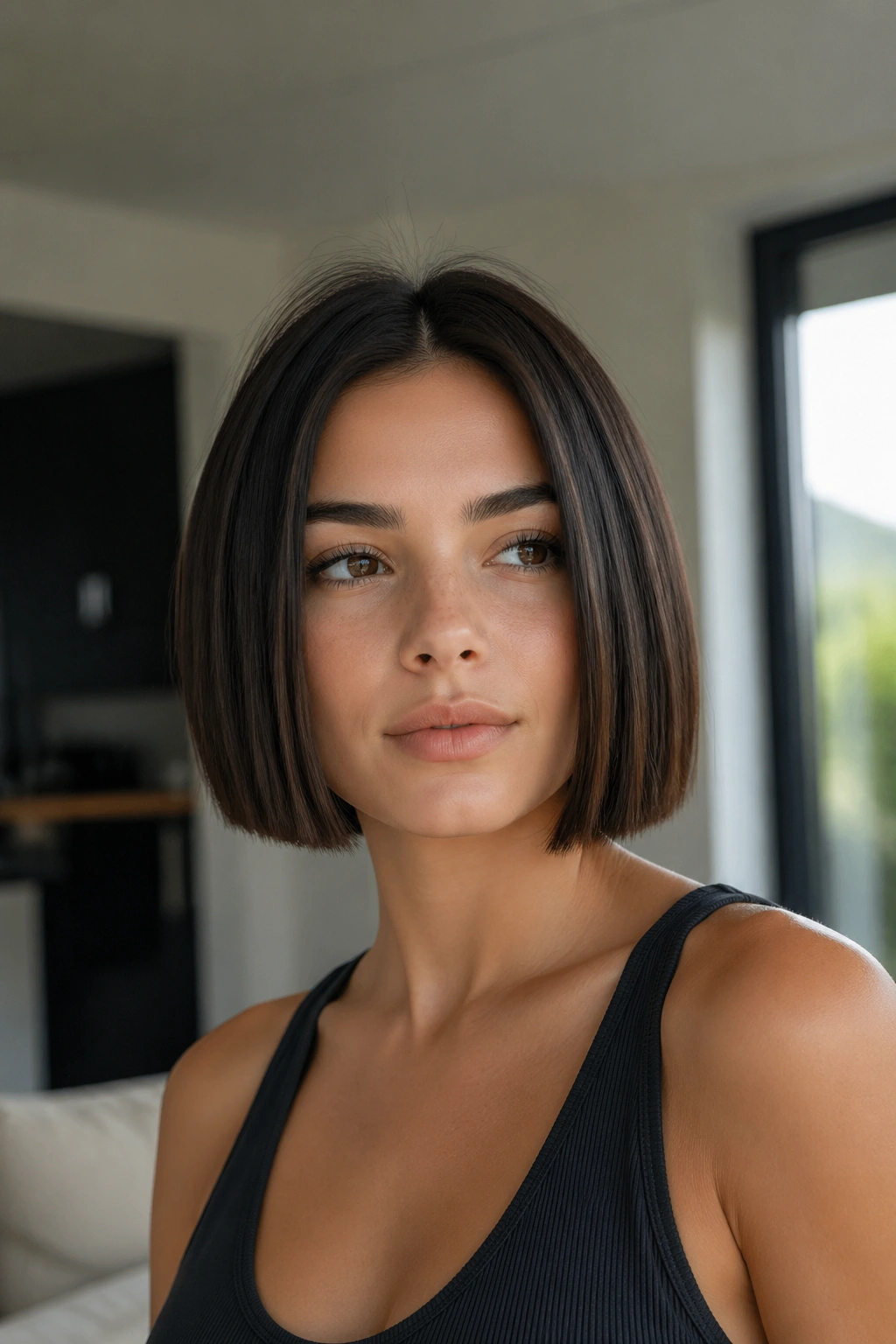
A box bob has one job: look controlled. The silhouette is squared off rather than rounded, so the width at the sides stays consistent and the ends fall in a clean, even band. It’s the haircut equivalent of a perfectly pressed shirt.
That square shape can sound severe, but in practice it often looks elegant because it creates a solid frame around the face. The box bob is especially good if your hair is naturally straight or only lightly wavy, since the geometry stays visible. On curlier hair, it can still work, but the edges need careful shaping or the box starts to blur.
I like this cut for people who don’t want a fussy finish. The line itself carries the style. You can tuck it behind the ears, part it in the middle, or push it slightly off-center, and it still keeps that tailored feel. No soft ends drifting around. No accidental fluff.
Shorter box bobs can feel assertive. Longer versions, especially around the jaw, read more polished and less strict. If you’re nervous about going sharp, ask for a box bob that ends just below the chin with a soft internal bevel. That keeps the outline strong but prevents the cut from feeling heavy.
6. Deep Side-Part Sleek Bob
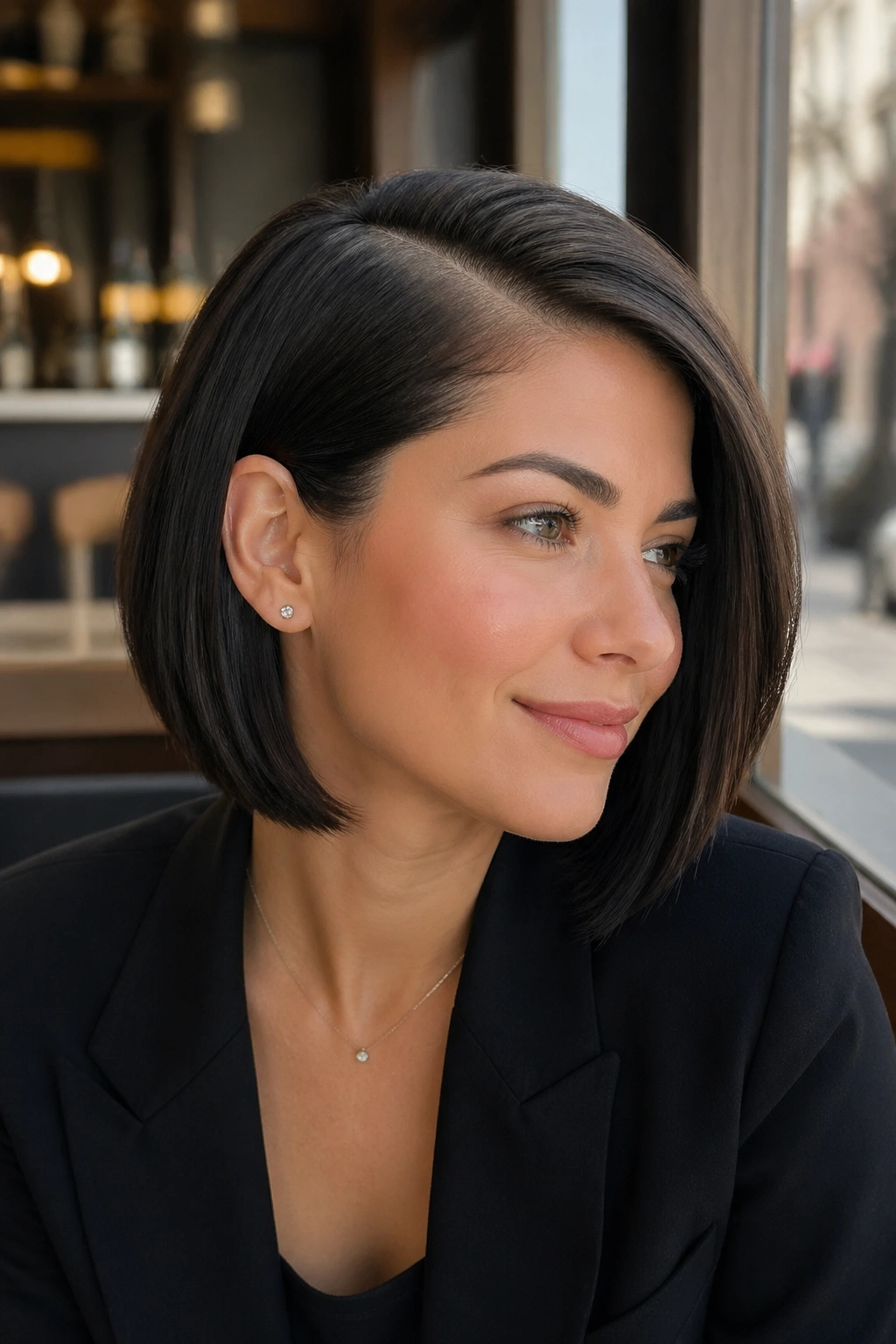
Unlike a center-part bob, a deep side-part sleek bob brings asymmetry without turning the haircut messy. One side drops a little lower, the top gets a touch of lift, and the whole shape looks intentional the second you smooth it into place. It’s a neat bob cut for people who want polish with a bit of drama.
The side part does a few useful things at once. It softens a strong jaw, adds movement at the crown, and helps the haircut avoid that too-even look that can happen when every section is the same length. If your hair lies flat on top, this is one of the easiest ways to fake height without teasing the roots into a fight.
How to keep it from collapsing
Use a light root-lift spray at the side part, not all over. Then blow-dry the roots in the opposite direction first, and sweep them back once they’re warm. That little reset creates lift without making the hair puff out. Finish with a flat brush and a pea-sized amount of serum on the mids and ends.
A deep side part looks especially clean on straight hair, but it can also work on loose waves if you keep the ends smooth. The main thing is to avoid overloading the top with oil or cream. Too much product at the crown makes the part sink, and then the whole style starts looking sleepy. Nobody wants that.
7. Rounded Bob With Curved Ends
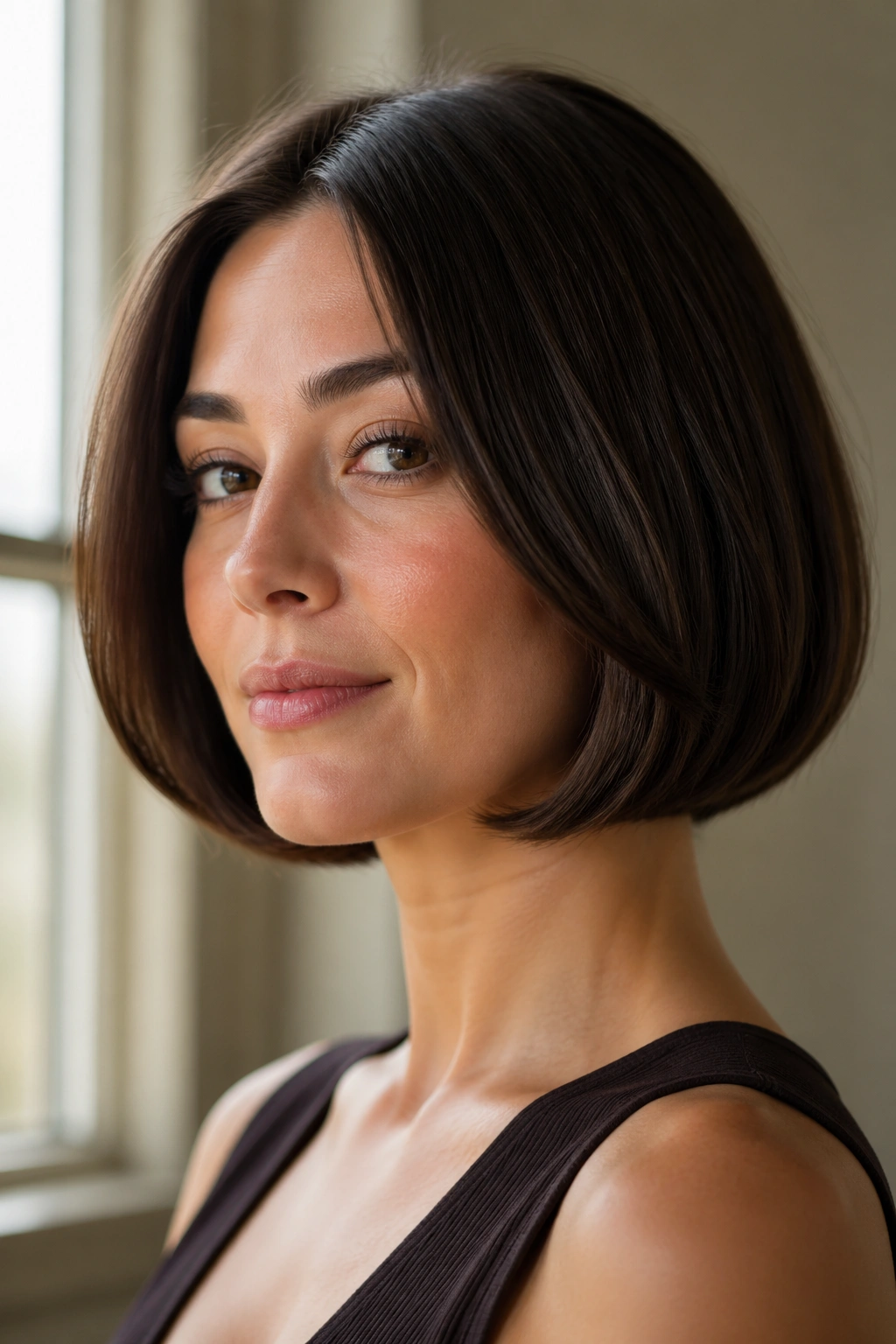
Why does a rounded bob look so polished even when it’s simple? Because the curve gives it a finished edge. Instead of hanging straight down like a blunt cut or angling sharply like an A-line shape, the ends bend gently inward and follow the line of the jaw.
That inward curve is flattering in a very practical way. It softens the perimeter without making the haircut frilly, and it tends to sit neatly against the neck when the hair is smooth. If you like a bob hairstyle that feels tidy at work but still looks good with a sweater or earrings, this is a strong choice.
The cut works especially well when the stylist shapes it to match your head and neck line. A rounded bob that’s too heavy can look helmet-like. A rounded bob with subtle graduation through the back, though, gives you shape without stiffness. The curve should feel deliberate, not pasted on.
How to get the shape right
- Ask for a rounded outline with the ends bent inward
- Keep the perimeter full so it doesn’t go stringy
- Use a medium round brush, not a huge one
- Aim the dryer downward to keep the finish smooth
If you want a cut that looks calm, neat, and quietly expensive — and yes, that phrase is overused, but it fits here — this is one of the safer bets.
8. Inverted Bob
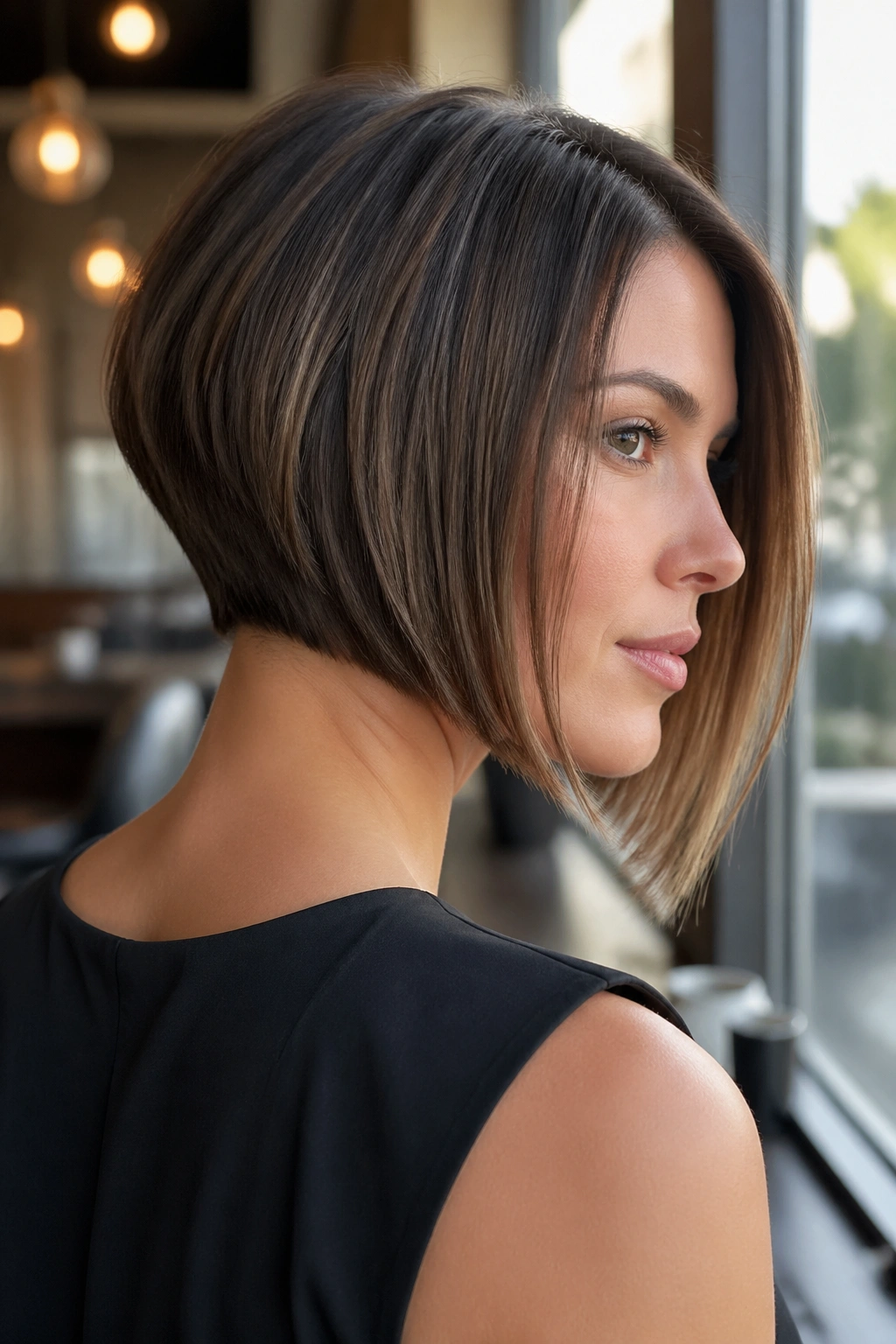
If you’ve ever wanted a bob that looks light in the front and neat in the back, the inverted bob is the obvious answer. The shape is shorter and fuller at the nape, then it gradually lengthens toward the front. It’s a cousin to the A-line bob, but usually with a more obvious curve and more lift through the back.
The reason it looks polished is simple: the haircut follows the contour of the head. That makes it feel tailored instead of boxy. You get movement, but it’s controlled movement. The front pieces can be as dramatic or as subtle as you want, which is why this cut adapts well to both fine hair and thicker hair that needs some shape removed.
I’ve always thought the inverted bob works best when the angle is precise rather than extreme. A huge difference between back and front can look sharp in photos, then awkward in daily life. A softer inversion keeps the line clean and lets the haircut settle naturally when you tuck one side behind the ear or wear a coat collar.
What to watch for
- The back should be clean and compact
- The front should fall smoothly, not flip out
- The crown needs enough support so it doesn’t collapse
- A blunt finishing line makes the angle look richer
It’s a strong choice if you like a bob with a little architecture.
9. Soft Layered Bob
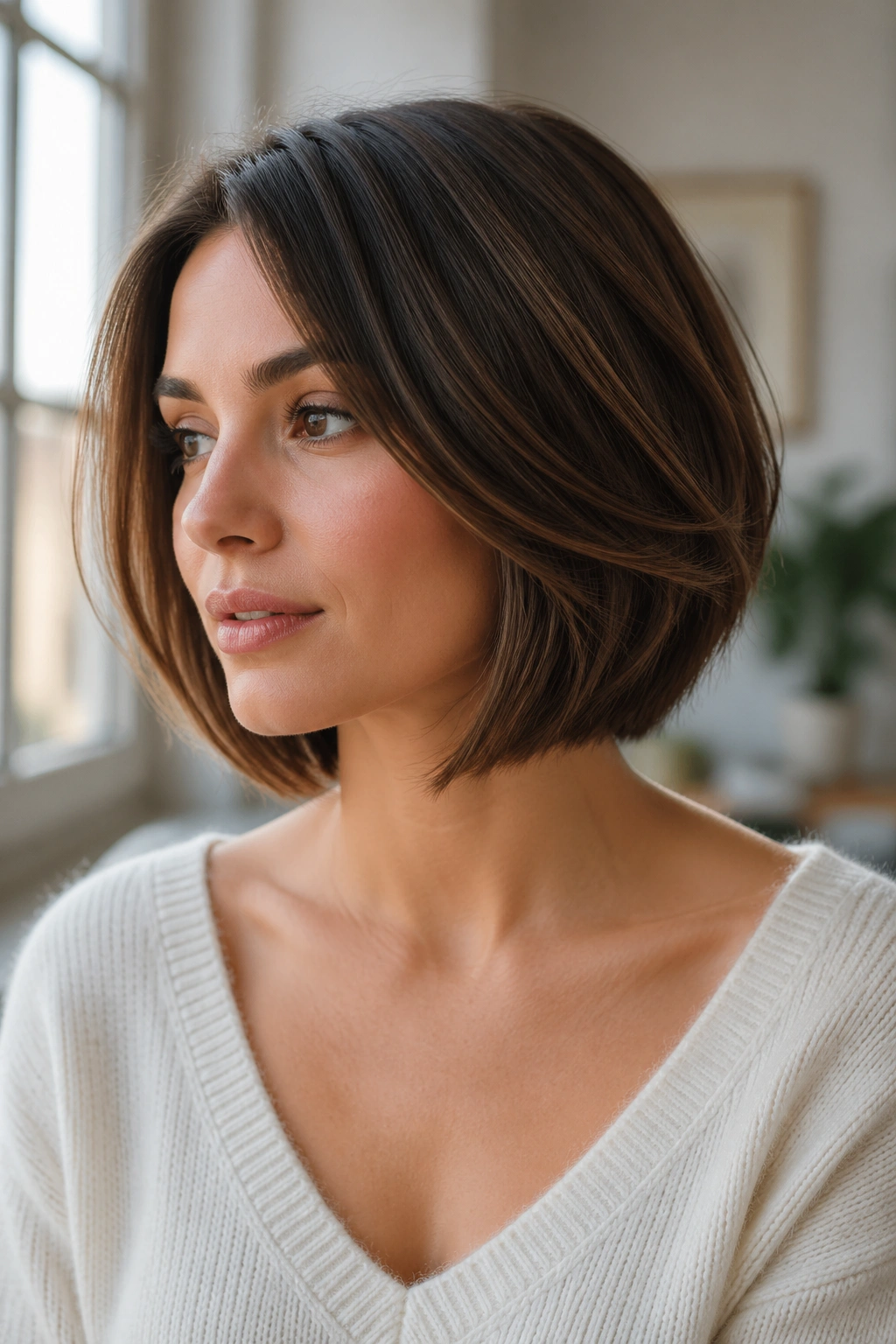
A layered bob doesn’t have to be messy. In the right hands, the layers are almost invisible — just enough to keep the hair from piling up at the ends, but not so much that the shape loses its clean line. That’s the version I’d call polished.
This cut is useful if your hair has movement on its own and you want to keep that movement without giving up structure. The trick is restraint. Too many layers and the bob starts to fray. Too few and thick hair can feel bulky around the jaw. The sweet spot is usually a few internal layers, placed where the hair needs release rather than everywhere at once.
Why it works on real hair
A soft layered bob handles day-two texture better than a strict blunt cut. That matters because not every haircut needs to look frozen in place to be neat. A little bend, a little wave, and a little movement around the face can still read polished if the ends stay clean.
This is one of my favorite options for people with medium hair density. It can look airy without looking thin, and it doesn’t ask for much beyond a decent blow-dry and a brush. If your hair tangles easily, though, keep the layers long and blended. Short choppy layers around the perimeter will fight the whole point.
Skip heavy texture spray here. A drop of lightweight cream or a soft hold mist is usually enough. The haircut should do the talking.
10. Micro Bob
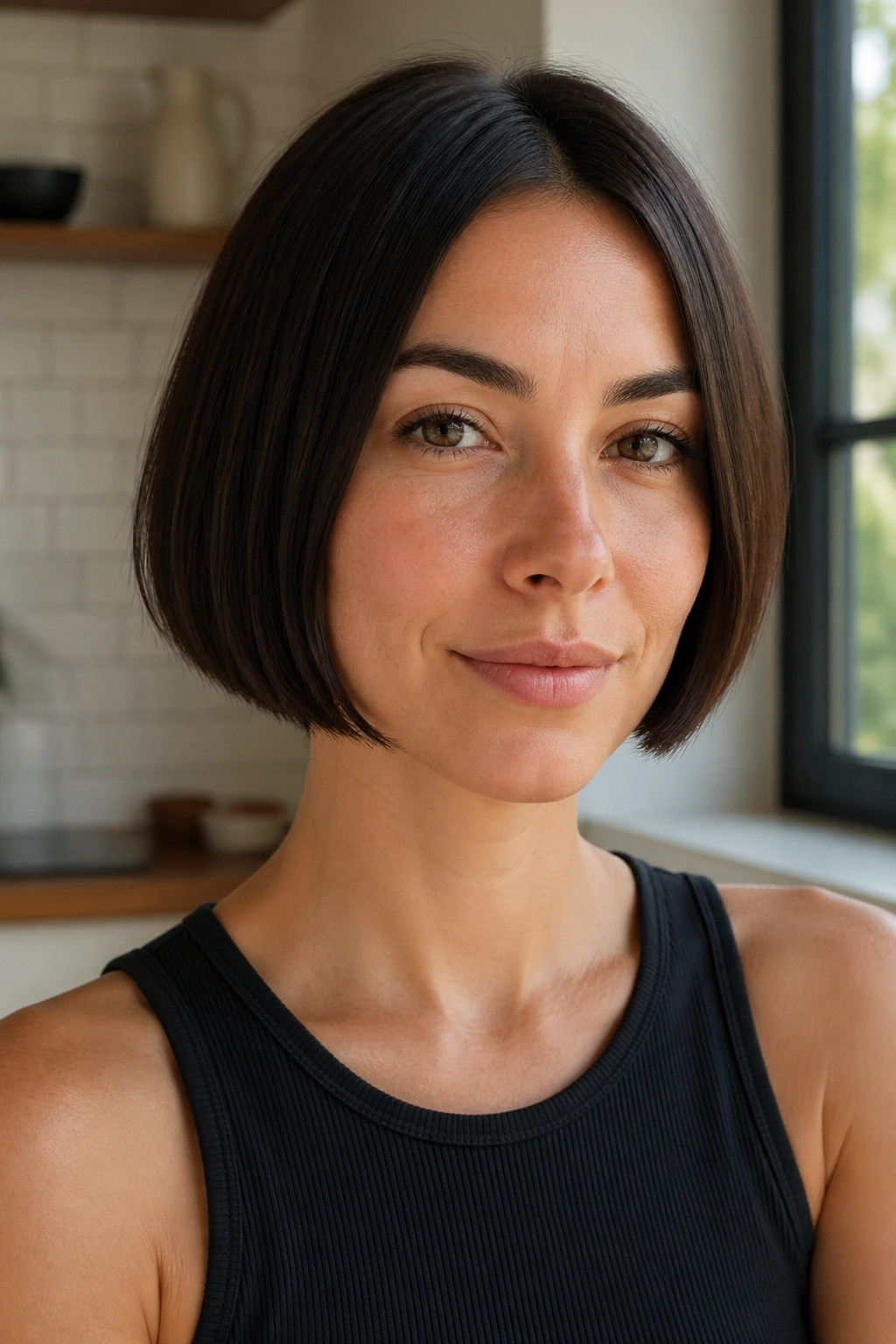
A micro bob is short enough to make a statement and neat enough to still feel grown-up. The length usually sits around the earlobe or just above the jaw, which means the neck shows more and the haircut becomes the main event. That sounds dramatic, but a clean micro bob can be surprisingly elegant.
The polished part comes from the precision. At that length, every millimeter matters. The ends need to be even, the nape needs to be tidy, and the side pieces need to sit exactly where they’re supposed to. Any roughness shows immediately. That’s part of the appeal, honestly. There’s nowhere for a bad cut to hide.
A micro bob is a smart choice if you like low-fuss styling and don’t mind the upkeep. It dries faster than longer bobs, and it usually needs less product. But it does demand regular trims because growth changes the shape fast. After a few weeks, what looked crisp can start to feel fuzzy around the edges.
The haircut’s personality
- Strong, short perimeter
- Barely any length touching the neck
- Best on straight or softly wavy hair
- Works well with clean earrings and structured collars
I’d avoid it if you want your hair to feel tucked or swishy. This cut is about line, not softness.
11. Collarbone Bob
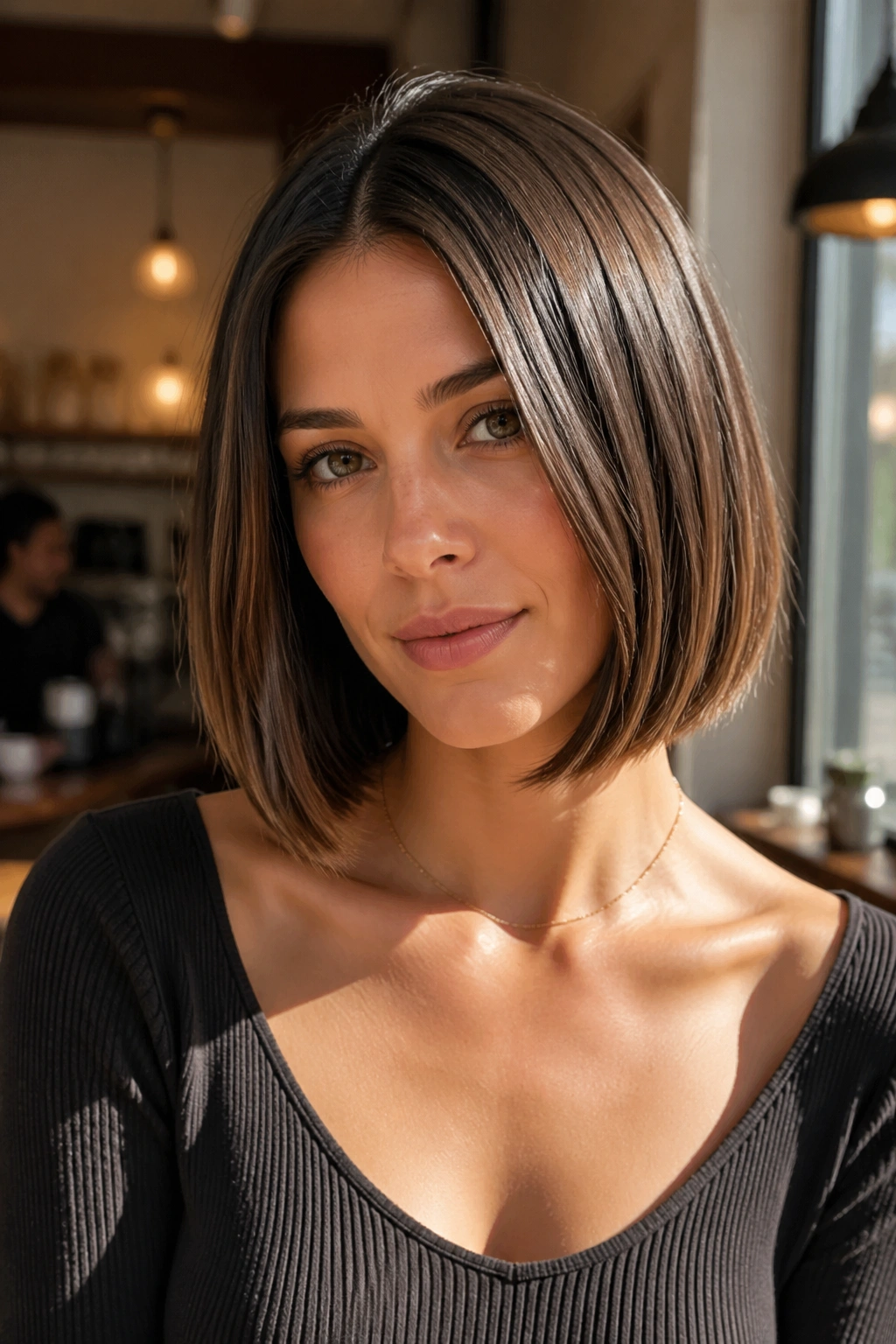
A collarbone bob gives you the polish of a bob cut without giving up the little bit of length some people need to feel comfortable. It sits right at the collarbone or a touch above it, which means you can still tuck it behind your ears, twist it into a small half-up shape, or let it fall straight and clean.
Compared with a shorter bob, the collarbone length feels less severe. Compared with longer hair, it still has a defined outline. That middle ground is the reason it works so well for people who want a neat finish but don’t want to commit to a sharper chop.
Why the extra length matters
The added length buys you versatility, but it also changes the mood of the haircut. Instead of a strict architectural shape, you get something that moves more gently and brushes the shoulders with a little swing. If your neck is long, this cut can balance it. If your hair is thick, the extra length keeps the bottom from puffing out too high.
A collarbone bob looks best when the ends are blunt and the surface is smooth. Light layers near the face can help, but too much shaping destroys that clean line. If you want it to feel especially polished, blow-dry it with a paddle brush first, then go back with a flat iron only on the visible top layer. That keeps the finish sleek without making the hair look overworked.
It’s the kind of cut that can go to brunch, an office meeting, or a formal dinner without changing much. Handy. Quietly so.
12. Asymmetrical Bob
The asymmetrical bob is what happens when a neat bob cut decides it doesn’t need to be symmetrical to look polished. One side is longer than the other, sometimes only by an inch or two, and that small difference gives the haircut edge without turning it into a messy statement style.
What makes it work is the control. The lines still need to be clean. The ends still need to be sharp. The imbalance is intentional, not accidental, which is why it reads as sleek instead of sloppy. On straight hair, the shape is crisp right away. On wavy hair, the difference between the two sides becomes more visible when you smooth the top and leave the ends with a light bend.
This cut flatters people who want something a little different but still office-friendly and tidy. It also does a nice job of drawing the eye diagonally across the face, which can soften a strong chin or add length to a rounder face. I like it best when the longer side isn’t too long. If you stretch it too far, it stops feeling like a polished bob and starts looking like a different haircut altogether.
A good final check: look at the nape, the corners in front of the ears, and the way the longer side drops. If those three spots are clean, the whole cut feels finished. And that’s really the point with neat bob cuts — the shine, the parting, the exact way the ends sit against the jaw. Get those details right, and the haircut does half your grooming for you.
