



A bob that sits flat at the crown and kicks out at the ends can look heavy fast. The shape is doing too much in the wrong places.
That’s where concave bob cuts earn their keep. The back is shorter, the front stays longer, and the whole outline curves inward instead of hanging in a straight block. That curve gives the haircut its body, and body is what most bobs are missing when they start to slump.
The best thing about this shape is that it works with the hair instead of fighting it. Fine hair gets more lift. Thick hair loses some of its bulk. Wavy hair gets a cleaner frame around the face. If the cut is balanced well, you get movement without having to tease the roots into submission every morning. Nice, right?
1. The Soft Chin-Grazing Concave Bob
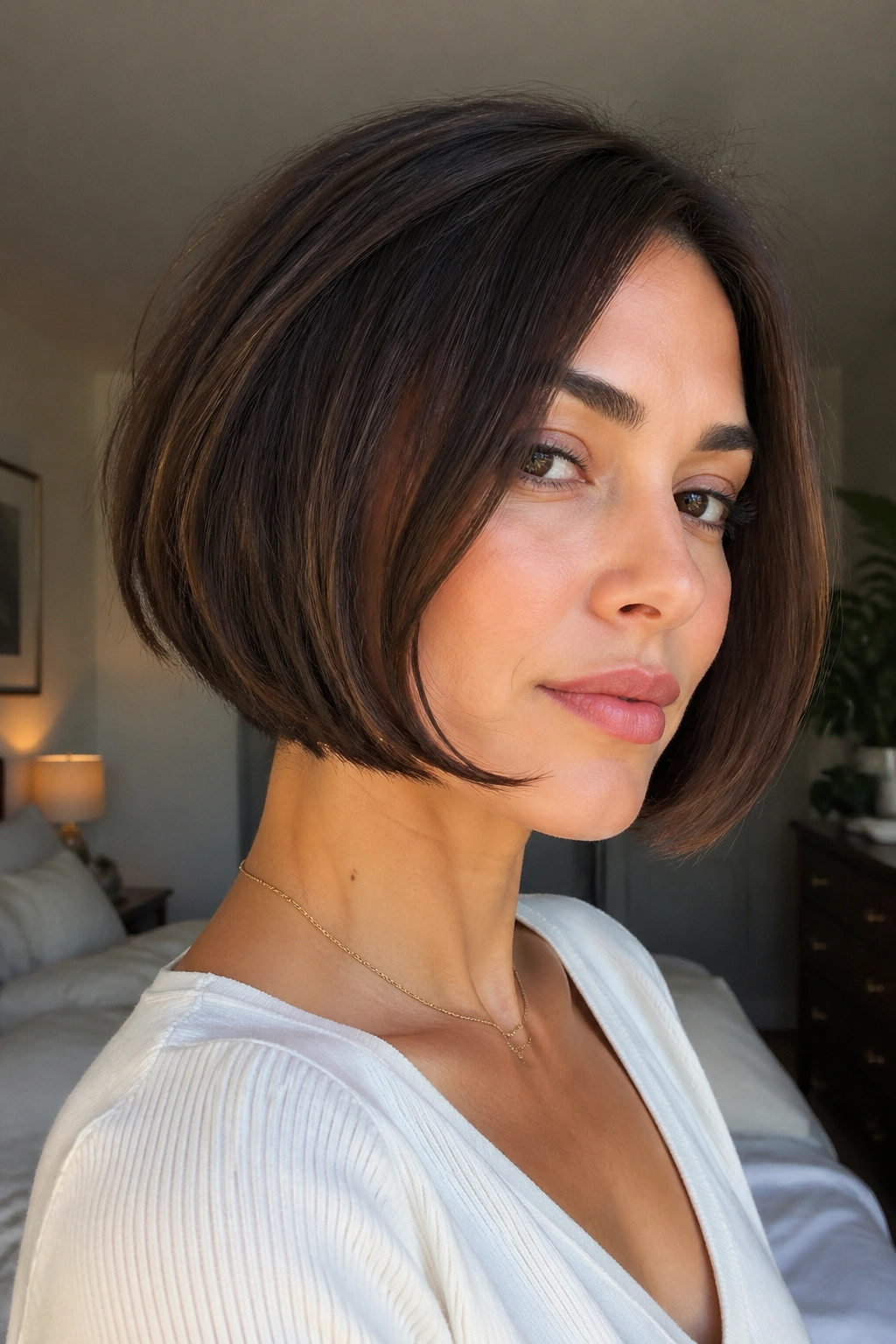
This is the version I’d hand to someone who wants body without drama. The back sits neatly above the nape, while the front drops just to the chin, so the eye reads a gentle curve instead of a hard angle. It’s tidy, but not stiff. That matters.
Why the Shape Lifts Hair So Well
A chin-grazing length pulls the front forward and keeps the perimeter from looking boxy. The shorter back removes weight right where hair tends to collapse, and the longer front gives the illusion of fullness around the jaw.
That little trick is enough to make fine or medium hair look like it has more support than it really does. It also softens round faces and takes some width out of the cheek area. Clean line. Easy movement. No fuss.
What to Ask For at the Salon
- Keep the back stacked just enough to create lift, not a big wedge.
- Ask for light interior layering so the ends don’t hang like one solid sheet.
- Keep the front at chin length or a touch below for a soft frame.
- Tell your stylist you want the outline to curve inward, not flare out.
Pro tip: If your hair bends outward at the ends, ask for a slight bevel under the perimeter during the blow-dry. It gives the cut a smoother finish without making it look overstyled.
This version is especially good when you want something polished enough for work but relaxed enough to wear with a T-shirt. It’s a safe cut, sure, but safe does not mean boring. Done right, it has a quiet swing to it that holds up all day.
2. The Stacked Concave Bob with a Built-In Lift
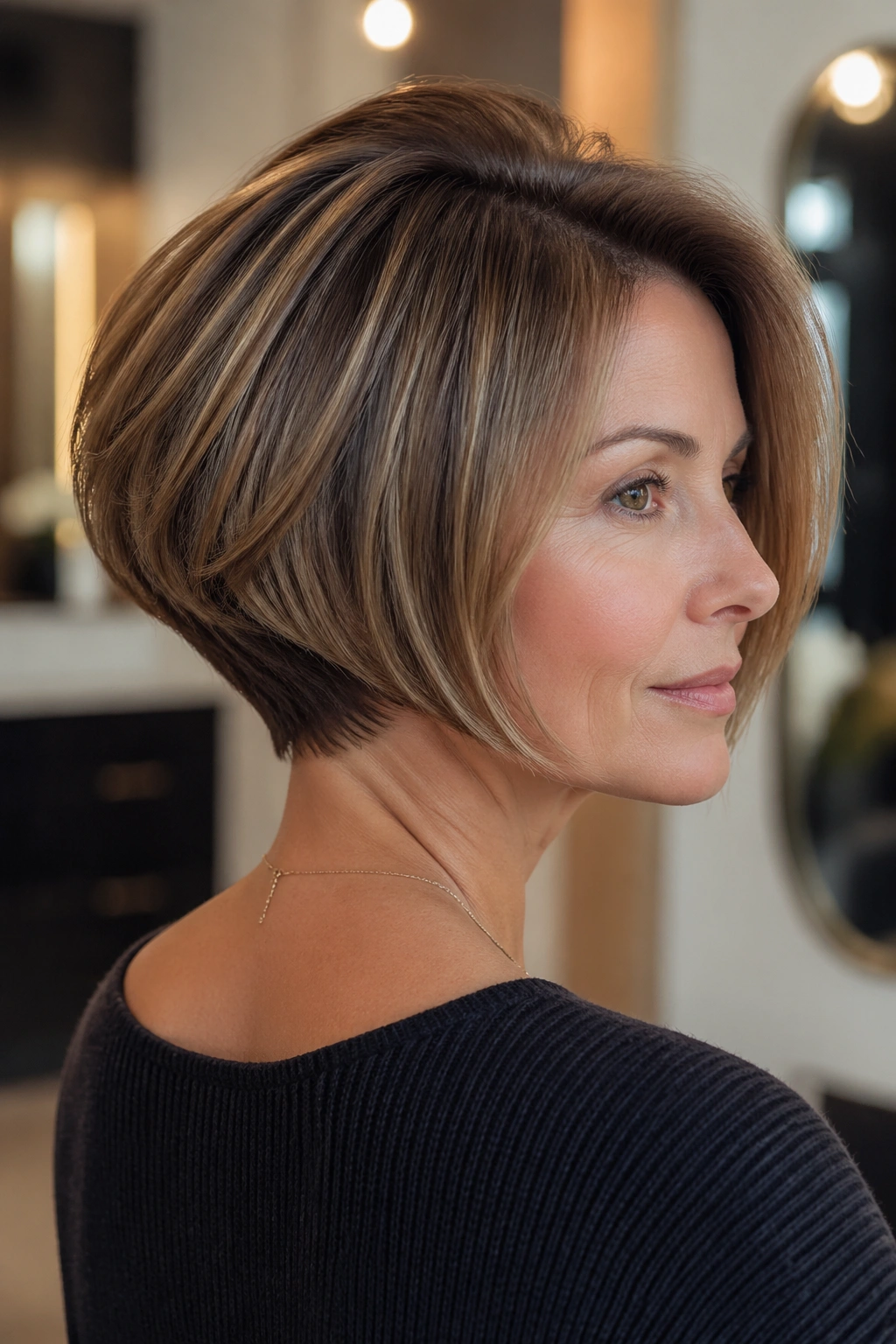
If your hair falls flat by noon, this is the blunt answer. A stacked concave bob puts the shortest layers right at the nape, then graduates the length upward so the back has its own little shelf of volume. That lift is not a styling trick. It’s built into the cut.
The key is control. Too much stacking and you get a shape that looks dated or overly sharp from the side. Too little and the bob loses the whole point of being concave. The best versions keep the back compact, clean, and a little airy at the crown, which makes the rest of the hair feel lighter too.
This cut loves straight and slightly wavy hair, especially if it tends to collapse around the neckline. It also works well when you want the back to look full in photos or from behind — and yes, that angle matters more than people think. A bob can look fine from the front and still feel limp from the side. Not here.
The one catch? You have to commit to trims. The stacked shape grows out faster than a softer bob, and once the line drops, the lift goes with it. If you like crisp edges and a clean neck, though, this is hard to beat.
3. The Long Concave Bob That Skims the Collarbone
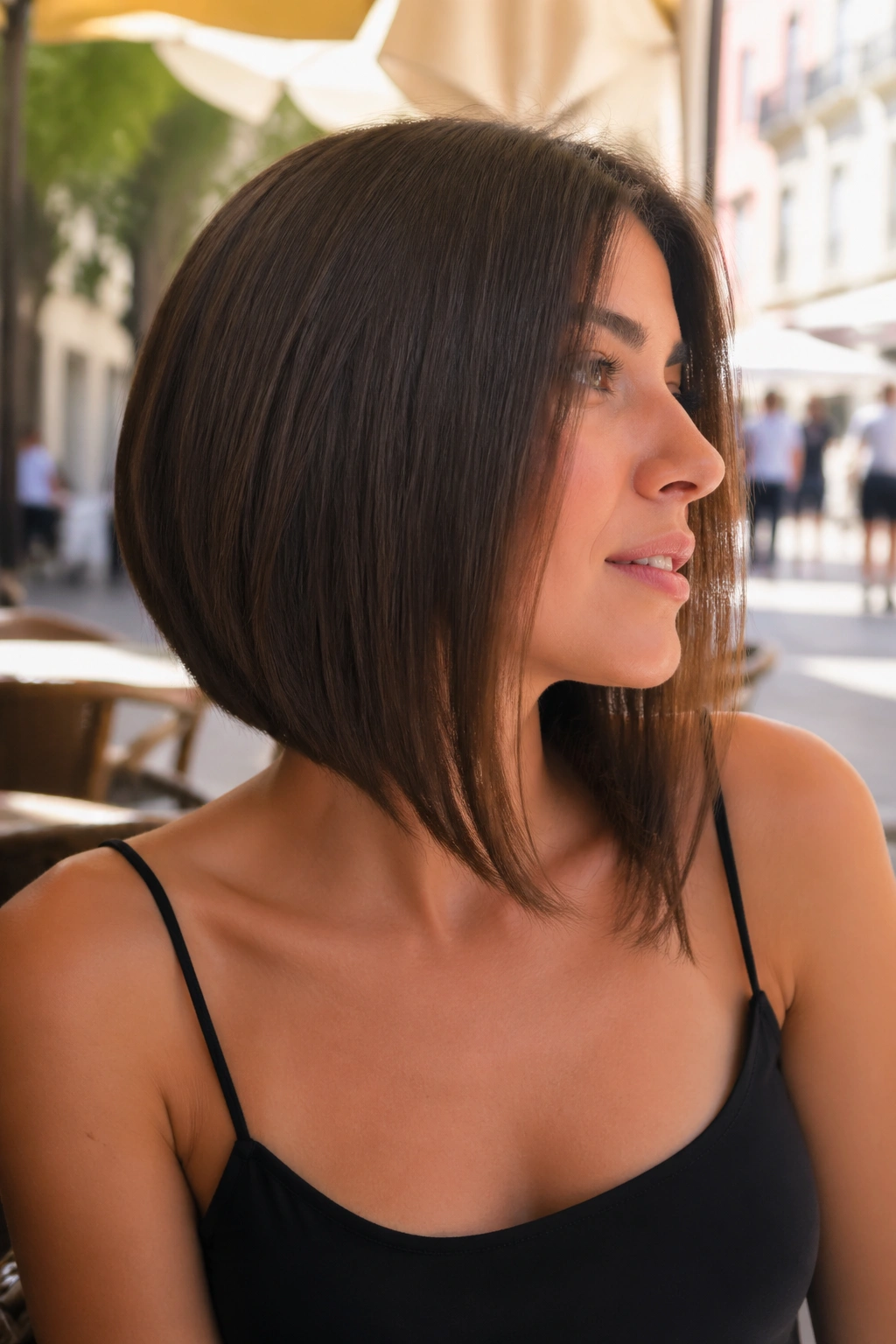
What if you want the shape, but not a short haircut? That’s the sweet spot for a longer concave bob. The back still sits shorter, yet the front stretches toward the collarbone, so the silhouette keeps its inward curve without exposing too much neck.
This version is the one I’d send to anyone nervous about losing length. It feels less severe than a chin-length bob, and it gives thicker hair room to move instead of puffing out at the bottom. The longer front also plays nicely with layers around the face, which helps if your hair has some natural bend or wave.
How to Style It Without Making It Puffy
Use a medium round brush and dry the roots first. That sounds basic, but the order matters. If you rough-dry the lengths before the roots are set, the top can go flat while the ends get frizzy. Not ideal.
Then wrap the front sections under the brush for a soft bend at the collarbone. Keep the heat on medium, not blasting hot air at the ends for too long. A little smoothing cream through the mids helps, but too much will rob the cut of its air.
This shape is a smart choice if you want a bob that can still tuck behind the ears, swing forward when you move, and survive a day when you do not feel like fixing it every hour. It’s easy to live with. That counts.
4. The Textured Concave Bob for Wavy, Piecey Movement
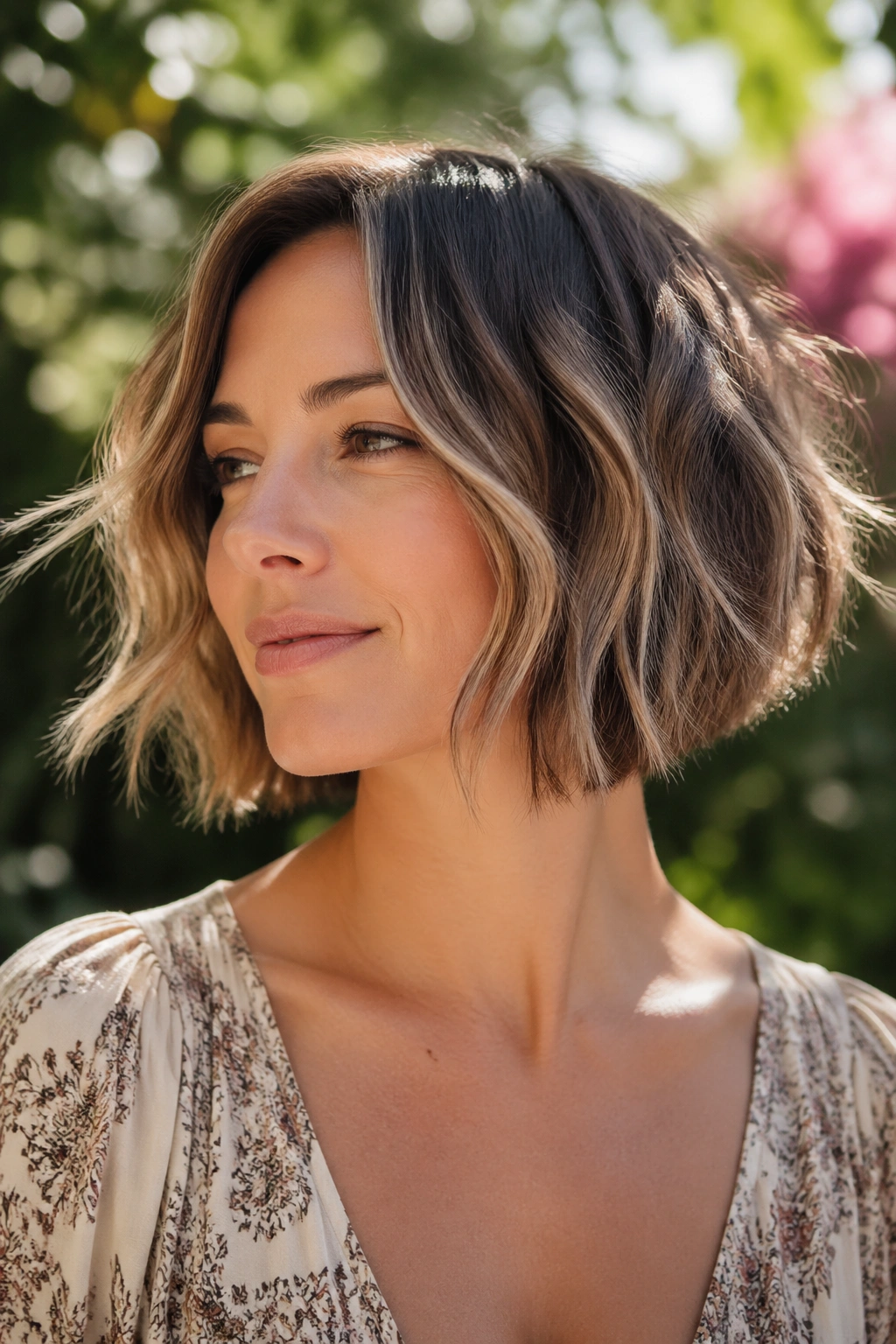
A textured concave bob looks best when it feels a little lived-in. Not messy. Just relaxed enough that the ends separate instead of clinging together like a helmet.
This cut usually relies on soft point cutting or light razor work through the ends, which keeps the shape from getting too blunt. The shorter back still creates the curve, but the texture stops the front from feeling heavy. For wavy hair, that matters a lot. Waves want room to move, and a solid one-length edge can make them swell in all the wrong places.
The nicest thing about this version is how little effort it asks for on a normal day. Air-dry with a curl cream or diffuse for a few minutes, and you’ll get separation at the ends and some lift at the crown. If you brush it out too hard, you’ll lose the piecey effect. So don’t.
Good Styling Matches
- Salt spray for loose bend and grip.
- Light mousse at the roots if the crown droops fast.
- A small barrel curling wand for bending only the front pieces.
- Dry shampoo on day two to keep the shape from collapsing.
The main mistake is over-layering. Once the texture gets too choppy, the bob stops reading as body and starts reading as thinness. There’s a difference. Keep the internal layers soft, and the cut will look fuller rather than broken up.
5. The Curly Concave Bob That Holds Its Shape
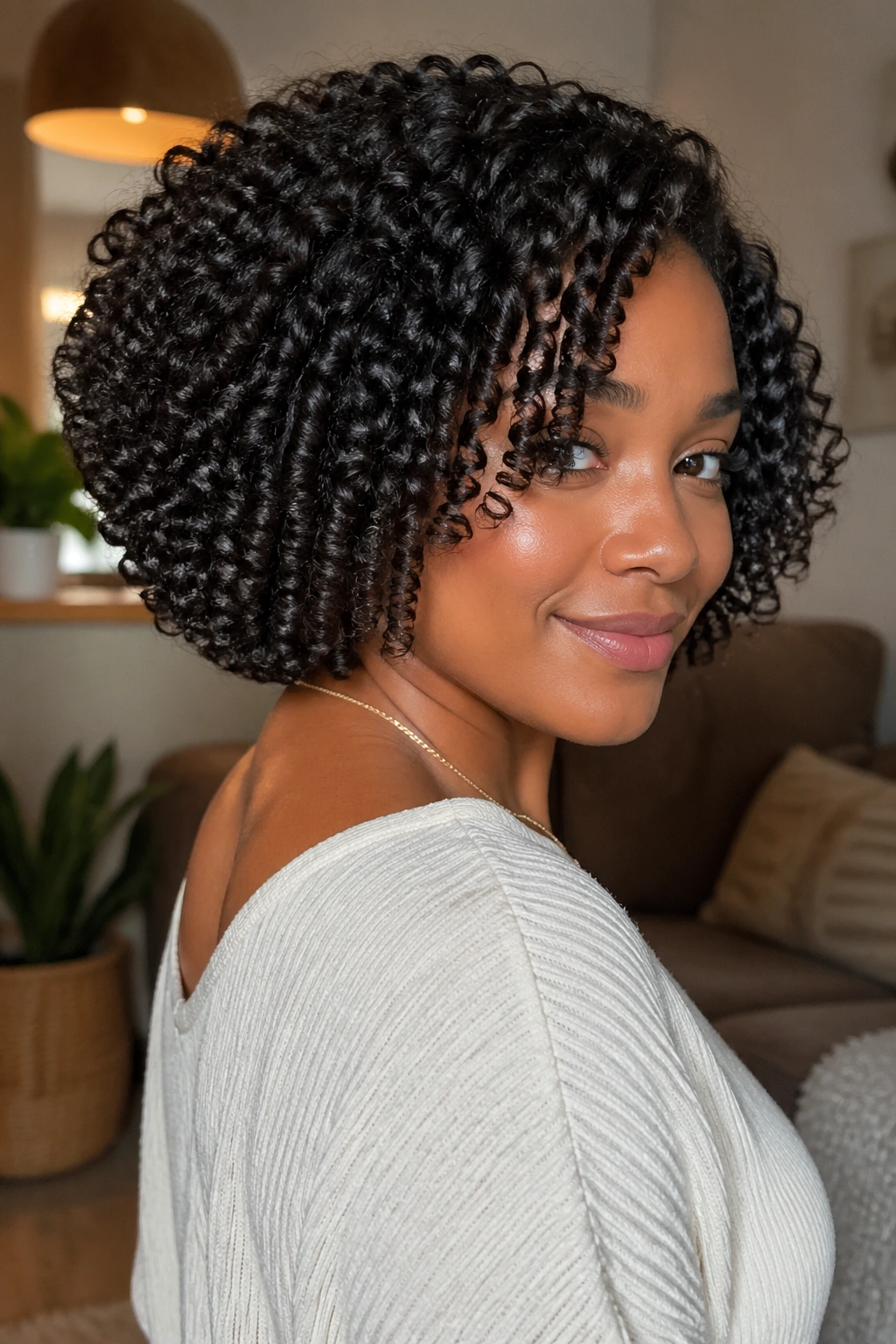
Curly hair and concave bobs can be a beautiful match, but only if the cut respects shrinkage. Curly strands bounce up more than straight ones, so the front and back have to be planned with that movement in mind. Otherwise the curve gets lost and the shape turns uneven fast.
The smartest version is cut dry, curl by curl, so the stylist can see how each ringlet sits. That way the back can be graduated enough to remove bulk, while the front stays long enough to frame the face after the curls spring up. Wet-cutting curls is where people get into trouble. The shape looks tidy in the chair and odd a week later.
Here’s the thing: curly concave bobs work best when they are slightly softer than straight ones. Too much stacking at the back can make the neckline look bulky once the curls dry. Too much thinning can make the ends fray. You want a clean curve, not a chopped-up outline.
A curl cream with decent slip helps the shape stay grouped together, and diffusing upside down for a minute or two can encourage the roots to lift without puffing the crown too much. Leave some curls to air-dry if your pattern is fragile. That mix usually looks better than forcing every strand into the same routine.
6. The Blunt Concave Bob with a Smooth Edge
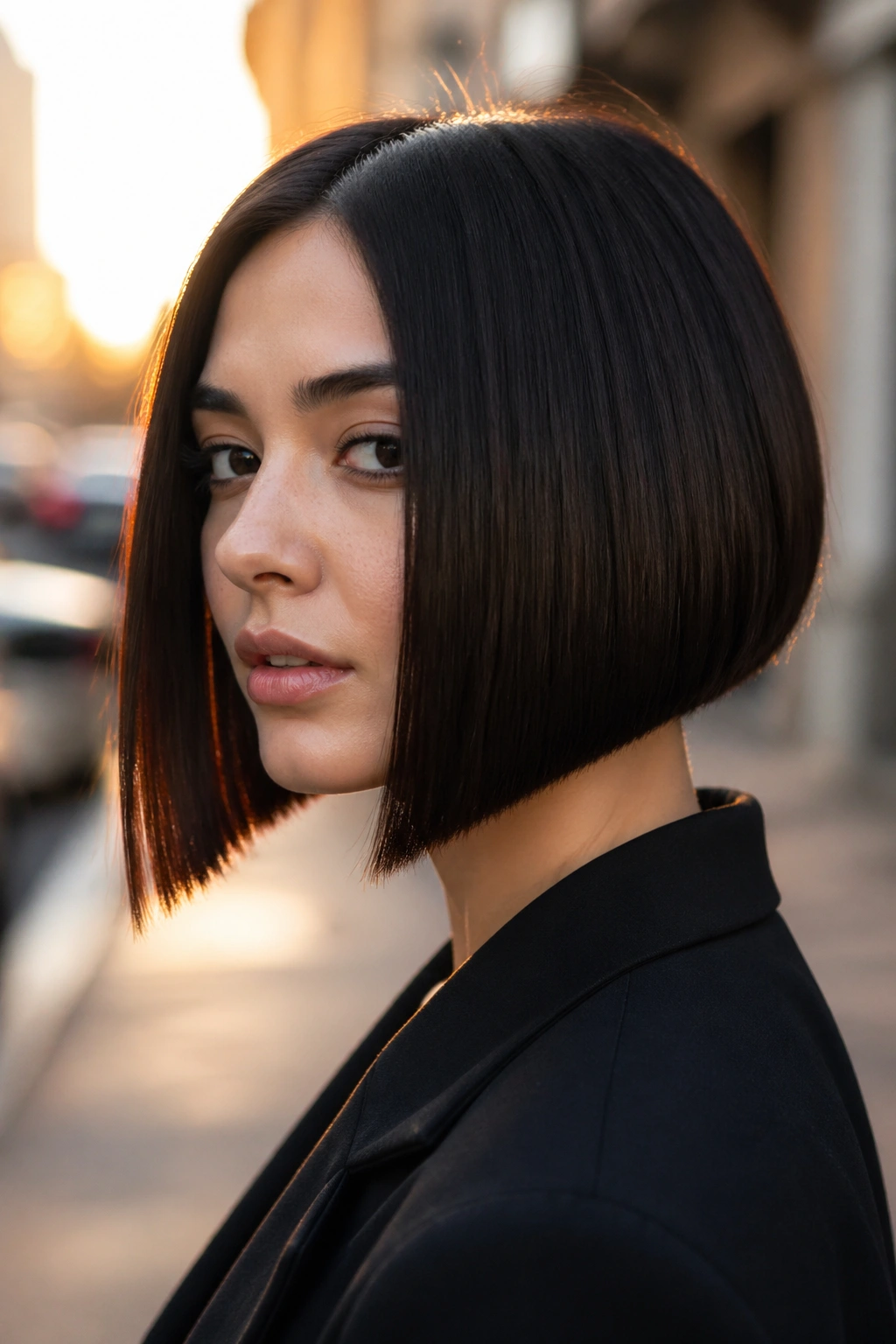
Blunt does not mean boring. In a concave bob, a blunt edge can make the hair look denser and cleaner because the outline stays solid while the back still curves up. That combination is especially good for medium-thick hair that needs structure.
Unlike a textured version, this cut depends on precision. The perimeter should look heavy enough to hold its shape, but the inside still needs just enough graduation to keep the back from sitting like a shelf. If the line is too soft, the whole thing can lose its punch. If the line is too hard, it can feel stiff. A good blunt concave bob lives in the middle.
The styling is straightforward, which is half the appeal. Blow-dry with a paddle brush or a large round brush, then finish the ends with a flat iron if your hair tends to flip outward. You want the line to look smooth and deliberate, not crunchy.
This is the version I’d choose for someone who likes a neat outline and hates a fluffy finish. It looks especially strong on straight hair and on hair that grows in a little thick through the bottom. The cut does the heavy lifting, and you do not need much more than a smoothing cream and a heat protectant.
7. The Deep Side-Part Concave Bob
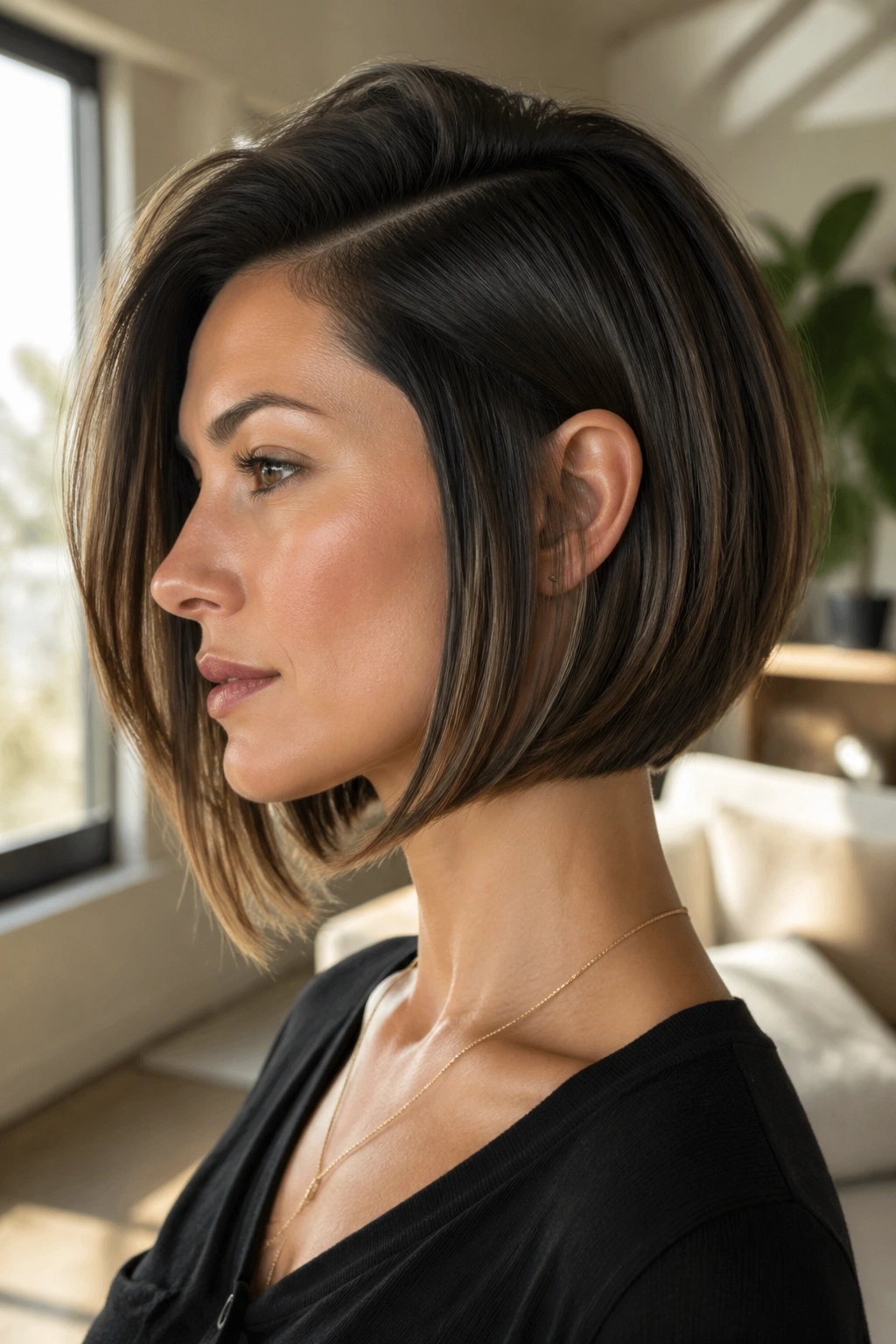
A deep side part changes this haircut more than people expect. It pushes one side up at the root, lets the other side fall a little heavier, and suddenly the whole bob has more movement. The concave shape becomes easier to see because the eye follows the sweep across the face.
The best part? It gives fine or flat hair an instant lift without adding another layer of product. The side with more height can soften a square jaw or balance a wider forehead, while the longer front on the opposite side keeps the curve from looking too neat. There’s a bit of attitude here, but not in a loud way.
Where to Place the Part
- Start the part about one to two inches off center.
- Use a comb, not your fingers, if you want a crisp line.
- Blow-dry the root of the heavier side first so it does not fall flat.
- Finish with a light spray at the root only, not all over the ends.
A side part can also make a concave bob feel more modern if you’re used to wearing everything down the middle. That middle-part habit can flatten the crown on some hair types. The deep side part breaks that pattern in a way that feels easy, not forced.
It’s a small change. The shape changes a lot.
8. The Feathered Concave Bob for Fine Hair
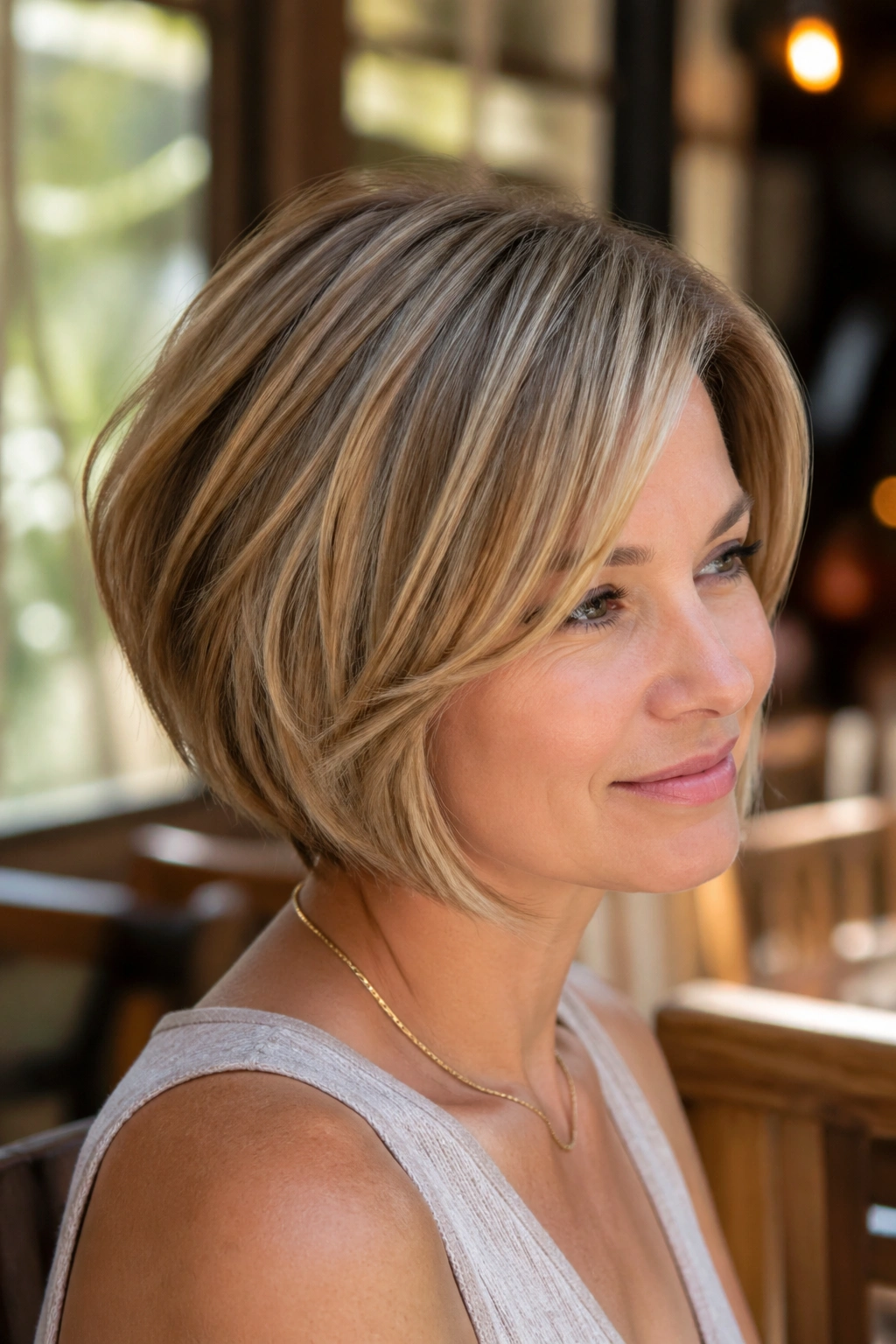
Feathering gets a bad name when it’s overdone. People picture wispy ends and too much air in the haircut. That is not what we want here. A feathered concave bob for fine hair should feel light, not shredded.
The trick is to keep the graduation at the back strong enough to hold the silhouette, then soften only the top layers and edges so the hair moves instead of sitting in one flat sheet. Fine hair tends to show every blunt line, and it also shows every mistake. A soft feather through the surface can make the whole cut look more alive.
What I like about this version is how forgiving it is on day-to-day styling. You can wear it tucked behind one ear, brush it smooth, or add a little bend with a small round brush, and it still looks intentional. If the ends are too heavy, fine hair hangs. If the ends are too thinned, it looks see-through. The middle ground is where the body lives.
What to Ask For in the Chair
- Internal layering only, not aggressive thinning.
- A soft perimeter that still keeps the shape intact.
- Feathering around the face that starts below the cheekbone.
- A back that stacks just enough to prop up the crown.
If your stylist reaches for thinning shears, ask what they’re removing and why. That’s not being difficult. That’s protecting the haircut.
9. The Asymmetrical Concave Bob with a Longer Front
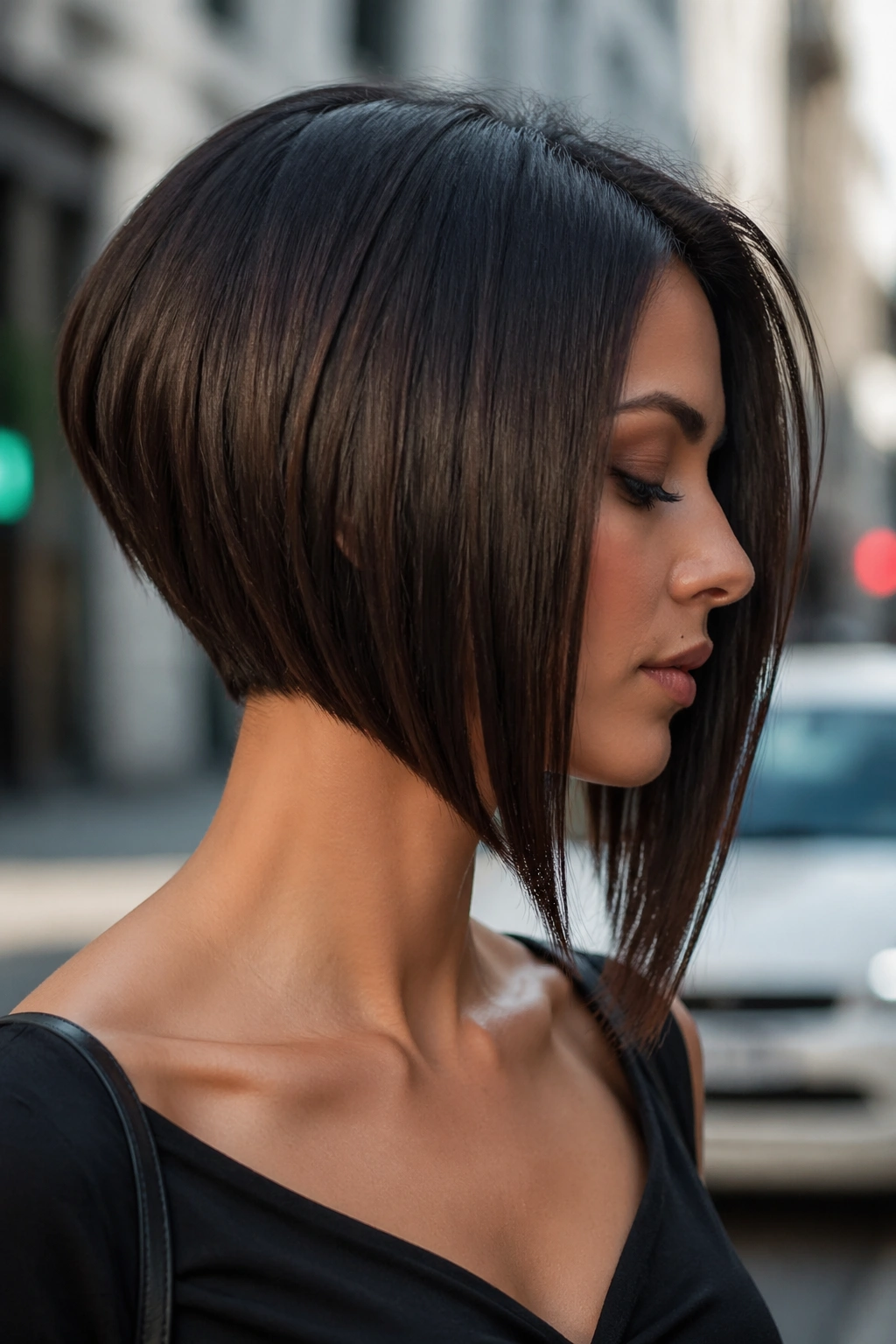
This is the version for someone who wants the shape to feel a little sharper. One side falls longer, the other sits shorter, and the concave curve pushes the eye forward. It’s clean, a little dramatic, and very good at making the neck look longer.
The asymmetry changes the way the hair moves. Instead of a neat bowl-like balance, the cut has a clear direction, which gives straight hair more edge and gives thicker hair a cleaner outline. The longer front section can also soften one side of the face, especially if you have a strong jaw or a face that feels narrow through the chin.
It does ask for precision. A sloppy asymmetrical bob looks accidental, and that is not the vibe. The line between the sides should feel deliberate, with the shorter side guiding the shape back toward the nape. If the difference is too extreme, the cut can take over your face. Keep it controlled and it looks smart.
I’d pair this with a flat brush blow-dry or a quick pass of a flat iron just through the ends. The goal is a sleek curve, not a kinked line. And if your hair has a natural wave, you may need to smooth the longer side a touch more than the shorter side so the balance stays visible.
10. The Shag-Inspired Concave Bob with Airy Layers
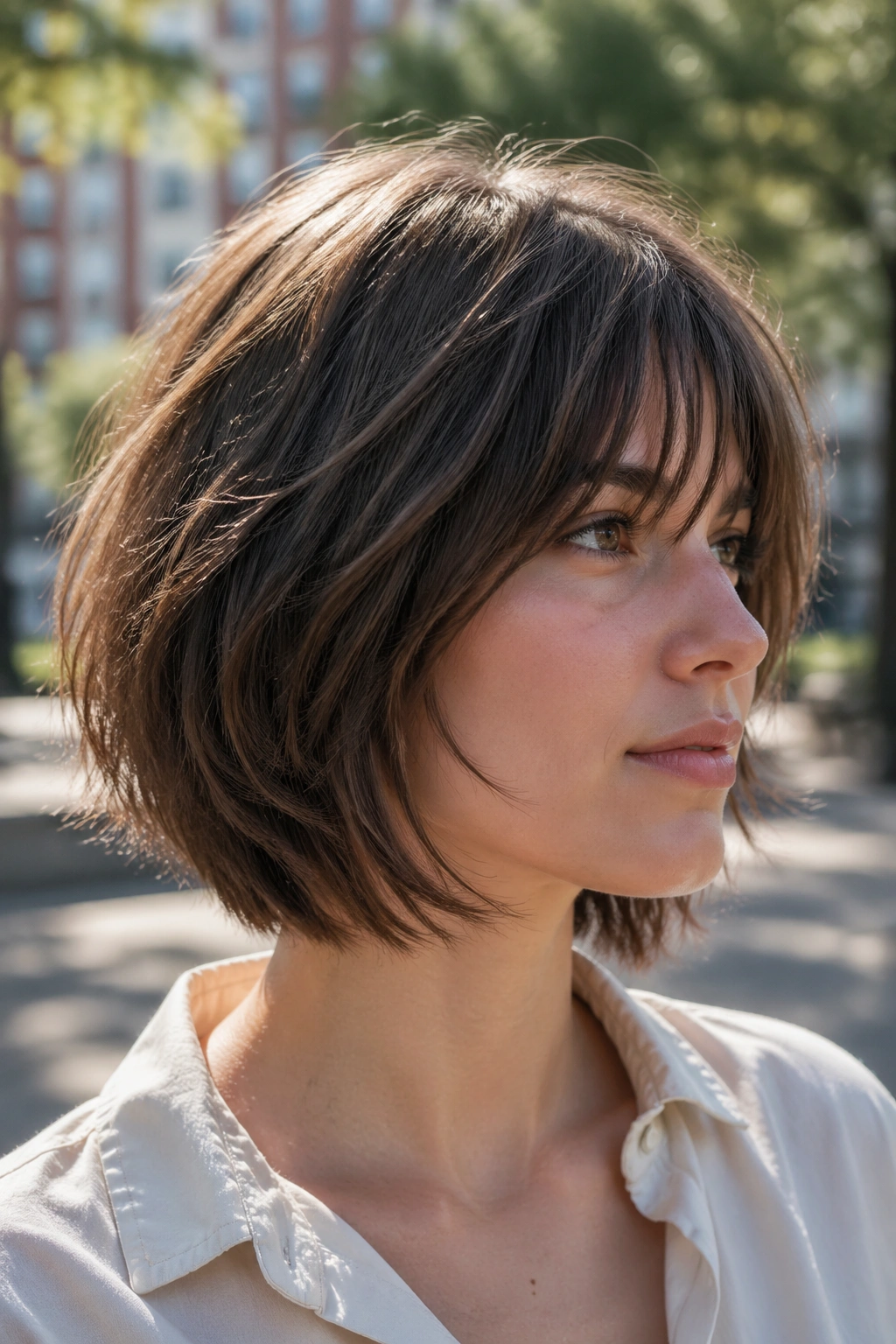
What happens when a bob wants a little grit? You get a shag-inspired concave bob. It keeps the shorter back and longer front, but the interior gets more movement, more separation, and a little less polish. That makes it a strong choice for thick hair, wavy hair, or anyone who wants body that feels loose rather than controlled.
The danger here is obvious: too much shag and the concave shape starts to disappear. So the layering has to be selective. You want softness near the crown and through the mids, not a full-on chop that destroys the line. Think of it as a bob with air in it, not a shag with a bob label slapped on top.
The Danger Zone
- Too many short layers can make the back stick out.
- Over-texturizing can make thick hair frizzy at the ends.
- A heavy fringe can compete with the curved silhouette.
- Flat ironing every piece makes the cut lose its point.
A dry texture spray gives this version a better finish than glossy serum. Gloss can weigh it down fast. If you like hair that looks slightly undone and a little swingy around the face, this one is a fun place to live.
It’s also the easiest to grow out. That matters more than people admit.
11. The Concave Bob with Curtain Bangs

Curtain bangs change the whole mood of a concave bob. They soften the front, open the face, and stop the cut from feeling too severe around the cheekbones. When they’re cut long enough to blend into the front layers, they can make the curve of the bob feel almost effortless. Almost.
The best part is how well they balance volume. A bob with a strong back can sometimes feel top-heavy if the front is too bare. Curtain bangs fix that by drawing the eye outward and downward. The result is a shape that feels lighter around the face but still has enough structure in the back to hold body.
How to Keep the Bangs from Fighting the Bob
- Keep the shortest point around nose to cheekbone length.
- Blow-dry them side to side with a small round brush.
- Do not cut them too short; they need room to split.
- Ask for the bang edges to blend into the front bob pieces.
This pairing works especially well on oval, long, and heart-shaped faces. On round faces, longer curtain bangs are better because they don’t cut the face in half. Short bangs can get bossy here. Longer ones behave.
And yes, they do need styling. Not much. Just enough to keep the center from collapsing and the sides from sticking out like curtains in the wind. A tiny bit of mousse at the root helps more than a heavy cream ever will.
12. The Tucked-Under Concave Bob with a Polished Finish

This is the cleanest-looking version of the bunch. The cut itself creates the curve, but the styling finishes the job by tucking the ends under so the bob hugs the jaw and neck. It’s sleek without being severe, and it gives the hair a denser, fuller look because the line stays tight.
A tucked-under finish works well when the haircut already has some graduation in the back. The shorter layers prop the crown up, while the longer front bends inward and frames the face. That bend can make medium or thick hair look more controlled without flattening it into the scalp. The style is polished, but not brittle. Good distinction.
A round brush and a heat protectant are enough for most hair types. If your hair resists the bend, use a small flat iron just at the ends to guide them inward. Do not clamp the whole section. That gives you a stiff edge, and the point of this look is softness at the perimeter with a neat outline.
This is the version that works when you want your bob to look deliberate in a low-key way. Office day, dinner, event, whatever. It stays neat. It photographs well in real life — not because it’s flashy, but because the curve gives the light something clean to follow. That’s the whole appeal.
Final Thoughts
A good concave bob lives or dies by weight placement. Shorter at the back, longer at the front, and enough graduation to keep the shape lifted — that trio is doing almost all the work.
The best cut for you depends less on the name and more on how your hair behaves. Fine hair usually likes stacked or feathered versions. Thick hair often looks better with blunt edges or a longer front. Wavy and curly hair need room to move, so texture has to be handled with a light touch.
If you’re taking one practical idea from all of this, make it the consultation note. Bring a photo, yes, but also say where your hair falls flat, where it puffs up, and how much styling you’re willing to do. That detail saves more bad haircuts than any trendy label ever will.
