



A good bob does a lot of quiet work. It lifts the face, shows the jaw, and makes getting dressed in the morning feel less annoying.
For women over 40, that matters because hair often changes before anyone tells you it will. The ends can look thinner, the crown can flatten, and a style that used to behave can start doing its own thing the minute humidity shows up. A bob cuts through that mess better than most long styles do. It gives shape back.
The catch is that not every bob is flattering in the same way. A blunt cut can look crisp and modern on one person, then boxy on another. A chin-length shape can make cheekbones pop, while a longer lob may be better if you want movement and a little more swing around the shoulders. The difference is usually a matter of one inch here, two inches there, and where the weight sits in the back.
That’s why the smartest bob cuts for women over 40 are the ones that work with your hair’s texture, your neck, your glasses if you wear them, and the amount of styling you’re willing to do before coffee. The right cut doesn’t fight your life. It fits into it.
1. The Chin-Length Classic Bob
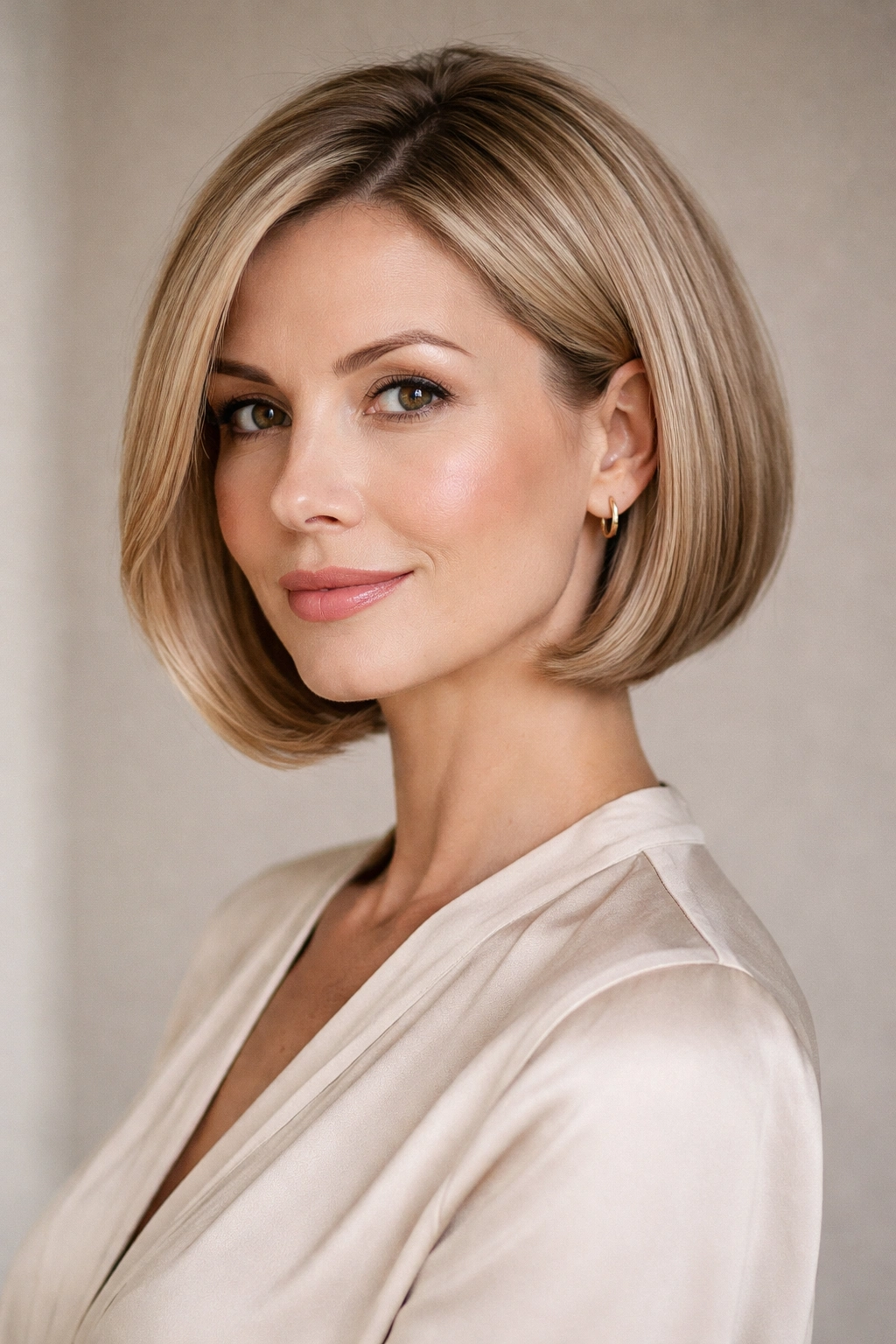
This is the bob I’d hand to someone who wants shape without drama. It lands right at the chin, which means it frames the lower face instead of swallowing it, and that small detail changes the whole mood of the cut.
A chin-length bob works especially well if your hair is straight or has a slight bend. It keeps enough weight at the bottom to look full, but not so much that it droops. If your face has softer cheeks, this cut gives a clean edge without feeling severe. If your jaw is strong, it shows it off in a good way.
Ask for the front to hit the chin, not the lip. That tiny difference matters more than people think. I also like a very light bevel at the ends so the cut doesn’t sit like a shelf.
Best for: fine to medium hair, oval faces, and anyone who wants a neat, easy shape.
Maintenance: every 6 to 8 weeks.
Styling note: a round brush and 10 minutes is usually enough.
2. The French Bob with a Micro Fringe
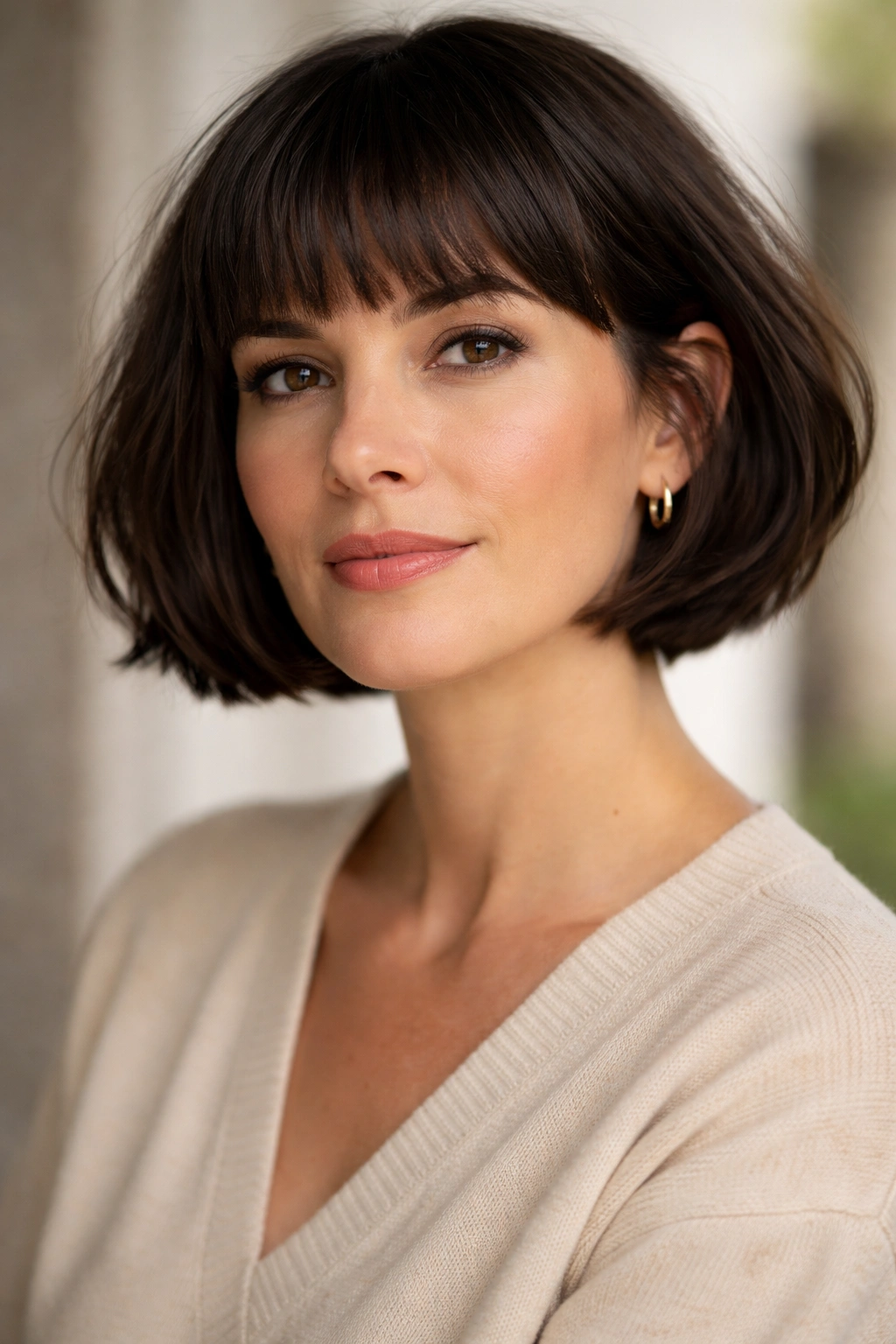
Why does this one keep coming back? Because it has personality. A French bob is short, usually around the mouth to chin area, and the micro fringe adds a little edge without needing much styling.
This cut suits women who like the idea of short hair but do not want anything fussy. The small fringe brings attention to the eyes and brows, which can be lovely if you wear lipstick, glasses, or both. It also works well with naturally straight hair that falls neatly on its own.
What makes it different
The fringe is the whole story here. Keep it soft, not chopped to pieces, or it starts to feel harsh. I prefer a micro fringe that skims just above the brows rather than one that sits way up on the forehead. That keeps the look wearable.
- Ask for the bob to stay slightly rounded at the sides.
- Keep the fringe light enough to move.
- Skip heavy texturizing if your hair is already fine.
- Trim the bangs more often than the rest of the cut.
Pro tip: If your forehead is short or your hairline grows in a strong swirl, ask for a softer fringe instead of a blunt one.
3. The Layered Bob for Fine Hair
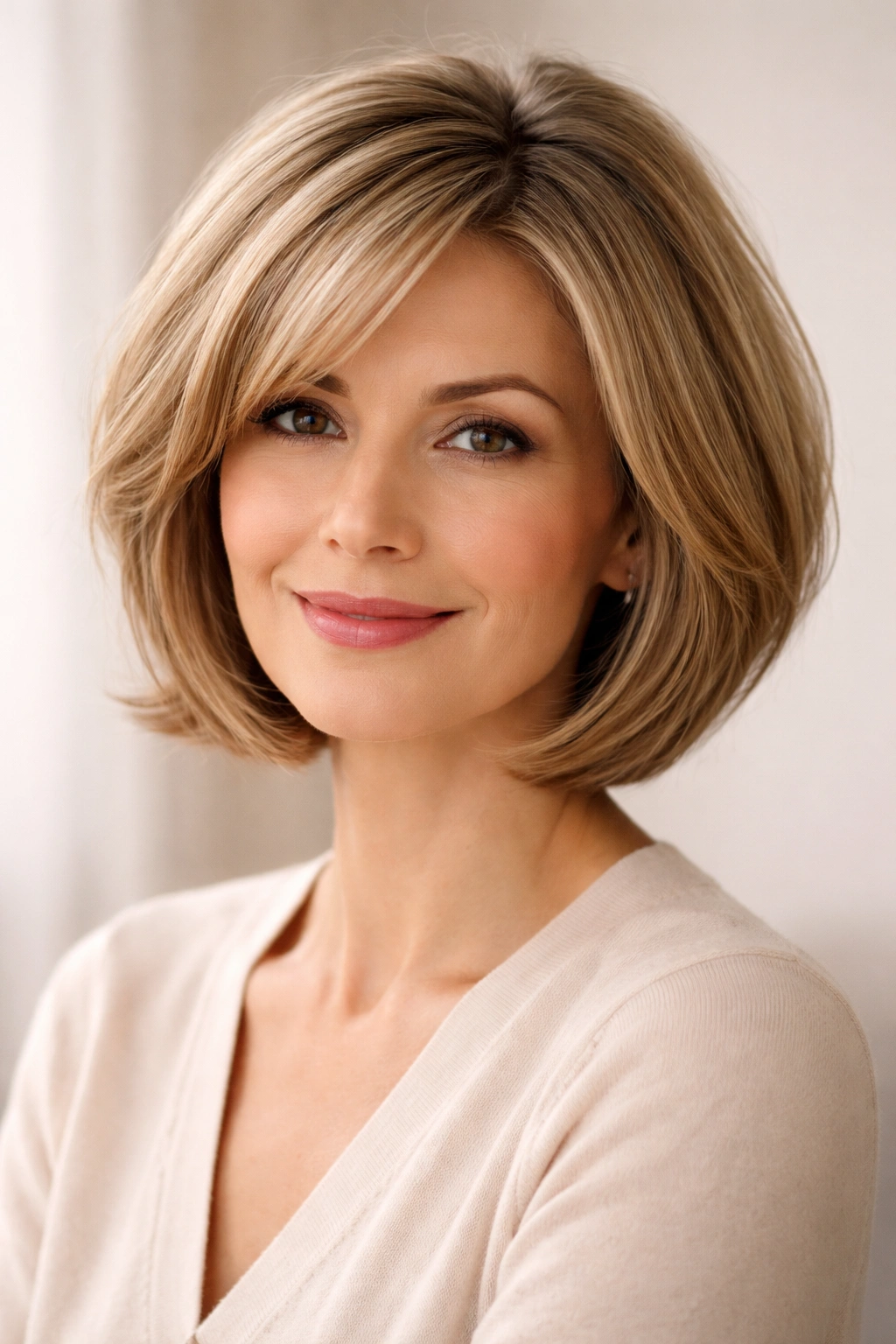
If your hair goes flat the second you step outside, this is the one worth paying attention to. Internal layers give the cut lift without leaving the ends thin and stringy, which is the mistake a lot of layered bobs make.
The trick is restraint. You want weight removed from the inside, not hacked away from the outside. That keeps the bob looking full at the perimeter while still letting the crown sit a little higher. On fine hair, that’s the difference between “nice cut” and “why does my hair look tired by noon?”
What to ask for at the salon
Tell your stylist you want a bob with invisible layers or soft internal layering. That usually means the ends stay clean while the inside gets a bit of breathing room. If you want more lift, ask for a touch of volume at the crown, but keep it subtle.
How to style it
A mousse at the roots and a medium round brush can do a lot here. Dry the crown first, then shape the ends under just a little. Too much layering will make fine hair look see-through, so this cut needs a light hand.
4. The Blunt Bob with Clean Ends
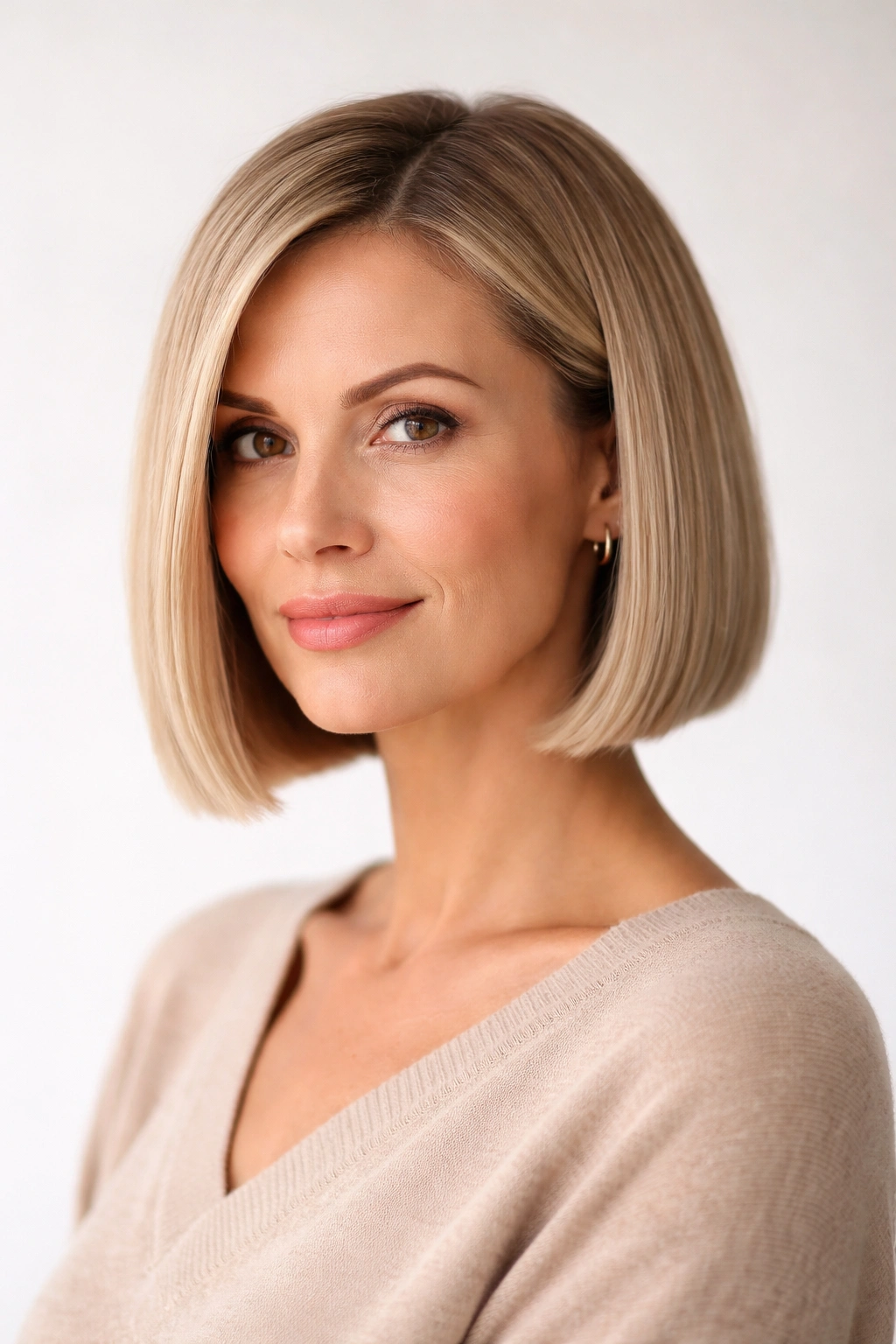
A blunt bob is not harsh when it’s cut well. It’s crisp. There’s a difference.
This shape uses a straight perimeter to make the hair look thicker, which is exactly why it works so well on straight to slightly wavy textures. If your hair has lost some density over the years, the blunt edge gives it back some visual weight. It also looks good with glasses because the line of the cut and the line of the frames can play off each other nicely.
The main thing to watch is bulk. Thick hair can puff out if the stylist doesn’t remove a little weight from the inside, especially around the back. You want the edge to be clean, not swollen. A slight bevel at the ends helps a lot.
This is a low-nonsense cut. It looks polished with minimal effort, and that alone makes it a strong choice. Just keep up with trims every 6 weeks or so, because a blunt line loses its point fast once it starts to grow out.
5. The A-Line Bob
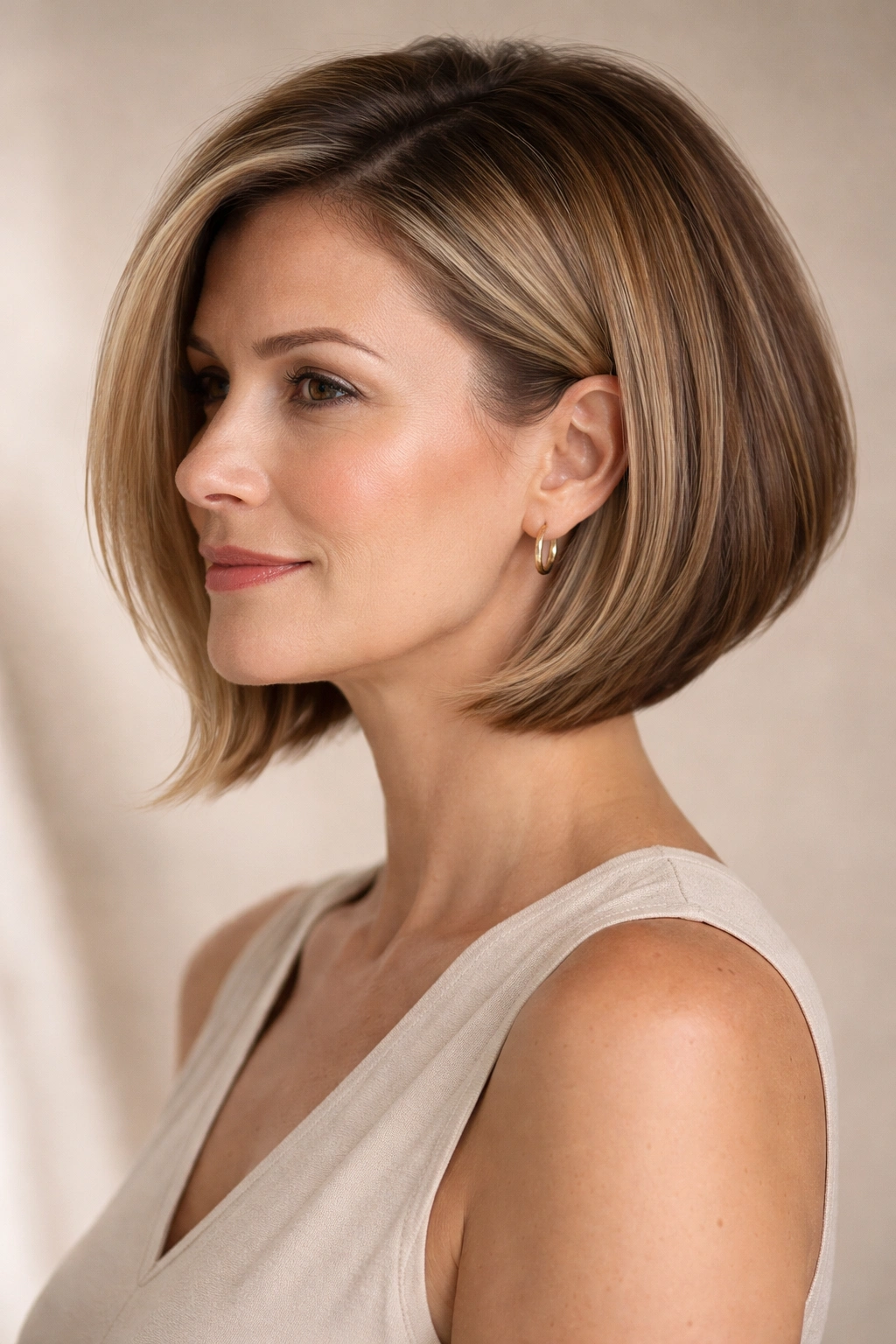
If you want a little drama without going short-short, the A-line bob is a smart move. The back sits a bit shorter, and the front drops longer toward the chin. That angle gives the face a longer line and the neck a cleaner shape.
I like this cut for rounder faces and fuller cheeks because it draws the eye down instead of letting everything stop at one width. It also looks good on women who like to tuck one side behind the ear. That small habit can make the whole style feel relaxed instead of stiff.
A steep A-line can look dated if it’s too obvious, so I usually prefer a gentle slope. You should see the angle, but not feel like you’re wearing geometry on your head. Keep the front pieces just grazing the jaw or a touch below.
Best styling move: blow-dry the back smooth and let the front move a little.
Avoid: making the front too long if you want the cut to feel fresh and balanced.
6. The Shaggy Textured Bob
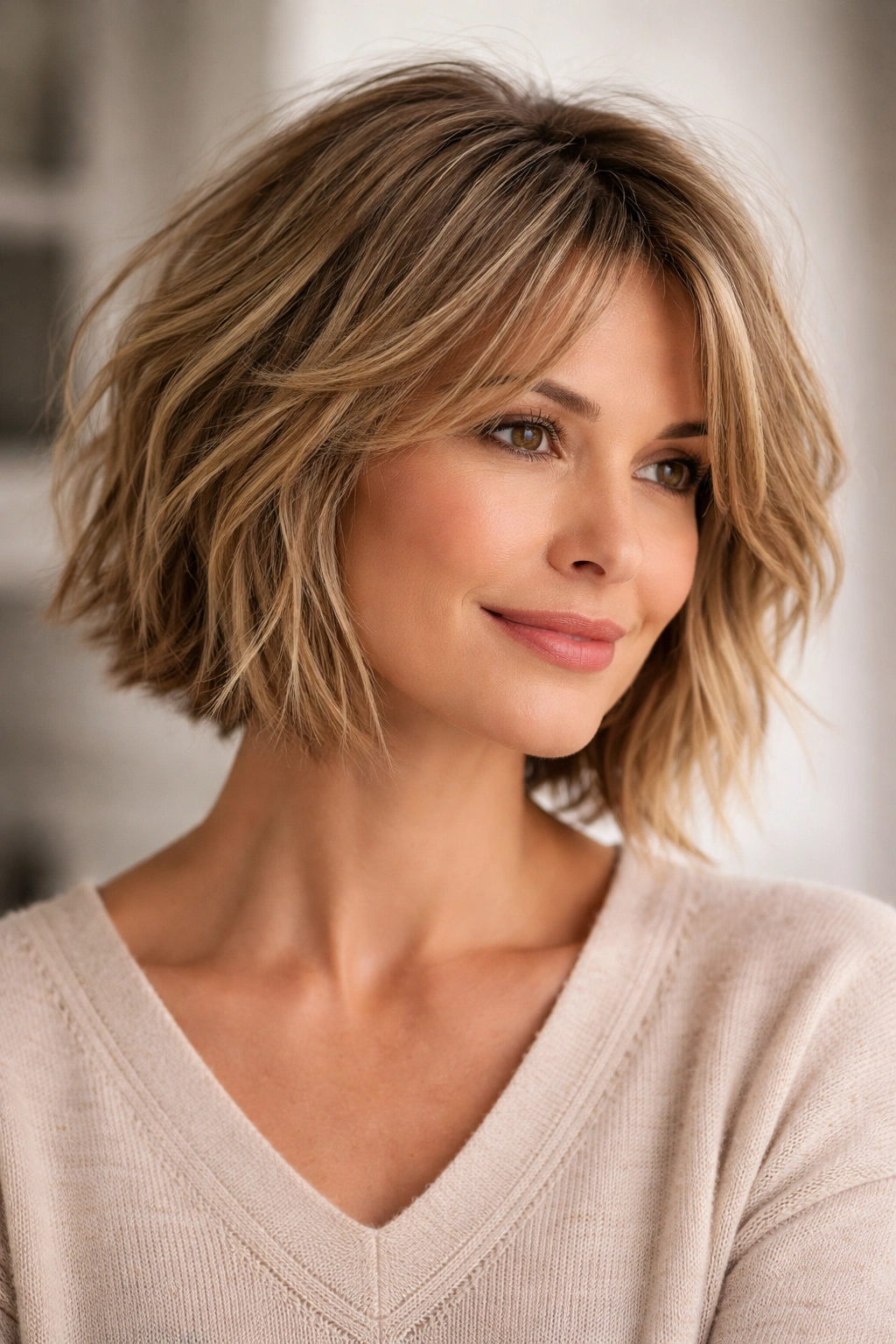
Unlike a blunt bob, this one lives on movement. It has piecey ends, soft layers, and a little roughness on purpose, which is why it works so well for hair that has wave or bend in it already.
The shaggy bob is useful when your hair wants to do its own thing. You’re not forcing it into a sleek shape every day. You’re giving it a cut that looks better when it’s a little undone. That’s a relief for anyone who’s tired of round brushing for 20 minutes.
A good shaggy bob should never look choppy in a cheap way. The ends need to be broken up, not thinned to scraps. A small amount of mousse or curl cream, scrunched into damp hair, usually does the job. If you want more lift, a diffuser helps without wrecking the texture.
This is a strong pick if you like a casual look and don’t mind a bit of texture showing. It’s not the cut for someone who wants a perfectly smooth outline every day. Different mood.
7. The Soft Inverted Bob
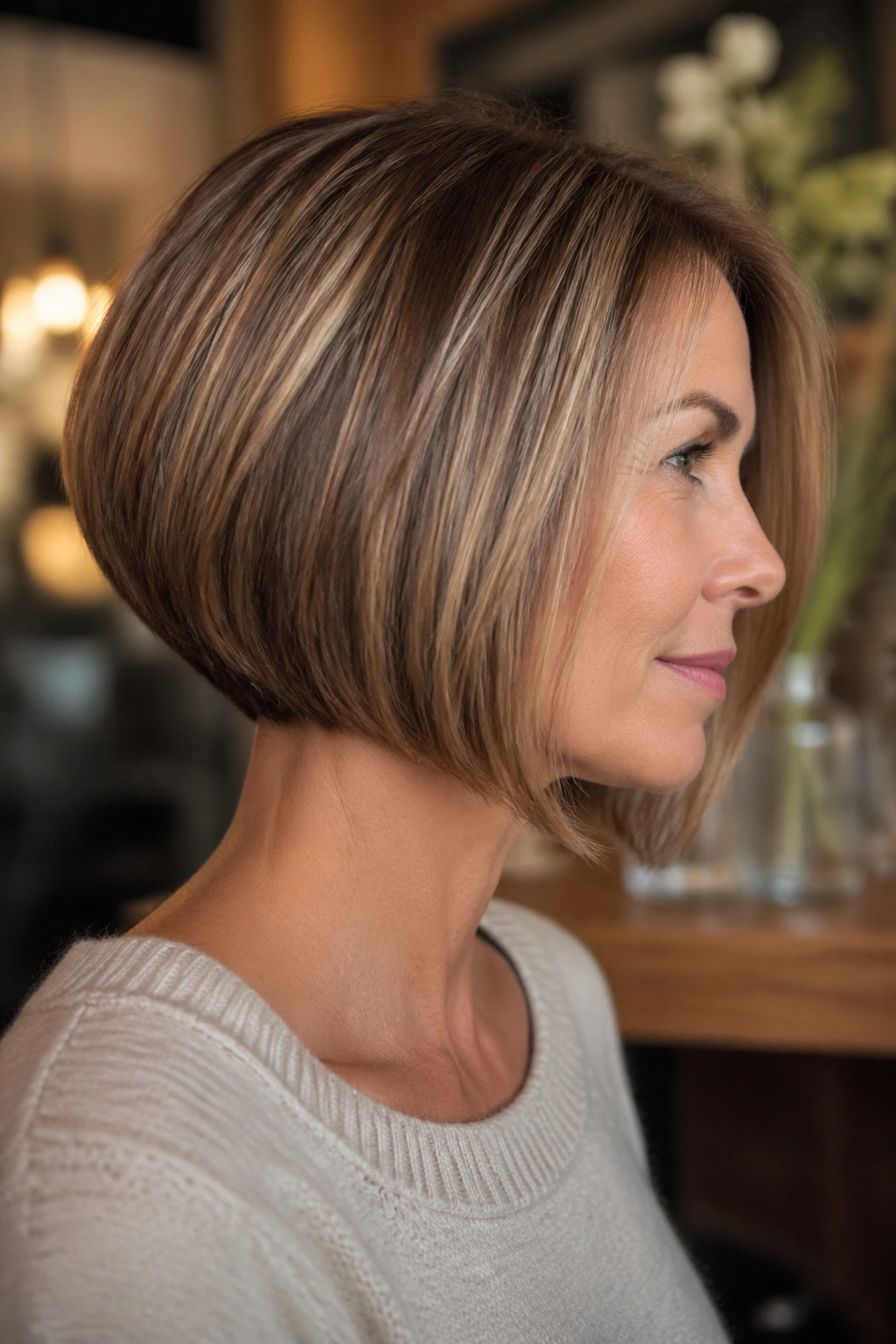
The back hugs the neck. The front brushes forward. That simple shape is why the soft inverted bob can look so clean.
It’s a good choice if the back of your head sits flat or if you want a little lift without the stacked, spiky feel some inverted bobs get. The line should curve gently, not snap upward. Too much graduation can make the style feel old-school in the wrong way.
What I like about this bob is the neckline. It keeps the back neat, which makes scarves, collars, and earrings all behave better. That sounds small. It isn’t. A haircut sits next to your clothes every day.
Ask for softness through the back and a front that stays slightly longer than the nape. Then keep the blow-dry smooth, with just enough bend to show the curve. If your hair is straight, this one can look sharp. If it’s lightly wavy, it gets even better.
8. The Collarbone Lob
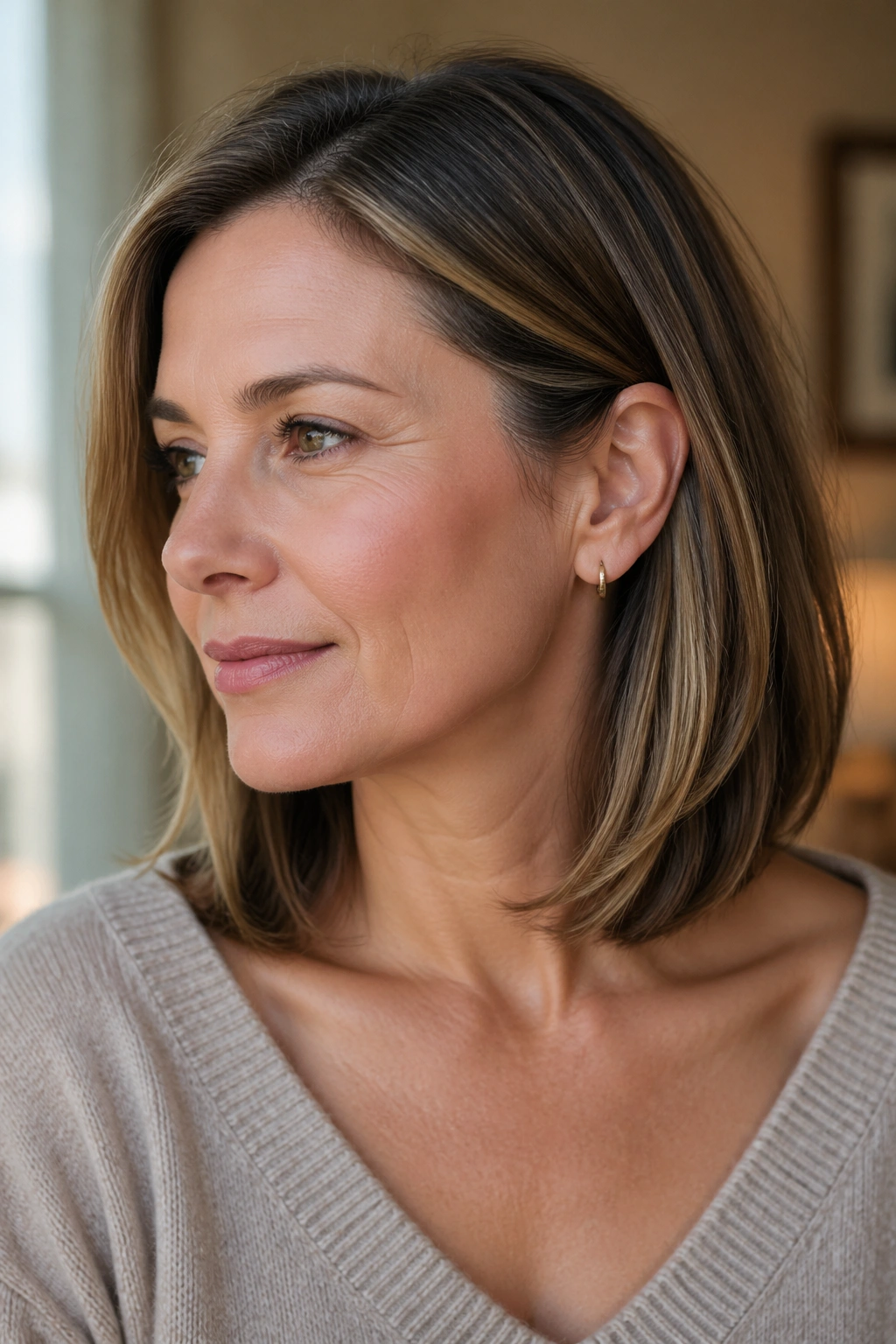
If you’re bob-curious but not ready for a shorter cut, start here. A collarbone lob gives you the shape of a bob with enough length to tuck behind the ears, pull into a low knot, or wear with a soft bend through the ends.
Why it’s so forgiving
The collarbone is a useful stopping point because it gives the hair a natural place to rest. That means the cut doesn’t fight the body. It also works well if you’re growing out layers, a shorter bob, or even a color change and want a shape that still looks deliberate.
How to wear it
- Keep the ends blunt if your hair is fine.
- Add a few long layers if your hair is thick or wavy.
- Use a 1.5-inch curling iron for loose bends, not tight curls.
- Part it off-center if you want a little lift at the roots.
A lob is also one of the easiest cuts to live with. It does not demand much, and that makes it a quiet favorite for women who want polish without losing flexibility.
9. The Curly Bob

Curly hair and bob cuts can be a fantastic match, but only when the shape respects the curl pattern. Cut curls like straight hair and you get triangle head. Nobody wants that.
The best curly bob usually gets shaped with shrinkage in mind. That means the length you see wet is not always the length you’ll see dry. A good stylist will either cut the curls dry or work carefully around the natural spring of the hair so the outline stays even.
How to think about it
A curly bob needs room to move. The inside shape matters more than a hard edge, because curls stack on each other. If your curls are loose, a chin-length version can look lovely. Tighter curls may feel better a little longer, where the weight helps the shape sit down instead of puffing out.
Use a leave-in conditioner, a curl cream, and a diffuser if you want definition. Or air-dry and leave some softness in the finish. Both can work.
The big mistake: cutting too much off at once. Curls spring up. A lot.
10. The Wavy Bob with a Side Part
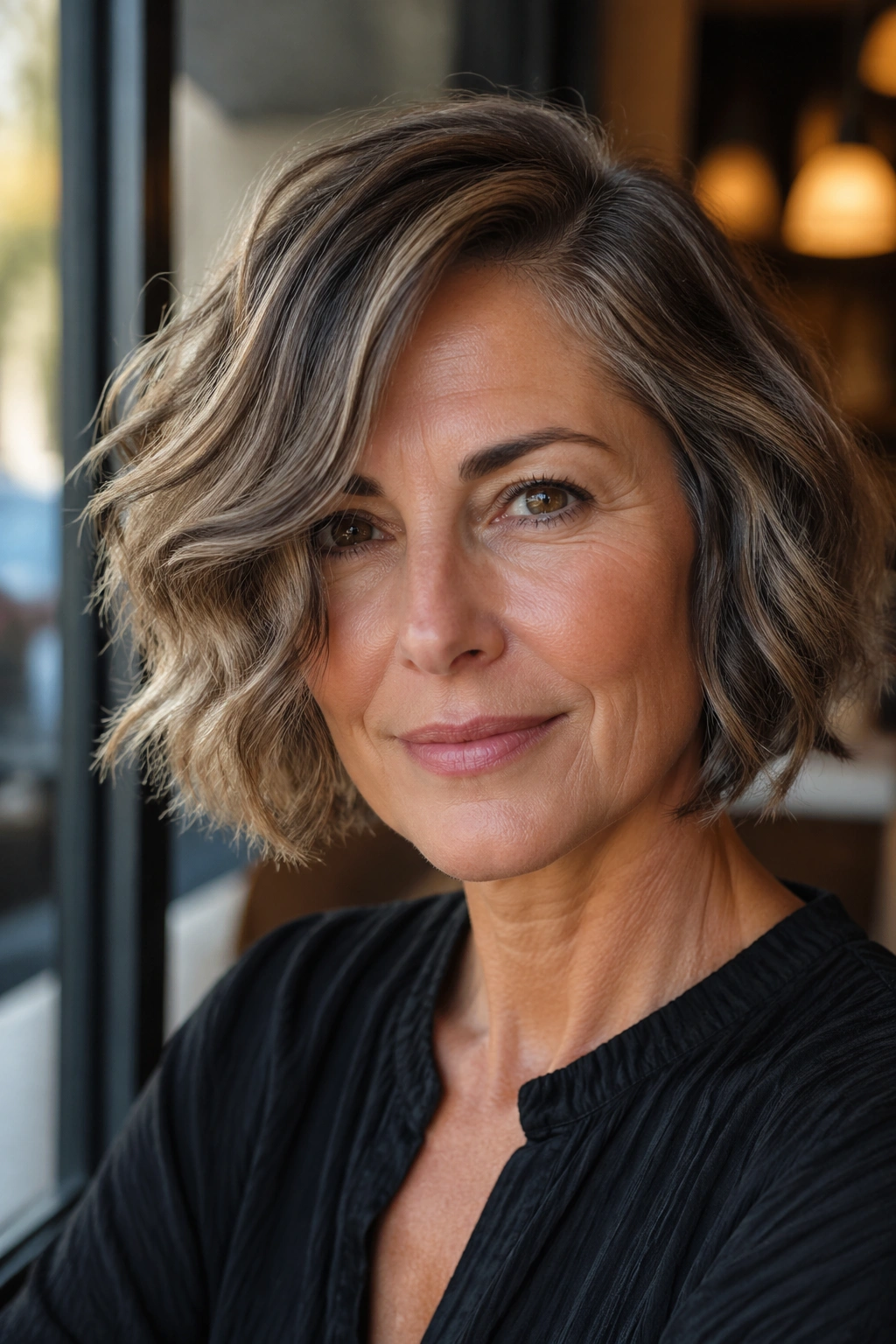
A side part and one clean wave near the front can make a bob look done without much effort. That’s the appeal here. It feels relaxed, but not lazy.
This cut is made for hair that already has a bit of bend. If your waves come in naturally, the bob should follow them instead of fighting them. A soft side part helps the hair fall away from one side of the face and gives the roots a little lift where they need it most.
I like this look because it doesn’t insist on perfection. It lets the texture do some of the talking. A mousse through damp hair, a quick scrunch, and a rough dry can be enough on good days. On days when the wave falls flat, one pass with a curling wand around the front pieces usually fixes it.
The only caveat: if your hair is pin-straight and stubborn, this style can turn into a lot of work. In that case, choose a different bob and save yourself the argument.
11. The Side-Swept Bang Bob
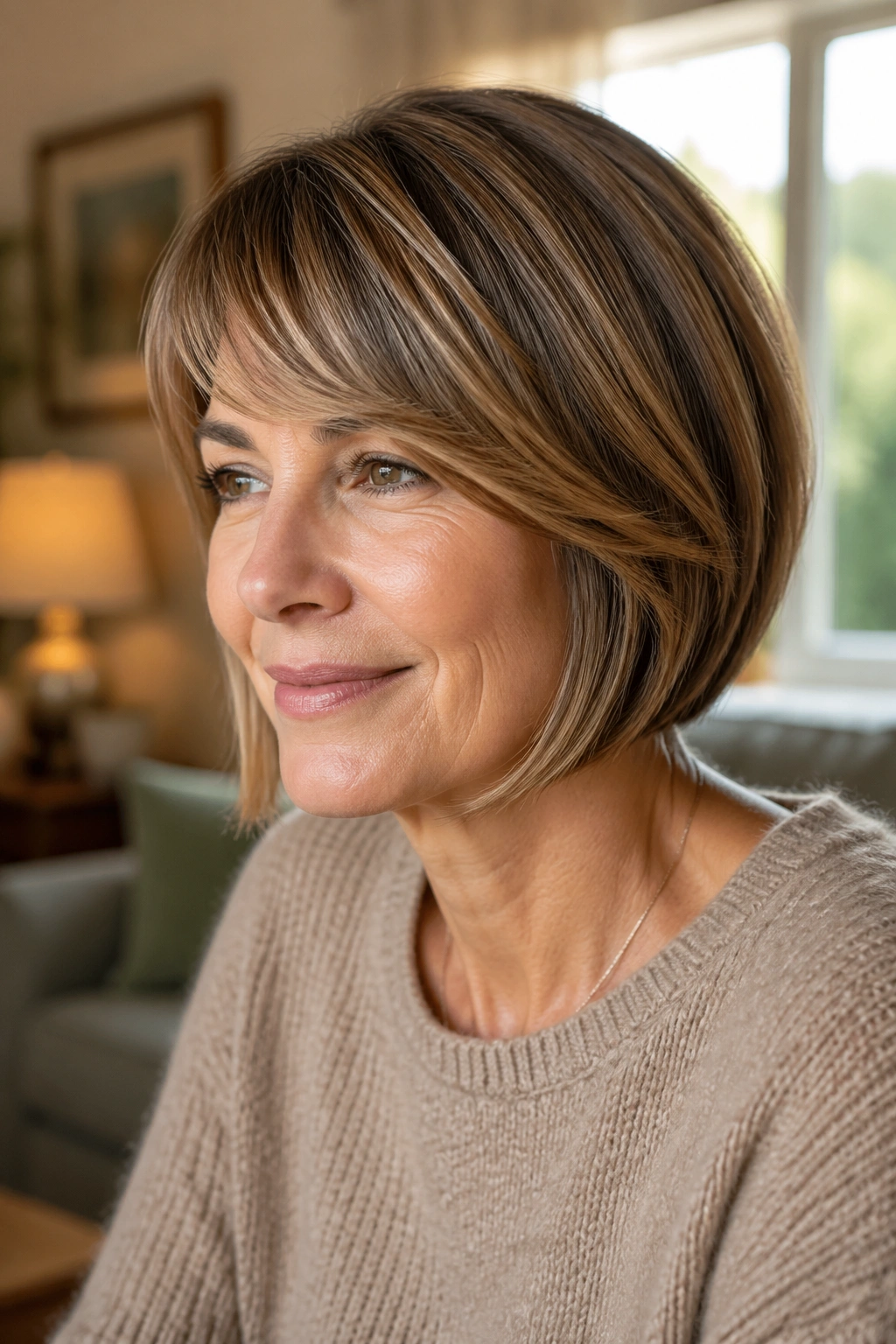
Bangs can change a haircut fast, and side-swept bangs are the safest place to start. They soften the top half of the face and blend into the rest of the bob instead of sitting there like a separate event.
This works well if you want to draw attention toward the eyes and cheekbones. It also helps balance a stronger jaw or a longer face shape. The sweep should feel easy, not rigid. If the fringe is cut too short or too thick, it starts bossing the whole cut around.
A side-swept bang bob needs regular trims around the fringe, even if the rest of the cut can wait a bit longer. That’s the trade-off. Worth it, in my opinion, if you like your hair to feel soft around the face. A round brush or a quick bend with a flat iron keeps the bang moving instead of sticking to the forehead.
If you’ve been nervous about bangs, this is the least risky version. It gives you the effect without locking you into a heavy fringe.
12. The Stacked Bob
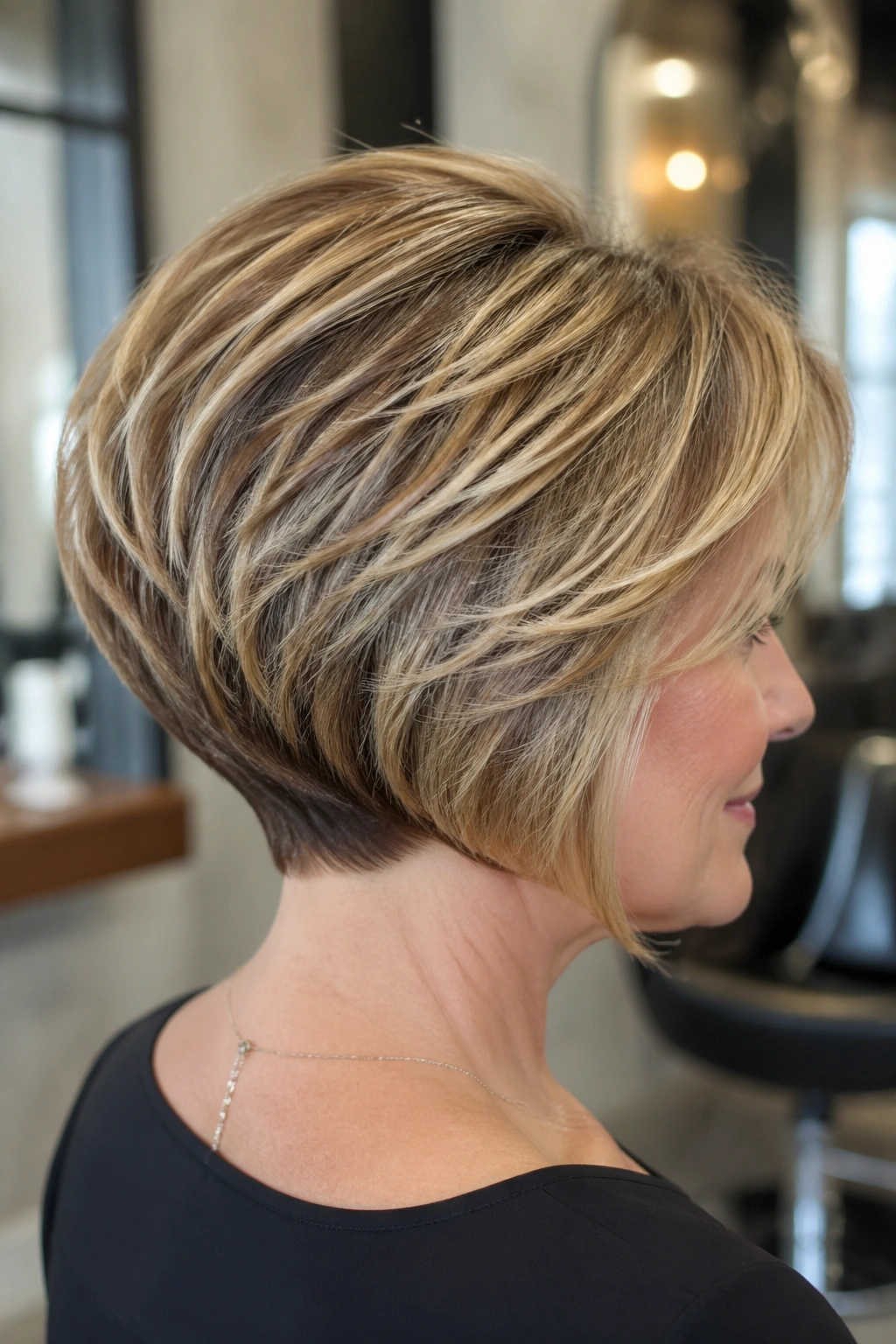
Volume lives here.
A stacked bob uses shorter layers in the back to build lift at the crown and nape, which makes it a strong choice for hair that lies flat or feels limp after a few hours. If your hair has gotten finer or less dense, this shape can bring back some visual fullness right where it matters.
The shape does need a careful hand. Too much stacking, and the back can look too round or too sharp. Too little, and you lose the whole point. I prefer a soft stack that reads clean from the side and still feels wearable from the front.
- Best for straight or lightly wavy hair
- Good if you want the crown to sit higher
- Not ideal if you want a loose, undone finish
- Works well with a neat neckline and small earrings
A stacked bob also holds up nicely under coats and scarves because the back keeps its shape. That sounds boring. It isn’t. Winter hair usually gets ignored until it misbehaves.
13. The Asymmetrical Bob
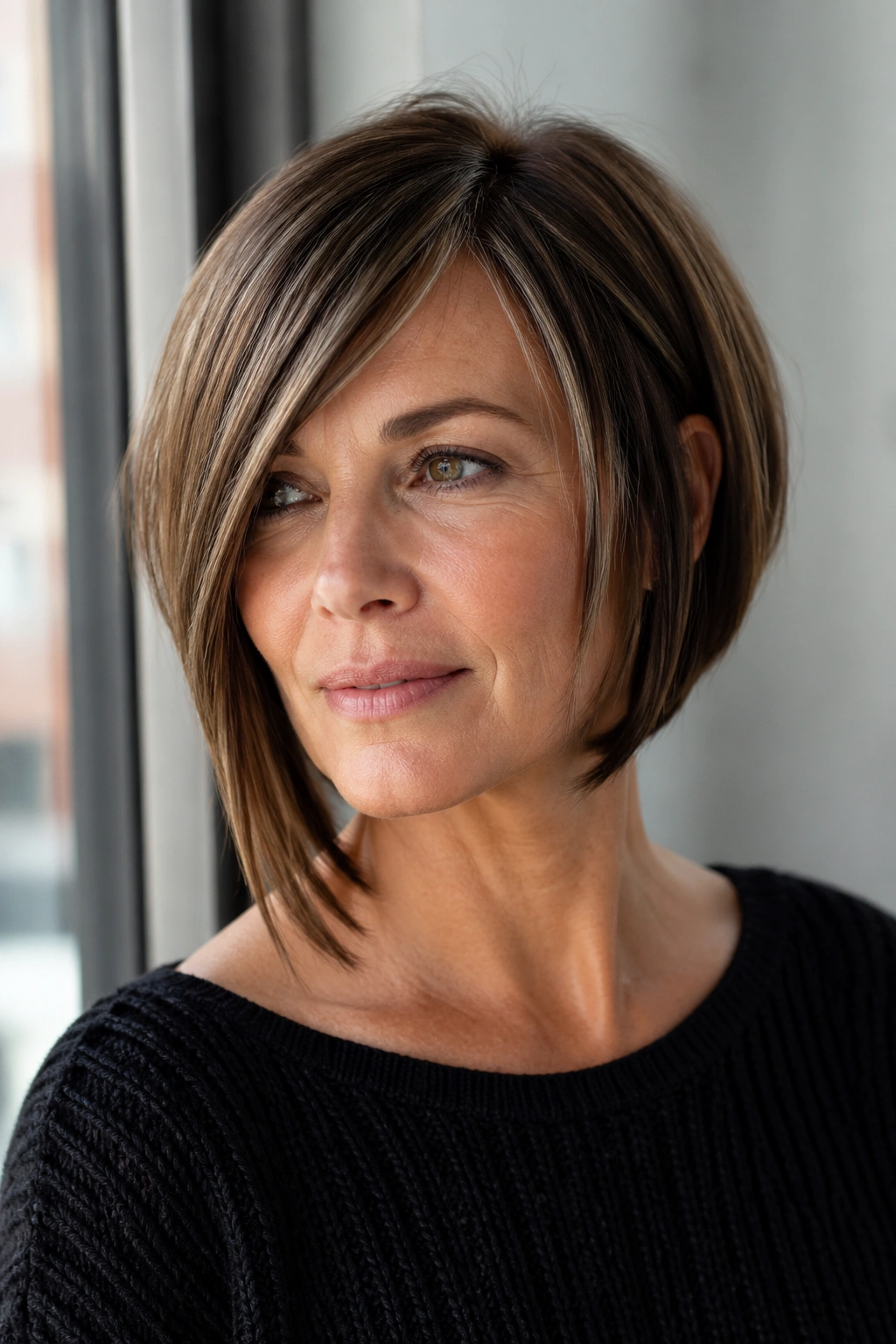
Want a bob that feels sharper without going wild? Try asymmetry. One side stays a touch longer than the other, and that small imbalance gives the cut energy.
The trick is to keep the difference modest unless you really want the statement version. A subtle asymmetrical bob can be elegant and easy to wear. A dramatic one can be fun, but it asks more from the rest of your look. Hair, makeup, clothes — all of it starts talking louder.
This cut can also be useful if one side of your hairline is stronger than the other, or if your face has a bit of natural asymmetry, which nearly all faces do. The longer side draws the eye and smooths out the visual line.
Who it suits best
Women who like clean shapes, side parts, and a little edge usually wear this well. It also looks good with simple earrings because the cut itself does enough.
Styling note: keep one side tucked behind the ear now and then. That shows the shape without making a production out of it.
14. The Curtain-Bang Bob
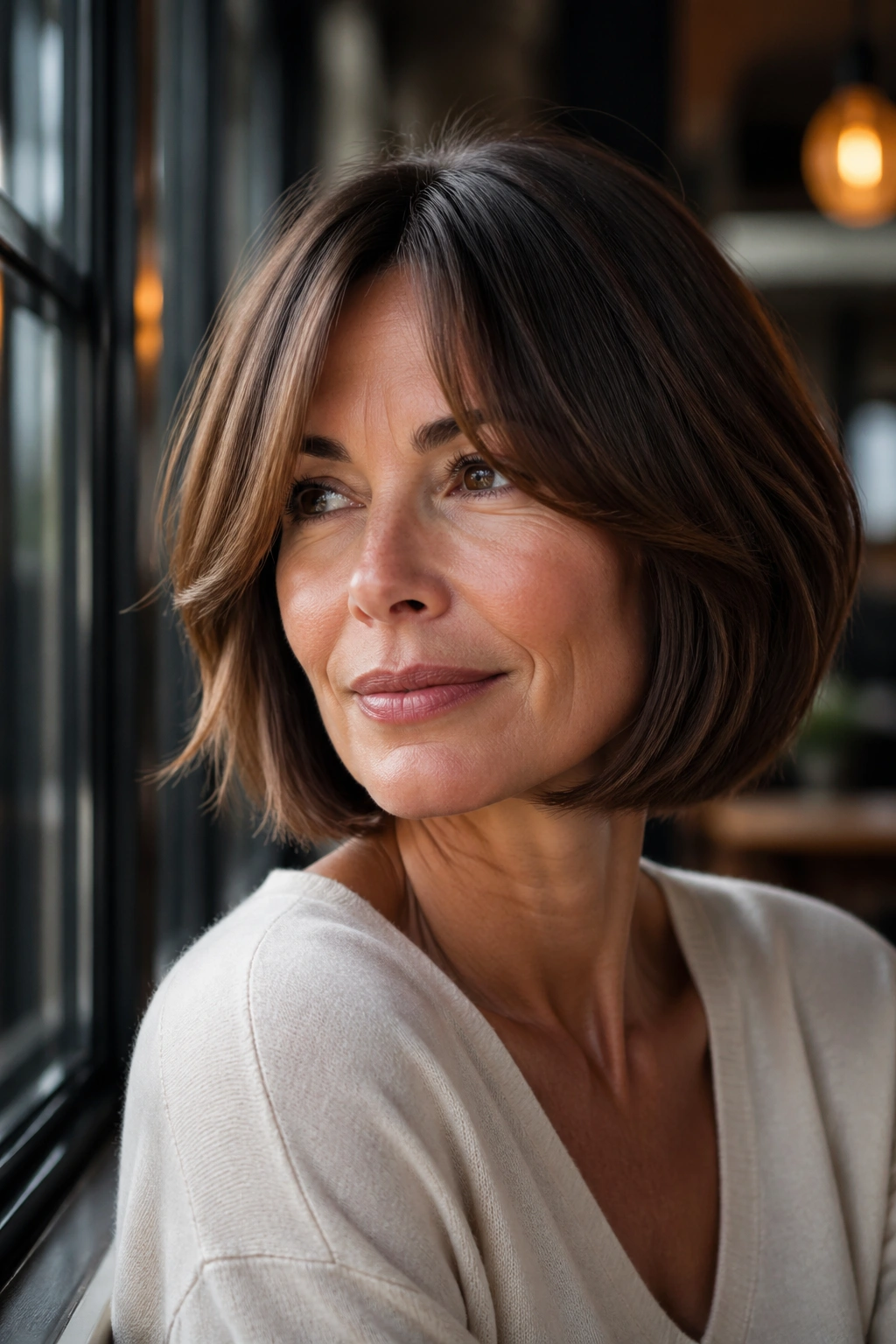
Unlike side-swept bangs, curtain bangs part in the middle and open around the face. That little split changes the whole feel of the bob. It makes the cut look softer and less boxed-in.
This is a smart option if you want face-framing movement without a full fringe. Curtain bangs blend into a bob easily, which helps if you like to grow your hair out in stages. They also work well if your forehead feels long or if you want the cut to sit lighter around the eyes and cheekbones.
Best way to wear it
The bangs need a little direction at first. Blow them with a round brush away from the face, then let them fall into place. A flat iron can add a small bend if the hair is stubborn. Keep the longest pieces around cheekbone length so they can merge into the side layers.
What to watch for
- Too-short curtain bangs can pop up weirdly.
- Too-thick ones can hide the face.
- Soft, airy pieces usually look better than heavy ones.
This is one of those cuts that can feel casual and polished at the same time, which is harder to pull off than it sounds.
15. The Italian Bob
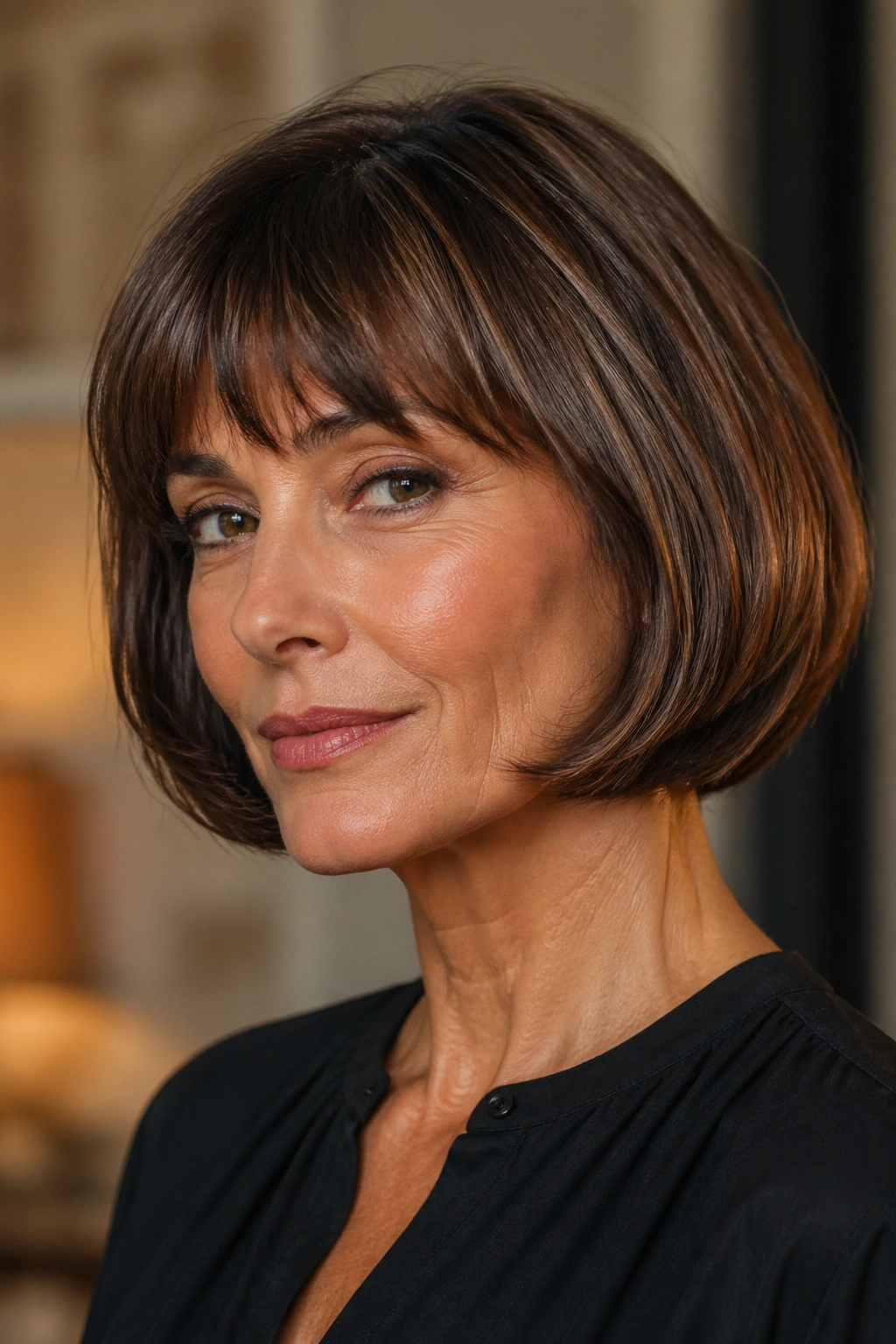
This is the bob for people who want fullness, not fuss. The Italian bob is usually chin to jaw length, with a fuller perimeter and just enough rounding to keep the shape soft.
It works especially well on thicker hair because the bulk becomes part of the style instead of a problem to fight. You’re not trying to remove every ounce of weight. You’re shaping it so it sits nicely and keeps a rich outline. On the right head of hair, it has a lush, almost old-movie feeling.
I also like it for women who prefer a side part and a little movement at the ends. It can look polished without looking tight. That’s a useful distinction. A lot of shorter styles collapse into “done.” This one keeps a little ease.
Keep the layering light. If the cut is over-thinned, it loses the whole point. The magic is in the body of the line and the way it sits around the face, not in a lot of chopped-up texture.
16. The Tapered Bob for Thick Hair
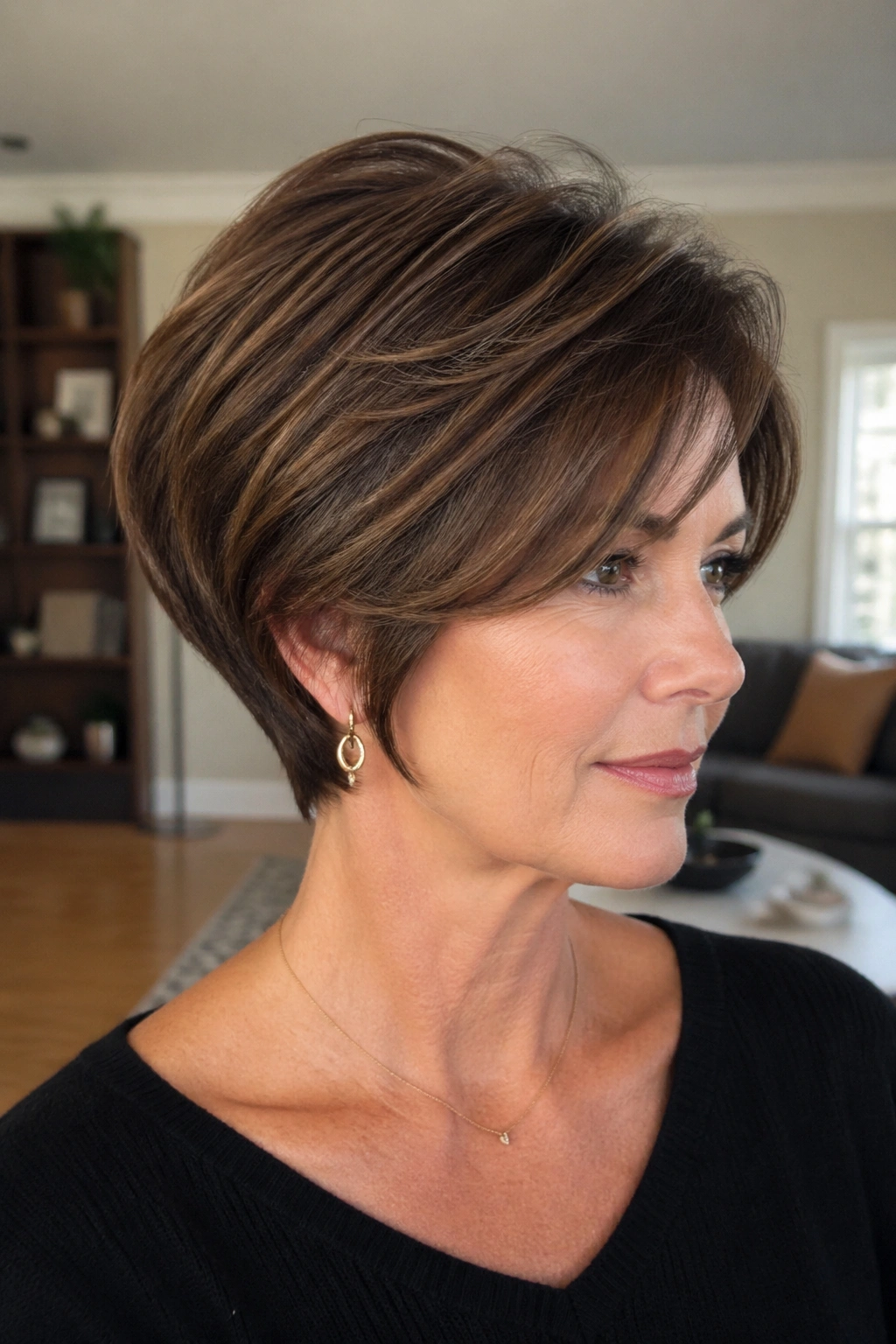
Dense hair needs a plan. If you cut it all one length, it can turn into a triangle by noon. The tapered bob solves that by reducing bulk from the interior while keeping the outline clean.
This cut is especially good if your hair feels heavy at the nape or if you’ve been told to “thin it out” one too many times and ended up with frizz instead. Tapering is more controlled than random thinning. It lets the stylist remove weight where it’s needed and leave the parts that make the shape look full.
A tapered bob should sit close to the neck without feeling stuffed. The sides can stay slightly longer to keep the look balanced. If you wear your hair natural, this shape can make thick waves behave better too.
Styling tip: use a smoothing cream at the mids and ends, not a heavy oil. Too much product will weigh the cut down and flatten the shape you just paid for.
This is one of the best bob cuts for women over 40 who have a lot of hair and do not want it taking over the room.
17. The Feathered Rounded Bob
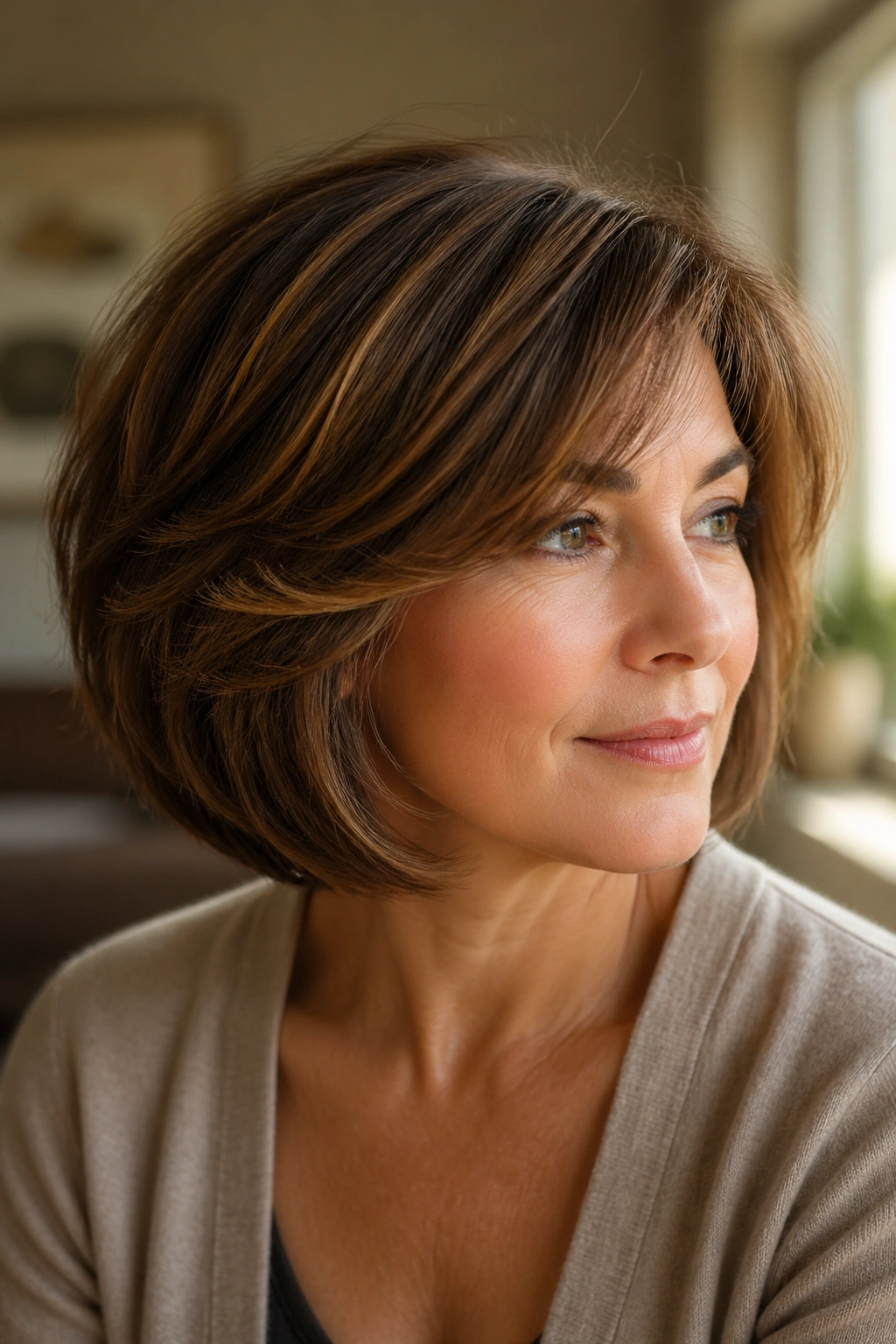
If blunt edges feel too hard, feathering is the answer. A feathered rounded bob has soft layers through the mid-lengths and a curved outline that bends gently toward the face.
The shape works well on fine to medium hair because the feathering adds motion without making the ends look scraggly. It also suits women who want softness around the cheeks and jaw. The roundness keeps the cut from feeling severe, which is useful if your features are already strong.
I like this style with a blow-dry brush or a large round brush. You can push the ends under for a neater finish or leave them a touch flipped for a looser feel. Either way, the movement should look built in, not sprayed into place.
Be careful with over-feathering. That’s where the cut starts to look thin and overworked. A little lift goes a long way. A lot goes nowhere good.
This is a nice choice if you want a bob that feels gentle but still has shape. It’s calm hair. In a good way.
18. The Pixie Bob
Shortest in the bunch, and not for the timid. A pixie bob sits between a pixie and a bob, with a closer nape, slightly longer sides, and enough top length to sweep or tuck.
This cut gives the face room. It shows the neck, opens the jawline, and makes earrings matter again. If you like low-fuss hair and you’re tired of full styling routines, the pixie bob can be a relief. It dries fast. It moves fast. It gets out of your way.
The catch is confidence. You do need to be comfortable seeing more of your face, because this cut does not hide much. That said, it can be incredibly flattering on women with strong features, pretty cheekbones, or a good natural wave at the crown.
Keep the top soft so it doesn’t turn stiff. A dab of styling cream or a little texture paste is often enough. And if you want this cut to stay clean, book trims more often than you would for a longer bob. Short hair tells on you sooner.
One last thing: bring photos, but also bring a sense of how much neck and jaw you want visible. That detail matters more than the label.
