



A bob bowl cut can look painfully awkward or quietly sharp, and the difference usually comes down to inches. Shift the weight line a little higher, soften the fringe corners, or let the sides skim the jaw instead of bulking out at the cheeks, and the whole thing stops reading as a costume cut.
That’s why bob bowl cuts keep coming back in different forms. The shape has a built-in retro edge, but it also has range. One version sits neat and glossy against the head. Another feels shaggy and lived-in. A third works because it leans into curls, not against them.
The line matters most. Put it too low and the head can look boxed in. Put it too round and the silhouette gets helmet-ish. Put it in the right place, though, and you get that cool, slightly graphic profile that looks deliberate from the front and even better when you turn your head.
1. The Classic Pageboy Bob Bowl Cut

The classic pageboy version is the one most people picture when they hear bob bowl cut, but the good ones are lighter than the old-school memory. The hair curves under at the ends, the fringe sits clean across the forehead, and the sides tuck in just enough to frame the cheekbones instead of swallowing them.
Why the curve matters
That undercurve is the whole point. If the ends kick out, the style loses its neat little shell shape and starts looking unfinished. If the curve is too tight, though, it turns stiff fast. The sweet spot is a smooth bend that starts around the jaw and glides inward.
This cut works best on straight to softly wavy hair, especially if your hair has enough density to hold the line. Fine hair can do it too, but it needs a bit of root lift at the crown so the shape doesn’t collapse. Thick hair often looks best when the interior is reduced a touch, not the outline itself.
- Length usually lands between the cheekbone and jawline.
- The fringe should be blunt, but not boxy at the corners.
- A slight taper at the nape keeps the back from ballooning.
- Blow-drying under with a round brush gives the cleanest finish.
Keep the corners soft. That tiny bit of softness at the temples is what stops the style from looking like a costume wig from the neck up.
2. The Micro Bob Bowl Cut With a Sharp Edge
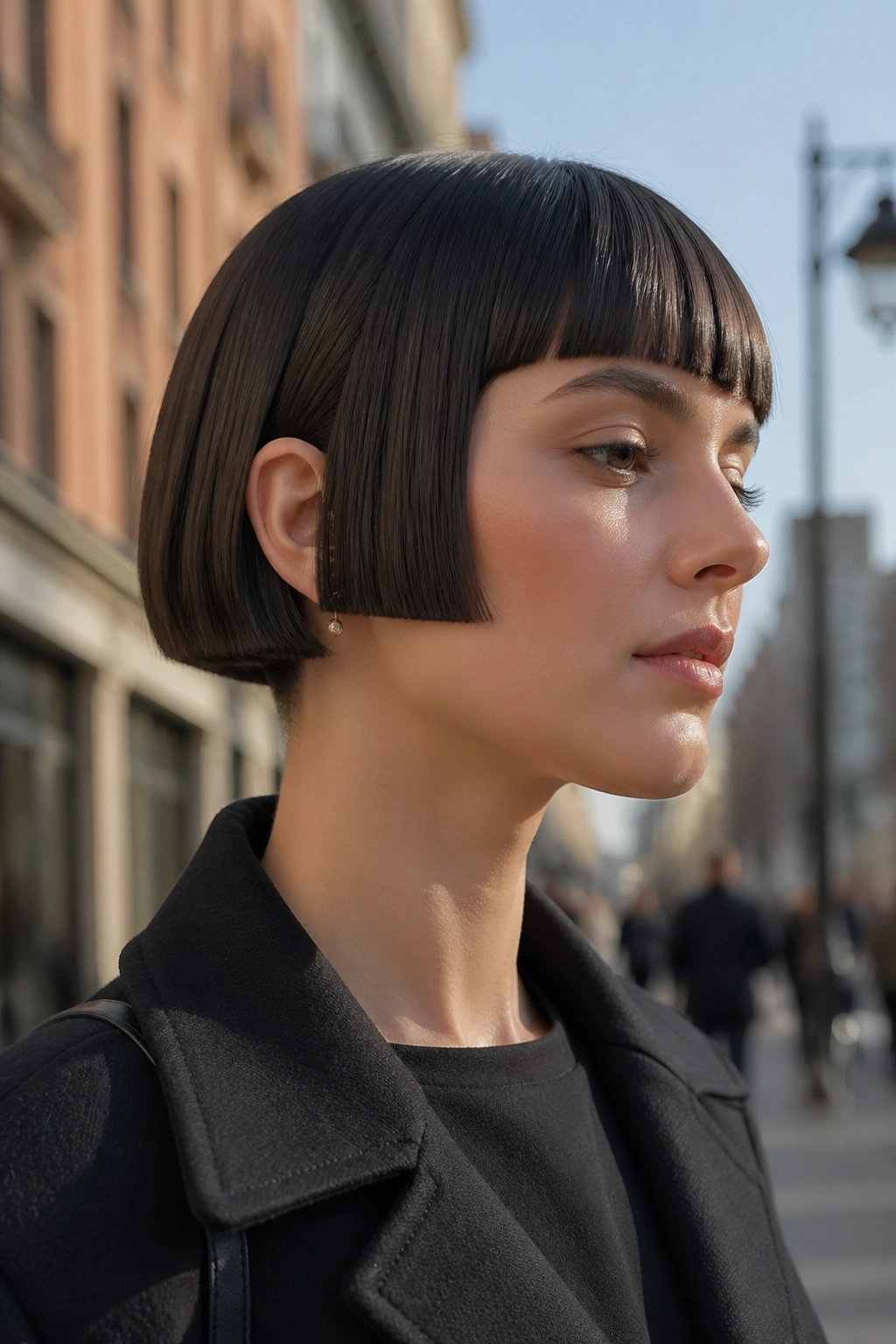
If you want the shape to read as fashion instead of nostalgic, go shorter than you think. A micro bob bowl cut sits high—often just under the ear—and it puts all the attention on the line itself. That makes the haircut feel crisp, graphic, and a little bit cheeky.
The sharp edge is what gives this version its punch. A micro length shows every curve, every bend, every missed section, so the cut has to be clean. I like it best on straight hair or on hair that can be blown sleek with a flat brush, because the finish matters more here than it does on a shaggy version.
It also has a practical upside: the shorter length opens the neck and makes earrings, collars, and jawline shape part of the whole look. That sounds small. It isn’t.
You do need to commit to maintenance. A micro bowl bob loses its shape fast once it grows past the ear, and the line starts sitting in an odd place. If you like your hair to look deliberately cut, not merely shorter, expect trims every 3 to 4 weeks. Any longer and the silhouette can sag.
This is the version I’d send to someone who wants a retro cut without softness. It’s blunt, lean, and a little stubborn, which is exactly why it works.
3. The Chin-Length Rounded Bowl Bob
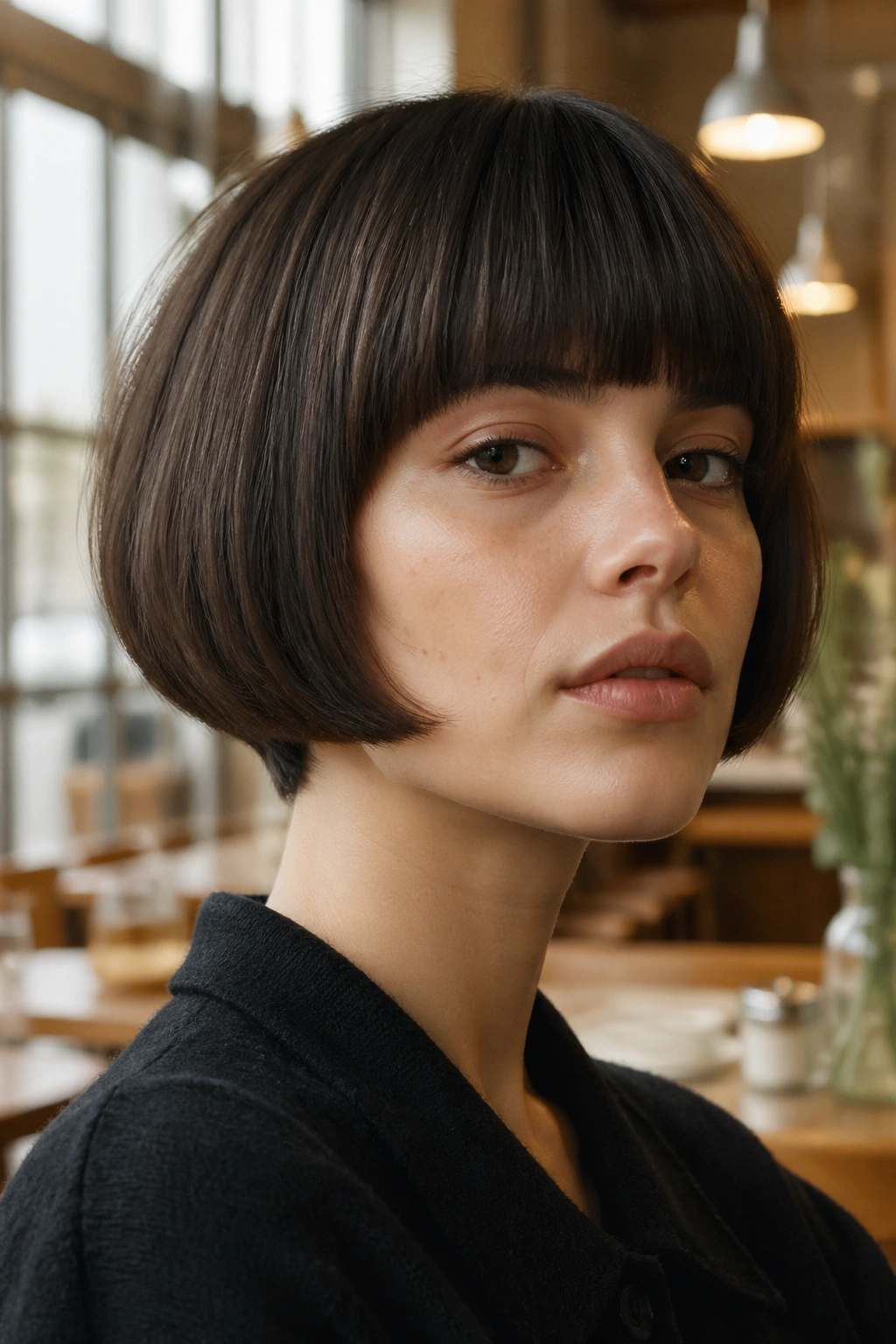
Why does a chin-length rounded bowl bob feel softer than the sharper versions? Because the eye reads the line as a frame, not a cap. Once the ends land right at the chin, the haircut stops enclosing the face and starts tracing it.
That extra length changes everything. The roundness still gives you the bowl-bob shape, but the chin-length edge opens up the jaw and makes the whole cut less severe. It’s a smart move if you want the retro look without the rigid top-heavy feel that a shorter bowl can create.
How to ask your stylist for it
Ask for a blunt perimeter that brushes the chin, with a rounded side profile and only a slight graduation through the nape. That gives you the curve, but it keeps the back from stacking up. If your face is narrow, a tiny bit of width at the sides helps. If your face is fuller, keep the side fullness controlled and let the front angles stay clean.
A center part makes this version feel polished. A soft off-center part gives it a little more ease. Either way, the haircut needs movement at the roots, not a lot of texture through the ends.
I like this shape for people who want a bob bowl cut that feels wearable at work and still interesting at dinner. It’s tidy without being stiff. That’s a rare combination.
4. The Soft French Bowl Bob

Picture somebody asking for “something short, but not harsh,” and then walking out with a bob that lands around the cheekbone, bends in gently at the sides, and swings just enough when they turn their head. That’s the soft French bowl bob. It keeps the outline, but it refuses to look too perfect.
The magic is in restraint. The fringe is usually a touch lighter in the center, the sides are allowed to feather toward the jaw, and the whole cut has a bit of air in it. You still see the bowl-bob geometry, but it’s been relaxed. A little.
What makes it different
- The fringe is softened rather than cut like a ruler.
- The side lengths kiss the jaw instead of covering it.
- The shape works especially well with fine-to-medium hair.
- A bend created with a medium round brush keeps it from flattening.
This is also one of the easiest bob bowl cuts to wear with glasses. The lines don’t fight the frames, and the fringe doesn’t need to sit so low that it blocks your face. If you wear hoops, collars, or anything with a strong neckline, the haircut holds its own without making the rest of the outfit feel overworked.
The key is not to overstyle it. A tiny bit of texture cream, a quick blow-dry, and a finger-scrunch at the ends are often enough. Too much product turns the softness heavy, and then the whole thing loses that French ease it was going for.
5. The Shaggy Bowl Bob With Choppy Ends
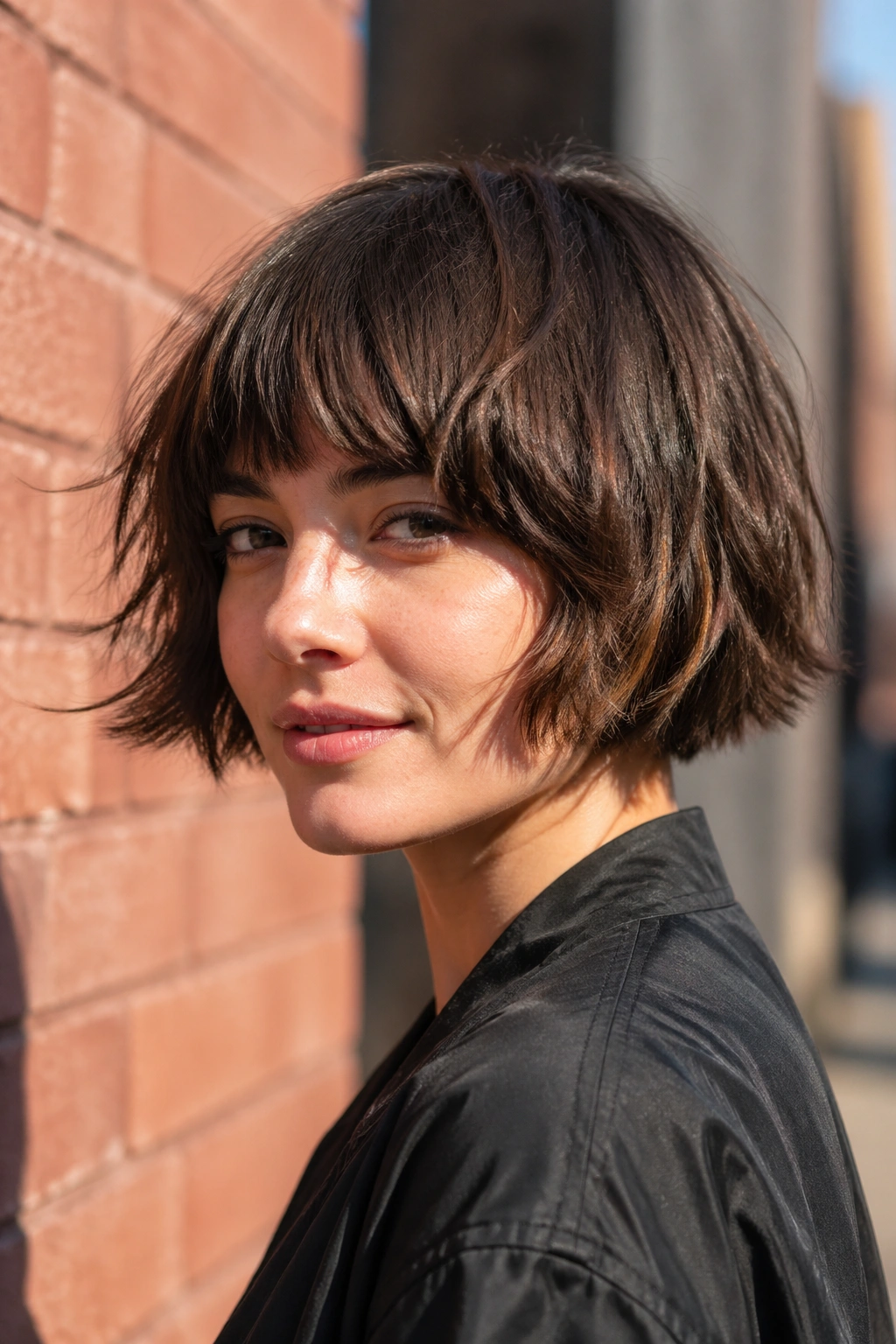
A shaggy bowl bob is what happens when you take the strict little dome shape and give it some room to breathe. The perimeter is still there, but the ends are broken up, the interior has movement, and the overall effect feels less polished and more lived-in.
I reach for this version when blunt hair would look too severe. Thick hair, especially, can carry a lot of shape on its own. Add choppy ends and you cut the bulk without losing the outline. The result is a bowl-bob silhouette that moves when you walk, which matters more than people think. Hair that swings reads younger and lighter, even when the cut is short.
A good shaggy bowl bob is usually cut with point cutting or razor work, but not so much that the edge disappears. That’s the trap. If you shred the perimeter too hard, the cut loses the whole point of being a bowl bob in the first place.
The styling is easy, which I love. Rough-dry the roots, twist small sections with your fingers, and finish with a lightweight paste or cream. Keep the product off the roots unless your hair is very slippery. A little grit at the ends is enough.
If you want the retro shape without the neatness, this is the one. It looks better a little rumpled than it does freshly overworked.
6. The Sleek A-Line Bowl Bob
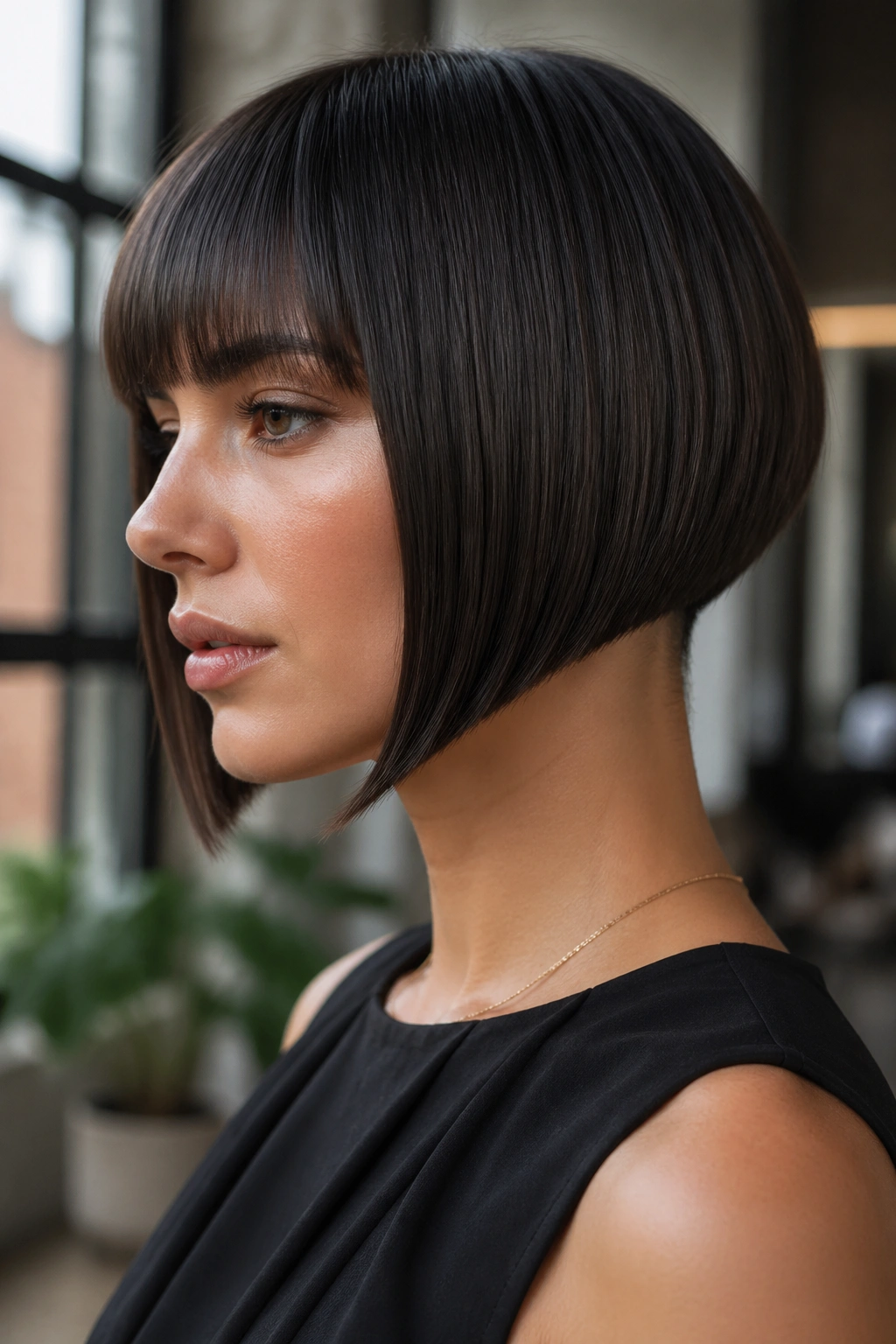
Unlike a one-length bob, the A-line bowl bob leans forward. The back stays shorter, the front angles longer, and that forward sweep gives the cut a sharper profile than a standard rounded bob ever could. It’s the shape I’d call “structured” without sounding stiff.
The A-line angle does a lot of quiet work. It creates the bowl effect at the top while letting the front pieces skim the jaw or even the collarbone, depending on how dramatic you want it. That makes the haircut feel less like a cap and more like a line that’s been drawn on purpose.
This version suits people who like clear shapes and don’t mind a little maintenance. Straight hair shows the geometry best, and a sleek finish keeps the angle obvious. Wavy hair can wear it too, but the look shifts softer, which is fine if you prefer less edge.
It’s also a good choice if you want to lengthen the face without growing your hair out. The longer front pieces pull the eye downward. That’s useful when you want the retro mood but still want your neck to look long and clean.
Ask for a smooth transition from the nape to the front, not a stacked back with a heavy shelf. That small difference decides whether the cut looks elegant or overbuilt.
7. The Curly Bowl Bob With a Round Crown
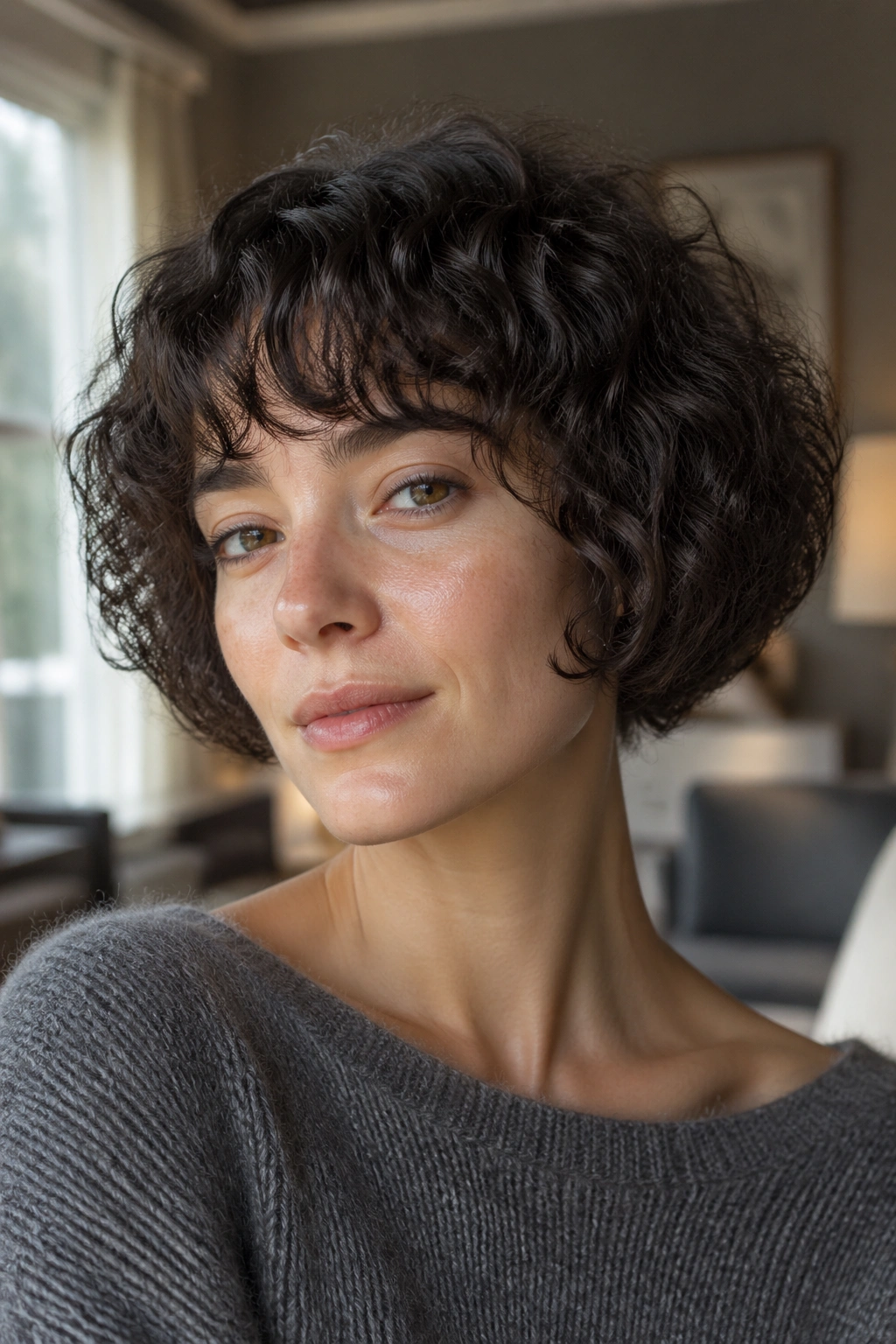
Curly hair makes a bowl bob less literal and more interesting. The shape stops being about a hard line across the head and starts being about where the curls sit, how much width they hold at the crown, and whether the ends are allowed to spring inward instead of puffing out in all directions.
A curly bowl bob needs to be cut with the curl pattern in mind, not against it. That usually means dry cutting or cutting the hair close to its natural state, because a curl that looks short when wet can shrink a full inch or two once it dries. If the stylist ignores that, the finished cut can jump way above the jaw and lose its balance.
The best curly versions keep a round crown, a controlled edge, and enough weight at the perimeter to stop the shape from frizzing out. Too many layers can wreck the silhouette. Too little shape and the curls pile up like a cloud.
Use curl cream first, then a diffuser on low heat. Once the hair is dry, pick the roots lightly if you want a little lift. Don’t rake through the ends unless you’re trying to blow the shape apart.
For curls, this cut works because it respects the volume instead of flattening it. That’s the whole game. A bowl bob does not have to be severe to be strong.
8. The Asymmetrical Bowl Bob With a Side Sweep
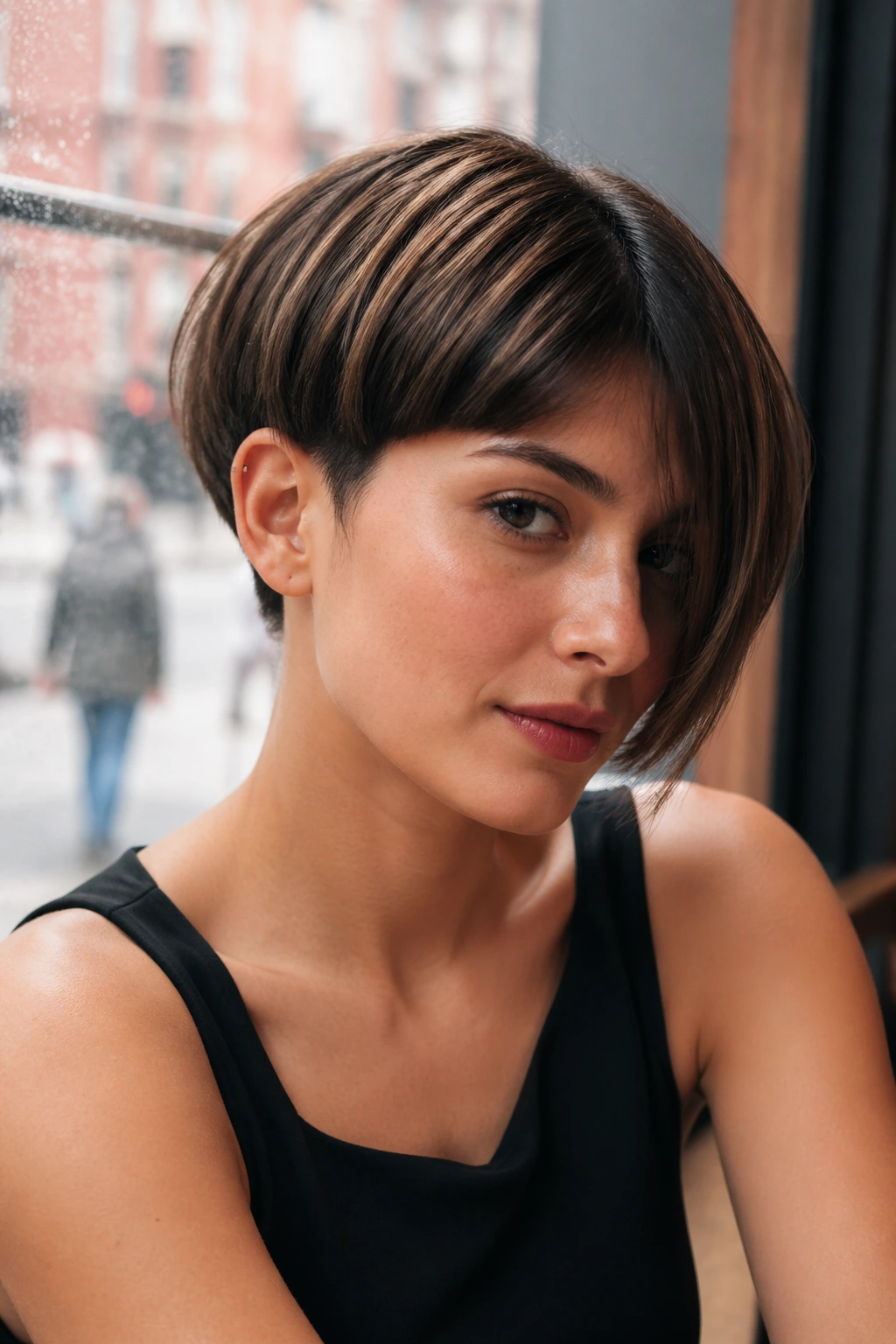
One side tucked behind the ear, the other side sliding across the cheek. That small mismatch changes the whole mood. An asymmetrical bowl bob keeps the retro outline but gives it a little asymmetry, which makes the haircut feel less literal and more personal.
Where the asymmetry does the work
The longer side can skim the jaw or sit just below it, while the shorter side lifts the face and exposes a bit more neck. That contrast creates movement even when the hair is perfectly still. It’s especially good if your hair naturally parts to one side and refuses to behave anywhere else.
This cut can also help if one side of your face feels flatter or stronger than the other. Not in a fake “fix everything” way. Just in the practical sense that the longer sweep gives the eye a place to go. The haircut starts looking intentional instead of symmetrical for symmetry’s sake.
- Best for straight or lightly wavy hair.
- Works well when one side is tucked behind an ear.
- Needs a clean edge so the difference between sides is obvious.
- Looks best with a side part that follows the natural growth pattern.
Do not overlayer this one. The asymmetry should come from length, not from random bits sticking out.
I like this on people who want a bob bowl cut with a little bite. It keeps the retro bones, but it doesn’t feel precious.
9. The Layered Bowl Bob for Fine Hair
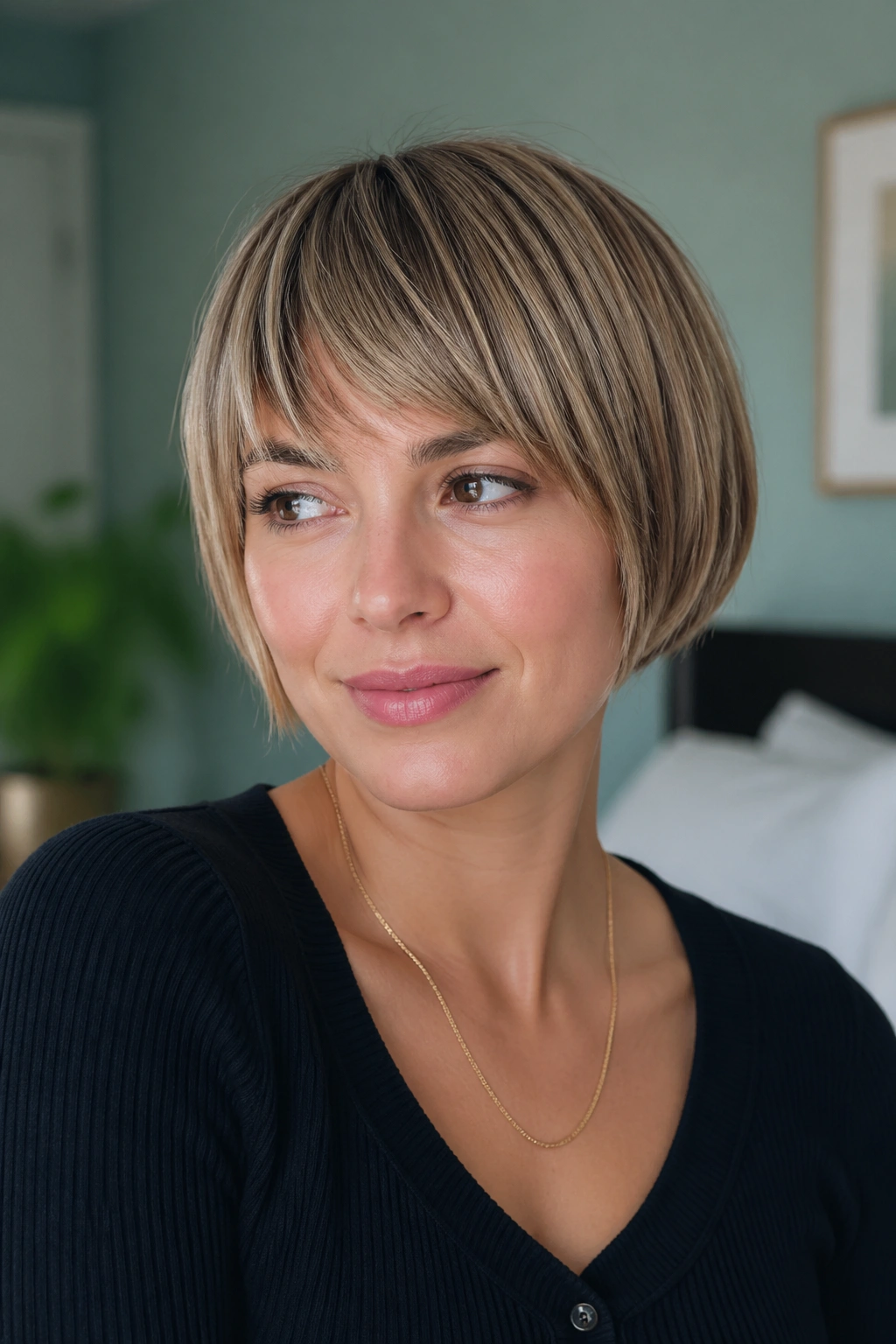
Fine hair rarely likes a hard, helmet-like line. It can flatten at the crown, puff at the sides, or collapse at the ends if the cut is too blunt and too dense at the same time. A layered bowl bob fixes that by giving the hair a little internal lift while keeping the outline intact.
The important thing is restraint. You do not want a shag. You want just enough layering to stop the hair from hanging like one flat sheet. A soft underlayer at the nape helps the haircut move, and a few carefully placed interior cuts keep the crown from lying down by noon.
This is where a lot of stylists go wrong. They add too many short layers, the silhouette breaks apart, and suddenly the bowl idea is gone. The trick is to lift the shape from inside, not rip apart the edge.
Use a root spray or lightweight mousse at the crown, then rough-dry the hair about 80 percent before finishing with a round brush. That gives you lift where you need it and keeps the perimeter smooth. A heavy oil will sink it. A sticky wax will make the ends look thin. Neither helps.
For fine hair, this version is a smart compromise. It keeps the retro shape people notice, but it leaves enough air in the cut that the hair doesn’t look drained of life.
10. The Longline Bowl Bob With Flipped Ends
The longline bowl bob is the safest place to land if you like the idea but not the commitment. It keeps the rounded top shape, but the length drops farther down, often near the collarbone, which softens the whole effect and makes the cut easier to wear in real life.
Unlike a tight micro bowl, this version has room to breathe. The ends can flip under for a tidy finish or turn out a little for a more playful retro nod. That small flip changes the mood fast. Under is neat. Out is cheeky. Both work, and both can look good with the right outfit.
This one suits people who want the bowl-bob silhouette without giving up ponytail-length flexibility or the option to tuck hair behind the ear. It’s also kinder to growing-out phases, which matters more than style purists like to admit. A haircut that looks good while growing is worth more than one that only behaves on the day it’s cut.
A few styling notes help:
- Blow-dry with a paddle brush for a straighter finish.
- Use a 1-inch round brush if you want a subtle bend at the ends.
- Keep the crown smooth so the length doesn’t feel heavy.
- Trim every 6 to 8 weeks to hold the line.
If you want the retro cool look with the least risk, start here. Longline versions are forgiving, and they still carry the clean shape that makes bob bowl cuts worth wearing in the first place.
