



Fine hair can look flat fast. A bad bob makes that worse.
A good bob does the opposite. It removes extra weight, keeps the outline clean, and gives the ends enough shape to look fuller than they are.
The real trick with wispy bob cuts for fine hair is restraint. Too many layers can leave the bottom see-through. Too much thinning can make the hair fray. What usually works best is a crisp perimeter with just enough internal movement to stop the style from collapsing by noon.
Fine hair is not the same thing as thin hair, either. You can have plenty of strands that are just delicate. That matters, because delicate strands need a different kind of cut: soft around the face, strong at the edge, and never hacked to pieces.
1. Chin-Grazing Wispy Bob Cut for Fine Hair
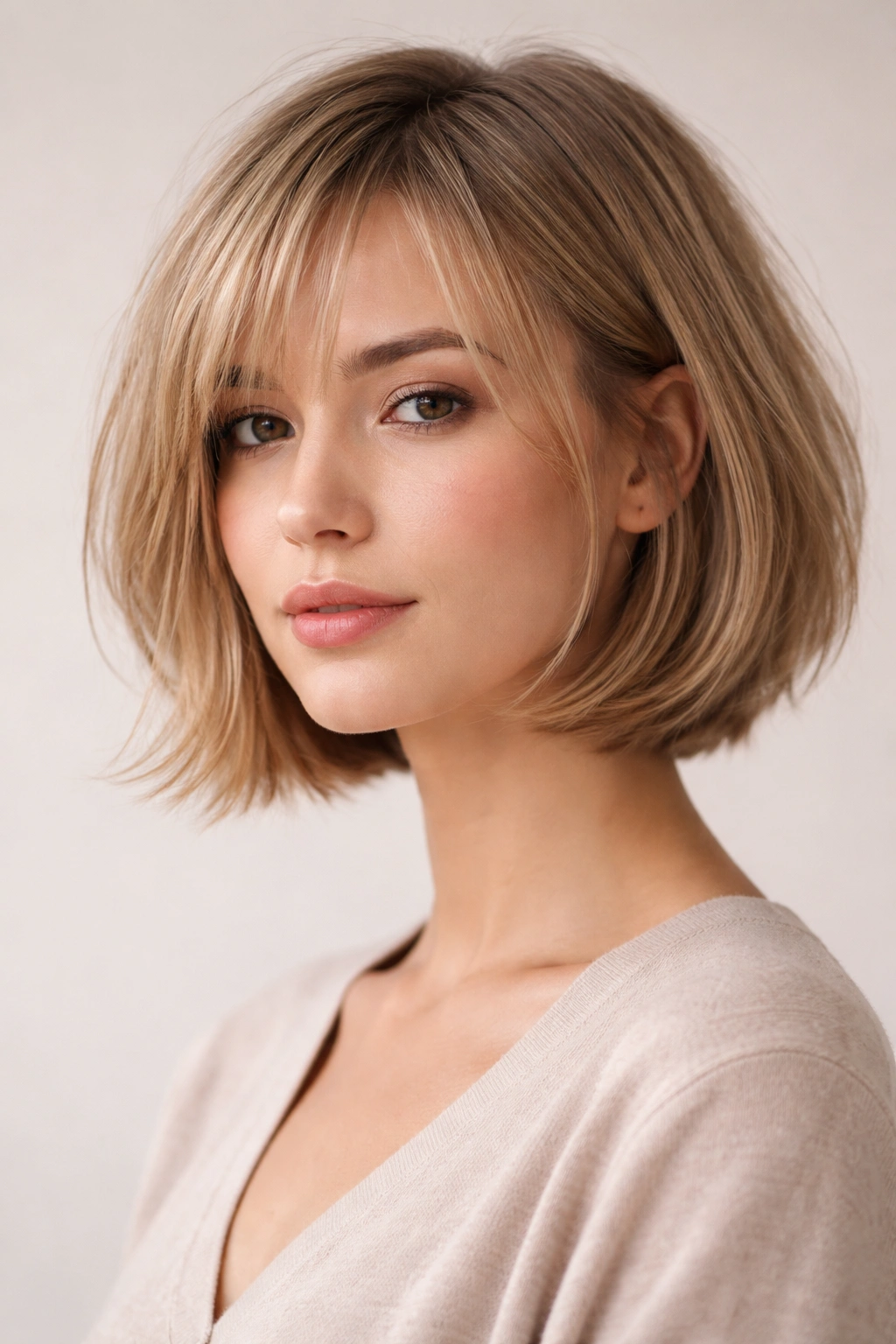
This is the cut that makes fine hair look the most immediately full. Chin length keeps the weight right where you want it, which is around the lower edge of the haircut. That little shelf of density matters more than people think.
A chin-grazing bob also gives the illusion of thicker ends because the hair stops before it can taper into stringy-looking lengths. If your hair tends to collapse when it gets past the jaw, this shape is a relief. It feels neat, but not severe.
What to Ask for at the Salon
- Keep the outline blunt at the perimeter.
- Add only light point cutting through the top layers.
- Leave the front pieces just long enough to brush the jaw, not drop below it.
- Skip aggressive razor thinning on the ends.
Who It Flatters
- Oval faces that can handle a clean, short frame.
- Heart-shaped faces that need softness near the chin.
- Fine, straight hair that loses body when it gets too long.
One thing I like about this cut: it does not need a lot of styling to look deliberate. A quick blow-dry with a round brush and a touch of root spray is often enough. The cut itself is doing most of the work.
2. Soft A-Line Wispy Bob That Tapers Toward the Jaw
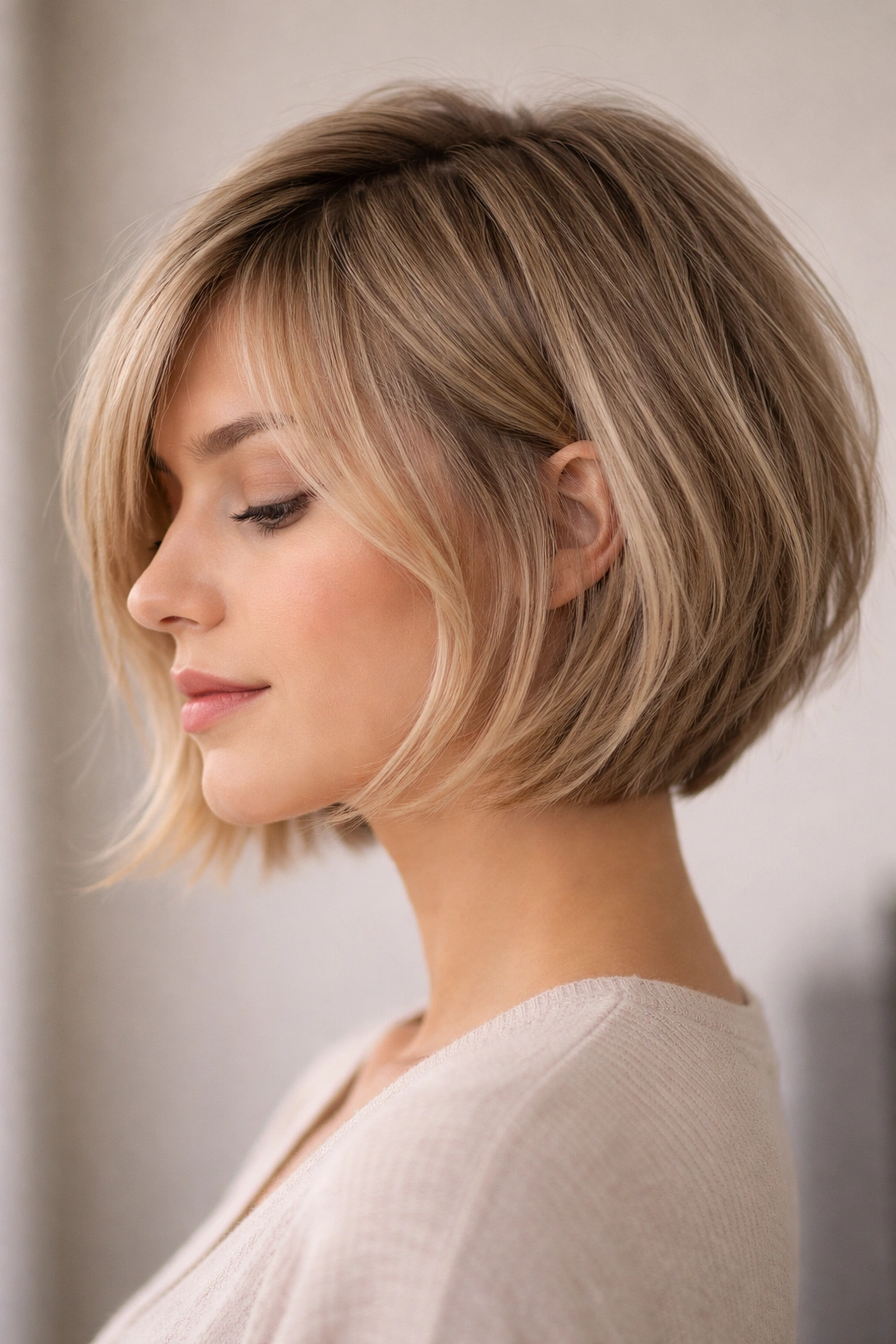
Why does a tiny angle change so much? Because a soft A-line bob gives fine hair a longer front edge, which makes the whole shape look more substantial without making it heavy.
The back stays a touch shorter, so the nape doesn’t drag the silhouette down. The front pieces slide forward and frame the face in a way that feels sleek, not stiff. On fine hair, that gentle shift is better than a dramatic slope. Too steep, and the ends can start looking sparse.
Why the Angle Matters
A subtle A-line creates visual density through geometry. The eye reads the longer front sections as structure, while the shorter back keeps lift near the crown. That balance is the whole game with finer strands.
When to Keep It Subtle
- If your hair is very straight, ask for a mild angle, not a sharp one.
- If your jaw is narrow, too much front length can overpower the face.
- If your hairline is uneven at the nape, a softer taper usually looks cleaner.
This cut works especially well when you want the bob to feel modern without looking blunt to the point of severity. It has shape. It also has air. That combination is what keeps it from feeling boxy.
3. Layered French Bob With Airy Bangs
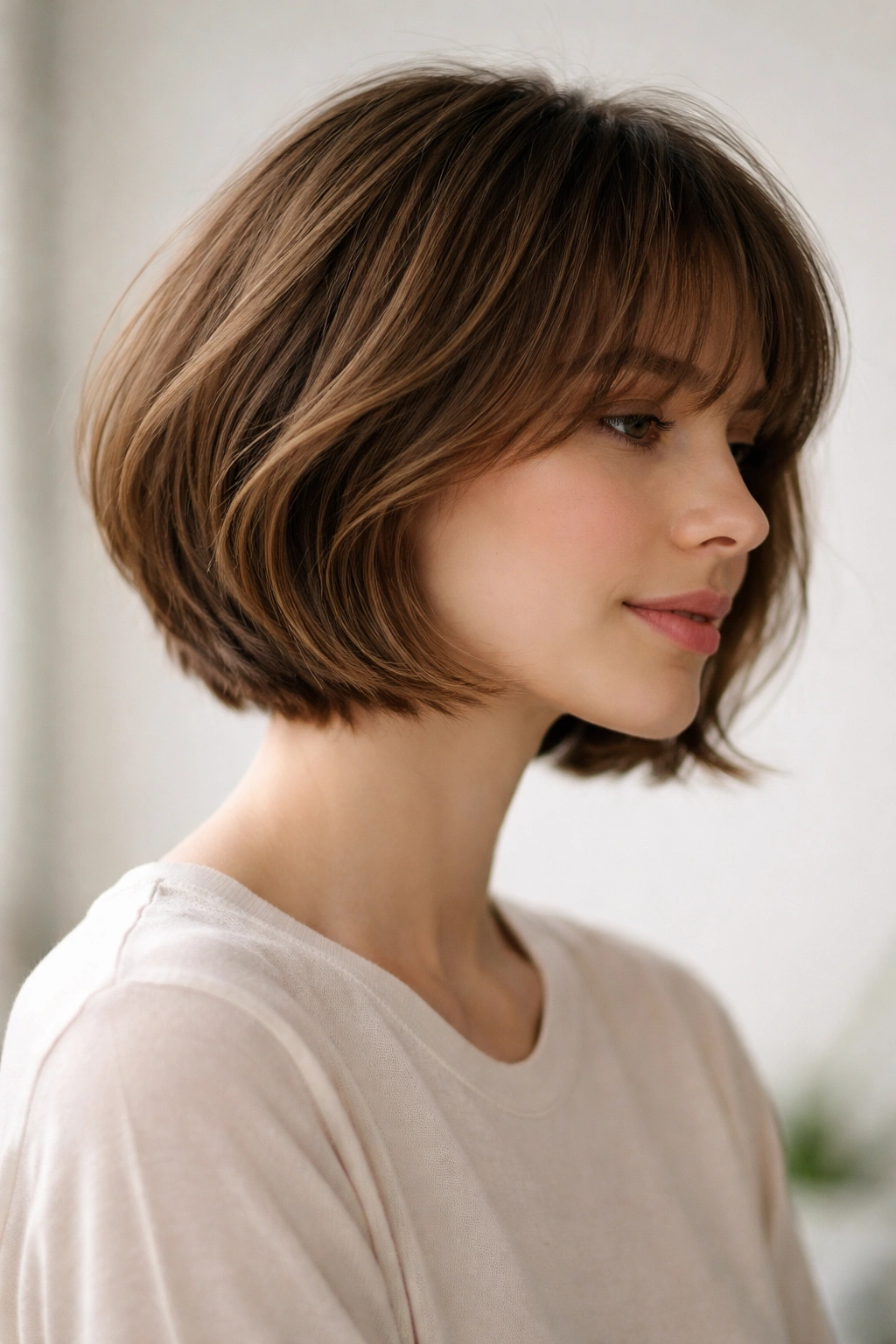
A French bob can be a dream for fine hair when the layers are handled with a light hand. The mistake people make is assuming “layered” means “chopped up.” It doesn’t. Here, the movement lives in the top and around the face, while the bottom stays neat.
Airy bangs are the detail that changes the mood. They soften the forehead, shift attention upward, and keep the haircut from looking too compact. On fine hair, that matters because a compact shape can suddenly look flat and overcontrolled.
Ask for This at the Salon
- A short bob that sits around the cheekbone or upper jaw.
- Bangs that are soft and piecey, not thick and heavy.
- Internal texture only where the hair can afford to lose weight.
- A slight bend in the fringe so it doesn’t hang flat.
The French bob works best if you like a bit of undone movement. Not mess. Movement. There’s a difference, and stylists know it the moment they see your reference photo.
Styling It Without Overthinking It
- Blow-dry the bangs first, using a small round brush.
- Mist a lightweight texture spray through the mids.
- Tuck one side behind the ear for a little asymmetry.
It’s a compact cut, but it never has to feel harsh. That’s the charm.
4. Blunt-Looking Bob With Micro Layers Inside
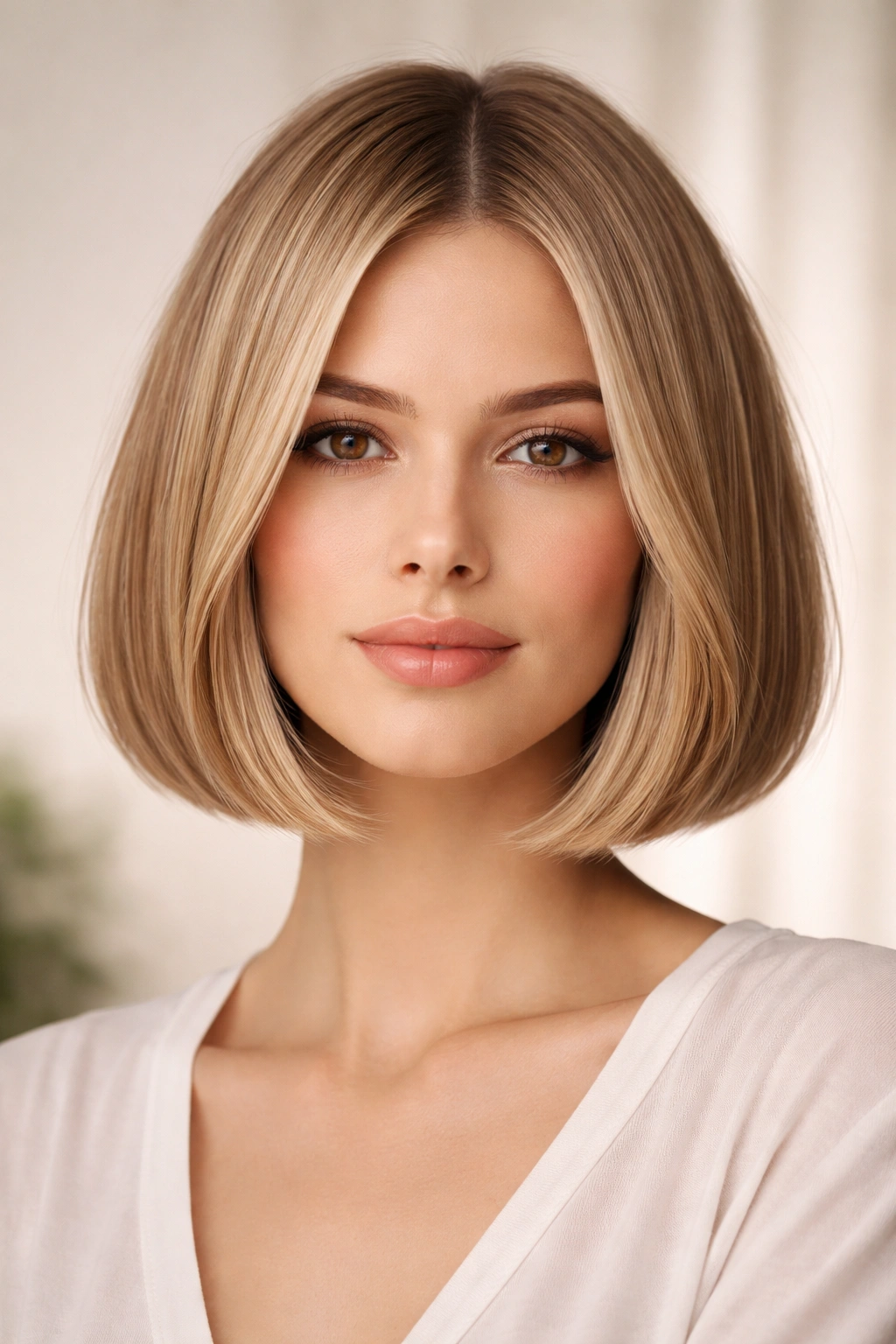
Fine hair often looks thicker when the cut looks simpler from the outside. That is why a blunt-looking bob with tiny internal layers can be such a smart move. The perimeter stays full. The inside gets just enough removal of bulk to let the shape move.
This is not the same as stacking in layers all over the head. Not even close. Micro layers are hidden. They sit under the surface and keep the bob from puffing in the wrong places. You still get a clean line at the ends, which is what gives fine hair that denser edge.
Too many layers are the trap. They make the lower half of the hair look stringy, especially if the strands are straight and the cut is too short around the back.
The Cut Details
- Keep the hemline blunt or nearly blunt.
- Add internal texture only through the middle and upper sections.
- Leave the ends untouched unless they need a tiny point cut.
- Avoid heavy slicing at the bottom edge.
What to Avoid
- Razor work that frays the ends.
- Layering that starts too high on the head.
- Thinning shears used like a shortcut.
This is one of my favorite options for people who want polish first and movement second. It reads clean from across the room. Up close, the softness shows up.
5. Collarbone Bob With Feathered Ends
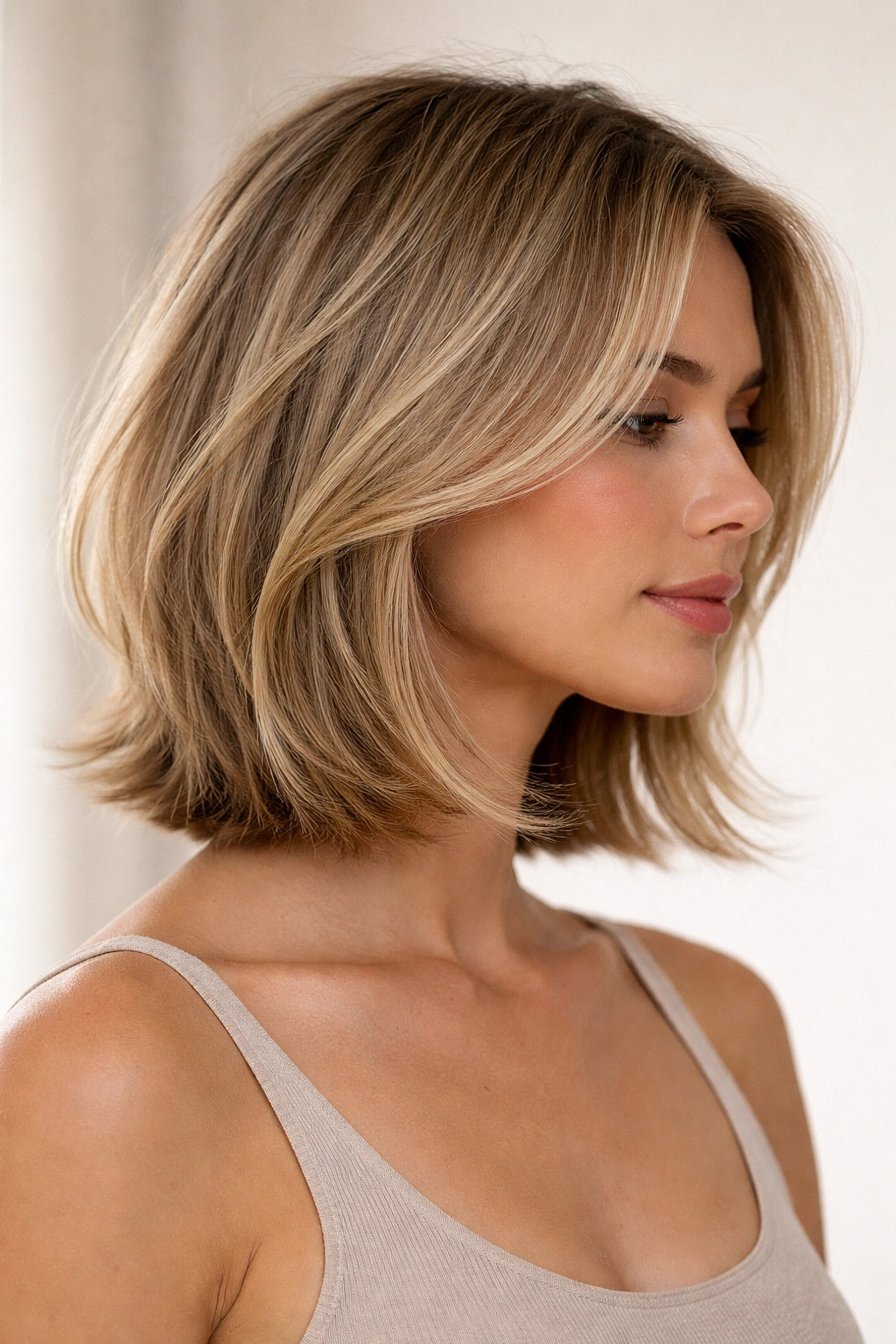
A collarbone bob is the compromise cut I keep coming back to for people with fine hair who are nervous about going short. It gives you the shape of a bob without the commitment of a chin-length crop.
The feathered ends matter here. They keep the last inch from sitting like a heavy shelf, which can look odd on delicate strands. A tiny bit of softening at the ends creates swing when you turn your head, and that movement matters more than most people expect.
It also makes the cut easier to grow out. That’s not a small thing. A lot of bob lovers forget that the grow-out phase is part of the haircut, not an afterthought. Collarbone length buys you time.
This shape works especially well if your hair tends to lie flat near the roots but still has decent behavior in the mids and ends. The length gives you a little more room to play with waves, bends, and clips without dragging the whole look down.
One sentence, because it deserves one: it is not boring.
6. Side-Part Wispy Bob With Root Lift
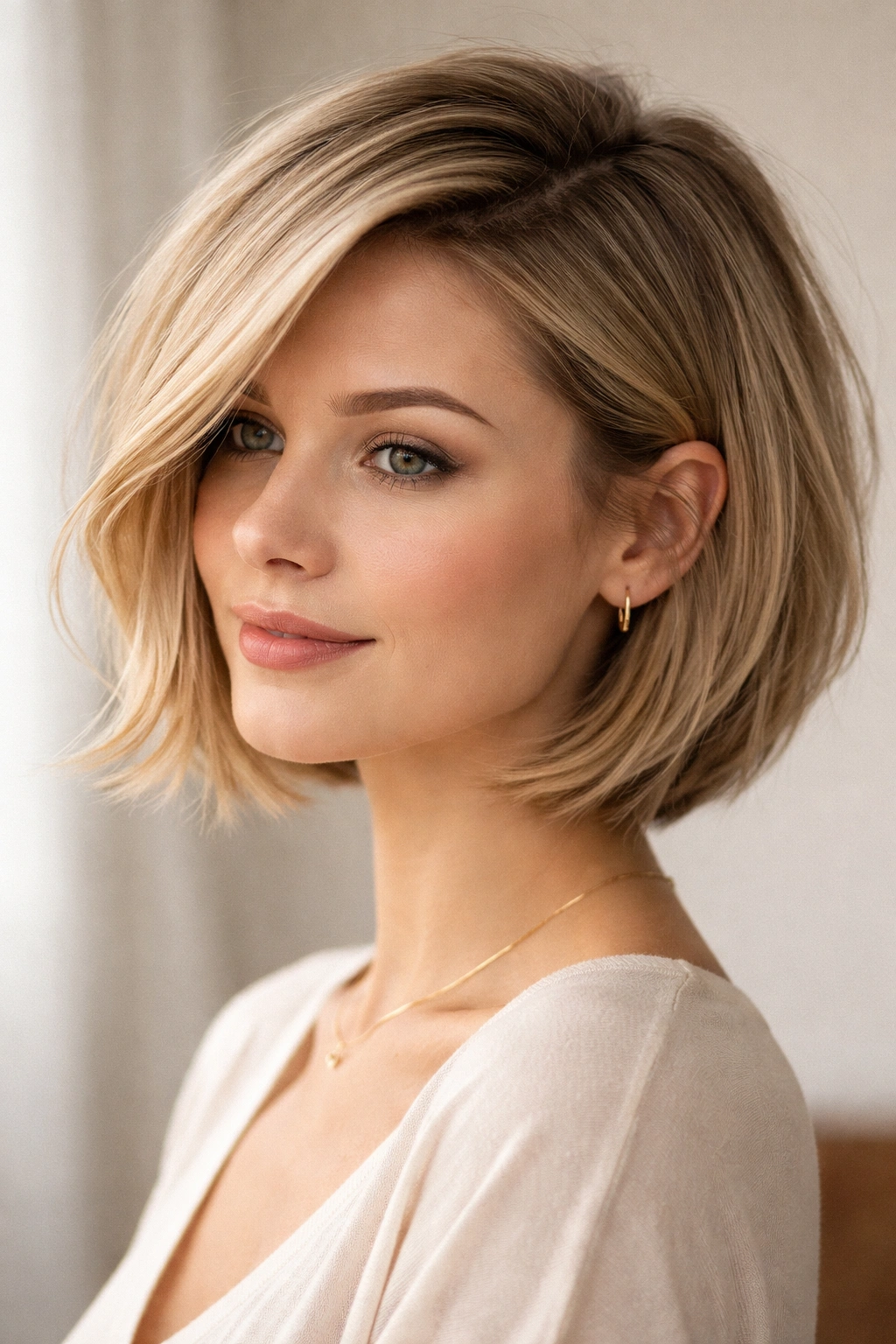
A side part can do more for fine hair than another inch of layering. That sounds blunt, but I mean it. Shifting the part throws volume to one side of the head and stops the hair from lying in the same flat pattern every day.
The best version of this bob keeps the perimeter tidy and the crown lifted. The side part creates a little asymmetry, which is useful because symmetry can make fine hair look thinner than it is. A deep part also gives you more styling room near the front, where face framing can make the whole cut feel larger.
How to Style It
- Work a pea-sized amount of volumizing mousse into damp roots.
- Blow-dry the hair in the opposite direction of the part at first.
- Flip the hair back into place when it is about 80% dry.
- Finish with a cool shot to hold the lift.
What to Watch For
- If your hair has a strong cowlick, move the part a half-inch at a time.
- If the roots get greasy fast, keep conditioner off the scalp.
- If the ends look too wispy, cut back on texturizing sprays.
This bob is not about drama. It is about lift, balance, and a little sleight of hand. That is usually enough.
7. Wavy Wispy Bob That Follows Your Natural Texture
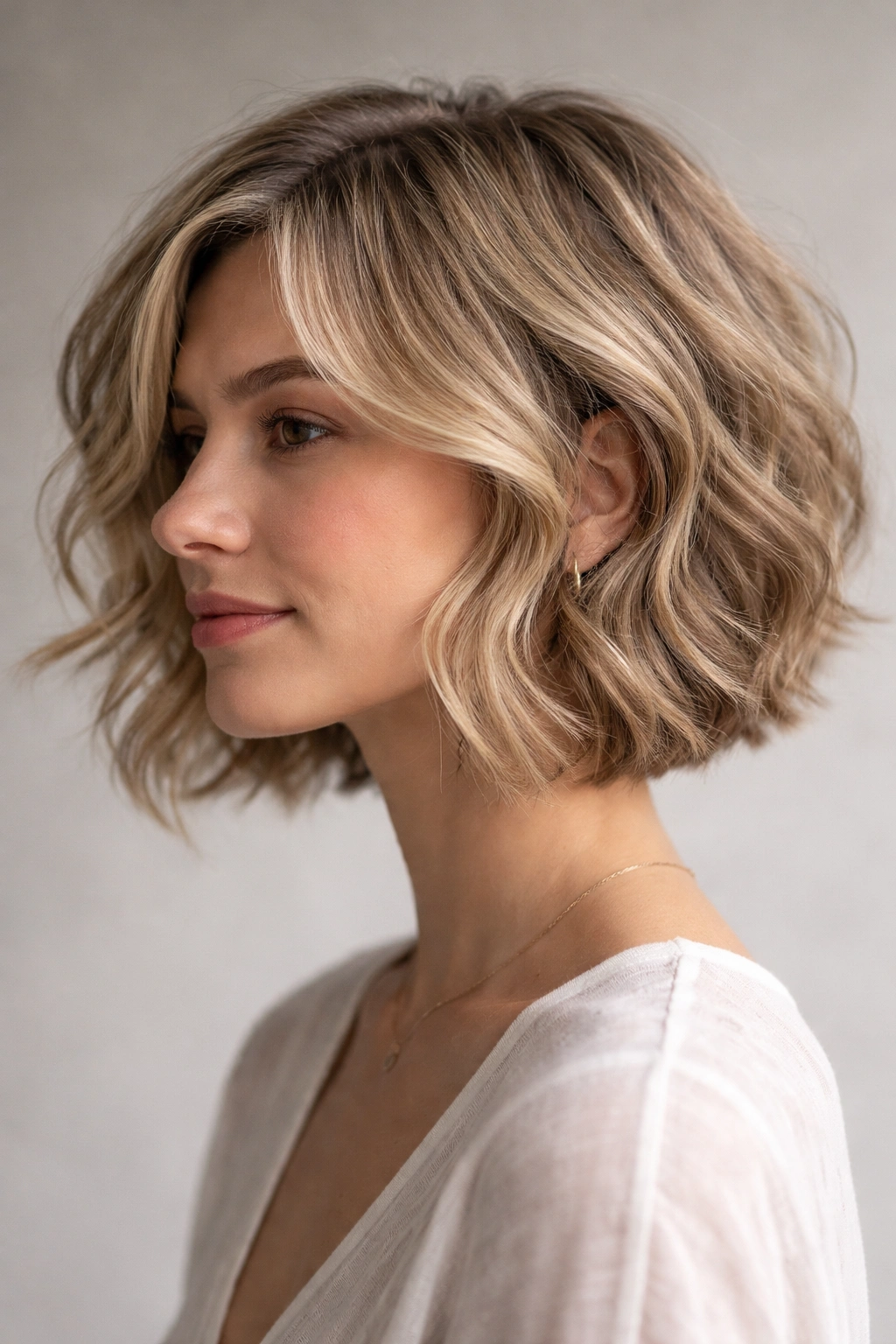
What if your fine hair already bends a little? Then forcing it into a sleek, flat bob is usually a mistake. A wavy wispy bob works better because it respects the pattern you already have and makes it look intentional.
The haircut should still stay controlled around the outline. You want enough length to keep the wave from shrinking into a puffball, but not so much that the ends go see-through. The sweet spot is often around the jaw to just below it, depending on how tight your wave pattern is.
How to Get the Most From It
- Scrunch a light curl cream into damp hair.
- Diffuse on low heat until the hair is about 70% dry.
- Stop touching it. Seriously.
- Break up the wave clumps with clean hands once the hair is dry.
A lot of people with fine waves go too hard with sea salt spray. That can leave the hair feeling rough and make the ends look dry. A lighter mousse or foam usually gives better support without wrecking the softness.
If you like a lived-in look, this is the cut that gets you there without a fight. It has shape, but it still feels like hair, not a sculpture.
8. Shattered Bob With Invisible Internal Layers
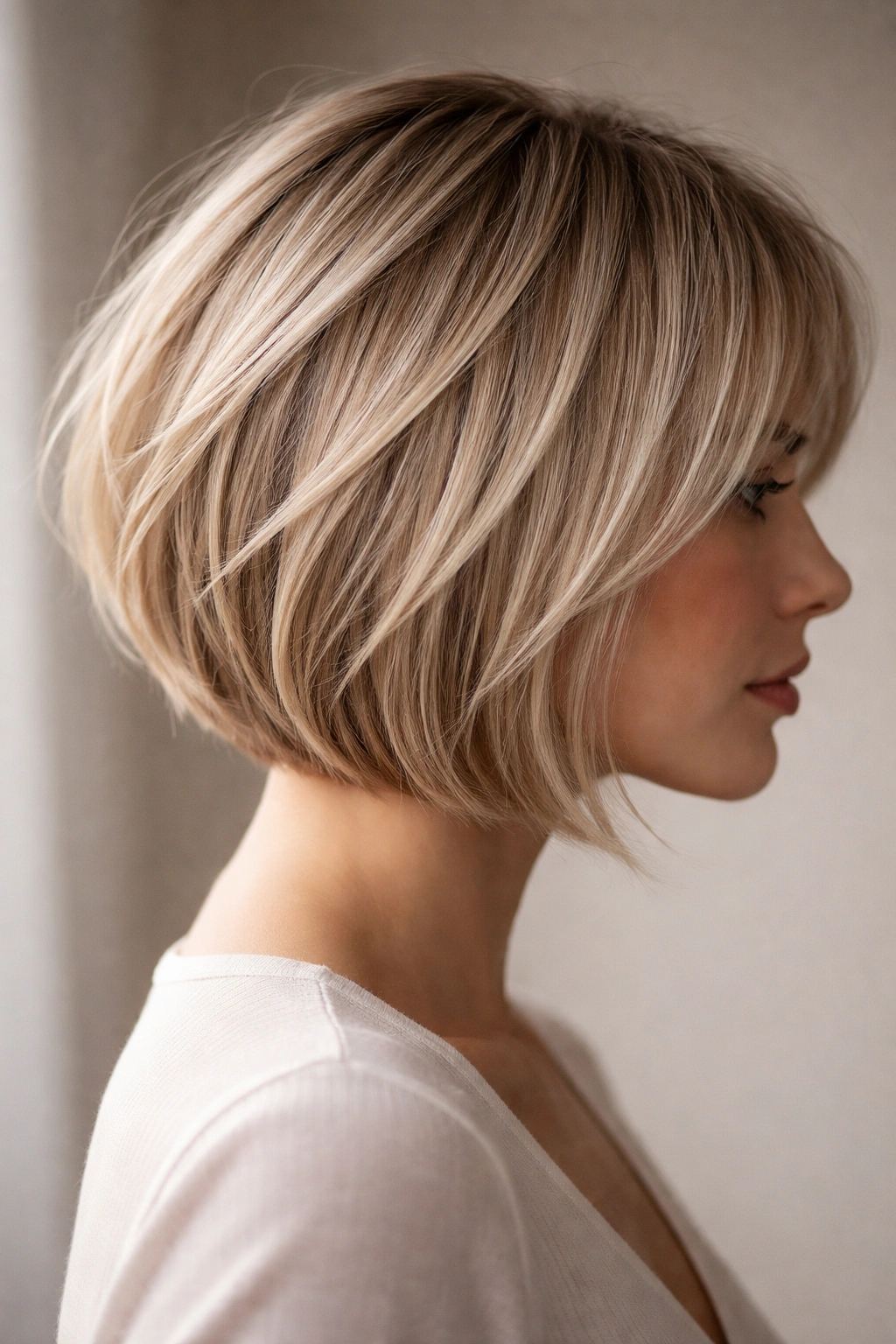
A shattered bob sounds aggressive. It does not have to be. Done well, it is a bob with quiet internal movement and a perimeter that still looks full enough to hold its own.
The key is invisibility. The layers are placed inside the haircut, not on the outside where they can break up the outline. That lets the ends stay dense while the top and middle pick up motion. Fine hair often needs exactly that: lift up top, strength at the bottom.
What Makes It Work
- The perimeter stays close to blunt.
- The upper sections get point cutting for softness.
- The layers do not begin too low, or the shape collapses.
- The crown stays light, not chopped.
This cut is especially useful if your hair looks flat at the roots but gets too wide at the sides when you try to add volume. A shattered bob can remove that weird triangle effect without making the haircut look thin.
That tiny difference matters. A lot.
It also pairs well with a slightly messy finish. Not bedhead. Just enough separation to keep the hair from looking packed together in one flat sheet.
9. Rounded Bob With Soft Crown Volume
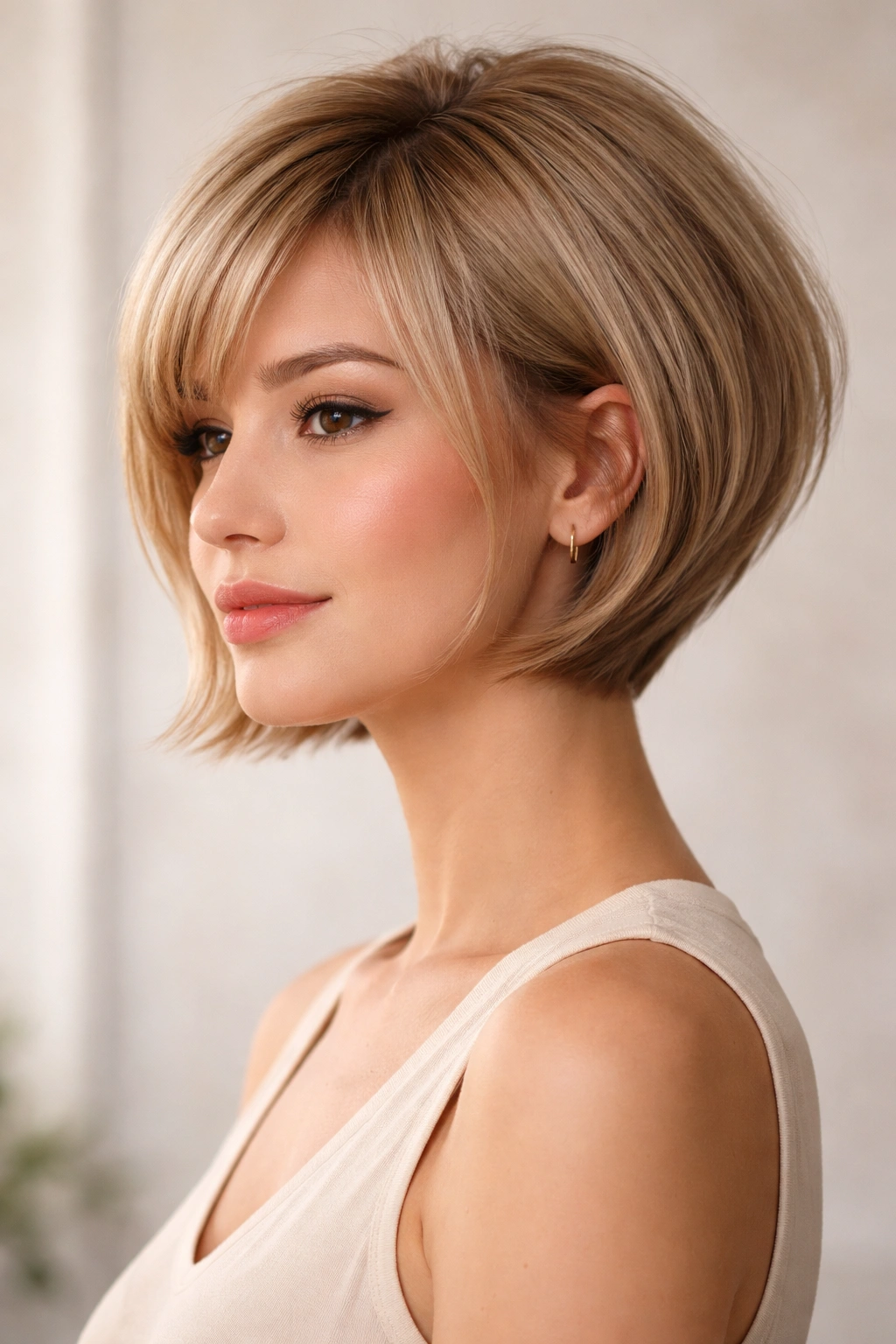
A rounded bob is one of the best shapes for making fine hair look fuller because it builds shape where the eye naturally goes first: the crown and upper sides. Straight, bottom-heavy bobs can make the head look longer and the hair look narrower. A rounded shape fixes that fast.
Crown
The crown should be lifted just enough to avoid a helmet effect. A soft round brush blow-dry or a large Velcro roller at the top can help here. You are not aiming for height that screams. You are aiming for a gentle dome of volume that makes the haircut look plush.
Sides
The sides should hug the face a little, not flare out. If they puff too much, the shape turns boxy. If they cling too tightly, the whole style loses that rounded balance.
Nape
The nape can stay neat and shorter so the back doesn’t drag the silhouette down. This is the part that keeps the cut light. A tidy nape makes the crown look fuller by contrast.
I like this shape for people who want their bob to feel soft and feminine without becoming fussy. It has enough curve to be flattering, and enough control to stay polished.
10. Tousled Shag-Bob Hybrid for Fine Hair
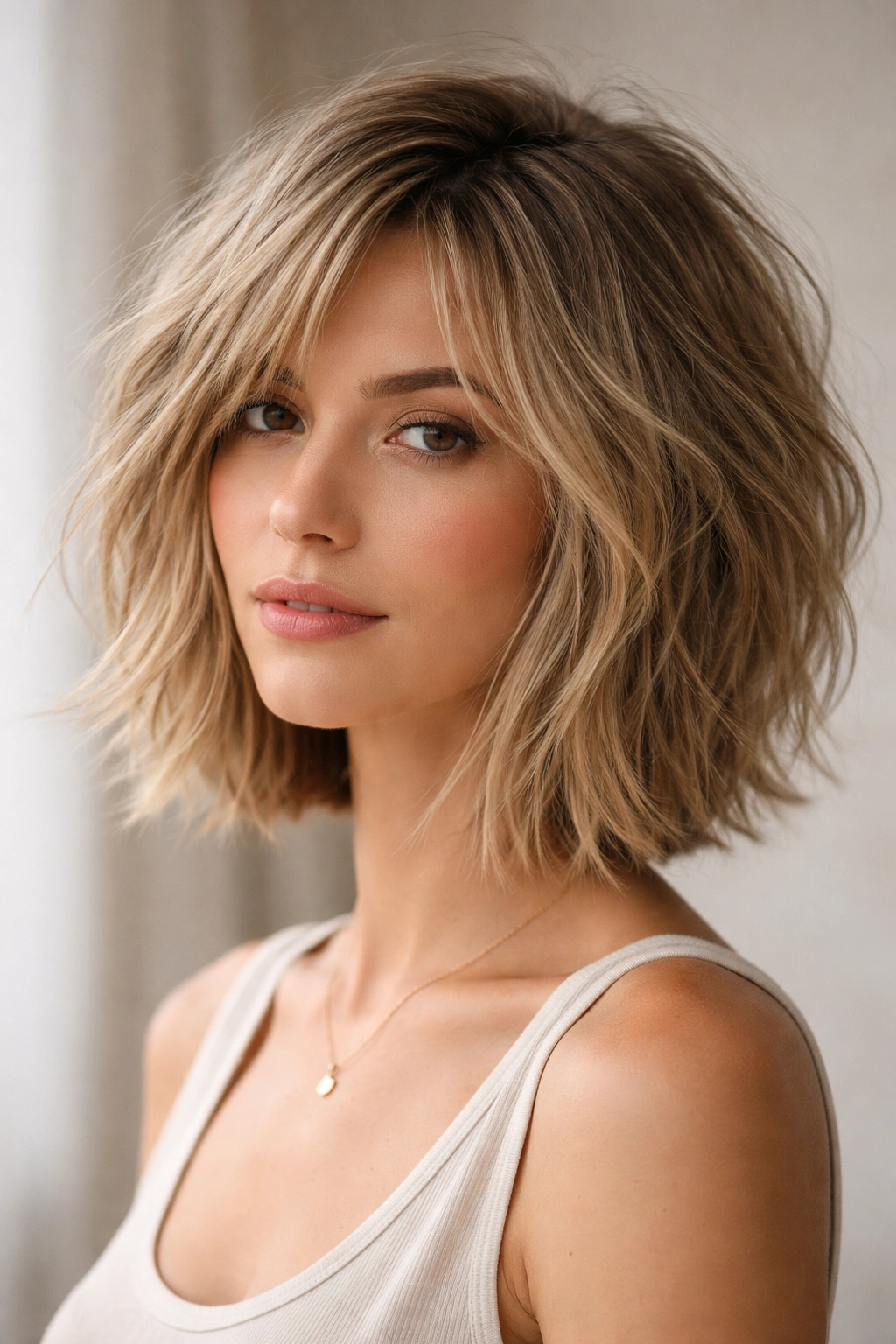
A lot of fine-haired people secretly want texture, not perfection. That is why the shag-bob hybrid keeps hanging around. It sits between a bob and a shag, but the better versions keep the bottom line clean so the hair does not disappear into layers.
This is the cut I’d suggest when a sleek bob feels too strict. The texture gives the hair some air, and the slightly uneven ends make the style feel relaxed. The trick is not to go full shag. Fine hair can lose too much body if the layering gets wild.
The best hybrid bob still respects the face shape. It usually lands somewhere between the cheekbone and the collarbone, with softer pieces around the cheeks and a little lift near the top. You want movement, not chaos.
A matte texturizing spray works well here, but use it lightly. Two or three quick sprays is usually enough. If the hair starts feeling sandy, you’ve crossed the line.
This cut is for people who like a bit of edge. It doesn’t have to look polished every morning. That is part of the appeal.
11. Inverted Bob With Airy Nape
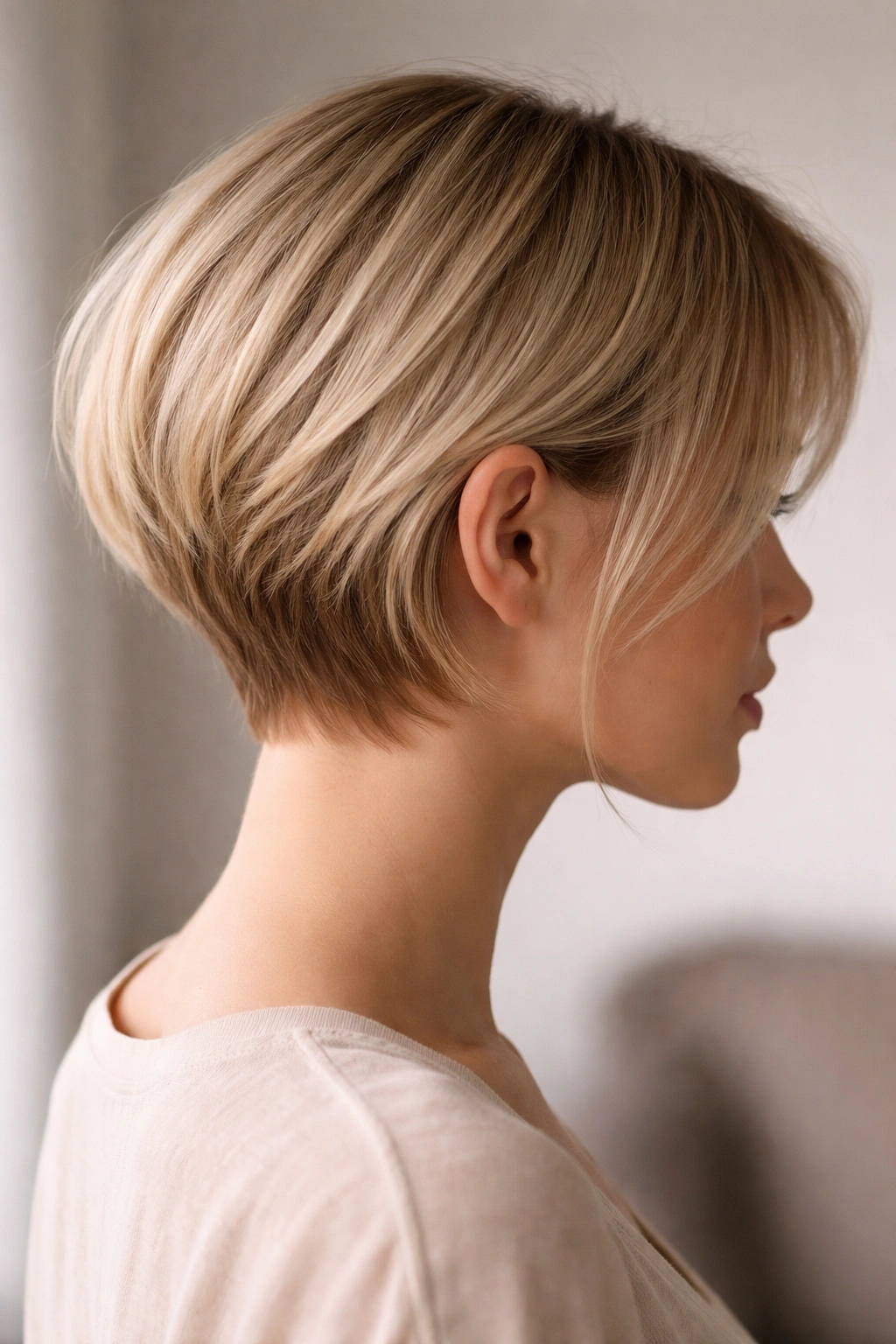
If the back of your head goes flat first, an inverted bob can fix the whole profile. The shape is shorter and slightly stacked at the nape, with longer front pieces that pull the eye forward. That contrast makes fine hair look purposeful instead of limp.
I’ve always thought this cut gets unfairly dismissed as old-fashioned when it’s really just precise. The stacking at the back adds body where fine hair usually needs it most. The longer front keeps the haircut from feeling boxy. Done well, it looks sharp from the side and light from the front.
Key Details to Ask For
- Shorter layers at the nape, but not bulky stacking.
- Front pieces that skim the jaw or collarbone.
- A soft internal shape, not a hard graduation.
- Clean lines around the ear so the cut doesn’t balloon.
If your hair is very straight, this bob can be a little high-maintenance because it shows every bend and every cowlick. Still, when the fit is right, the shape gives you more presence than a flat one-length bob ever will.
The airy nape is the secret. It stops the back from feeling heavy, and that is where many bob cuts go wrong.
12. Jaw-Length Wispy Bob With Deep Side Bangs
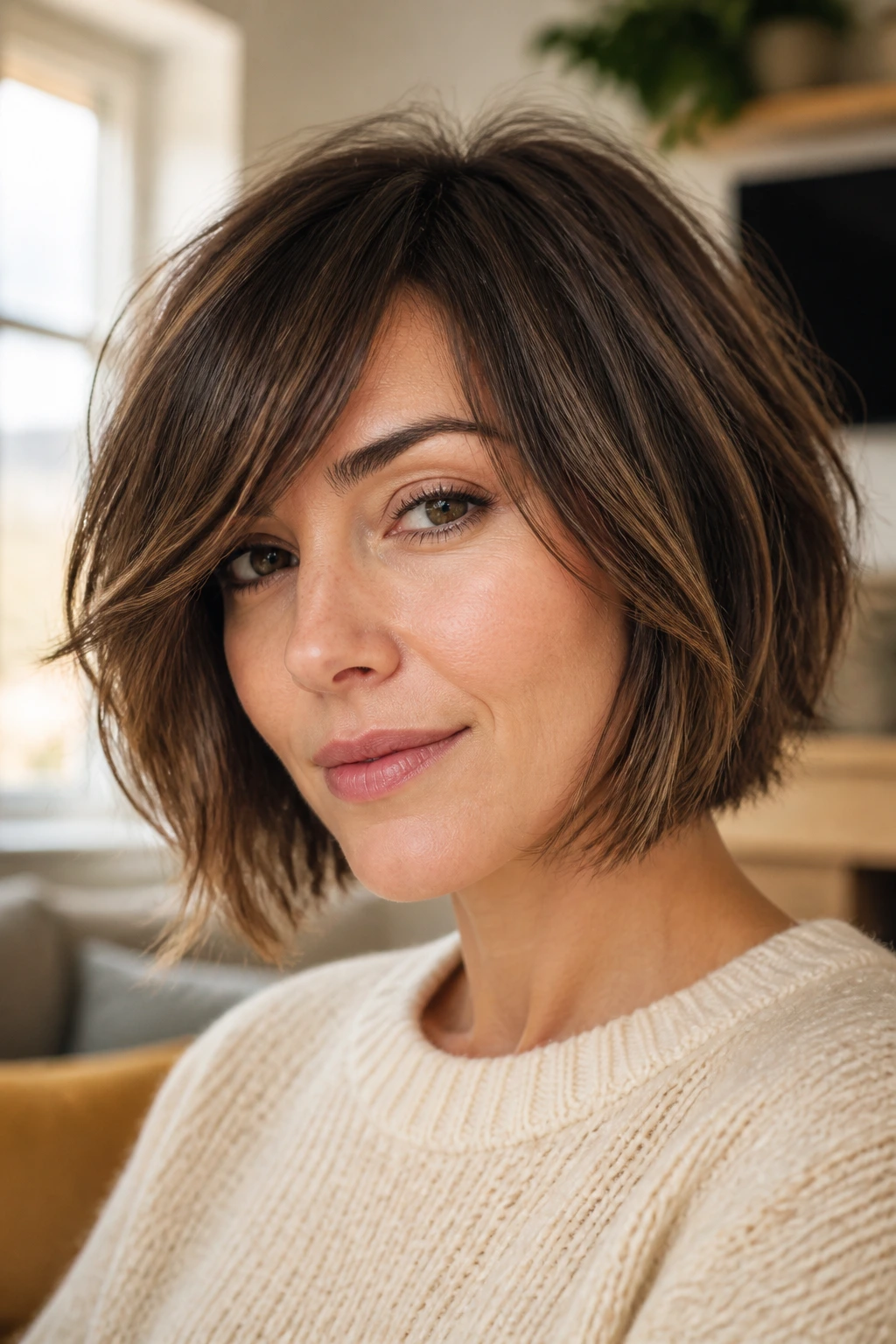
This is the one I reach for when someone wants movement, softness, and a haircut that does not require a full styling ritual every morning. A jaw-length bob with deep side bangs gives fine hair shape at the face and enough density at the ends to look filled in.
The bangs are doing real work here. They cut across the forehead at an angle, which pulls attention upward and creates a little visual lift near the roots. That is useful if the top of your hair tends to lie flat. The jaw length keeps the edges full, and that balance keeps the bob from feeling too airy.
Why It Works
- The side bangs create asymmetry, which makes the hair look less flat.
- Jaw length keeps the perimeter strong.
- The face-framing pieces soften the whole cut without draining the ends.
- It grows out cleanly, which matters if you do not want a harsh in-between stage.
Easy Styling Routine
- Blow-dry the bangs first with a medium round brush.
- Lift the roots at the part with a touch of mousse.
- Smooth the ends under with a flat brush or a quick bend from a curling iron.
- Finish with a light mist of flexible hairspray.
If your fine hair has been dragged around in long layers for years, this cut can feel like a reset. Clean. Soft. A little bit sharp where it should be. And that is usually the whole point.
