


Type 4A curls do not need to be stretched into something they’re not. They need a shape that respects the coil pattern, the shrinkage, and the density that makes this hair type look so full even when it’s short.
That matters more than people think. A bad short cut on 4A hair can puff out at the sides, collapse at the crown, or look bulky in the wrong places. A good one does the opposite: it gives the curls room to spring, frames the face, and cuts down on the daily battle with tangles, uneven definition, and random flat spots.
Short hairstyles for type 4A curly hair work best when the cut and the styling method are doing two different jobs. The cut sets the outline. The style fills in the texture. If you try to make one do all the work, you usually end up with frustration, a drawer full of half-used gels, and a shape that never quite settles.
What follows are short styles that actually make sense on tight coils. Some are polished. Some are playful. Some are the kind of style you can wear for a week without feeling like your head is negotiating with itself.
1. Tapered Afro with a Clean Nape
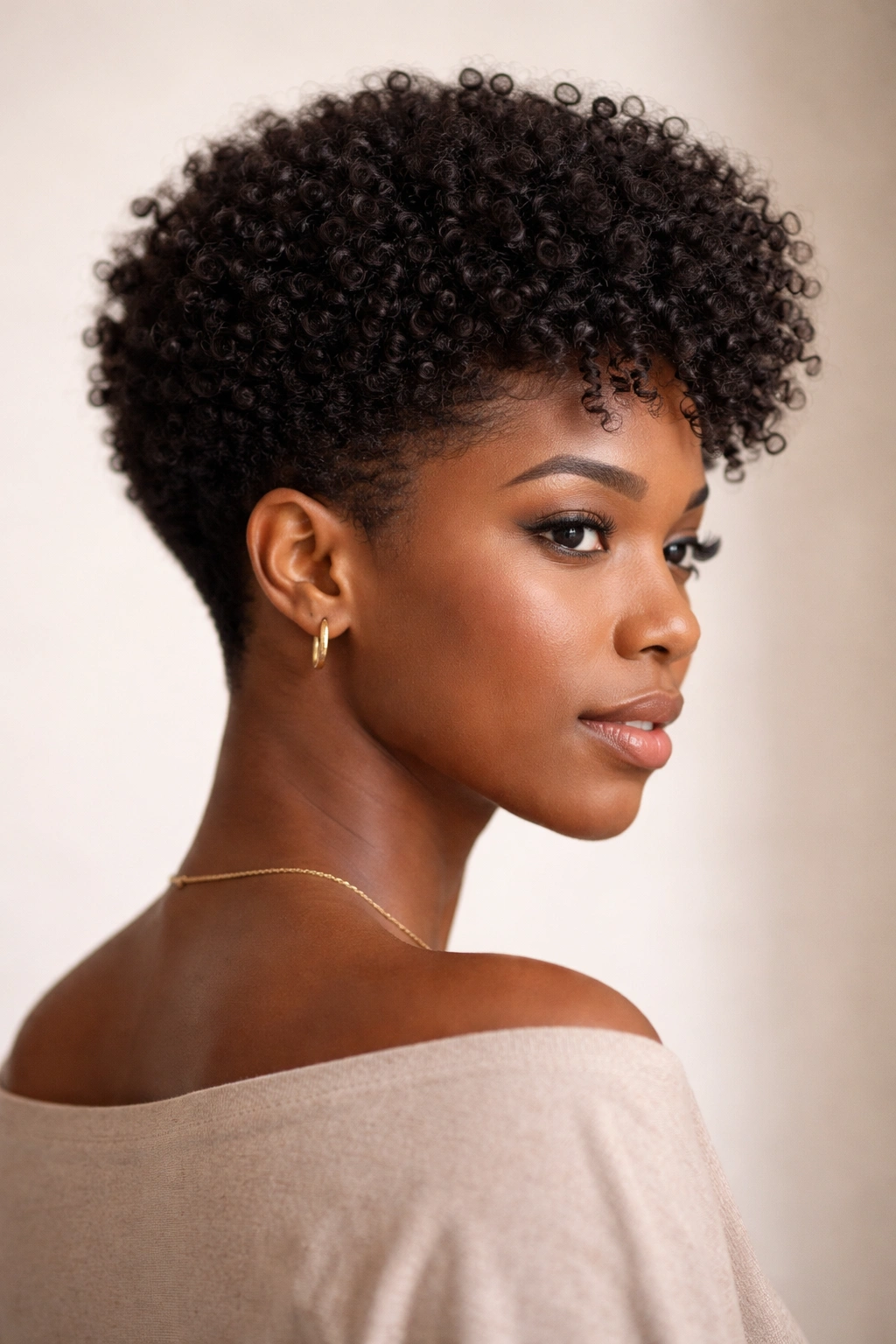
A tapered afro is one of the cleanest short hairstyles for type 4A curly hair because the haircut does the heavy lifting. The sides and nape are kept shorter, while the top stays full and rounded, so the hair reads as intentional instead of just “grown out.” That shape matters a lot with dense coils. Without it, the silhouette can turn into a square block.
I like this style because it gives 4A curls a proper frame. The top can sit at 1.5 to 3 inches, depending on how much fullness you want, and the taper around the ears keeps the whole look light. If your hairline is sharp, even better. If it’s soft, a clean taper can make the face look more open.
What to ask for at the chair
- Keep the top rounded, not flat.
- Taper the nape and sideburns softly.
- Leave enough length on top to pick out the roots without losing the curl pattern.
- Cut dry or lightly stretched so the shape lands where it should.
The big mistake: asking for a fade so tight that the style loses its softness. A taper usually works better than a hard clip on 4A hair if you want shape and texture together.
2. Rounded TWA
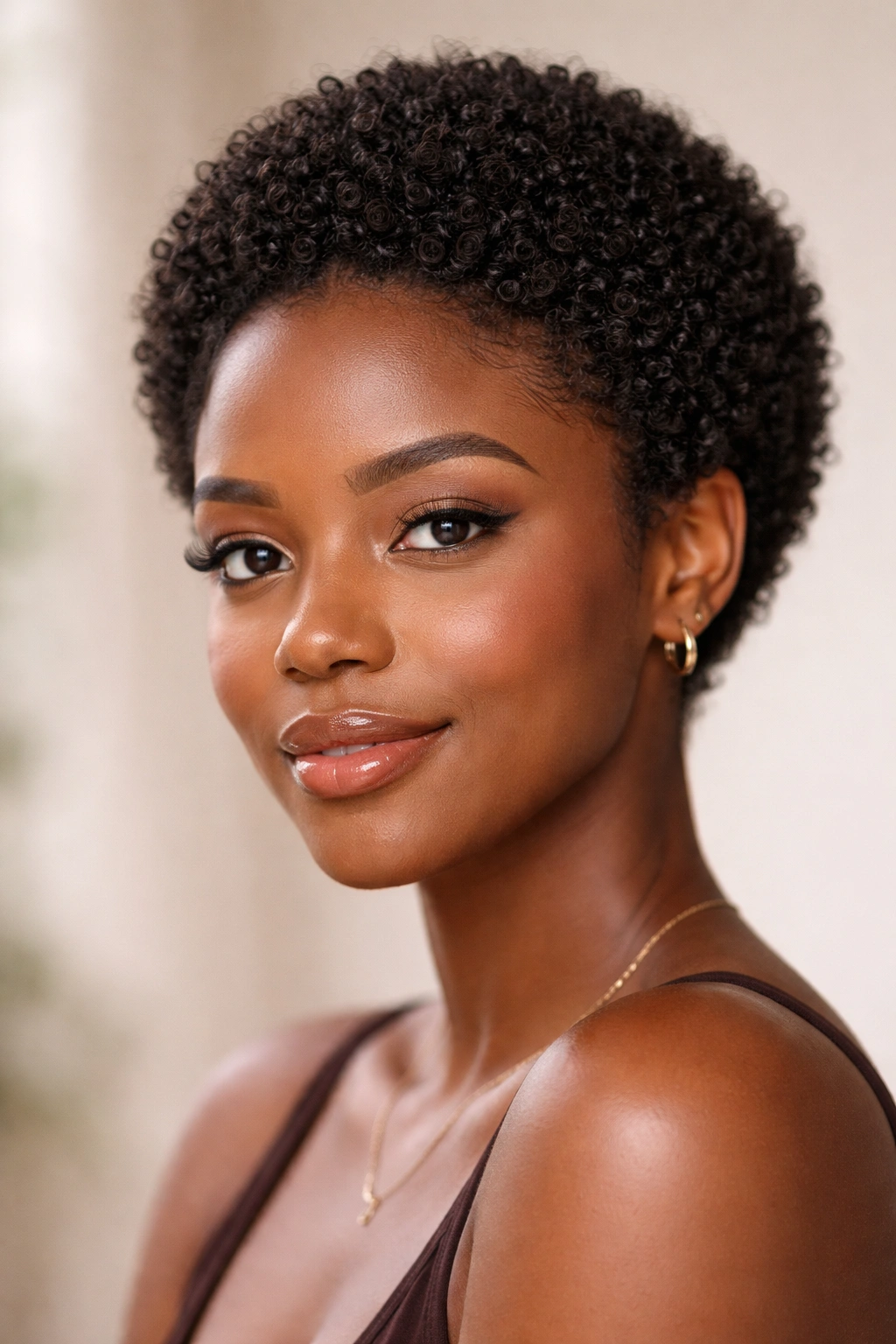
The teeny weeny afro gets overlooked because people think of it as a transition stage. It isn’t. A rounded TWA can look deliberate, polished, and surprisingly expressive when the outline is shaped well. On 4A hair, the tight coil pattern gives it a plush, velvet-like look that holds even on low-effort days.
This style works best when the cut follows the natural curve of the head. No harsh corners. No weird shelf at the temples. Just a soft dome that lets the curls breathe. If your hair is freshly cut, a little shrinkage can make the shape look even fuller, which is exactly the point. It’s tiny, but not flat. Neat, but not stiff.
A TWA also makes wash day easier. There’s less product buildup, less detangling, and fewer hiding places for single-strand knots. That alone is worth something.
Seriously. Clean shape, less fuss.
3. Defined Finger Coils
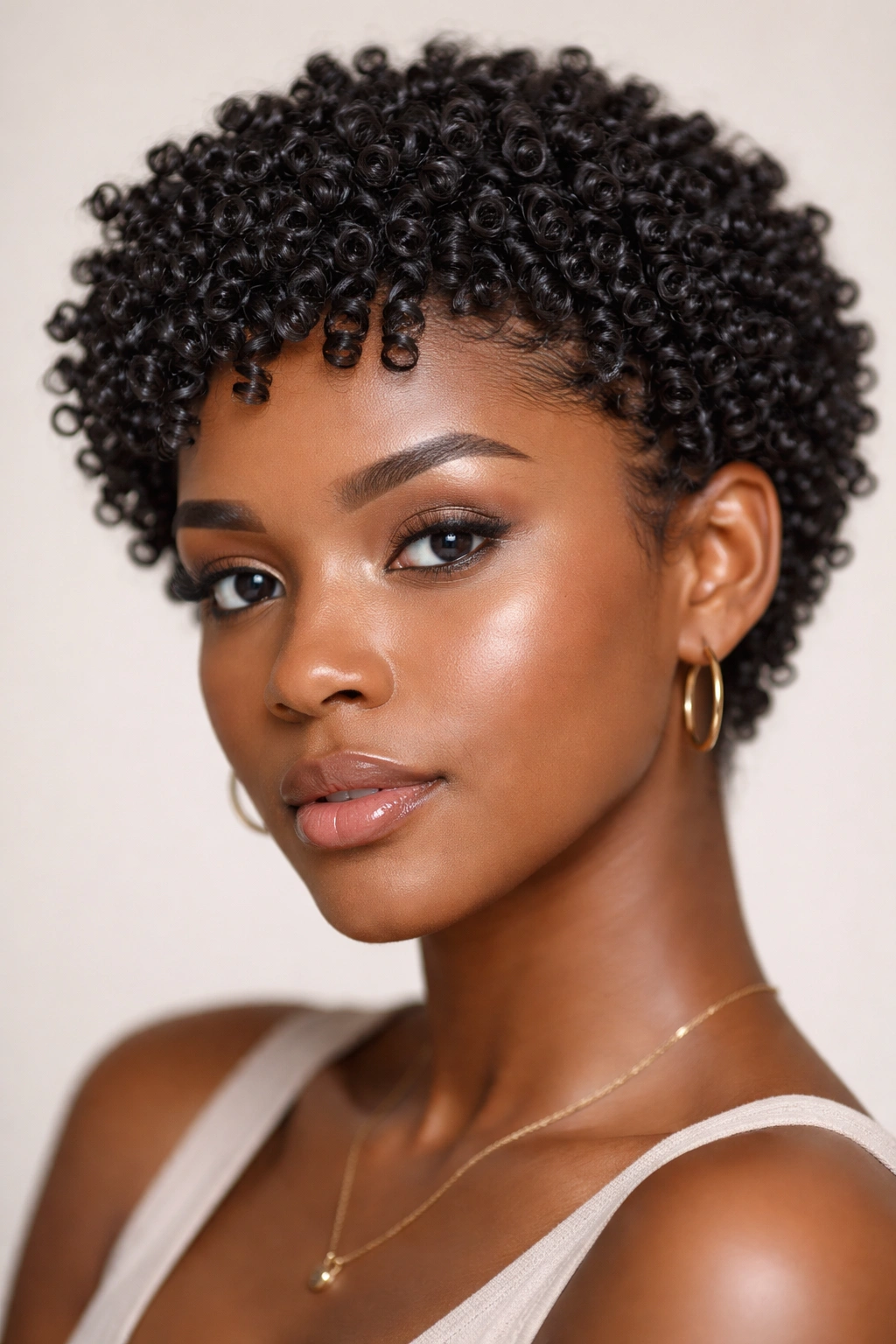
Want a short style that looks controlled even when the rest of the week goes sideways? Finger coils are a solid bet. They give type 4A curls a neat spiral pattern, and on short hair they can make each coil pop in a way that feels both tidy and textured.
Why section size matters
The size of each section changes the whole mood of the style. Smaller sections, around 1 inch or a little less, give more definition and a tighter coil. Slightly larger sections make the style fuller and softer. On short 4A hair, I usually prefer the smaller side because the coil pattern holds better and the finish lasts longer.
Work with damp hair, not soaking wet hair. Smooth in a leave-in, then a light gel or curling cream with enough slip to let the strands wrap cleanly around a finger or a rattail comb. If the hair starts to frizz as you coil, stop. That usually means the section is too dry or the product is too thin.
Quick setup notes
- Use 1-inch sections for tighter definition.
- Let each coil dry fully before touching it.
- Sleep with a satin bonnet or scarf.
- Separate only once, or the coils frizz fast.
Best part: when finger coils are done well, they can turn a short cut into something that looks almost sculpted.
4. Flat Twists to the Scalp
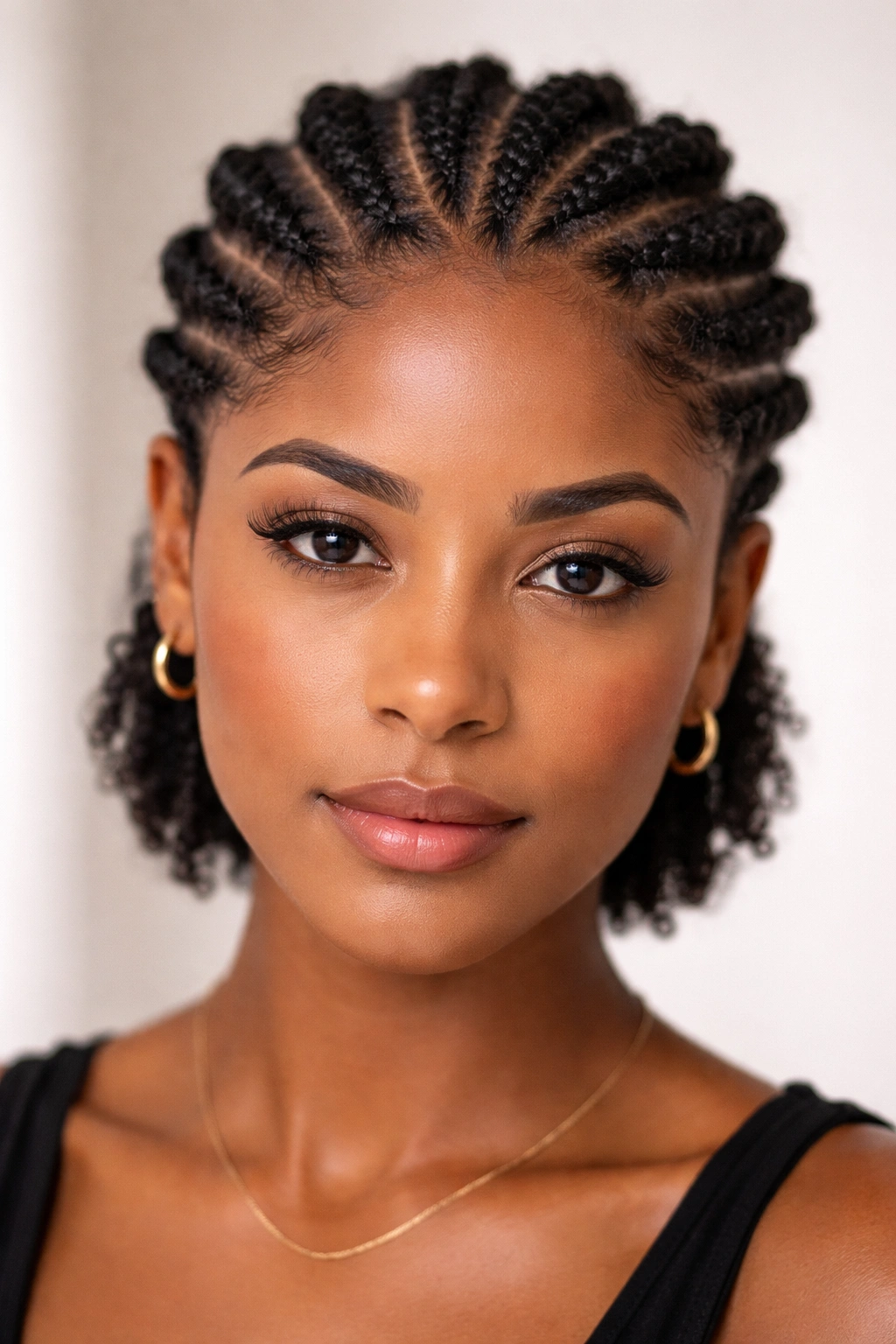
Flat twists are one of those styles that sounds plain until you actually wear them. Then you understand why people keep going back to them. They keep short 4A hair close to the head, protect the ends, and give the whole style a neat, organized feel without flattening everything into submission.
They’re especially useful when your curls are in that awkward middle length where a twist-out won’t behave and a wash-and-go feels too wide. Flat twists solve that by anchoring the roots. You can twist straight back, angle them to one side, or run two chunky twists across the crown and leave the ends tucked or curly.
Easy on the fingers, too.
If you want more wear time, set the twists on slightly stretched hair and let them dry fully before sleeping. If you’re planning to take them down later, use a little mousse at the roots so the pattern stays cleaner. A crisp part helps. A blunt one can be harsh on 4A hair, especially if the scalp is tender.
5. Curly Pixie Cut
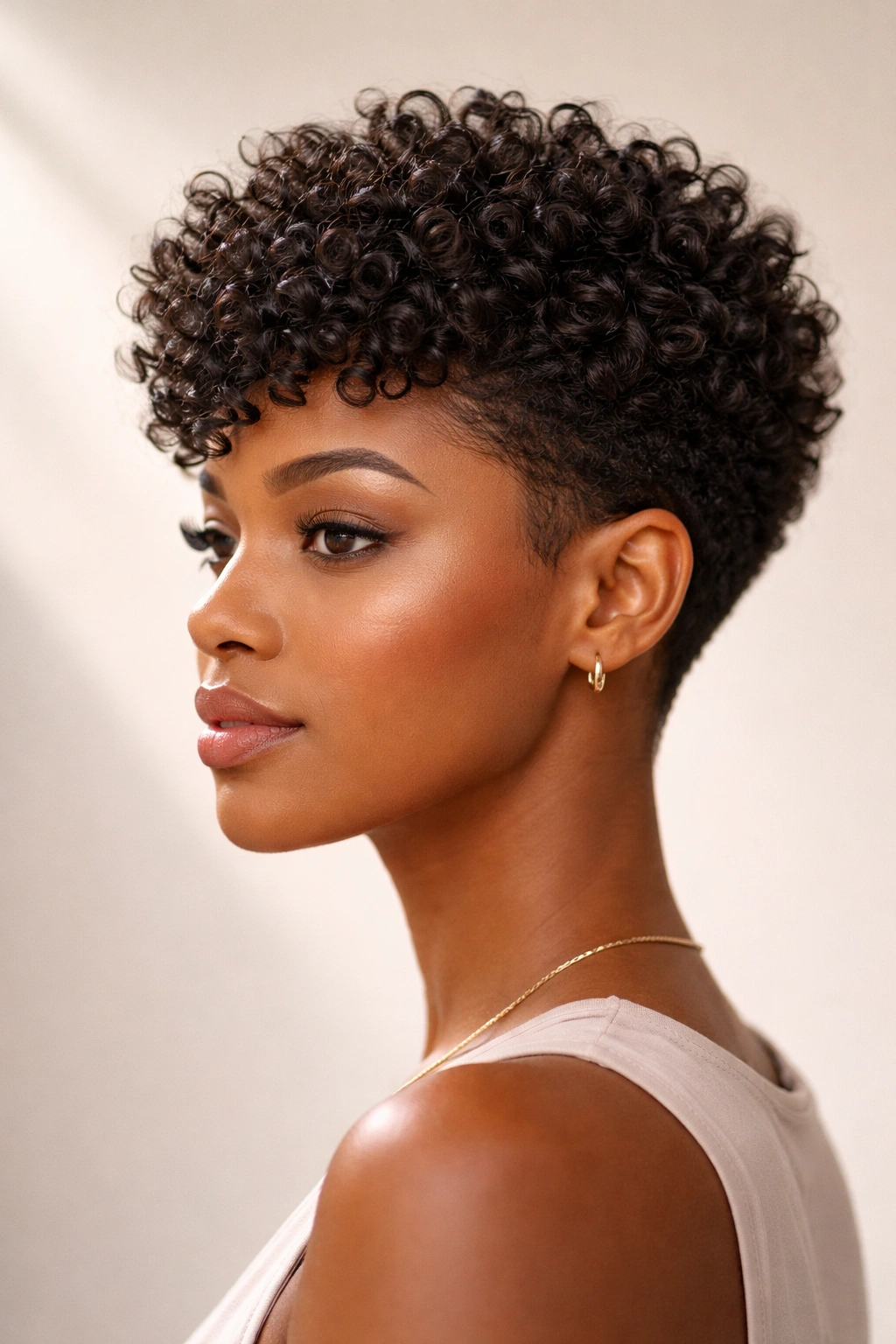
A curly pixie cut on type 4A hair is not about losing texture. It’s about putting the texture in a cleaner frame. The sides and back are cut short, while the top keeps enough length to show the coils instead of hiding them. Done right, it looks sharp without feeling severe.
The key is balance. If the top is too short, the style can read like a grown-out clipper cut. If it’s too long, the pixie starts acting like a bob and loses the point. I prefer a little extra length at the crown and a tighter nape, because that keeps the silhouette lifted. A deep side part can help too, especially if your face is round or heart-shaped.
What makes it different from a TWA
A TWA usually follows the natural all-over shape of the hair. A pixie has more intentional layering. The outline is more deliberate, and you can play with fringe, side-swept curls, or a little extra volume at the top.
Ask for this: dry cutting or cutting in a stretched state, because shrinkage can hide too much length if the stylist guesses.
6. Two-Strand Twist-Out Bob
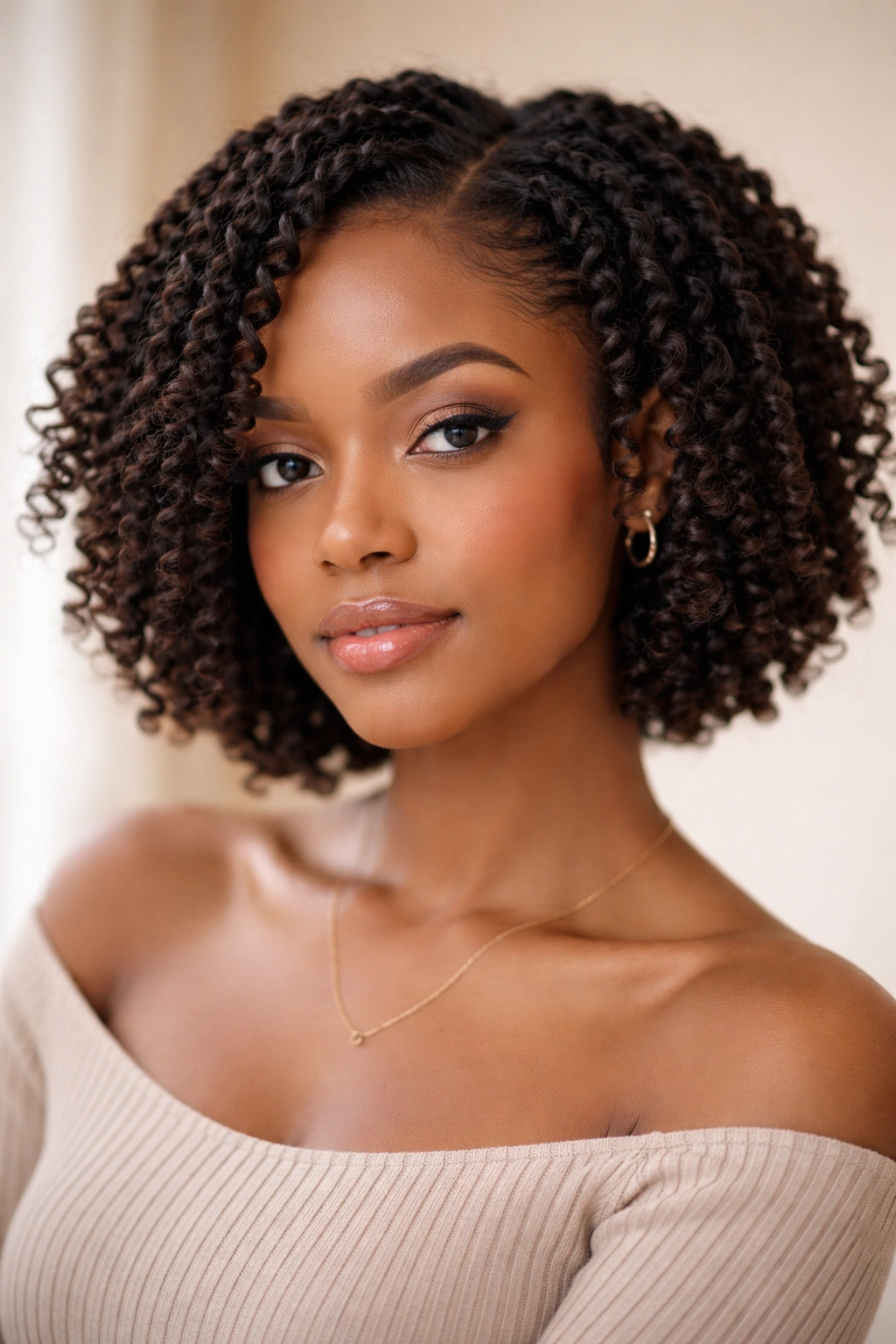
A twist-out bob gives you a short shape with a bit of swing, which is useful if you like movement but do not want your hair hanging long. On 4A curls, the twist-out works well because the coil pattern already wants to hold a curve. You’re just steering it.
The trick is to twist small enough for definition, but not so small that the takedown becomes a frizz festival. Half-inch to 1-inch sections usually hit the sweet spot. After twisting, let the hair dry fully. Fully means fully. If the center is still damp, the style will puff in the middle and lose that bob-like outline.
A little banding at the ends can stretch the shape if your shrinkage is strong. I like that better than piling on product, which can make the whole style sticky and dull. When you unravel, use a bit of oil on your fingertips and separate gently.
A few tidy twists can fake a haircut. That’s the fun part.
7. High Puff with a Defined Hairline
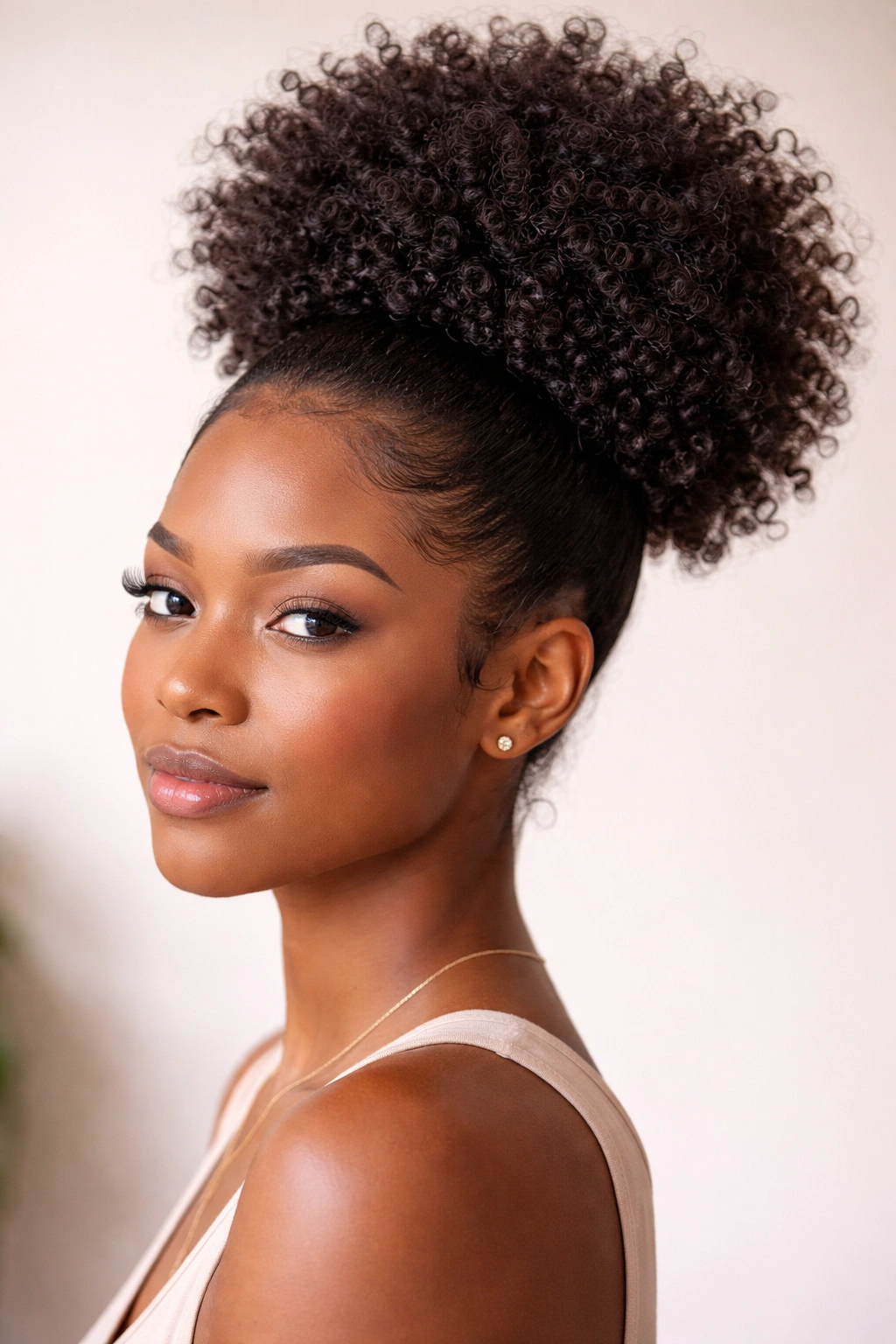
How short can 4A curls be and still puff up? Shorter than people think, as long as you can gather enough length at the crown. A high puff works when the roots are stretched a little and the sides are smooth enough to hold the shape. It’s quick, clean, and one of the easiest ways to make short coils look full.
The part people miss
The base matters more than the puff itself. If the roots are tangled or dry, the puff sits lopsided. Start with a lightly stretched foundation — a twist-out, banding, or even a quick blow-dry on low heat if that fits your routine. Then use a soft brush or your hands to gather the hair at the crown.
A stretchy band works better than a tight elastic. Tight bands break hair and leave a dent that takes forever to fade. If you like a smooth hairline, lay the edges with a small amount of gel and a scarf for 5 to 10 minutes. That’s enough. No need to drown the front.
A high puff is simple, but it needs control at the base. The puff itself will take care of the drama.
8. Mini Frohawk
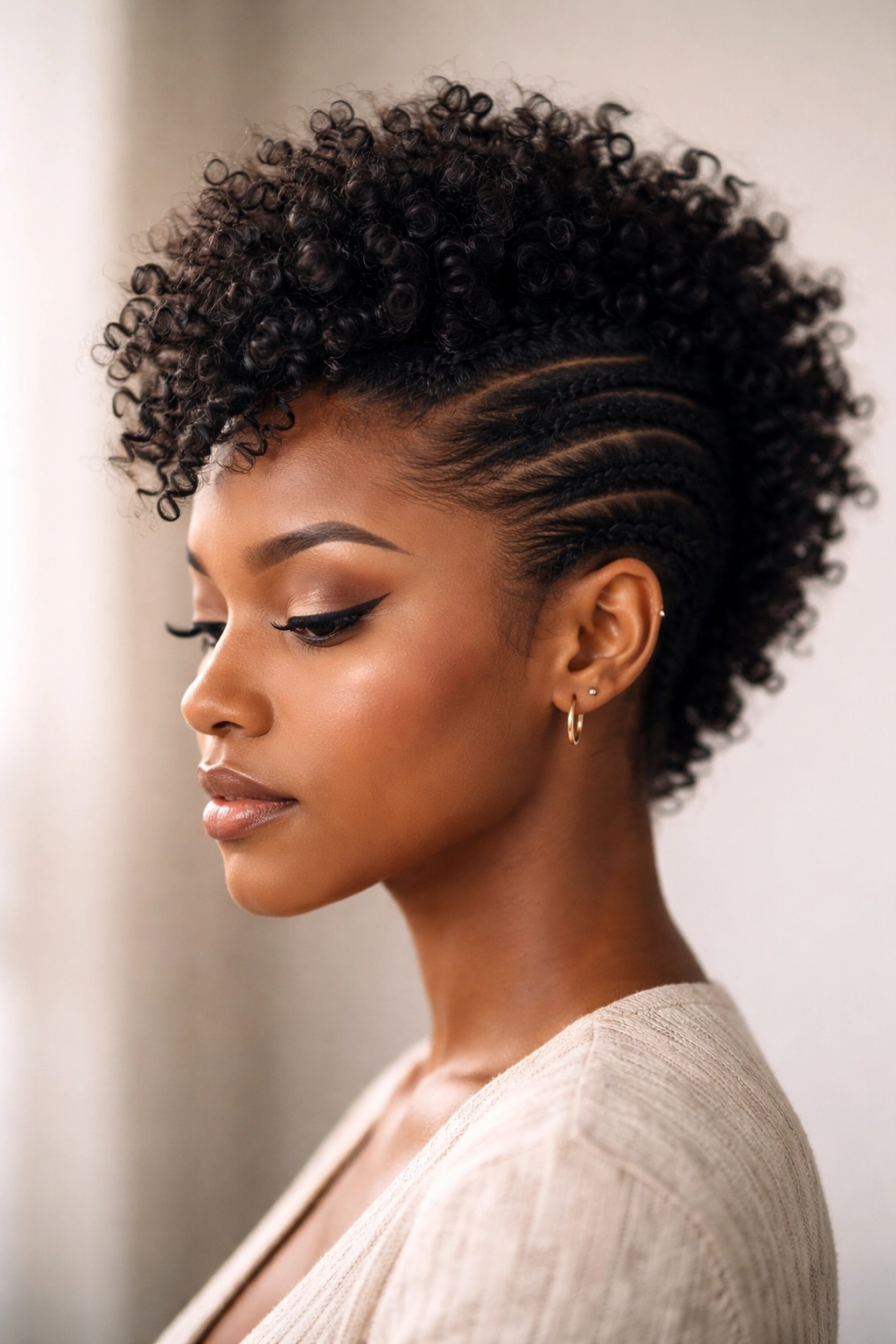
A mini frohawk has attitude. There’s no polite way around that. The sides are slicked, twisted, or pinned back, and the center strip is left high and curly so the whole style runs like a narrow ridge from front to back. On dense type 4A hair, that shape can look bold without needing much length.
I like this style because it gives you volume right where you want it. The curls stay visible, but the sides stop competing with the top. That makes the face look longer and the whole cut feel more dramatic. A frohawk can be done with flat twists on the sides, with gel and bobby pins, or with a bit of both.
Avoid one thing: crunchy, over-gelled sides. They ruin the line of the style and make it feel more stiff than sharp. If you want a cleaner finish, smooth the sides with a small brush and use just enough product to hold the roots down.
It’s a good choice when you want something that reads as styled fast.
9. Bantu Knot Set
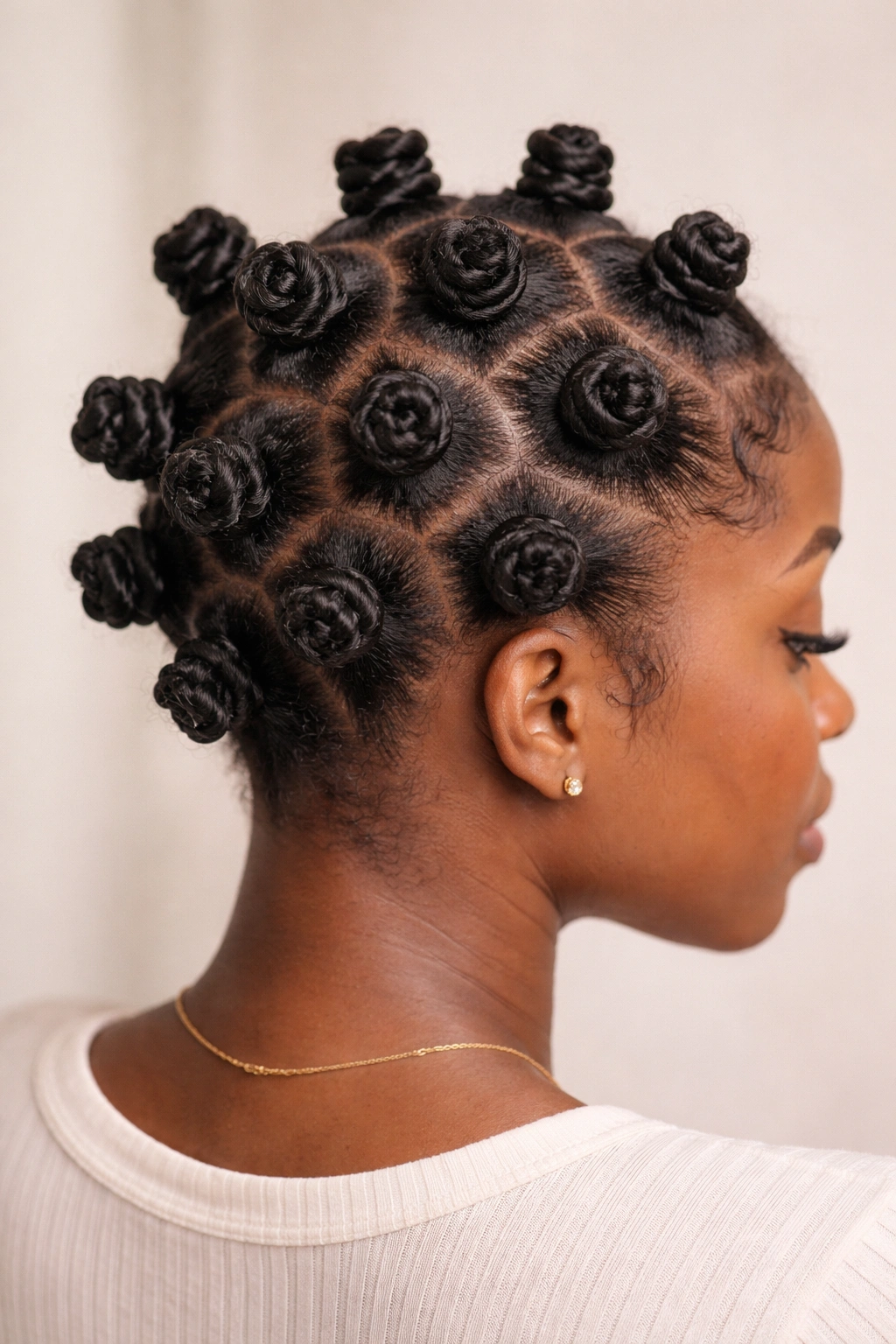
If you like a style that gives you a second style when you take it down, Bantu knots earn their place. On short 4A hair, they can sit close to the head and create a neat pattern that feels playful while it’s in and curly when it comes out. That double use is the real payoff.
A set of 8 to 12 knots is common on shorter hair, depending on how dense it is. Smaller knots give tighter curls after takedown. Larger knots give a chunkier wave pattern and a bolder look while the knots are still in place. Use a cream or gel with enough hold to keep the base smooth, then twist each section until it coils into a little nub and wraps back on itself.
Things that keep them neat
- Part the hair cleanly before you start.
- Keep the tension firm, not painful.
- Smooth the ends before you tuck them under.
- Let them dry all the way through.
Don’t yank the roots tight. The style should sit snug, not strangle the hairline. That’s where people get into trouble.
10. Layered Wash-and-Go
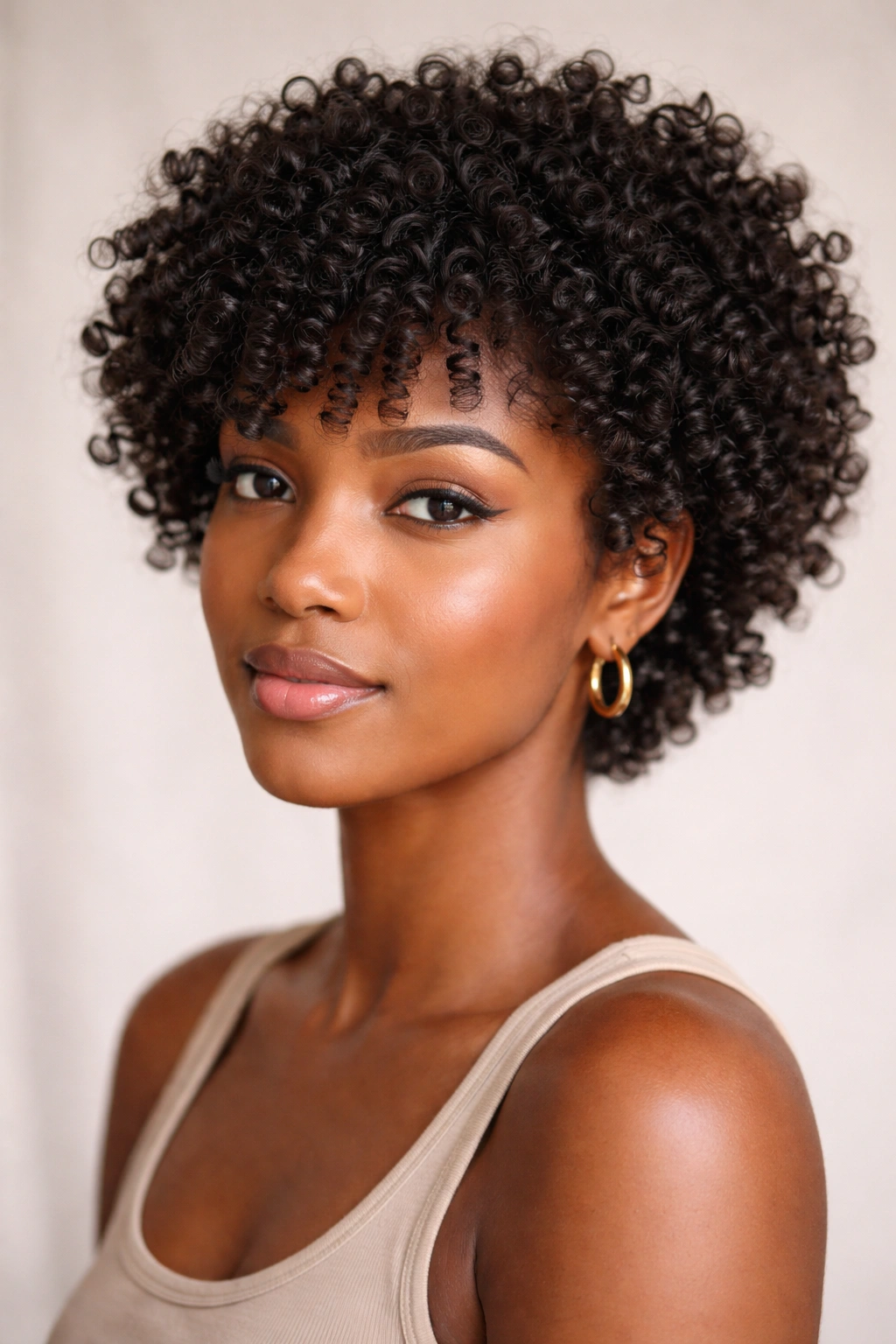
A short wash-and-go on type 4A hair can look excellent, but only if the cut has layers. Without layers, the curls can stack awkwardly and form a round shape that’s wider than it is balanced. With layers, the top lifts, the sides tuck in a little, and the whole style feels more tailored.
What makes it hold its shape
Product choice matters, yes, but the cut does a lot of the work. A good leave-in gives slip. A gel or custard gives hold. What you do between those two matters just as much. Apply in small sections, rake or smooth the product through, then stop touching the curls once they clump.
A Denman brush can help define 4A curls, but it can also over-stretch them if you go too hard. Use it lightly if you want curl grouping. Use your fingers if you want less separation. Either way, let the hair dry without constant fluffing.
- Start on soaking-wet or evenly damp hair.
- Use a light leave-in first.
- Layer gel in small amounts.
- Let the roots dry fully before picking.
A short wash-and-go looks best when it keeps its outline instead of expanding into a cloud.
11. Mini Twists
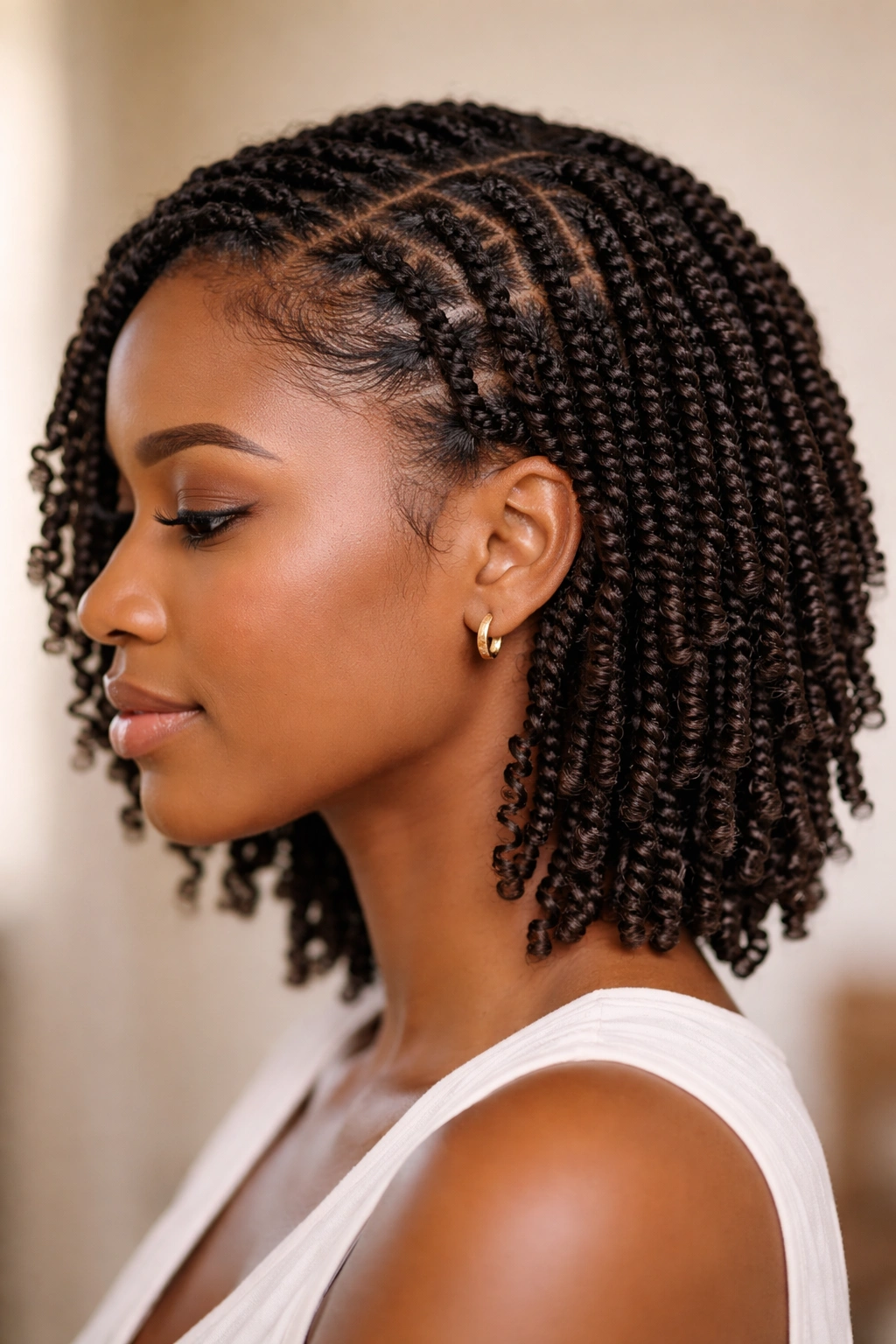
Mini twists are the quiet workhorse of short natural hair. They do not need much drama to earn their keep. Once installed, they can last several days, tuck neatly behind the ears, and turn into a twist-out later if you want a softer shape.
This style works especially well on 4A hair because the coils give the twist a lot of grip. You do not need huge sections. In fact, smaller sections — around 1/2 inch or less — often stay cleaner and last longer. Parting matters here. Sloppy parts show fast, and on short hair that mess tends to multiply.
I’d call mini twists a good choice for people who like order. They’re protective when installed gently, and they can be pinned into half-up shapes without much effort. They’re also one of the easier styles to refresh at night with a satin scarf and a few twists at the perimeter.
If you rush them, they look rushed. That’s the whole story.
12. Cornrow Crown with Curly Ends
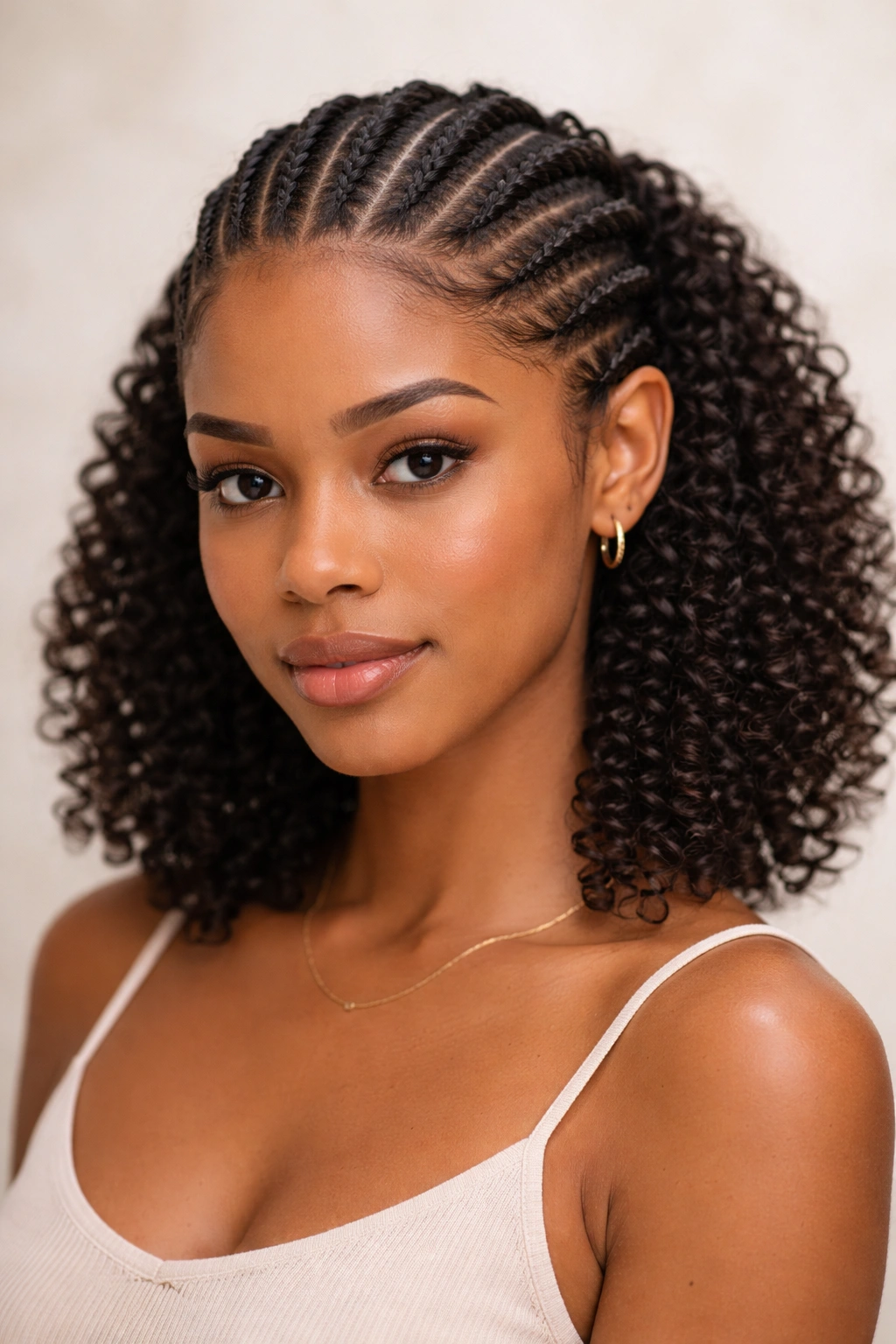
Need the front off your face but don’t want the whole style locked down? A cornrow crown with curly ends gives you a little structure up front and softness wherever you leave the hair loose. On short type 4A curls, it’s a smart way to combine control and texture.
The crown part usually starts with small straight-back or curved cornrows along the hairline and temples. The ends can stop halfway back, then release into coils, puffs, or short loose curls. That contrast is what makes it work. The neat front line keeps the style tidy. The loose back keeps it from feeling too severe.
The detail that keeps it clean
Tension should be even from start to finish. Tight braids may look neat for a day and then start hurting the scalp or lifting at the edges. That is not a trade I’m interested in making. A clean part, some light moisture, and a rat-tail comb are enough to keep the rows tidy.
This style is nice for active days, formal events, or just those mornings when you want your hair off your forehead without giving up shape.
13. Asymmetrical Curly Cut
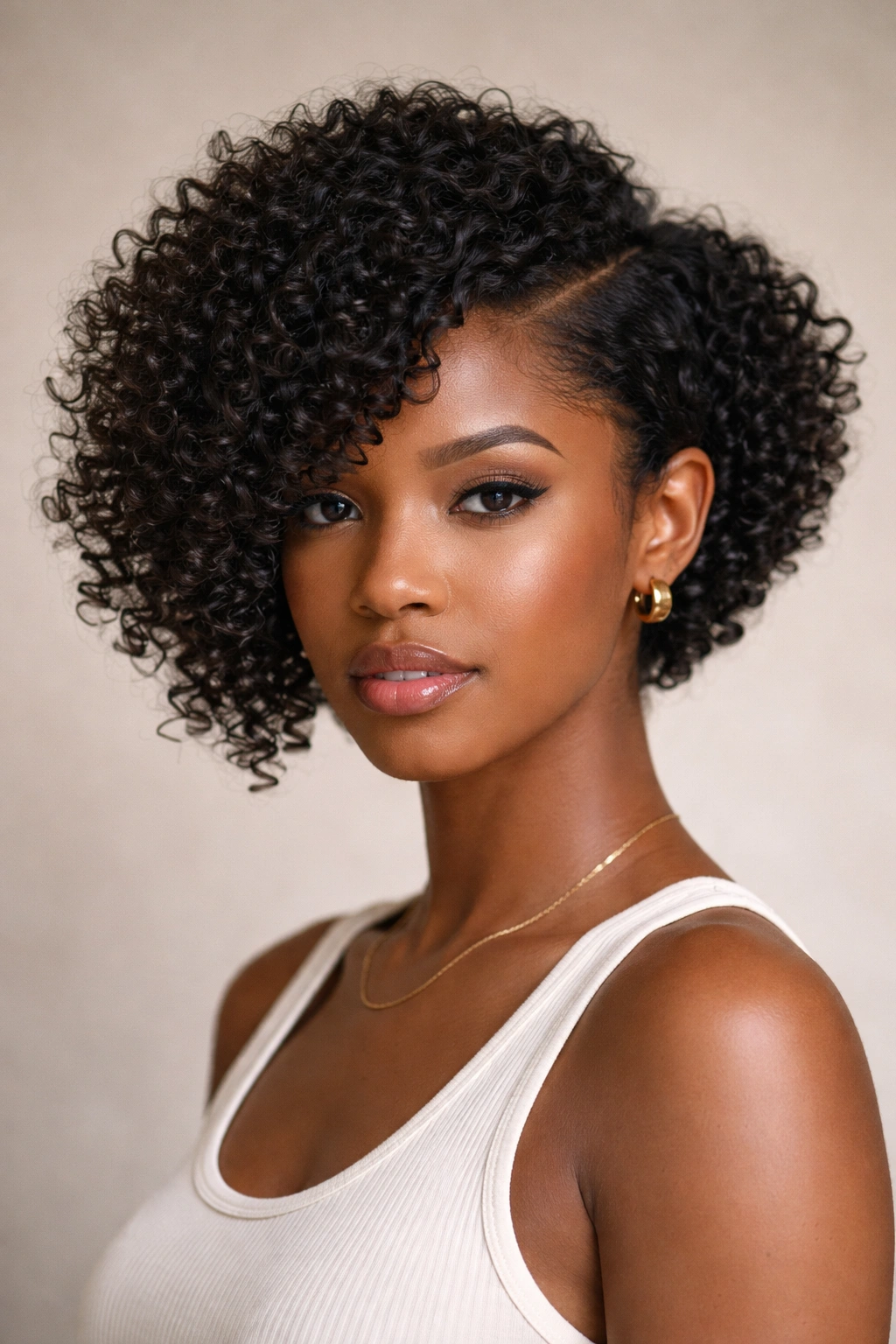
One side grazing the cheekbone and the other sitting closer to the jawline changes the whole mood of a short cut. That’s what makes the asymmetrical shape so useful on type 4A curls. It gives you motion without needing extra length, and it lets the density work for you instead of against you.
I like this style because it does something that many short cuts don’t: it directs the eye. The longer side draws attention downward, while the shorter side keeps the shape from feeling heavy. If your curls are thick and springy, that balance can be a relief. It also suits people who want a short cut that feels a little sharper than a rounded afro.
A diagonal part can make the shape stronger, especially if the front piece is left just long enough to brush the brow or cheek. Ask for the cut to be shaped while the hair is dry or lightly stretched. If a stylist cuts 4A hair too wet, the shrinkage can hide the angle completely.
The best asymmetrical cuts look casual from a distance and precise up close.
14. Shaped Mohawk Fade
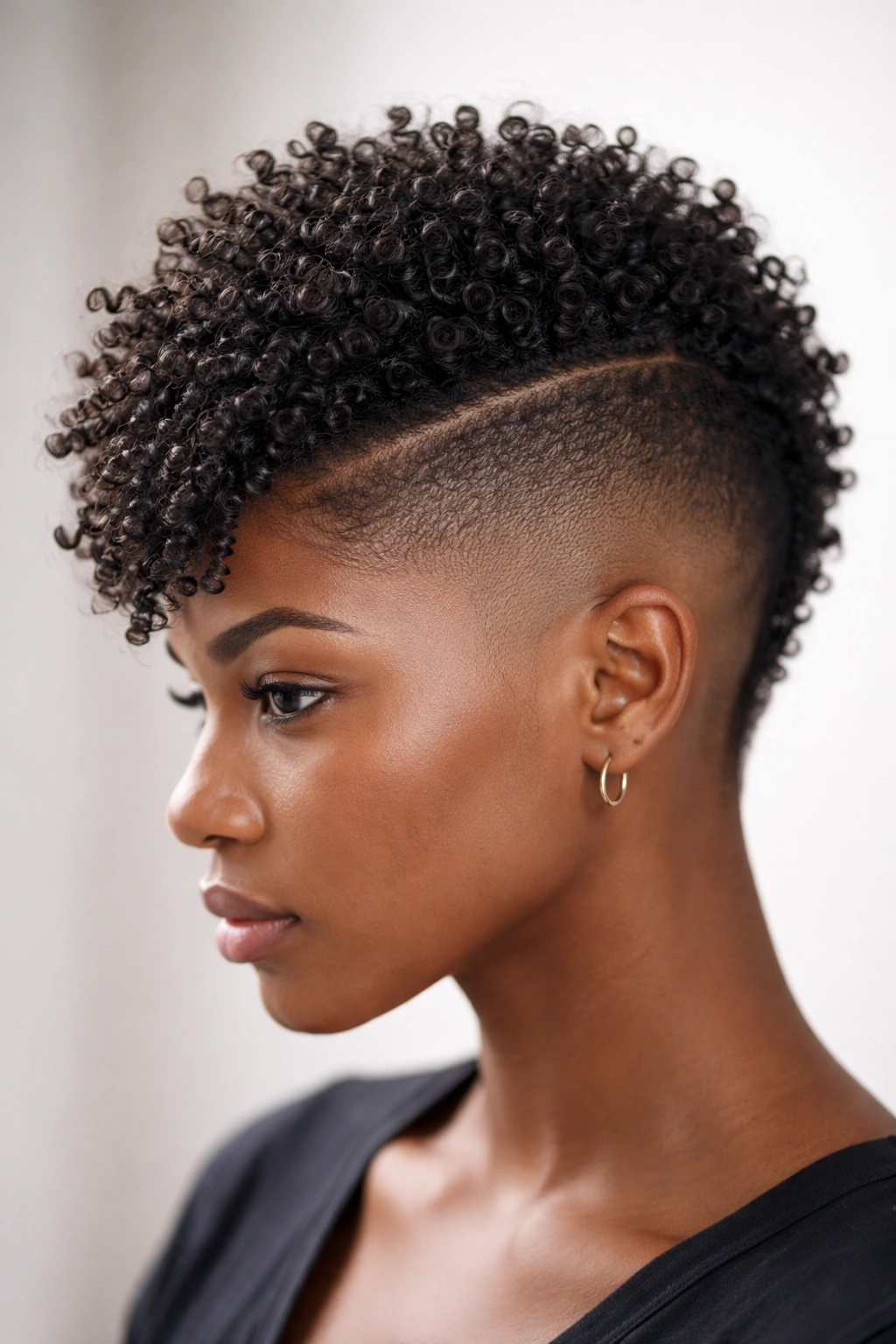
A mohawk fade is sharper than a frohawk, and that difference matters. The sides are clipped close or faded down cleanly, while a strip of curls runs along the center. The result is tighter, cleaner, and more sculpted than a style built only with pins and gel.
On 4A hair, this works because the curl density gives the center strip enough body to stand on its own. You do not need a ton of length. You need a strong outline. The fade keeps the sides from puffing out, which is half the battle with short natural hair. The top can be shaped upward, left a bit messy, or defined with cream for a neater finish.
This one needs regular cleanups around the sides if you want the outline to stay crisp. Let it grow too far, and the mohawk turns into a vague silhouette. Not ideal. If you like a bold haircut and don’t mind the barber chair, this is a strong option.
It is unapologetic. That’s the charm.
15. Twist-and-Pin Crown Updo
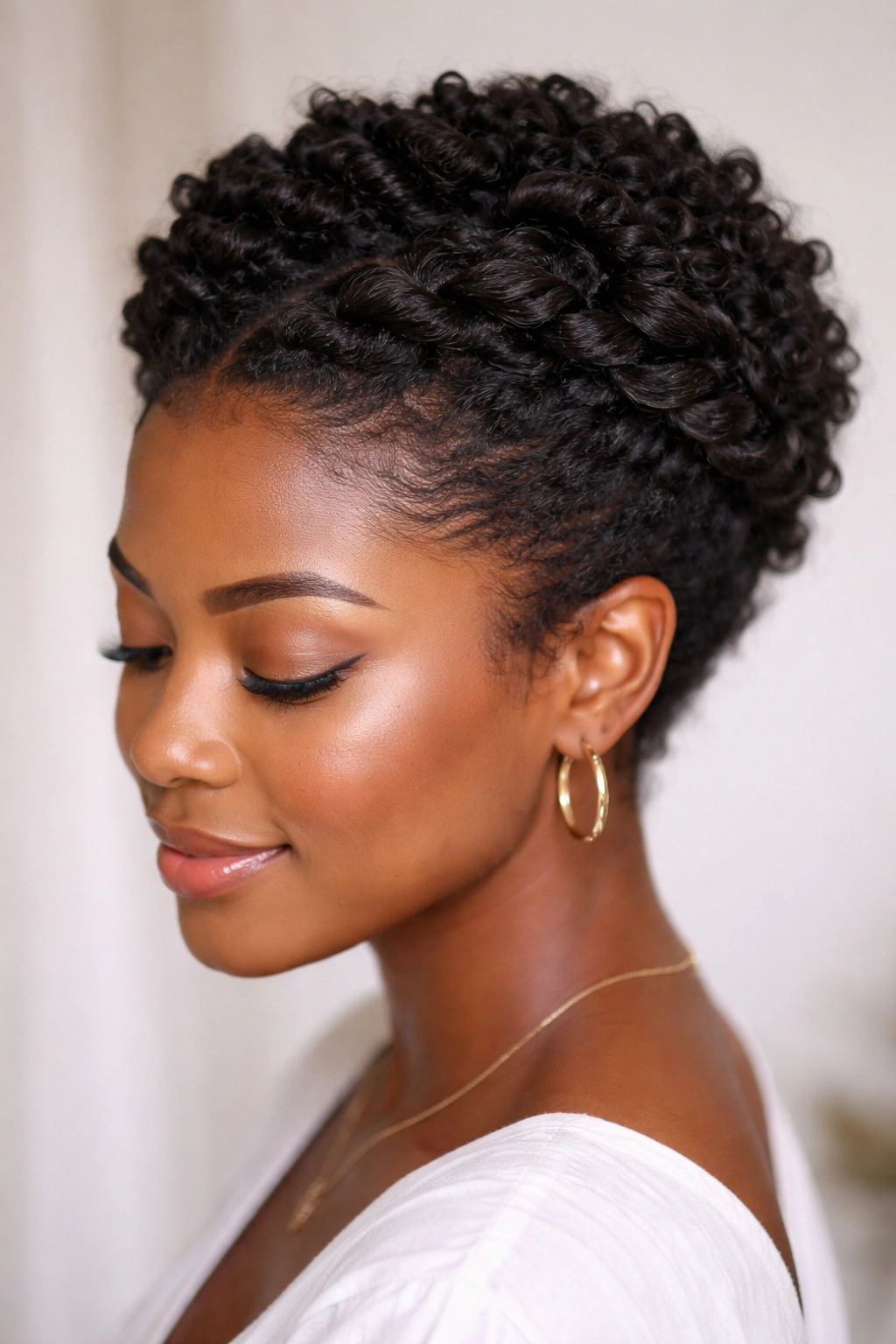
Pinned curls at the crown can look more polished than people expect, especially on short 4A hair. A twist-and-pin crown updo gathers the hair upward and around the head, then tucks the ends under so the shape sits like a small halo or wrapped crown. It works for dinners, weddings, church, interviews, or any time you want the neck clear and the top finished.
How to keep the pins invisible
Use small twists or stretched sections, not huge chunks of hair. Big sections fight the shape and pop loose. U-pins or flat bobby pins slide in more cleanly than bulky clips. Cross the pins over each other when possible; that keeps the hold stronger without making the style look crowded.
A little shine product on the finished surface can help, but don’t overdo it. Too much gloss makes 4A curls slip out faster. If you want a softer look, leave a few coils out around the hairline. If you want it sharper, tuck everything in and smooth the front with a scarf for a few minutes before stepping out.
It’s a neat way to make short hair look put together without pretending it’s longer than it is.
Final Thoughts
The best short hairstyles for type 4A curly hair do two things at once: they respect shrinkage and they make shape the priority. If a cut ignores those two facts, the style ends up fighting the hair all day. That fight is tiring, and it usually shows.
What I like most about these looks is that they don’t ask 4A curls to act like another hair type. They work with density, tight coils, and natural volume. Some styles are neat and low-maintenance. Others lean bold. A few do both, which is probably why they’re the ones people keep returning to.
If you’re choosing between cuts, think less about length and more about outline. A dry or lightly stretched trim usually gives a truer picture of how the hair will sit, and that matters a lot when the curls spring back hard. A shape that looks good in its shrunken state is the one that will keep paying off later.