



Pool days can wreck a good curl pattern fast. Water loosens some styles, chlorine roughs up the cuticle, and all that rubbing against a towel, a car seat, or a pool lounger turns a decent twist into a fuzzy mess before lunch.
Curly hair needs a different plan. The styles that last longest usually do three things at once: they keep the hair off your neck, they reduce friction, and they give the curls a shape that still makes sense after a dunk in the water. Loose, decorative styles can look nice at the start. Then the first splash happens. Gone.
My bias is simple: if a hairstyle for the pool can survive wet hair, a quick squeeze with a towel, and a little wind, it earns its place. That usually means braids, buns, twists, and a few smart hybrids that don’t fight your texture. The trick is choosing the right level of tension for your curl pattern, because too tight means headaches and breakage, and too loose means the whole thing collapses by the end of the first lap.
1. High Pineapple Bun for Curly Hair
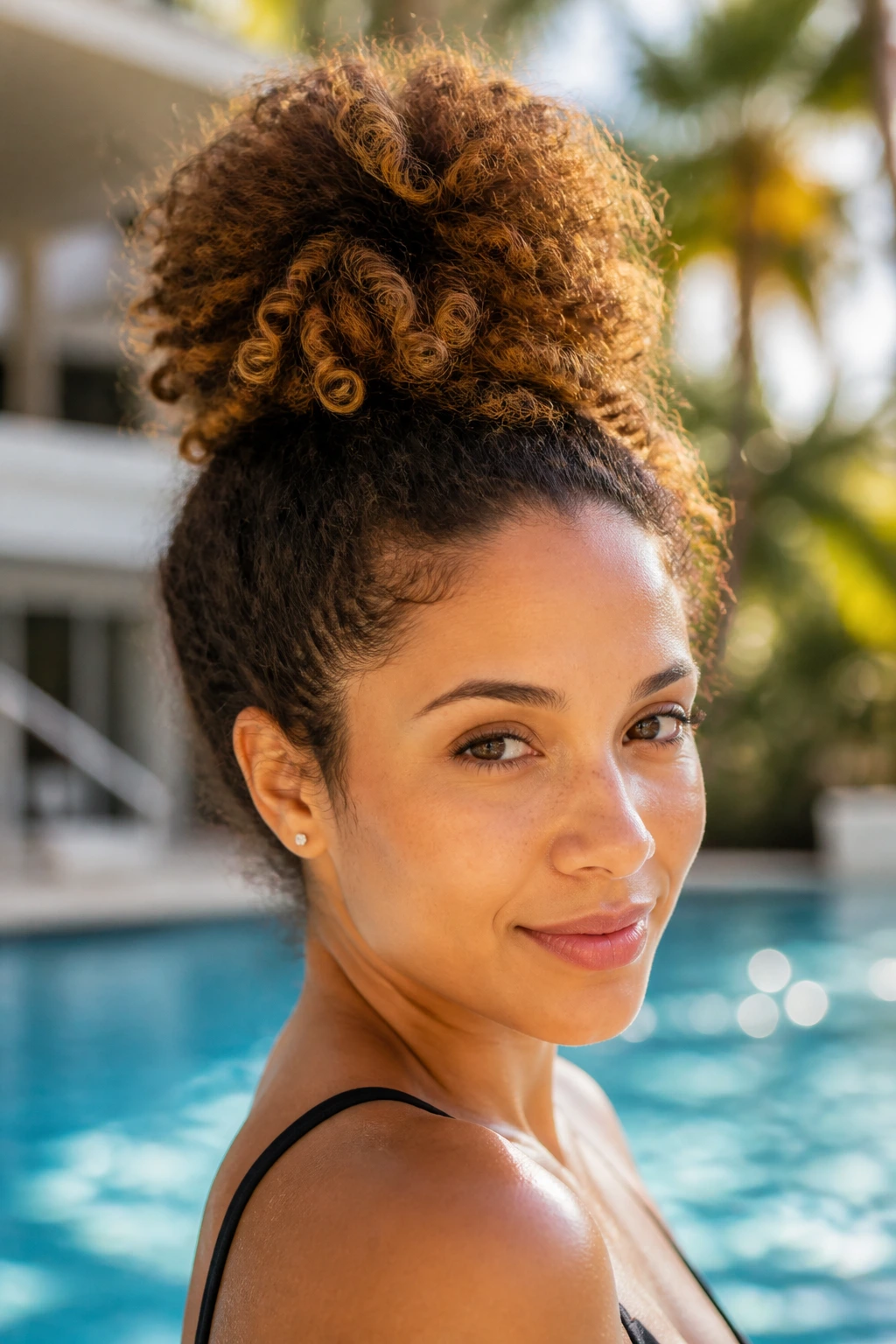
The high pineapple bun is the easiest “get it up and out of the way” style for curls that still deserve to look like curls when you let them down later. It sits high on the crown, so the ends are away from the waterline and away from your neck, which matters more than people think once you’re hot, damp, and trying not to touch your hair every five minutes.
I like this one for wavy through coily hair because it keeps the shape soft instead of smashing everything flat. If you pile the ponytail too hard, you’ll end up with a dent right where you least want it. Keep the base loose, then let the curls fan out naturally instead of forcing them into a tight knot.
Why it holds near the pool
A pineapple works because the weight of the hair sits on top of the head, not at the nape where water and movement cause the most drag. A satin scrunchie or a wide, coated elastic is kinder than a tiny rubber tie, and that matters when the hair is wet and slippery.
- Best for medium to long curls that have enough length to gather high
- Good if you want volume after the pool instead of a flat scalp
- Works well with a light leave-in or curl cream underneath
- Easier to refresh later than a tightly slicked style
One small warning: don’t pull the front too tight. The style should feel secure, not like a face-lift.
2. Two Dutch Braids Into a Low Coil
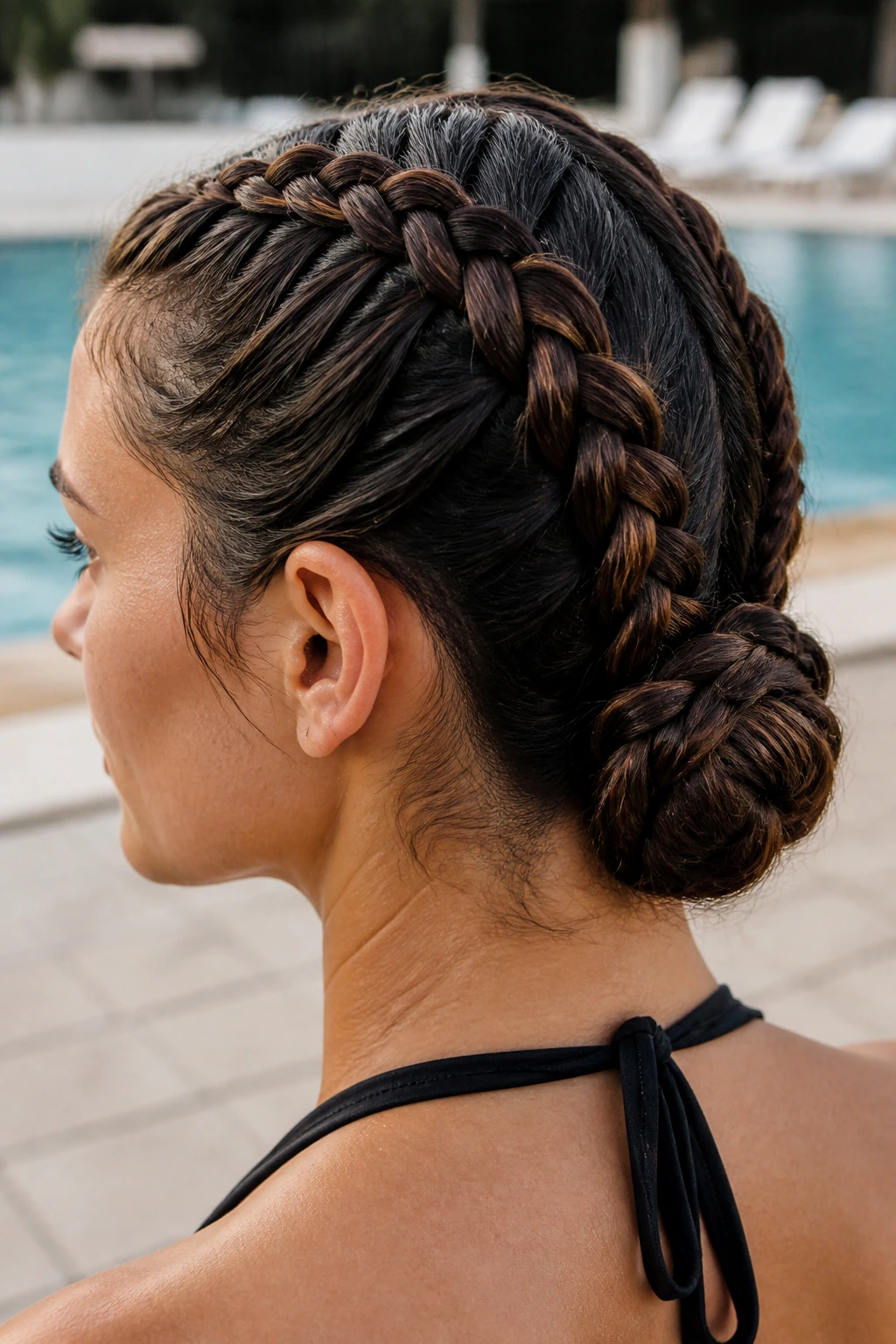
Two Dutch braids give you the strongest kind of hold without turning the whole head into a helmet. Because the braid sits on top of the hair instead of disappearing underneath it, the structure stays visible and firm even after the braids get wet. Then you can twist the ends into a low coil at the nape, which keeps everything compact when you’re done swimming.
This is the style I’d point to for actual pool time, not just poolside hanging around. The braids keep the roots controlled, and the low coil keeps the ends from dragging across a wet T-shirt or chair. If your curls are thick, this is one of the few styles that still feels stable after an hour of movement.
A little styling cream or a light gel before braiding helps the strands grip each other instead of sliding apart. That said, do not overload the hair with product. Heavy buildup and chlorinated water are not friends, and a greasy braid gets weird fast.
If you want a style that looks deliberate even when it’s slightly undone, this is the one. It gets better with a little mess.
3. Classic French Braids for Curly Hair
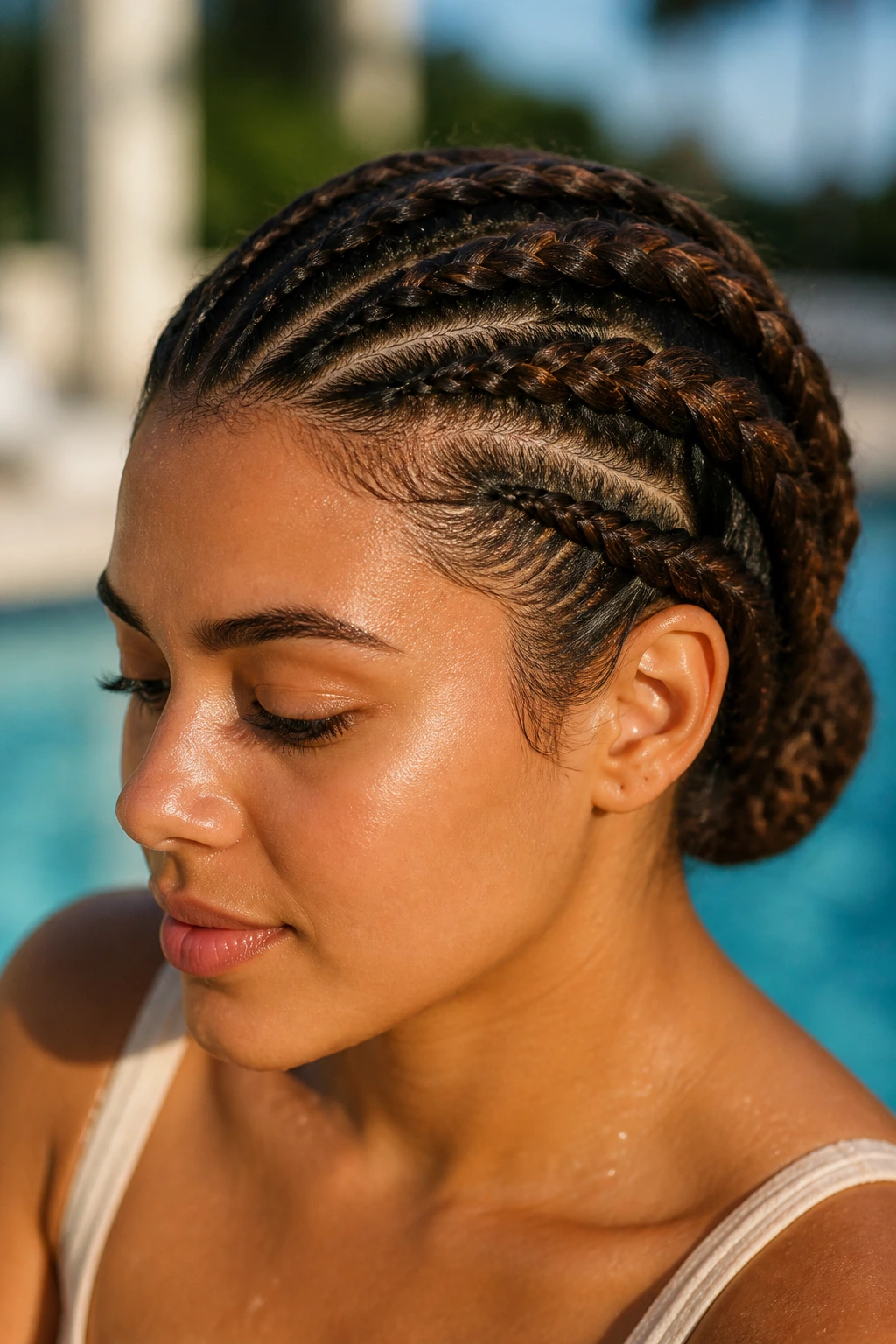
Why do French braids last so well at the pool? Because every new section gets folded into the braid, which means the style keeps building its own support as it goes. Loose curls don’t have much chance to escape, and the braid lies close to the scalp, so it handles movement better than a loose ponytail ever will.
French braids are especially handy if your hair frizzes the second it feels humidity. The braid pattern keeps the surface smooth, and even when the ends puff up a little, the top half still looks neat. That makes it a good pick for kids, lap swimmers, or anyone who hates redoing their hair between swims.
How to keep the ends neat
- Start on detangled hair with a bit of leave-in conditioner
- Section cleanly from the front hairline toward the crown
- Keep the braid snug at the roots, but not painful
- Secure the ends with a soft elastic and leave them tucked under a cap if needed
If you want beachy waves later, braid a little looser. If you want maximum hold, keep the sections small and even. Tiny braids take longer, sure, but they stay put longer too.
4. Braided Crown With Tucked Ends
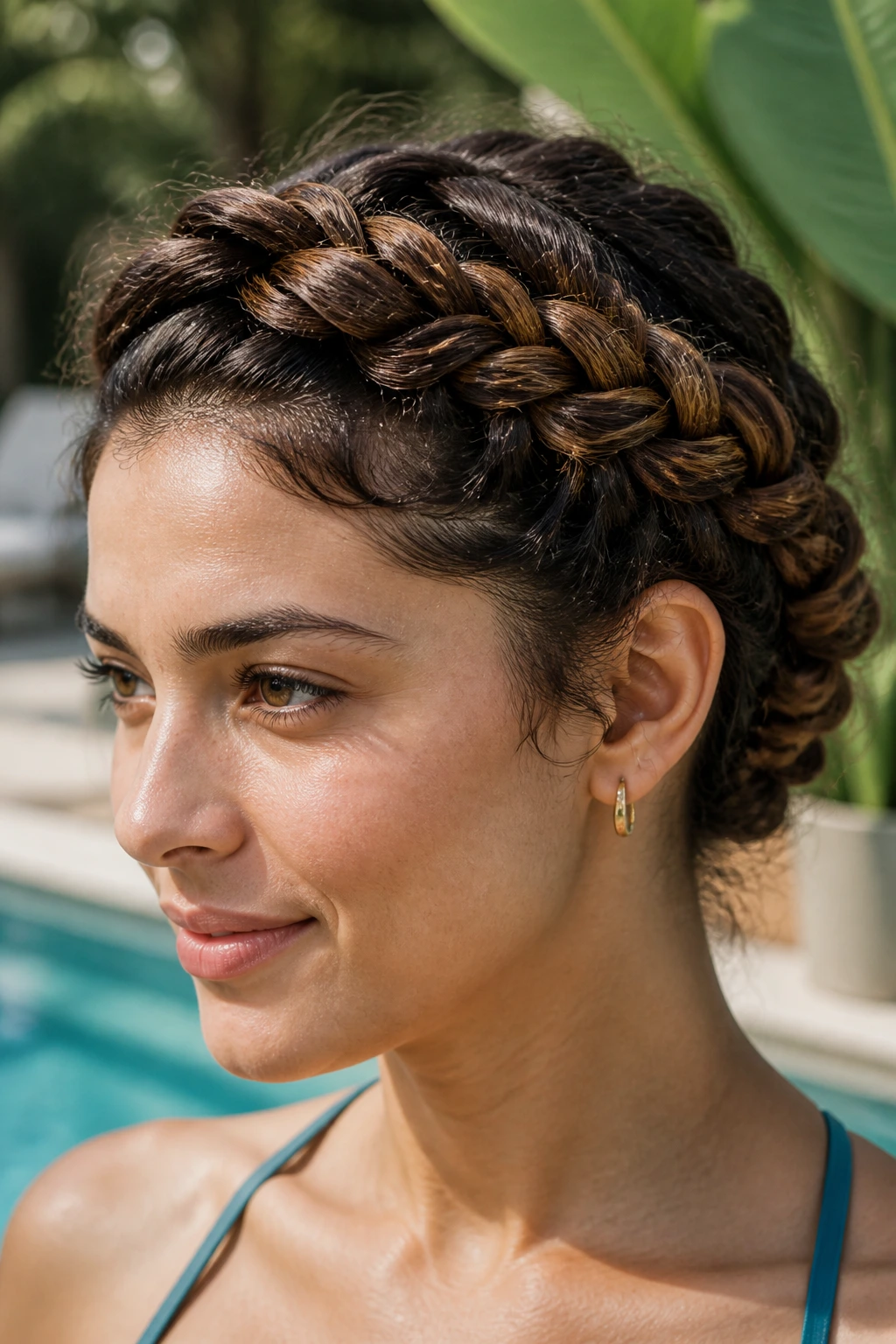
A braided crown is one of those styles that looks more complicated than it is, which I always appreciate. It wraps around the head like a halo, so the hairline stays controlled and the bulk of the curls sits away from your face, your neck, and the pool’s wet metal ladder that somehow always manages to snag everything.
This style works well when you want a polished look that still respects curly texture. You can braid from each temple back toward the opposite side, then pin the ends underneath the crown. On dense curls, a pair of braids joined at the back gives more grip than trying to force one giant braid around the head.
I’d call this a strong choice for pool parties, long brunch-y swims, or any day when you want hair that survives both water and photos. It’s not the fastest style to do, but it pays you back in the form of fewer flyaways and less neck stickiness.
A few U-pins placed in a crisscross pattern hold better than one oversized clip. Small detail. Big difference.
5. Low Sleek Bun for Curly Hair
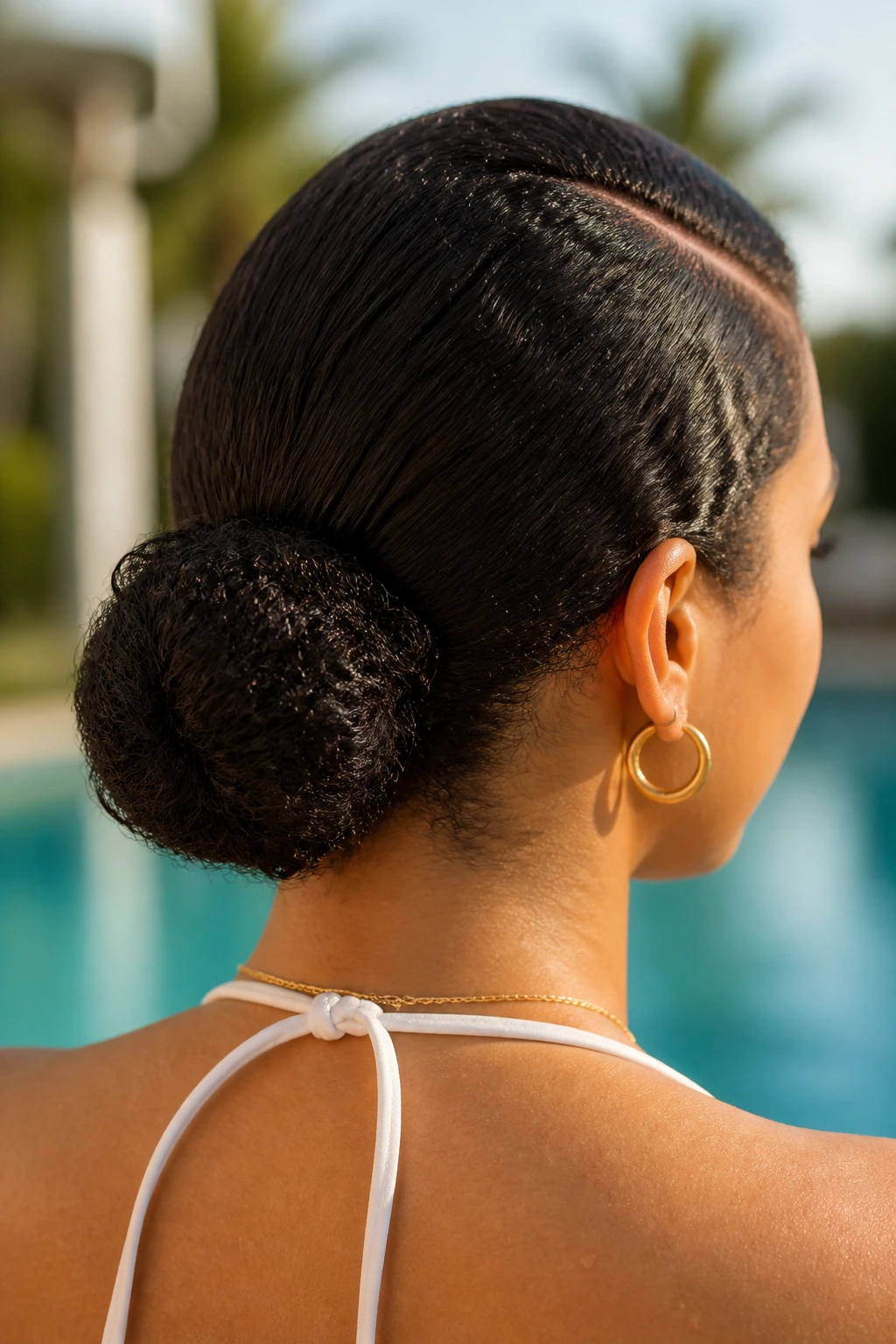
The low sleek bun is the blunt instrument of pool hairstyles. It’s not fancy. It’s not trying to be. It just works.
If your main goal is to keep curls contained while you swim, jump, or sit under a sun umbrella without hair clinging to your shoulders, this is the style to beat. Smooth the top with a little leave-in or gel, gather the hair at the nape, twist it into a bun, and lock it down with a strong elastic plus a few pins if needed. The bun should feel secure, but not so tight that you get a headache by the first swim.
What makes this one last is the compact shape. Water has fewer places to get in and fewer strands to pull apart. If your hair is long and thick, split it into two sections before twisting; it’s easier to control and less likely to bulge out in weird directions.
One honest note: this isn’t the style I’d choose if I wanted maximum curl definition later. It’s a containment style. Sometimes that’s exactly what you need.
6. Bubble Ponytail with Coated Elastics
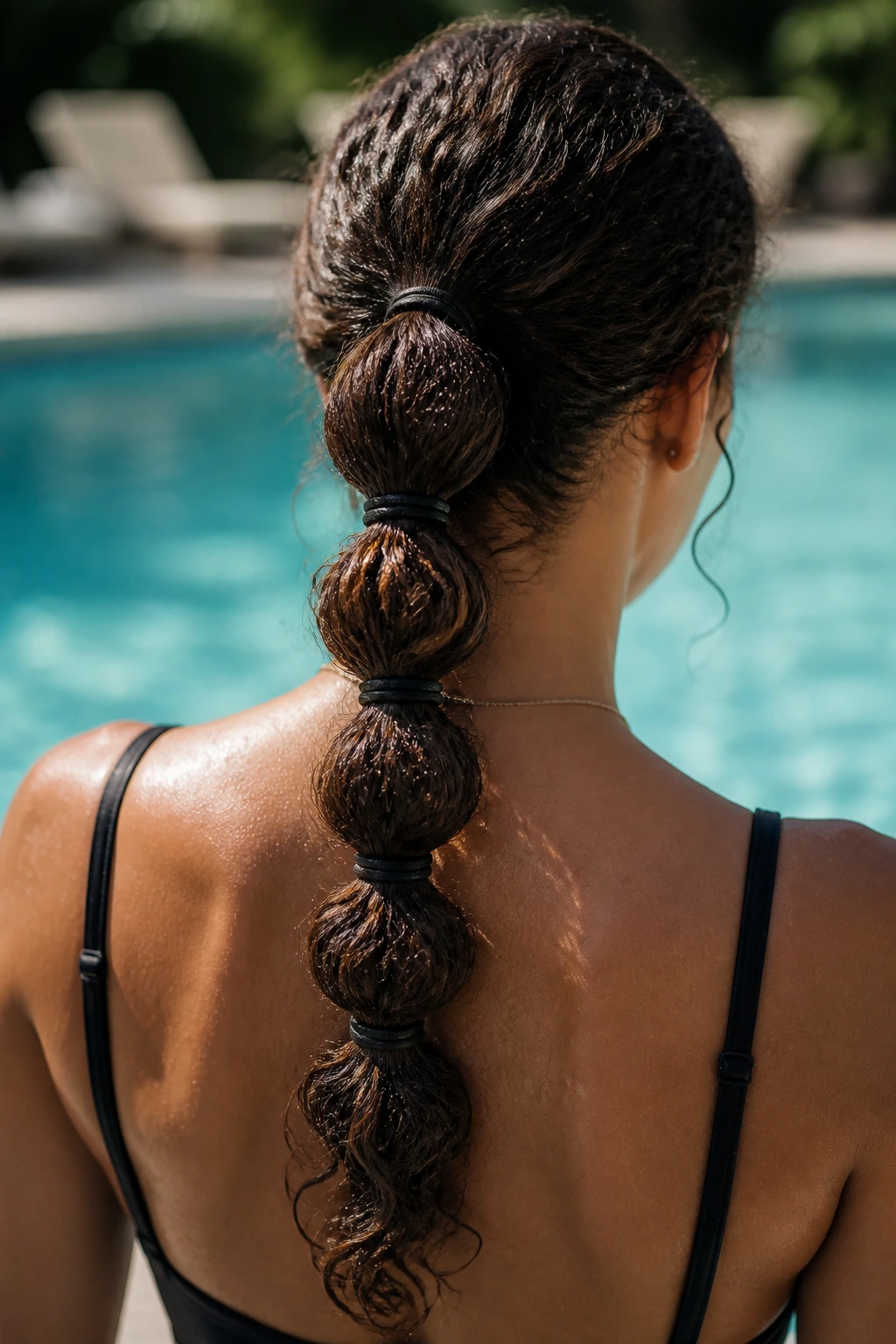
The bubble ponytail is a smart middle ground when you want structure without braiding every inch of hair. You start with a ponytail, then place coated elastics every 2 to 3 inches down the length and gently tug each section outward to form rounded “bubbles.” The result looks playful, but it also keeps long curls from knotting into one giant tangly rope.
This works best on curls that are medium to long and at least somewhat stretched. If your hair is very tight and springy, you may need to smooth the ponytail first with a brush and a bit of styling cream so the sections stay clean. Fine hair can do it too, but you’ll want smaller bubbles and lighter tension.
What makes it different
- Each elastic creates a stop point, so the whole ponytail does not slide downward as easily
- The sections hold shape even after a swim
- It’s easier to refresh than a full braid
- You can stop halfway down if your hair is shorter
A bubble ponytail is also one of the few pool styles that looks intentional after it loosens a little. That matters. Not every hairstyle has to stay perfect to be useful.
7. Half-Up Twist with a Claw Clip
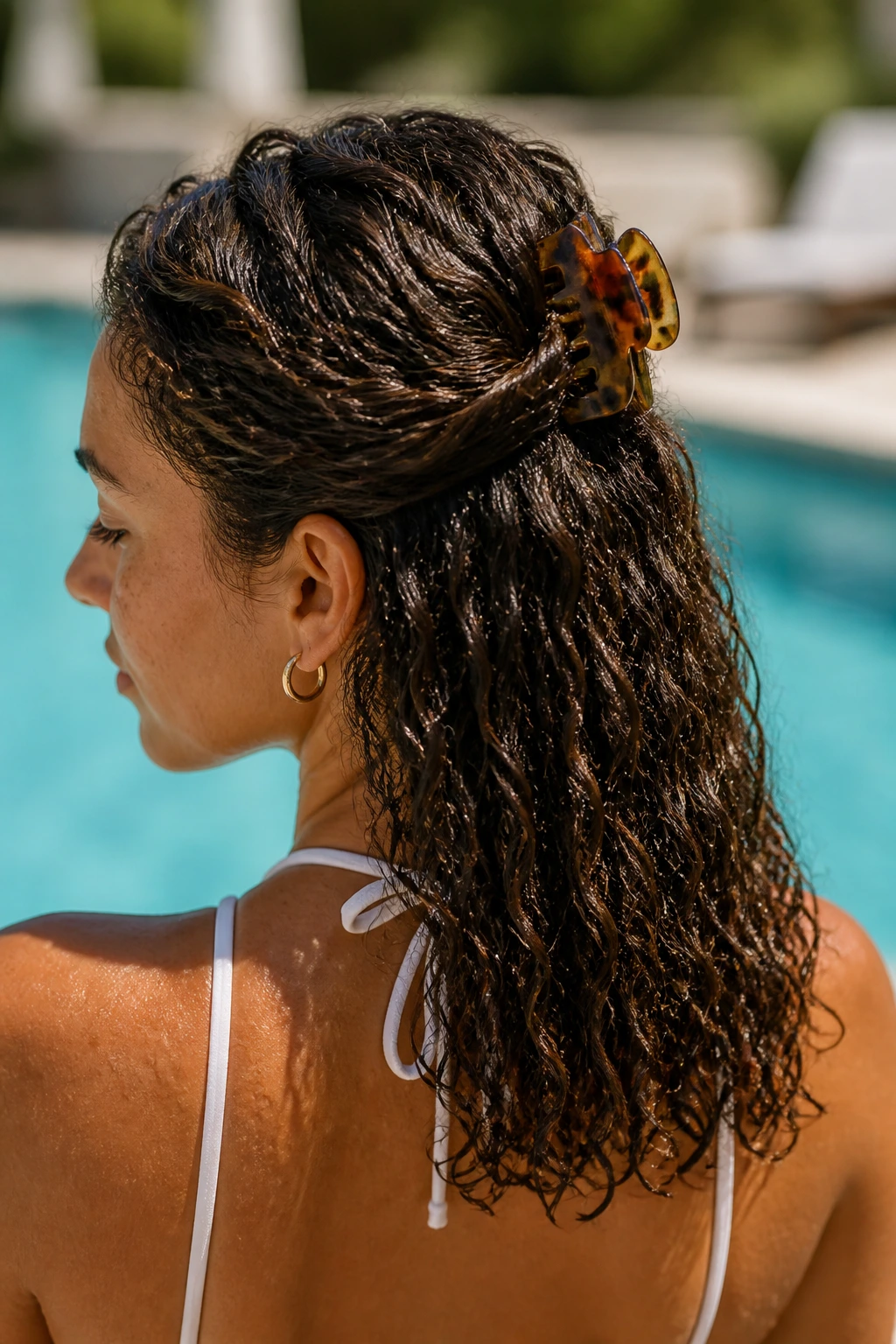
A half-up twist with a claw clip is for the swimmer who wants some hair up, some hair down, and a little softness around the face. It’s not the toughest option on the list, but it does hold up better than people expect if you twist the sections tightly and use a clip with a strong spring.
Here’s why it works: the crown gets lifted off the head, which cuts down on sweat and splash, while the lower curls stay free enough to dry in their own shape. That balance is handy if you’re spending more time lounging than actually diving in and out of the pool. It’s also a nice pick when you want to keep your hair from sticking to sunscreen on your neck.
The key is placement. Clip too low and it slides. Clip too high and the whole style feels awkward. Aim for the middle-back of the head, where the twist can anchor without pulling on the temples.
I’d skip this one for serious lap swimming. For a relaxed pool afternoon, though, it has a good mix of ease and polish.
8. Flat Twists Into a Nape Puff
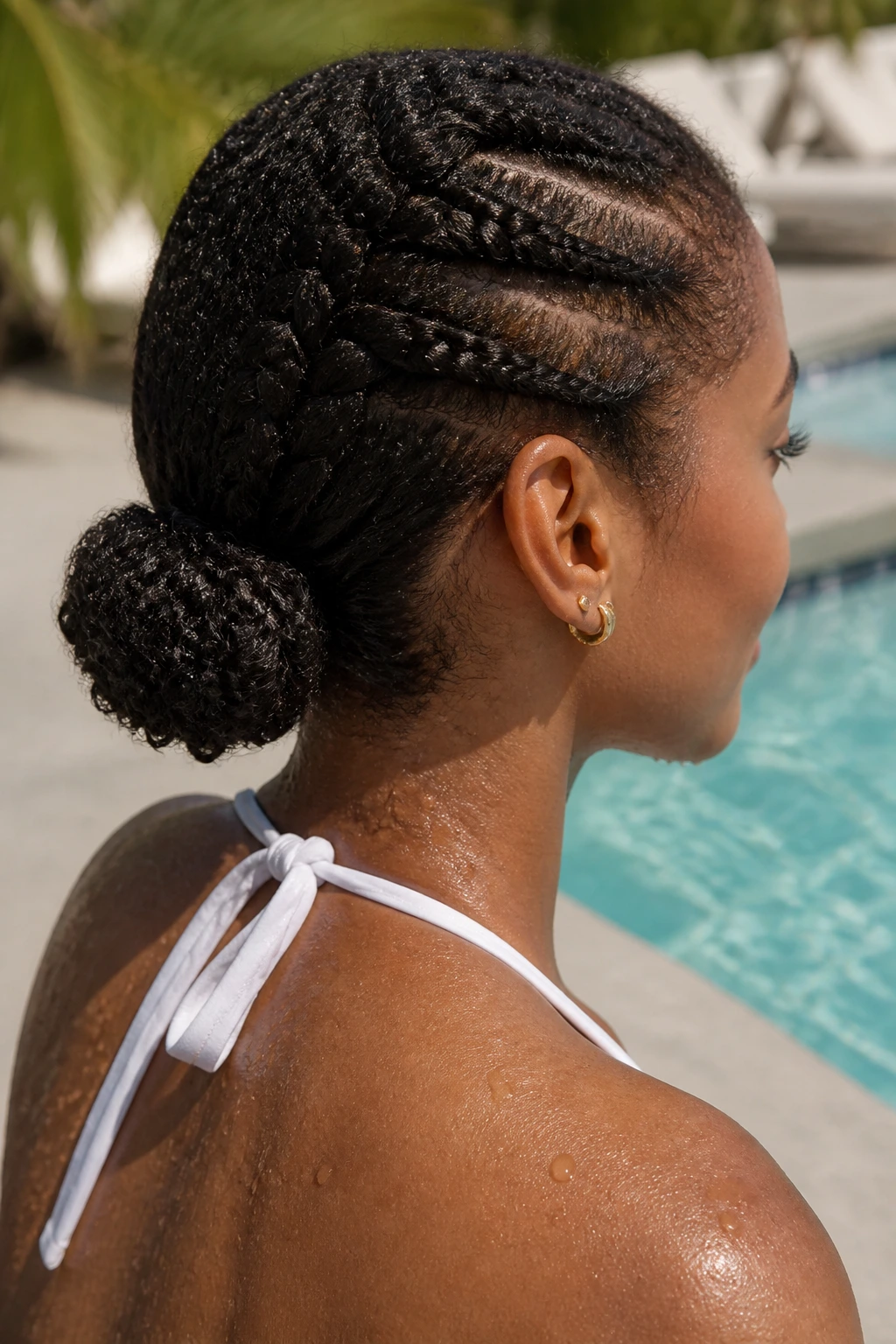
Flat twists are one of the most practical curly styles around, and they deserve more love than they get. They hug the scalp, so they don’t balloon up the way loose twists can, and they stay neat even after a little water gets involved. Pull the ends into a small puff or tucked bun at the nape, and you’ve got a style that keeps the crown controlled while still letting your texture show.
This is especially good for coily hair that frizzes fast when it’s handled too much. Flat twists cut down on manipulation before and after the pool, which is the part most people forget about. The less you keep touching the hair, the less it frays.
If your hair is very dense, parting with a rat-tail comb helps keep the rows clean. If it’s softer or finer, fewer, larger twists can look better and hold just as well. You do not need a hundred sections for this to work.
A little edge control around the perimeter is optional, not mandatory. The style should feel secure, not shellacked.
9. Space Buns for Medium and Long Curls
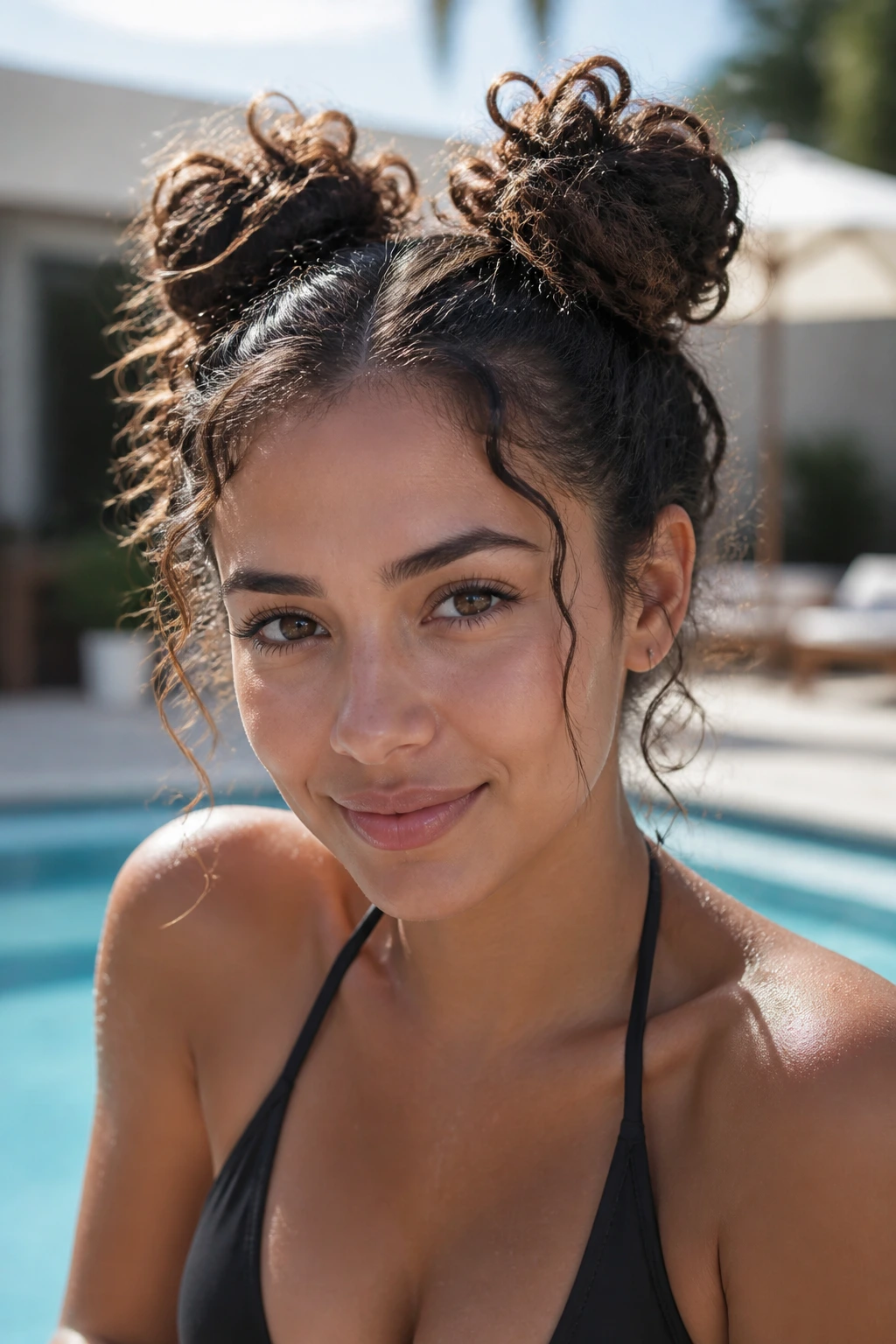
Space buns are useful when your curls are too long for one bun but too short to behave in a single heavy ponytail. Splitting the hair into two high sections distributes the weight, which makes the style more comfortable and often more stable around water. The buns also keep the ends tucked, so you’re not dragging wet strands over your back every time you turn your head.
I like this style most on dense hair that wants to puff out anyway. If the buns are small, they can slip, so don’t be shy about using two elastics per side or braiding each ponytail before twisting it into a bun. That extra step buys you stability.
Best ways to wear them
- Part the hair cleanly down the middle
- Secure each section at a height that feels balanced, not too close to the ears
- Twist or braid each tail before wrapping it into a bun
- Pin any loose ends underneath the base
Space buns look playful, sure, but they’re not just cute. They also spread tension around the scalp instead of loading everything onto one spot, which makes a difference if you’re wearing the style for hours.
10. Side Braid Into a Wrapped Ponytail
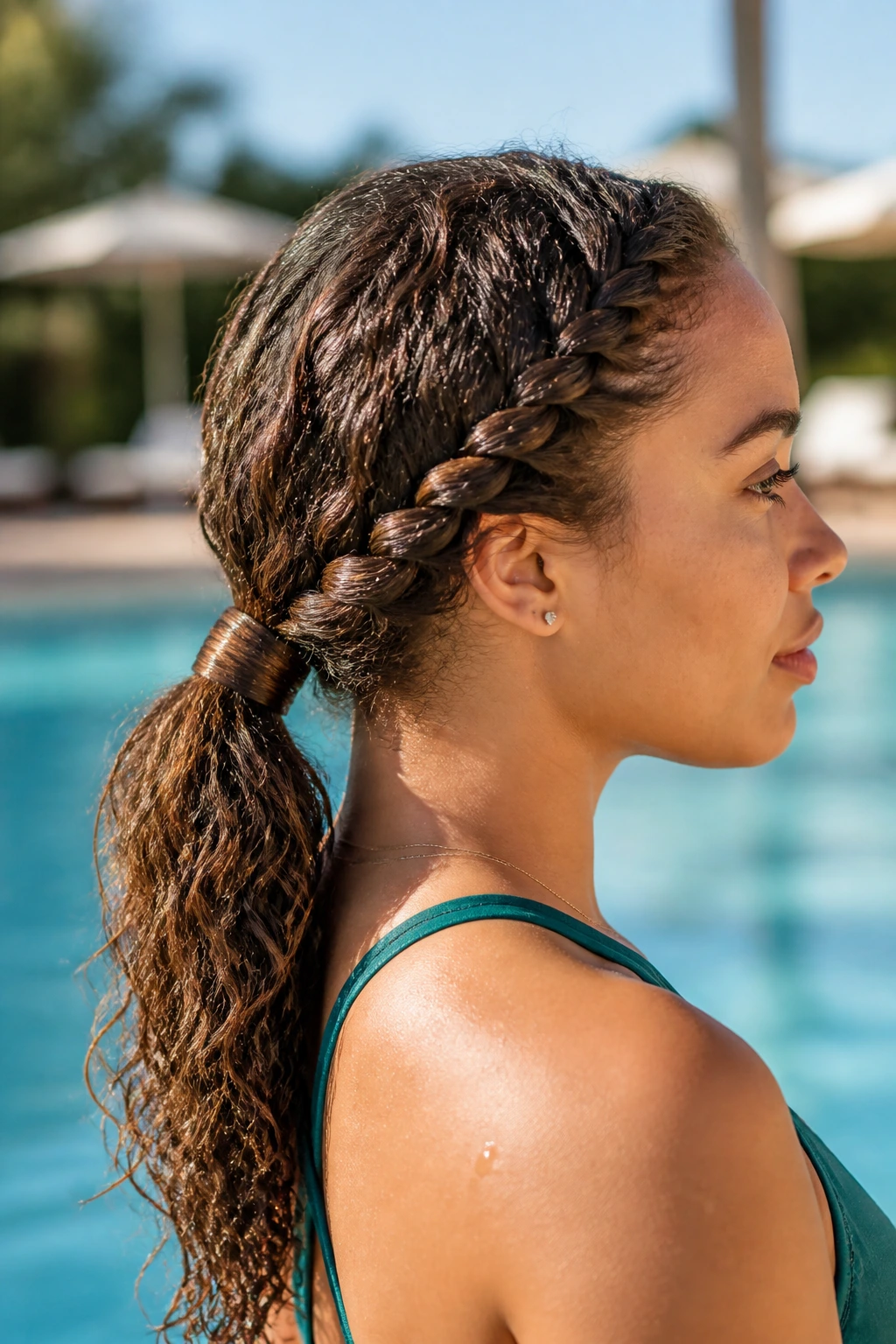
The side braid into a wrapped ponytail is a good choice when you want one side of the head especially controlled. Start the braid near one temple, feed it diagonally back, then gather the rest of the hair into a low ponytail and wrap a small strand around the elastic to hide it. The shape feels a little more styled than a simple braid, but it still behaves well around water and movement.
Why does this hold up? Because the braid acts like an anchor, and the ponytail picks up the leftover length without leaving everything loose at the base. That means fewer flyaways around the face and less friction at the neck, which is where curly hair often gets roughened up first.
It’s a nice option for people who wear sunglasses, hats, or oversized earrings around the pool. The braid keeps one side neat, and the ponytail gives you enough length to tuck into a collar or let swing over one shoulder. If your hair is layered, use a light gel on the shorter front pieces so they don’t escape by minute ten.
Not every pool style needs to shout. This one does its job quietly, and I love that.
11. Headscarf Tuck Over a Low Knot
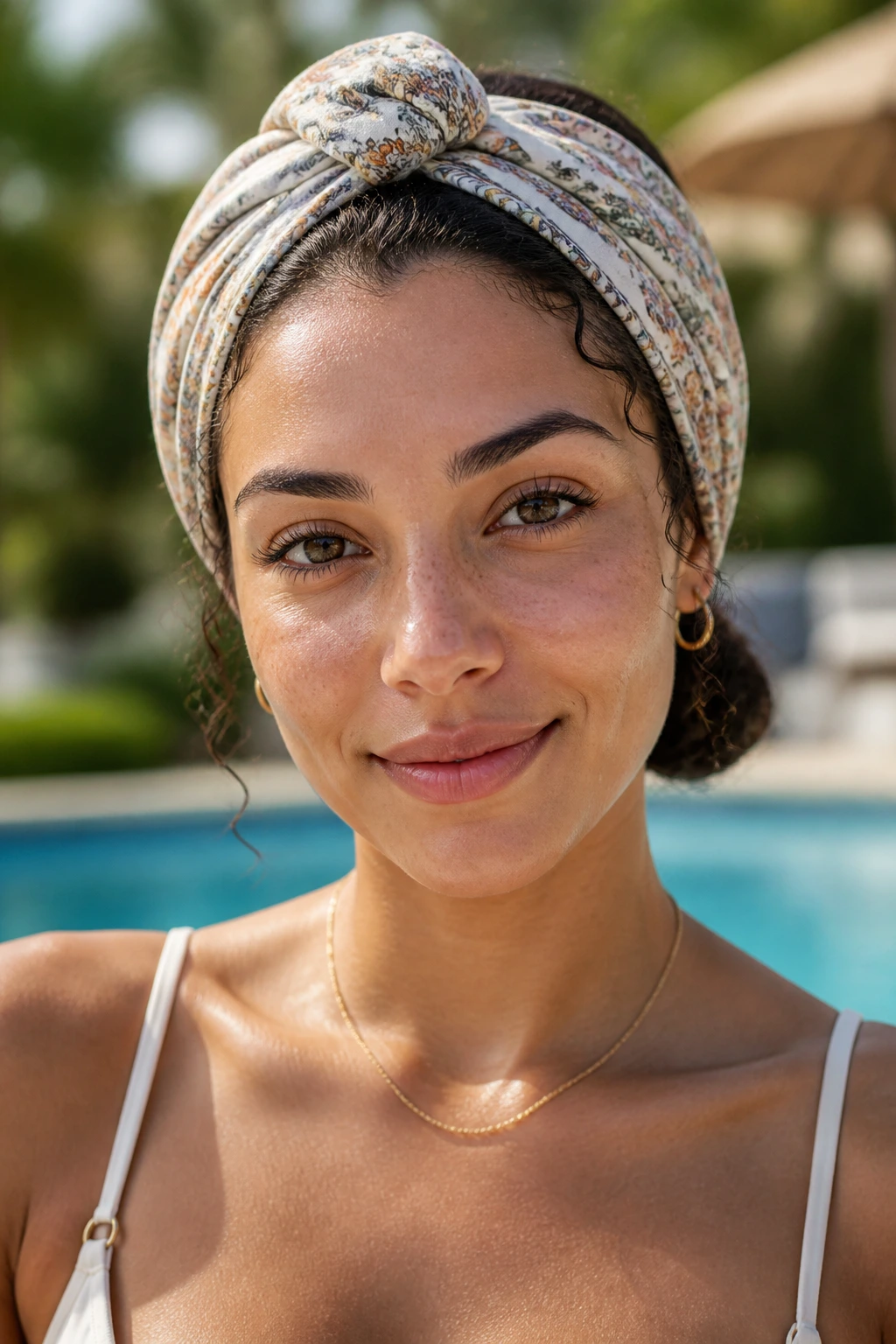
A headscarf tuck is less about preserving perfect curl shape and more about keeping the whole situation under control. Tie the hair into a low knot, then wrap a scarf around the hairline and tuck the ends firmly at the nape. If the scarf is wide enough, it can keep flyaways in place and reduce the amount of sun and wind hitting the top layer of curls.
This style is especially useful when you’re not actually swimming the whole time but still want your hair protected around the pool. Think lounging, reading, eating, talking, getting in and out of the water. It gives you a bit of coverage without the stiff feel of a fully slicked style.
Choose a scarf that doesn’t slide easily. Silk looks pretty, but it can move around if you’re sweaty or if your hair is very smooth. A cotton-blend or textured scarf usually grips better. Tie it snugly enough to stay put, but not so tight that it leaves a headache line across your forehead.
A scarf can also save a style that’s halfway gone. That alone is worth knowing.
12. Mini Twist Updo for Maximum Hold
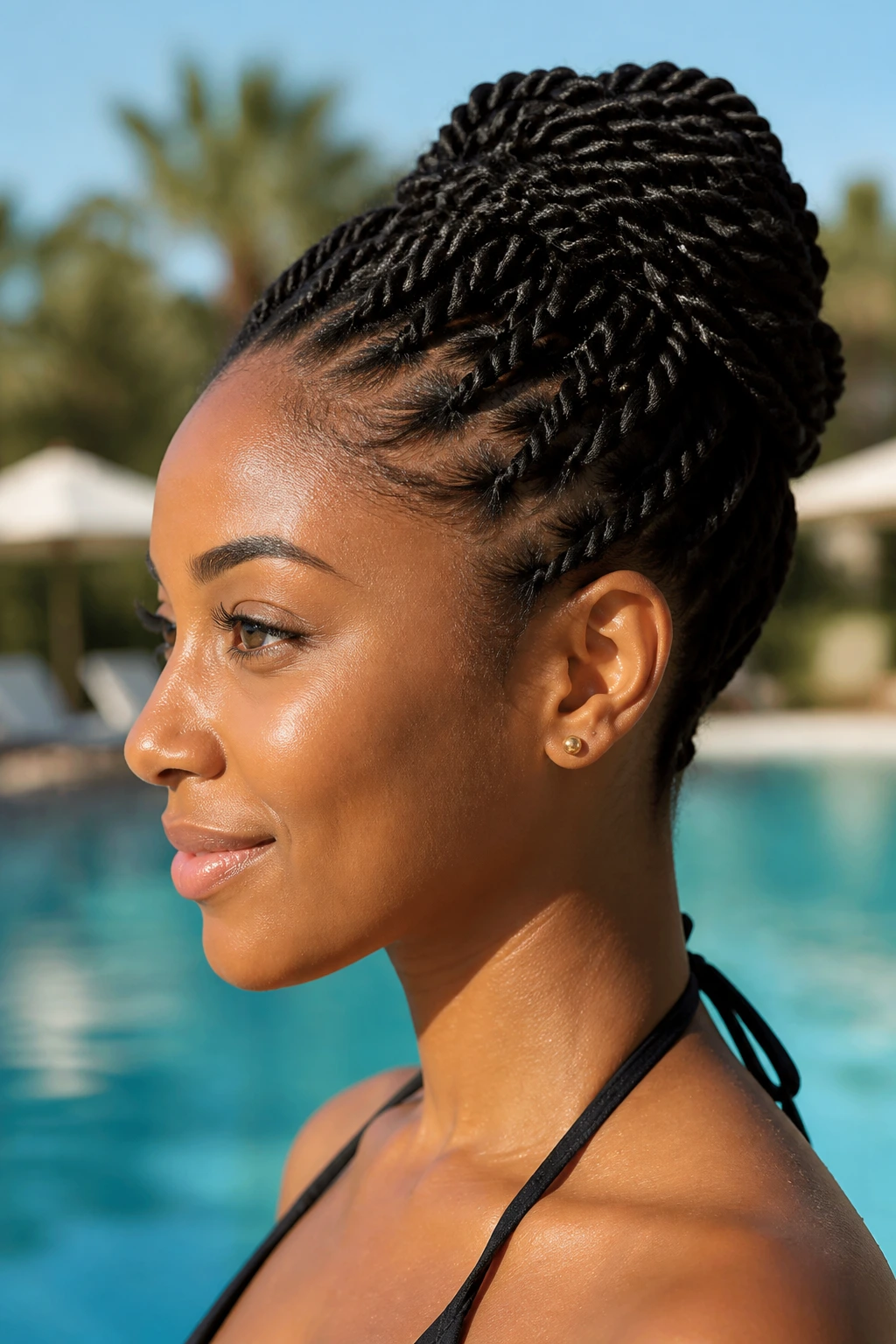
If I had to pick one style for curly hair that really hates being messed with, I’d lean toward a mini twist updo. The smaller twists keep the texture organized from the start, and once they’re gathered into a bun or pinned upward, the whole style has a lot of grip. That makes it one of the more reliable choices for a long pool day.
The reason it lasts is simple: small sections resist unraveling better than big loose ones. Each twist has its own shape, so even if the surface gets wet or a few strands puff up, the rest of the style still hangs together. It also dries in a cleaner way than many loose updos, which matters if you’re heading somewhere after the pool and do not want to rebuild your whole head from scratch.
This is the style I’d choose for coily textures, thick curls, or anyone who knows their hair gets tangled if someone looks at it too long. A little cream or butter at the parting helps, but the real strength is in the sectioning. Keep the parts even, twist firmly from root to end, and pin the finished updo close to the scalp.
Some styles are prettier. This one is tougher. And on pool days, tough usually wins.
