



Shag haircuts for curly hair work because curls already bring the movement. The cut does not have to invent anything; it only has to stop fighting the hair.
A blunt shape can box curls in. Too much layering can go fluffy and thin at the ends. The sweet spot sits somewhere in the middle, where the crown gets lift, the sides stay soft, and the perimeter still feels like a real haircut instead of a haircut that gave up halfway through.
That balance is why a curly shag can look easy even when it is carefully planned. The best versions are not one-size-fits-all. Tight coils, loose waves, thick ringlets, and mixed curl patterns all need different amounts of weight removed, different fringe lengths, and a different approach to face framing — which is exactly why this cut has so many good variations.
1. Classic Curly Shag
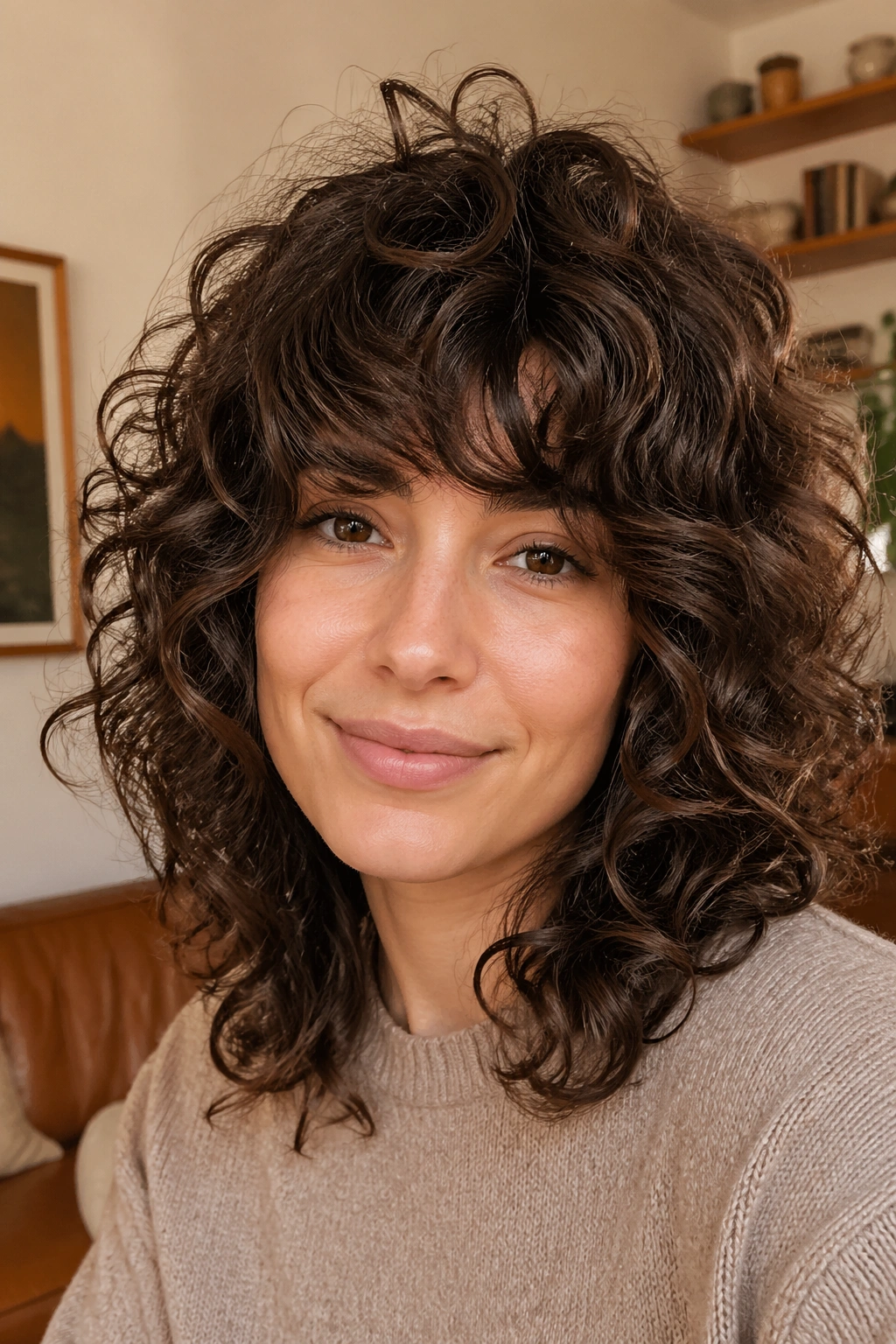
The classic curly shag is the one that makes the whole idea click. It keeps the crown a little shorter, lets the curls spring up, and leaves enough length around the ends so the shape still feels full and lived-in rather than chopped up.
What I like about this version is that it does not ask the curls to do anything fancy. The haircut does the heavy lifting. A good stylist will usually work with the curl pattern, not against it, and that means the layers should feel soft around the face, not sliced into sharp steps.
Why it works on so many curl types
The classic shag works best when the layers start high enough to create lift but low enough to avoid the dreaded triangle. That sweet spot often sits around the cheekbone or jawline on the front pieces, with the crown shaped a little shorter than the rest.
- The top gets movement without losing density.
- The ends stay soft instead of puffing out in a block.
- The face frame can be adjusted for curls that spring up a lot or only a little.
- It grows out cleanly, which matters more than people admit.
Best tip: ask your stylist to check the cut both wet and dry. Curl shrinkage can make a shape look balanced in the chair and lopsided an hour later.
2. Short Curly Shag with Micro Bangs
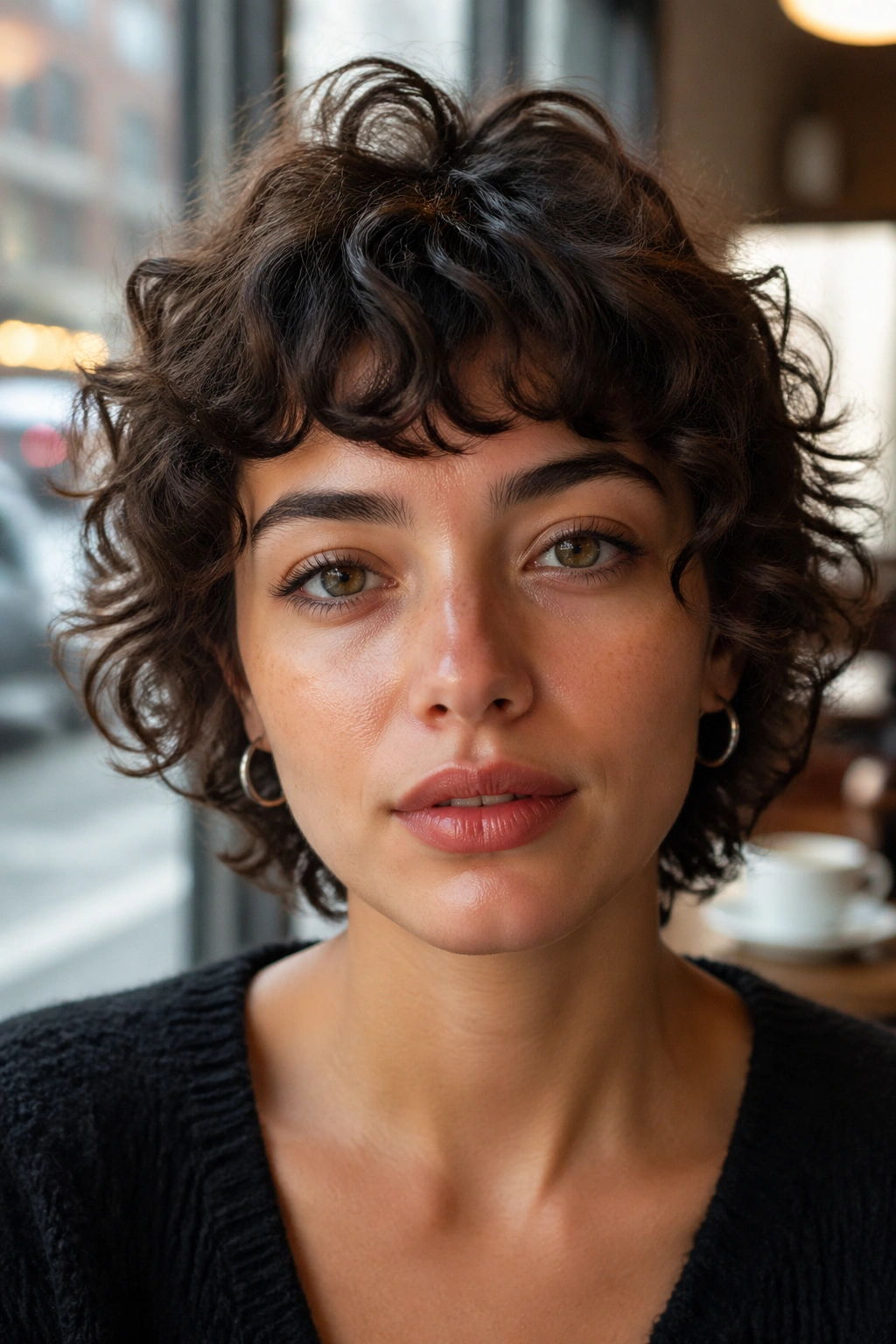
Want something sharper and a little more daring? Micro bangs on curly hair can look fantastic, but only when the rest of the cut has enough shape to keep them from feeling random.
This version is short around the face, shorter through the crown, and lively all over. It works especially well on tighter curls and springy waves that hold a fringe without collapsing into the eyes. The key is restraint. Tiny bangs can turn playful fast, and then they can turn awkward just as fast if they are cut too short.
The big thing to know is shrinkage. A fringe that lands at eyebrow level when wet may sit an inch higher once it dries. That is not a small difference. It changes the whole mood of the cut.
What to watch for
- Micro bangs need regular trims every 4 to 6 weeks.
- They look cleaner on hair with natural bend or coil.
- A little texture through the fringe helps; heavy thinning usually does not.
- If your forehead has a strong cowlick pattern, this cut may fight you every morning.
Tiny bangs do not hide much. That is the charm, and the risk. If you like a haircut that feels a little offbeat, this one has edge without looking costume-y.
3. Shoulder-Length Shag with Curtain Bangs
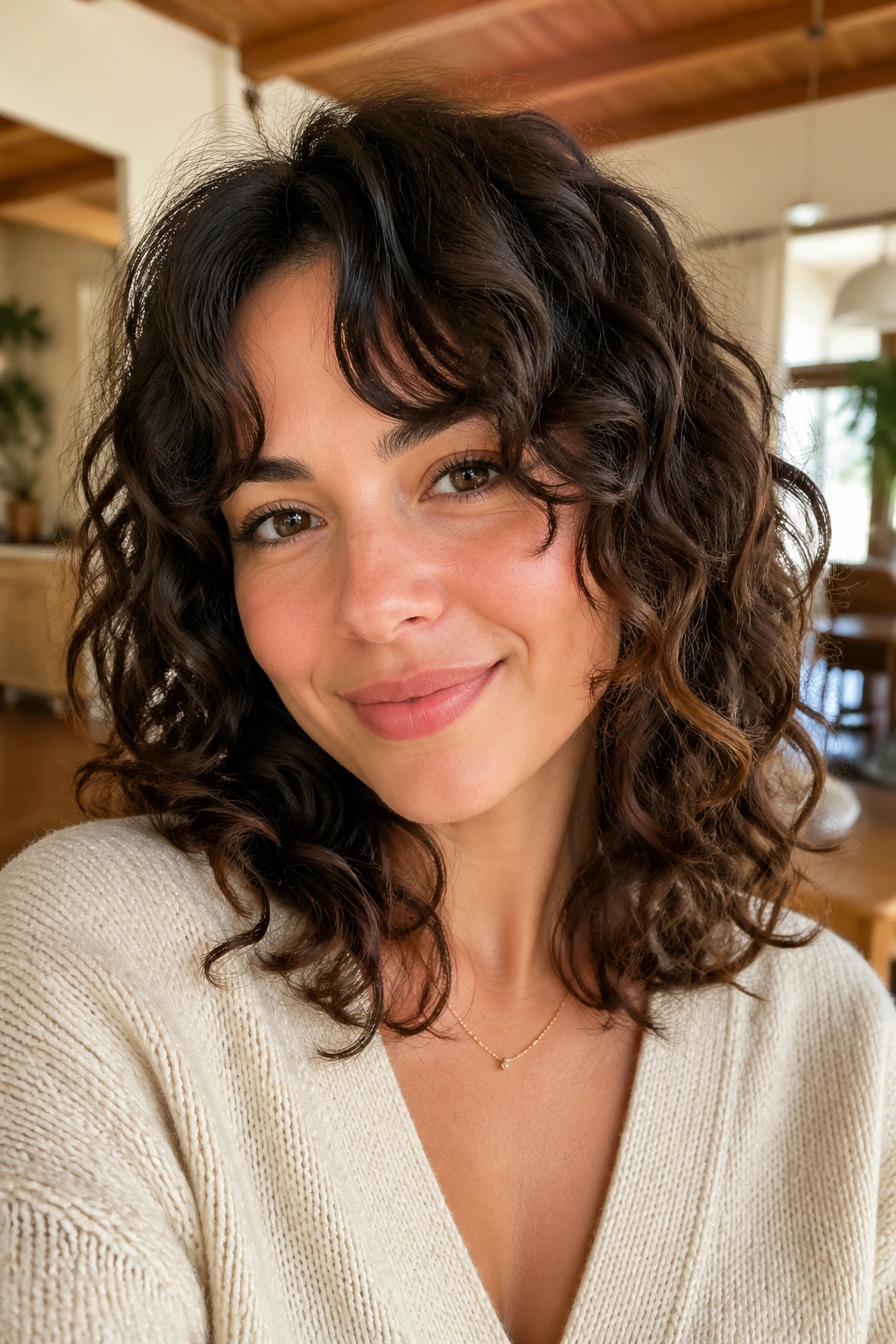
At shoulder length, curls get room to spring without getting heavy. That makes this one of the easiest shag haircuts for curly hair to wear if you want shape but do not want to lose much length.
Curtain bangs give the front pieces a softer job than a blunt fringe does. They split open around the center, fall toward the cheekbones, and blend into the rest of the cut instead of shouting for attention. On curls, that matters. A curtain bang can frame the face without making the top look crowded.
Where the curtain bangs should sit
The best curtain bangs usually start a little longer than people expect. When curls dry, they bounce up. A piece that seems cheekbone-length in the chair may end up riding high if it was cut too short.
- Ask for the longest point to touch the cheekbone or top of the lip when dry.
- Keep the shortest point soft, not blunt.
- Let the side pieces connect into the first layers, so the cut reads as one shape.
- Parting matters here; a center part gives the most classic look, while a slightly off-center part softens the whole face.
This is a good cut if you want something that can be worn half-up, clipped back, or left loose on a messy day without looking like the haircut lost its mind.
4. Long Curly Shag with Face-Framing Layers
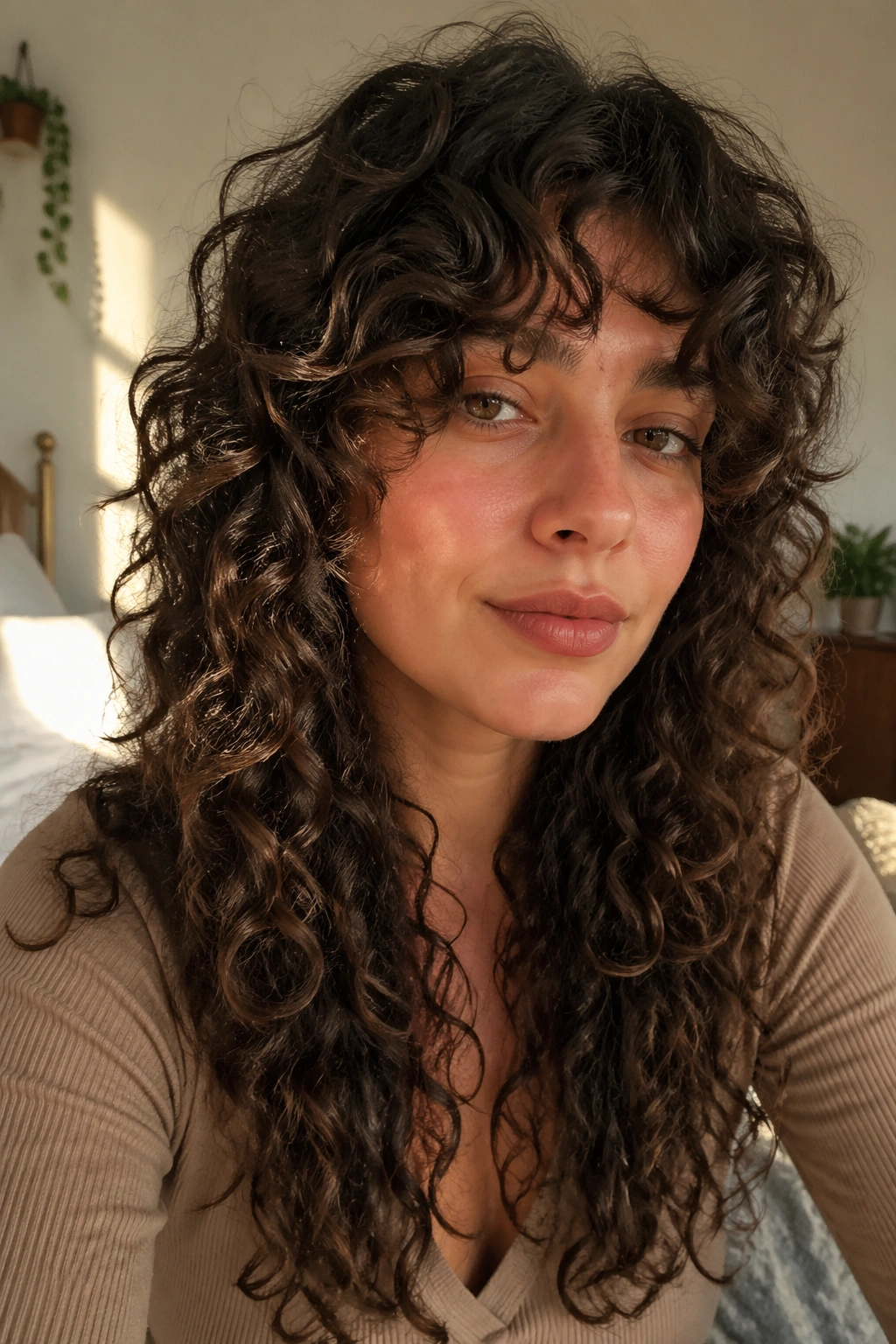
A long curly shag is for people who like length but hate the way heavy ends can drag curls down. It keeps the overall length, then removes enough weight near the front and crown to let the curl pattern show itself.
Compared with a one-length long cut, this version has more movement around the cheeks and a little more air at the top. The longer pieces through the back still give you something to pull into a clip or a loose ponytail. That part matters if you are not ready to live with shorter hair, but you are done with flat-looking length.
The face-framing layers should start where your curls naturally bend outward. Too high, and the front can get wispy. Too low, and the haircut will feel like long hair with a few random pieces cut off the front. Neither is great.
Long shags also change how hair behaves on day two and day three. They tend to keep shape better than blunt long curls because the layers stop the whole style from collapsing into one heavy curtain. That is the quiet advantage here. It still looks like long hair. It just moves better.
5. Wolf Cut Shag for Dense Curls
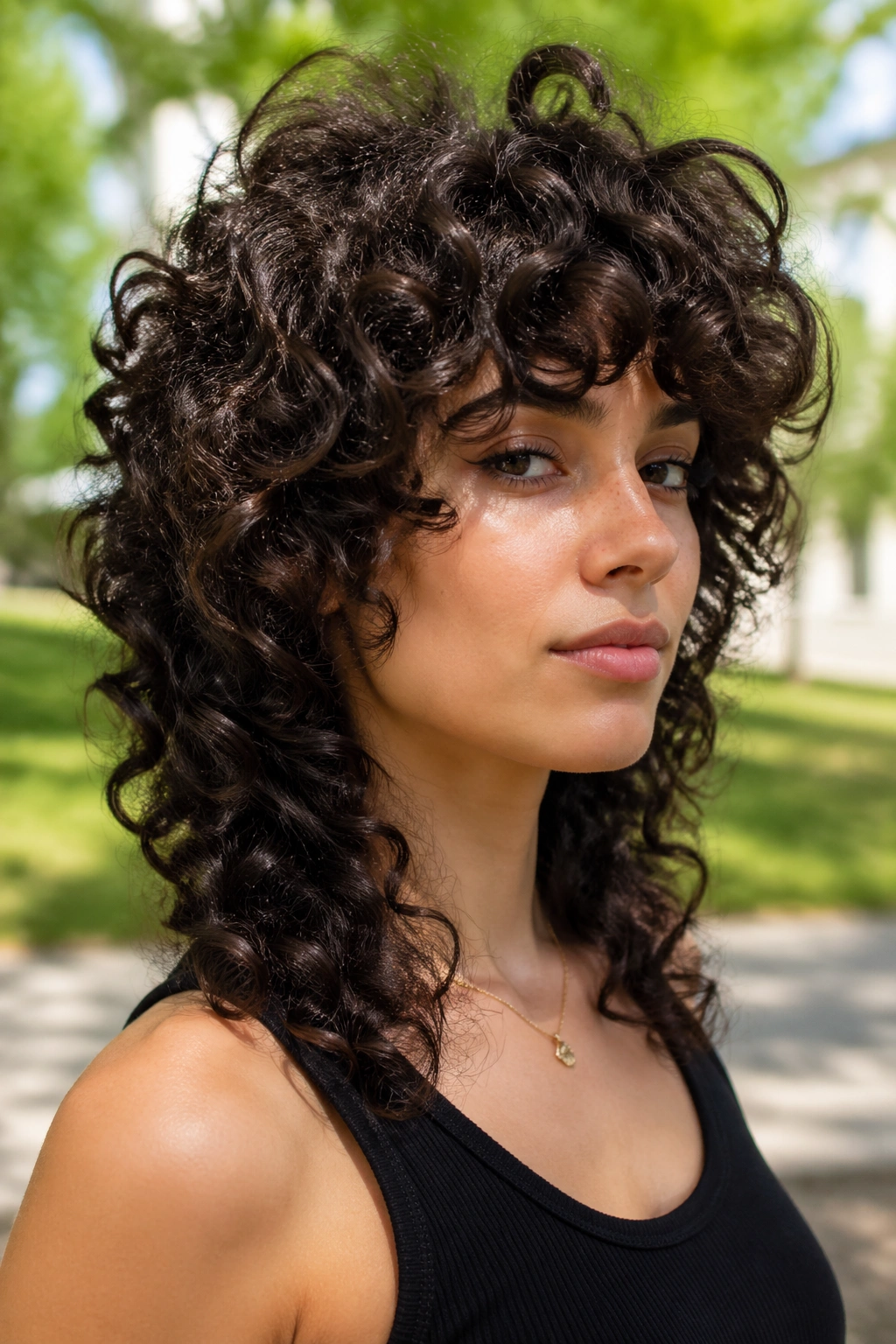
The wolf cut sits on the bolder end of the shag family. It is choppier, higher through the crown, and more tapered at the bottom, which makes it a strong choice for dense curls that need serious shape removal.
Unlike a softer shag, this version leans into height. The top layers can be noticeably shorter, and the silhouette often feels a little wild on purpose. That is the point. If your hair tends to sit wide at the sides or grows heavy at the bottom, the wolf cut shag can pull the whole shape upward and make the curls feel lighter.
Who it suits best
- Dense curls that can carry a lot of internal layering.
- People who like height at the crown.
- Hair that expands a bit when dry and needs space.
- Anyone who does not mind a hair shape that looks a little unruly on day one.
Watch out for this: if your curls are fine or sparse, too much of this shape can leave the ends looking thin. The best wolf cut shags still keep enough fullness at the perimeter to avoid that scraped-down look.
I am picky about this one. If the layers are too aggressive, it stops looking shaggy and starts looking unfinished. But when it is done well, it has a lot of attitude.
6. Soft Shag for Wavy and Loose Curly Hair
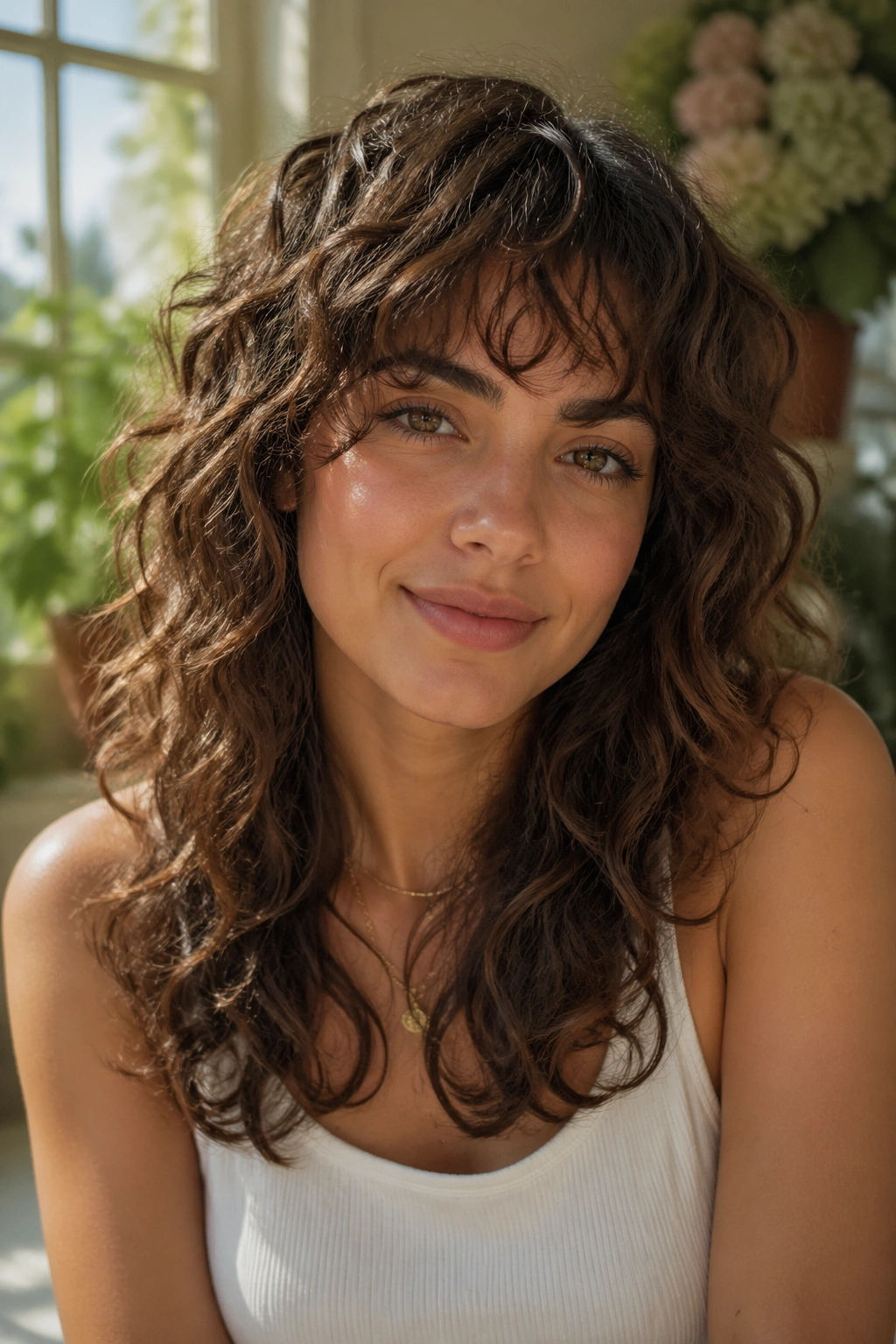
Loose curls and waves need a gentler hand. A shag that is too chopped up can leave the ends looking stringy, and that usually is not what anyone wants when the curl pattern is already soft.
A soft shag keeps the layers longer and easier to blend. The crown still gets movement, but the cut avoids the stacked look that can make fine or loose curls seem thinner than they are. I like this version for hair that sits somewhere between wave and curl, because it gives shape without overworking the pattern.
Long layers, not stacked layers
The difference is subtle in a salon chair and obvious once the hair dries. Long layers fall together more easily. Stacked layers can separate into little pieces, especially if the hair is fine or has a lot of slip.
Styling that helps
- Use a light cream or foam instead of a heavy butter.
- Scrunch while the hair is damp, not soaking.
- Diffuse on low heat if you want extra lift.
- Skip heavy brushing once the curls start setting.
This is the shag for people who want movement they can still tuck behind the ear. Not everyone wants a dramatic cut. Some people just want their hair to stop feeling weighed down.
7. Round Curly Shag for Big Volume
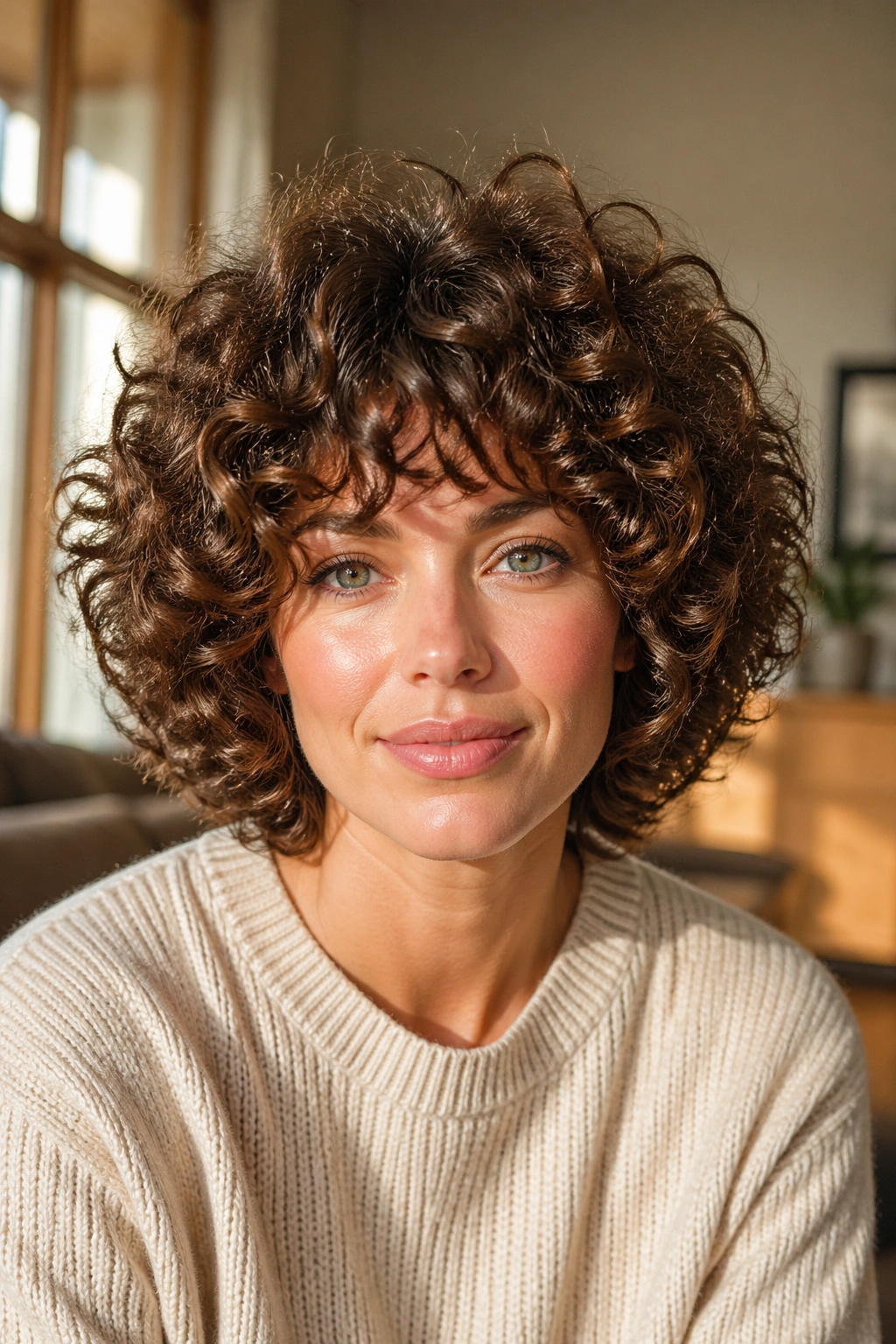
If you like a full shape that looks like it was built to hold air, the round curly shag does that job beautifully. The cut follows the curve of the head more closely, so the hair opens out evenly instead of dropping flat at the sides.
That rounded silhouette gives a very different feel from a long, narrow shag. It can make a long face feel softer, and it can take the weight off thick curls that normally spread outward in a boxy way. The trick is balance. You want roundness, not helmet hair. There is a difference, and it is not small.
What makes the shape work
- The crown stays lifted with shorter layers.
- The sides keep enough length to round the outline.
- The ends are softened, not razor-thin.
- Root clipping during drying helps keep the curve instead of collapsing the top.
This cut has presence. A lot of it. If you like subtle hair, skip this one. If you like curls that feel full around the head and move when you turn, it is a strong option.
One more thing: a round shag looks best when the hair is not overloaded with oil. A little shine is good. Heavy product can flatten the whole thing before lunch.
8. Layered Shag with Curly Fringe
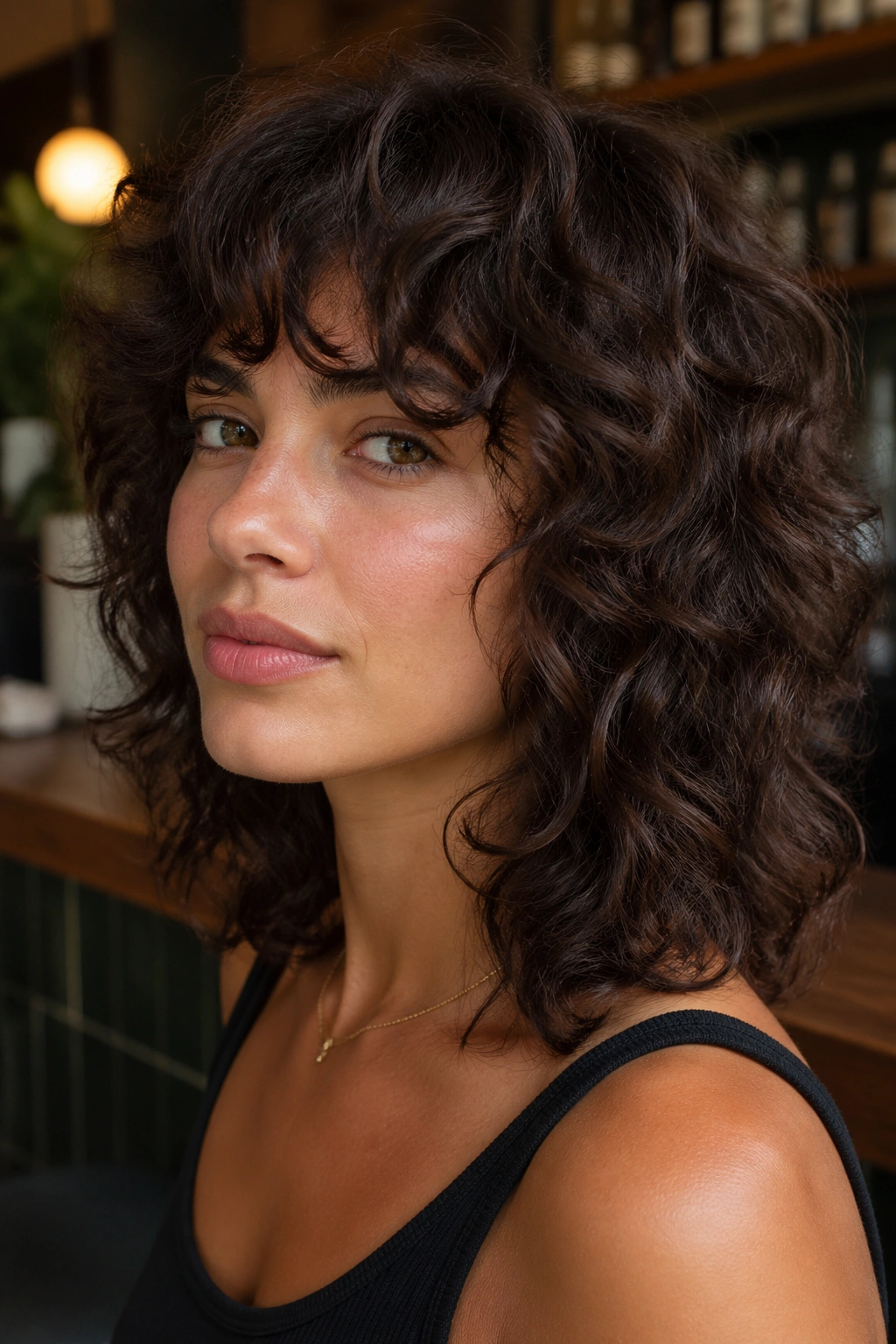
A curly fringe changes the whole mood of a shag. It pulls the eye straight to the face, which is useful if you want the haircut to feel a little more deliberate and a little less casual.
The fringe is the part people usually get wrong. They want it too short, too dense, or too blunt. Curly bangs need room to breathe. A fringe that looks slightly long when wet often dries into the right place, and that part surprises people the first time they see it. It should not be a straight line. It should melt into the rest of the cut.
How to keep the fringe from taking over
Cut the front pieces a touch longer than your first instinct. Seriously. Curls bounce. If the fringe lands high on the forehead once dry, it can make the whole haircut feel more severe than intended.
- Style the fringe first.
- Use a small amount of mousse or curl cream on the front section.
- Shape it with your fingers, not a brush.
- Let the rest of the layers fall naturally around it.
A curly fringe works well for people who like to wear earrings, sunglasses, or a strong lip color because it frames the face without crowding it. It also gives the shag a little personality without forcing the whole cut into a dramatic shape.
9. Pixie Shag for Tight Coils
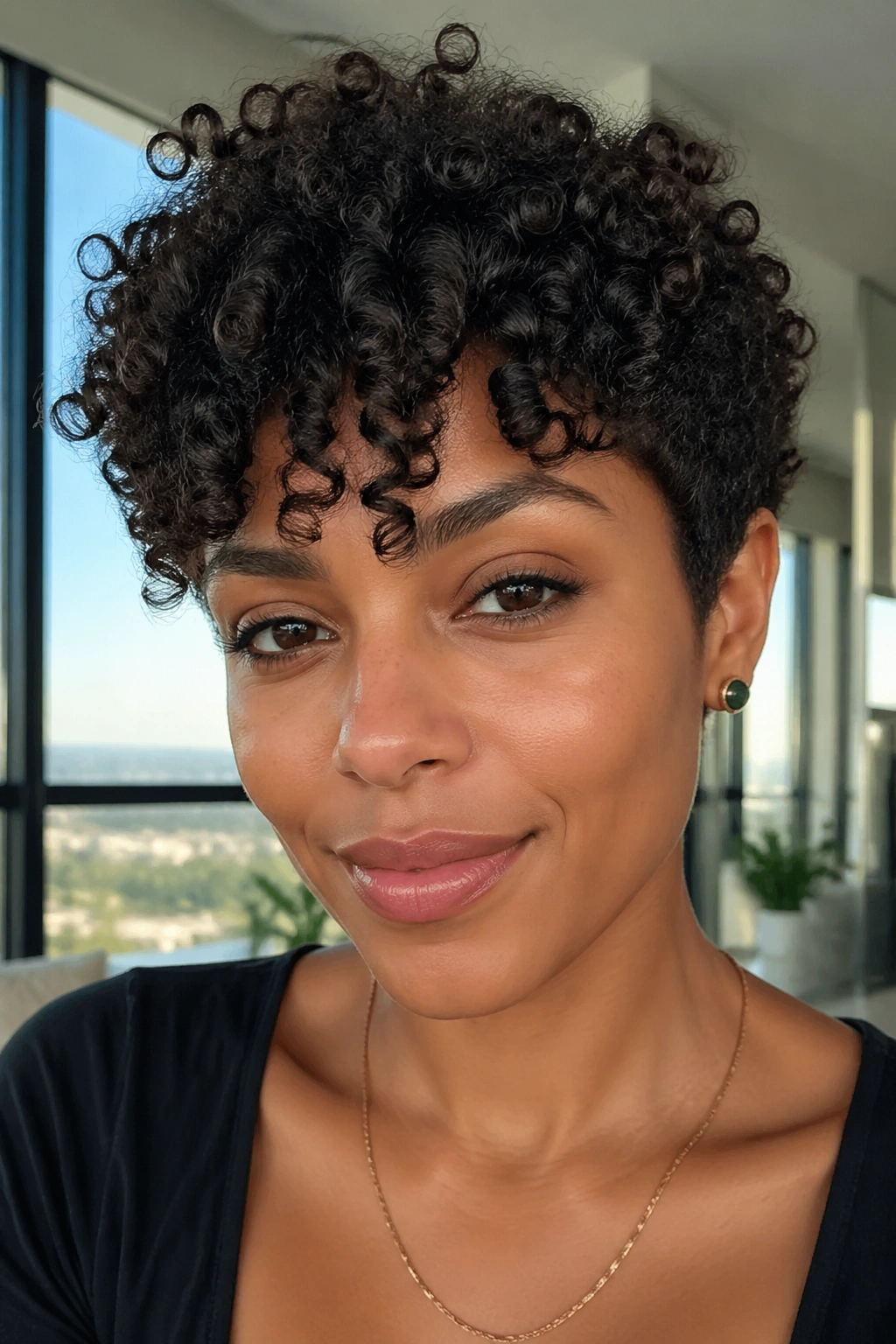
Short curls can carry a shag just fine. In fact, tight coils and compact curl patterns often look especially good with a pixie shag because the short length lets the texture do the talking.
This cut is cropped close at the sides and back, with more length left on top and around the crown. The result is light, shaped, and easy to move through the day. It is not a shaved look, and it is not a traditional pixie either. It sits in that useful middle ground where the silhouette is neat but the texture still feels alive.
Why the shape stays interesting
The top layers need enough length to coil and bend. If everything is cut too close, the haircut loses its shag quality and just becomes short hair. The neckline and sideburns help too; a little taper there keeps the cut clean.
People with tight coils often get told to keep everything long. I do not agree with that advice across the board. Short hair can be easier to maintain, faster to style, and much cooler on the neck if you live with a lot of density. The catch is maintenance. This shape usually needs clean-up trims more often than a longer shag.
If you like a crisp outline with texture on top, this one has real personality.
10. Mid-Length Razor Shag
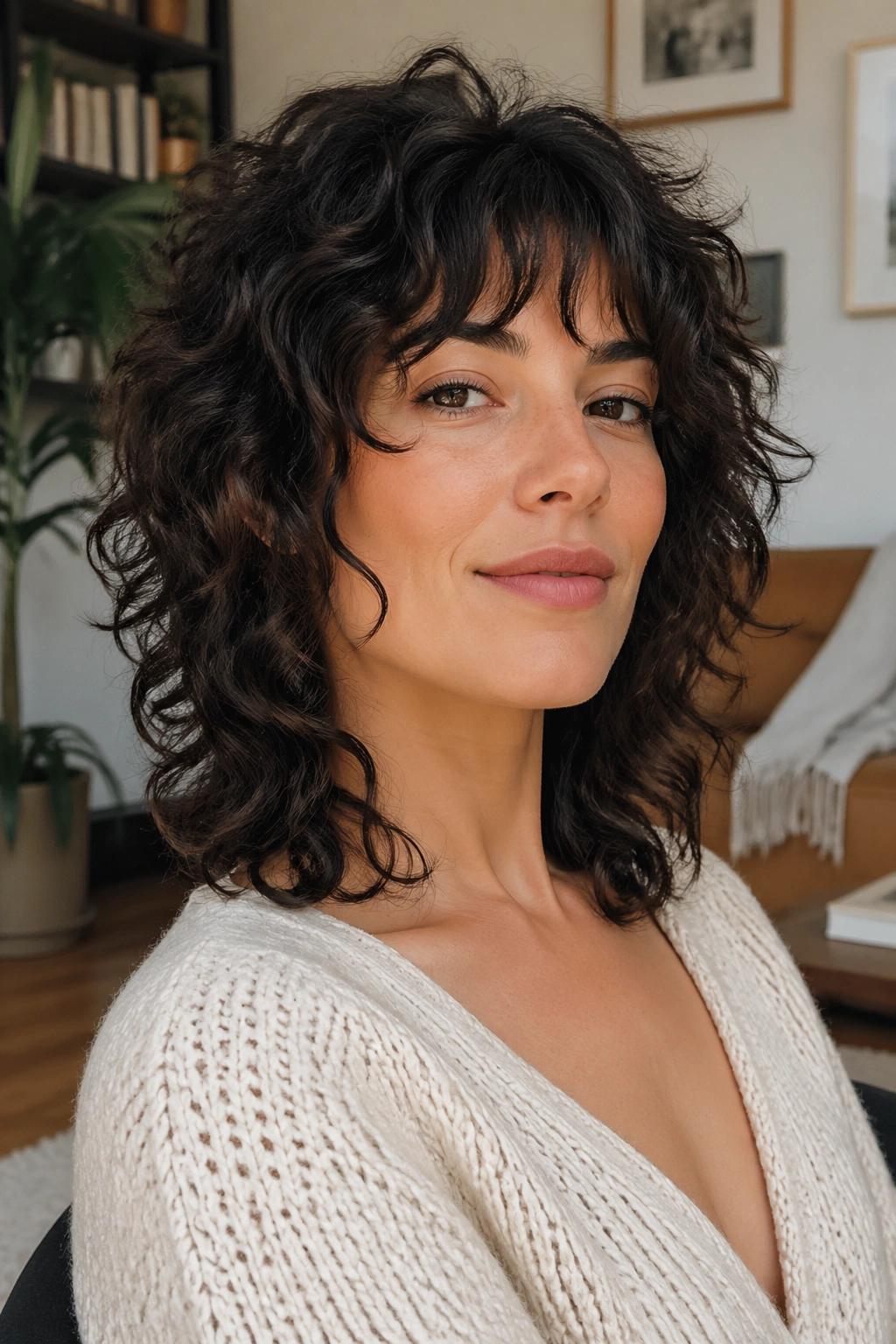
Can a razor and curly hair get along? Yes, but only when the stylist knows what they are doing and the curl pattern can handle the finish.
A mid-length razor shag gives the ends a feathered feel that scissors do not always create. It can work especially well on medium-density curls that need movement without looking bulky. The result is airy. Not wispy in a bad way — airy in the sense that the layers separate cleanly and the overall shape does not feel heavy.
When a razor helps
A razor can soften a blunt edge and create a looser finish through the ends. That helps if your hair tends to puff at the bottom or sits like a shelf when cut straight across.
When it does not
- Very porous curls can fray at the ends.
- Fine hair can lose too much density.
- Strong frizz patterns can make the finish look fuzzy.
- Very tight coils often need a different approach.
This is one of those cuts that can look expensive when it is good and messy when it is not. There is no middle ground. If you try it, ask for just enough razor work to soften the perimeter, not enough to shred the shape.
11. Air-Dry Shag for Low-Maintenance Mornings
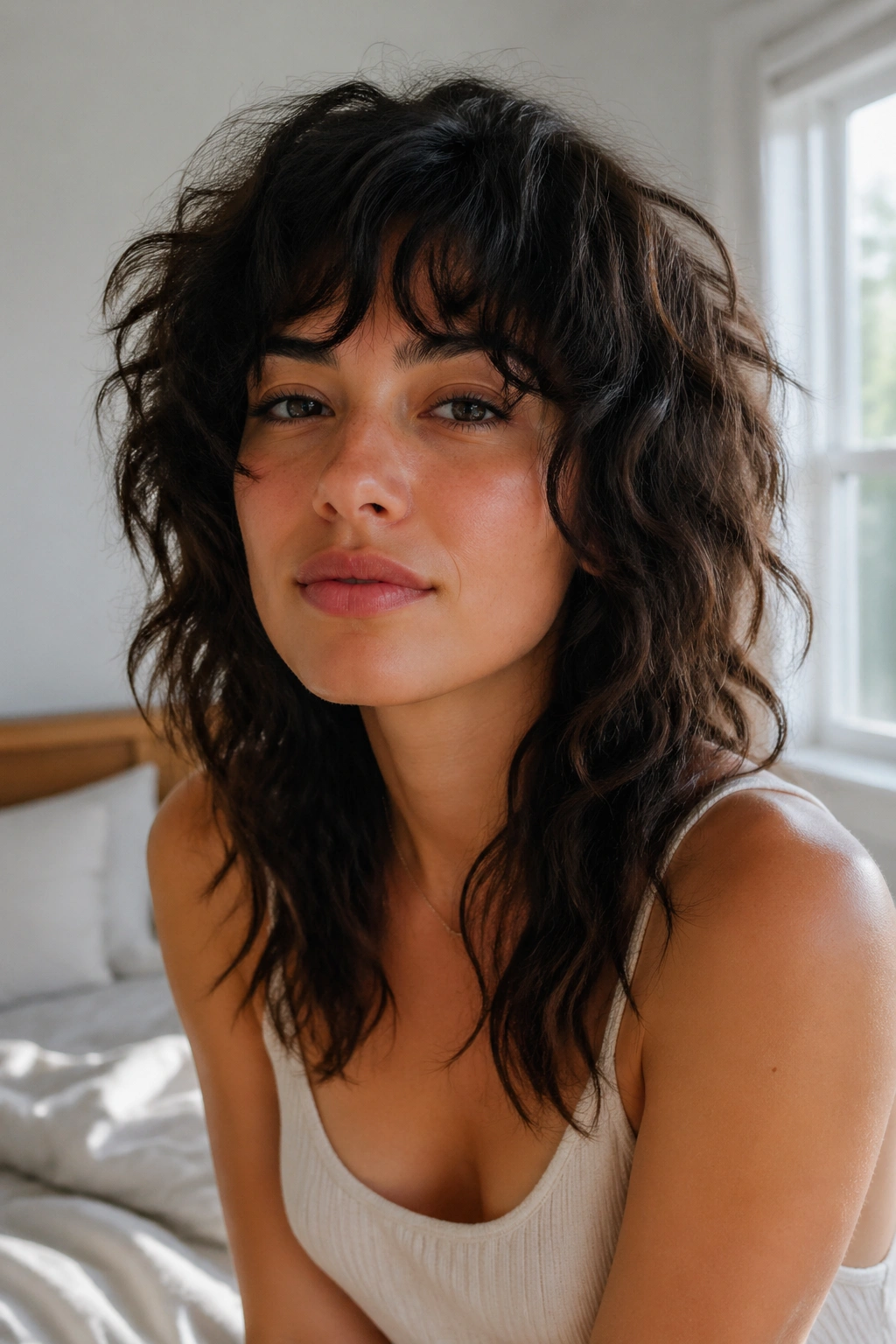
Some cuts ask for round brushes, clip sets, and a small toolkit on the bathroom counter. This one does not.
The air-dry shag is built for curl patterns that look better when left alone. It keeps the layers loose, avoids too much internal thinning, and relies on the hair’s own texture to settle into shape as it dries. That makes it one of the easier shag haircuts for curly hair if you are the sort of person who does not want a full styling ritual before coffee.
A good air-dry shag usually starts with a solid leave-in, a light curl cream or gel, and not too much touching after that. A microfiber towel or T-shirt can help remove extra water without roughing up the curl clumps. Then you stop fiddling with it. That part matters more than people think.
One clean part, a few scrunched sections, and a little patience. That is usually enough. If you keep separating the curls while they dry, you will get frizz where you wanted definition.
The nicest thing about this cut is that it tends to still look intentional on day two. That is a rare thing.
12. Asymmetrical Curly Shag
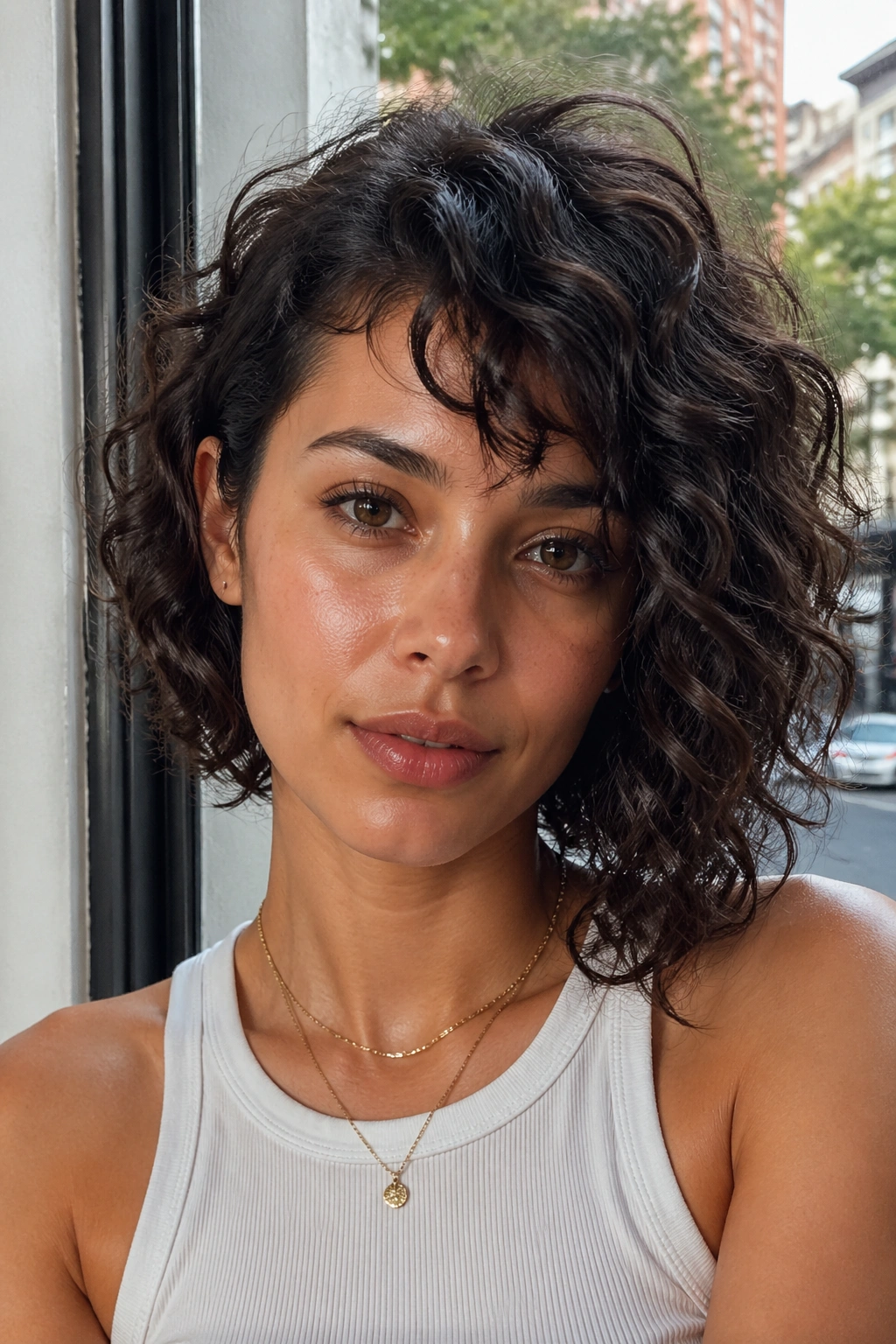
A little asymmetry can make curls feel sharper without making them fussy. One side sits slightly longer, the part is pushed off center, and the whole shape ends up feeling less predictable than a standard shag.
This cut works because curls already bring movement, so the unevenness does not read as a mistake. It reads as design. The left-right difference does not need to be huge either. Sometimes an inch or two is enough to make one side fall forward and the other side tuck back naturally.
Why the off-center part matters
A dead-center part can expose every layer equally. A soft off-center part shifts the weight and gives the haircut a more relaxed line through the forehead and cheek area. That can be useful if one side of your face or one side of your curl pattern has more volume than the other.
- It suits people who tuck hair behind one ear.
- It softens a strong jawline.
- It can make a round face feel a little longer.
- It needs a stylist who checks both sides from the front, not just the back.
I like this version for people who are bored with symmetric cuts. There is enough structure to feel polished, but the shape has a little motion built into it.
13. Heavy-Bang Shag for Heart-Shaped Faces
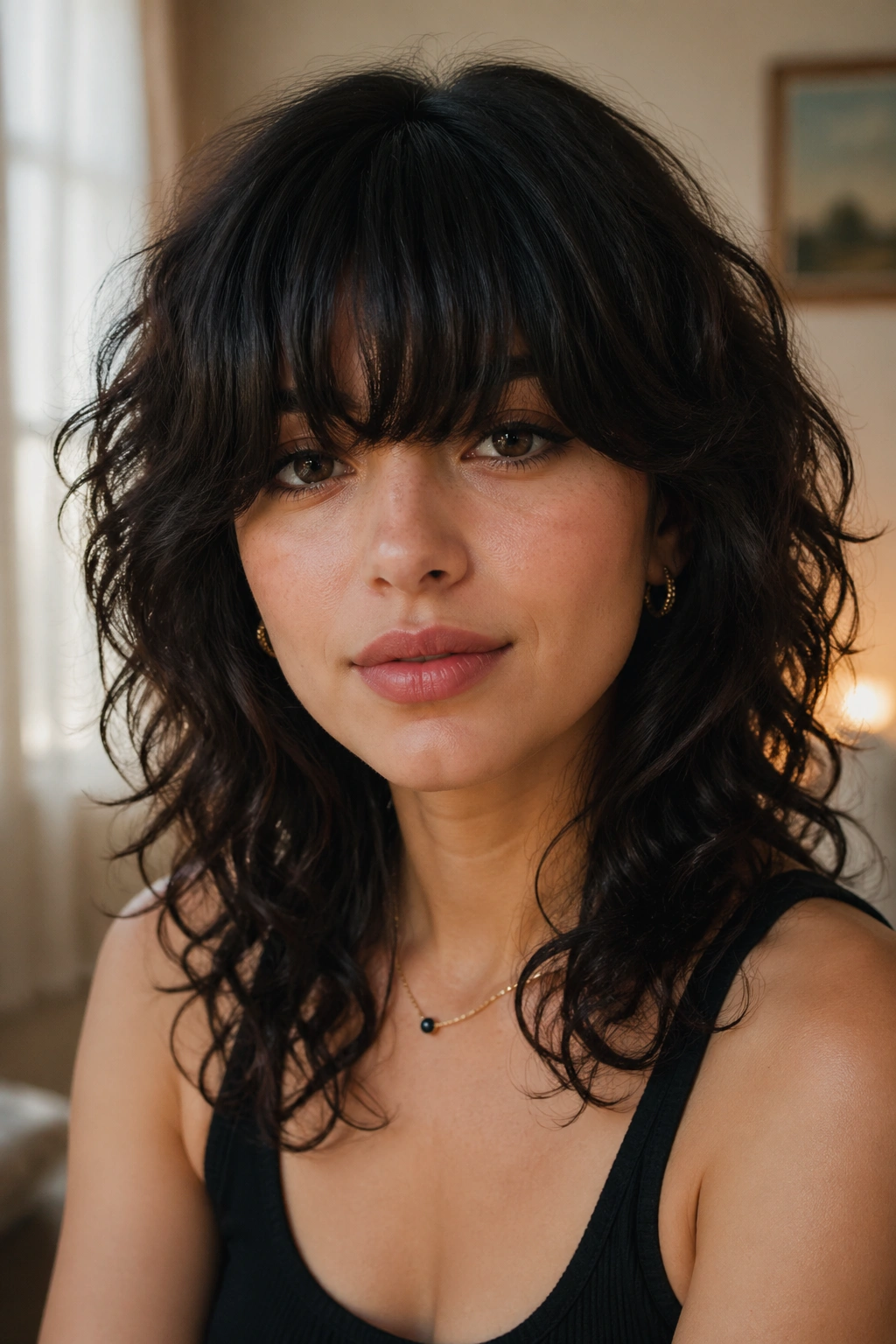
A fuller fringe changes where the eye lands first. That is why this shag works so well on faces that carry a bit more width at the forehead and a narrower line through the chin.
The bangs should be dense enough to hold their own, but not so heavy that they sit like a curtain over the whole face. Around curls, that balance gets tricky. A heavy fringe can turn into a puffed-up block if it is cut too short or packed with too much layering underneath. The surrounding shape has to stay light enough to keep the front from feeling boxed in.
How to keep it from looking rigid
The layers around the cheeks and jaw should stay soft, almost broken up. That way the fringe remains the star without creating a square outline. A small amount of face framing near the chin helps too, especially when the curl pattern is coarse or springy.
If you have a heart-shaped face, this is one of the few shag variations that can really change the proportions in a flattering way. It draws attention to the eyes, keeps the top half from feeling too wide, and gives the lower half of the haircut some shape.
The main mistake is trying to make the bangs too neat. Curly fringe does not need that kind of control. It needs enough shape to sit with the rest of the hair.
14. Crown-Volume Shag with Tapered Sides
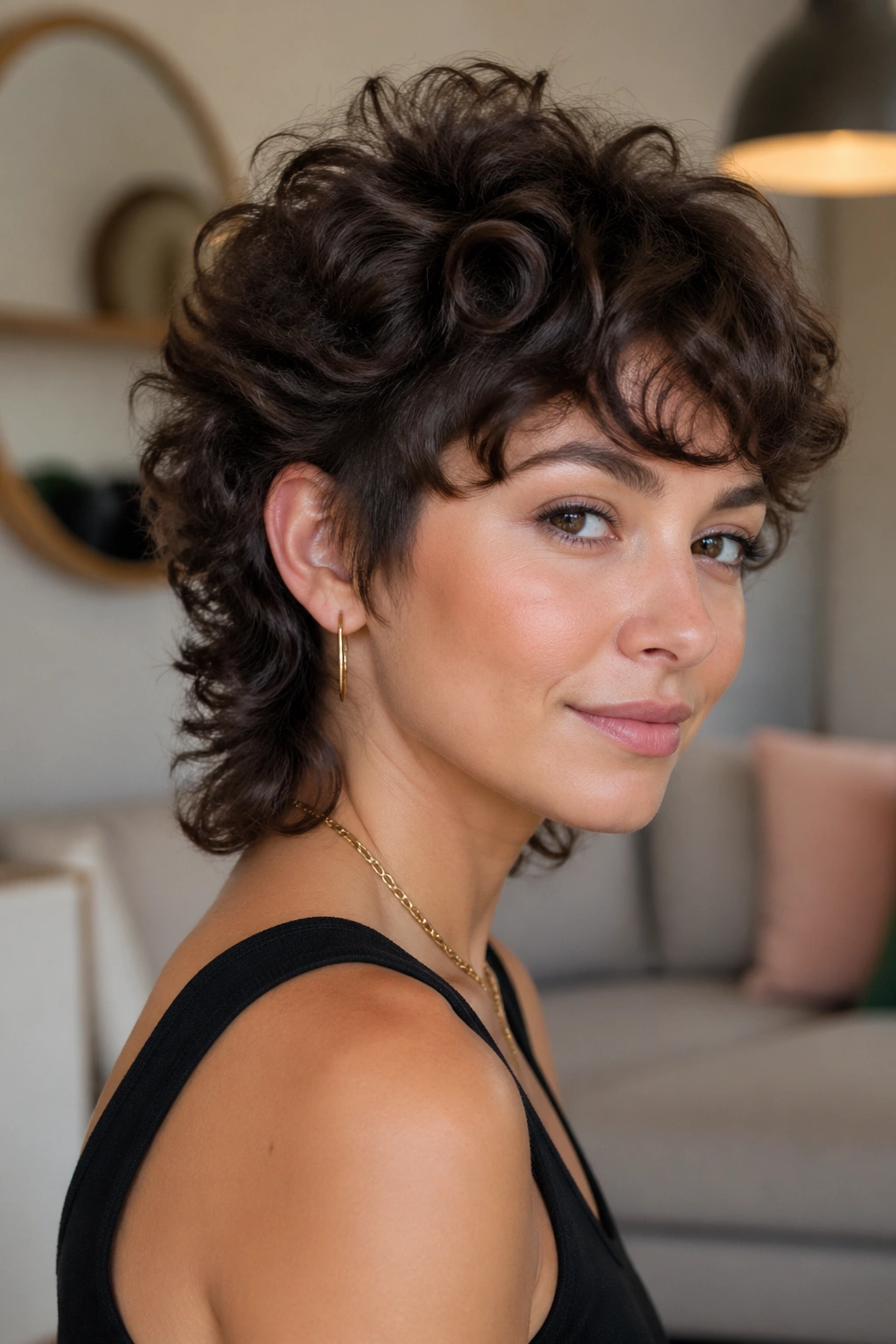
Some people want their curls lifted high at the top and kept slimmer around the sides. That is exactly what this cut is built for.
The crown-volume shag uses shorter layers at the top and a more tapered outline near the ears and jaw. It is especially useful for dense hair that tends to spread wide. Instead of letting the weight sit at the sides, the cut shifts attention upward. The result is a taller shape that feels energetic rather than bulky.
Styling details that make a difference
- Clip the roots at the crown while the hair is damp.
- Diffuse on low heat for the first few minutes.
- Lift the top before you touch the lower layers.
- Keep the side sections softer so they do not balloon outward.
This cut looks good on people who like a bit of drama near the top and a cleaner line near the neck. It also works well with earrings, collars, and jackets that sit close to the face because the tapered sides keep the whole style from competing with everything else.
If the crown has no lift, this haircut loses its point. That part is non-negotiable.
15. Grown-Out Curly Shag That Keeps Its Shape
The best shag is often the one that still behaves after it has grown for a while. That is where the grown-out curly shag earns its keep.
This version keeps the layers long enough to avoid a choppy finish, which makes it a smart choice for people who do not want to live at the salon. The crown still has movement, the fringe can be a little longer and softer, and the overall shape stays readable even when the haircut has had a few weeks to settle. That matters more than it sounds like it should. A lot of people love a fresh cut and hate the in-between stage. A grown-out shag solves some of that.
What I like most here is the forgiveness. It does not demand that every curl sit in a perfect place. A side part one day, a center part the next, a clip near the temple, a half-up bun on busy mornings — it keeps working. The shape just becomes less precise and more relaxed, which is usually the direction curly hair wants to go anyway.
If you only want one thing to remember, make it this: choose the version that matches how much maintenance you can honestly live with. The right shag is not the loudest one in the room. It is the one that still looks like your hair after the second wash, after the gym, and after you have ignored it for a day longer than planned.
