



Claw clip hairstyles for curly hair work best when the clip is acting like a steady hand, not a cage. If you’ve ever tried to force a thick curl pattern into a tiny clip and watched the whole thing slide out before lunch, you already know the problem. Curly hair has lift, spring, and a lot more texture than straight hair, which means the same clip can feel perfect on one head and useless on another.
Size matters. So does shape. A clip that barely closes around the bundle will leave dents and headaches; one that’s too loose will drop the second you turn your head. The sweet spot is a clip that grips enough hair to stay put, but leaves the curls soft and alive at the ends.
What I like about these styles is that they don’t fight the hair. They work with the bend that’s already there, which is half the battle with textured hair. You’re not trying to sculpt every strand into submission. You’re just giving the curls a clean shape, a little height, and a place to sit.
1. The Half-Up Twist That Keeps Your Face Clear
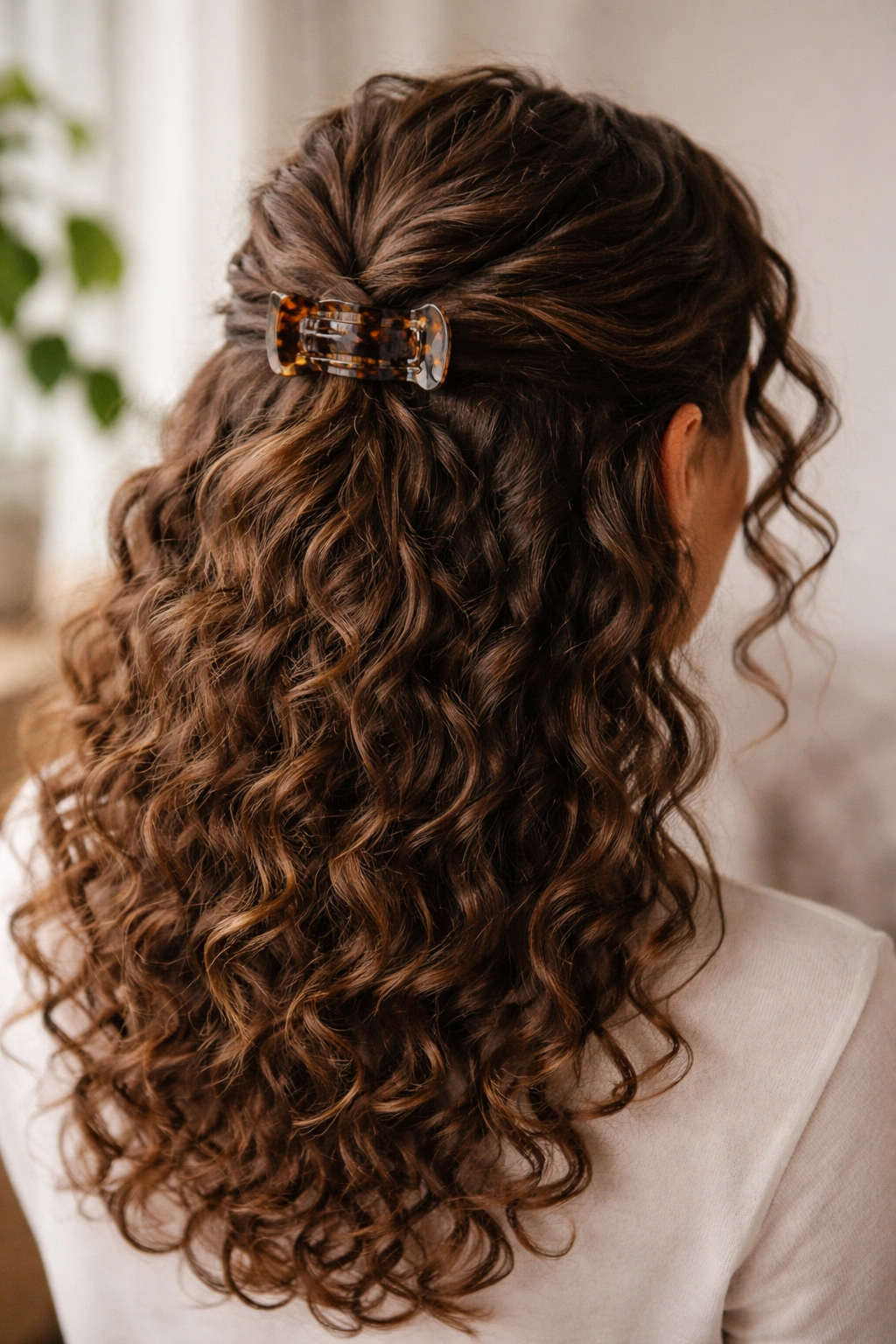
This is the one I reach for when I want my curls off my cheeks but I still want the length to show. It’s quick, it’s flattering, and it doesn’t ask much from the hair. The trick is to keep the twist loose enough that the curl pattern doesn’t get flattened at the crown.
Start by gathering the top section from temple to temple, then twist it once or twice toward the back of your head. Hold that twist just above the crown and slide a medium claw clip over it so the teeth catch the base of the twist, not the ends. If you clip too high, the whole thing tends to puff up in a weird way. Too low, and it collapses.
Best on: medium to long curls, especially when the front pieces are getting in your eyes.
A tiny bit of asymmetry helps here. Let one side sit a little higher than the other. It looks more relaxed and usually holds better, too.
2. The Low French Twist for a Neater Finish
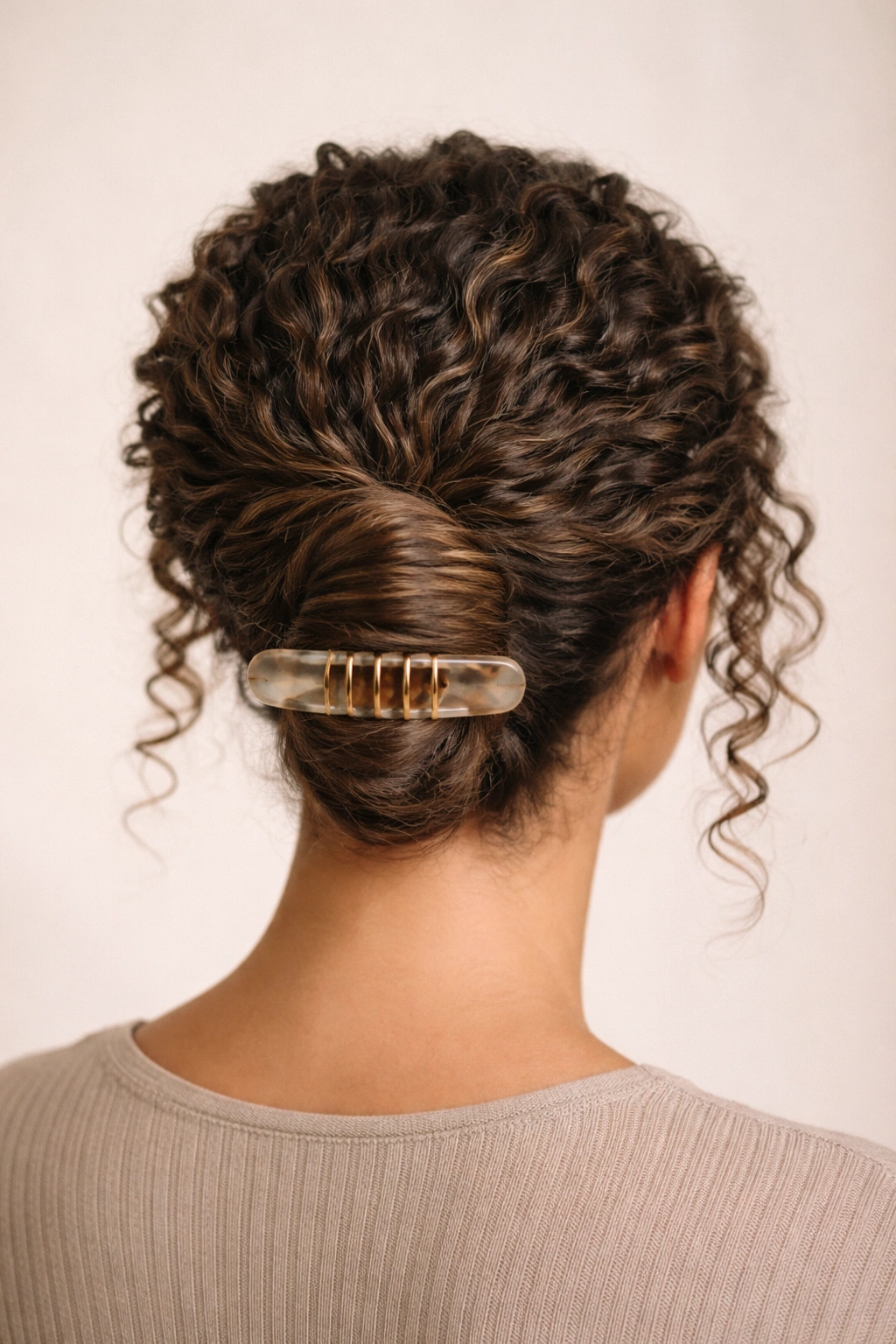
Want a style that reads polished without making your hair look stiff? This is it. The low French twist is one of the most useful claw clip hairstyles for curly hair because it keeps the bulk at the nape, where curls usually behave better, and it leaves the top smooth enough for a cleaner shape.
Gather the hair low at the back of your head, twist upward against the scalp, then tuck the loose ends under the twist before clipping it in place. The clip should sit horizontally or slightly diagonal, with the base gripping the folded hair near the nape. If the ends poke out, leave them. Curly hair looks better with a little softness than with a perfectly sealed shell.
If your layers are short, a few face-framing pieces may refuse to join the party. Fine. Let them fall. That loose halo around the face is often what makes the style look good instead of severe.
Where it shines
- Work meetings.
- Dinner plans.
- Any day you want your curls controlled, not flattened.
A large clip with a firm hinge is the safest choice here. Cheap clips snap open too easily when the hair is dense.
3. The Side-Swept Clip for Asymmetrical Volume
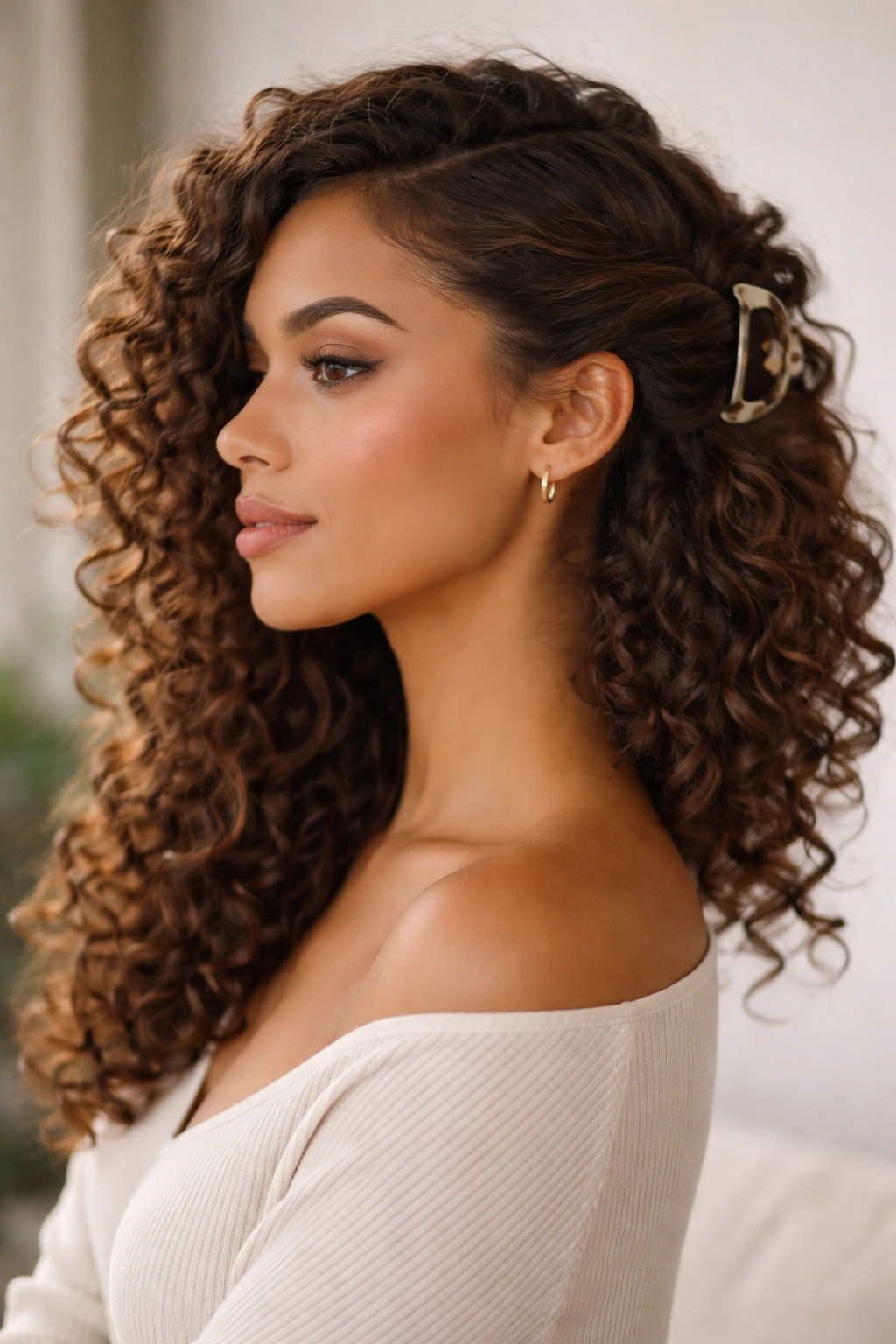
A side-swept clip is one of those styles that looks intentional even when you did it in under two minutes. It also plays nicely with curl pattern, because it lets the hair keep its natural bulk instead of compressing everything into one tight bundle.
Sweep all your curls to one side, usually the side opposite your part if you want extra lift. Twist the gathered section once at the back, then clip it behind the ear or slightly above the nape on the heavier side. The rest of the curls can drape over one shoulder. That’s the whole charm of it.
The reason this works is simple: curls already create visual volume, and the side sweep uses that volume as shape instead of hiding it. It feels easy on the scalp, too, which matters if you’re wearing the style for hours.
Watch for this
- Use a clip with rounded teeth so it doesn’t snag.
- Keep the twist loose.
- Let a few curls escape near the temple. That softness keeps the style from looking overworked.
If your hair is dense, this is one of the easiest ways to get control without committing to a full updo.
4. The Vertical Roll for Dense, Long Curls
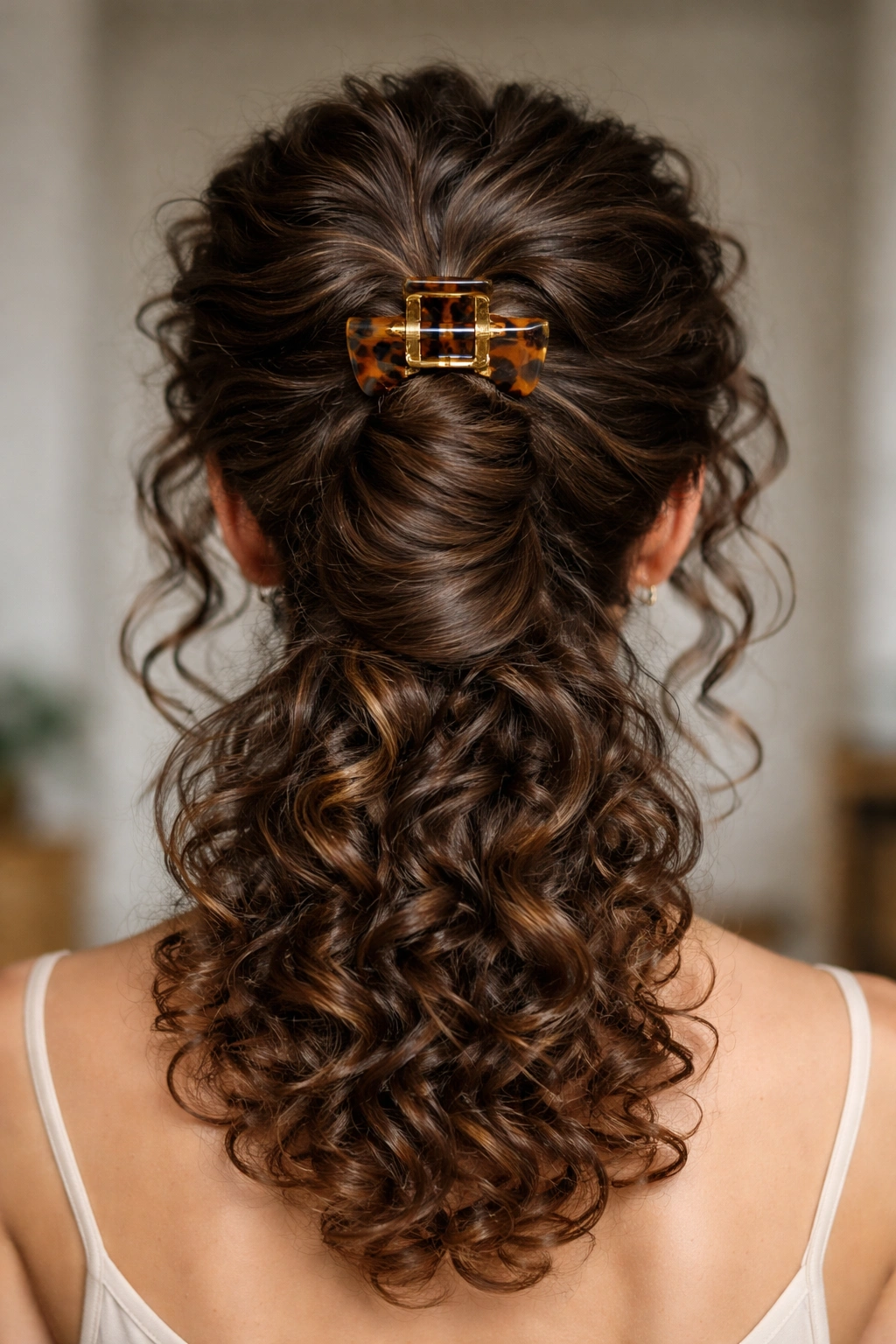
Long, thick curls need a clip style that spreads the weight out. The vertical roll does that better than a flat twist, and I think it’s underrated. It’s especially useful when your hair feels too heavy for a high bun but too loose for a simple half-up.
Gather the hair at the nape and twist it upward toward the center back of the head. Instead of flattening the twist horizontally, roll it into a taller shape and secure it with the clip running vertically. The goal is a compact column of curls, not a slick shell. When the clip catches the rolled base, the ends often spill upward or outward a bit. That’s fine. It gives the style movement.
Dense hair tends to fight horizontal clips because the weight pulls down at the sides. Vertical placement helps distribute that load.
One thing I’d skip: too much smoothing. You do not need to brush every curl into the same direction. A wide-tooth comb at the roots is enough if you want a tidier finish. The rest should keep its texture.
5. The Crown Puff for Second-Day Hair
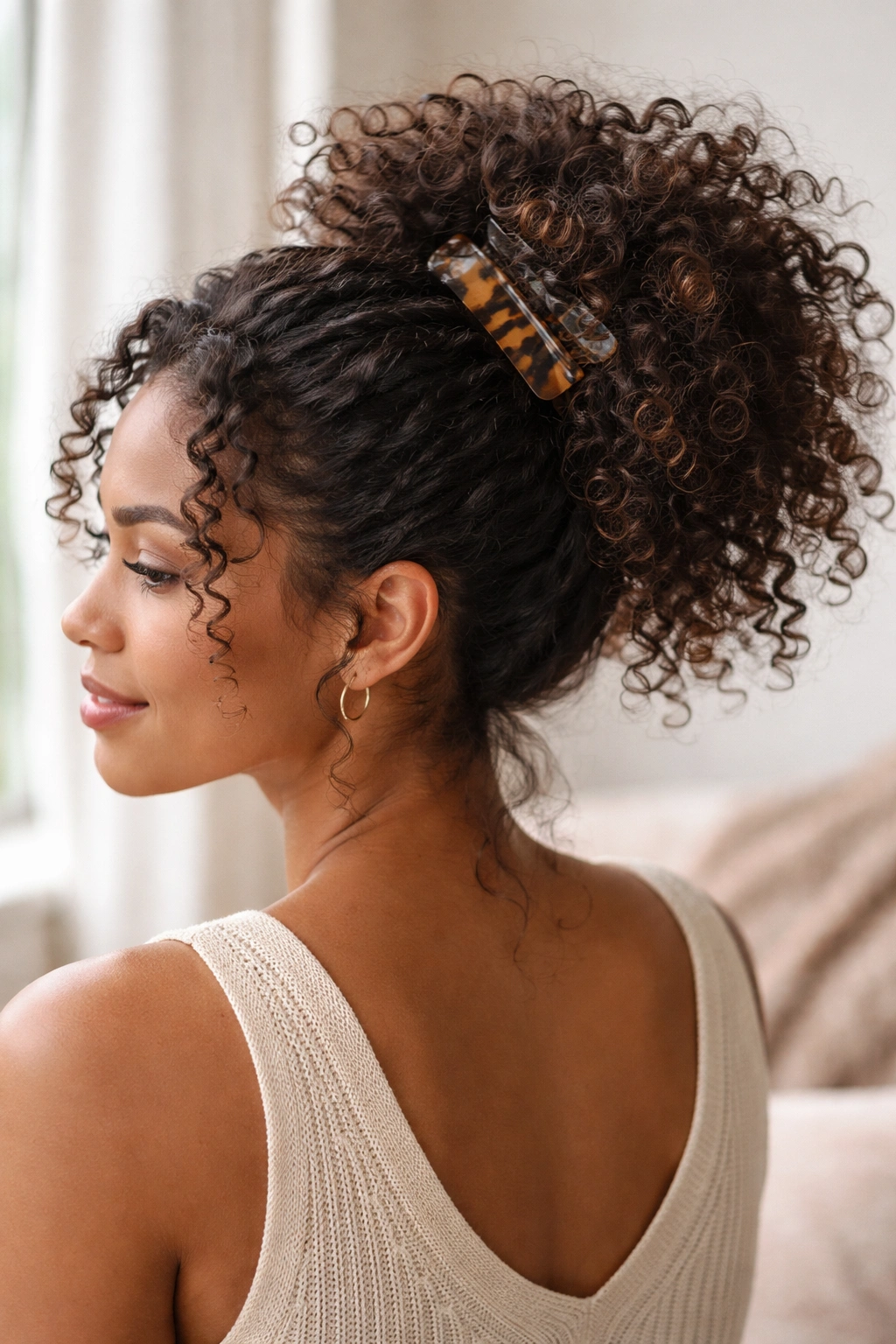
Second-day curls can be a little flat at the roots and a little wild everywhere else. That’s exactly when the crown puff earns its keep. It lifts the hair off the face, builds height where you lost it overnight, and leaves the ends loose enough to keep their shape.
Flip your head forward, gather the top and middle section into a loose puff near the crown, then bring it back and clip it in place. Don’t pull it tight. The puff should sit high and soft, with enough slack that the curls fan out instead of compressing into a hard mound. If the roots are stretched, the style loses its whole point.
A smaller clip can work here if your hair is fine, but thick curls usually need a larger one with a wider opening. A matte clip often grips better than a shiny, slippery one.
The nicest part? It makes flat roots look deliberate. That’s a small miracle on some mornings.
6. The Loose Claw Clip Bun at the Nape
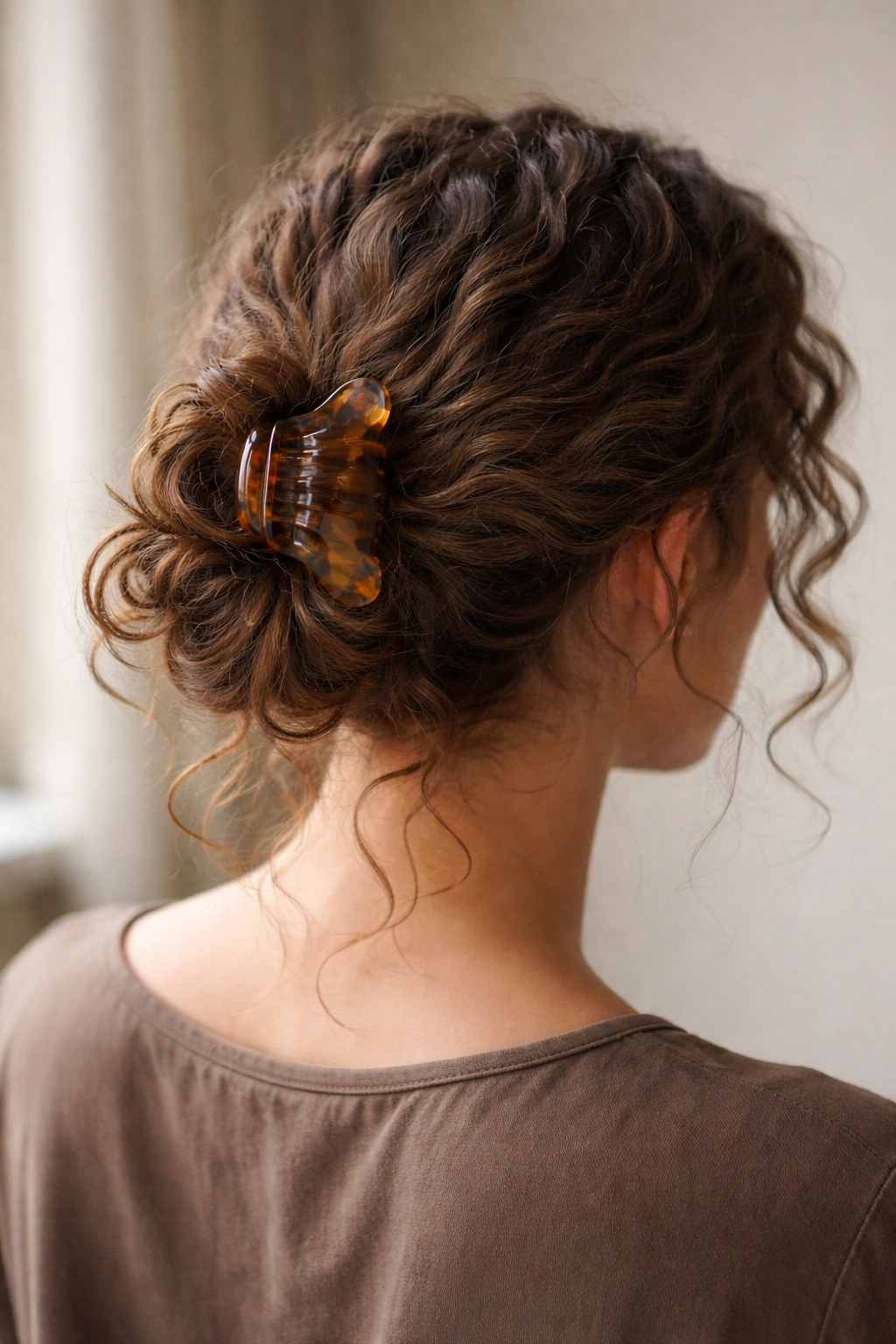
A loose claw clip bun is the answer when you want your hair up, but you do not want the too-perfect look that comes with a tight twist. It’s casual, a little undone, and forgiving on curls that don’t want to be smothered.
Pull the hair into a low ponytail shape at the nape, twist it once, then fold the length upward and back toward the scalp. Clip over the folded hair so the ends tuck inside or peek out in a soft loop. The bun should feel cushioned, not squeezed. If you can see a bit of curl texture wrapping around the edges, that’s a good sign.
How to make it hold
- Work with dry or nearly dry curls.
- Gather the hair with your hands, not a brush.
- Twist only once or twice.
- Clip the folded section close to the scalp.
If the bun starts to sag, the clip is probably too small or the twist is too loose at the base. A strong spring fixes a lot. So does using two smaller clips, one above the other, if your hair is extra thick.
7. The Twist-and-Tuck Chignon for Dressier Days
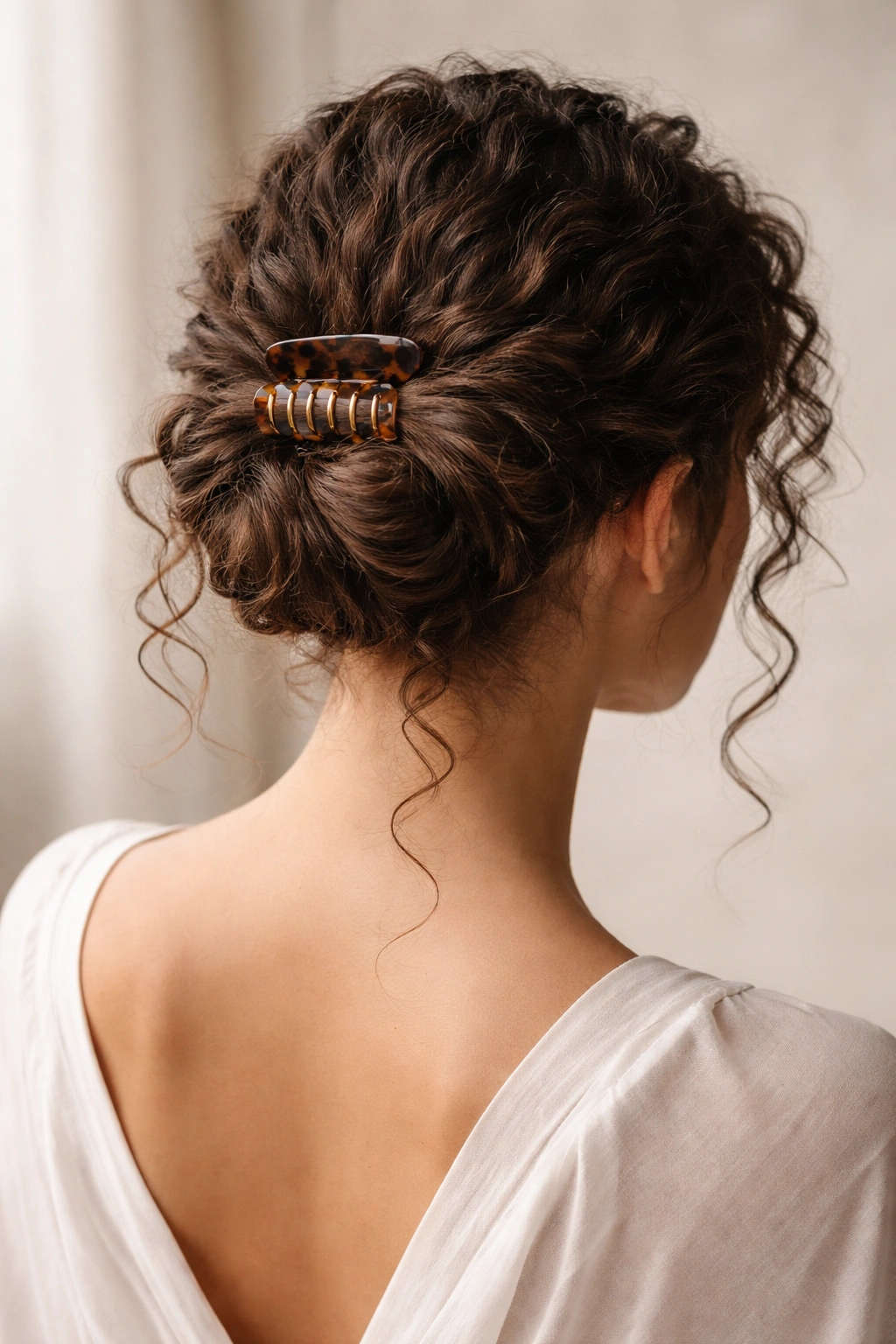
A twist-and-tuck chignon has a little more polish than the loose bun, but it still lets curly hair look like curly hair. That’s the balance I like. It’s neat enough for dressy plans and soft enough that it doesn’t feel overdone.
Split the hair into two loose sections at the nape. Twist each section toward the center, cross them, and tuck the ends inward before clipping the fold in place. If you have layered hair, some shorter pieces may slip free. Leave them. A perfect seal usually looks harsher than a few loose ringlets around the neck.
Unlike a slick bun, this style benefits from texture. The curls fill out the shape and keep it from looking flat against the head. You want a rounded silhouette, not a tight knot. That’s the part people get wrong.
A decorative claw clip can work here if the finish is clean, but even a plain black clip looks good. The structure of the hairstyle carries most of the visual weight.
8. The High Lift Clip That Shows Off Your Curl Pattern
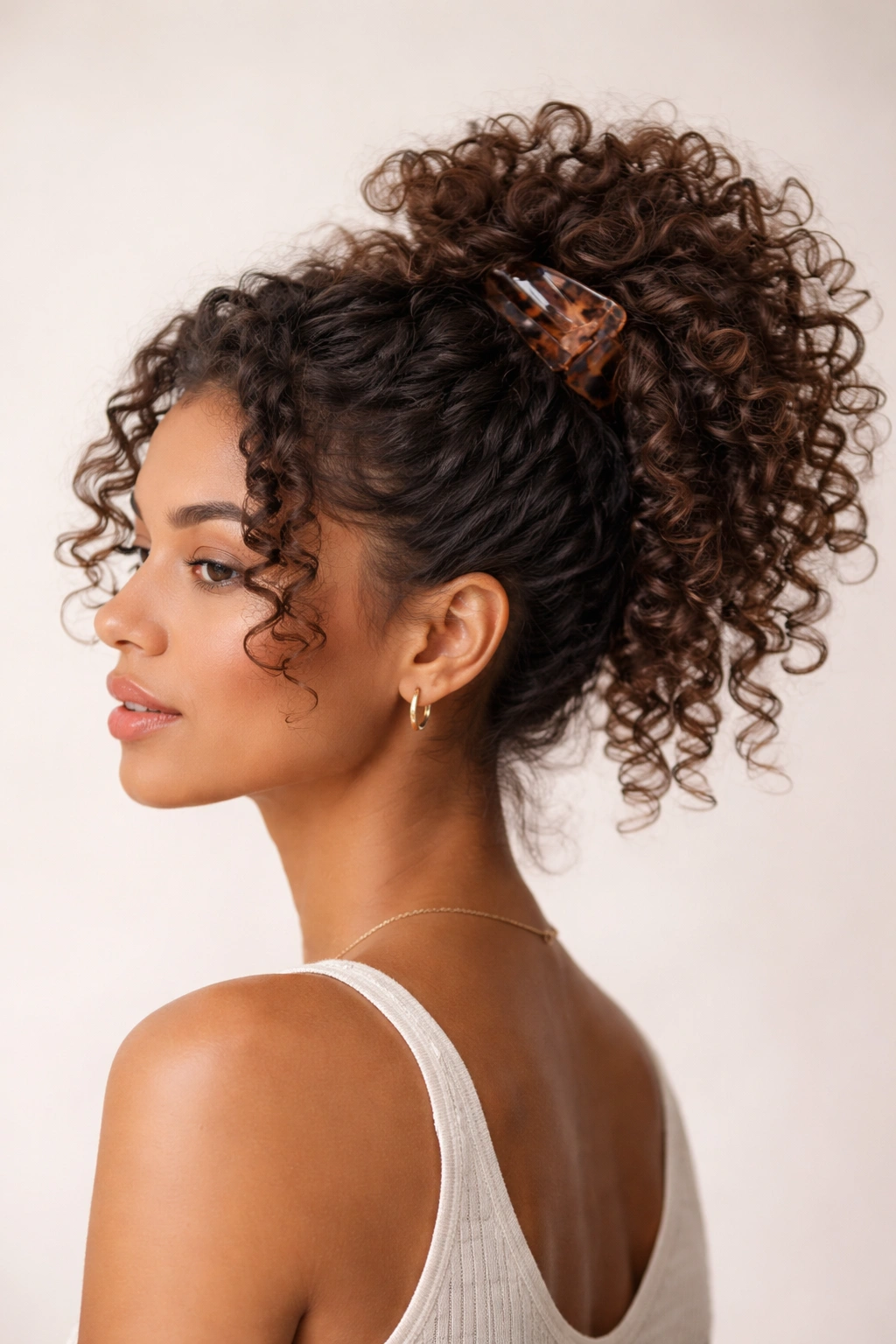
A high clip style can be gorgeous on curls because it puts the spring and definition front and center. It also keeps hair off the neck, which is useful when you want less fuss and more lift.
Gather the top half or even most of the hair high on the back of the head, then let the curls fold into the clip in a loose arc. The key is to secure the base near the crown so the hair doesn’t droop straight down after ten minutes. If the clip sits too low, you lose the lift and end up with a tired-looking half-up style. High placement keeps the silhouette lively.
This style is especially kind to curls with a lot of bounce. You see the shape from the front, not just the back. That’s a nice change from styles that only look good in profile.
Small adjustments that help
- Angle the clip slightly upward.
- Use your fingers to fluff the roots after clipping.
- Let the ends fan out instead of forcing them into a smooth roll.
If you have very long hair, you may need to fold the section twice before clipping. That’s normal.
9. Two Mini Clips for Face-Framing Pieces
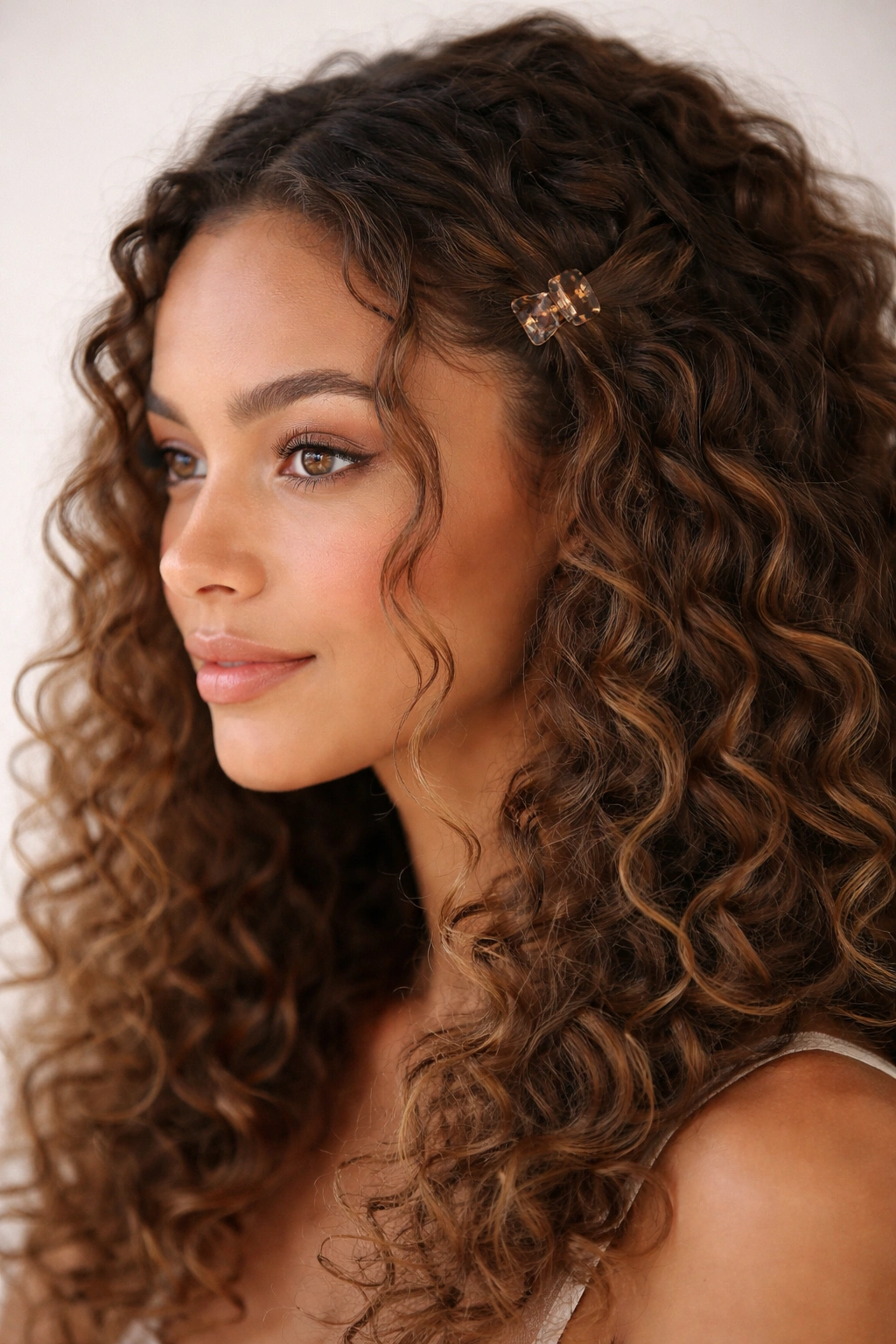
Sometimes the easiest fix is not a full updo at all. Two mini claw clips can pull the front pieces back while leaving the rest of the curls loose and full. It’s simple, fast, and much kinder to short layers than a big clip that swallows half your head.
Take a small section from each temple, twist it back just once, and secure each side with a mini clip. Place them a finger-width above the ears or a little higher if you want more lift. The look is casual and a bit playful, but it also keeps the hair out of your eyes in a way that feels controlled.
This is one of the better choices for shorter curly hair, especially if a full-size clip keeps sliding off. It also works when the hair is freshly styled and you only want to touch the front. Less handling means less frizz. That part matters more than people think.
If you want the clips to blend in, choose a color close to your hair or a matte finish. If you want them to show, make them the accent. Easy either way.
10. The Half-Up Waterfall Hold
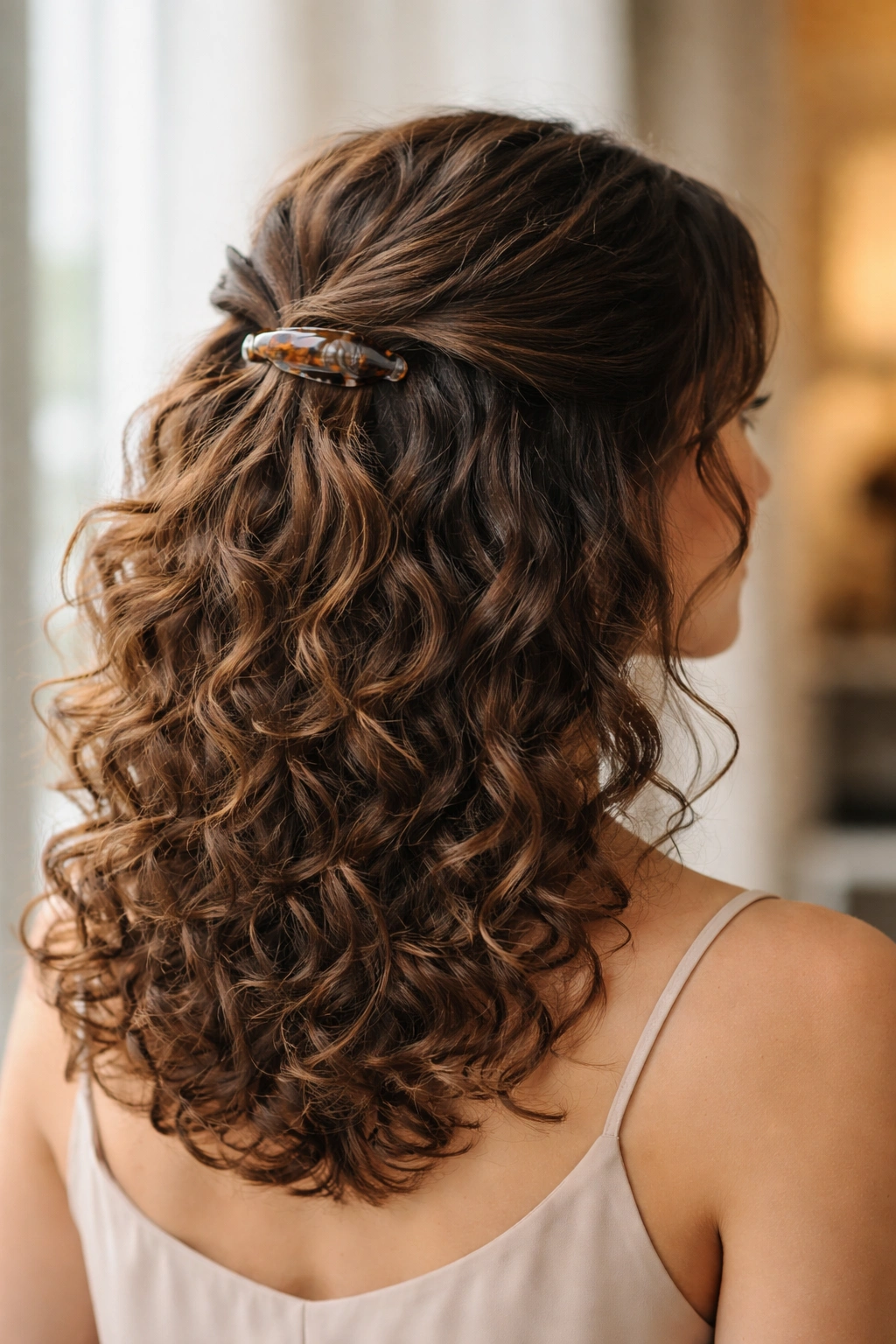
A waterfall hold keeps the top section clipped while the lower curls spill through and over it. It’s softer than a standard half-up style, and I think it looks especially pretty on shoulder-length curls that need a little shape but not a lot of control.
Gather a narrow to medium section from the crown, twist it loosely, and clip it so the teeth sit under the twist. Then let the loose ends drape over the clip like a curtain. The clip should disappear a little under the curls, not sit on top of them like hardware. That hidden feel is what makes the style work.
This one is good when you want movement. It doesn’t lock the hair in place. It just lifts enough to keep the face open while the rest of the hair stays soft. If your curls are heavy, use a clip with a deeper jaw so the top section doesn’t slip out.
A curved clip usually behaves better than a flat one here. Curves follow the shape of the head more naturally.
11. The Loop-Through Ponytail Alternative
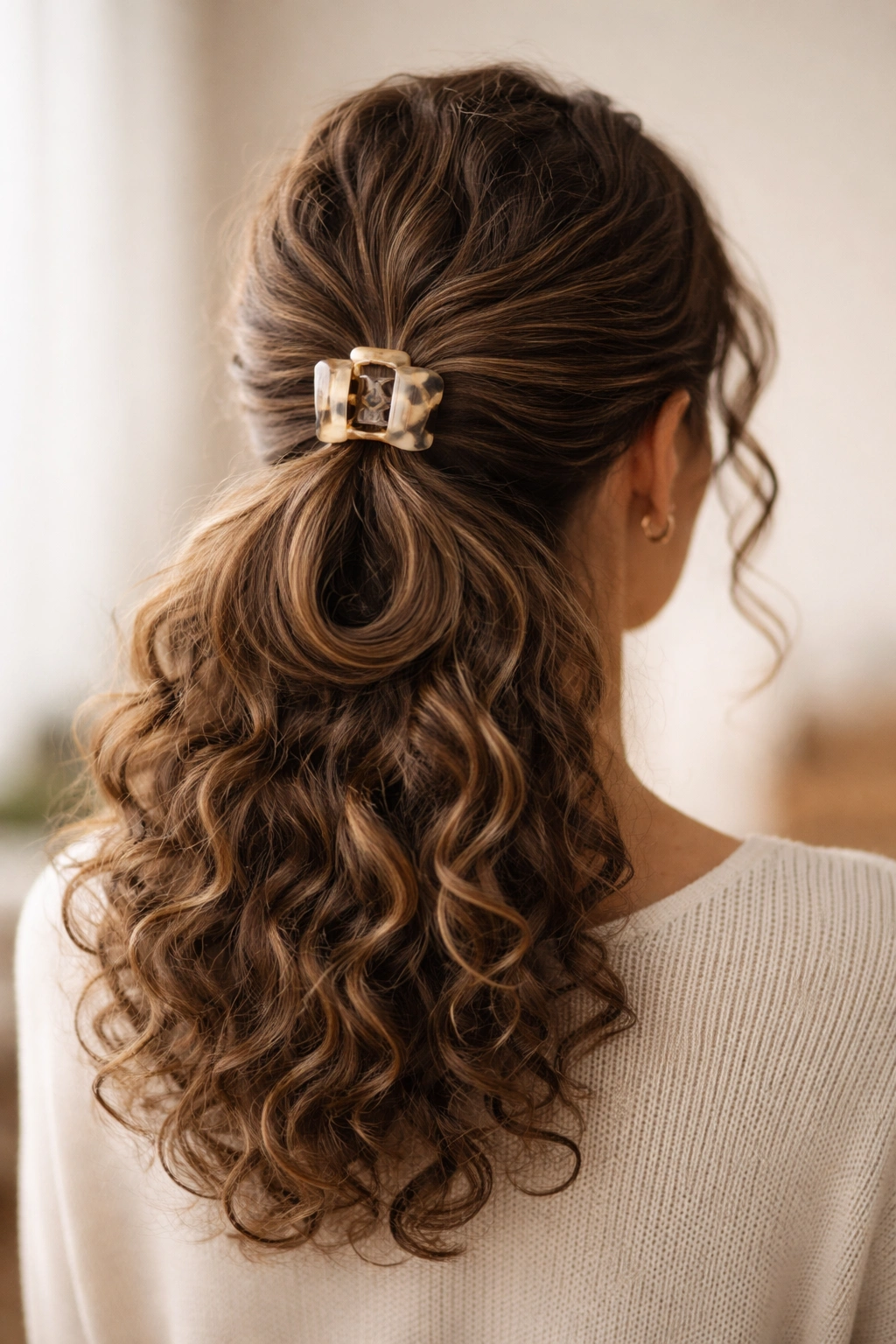
This style is for anyone who hates elastic bands tugging at the roots. Instead of tying a ponytail, you gather the hair, fold it into a loop, and secure the loop with a claw clip. The result is softer than a ponytail and less likely to leave that obvious crease.
Pull the hair to the back of the head at mid-height or low near the nape. Fold the length back on itself so the ends loop under, then clamp the clip over the base. The loop should feel secure but not tight. If the clip bites too hard, the hairstyle loses its easy shape and starts pulling.
Why it’s useful
- It avoids a tight band around fragile curls.
- It works on thick hair that needs a wider hold.
- It gives you a clean back view without flattening the crown.
This is one of those styles that looks modest from the front and a little more interesting from the side. If your hair is layered, expect some ends to fall free. I would not fight that too hard. Those loose bits keep the look from getting boxy.
12. The Diagonal Twist That Flattens Less at the Crown
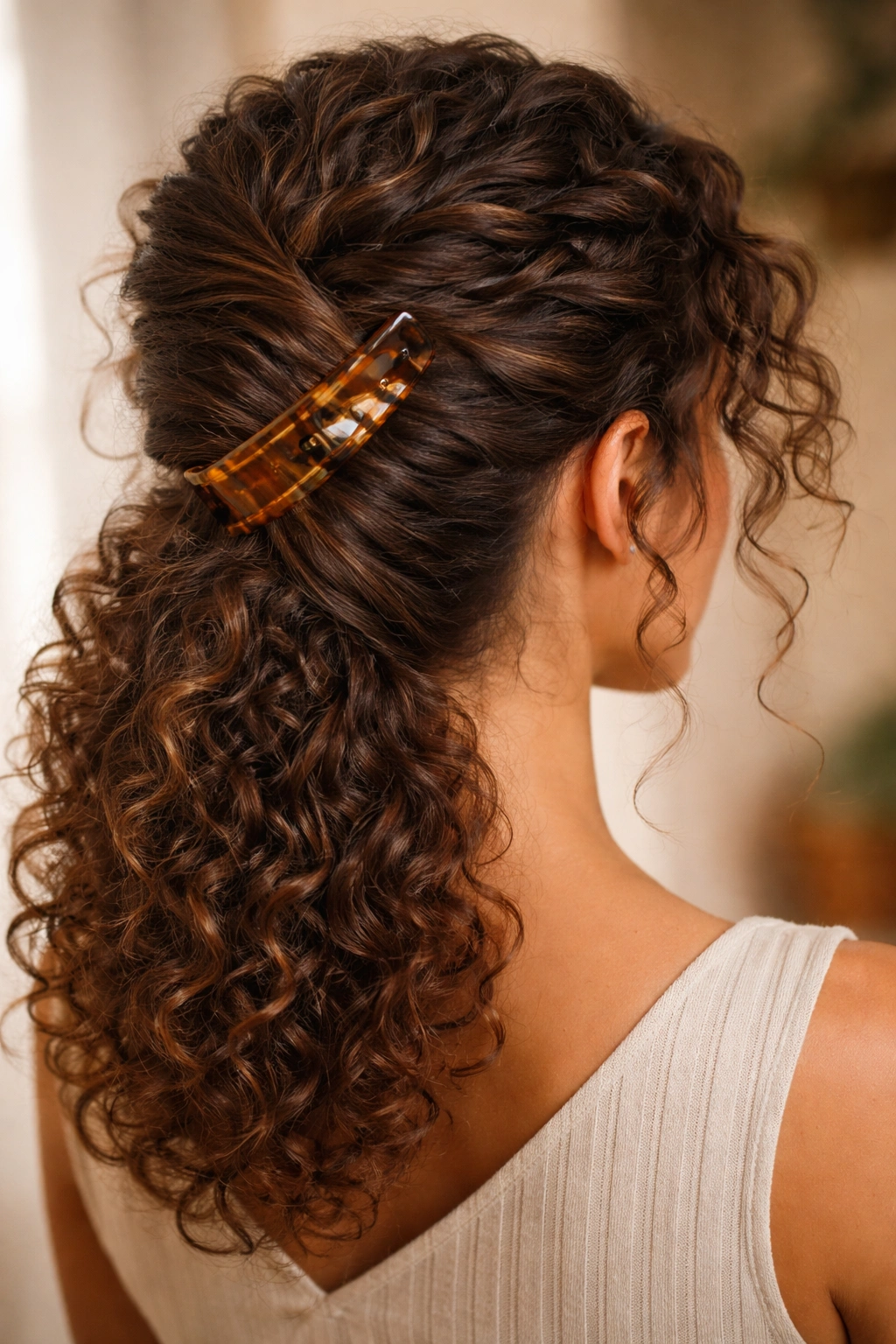
A diagonal twist is a nice fix when straight-back styles leave your crown too flat. Instead of gathering everything straight toward the center, you sweep the hair from one side of the nape up toward the opposite side of the head. That diagonal line creates shape and helps the clip hold a heavier bundle without sliding.
Twist the hair loosely as you move it across the back of the head, then clip it where the line ends near the opposite upper side. The clip ends up sitting at an angle, which feels a little more styled than a plain horizontal hold. It also gives the curls room to fall in a more natural direction.
This style is especially flattering if you wear a deep side part. The diagonal line echoes the part and makes the whole shape feel deliberate. Nothing about it looks fussy, which is the main reason I like it.
A good clip here has strong teeth and a hinge that doesn’t wobble. If the clip is flimsy, the weight of the curls will slowly drag the whole shape down.
13. The Pineapple Clip for Preserving Curl Shape
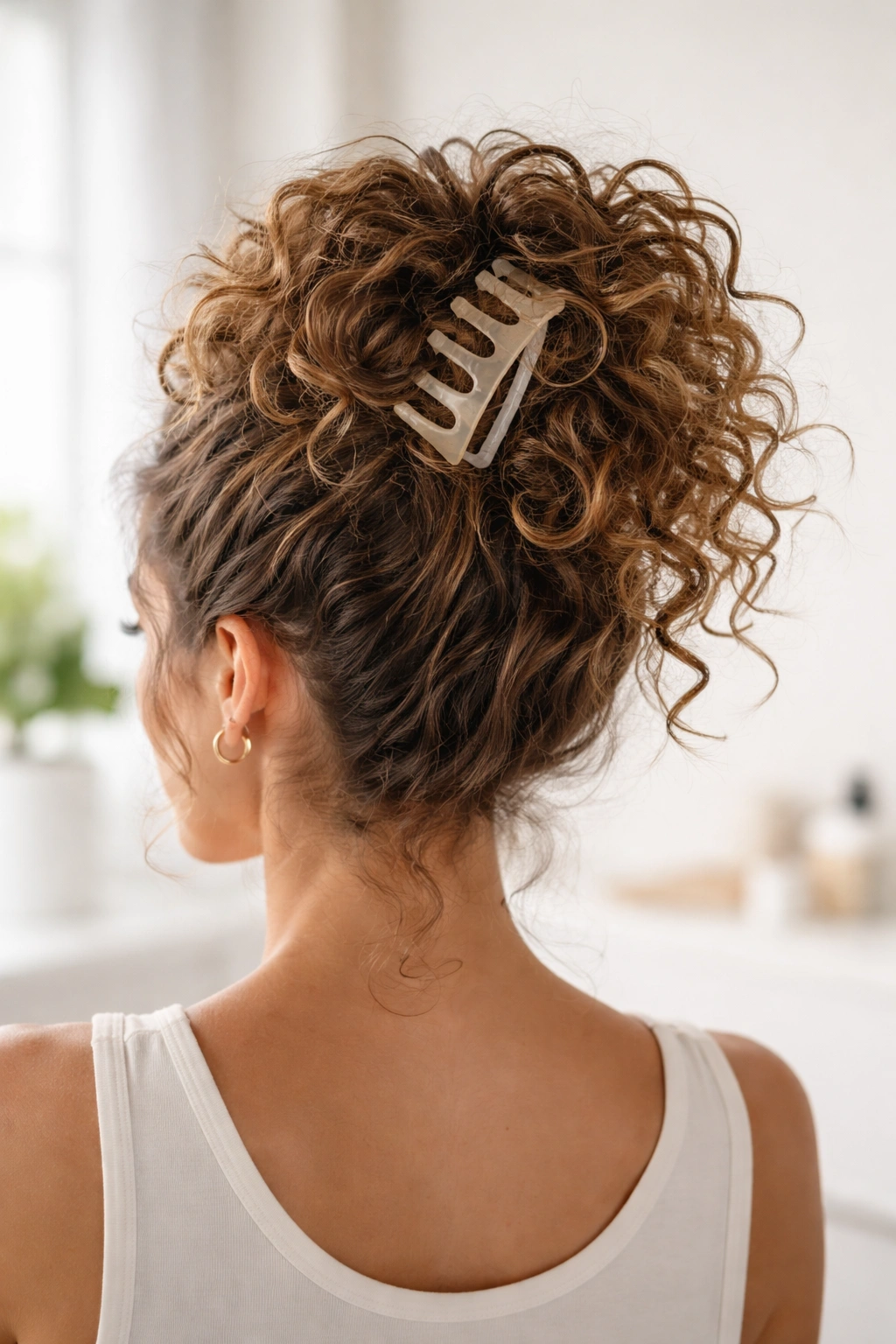
The pineapple clip is the closest thing to a second-day rescue move. It gathers the curls high on the head, keeps the ends from being crushed, and helps preserve the spring you already have. If you care about keeping your pattern intact, this one earns a place in the rotation.
Flip your head forward, gather the hair very high, almost at the top of the crown, and clip it loosely so the curls pile upward. The goal is not a tight knot. It’s a high, airy mound with enough hold to stay put. If the clip is too tight, you’ll end up with flat roots and bent ends. Too loose, and it will slide.
This style works especially well for long curls that get mashed when tied low. The high placement keeps the ends away from the collar, the pillow, and the back of your jacket. Tiny things. Big difference.
You can even wear it for a few hours while doing things around the house, then take it down and shake out the curls. That reset often gives the hair a better shape than brushing ever will.
14. The Faux Hawk Clip for Extra Shape
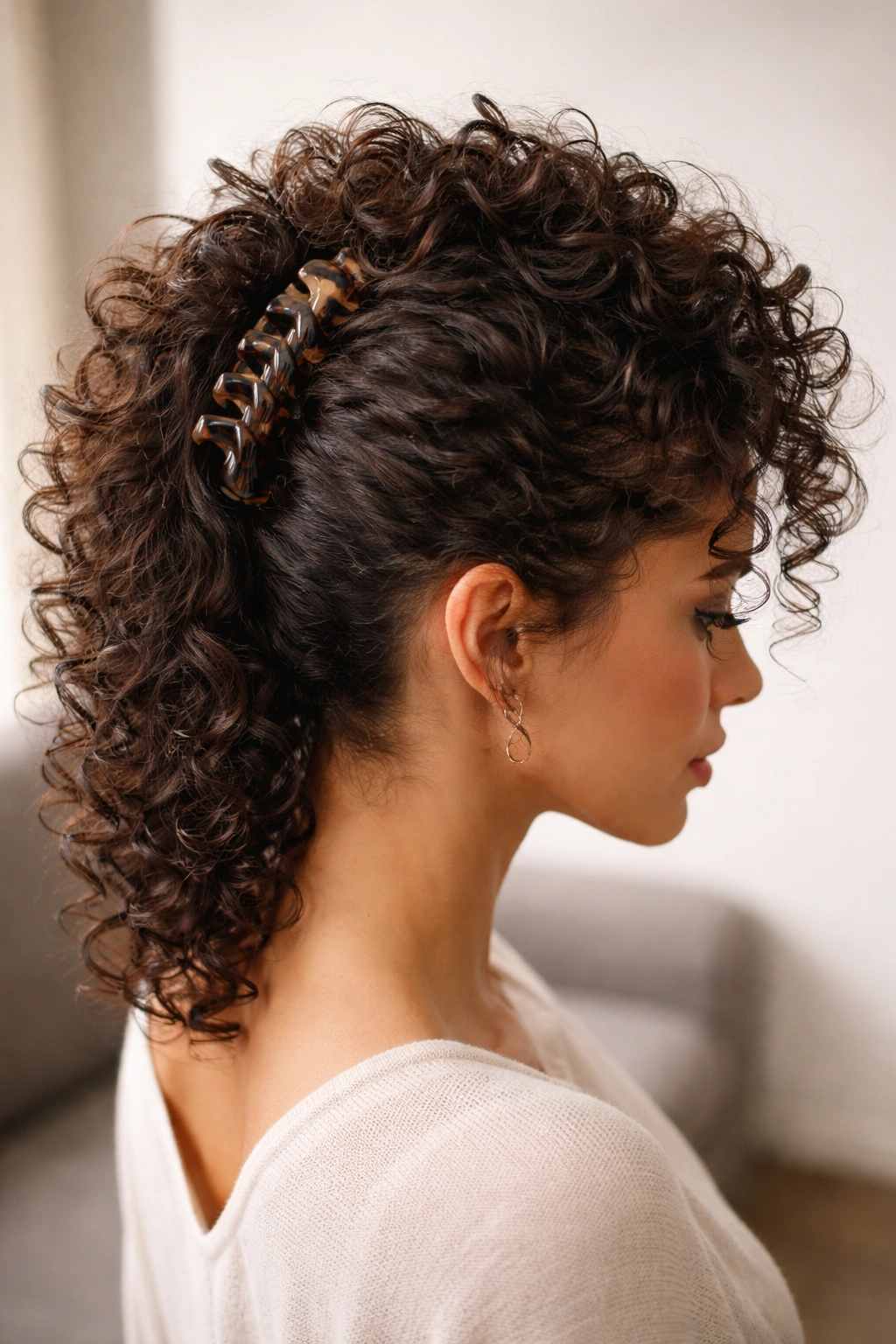
The faux hawk clip is a fun one, and yes, it’s a little bolder than the rest. It pulls the center section upward while keeping the sides closer to the head, which creates a strong shape without needing a lot of products or pins.
Gather a strip of hair from the front hairline through the crown to the back center, twist it slightly, and clip it so it stands up along the middle of the head. Leave the sides loose or tuck them back with smaller clips. The contrast between the lifted center and the softer sides is what gives the style its punch.
If your curls are dense, this can be a lifesaver on days when you want height but not a full updo. It also works well with shorter curls because the structure is centered, not stretched across the whole head.
Do not flatten the sides too much. A faux hawk looks best when the sides still have texture. If everything is slicked down, the whole thing starts looking stiff, and that’s the opposite of the point.
15. The Low Roll for Smooth, Formal Style
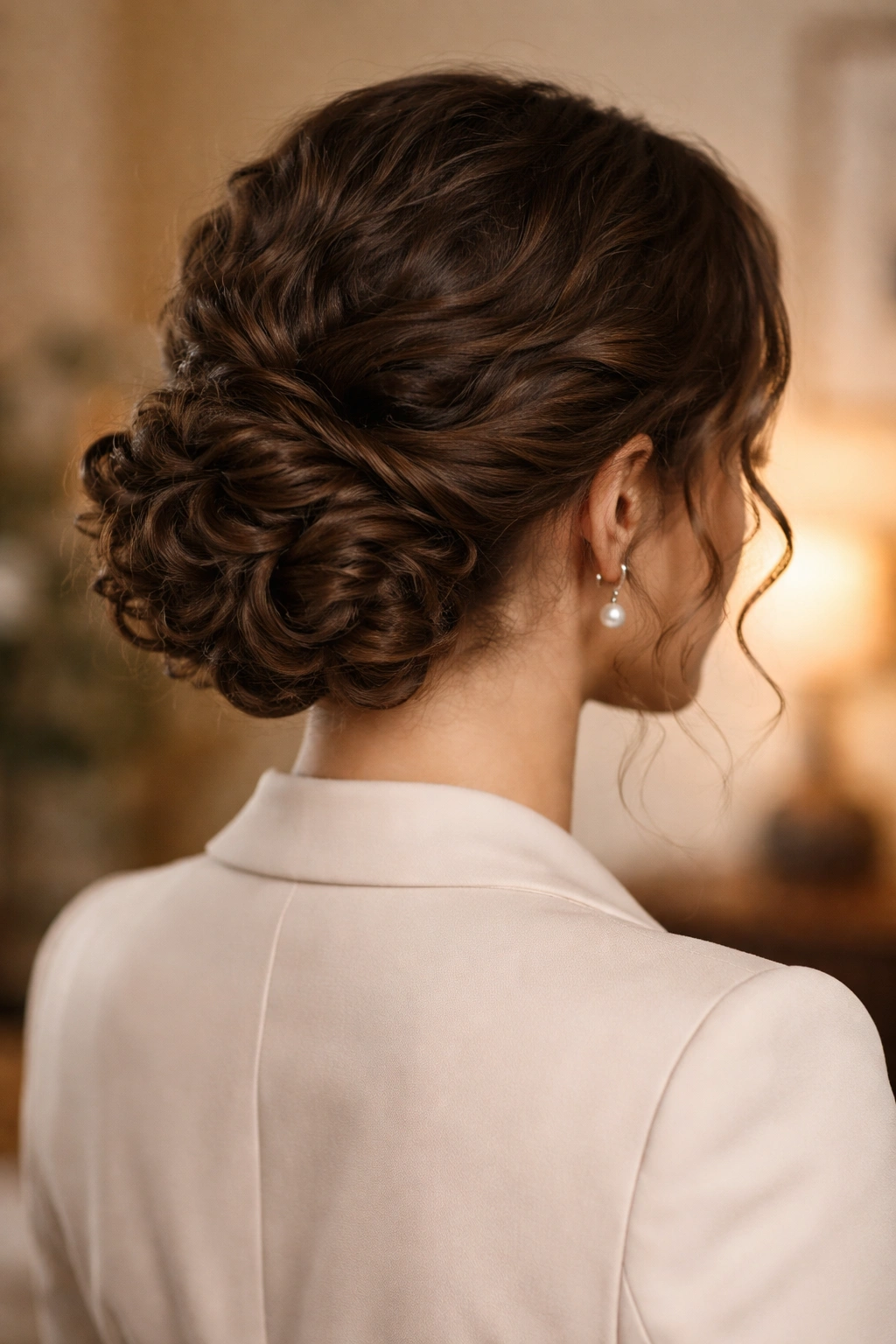
A low roll is the style I’d pick when I want curly hair to look neat without giving up its shape. It’s a little more refined than a bun, and a little less severe than a tight twist. The finish is clean, but not hard.
Gather the hair low at the back, roll the length inward toward the neck, and clip the fold so it sits close to the scalp. If the ends are long, tuck them under before clipping. The roll should feel compact and secure, but still soft around the edges. You want curl texture visible in the body of the style, not erased by it.
This is a strong choice for weddings, interviews, photos, or any situation where you want the hair to stay put for hours. A decorative clip can dress it up fast, but a simple tortoiseshell or black clip often looks better because the curls already provide enough texture.
The hardest part is resisting the urge to over-smooth. Keep a little volume at the crown. That small bit of lift makes the whole style look intentional.
Final Thoughts
The best claw clip styles for curly hair do one thing well: they respect the curl pattern instead of flattening it into a shape it never wanted. That’s why small choices matter so much — clip size, placement, and how tightly you twist can change the whole result.
If a style feels secure but hurts after an hour, the clip is too small or sitting too high. If it looks pretty for three minutes and then slips, the base needs more grip. Curls are forgiving, but they do tell you when something is off.
Keep a few clip sizes nearby and treat them like different tools, not interchangeable accessories. A mini clip solves one problem. A wide, springy clip solves another. And once you get used to reading what your hair wants, these styles stop feeling like tricks and start feeling like second nature.
