



Half-up, half-down styles for natural curls solve a problem straight hair never quite has to think about: what to do when the top wants lift, the ends want freedom, and the whole shape starts looking flat the second you touch it too much. A good half-up style keeps the crown awake and the curl pattern alive. A bad one turns into a tugged-back compromise that feels tight, looks stiff, and gives up by lunchtime.
The sweet spot is usually a small section at the crown, not a giant scoop of hair. That matters more than people think. Curls need room to spring, and when you pull too much of them up, you lose the whole point of wearing them curly in the first place.
There’s also the matter of balance. Tight curls, loose curls, long curls, shoulder-length curls — they all behave differently once you lift part of the hair. Some need a clip. Some need pins. Some need a soft elastic that won’t leave a dent you can see from across the room. A few styles lean polished, a few are playful, and a few are almost absurdly easy. That mix is what makes half-up looks so useful.
1. The Crown Clip Half-Up for Natural Curls
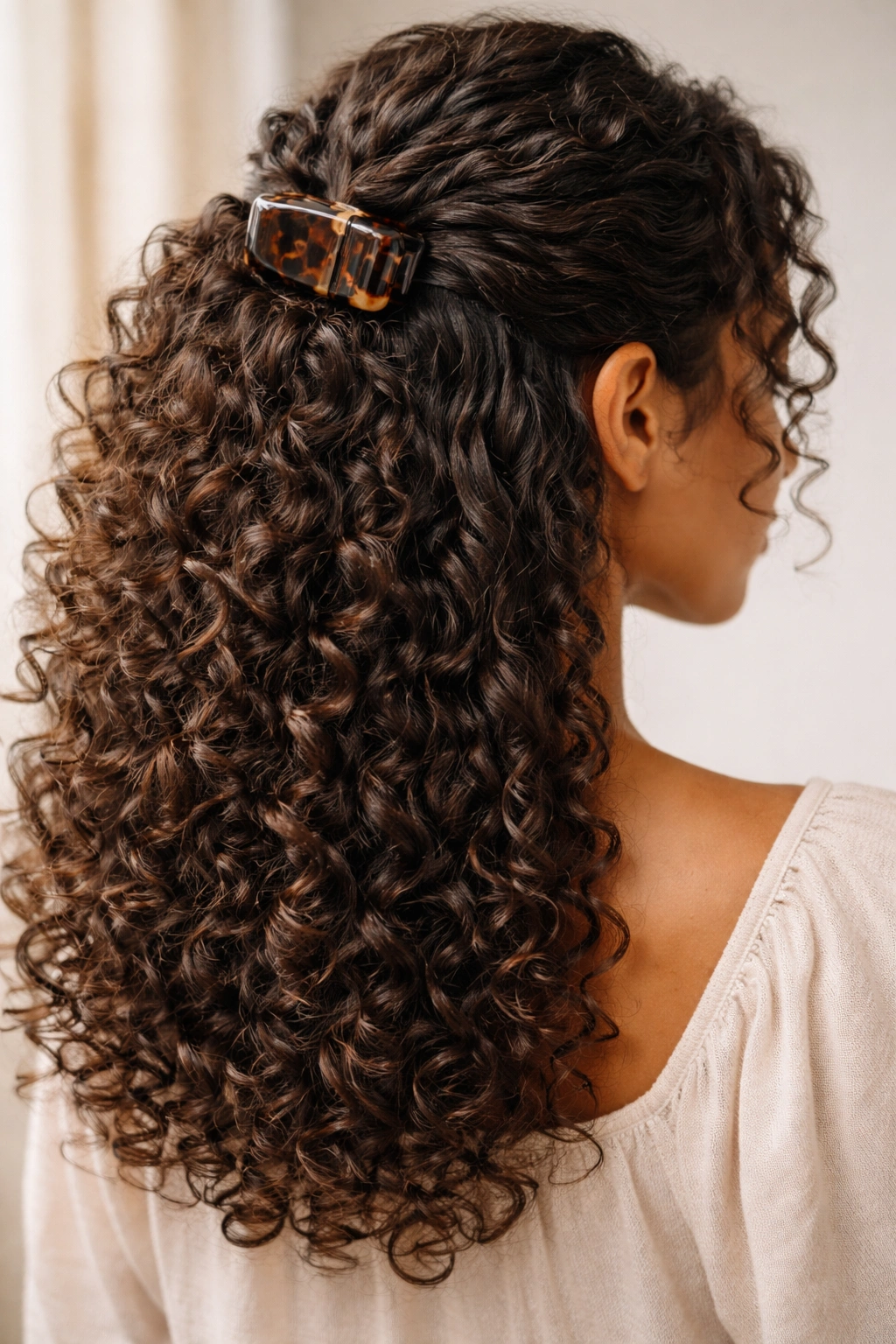
This is the fastest style that still looks like you meant to do something with your hair. A medium or large claw clip at the crown gives natural curls height without crushing the curl pattern underneath, and that balance is the whole appeal.
Pull back only the top third of the hair, twist it once, then clip it horizontally so the curl ends spill out. If your hair is dense, use a clip with wide teeth and a strong spring; flimsy clips slide right out of hydrated curls. If your curls are looser, you can get away with a smaller clip, but don’t pinch the section too tightly or the top goes flat.
Why It Works
The crown stays lifted. The bottom stays full. That’s the trick.
- Best for medium to long curls that need shape without a full updo.
- Works well on second-day curls, when the roots have a little texture and grip.
- Looks polished with a matte black clip, more playful with a tortoiseshell one.
- Holds up better if you gather the hair while it’s fully dry.
One small detail matters a lot: leave a few curls loose around the temples so the style doesn’t look too pulled back.
2. The Pineapple Half-Up Pony
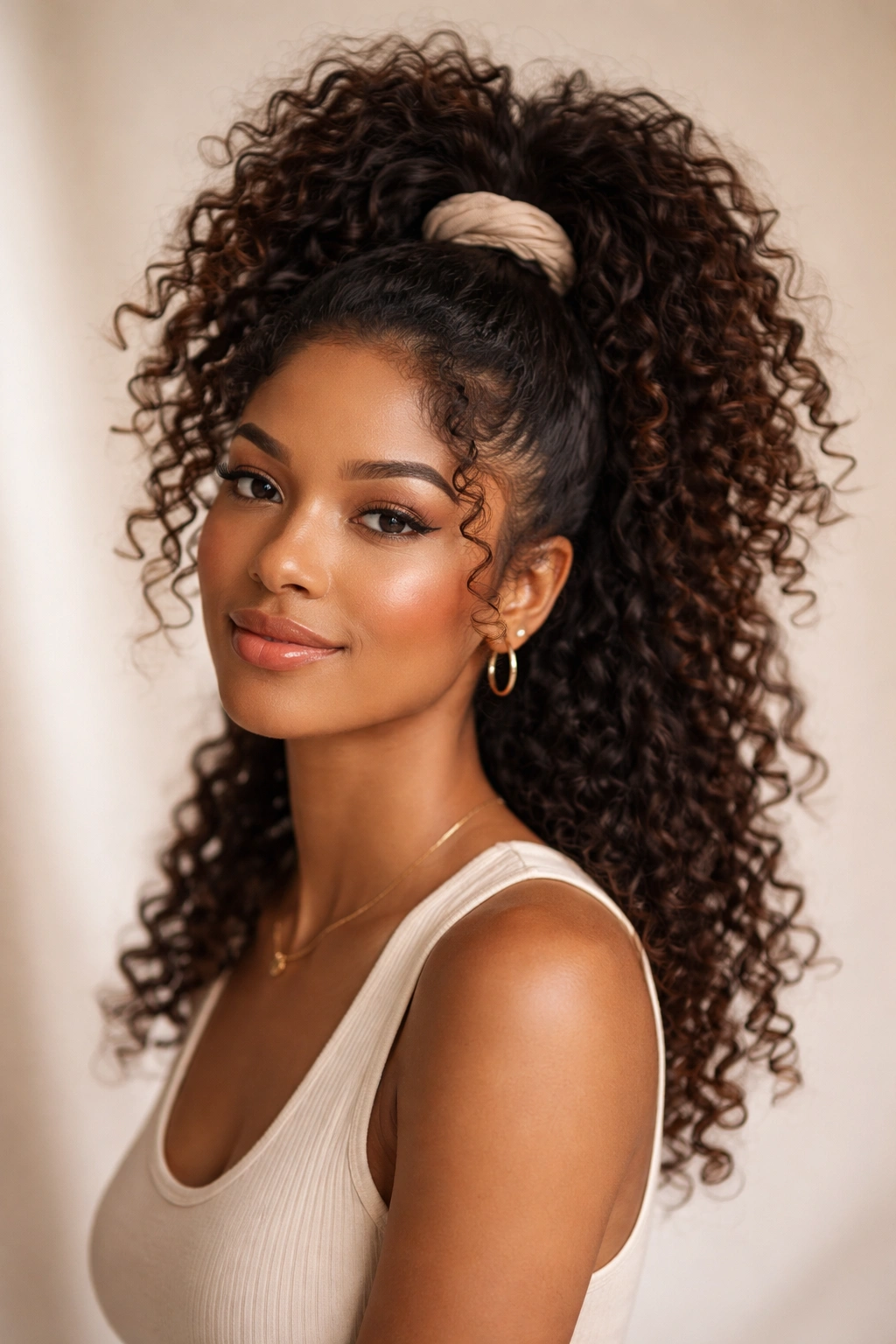
Why does the pineapple look better half-up than fully tied? Because curls already want height. The high pony just gives them a place to go without flattening the rest of the head.
Gather the top section very high, almost like you’re aiming for the crown of the head, then secure it with a soft scrunchie or coil tie. The lower curls should hang freely, and the pony itself should sit loose enough that the top stays puffy rather than slicked down. If your hair is long, this can look dramatic in a good way. If it’s shorter, the shape still works, just with more lift than length.
This one is especially good when your roots need volume but your ends still look defined. It also saves you from the awkward in-between feeling of a full updo that never quite becomes an updo. Curls can breathe here. That’s the real win.
Do not drag the top section back too tightly. The style lives or dies on that soft lift.
3. The Twist-Back Half-Up
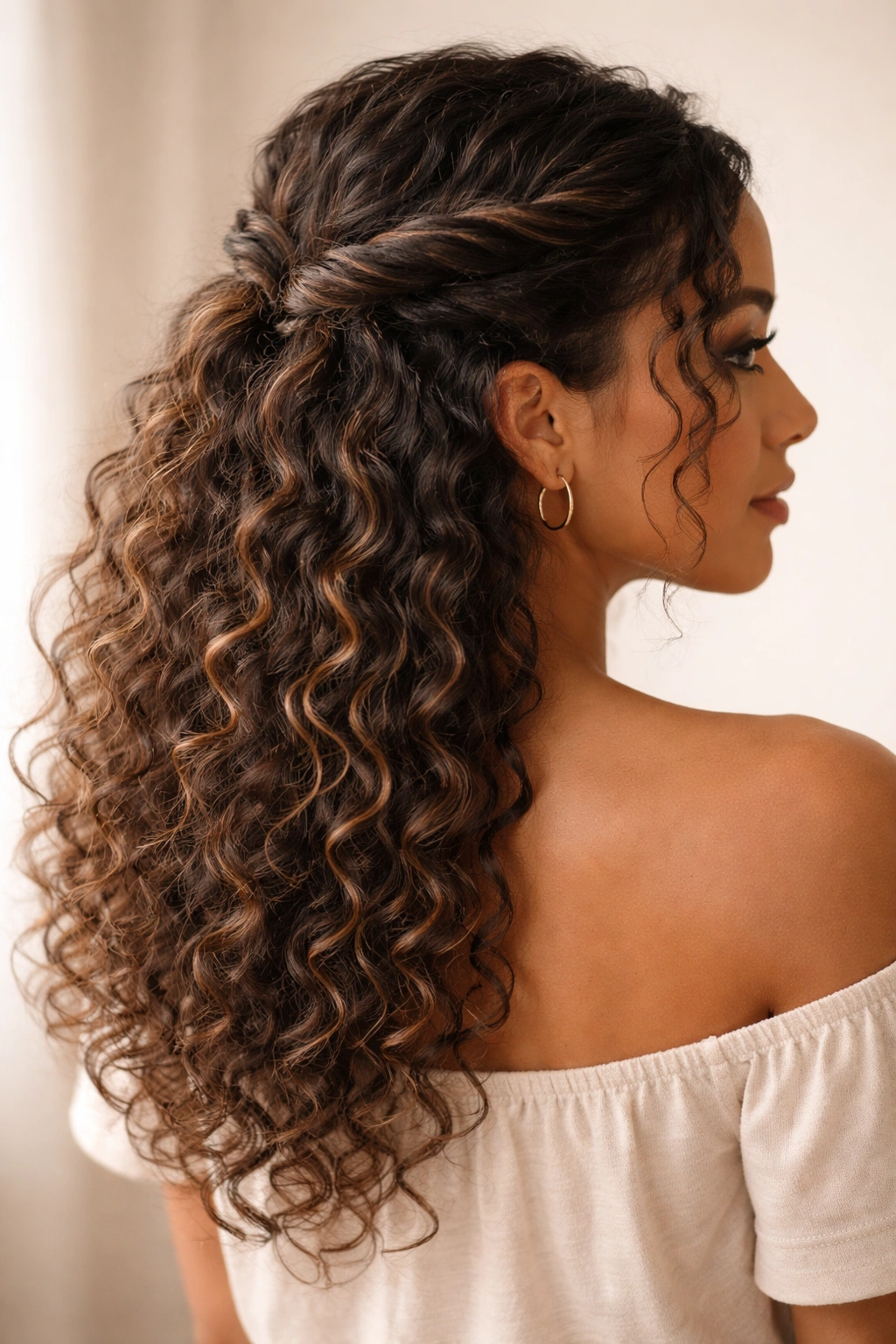
A twist-back half-up is the style I’d reach for when the front pieces are behaving and the rest of the curls already look good. Two front sections get twisted away from the face, then pinned or tied together at the back of the crown. Simple. Clean. Useful.
It works especially well on layered curls because the shorter pieces at the front can be tucked into the twist instead of falling loose everywhere. That makes the shape feel deliberate without needing a lot of product. If your hair tends to puff at the sides, a twist-back gives you control without the stiffness of smoothing everything down.
What to watch for
- Twist in the same direction on both sides so the finish looks balanced.
- Use two small pins crossed in an X if the hair is thick.
- Keep the twist loose enough that the curls still show their texture.
- Leave a little volume at the front hairline for softness.
A twist-back half-up can look casual or dressed up depending on the pin you use. That’s why it stays in rotation.
4. The Bubble Half-Up Ponytail
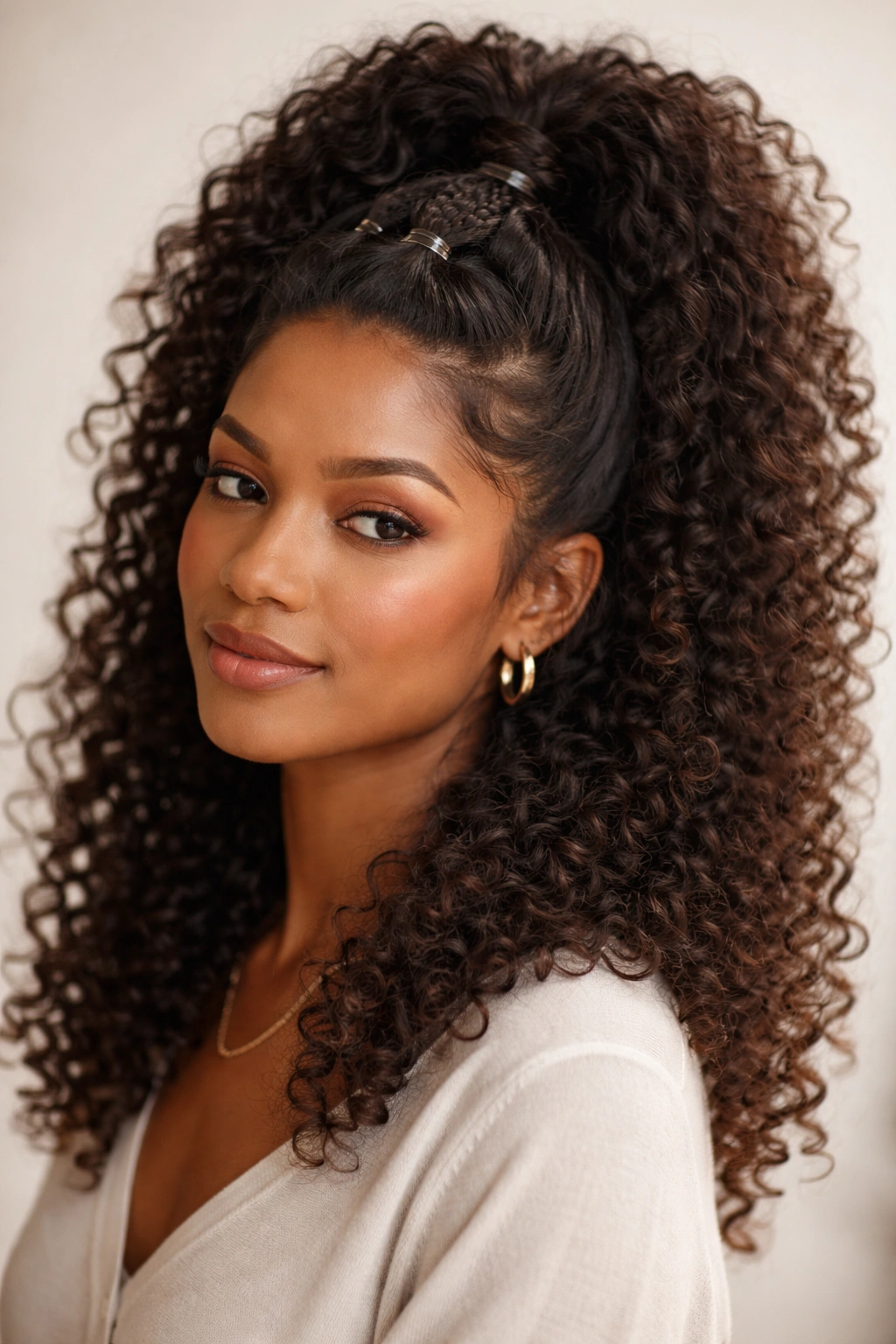
The bubble ponytail does not belong only on straight hair. On curls, it gets even better because the bubbles already have texture to hold onto, which makes the whole thing look fuller with less effort.
Pull the top section into a ponytail, then place small clear elastics every 1 to 1½ inches down the length of that section. Gently tug each segment to puff it out into a bubble. On curly hair, you do not need to stretch the pony hard. Let the texture do the work. The result looks playful, but it also keeps the crown lifted in a way that feels neat.
Best for
- Longer curls that can sit inside the bubbles without shrinking too much.
- Stretched curls, twist-outs, or braid-outs.
- Days when you want shape but not a slicked-back finish.
The bubbles should feel soft, not inflated like a balloon. If they’re too tight, the style starts looking forced. A little irregularity is fine. Actually, it looks better that way.
5. The Claw Clip Half-Up
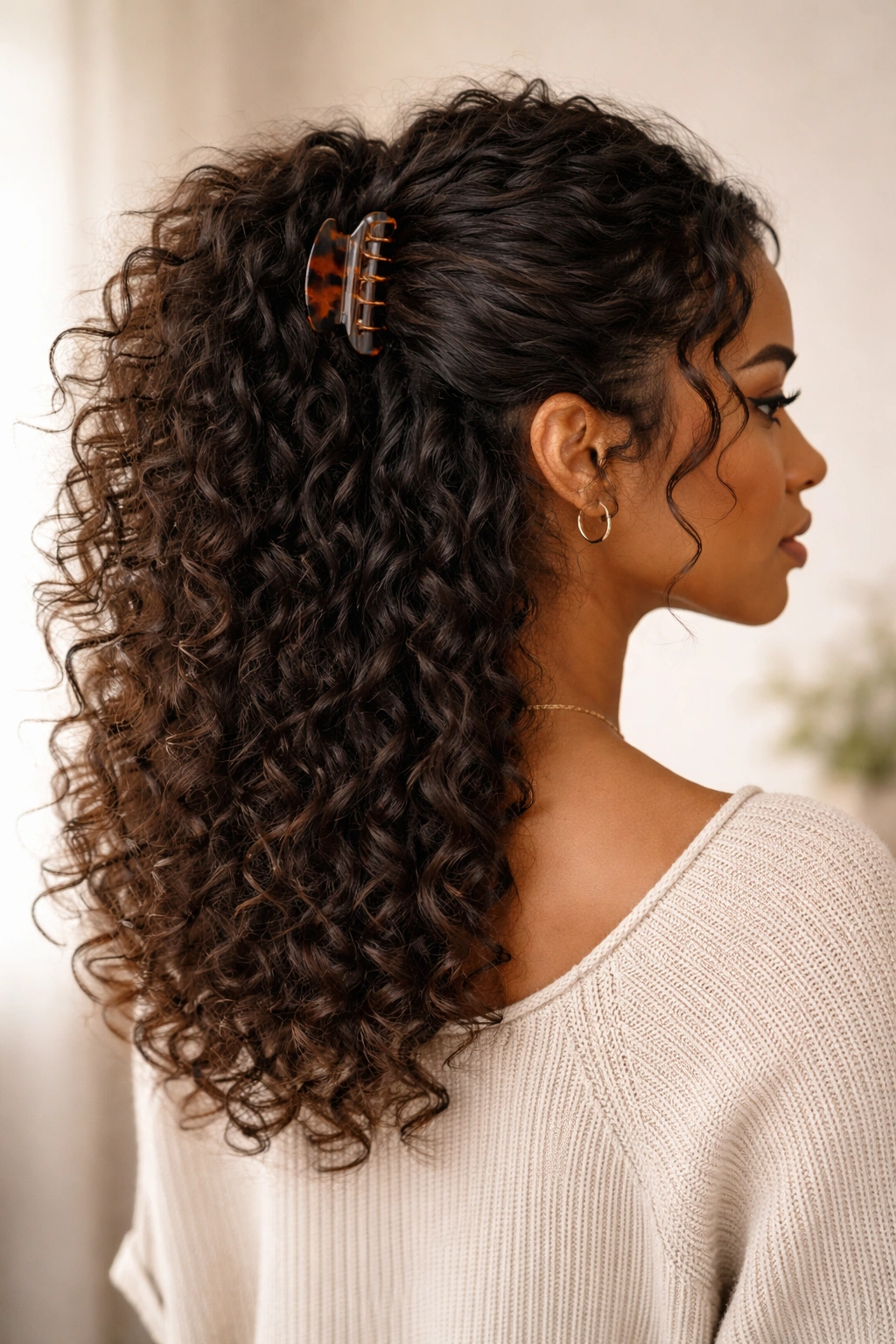
The claw clip half-up is one of those styles that looks casual until you realize how much it does for curl shape. It lifts the top section, keeps the lower curls free, and avoids the hard line of an elastic at the back of the head.
The feel matters here. The clip should sit secure, not pinch. Twist the top section once or twice, fold it upward, then close the clip over the twist so the curls fan out instead of getting crushed flat. A bigger clip usually works better than a tiny one, especially if your curls are thick or heavy with moisture.
I like this style for days when the hair is clean but not squeaky. Curls with a little slip can still be pinned, but they move better when the clip has grip. If you’re dealing with slick roots, a touch of dry shampoo or a tiny bit of texturizing spray at the crown can help the clip hold.
No need to overthink it. The charm is in the easy shape.
6. The Mini Braid Accent Half-Up
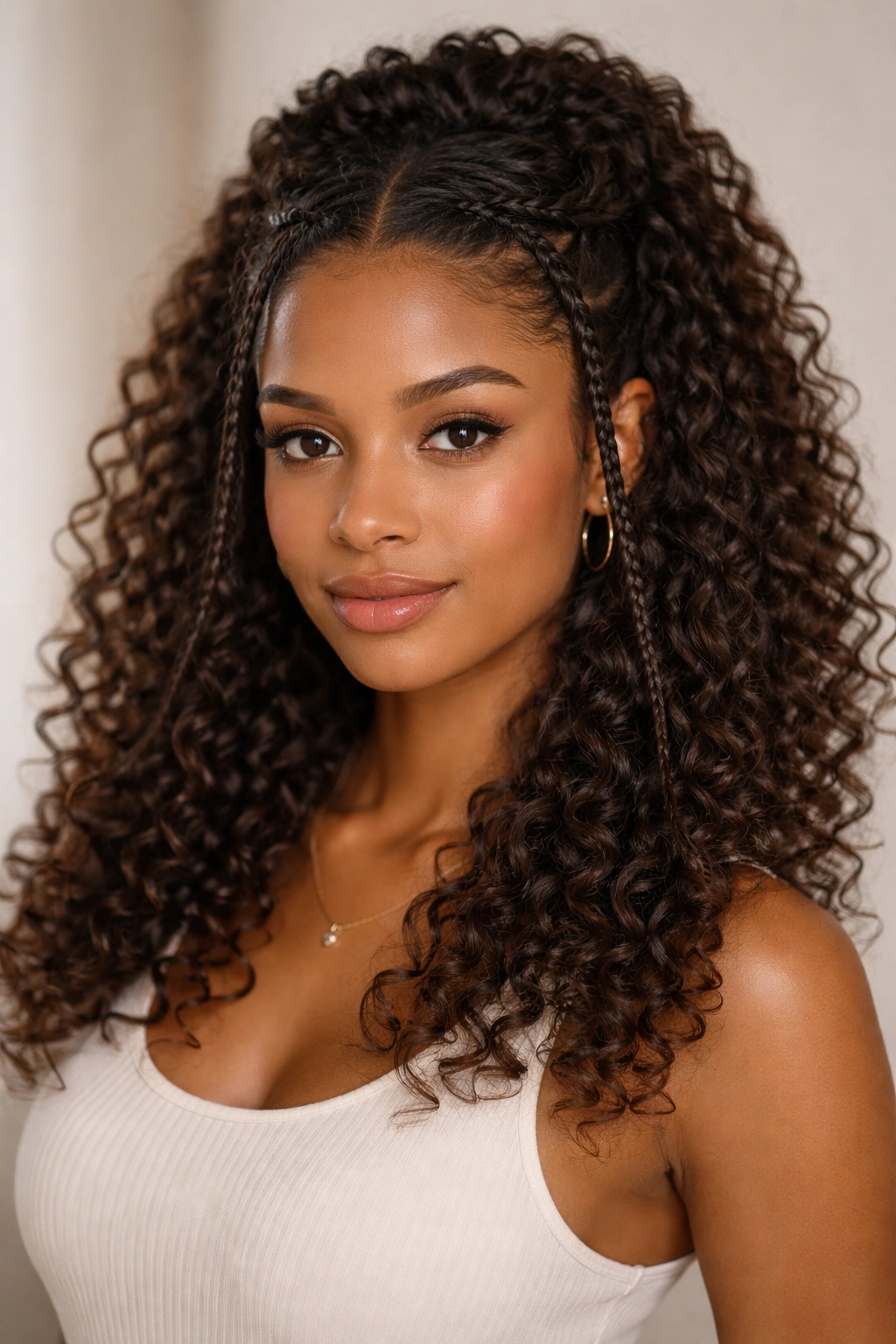
Small braids change the whole mood of a half-up style. They add line and detail near the face, which is useful when the curls are doing most of the visual work and you want the front to look finished.
Take one or two narrow sections from each temple, braid them back, then join them into a small half-up tie or pin at the back. Tiny two-strand twists work too, and they’re often easier if your curls frizz quickly. Keep the braids narrow; thick braids can crowd the crown and steal too much volume from the curls underneath.
Why it stands out
A braid accent gives the top section more structure without making the whole style rigid. That matters on curls, because curls already bring their own shape. The braids just frame that shape instead of fighting it.
- Best on wash-day hair with defined clumps.
- Good for adding grip if the front section slips out of clips.
- Easy to dress up with small gold cuffs or plain pins.
A neat braid at the front and loose curls below is a strong combination. It never looks accidental.
7. The Double Space Bun Half-Up
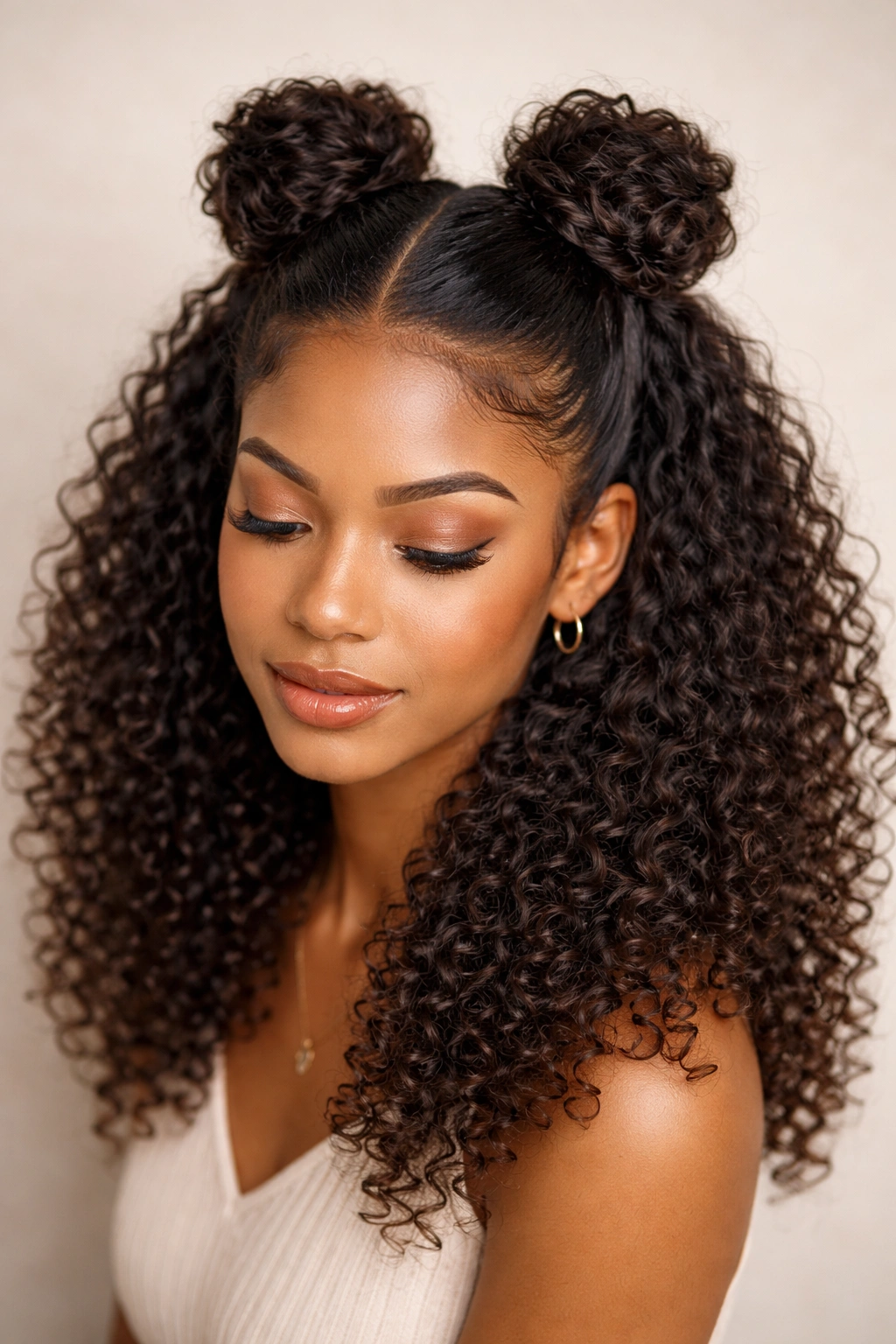
Want something playful that still leaves enough hair down to show off your curl pattern? Two small buns at the crown do the job. This style works especially well with medium to thick curls because the buns have enough hair to look balanced.
Split the top section into two halves, then twist each one into a compact bun. Secure each bun with a soft elastic, small pins, or a mini claw clip if the hair is short enough to coil neatly. Leave the rest of the hair loose and let the curls hang naturally. The contrast is the point: structured on top, free below.
This style is friendlier to dense curls than a single top knot. One bun can start to feel top-heavy; two distribute the shape and look less severe. It’s also one of the easier options when your parting isn’t perfect. The symmetry covers a lot.
Keep the buns small if your hair is short. Big buns on short curls can look lopsided fast.
8. The Rope-Twist Half-Up Pony
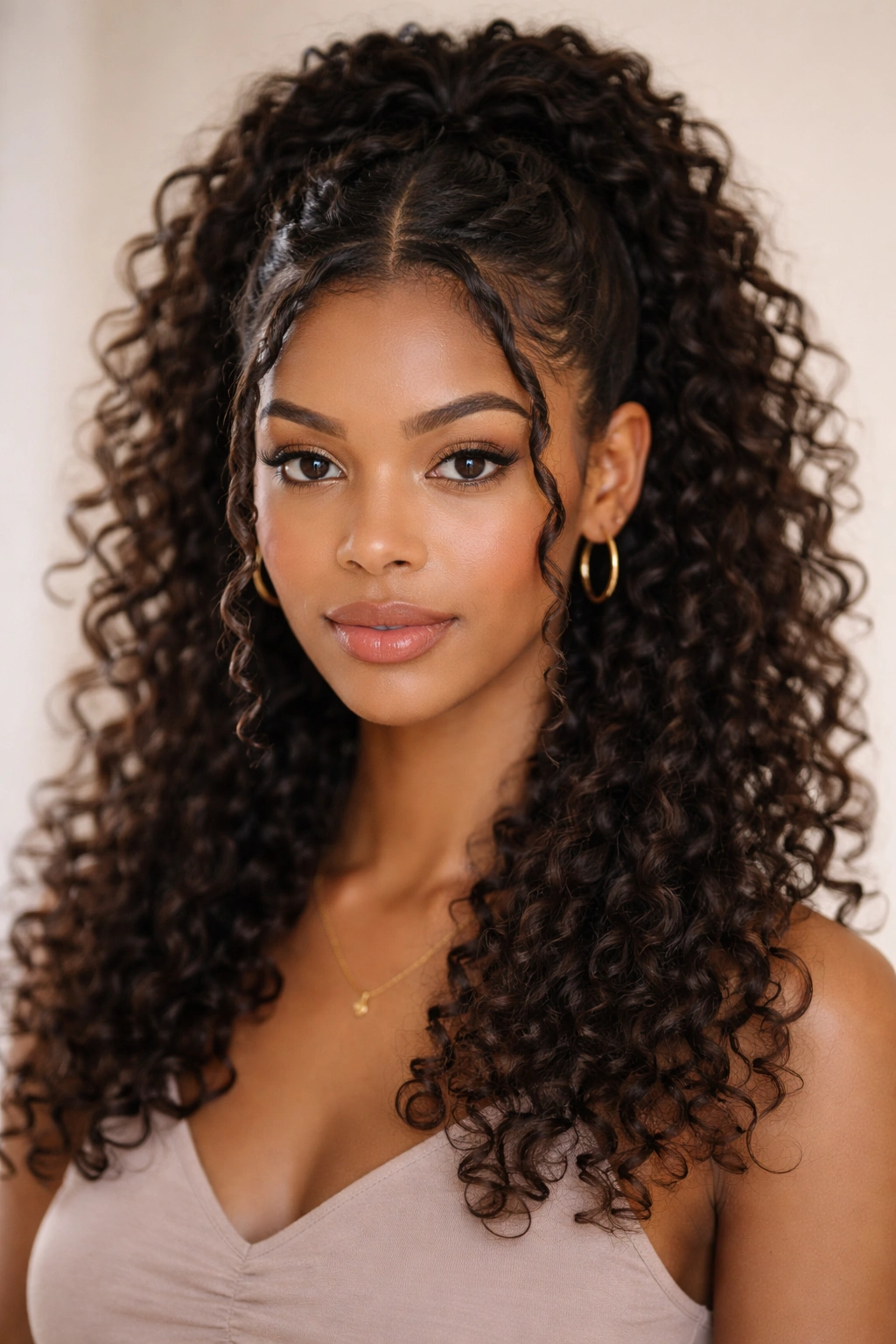
Rope twists give half-up styles a cleaner line than loose finger twists, and they hold their shape better if your hair has a little stretch. Take two sections from the front, twist each one away from the face, then wrap them around each other until they form a rope-like strand. Pin or tie them together at the back.
The effect is neat without being stiff. That matters. Curls already bring texture, so the goal is not to erase it. The rope twist just adds a visible path that leads the eye upward. If you’re wearing a deep side part, rope twists can also help balance the style so one side doesn’t feel heavier than the other.
How to keep the twist neat
- Start on detangled, lightly moisturized hair.
- Use a small amount of styling cream on the two sections.
- Twist with even tension from root to end.
- Secure with a small elastic or two crossed pins.
A rope-twist half-up looks especially good on stretched curls because the twist line stays visible longer. On tighter curls, it still works — it just reads softer.
9. The Side-Swept Half-Pin Style
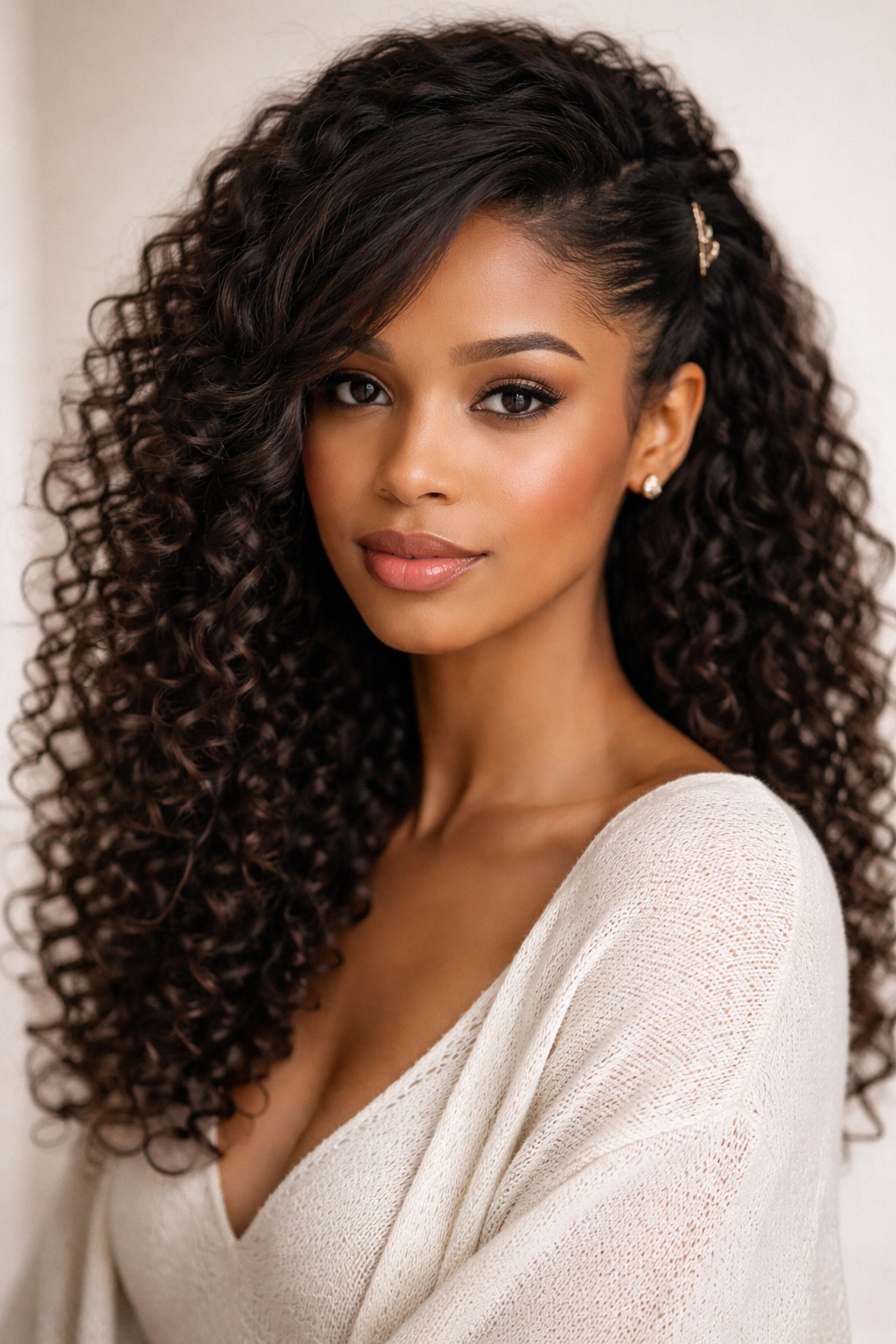
A center part is not mandatory. A deep side part can make natural curls look fuller immediately, and a side-swept half-up style uses that extra volume on purpose.
Sweep one front section across the forehead, pin it back near the temple, then let the rest of the crown lean naturally to the opposite side. The lower curls stay loose, so the style keeps movement. What changes is the balance. You get a little drama without needing a lot of height.
This look is especially useful when one side of the hair is behaving better than the other. Curls are not always symmetrical, and pretending they are usually makes the style worse. Side-pinning lets you work with the shape you’ve got that day.
A flat pin, a decorative barrette, or a small invisible bobby pin can all work here. Use the one that disappears best into your texture. That’s the detail that makes it look intentional.
10. The Sleek Top Half-Up Pony
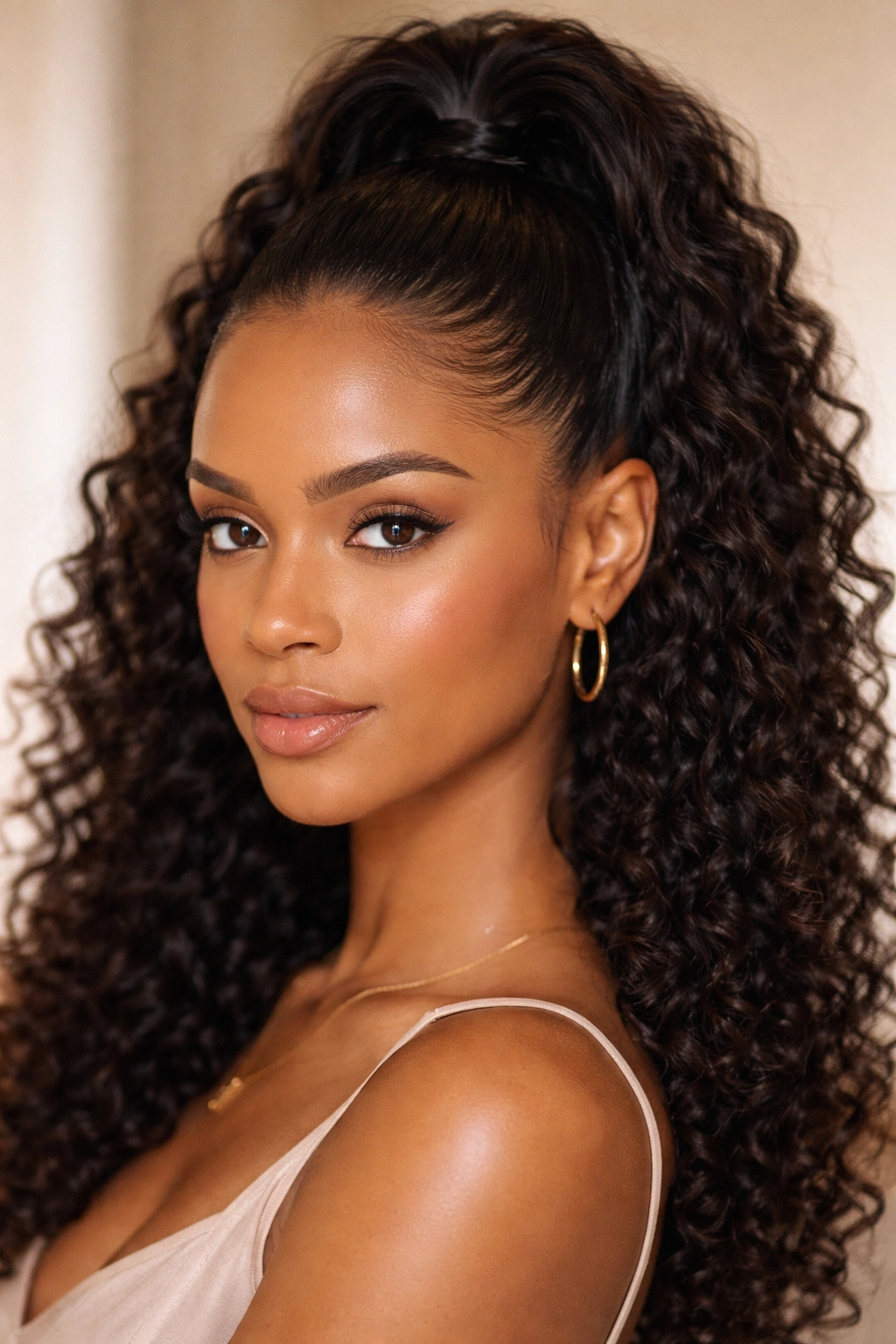
The top section glossy, the lower curls springy. That contrast is what makes this style feel sharp.
Brush the top section back with a soft bristle brush, use a small amount of gel or edge control only where you need it, and secure the half-up pony at the crown. The lower hair stays untouched except for a little shaping around the face. It’s one of the few half-up styles that can look genuinely dressy without asking your curls to behave like something they’re not.
What it’s best for
- Events where you want a cleaner neckline.
- Curl patterns that hold definition well once dry.
- Hair that gets bulky fast around the crown.
Do not smooth the whole head. That’s the mistake. Keep the styling product on the top section only, and leave the rest soft so the style doesn’t lose its texture. A satin scrunchie works well here because it won’t dent the pony too badly.
If flyaways pop up, leave some alone. A few tiny frizz halo hairs make the style look human, not shellacked.
11. The High Puff Half-Up
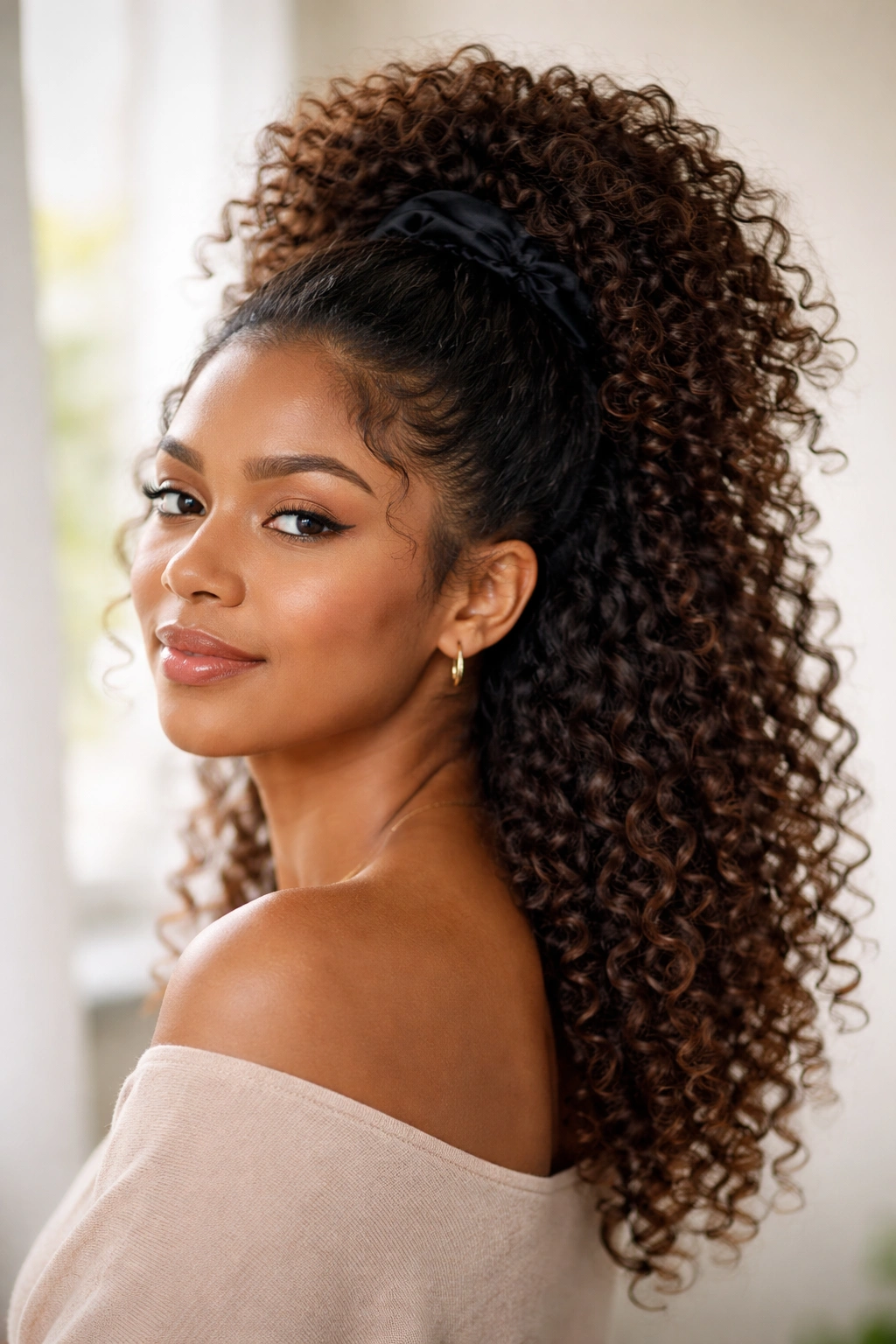
A high puff isn’t always a full updo. When you leave the bottom section down, it becomes one of the most forgiving half-up options for tighter curls and coils.
Gather the top section high and secure it with a satin or stretch band that won’t snag. Then fan the puff upward so it sits full and round. The lower curls or coils remain loose, which keeps the look from feeling too severe. It’s a smart shape when you want height at the crown and softness around the shoulders.
Where to place the band
Place it where the head starts to curve upward, not too far forward on the forehead. Too low, and the puff loses lift. Too high, and the front can look pinched. Right at the crown is usually the sweet spot.
This style also handles a little shrinkage better than most. Tight curls naturally compact, so the puff shape looks full even when the hair is not stretched. If you want a cleaner edge, use a soft brush to smooth just the perimeter before tying it off.
Simple. Bold. Reliable.
12. The Half-Up Bun With Curly Fringe
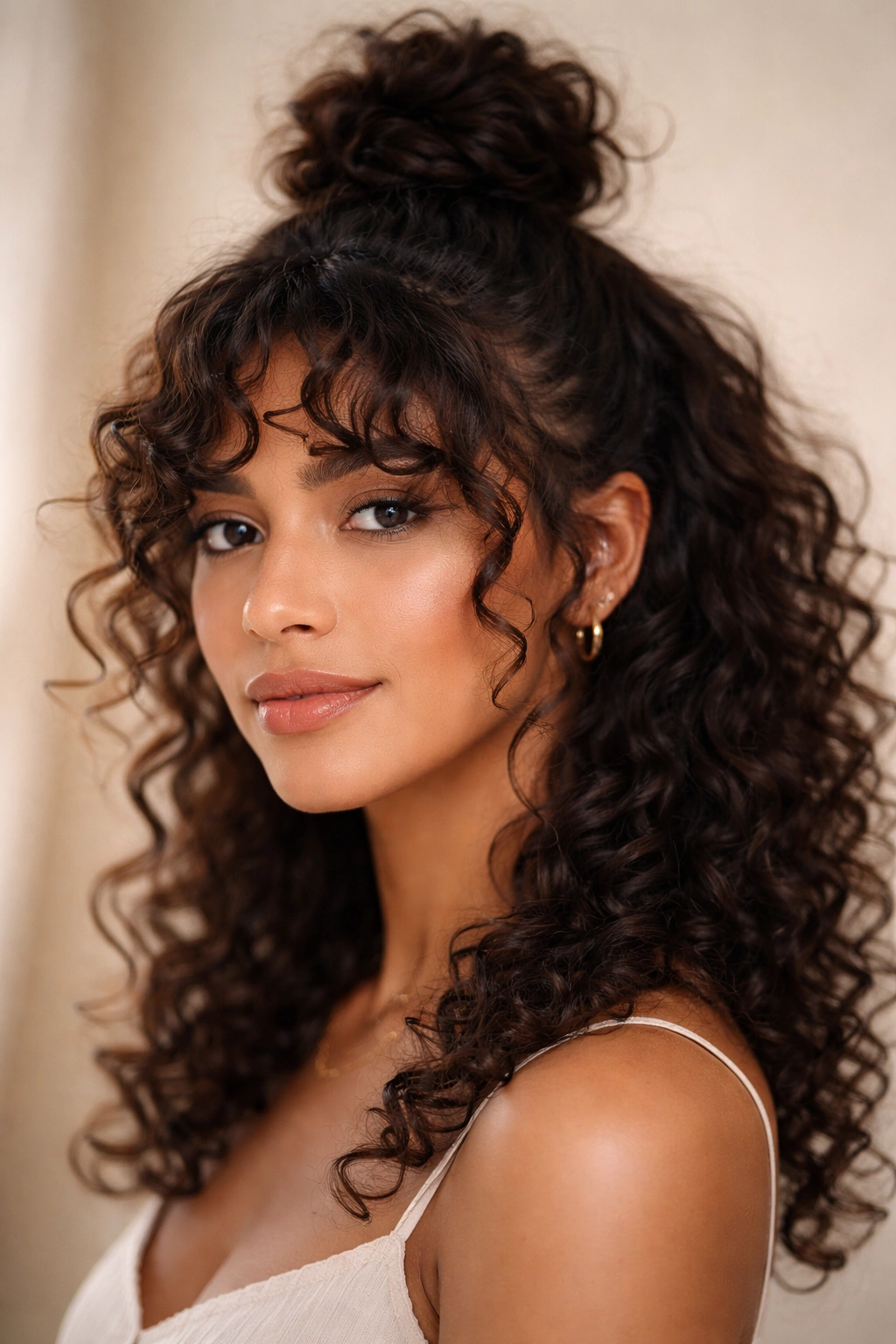
What if you want height without putting all the hair up? The half-up bun is the answer, but it works best when you leave some front curls free on purpose.
Pull the top section into a bun at the crown, twist it loosely, and let a few pieces fall around the face. Those face-framing curls matter more than people think. They keep the bun from looking too formal and give the style motion. If your curls are long, the bun can be chunky and sculptural. If they’re shorter, keep it compact and let the texture do the heavy lifting.
This look is especially good when the front curls are defined and the ends are a little frizzier. That sounds like a flaw, but it isn’t. The bun catches the eye first, and the loose fringe softens the whole thing.
Do not over-smooth the curls you leave out. A little separation around the cheekbones makes the style feel fresh instead of overworked.
13. The Crown Braid Half-Up
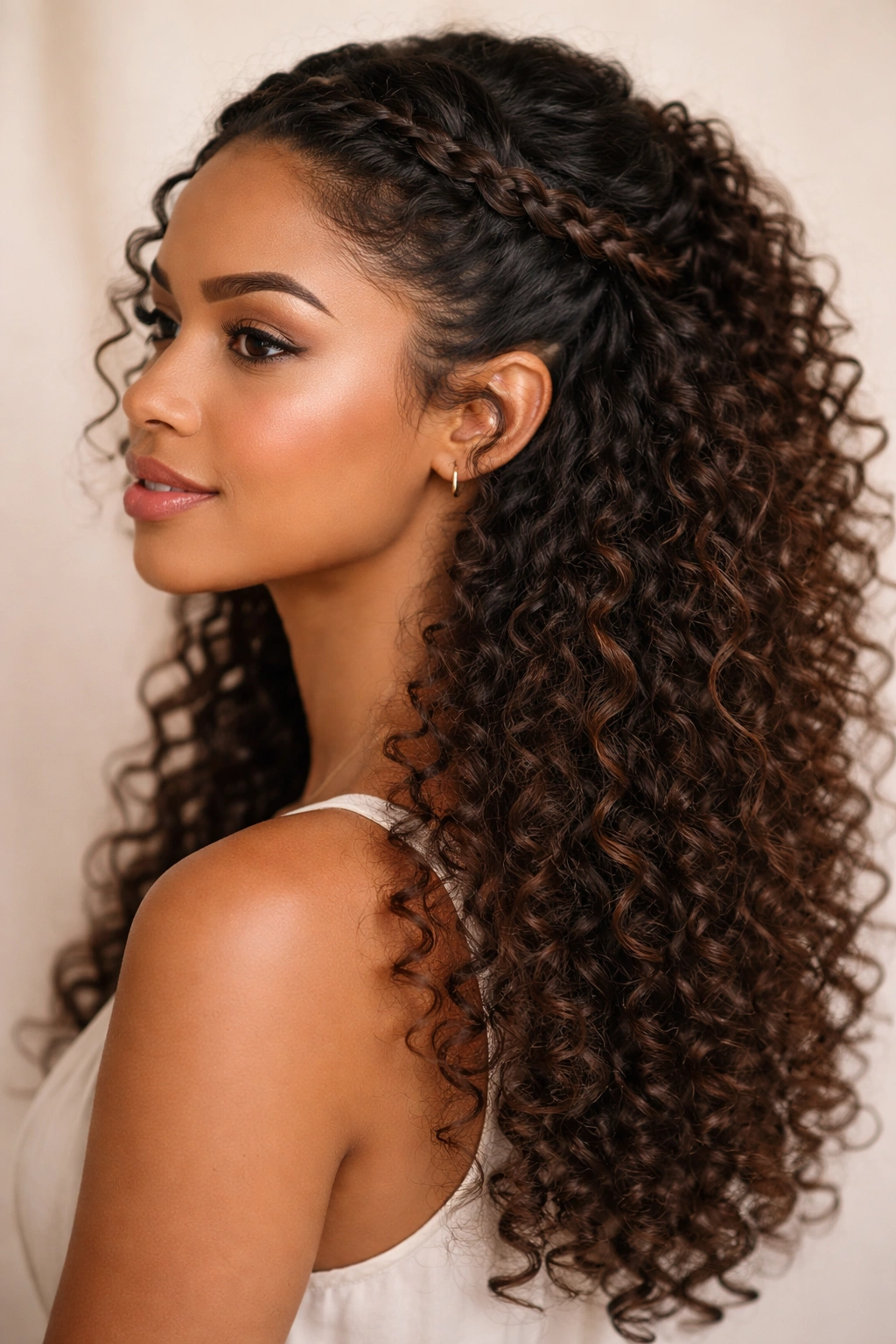
A crown braid gives natural curls a stronger shape than a simple twist, and it holds especially well on hair that has some grip from styling cream or gel. Braid along both sides of the head, following the hairline back until the braids meet or nearly meet at the crown, then secure the rest into a half-up section.
This style takes longer than the quick ones, and I wouldn’t pretend otherwise. But the payoff is real. The braid creates a built-in frame, which means the curls below can stay loose without the top looking unfinished. It also keeps smaller front pieces under control, which is helpful if you’ve got layers that refuse to behave.
Why it stays put
- The braid anchors into the hairline instead of floating on top.
- It gives the style more structure than a simple pin-back.
- It holds better on medium-density curls than loose twisting does.
If your arms get tired midway through, stop and reset. A crooked crown braid is harder to forgive than a messy twist. Better to take your time and keep the line even.
14. The Scarf-Wrapped Half-Up
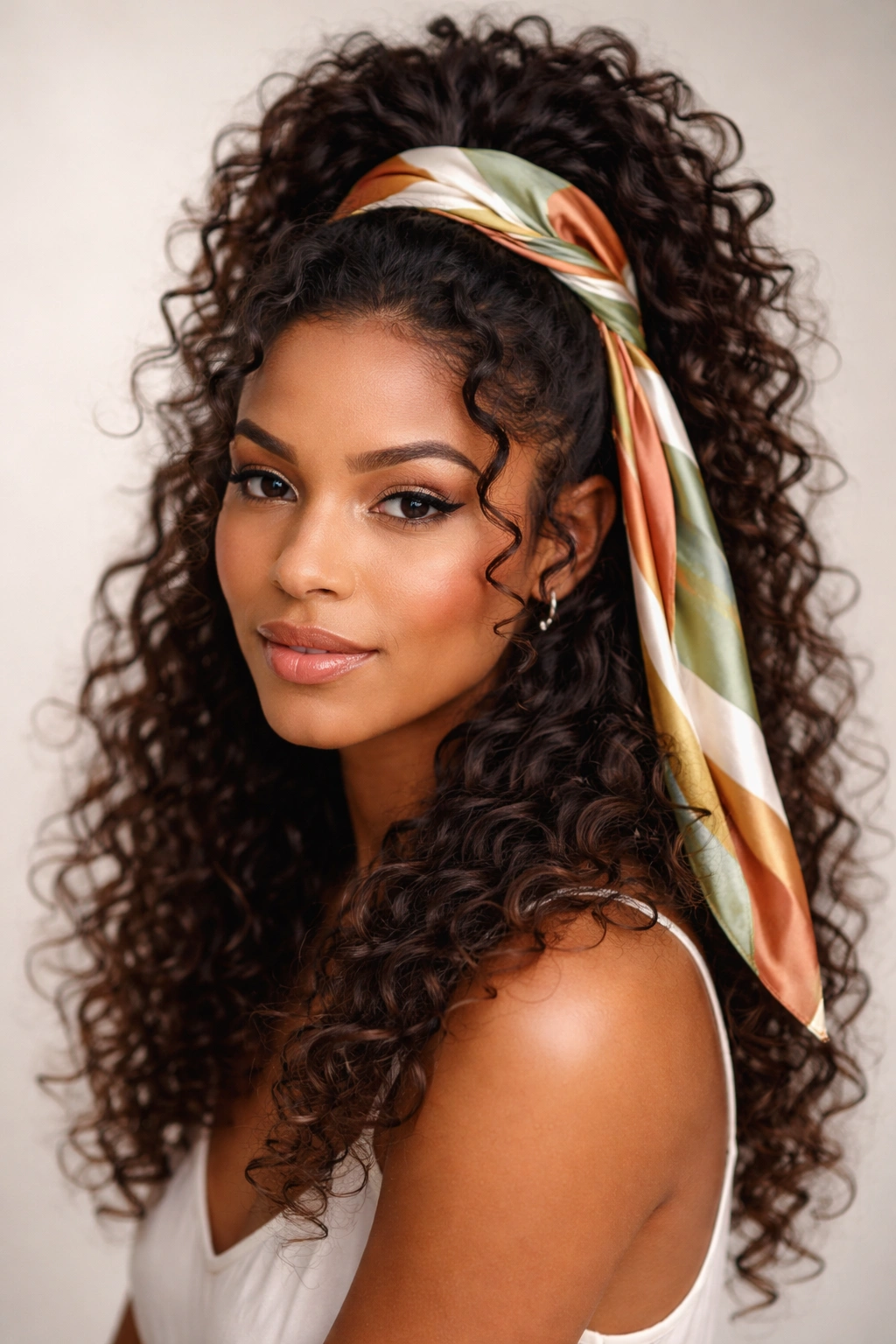
A scarf can do more than hide a bad hair day. Wrapped around a half-up section, it adds color, keeps the top from slipping, and gives curls a soft frame without a lot of manipulation.
Fold a satin or silk scarf into a narrow band, then tie it around the base of the half-up section. You can leave the knot at the crown, tuck it underneath, or knot it off to one side. The rest of the hair stays down. The scarf is doing two jobs: decoration and support.
This works well on humid days, on second-day curls, and on styles that need a little personality fast. A scarf also helps cover elastic lines if the top section has been tied more than once and starts to show a dent. Use a fabric that slides gently over the hair instead of dragging on it.
One caution. Do not tie it so tight that the top section flattens. A scarf should frame the curl shape, not squeeze it out of existence.
15. The Invisible Pin Half-Up
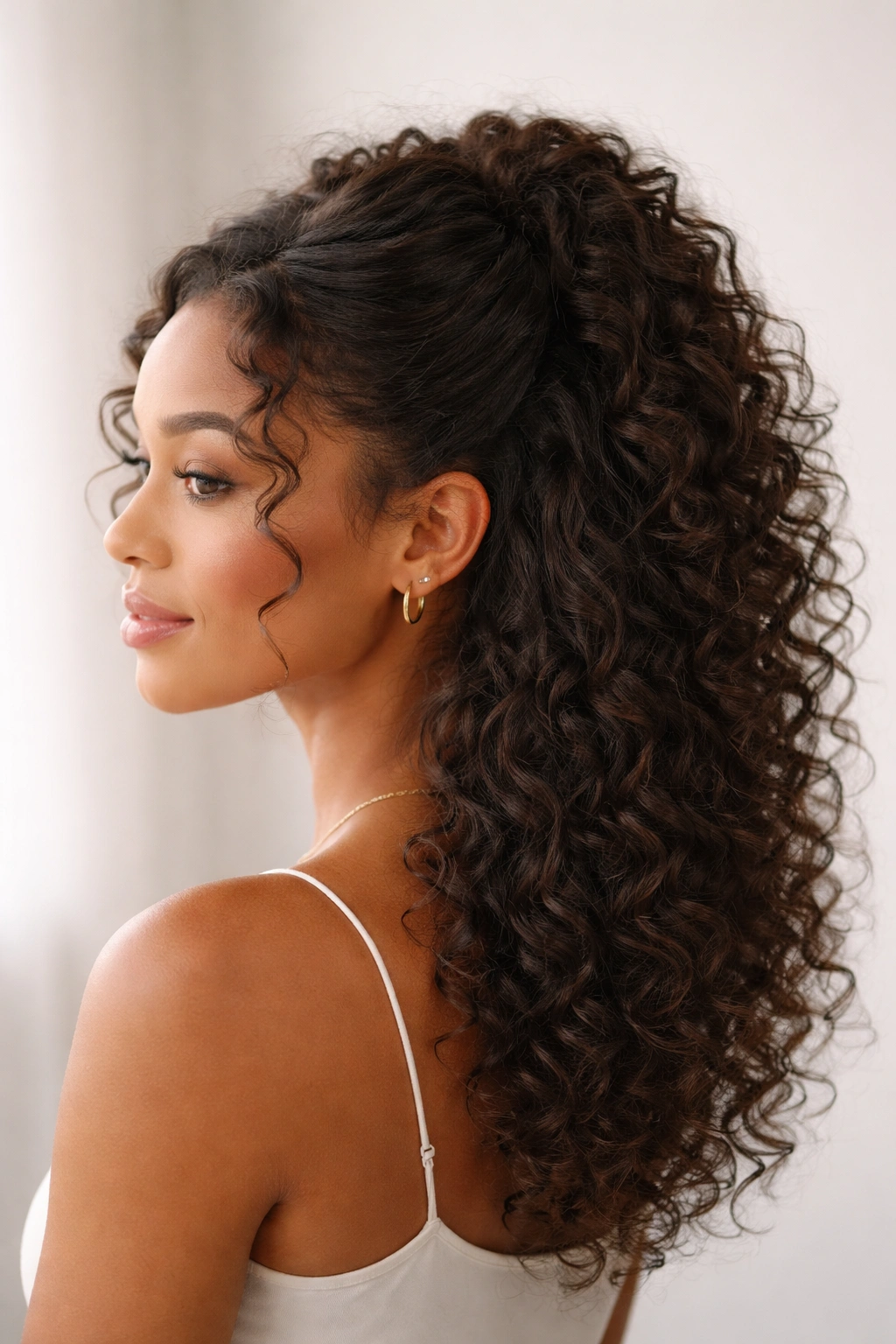
There’s something satisfying about a style that looks like it took effort but hides most of the hardware. That’s what invisible pinning does.
Take the top section, lift it slightly at the crown, and secure it with bobby pins crossed underneath so the pins disappear into the curls. The finish is soft and a little airy. You see the shape first, not the tools. On dense curls, this can look cleaner than a visible clip. On looser curls, it creates a lighter, less obvious hold.
Use pins that match your hair color if you can. And slide them in the opposite direction of the hair pull before turning them back toward the scalp — that little cross motion helps them stay locked. If the top section is especially slippery, mist the roots with a bit of dry texturizing spray before pinning.
This is a quiet style. No big accessories. No heavy line across the back. Just lift, shape, and let the curls speak.
16. The Flat-Twist Half-Up
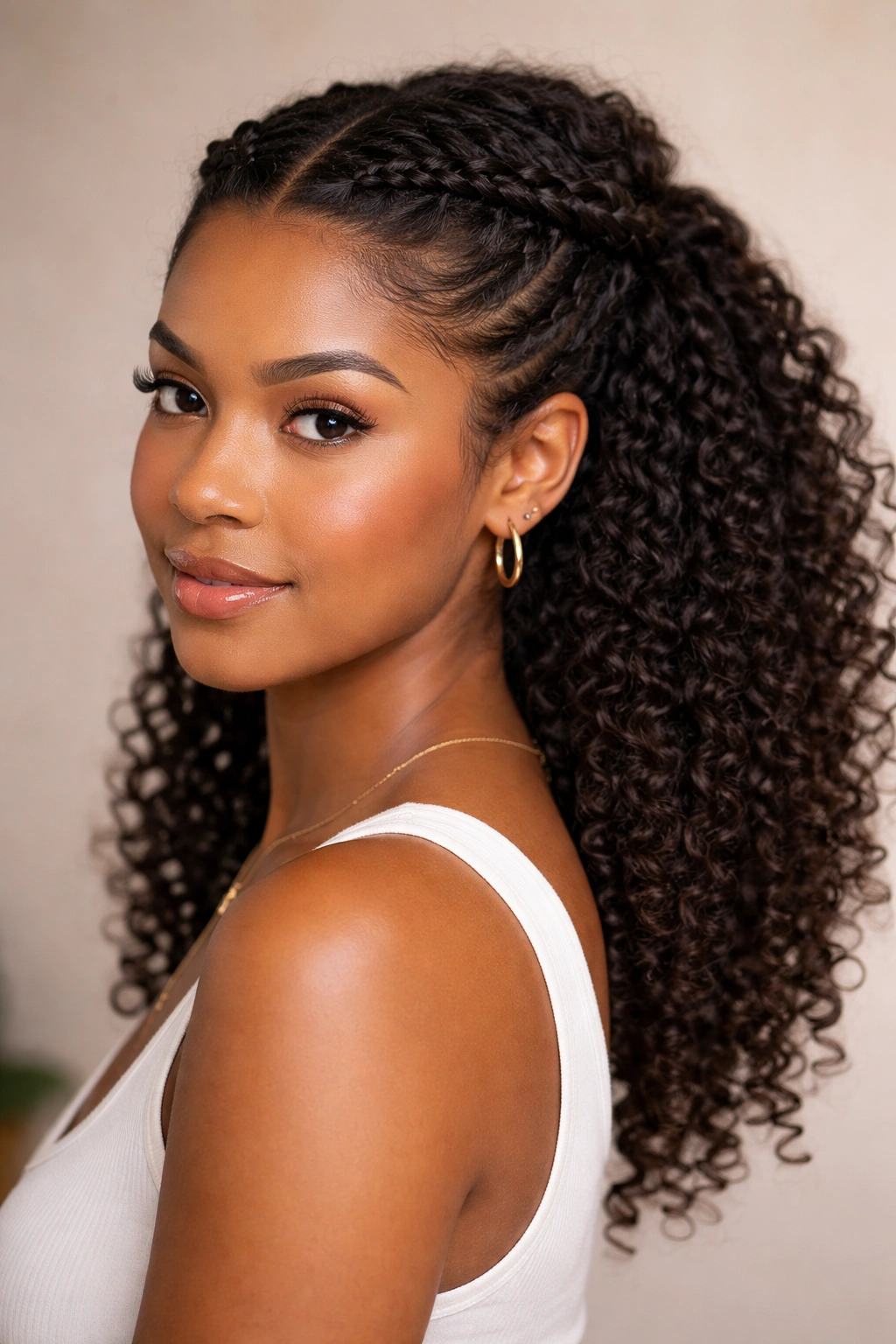
Flat twists are one of my favorite half-up choices for thicker curls because they keep the sides tidy without making the top section look hard or overbuilt. Two flat twists, one on each side, can be brought to the back and secured into a half-up knot, pony, or small clip.
They sit closer to the scalp than regular twists, which gives the style a cleaner profile. That makes them useful when your curls are dense and you want the half-up shape to stay close to the head rather than puffing out too much. They also hold longer than loose twists when the hair is hydrated and slightly stretched.
Tiny details that help
- Part clean sections with a tail comb or the end of a rattail brush.
- Apply a small amount of cream or gel only to the section you’re twisting.
- Keep the twist flat against the scalp from root to mid-length.
- Secure the ends where they won’t rub against the neck.
Flat twists can look sporty, elegant, or both. Depends on the accessory. Depends on your mood.
17. The Barrette Stack Half-Up
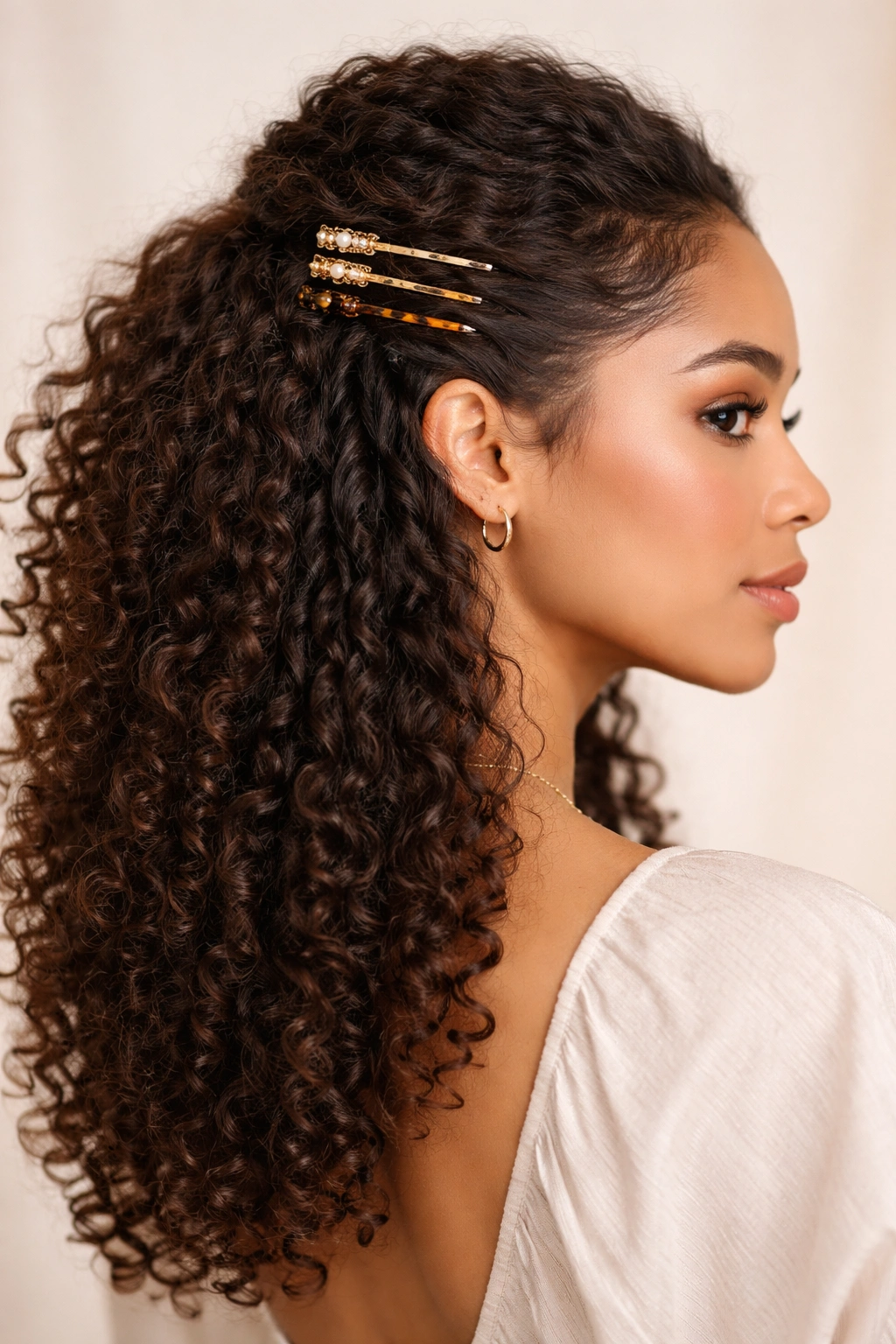
If you need a style that looks deliberate with almost no styling time, stack barrettes on one side of the half-up section and call it done.
Pull back a small upper section, pin it with one barrette, then add a second or third just below it. The stack creates a line that looks styled even if the curls beneath are doing whatever they want. On natural curls, that contrast works because the hair already has enough texture to make the barrette arrangement feel part of the look, not an afterthought.
Picking the hardware
- Matte metal reads cleaner on tight curls.
- Resin or tortoiseshell feels softer and more casual.
- Tiny snap clips work when the top section is very short.
- Larger decorative barrettes help if the hair is thick and the style needs visual weight.
Don’t crowd the pins too close together. Leave a little breathing room between each piece so the stack reads as a shape, not a pile of accessories. One side gets the focus. The rest of the curls stay free.
That asymmetry is the charm.
18. The Low Knot Half-Up for Short Curls
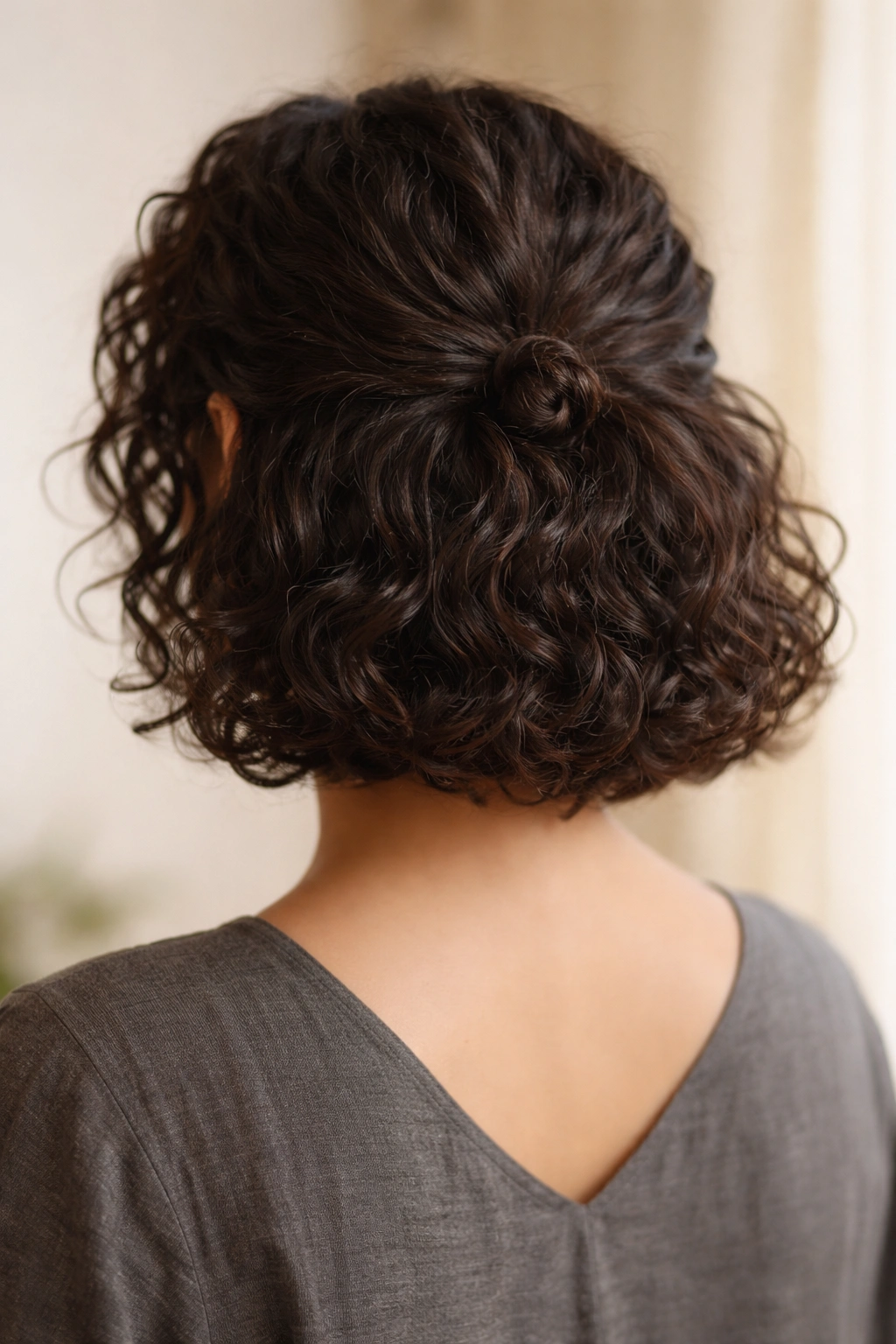
Shorter curls can fight tall half-up styles, and this is where the low knot comes in. Instead of reaching for height you don’t really have, gather the top section at the back of the crown, twist it into a low knot, and let the rest of the curls frame the shoulders.
It’s especially good for shoulder-length curls, bob-length curls, or any cut with a lot of layers that want to spring out of a high tie. The lower placement keeps the look neat without stretching the top too far. It also prevents that awkward little bump that happens when a high half-up only grabs part of the top and leaves the rest hanging loose in a weird way.
Use a tiny elastic first, then wrap the twisted section around itself and pin it with U-pins or crossed bobby pins. The knot should sit compact, not bulky. If the hair is fine, tease the section lightly before twisting so it has more hold.
Simple shape. Less fuss. Better proportions.
19. The Stretched-Curl Half-Up
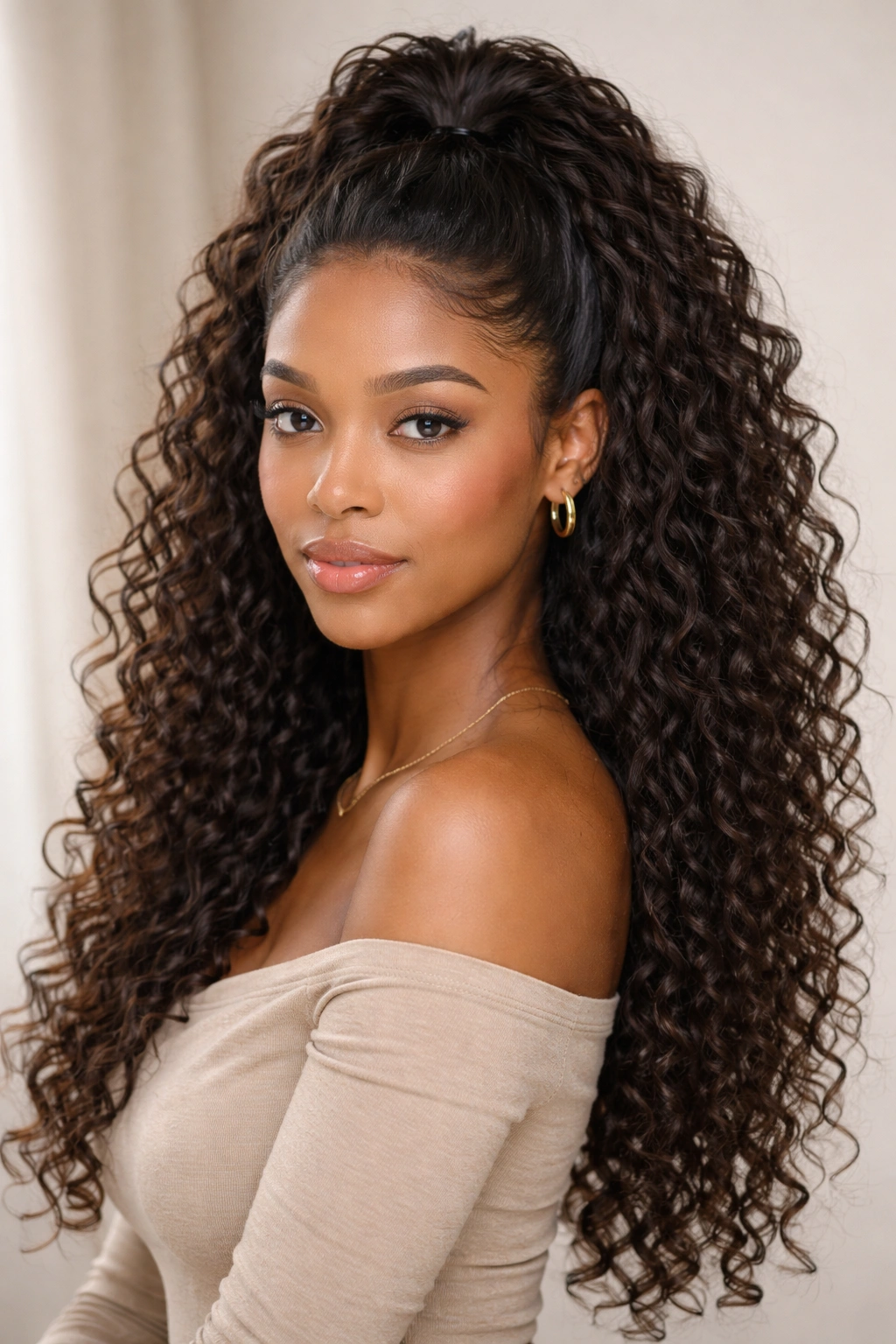
You do not need perfect definition for a good half-up style. Stretched curls — from twist-outs, braid-outs, banding, or gentle blow-drying — can make the top half-up look fuller and longer.
This style works because the curls have less shrinkage, so the shape reads a little more elongated and a little more dramatic. Pull the upper section back loosely, secure it with a soft elastic or pin, and let the remaining length hang with its stretched texture intact. The result is less compact than a coil-heavy style and often easier to dress up.
Best prep
- Make sure the hair is fully dry before styling.
- Separate the curls with dry hands or a tiny bit of oil.
- Keep tension light at the roots so the style doesn’t flatten.
- Use a satin scrunchie if you want to avoid a hard line.
This is a smart choice when you want the style to show length. It also works well if your curls tend to shrink upward and you’d rather keep some visible drop around the shoulders.
20. The Event-Ready Voluminous Half-Up
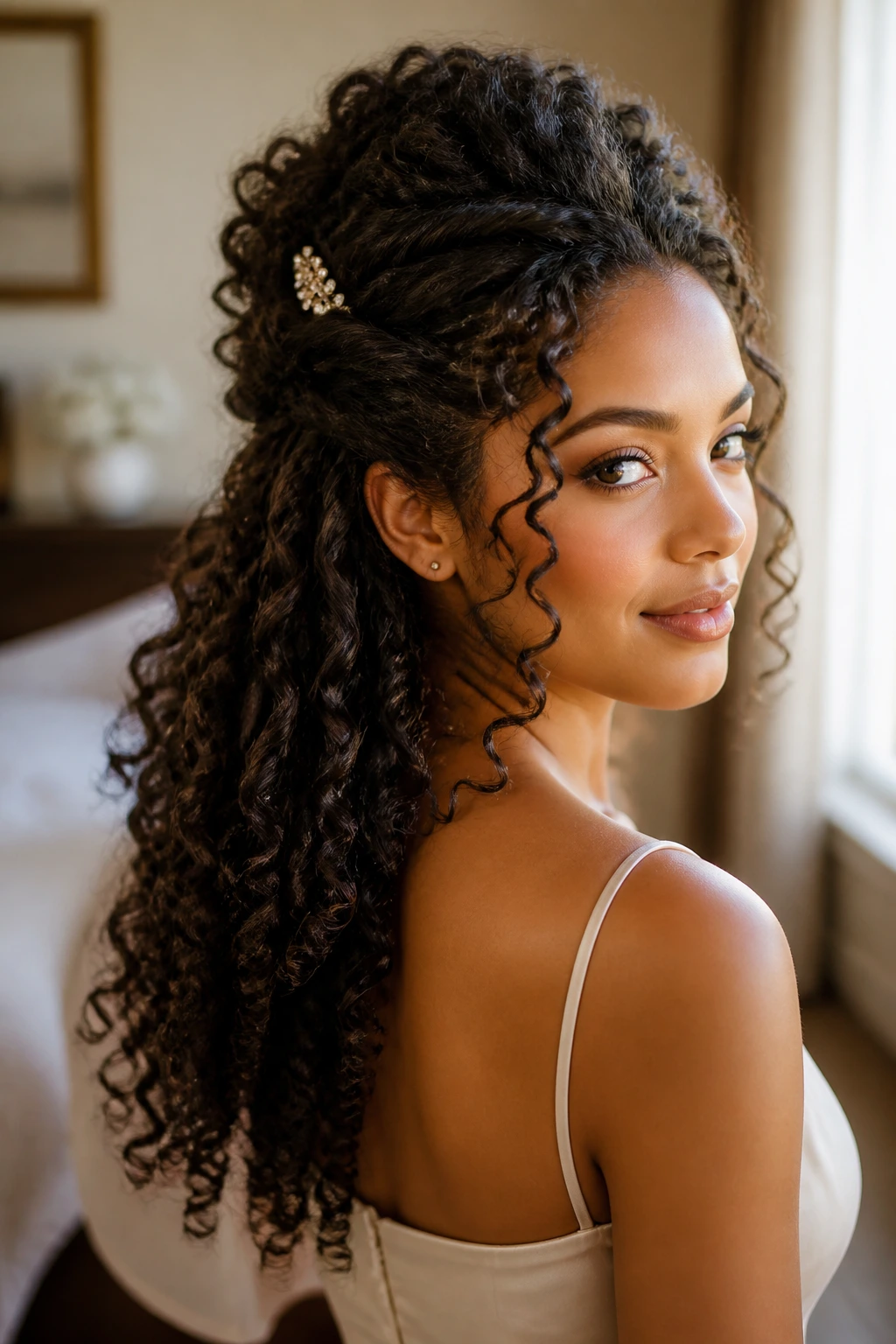
For a dressier look, I keep coming back to a voluminous half-up with a little structure at the crown and plenty of curl left down below. It can be built from twists, pins, a small bun, or a clipped top section, but the goal is always the same: lift the top without flattening the texture.
Start by creating height at the crown. Then shape the sides so they flow back instead of puffing outward at random. A decorative pin, a pair of soft twists, or a hidden clip can keep the top secure while the lower curls remain full and visible. This is the version that works for dinners, photos, weddings, and anything where you want your curls to look intentional without feeling stiff.
A little shine cream on the ends helps. So does separating the curls at the very end with dry fingers instead of a brush. That last part matters more than people think. Brushes can turn a polished shape into a frizzy one in about ten seconds.
If you only keep one idea from all of this, keep this: the best half-up styles for natural curls protect volume instead of chasing control. That’s the difference between a style that lasts and one that spends the afternoon falling apart.
