



A long curly wig can look expensive, soft, glamorous, or a little too much for the room. The difference usually isn’t the curl pattern itself. It’s where the part sits, how the weight falls, and whether the front has any shape.
Long curly wig hairstyles work best when they give the hair a job to do. A clean middle part opens the face. A side part adds drama. A half-up style keeps the crown from feeling heavy. If you’ve ever worn a dense curly wig and felt like the hair was wearing you, you already know why that matters.
Balance matters.
There’s also a practical side people skip. Longer curls need a bit of structure, especially at the hairline and crown, or they start to look wide instead of polished. A good wig grip, a decent lace melt, and a few well-placed pins can make a style look intentional instead of like you grabbed the hair and hoped for the best.
1. Center-Parted Waterfall Curls
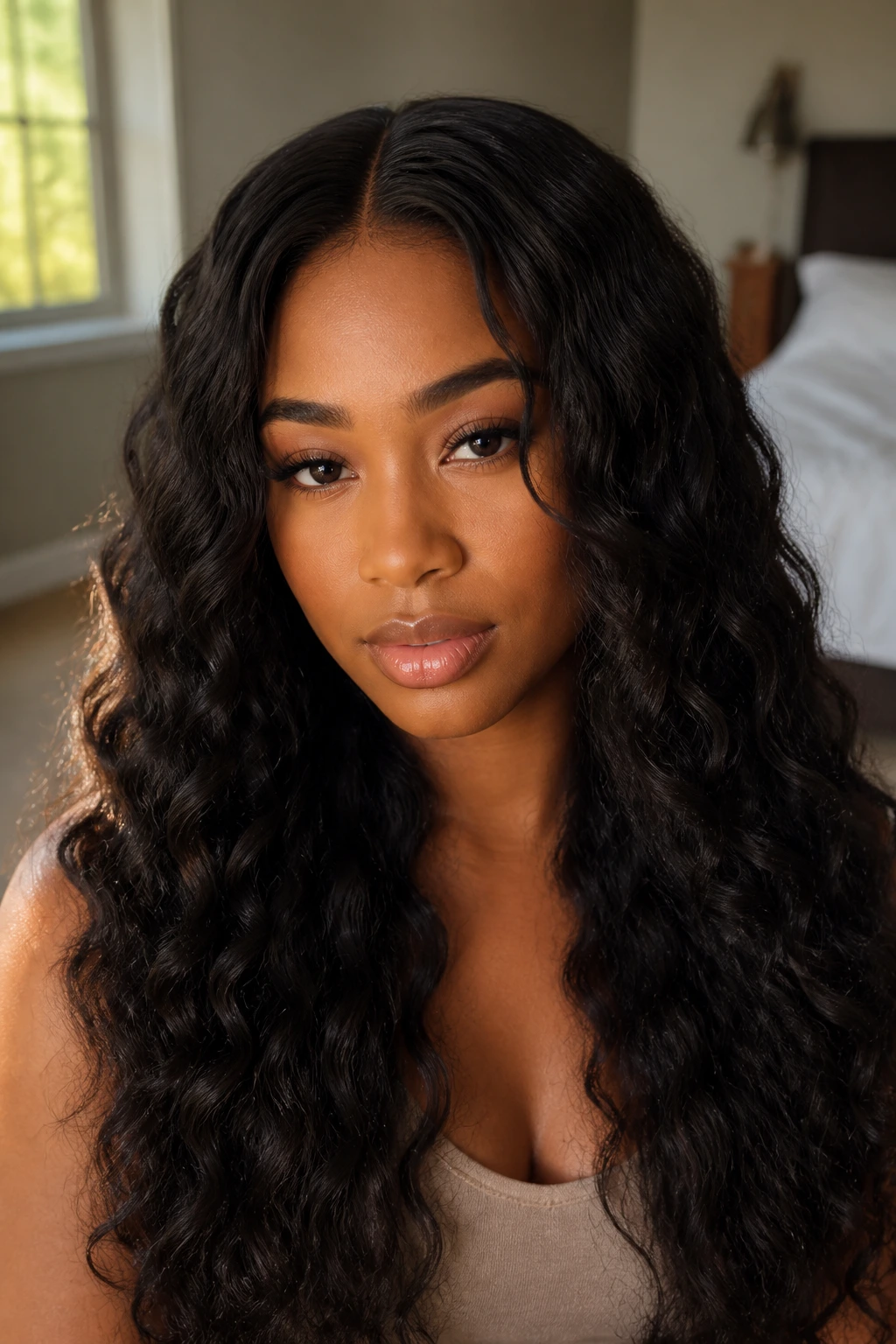
A center part is the easiest place to start, and I mean that in the best way. It gives long curls a clean line down the middle, which keeps all that length from swallowing your face. On a curly wig with layers, the result is soft and balanced, with the curls falling in loose sheets instead of bunching up on one side.
This style works especially well when the wig has face-framing pieces that start around the cheekbone or jaw. That little bit of shape around the front stops the look from feeling too uniform. If the curls are tight, the middle part also breaks up the density just enough so the hair reads as movement, not bulk.
Simple. Clean. Reliable.
For the best finish, flatten the roots at the part with your fingers or the tail of a comb, not a brush. A brushed-out center can get puffy fast, and then the whole style starts to feel bigger than you wanted. Leave the ends alone. The charm here is in the drop of the curls, not in making them perfect.
2. Deep Side Part Glam Curls
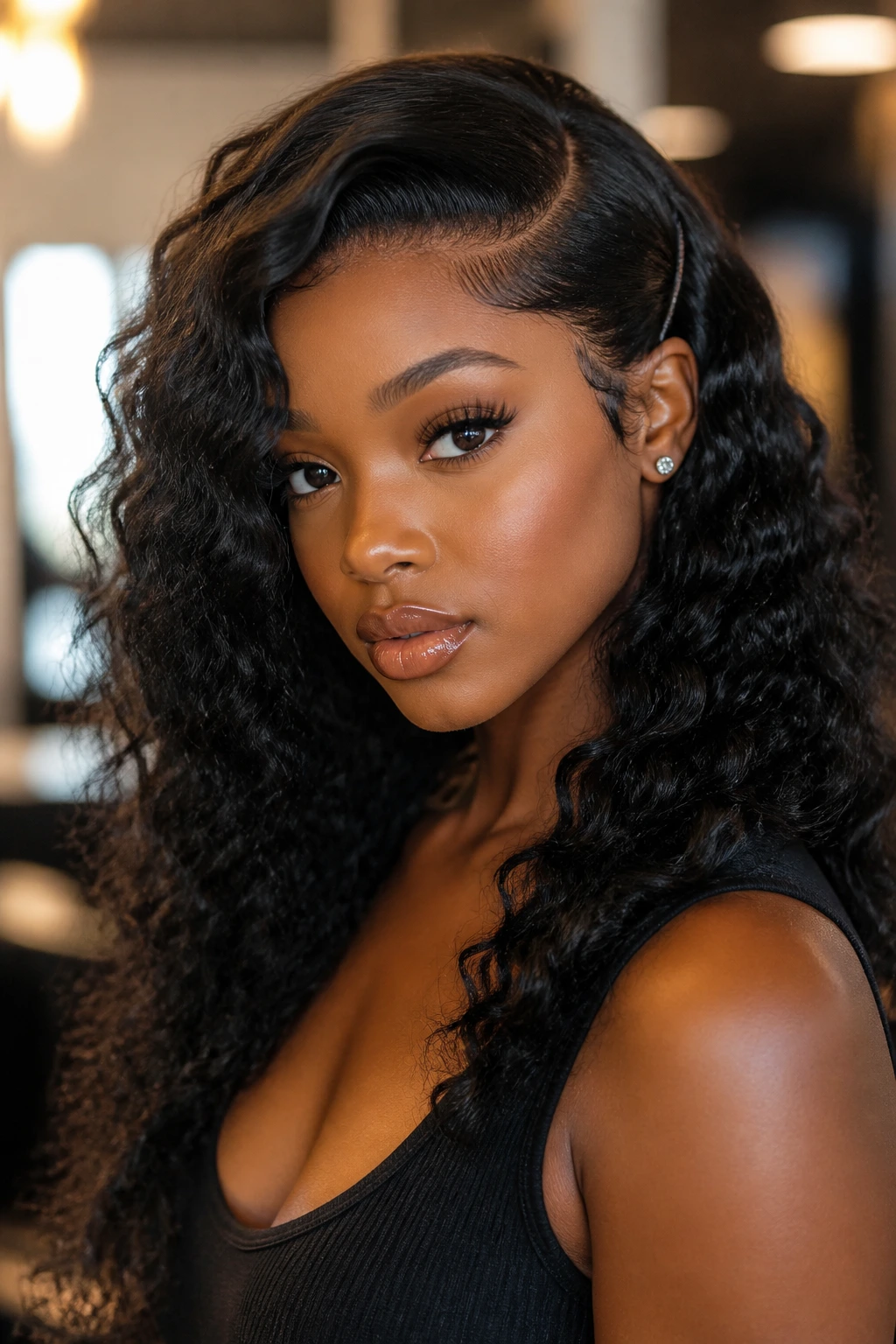
A deep side part is the fastest way to make long curly wig hairstyles feel dressed up. It shifts the volume to one side, opens the other side of the face, and gives the whole look a little more attitude. The result is dramatic without needing a lot of extra work.
Why It Flatters So Well
That off-center line pulls attention upward and creates lift at the crown, which is useful if the wig feels heavy or sits flat near the top. It also softens rounder face shapes by drawing the eye diagonally instead of straight down. That diagonal line matters more than people think.
On a long curly wig, I like the part about 1.5 to 2 inches off center. Any farther and the front can start to collapse into one heavy side. Any closer and you lose the point of the style.
Tiny Details That Make It Better
- Pin the heavier side back with one hidden bobby pin near the temple.
- Tuck a small section behind one ear so the face stays visible.
- Keep the roots smooth and let the lengths stay full.
Tip: If the wig has a lace front, shape the part before you add product. Once the curls are coated, the part is harder to adjust cleanly.
3. Half-Up Half-Down With Crown Lift
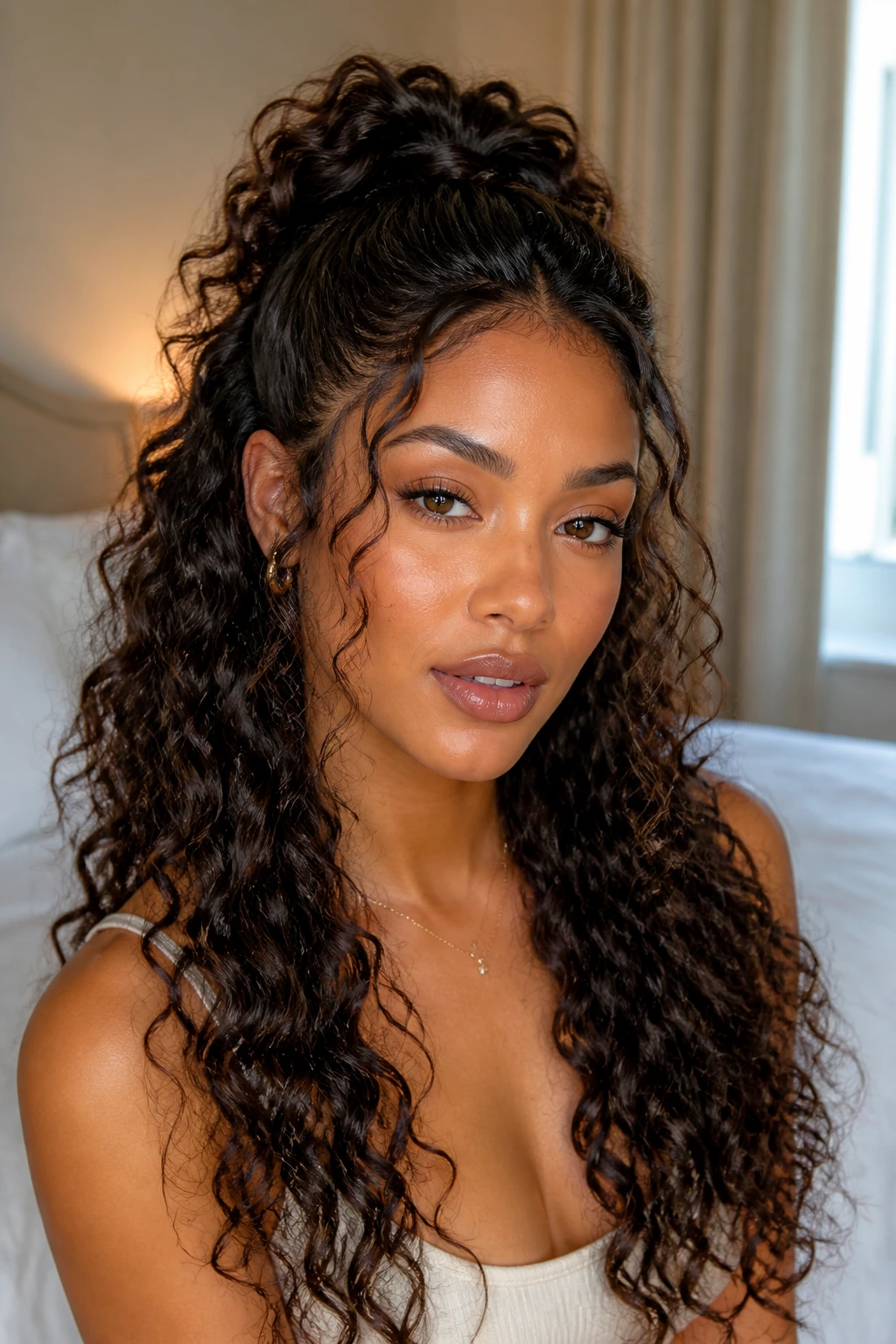
Why does this style keep coming back? Because it solves two problems at once. You get the length and texture you bought the wig for, but you also pull enough hair off the face to keep the crown from looking crowded.
The half-up half-down shape is especially useful on dense curly wigs. When all the hair is left down, the top can look wide and a little boxy. A small lift at the crown changes that immediately. The wig still looks full, but the shape becomes taller instead of broader.
I like this style when the curls are bouncy and defined, not brushed into waves. The half-up section should sit high enough to show the cheekbones, but not so high that it turns into a mini ponytail. That usually means gathering the top third of the hair and leaving the bottom two-thirds loose.
Where the Shape Matters
Keep the top section loose and slightly puffed. If you pull it tight, the style loses its soft feel. A satin scrunchie works better than a harsh elastic because it doesn’t crush the curl pattern. And if a few tendrils fall out around the temples, leave them there. They help the style breathe.
That little lift matters.
4. High Curly Ponytail With Face-Framing Pieces
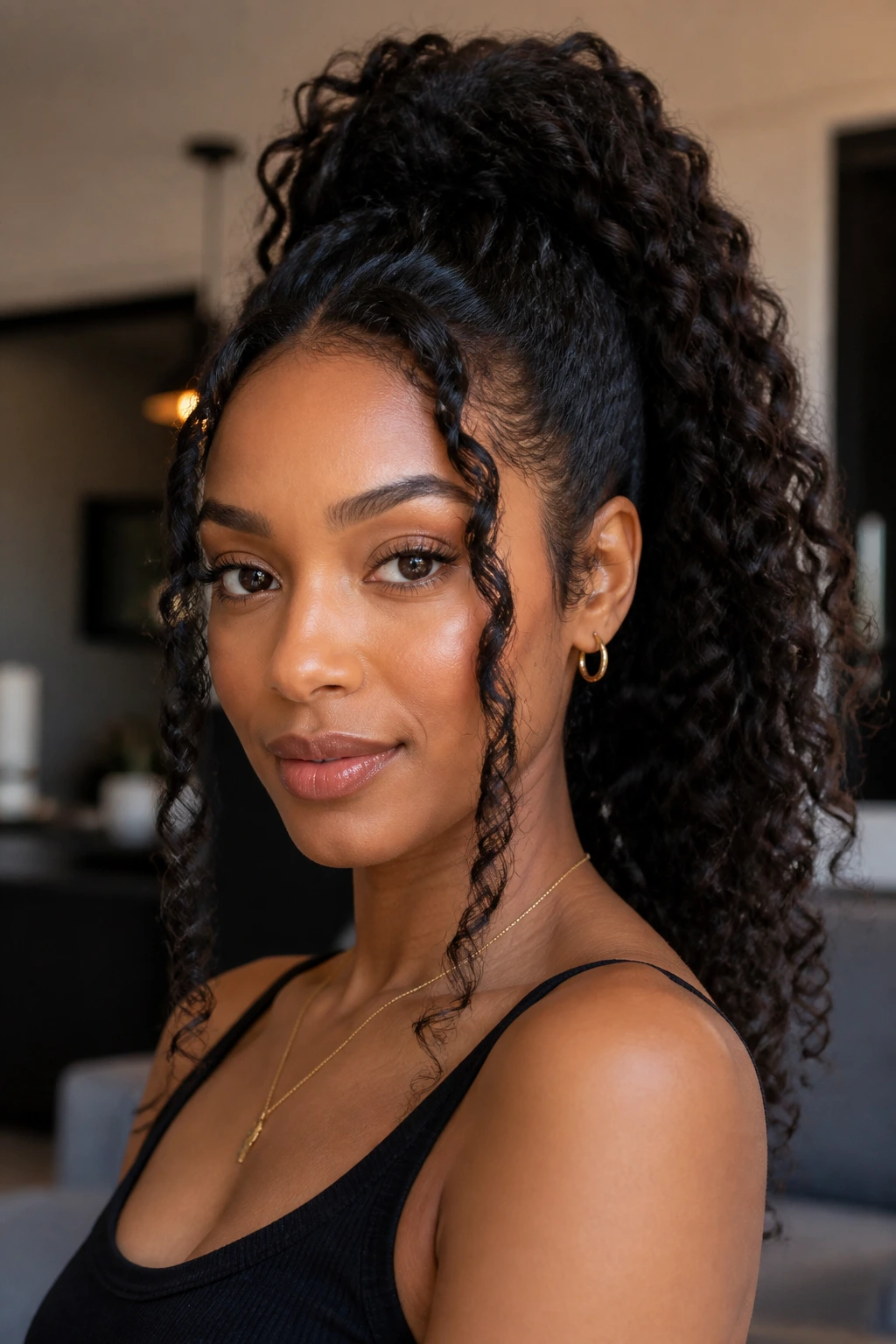
If the wig feels heavy by midday, a high ponytail can rescue the whole situation. Pulling the hair up changes the weight distribution instantly, so the curls stop dragging around your jawline and start swinging from the crown instead. It’s a small trick with a big effect.
The face-framing pieces are the part that saves this style from looking gym-basic. Leave out two narrow sections near the front, each about the width of a finger, and curl or define them so they sit softly along the cheeks. Those pieces keep the look romantic instead of severe.
A high curly ponytail also shows off texture better than most updos. The curls bunch together in a way that makes them look thicker and more sculpted, which is useful on wigs that have medium density. Wrap a small strand around the elastic if you want the base to look cleaner. It’s a tiny detail, but it makes the style feel finished.
5. Low Curly Ponytail With a Wrapped Base
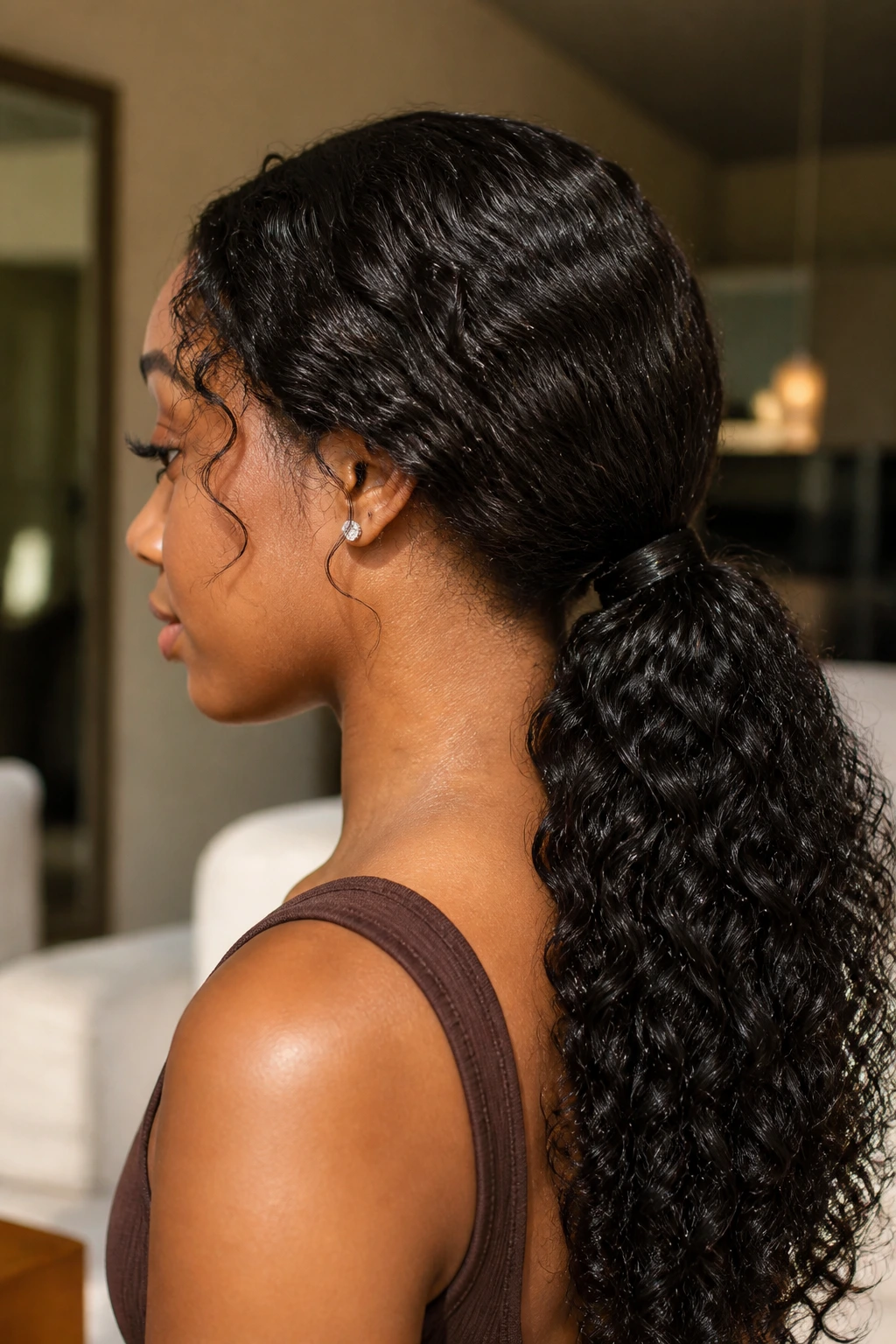
A low ponytail is not the boring option. Not when the root area is smooth and the curls spill over the nape in a controlled fall. In long curly wig hairstyles, this one has the best mix of ease and polish.
What makes it work is the placement. Keep the ponytail low enough to skim the neck, ideally just above the nape, so the length stays visible. If you sit it too high, the style turns awkward fast. Too low, and it can disappear into the back of the wig cap. The sweet spot shows off both the root shape and the curl texture.
The wrapped base makes the biggest difference. Take a small strand from underneath the ponytail, wind it around the elastic once or twice, and secure it with a pin tucked under the hair. That little move hides the hardware and gives the style a cleaner line.
This one is especially good when you want the wig to behave. It stays neater than a loose style, but it doesn’t flatten the curls the way a bun can.
6. Curly Top Knot With Length Left Out
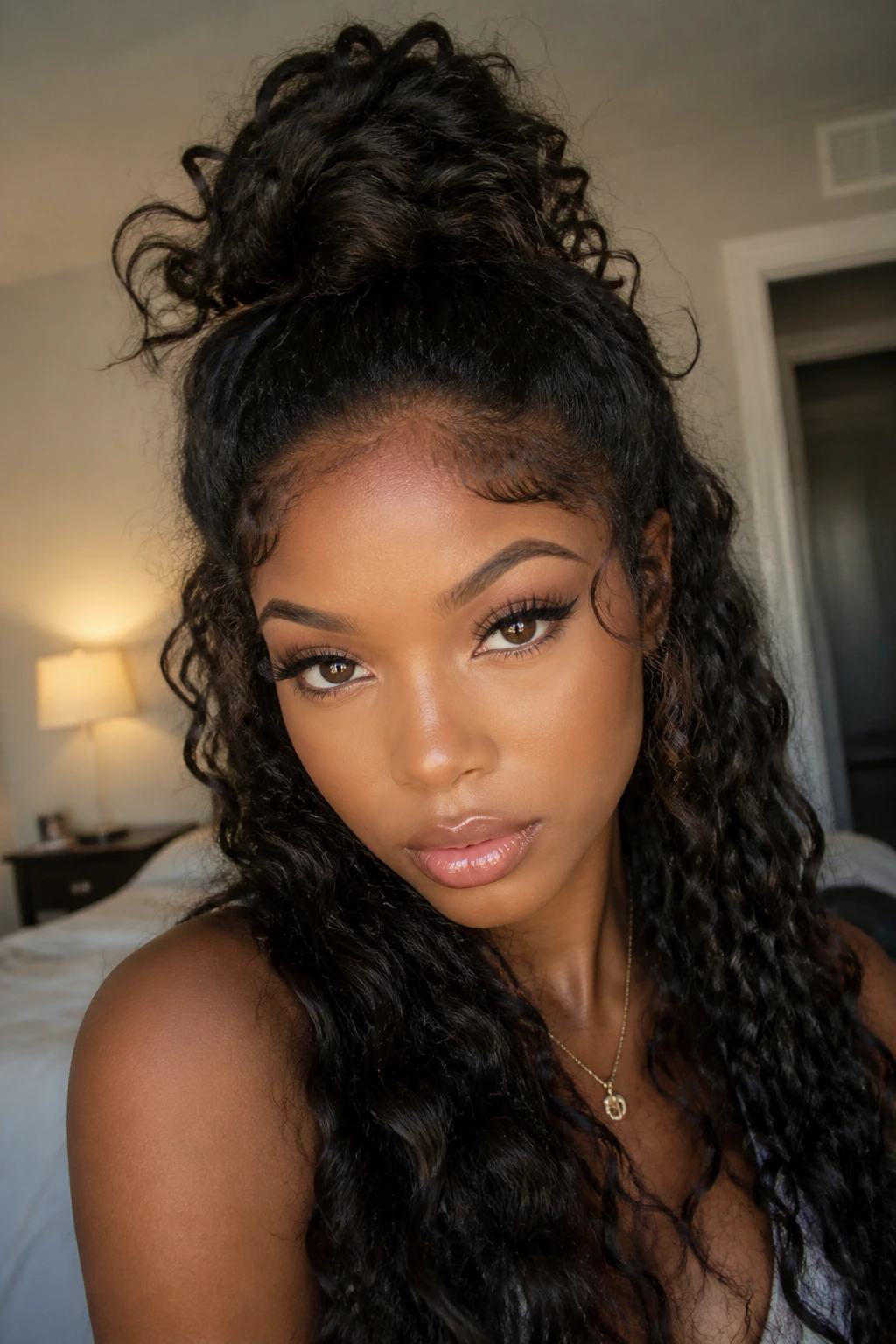
A top knot doesn’t have to mean all the hair is gone from the shoulders. In fact, the best version of this style with a long curly wig keeps some length down, which stops the look from getting too severe or too tight.
Where to Place the Knot
Put the knot at the crown, not at the very top of the head. That keeps the shape from looking like a ballet bun with curls attached. Gather only the upper section of the hair, twist it loosely, and secure it with pins or a soft elastic. The knot should feel a little relaxed, not packed flat.
What to Leave Loose
Leave the lower half of the wig down so the curls still move. The contrast is the whole point. A neat knot with loose lengths underneath gives you height without losing the drama of long hair. It also works well if the wig has layers, because the shorter pieces around the knot can hide the base.
A small side tendril can help here too. One or two curls left near the temples keep the face from looking boxed in.
7. Side-Swept Hollywood Waves
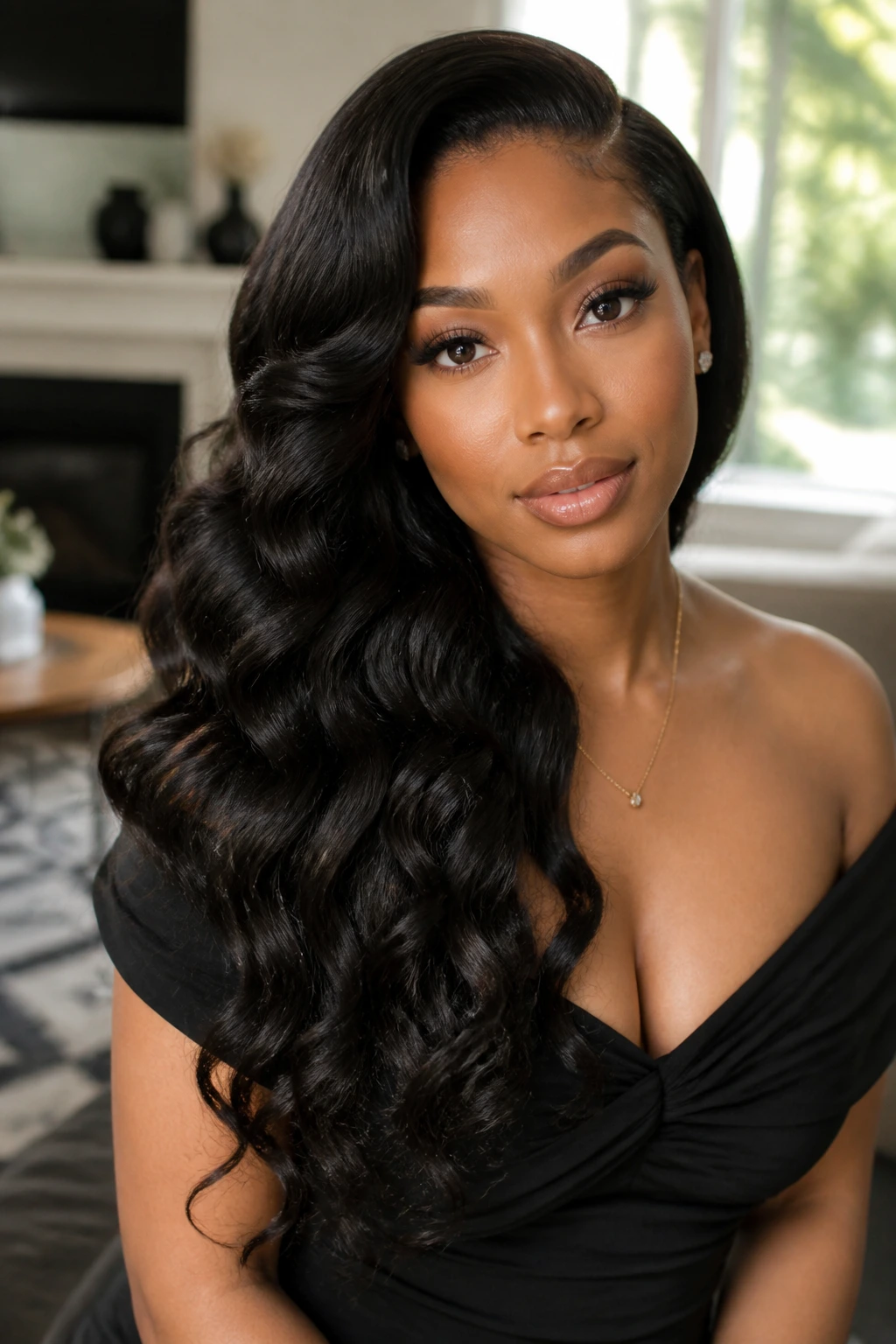
What if you want the curls to look softer and more polished? Brush them out just enough to create a side-swept wave pattern, then pin the bulk of the hair to one side. That old movie-star shape still works because it controls the volume instead of letting it spread everywhere.
The trick is to brush only the outer layer of the curls. Go in with a paddle brush or wide-bristle brush and move slowly from the ends upward, stopping before the hair turns fluffy. You want the top layer to soften, not the whole wig to lose its pattern. On human-hair or heat-friendly wigs, a low-heat pass with a large barrel can help define the bend. On synthetic wigs, go slower and use your hands more than heat.
What Makes It Different
- One side stays fuller, which creates a clean frame for the face.
- The brushed section lays smoother at the shoulder.
- The ends stay curved, not stick-straight.
This is the style I’d reach for when the wig is going to a formal event or a dinner where you want the hair to feel finished. Not fussy. Finished.
8. Braided Crown With Loose Curls
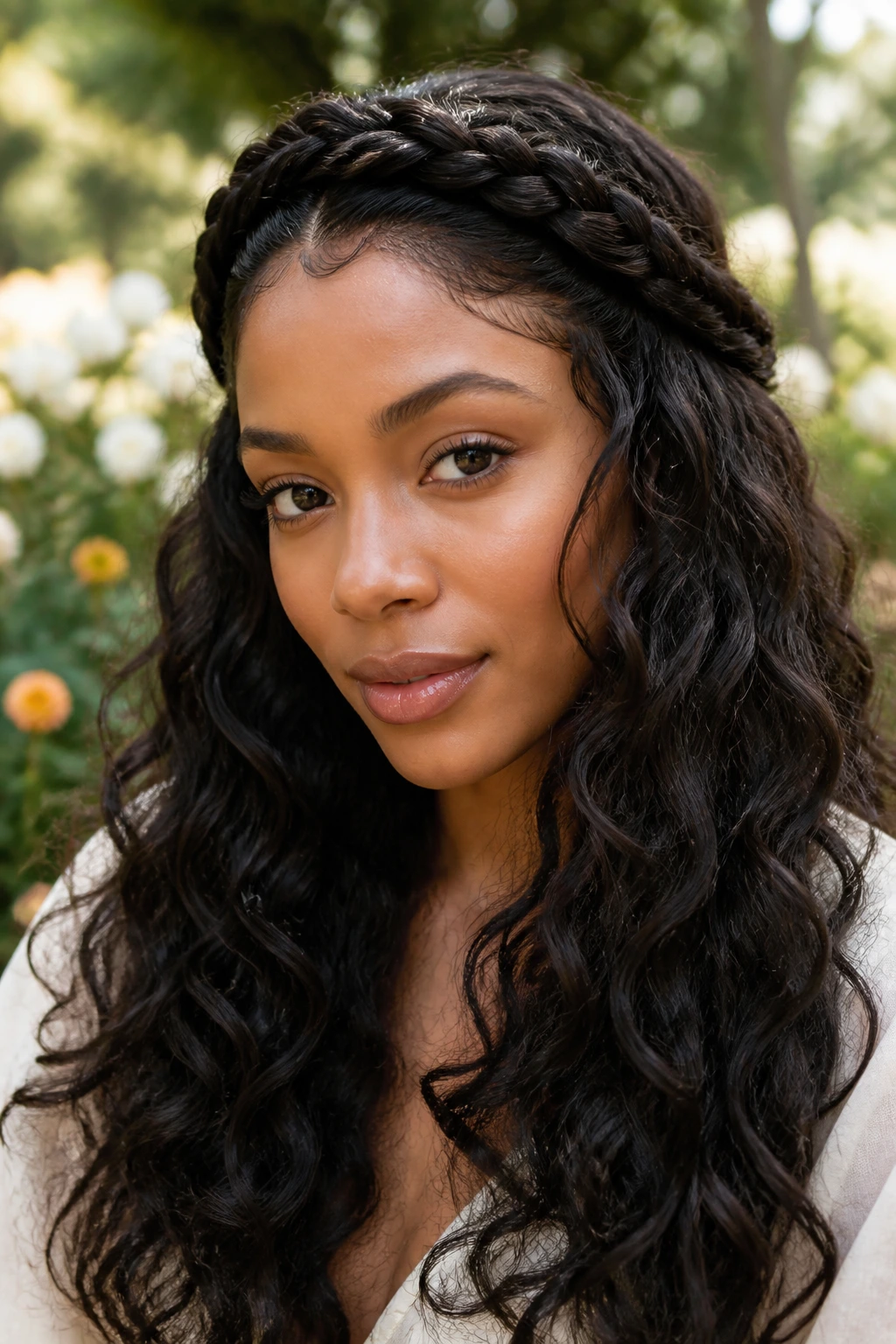
The braided crown is the style I use when the front of a curly wig needs interest. It breaks up the hairline, keeps the face open, and makes a long wig look more deliberate from the front without hiding the length at all.
A small braid works better than a chunky one here. Take a section from one temple, braid it along the hairline, and pin it back toward the opposite side. You can do the same thing on both sides for a crown effect, or keep it asymmetrical if you want something a little less pretty and a little more relaxed. The braid should sit flat enough to look clean but not so tight that it starts pulling at the lace.
This style plays nicely with very full curls because it gives the eye a place to rest before the length starts. That matters. Long curly wig hairstyles can sometimes feel like too much hair in one place, and the braided crown cuts that down without making the look smaller.
A small floral pin or plain gold clip can finish it, but it doesn’t need much. The braid already does the work.
9. Bubble Ponytail on Long Curls
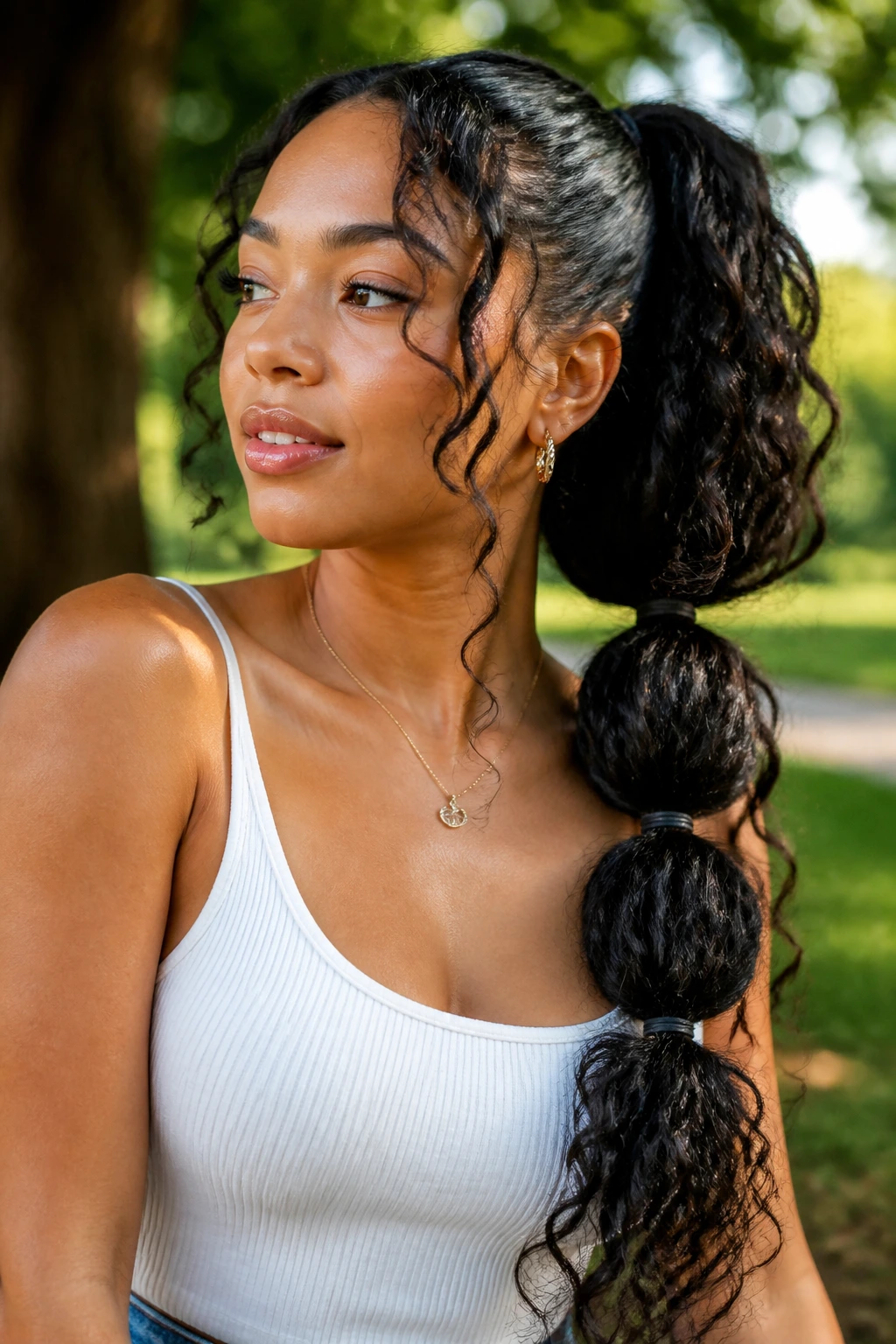
A bubble ponytail looks playful, but it isn’t childish if you keep the sections neat and the curls full. On long curly wigs, it turns plain length into something with rhythm. Every elastic creates a new shape, and that breaks up the mass of the hair in a way that feels intentional.
The spacing matters more than people expect. Put the first elastic at the base of the ponytail, then add the next one about 2 to 3 inches down. Pull gently at each section between elastics so it rounds out into a bubble. If you tug too hard, the curls flatten and the whole thing loses its shape. If you barely touch it, the ponytail stays too narrow.
How to Keep the Bubbles Round
- Use clear elastics or slim bands that disappear into the hair.
- Fluff each section with your fingers, not a comb.
- Leave the ends curly so the ponytail doesn’t look stiff.
This style works best on wigs with enough density to hold the shape, because thin hair can make the bubbles look flimsy. On fuller textures, though, it’s one of the easiest ways to make long curly hair look styled without much fuss.
10. Claw-Clip Twist and Cascade
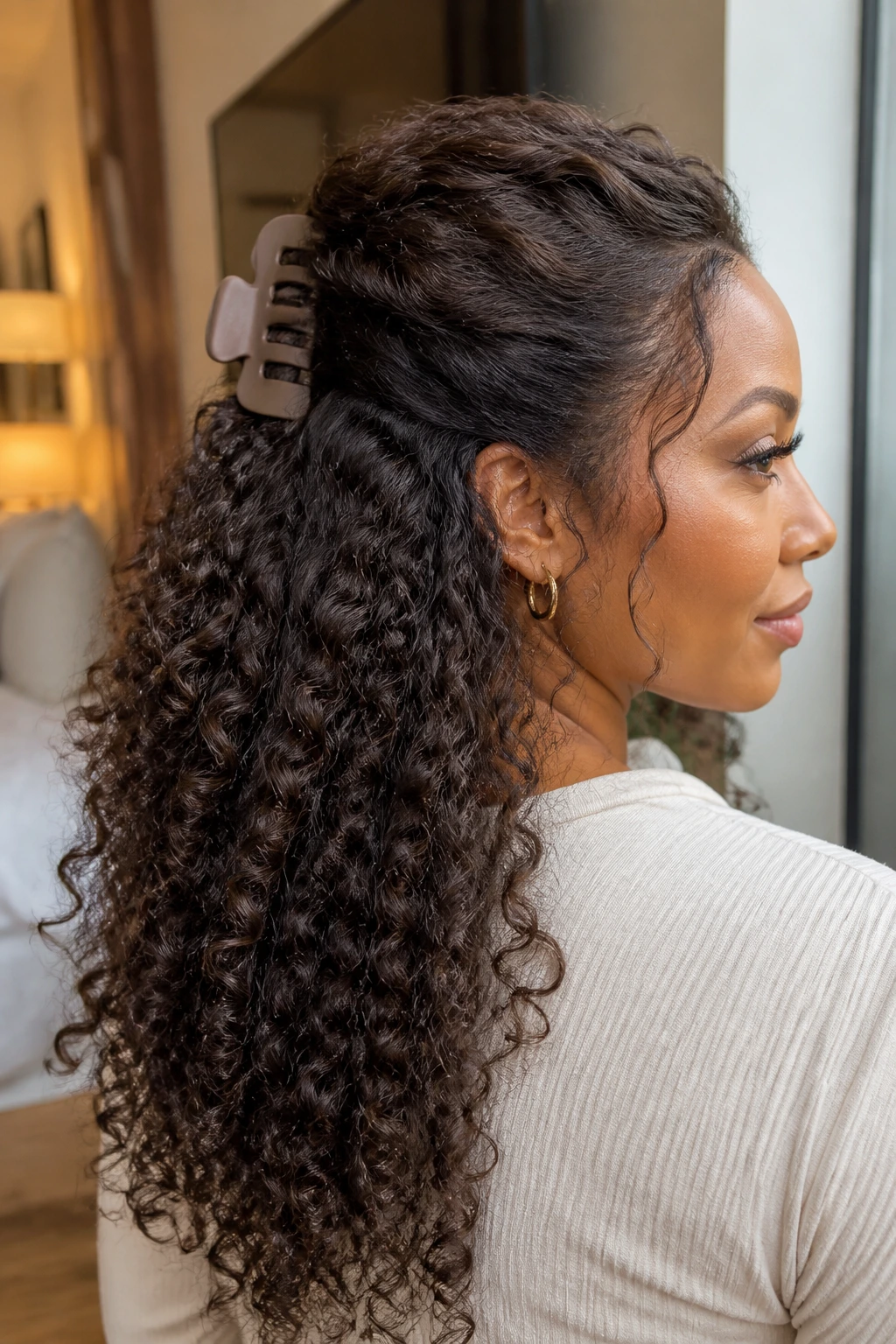
A claw-clip twist is the answer when you want the wig up, but not all the way up. It keeps the hair off the face, shows off the length down the back, and does not ask for much tension at the scalp. That last part matters if you wear wigs for long stretches.
Unlike a full bun, this style leaves the curls visible. You twist the top section or all of the hair into a loose coil, clip it vertically, and let the rest spill out underneath. The result feels relaxed but still put together. It also lets the wig keep some of its natural movement instead of flattening everything against the head.
The clip should be large enough to hold the density without crushing it. Small clips slip. Cheap ones pinch. A wider claw with a matte finish usually stays put better on textured hair because it grips without sliding around the strands.
This is a good everyday option, honestly, because it solves the “too much hair on my neck” problem without hiding the curls you paid for.
11. Curtain Bangs With Long Ringlets
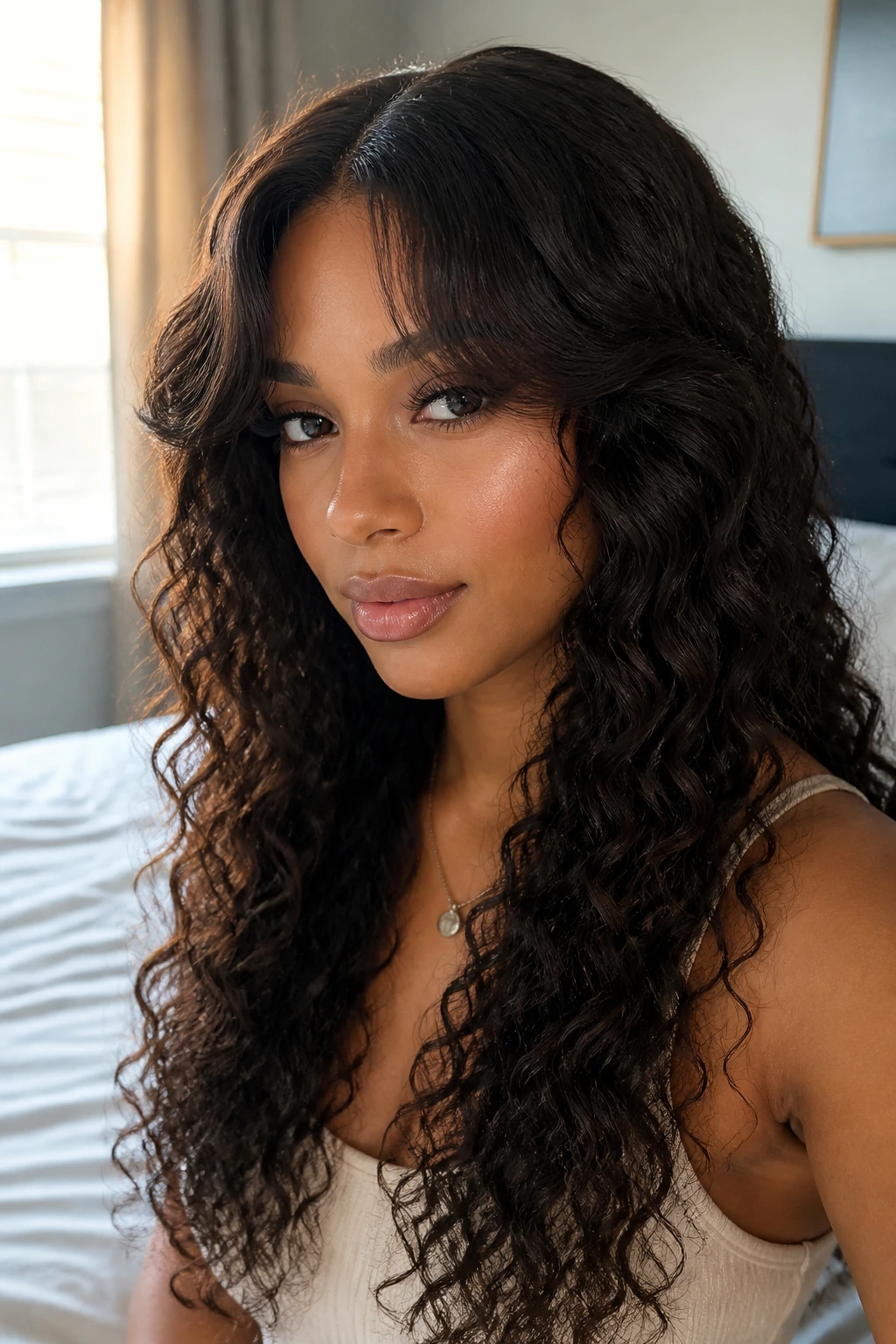
Do curtain bangs work with a curly wig? Yes, if they’re cut or styled with enough length to sit around the cheekbones. Short bangs can get tricky fast. Longer curtain pieces, though, blend beautifully into the front layers and make the whole wig feel lighter.
The whole point is to soften the frame around the face. Instead of one solid curtain of curls falling from the crown, the eye gets a little opening at the center and movement along the sides. That works especially well on long curly wig hairstyles with tighter textures, because the bangs break up the density near the forehead.
If your wig does not already have curtain pieces, you can fake the effect with a few face-framing curls clipped forward at the front and trained to fall away from the center. A light mist of water helps the shape hold without making the fibers stiff. On human-hair wigs, a round brush and low heat can refine the bend. On synthetic wigs, fingers usually do a better job.
Short bangs are the risky part.
12. Side Braid Into Loose Curls
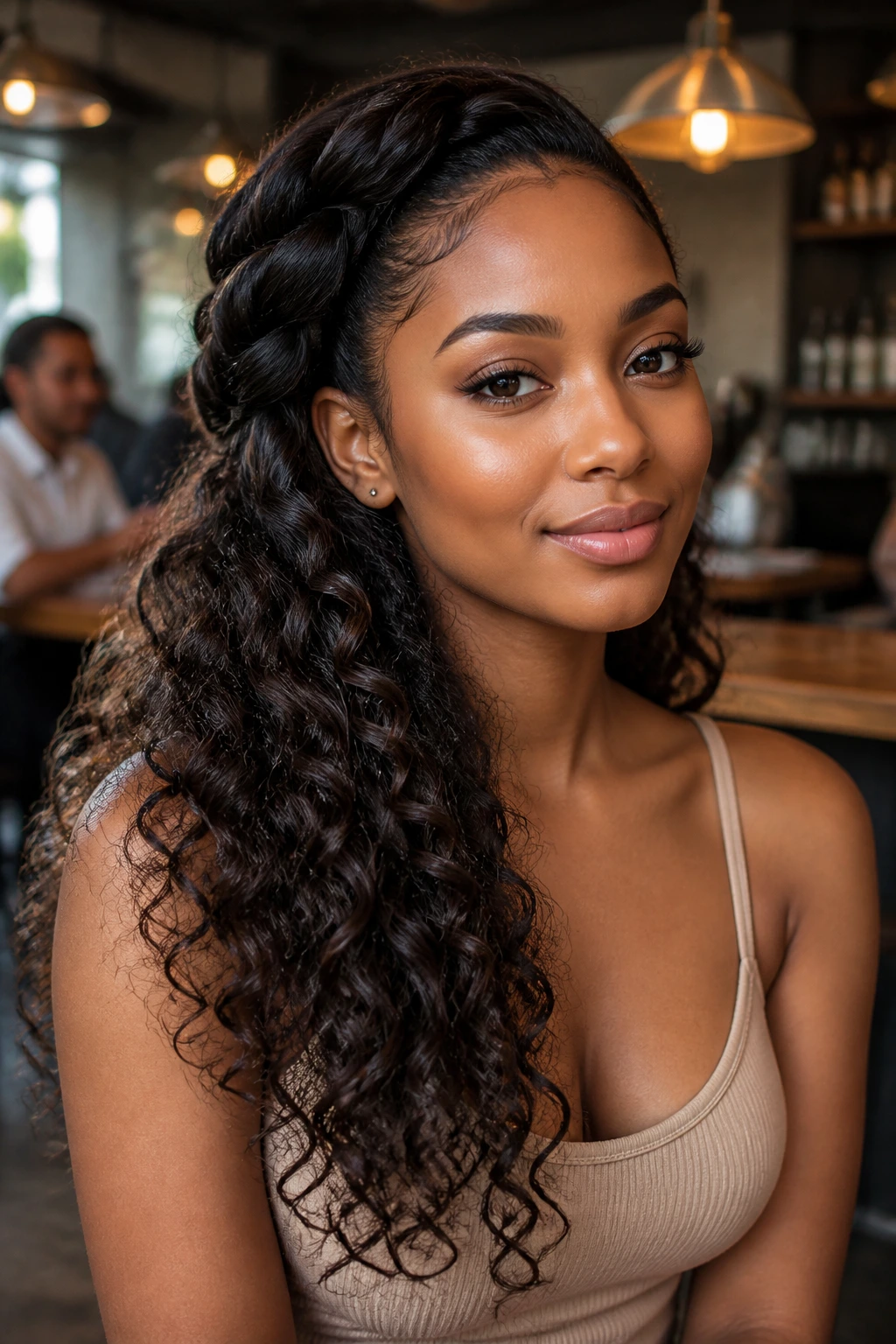
On days when the wig feels too full, a side braid solves the problem without hiding the length. It pulls a slice of the hair away from the face and gives the rest a place to spill, which keeps the style from looking flat or overworked.
Start the braid near one temple and angle it back toward the ear. A simple three-strand braid works fine. A fishtail looks more detailed, but it takes longer and can be fussy on very dense curls. The braid should stay loose enough to keep the curl texture from getting squashed. If you plait it too tightly, the front starts to look stringy.
Good Places to Use It
- For brunch or daytime events, keep the braid small and low.
- For evening, pull a thicker section and let the braid sit higher.
- For a softer finish, let the braid end under a wave of loose curls instead of pinning it flat.
One thing I like here: the braid adds shape without asking the whole wig to change personality. The curls stay the star. The braid just gives them a frame.
13. Wet-Look Defined Curls
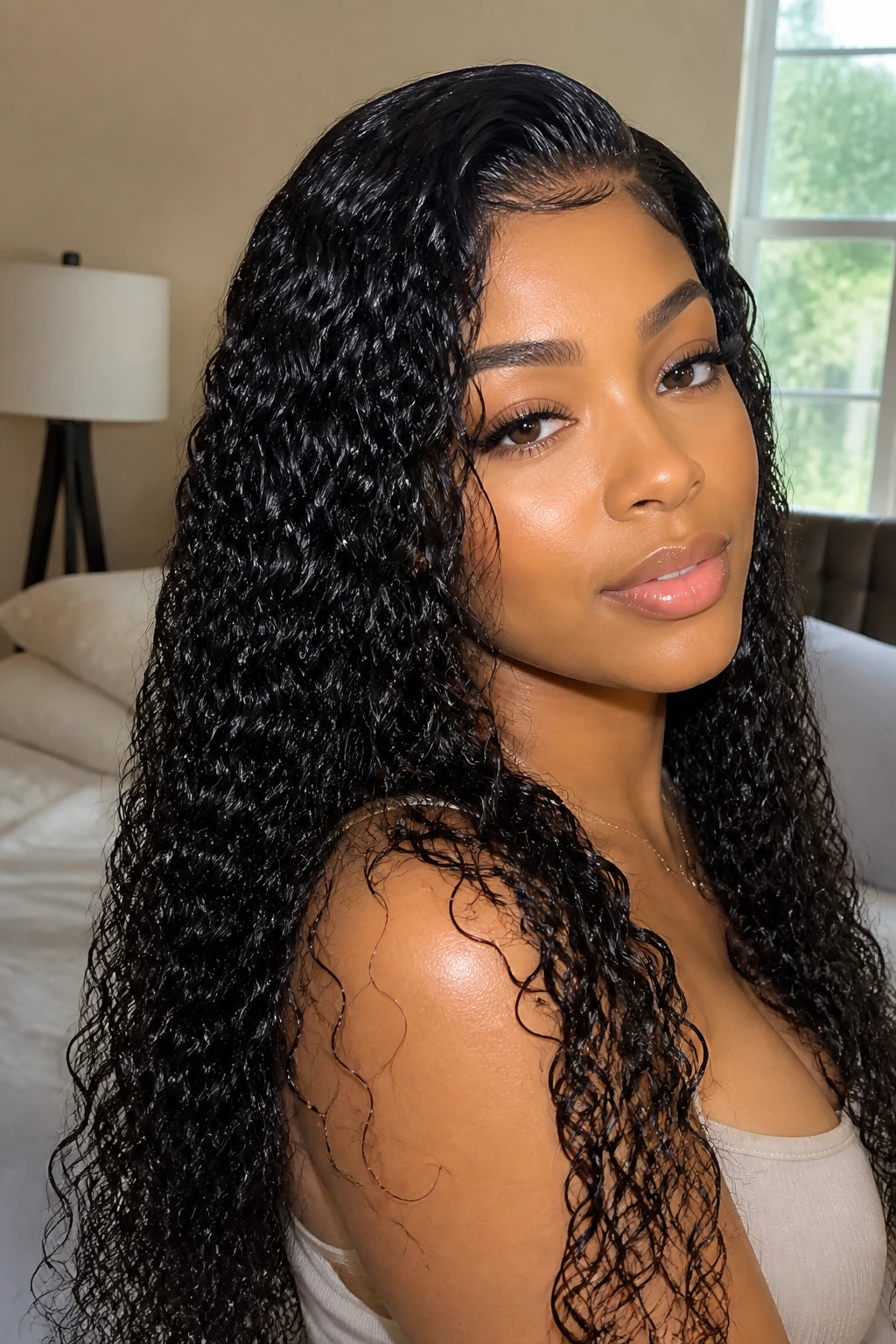
Wet-look curls can make a long wig look controlled instead of frizzy. That’s the whole appeal. The finish says you meant to wear the hair this way, not that you ran out of time and hoped the curl pattern would cooperate.
The trick is to use enough product to create sheen, but not so much that the wig turns heavy or sticky. A water mist, a small amount of mousse, and a light gel usually give enough hold for defined pieces. Smooth the product down the lengths with your palms, then finger-coil a few front sections so the shape stays deliberate. If the wig is synthetic, go lighter on the product and avoid anything greasy near the cap.
This style looks especially good on longer curls that already have a strong pattern, because the wet finish makes the coil shape more visible. The hair should look damp and sculpted, not soaked. There’s a difference, and it’s a big one.
If you want a cleaner front, tuck one side behind the ear and let the rest fall forward. That small shift keeps the look from becoming all texture, all the time.
14. Flipped-Over Side Part Volume
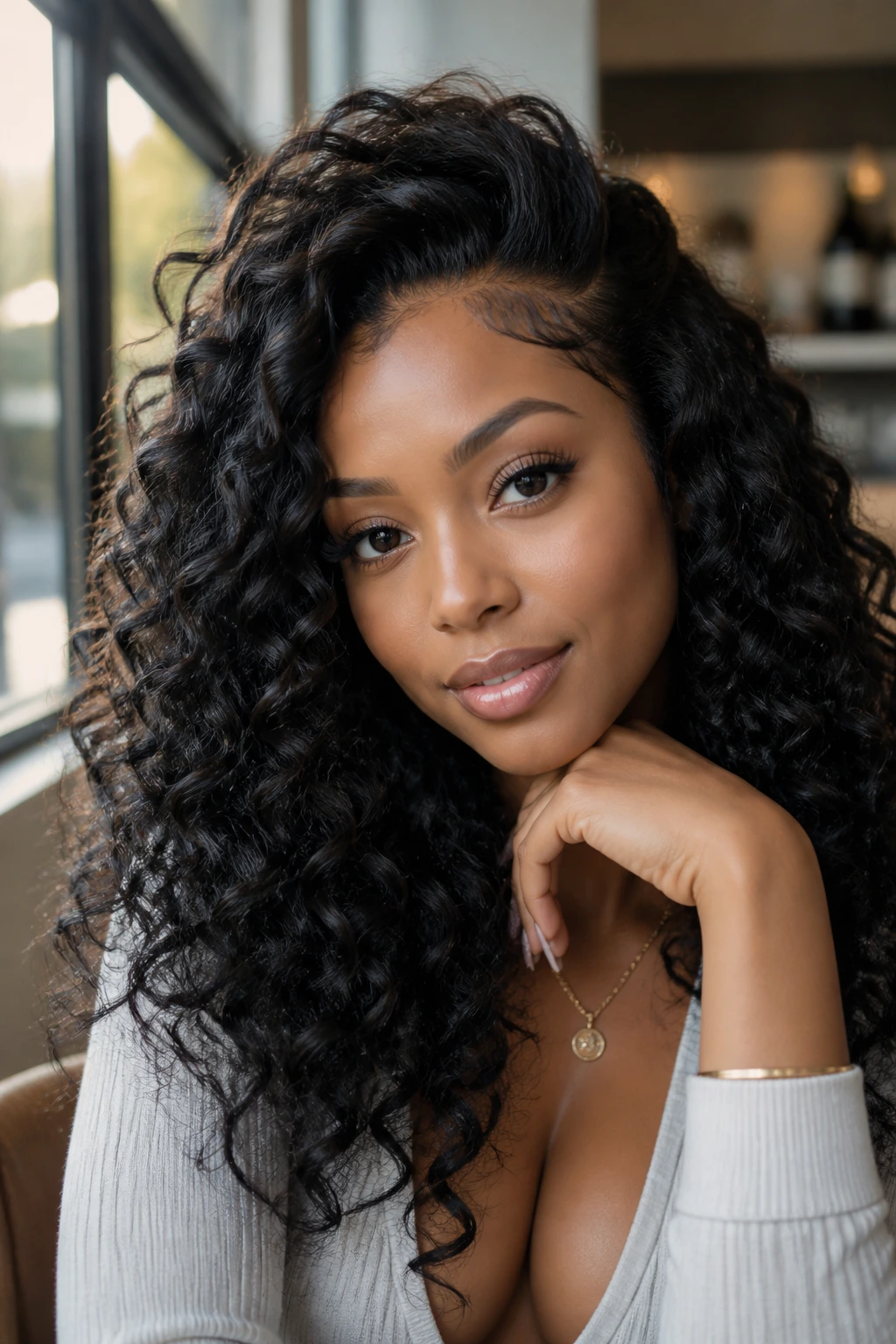
Want height at the crown without teasing the whole wig into chaos? Flip the part to the opposite side and let the roots rise naturally for a bigger silhouette. It’s a good move when the wig needs more shape up top, but you don’t want to pile on pins or product.
The flipped part works because curly hair already has texture. You’re not forcing lift from scratch. You’re just changing direction. Brush or finger-lift the roots at the new part, then let the curls fall across the forehead and one cheek. That gives the style a little swagger and a lot of movement.
What to Watch For
- The crown should rise, not puff out like a triangle.
- The heavier side needs enough length to stay grounded.
- A soft spray or light mousse helps the roots keep their direction.
This style is especially flattering if the wig sits a little flat at the top. The flip gives it a better profile from the side, which matters more than people think. Front view gets the attention. Side view tells the truth.
15. Curly Faux Hawk With Loose Ends
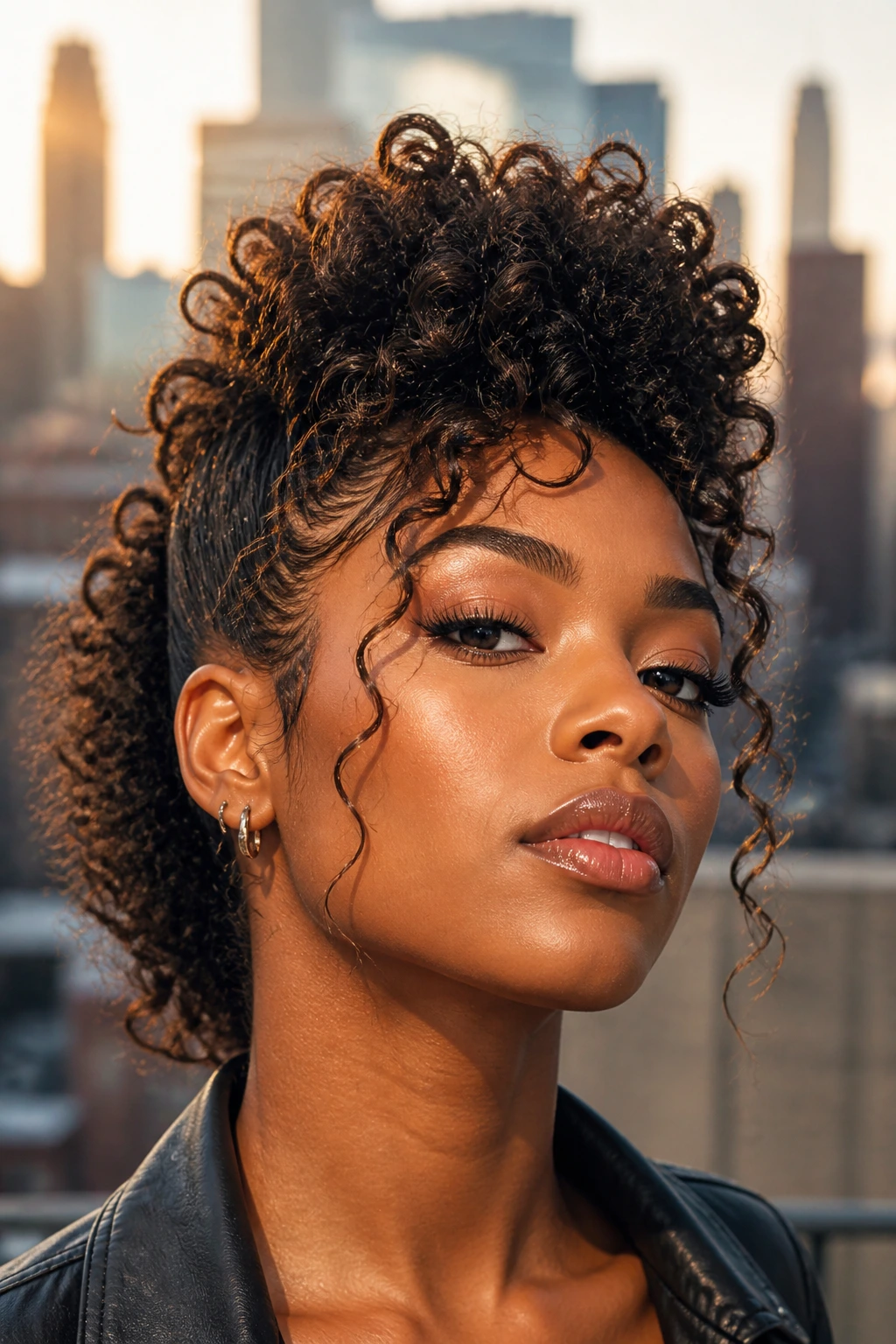
A curly faux hawk is for the days when you want the wig to have a backbone. The sides are pinned back or braided close to the head, and the center strip stays tall and textured. It reads bold, but the long curls keep it from feeling harsh.
Keep the Ridge Soft
Don’t make the center section too stiff. The best version still has bend and movement, not a spiky line running down the scalp. Pull the side sections back gently, pin them low near the ears, and let the center curls stack upward with their natural volume. If you need more height, lift the roots with your fingers before you secure anything.
This style is also one of the smarter ways to wear a dense wig when the weather or the room feels warm. It clears the sides of the face and neck, but you still get the drama of long hair moving down the back. A few loose curls around the temples can soften the look if you don’t want it to go fully edgy.
It’s strong without being severe. That’s the appeal.
One last thing: whichever of these long curly wig hairstyles you try, step back and check the shape from the front and side. A style can look perfect up close and lopsided from six feet away. The mirror never lies for long.
