



Curly bridal hair looks best when it still looks like curly hair. That is the whole point of half-up wedding hairstyles for curly hair: you keep the lift, shape, and movement up top, then let the rest fall in soft, deliberate coils instead of pinning every strand into obedience.
The styles that actually hold up on a wedding day do two things at once. They steady the crown, where curls can collapse under the weight of pins and spray, and they leave enough hair down so the texture does the work. If your curls are tighter, the goal is less about forcing a shape and more about choosing a hold point that respects the curl pattern you already have.
A good trial run tells you almost everything. Use fully dry hair, pin more than you think you’ll need, and pay attention to where the style sits once you add a veil, comb, or a few flowers. Some half-up looks want a clean center part. Others look better a little off-center, with a softer front and more volume near the temples. The first style below starts with one of the easiest options to wear and moves toward looks with more detail, more structure, and a little more personality.
1. Crown Twist Half-Up With Loose Curls
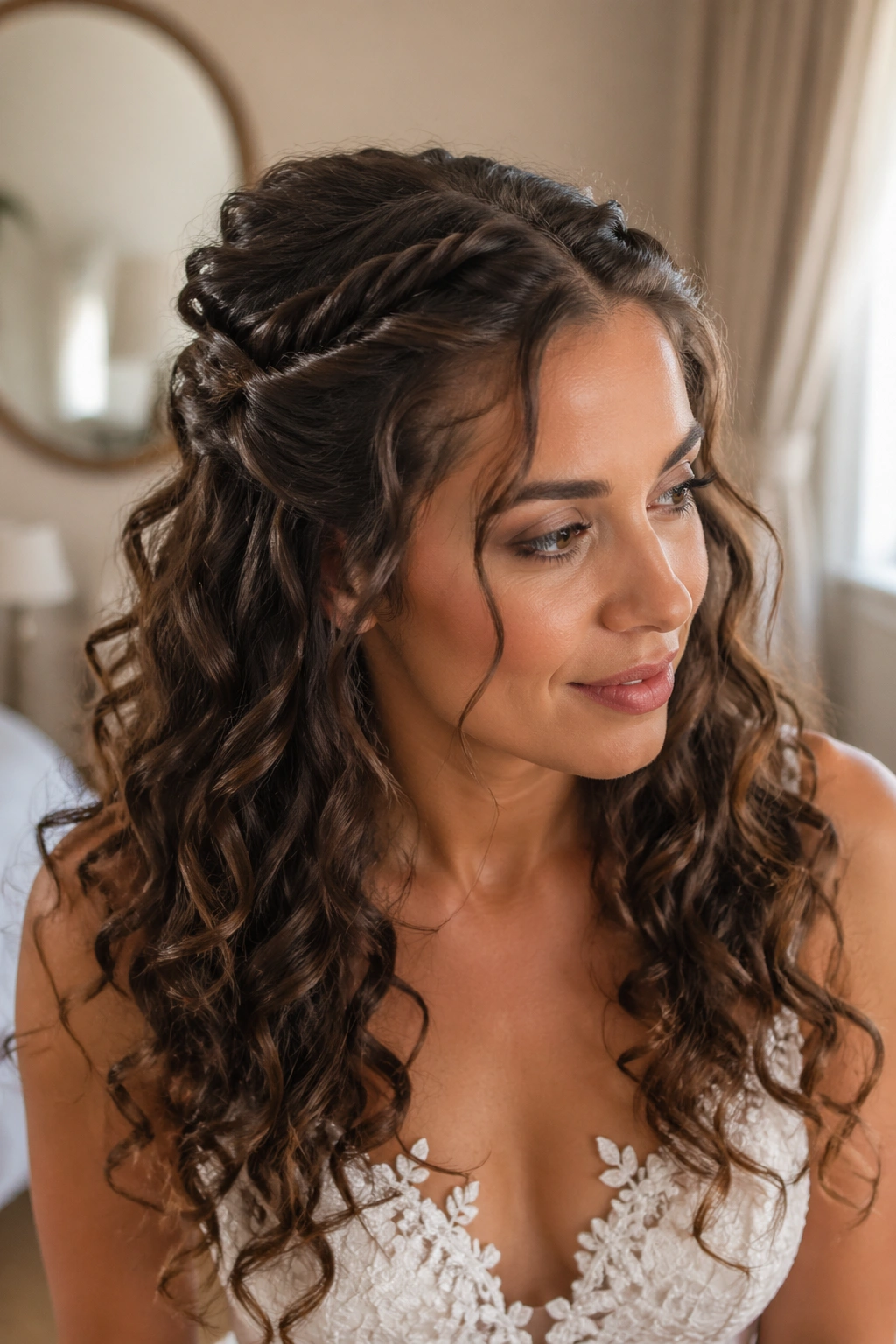
This is the style I’d put first on almost any bridal mood board. It has enough shape to look intentional, but it still lets the curls do what they naturally do best.
Why It Works
A crown twist keeps the front open and the back soft, which is a nice balance when you do not want your hair to feel heavy. Two sections are taken from the temples, twisted back toward the center, and pinned where they meet. That keeps the top from puffing out in random spots and gives the veil or accessory a clean place to sit.
- Use 4 to 6 bobby pins for a secure hold.
- Place the twist about 1 to 1.5 inches above the ears so it does not flatten the sides.
- Leave the lower curls untouched so the texture stays full and alive.
- Tuck a small comb or vine right under the twist if you want a little sparkle.
Best tip: ask for the twists to be pinned from underneath, not on top. Hidden pins make the style look cleaner and keep the crown from feeling crowded.
2. Braided Halo Half-Up for Curly Hair
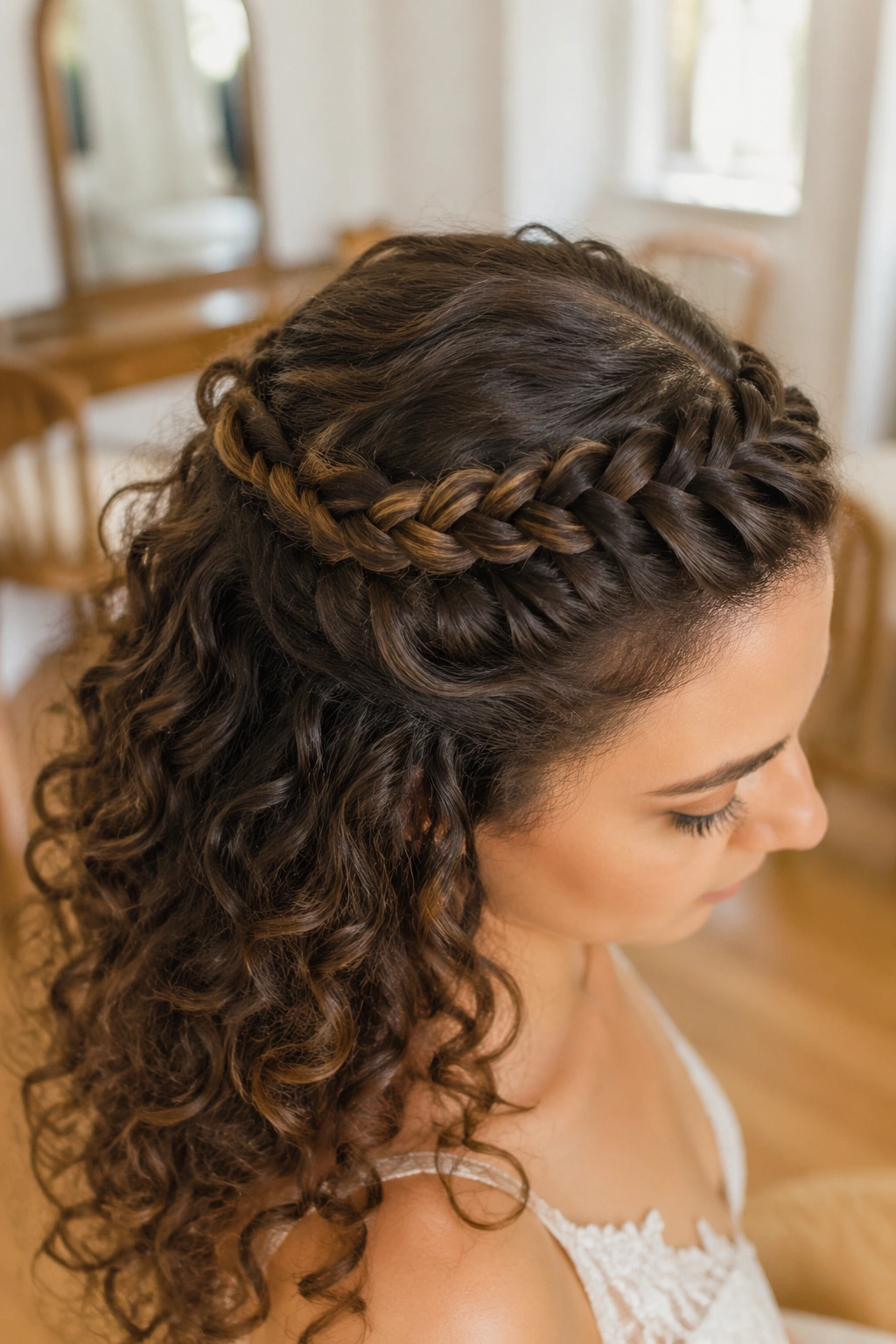
A braid does something curls often need: it gives the top section a shape you can trust. A braided halo half-up is especially useful when the hair is dense, because the braid acts like a built-in frame.
The braid usually starts near one temple, runs across the crown, and stops on the opposite side with the ends tucked away. The rest of the curls stay loose below, which keeps the look from feeling too stiff. On tighter curl patterns, this style tends to hold better than a simple twist because the braid has more grip and gives pins something to latch onto.
I like this one for brides who want visible detail without going full updo. It reads formal from a distance, then softer when you get close and see the texture. If the hairline is fine or sparse, a stylist can pull a few tiny strands loose at the front so the braid doesn’t look pasted on.
For the cleanest finish, keep the braid fairly flat against the head and let the curl volume happen lower down. That separation is the whole point.
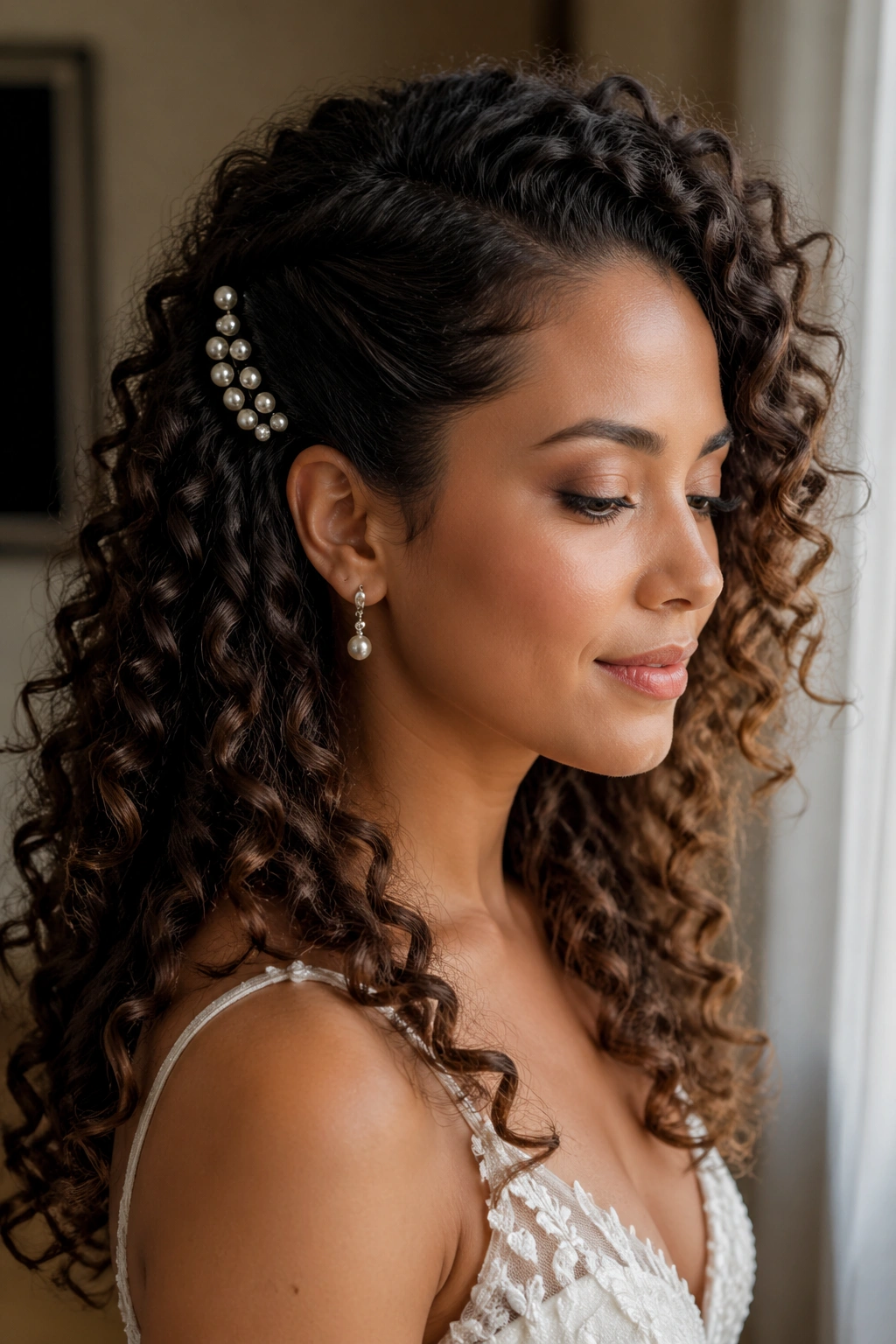
3. Side-Swept Half-Up With Pearl Pins
What if one side of your hair always looks better than the other? Then use that to your advantage.
A side-swept half-up with pearl pins leans into asymmetry instead of fighting it. The front section from one side is swept back in a smooth arc, then anchored just behind the ear or slightly above the nape. The other side stays fuller, which makes the whole style feel a little more relaxed and a lot less cookie-cutter.
How to Wear It
This works especially well when the curls have a mix of sizes. The pinned side creates order, while the loose side keeps movement. If the part is deep, the style feels more dramatic. If the part is soft and only slightly off-center, the result is gentler and easier to wear with a veil.
Pearl pins are doing real work here, not just decoration. Put 3 to 5 pins in a small curve where the swept section lands, and let the line of pins echo the shape of the cheekbone. That tiny detail makes the style look more finished.
A side-swept half-up is also kind to brides who do not want height at the crown. It keeps the top smooth, lets the curls stay the star, and leaves enough room for earrings to show.
4. Soft Half-Up Puff With Veil Placement
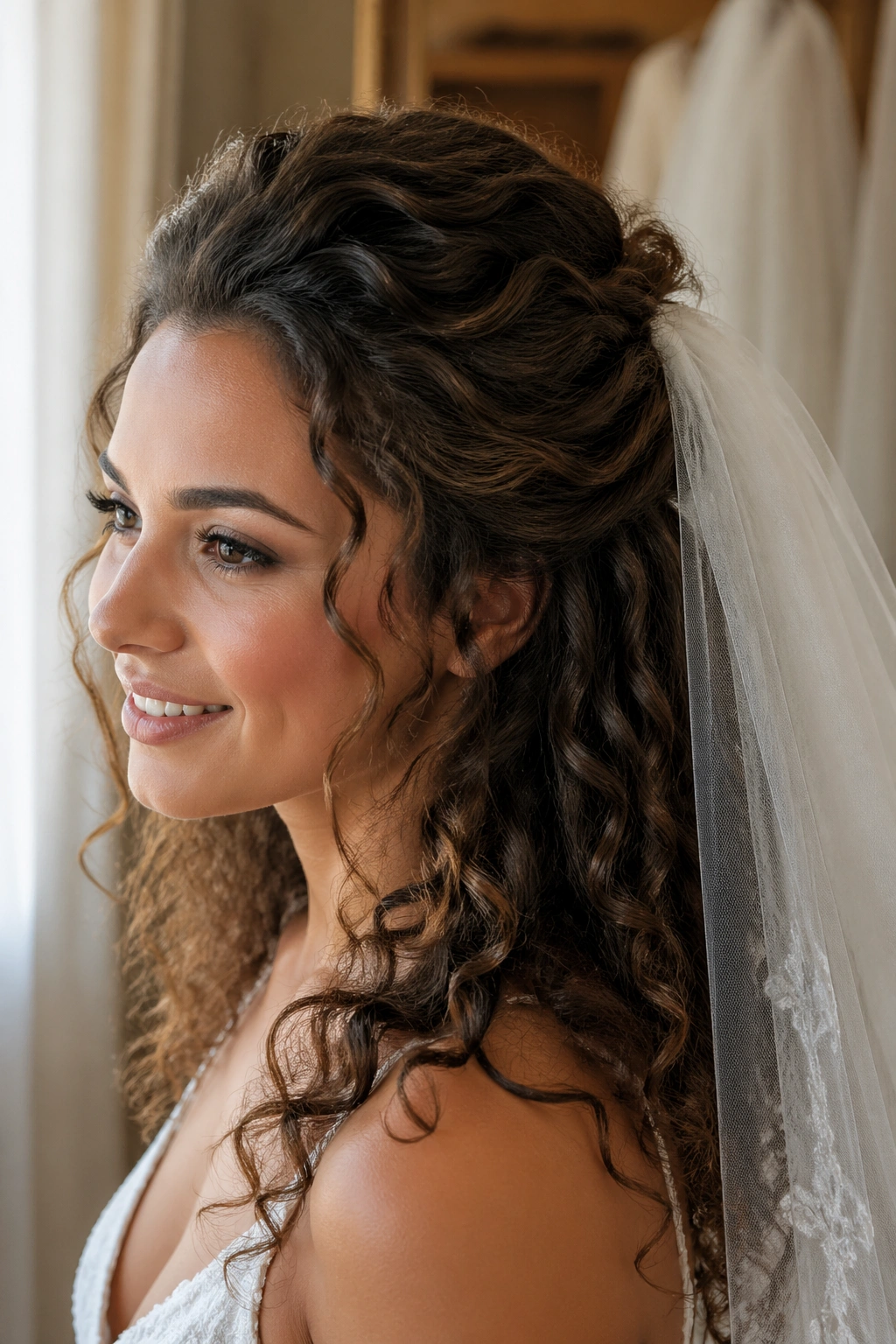
You can feel this style before you even see it. The crown has lift, the sides are controlled, and the curls below keep their shape instead of getting crushed.
A soft puff is built from a section of hair at the top of the head, gently lifted and pinned back so it sits like a small cushion. Not a helmet. Just enough height to give the profile some shape. This is one of the safest half-up wedding hairstyles for curly hair when a veil is part of the plan, because the veil can anchor right under the puff without flattening the curl pattern below.
Key Details to Ask For
- Keep the puff soft at the edges, not teased into a hard bump.
- Anchor the veil under the half-up section if you want the fabric to sit lower and move easily.
- Use a light mist of flexible hairspray after pinning, not before.
- If the hair is very dense, a stylist may place a small cushion or hidden pin base under the section for support.
The nicest thing about this style is that it stays elegant even when the curls get touched, moved, or pinned again. It has enough structure to survive a long day, which is more useful than looking perfect for ten minutes.
5. Twisted Knot at the Crown
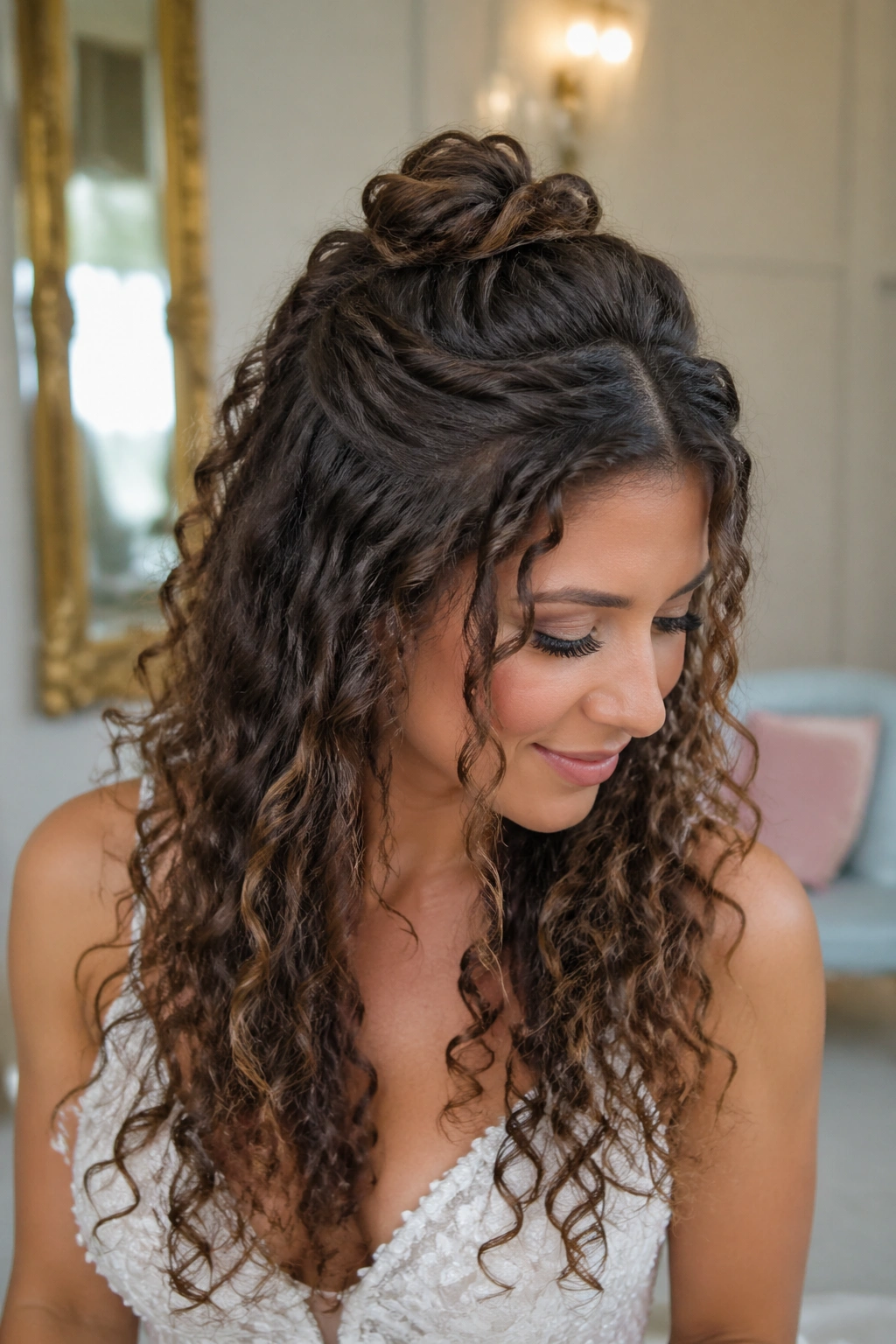
A knot can look softer than a braid. That surprises people, but it’s true, especially on curly hair where the texture already brings enough detail.
For this style, two sections from the front are twisted back and crossed into a small knot right at the crown or slightly below it. The knot sits like a little anchor, then the curls cascade from underneath. It’s a tidy shape, but it never feels severe. The curves of the knot echo the curls below, so the whole look feels connected instead of patched together.
I like this one for medium-length curls because it gives the top some lift without using too many pins. A knot also works well if the hair is layered and tends to slip out of braids. The twist-and-tuck method catches those shorter pieces better.
A tiny caution: don’t pull the knot too tight. The best version has a bit of softness at the edges, almost like it was tied loosely and then arranged with intention. If you can see too much scalp at the crown, the knot’s gone too far.
6. Waterfall Braid Half-Up
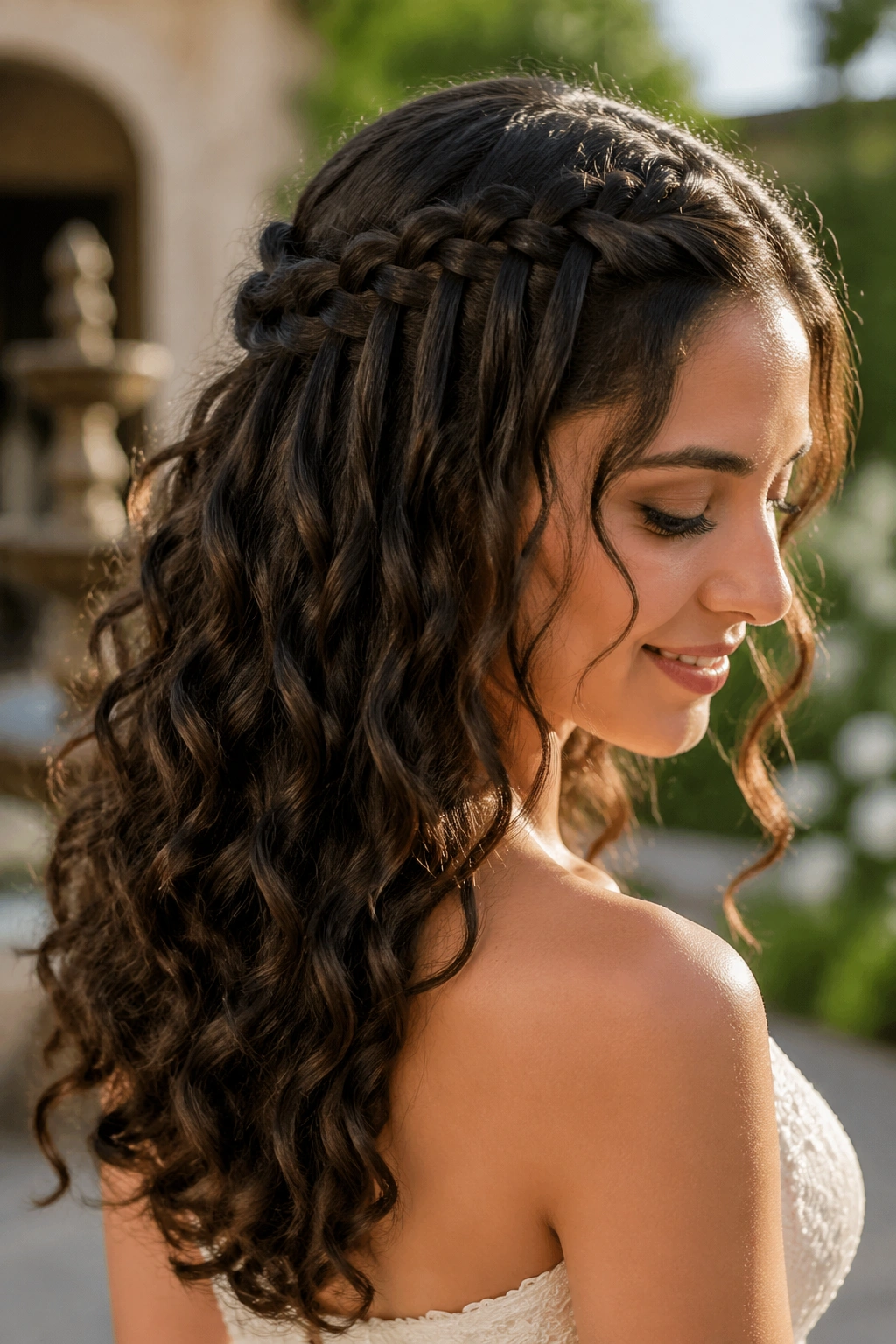
Want a style that keeps movement in the back? The waterfall braid is the one that lets the curls keep flowing while still giving the front section some shape.
Unlike a standard braid, a waterfall braid drops one strand each time the braid turns, which creates little openings where curls can spill through. That makes it a strong choice for half-up wedding hair when the goal is detail without heaviness. It has a bit more motion than a crown braid, and the effect looks especially good on longer curls that need a clear top line.
The braid usually sits across the upper head, from one side toward the back. What makes it work is contrast: a tidy braid on top, loose curls below. If the curls are very springy, the braid can disappear a bit, so it helps to keep the braid section slightly broader than you would on straight hair.
This style is best when the front pieces are not too short. If they are, the braid can slip or puff unevenly. A stylist can smooth the first inch near the hairline with a light cream, then braid while the hair still has some grip. That’s the trick. Not soaked hair. Just enough control.
7. Mini Bantu Knot Accent Half-Up
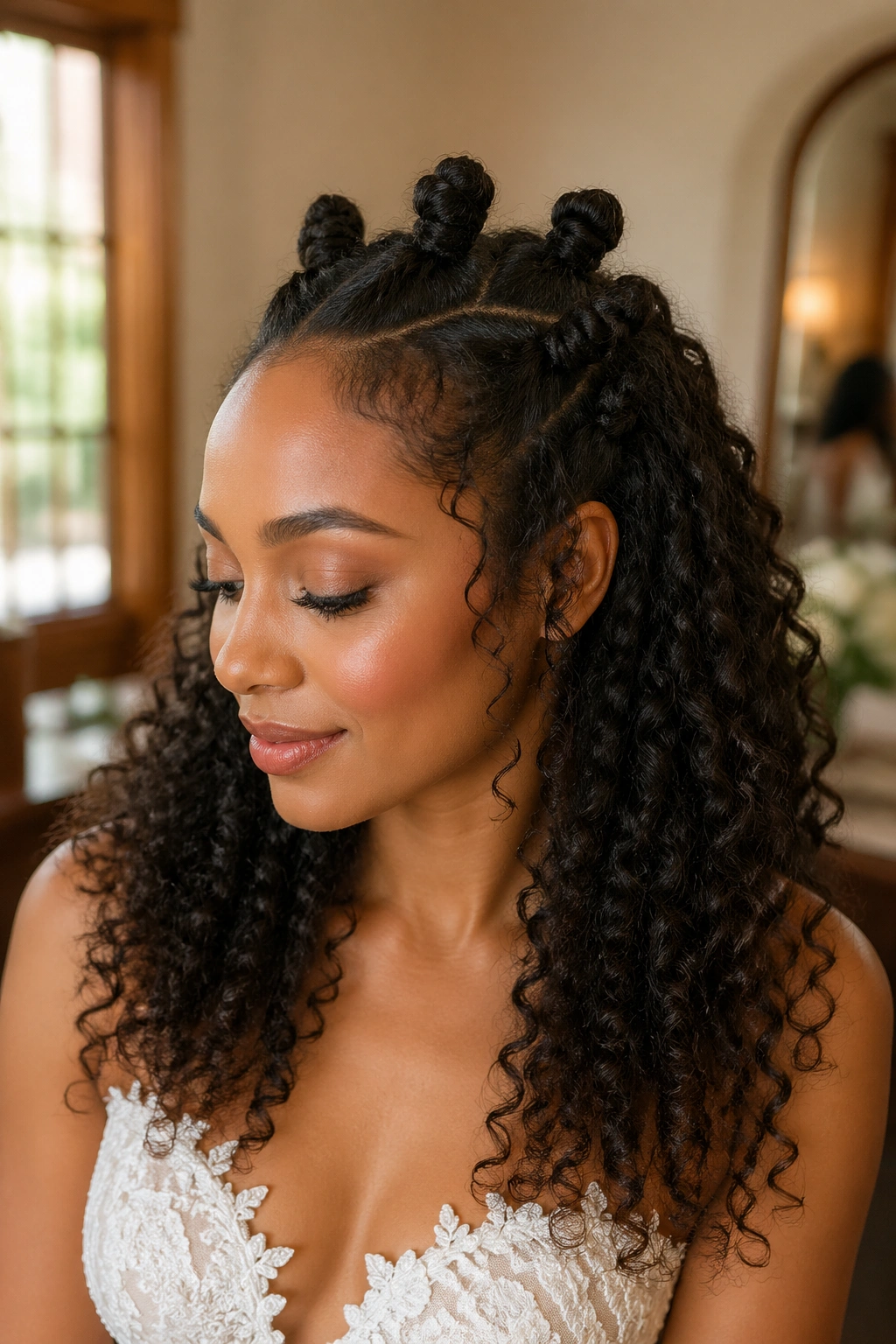
A few tiny knots change the whole mood. They make the style feel more sculptural, and on curly textures, that can be a gorgeous thing.
Mini bantu knots usually sit at the front or crown in a small cluster of 2 to 4 sections, with the rest of the curls left loose. The knots create a deliberate top shape, and the lengths below stay free. It’s a smart choice when you want a half-up style that celebrates texture instead of sanding it down.
What Makes It Different
- The knots give the crown a strong shape with very little bulk.
- The style works well on tighter curl patterns because the texture already helps the knots hold.
- You can keep the rest of the hair untouched, which protects the curl definition.
- A few gold cuffs or tiny pearl pins can sit between the knots if you want a bridal finish.
This one is not for someone who wants a shy hairstyle. It has personality. A lot of it. But if your curls are naturally bold and you want the wedding look to feel like you, it’s a smart move.
One warning: the knots should be small and even. If they vary too much in size, the top can look messy rather than styled.
8. Sleek Front With Big Curly Length
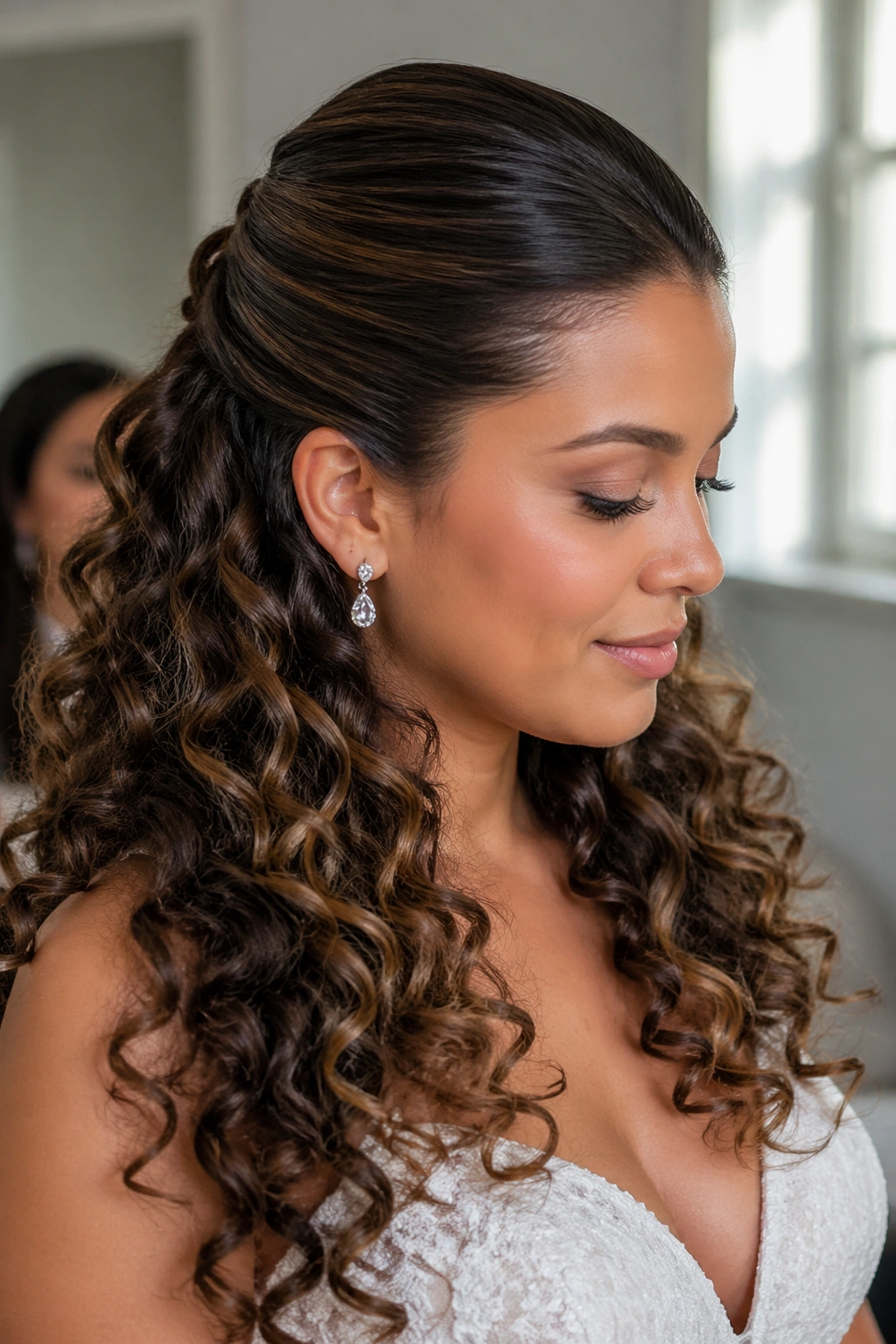
A sleek front makes curl volume look even bigger. That contrast is the whole reason this style works.
The idea is simple: smooth the front section close to the scalp, then pin the upper half back so the lower curls stay full and free. The front reads polished and tidy, which gives the curls below even more presence. You end up with a half-up style that feels a little more modern without losing the softness people want for a wedding.
This is one of the best choices for brides who do not want a lot of extra decoration. The shape itself does most of the work. A little shine at the hairline, a clean center or side part, and a strong curl pattern through the lengths is enough. If the hair is frizz-prone, a tiny amount of gel on a toothbrush or soft brush can smooth the front edge. Tiny amount. Not a lot. Too much product makes the top look stiff, and curly hair usually looks better when it can still move.
It also pairs well with statement earrings because the front stays neat. Nothing competes with them. The curls below handle the drama.
9. Low Rose Bun Half-Up
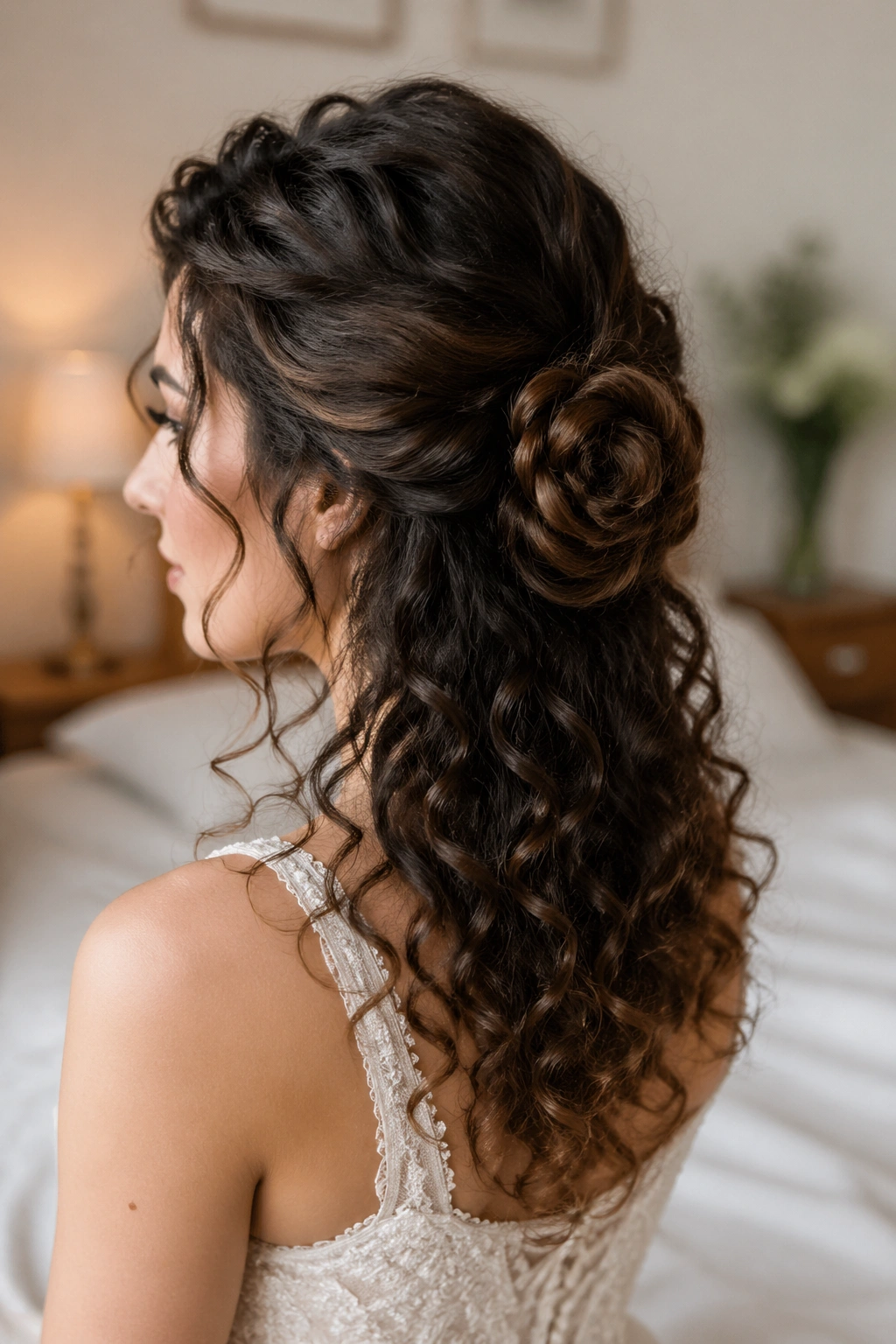
Soft petals, but make them hair.
A low rose bun is built by folding the half-up section into a loose circular shape near the back of the head, almost like a rosette made from twists. It gives the style a romantic center point without turning the hair into a full bun. The curls underneath stay down, so you still get all the movement that makes curly bridal hair so good in the first place.
This style is especially pretty on medium to long curls because the rolled section has enough length to shape into something that actually resembles a rose. Shorter layers can still work, but the bun needs a little more pinning and a little less pulling. The best version has visible curves in the folded hair; if it’s smoothed too much, the shape gets lost.
I’d put this one near the top of the list for brides who like quiet detail. It feels intentional from every angle, but it never shouts. A few pins, a calm crown, and curl lengths that drop softly over the shoulders. That’s the look. Add one comb or a small floral piece if you want more finish, but honestly, the shape can stand on its own.
10. Side Sweep With a Crystal Comb
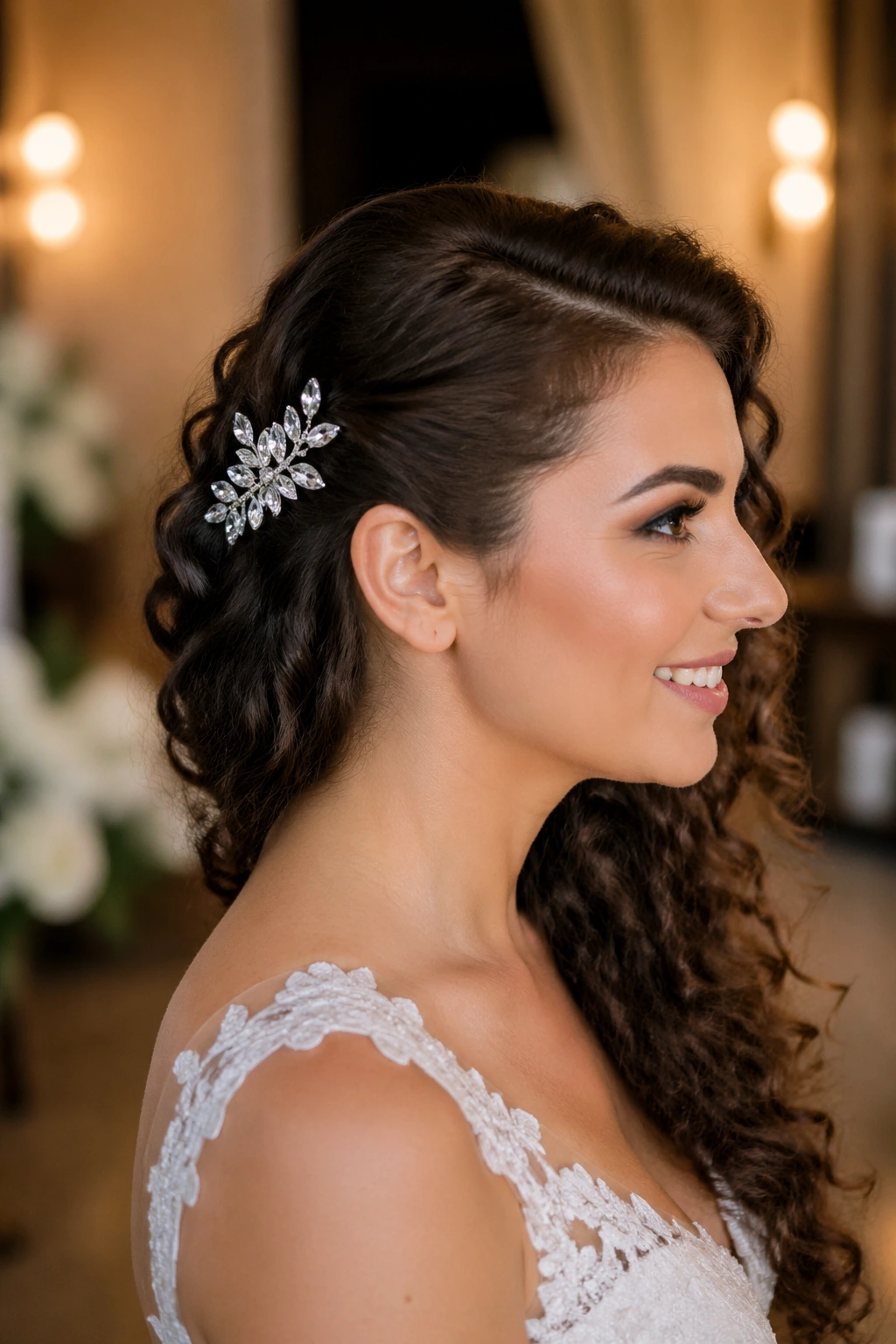
If your hair is dense enough to hide a comb, this style is easy. The accessory carries the visual weight, and the curls around it do the rest.
A side sweep with a crystal comb starts by bringing a section from one side of the head back toward the opposite side or toward the center. The comb is placed where the swept section lands, usually just above the ear or a little behind it. The rest of the curls stay loose. That’s it. No giant build, no complicated structure.
What to Watch For
- Use one comb with a firm spine so it grips the hair.
- Add 3 to 4 hidden pins under the comb if the curls are thick or slippery.
- Keep the sweep low enough that the comb does not fight with a veil.
- If your curls are long, let a few pieces rest over the shoulder on the opposite side for balance.
This style is especially nice when the dress already has a lot going on. The hair can stay simpler and still feel dressed up. A crystal comb gives enough sparkle without turning the whole look into a jewelry display.
A small note from experience: comb placement matters more than comb size. A well-placed modest comb looks richer than a huge one shoved into the wrong spot.
11. Rope-Twist Half-Up
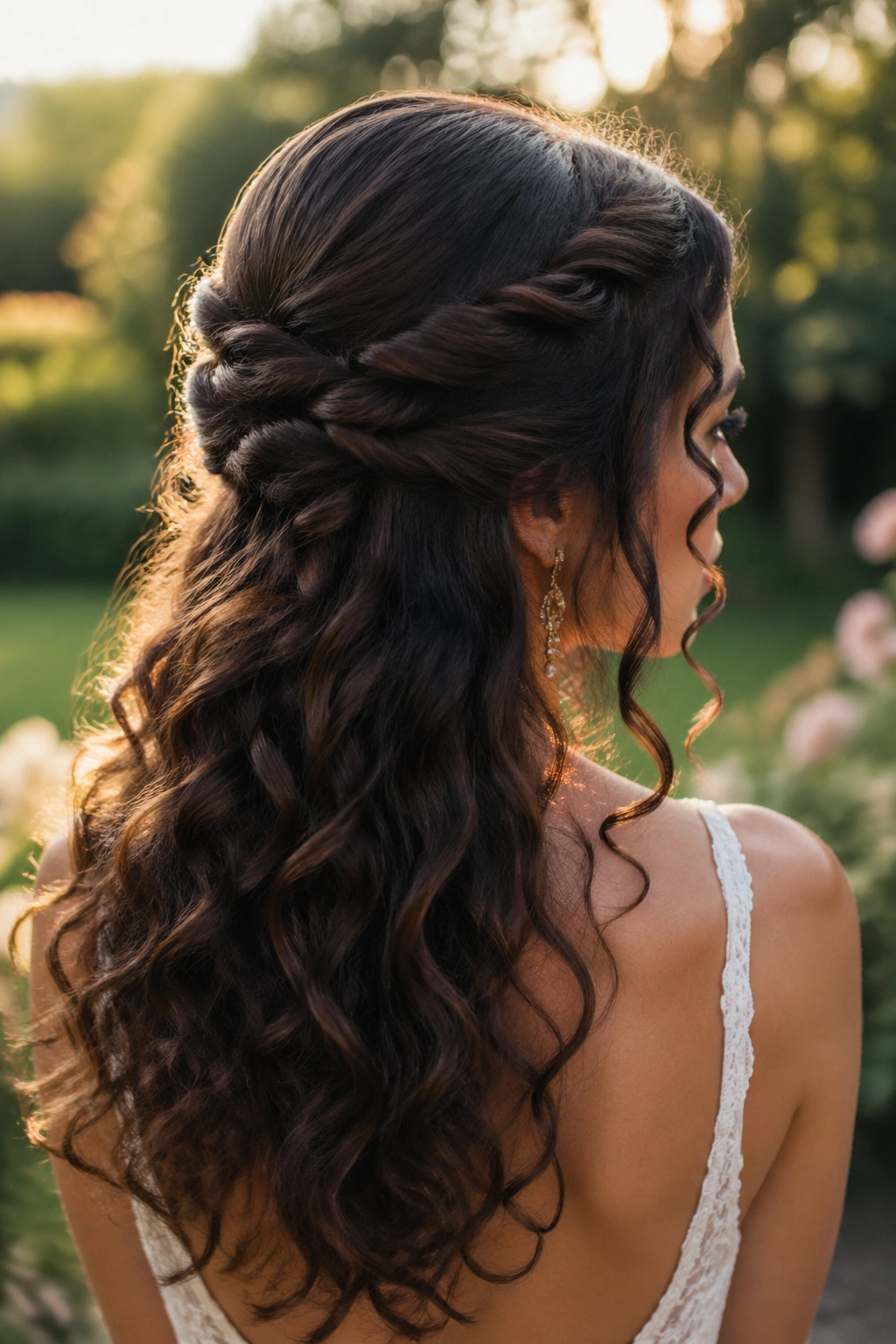
Rope twists are underrated on wedding hair. They’re tidy, quick to build, and they don’t compete with curl texture the way a heavier braid sometimes can.
The style is made by twisting two sections on each side of the head, then crossing them and pinning them at the back. Because the twist is built from just two strands, it usually feels smoother and lighter than a braid. That matters when the curls below are already doing a lot visually. You don’t need the top to fight for attention.
This is one of the better half-up choices for outdoor ceremonies or long wear, because the twist pattern tends to stay neat without looking overworked. If the hair is layered, a stylist can tuck the shorter bits underneath the twist so they don’t poke out. A mist of flexible spray is enough. Heavy spray can make the twist look crunchy, and that’s not the mood here.
Rope twists also work well when the dress has lace, beading, or a lot of surface detail. The hairstyle gives structure, but it stays cleaner than a braid. That balance makes it easy to wear with almost any neckline.
12. Curly Bubble Half-Up Ponytail
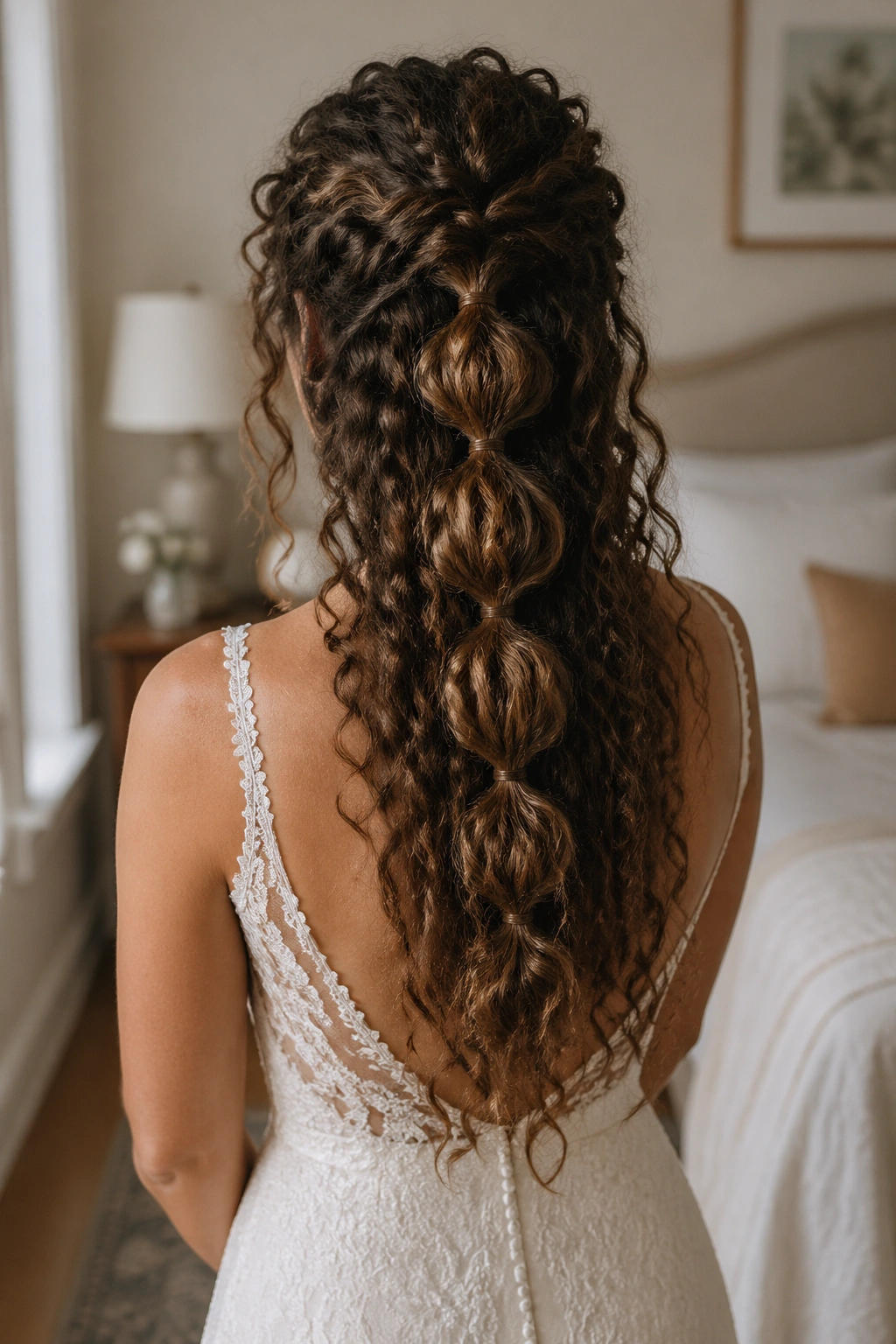
Unlike a full ponytail, this keeps the ends free. That’s the part that makes it feel bridal instead of sporty.
A curly bubble half-up ponytail starts with a section at the crown or upper back of the head, gathered into a half pony and secured with a clear elastic. Then the tail is separated into 1.5 to 2-inch sections, and each section gets its own elastic so it forms soft bubbles. On curly hair, those bubbles pick up the texture and look fuller than they would on straight hair.
The style is perfect for longer curls that can handle a bit of structure. It keeps the crown tidy, gives the upper half a defined shape, and leaves enough hair down to look romantic. If you want a little extra polish, wrap a thin strand of hair around the first elastic and pin it underneath. That small step hides the one spot that usually gives away the construction.
I’d choose this style for a bride who wants something slightly modern and a little less expected. It has movement, but it doesn’t look messy. And when the bubbles are set evenly, the whole thing feels balanced from top to bottom.
13. Fresh Flower Half-Up
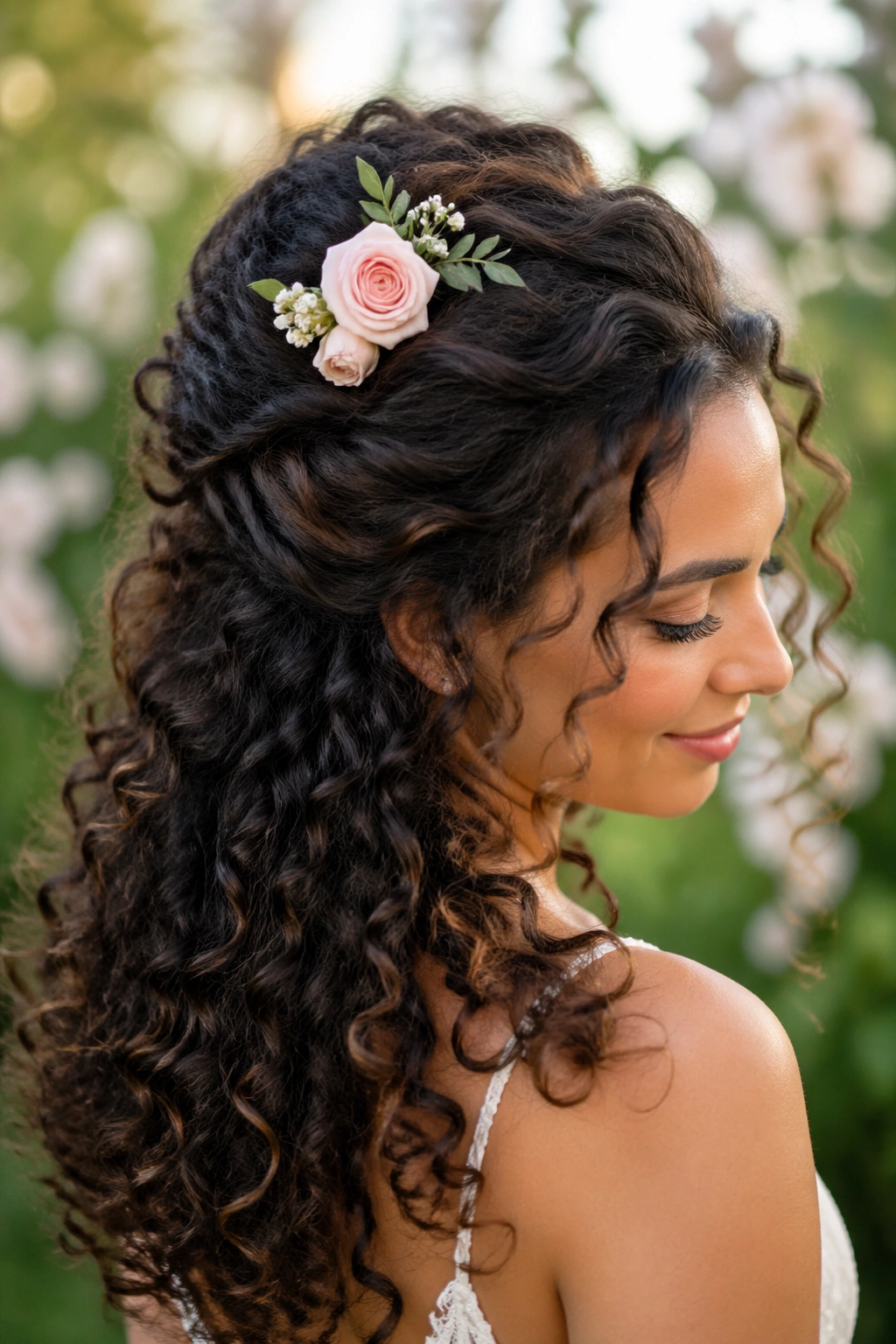
A sprig of blooms can do more than a wall of pins. Put flowers in the right place and they make curly hair feel complete, not crowded.
Fresh-flower half-up styles usually start with a simple twist, knot, or braid at the crown, then one to three blooms are tucked into the join where the sections meet. The flowers can sit close to the head or trail a little to one side, depending on the shape of the curls. Small, sturdy flowers tend to work better than big soft ones because they stay in place and don’t collapse into the hair.
Which Blooms Hold Up Best
- Spray roses for a classic look and short stems.
- Orchids for a clean, modern line.
- Baby’s breath for tiny, airy accents.
- Waxflower when you want something delicate that still has texture.
Use floral tape around the stems so they do not slip or snag. That sounds fussy, but it matters. Fresh flowers can get heavy, and curly hair already has enough lift to support, so the stems need to be secured well.
This style is best when the dress or bouquet already includes flowers. It keeps the whole look connected without feeling too matched. A single bloom placed off-center can be enough. Sometimes more just means more. Not better.
14. Crown Braid Into Curly Cascade
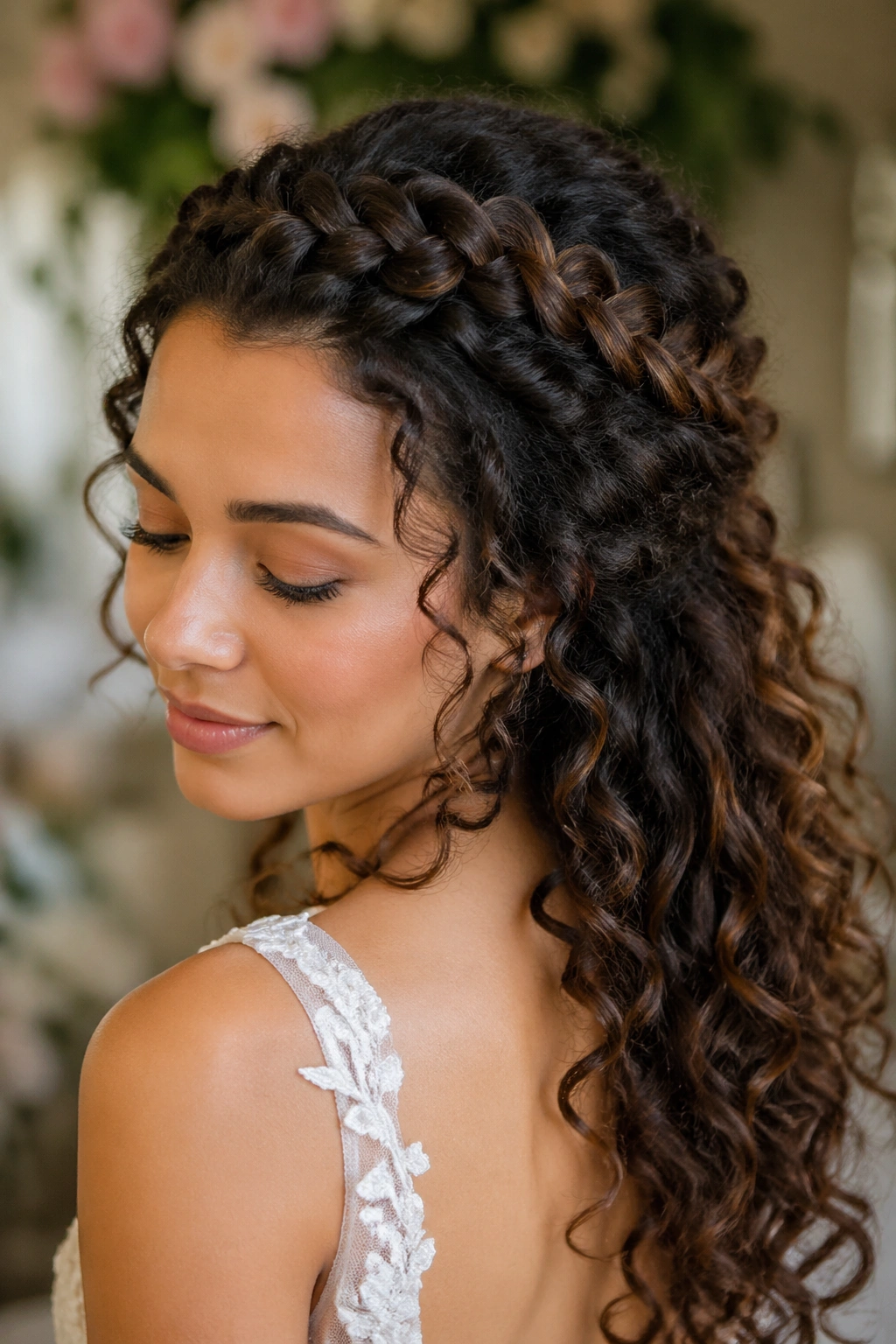
A crown braid reads formal from across the room; a half-up version keeps it lighter and easier to wear. That combination is why this style keeps showing up in bridal hair that has to last through a long day.
Here, the braid runs along the hairline or slightly behind it, wrapping partway around the head before ending near the back. The lower curls stay free and full. It feels more structured than a waterfall braid because the line is continuous and tidy, but it still leaves the length open. If the braid is wide, the style looks grand. If it’s narrow, it feels softer and more delicate.
This one suits brides with thicker curls because the braid has enough hair to show up. On finer curls, a stylist may need to loosen the braid a little after pinning so it has more width. The whole look works best when the braid is not too tight. A tight braid makes the top look severe. A relaxed braid gives the crown shape without losing softness.
For veils, this is one of the easiest placements. The braid creates a stable path for pins, and the veil can sit just below it or be tucked into the braid’s back edge. That’s the kind of detail that saves time.
15. Minimal Clip Half-Up With Natural Texture
Sometimes the smartest bridal hairstyle is the one that barely announces itself. If your curls already have shape and shine, a minimal clip can be enough.
This style takes a small section from the upper half of the hair and secures it with a single decorative clip, a slim barrette, or two tiny pins stacked close together. The rest of the curls stay down and untouched. The look is clean, simple, and calm. No heavy braid. No big knot. Just enough lift to open the face and keep the front from falling forward.
It’s a strong choice for brides who want the dress, makeup, and texture to stay in balance instead of letting the hair take over. It also works well when the veil or earrings already bring enough detail. A small clip with crystals, pearls, or a brushed metal finish gives the right amount of finish without crowding the curls.
I’d pick this style for someone who loves natural curl definition and does not want to spend the whole morning pinning, re-pinning, and second-guessing every piece. It’s honest. It’s easy to wear. And when the curls are in good shape, it looks like the best version of you rather than a costume version of a bride.
A strong half-up style for curly hair doesn’t need to hide the texture. It needs to support it, give it a shape that lasts, and leave enough room for the curls to do their thing. That’s the real difference between a bridal hairstyle that feels alive and one that gets stiff by the time the cake is cut.
