



Very curly hair has a way of making plain styles look either too flat or too fussy. The best hairstyles for very curly hair do one thing well: they let the curl pattern breathe instead of forcing it into a shape it was never meant to hold.
There’s a reason so many curl specialists talk about shrinkage, moisture, and shape before they talk about “style.” The American Academy of Dermatology points out that curly hair tends to be drier because scalp oils have a harder time sliding down bends and coils. That matters. A style that looks cute on straight hair can fall apart fast on tighter curls, while a style that respects the natural volume can look finished with almost no effort.
And honestly, that’s the whole game here. Very curly hair usually looks best when the style works with the bends, not against them. A smart part, the right amount of hold, a clip in the right place, a clean line at the nape — small details do a lot of heavy lifting.
1. The Defined Wash-and-Go
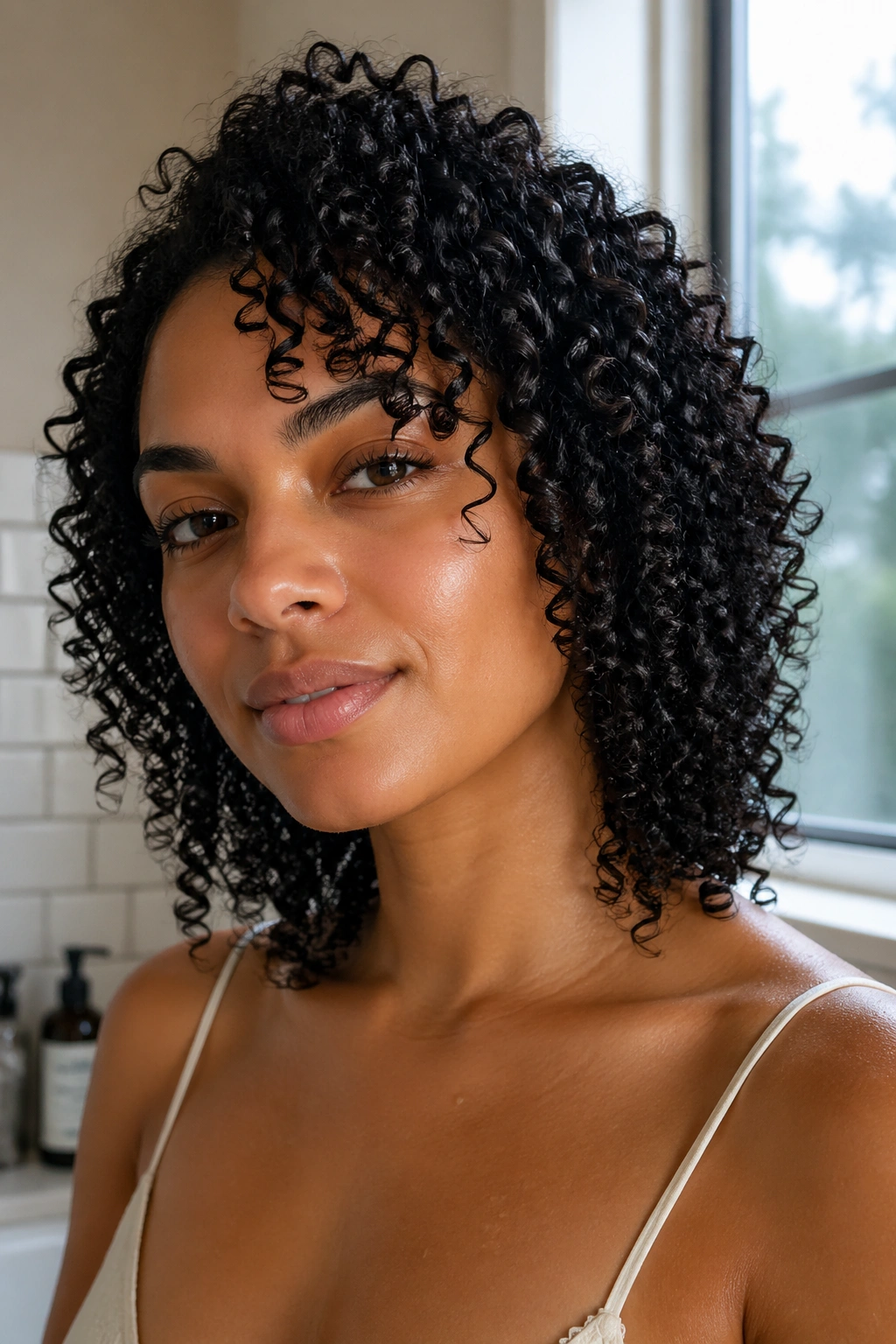
A good wash-and-go is still the cleanest answer for very curly hair. It shows off the curl pattern without piling extra shape on top, and when it’s done well, it looks deliberate rather than random.
Why It Works on Tight Curl Patterns
The trick is definition. Start on soaking-wet or very damp hair, rake in a leave-in and a medium-hold gel, then stop touching it. That’s the part people skip. The less you disturb the curl clumps while they’re setting, the cleaner the finish.
If your curls are dense, section the hair into four quadrants and work one section at a time. Scrunch upward with a microfiber towel or an old T-shirt, then air-dry or diffuse on low heat. High heat can make the outside look finished while the inside stays damp. That half-dry situation is what causes frizz later.
What to Watch For
- Use a gel with enough hold to form a cast.
- Keep your hands out of the curls until they’re at least 80 percent dry.
- If your roots go flat, lift them with a diffuser on low speed.
- Break the cast only when the hair feels fully dry and crisp on the outside.
Pro tip: if the top always puffs out first, clip the roots at the crown while the hair dries.
2. The Pineapple Puff
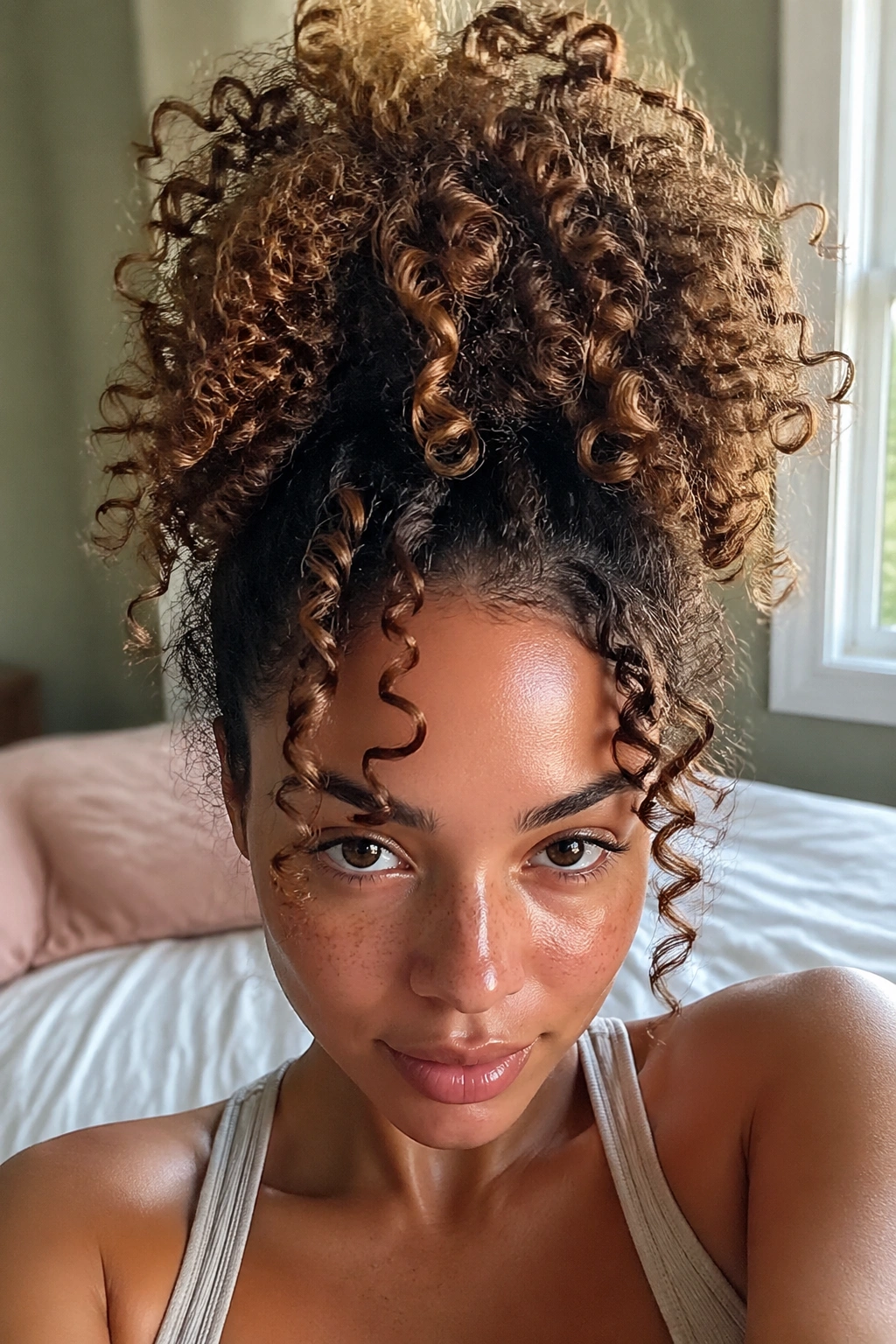
What do you do on day two or day three when the ends are still nice but the roots have lost their manners? The pineapple puff is the easy answer, and it looks better on very curly hair than on almost any other texture.
Flip your head forward, gather the curls high at the crown, and secure them with a satin scrunchie or a soft elastic that does not dig in. The goal is a loose puff, not a tight ball. Leave the length and shape of the curls intact, then let the ends spill upward and outward. It looks casual, but not sloppy.
This style is especially good if your curls are long enough to get stretched out overnight. It keeps the top from getting crushed and gives the hair a lifted silhouette. If the front keeps slipping, smooth the hairline with a tiny bit of gel or edge control. Tiny amount. Don’t coat the whole forehead.
One more thing: this style loves a satin pillowcase. It keeps the puff from turning into a frizz halo by morning.
3. The High Curly Ponytail
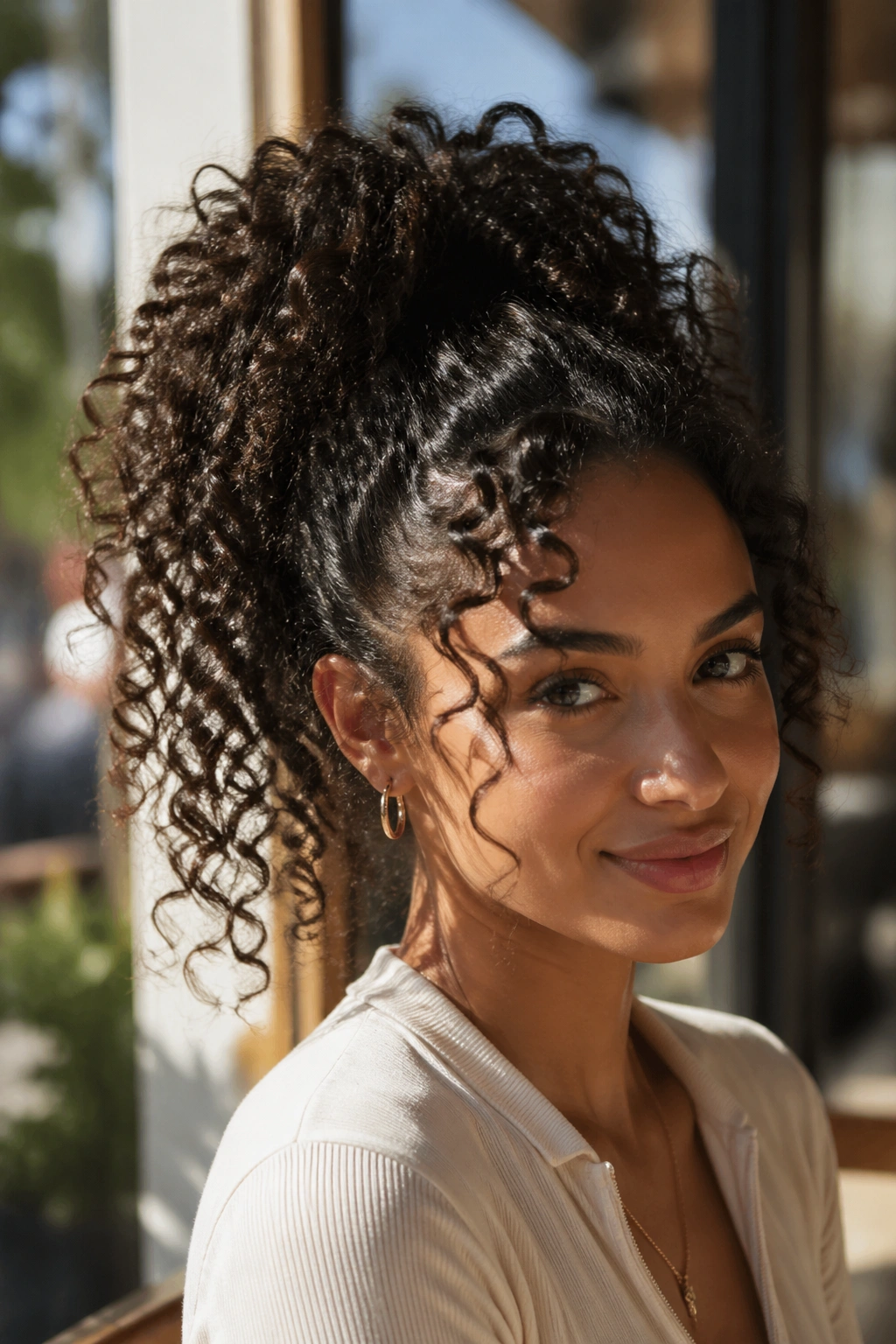
A high ponytail is not basic on very curly hair. It can look sharp, dramatic, and full of movement when the curl pattern stays intact.
The key is placement. Set the ponytail at the crown or just above it so the curls fall from a high point and fan out naturally. If you pull it too tight, the style loses all its energy. If you leave a few curls loose around the face, the ponytail softens up fast and feels less severe.
How to Make It Hold
Use a brush only on the surface, not through the whole head. You want the outside to look neat while the inside stays soft. Secure with one elastic, then wrap a small curl or a thin strip of hair around the base to hide the band. That tiny step makes the style look finished.
A high curly ponytail is a solid pick for work, errands, or a night out. It gets the curls up and away from the neck, which is a blessing when the weather turns warm or the hair feels heavy. Keep the ponytail loose enough that the scalp doesn’t feel pulled by the end of the day.
4. The Low Puff at the Nape
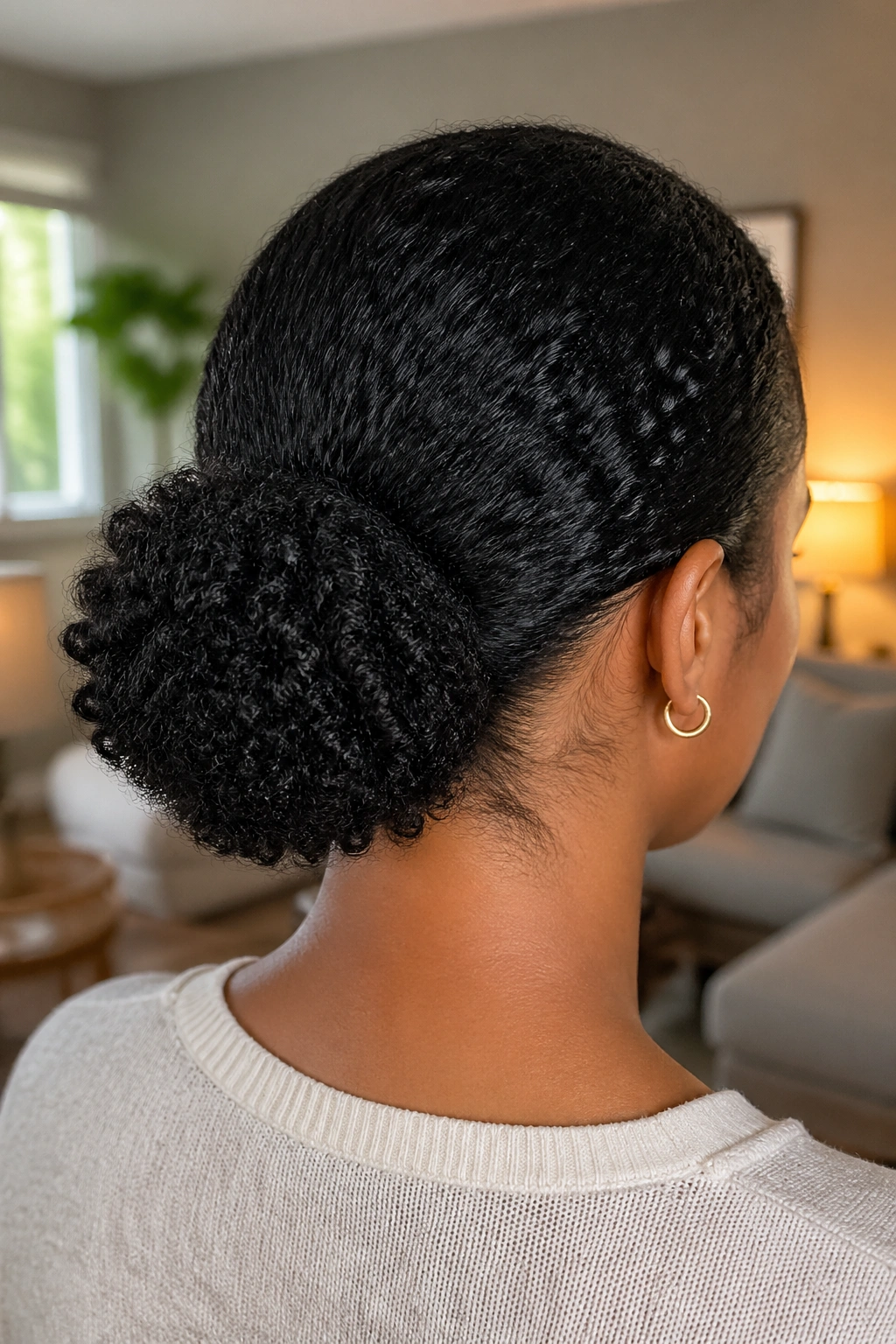
Need something fast that still looks like you meant it? The low puff at the nape is the move.
This style keeps the volume low and controlled, which is useful when your curls are in a stretched, fluffy mood and you do not want a giant shape sitting high on the head. Gather the hair low at the back, smooth only the perimeter, and let the body of the curls stay loose inside the puff. The result is fuller than a bun, softer than a ponytail, and easier to wear for hours.
It’s also kinder to the hairline than styles that pull everything upward. Use a satin scrunchie or a covered elastic, and don’t yank the base down so hard that the scalp feels tight. A little lift at the crown helps the puff look intentional instead of collapsed.
If you like a neat finish, brush the sides back and leave the top slightly rounded. If you like a softer look, keep the front a bit fluffy. Both work. One is a little cleaner, the other a little more relaxed.
5. The Half-Up, Half-Down Twist
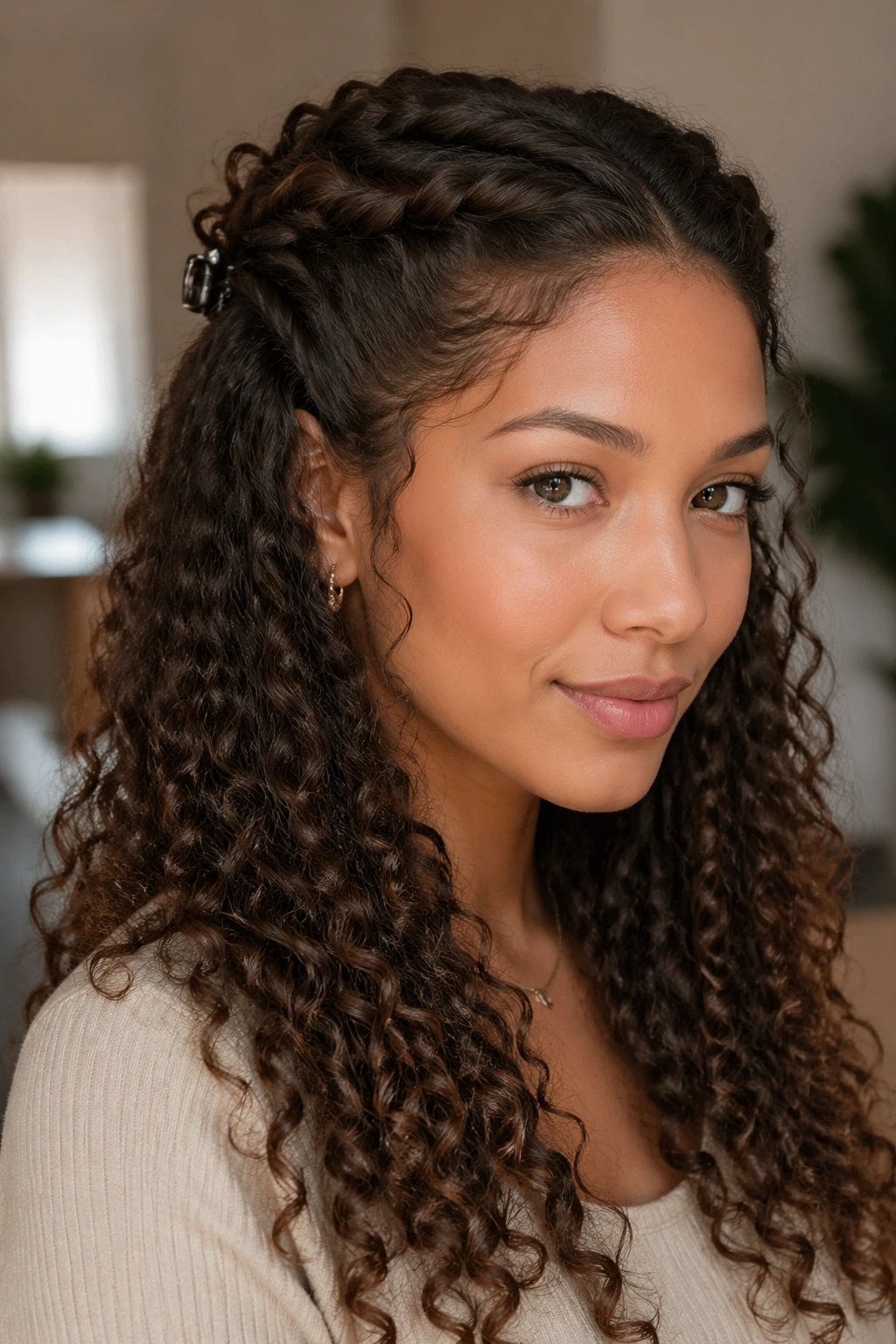
The half-up, half-down style is one of those rare looks that actually gets better on very curly hair because the volume does part of the styling for you.
Pull back the front sections from both temples, twist each side toward the back, and secure them together with a small clip or a few pins. Leave the rest of the curls free. That split gives you lift at the face and movement at the shoulders, which is a nice balance when the hair is dense and heavy.
Where to Place the Section Line
Set the part line a little higher than you think if the curls are thick. Too low, and the style can look weighed down. Too high, and you lose the fullness that makes the look interesting in the first place.
A small barrette, a claw clip, or two crossed pins all work here. Choose the one that can hold through the day without sliding. If the front curls keep springing loose, pin the twists before you smooth them. That order matters. Smooth them first, and you’ll fight the shape all day.
This is one of the easiest styles to dress up or down. Same curls. Different mood.
6. The Rounded Afro
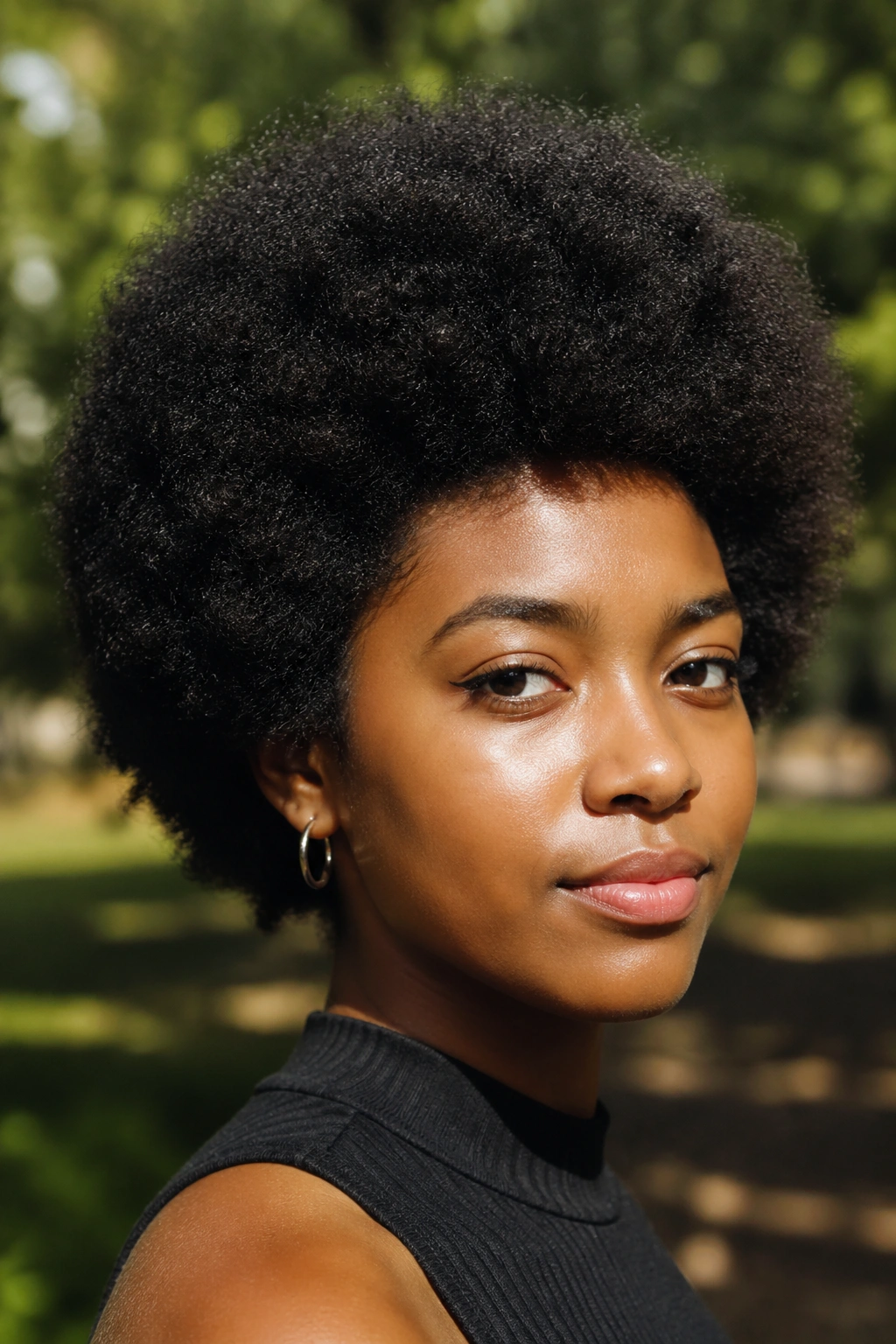
Three things make a rounded afro work: moisture, lift, and a good pick.
The rounded afro is one of the most shape-driven hairstyles for very curly hair, and when it’s cut and styled well, it gives the hair a sculpted, balanced look from every angle. Start with a shape that follows the head instead of fighting it. If the cut is too flat on top or too heavy at the sides, the roundness disappears fast.
Use a leave-in conditioner first, then a light cream or oil only where the hair actually needs it. After the hair dries, lift at the roots with a wide-tooth pick, but stop before you reach the ends. The ends should keep their curl pattern. That’s what keeps the style from looking puffy in a bad way.
- Pick only at the roots.
- Let the crown stay full.
- Trim regularly so the outline stays even.
- Avoid heavy butters that collapse the shape.
A rounded afro should feel soft, not helmet-like.
7. The Curly Shag
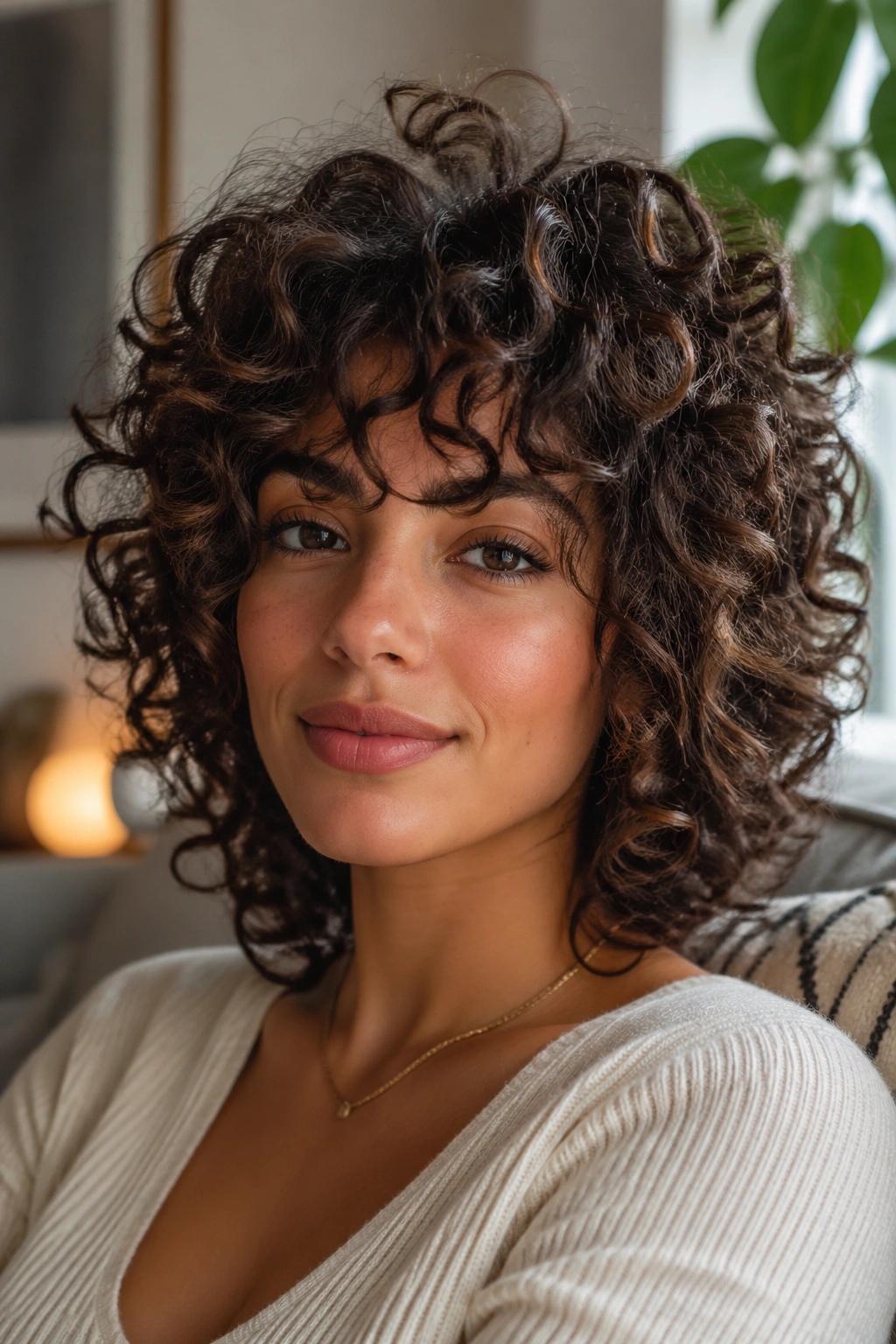
A curly shag is the opposite of a blunt cut, and that is exactly why it works so well on dense curls. It removes weight, breaks up bulk, and lets the curl pattern stack in a way that feels lighter on the head.
The best shag cuts are usually done on dry hair, because shrinkage changes everything. A stylist can see how each curl actually sits, not how it behaves when stretched. That matters a lot with very curly hair, where one section may spring up three inches while another hangs lower.
What Makes It Different
The layers usually start around the cheekbones or jaw and continue through the ends. That gives the curls movement without turning the shape into a triangle. If your hair tends to balloon outward at the sides, the shag can help pull some of that weight up and away from the bottom.
Style it with a curl cream or mousse, then diffuse on low heat. A little scrunching is enough. Too much handling breaks the shape before it has a chance to form. The appeal here is not polish — it’s swing.
If your curls are fine and get weighed down easily, ask for softer layers. You want lift, not choppiness.
8. The Side-Parted Curly Bob
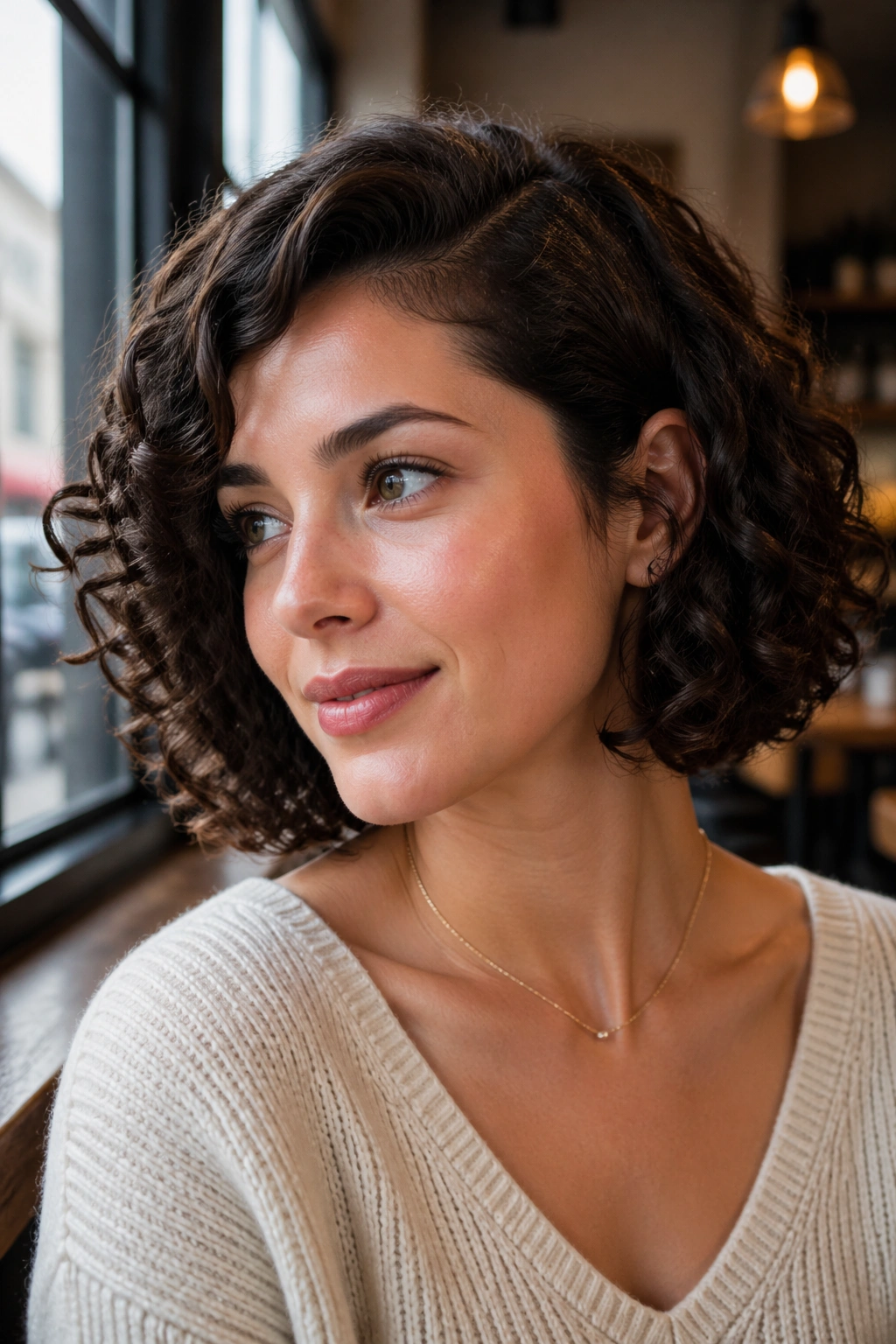
A bob on very curly hair can look crisp in the best way, but the side part is what keeps it from feeling too boxy.
I like this style when someone wants shape without a lot of styling drama. The side part gives the curls a clear direction, and the shorter length keeps the outline close to the jaw or chin. That makes the curls look bouncy instead of bottom-heavy. Tuck one side behind the ear with a clip, and the whole haircut suddenly feels more finished.
If your curls are springy, ask for a length a bit longer than chin level when the hair is dry. Shrinkage can steal more length than people expect, and a bob that lands at the ears can look shorter than planned once it dries. That is one of those details that saves a lot of disappointment later.
This cut is especially good if you want something tidy enough for work but still full of movement on weekends. It wears both moods well.
9. Long Layered Curls with a Center Part
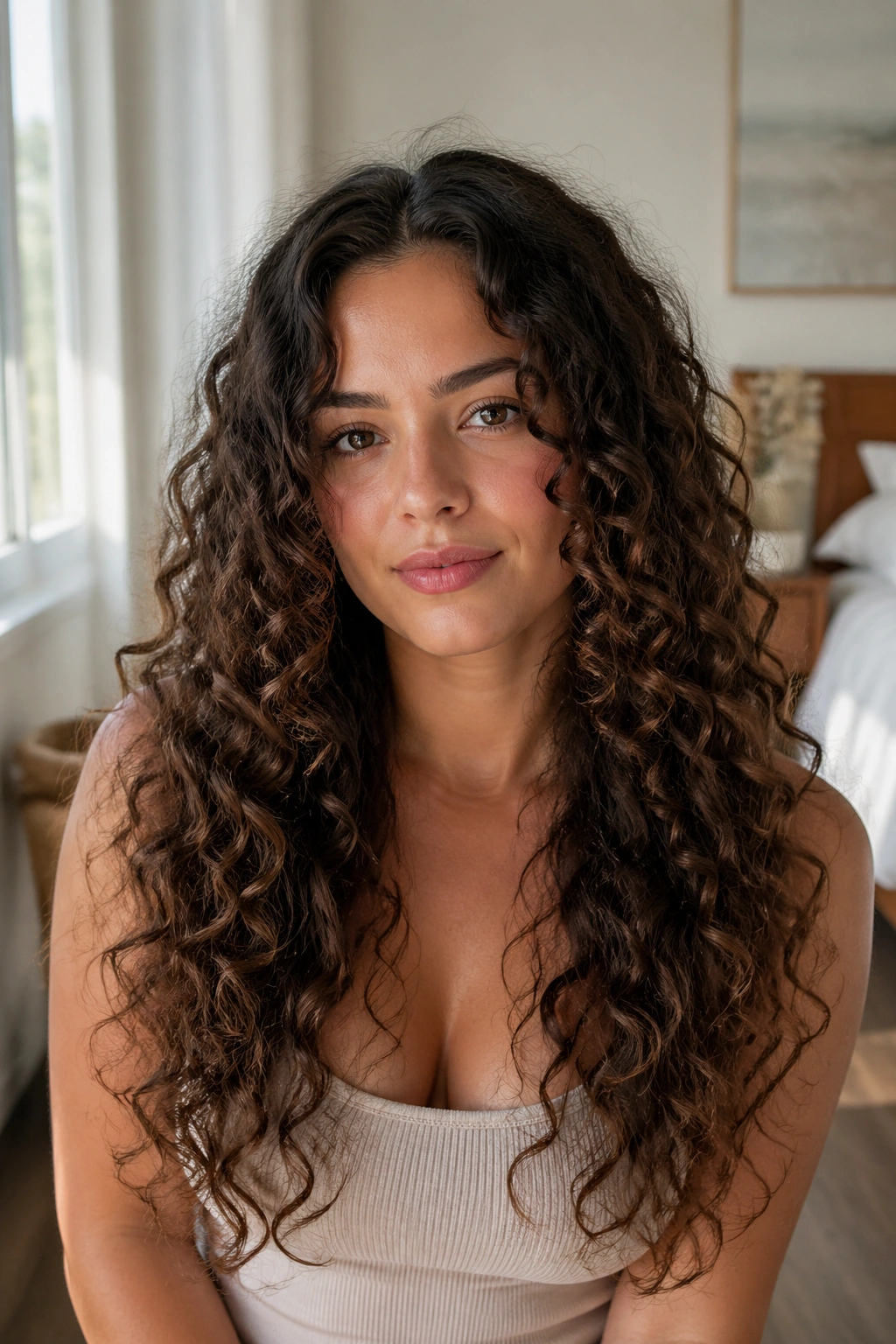
If you love long hair, keep it long — but put the weight in the right places.
A center part works nicely when the layers are cut to support the curl pattern instead of sitting on top of it. On very curly hair, long one-length cuts can turn into a triangle or a heavy curtain. Layers around the face, shoulders, and lower back take out just enough bulk to keep the shape soft.
How to Style the Length
Start with a curl cream, then add a light gel to the outer layer for hold. Use your fingers or a wide-tooth comb to guide the curls down the center part, then let them fall where they want. A few face-framing pieces can be finger-coiled if they’re acting lazy. That little bit of attention at the front changes the whole look.
This style is nice when you want length to stay the main event. The curls are still the star, but the line of the cut gives them room to move. It’s one of the easiest ways to keep long curly hair from looking heavy.
10. The Two Space Buns
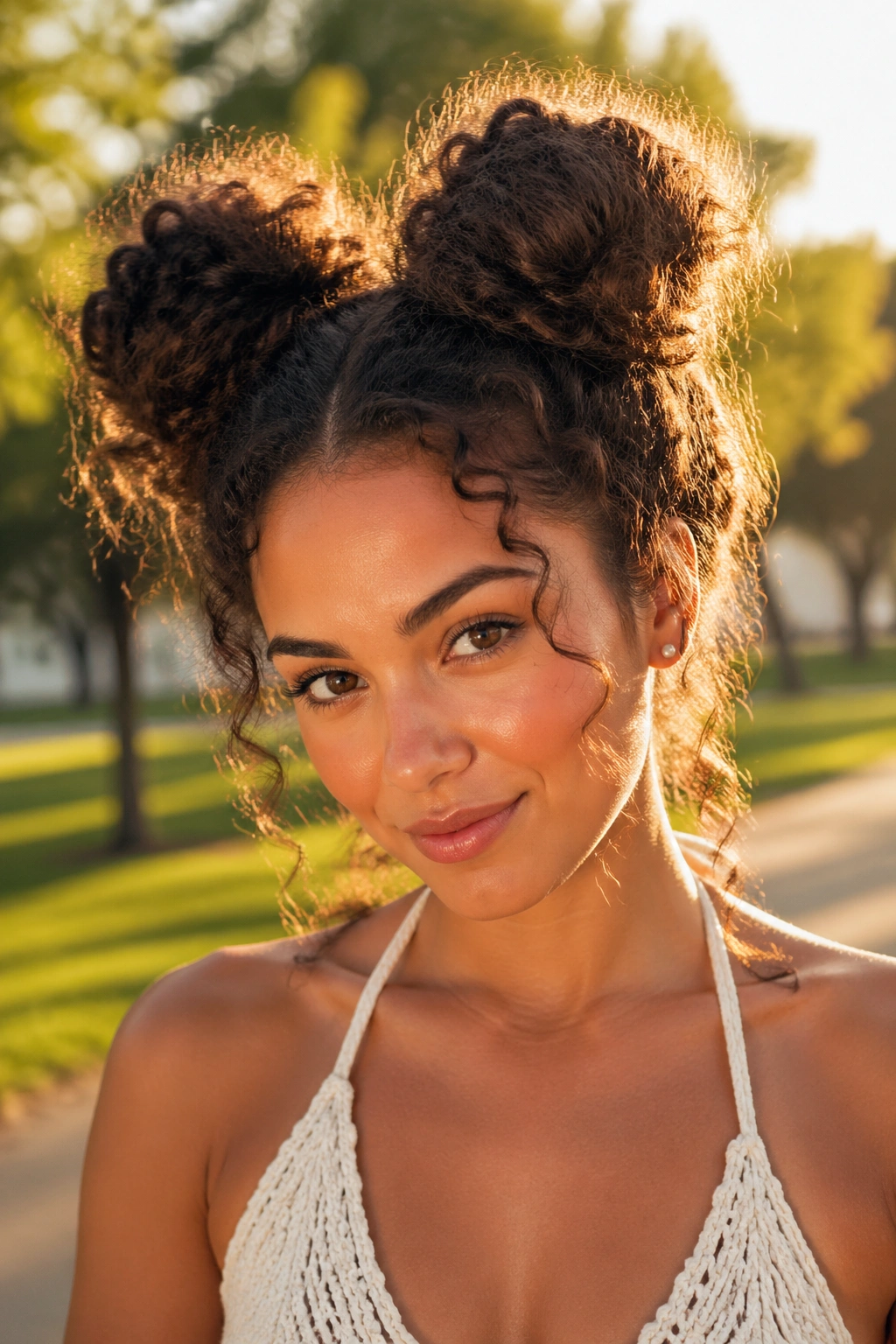
Space buns on very curly hair should not be confused with the tiny, neat version people wear on straight hair. On curls, they’re fuller, looser, and a lot more fun.
Split the hair down the middle, gather each side high or mid-height, and twist each section into a bun. Leave a few ends out if the curls are long. That gives the buns texture and keeps them from looking too stiff. Use two elastics and a few pins, especially if the hair is thick and heavy.
This style is good when the weather is warm, when you need the neck clear, or when you want something that reads playful without being childish. That depends on how tightly you make the buns. A looser bun feels softer; a tight one looks more severe.
A satin scrunchie can make the finish less harsh. So can a few curls left loose at the temples. Tiny choices. Big payoff.
11. The Curly Claw-Clip Twist
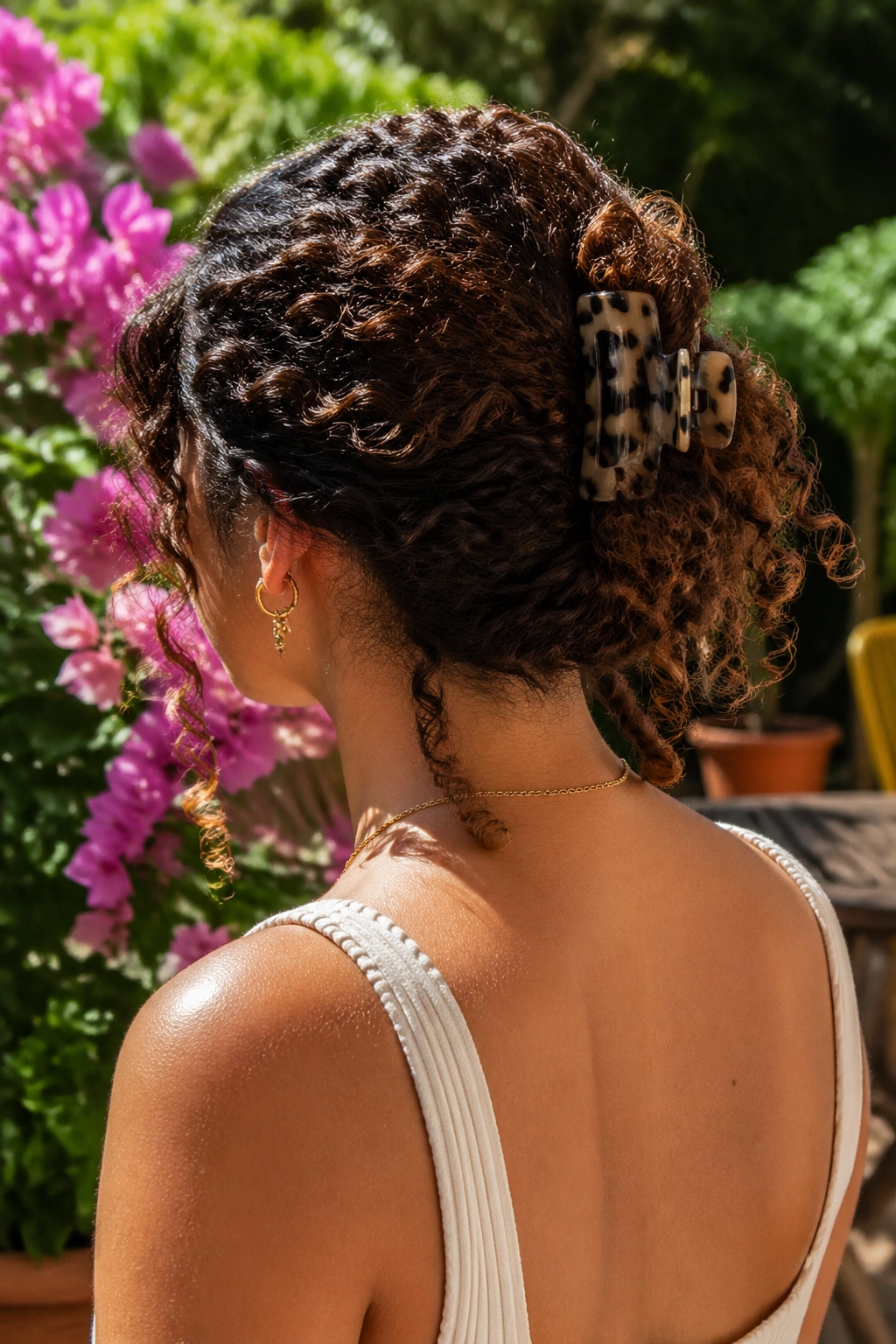
A claw-clip twist is one of my favorite lazy-day styles because it looks more polished than the effort it takes.
Gather the curls at the back, twist the length upward, and clip the twist in place with a strong claw clip that can actually grip thick hair. A cheap clip will slip. A good one holds. That sounds obvious, but anyone with dense curls knows how fast a weak clip gives up.
Unlike a ponytail, this keeps the ends visible, which is useful if the curls are still pretty and you do not want to hide them. Let the ends fan out over the clip or fold them under for a cleaner shape. Both are fine. One feels softer, the other a little neater.
If your hair is extra heavy, use two clips crossed over each other. That little trick saves you from the slow, annoying slide that happens halfway through the day. The best claw clip for this style has a strong spring and teeth that actually bite.
12. The Braided Crown
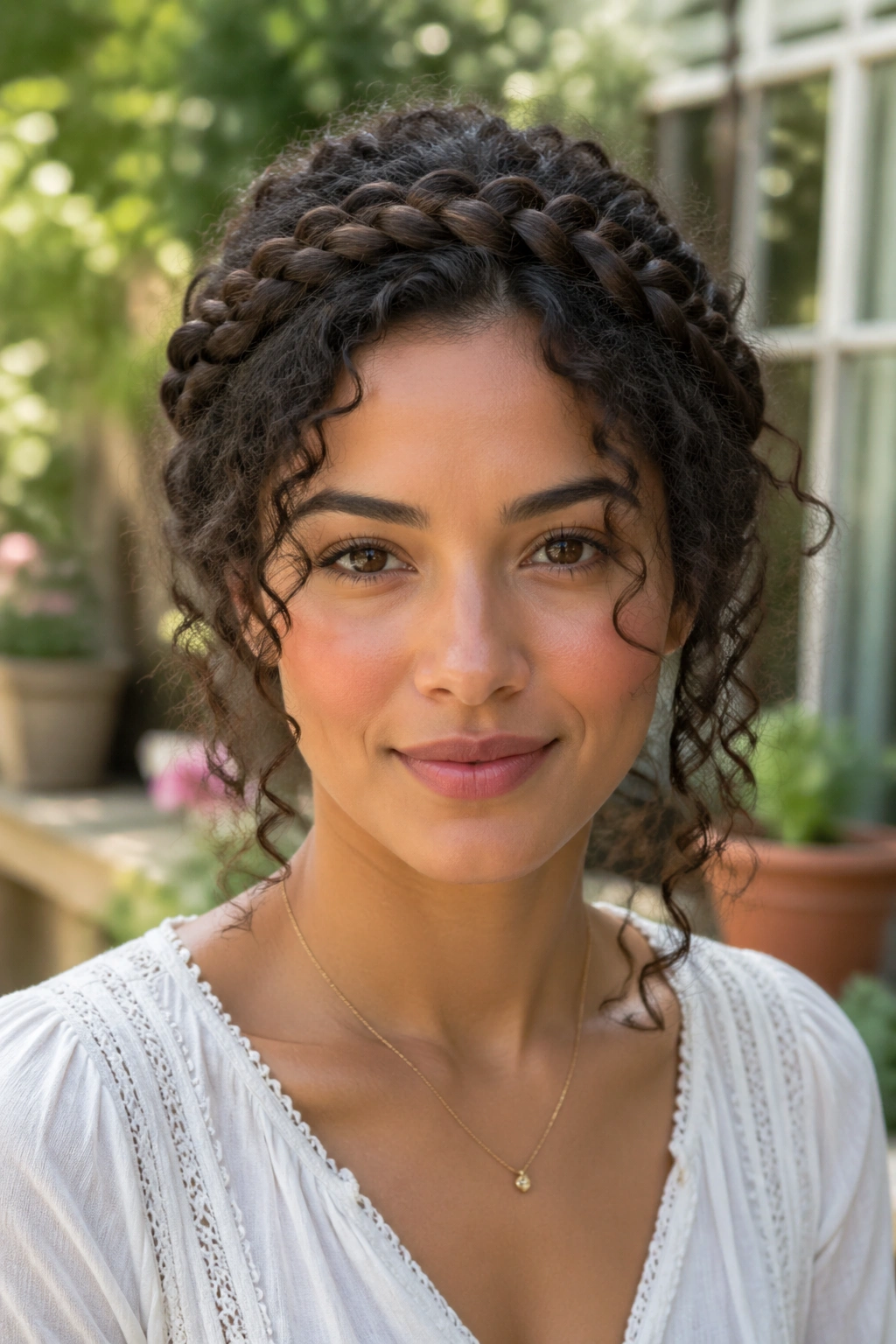
When humidity is ugly, a braided crown earns its keep fast.
Take two sections from the front hairline or the temples, braid or twist them back along the sides of the head, and pin them together near the crown or lower back. Leave the rest of the curls free. That creates a frame around the face and keeps the top from puffing up into chaos by noon.
A braided crown works because it controls the parts of the hair that frizz first. The curls at the back can stay loose and full, while the front stays put. It is a practical style, but it does not look practical, which is part of the charm.
A Few Useful Details
- Use a little gel on the parting only.
- Pin under the braid, not over it.
- Keep the braid loose so it does not dent the curl pattern.
- Finish with a light mist of water if the front starts to dry out.
This is a good choice for weddings, dinners, or any day when you want the curls to behave without losing their shape.
13. Sleek Sides and a Full Top
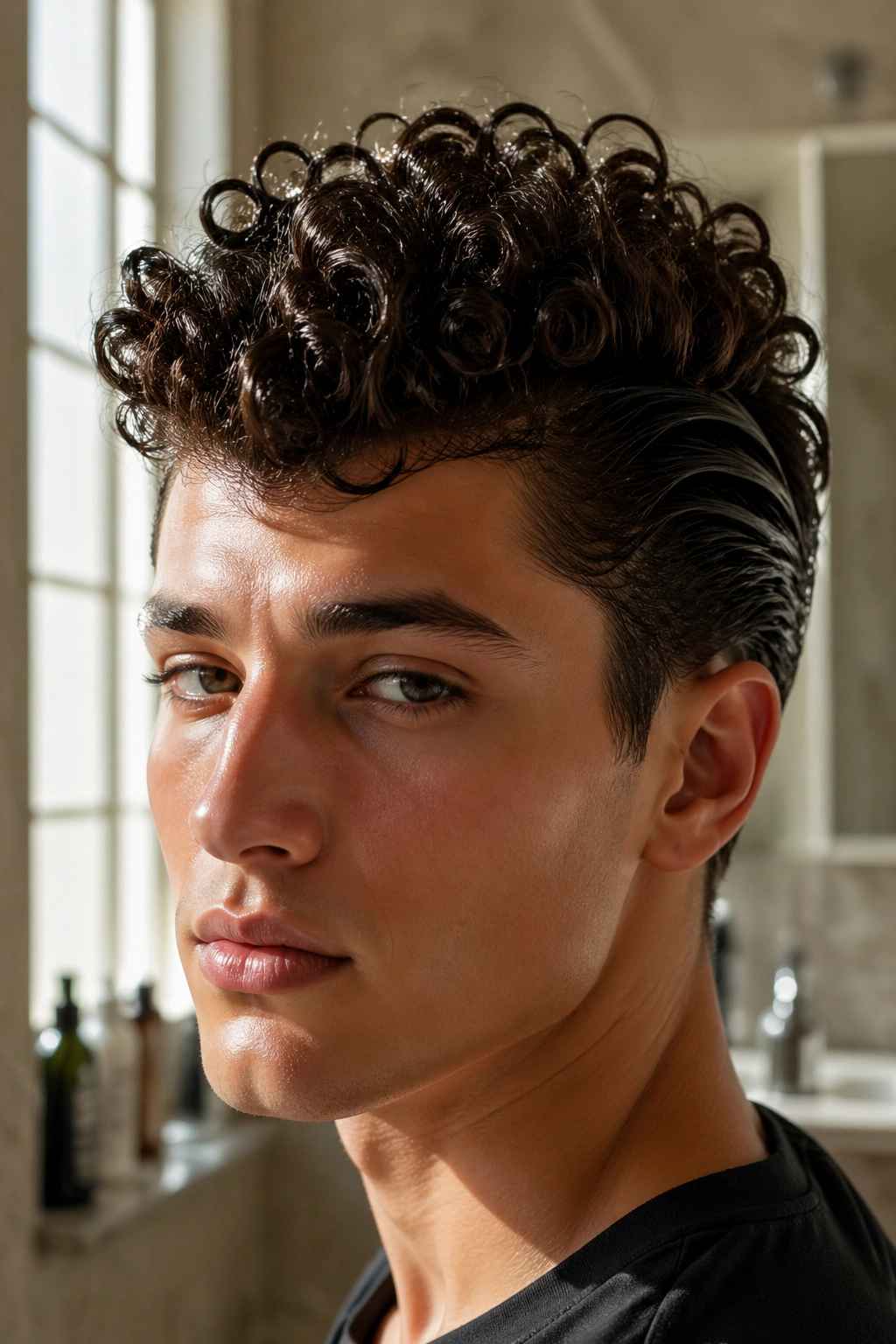
Curly hair does not have to be fluffy everywhere to look good. Sometimes the strongest shape is a controlled one.
Sleek the sides back with a little gel and a soft brush, then keep the top full and lifted. That contrast makes the crown look bigger and gives the face a sharper frame. It is a strong look, almost architectural, and it plays very well with very curly hair because the texture at the top keeps it from looking too severe.
The sides do need some care. Work the gel into the perimeter in thin layers, then smooth it down with your palms or a boar-bristle brush. If you pile on too much product, the hairline gets sticky and dull-looking. A scarf wrapped for 10 to 15 minutes can help the sides set before you head out.
This style is for the days when you want the curls to have drama, not just volume. It feels a little bolder than a wash-and-go. I like that. Sometimes curl texture deserves a sharper outline.
14. The Curly Pixie with Tapered Sides
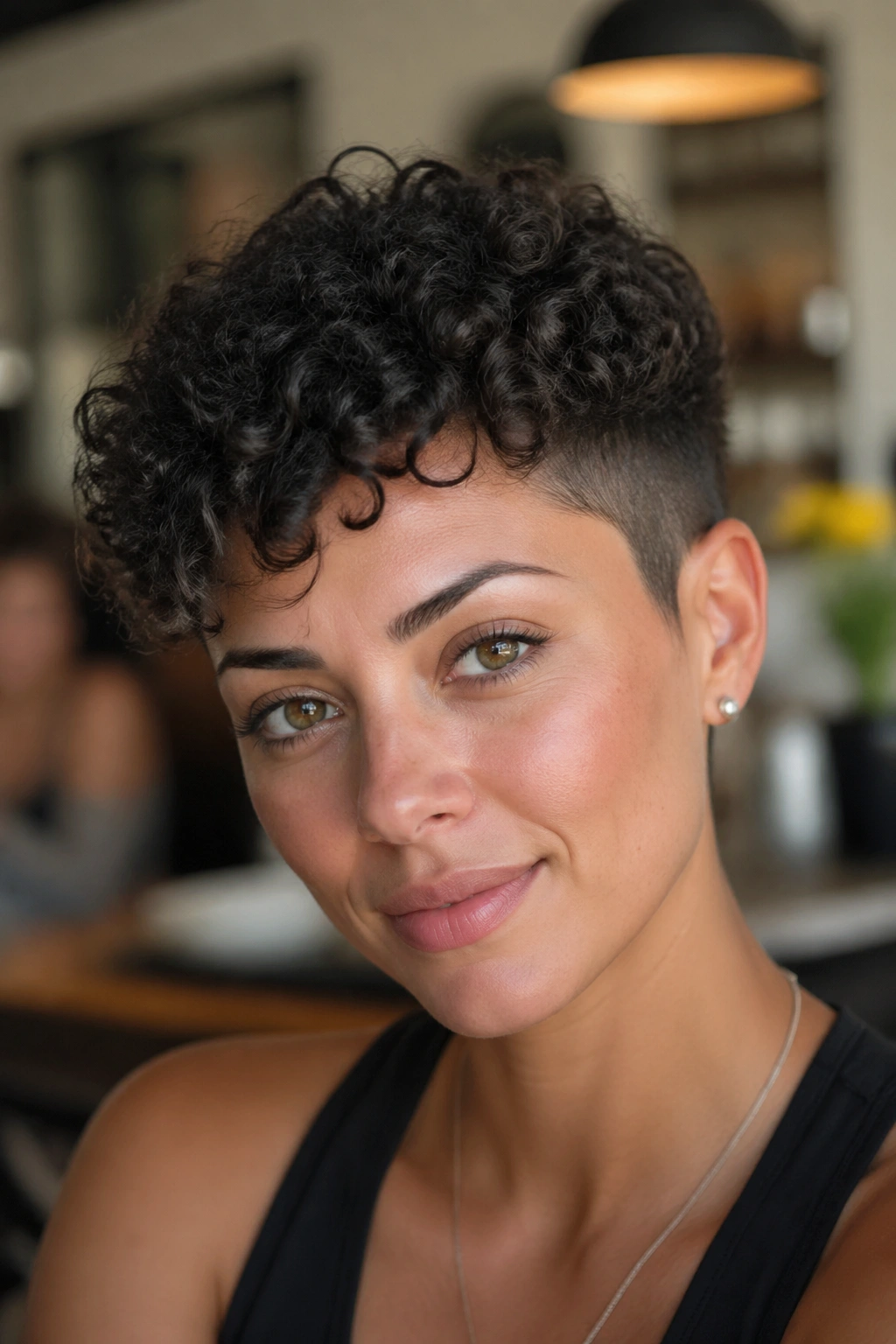
Short curly hair can be easier than long curly hair, but only if the cut respects the curl pattern.
A pixie with tapered sides keeps the sides close and the top a little longer, which gives very curly hair shape without a ton of daily work. The contrast is the whole point. The top can be soft and springy, while the nape stays neat enough that the cut does not puff out into a mushroom.
This style really benefits from a dry cut. A curl that looks short when wet may spring up a full inch or two once it dries, and a pixie has no room for guesswork. If the top is too short, you lose the texture. If the sides are too long, the outline starts to collapse.
Use a light curl cream or a small amount of mousse, then let the shape air-dry or diffuse. Heavy butter is usually too much here. Short curly cuts need control, not weight. A little shape around the temples and nape makes the cut feel intentional every time you turn your head.
15. Side-Swept Curly Bangs
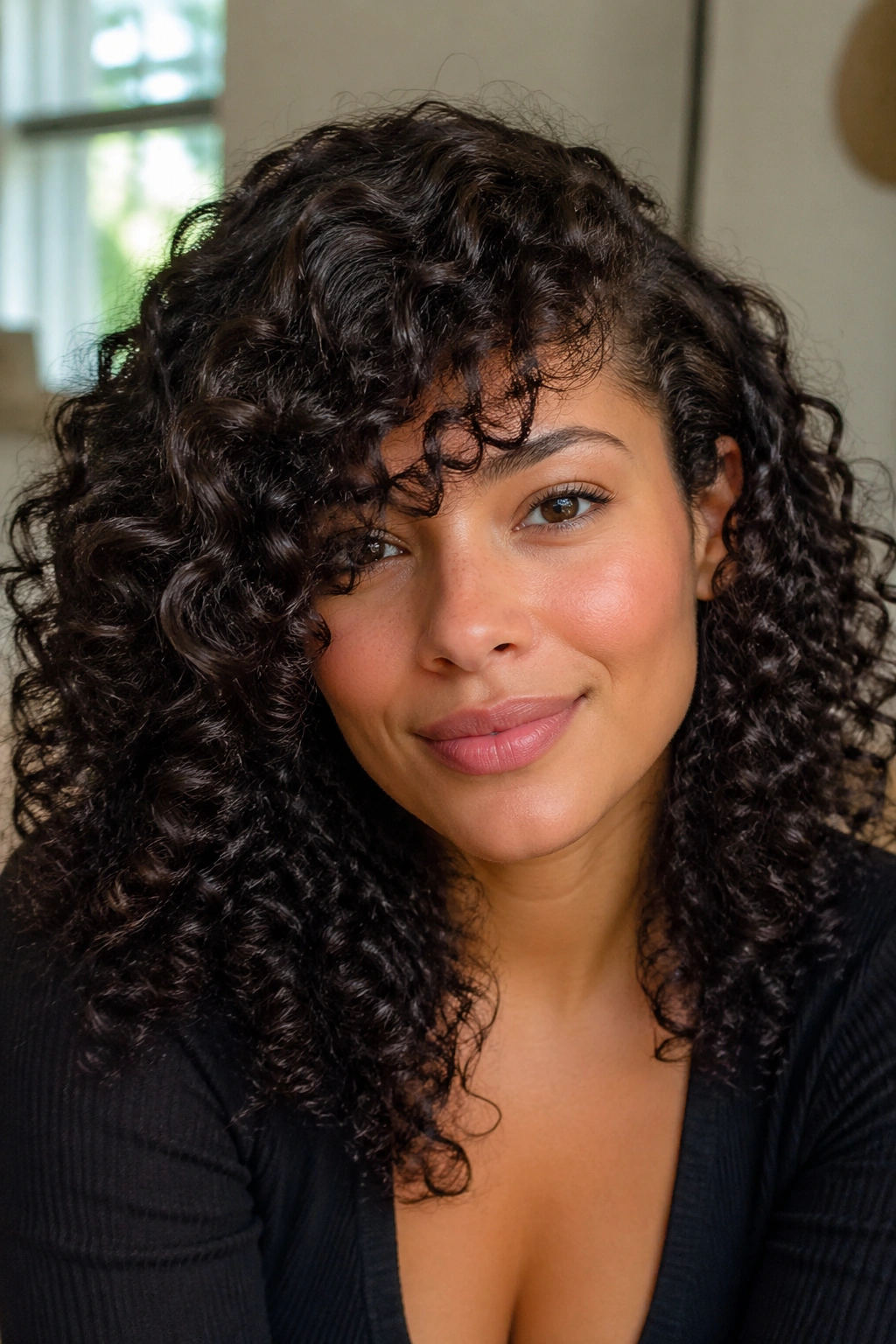
Can curly bangs work? Yes — if they’re cut with room to bounce.
Side-swept bangs are a smart way to bring curls toward the face without committing to a full fringe. They soften the forehead, break up a long face shape, and add movement even when the rest of the hair is pulled back. The trick is to ask for more length than you think you need. Curly bangs shrink. Sometimes a lot.
Ask for Length Below the Brow
A dry curl cut helps here because the stylist can see how the bangs actually fall. If the front curls are cut too short while wet, they can spring up and sit awkwardly above the brow line. Leave room. That extra half-inch can save the whole haircut.
To style them, use a small amount of cream on the front section and sweep the curls to one side with your fingers. Do not flatten them flat against the head. You want bend, not pancake bangs. A tiny clip can train them during the day if they keep splitting.
This look works best when the curls have some shape at the front. If the bangs are left hanging without support, they can look disconnected. Give them a little help, and they do the rest.
16. The Twist-Out
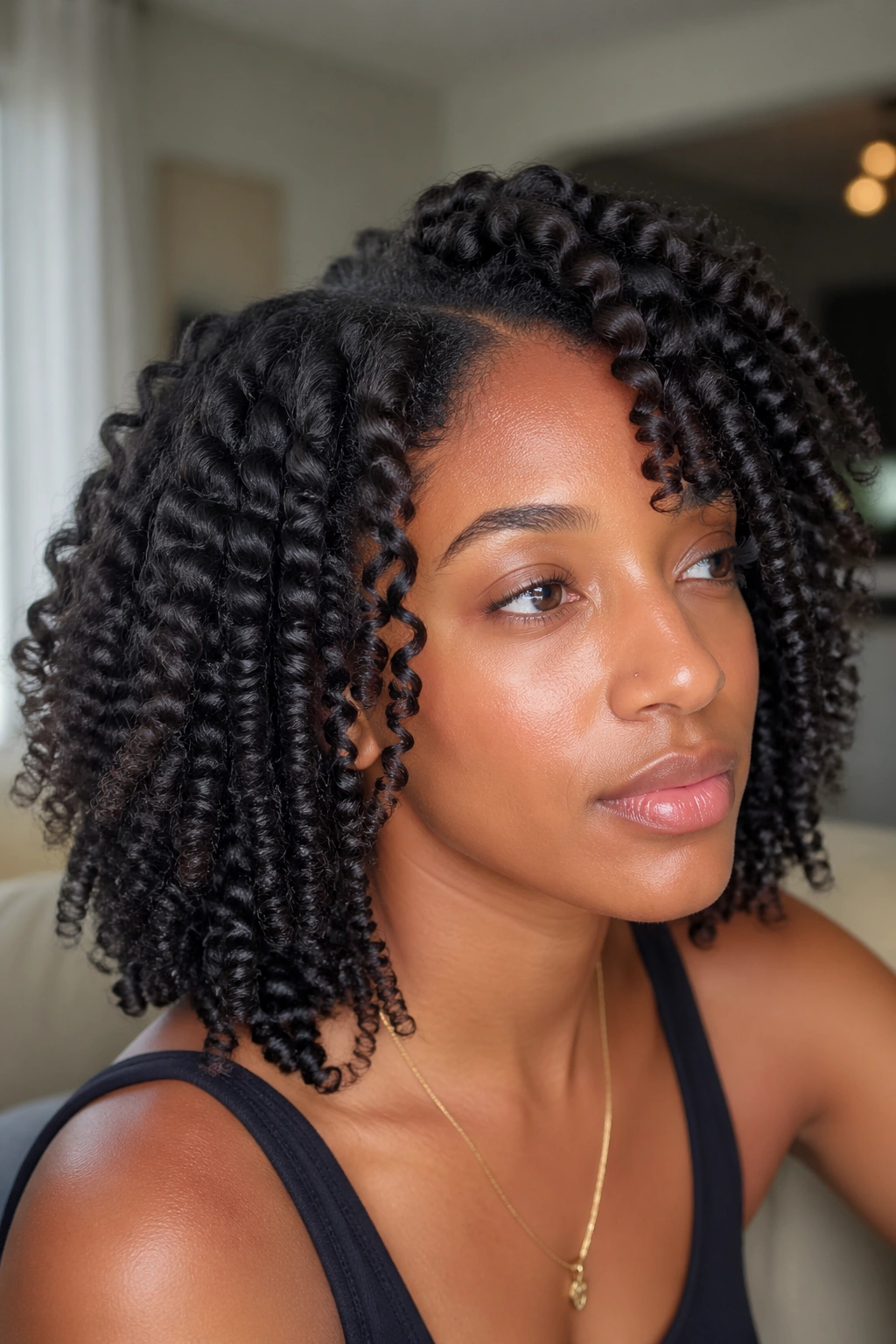
A twist-out is one of the best styles when you want definition that lasts past the first hour.
Start on damp hair and divide it into 6 to 10 sections, depending on thickness. Apply a curl cream or leave-in, then twist each section from root to end. The twists can be chunky for a looser result or smaller if you want tighter, more uniform curls. Let them dry completely. Not almost dry. Completely.
How to Take It Down Without Frizz
Unwind each twist gently with a little oil on your fingertips. Separate the curls only once or twice. If you pull them apart too much, you lose the pattern and invite frizz. That’s the tradeoff. Nice definition takes restraint.
This style is excellent for people whose natural curl pattern needs a little encouragement or whose hair tends to clump unevenly. It also stretches the hair slightly, which can make detangling easier the next day. The final shape should look soft and springy, not fluffy from the start.
A twist-out gives you control without making the hair look stiff. That balance is hard to beat.
17. The Bantu Knot-Out
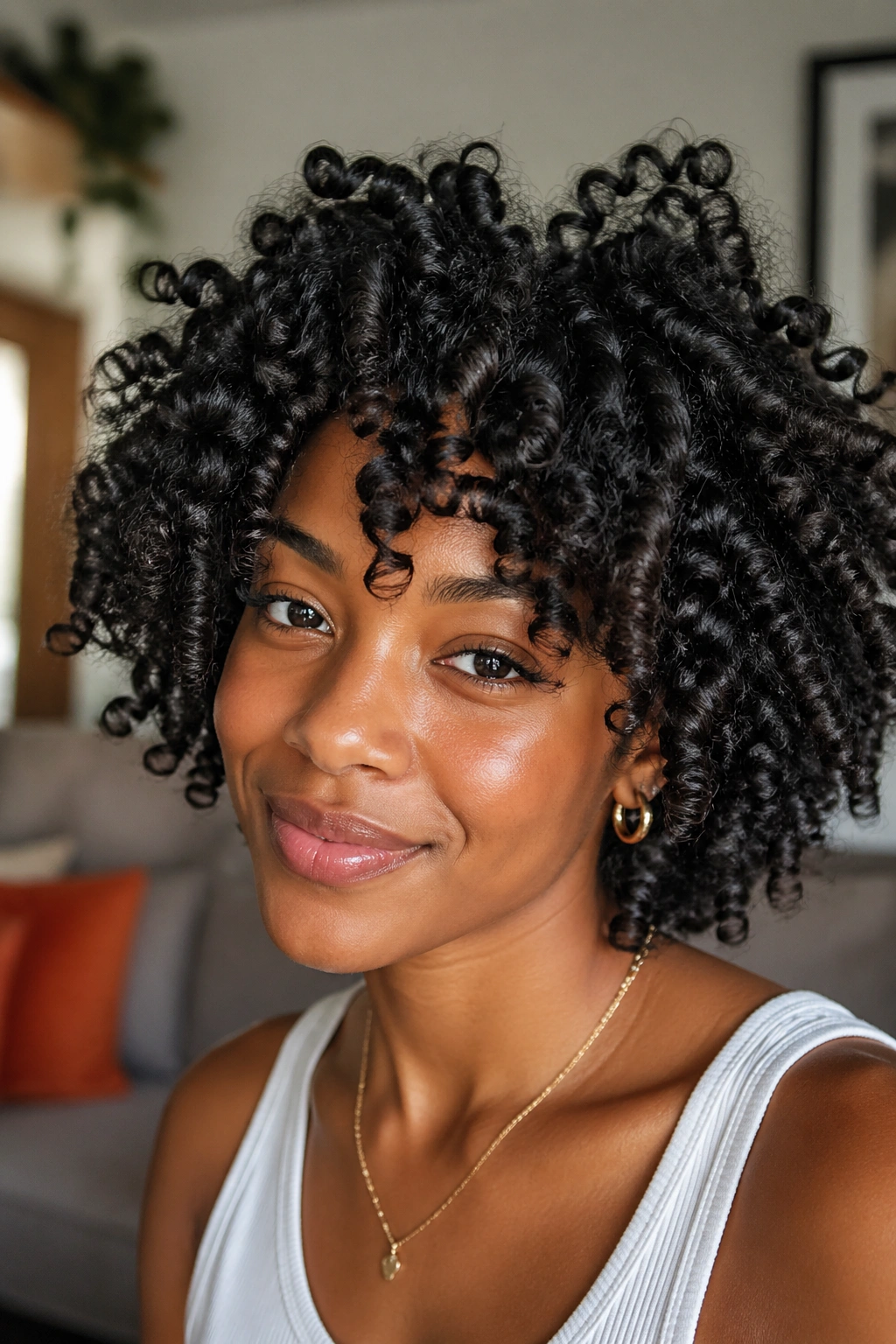
A Bantu knot-out gives very curly hair a different kind of spring — tighter, rounder, and a little more sculpted than a twist-out.
Section the hair into small parts, twist each one, then coil it into a knot close to the scalp. Secure the knot so it sits flat and holds its shape while it dries. When you take the knots down, you get a curl pattern with more bounce and a bit of a spiral finish.
The size of the knots changes the result. Smaller knots usually give tighter definition. Bigger knots create a looser, softer wave. That’s useful when you want to control how much body the style has without changing the tools.
What to Expect
- Plan on fully dry hair before unraveling.
- Use enough product to keep the sections smooth.
- Don’t rush the take-down.
- Separate only if you want more volume.
This style is a bit more hands-on than a wash-and-go, but the payoff is strong. It gives the hair a fresh shape and a neat pattern that lasts.
18. The Curly Faux Hawk
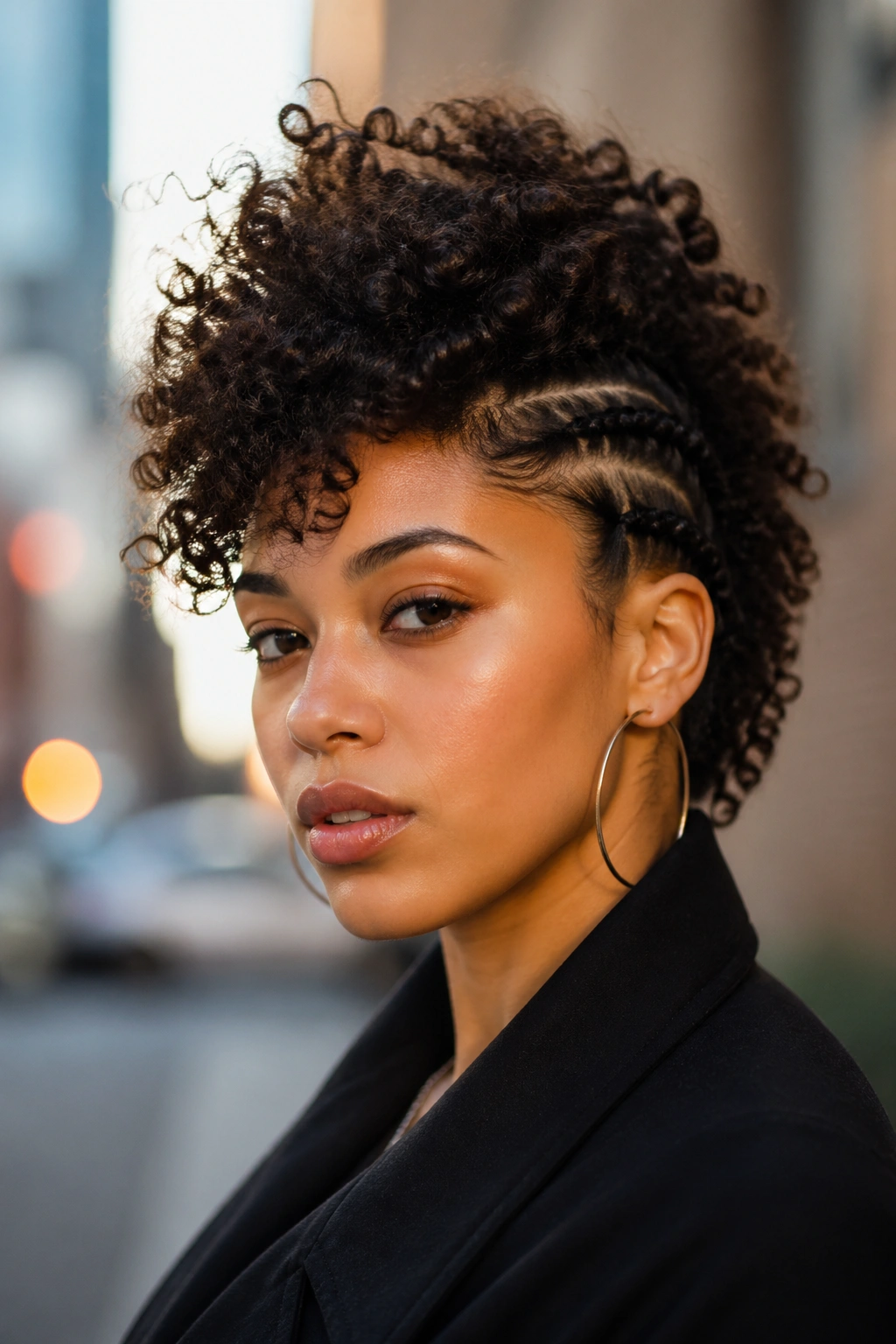
The curly faux hawk is for the days when you want the curls to look bold on purpose.
Keep the sides pinned or braided flat, then let the center section stay high and full. The shape runs from the forehead to the nape like a ridge, which gives very curly hair a sharp silhouette. It is part updo, part statement style, and it works best when the top has enough length to stand up and spill over a little.
You can make it softer with loose curls at the front or more dramatic with tighter pins and cleaner sides. Either way, the middle needs height. A few bobby pins crossed in an X shape can keep the sides in place better than one pin alone, especially if your hair is thick.
This is not a style that tries to disappear. Good. It should be noticed. The faux hawk works because it turns natural volume into shape instead of hiding it. That makes it feel sharper than a plain ponytail and more interesting than a simple bun.
19. The Headband Tuck
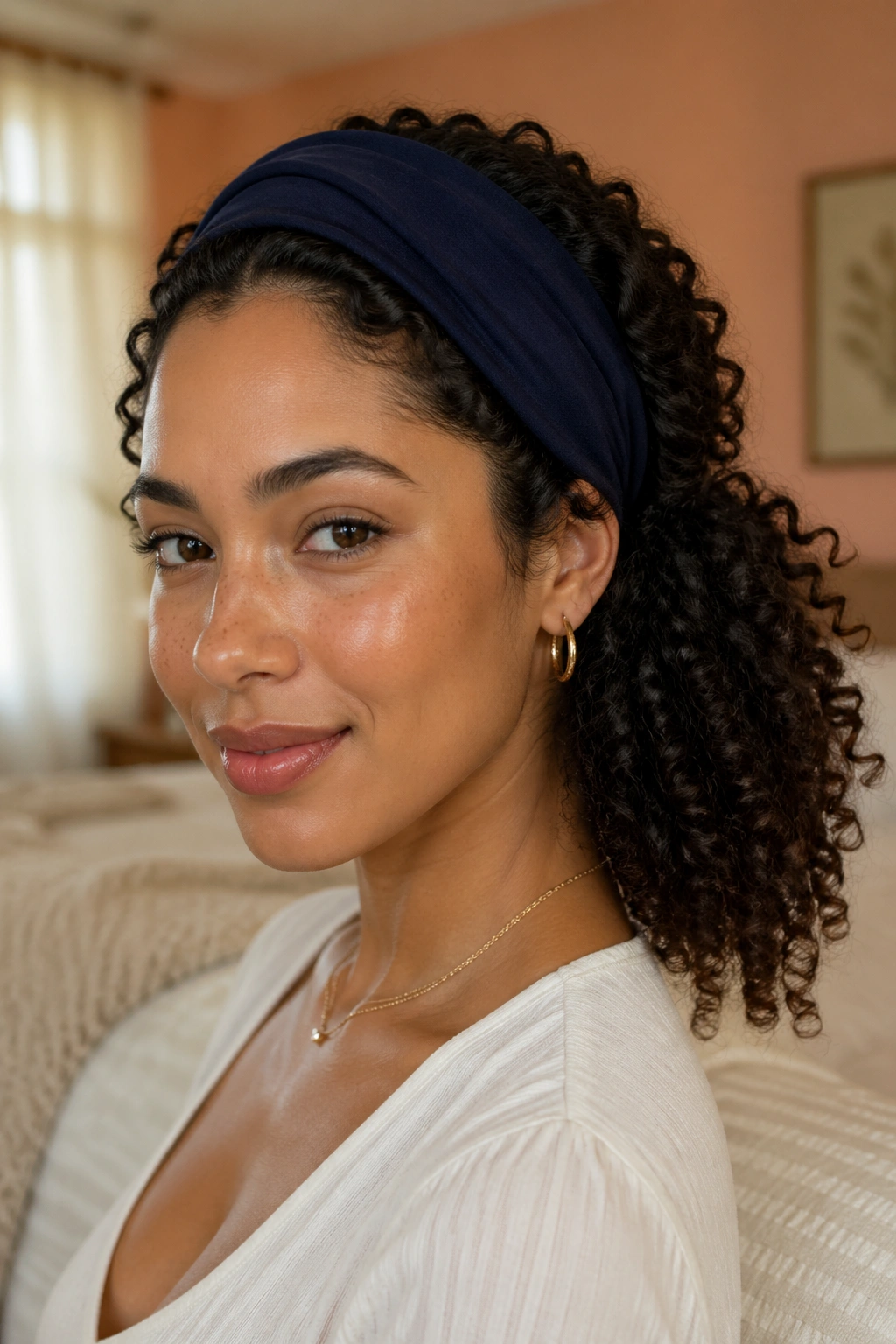
A stretchy headband can save a rough curl day faster than almost anything else.
Slip a wide headband over the hairline, then tuck the front and side curls behind it while leaving the back free. You get a soft, rolled front and a cascade of curls behind it. The style takes on a relaxed, vintage feel without much work. It also keeps hair off the face, which is no small thing when the curls keep drifting into your eyes.
How to Make It Stay Put
Pick a headband that is at least 1 to 2 inches wide and has enough stretch to hold without squeezing. Too narrow, and it digs in. Too loose, and it slides back every time you move. A little grip on the inside helps, especially on silky or very moisturized curls.
This is a good style for workouts, errands, or days when the front section has gone a little fuzzy but the length still looks nice. It’s also kinder than repeatedly tying the hair back. You get control without the tension.
If the crown feels flat, lift it gently with your fingers after the band is in place. Just a little. Enough to bring the shape back.
20. The Low Curly Bun with Face-Framing Pieces
A low curly bun is the style I keep coming back to when I want clean, calm, and still a little bit soft.
Gather the curls at the nape, twist them into a loose bun, and pin the shape with 3 to 5 bobby pins or a covered elastic plus pins. Leave a few face-framing curls out at the temples or around the jaw. That small bit of movement stops the bun from looking too strict, which matters a lot on very curly hair. A bun can go from elegant to severe in a hurry if every strand is pulled back.
This style is useful because it works on fresh curls, stretched curls, and even a slightly frizzy second-day texture. It keeps the neck clear, protects the ends, and still looks deliberate. If the bun feels too flat, loosen a little hair at the crown before you pin it. If it feels too loose, tuck the ends under and secure them closer to the head.
It is the kind of style that can survive a long day and still look fine at dinner. Simple. Reliable. Hard to beat when you need one good answer for very curly hair.
