



Mixed curly hair textures can feel like a small civil war on your head. The crown sits flatter than you want, one side springs up faster than the other, and the back might hold tight coils while the front leans loose and airy. If you’ve ever styled your hair in the mirror, stepped away for ten minutes, and come back to a shape that seems to have changed its mind, you already know the problem.
The good news is that mixed texture hair does not need a “fix.” It needs a plan. Styles that work best tend to respect the different curl patterns instead of forcing every section to behave the same way, which is where a lot of advice goes wrong. A style that anchors the loose pieces, controls the bulky spots, and leaves room for shrinkage usually holds up better than something sleek on paper and awkward by lunch.
Shape matters more than perfection. That sounds simple, and it is. The best curly hairstyles for mixed textures usually rely on a few reliable ideas: create an anchor point, keep the ends visible, leave some softness around the face, or build height where the hair naturally wants it. Once you stop fighting the mismatch, the styling gets a lot easier.
1. Half-Up Twist Crown for Mixed Curly Hair Textures
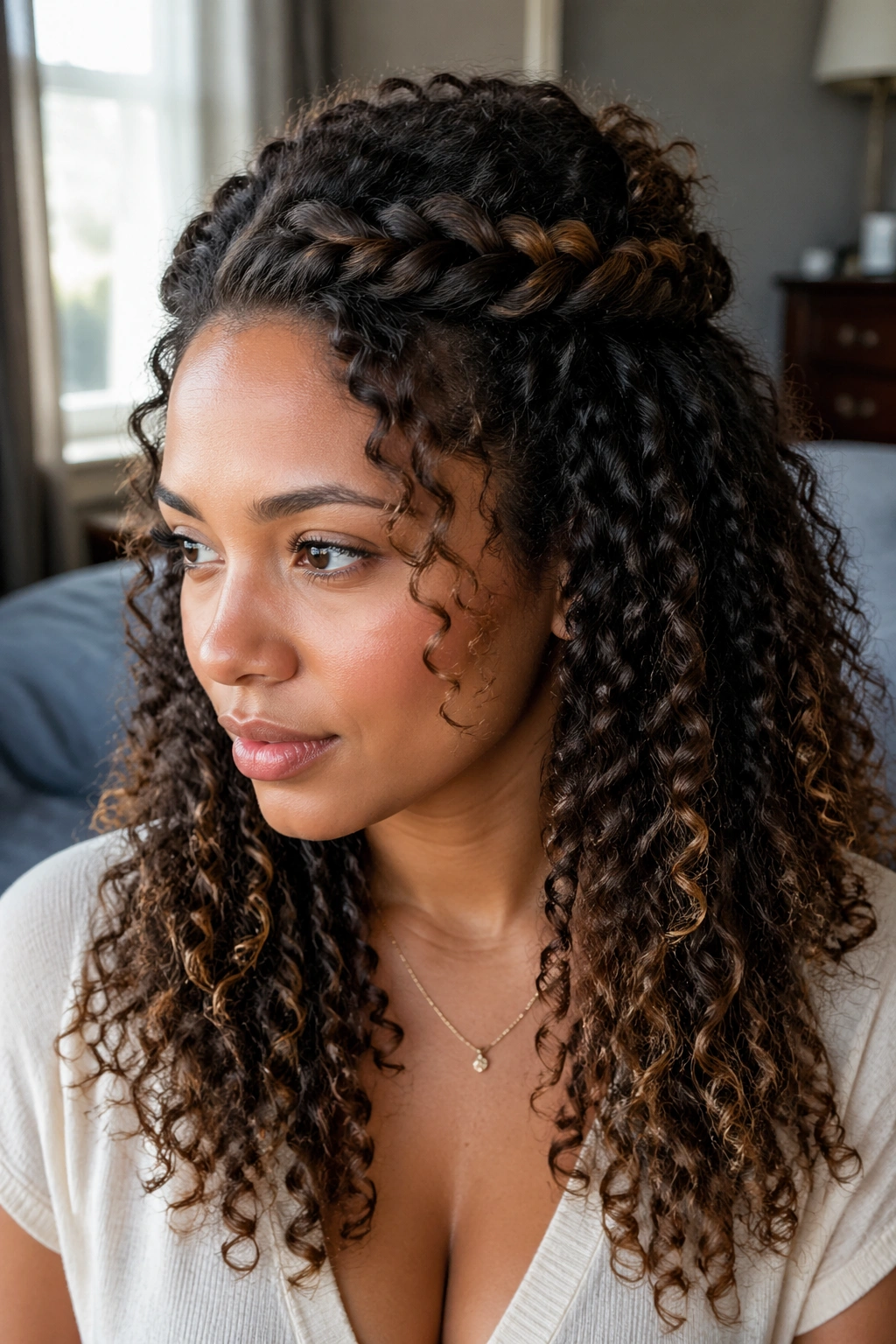
A half-up twist crown is one of those styles that looks polished even when the curls underneath are doing their own thing. It works especially well when the top layer is looser and the lower layers are tighter, because the twist gives you one clean line across the head and lets the rest stay free.
Why It Holds So Well
The trick is tension, not tightness. You take small front sections, twist them back toward the crown, and pin them where the head naturally curves. That gives mixed textures a place to meet in the middle instead of fighting for attention. It also means the style grows out gracefully, which matters if your curls puff up at different rates.
A little edge control at the hairline can help, but don’t overdo it. Too much product near the roots makes the front look stiff, and stiff roots plus soft ends rarely look good together.
- Use two to four bobby pins per side, depending on thickness.
- Twist on damp or lightly moisturized hair for smoother placement.
- Leave the lower curls untouched for contrast and movement.
- Set the style with a light mist of flexible-hold spray if you need extra staying power.
Best for: medium to long hair, especially when the top is looser than the bottom.
2. Curly Shag With Soft Fringe
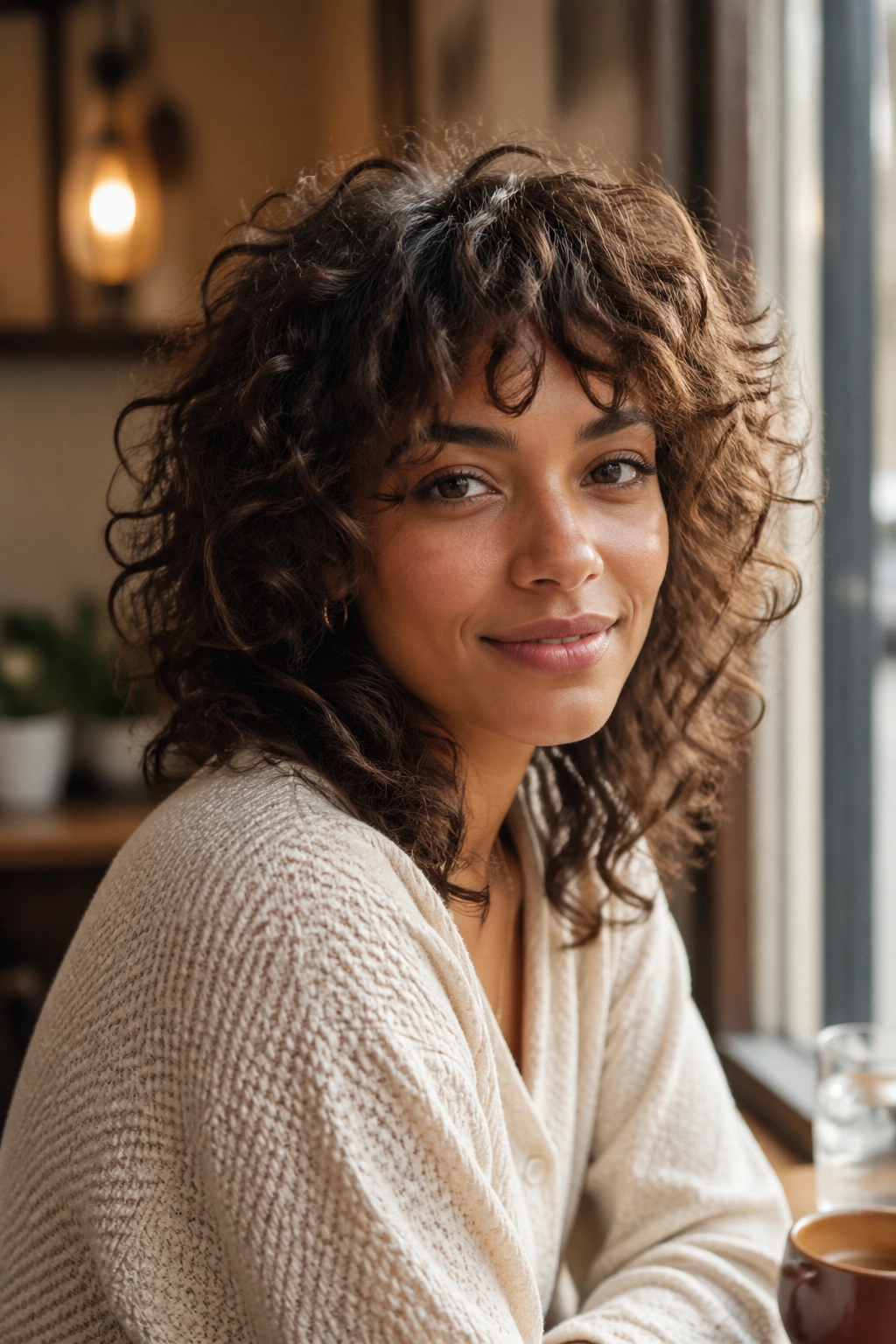
A curly shag is one of the few cuts that actually makes mixed textures look intentional instead of accidental. The layers break up heavy sections, the fringe gives the front a point of focus, and the whole shape has room to be a little wild in the best way.
What I like about this style is that it does not demand identical curl behavior from root to tip. The shorter layers can spring up, the longer pieces can fall a bit flatter, and the result still reads as designed. If your crown is wavy and your ends are ringlet-y, the shag can make that difference feel like part of the look instead of a problem hiding in plain sight.
The soft fringe matters more than people think. It keeps the style from looking bottom-heavy, especially if your curls shrink in the front more than they do at the nape. Ask for layers that start high enough to remove bulk but not so high that you lose shape around the face. That line between “lift” and “choppy” is thinner than most stylists admit.
A good shag also cuts down styling time. Not because it is low-effort, but because the shape does half the work for you.
3. Pineapple Puff
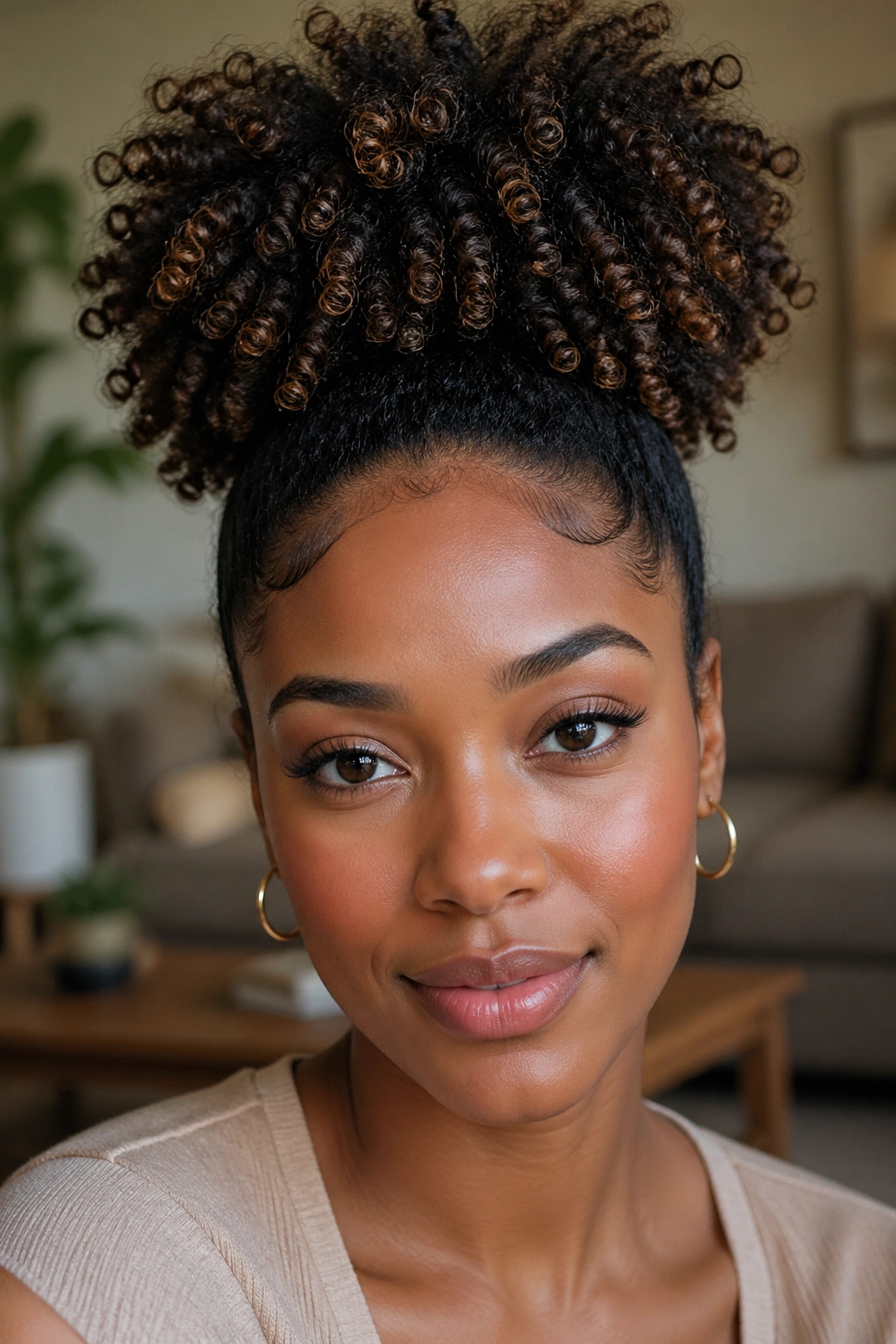
Need something fast that still looks deliberate? The pineapple puff is hard to beat. It pulls the curls up high, keeps the ends out of the way, and uses volume as the main feature instead of asking every strand to sit still.
How to Get the Shape Right
The secret is placement. Put the ponytail high, but not so high that the base digs into your scalp or flattens the front. For mixed textures, the top section often needs a little more stretch than the back, so gently smooth the crown with your hands and let the curls above the elastic puff out on purpose.
Use a satin scrunchie or a soft coil tie. Regular elastics can carve a dent right where you want lift. If your back sections are tighter, leave a few pieces loose at the nape so the silhouette doesn’t look top-heavy.
Best Ways to Wear It
- On wash day when curls are still defined.
- With a side part for a softer outline.
- With a wrapped base if you want it cleaner for work or events.
- With a few face-framing curls pulled out in front.
The pineapple puff is a real lifesaver on second- or third-day hair. It works because it respects shrinkage instead of flattening it.
4. Claw-Clip French Twist
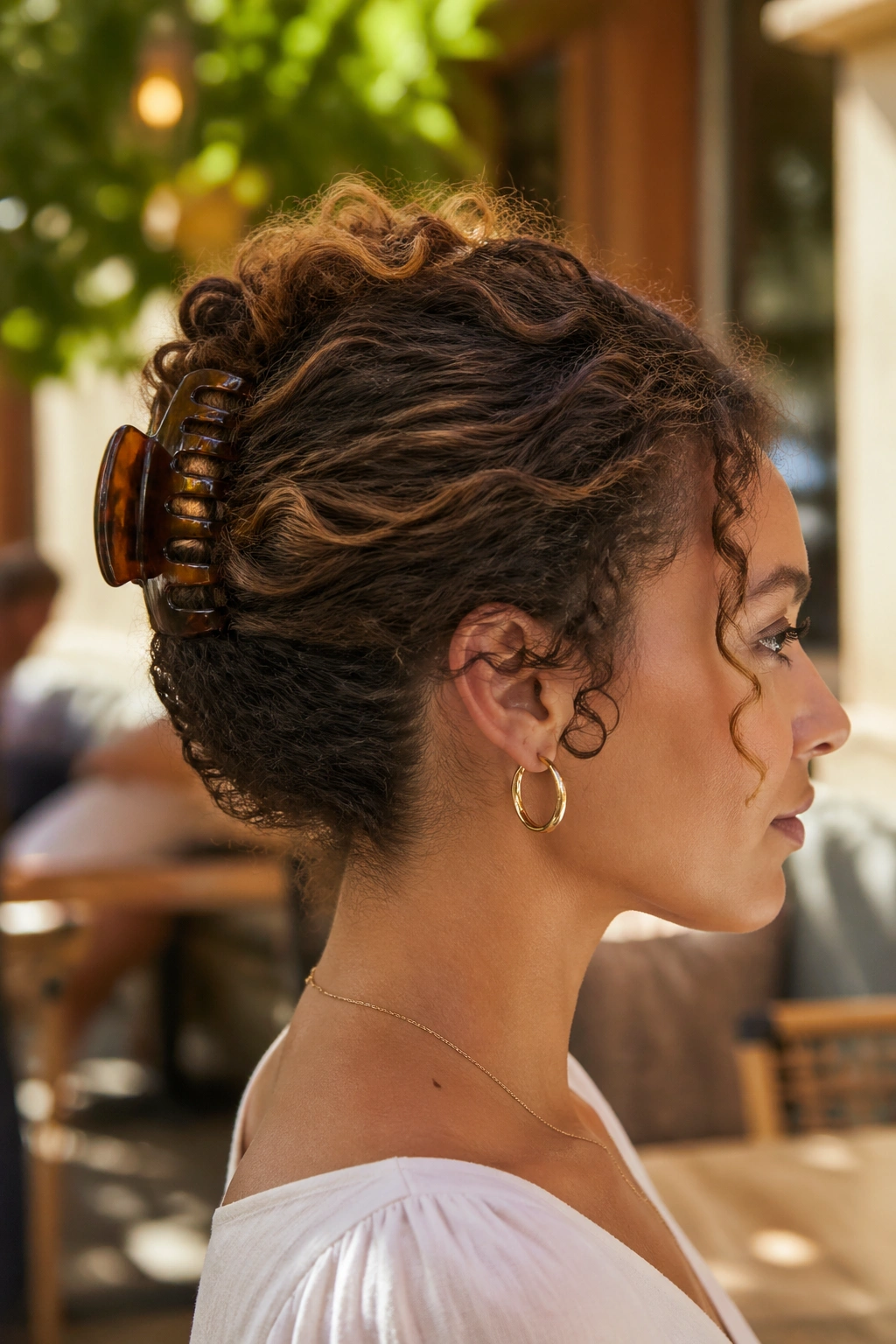
A claw-clip French twist has this useful little talent: it can make mixed textures look neat without turning the hair into a helmet. That matters, because a lot of sleek styles start strong and then fall apart the second a tighter curl pushes back at the roots.
Picture this. The top layer is softer and stretches easily, while the underneath has more grip and density. A claw clip gives both sections a job. You twist the hair upward, tuck the ends under, and let the clip hold the center of the shape. The curls near the bottom can spill out a little, which is part of the appeal.
The style is especially good when you need your hair off your neck but don’t want a severe bun. It also works on hair that’s not fully detangled, which is a small mercy on busy mornings. Leave a few tendrils out at the temple if your face likes softness around the edges.
Don’t choose a tiny clip. Mixed texture hair tends to have more volume than it looks like it has when stretched, and a clip that feels secure for five minutes will betray you by lunch.
5. Low Puff With Face-Framing Pieces
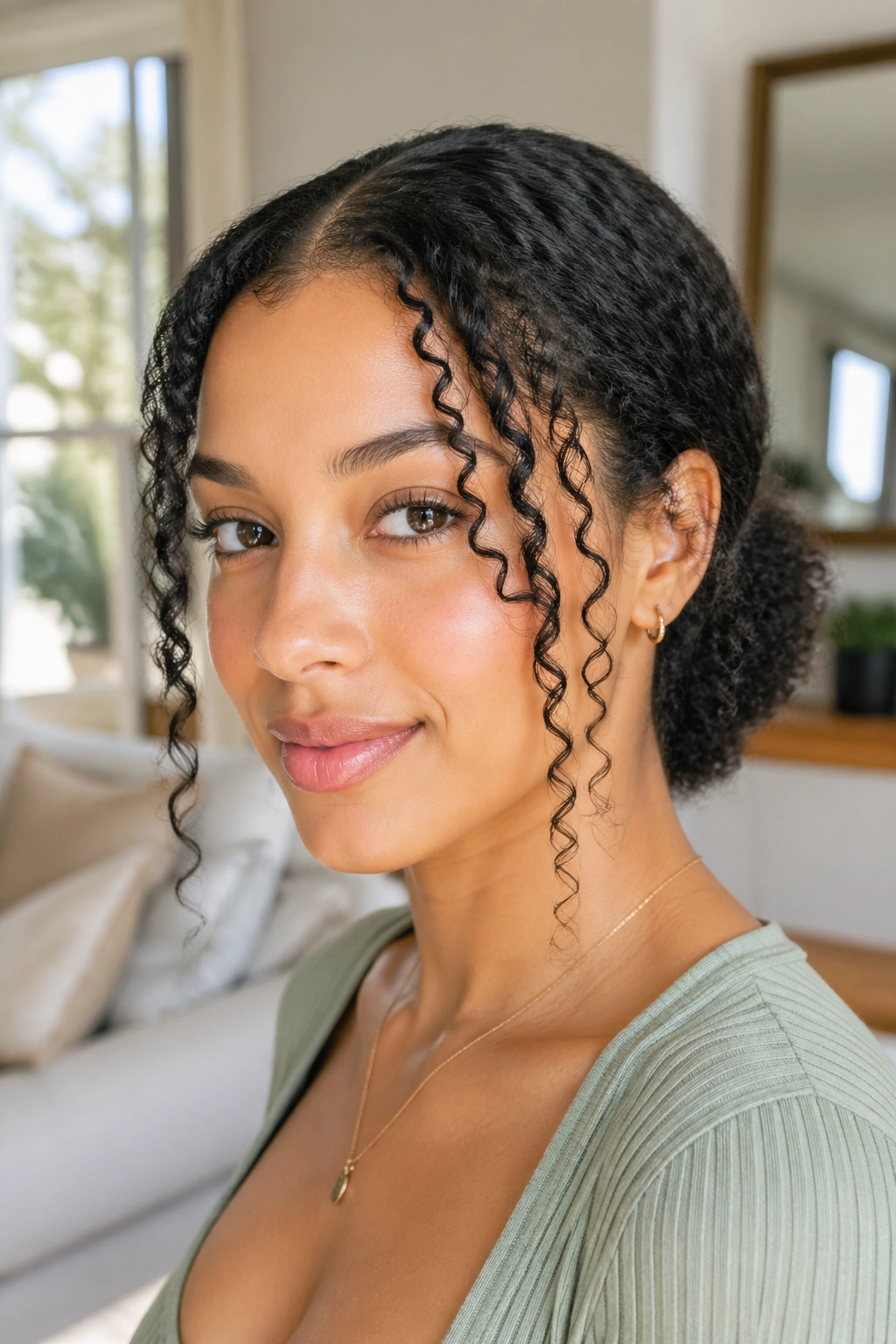
A low puff has one big advantage: it lets the back stay full and defined while the front stays soft. For mixed curly textures, that split is useful. The looser pieces at the crown can be smoothed toward the nape, and the tighter sections can keep their texture where the puff gathers.
The face-framing curls matter here. Pulling out two or three small pieces near the temples keeps the style from looking too strict. Those pieces do not need to be perfectly matched. In fact, a little mismatch helps. One curl can hang a touch longer while another bends closer to the cheekbone, and the shape still reads as balanced.
Use a soft brush or your hands to gather the puff. Brushes can drag out definition on fragile curls, especially if the hair is dry. A little leave-in on the palms helps. A satin scarf for five or ten minutes after tying the puff can smooth the front without killing the shape.
This is one of the better options when you want something that looks elegant but still feels like curly hair, not disguised straight hair.
6. Wash-and-Go With Strategic Diffusing
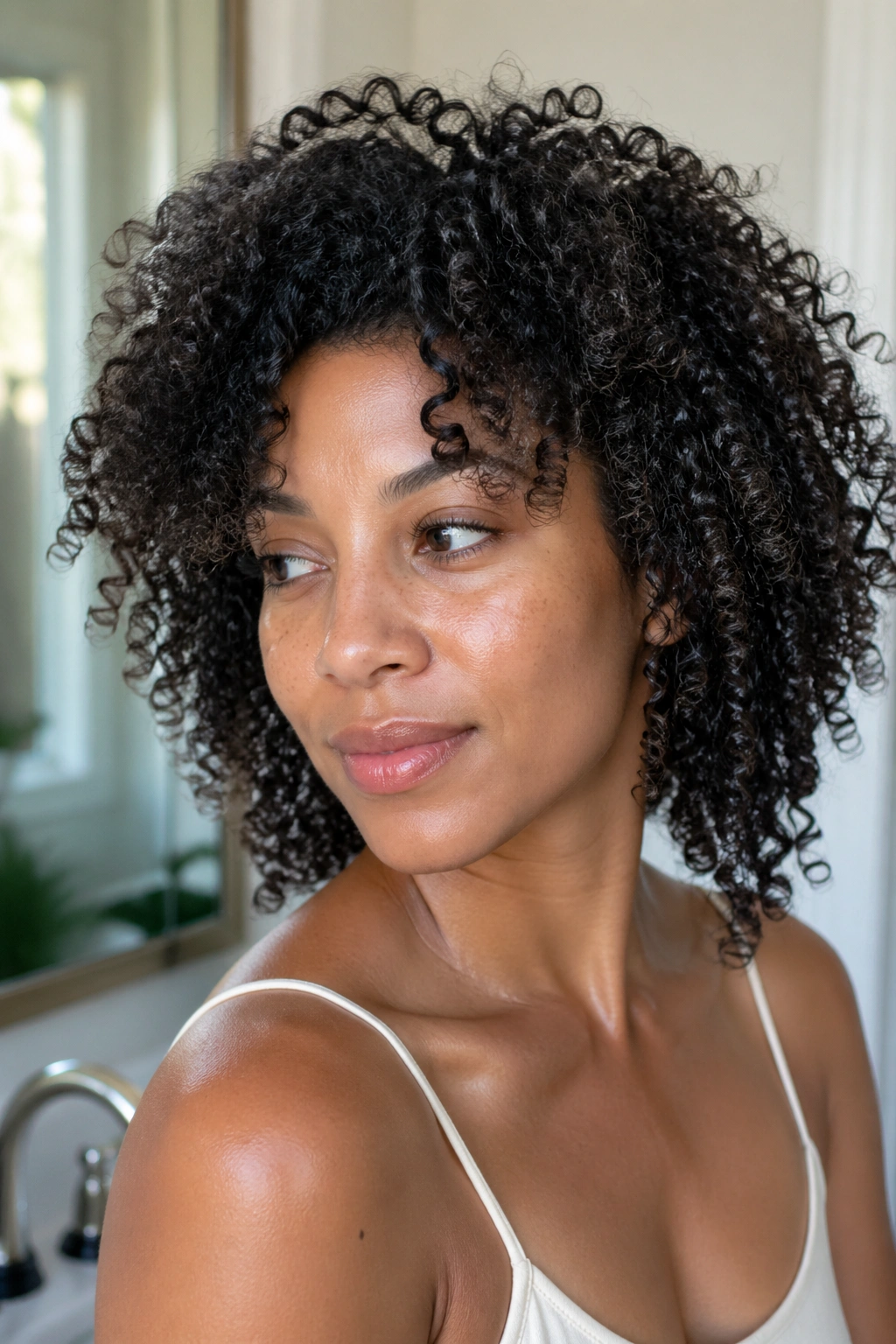
A wash-and-go is not just “let it dry and hope.” On mixed textures, it works best when you treat different sections differently. The crown may need lighter product and more lift. The back may want a stronger cream or gel. The goal is consistent shape, not identical curl clusters.
What Makes It Work
The first step is sectioning. Small sections give you better control, especially if the front forms loose bends while the nape forms tighter spirals. Apply styling product in the direction each section naturally curls, then scrunch from the ends toward the roots. If the roots are flat, clip them up while they dry.
Diffusing changes the whole game. Use low heat and low airflow, and hover near the roots first. That builds volume without blasting the curl pattern apart. Once the roots are about 80% dry, cup the ends in the diffuser bowl for a few seconds at a time.
What to Avoid
- Heavy product at the crown.
- Touching the curls before they set.
- High heat on fine or fragile sections.
- Brushing after drying.
A good wash-and-go on mixed texture hair should look a little uneven up close and fully balanced from a few steps back. That is the point.
7. Bubble Ponytail With Curly Sections
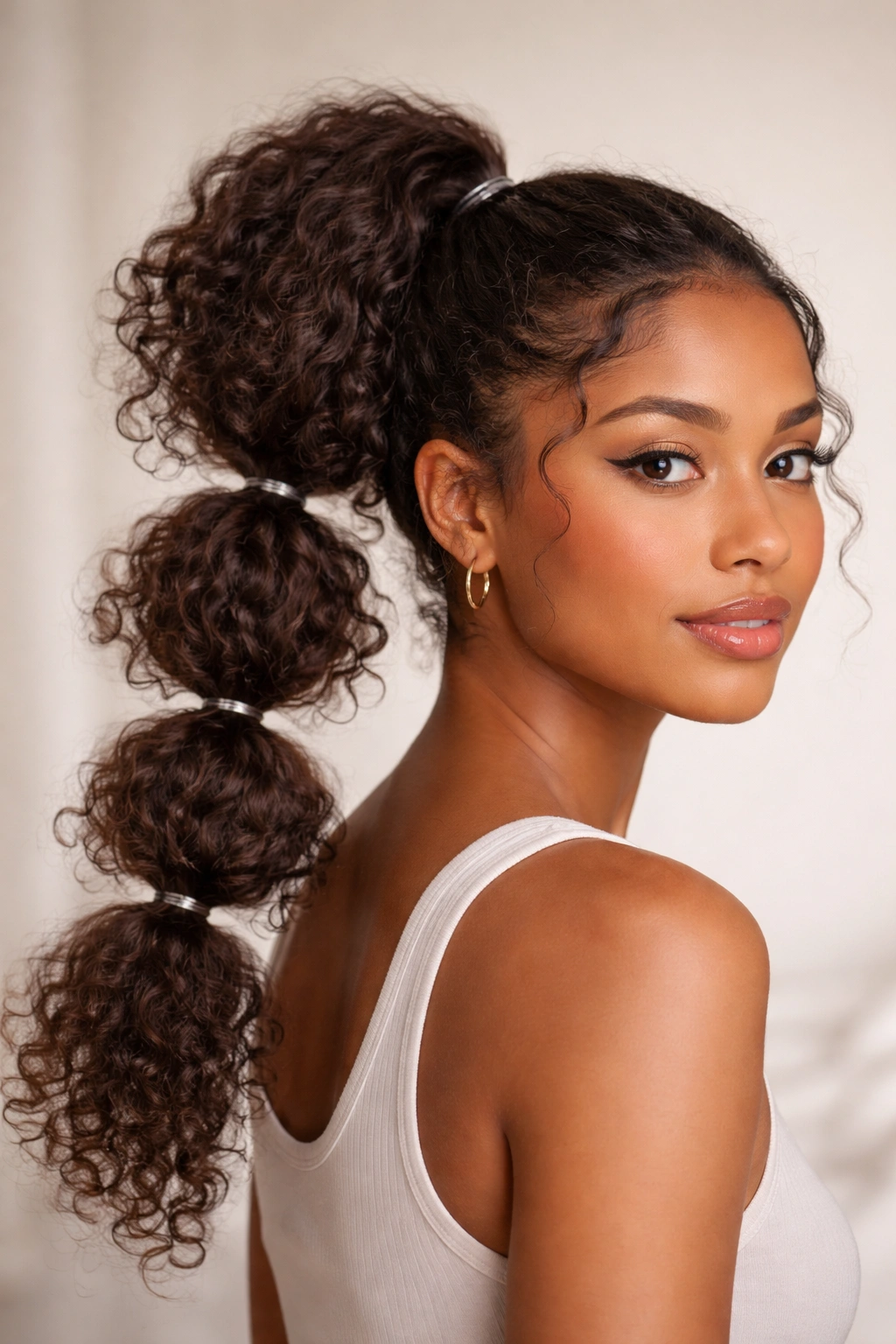
A bubble ponytail gives you structure without forcing every curl into one single mass. It works best when the hair has different densities from top to bottom, because the sections between elastics create visible shape even if the texture inside each bubble varies a little.
Why do people reach for this style so often? Because it solves two problems at once. The ponytail stays contained, and the bubbles make the length look fuller. If your curls shrink a lot, the style still reads clearly. If your texture is looser, the bubbles keep the ponytail from looking thin.
How to Build It
Start with a high or mid ponytail and secure it with a soft tie. Add another elastic a few inches down. Gently pull each section outward until it forms a round bubble. Repeat down the length. For mixed textures, the bubbles do not need to be perfectly even. Slight variation keeps the style from looking stiff.
Use a light gel or cream at the crown if flyaways are a problem, but leave the ponytail itself textured. A bubble ponytail loses its charm when it gets too polished. The shape should look playful, not lacquered.
Quick Placement Tips
- Higher placement gives more lift.
- Mid placement works better for medium length hair.
- Low placement can feel more formal.
- Satin elastics help protect the ends.
8. Braided Crown Into Loose Curls
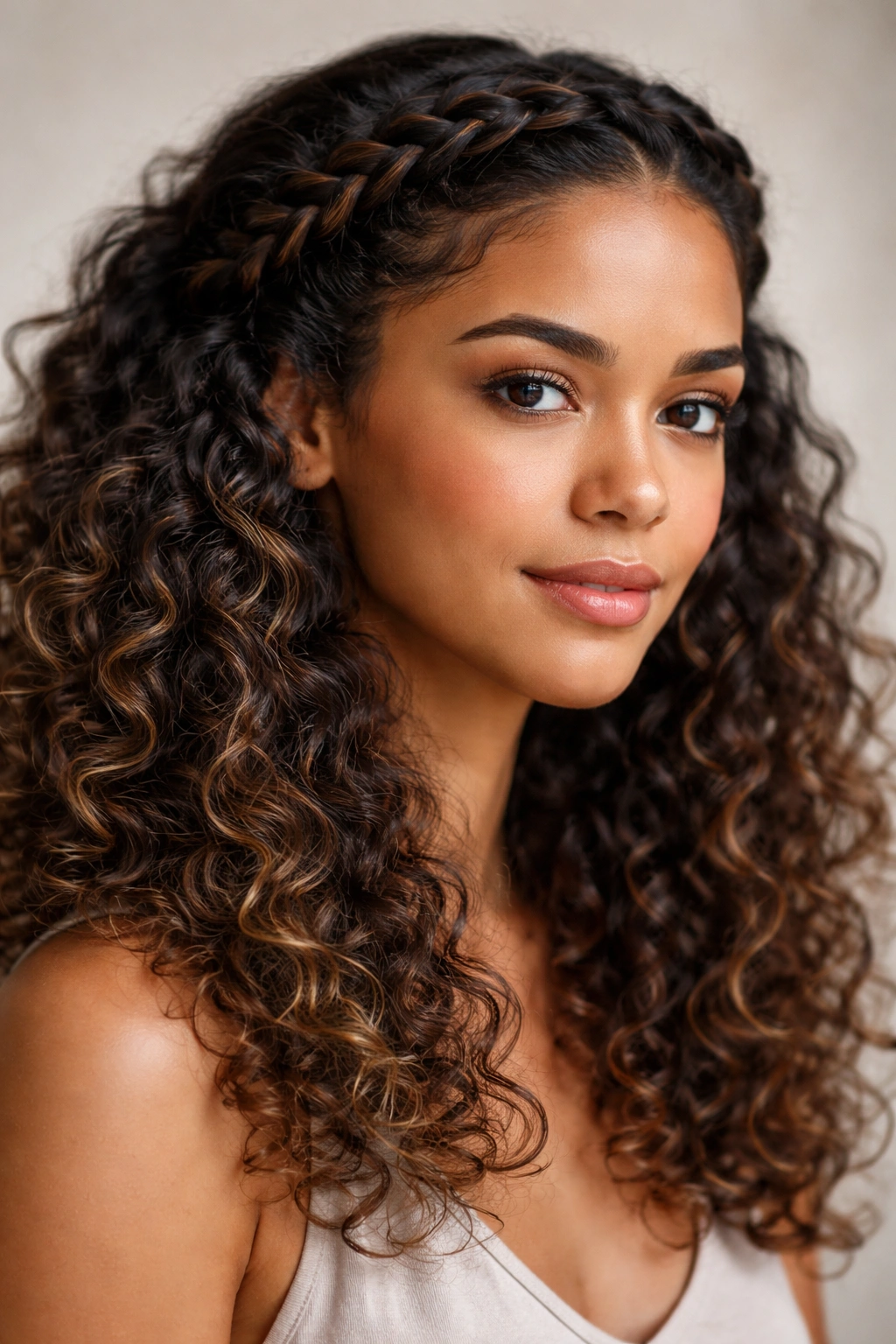
A braided crown is a smart move when the front sections of your hair behave differently from the rest. The braid gives the top a clear path, and the loose curls below keep the style from feeling too severe.
The best version of this style starts at one temple and curves across the head like a headband made of your own hair. It can be a Dutch braid, a French braid, or even a simple three-strand braid if your hands are more comfortable with that. Once the braid reaches the opposite side, pin it and let the rest of the curls fall free.
This is one of those styles that hides a lot of small differences in curl pattern. A tighter nape, a looser crown, and some frizz around the hairline all get folded into the same shape. That makes it useful for events, but it also works on regular days when you want the front off your face.
Keep the braid slightly loose. A tight braid can pull on the smoother sections and make the contrast too sharp. A little volume at the braid’s edge helps it sit on top of the curls instead of sinking into them.
9. Deep Side Part With One-Side Tuck
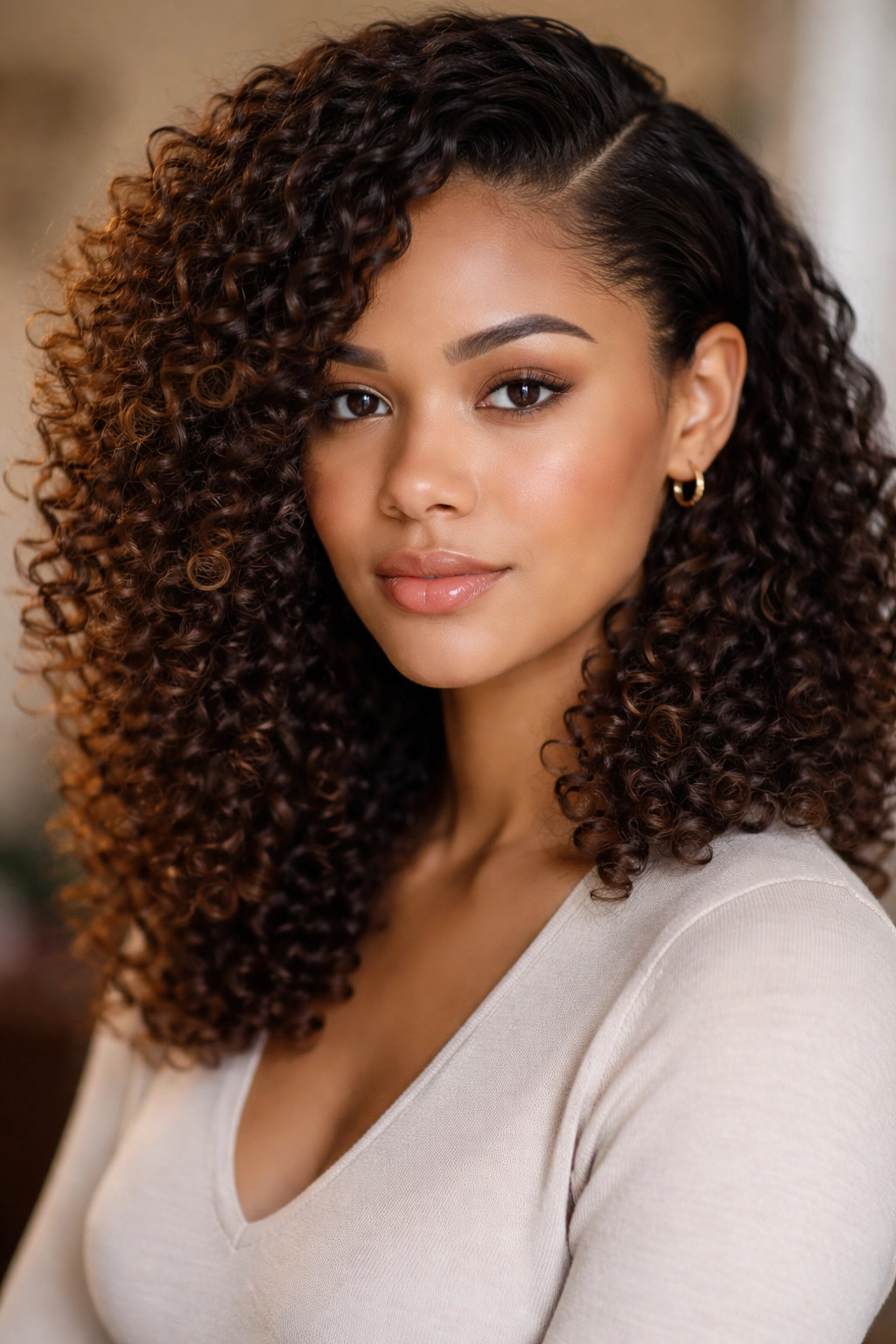
Unlike a center part, a deep side part lets mixed curl textures lean into asymmetry instead of fighting for symmetry. That is a relief if one side of your hair is looser, flatter, or more stubborn than the other.
The side with more volume becomes the feature. The smaller side can be tucked behind the ear, pinned with a flat clip, or smoothed with a dab of styling cream. This creates a clean line across the forehead and gives the rest of the hair room to move. The style works especially well when your curls are denser underneath than on top, because the side part helps redistribute that bulk.
A deep side part also gives face-framing pieces a chance to do their job. The hair that falls near the cheek tends to soften the whole look, which matters if your curl pattern changes a lot from root to tip. It feels intentional without looking overworked.
If you want extra polish, tuck one side and leave the other side full. If you want a looser mood, let both sides fall but keep the part dramatic. That small move changes the whole shape.
10. Double Space Buns
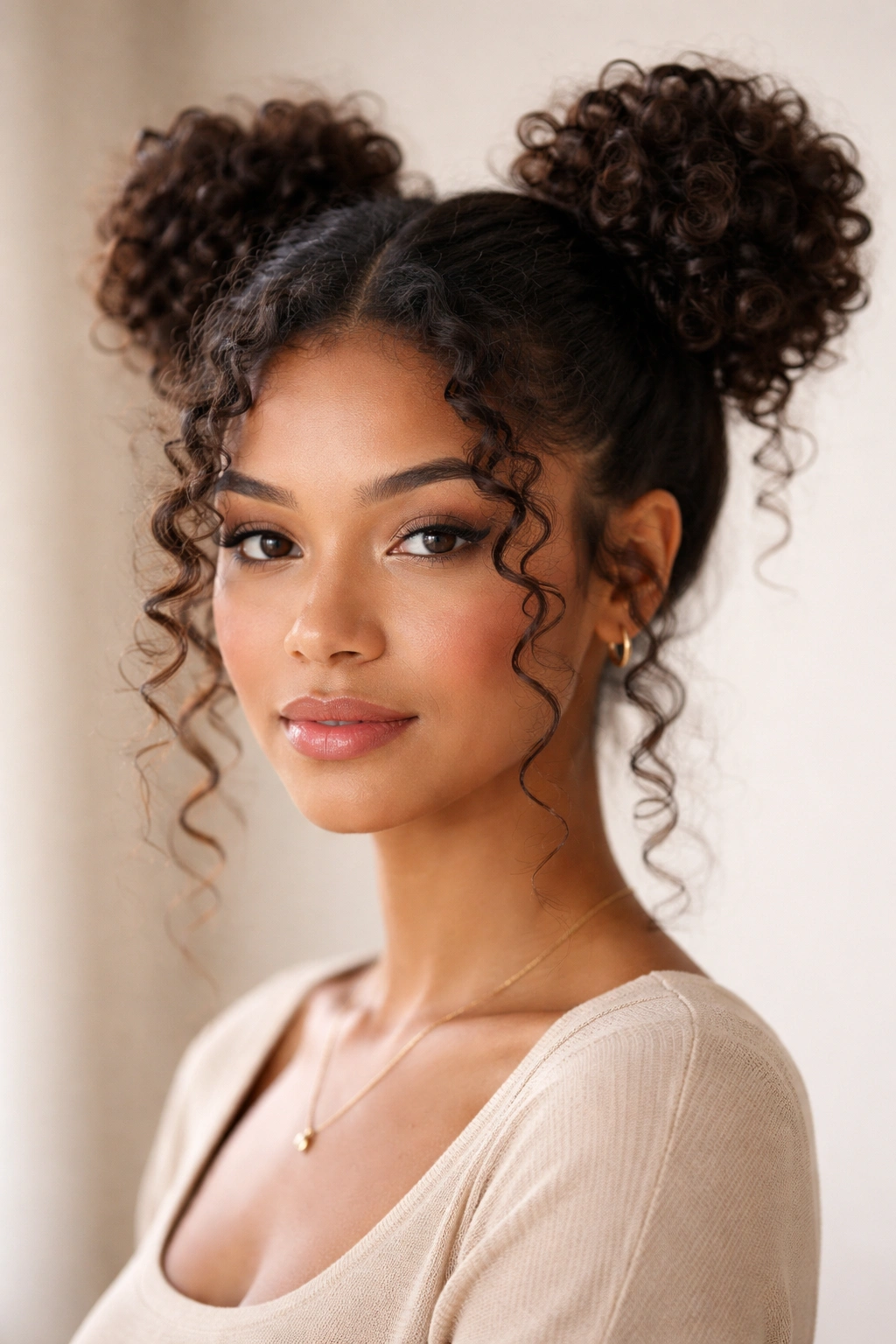
Space buns are not just playful. They’re practical. On mixed curly hair textures, splitting the hair into two buns can keep volume balanced when one side wants to be curlier or heavier than the other.
The style works because each bun becomes its own shape. If the left side is tighter and the right side is looser, nobody cares once they’re wrapped into two compact knots. The mismatch stops mattering. You can wear the buns high for a bolder look or lower for something softer.
A little detail makes a big difference here. Leave some curls out around the face, or keep the buns slightly messy on purpose. Perfect buns can look harsh on textured hair, especially when the curls underneath have a lot of spring. Softening the edges helps the style stay friendly.
Use two mirror sections and twist them around their own bases. Secure each one with pins or a small elastic. If the ends are very different in length, tuck the shorter pieces into the center of the bun and leave longer pieces to wrap around the outside.
This style is better when the goal is movement, not sleekness.
11. Front Braid Into Free Curly Length
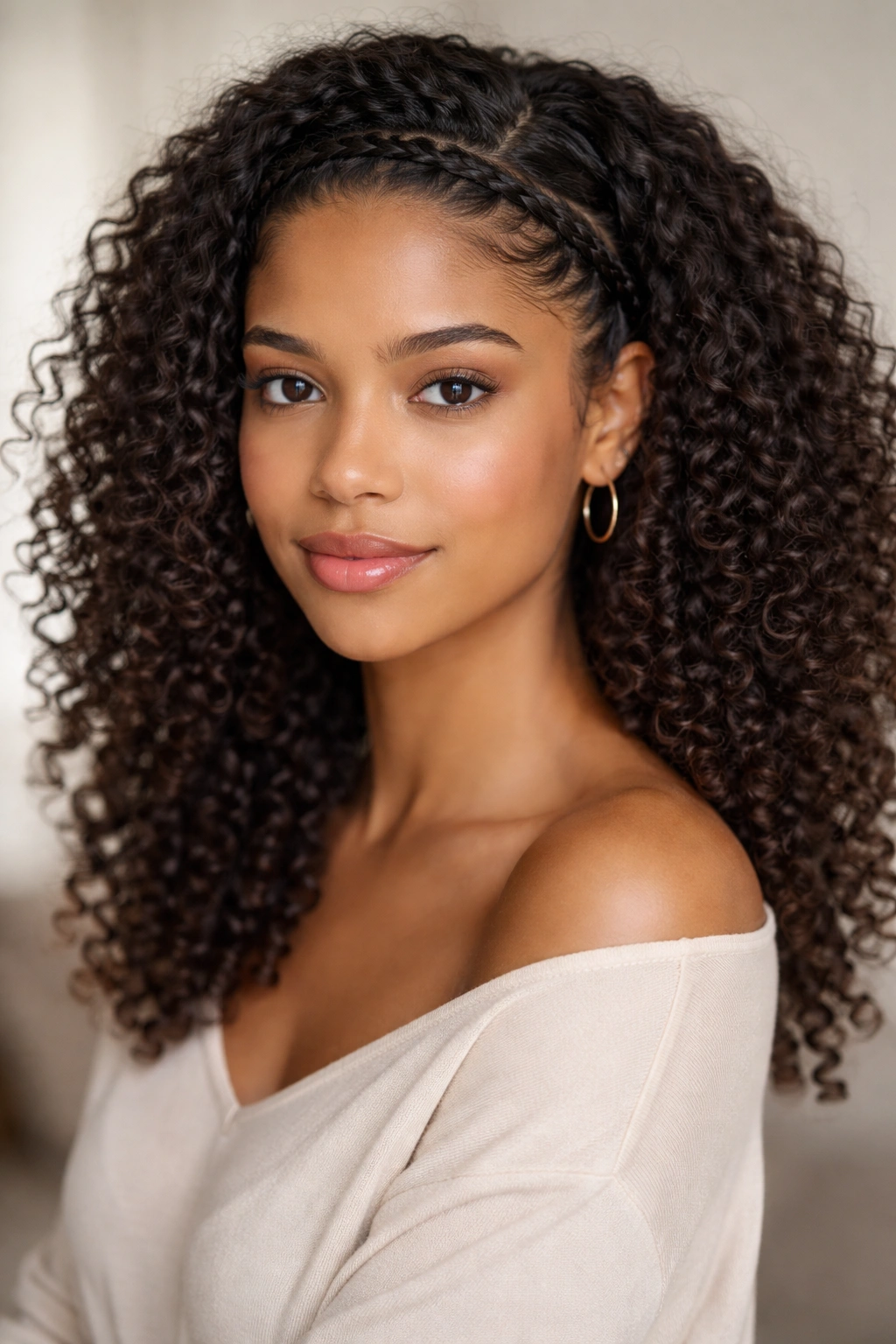
A front braid is the kind of style that quietly solves the hairline problem. If the front sections are looser than the rest, or if they fall flat by midday, braid just those pieces and leave the length alone. The contrast works.
A narrow braid across the front can act like a built-in headband. It keeps the softer pieces in place while the back curls remain full and free. That balance is useful for mixed textures because it keeps the style from collapsing at the top. One small braid can make the entire shape look more finished.
What to Watch For
If your front layers are short, keep the braid loose and pin it at the temple. If the hair is longer, you can carry the braid farther back and blend it into the rest of the hair. Either way, don’t pull too hard. A tight braid can flatten the root and make the rest of the hair look disconnected.
Use a little curl cream or leave-in on the braided section so the strands grip each other cleanly. Dry, rough hair can make the braid fray. That fraying is not the same thing as texture. One looks lived-in. The other looks unfinished.
This style is handy when you want one part of your hair controlled and the rest left alone.
12. Sleek Low Bun With Textured Ends
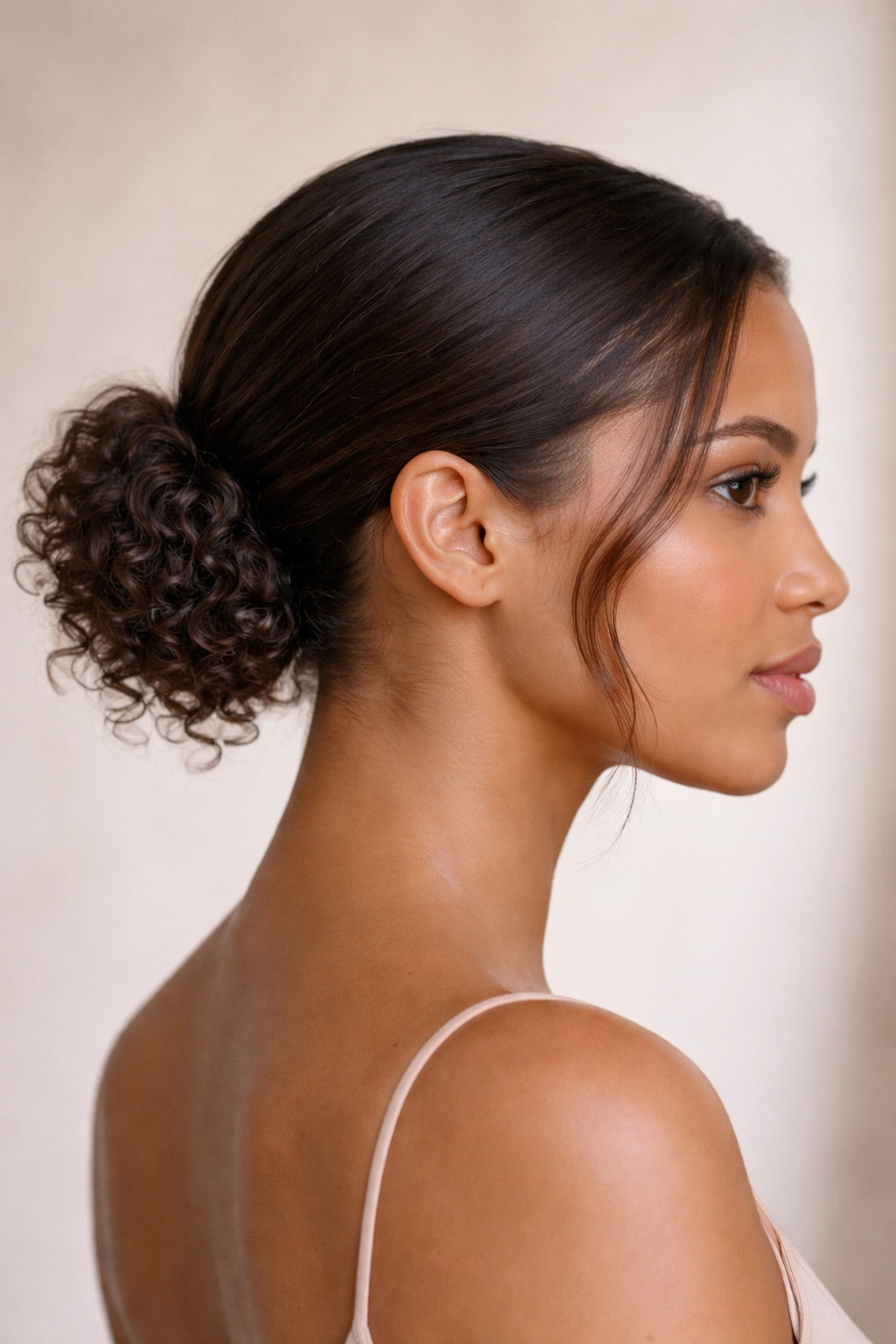
A sleek low bun can be beautiful on mixed curly hair, but only if you leave a little texture somewhere. That tiny detail keeps it from looking too severe. If every strand is smoothed flat, the style can lose the very thing that makes curly hair interesting.
Start by parting the hair where it falls best. Then smooth the front and sides toward the nape with a brush or your hands, using gel or pomade sparingly. Gather the hair low and twist it into a bun. Leave a few curled ends visible, or tuck the bun loosely so some texture peeks through.
The contrast is the point. Sleek at the scalp, textured at the ends. That pairing looks sharper than trying to make the whole head equally polished, which usually ends up fighting the natural curl pattern.
A satin scarf for 10 to 15 minutes can help set the front if you need the bun to last through a long day. Just don’t flatten the bun itself. If the back gets too compressed, the style loses height and starts looking tired.
This is one of the better options for formal settings when you still want the hair to read as curly.
13. Curly Bob With Invisible Layers
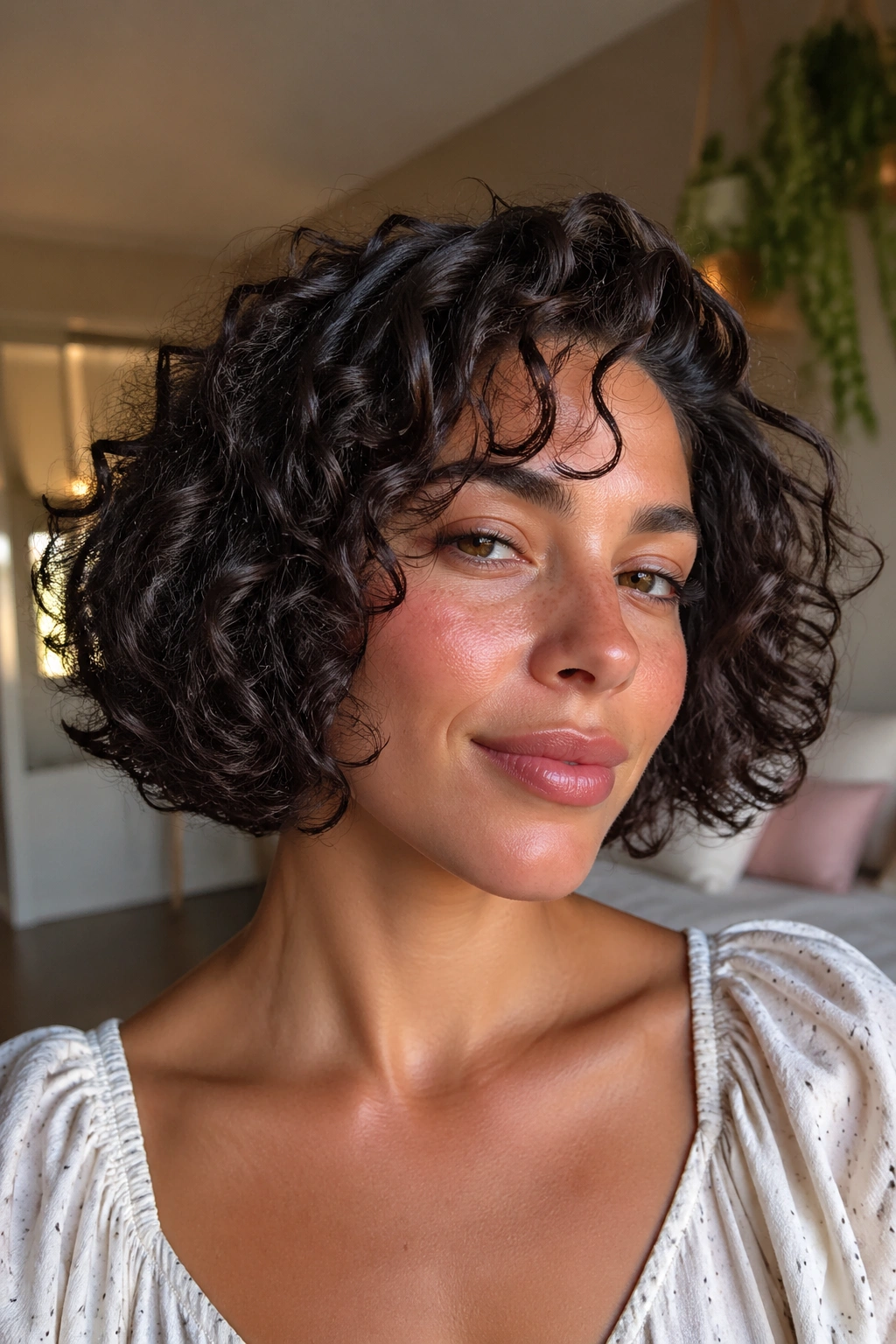
A curly bob can look like a hero cut for mixed textures, especially when the layers are done with restraint. Too many layers can make the shape frizz out. Too few can make the ends bulk up and sit like a helmet. The middle ground is where the good stuff happens.
Invisible layers work because they remove weight without turning the cut into a staircase. The outer shape stays clean, while the interior gets room to move. That matters when the top section is loose and the lower sections are tighter, because the bob needs both shape and bounce to stay balanced.
What Makes the Cut Look Good
The bob should sit where your curls naturally gather, not where straight hair would land. That usually means the visual length is shorter than it appears when wet. A chin-length bob can spring up a couple of inches once it dries, and that shrinkage is worth planning for.
Ask for a shape that keeps the perimeter neat. Then style with a light cream or foam and scrunch from the bottom up. Heavy products can weigh down the looser layers and make the difference between sections more obvious than it needs to be.
A curly bob is not low maintenance. It is just honest maintenance.
14. High Ponytail With Wrapped Base
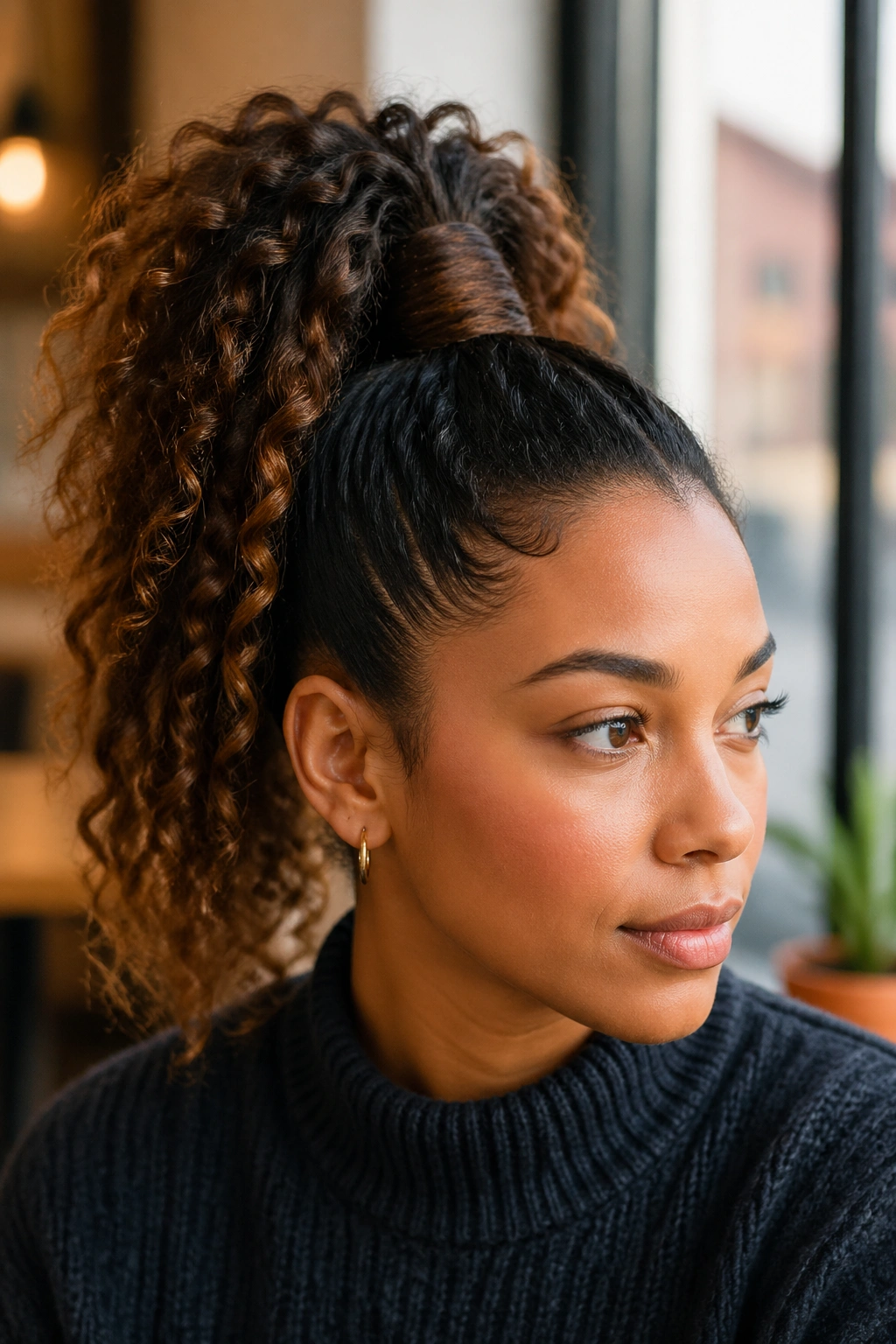
A high ponytail can be a workhorse style for mixed curly textures because it gives the roots lift and lets the length keep its own personality. It also solves the common problem of the crown looking flatter than the rest of the hair.
The wrapped base makes a huge difference. Take a small section from the ponytail, wrap it around the elastic, and pin it underneath. That hides the tie and gives the style a cleaner line. If your curl patterns vary a lot, the wrap also helps unify the look without making the ponytail itself stiff.
You can slick the front and sides or keep them a little softer. I prefer soft for most curly hair. When the base is too tight, the contrast between the sleek top and the textured ponytail can feel harsh. A softer pull gives the style more movement and keeps the scalp comfortable.
Best Use Cases
- Busy days when you want the hair off your neck.
- Gym-friendly styling with a little more polish.
- Outfits that need height at the crown.
- Hair that has more volume than length.
If the ponytail leans to one side, pin it. Small fixes matter.
15. Frohawk With Pinned Sides
A frohawk is a strong ending because it turns texture into the whole point. The sides get pinned back or smoothed close to the head, while the center line stays high and full. If your hair has tighter curls in one zone and looser bends in another, that contrast looks deliberate here.
The shape works especially well when the middle section holds volume better than the sides. That’s common with mixed textures, and the frohawk uses it instead of hiding it. The profile gets taller, the face opens up, and the texture in the center becomes the focus. It’s a little bold. Good. Hair should be allowed to have some personality.
You can braid the sides first, twist them, or slick them back with gel and pins. The center can stay fluffy, defined, or somewhere in between. A light mist of holding spray on the pinned sections helps, but the center should stay touchable. If you lock it down too much, the whole style loses its edge.
This is the style I’d reach for when the hair feels unpredictable and you want to work with that, not against it. Let the middle do the talking.
