



Glasses change the whole equation.
A cut can look lovely on its own and still fight your frames the second you put them on. The best curly hairstyles that look great with glasses do one simple thing well: they leave room for the frames without making the face feel empty. That usually means a little lift at the crown, some softness near the temples, and enough shape around the cheekbones that the curls and the glasses feel like they belong together.
The sweet spot is softer than people think.
A blunt edge right where the arms of the glasses sit can make the whole look feel heavy. So can too much volume at the sides, especially if your frames are thick or sit low on the nose. What tends to work better is a shape that opens the face, keeps the lenses visible, and lets the curls sit in their own lane instead of swallowing the frames.
1. Soft Curly Pixie With Lift at the Crown

Short curls and glasses can play nicely when the cut knows where to stop. A soft pixie keeps the attention near the eyes, which is exactly where your frames live, but the shape needs a little lift or it can go flat fast.
Why It Works With Glasses
A pixie with 2 to 3 inches on top and tapered sides leaves room for the temple arms of the frames. Thick acetate frames look especially good with a bit of height at the crown, because the extra lift keeps the haircut from pressing straight into the top of the glasses. Wire frames read softer, so the pixie can be more feathered and less sharp.
If you like a low-fuss style, this one is hard to beat. It dries quickly, the outline stays neat, and you do not have hair brushing the lenses every time you tilt your head down.
- Ask for short, clean sides around the ear and slightly longer pieces at the front hairline.
- Keep the crown textured with point-cutting, not choppy chunks.
- Use a light mousse or curl cream and scrunch upward, then air-dry or diffuse on low heat.
- Leave the very front pieces a touch longer so they skim above the frame, not across it.
Best detail: the front should land above the frame line, not on it. That tiny gap makes the whole cut look intentional.
2. Side-Parted Curly Bob That Clears the Temples

Why does a side-parted bob work so well with glasses? Because the part shifts the weight of the hair away from the bridge and gives the frames some breathing room. A curl that ends at the jawline can look crisp and clean, which is great if your glasses already make a strong statement.
The best version usually sits between the chin and the top of the neck. That length keeps the curls away from the frame arms and stops the sides from puffing out right where your glasses rest. If the bob is too blunt, it can feel boxy. A few soft layers near the mouth or cheekbone fix that without making the shape messy.
How to Style It
Part the hair about 1½ to 2 inches off center. That small shift changes the whole face. Tuck the heavier side behind one ear if you want to show the frame more clearly, or leave both sides loose if you want a fuller look.
The trick is not to pile too much product at the roots. You want bounce, not helmet hair. A diffuser on medium-low heat keeps the curl pattern lifted without flattening the part.
Round frames love this cut. So do small oval frames, which can disappear in a hairstyle that is too busy. This bob keeps the lines clean and the mood easy.
3. Curly Shag With Curtain Bangs
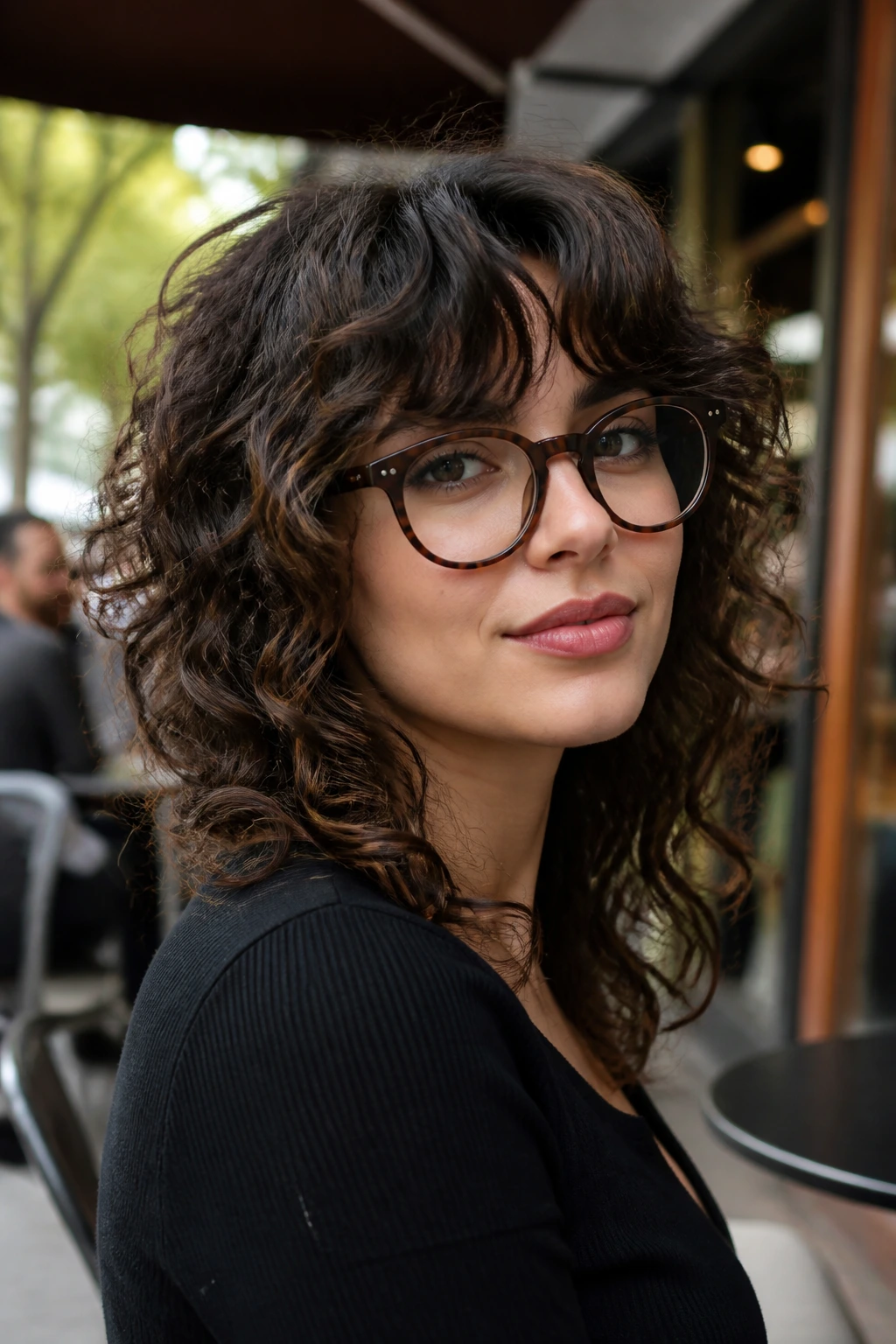
Curtain bangs are the safest way to add shape without crowding the lenses. They split in the middle, fall away from the eyes, and leave the top of the frames visible. That matters more than most people expect, because a heavy straight fringe can make glasses look like they are competing for space.
The shag itself helps too. Those choppy layers stop curly hair from sitting in one heavy block around the face, which is the fastest way to make frames look swallowed. A good curly shag has movement at the crown, softness at the cheekbones, and ends that are a little uneven on purpose.
Keep the shortest bang pieces around brow length or a touch above if your frames sit high. If your glasses are bold and oversized, let the bangs start a little farther out so they curve around the lens instead of landing right on top of it. That tiny difference changes the whole balance.
I like this cut on people who want the hair to feel lively. It has a little edge, but not the harsh kind. And if your curls are looser at the front and tighter in back, the shag smooths that out without forcing everything into the same shape.
4. Shoulder-Grazing Layers That Skim the Frame Line

Picture this: the curls hit right around the shoulders, the frames sit cleanly above the widest part of the hair, and nothing pokes into the temple arms when you turn your head. That’s the promise here, and it’s a good one.
Shoulder-grazing layers work because they sit in that middle zone where the hair has enough weight to look full but not so much that it overwhelms the face. The length is long enough for ponytails and clips, short enough to stay away from the jawline, and flexible enough to work with both thick and thin frames.
What To Ask For
- Start the longest layer near the collarbone if your curls are dense.
- Keep weight removed from the sides, not just the back.
- Ask for face-framing pieces that begin near the cheekbone.
- If your frames are very thick, keep the front pieces slightly longer so they do not crowd the top corner of the lens.
This is one of those cuts that looks calm in the best way. Not boring. Just clean. If you want a shape that still feels put together when you push the glasses up and down a few times during the day, it does the job.
5. Tapered Natural Cut With Clean Sides
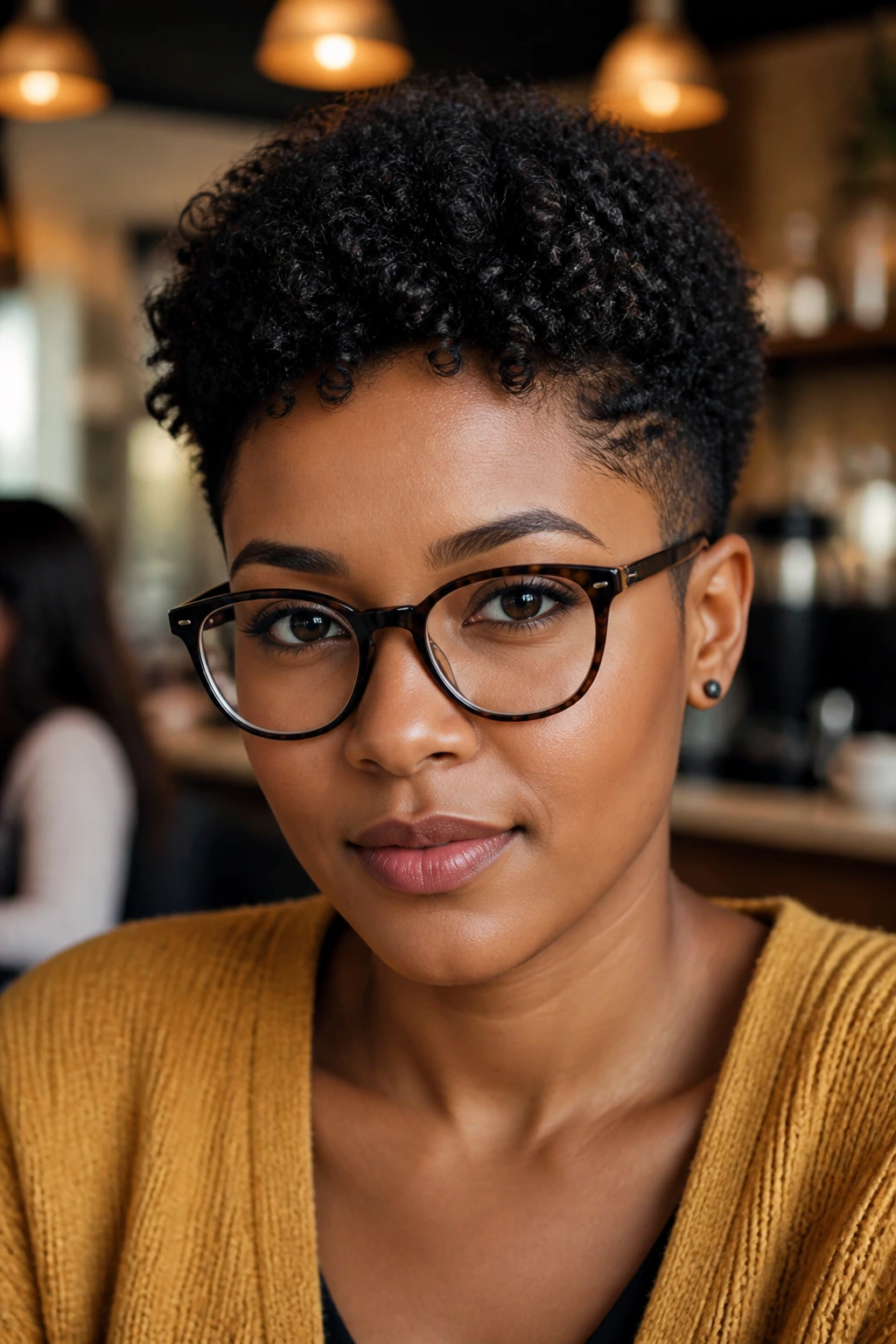
Tapered sides change the whole mood. The hair gets fuller at the top, tighter near the ears, and lighter around the frame arms, which is a gift if your curls are dense or your glasses sit a little wide.
The shape works especially well for tighter curl patterns because it lets the top stay proud without making the sides bulky. When the hair at the temple is trimmed close and the crown is left with enough length, the glasses stop disappearing into the haircut. You can still have volume. You just keep it where it helps.
A tapered cut also solves a practical problem that gets ignored a lot: hair rubbing against the frame arms all day. If that annoys you, this cut cuts the friction down fast. It also keeps the neckline neat, which matters more than people think when you wear glasses and curly hair together.
Use a cream that gives slip, not stiffness. You want the coils to stay soft so the cut keeps its shape instead of turning puffy at the top and flat on the sides. A little edge control near the temples can help, but don’t slick it down so much that the face looks overdone.
6. Half-Up Curls With Loose Face-Framing Pieces

Unlike a full down style, a half-up look takes weight off the temples while keeping the curl pattern visible. That’s the whole appeal. You get lift at the crown, less friction behind the ears, and enough loose hair in front to keep the style from looking severe.
This works best when the top section is pinned or tied at the crown, not the back of the head. A low half-up can sag onto the frames and pull the shape down. A higher placement gives the face more air and makes the glasses feel like part of the styling, not an afterthought.
Leave two front pieces about a finger’s width thick on each side of the face. Those strands soften the line where the glasses sit and stop the style from looking like a school recital hairdo. If your curls are springy, twist those front pieces lightly so they stay away from the lenses.
Best Frame Match
Thick frames and bold colors look especially good here. The half-up style keeps the face open enough for the frames to stand out, but the loose curls still add softness. If your glasses are small and delicate, this style gives them a little more presence without burying them.
7. Rounded Afro Shape That Echoes Bold Frames

Rounded afros can make glasses look planned instead of accidental. That’s the secret. When the silhouette of the hair echoes the shape of the frames, the whole face feels balanced, even if the frames are large or sharply angled.
The rounded shape matters more than the exact length. A well-shaped afro frames the face like a halo, while a square or flattened outline can make the glasses look boxy. If your frames are bold, a rounded silhouette softens them. If your frames are angular, the curve of the hair keeps the face from feeling hard-edged.
Shape it with care around the temples. That area is easy to forget, and it’s the first place where the hair can make the frames look lost. You want enough fullness to show texture, but not so much bulk that the sides balloon outward and hide the arms of the glasses.
- Keep the outline even, not flat at the top.
- Trim in the dry state when possible so the real curl shape shows.
- Lift at the roots with a pick, then stop before you disturb the curl pattern.
- Refresh with water and a leave-in instead of over-brushing the shape apart.
This is one of the strongest looks on the list when you want the glasses to feel like part of the outfit, not a separate piece.
8. Deep Side-Parted Lob With Fuller Ends

A deep side part shifts attention fast. It pulls the eye up and across the face, which is useful when your glasses already create a strong horizontal line. A curly lob gives you enough length for movement without the weight that can make the sides drag.
The sweet spot is usually somewhere between the chin and the collarbone, with the fuller side falling just past the cheekbone. If the curl ends are too thin, the style can look limp. If they’re too heavy, the frames disappear. Fuller ends keep the shape alive and stop the hair from clinging to the temples.
When To Choose It
This is a smart pick if your frames are wide, dark, or square. The side part breaks up the symmetry in a good way. It also helps if one side of your curl pattern is looser than the other, because the part gives you a built-in direction.
A clip at the heavier side can help on days when you want even more face opening. Nothing fancy. Just a small pin or tucked section to keep the curls from sitting right on the frame arms.
The lob has a practical feel, but it doesn’t look plain. That balance is the reason it shows up so often in styles that work with glasses.
9. Wispy Curly Crop With a Light Fringe

Some cuts need very little length to make a frame look balanced. A wispy curly crop is one of them. It keeps the face open, uses the curl texture for shape, and avoids the heavy front section that can make glasses feel crowded.
The fringe is the key. It should be soft, broken up, and a little irregular, not blunt and straight across. A blunt fringe stops right at the frame line and can look thick fast. A wispy one leaves room for the brow and makes the lenses feel part of the style instead of hidden under it.
If your glasses sit low, keep the shortest fringe pieces a half inch above the frame top. That little bit of separation matters. It stops the curls from sticking to the lenses when humidity rises or when the hair shifts during the day.
This is a good cut for smaller frames, wire frames, and people who do not want a lot of hair touching their face. It has personality without needing a lot of styling time. Clean up the edges, mist the curls with water, scrunch, and go.
10. Messy Low Bun With Deliberate Tendrils

Low buns sound plain until you add shape around the face. Then they become one of the easiest ways to wear curls with glasses without fighting the arms of the frames all day.
The bun sits low at the nape, which keeps the sides smooth and lets the glasses rest where they should. The part that keeps this from looking severe is the tendrils. Leave a few curled pieces loose near the cheeks and temples, and the whole look softens fast. Without those pieces, the bun can read too tight.
Do not pull the front back until it’s shiny and flat. That’s the wrong instinct. A small lift at the crown and a little texture near the hairline make the style feel finished, not stiff. If your curls are thick, secure the bun with a coiled elastic or a few pins instead of a tight band that flattens the shape.
This is the style I’d pick for a long day of errands, work, or travel. It stays out of the way, it doesn’t snag on the glasses, and it still leaves enough curl around the face to feel intentional.
11. Defined Ringlets With a Center Part
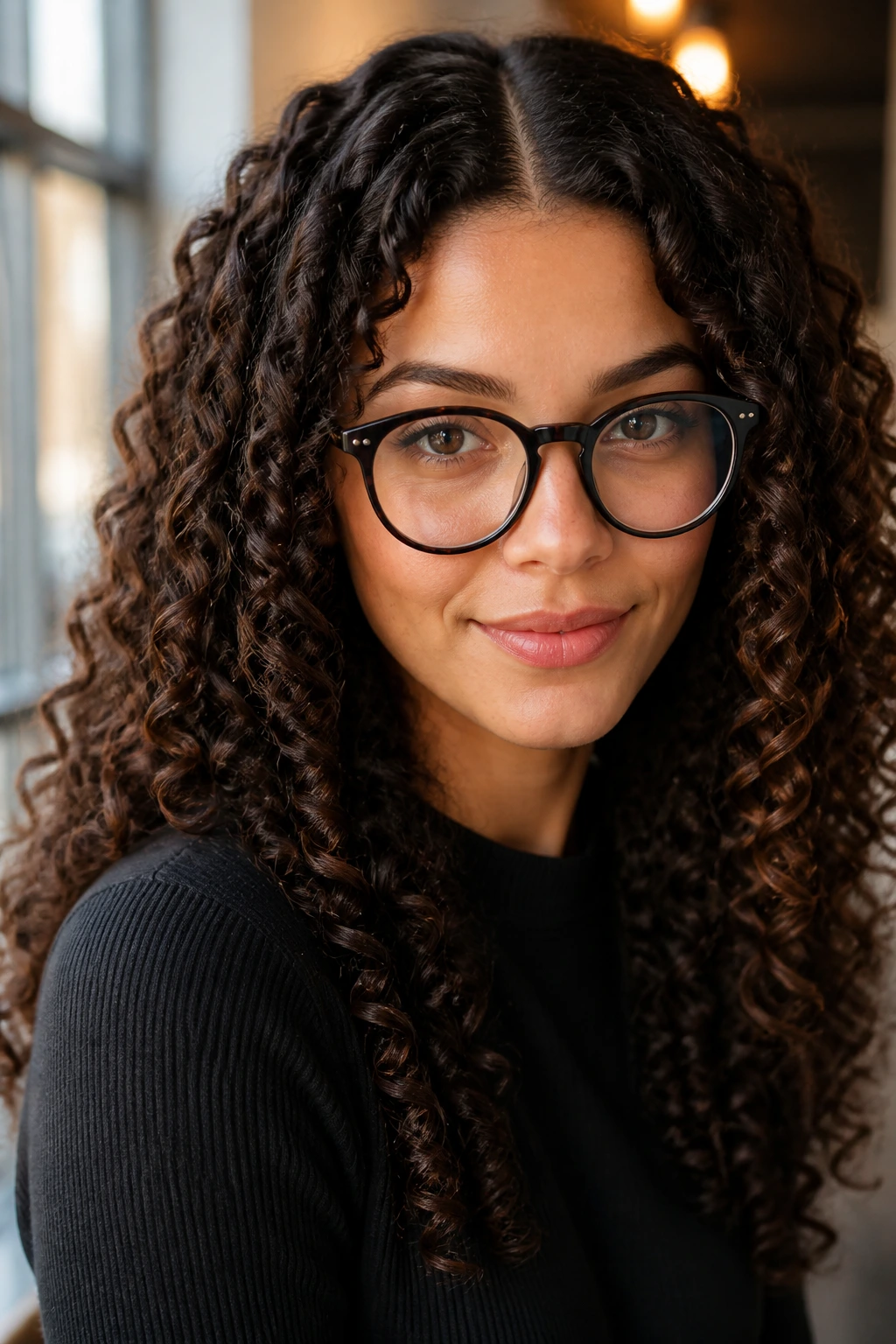
Can a center part work with glasses? Absolutely, if the ringlets are defined and the frame shape is doing some of the visual work too. The center part gives the face structure, and the ringlets soften that structure so it doesn’t turn severe.
This look is strongest when the curls fall in neat spirals instead of a loose cloud. You want the ringlets to sit in clear columns beside the face, not all merged together into one wide shape. That spacing helps the glasses stay visible and keeps the cheeks from looking crowded.
When It Beats a Side Part
A center part is a better choice if your frame is symmetrical and your curls have enough bounce to hold their own shape. Thin metal frames look especially nice here because they don’t fight the clean line down the middle. If your glasses are heavy or oversized, a center part can still work, but the ringlets need to be well defined so the whole look doesn’t flatten out.
- Separate curls with your fingers, not a brush.
- Keep the part clean from the hairline back to the crown.
- Use a small amount of gel or cream to hold the ringlet shape.
- If the top looks flat, lift the roots with clips while it dries.
This style is sharp without being harsh. And that’s the real reason it works.
12. High Puff That Keeps the Frames Front and Center
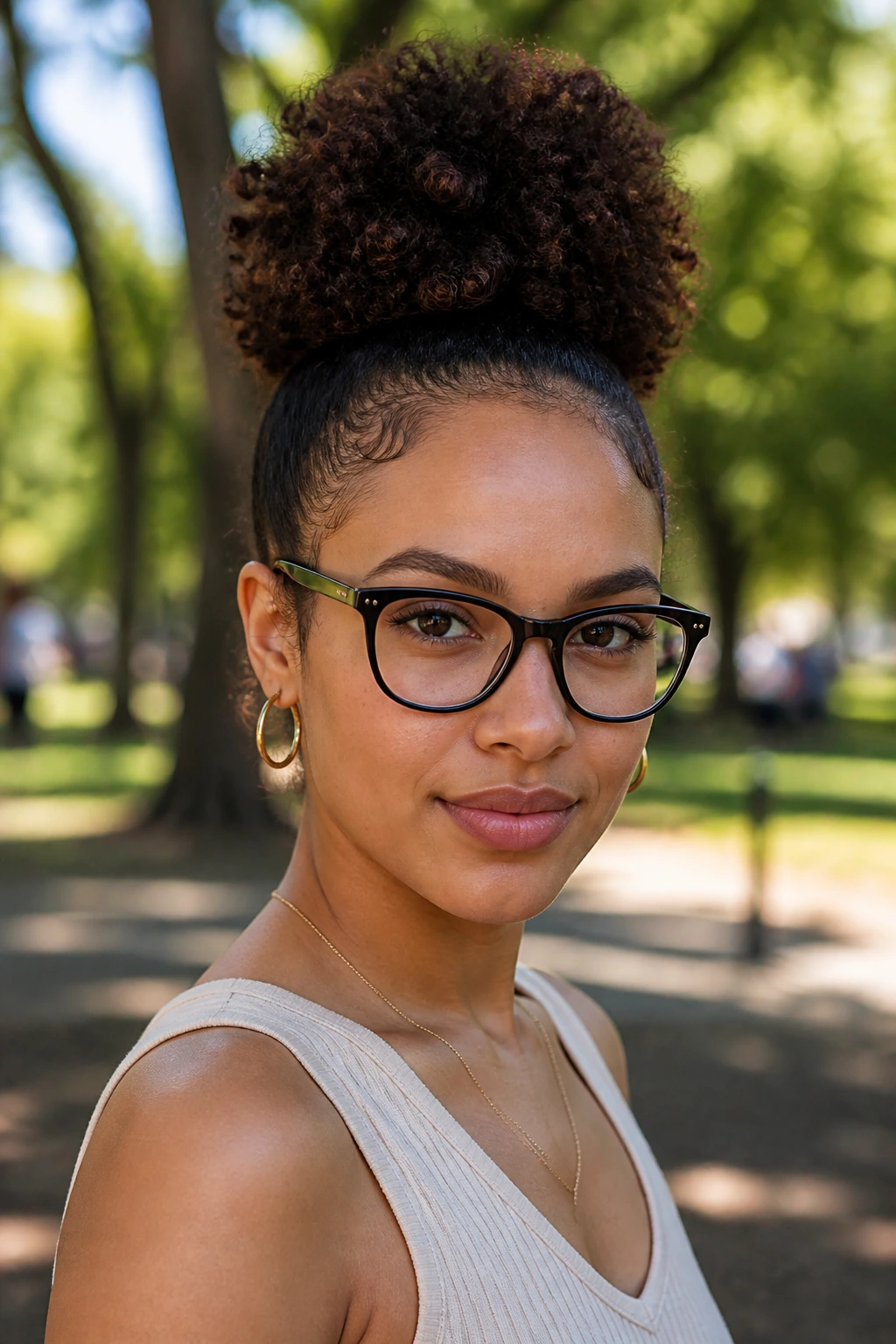
A high puff is often the easiest way to let the glasses do their job. The hair moves up and away from the face, the frames stay visible, and the whole look feels clean without being overdone.
The placement matters. Put the puff high enough that the hair clears the temple area, but not so high that it turns into a stretched-out cone. The sweet spot is usually at the crown, where the natural shape of the head gives the puff a round base. Smooth the sides lightly, then leave enough texture so the style still reads as curly.
This is a strong choice for people with dense curls who get tired of hair touching the lenses. It’s also useful when the weather makes loose curls expand faster than you want them to. The puff keeps the volume in one place instead of spreading it across the face.
If your frames are chunky, this style gives them room. If your frames are tiny, the puff keeps the face from feeling too plain. Either way, it’s practical. And that counts.
13. Curly Wolf Cut With Choppy Crown Layers

The wolf cut works because it refuses to stay neat. That sounds odd, but on curly hair it can be a relief. The shorter layers at the crown create lift, while the longer ends keep the shape from turning into a triangle around the glasses.
This cut is especially useful if you like texture and do not want the frames hidden. The choppier top pieces leave space around the temples, and the longer bottom layers keep enough movement so the hair doesn’t look boxy. If the crown is cut too short, the top can puff up in a way that swallows the frame. If it’s too long, it loses the whole point. Balance matters here.
What Makes It Work
Ask for a soft wolf cut, not a shag that’s been thinned to death. Those are not the same thing. The wolf cut needs some edge, but it still needs structure around the glasses. Keep the front pieces long enough to graze the cheekbone and short enough to stay off the lens corners.
This cut suits people who like a little rebellion in their hair. It looks best when the curls are defined, the crown has lift, and the sides are controlled enough that the frame arms do not vanish into the texture.
14. Long Curls With Cheekbone-Grazing Layers
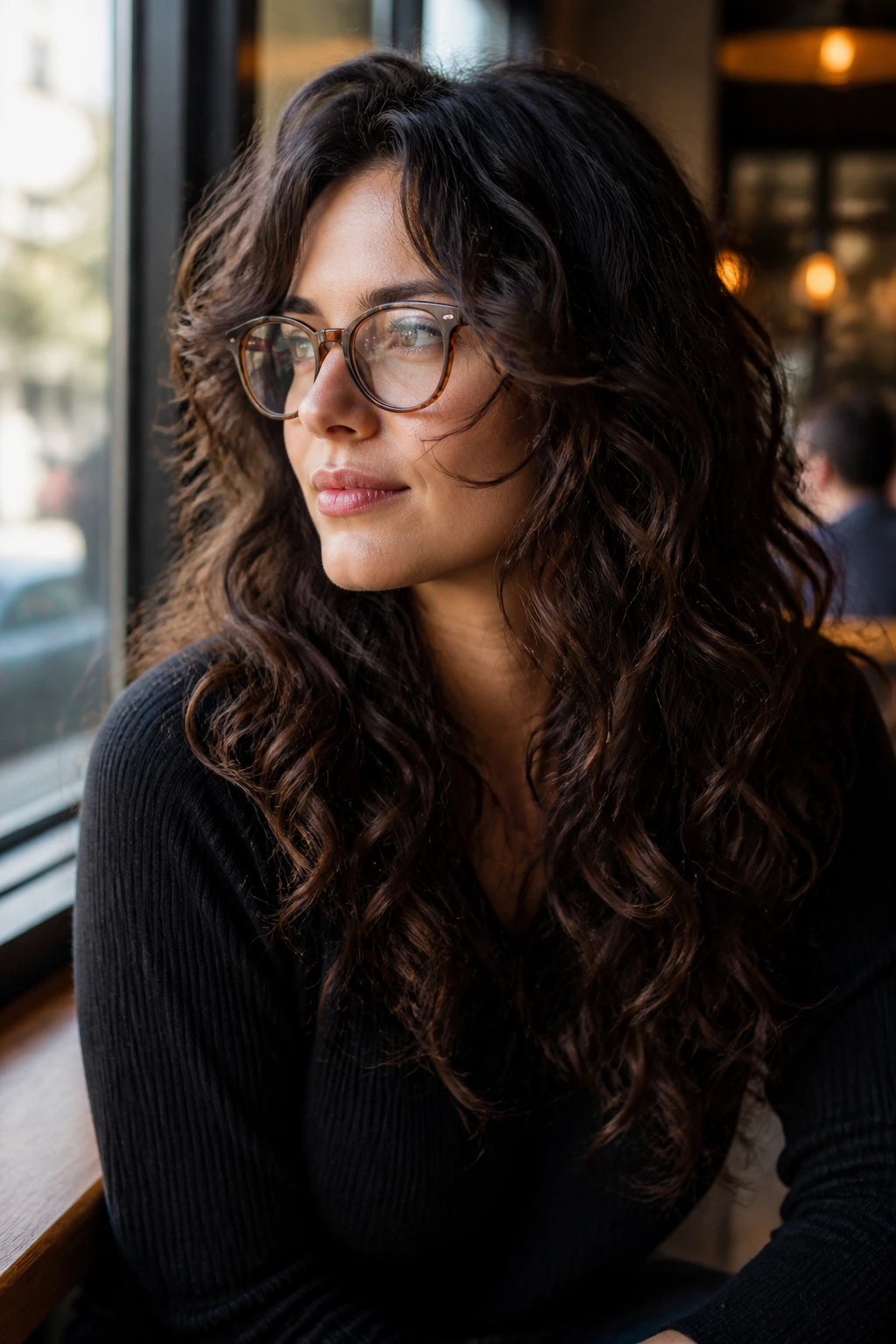
Long curls do not have to hide behind the frames. They can work beautifully with glasses when the layers are placed with a little care and the front pieces are cut to open the face instead of closing it in.
The biggest mistake with long curly hair is letting it hang in one heavy curtain from the temples down. That can bury the frames and pull the face downward. Cheekbone-grazing layers fix that. They create a small frame around the eyes and nose bridge without taking away the length people like to keep.
- Start the shortest face-framing layer near the cheekbone.
- Keep the longest layer around the collarbone or a little below.
- If your hair is fine, avoid over-thinning the ends.
- If it’s thick, remove weight from the mid-lengths so the curls move instead of stacking up.
Long curls are a solid match for readers, oversized frames, and any style where you want softness without losing length. They also age well through the day, which matters more than style photos ever admit. A cut that survives a full day of glasses adjustments is worth keeping.
15. Low Curly Ponytail With Lifted Roots
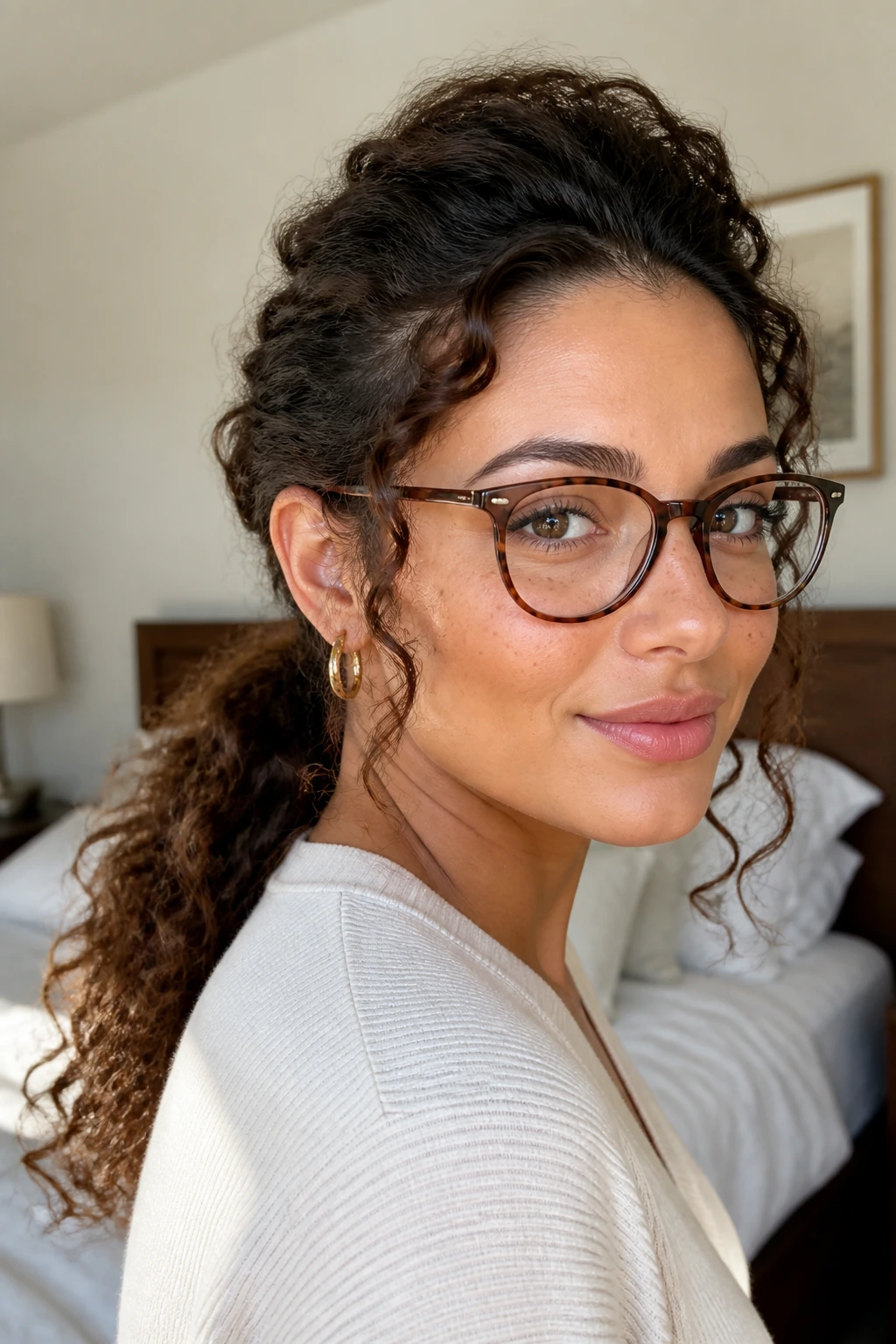
A low curly ponytail sounds practical because it is, but that doesn’t mean it has to look plain. The trick is to keep the roots lifted and the face pieces soft so the glasses don’t get crowded.
Place the elastic at the nape, not halfway up the back of the head. A ponytail that sits too high can tug the curls into the frame arms and make the sides feel busy. At the nape, the shape stays low and easy. Then pull a few curls loose near the temples and cheekbones so the style keeps some softness around the face.
This works well on second-day curls, in humid weather, or any time you want the glasses to sit cleanly without hair pressing into them. If your hair is thick, a satin scrunchie helps the ponytail hold without leaving a hard crease. If your curls are looser, wrap a small section of hair around the elastic so the base looks finished instead of rushed.
If you want one style that survives a long day of adjusting frames, lifting the glasses, putting them back on, and never thinking about your hair again, start here. It’s simple. It works. And sometimes that is exactly what curly hair and glasses need together.
