



A curly bob can look sharp, airy, and expensive-looking—or it can balloon into a triangle by lunch. The difference usually has less to do with the curl itself and more to do with where the weight sits, how the layers are placed, and whether the cut respects shrinkage instead of fighting it.
Layered bob haircuts for curly hair work best when they’re shaped around movement, not against it. Curly hair changes the whole game: a half inch of length can vanish once the curls dry, and a blunt line that looks neat in the chair can turn heavy and boxy a few hours later. That’s why the best bob on curls usually has some internal structure, a soft perimeter, and enough length left in the right places to keep the silhouette from popping out sideways.
I’ve always thought the real magic happens when a stylist stops thinking in straight lines. Curls want curves, tension, and a little room to breathe. A dry cut, or at least a mostly dry cut, usually gives a more honest result than a wet cut alone, because you can actually see where the curls land and where they pile up.
Some of the prettiest bobs on curly hair are the least fussy ones. Others look better only because they’re a little bolder, with a cleaner angle or a deeper fringe. Either way, the cut should make your curls look intentional the second they dry—and still look good on the second or third day, when the shape has settled in.
1. Chin-Length Curly Layered Bob
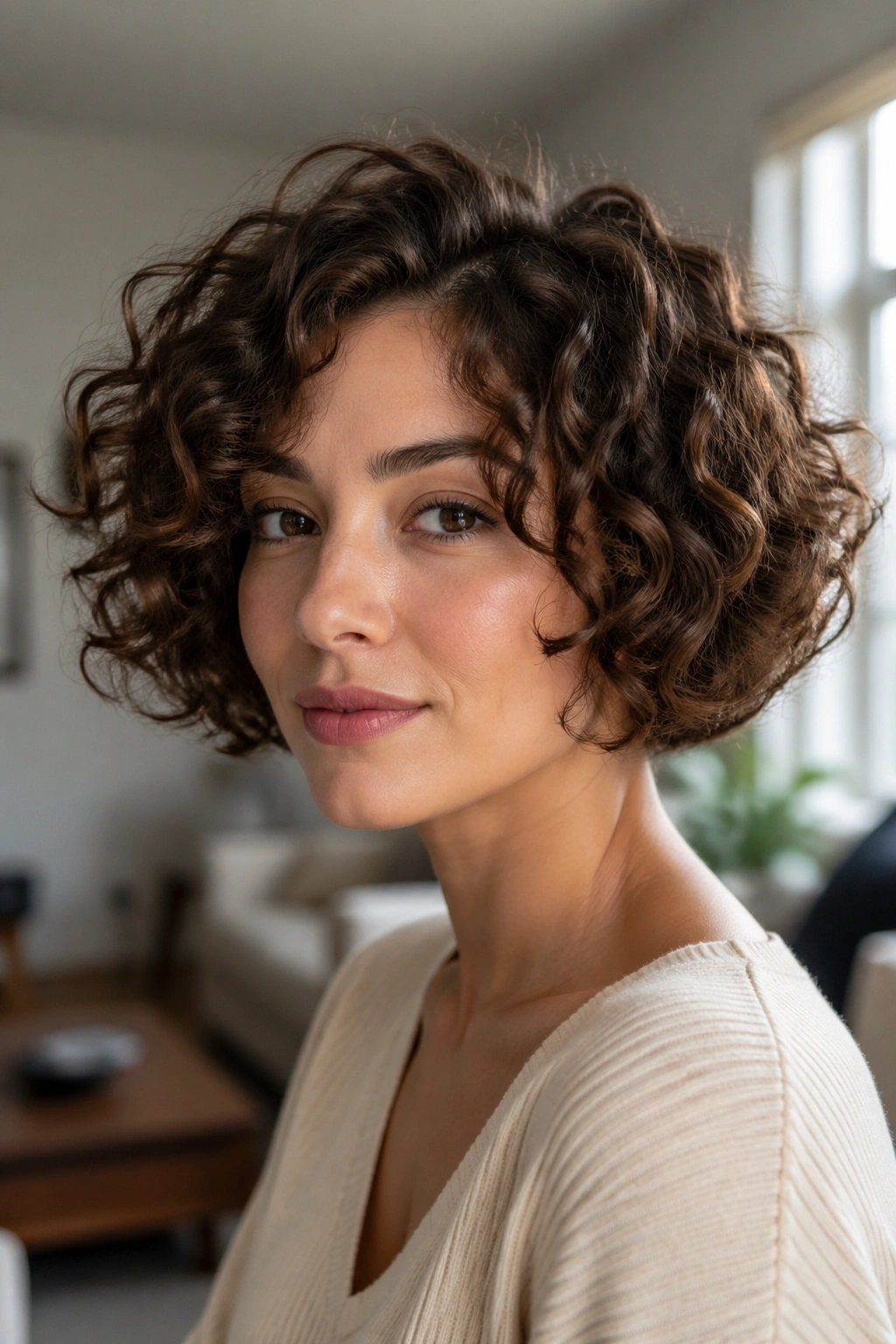
Chin-length is where a lot of curly bobs finally start to make sense. Too short, and the curls can spring up into a round puff. Too long, and the whole thing starts hanging there like it’s unsure what it wants to be. Chin length gives the curls a clear frame, which is especially useful if your pattern has a lot of bounce.
The layers matter here. You do not want them chopped in so aggressively that the ends turn wispy. A good chin-length layered bob keeps the outline readable while letting the interior move, so the shape feels light without losing its edge.
One small detail makes a big difference: ask for the front to be checked when dry, not guessed at while wet. Curls can shrink above the jawline fast, and nobody enjoys a bob that turns into a halo before the first wash day is over.
2. Soft Rounded Curly Bob
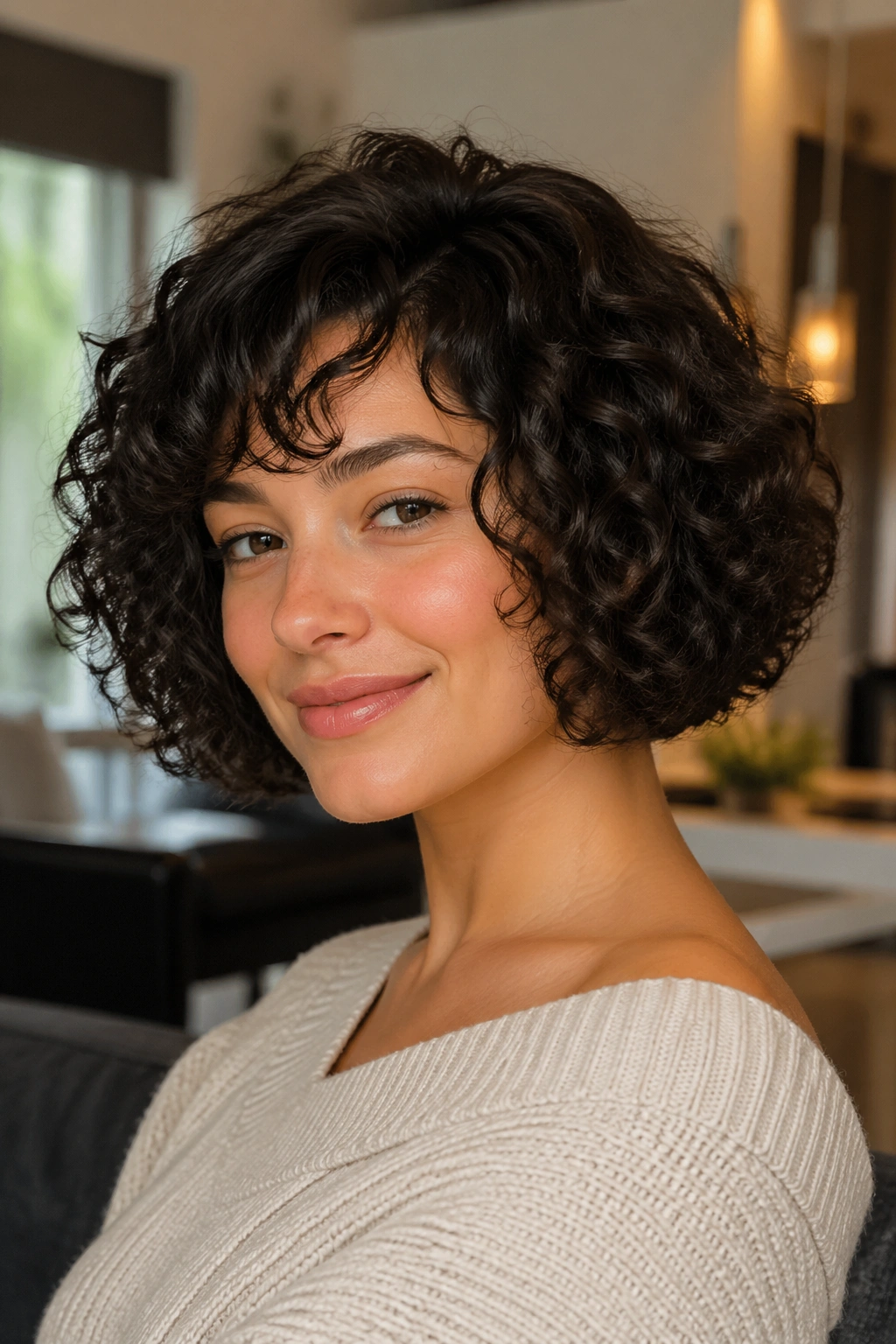
Why do rounded bobs flatter curls so often? Because they work with the head’s natural curve instead of flattening it into a box. The cut follows the shape of the skull, then lets the curls land in a soft arc that feels tidy without looking stiff.
What to ask your stylist for
- Ask for soft graduation through the back, not a hard shelf.
- Keep the perimeter slightly longer at the front if your curls spring up a lot.
- Use light internal layering so the top doesn’t sit heavy.
- Avoid over-thinning the ends; that’s where rounded bobs start to fray.
A rounded curly bob is especially good when your hair has medium density and the curls form a clear coil or wave. It gives shape without looking severe, and it can make dense hair feel less bulky around the cheeks. The danger is going too far with the rounding and ending up with a little helmet. That’s not the goal.
Ask for softness, not symmetry perfection. Curly hair rarely needs a ruler; it needs balance.
3. Shoulder-Skimming Curly Lob with Internal Layers
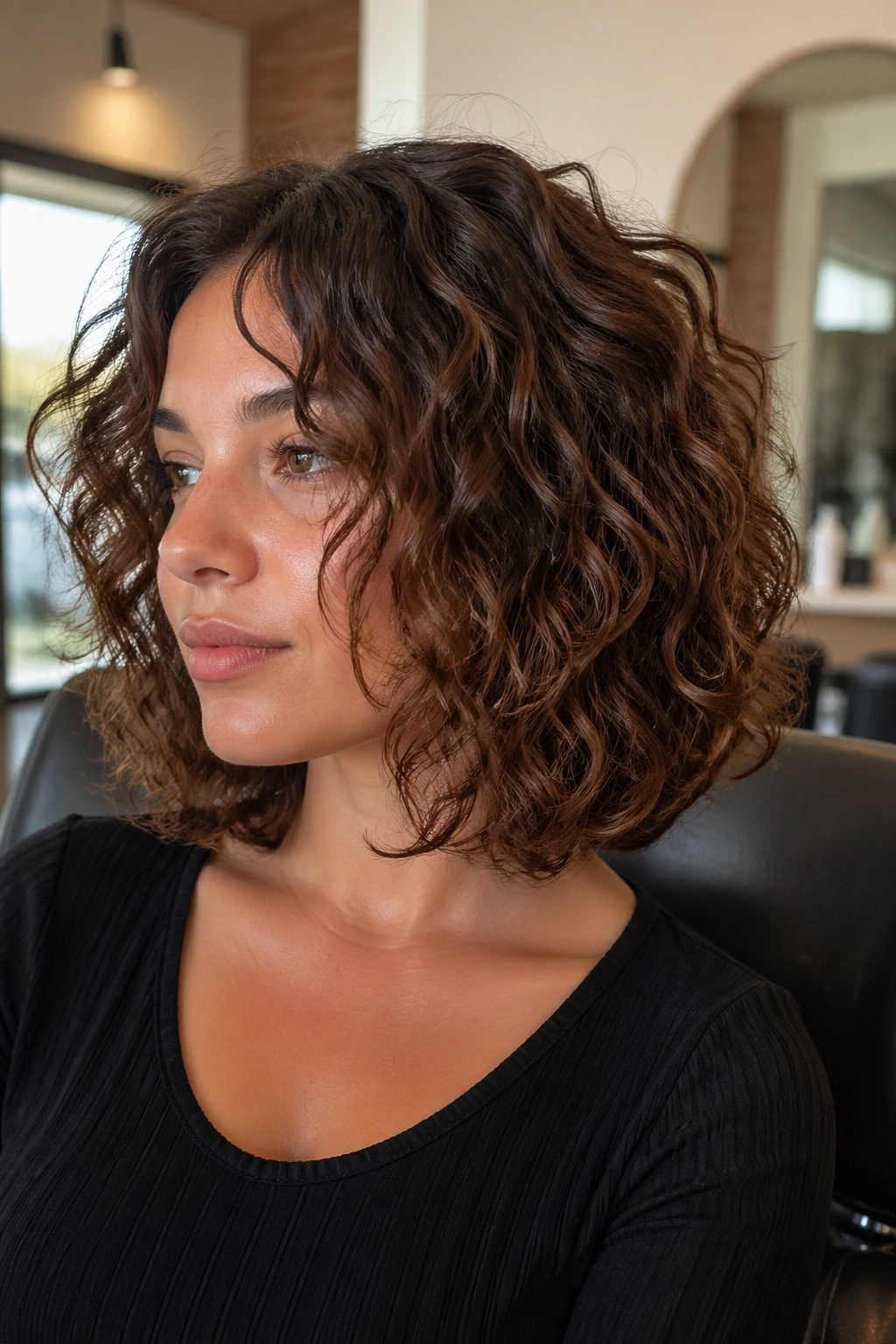
There’s a reason the curly lob keeps hanging around salon chairs. It gives you the bob shape without forcing you to give up all your length in one shot. Shoulder-skimming length also helps if you like to pin parts of your hair back, tuck it behind one ear, or let the curls fall into a more relaxed shape on day two.
Internal layers are the part people skip when they shouldn’t. These are the hidden layers inside the haircut, the ones that remove bulk without making the outside look choppy. On curly hair, that matters a lot. You get movement, but you don’t lose the clean outer line that keeps the cut from feeling random.
Why it behaves well
- The extra length slows down shrinkage at the ends.
- Internal layers stop the middle from ballooning.
- The cut still works when air-dried, which is half the battle.
- It grows out cleaner than a very short bob.
If you want a low-drama curly cut that still feels shaped, this is the one I’d steer you toward first. It’s not flashy. It works.
4. Angled Curly Bob
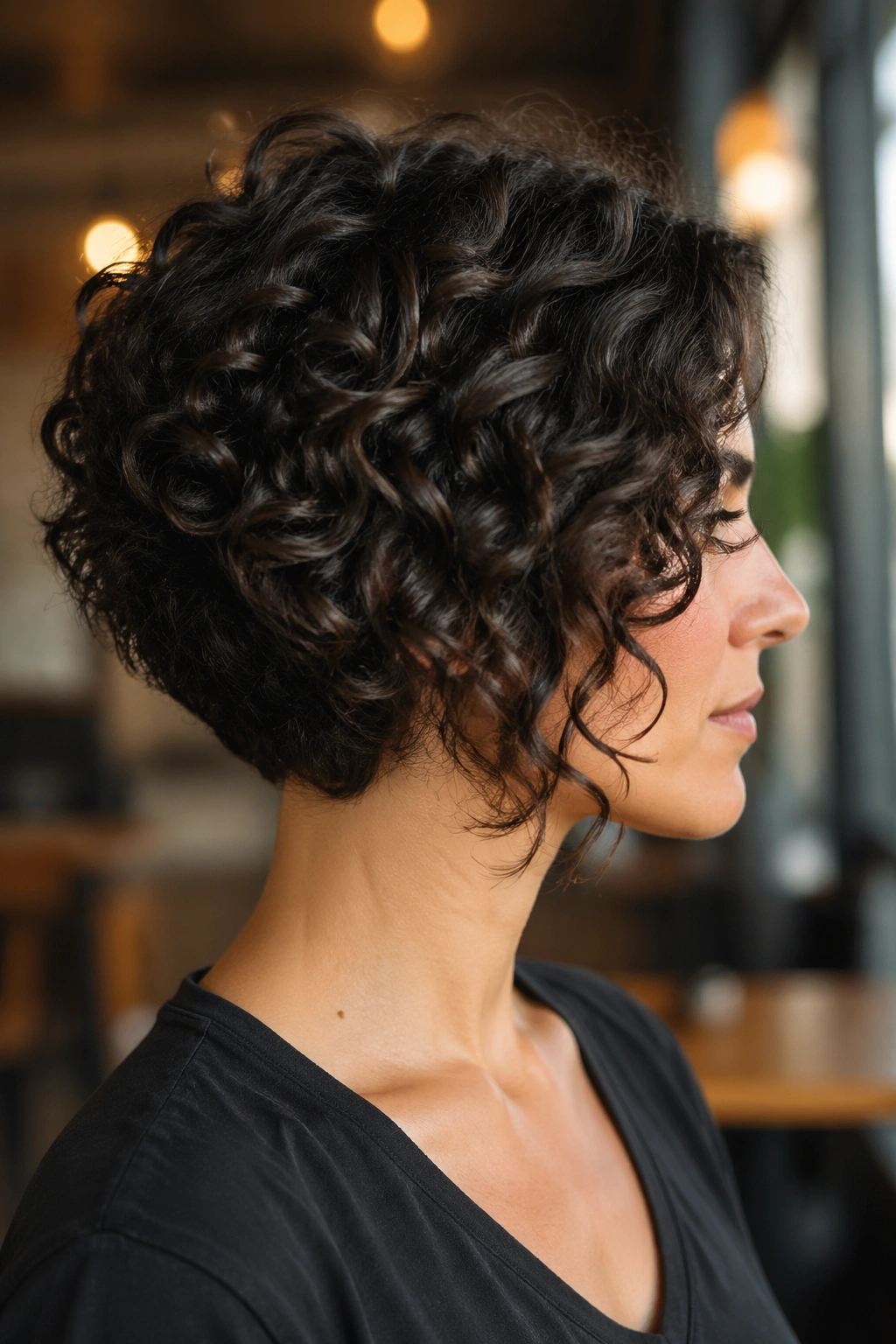
Not every bob needs to be the same length all the way around. A slight angle—shorter in back, longer in front—can make curly hair look sharper and more lifted without making it severe. The front pieces skim the jaw or collarbone, while the back stays tucked and controlled.
The angle should be gentle. Curly hair adds its own visual movement, so a steep angle can look exaggerated once it dries and expands. That can be cool if you want drama, but most people just end up with a front that feels too long and a back that feels too short.
An angled curly bob works well when you want your face to stay open. It also keeps the hair from stacking too much under the chin, which is a common problem when curls are dense and the cut is too blunt. The result feels cleaner than a round bob and less playful than a shag.
My opinion? If you wear glasses or like a side part, this cut can look especially good. The angle gives the curls direction instead of letting them float everywhere.
5. Shaggy Curly Bob
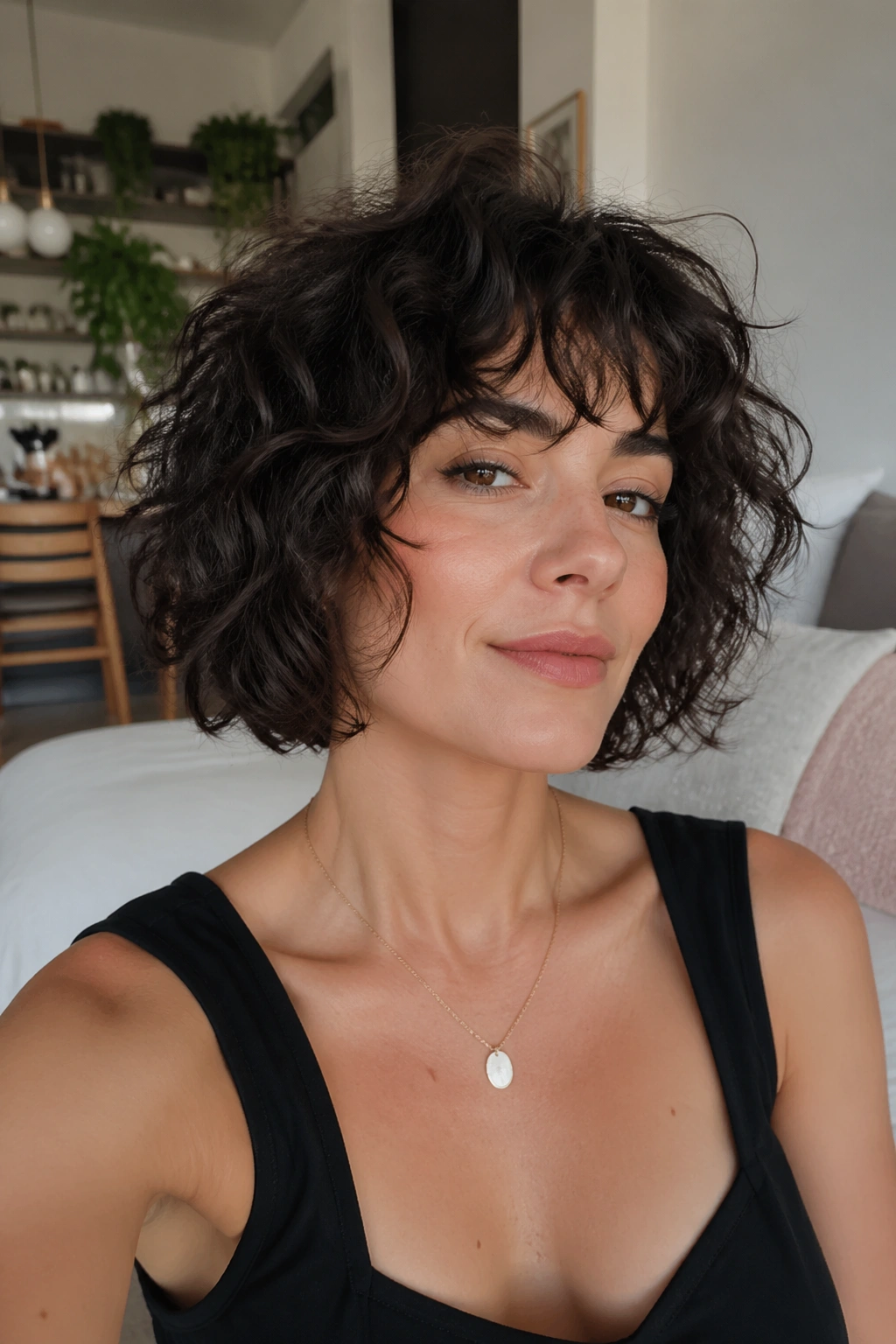
A shaggy curly bob is what happens when you stop asking curls to behave like straight hair. It has texture, it has little irregular pieces, and it usually looks better a day after styling than it does the second it leaves the salon. That’s not a flaw. That’s the point.
Why it works
- The layers break up a heavy triangle shape.
- Point-cut ends keep the outline from looking blunt.
- Volume spreads out instead of sitting in one block.
- It gives tighter curls room to move without looking stuffed.
Shaggy bobs can be a relief for hair that gets wide at the sides. If your curls have a strong, fluffy texture, a blunt bob can feel like a mushroom by noon. A shag loosens that shape and lets the curls stack in a more casual way.
It does need a decent cut, though. A bad shag on curls can look sliced up and frizzy. A good one looks like it was made for your hair texture from the start. Those are not the same thing.
6. Stacked Curly Bob
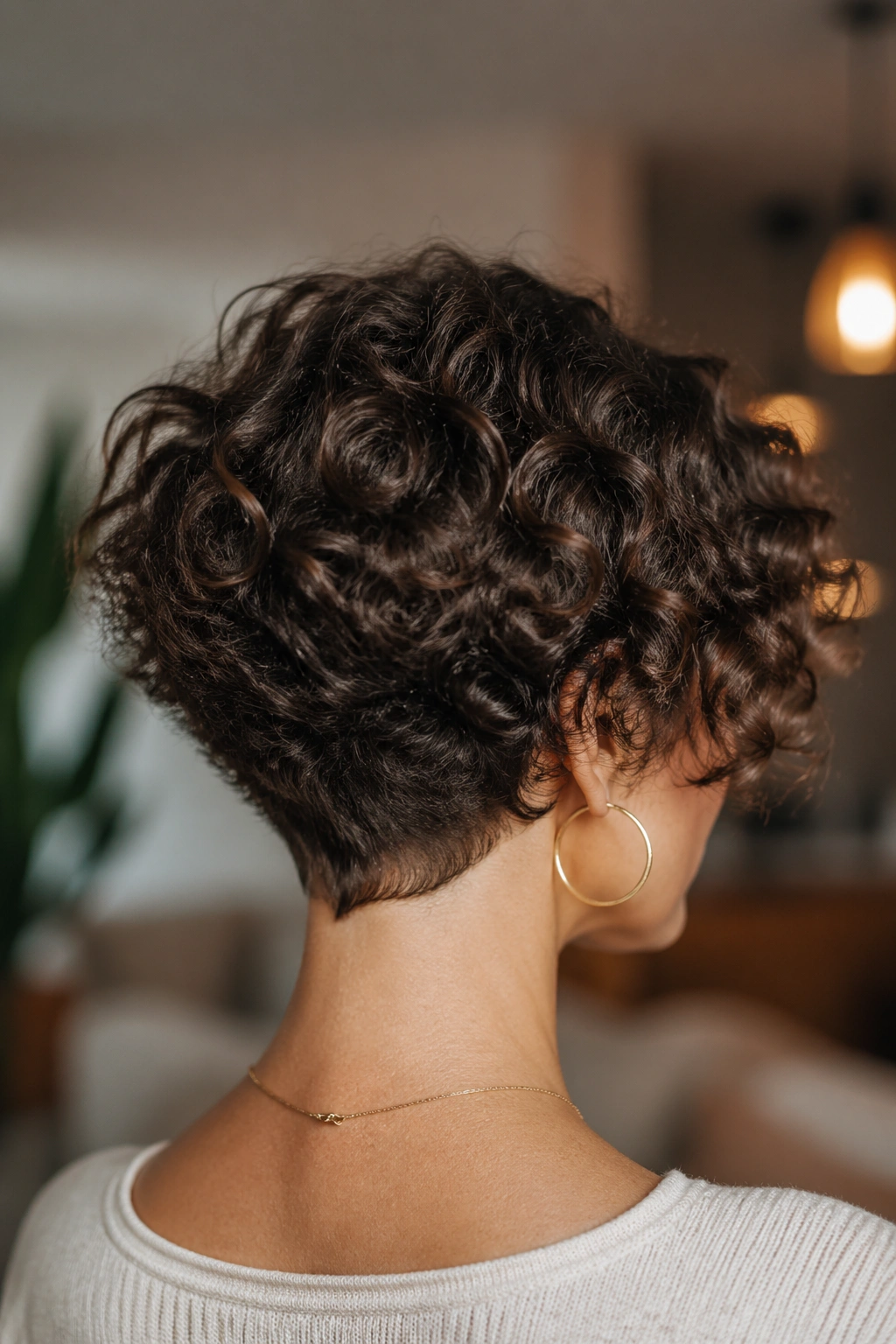
A stacked bob is all about lift in the back. The layers build up through the nape and crown so the shape sits higher, which is useful when your curls are fine or medium and tend to collapse flat against the head. The profile looks polished from the side, which is one reason this cut has such staying power.
The trick is to keep the stack soft. If the graduation is too hard, curly hair can turn the back into a little ledge, and that is never flattering. Soft stacking gives you lift without turning the haircut into a geometry lesson.
This style is especially handy if you want your curls to look fuller at the top without having to spend fifteen minutes fluffing the roots every morning. A little mousse at the crown and a diffuser can do most of the work. If your hair is very thick, though, too much stacking can feel bulky fast. In that case, ask for lighter graduation and check the side profile before you leave the chair.
7. French Bob with Curly Bangs
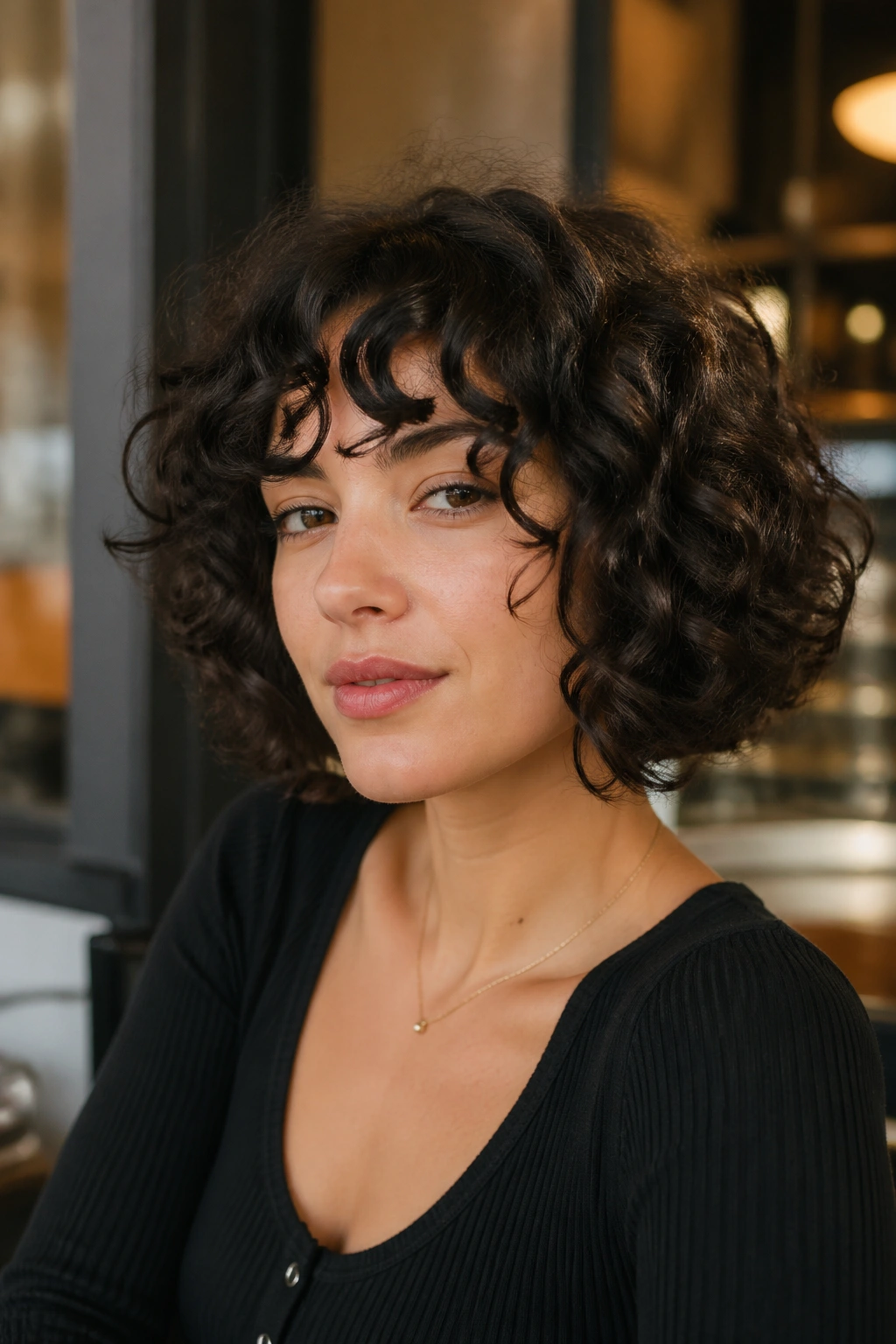
The French bob has a little attitude built in. Shorter through the nape, often grazing the jaw or cheek, it gets even more interesting when curly bangs are part of the picture. On the right curl pattern, the whole thing feels breezy and artful; on the wrong one, it can tilt into puff territory fast.
Who it flatters
- Curls with a springy bend that hold shape near the face.
- Medium-density hair that can support a shorter length.
- People who like a little structure around the eyes and cheekbones.
- Anyone willing to style the fringe with a touch of cream or gel.
Curly bangs need a different kind of trust. They should usually be cut a bit longer than you think, because they spring up and separate as they dry. If they land right at the brow when wet, there’s a decent chance they’ll sit much higher once the curl pattern wakes up.
This cut is charming when it’s a little imperfect. The bangs do not have to sit like a curtain rod. They need to move, land softly, and blend into the rest of the bob instead of sitting on top of it like a separate accessory.
8. Face-Framing Layered Bob
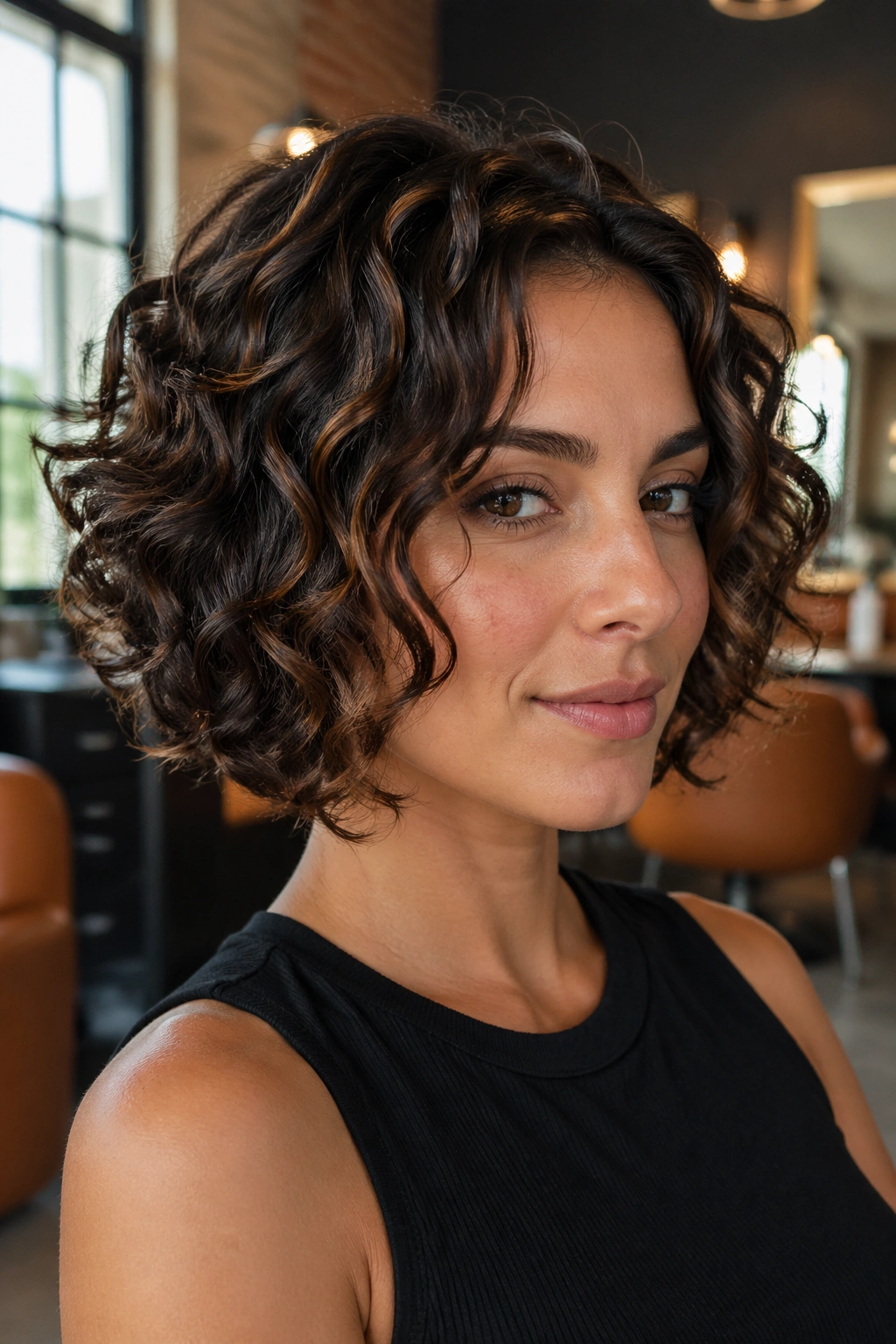
What changes a bob from cute to flattering? Often, it’s the face-framing pieces. Layers that start around the cheekbone or jaw pull attention upward and soften the edges around the face, which can make a curly bob feel tailored without looking stiff.
The placement matters more than the amount. A few well-placed layers near the front can open up the whole cut, especially if your curls tend to widen around the cheeks. That’s why this shape works so well on square, heart, and round faces. It doesn’t fight the face; it guides the eye.
One thing people get wrong: they ask for face-framing layers that are too short. On curly hair, short front pieces can spring up and sit awkwardly above the brow or cheek. Longer, softer pieces usually behave better, and they’re easier to grow out if you change your mind.
If you like to tuck one side behind your ear, this cut is a strong choice. The front pieces fall in a way that feels deliberate, even when you’ve done almost nothing to style them.
9. Asymmetrical Curly Bob
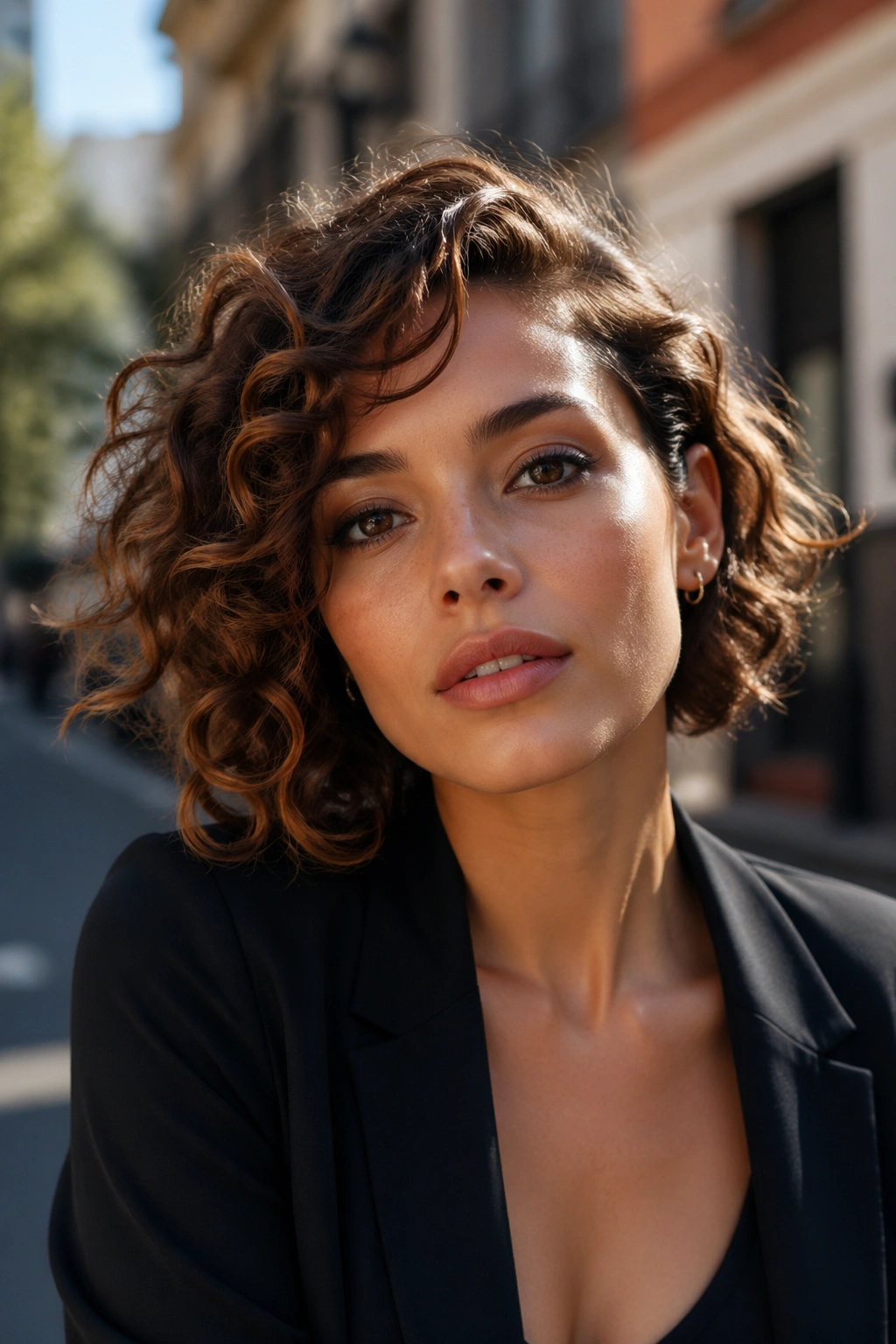
A little asymmetry can save curly hair from looking too predictable. One side sits slightly longer than the other—usually by half an inch to an inch—and that small shift adds movement without turning the haircut into a stunt.
The best part is how naturally curls disguise the difference. Straight hair shows every millimeter. Curls blur the line in a way that feels organic, so the asymmetry reads as shape rather than mismatch. That makes this cut a smart choice if you want something a bit edgier but still easy to wear.
It works especially well when one side tends to lie flatter or when your part naturally pulls in one direction. The longer side can carry more visual weight, which keeps the style from feeling lopsided in a bad way.
A small warning: asymmetry needs maintenance. If you let it grow out too long, it stops looking intentional and starts looking like a haircut that forgot its own plan. Trim it before the difference gets muddy.
10. Tapered Nape Curly Bob
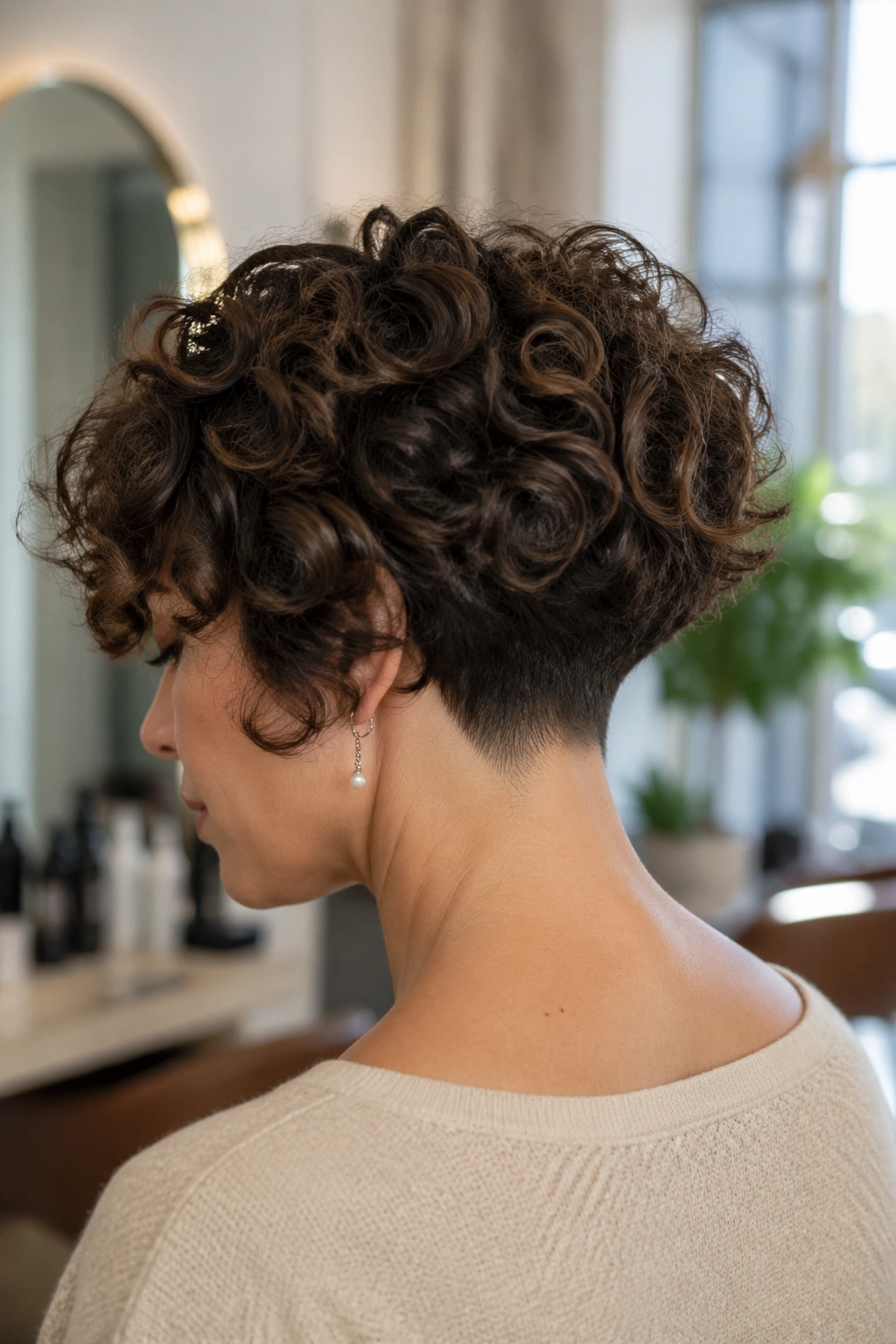
A tapered nape gives the neck some breathing room. The back is cut closer and cleaner, while the sides and top keep their curl and fullness. It’s a simple move, but on curly hair it changes the whole mood of the cut. The neckline looks neat, and the rest of the bob can still move freely.
What makes it different
- The back sits tighter against the head.
- The crown stays fuller, so the cut does not go flat.
- The shape feels cooler and lighter around the neck.
- It grows out in a more controlled way than a blunt back.
This is the bob for people who hate hair brushing their collar all day. It also works well if your curls are dense in the nape and tend to puff outward there. Tapering removes some of that bulk without sacrificing the top shape.
I like this option when the client wants clean lines but doesn’t want a dramatic undercut. It’s tidier than a shag, less round than a stacked bob, and more wearable than a severe geometric cut. Quietly practical. Which, honestly, is underrated.
11. Curtain-Bang Curly Bob
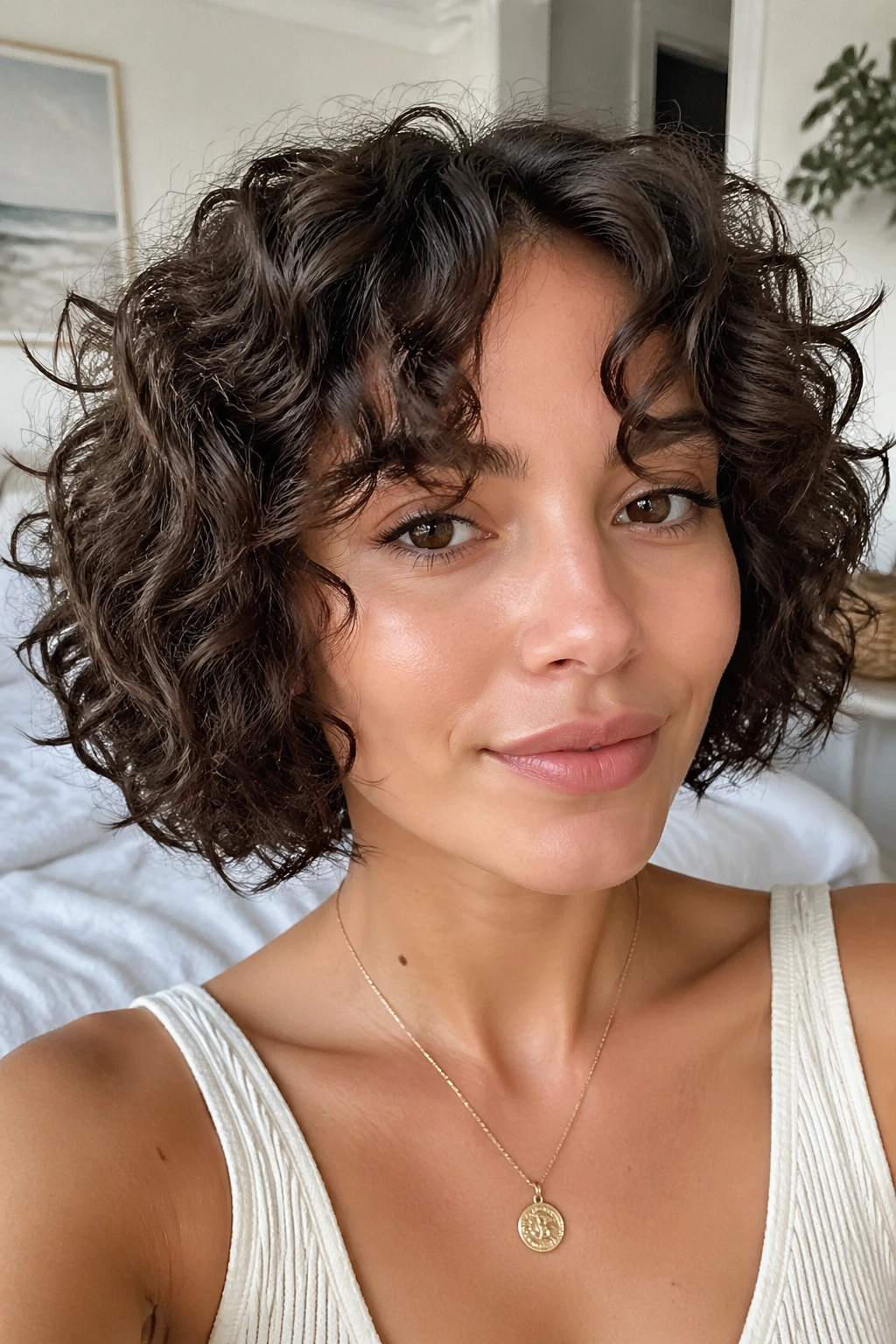
Curtain bangs can soften a curly bob fast. They split a little in the middle, fall away from the face, and blend into the sides so the whole haircut feels less blunt. On curls, they also create a nice break in the silhouette, which keeps the front from feeling too heavy.
The length should stay generous. Curly fringe almost always looks shorter once dry, and curtain bangs that are cut too high can end up floating above the eyebrows in a way that’s hard to control. A longer starting point gives you room to style them to the side, part them down the middle, or let them curl into the bob.
A lot of people like this shape because it gives them options. Good day? Wear the bangs open and soft. Humid day? Push them a bit wider and let the curl pattern do its thing. It’s one of the few bang styles that can look relaxed without looking unfinished.
If you want to keep the rest of the bob fairly simple, this is a nice compromise. The bangs do the face-framing work so the cut itself doesn’t need to be overworked.
12. Deconstructed Curly Bob for Thick Hair
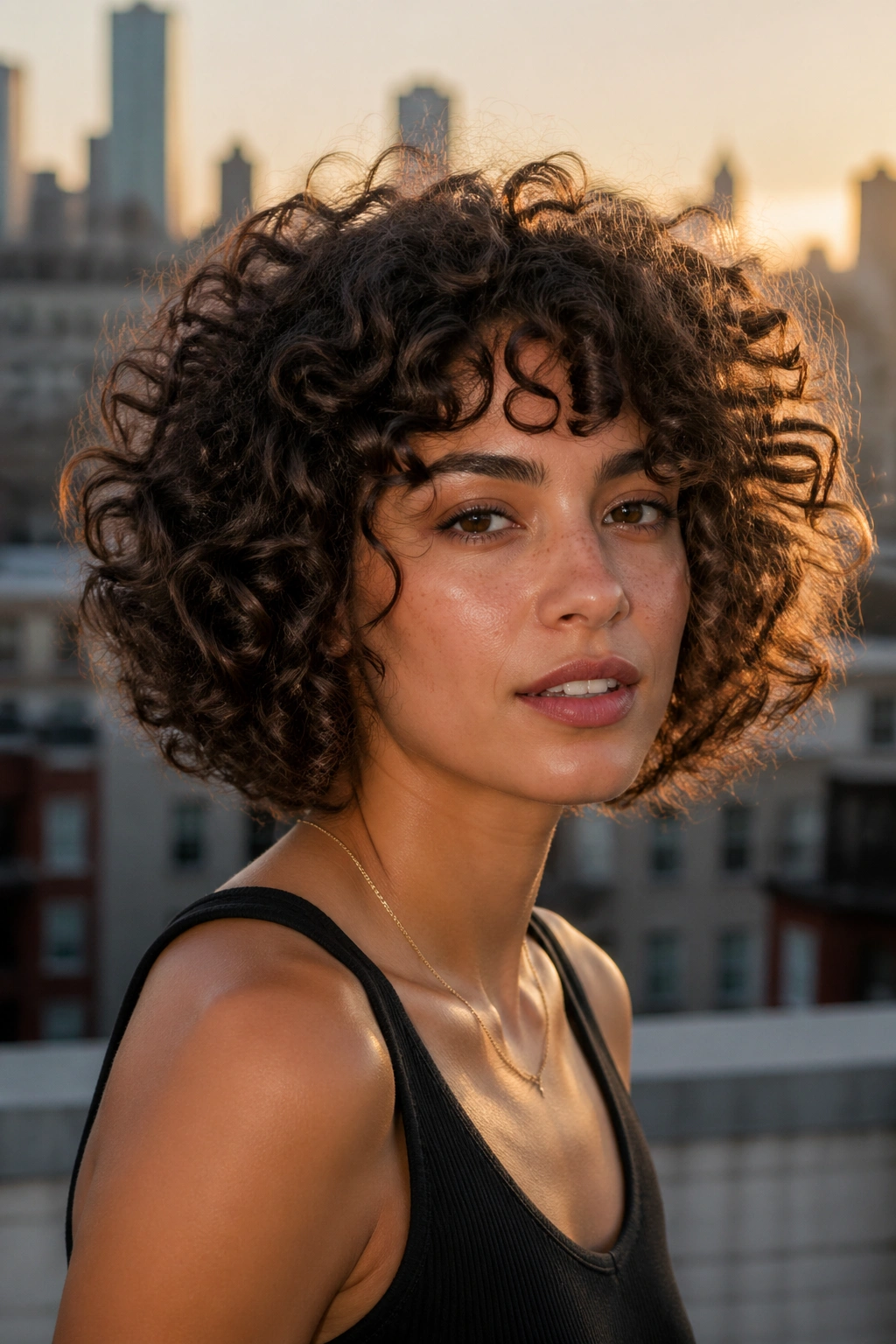
Thick curls need a different kind of honesty. A standard bob can get heavy fast, especially if the perimeter is too blunt and the interior is too full. A deconstructed curly bob spreads that weight around with uneven internal layers, which gives the hair room to move without turning the shape into a block.
Unlike a stacked bob, this one is less about building height in the back and more about removing bulk in places that trap it. The goal is motion, not perfect roundness. When done well, the cut keeps the silhouette loose but controlled, which is a useful line to walk with dense hair.
Stylist note
- Ask where the bulk sits before the cut starts.
- Keep the outer line visible; do not over-fray the ends.
- Use point cutting rather than heavy slicing on fragile curl ends.
- Check how the shape looks from both side angles before finishing.
This is the kind of bob that rewards a stylist who actually looks at how your curls stack on their own. Thick hair has opinions. The cut should answer them, not ignore them.
13. Lightly Layered Bob for Fine Curls
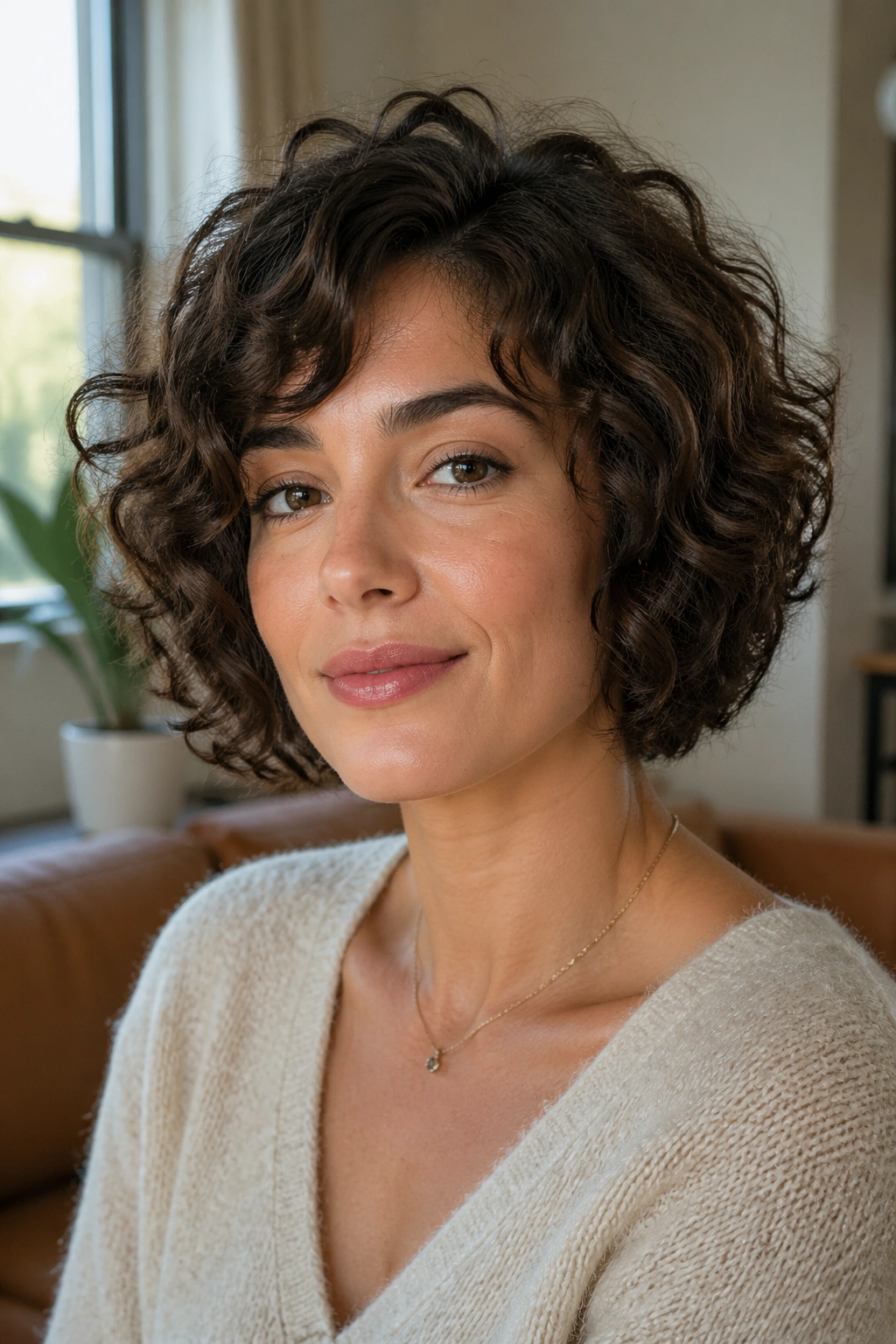
Fine curls need restraint. People often assume more layers will make hair feel fuller, but on fine textures that can backfire fast. Too many layers leave the ends thin, the scalp more visible, and the shape a little too airy in a bad way.
A lightly layered bob keeps the perimeter fuller and the weight line intact. The layers should be subtle, mostly there to stop the top from sitting flat or the sides from clumping oddly. That’s it. No drama, no over-texturizing, no thinning shears taken to the ends like a shortcut.
The styling matters here too. Fine curls usually do better with a light mousse or foam and a diffuser on low heat. Heavy creams can weigh them down and make the cut collapse. If you’ve ever watched a cute bob deflate before you reached the car, you know the feeling.
This is one of those cuts where less really is more. The bob should look like it has body because of its shape, not because somebody carved holes into it.
14. Side-Part Curly Bob

Why does a side part change so much? Because it lifts the roots on one side, shifts the weight of the hair, and gives the curls a place to fall that feels more alive than a dead-center part. On a bob, that can be the difference between flat and full.
How to wear it
- Shift the part about 1 to 2 inches off center on damp hair.
- Clip the heavier side while it dries if the roots collapse.
- Use a diffuser at the crown, not just on the ends.
- Flip the part from time to time so one side doesn’t stay crushed.
A side-part curly bob works on a lot of face shapes, but it’s especially useful if one side of your hair naturally has more volume or if your crown tends to lie flat. The asymmetry gives the cut some tension, which is a fancy way of saying it looks less static.
I also like this style for people who want an easy refresh without changing the whole haircut. Sometimes moving the part is enough to make the bob feel new. That sounds minor. It isn’t.
15. Soft Inverted Curly Bob
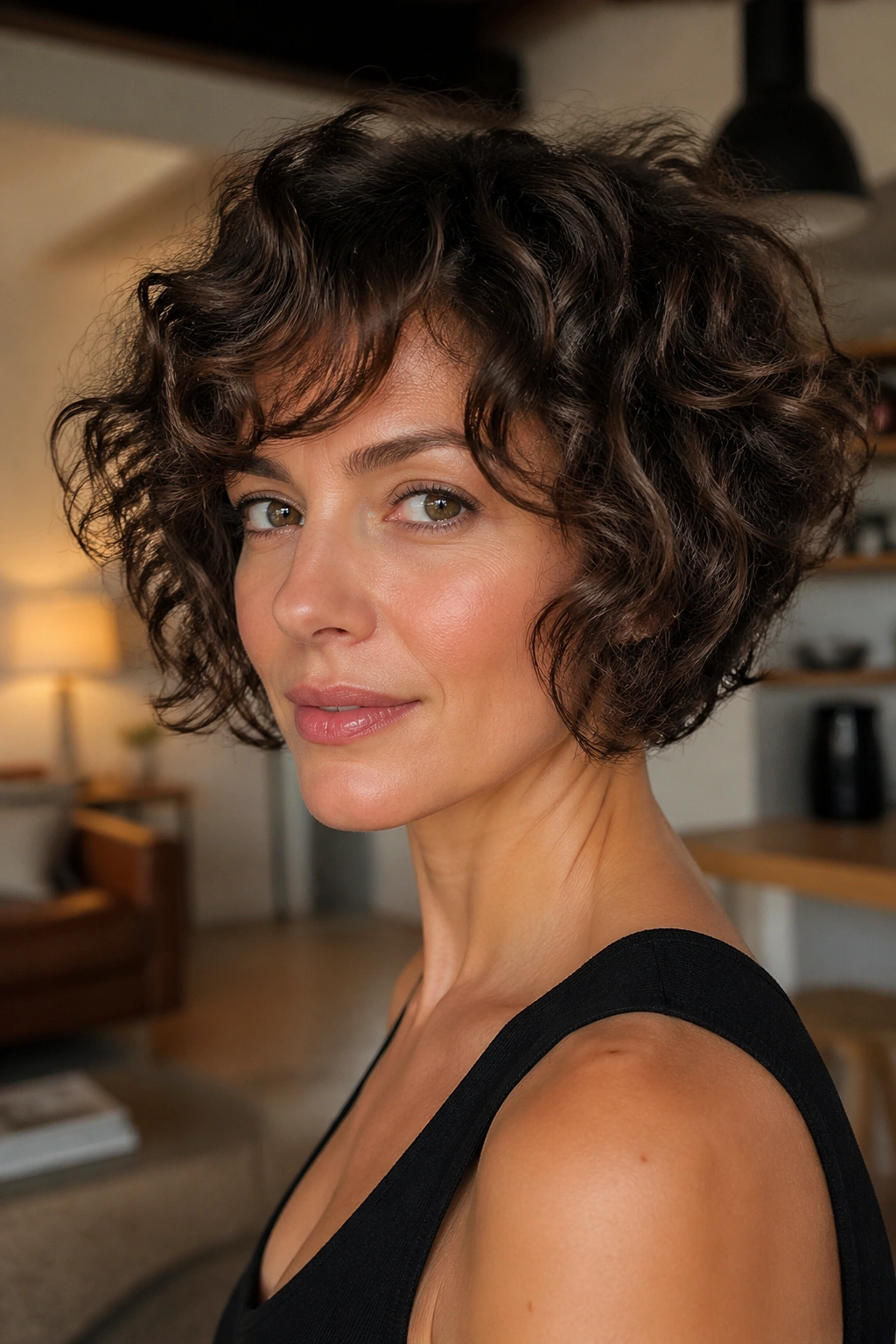
A soft inverted bob is the gentler cousin of the angled cut. The back is a touch shorter, the front a touch longer, but the transition is blurred by curl texture so the shape never feels harsh. It gives you that lifted back and longer front idea without making the line too obvious.
This is a smart choice if you like structure but don’t want the haircut to announce itself from across the room. Curly hair softens the edges naturally, which makes the inverted shape more wearable than it might be on straight hair. The result feels shaped, not carved.
It works best when the stylist checks the length dry and keeps the angle subtle. Too much difference between back and front can drag the curls forward in a strange way, especially if your pattern is looser on the sides than at the nape. A small angle is usually enough.
If you want a bob that feels neat, modern, and easy to style into a side part or a center part, this is one of the safer bets. It has form, but it doesn’t box you in.
Final Thoughts
The best layered bob haircuts for curly hair usually share the same quiet trait: they respect where the curls want to sit. That means thinking about shrinkage, density, and the way your hair behaves when it stops being wet and starts being itself.
If you like low-maintenance styling, lean toward shapes that still look good with air-drying and a little scrunching. If you like a more polished outline, choose a cut with a stronger perimeter and softer interior layers. Either way, the cut should make your curls easier to live with, not turn every morning into a negotiation.
And if a stylist keeps talking about the photo but not about your curl pattern, move on. The curl pattern is the whole story.
