



Curly ponytail hairstyles have a funny habit of looking more styled than they actually are. A few curls pulled into the right place, a clean part, maybe one wrapped section hiding the elastic, and suddenly the whole thing feels intentional instead of rushed.
That’s the part people miss. A curly ponytail is not one look. It can be soft and romantic, sharp and polished, sporty, playful, or almost dressy enough to wear with a blazer. The details do the heavy lifting: how high you place it, whether the roots stay smooth, how much face-framing you leave out, and whether the curl pattern is allowed to stay loose instead of getting crushed into a tight knot.
Curly hair also changes the rules in a way straight hair doesn’t. If you pull too hard at the crown, the style can lose its shape fast. If you brush the lengths too much, the ponytail turns frizzy and vague. The sweet spot is usually a controlled base with curls that still have room to breathe. A wide-tooth comb, a snag-free elastic, and a little patience go a long way here.
Some of the cutest versions lean high and bouncy. Others sit low and soft, or borrow a braid, a ribbon, or a scarf to make a basic ponytail feel more finished. The best one for you usually depends less on the trend and more on where your curls sit naturally, how much time you want to spend, and whether you want the style to hold for two hours or all day.
1. High Voluminous Curly Ponytail
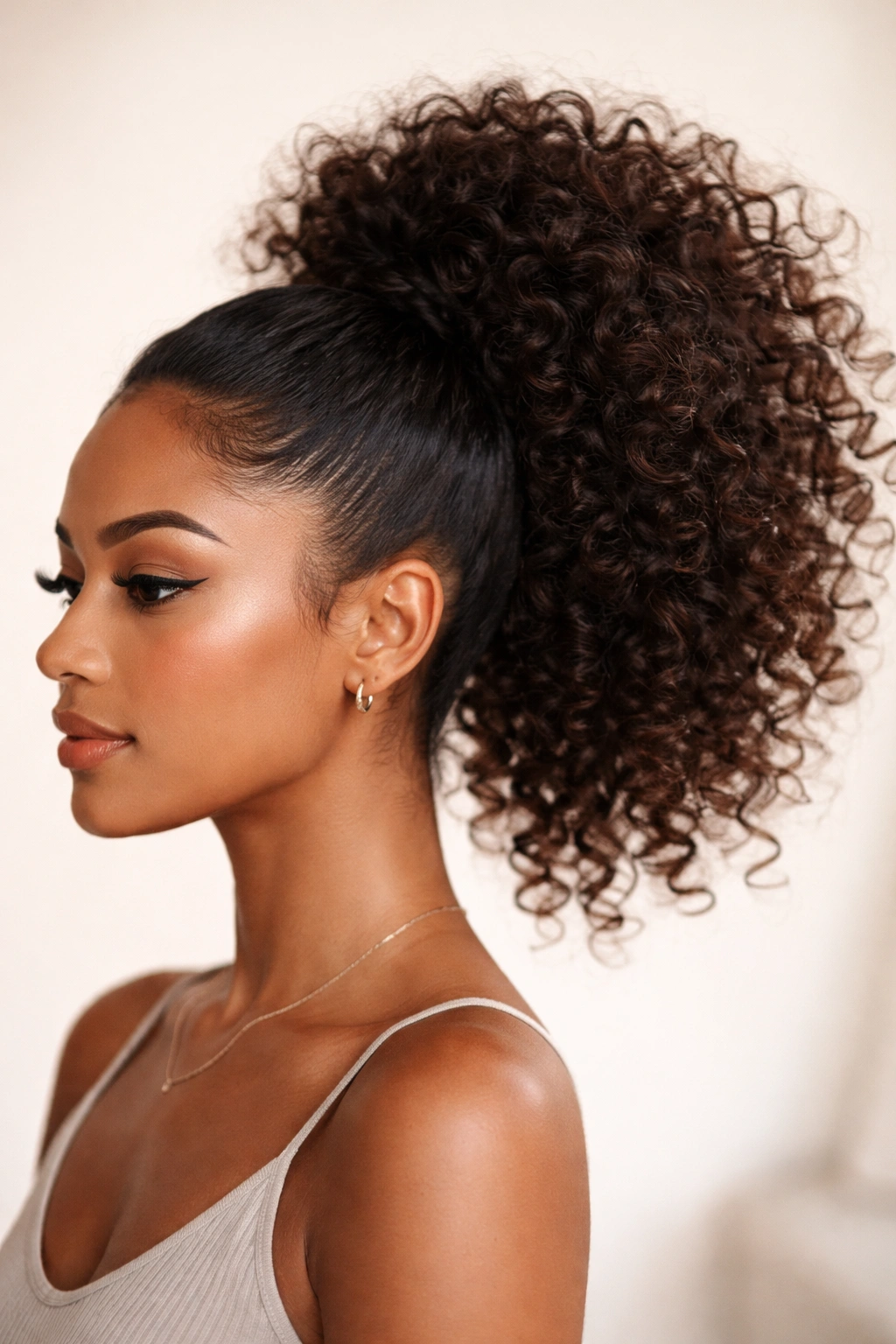
A high curly ponytail is the easiest way to make curls look lively. Put it near the crown, keep the base snug, and let the lengths do the rest. The whole point is height. Not tightness.
Why It Works So Well
The high placement lifts the face and gives the curls a place to expand instead of collapsing around the neck. That matters more than people think. When the base sits too low, the style can feel heavy fast; when it sits up top, the curls read as springy and full.
This version is especially good if your hair has layers, because the shorter pieces can fall around the crown and make the ponytail look bigger. If your hair is dense, use a second elastic underneath the first one for extra support. If your hair is fine, tease the crown gently with your fingers, not a brush.
How To Style It
- Gather the hair at the highest point you can wear comfortably.
- Smooth the front with a soft brush or your palms.
- Secure with a snag-free elastic.
- Fluff the crown a little by tugging at the top edge, not the ponytail itself.
- Pull out a few curls around the temples if you want a softer finish.
Pro tip: tilt your head back slightly before you tighten the elastic. It keeps the ponytail from sliding down after you stand up.
2. Sleek Curly Ponytail with a Polished Base
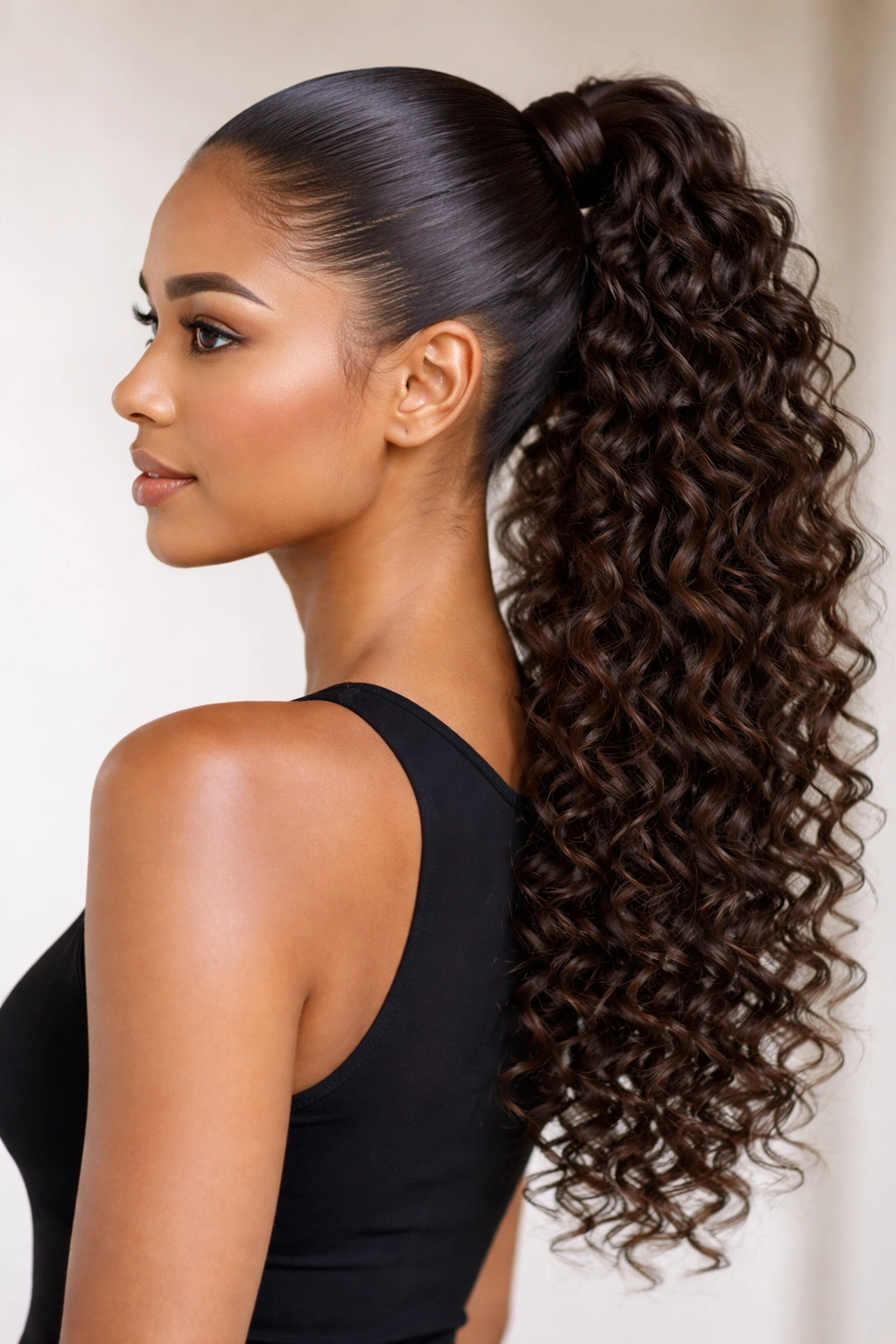
This is the version I reach for when I want the curls to look expensive without doing anything fancy. The contrast is the whole trick: smooth roots, shiny base, and curly lengths that stay visible instead of getting buried.
Start by deciding how sleek you actually want the front. Some people love a glassy finish all the way to the hairline. Others only smooth the top inch and leave the edges a little soft. Both work. The important part is to keep the lengths out of the brush once the ponytail is secured, because curls lose their shape fast when they’re overhandled.
A strong-hold gel, a little leave-in, and a fine brush are usually enough. Work in small sections at the hairline, then pin the ponytail in place while the base settles. That extra minute matters. If you move straight into the tail, the slicked section can puff back up before it sets.
This style is a nice match for nights out, interviews, and any day when you want your curls to look deliberate. It also plays well with a middle part, especially on medium to long curls. Keep the ponytail itself loose and defined. That contrast is what makes the look land.
3. Low Curly Ponytail with Face-Framing Pieces
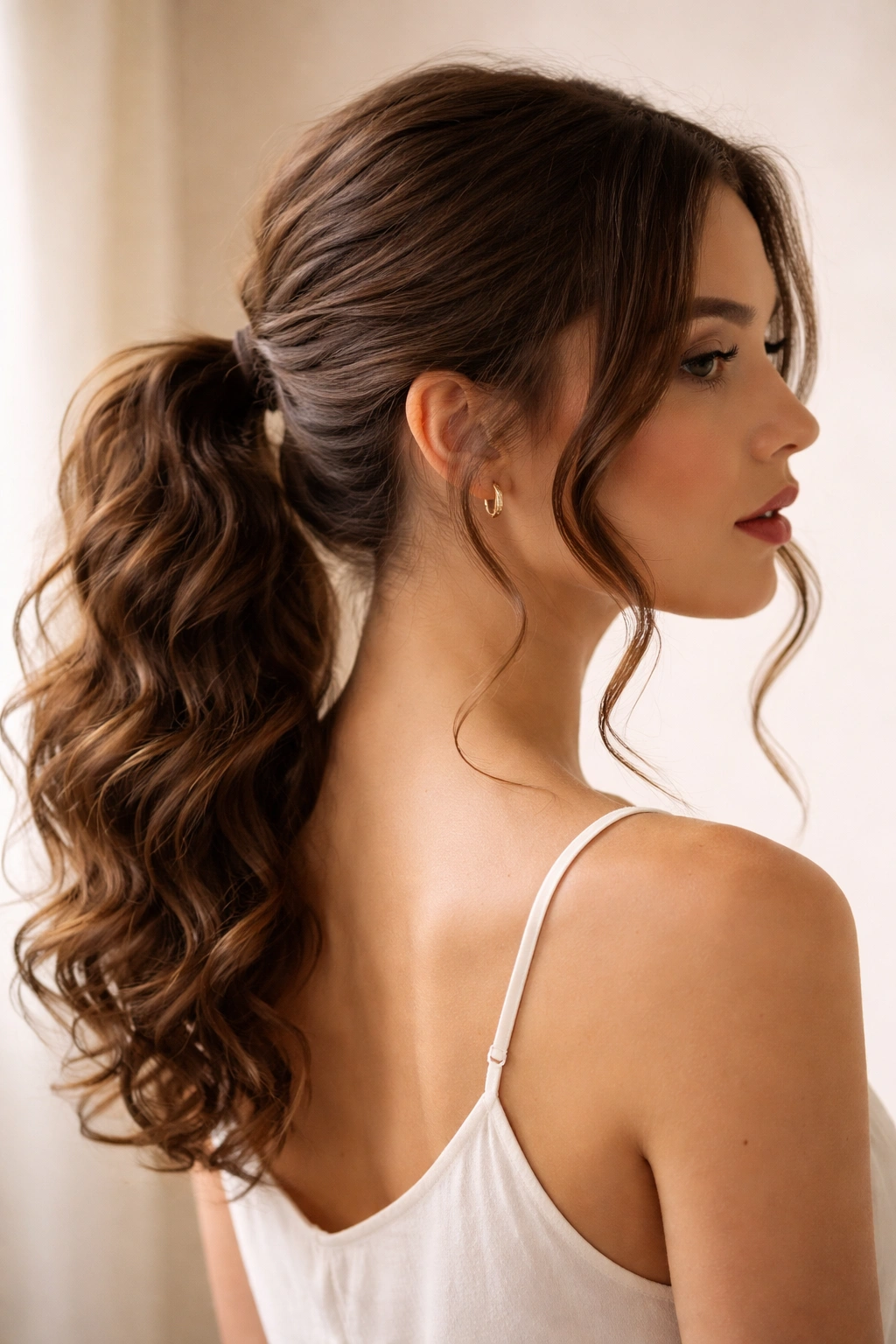
Want the easiest curly ponytail that still looks thoughtful? Put it low, leave out a couple of front pieces, and let the curls sit at the nape instead of the crown.
The low placement softens the whole shape. It’s less dramatic than a high ponytail, which is exactly why it works so well on days when you want your hair to feel neat but not severe. The front pieces matter here. Two curl-clustered strands near the cheekbones can change the whole mood of the style, especially if they fall in loose S-shapes instead of staying pinned flat.
Who It Flatters
This look is friendly to round, square, and heart-shaped faces because it adds a little vertical line without pulling all the attention upward. It also works when your curls are a day past wash day and need a calmer style. You do not need perfect definition for it to look good. A bit of lived-in texture helps.
How To Keep It Soft
Use your fingers to place the front pieces, then stop touching them. That’s the hard part. If you keep separating them, they lose their shape and start to frizz. A tiny bit of curl cream or water on the ends can help them sit in one clean spiral.
It’s a quiet style. That’s the appeal.
4. Side-Swept Curly Ponytail
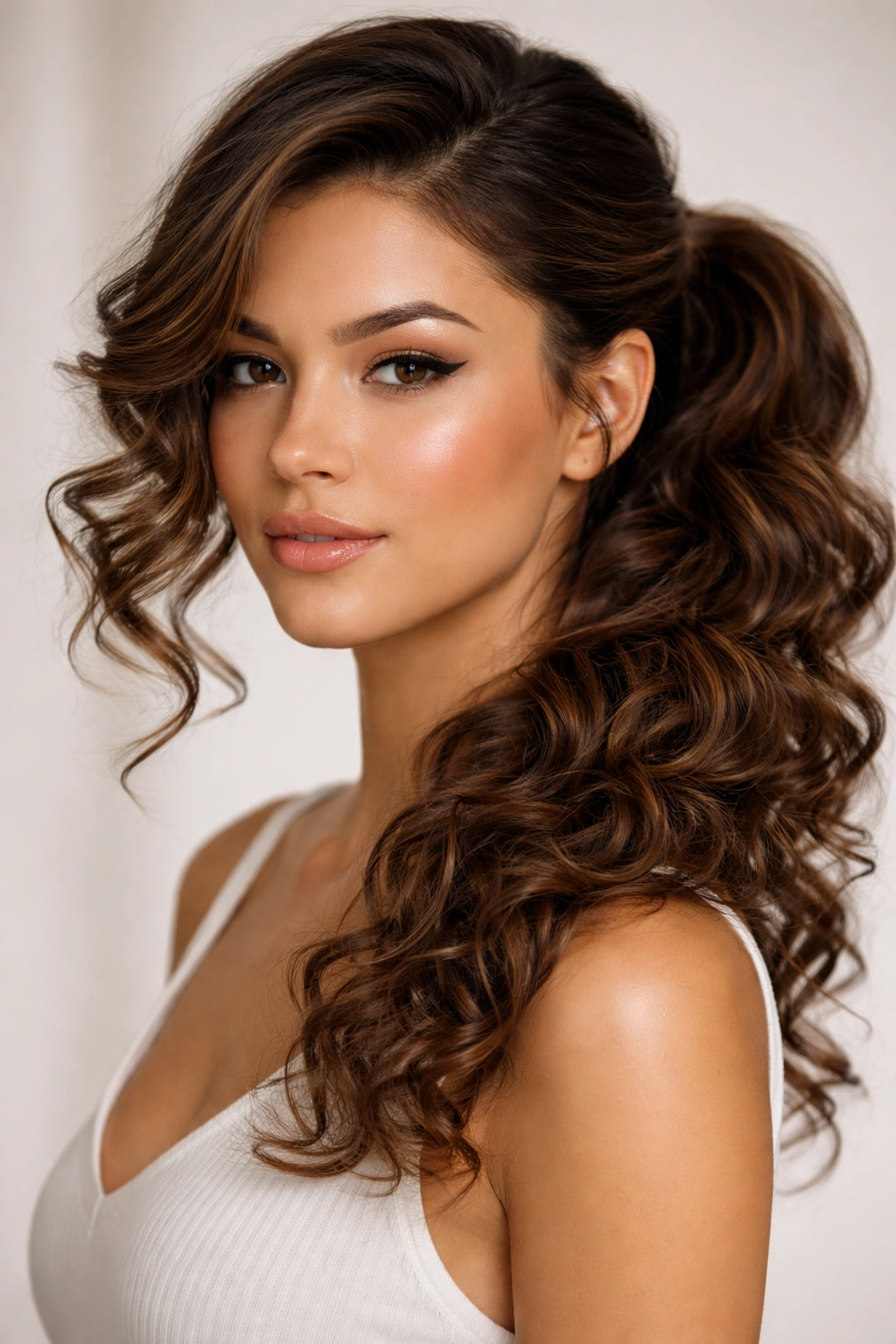
Picture hair swept over one shoulder, curls stacked to one side, and the whole look leaning a little more playful than formal. That’s the side curly ponytail, and it has a lot more charm than people give it credit for.
I like this one for layered curly hair because the asymmetry keeps the profile interesting. The ponytail sits off-center, usually just behind one ear or at the upper side of the neck, so the curls fall forward in a softer line. If you want the style to feel even more shaped, make a deep side part first. If you want it looser, skip the part and finger-comb the roots toward the chosen side.
- Place the elastic just below the ear on the fuller side of your part.
- Leave one or two face pieces out on the opposite side.
- Curl the front section with your fingers if it looks flat.
- Use a bobby pin under the ponytail if the weight keeps sliding.
It suits dresses, date nights, and those in-between days when you want your hair to look done without looking stiff. The side angle also helps when one side of your curls is behaving better than the other. A little asymmetry can hide a lot.
5. Bubble Curly Ponytail
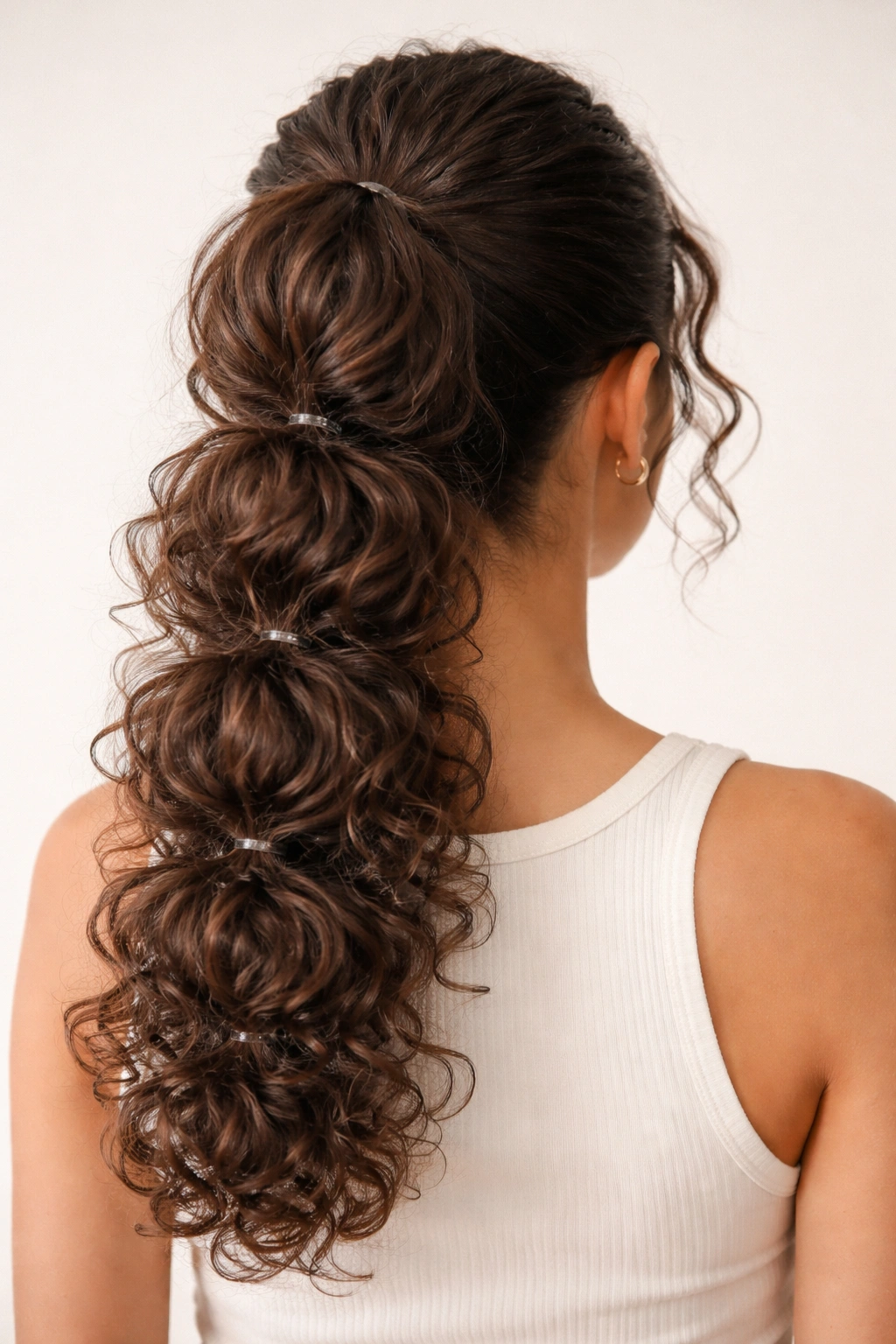
A bubble ponytail on curly hair is one of those styles that looks more complicated than it is. It starts like a normal ponytail, then gets divided into rounded sections with small elastics every 2 to 3 inches. The curls fill out each section so the bubbles feel soft instead of rigid.
The reason this style works so well on curls is that the texture does half the styling for you. Straight hair has to be teased or puffed to build shape. Curly hair already has volume, so each section can hold its own little roundness without much work. If your curls are long, this is even better, because the bubbles have more length to show off.
Keep the base smooth and the elastics small. Clear elastics or soft black bands are best. Tight bands can flatten the curl clumps, and once that happens, the bubbles start looking squeezed. Leave about 2 inches between each band if your hair is medium length, and a little more if the ponytail is long enough to show off the shape.
The clean part of this style is the root area. The fun part is everything below it. That contrast is what makes it feel cute instead of fussy.
6. Half-Up Curly Ponytail
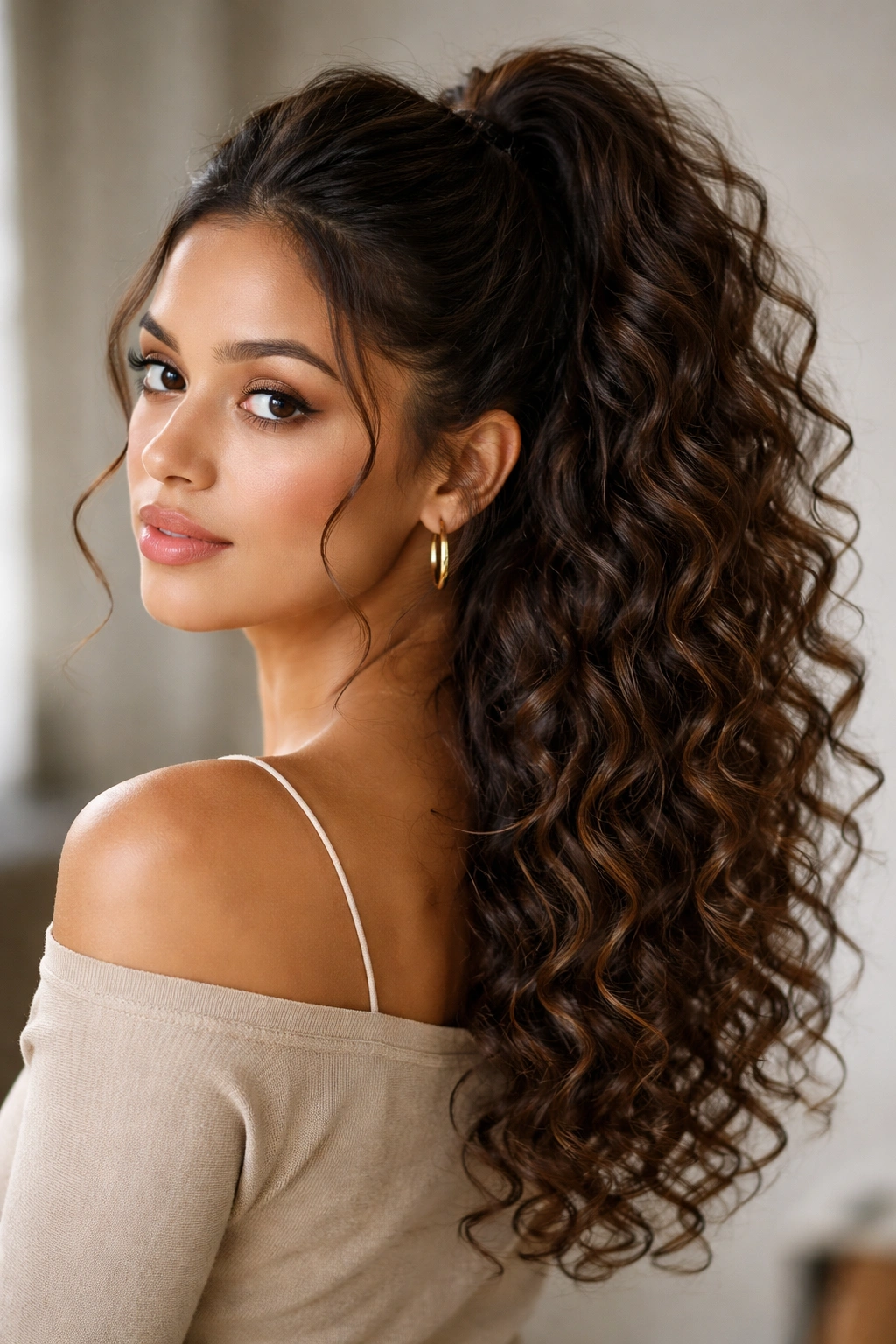
A half-up curly ponytail is the style I’d hand to someone who wants movement and control at the same time. It pulls the top section back so the face feels open, but it leaves enough hair down that the curls still look full.
Unlike a full ponytail, this version keeps weight off the crown. That matters on thick curly hair, where a full tie-up can make the head feel pulled back by noon. With a half-up style, the bottom section keeps its shape, and the top section gives you that lifted finish around the face. It’s a good compromise, which sounds boring until you actually wear it and realize how often boring turns into practical.
You can make it polished by smoothing the top section before tying it off, or keep it loose and a little messy if you want the style to feel softer. A tiny twist on each side before the elastic gives the top more shape. So does a small puff at the crown, done with fingertips only.
If you’re choosing between a bun and a ponytail, I’d pick this one on most curly days. It gives you the neatness of an updo without hiding the curl pattern.
7. Braided Crown Curly Ponytail
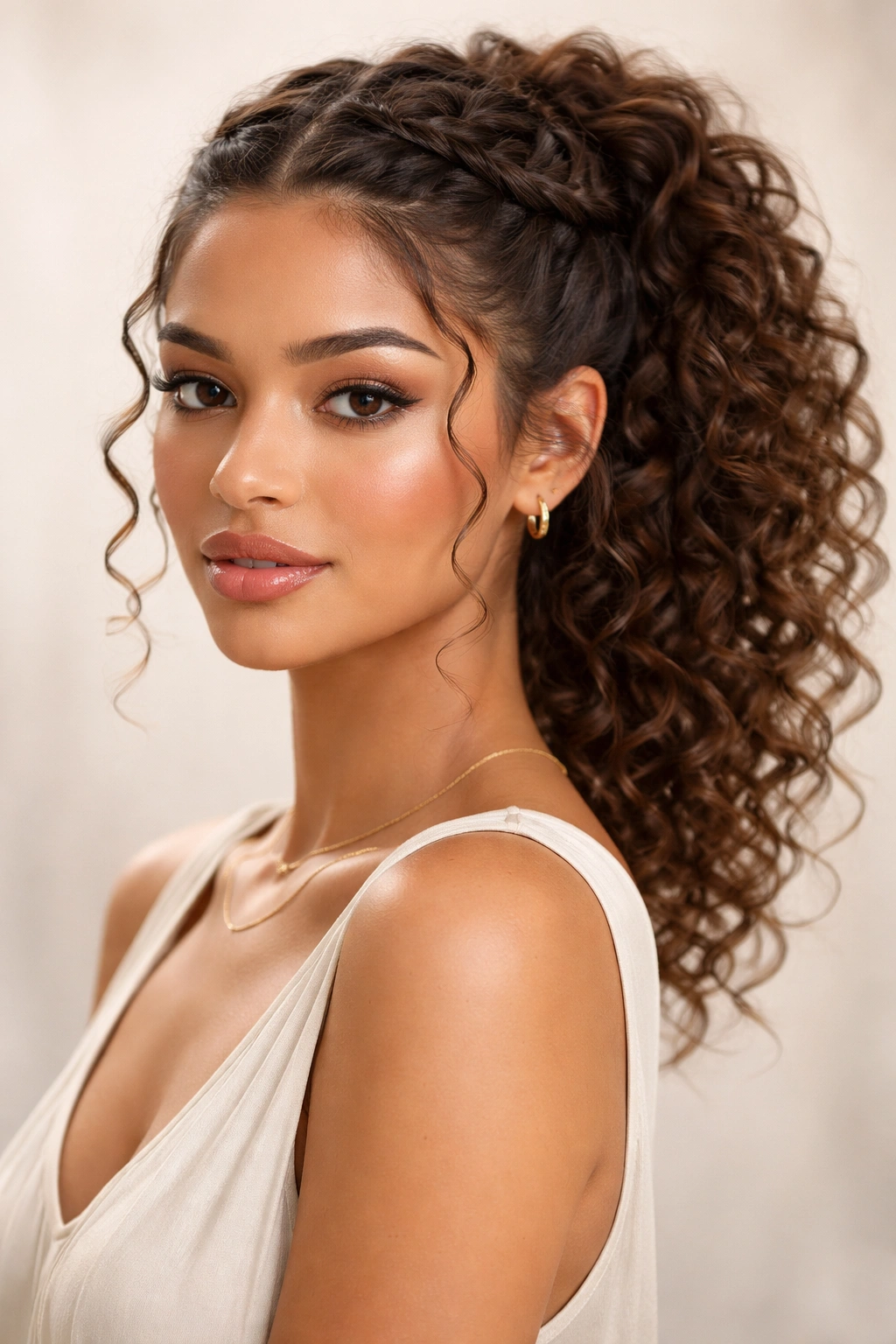
The first thing you notice is the braid. The second is the ponytail. That order matters, because the braid across the hairline changes the whole mood before the curls even start moving.
What Makes It Feel Finished
A braided crown pulls attention to the top of the head and keeps the front hair controlled, which is useful if your curls frizz at the temples or if you like a little structure around the face. It can be one braid on each side meeting at the back, or a single braid crossing the forehead into the ponytail base. Either way, the braid creates a frame.
This style tends to look best when the braid is not too tight. A flat, overly tight braid can make the scalp look harsh, especially if the ponytail underneath is soft and springy. A looser braid leaves a little texture and gives the whole style room to breathe.
How To Keep The Braid Neat
- Start on freshly detangled hair with a touch of cream.
- Braid close enough to the scalp to stay put, but not so tight that it pulls.
- Pin the ends under the ponytail base.
- Smooth flyaways with a dab of gel on your fingertips.
It’s one of those styles that feels a little dressed up without asking for much extra effort. Good trade.
8. Twisted Low Curly Ponytail
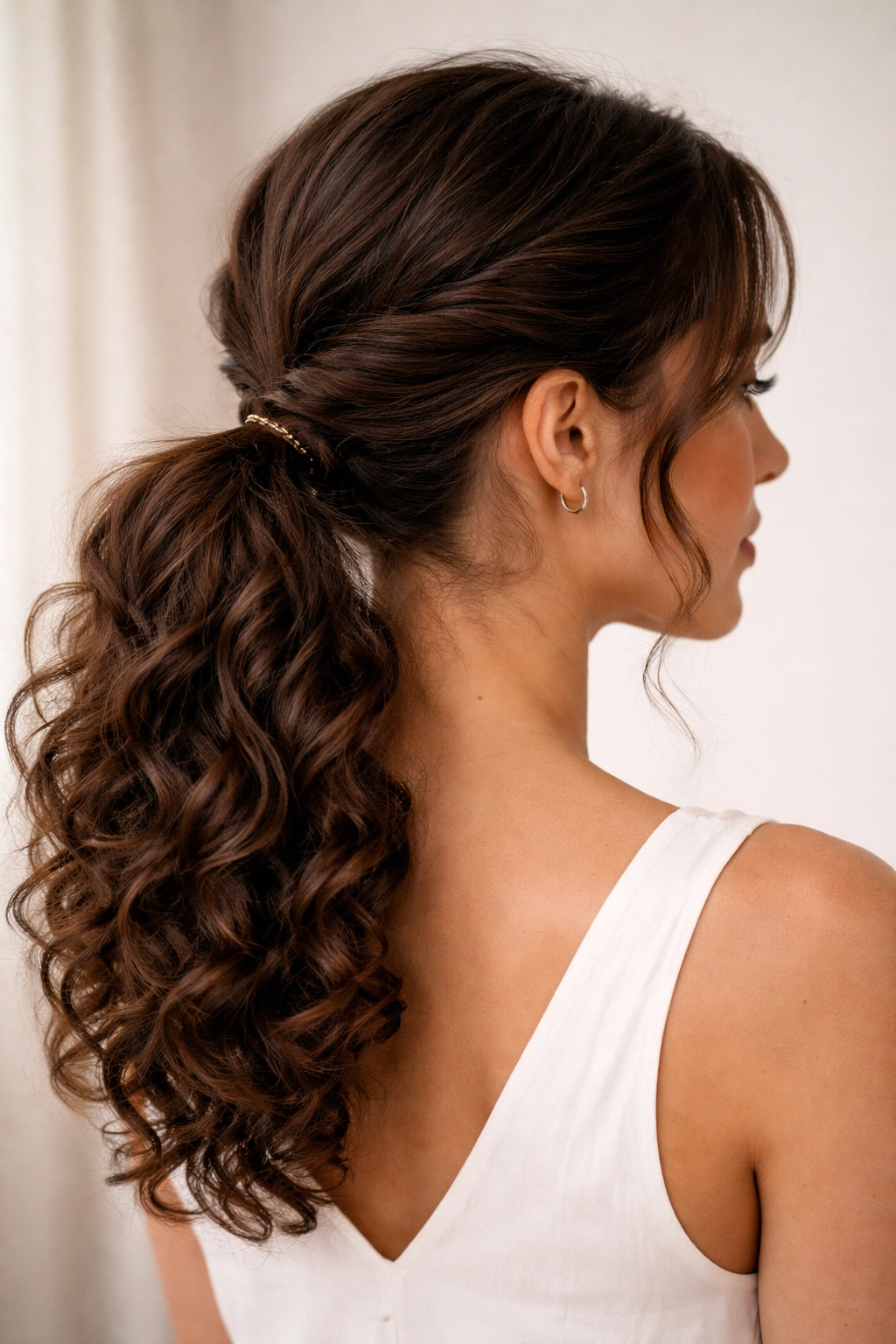
Two simple twists can do more for a curly ponytail than a dozen accessories. That’s why this low style keeps showing up: it looks like you planned it, but it doesn’t take braid-level patience.
The shape starts with a center or side part, then two front sections are twisted back toward the nape before joining the ponytail. Rope twists work especially well because they hold better than loose strands and look cleaner on textured hair. If your curls are thick, secure each twist with a small pin before tying the ponytail so the front doesn’t sag.
The low position keeps the style grounded. It feels calmer than a high ponytail and works well for days when you want your curls visible but not all over your shoulders. The twists also help hide the transition from smooth roots to curly lengths, which is handy if the front of your hair is flatter than the rest.
This one is nice for everyday wear because it does not need perfect parting. If one twist sits a little higher than the other, the style still works. That kind of forgiveness is worth a lot on busy mornings.
9. Messy Curly Ponytail with a Silk Scarf
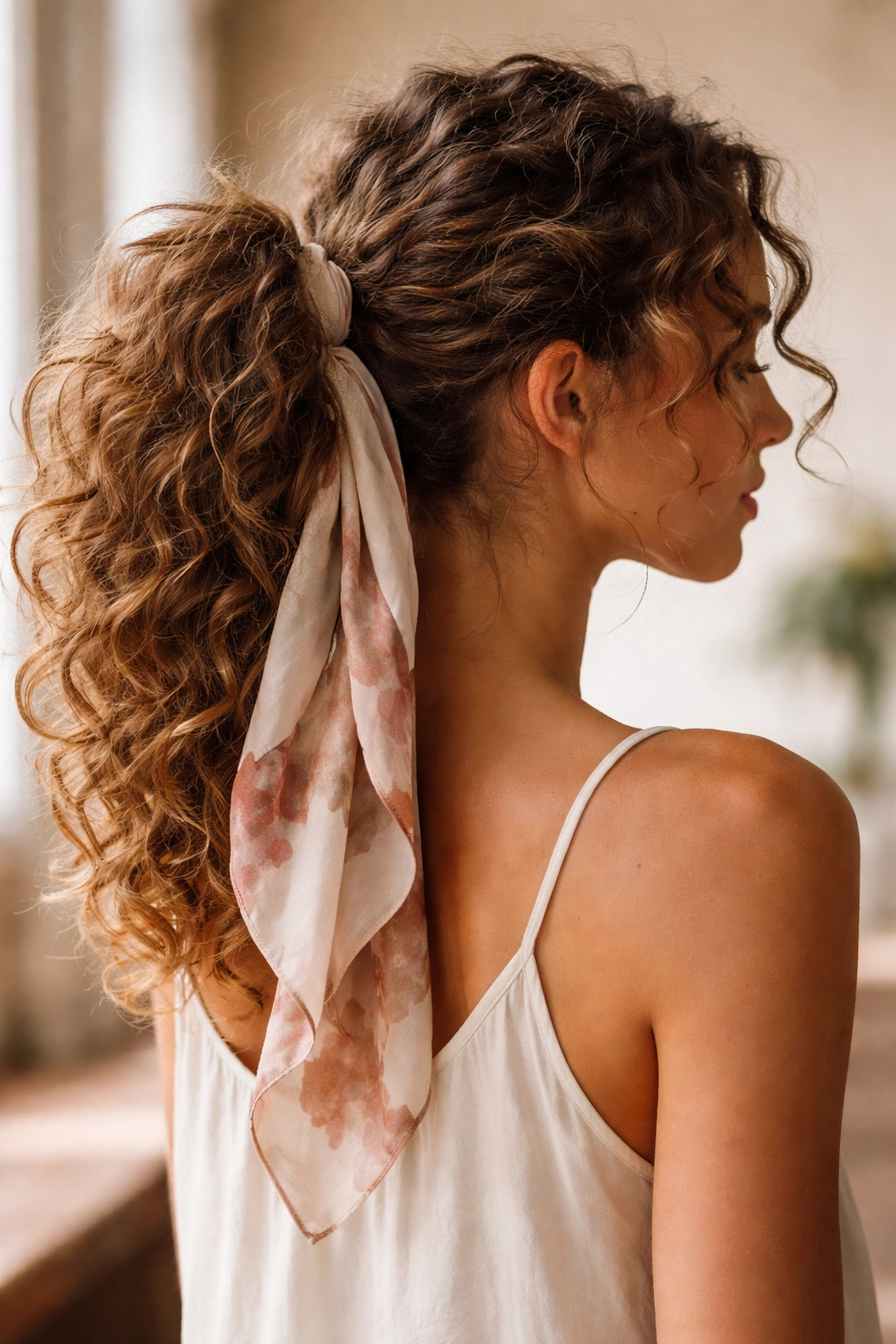
You know that ponytail you throw up on the way out the door, then suddenly realize it looks better than the polished one you spent ten minutes on? That’s the messy scarf version, only better on purpose.
A scarf at the base does two jobs. It covers the elastic, and it gives the style a bit of softness so the mess reads as casual instead of unfinished. Silk or satin is the smartest choice if your curls snag easily, though a light cotton scarf works when you want a more relaxed, matte look. The key is not to overthink the tie. A loose knot, a bow, or a wrap around the base all work.
- Tie the scarf under the ponytail for a low-key finish.
- Use a wider scarf if you want the knot to show.
- Choose a narrow strip if your hair is fine and you don’t want extra bulk.
- Let the scarf tails hang with the curls instead of tucking everything in.
This style is good when the weather is humid, your roots are doing their own thing, or you want a ponytail that feels a little less strict. It also makes second-day curls look intentional, which is often the whole battle.
10. Wrapped Curly Ponytail with a Hair-Wrapped Base
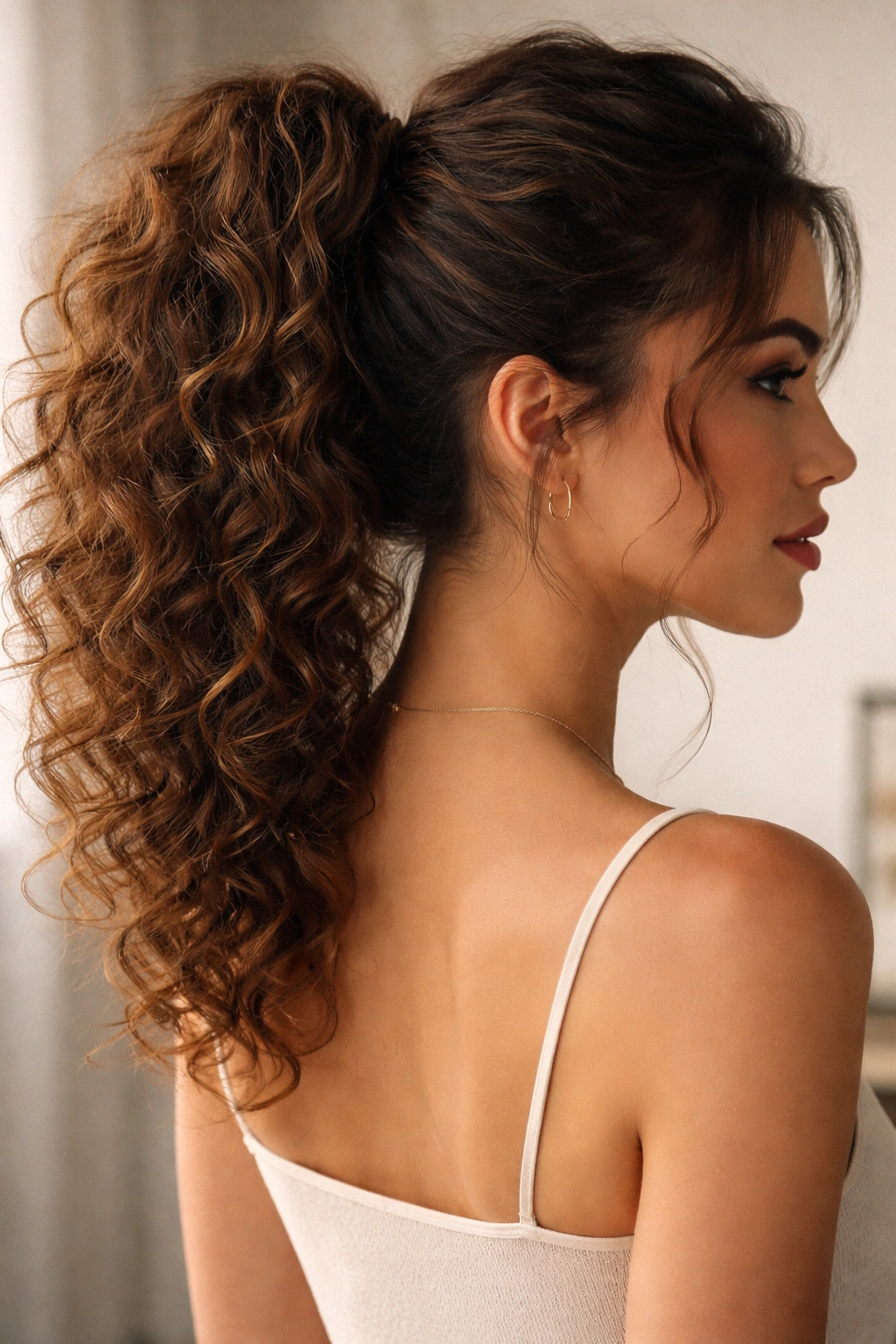
What’s the quickest way to make a regular curly ponytail look finished? Hide the elastic. That one move changes the whole read of the style.
A wrapped base is the detail that makes this look feel clean. Take a small section from the underside of the ponytail, smooth it out, and wind it around the elastic two or three times. Pin the end underneath with a bobby pin that matches your hair color. If your hair is short or layered, use a slightly larger pin and tuck it deeper into the base so it doesn’t poke out later.
This style works especially well when you want something a little dressier than a basic tie. It’s the kind of ponytail that can go from work to dinner without looking out of place. The wrap gives it polish, but the curls keep it from feeling stiff.
A small warning: do not wrap too tightly. If you pull the strand hard, it can flatten the ponytail and leave the base looking narrow. A gentle wrap is enough. The goal is to conceal the elastic, not strangle the style.
11. Pineapple Curly Ponytail
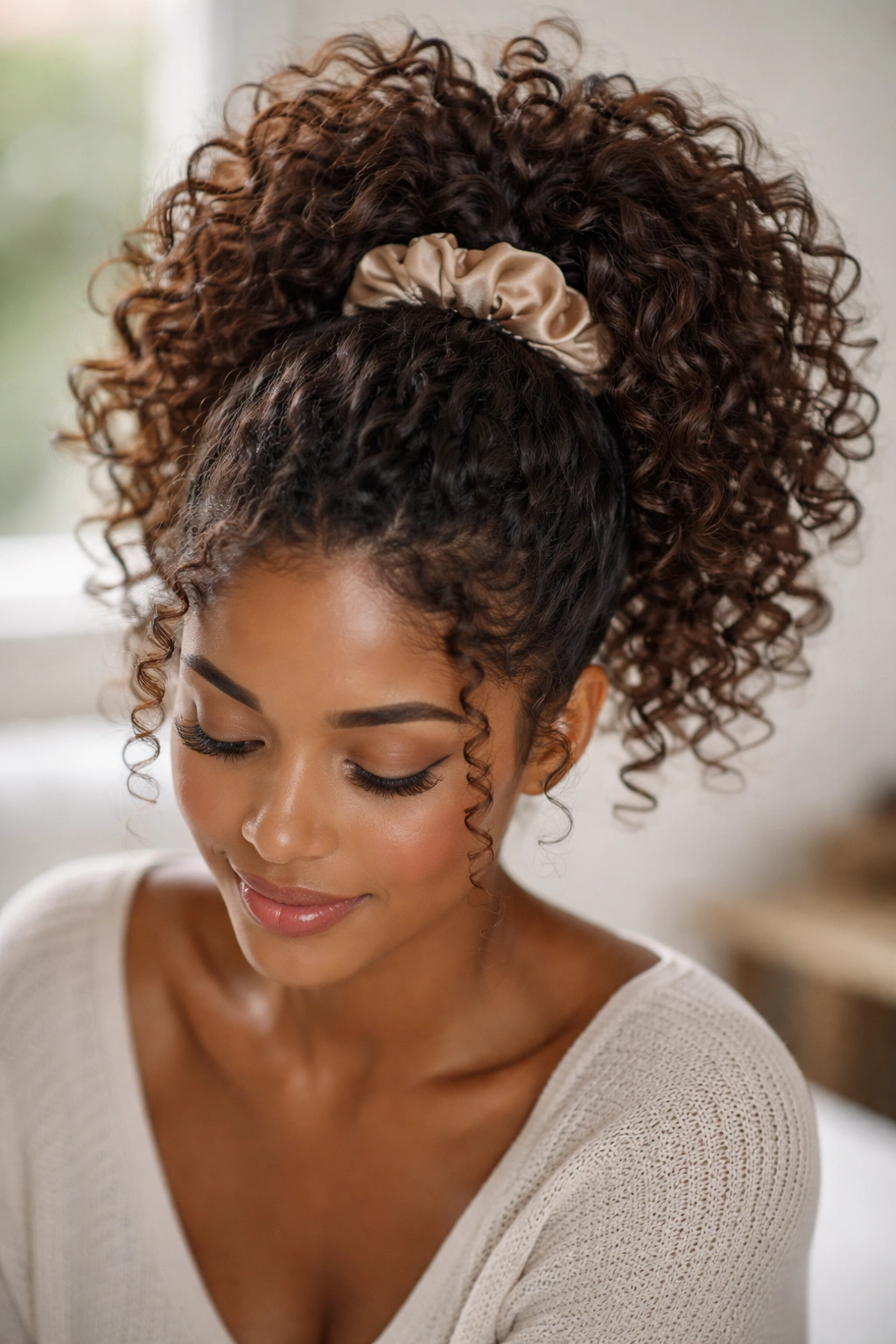
A pineapple ponytail sits high and loose, usually right on top of the head, and it does a surprisingly good job of keeping curls shaped while still looking cute. That’s why curlies love it for sleep, errands, and anything that asks for easy hair without a full reset.
The shape is softer than a high curly ponytail. Instead of pulling everything tight, you gather the hair loosely so the curls can keep their coil pattern. The ponytail often leans forward a little, which gives it that pineapple silhouette. If your hair is very dense, use a wide satin scrunchie or a soft elastic that won’t leave a deep ridge at the roots.
This is one of the few ponytail styles that can double as a curl-preserving technique. On long curly hair, especially tighter curl patterns, it keeps the ends from getting crushed under your head and helps the shape survive overnight. During the day, it gives you volume without a lot of effort.
I like this one most when the curls are already on their second or third day and still have some life left. It doesn’t ask for perfect definition. It asks for lift. That’s all.
12. Braided Curly Ponytail
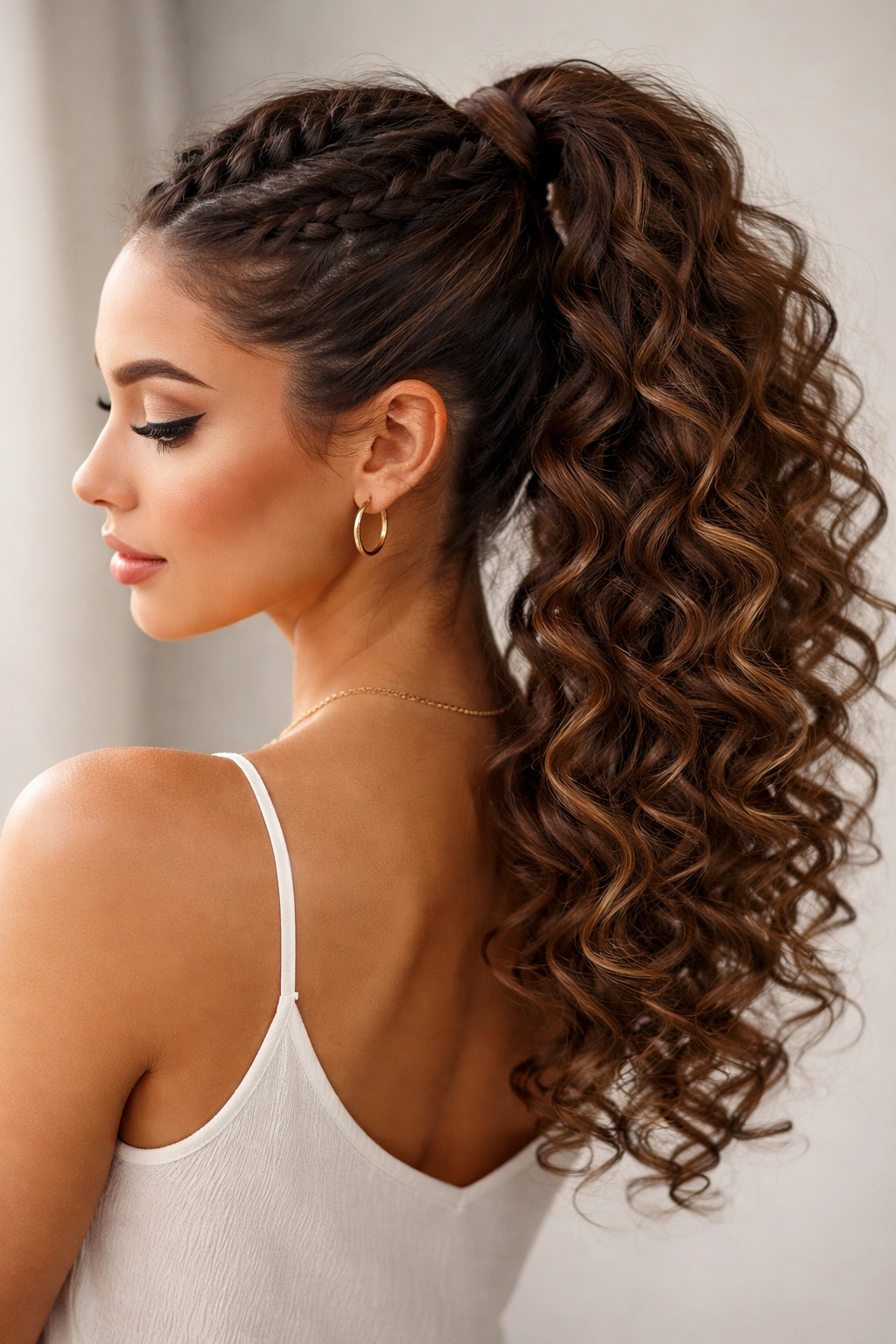
Unlike the braided crown style, this one lets the braid become part of the ponytail itself. That’s the appeal. The braid leads into the curls instead of sitting above them like a separate frame.
You can keep it simple with one side braid that feeds into a ponytail, or go for a French braid down the center before letting the rest fall loose. Both versions add texture at the top and make the ponytail feel more deliberate. If your curls are long, the braid gives the base a nice transition before the lengths open up.
Best On Longer Hair
This style tends to shine on medium to long curly hair because the braid needs enough length to read clearly. Short hair can do it too, but the braid may disappear into the ponytail too fast. If that happens, just keep the braid tighter near the scalp and let the tail loosen a little.
What To Watch For
- Braid on slightly damp hair if your curls slip easily.
- Pin the braid end before tying the ponytail.
- Leave the ponytail itself loose so the curl pattern stays visible.
- Pull a few face pieces out if the front feels too formal.
It’s a nice middle ground between plain and fussy. The braid gives it shape, and the curls keep it from feeling too controlled.
13. Ribbon-Tied Curly Ponytail
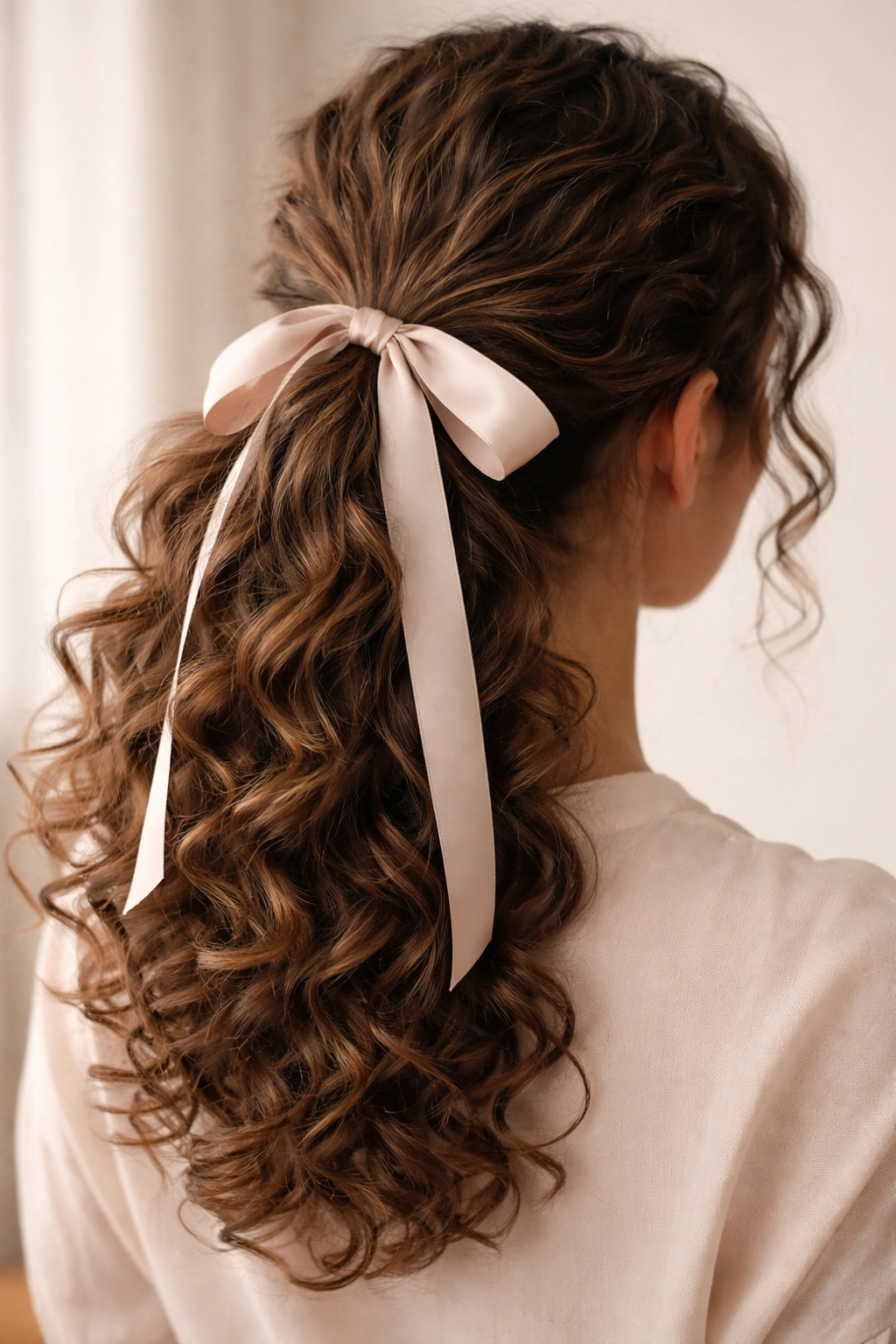
A ribbon can do a lot of work for a small piece of fabric. Tie one around a curly ponytail, and the whole thing shifts from everyday to finished in about ten seconds.
The material matters more than most people think. Satin ribbon gives the style a smooth, slightly dressy finish. Grosgrain has more grip and stays put better if your hair is slippery. A ribbon that’s about 1/2 inch to 1 inch wide usually looks balanced on curly hair; thinner ribbons can disappear, and very wide ones can feel bulky at the base.
You can tie the ribbon over the elastic and let the ends hang with the curls, or knot it underneath for a cleaner look. A bow reads softer. A simple knot reads sharper. Solid colors are easier to wear, but a narrow print can look nice if the rest of the outfit is plain.
What I like about this style is how little it asks for. You do not need a braid, a twist, or a special part. You just need a decent ponytail and one good ribbon. That’s enough.
14. Double Curly Ponytails
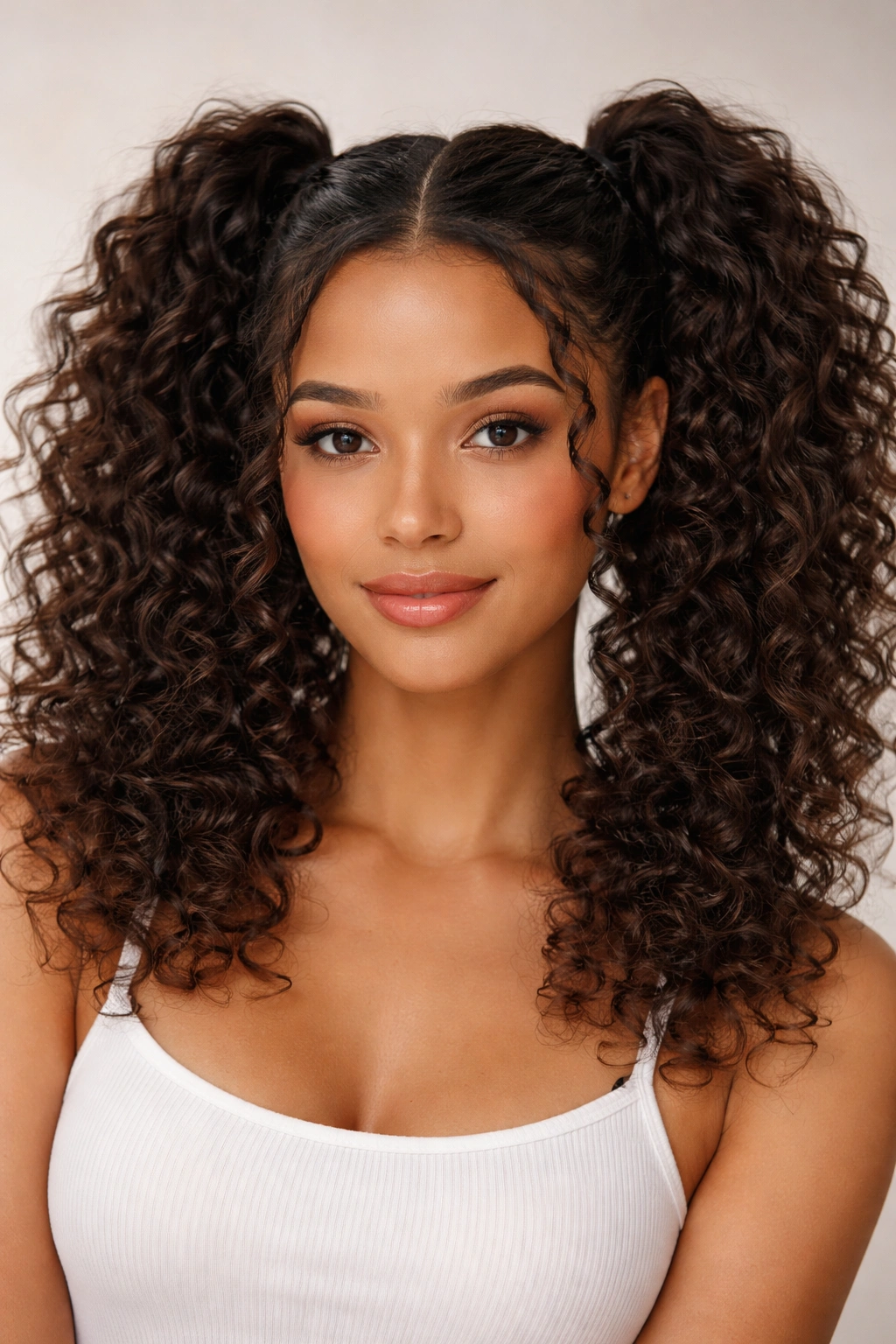
Two ponytails can feel playful fast, but they do not have to look childish. The trick is in placement, parting, and how much volume you leave at the roots.
Where To Put Them
You can place them high for a lively look, low for something calmer, or just below the crown if you want a softer shape. A clean center part helps if you want symmetry. A slightly off-center part gives the style more personality and can be kinder to uneven curl patterns.
How To Keep Them Balanced
- Use the same amount of hair on both sides before tying.
- Smooth the roots with your palms, not a brush, so the texture stays soft.
- Leave the ponytails a little loose instead of yanking them tight.
- Fluff each side separately so one doesn’t end up bigger than the other.
This style is cute on weekends, travel days, concerts, and any time you want your curls to feel a little more playful. It also works well if one large ponytail feels too heavy. Splitting the weight can make a big difference, especially on thick hair.
A pair of curly ponytails can look sweet, bold, or laid-back depending on where you sit them. That flexibility is the reason they stick around.
15. Workout-Friendly Curly Ponytail
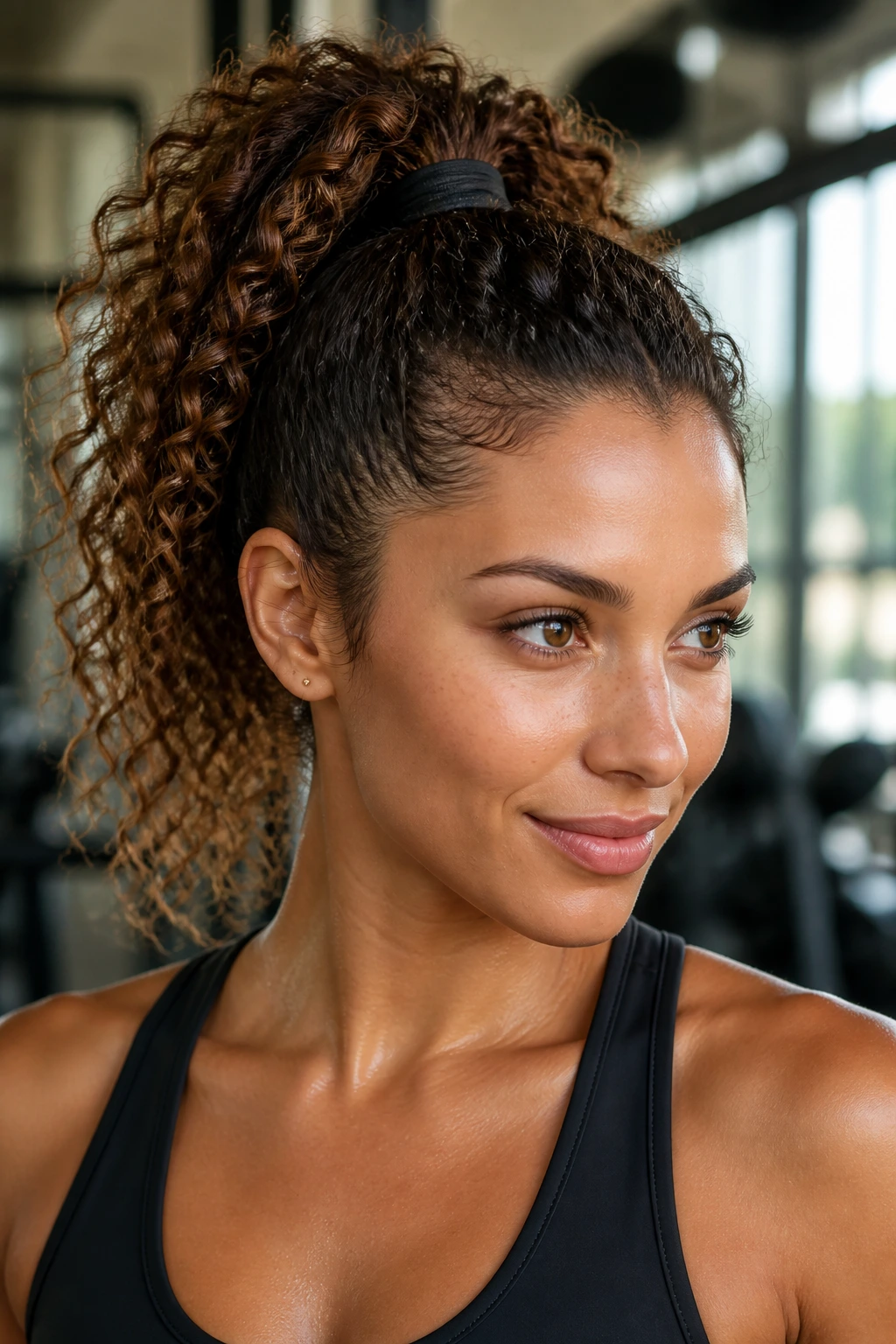
A good workout ponytail has one job: stay put without flattening the curls into submission. That sounds simple. It rarely is.
The best version sits mid-high, uses a secure but gentle elastic, and keeps the roots tight enough to avoid slipping while leaving the lengths free to move. A spiral tie or a bungee-style elastic is usually better than a thin rubber band because it holds without chewing up the hair. If you sweat a lot, a soft headband at the hairline helps keep the front clean and saves you from constantly pushing curls back into place.
This style matters because curly hair can get awkward during movement. Too loose, and the ponytail sags halfway through a workout. Too tight, and your curls come out bent, frizzy, or flat at the crown. The middle ground is a snug base with enough give that the curls still bounce.
If you want this to survive both exercise and the rest of the day, keep a small claw clip in your bag. After the workout, you can lift the ponytail, shake the curls out, and reset the front without starting over. That small reset makes a bigger difference than most people expect.
A curly ponytail looks best when the roots are in control and the lengths are allowed to move. That rule holds here, too.
