



Second-day hairstyles for curly hair are usually better than people give them credit for. By the time curls have slept on a pillow, picked up a little bend, and lost some of that fresh-wash slipperiness, they often have more grip and shape to work with.
That extra texture is not a problem. It is leverage. A claw clip stays put more easily, pins stop sliding around quite as much, and a style can look finished without forcing every curl into submission.
The catch is the crown. That’s where flattening shows up first, and where frizz likes to puff in a way that feels personal. So the smartest second-day hairstyles for curly hair do not fight the texture — they work with the bend, the shrinkage, the loose ends, and the little halo that shows up when your hair has already lived a day.
If you wake up with curls that are half-defined and half-mischievous, good. That means you can skip a full refresh and choose a shape that uses what’s already there. Start with the pineapple; it earns its place fast.
1. The Pineapple That Saves Second-Day Curly Hair
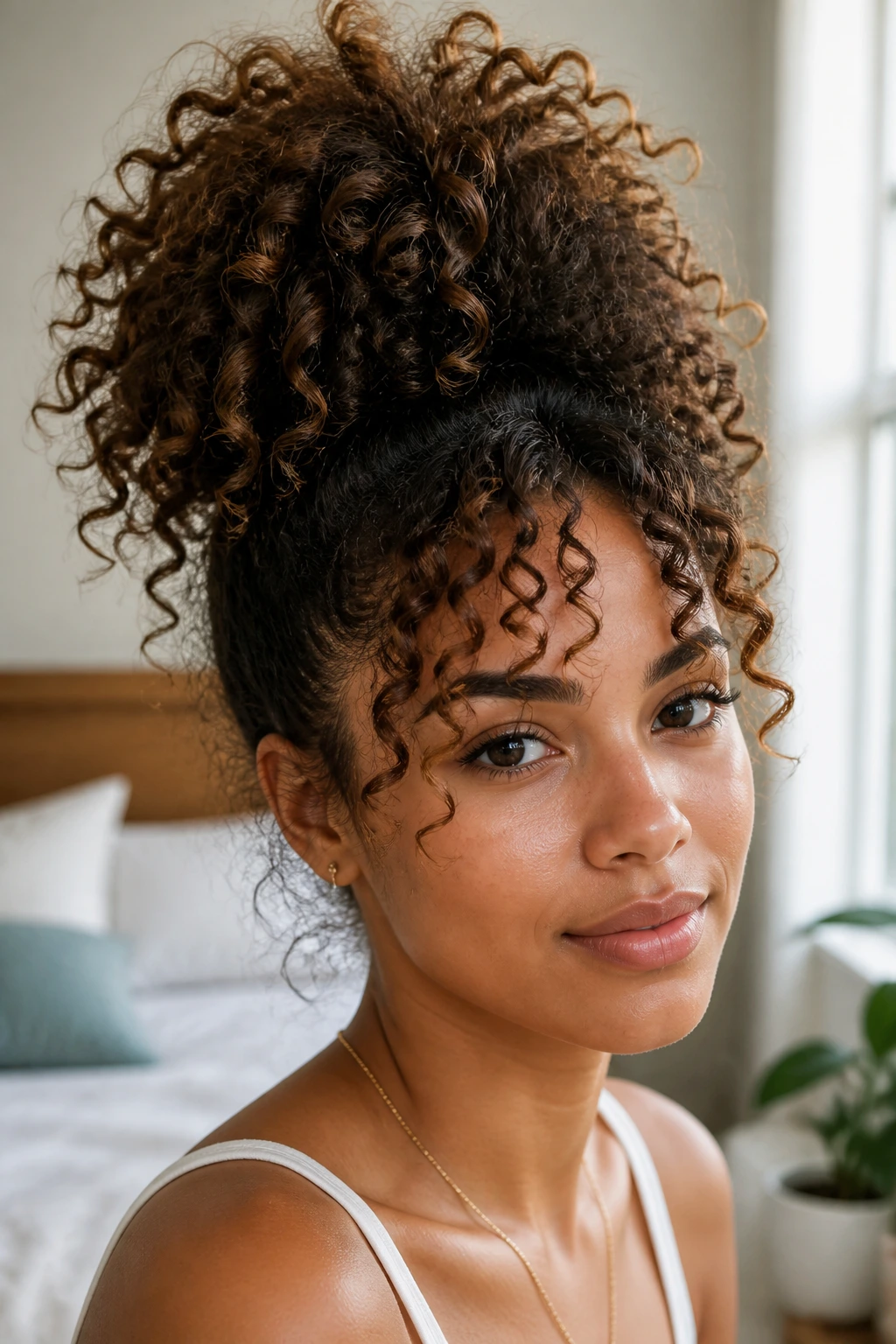
If your curls still have spring in them, the pineapple is the easiest way to make second-day curly hair look deliberate. It also happens to be one of the few styles that protects the curl pattern while still giving you height, which is why it shows up in so many curly routines.
The trick is to place the ponytail high enough that the curls fall forward and outward, not down the back of your neck. You want a loose hold at the crown, not a tight tug at the roots. A silk or satin scrunchie works better than a thin elastic here because it leaves less of a dent and does not slice into the curl clump.
How to Wear It
- Flip your head forward and gather the hair at the highest point of your crown.
- Use one loose wrap of a scrunchie, then stop before the hair gets pulled flat.
- Let the ends fan out toward the front or side instead of forcing them to lie perfectly.
- Pull out one or two face-framing curls if your hairline looks too severe.
A lot of people pull the pineapple too tight and end up with a sad little puffball. Don’t do that. The style should sit high and loose, with the curls still visibly separate. If the roots feel mashed from sleeping, lift them with your fingers first and then gather the hair.
Best part: it works even when the back is frizzier than the front. That mess is part of the charm.
2. The Low Puff Ponytail for Second-Day Curly Hair
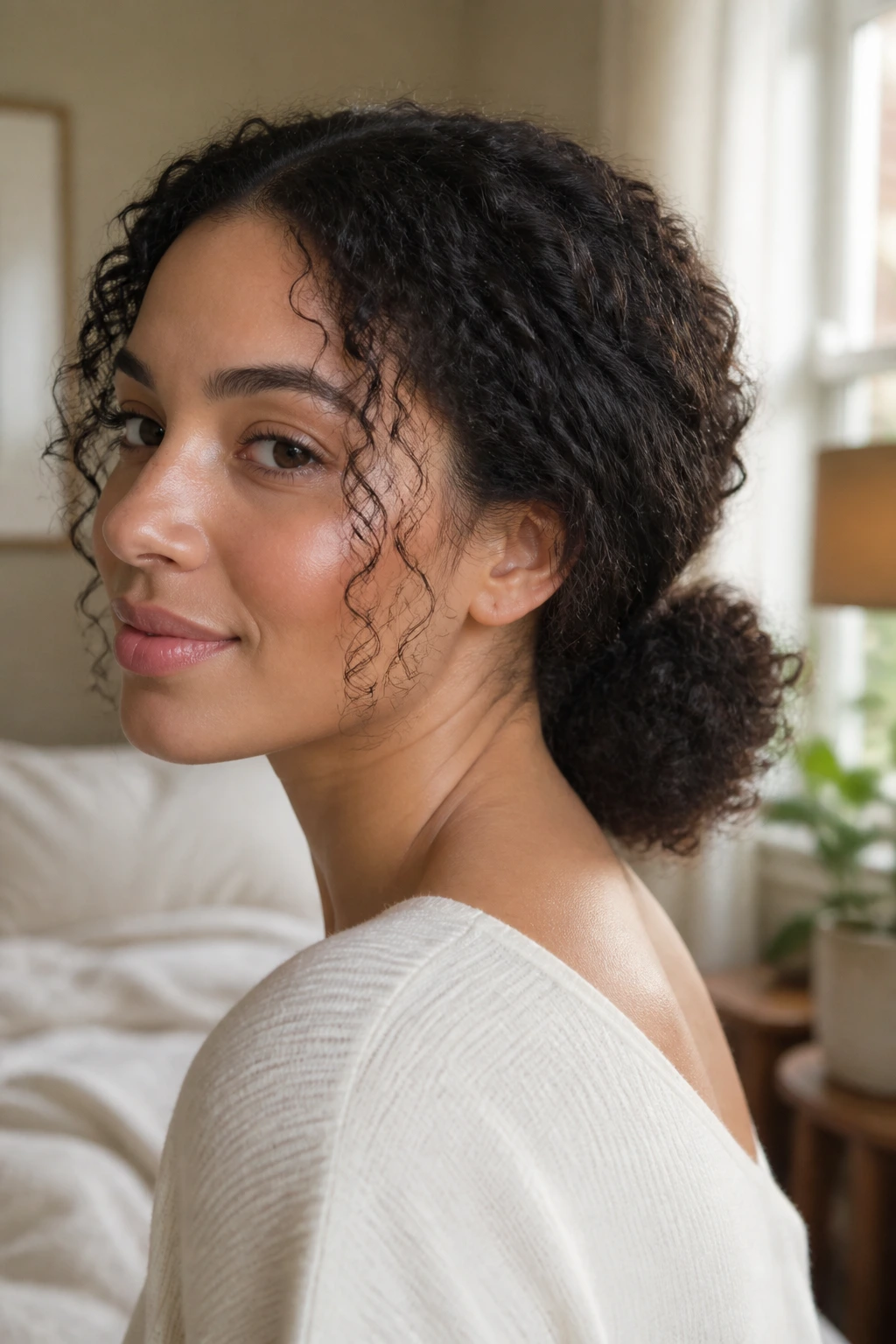
What if your crown looks a little oily, but the ends are still worth showing off? A low puff ponytail solves that without turning your hair into a slick, severe shape.
This style sits at the nape or just above it, which keeps the volume lower and calmer. I like a soft middle part here, because it gives the style structure without making the top look pressed flat. If your roots have collapsed overnight, a tiny bit of dry shampoo at the part can help — not all over the hair, just at the scalp where the shine is strongest.
The beauty of a low puff is that it keeps the curl pattern visible. You are not hiding the texture. You are framing it. That makes it one of the most forgiving second-day hairstyles for curly hair, especially when the top layer has loosened a bit but the lower sections still have bounce.
One small detail matters a lot: leave a little slack around the hairline. If you pull the front too tightly, the shape starts to look stiff and the puff loses its softness. I usually smooth only the outermost layer with my hands, gather the ponytail once, and stop there. Two wraps of a satin-friendly elastic are enough for most medium-density curls.
If your hair is thick, you may want to secure the ponytail with two slim elastics stacked one above the other. That sounds fussy. It isn’t. It just keeps the pony from sliding down by mid-afternoon.
3. The Half-Up Claw Clip Twist
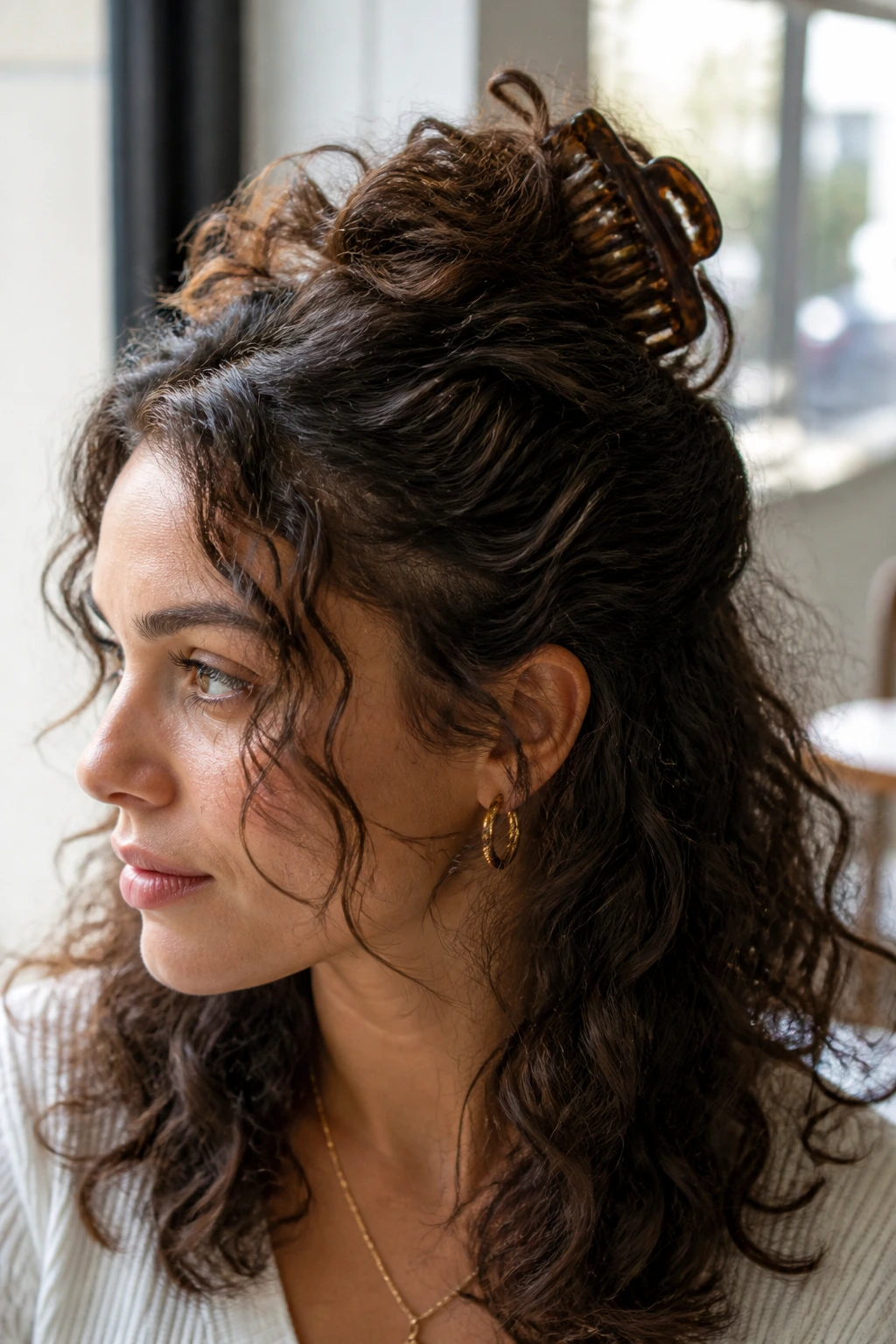
The half-up claw clip twist is the style you reach for when the top layer of your curls is acting untidy, but the length still looks good enough to show off. It keeps the front out of your face, lifts the crown a little, and leaves the lower curls free so the shape still feels like yours.
Why the Claw Clip Helps
A good claw clip gives curly hair a much better hold than a smooth barrette or tiny clip. The teeth grip the texture, and the twist creates its own structure, which means you do not need ten different pins to keep the style from sagging. A medium clip with wide teeth is usually the sweet spot for shoulder-length and longer curls.
The move is simple. Pull back the top half of the hair, twist it once or twice, then tuck the length upward and clamp the clip over the twist. Don’t drag every strand into it. That is how you flatten the crown and make the style look overworked.
- Gather only the top section, from temple to temple.
- Twist once loosely, not tightly.
- Leave the bottom curls outside the clip so they keep their shape.
- Let a few face pieces fall out if the hairline needs softness.
A lot of people make this style too neat. It does not need to be. The best version has a little lift, a little looseness, and enough mess that the curls still look like curls.
Tiny warning: if the clip is too small, the twist will spill out within an hour. Size matters here.
4. Space Buns That Keep the Curls Loose
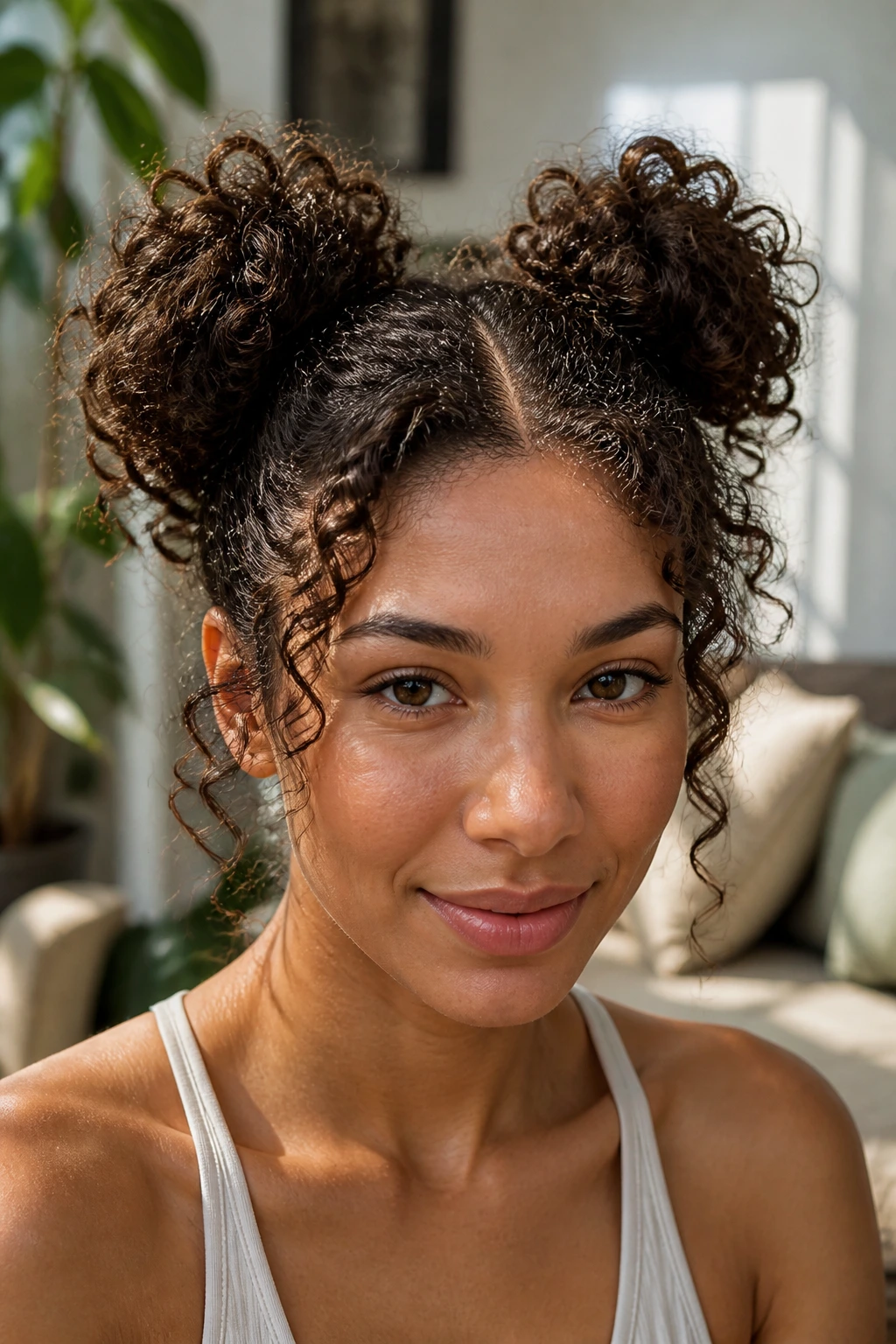
Space buns are not childish when you keep them loose and let the texture stay visible. On curly hair, they read playful first and practical second, which is exactly why they work so well on day-two hair that has a little too much volume to behave.
The best version starts with a middle part and two loose sections, one on each side of the head. Twist each section into a bun high enough to show the shape, but not so high that the scalp pulls tight. You want the buns to sit like soft knots, not hard little shells. Leaving the ends out a little gives the style a more relaxed shape and keeps the curl pattern from disappearing.
I like this style when the top has gone a bit flat but the ends still feel springy. It turns that uneven texture into the point. And if the curls at the back are frizzier than the front, even better. The buns draw the eye upward and let the rest stay loose.
Shorter curls can wear this too, though the buns may need bobby pins instead of a full wrap. Pin the pieces in a cross shape if the hair is slippery. That small detail keeps the bun from unraveling the second you turn your head.
The main mistake is over-smoothing. Don’t press every frizzy strand down. Curly hair looks better with a little air around it, especially in a style like this.
5. The Side-Swept Clip-Back for Fast Frizz Control
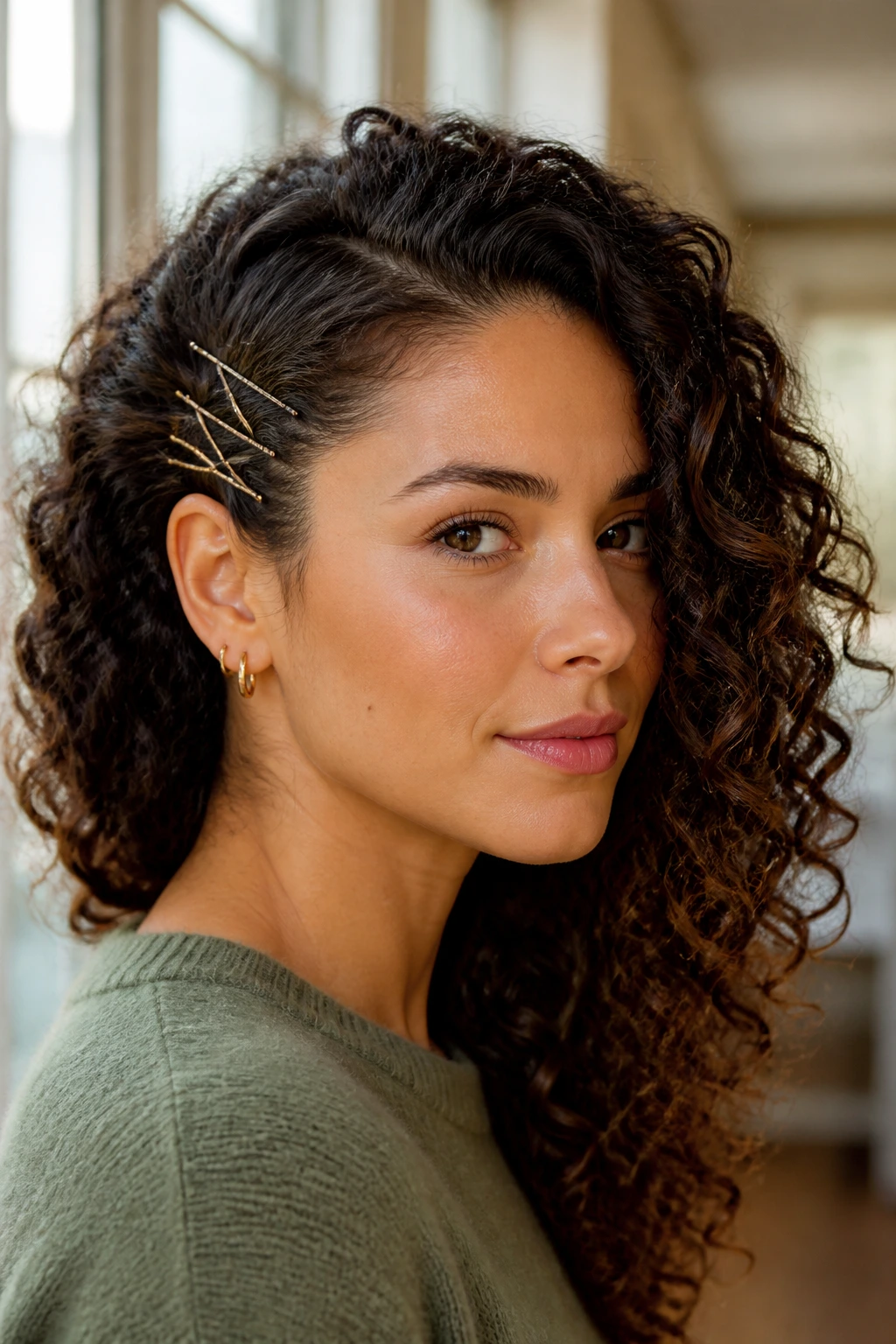
Fastest fix. Honestly.
When one side of your hair wakes up softer than the other, or one temple area has puffed up into a shape you do not want to negotiate with, a side-swept clip-back can rescue the whole look in under two minutes. It is simple, but it does real work.
Part the hair a little off-center, sweep the heavier side back, and pin it behind the ear with two or three bobby pins crossed in an X. That crossed shape holds better than a single pin because curly texture likes to push back. The opposite side stays loose, so the style still feels like hair instead of a helmet.
This is the style I reach for when I want my face visible but do not want to wrestle the entire head into an updo. It works especially well if one side has more curl definition than the other. You keep the good side forward and tuck the unruly side away. Very efficient. Very low drama.
A small claw clip can do the same job, but bobby pins usually look cleaner here because they flatten less of the curl pattern. If you want a little polish, tuck the pinned section under a front curl so the pins stay hidden.
Nope, it does not need to look symmetrical. Asymmetry is what makes it work.
6. The Curly Crown Braid
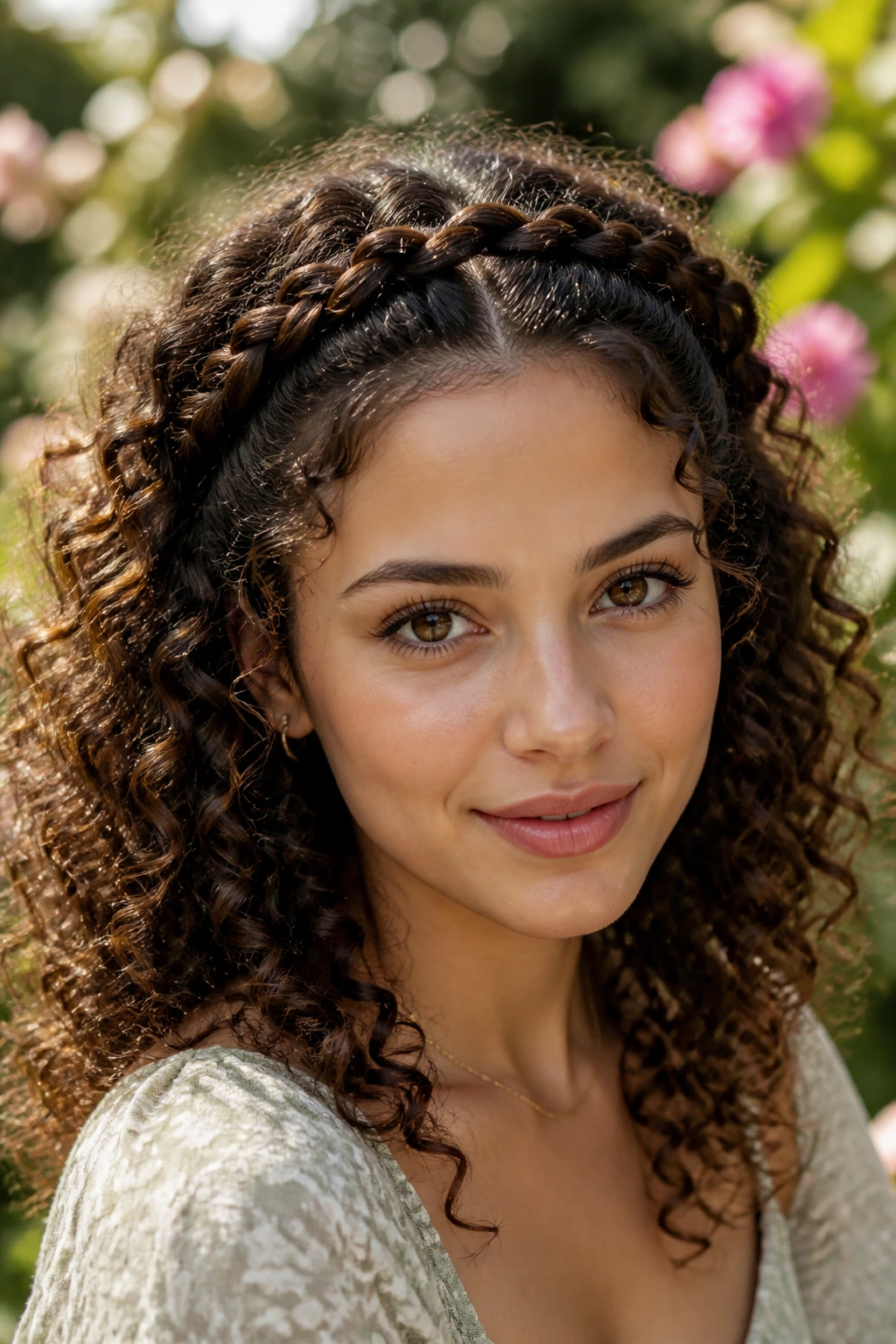
A curly crown braid gives second-day curls a frame instead of a fight. That matters more than people think. Once curls have settled overnight, the front sections often have just enough grip to braid cleanly, and the rest of the hair can stay loose and full.
What Makes It Hold
Start with the front pieces on one side and braid or twist them along the hairline toward the back of the head. A French braid sits flatter, while a rope twist feels softer and is easier if the hair is layered. Either way, you are building a visible line across the crown that controls the frizz without crushing the volume.
Use a light mist of water on the front section only if the hair feels too dry to cooperate. You do not need to soak it. A damp section is enough to keep the braid neat while the rest of the hair stays untouched. If the roots are soft and slippery, a dab of mousse at the base can help, but keep it tiny.
- Braid from temple to temple or stop just behind one ear.
- Pin the end under the loose curls instead of forcing it to show.
- Pull the braid edges gently after it is secured so it looks fuller.
- Leave the rest of the curls loose for balance.
This style works best when the front is the problem area and the length still has shape. If your curls are very short, you can still fake the effect with a pair of small twists pinned along the crown. It gives the same frame, just with less length to work with.
7. The Low Bun With Face-Framing Curls
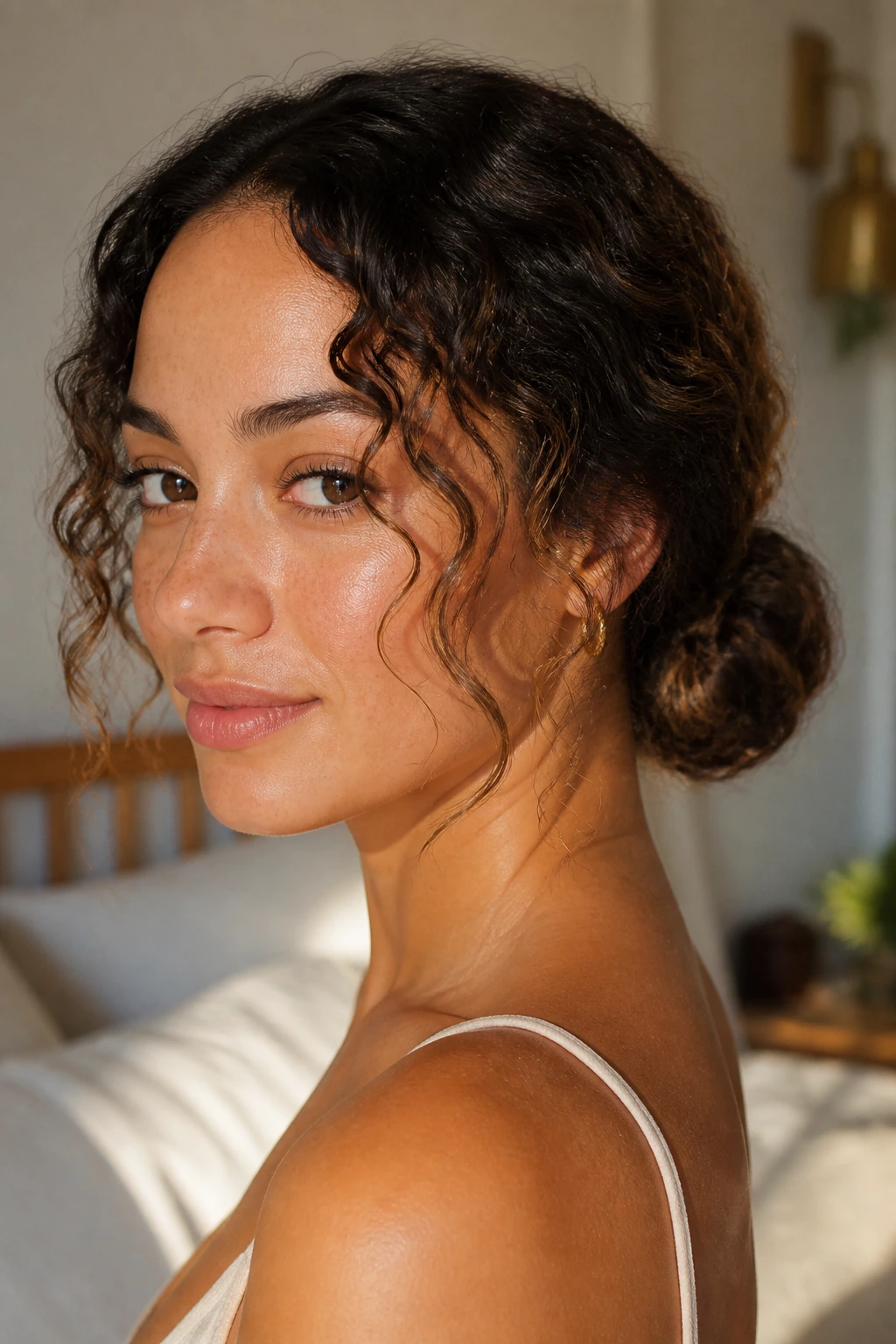
What if you want something cleaner than a puff but softer than a sleek bun? The low bun with face-framing curls lives right in that middle space, and it does a good job of making second-day hair look on purpose.
Start by gathering the hair at the nape and twisting it into a loose bun. Not a tight knot. Tight buns on curly hair can make the ends stick out in awkward directions, and then the whole thing looks rushed. A looser bun lets the curl texture fill in the shape for you. The face-framing pieces matter just as much as the bun itself — two curls at the front, maybe one on each temple, are usually enough.
If your hair has layers, pin the shortest pieces first so they do not pop out later. That little step saves you from the tiny frizz spikes that show up around the crown and make the style feel messy instead of relaxed. I also prefer U-pins or a few sturdy bobby pins here instead of one giant elastic. Pins let the bun sit flatter and keep the curl pattern from getting crushed.
You can smooth the surface of the hair with damp hands if you want a more polished finish, but only brush the outside with your fingers. A brush usually steals too much texture. And once that happens, the bun stops looking soft.
This style is a quiet workhorse. It never screams for attention, which is exactly why it gets worn so often.
8. The Scarf-Wrapped Puff or Ponytail
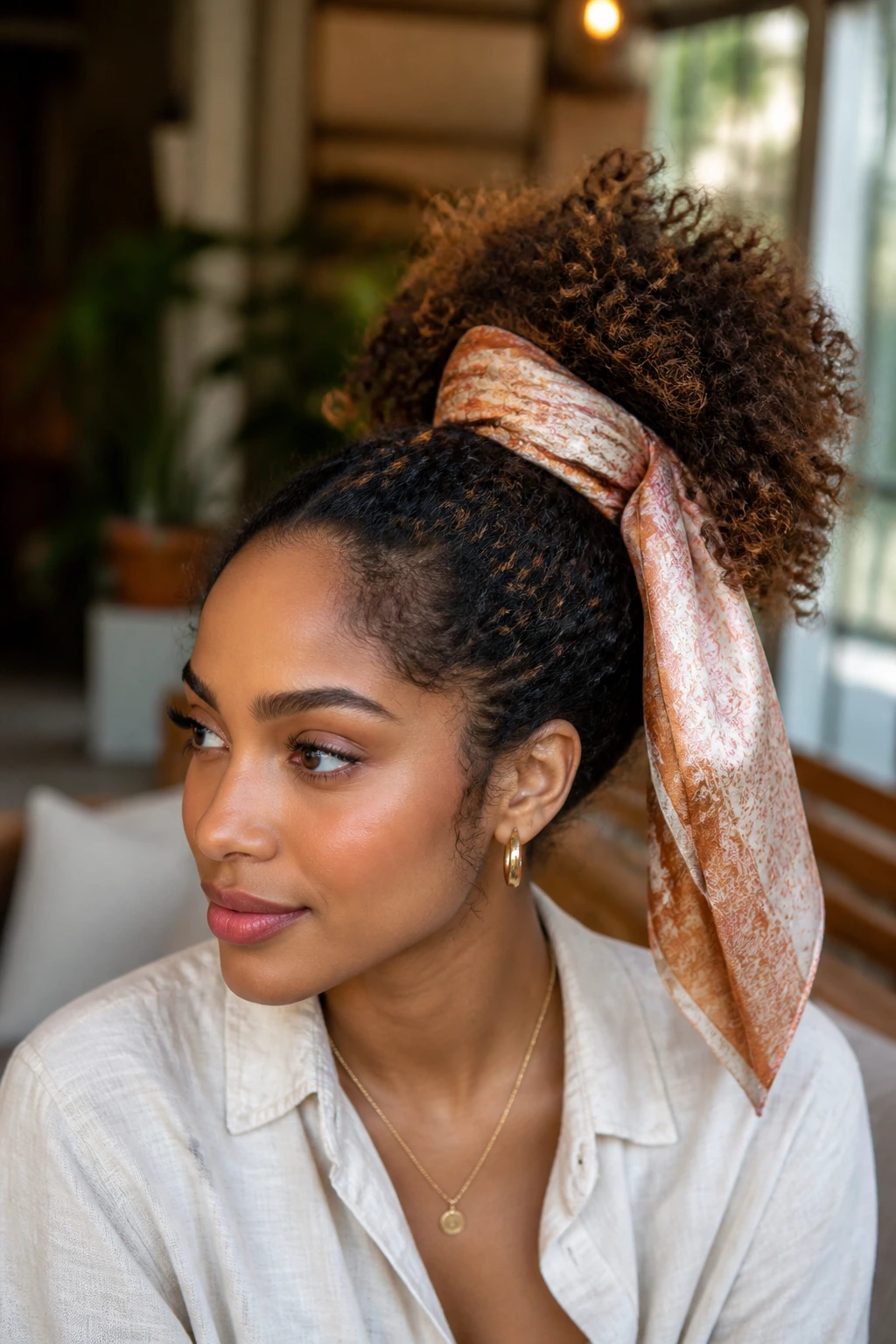
A scarf can save a second-day curl situation faster than a pile of styling products. That sounds dramatic, but it’s true. If the roots are a little oily, the crown feels flat, or the hairline has started to fray, wrapping a scarf around a puff or ponytail hides the rough spots and makes the style look finished.
I like this most when the hair needs a visual anchor. A folded scarf about 2 to 3 inches wide gives enough coverage to be useful without swallowing the entire style. Tie it around the base of a puff, a low pony, or even a pineapple, then let the ends drape or knot them off to the side. Cotton gives a little more grip. Satin feels smoother. Either can work, depending on whether you want hold or sheen.
Key Details That Matter
- Place the scarf over a scrunchie or elastic, not directly on wet hair.
- Keep the knot off-center if you want the style to feel less stiff.
- Use a print with enough contrast to stand out against your curls.
- Let one or two curls escape near the face so the scarf does not dominate the whole look.
This is also a nice option when the top section is flatter than the ends. The scarf draws attention upward and makes the rest of the hair look intentional. And yes, it can hide a bad root day. That alone earns it a place in the rotation.
9. The Twisted Halo From Temple to Temple
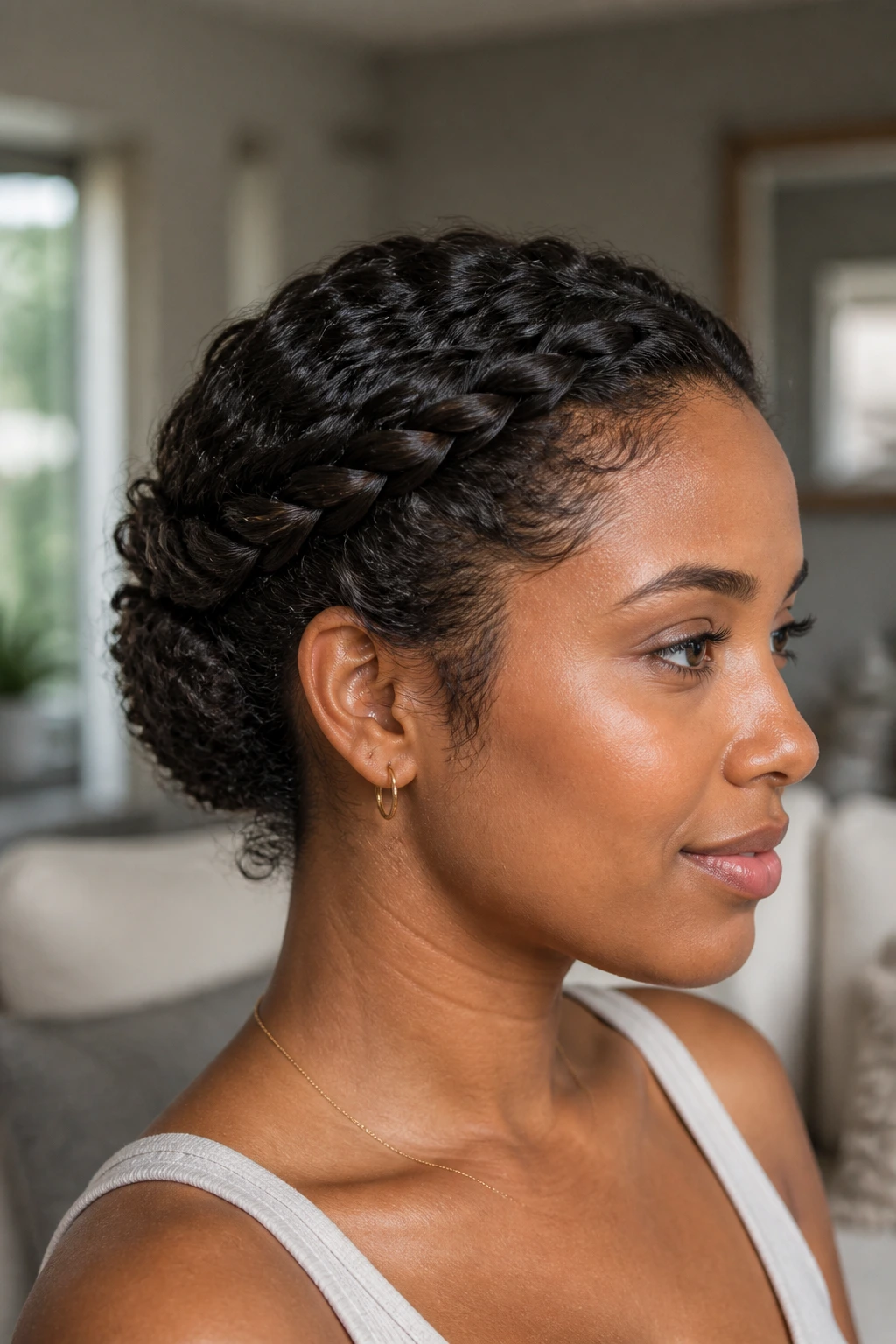
The twisted halo has a way of making curly hair look calm without erasing the texture. It is one of those styles that looks more involved than it really is, which is always useful when your hair has only half-cooperated since morning.
The feel of it matters. The twist should sit snug against the head, not tight enough to tug the scalp. You take a section from one temple, twist it back along the hairline, and pin it in place. Then you repeat on the other side so the two twists meet or nearly meet at the back. The ends can be tucked under the loose curls or hidden under a pin. Either way works.
Why a Twist Holds Better Than a Braid Here
Twists use less hair and less tension, so they behave better on day-two curls that have lost some slip. A braid can look busier. A twist stays smoother and lets the curl texture around it remain the main event. That is the whole appeal. You are shaping the crown, not covering it.
If your hair is layered or a little shorter, use smaller sections and pin more often. If it is thicker, twist with your fingers as you go so the rope does not loosen before you reach the back. A couple of hidden bobby pins are enough for fine hair. Dense hair usually needs more.
This style also holds up well if the front curls are starting to separate in odd directions. The halo gathers the problem area into the shape instead of pretending it isn’t there.
10. The Bubble Ponytail on Stretched Curls
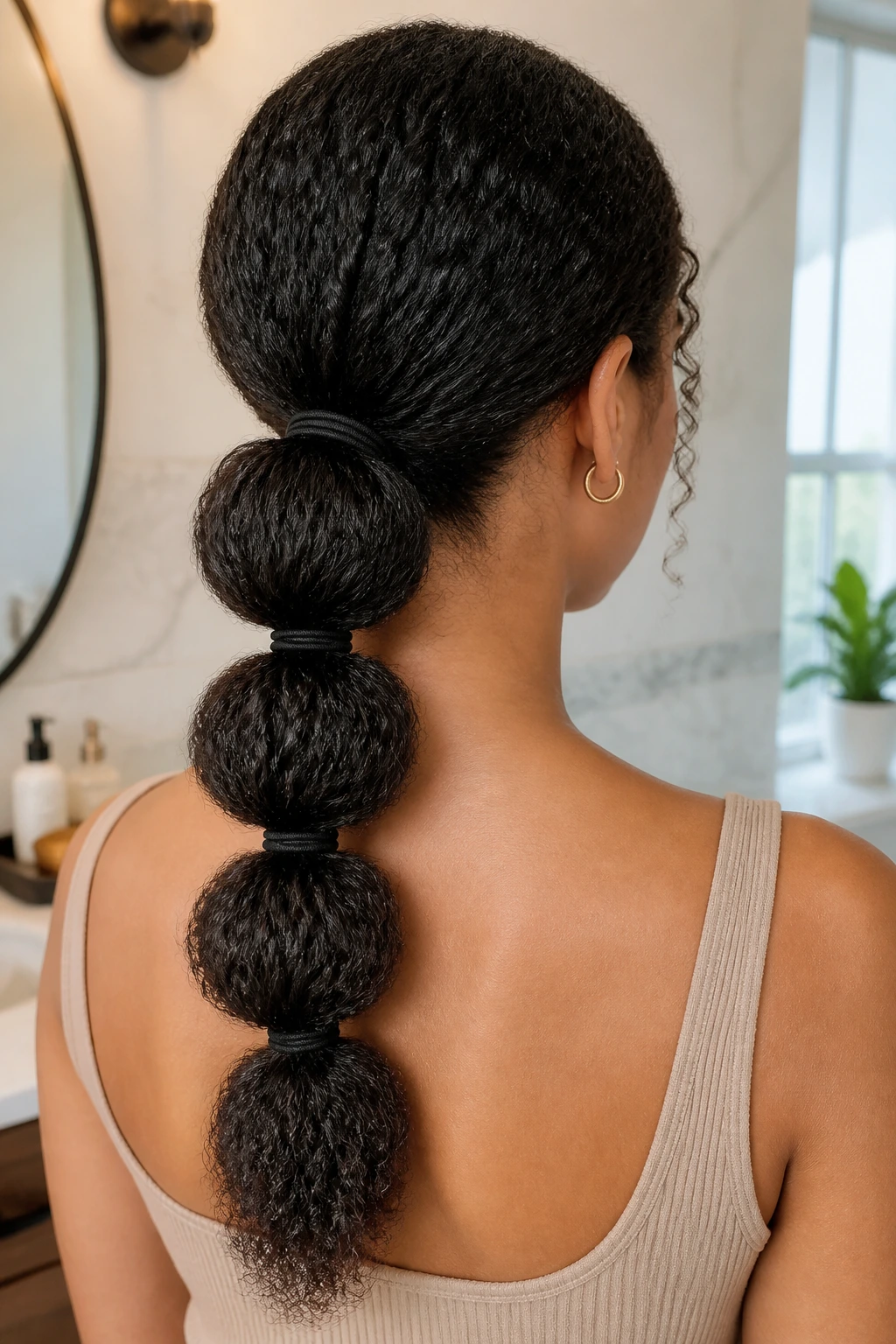
Bubble ponytails look more interesting on curly hair than on straight hair. Straight hair has to fake the volume. Curly hair already has it.
The reason this style works so well on second-day curls is that the bends and clumps in the hair make each bubble look fuller without much help. You start with a low or mid ponytail, then place small elastics every 2 to 3 inches down the length. Gently tug each section outward so the spaces between the elastics puff into rounder shapes. That’s the whole trick, and it works especially well if the curls have stretched a little overnight.
A bubble ponytail is also nice for hair that is too long to wear loose all day without tangling. It keeps the length controlled while still showing off texture. If your curls are dense, use clear elastics or slim black ones, depending on your hair color, so the sections look tidy instead of cluttered.
How to Space the Elastics
- Start with a smooth but not tight base ponytail.
- Place the second elastic 2 inches down if the hair is shorter, 3 inches down if it is longer.
- Tug each bubble gently from the sides, not from the middle.
- Stop before the shape gets too big and starts looking lopsided.
If the ends are frizzy, leave them outside the last bubble rather than trying to tuck them in. Curly hair almost always looks better with a little movement at the end. The bubble ponytail gives you structure without killing that.
11. The Claw-Clip French Twist for Second-Day Curly Hair
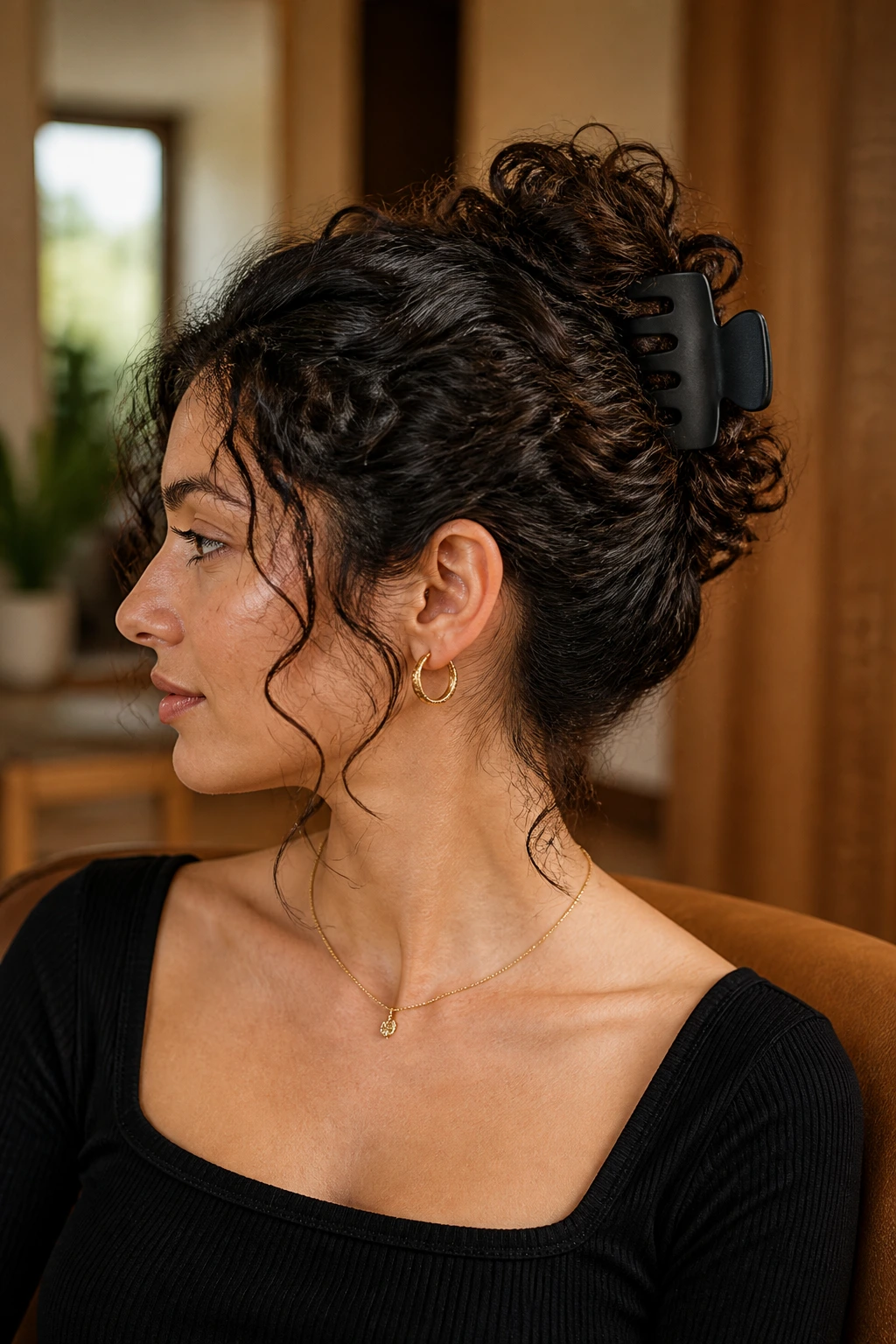
If you need a style that survives a long day and still lets the curls stay visible, the claw-clip French twist is a very strong option. It keeps the hair lifted off the neck, makes the crown look neater, and uses the clip to do most of the work.
The move is simple: gather the hair at the back, twist it upward, fold the length in on itself, and clamp it with a large clip. A matte claw clip with curved teeth usually grips curly hair better than a smooth plastic one because it holds the texture instead of sliding around it. For thick curls, a 4-inch clip usually feels safer than a small one that barely closes.
What to Watch For
- Do not twist so tightly that the hair loses all of its body.
- Keep the twist centered if you want a cleaner shape, or slightly off-center for a looser look.
- Leave the ends tucked but not forced flat.
- Check the clip from the side; if you can see a lot of loose spill, the twist needs one more turn.
This style is especially useful when the curls at the back are puffier than the top. The twist gathers that extra volume and turns it into structure. It is one of those hairstyles that looks like you made a decision before you left the house, even if you were moving fast.
And that is part of the charm. It is practical without looking plain.
12. The Faux Hawk That Turns Day-Two Volume Into Shape
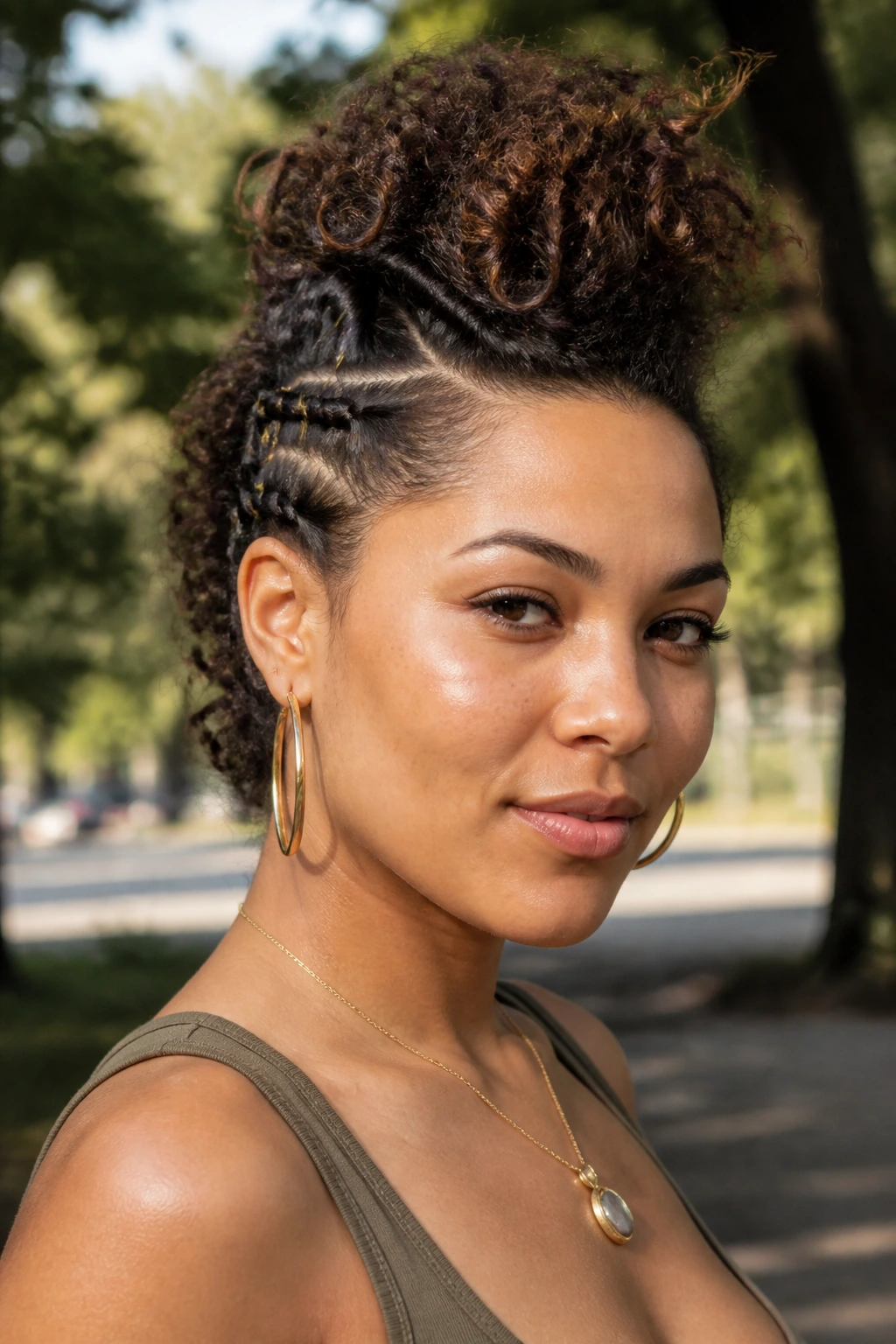
A faux hawk is one of the best ways to use second-day curly hair when the sides are flat but the center still has life. Instead of hiding the volume, you place it right down the middle and pin the rest away. The result looks sharper than a loose puff and more energetic than a plain ponytail.
You can make it as dramatic or as soft as you want. For a gentle version, pin each side back in small sections and leave the center curls raised along the crown. For a bolder version, use more pins and push the sides tighter toward the scalp. Either way, the middle ridge becomes the focal point, and that ridge should look fluffy, not frozen.
This style works especially well when the roots have a little lift from sleeping. That texture becomes the height of the faux hawk. If the front curls are frizzing, you can smooth only the side sections with your palms and leave the center alone. That gives the style a cleaner edge without draining the volume out of it.
A few quick things help:
- Pin the sides first, then shape the center.
- Use crossed bobby pins if the sides slide.
- Pin one section at a time instead of trying to grab the whole side in one go.
- Pull the crown upward with your fingertips for a little extra height.
This is the style I like when the hair feels too loud to leave loose but too good to hide completely. It gives the curls a shape that still feels like curls. And that, honestly, is the point.
