



Red curly hairstyles have a way of doing the work for you. The color pulls the eye in first, then the curl pattern keeps it there. A soft copper coil reads very differently from a deep merlot ringlet, and that difference is the whole point: red hair doesn’t sit still, and curls make sure it never looks flat.
That’s why red on curly hair can feel so striking. The bends, spirals, and coils catch light unevenly, which gives the color depth you rarely get from straight styles. A shade that looks rich and understated indoors can flash bright and glossy near a window, and a cut that would seem ordinary in brown or black suddenly has attitude in red.
The trick is choosing a shape that lets both the color and the curl pattern breathe. Too much bulk, and the red turns into one solid block. Too little structure, and the style can look fuzzy instead of intentional. The sweet spot is somewhere in the middle: enough shape to show off the curl, enough length or edge to show off the shade. That’s where the good ones live.
Copper Red Curly Layers
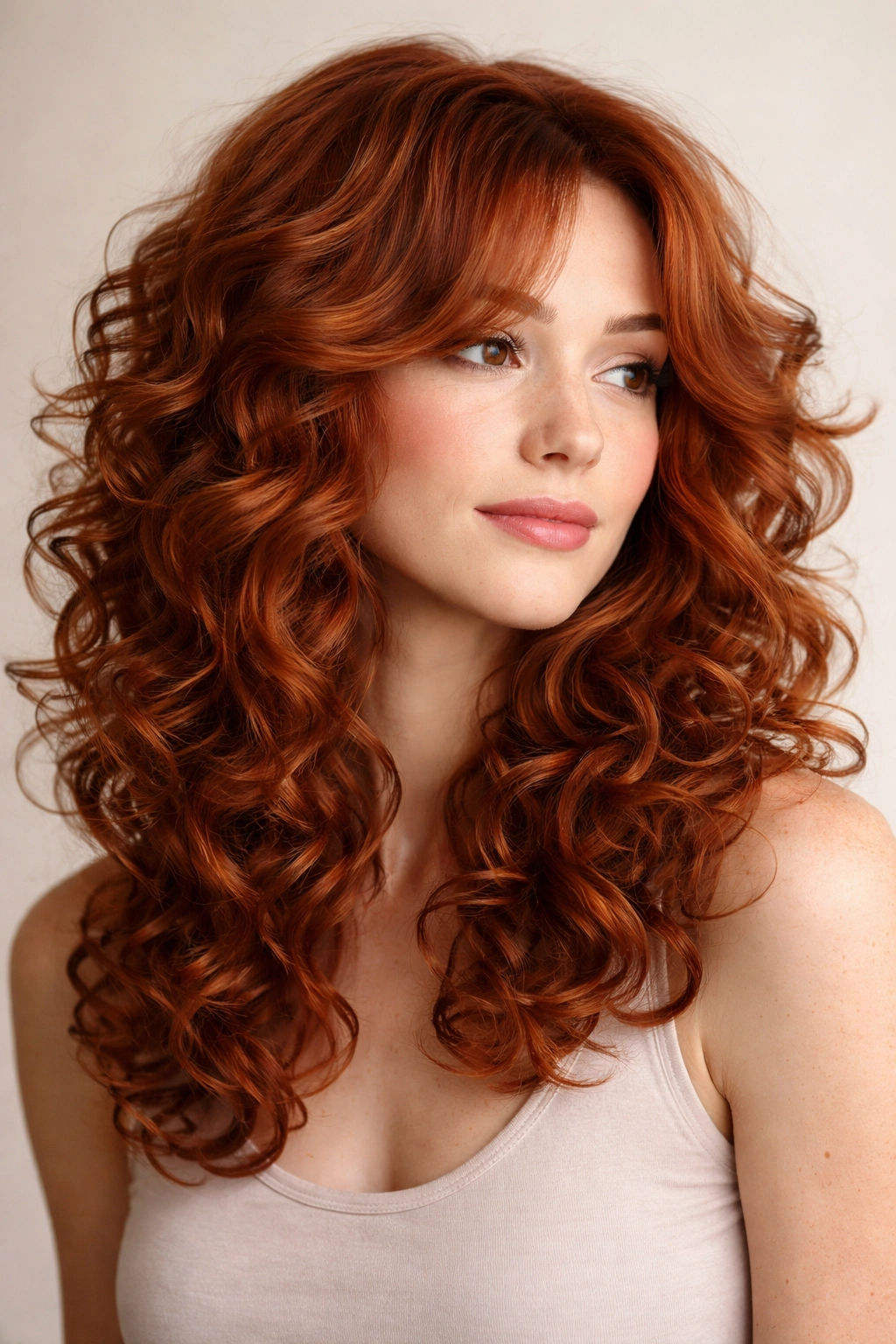
Copper is the shade I reach for when I want red curls to look alive instead of painted on. It sits in that sweet zone between bright and wearable, which means it flatters a lot of curl patterns without swallowing them. On layered curls, copper gets even better because the tone shifts a little from ringlet to ringlet.
Layers matter here. A one-length cut can make curly hair puff out in all the wrong places, especially if the curl pattern is dense. Layers break that up and let the curl clumps stack in a way that looks airy, not mushroom-shaped. On red hair, that shape also keeps the shade from reading as one flat, heavy block.
Why the Layers Do the Heavy Lifting
Ask for long, curved layers rather than choppy ones. That detail matters more than people think. The goal is movement, not random texture.
- Best on 2c to 3b curls that need shape without losing length.
- A dry cut usually gives a better result than a wet cut on very springy curls.
- Copper looks richest when the hair has a slight sheen, so a lightweight glossing cream helps.
- Diffuse on low heat and stop when the roots are about 80% dry to keep volume without frizz.
One good layer placement can save you a lot of styling time. If the shortest pieces land around the cheekbone or just below, the curls frame the face without springing out too far.
Cherry Cola Afro
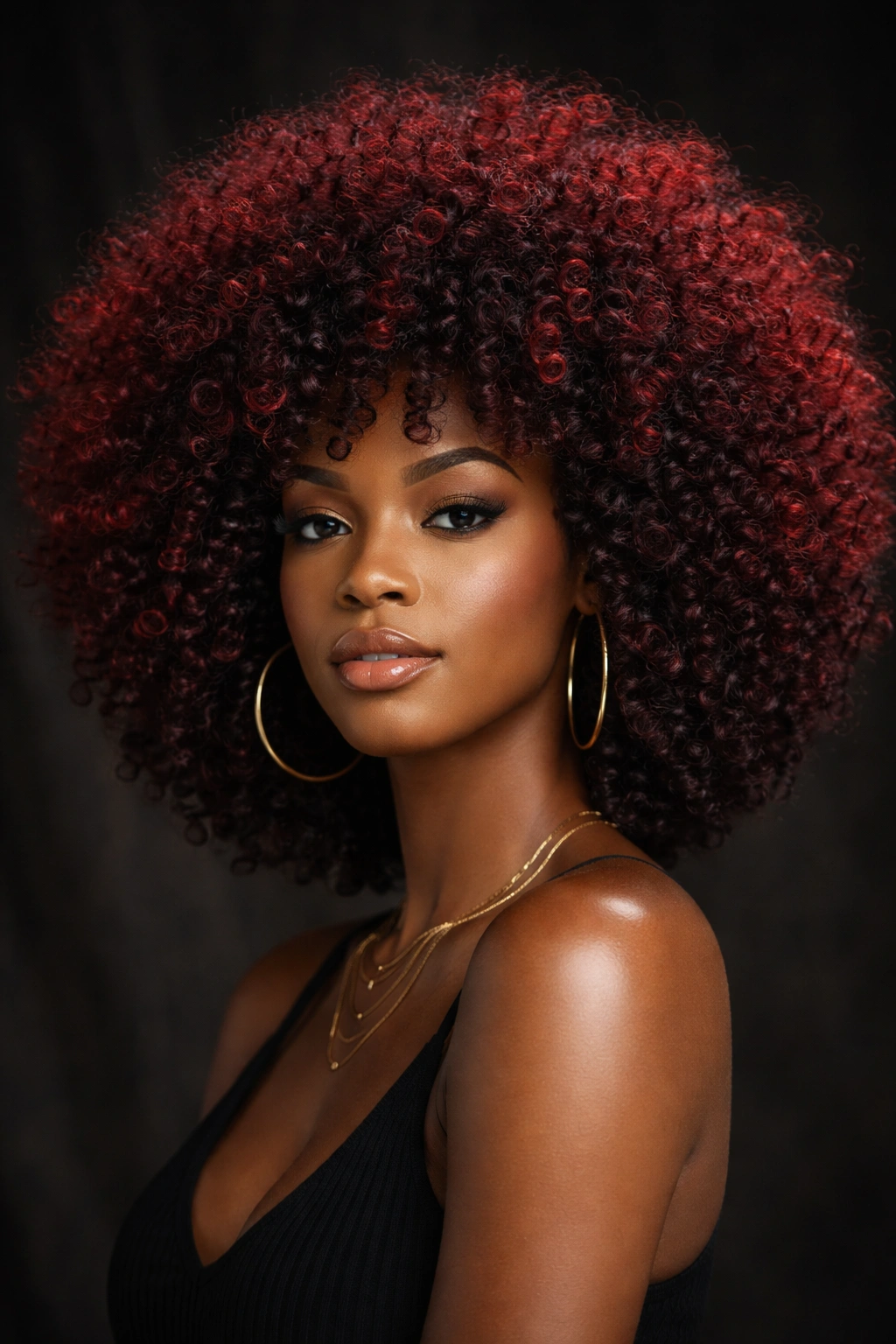
Cherry cola red is for people who want their curls to feel bold from across the room. It has that dark, almost syrupy base with red showing through the top layer, which makes an afro look even fuller and more dimensional. On tight coils and dense texture, the result can be gorgeous.
What I like about this shade is the contrast. It doesn’t flatten the hair. Instead, the deeper base keeps the shape grounded while the red gives the outer halo a flash of color that shifts as you move. That’s a good thing for an afro, because a shape this full can swallow softer tones.
A cherry cola afro works especially well when the cut is rounded and the edges are clean. You want the silhouette to feel intentional, not accidental. A soft pick at the roots and a curl-enhancing cream are enough for many people, but the real key is moisture. Dry curls lose the whole effect fast.
No, this isn’t a quiet look. It’s meant to take up space. If you’ve ever wanted red hair that feels strong instead of delicate, this is one of the easiest ways to get there without sacrificing the natural architecture of your texture.
Auburn Curly Shag
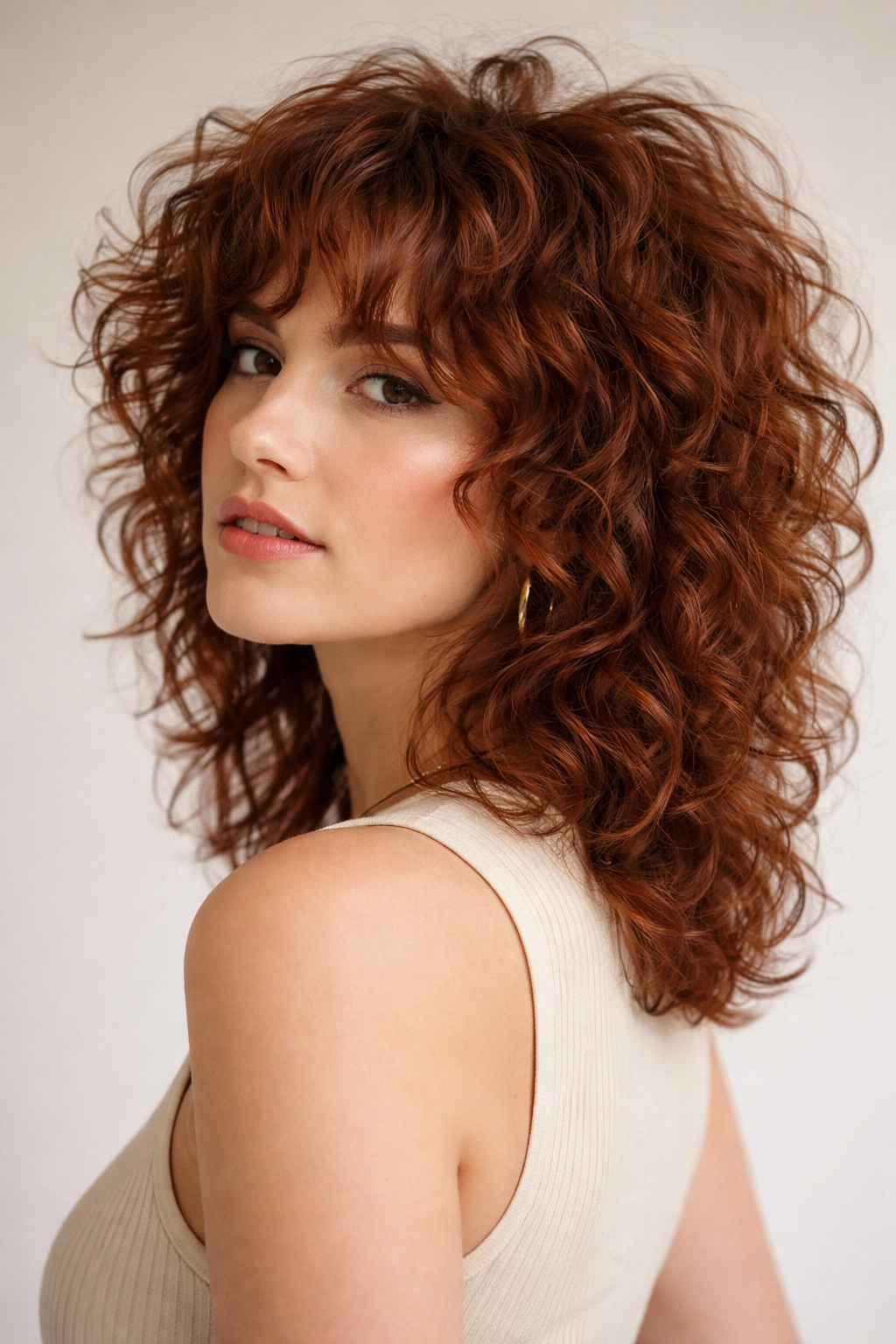
Why do curly shags keep coming back? Because they solve the two problems that bother curly hair most: too much weight at the bottom and not enough shape up top. Auburn is the shade that makes the cut feel even better, since the reds and browns blur together in a way that reads soft but not boring.
A shag thrives on unevenness. That sounds like a flaw until you see it in curls, where uneven lengths build movement and stop the hair from collapsing into one heavy outline. Auburn helps because it adds warmth without screaming for attention. The whole look feels a little lived-in, which is the point.
How to Style It
Keep the crown a touch shorter than the sides. That gives the cut lift where it needs it most. A mousse at the roots and a curl cream through the mids usually do the job, though very fine curls may want a lighter leave-in instead.
- Ask for face-framing pieces that start around the cheekbone.
- Keep the nape a little softer so the shape doesn’t feel boxy.
- Scrunch with a microfiber towel, not a rough bath towel.
- Diffuse with your head tilted side to side for a less stiff finish.
Auburn shag cuts are a little rebellious in the best way. They look especially good when the curls aren’t trying too hard.
Burgundy Curly Bob
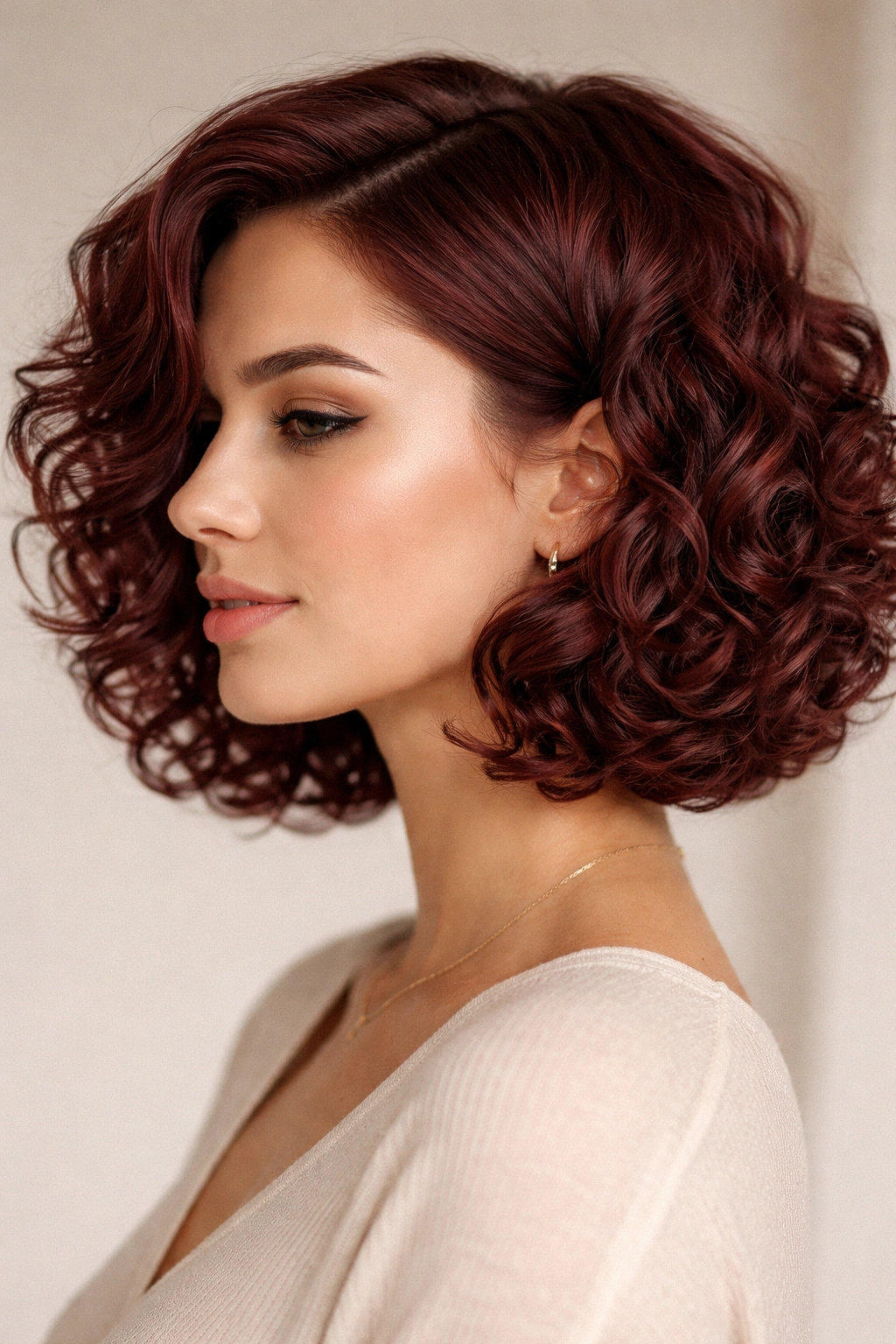
Picture a bob that lands somewhere between the jaw and the collarbone, with just enough spring to move when you turn your head. Burgundy gives that shape a deeper, richer feel than bright red, and the curls keep it from looking too severe. The color and the cut do different jobs here, which is why the style works so well.
A curly bob can go wrong if the perimeter is too blunt and the curls are too loose. The result is often a triangle shape that feels dated fast. Burgundy helps soften the visual line, but the cut still needs clean structure. Ask for a bob that respects your curl pattern instead of fighting it.
This one is especially nice for people who want drama without a huge amount of length. It sits close enough to the face to feel polished, but the curls keep it from looking stiff. A side part makes it even better, because it lets the front pieces fall in a more flattering way and breaks up the density near the cheeks.
Shorter red curls need a good silhouette. If the outline is right, the color does the rest.
Fiery Red Pixie Curls
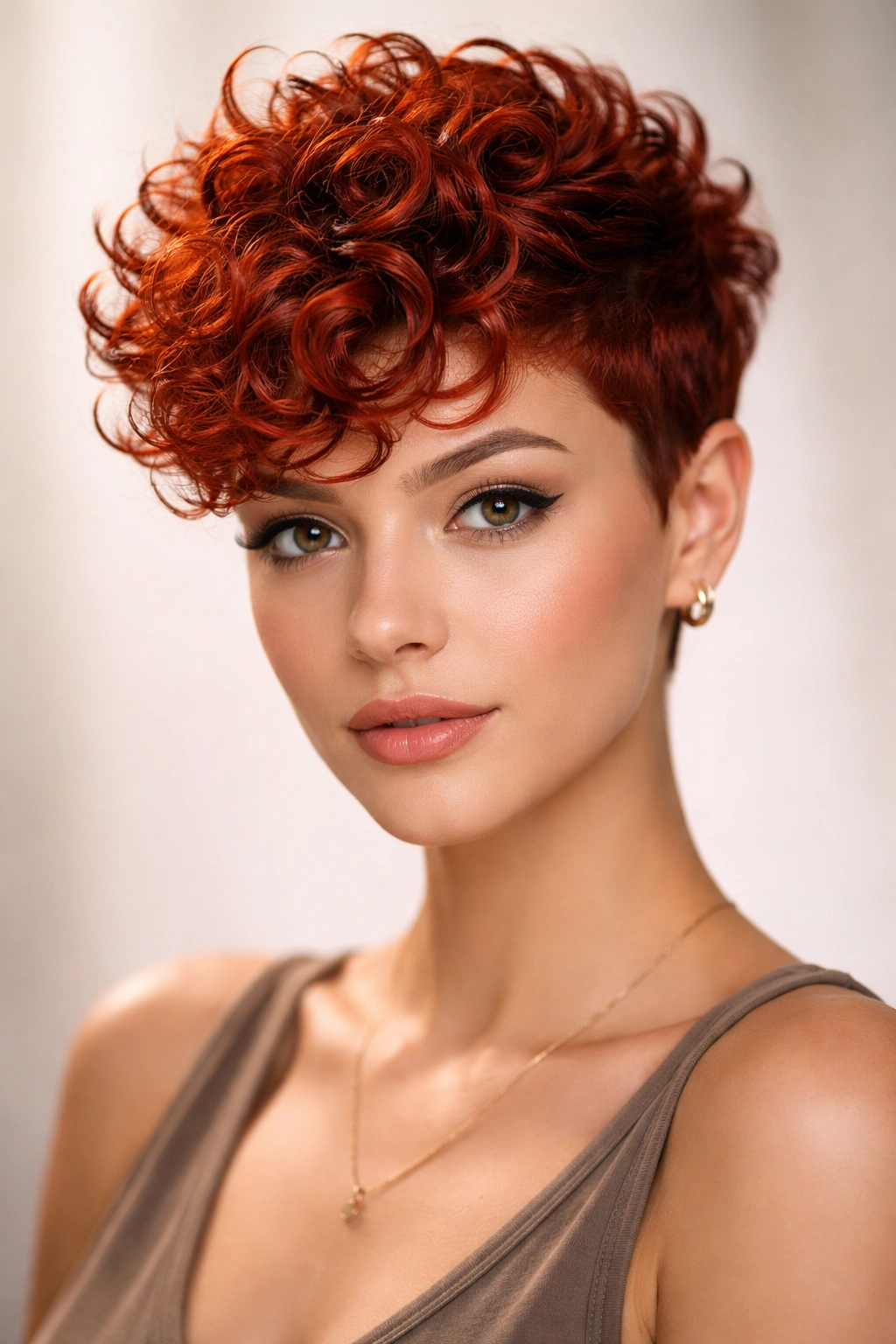
A red pixie on curly hair is not timid, and I mean that in the best possible way. The cut exposes the curl pattern, so the shade has nowhere to hide. Every bend becomes part of the style, which is exactly why fiery red can look so sharp here.
The best pixie curls usually keep a little extra length on top and around the front hairline. That gives you enough hair to shape with fingers or a small diffuser, while the sides stay tight enough to keep the whole cut crisp. If the top is too short, the style can look fuzzy. If it’s too long, you lose the point of the pixie.
This is one of those cuts that benefits from a tiny amount of product, not a helmet. A pea-sized dab of curl cream, smoothed through damp hair, often does more than a full palmful. Then you can define a few front pieces with your fingers and leave the rest a little freer. That slight mismatch keeps the look modern.
And yes, it grows out fast. That’s the trade-off. But while it’s fresh, a fiery red pixie can look fierce in a way longer hair sometimes can’t touch.
Sunset Ombré Ringlets
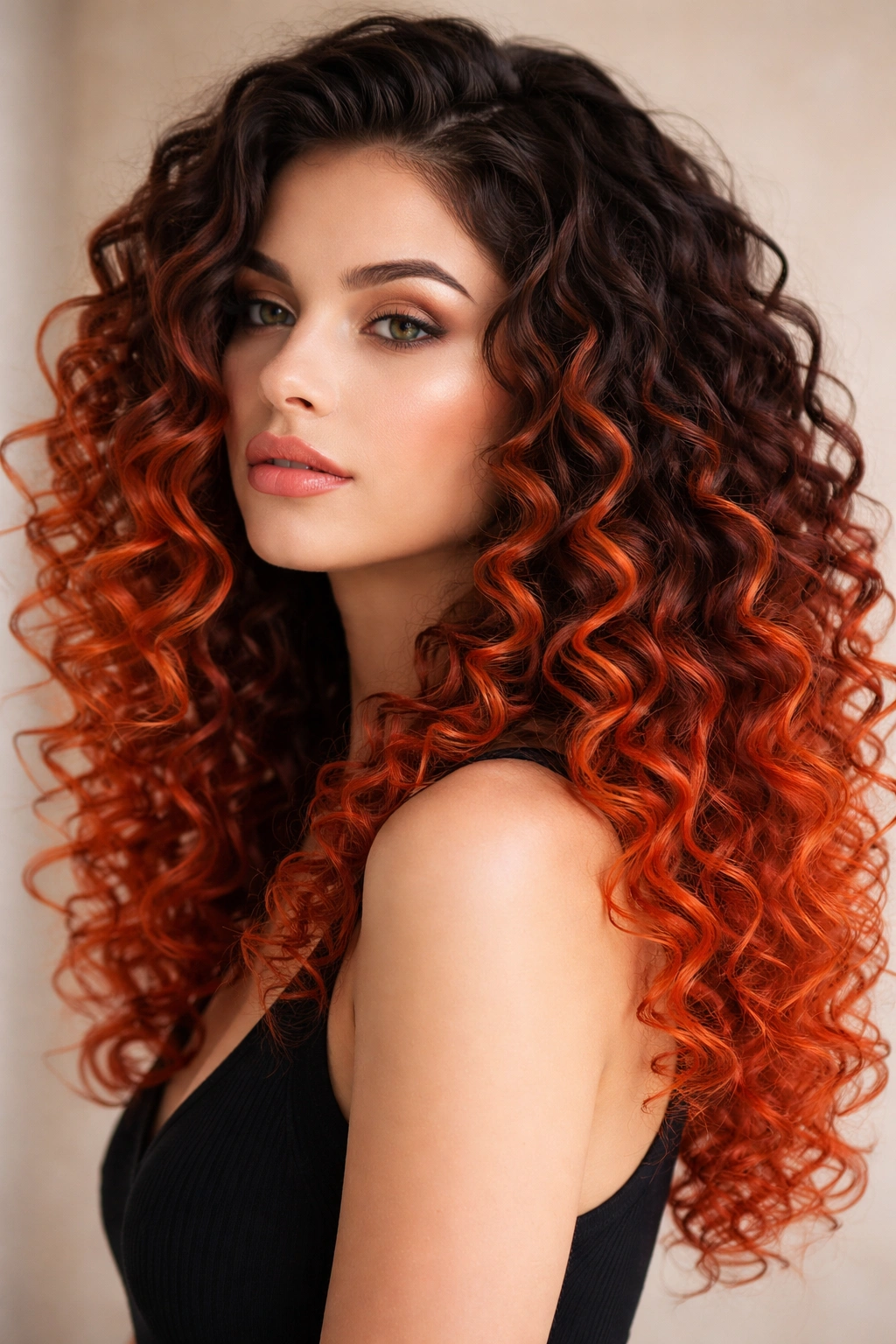
Solid red is strong, but ombré gives curly hair a little more depth. A sunset blend usually starts with darker roots, shifts into copper or strawberry through the mids, and ends with brighter red-orange at the tips. On ringlets, that gradient can look almost painted in layers.
This style depends on placement. If the lighter ends are tucked only into the outermost curls, the effect stays soft. If the brightness goes too high up the shaft, the whole head can start to look busy. A good colorist will think about how curls shrink and expand, because shrinkage changes where the color actually lands once the hair dries.
Where the Fade Should Start
Most curly heads need the ombré line lower than straight hair would. Curls bounce upward, and that means the transition appears higher once the style dries. Starting the fade around the ears or lower keeps the result from looking too abrupt.
- Dark roots give the style a longer grow-out window.
- Copper mids make the red feel warmer.
- Bright ends show off curl definition at the edges.
- A gloss between dye sessions keeps the fade from turning dull.
I like this look on long hair because the color has room to move. Short curls can do ombré too, but long ringlets give the fade more space to tell its story.
Mahogany Half-Up Twist
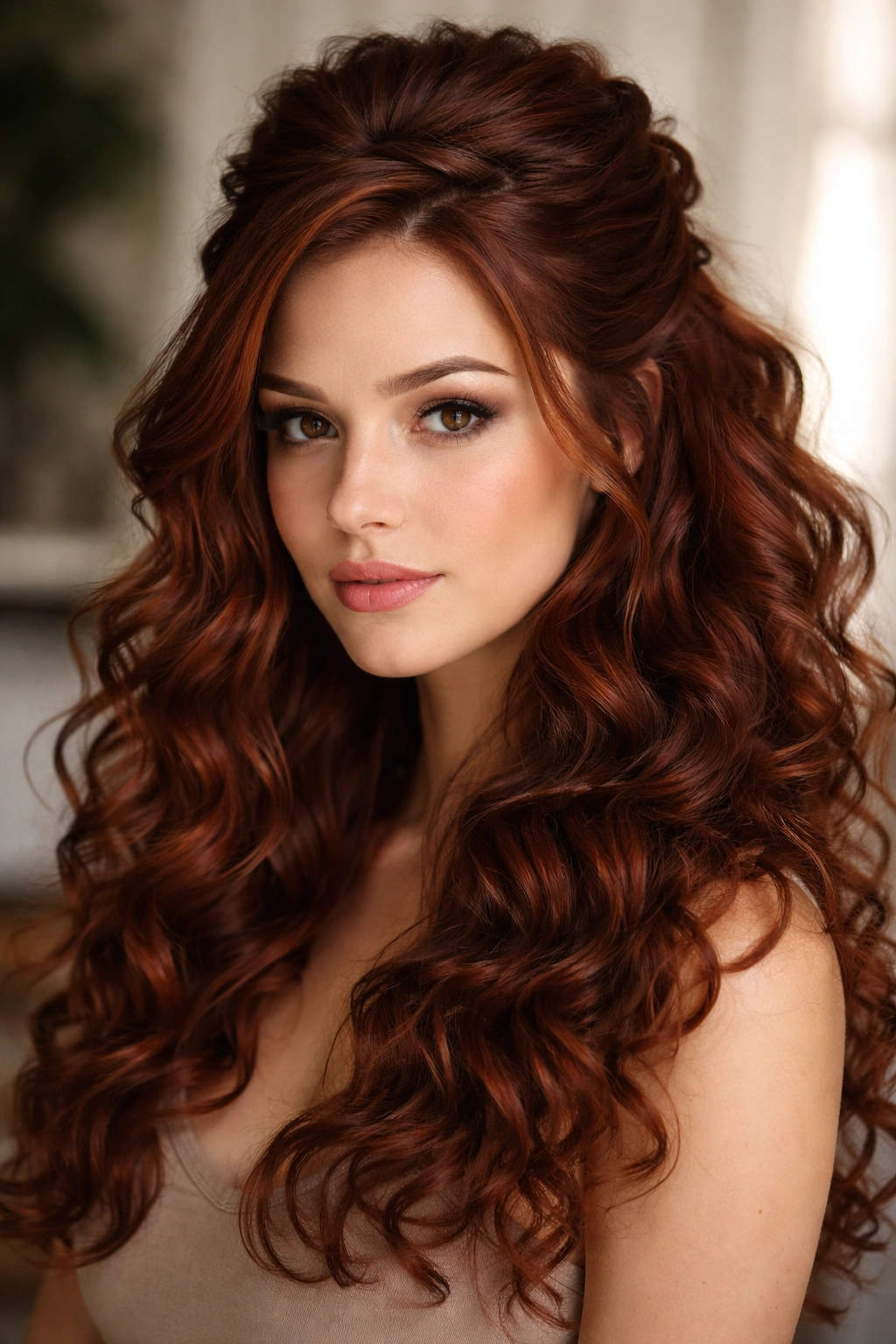
Half-up styles are underrated on curly hair, mostly because people assume they’re basic. They’re not. On red curls, a half-up twist can show off the color at the crown while letting the rest of the texture hang loose and full. Mahogany gives the whole thing a deeper, more expensive-looking tone without needing a bright copper punch.
The twist works because it creates height at the top and control around the face. That solves a common curly-hair problem: the front section getting heavy while the rest of the hair still wants to expand. Pulling the top back with a twist or a small clip gives structure without flattening the curl pattern below.
This style is also forgiving on second- or third-day curls. A few revived front pieces, a little water, and a dollop of leave-in can make the front section behave again. The rest can stay a bit messy. In fact, that looseness is part of the charm.
One small detail makes a difference: leave a few curl tendrils out near the temples. It keeps the style from looking too strict and brings the red closer to the face.
Crimson Faux Hawk Curls
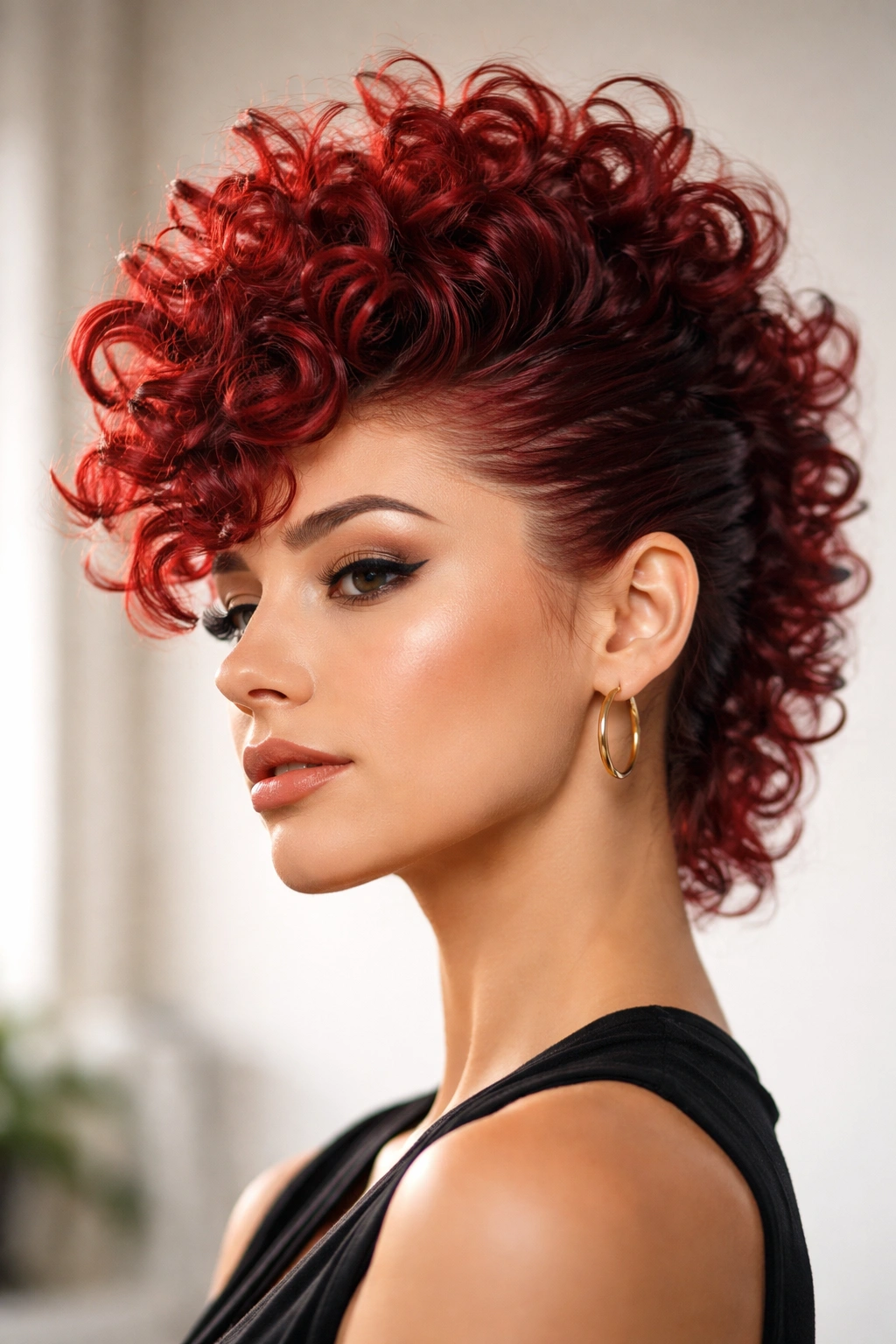
If you want edge without shaving a side of your head, this is the move. A faux hawk on curly hair creates a narrow, lifted center line while the sides get pinned or slicked back. In crimson, the shape becomes even sharper because the color highlights every ridge in the curl pattern.
The secret is height. You need enough volume through the center strip to make the silhouette read as deliberate. Too little lift and it becomes a half-up style by accident. Too much product on the sides and the whole thing turns greasy. A lightweight gel at the edges and a mousse or foam in the center usually give the best balance.
What Makes It Work
The center section should feel touchable, not frozen. A little movement keeps the style from looking costume-like.
- Pin the sides with small bobby pins that match your hair tone.
- Apply gel only where you need control, usually at the temples and around the ears.
- Tease the crown very lightly if your curls lie flat there.
- Finish with a shine spray rather than heavy oil.
Crimson makes this style feel sharper than black or brown ever could. It’s one of those looks that changes the mood of the whole outfit.
Ginger Red Curly Curtain Bangs
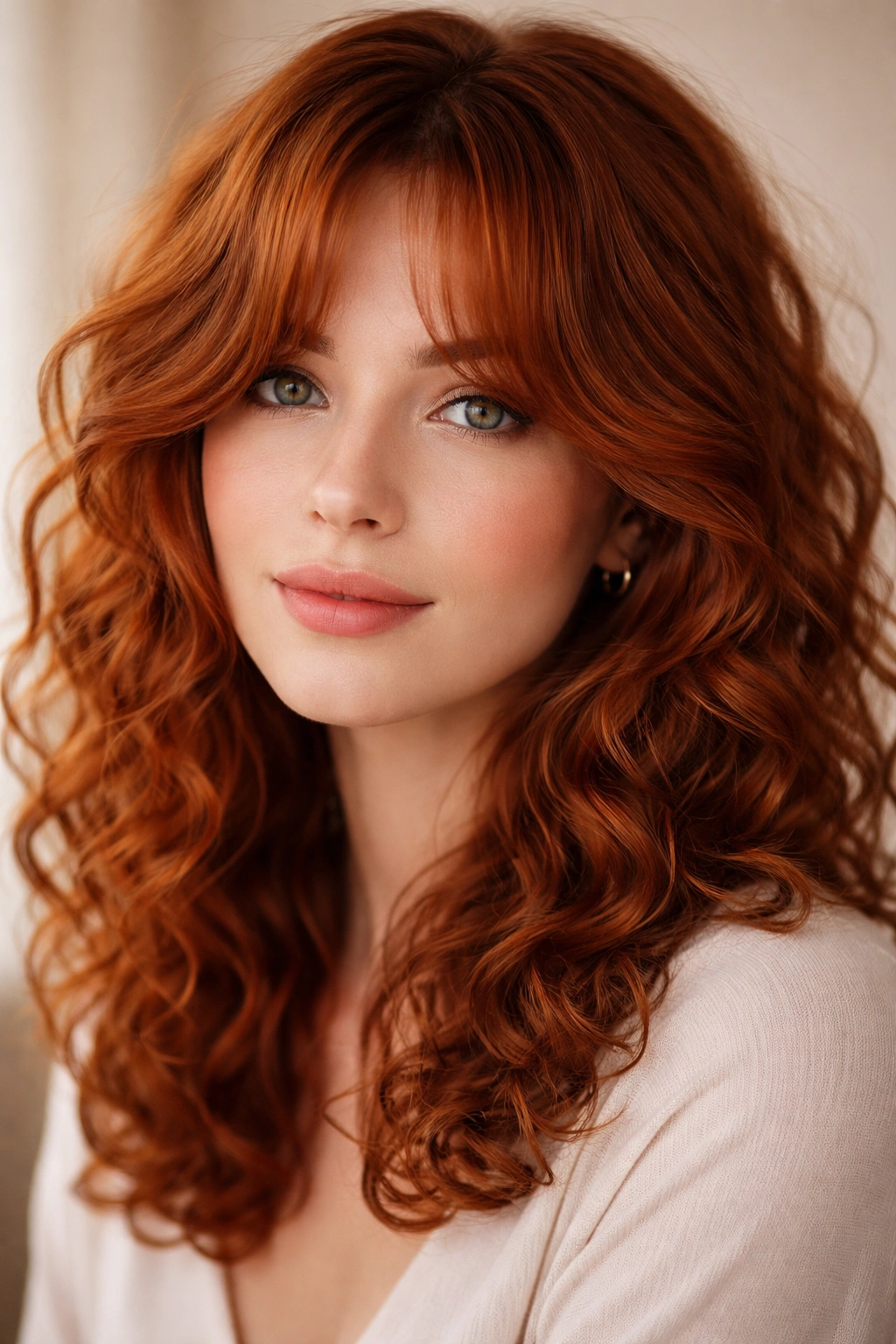
Can curls and bangs get along? Yes, if the bangs are cut with enough room to bounce. Ginger red curtain bangs are one of the easiest ways to bring red curly hairstyles closer to the face without taking on a full fringe. They soften the forehead, frame the eyes, and make the color feel fresh instead of all-over loud.
The trick is length. Curly bangs usually need to be cut longer than you think, because they spring up once dry. That extra length gives you room to style them with a side sweep or a split down the middle. Ginger shades are especially kind here, since the color brightens the front pieces and makes the shape easier to read.
I like this look on shoulder-length curls and longer shags. The bangs keep the front from feeling too heavy, which matters if your curls tend to expand around the face. A little curl cream and a finger twist on damp bangs is often enough. Just don’t overbrush them. That’s where the softness disappears.
Styling Notes That Save Time
- Trim bangs dry, or nearly dry, so you can see the real curl length.
- Use a small round brush only if the bangs are very loose.
- Refresh the front section with water before the rest of the hair.
- Let the bangs dry fully before touching them again.
This is the kind of style that looks casual but takes a careful hand.
Ruby Top Knot with Tendrils
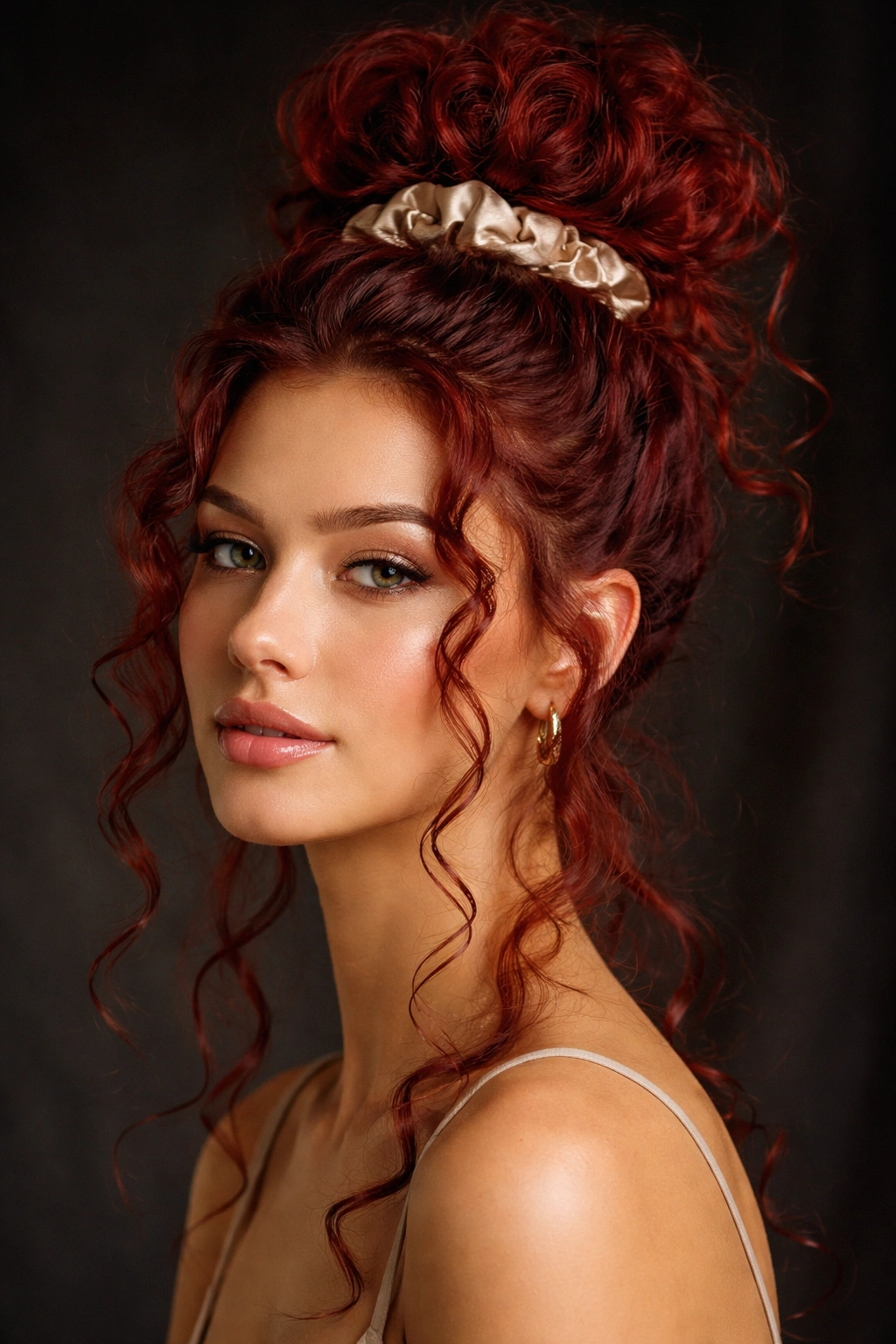
There’s a reason the top knot keeps showing up on curly hair. It clears the face, shows off the texture, and still leaves enough chaos in the rest of the style to feel human. Ruby red pushes it further. The color peeks through the bun, then flashes again in the loose tendrils around the temples and nape.
The bun itself doesn’t need to be perfect. In fact, a slightly loose knot usually looks better than a tight one on curly hair because it keeps the texture visible. If the curls are stretched too hard into the tie, the whole thing can feel stiff. A satin scrunchie or a soft coil-friendly hair tie protects the shape and keeps breakage down.
This style is especially good when you want a red curly look that works for dinner, a formal event, or just a day when your hair refuses to cooperate. Pull the top section high enough to show off your cheekbones. Leave two or three face-framing pieces loose, and let them do that flattering work curls always seem to do.
One word of caution: don’t flatten the crown completely. A little volume there keeps the top knot from looking like an afterthought.
Cinnamon Shoulder-Length Curls
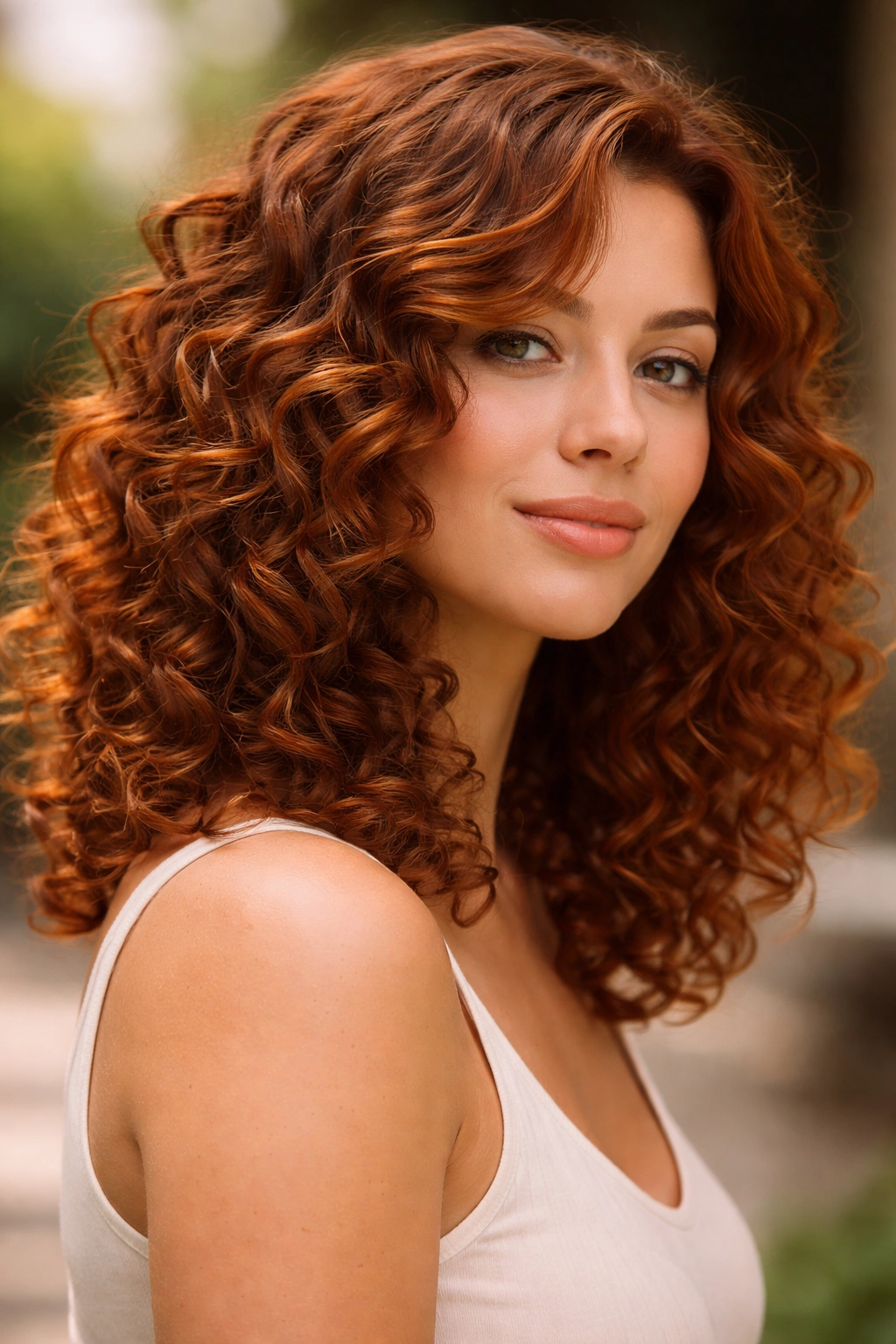
Shoulder-length curls can be a little tricky. Too short, and the hair puffs outward. Too long, and the weight drags the curl pattern down. Cinnamon sits beautifully in that middle range because it softens the shape and gives the hair a warm, dimensional glow that feels easy to wear every day.
This length is also practical in a way people underestimate. You can tuck it behind the ear, clip it half up, diffuse it quickly, or leave it loose and let the shape speak for itself. Cinnamon helps because it’s not a flat, one-note red. It usually has brown, copper, and auburn tones mixed together, which keeps the curls from looking painted.
The style looks especially good when the ends are healthy. Split ends show up fast on shoulder-length curls, and they make any red shade look tired. A small trim every so often keeps the perimeter crisp. That matters more than shine spray or styling cream, frankly.
This is the kind of red curly hairstyle that works hard without looking like it tried. I’ve always had a soft spot for that.
Scarlet Red Wash-and-Go
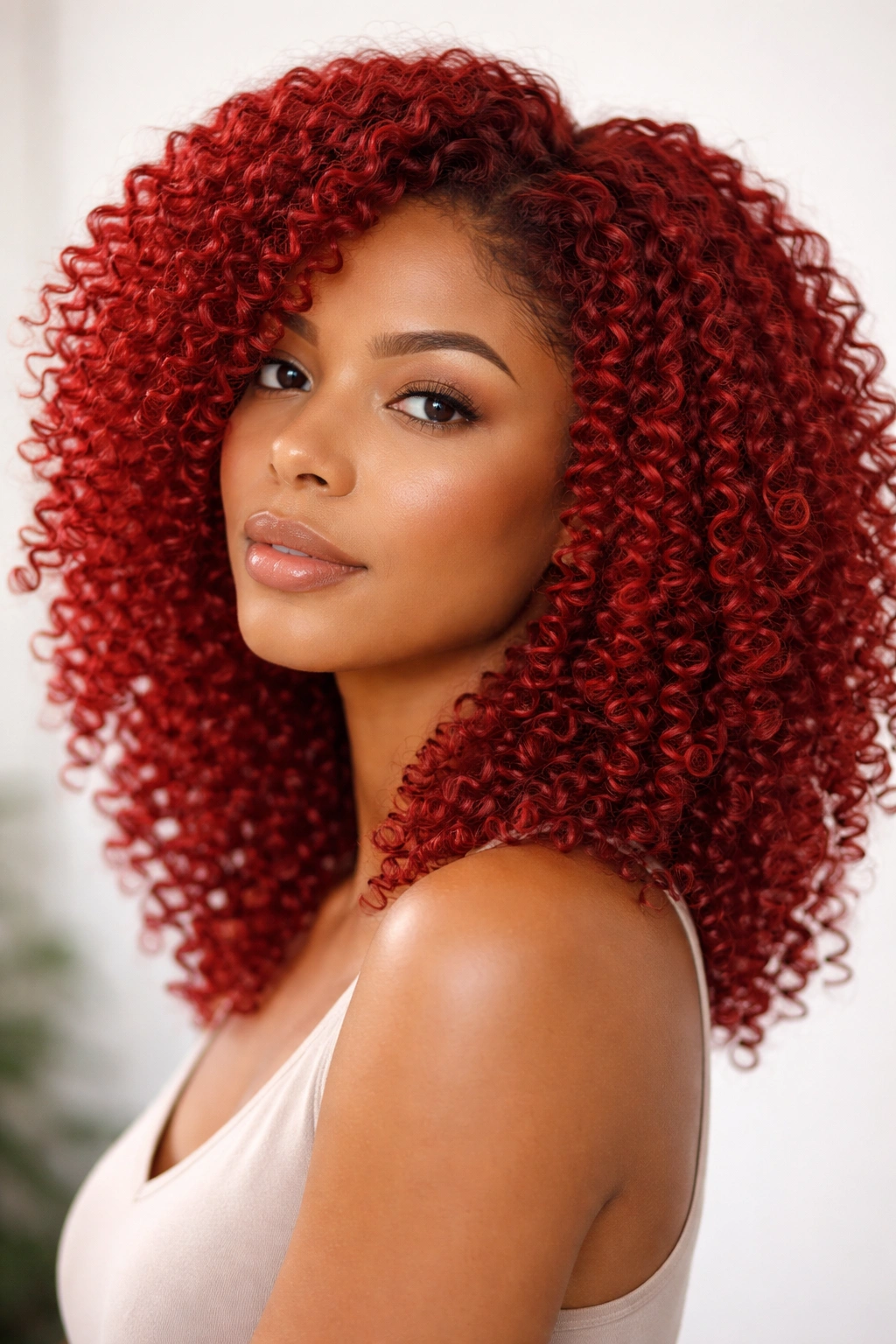
Why do wash-and-go curls look so good in scarlet? Because the whole style depends on definition, and scarlet shows every twist and bend like a spotlight. On well-moisturized curls, the color can look almost liquid where the gel cast forms and then breaks away.
The wash-and-go needs a clean base. Start with a leave-in that gives slip, then layer a curl cream or foam, and seal the shape with gel. Don’t rake products through too aggressively; clumps are your friend here. If you separate everything too much, the curl pattern can frizz before it even dries.
Products That Help the Shine Last
A wash-and-go is all about controlled moisture, not overloading the hair.
- Use a light leave-in on soaking-wet curls.
- Add gel in small sections so the cast forms evenly.
- Diffuse only until the roots are set and the ends still feel soft.
- Scrunch out the cast once the hair is fully dry and cool.
Scarlet is bold enough that you do not need extra accessories. The color and the texture already carry the look. That’s the appeal.
Wine-Red Braided Crown
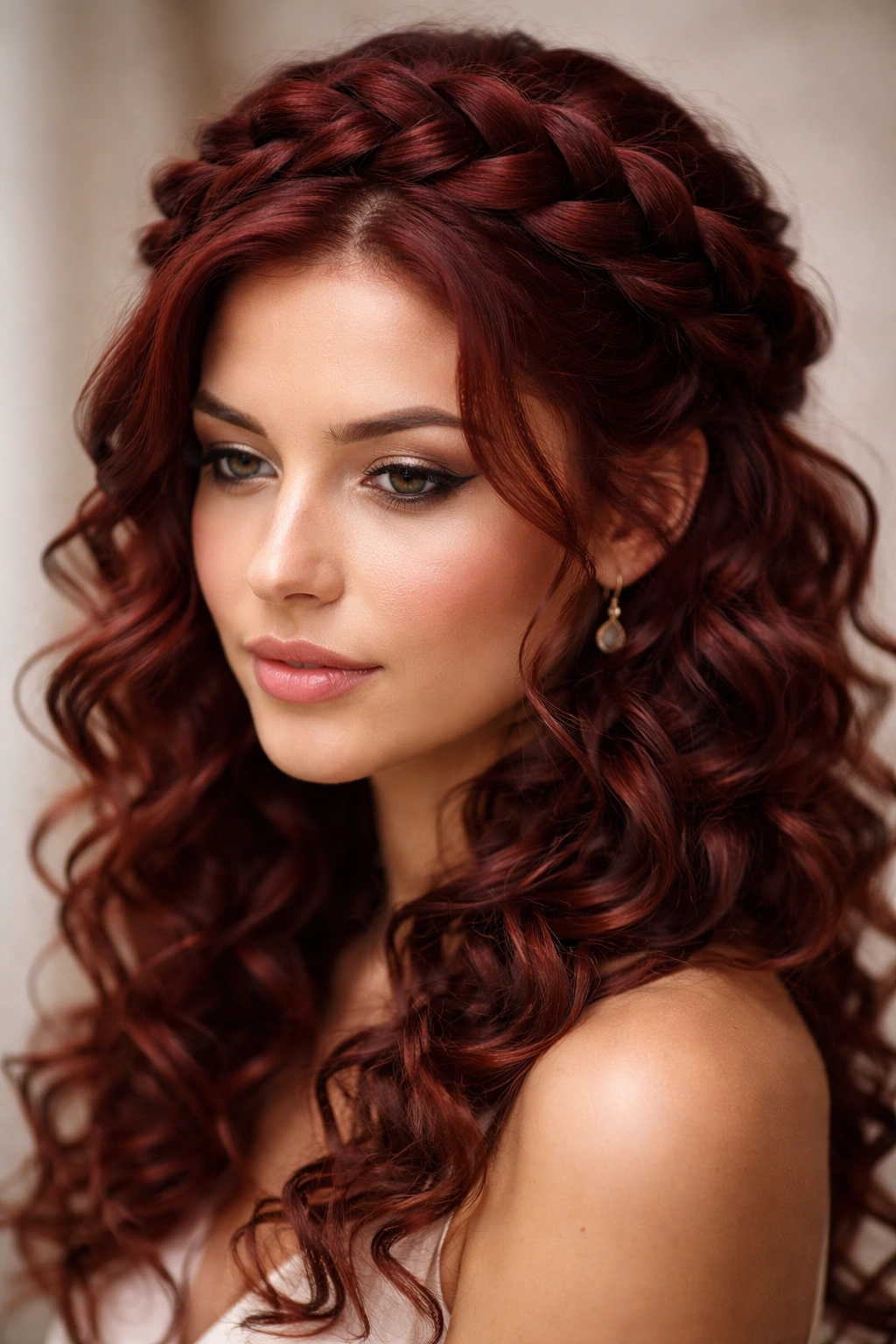
A braided crown does something clever on curly hair: it turns texture into architecture. Instead of letting the curls sit loose from root to tip, you wrap them around the head in a halo shape, which gives the red shade a more formal, almost regal feel. Wine-red deepens that effect because the color reads rich in the braid and glossy in the loose pieces.
This style works best when the braids are not too tight. You want enough tension to hold, but not so much that the braid looks like it’s pulling the curls flat. A little puff at the braid edges is fine. Better than fine, actually. It keeps the style from looking synthetic and lets the curly texture show through.
Braided crowns are smart for humid days, events, or any time you want the hair off your face without going all the way into an updo. A few loose curls around the temples soften the line and keep the whole thing from feeling stiff.
Small Details That Matter
- Braiding slightly above the hairline makes the crown more visible.
- Hiding the ends under the braid gives a cleaner finish.
- A few bobby pins under the braid help it stay put.
- A touch of shine cream on the loose curls keeps the color rich.
The result feels polished, but not precious. That’s the right balance here.
Brick-Red Long Layers
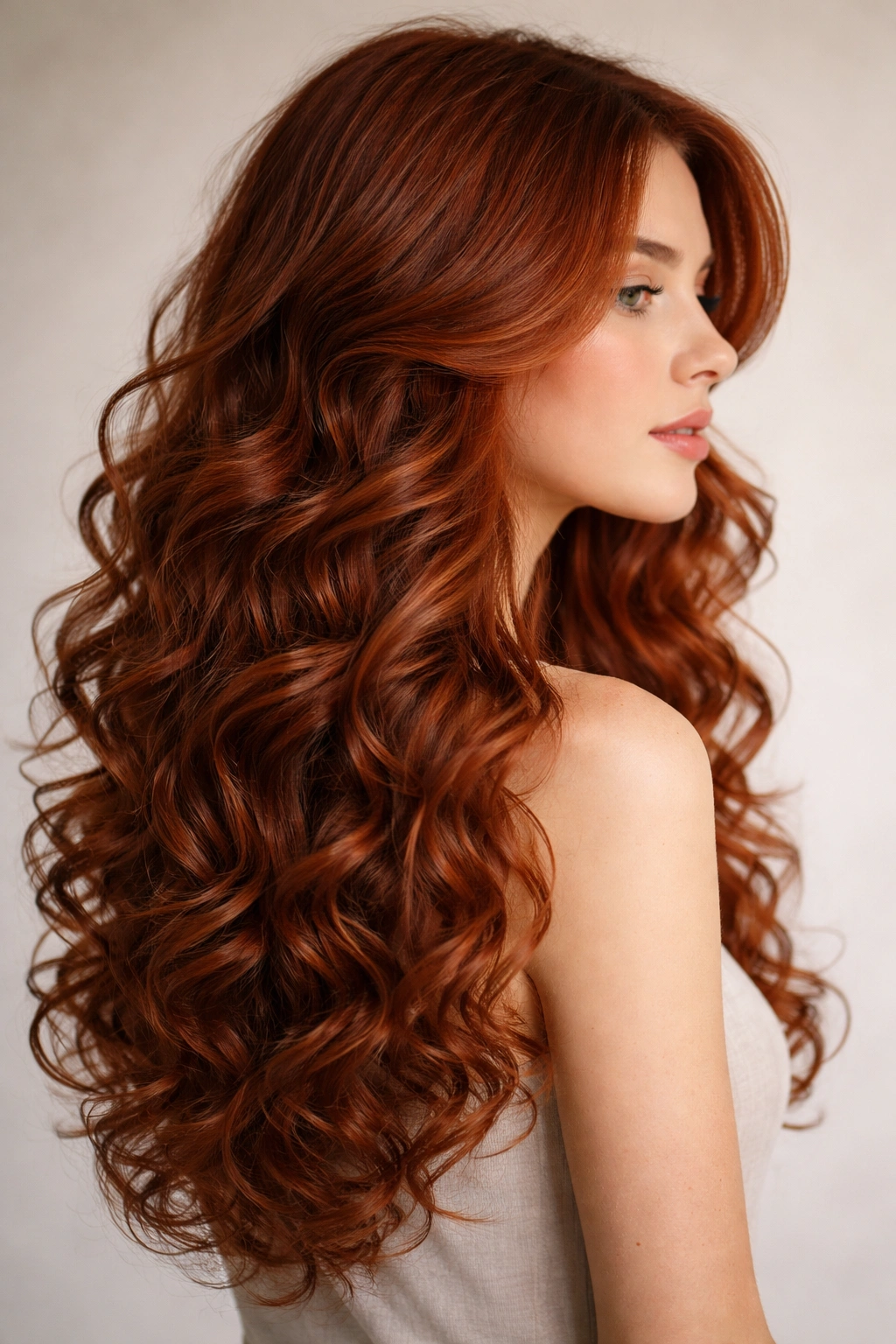
Long layers in brick-red hair are for people who want length but don’t want the “one heavy curtain” problem. Curls need room to spring, and long layers give them that room while keeping the overall shape from dragging down the face. Brick-red adds a muted, earthy quality that makes the whole look feel grounded.
This shade is more understated than copper or scarlet, which is exactly why it works on longer hair. Bright reds can sometimes overpower a lot of length, but brick-red settles into the curls and lets the shape stay the star. If you’ve got thick hair, this tone can be a relief. It softens the outline without making the hair look flat.
How to Keep Long Curls from Feeling Heavy
The haircut matters more than the styling products here. A smart layer pattern can keep the ends lively and the crown from collapsing.
- Keep the shortest layers around the upper cheek or chin.
- Ask for internal layers if your hair is very dense.
- Use a diffuser to set the root before the length dries on its own.
- Avoid heavy butters if your curls are fine; they’ll weigh the hair down fast.
Brick-red long layers are not flashy in a loud way. They’re more of a slow-burn look, the kind people notice after they’ve already looked twice.
Merlot Coil Bob
Merlot on a coil bob is one of my favorite combinations because it feels rich without trying to be loud. The bob gives the coils a shape that’s easy to read, and the deep red shade adds depth in the shadows where tight texture can sometimes disappear. Together, they make the hair look dense, polished, and a little luxurious.
A bob on coils needs precision. If it’s cut too bluntly, it can balloon out. If it’s too layered, it can lose the round shape that makes the style flattering. Merlot helps by giving the surface more dimension, so even a compact bob doesn’t look flat from any angle. That matters a lot on tighter curl patterns, where shape is everything.
I like this look with a deep side part or a gentle off-center part. It breaks up the roundness and lets the front pieces fall in a more interesting way. A small amount of gel around the hairline can keep the edges neat, but the body of the bob should stay soft and springy.
This is a strong finish if you want something short, rich, and low-drama in the best sense. The cut does the structure, the color does the depth, and the coils do the rest.
