



If your curls keep turning shoulder-length hair into a triangle, the cut is probably the problem. Long curly bob haircuts can fix that in a way that feels practical, not fussy: enough length to tuck behind your ears, enough weight to calm frizz, and enough shape to keep the ends from hanging like a wet mop. On curly hair, the same length can look polished, shaggy, rounded, or sharply angled depending on where the layers sit and how the perimeter is cut.
Shrinkage matters. A lot.
A lob that looks perfect when wet can land two inches shorter once it dries, and that’s where a lot of bad curly cuts start to go sideways. The smartest long curly bob haircuts respect the curl pattern instead of flattening it, which means the cut needs to work with density, spring, and face shape all at once. Dry cutting helps. So does leaving room for the curls to bounce.
The styles below cover the blunt, the layered, the angled, the fringe-heavy, and the soft grow-out cut that doesn’t make you babysit it every morning. Some are neat. Some are a little wild. All of them give curly hair room to do what it already wants to do.
1. Long Curly Bob with Soft Face-Framing Layers
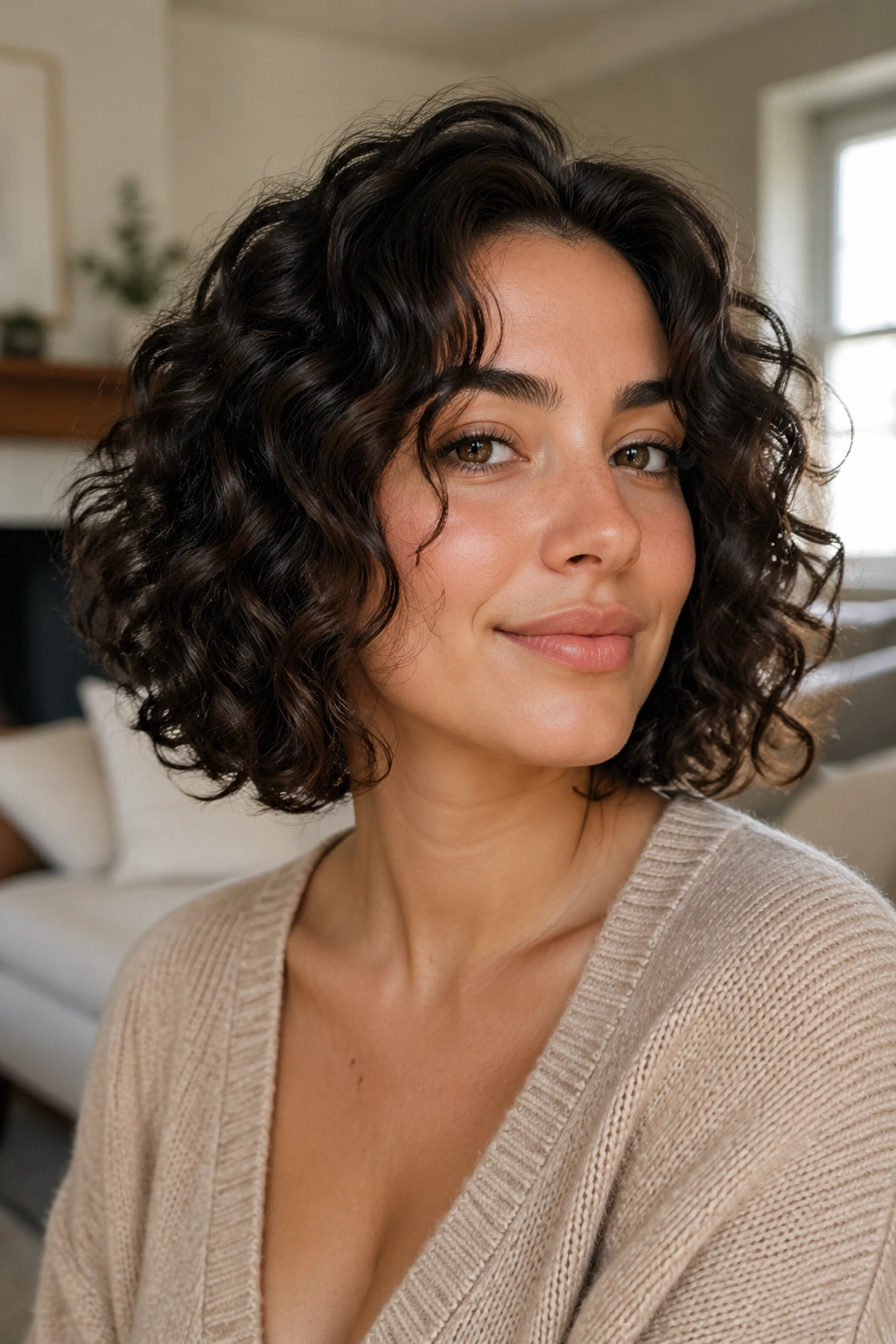
Soft face-framing layers are the easiest way to make a long curly bob feel alive. Instead of leaving the shape heavy around the jaw, the cut opens a few channels around the cheeks and chin so the curls move instead of stacking. That tiny change matters more than people expect. It can make a cut feel lighter without making it thin.
Keep the shortest pieces below the cheekbone if you want the grow-out to stay clean. Go too high, and the front can puff out in a way that makes the whole bob look wider than it is. I like this shape on curls that need a little lift around the face but don’t want a big shag. It gives structure without turning the style into a layered jungle.
Why It Works on Curls
- The front curls dry first, so lighter layers stop the face from getting dragged down.
- A longer back keeps enough weight for definition and helps the ends sit instead of spreading.
- The shape flatters loose waves and springier curls because it follows the curl fall, not a straight-hair template.
- It grows out neatly, which matters if you do not want trims every few weeks.
Tip: Ask for the face-framing pieces to start at the chin or just below it, then let the rest of the cut taper toward the collarbone.
2. Blunt Long Curly Bob with Clean Ends
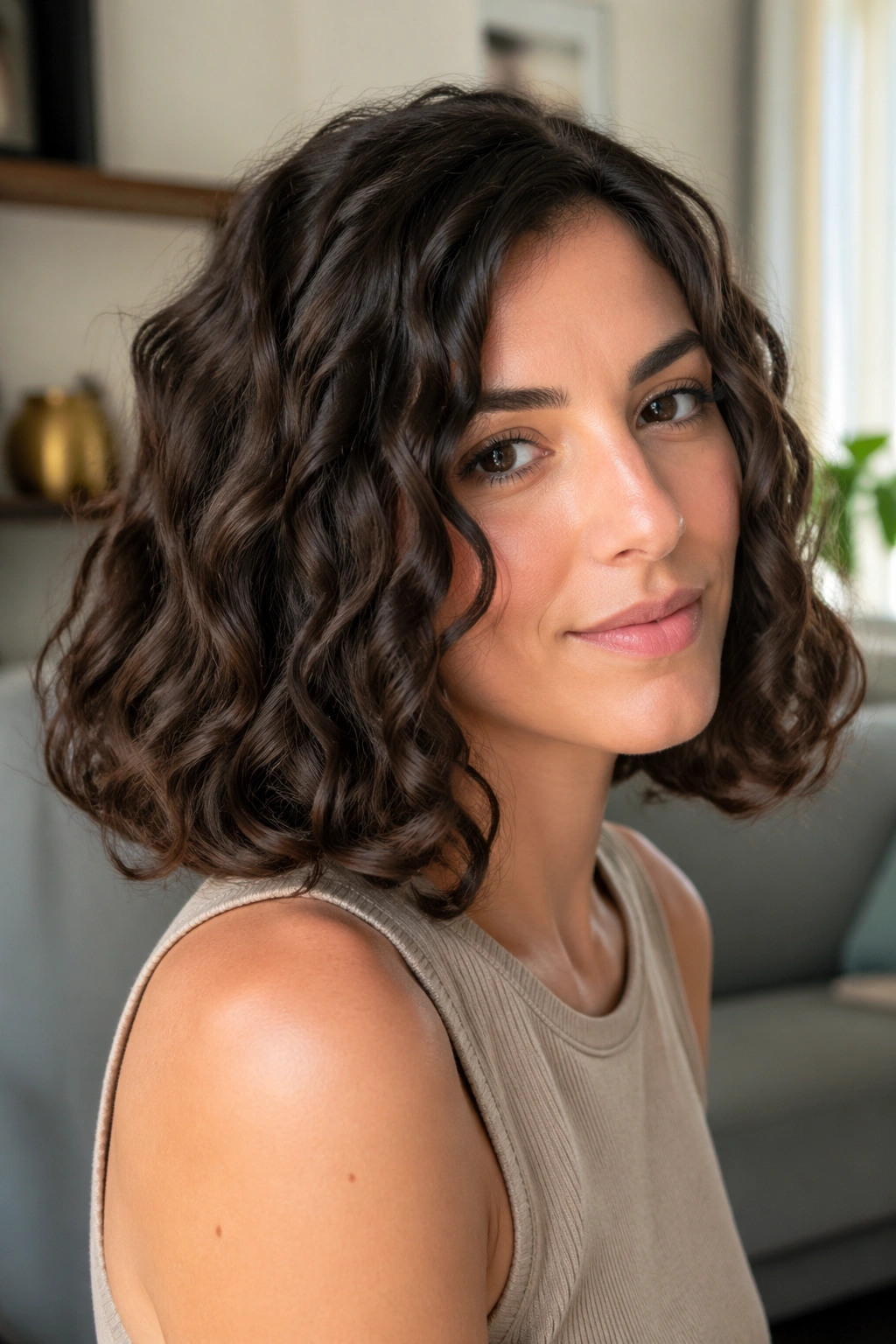
A blunt long curly bob is the sharpest-looking option on this list, and that’s exactly why it works. When curls are dense and healthy, a clean perimeter gives them something solid to sit on. The cut reads fuller, not flatter, because the eye sees one strong line instead of a lot of broken edges.
The trick is restraint. Too many layers can make the shape fray out at the bottom, which is the last thing you want if you already have a lot of curl. A blunt edge keeps the length feeling intentional, especially on tighter 2C to 3B textures that need weight to settle. On finer curls, though, a blunt line can expose weak spots at the ends, so density matters.
This is one of those cuts that looks even better when the finish is simple. A little leave-in, a medium-hold gel, and a diffuser can be enough. You do not need a pile of products. You need the ends trimmed straight and the perimeter kept tidy.
The blunt version is a good pick if you want your curls to look full from every angle and you like a bob with a bit of shape discipline.
3. Deep Side Part Curly Bob with Built-In Lift

Why does a deep side part change a curly bob so much? Because curls are lazy in the best possible way. They follow gravity, and a side part gives them a new direction to fight against. That creates lift at the roots, which is handy when one side of your curl pattern falls flatter than the other.
This shape is a gift for anyone whose hair gets stuck in the middle-part rut. A deep side part adds movement without forcing a dramatic cut, and it can make the same length look fresh in five seconds. The larger side gets more weight and softness, while the smaller side lifts up and frames the face in a sharper way.
How to Style It
Set the part while the hair is wet. If you wait until it dries, the roots will already have chosen a direction, and changing them later takes more work than it should.
Use a root clip at the heavier side of the part while diffusing. That little bit of root training gives you lift without teasing the hair.
If your curls collapse by noon, this is one of the easiest fixes. The style gives you shape where you need it and keeps the rest of the bob relaxed. No drama. Just a better silhouette.
4. Shaggy Long Curly Bob with Choppy Layers
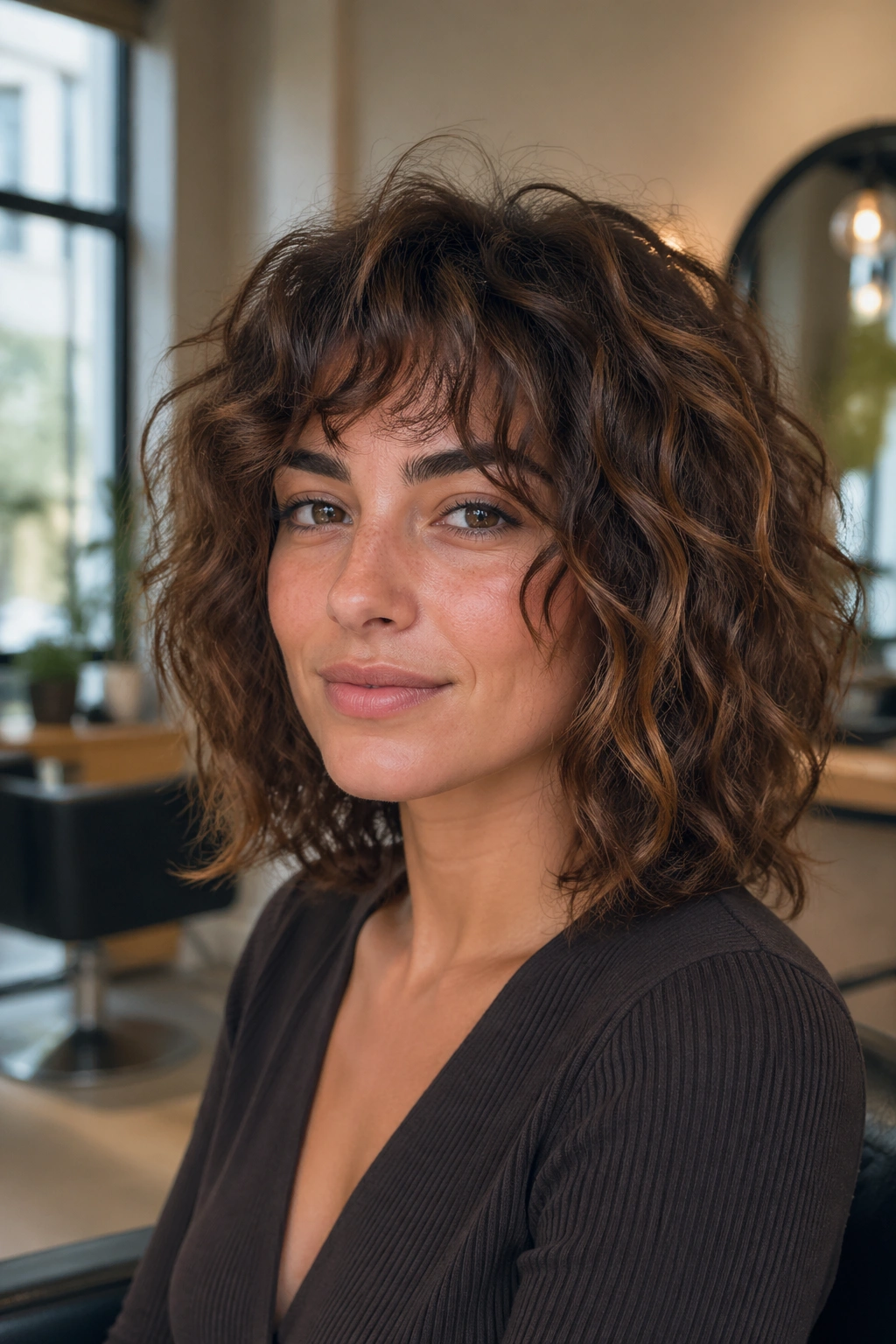
Picture a bob that never sits still. That’s the shaggy version, and it has a lot of charm when the layers are cut to encourage movement instead of symmetry. Choppy layers break up bulk, so the curls fall in pieces instead of one heavy block. The result feels loose and a little rebellious, which is exactly why people keep asking for it.
This cut is especially good on thick 3A to 3C curls that want to balloon outward if left alone. The choppier shape pulls some of that volume back into the interior, so the silhouette gets air between the curls. It is not a tidy haircut. That’s the point.
- Best on hair that already has texture and density.
- Works well with mousse or foam, not heavy cream.
- Needs a stylist who knows how to cut curly hair dry.
- Looks better when it is a little imperfect.
If you want a bob that feels more lived-in than polished, this is the one to try. It has enough edge to feel modern, but it never looks overworked.
5. Rounded Curly Bob with Crown Volume
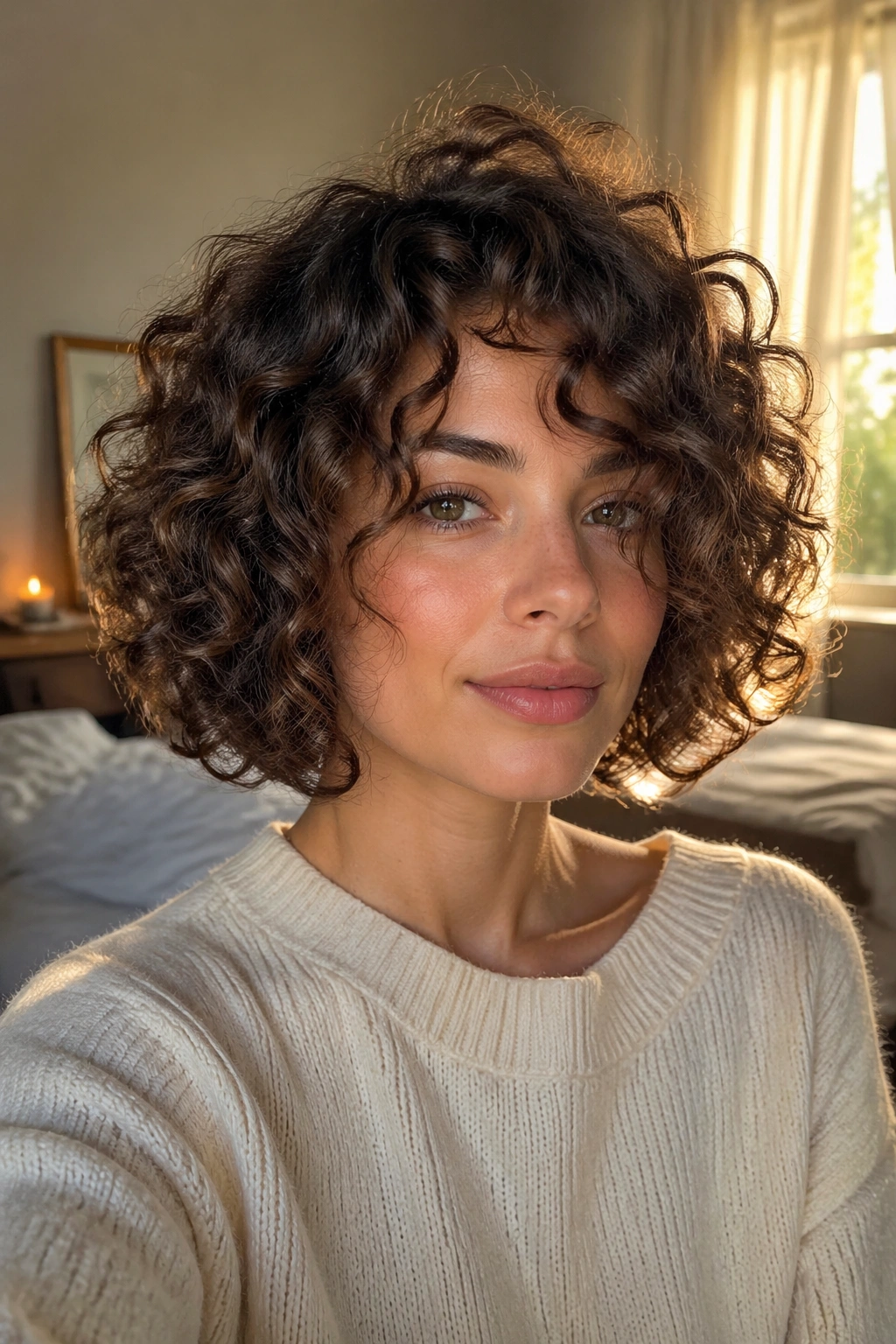
Rounded curly bobs are underrated. People worry they will look too “helmet-like,” but that only happens when the crown is cut wrong. A good rounded shape follows the natural curve of the head and lets the top lift just enough so the curls don’t collapse inward. The result is soft, balanced, and a little flattering from every side.
This cut is a smart answer to the triangle problem. If your curls widen at the bottom and flatten at the top, a rounded bob brings the whole shape back into balance. The stylist should keep more fullness through the crown and the upper sides, then let the lower section taper gently. That keeps the hair from spreading out like a fan.
The shape needs height at the top. Without it, the whole thing loses energy. I like this cut on medium-density curls because it keeps them from looking heavy, but it also works on finer textures that need a bit of lift without harsh layering.
A rounded bob is the cut I’d choose if I wanted the silhouette to feel soft and neat at the same time.
6. Collarbone-Length Curly Bob with Long Bangs
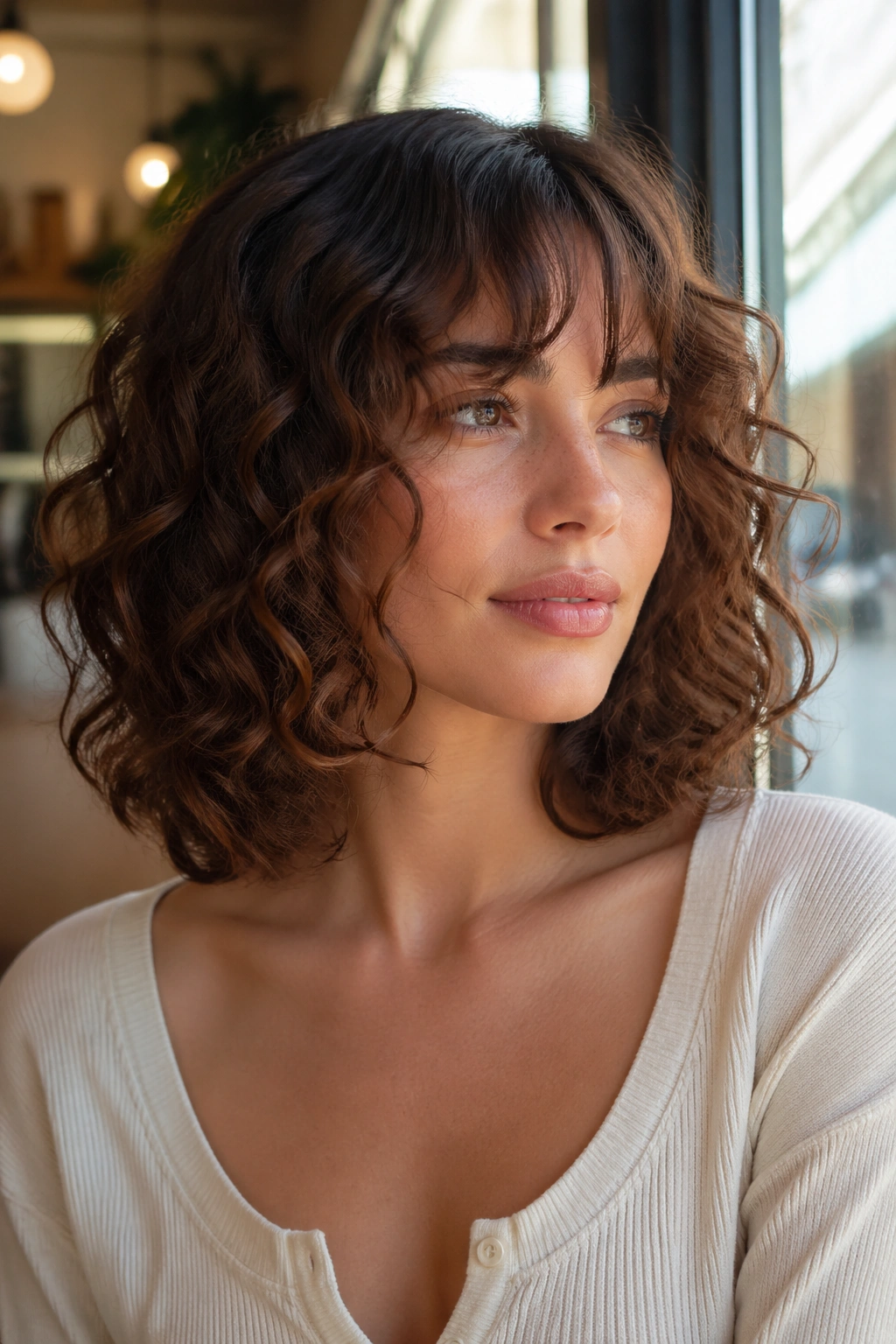
Unlike a short fringe, long bangs on a curly bob don’t lock you into one look. They can split naturally, brush to the sides, or curl right into the rest of the haircut. That makes them a smart move if you want face coverage without the maintenance drama that comes with shorter bangs.
Collarbone length is the sweet spot here. It gives the bangs room to blend, and it keeps the overall shape from feeling too short when the curls spring up. The bangs themselves should be cut longer than you think you need. Curly fringe shrinks. Sometimes more than expected. If the stylist forgets that, the bangs can end up sitting high on the forehead and refusing to cooperate.
This style flatters longer faces, but it also helps soften strong jawlines because the bangs draw the eye inward. The best part is how easy it grows out. A long bang can turn into a face-framing layer with almost no awkward stage.
If you like the idea of bangs but hate the idea of constant trimming, this is the one.
7. A-Line Curly Bob with a Gentle Angle
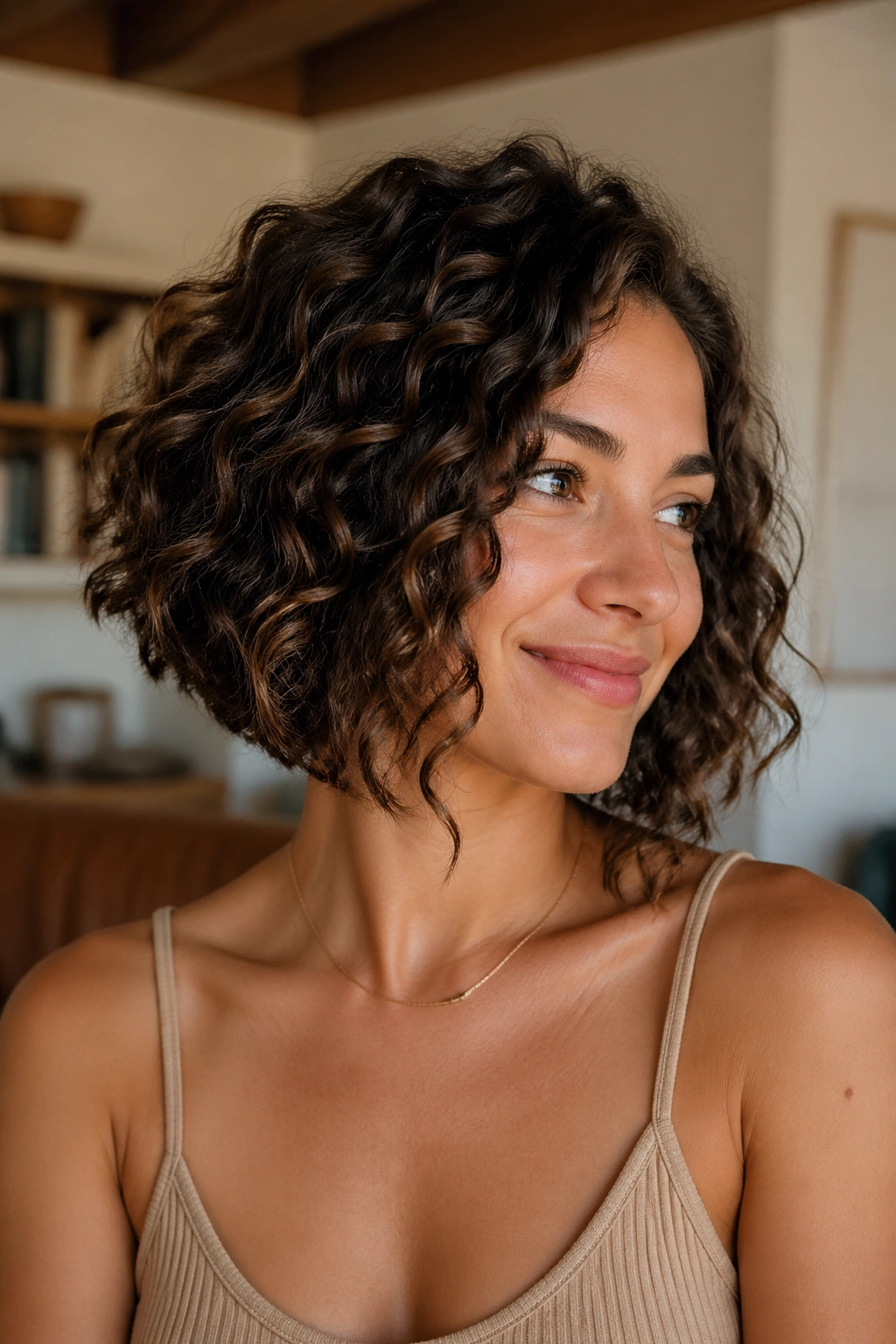
An A-line curly bob is for people who want shape without shouting about it. The back sits a little shorter, the front stays a little longer, and the line between them gives the haircut a quiet slope that feels neat but not severe. On curls, that angle adds movement because the front pieces get to swing forward while the back stays lifted.
This is one of the better cuts for hair that goes flat at the nape. A slight angle keeps the back from dragging the whole style down. It also helps curls sit away from the neck, which can be useful if your hair gets puffy when it touches your collar. A gentle A-line is easier to live with than a dramatic one. The dramatic version can feel sharp fast.
- Keep the front only 1 to 2 inches longer than the back if you want a soft look.
- Ask for the angle to be visible only when the hair moves.
- Pair it with long layers, not chopped-up interior layers.
- Diffuse the back first so the shape sets cleanly.
This cut works best when the angle is felt more than seen.
8. Curly Bob with Curtain Bangs
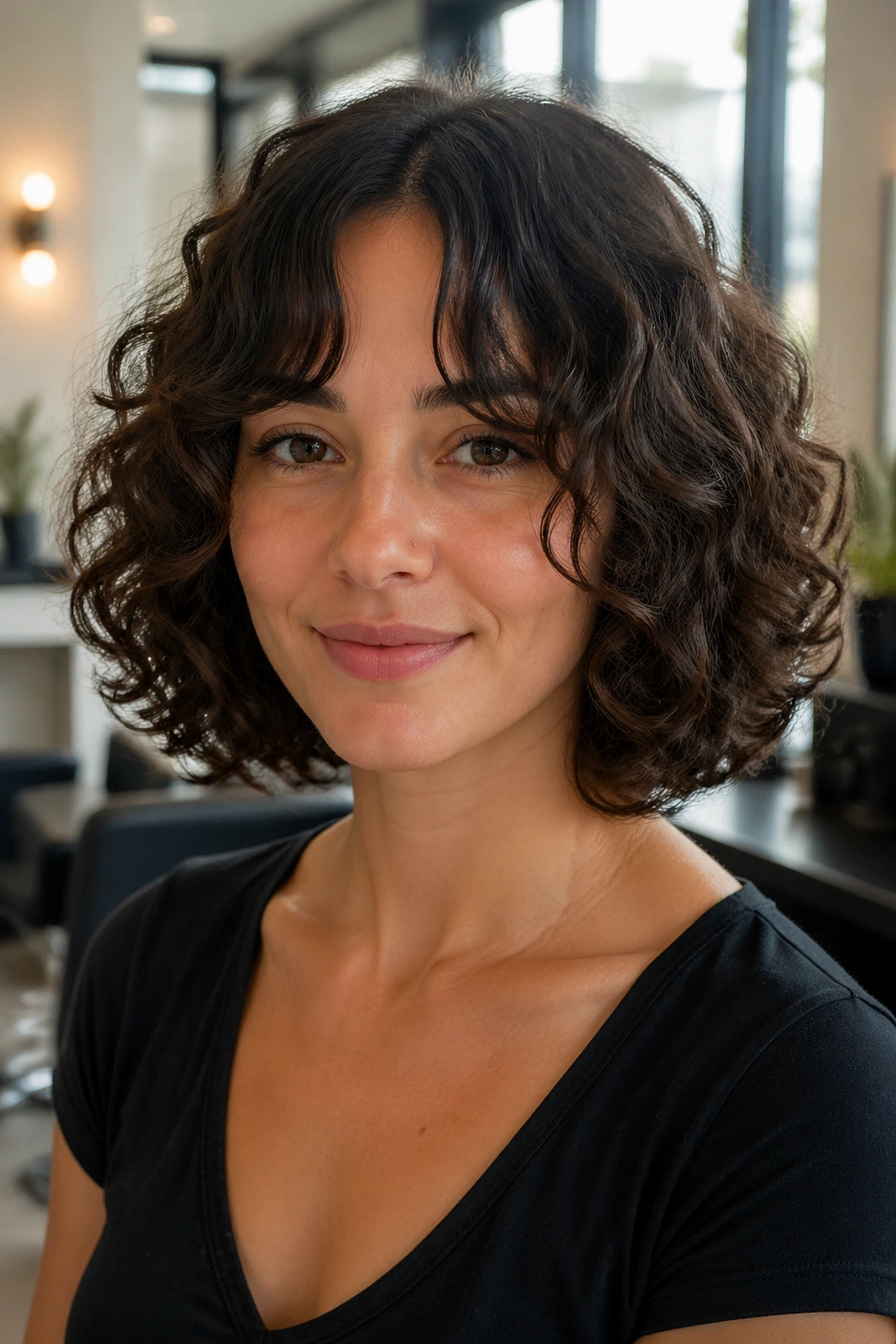
Curtain bangs may be the safest fringe for curly hair. They part naturally, they soften the face without boxing it in, and they can be tucked, pinned, or left to fall where they want. That flexibility matters. Curly bangs that need perfect behavior tend to get annoying fast.
The cut works best when the curtain pieces are left long enough to blend into the sides of the bob. Think cheekbone to lip length, not eyebrow-grazing micro bangs. The longer version gives the curls a chance to fall into a shape that looks deliberate instead of clipped on. If your hair has a strong curl pattern, the stylist should dry-cut those front pieces or at least re-check them once they spring up.
Curtain bangs also help if your face shape needs a little softness around the temples. They pull attention upward and inward without taking over the haircut. On days when the bangs misbehave, a side pin or a quick twist can fix the problem in seconds.
If you want fringe without commitment anxiety, this is a very safe place to start.
9. Tapered Long Curly Bob for Thick Curls
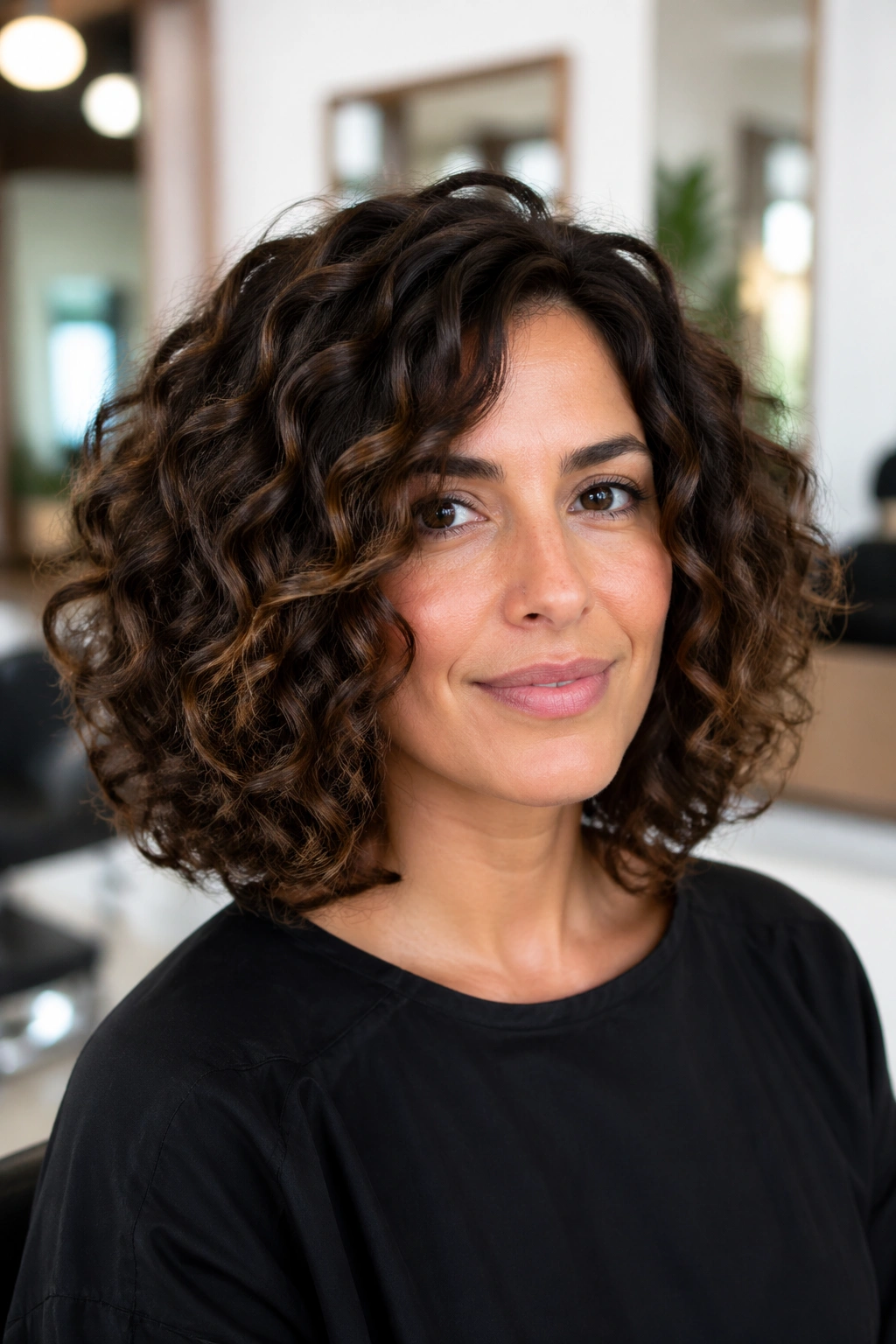
What do you do when your curls are gorgeous but too much hair? You taper the shape instead of hacking at the ends. A tapered long curly bob removes bulk where it causes the most trouble, usually through the interior and around the sides, while keeping the perimeter full enough to look like a bob. That balance is the whole trick.
What to Ask For
- Long internal layers that remove weight without chopping the outline.
- A full bottom edge so the haircut still reads as a bob.
- Dry cutting, or at least a dry check before the final trim.
- No aggressive razor work unless the hair can handle it.
A tapered shape is useful for thick 3B to 4A curls that swell in humidity or get hot around the neck. It can make the hair easier to air-dry, easier to diffuse, and less likely to puff into a round wall. That said, you need a stylist who knows the difference between removing bulk and thinning the life out of the curl.
The best tapered cuts still look rich at the ends. They just breathe better.
10. Inverted Curly Bob with Lift in the Back
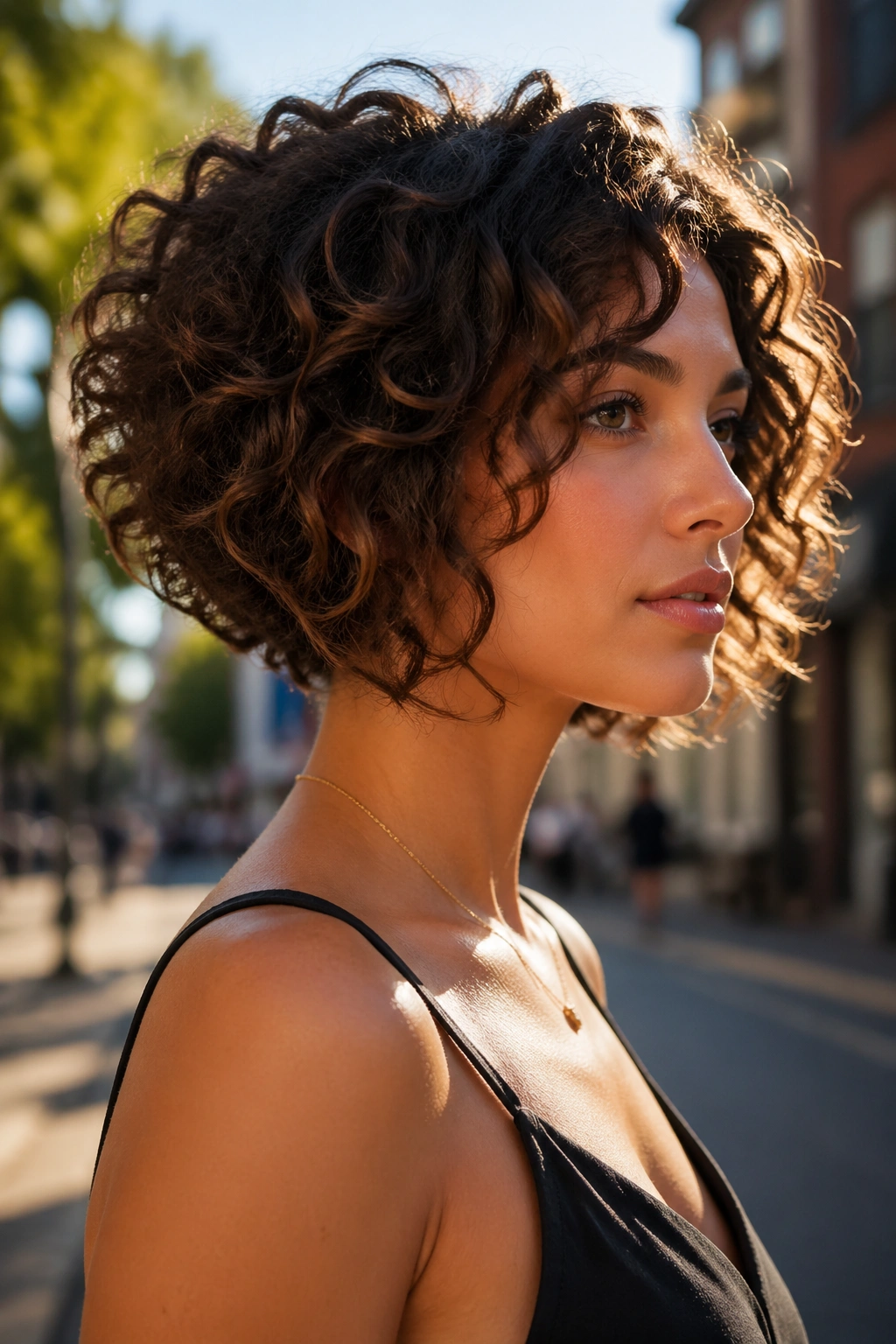
When the back of a curly cut collapses, the whole style can lose shape by lunchtime. An inverted bob fixes that with a stronger angle than an A-line. The back sits shorter and higher, while the front stays longer and softer. On curls, that creates lift at the nape and keeps the silhouette from feeling too heavy in one place.
This shape suits dense curls that need help holding a profile. It also works well if you like a little structure around the neck and jaw. The back should not be cut so short that it turns into a stack you have to hide. A mild inversion is usually smarter. Too much angle can look dated fast, and curly hair already has enough personality without forcing it into a hard shape.
One detail matters here: the back should be shaped dry, or at least checked dry, because curls at the nape shrink differently than the front pieces. If the nape is cut too high, the haircut can jump up and expose too much neck.
This is a strong choice if you want polish and lift in one move.
11. Shoulder-Skimming Bob with Invisible Layers
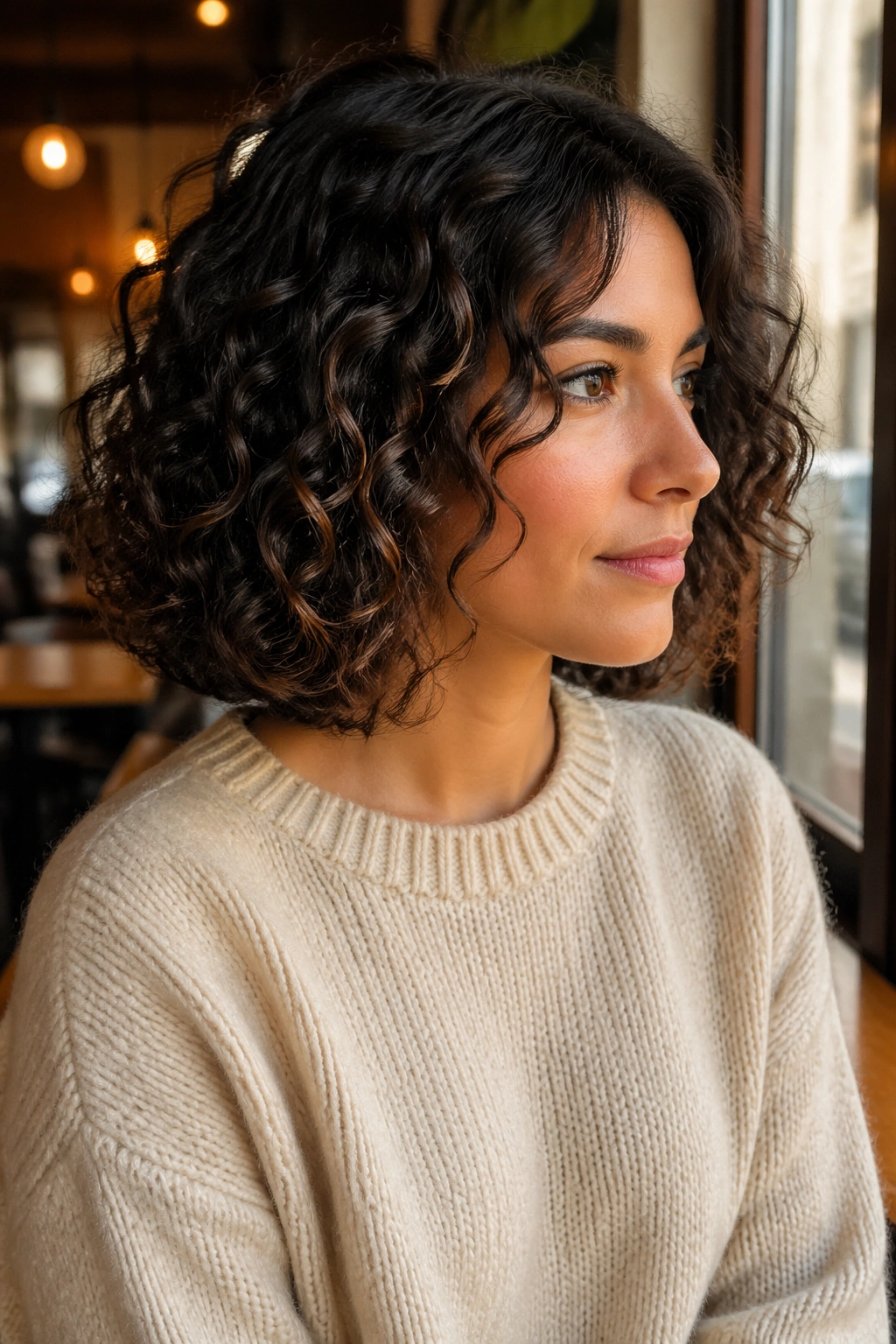
Invisible layers are the quiet overachiever of curly bobs. They do the work without advertising it. From the outside, the cut looks smooth and fairly simple. Inside the shape, the weight is moved around so the curls can sit better, bounce better, and dry with less bulk at the ends.
A shoulder-skimming length is useful because it gives the curls enough room to stretch without dragging the whole style down. It also lets you clip the top half back, which is one of those tiny real-life details that matters more than salon photos suggest. If your hair gets frizzy when it rubs on sweaters or jacket collars, this length helps reduce that friction.
I like this cut for people who want a low-drama shape they can wear to work, on weekends, and while growing out a previous cut. It does not scream for attention. It just looks neat and well-shaped.
The magic is in the inside of the cut, not the outline. That’s what keeps it from feeling heavy.
12. Tousled Curly Bob with a Hidden Undercut
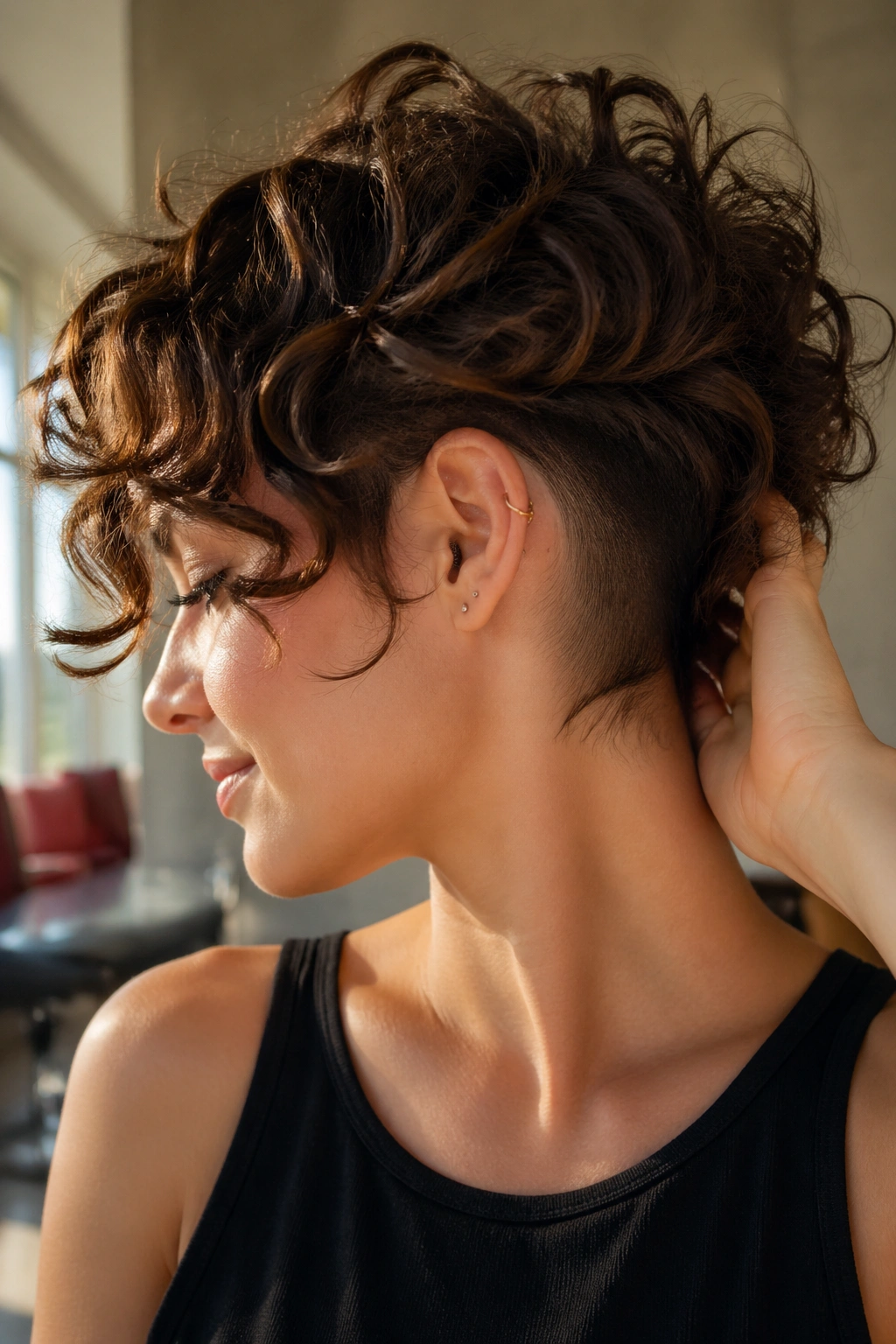
Unlike heavy layering, a hidden undercut removes bulk where nobody sees it. That can be a lifesaver for very dense curls, especially if the underside of your hair turns puffy around the nape or behind the ears. A subtle undercut trims away a small section under the surface, so the top layer can fall with more ease.
This cut is not for everyone, and that’s fine. If you love pulling your hair into a full ponytail every day, you may not want the underneath section missing weight. But if you’re tired of the back expanding like a cloud, a hidden undercut can make the whole bob feel lighter without changing the visible shape much.
Ask for a small strip at the nape or a narrow section behind each ear. Keep it conservative. A half-inch to one inch of removal is often enough to make a difference without exposing the undercut when the hair moves. And yes, it can reduce drying time a bit too, which is one of those boring benefits that turns out to matter a lot.
This is a practical cut, plain and simple.
13. Retro Curly Bob with Side-Swept Fringe
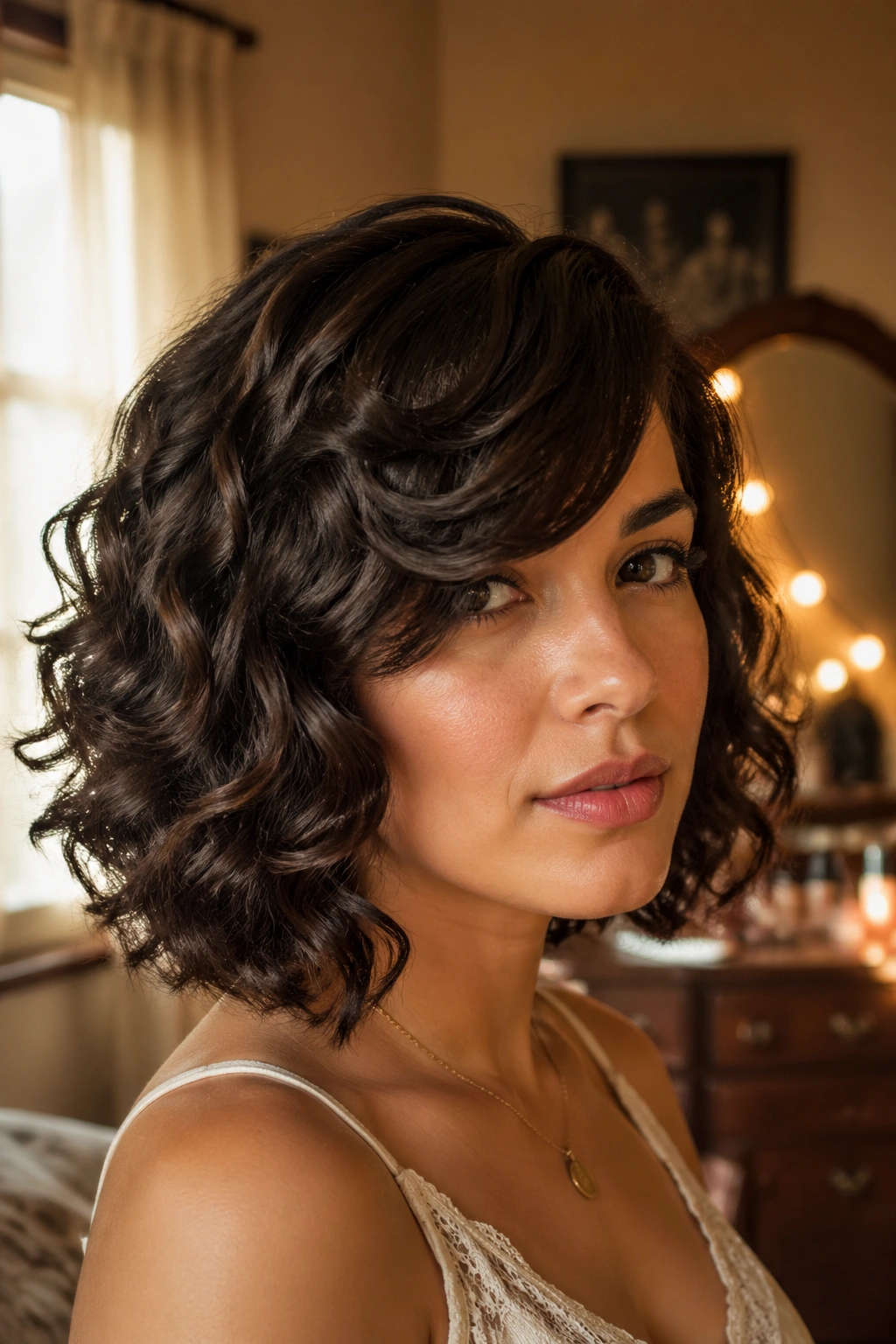
A side-swept fringe gives a curly bob a little old-school polish, but not in a stiff way. It softens the forehead, pulls the eye across the face, and adds a bit of drama without requiring a full fringe maintenance schedule. On curls, the side sweep usually behaves better than a straight-across bang because it has room to collapse naturally into the cut.
How to Keep the Shape Soft
Ask the stylist to leave the fringe long enough to reach the cheekbone when stretched. That extra length keeps the curls from jumping too high once they dry. Then shape the rest of the bob with a gentle curve that follows the jaw and neck. You want the fringe to feel connected, not pasted on.
This cut suits people who like a little vintage energy in their hair — the kind of shape that looks good with a lip color and not much else. It also plays well with deeper side parts and glossy styling products. A small amount of gel at the front can help the fringe stay together instead of splitting into tiny springs.
If curtain bangs feel too soft for you, this is the stronger, slightly more styled cousin.
14. Wet-Look Curly Bob with Glossy Definition
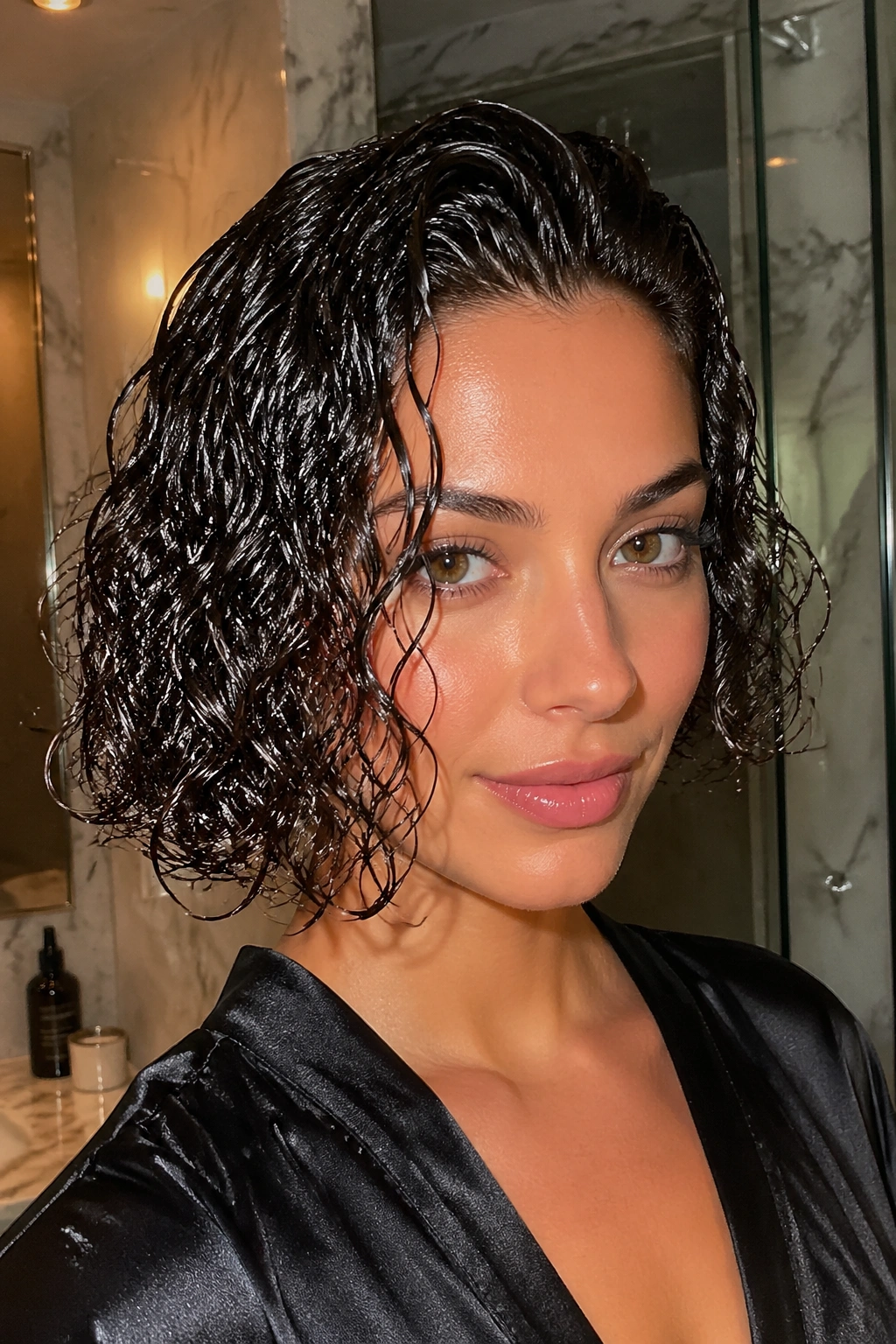
A wet-look curly bob is the easiest way to make definition beat frizz. The style starts on soaking-wet hair with strong-hold gel, then gets left alone until the cast forms. That cast is what holds the curl pattern together and gives the hair that sleek, defined finish without turning it into a crunchy helmet.
This look works best when the cut itself is already clean. If the bob has a good outline, the wet finish makes the shape look deliberate instead of overstyled. It’s a smart option for events, humid weather, or any day when your curls refuse to settle. The key is product placement. Apply the gel evenly from roots to ends, rake it through, and then scrunch once. No endless touching. That only breaks the curl clumps apart.
Be honest about the tradeoff, though. Wet looks can feel heavy if you hate product. They also need a proper wash to avoid buildup on the scalp and ends. So this is not a carefree everyday look for everyone.
Still, when it’s done well, it has a sharp, glossy finish that stands out fast.
15. Softly Tapered Long Curly Bob for Easy Grow-Out
If you want a cut that forgives a missed appointment, this is it. A softly tapered long curly bob keeps the length near the collarbone, eases some weight out of the sides, and leaves enough softness at the ends that the shape stays useful as it grows. It is the haircut I’d hand to someone who wants structure but does not want to babysit every inch of it.
The taper should be gentle. No hard corners. No chunky layers that look great for one week and then wander off in different directions. The best version keeps the silhouette relaxed, which helps if your curl pattern changes from one section to another. Mixed textures can benefit from that kind of softness because the cut doesn’t force every curl to behave the same way.
It also works if you like to tie your hair back sometimes. The longer length is still there, which makes clips, half-up styles, and low buns possible without fighting the shape. That sounds small, but it changes how wearable the haircut feels day to day.
If you are torn between too much shape and too much maintenance, start here.
A good curly bob should move when you shake it once and settle back into place without needing a rescue mission. That is the real test. Bring photos, yes, but bring a clear opinion too: how much length you want to keep, where you want the curls to sit, and whether you’d rather have polish or looseness. That one conversation saves a lot of awkward grow-out later.
