



An afro can change a face faster than contour ever could. A little more height at the crown lengthens a round face. A little more width at the cheeks softens a long one. The trick is not chasing one perfect cut; it’s choosing a shape that works with your bone structure instead of fighting it.
That sounds simple until shrinkage walks in and steals half the silhouette. Coily hair can look full and airy when stretched, then tighten up after it dries, which is why the outline matters as much as the texture. A fluffy wash-and-go, a shaped fro, and a tapered cut may all use the same hair, but they do not read the same on the face.
Oval faces have the easiest time here. Round faces usually want some height or a side sweep. Square jaws often look better with softness around the temples, and heart-shaped faces usually welcome fullness near the jawline.
The styles below cover those shapes from several angles — short, tall, rounded, sharp, and face-framing. Some are low-maintenance. Some ask for a steady hand and a good trim. All of them can look sharp when the proportions are right, and that’s the part most people miss.
1. Rounded Afro for Softening a Strong Jawline
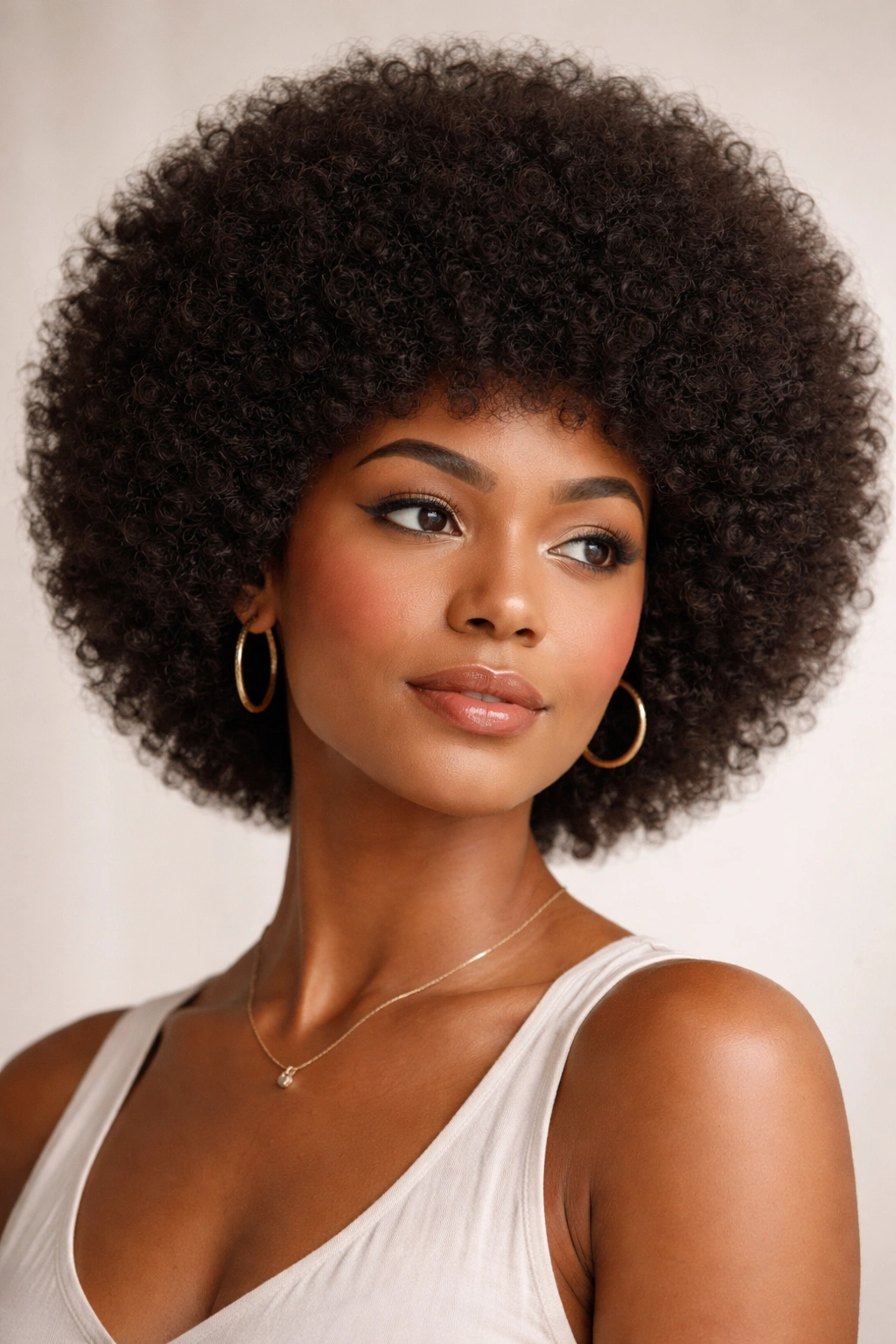
A rounded afro is the calmest place to start when a face needs softness more than drama. It keeps the outline circular, so the eye moves around the shape instead of stopping at the jaw or temples.
That matters most for square and heart-shaped faces. A rounded edge can blur hard angles, while a gently full side line gives the cheeks more presence. On long faces, the same shape can work if you keep enough width near the ears and do not let all the lift sit on top.
Frizz is not the enemy here.
A good rounded afro looks better when the edge is soft, not carved into a hard dome. Ask for a shape that follows the head line, then keep the root lifted with a pick or a wide-tooth comb and leave the perimeter alone except for light shaping. If your hair is fine, go easy on heavy creams. They can flatten the curve and make the style lose its airy feel by midday.
2. Tapered Afro with Extra Height at the Crown
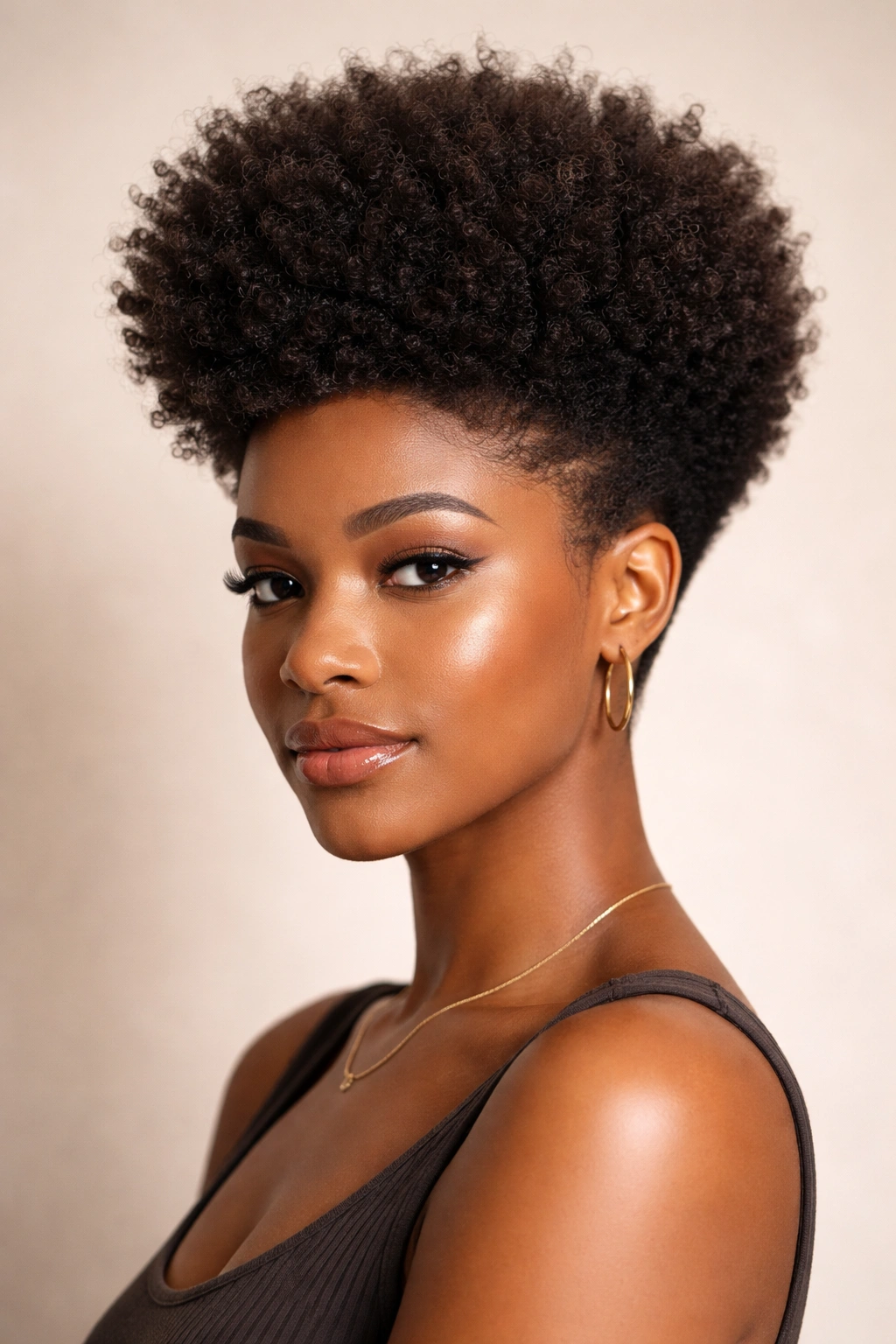
If a face needs length, a tapered afro does it fast.
Why the taper works
The sides and nape stay close, so the eye gets pulled upward. That makes this cut a smart choice for round faces, broad cheeks, and even some square jawlines that need a little vertical balance. The top still feels like an afro, but the outline is cleaner and more tailored.
What to ask for
- Keep 1 to 2 inches more height at the crown than at the sides.
- Soften the temple line instead of shaving it blunt.
- Leave enough fullness above the ears so the cut still reads as a fro.
How to wear it well
A taper can look severe if the fade goes too high or the top is cut too tight. That is the mistake. You want shape, not a scalp reveal with curls sitting on top like a cap. A light styling cream or mousse will keep the top defined, and a trim every few weeks keeps the taper from growing fuzzy around the edges.
3. Deep Side-Part Afro That Breaks Up Symmetry
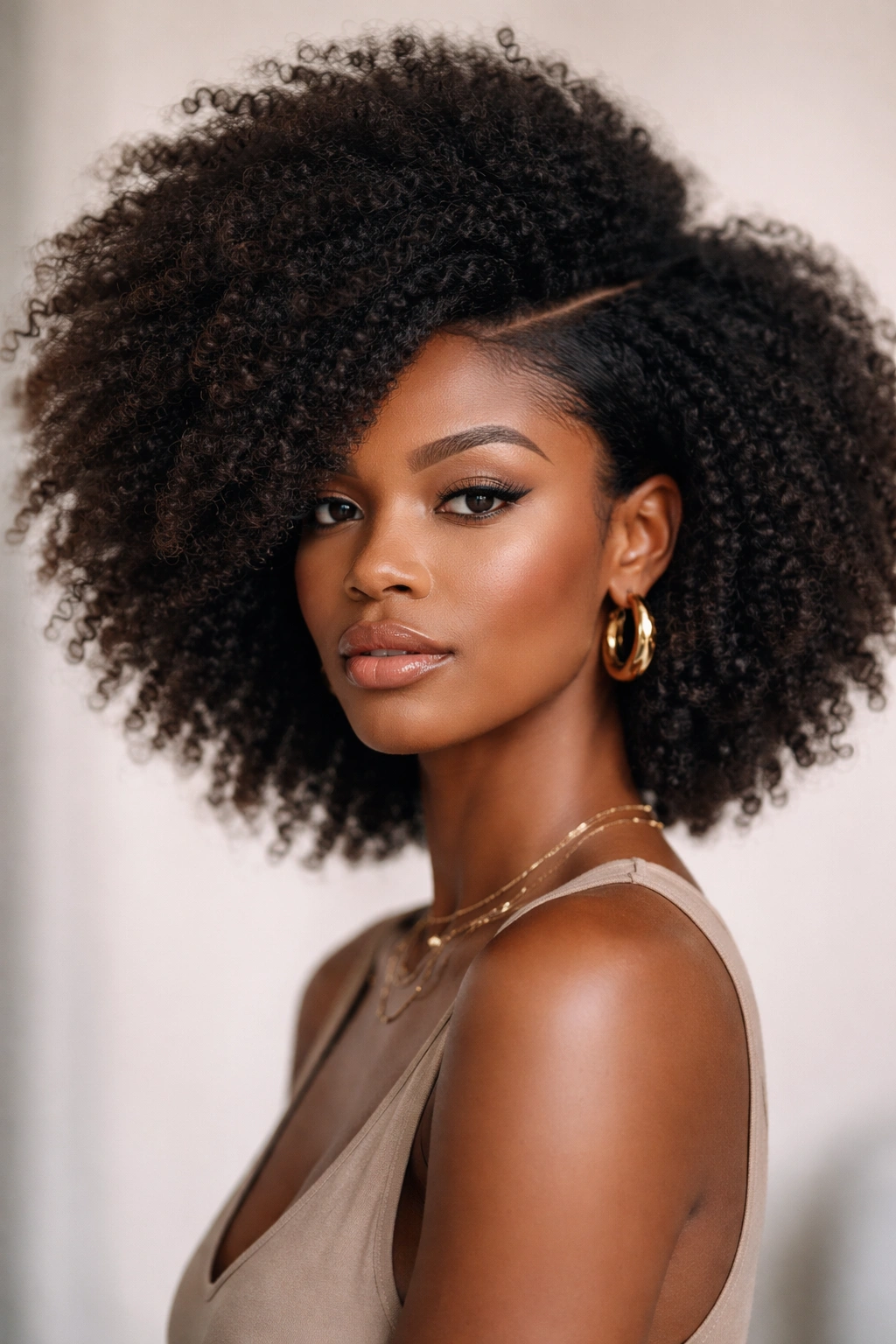
Why does a deep side part change an afro so much? Because it breaks the face into diagonals instead of straight lines.
A center part can be gorgeous, but it puts all the visual weight down the middle. A deep side part shifts the hairline and gives one side more height, which helps round faces look less circular and square faces look less rigid. It also gives narrow foreheads a little breathing room. That small move changes the whole read of the style.
Use a rat-tail comb on damp hair and set the part before your curls dry. If your hair resists parts, stretch the roots first with a twist-out or braid-out, then define the part after it cools. That keeps the line from disappearing under shrinkage.
This one is underrated on purpose. It looks simple, but it saves a style from feeling flat.
A side-part afro also plays well with earrings, glasses, and strong brows, because the hair is not sitting evenly on both sides of the face. The asymmetry gives your features room to show.
4. High Puff That Lifts the Whole Profile
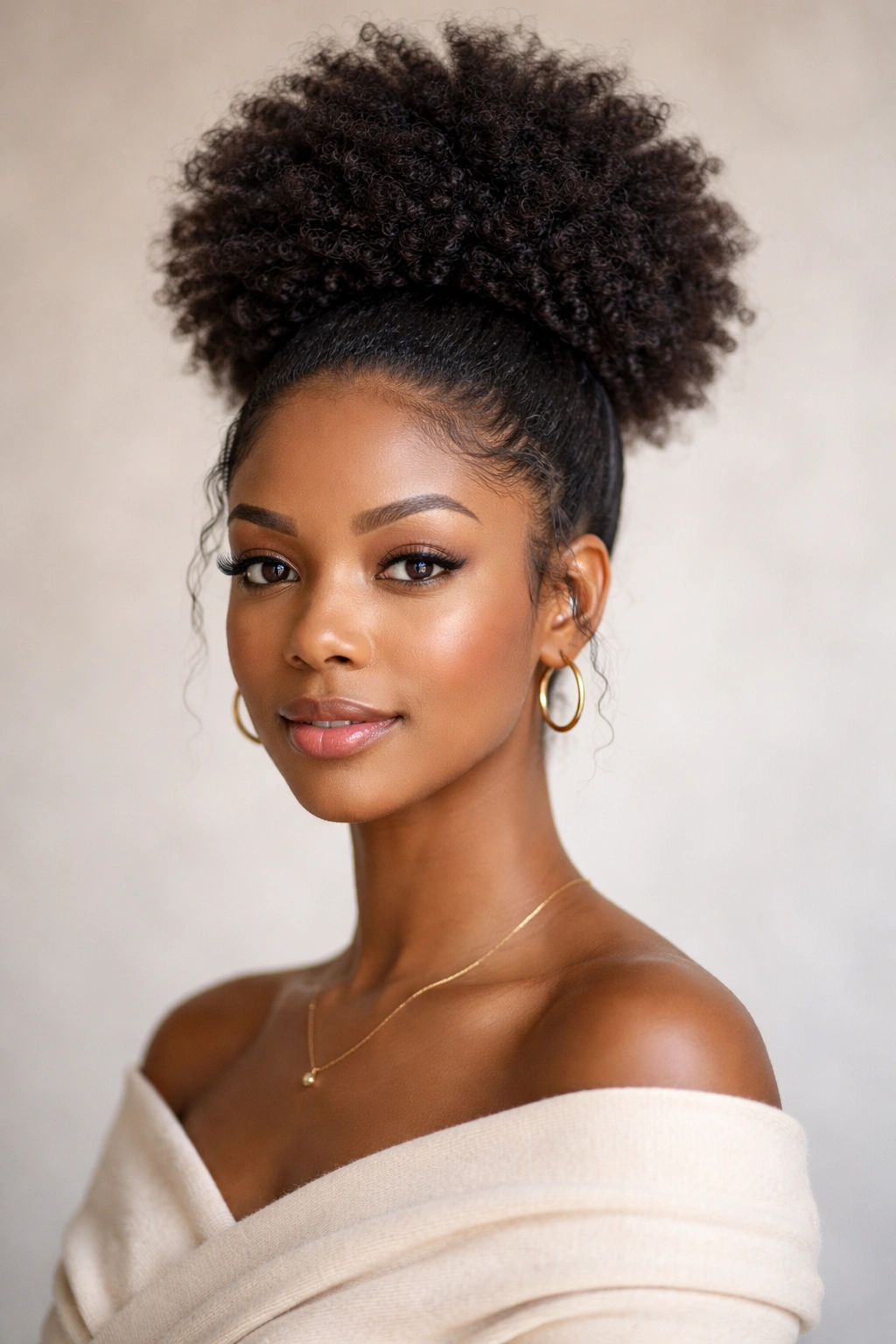
If your morning is five minutes and a scarf, the high puff earns its keep.
You gather the hair at the crown, smooth the sides, and suddenly the face looks longer and more open. Round faces get lift. Square faces get a little air around the jaw. Heart-shaped faces like it because the fullness sits away from the forehead instead of crowding it.
Tension is the enemy.
Do not yank the puff so tight that the front hairline looks strained by lunchtime. A satin scrunchie or stretchy band gives a better hold than a thin elastic, and it is kinder to edges. If the puff keeps sliding, the hair may need a touch more moisture at the roots or a better base texture, like a stretched twist-out before you gather it up.
A high puff works best when the front is smooth but not slicked to death. Leave a little softness around the temples. That keeps the style from looking severe, and it makes the puff feel like part of the face rather than a separate object perched on top of it.
5. Short TWA with Defined Coils
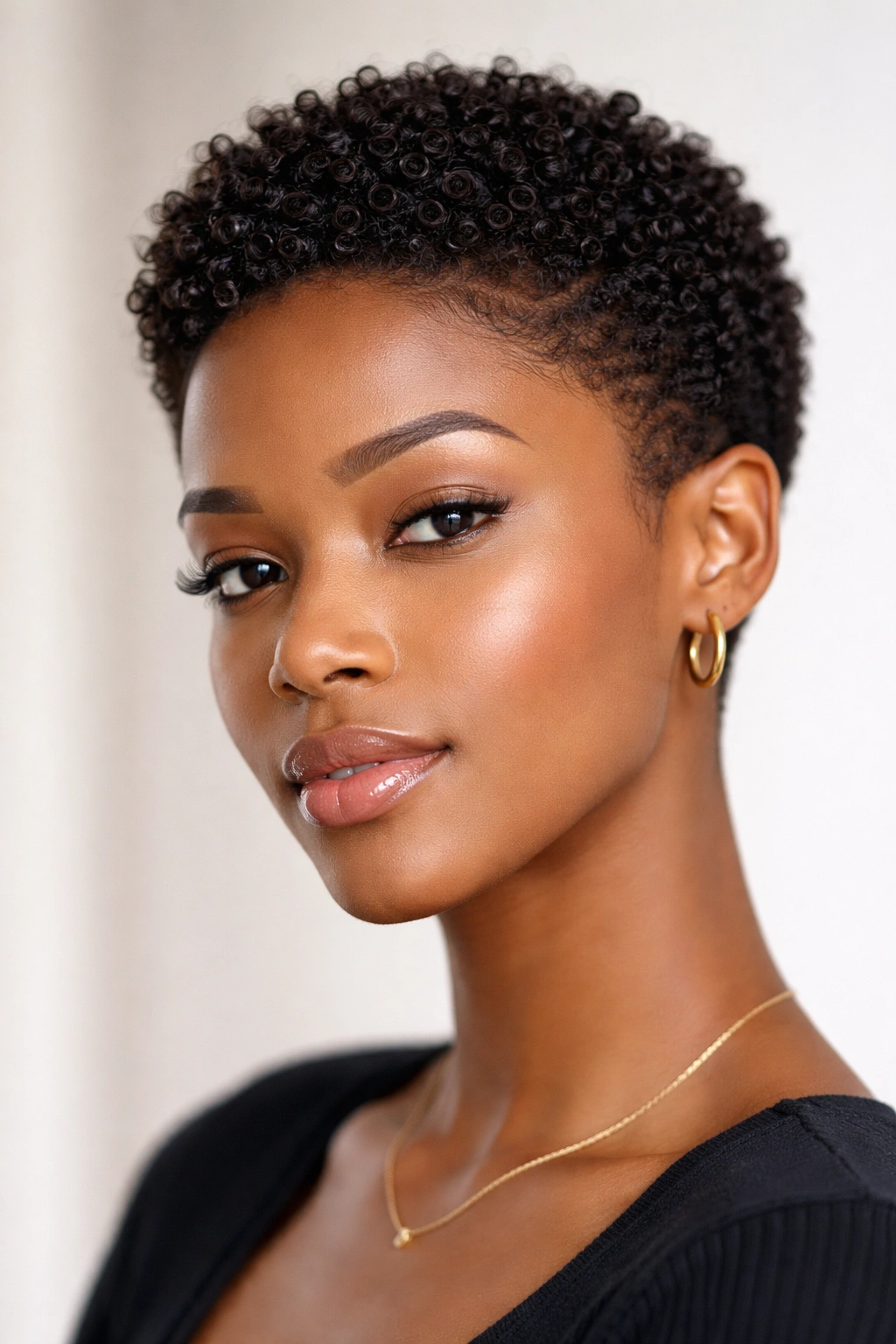
A TWA — teeny weeny afro — can be more sculpted than a longer style. Small coils put the face front and center, which is why this cut looks so good on people with strong eyes, clean brows, or sharp cheekbones.
Why it flatters
Oval and diamond faces do well here because the shape stays close to the head and does not steal width from the jawline. It also suits petite features, since the hair does not overwhelm the face. If your face is broad, a TWA can still work, but you’ll want soft edges and a little lift at the top so the cut does not feel boxy.
How to style it
- Use a light curl cream or leave-in on damp hair.
- Define coils with fingers, a sponge, or small finger coils.
- Keep the shape neat at the temples and nape.
- Trim every 4 to 6 weeks if you want the outline to stay crisp.
A TWA is a good reminder that length is not the same thing as impact. Tiny curls can carry a face if the line is clean and the shine is there. Too much product is the one thing that ruins it fast; it turns delicate coils into dull little clumps.
6. Layered Afro That Adds Width at the Cheeks
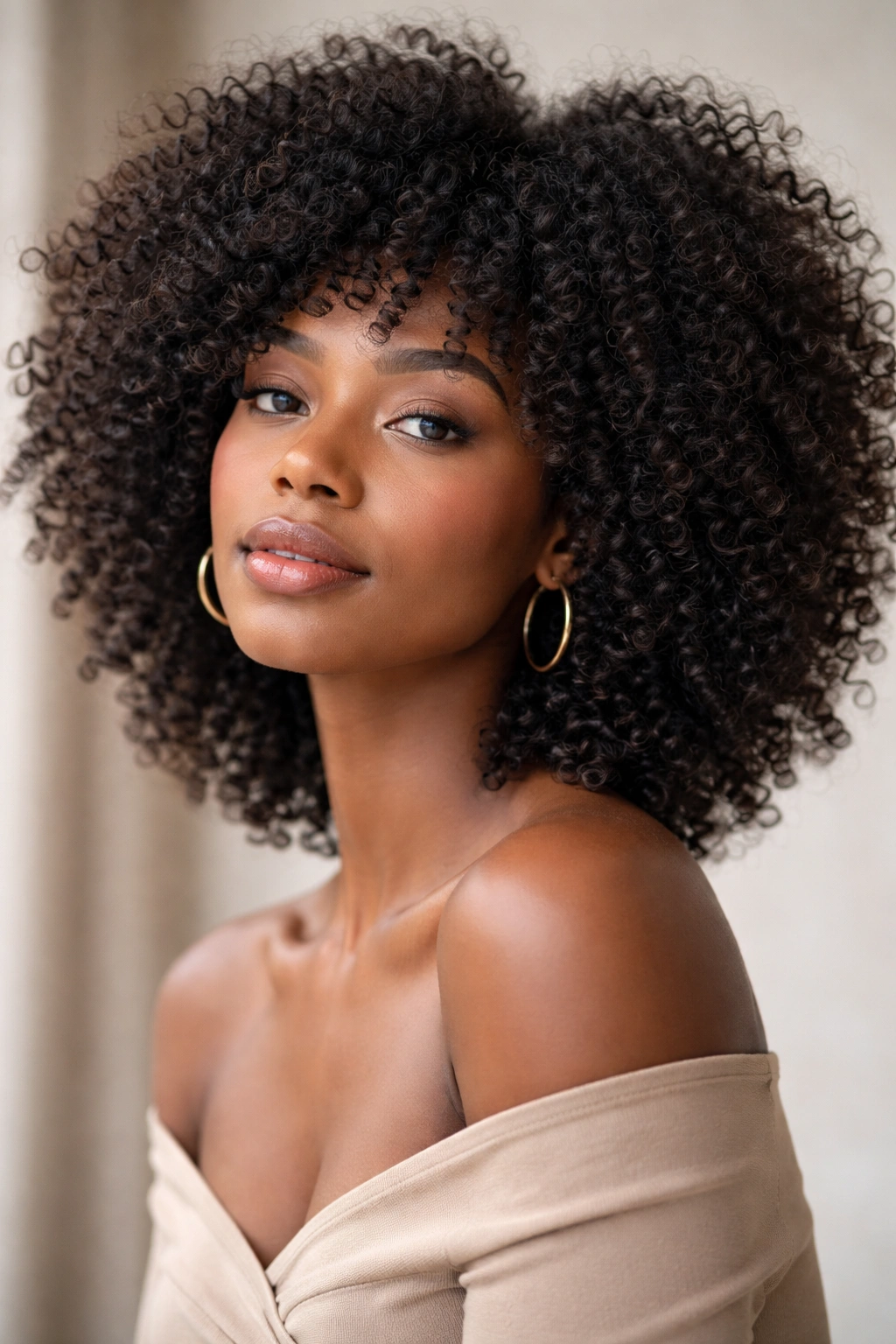
Not every afro needs to grow straight out from the head.
A layered afro adds movement and prevents that bottom-heavy triangle shape some curl patterns fall into. That matters most for long and oblong faces, because width near the cheeks makes the face feel more balanced. It also helps narrow chins look less pinched.
Triangle shape is the trap.
If all the bulk sits at the ends, the face can look longer, not fuller. Layers solve that by shifting some volume upward and outward. A stylist who cuts curls in a stretched state can place the weight more carefully, which matters a lot with shrinkage. A dry cut can help too, because you can see where the curls live instead of guessing.
This style looks especially good when the layers are not obvious from far away. You want motion, not choppy steps. The best layered afros move when you turn your head. That little swing around the cheeks is what softens a long face and keeps dense hair from feeling too heavy.
7. Frohawk with Tapered Sides
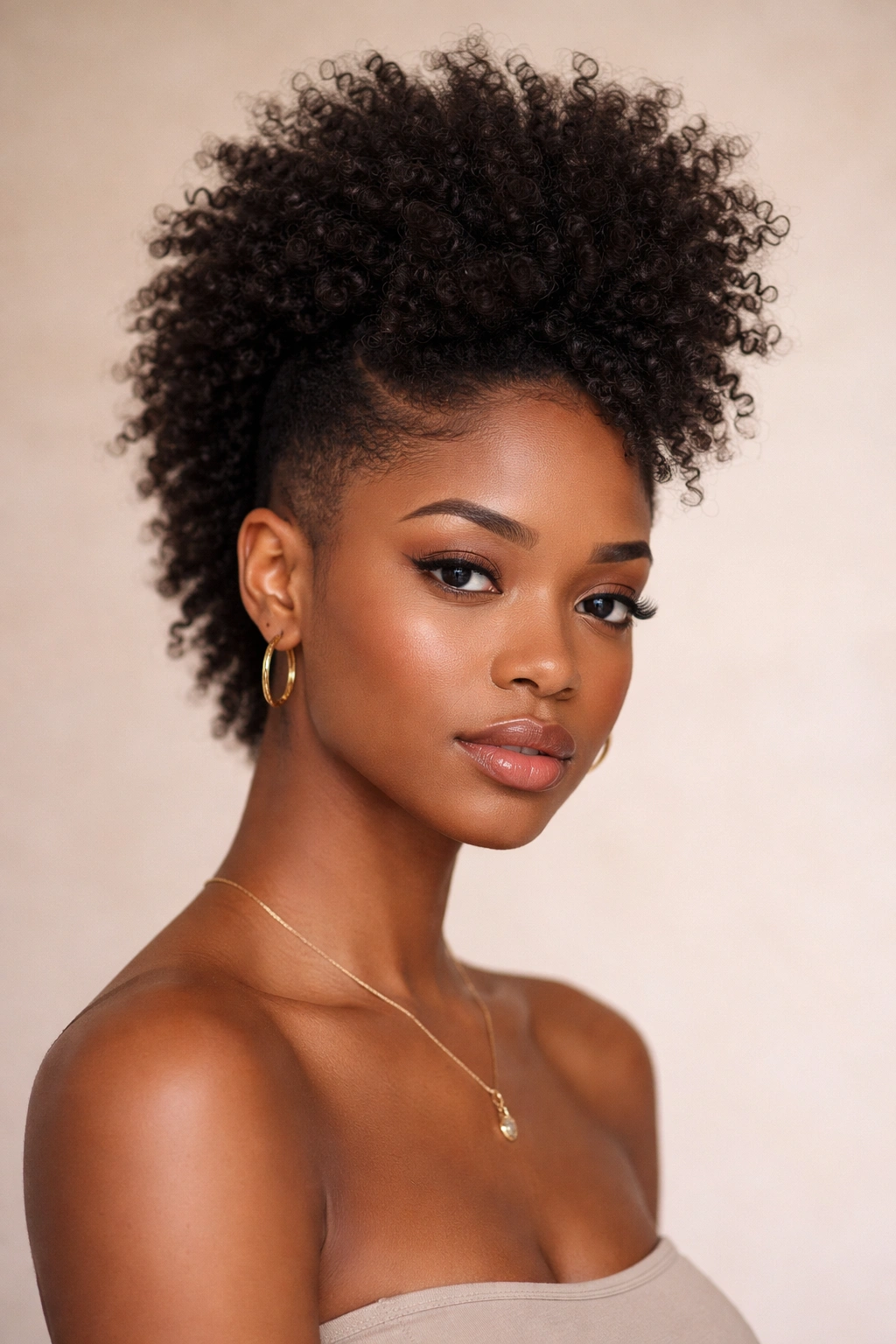
The frohawk is the boldest silhouette here, and it works because it pulls the eye upward.
The sides are trimmed or tapered close, while the center strip stays full and rounded. That shape is strong for round faces because it adds height, and it also suits heart-shaped faces that need a little balance near the forehead and jaw. Square faces can wear it too, especially when the top is soft rather than spiky.
Best face shapes for a frohawk
- Round faces: the height helps stretch the profile.
- Heart faces: the top volume offsets a wider forehead.
- Square faces: the center ridge keeps the line moving.
A frohawk can go wrong if the top is over-gelled or the sides are taken too low. Then it starts to feel stiff. Keep the center fluffy, and let the texture show. A little frizz is welcome. A frohawk that looks too controlled loses the whole point.
This is the style for days when you want edge without giving up softness. It has shape, but it still feels like natural hair.
8. Afro with Curtain Bangs and Face-Framing Pieces
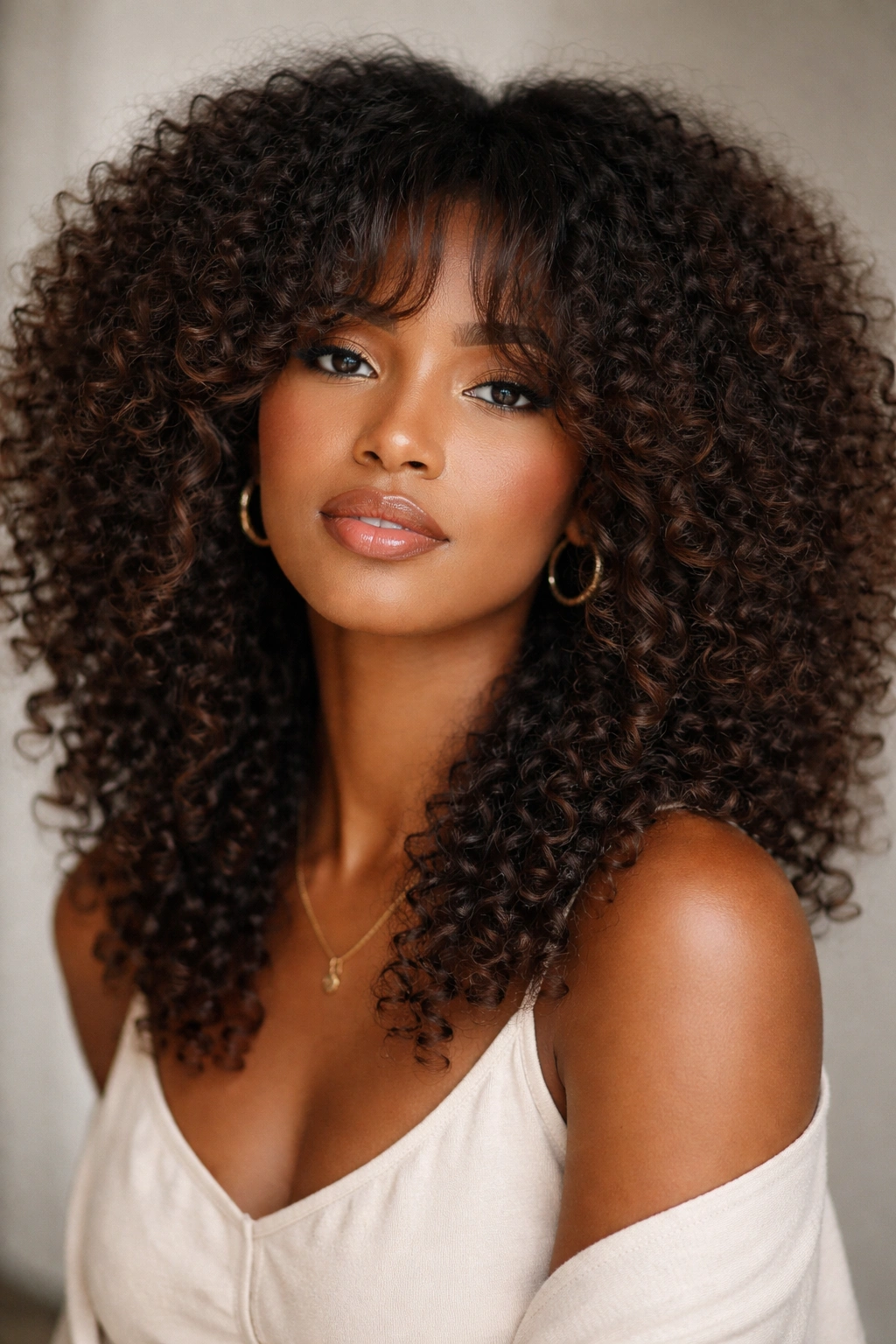
Can afro bangs work without swallowing the face? Yes, if the front pieces are cut to move.
Curtain bangs and soft face-framing curls are a smart fix for long faces, high foreheads, and heart shapes. They bring attention toward the eyes and cheekbones instead of letting the forehead dominate. The trick is to keep the front pieces longer on the sides and lighter in the center so the fringe falls open instead of sitting like a wall.
Cutting matters here. A fringe on coily hair should usually be shaped with shrinkage in mind, not with stretched hair alone. If the front is cut too short, it can spring way above the brows and look abrupt. A stylist who knows natural hair will often leave the front pieces a little longer and let them settle before trimming again.
If you wear glasses, this style can be especially good. The curls can sit above the frames or sweep beside them, which keeps the face from looking boxed in. That small detail makes a bigger difference than people expect.
9. Asymmetrical Afro with One Longer Side
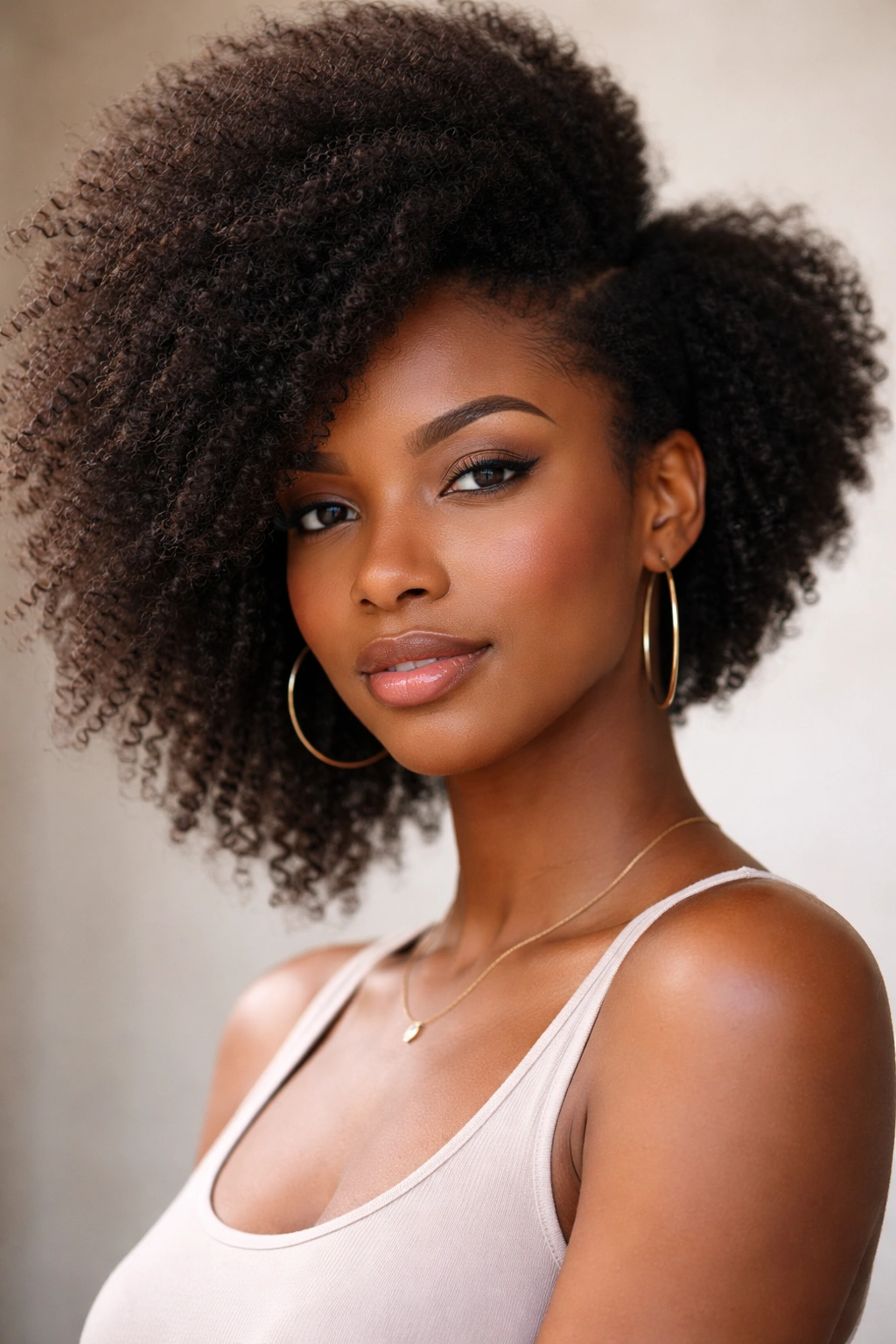
Picture one side grazing the cheekbone and the other side sitting a little higher. The whole face softens.
That’s the power of an asymmetrical afro. It breaks the symmetry that can make round or square faces feel more rigid. It also gives the eye somewhere to travel, which is useful when the hair is dense and the face needs movement instead of another layer of width.
This style can hide a few things, too. If one side of your curl pattern is looser, or one temple is thinner, an uneven shape can turn that into part of the design instead of a problem. The cut should look deliberate, not accidental. That means one side needs to be clearly longer, usually by 1 to 2 inches, not vaguely “a little different.”
The best versions still have a clean outline. You do not want one side sagging while the other side floats. The shape should feel alive, almost like the hair is leaning into the face rather than sitting beside it.
10. Twist-Out Afro with Stretched Length
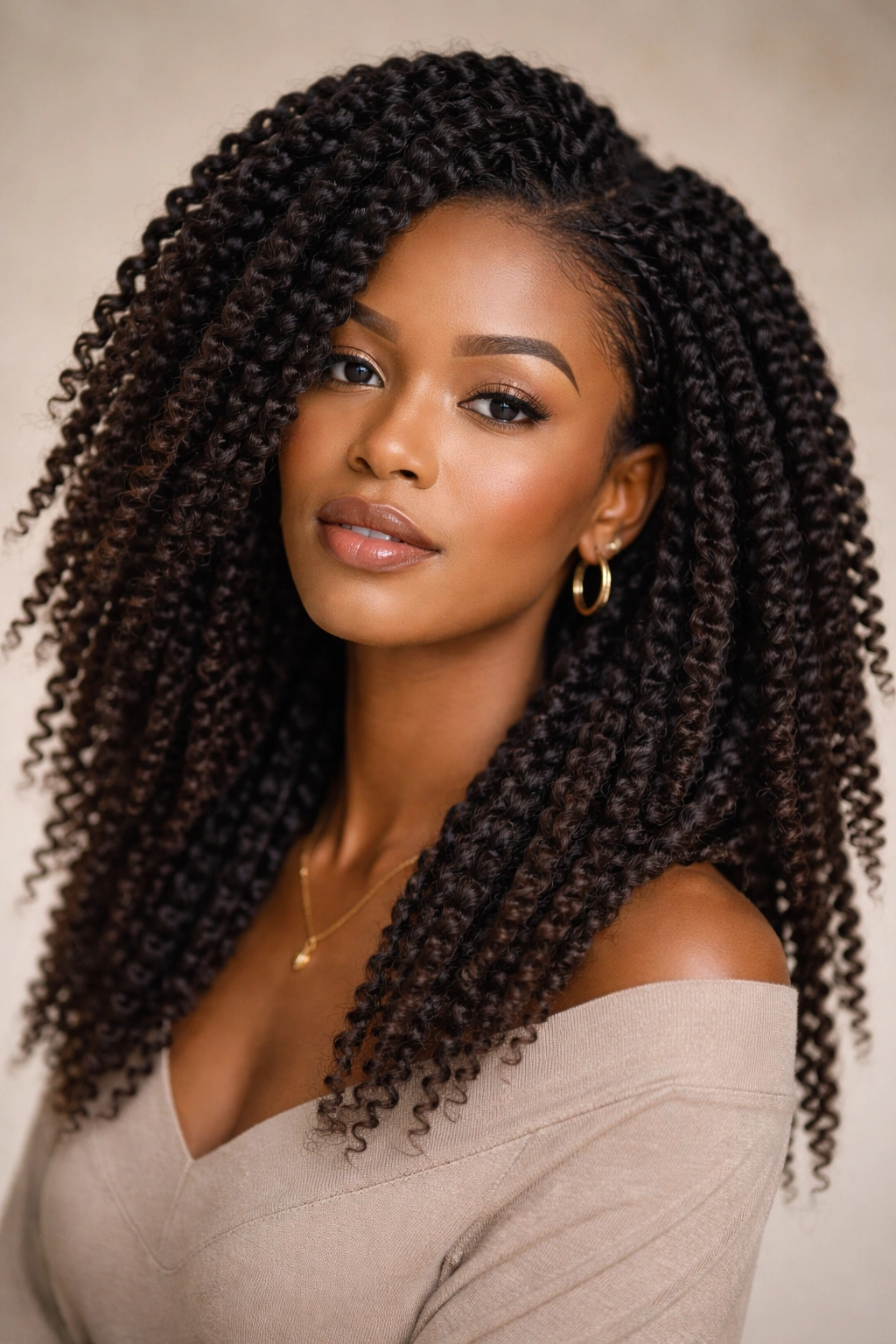
Unlike a picked-out fro, a twist-out afro keeps more pattern and less halo frizz.
That makes it a strong choice for oval, diamond, and long faces, because you can control exactly where the volume lands. Smaller twists give you tighter definition. Medium twists give you a softer cloud with more width. Either way, the stretch helps pull the shape downward a little, which can balance a face that looks tall or narrow.
How to get the most from it
- Start on damp, not soaking, hair.
- Use a leave-in and a cream with enough slip.
- Twist in sections of similar size so the shape stays even.
- Let the hair dry fully before unraveling.
A twist-out can look flat if you separate it too early. That is the part people rush. If the curls still feel cool at the roots, leave them alone. Once they are dry, separate with oiled fingers and stop before the style turns puffy in all the wrong places. A well-done twist-out should look soft, not sloppy.
This is one of the easiest ways to make an afro feel shaped without losing texture.
11. Bantu Knot-Out Afro with Big, Springy Shape
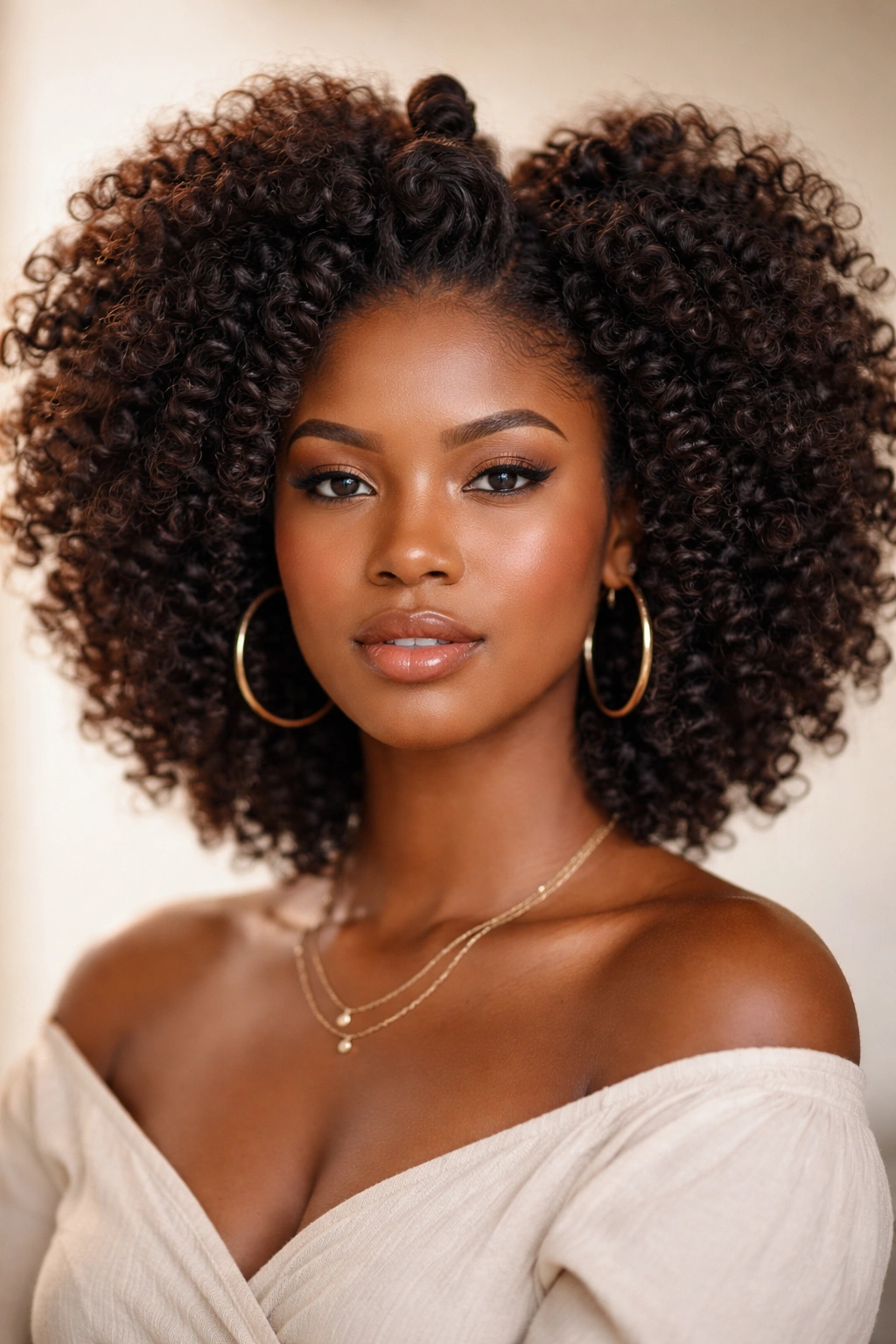
Bantu knot-outs have a funny trick: they start neat and finish fluffy.
That contrast is why they work so well on heart and diamond faces. The knots create root lift, then the released curls spread into a rounded halo that sits nicely around the cheeks and jawline. If your face needs a bit more fullness near the sides, a knot-out gives it without making the top look heavy.
Sleep matters here.
If the knots are still damp when you take them down, the curl pattern can get fuzzy and uneven. Let them dry all the way, or set them under a dryer if that is how you style your hair. Smaller knots create a tighter finish; larger knots create a looser, more open shape. The size you choose changes the face-framing effect.
This style is also a good one when you want a little show without a ton of cutting. The hair does the shaping on its own. You can keep the roots neat for the first day, then let the curls bloom a little more the next. That second-day softness is part of the appeal.
12. Halo Afro That Softens the Forehead
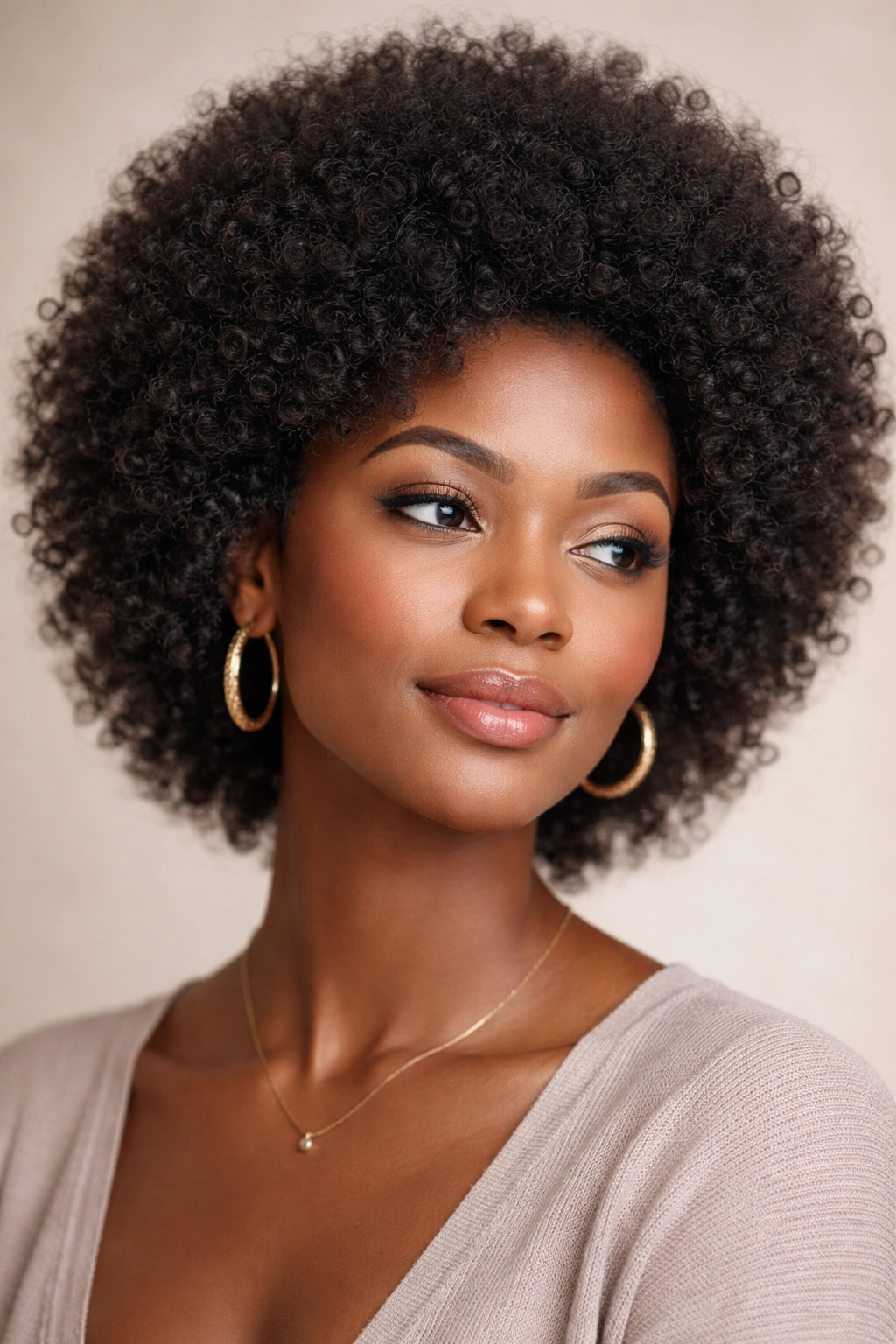
Can a halo afro make a face look softer without losing structure? Absolutely.
What the halo does
A halo afro keeps volume around the outer edge of the head while lifting the top slightly so the shape does not collapse into a flat circle. That helps heart-shaped faces by balancing a wider forehead, and it gives oval or diamond faces a smoother outline. The effect is especially nice when the curls are medium in length and not weighed down by heavy product.
How to keep it soft
- Lift the roots with a wide-tooth comb or pick.
- Leave the perimeter airy instead of slick.
- Shape the curls around the temples with your fingers.
- Use only enough cream to keep the curl pattern hydrated.
A halo shape can go wrong if the top gets too polished. Then it starts to look helmet-like. The goal is a soft frame, not a shell. That is why this style works better when the hair has a little movement and the edges are not pressed too close to the face.
The best halo afros make the forehead look intentional, not hidden. That’s a nice line to walk.
13. Picked-Out Classic Afro with Balanced Width
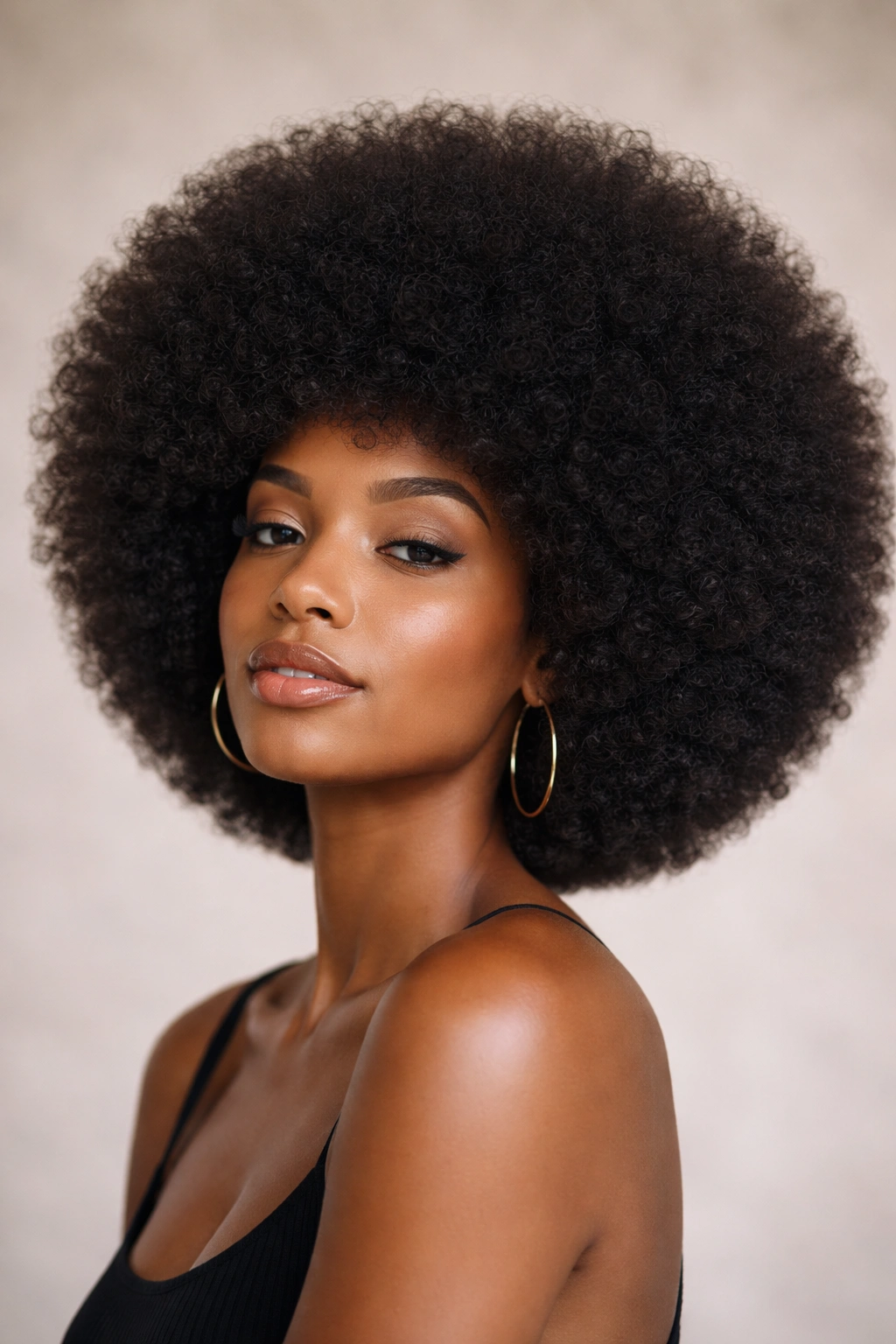
This is the most honest afro in the bunch. A picked-out classic fro says volume first, everything else second.
It works well on diamond and oblong faces because the width can be placed where the face needs it most. If the cheekbones are sharp, the extra fullness around the sides softens them. If the face is long, the round outline helps pull the proportions back into balance. The key is shape, not chaos.
A metal pick is better than a brush here. Start at the roots, lift outward, and stop before you drag through the ends. That keeps the curls from breaking apart too much. A dry afro usually picks out better than a damp one, because wet hair clumps and stretches in odd ways. If the hair is too damp, the shape can collapse later.
Quick notes
- Pick in small sections.
- Stop before the hair turns to frizz at the ends.
- Keep the outline rounded, not square.
- Trim the perimeter often so the style does not drift.
This is a style for people who like big shape and do not mind a little maintenance. It rewards patience more than product.
14. Braided Front Afro with Volume in Back
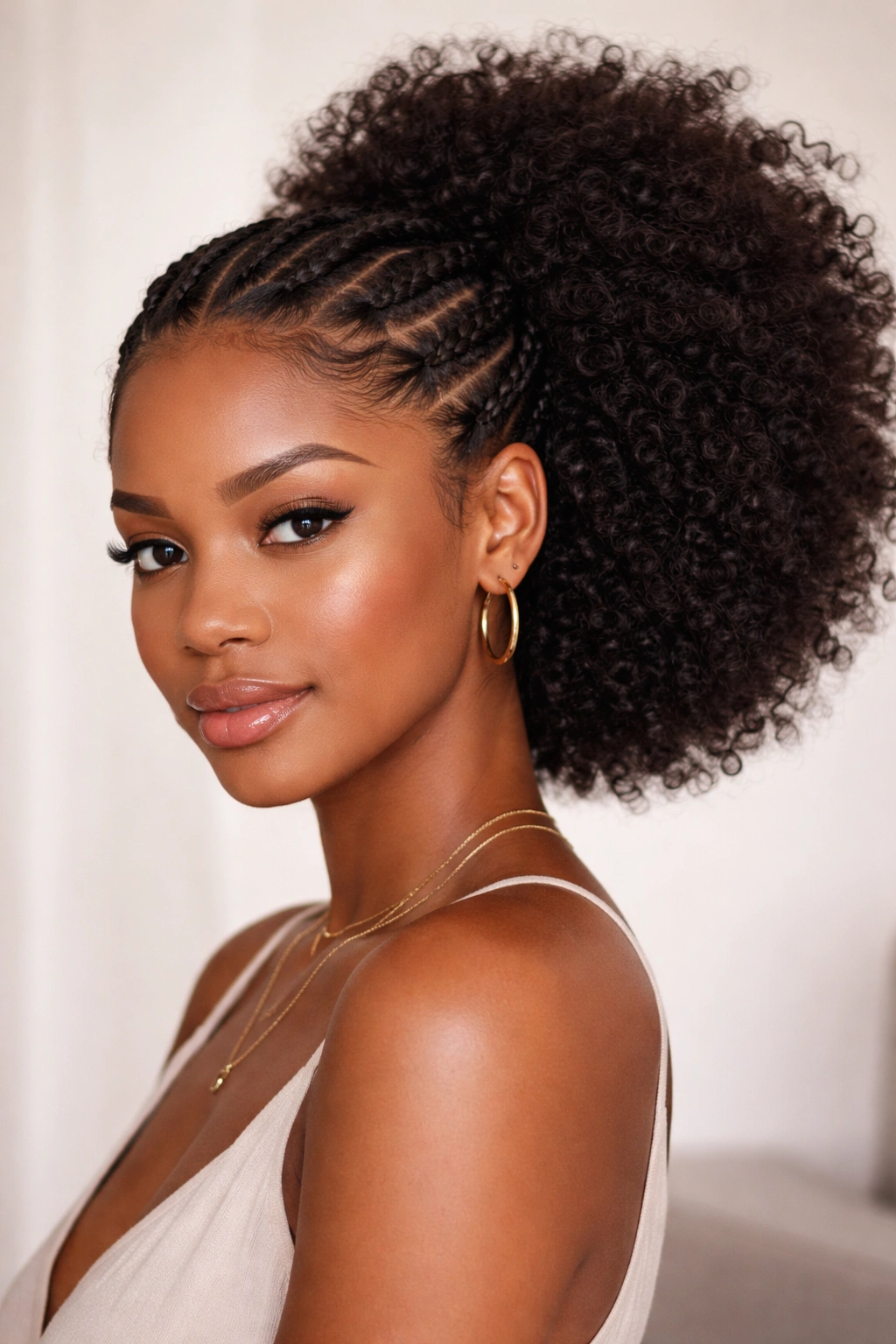
What if you want the face open but not bare? Braid the front and let the rest bloom.
A braided front afro keeps the hair away from the forehead while leaving volume at the back and sides. That makes it a strong choice for round and heart-shaped faces, because the front stays clean and the shape still has enough width to balance the jaw and temples. It also works for anyone who wants the style to last a few days without constant touch-ups.
The front braids do need to stay loose at the hairline. Tight cornrows can pull too hard and leave the style looking strained. Flat twists are a gentler option if you want less tension. Once the front is set, the back can be worn as a puff, a twist-out, or a picked-out fro, depending on how much volume you want.
This look has a practical side too. It keeps hair off the face during work, workouts, or humid days, and it gives the style a bit of direction. Without the braids, the volume can feel everywhere at once. With them, the eye knows where to go.
15. Afro with Shaved Temples and a Full Top
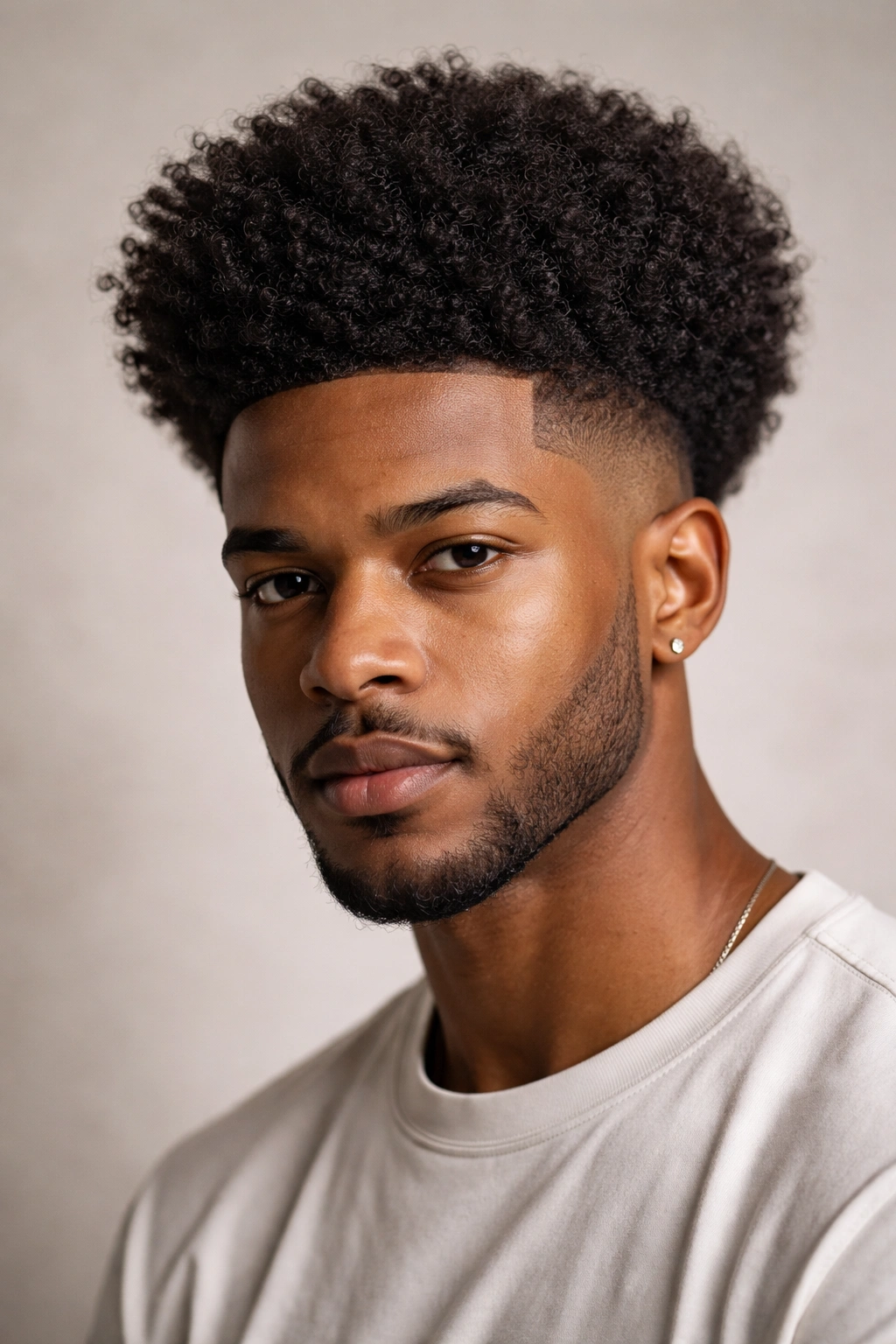
Compared with a full picked-out fro, shaved temples change the whole mood.
They narrow the sides visually, which can help long faces by keeping the attention on the top section. Square faces often like the sharper contrast, while oval faces can wear the look almost any way they want. The cut feels cleaner, but it still leaves room for a lot of texture where it matters.
If you want the shape to stay soft, ask for a temple fade instead of a hard undercut. A fade lets the sides blend into the top instead of dropping off suddenly. That blend matters on coily hair because harsh lines can look too sharp once the curls start growing back. Keep the top at 3 to 5 inches if you want enough room for twist-outs, sponge work, or a full pick-out.
This style is for people who want contrast without losing their natural texture. It can look edgy, neat, and easy to wear all at once. That mix is harder to find than people think.
Final Thoughts
The smartest afro hairstyles do one thing well: they make your features look settled, not crowded. A face shape is not a rulebook. It is a starting point, and a useful one, because the right silhouette can open the forehead, soften the jaw, or add width where the face needs it most.
Shrinkage changes the game, so always think about the shape the hair makes after it dries, not only the shape you see in the mirror when it’s stretched. That one habit saves a lot of bad cuts. It also keeps you from choosing a style that looks right for ten minutes and then shrinks into something else by noon.
If you are sitting in a chair with a stylist, ask for the silhouette first — height, width, softness, or contrast — and let the details follow. That conversation is usually better than naming one hairstyle and hoping the rest works itself out.
