



Braided afro puff styles do something I never get tired of seeing: they make natural hair look crisp at the scalp and full everywhere else. The braids bring structure, the puff brings volume, and the mix can look neat even when the rest of the morning was chaotic.
That balance is the whole appeal. You get the clean lines of a braided style without losing the softness and movement that make an afro puff feel alive. A good version can read polished, playful, or straight-up dramatic depending on where the puff sits and how much braid detail you build into the front.
The part people miss is tension. A pretty braid pattern means nothing if your temples ache by lunch or your crown feels pulled thin. The best braided puff styles respect the hairline, use enough moisture to keep the puff from looking dusty, and leave room for your texture to do what it naturally does.
And yes, tiny changes matter. A side part changes the face. Triangle parts change the mood. A high puff can feel bold; a low puff can feel soft and grounded. The ten looks below cover that range, so you can pick the version that fits your hair, your schedule, and your tolerance for sitting in a chair longer than you’d like.
1. Sleek Center Cornrows into a High Afro Puff
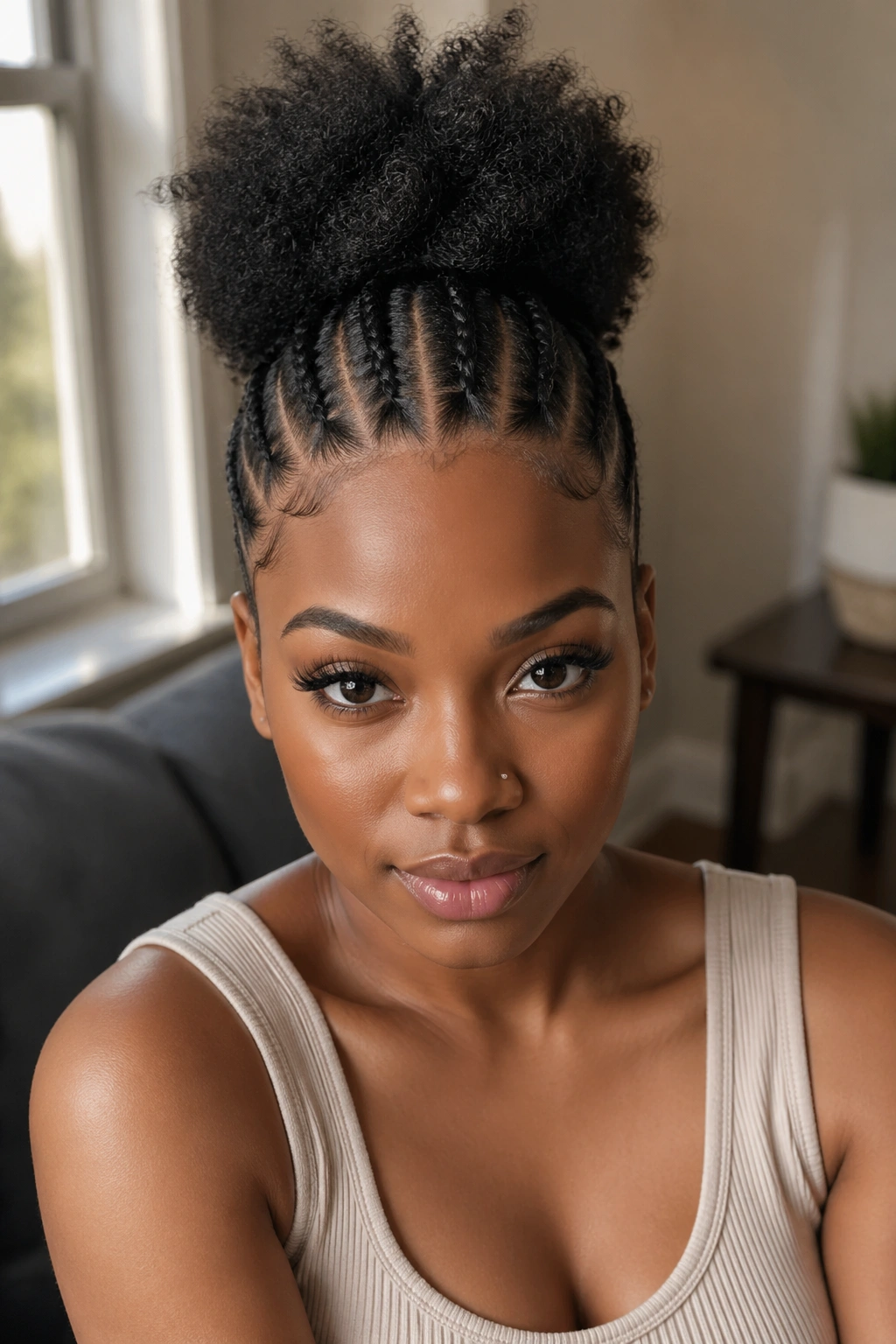
This is the braided afro puff style I trust when I want something clean, quick, and hard to mess up. Four to six straight-back cornrows, parted neatly down the middle, give the front of the style a sharp frame, and the puff gets to be the main event at the crown.
The shape works because it does two jobs at once. The braids keep the hairline controlled, while the puff keeps the whole look from feeling too tight or severe. If your hair shrinks a lot, stretch it first with banding, chunky twists, or a low-heat blow-dry on dry hair. Otherwise the puff can sit smaller than you expected and lose that round, full shape.
I like this one on medium to thick natural hair because it has a built-in sense of order. You can wear it with hoop earrings and a sweatshirt or with a sharp blazer, and it doesn’t fight either outfit. It is one of those styles that looks more deliberate than it actually is.
- Best for: Workdays, errands, classes, and any morning when you want to look put together fast.
- Ask for: Four to six clean cornrows running back to the crown, then gather the remaining hair into one puff.
- Watch for: Too much tension near the temples. If the braids sting while they’re being installed, speak up right there.
Tip: Use a pea-sized amount of gel on the parts and smooth it with the tail of a comb. A heavy layer only makes the scalp look sticky, then flaky once it dries.
2. Side-Swept Cornrows with a Fluffy Puff
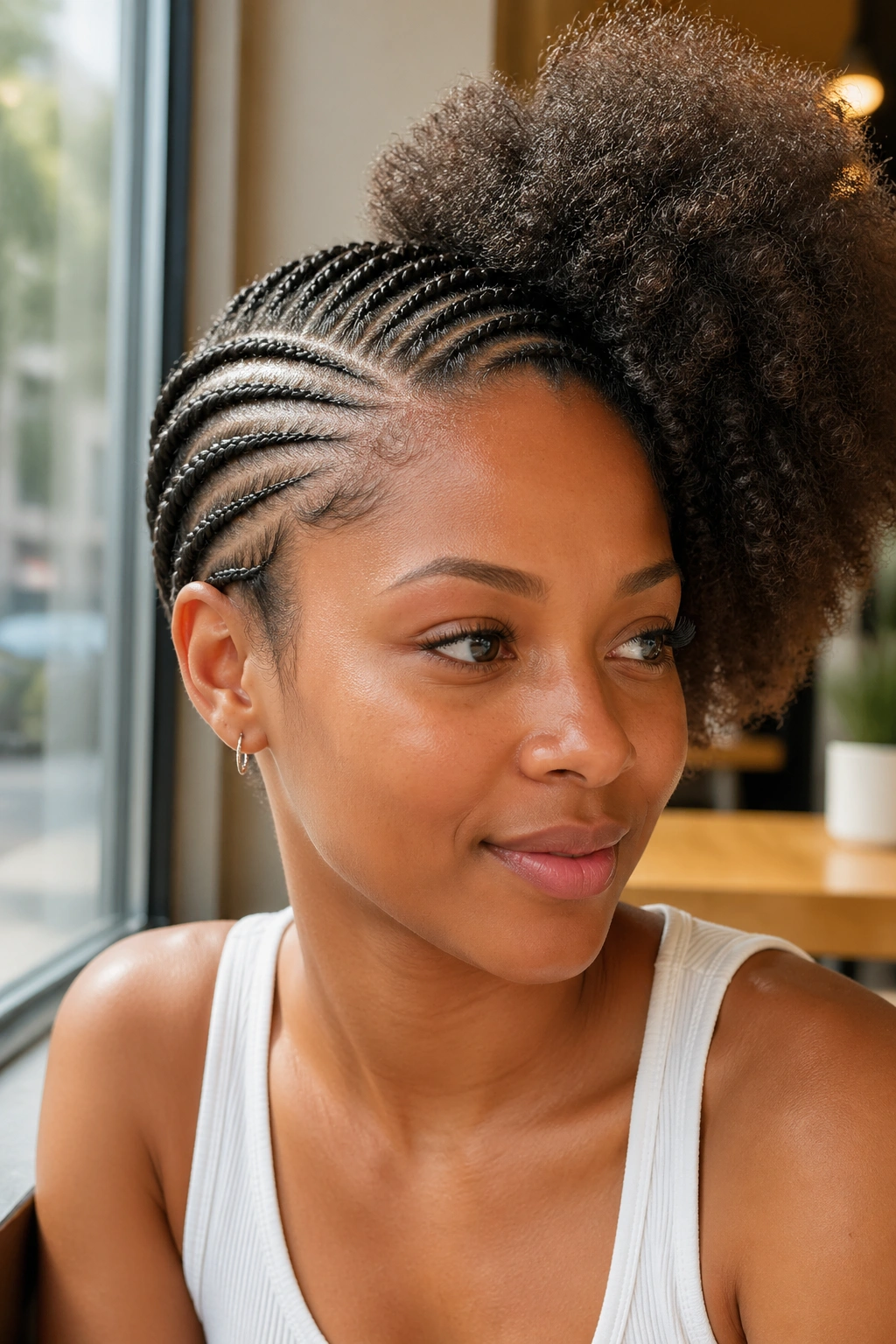
Want the same braid-and-puff idea, but with a softer frame around the face? A side-swept version changes the whole mood without asking for a completely different technique. The part falls off-center, the braids angle slightly instead of marching straight back, and the puff sits just enough to one side to feel relaxed rather than rigid.
Why the Side Part Works
A side part breaks up the symmetry in a good way. It softens sharper features, adds lift near the front, and gives the style a little movement before the puff even shows up. If a center part can sometimes feel too formal for your face shape, this is the version that loosens things up.
The angle also helps if you like styles that feel less boxed in. A slight diagonal line draws the eye across the face instead of straight down the middle, which can make the puff feel bigger and more dynamic. That sounds like a small thing. It isn’t.
How to Wear the Puff
Keep the puff full, but don’t overwork the front. If the braids are already doing the framing, the puff can stay simple and round. I would rather see a soft, healthy puff than one flattened into a perfect ball with a heavy elastic cutting through the base.
- Use 2 to 4 side-swept braids if you want the front light.
- Place the puff slightly behind the crown for a softer silhouette.
- Leave a little room at the roots so the puff does not look pinched.
A style like this has a calmer energy than the straight-back version. It feels a little easier, a little more relaxed, and that matters on days when you want your hair to look styled without acting stiff about it.
3. Feed-In Braids with a Crown Puff
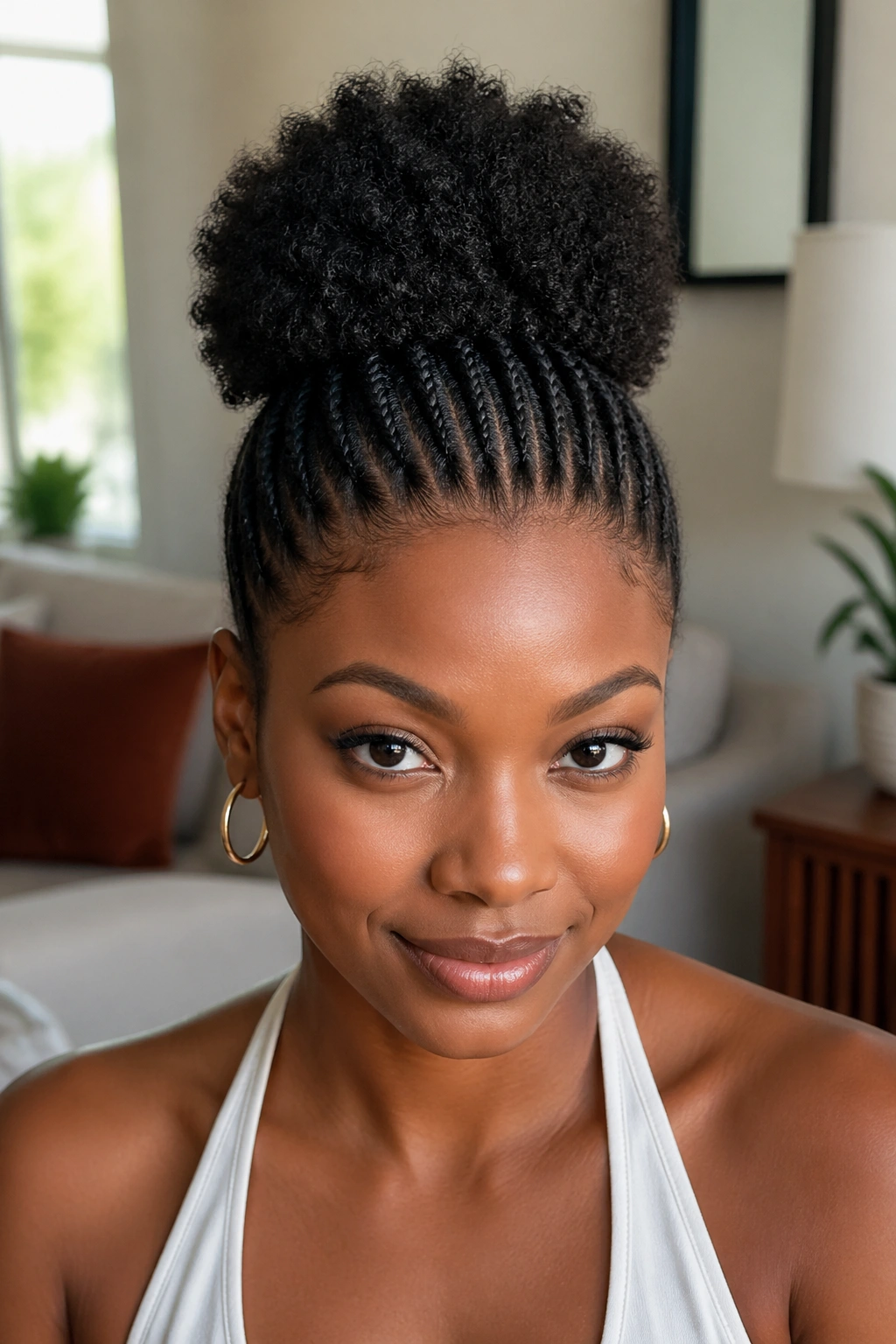
This one looks fancier than it is. Feed-in braids create the illusion of fuller braids at the scalp by gradually adding hair as you braid, so the front has that smooth, tapered start instead of a blunt block of thickness. Once those braids reach the crown, the rest of the hair gathers into a puff that feels balanced and polished.
Feed-ins are useful when you want the style to read detailed without piling on heavy braid bulk. The gradual thickness at the front can make the braids feel lighter on the scalp, which matters if your hairline is sensitive or if you dislike the square, chunky look some braids give. The puff keeps the style from looking too strict.
What Makes It Different
The braid size matters more than the braid count here. If the feed-ins are too chunky at the front, the style can overwhelm the puff. If they’re too tiny, the head can start to look overworked. I like a medium balance: slim at the roots, fuller as they travel back, then a puff that has room to breathe.
A crown puff also pairs well with this braid pattern because it leaves the top section open enough for volume. That open space is the point. It gives the style some height without turning it into a helmet.
How to Ask for It
- Ask for gradual feed-in braids rather than thick braids starting right at the hairline.
- Keep the center or side part crisp, depending on the shape you want.
- Let the puff sit at the crown line, not too far back, so the top still looks full.
If your hair is shorter, this style can still work with added hair in the braids and a smaller puff. The key is keeping the lines clean so the finish feels intentional.
4. Halo Braid Wrapped Around a Round Puff
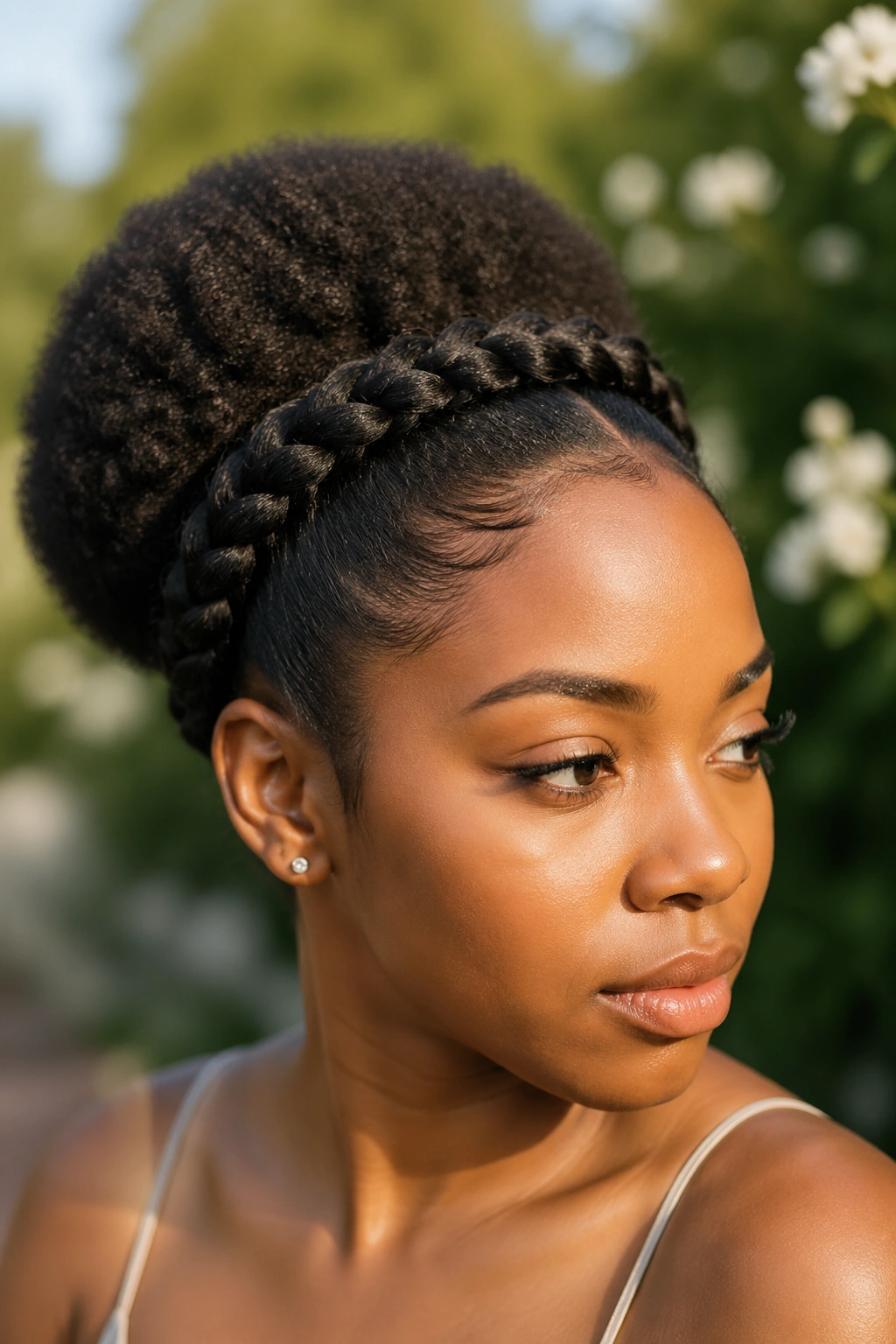
Picture a style that stays neat through a long day and still looks graceful at dinner. That is the halo braid with a round afro puff. The braid wraps around the hairline like a crown, while the puff sits at the back or top center, full and rounded, almost like a soft cloud anchored under a braid frame.
The halo braid does the practical work here. It keeps the front smooth, protects the edges from over-handling, and gives the style a finished edge that plain braids sometimes lack. The puff keeps it from looking severe. Without the puff, the halo can feel a little formal. With it, the whole thing loosens up.
This is one of my favorite braided puff styles for events because it survives motion. Wind, dancing, hugs, a long commute — it tends to hold up better than styles that depend on lots of loose front pieces. The braid around the head also gives you a neat silhouette from every angle, which is half the battle when your hair is up.
- A single halo braid works when you want the style to feel clean and simple.
- Two braids wrapped in a circle give a thicker, more textured frame.
- Keep the puff soft and round so the braid and puff do not fight each other.
Keep the braid snug, not tight. A halo that pulls at the scalp loses its charm fast. The goal is structure, not pressure.
5. Triangle Parts That Make the Puff Feel Graphic
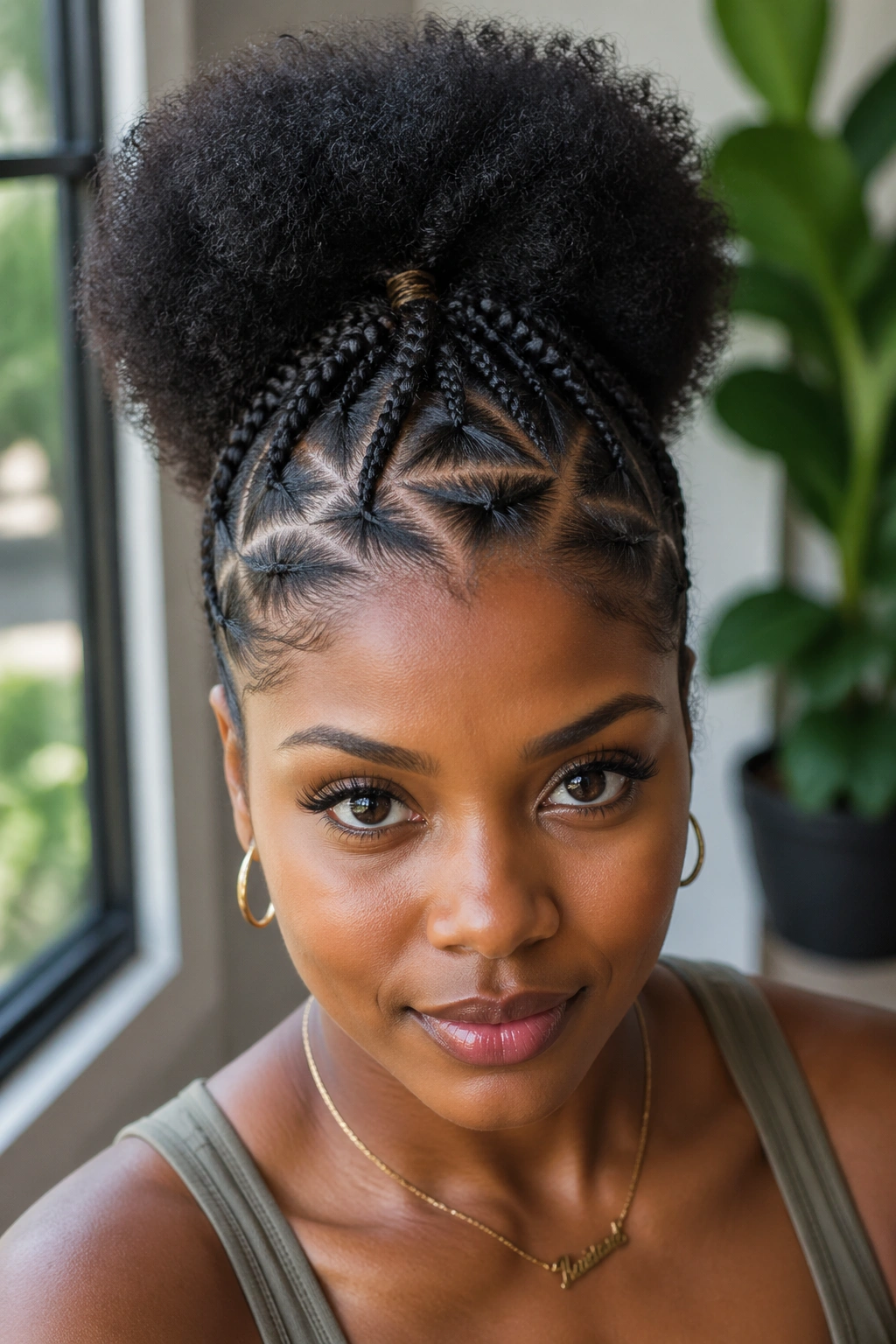
Why do triangle parts change everything? Because they stop the style from looking like a regular row of braids. The lines feel sharper, the pattern has more movement, and even a simple puff suddenly looks more styled and deliberate. It is a small visual change that carries a lot of weight.
The Look
Triangle parts give the scalp a broken-up, geometric finish instead of a neat grid. That makes the whole style feel more current and less predictable, especially when paired with a puff that stays soft and round. I like this approach when the front braid work is meant to be part of the statement, not just a way to get hair out of the face.
The parts do not need to be tiny to work. In fact, bigger triangles often look cleaner and are easier on the scalp. Tiny triangles can create a dense, busy look that only makes sense if you enjoy sitting through a long install and want the front to be the star.
What to Tell Your Braider
Ask for triangle sections that stay consistent in size, especially around the temples and hairline. Uneven parting makes the whole style look accidental, and triangle parts only work when they look deliberate. If you want the puff to stay the focus, keep the braids simple and let the parting carry the drama.
- Small triangles create a tighter, denser pattern.
- Medium triangles are easier to maintain and usually look cleaner.
- Larger triangles save time and reduce scalp stress.
That last point matters. If your scalp gets tender after long installs, a softer part pattern with fewer sections is the smarter move. Pretty hair is not worth a sore head.
6. Double Braided Afro Puffs
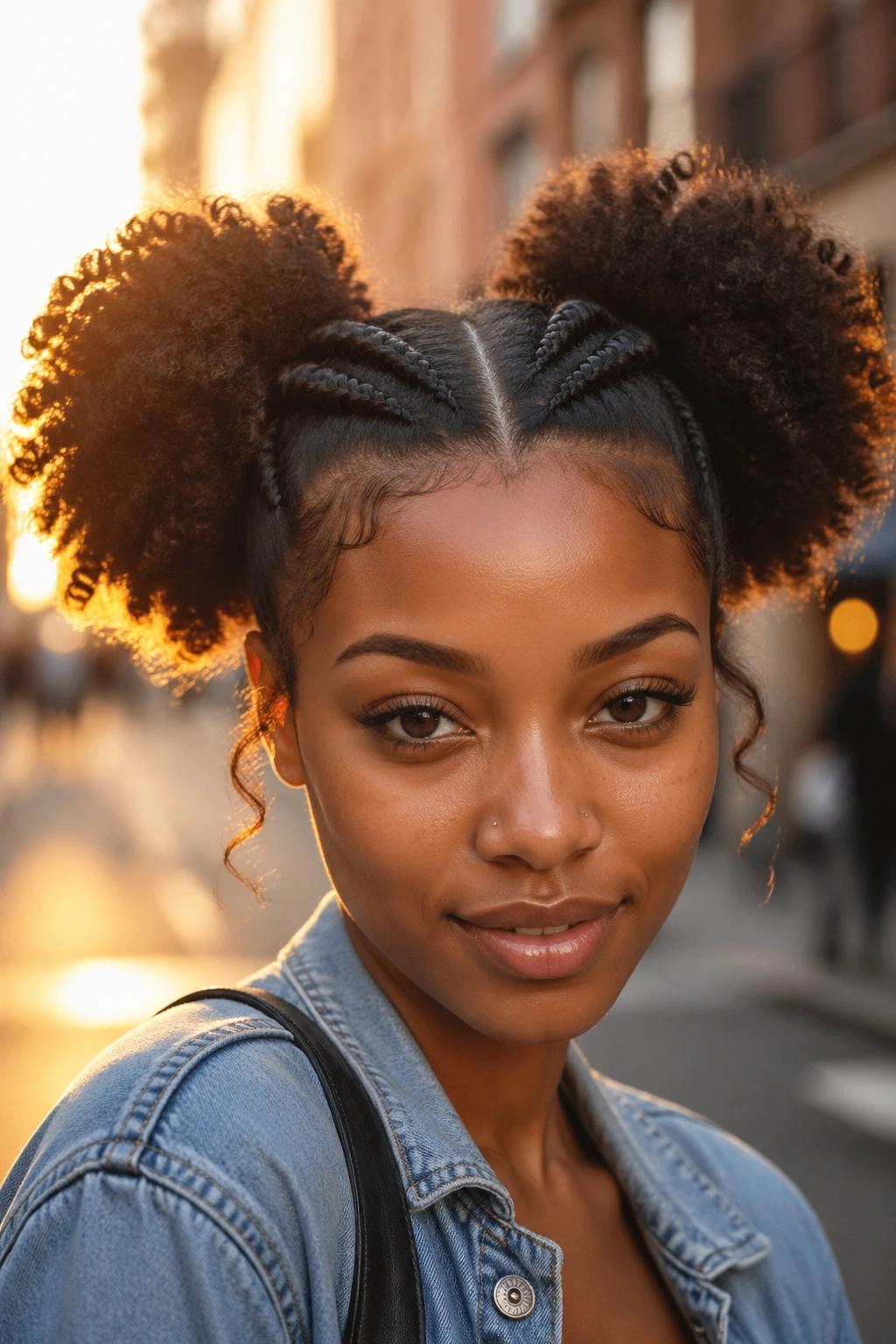
Two puffs are not childish. Sloppy parting is what makes them look childish. Done cleanly, double braided afro puffs feel playful, balanced, and surprisingly chic — especially when the braids leading into them are neat and the puff size is even on both sides.
This style works well if you like symmetry and bounce. A center part splits the hair into two sections, braids or flat twists shape the front, and each side gathers into its own puff. The result has a built-in sense of movement. It also tends to work nicely on hair that is not long enough for one huge puff, because each side only has to carry half the load.
The mood here is different from a single puff. A single puff can feel elegant or bold. Double puffs feel lively. They are the style I suggest when someone wants something fun but still wants the front to look clean enough for actual real life.
- Great for shorter natural hair that needs less length to form visible puffs.
- Good for round or oval faces because the two puff shapes widen the silhouette in a flattering way.
- Use soft elastics instead of thin bands that bite into the roots.
A small detail makes a big difference: keep the center part straight and the two puffs level with each other. If one sits higher, the style starts to look accidental. If both sit with the same lift, it looks sharp.
7. Braided Mohawk Puff with Tall Volume
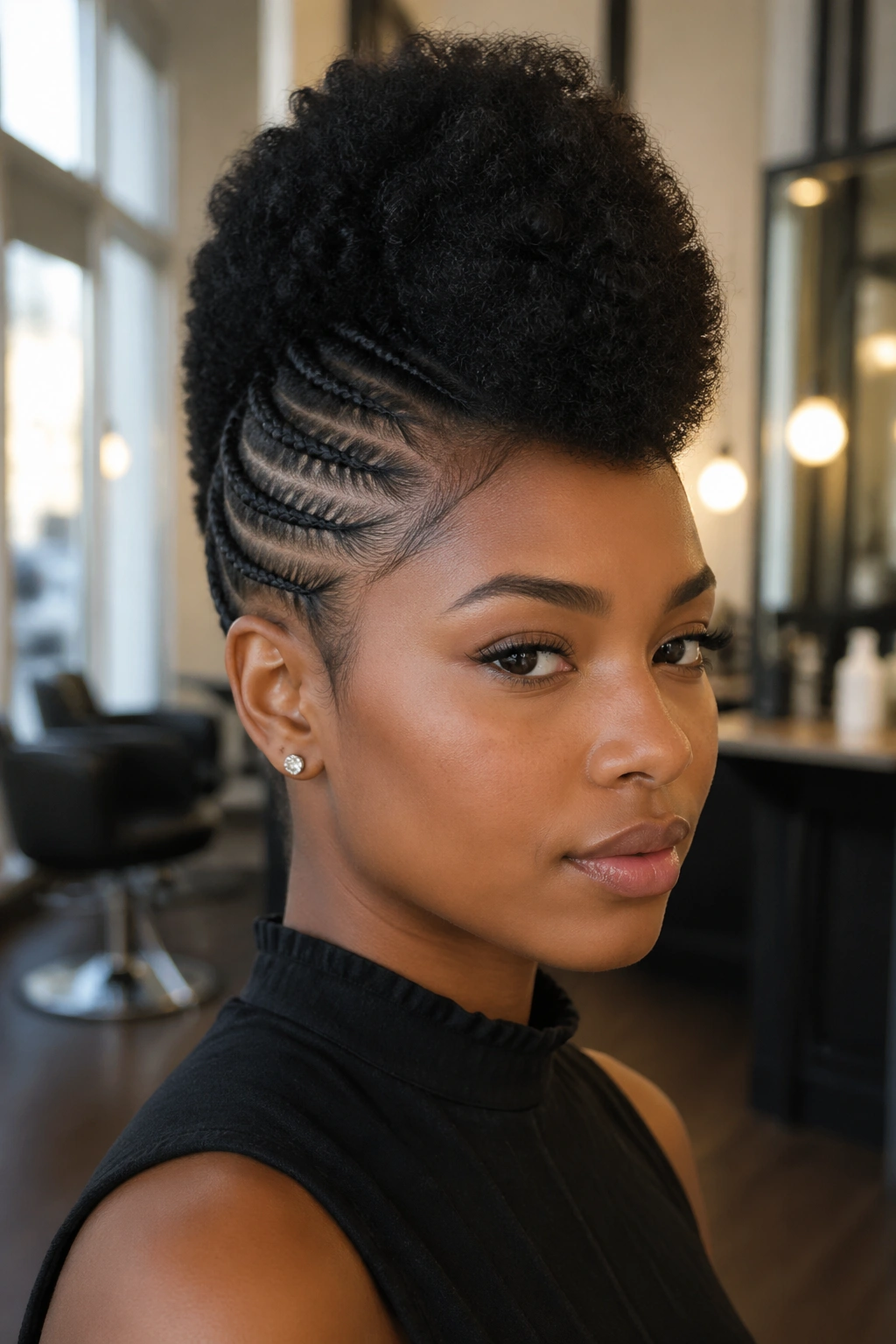
If you like height, this is the sharpest version of the bunch. The sides are braided flat against the head, and the center section is left open enough to form a tall, full puff that reads a little bolder than the standard crown puff. The shape has attitude, but it still keeps the hair controlled.
Best Braid Pattern
The side braids can be cornrows, feed-ins, or flat twists, depending on how much texture you want in the base. What matters more is the lane they create down the center. That middle strip should be wide enough to allow real puff volume. If it’s too narrow, the puff ends up looking squeezed.
For dense hair, a center strip around 3 to 4 inches wide often gives enough room for shape. Finer hair may need a narrower lane so the puff reads fuller. That kind of adjustment sounds minor until you see the finished style in the mirror. Then it is obvious.
How to Keep the Center Puff Rounded
Do not yank the center too tight when you gather it. A puff that sits upright should still look soft at the edges. I like to fluff the hair lightly with my fingers before securing it, then shape it from the outside in instead of crushing it into place with one hard pull.
The mohawk outline gives the style drama. The puff gives it softness. Together, they keep the hair from looking flat at the sides or too heavy on top. It is one of the few braided puff styles that can go from casual to striking with almost no extra work.
My opinion: if your wardrobe leans simple, this hairstyle does a lot of the talking for you.
8. Flat Twists Leading into a Soft Puff
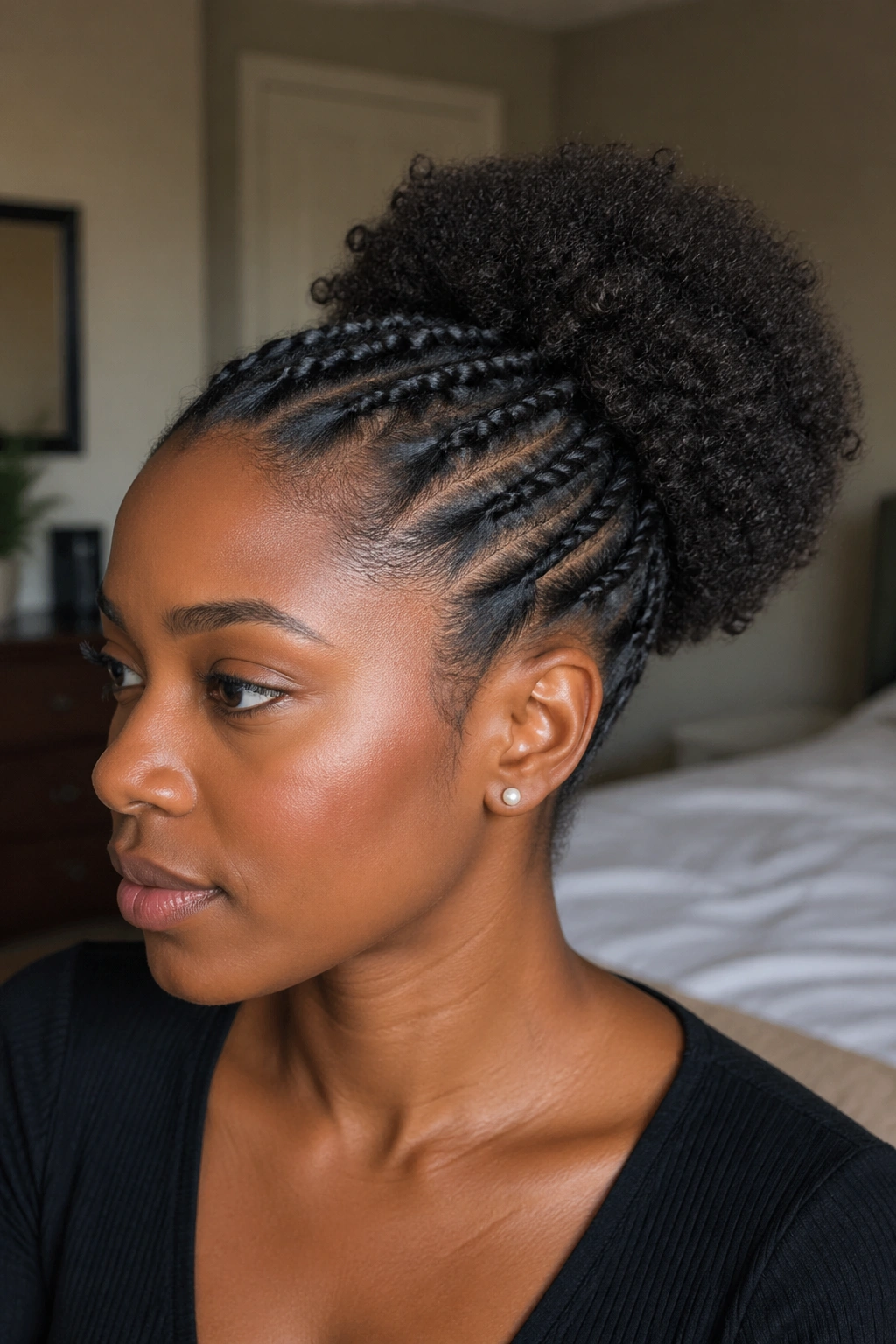
Flat twists feel softer under the fingers than regular braids. The texture is a little looser, the scalp usually feels less boxed in, and the style has a gentler finish that suits a puff beautifully. If braids sometimes feel too firm for your taste, this is the calmer cousin.
The pattern works because flat twists guide the hair back without making the front look overbuilt. Then the puff comes in and fills the shape out. The twist base gives you order, but not the rigid look that some braided styles can have after a few days. I reach for this version when I want the style to age well instead of just looking great on day one.
A flat-twist base is also a smart move for hair that gets irritated easily. The grip tends to feel less aggressive, and removal can be easier if the hair was moisturized properly before styling. That does not mean you should install them loosely. It means the style has a little more give built into it.
If your hair frizzes quickly, set the twists with a light mousse and let them dry fully before gathering the puff. Damp roots plus a tight puff band is a bad combo. The hair will swell, the base will shift, and the shape will lose its neat line.
I like this one on days when I want the puff to stay soft and touchable. It has less edge than a braid-heavy style, but that is part of the charm.
9. Braids with Cuffs, Beads, and Thread Wraps
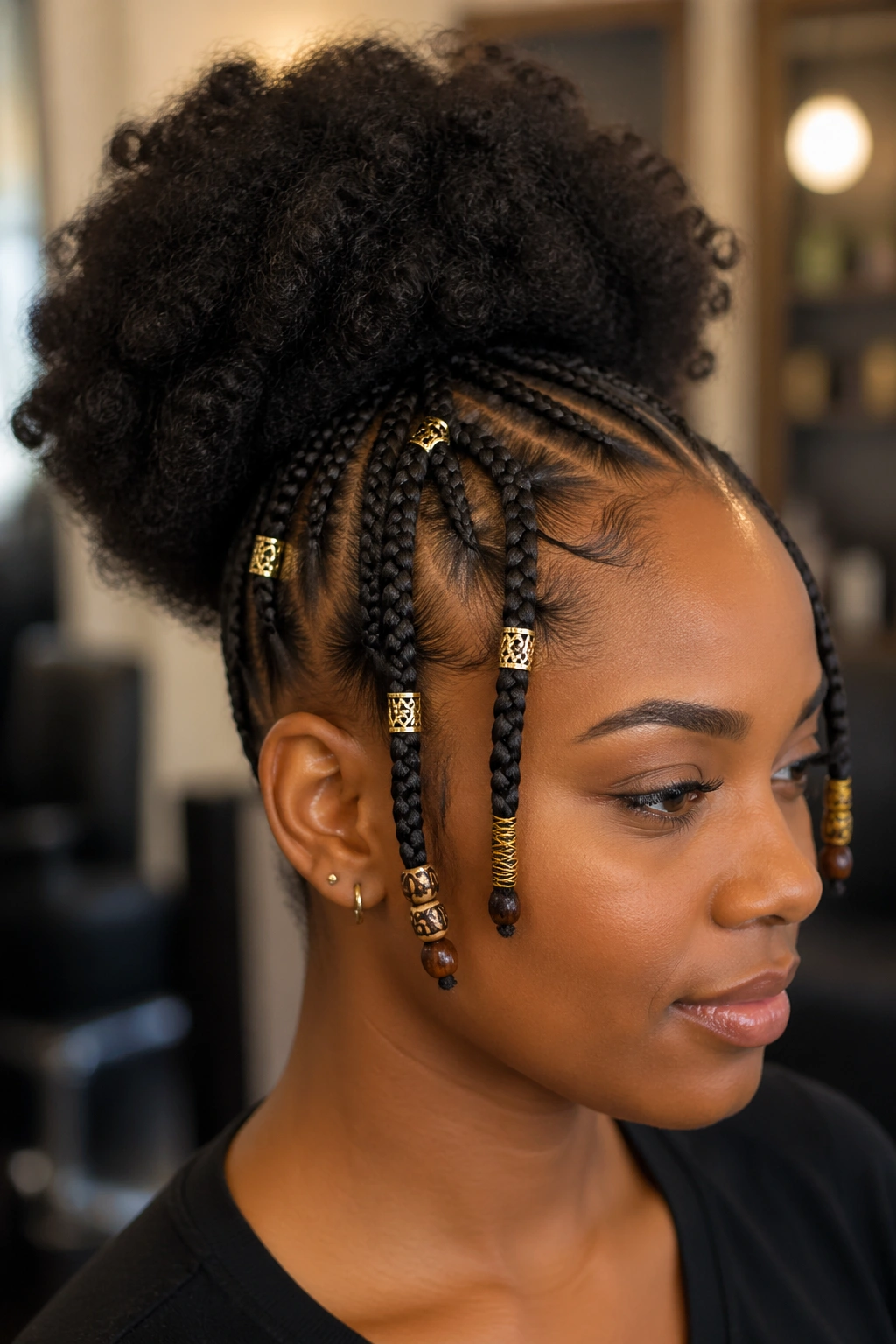
Some mornings need accessories. Not a lot. Just enough to make the style feel finished without turning the hair into a costume. Braided afro puff styles are perfect for that because the braid sections give you little places to add metal cuffs, beads, thread wraps, or a few wrapped ends without overcrowding the puff itself.
Where to Place the Accessories
Keep the decorations on the front braids or the side braids, where people actually see them. One or two cuffs per braid is usually enough. A line of beads at the ends can look beautiful, but heavy beads will tug, and tugging gets old fast. The puff itself should stay fairly clean so the accessories have room to stand out.
A little restraint goes a long way here. Three cuffs placed well can look more thoughtful than ten cuffs scattered everywhere. Same with beads. A few well-placed accents feel intentional; too many start to look noisy.
How to Keep It Balanced
If the puff is large and textured, use smaller accessories. If the puff is tighter and more compact, you can get away with bigger beads or a bolder wrap. That balance keeps the front from overpowering the back, which is a mistake I see a lot. The goal is harmony, not competition.
- Place cuffs near the middle or lower third of the braids so they do not slide easily.
- Use lighter beads if the braids are fine or short.
- Match the accessory color to your jewelry or outfit when you want the whole look to feel linked.
Beads also make noise. Fun noise, sometimes. Annoying noise, too, if you are sitting in a quiet room. Choose your battle.
10. Low Braided Puff with Nape Detail
This is the one I reach for when I want neat hair that does not shout. The puff sits lower, near the nape or just above it, and the braids feed into it in a way that feels calm rather than high-energy. It is polished, easy on the neck, and especially nice when you do not want a lot of height at the crown.
The low placement changes the whole feeling of the style. A high puff can read bold and lively. A low puff feels softer, more grounded, and a little more grown. It also plays well with collars, scarves, and jackets because it does not fight the back of your clothes every time you move.
Best for a Quiet, Clean Look
If your face feels overwhelmed by high volume, this version gives you a break. It draws the eye downward and creates a long line from the braids to the puff. That makes it a smart choice for long days, low-key events, or anyone who spends a lot of time wearing headphones or high-neck tops.
What to Ask For
- Ask for braid sections that guide the eye toward the nape instead of straight up.
- Keep the puff low enough to rest comfortably, but not so low that it loses shape.
- Use a band that holds the puff without leaving a deep dent at the base.
A low braided puff can be just as pretty as the taller versions. It is just quieter about it. And sometimes quiet is what you want — especially when your hair already has enough personality to fill the room on its own.
Braided afro puff styles work best when the tension is kind, the parts are clean, and the puff matches the mood you actually want to wear. If a style feels heavy or pulls at your edges, it is not the right version, no matter how nice it looks in a photo.
Start with one shape that suits your hair length and your patience level, then change one thing next time: the part, the puff height, or the braid size. That is usually enough to make the style feel new without making your scalp complain.
