



Short afro hair has a way of making people overthink it. It does not need length to look styled; it needs shape, moisture, and a little nerve.
Shrinkage can make the same head of hair look shorter in the mirror than it did five minutes earlier. That is not a problem to fix. It is the whole point of working with textured hair, and it means the styles that look best are usually the ones that respect the curl pattern instead of fighting it flat.
I love short afro hair for that reason. There is nowhere to hide, which sounds harsh until you realize it also means the good decisions show up fast: a clean part, a little definition, a crisp outline at the temple, a soft coil at the front. Heavy product and overhandling tend to make the hair look smaller, fuzzier, and tired. Light hands, good sectioning, and the right amount of hold do the opposite.
Some styles are about polish. Some are about speed. Some are about making a short cut look intentional even on a rushed morning when you have exactly ten minutes and no patience for drama. Start with the one that matches your mood, your length, and how much time you want to spend in front of the mirror.
1. Finger Coils for Crisp Definition
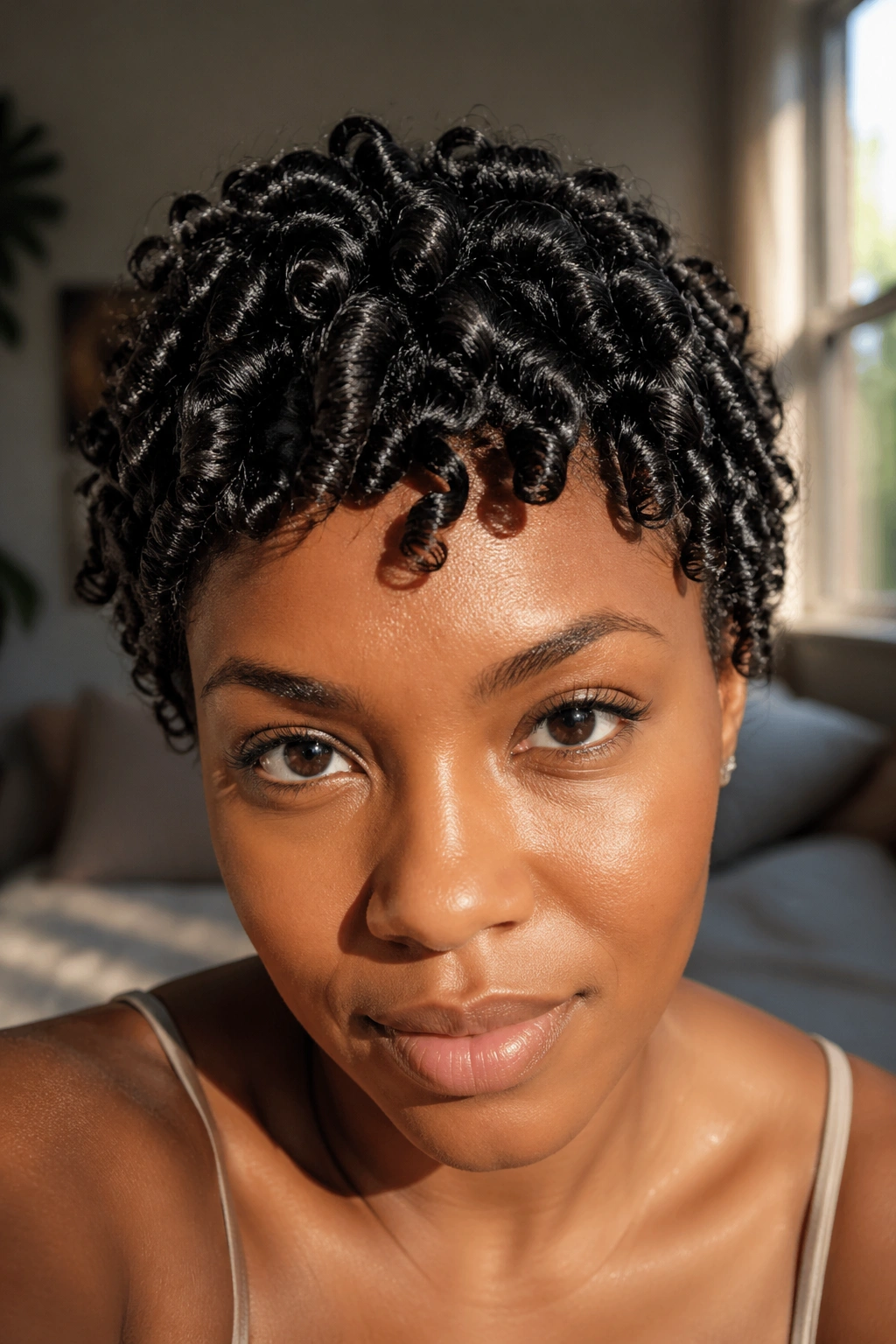
Finger coils are one of those styles that make short afro hair look considered instead of accidental. They work especially well when your curls are tight, uneven after a fresh cut, or still settling into a new shape. The coil pattern gives the eye something to follow, which makes the whole head look neater without needing much length.
Why Finger Coils Work So Well on Short Hair
Short hair sets faster, and that matters here. Each tiny coil has less weight pulling it loose, so the pattern stays put once it dries. You are not chasing volume first; you are building definition first, then deciding whether to fluff later.
Use damp hair, not soaking wet hair. A light leave-in, a pea-sized amount of cream, and a small gel or custard are usually enough. If the product layer is too thick, the coil dries stiff and dull. Too little hold, and the curls puff out before lunch.
- Take 1/2-inch sections if you want tight, neat coils.
- Use a rattail comb or your fingers to separate clean sections.
- Twist each section around your finger until the curl springs back on its own.
- Let the hair dry fully before separating anything.
Pro tip: If you want a fuller look, coil first, let everything dry, and only then gently separate the ends with oiled fingertips. Pulling coils apart while they are damp is how you get frizz wearing a tiny disguise.
2. The TWA Wash-and-Go
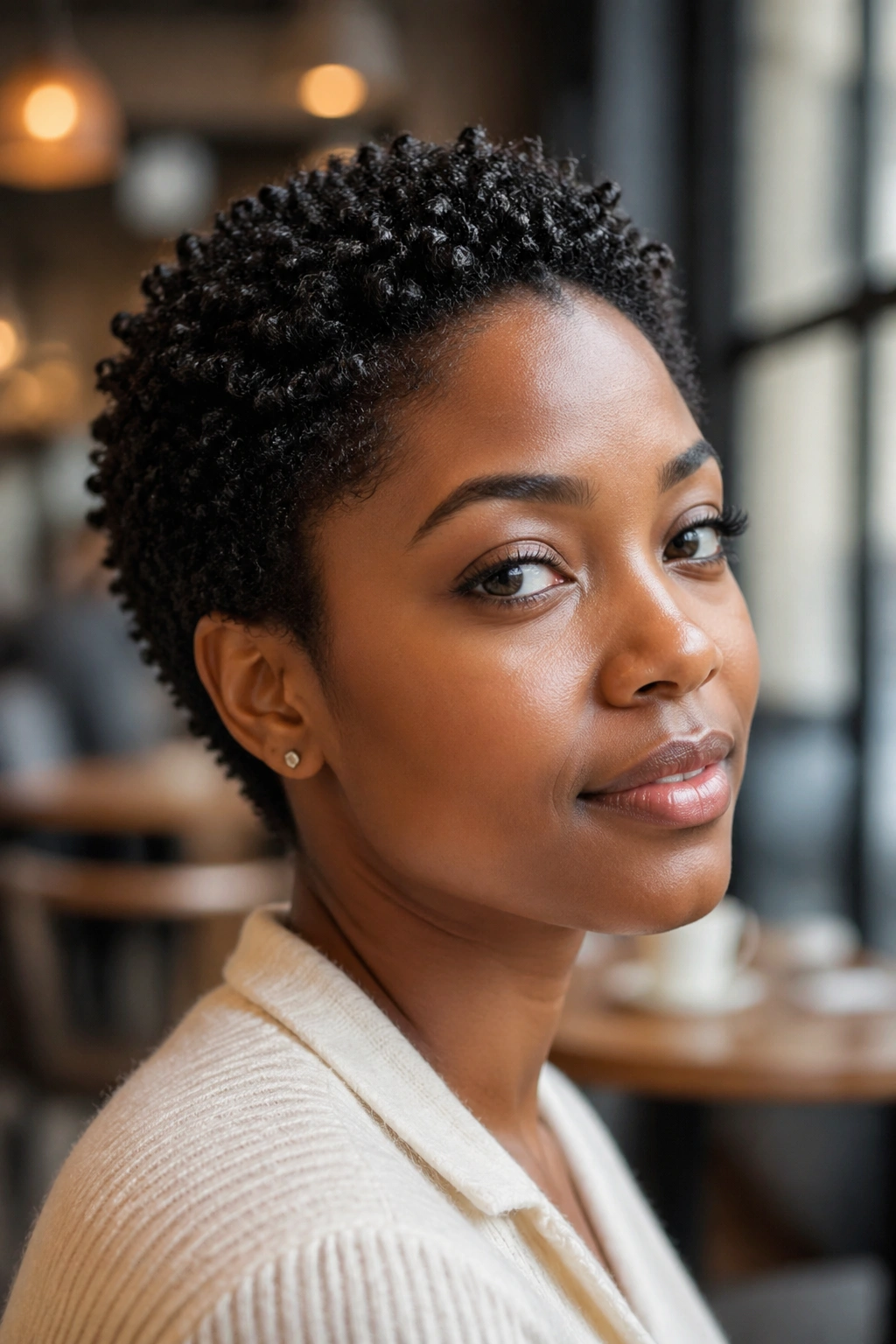
A wash-and-go on short afro hair is not lazy. It is exacting. There is nowhere for bad technique to disappear, so the style rewards clean product choice, even tension, and a little restraint.
Start with freshly washed hair that still has some slip in it. Short curls need enough water to clump, and that clumping is what gives the style its shape. I like a light leave-in followed by a gel with enough hold to make a soft cast. If you rake the product through dry hair, the texture can look patchy and the ends often puff in odd directions.
The fastest way to make this style work is to apply product in sections while the hair is still damp enough to feel cool in your hands. Rake the product through, then smooth the surface with your palms. If your hair is dense, use your fingers to encourage the curls to group together near the roots, not just at the ends. That tiny detail changes the whole look.
Do not touch it too early. Seriously. A wash-and-go on short natural hair can look a little crunchy before it looks finished, and that temporary cast is doing the job you asked it to do. Once the hair is dry, break the cast with a drop of oil or a tiny bit of cream on your hands, then pick the roots if you want a little lift.
3. Mini Twist-Outs That Add Soft Volume
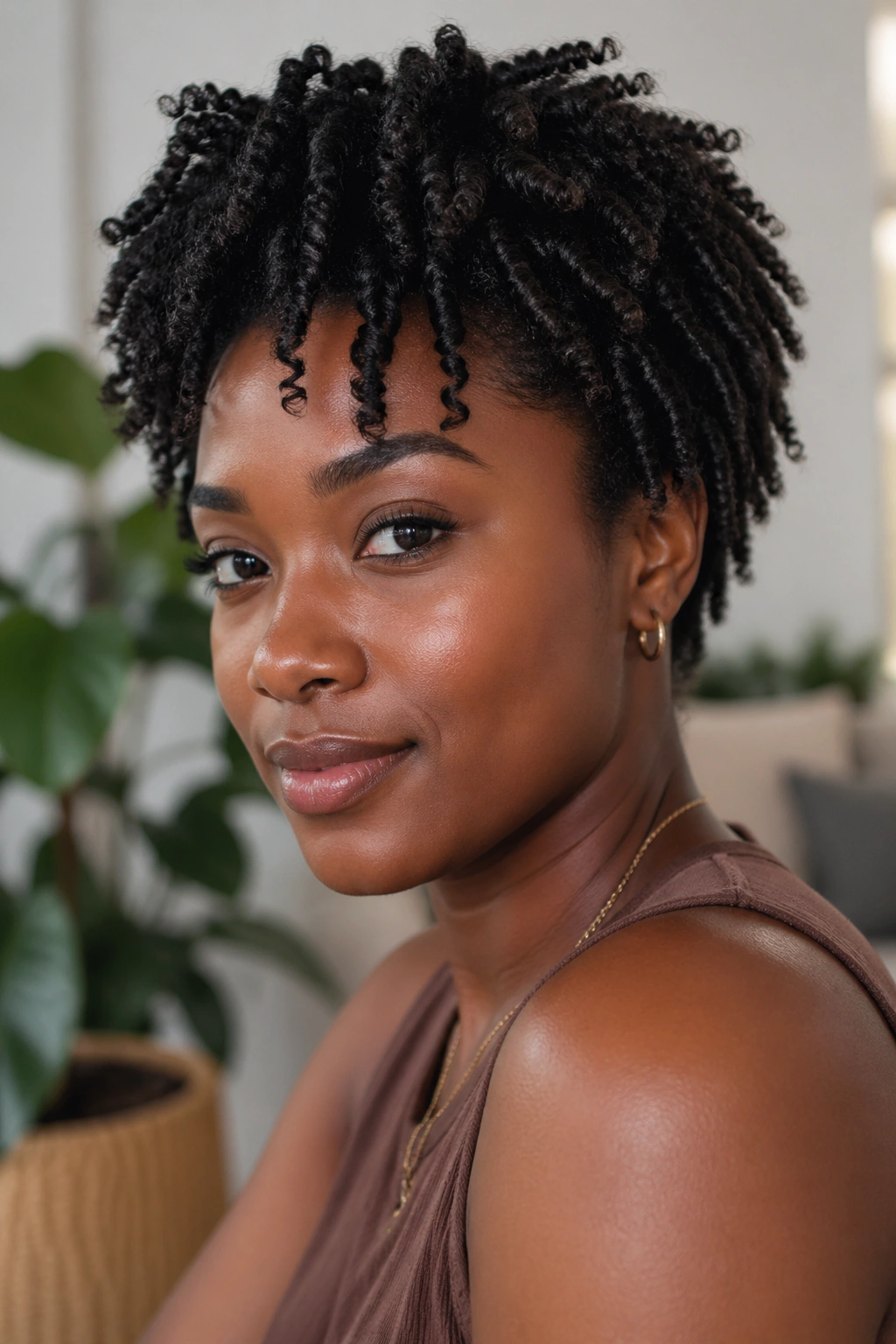
Twist-outs on short hair can look better than they do on longer hair. The reason is simple: less length means the pattern sits tighter, so the wave comes out compact, soft, and easy to control instead of stringy.
The Part Size Matters More Than People Think
Small twists give you definition. Slightly larger twists give you a softer, fluffier finish. On short afro hair, I usually like sections somewhere around 1/4 to 1/2 inch, depending on density. If your hair is very tight and shrinks fast, smaller sections help the twist-out hold its shape after you take it down.
Twist on damp hair with a cream that gives slip, not grease. The twist should feel smooth as you form it, and the ends should tuck in neatly rather than sticking out like little springs. If the hair feels dry while you are twisting, add a touch more water or leave-in. Dry twisting usually leads to fuzz.
- Keep the twists uniform if you want a tidy finish.
- Make them slightly uneven if you want more body at the crown.
- Sleep in a satin bonnet or on a satin pillowcase.
- Separate once, not three times.
A lot of people ruin twist-outs by pulling them apart too soon. Wait until the hair is fully dry, then use oiled fingertips to open the twists gently. One round of separation is enough. If you keep going, the style turns fluffy in a way that looks less styled and more disturbed by weather.
4. Flat Twists Across the Hairline
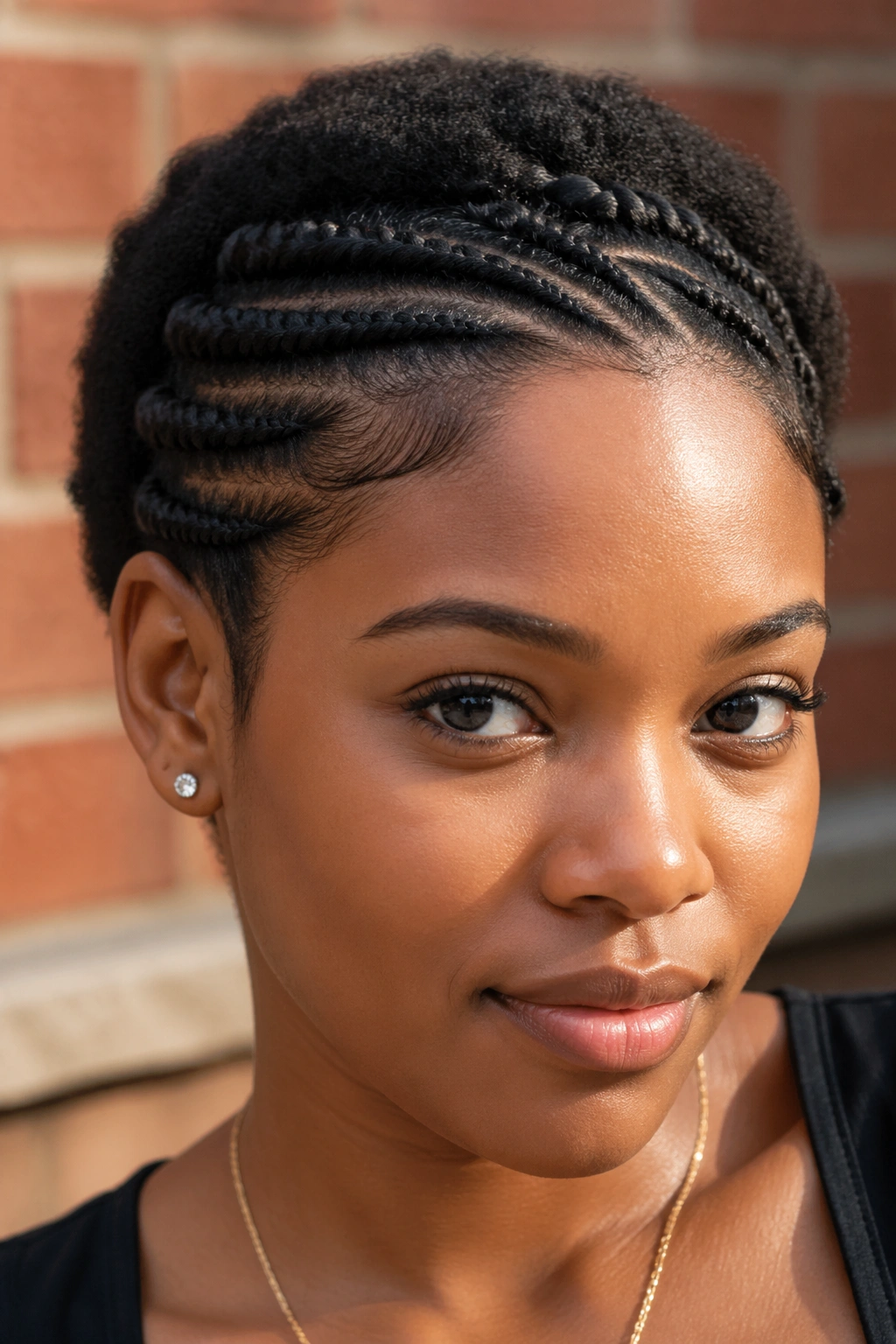
If your edges are acting up or the front section keeps slipping into your eyes, flat twists are the calm, practical fix. They sit close to the scalp, so they tame shorter pieces at the temples and hairline without making the style look stiff.
Where to Direct the Twists
You can twist straight back for a clean, simple look. You can also angle them slightly toward the crown, which gives a softer shape and helps the front look fuller. On short afro hair, that direction matters because the wrong angle can make the style look flat on one side and lumpy on the other.
Use a small tail comb to make parts, then smooth each section with a little gel or mousse before twisting. The grip should feel controlled, not wet and slippery. If the hair is too slick, the twist will collapse. If it is too dry, the braid-like ridge will look fuzzy before you finish the second section.
A few flat twists can do a lot:
- Hide awkward regrowth around the temples.
- Frame the face without needing pins everywhere.
- Make a short cut look deliberate for work or a night out.
- Leave the ends loose, then tuck them under with a bobby pin if you want a cleaner finish.
One tiny part change can shift the whole style. A center part feels sharper. A side part feels softer. A diagonal part gives the most movement, which is why I reach for it when I want the hair to look styled without looking fussy.
5. Mini Bantu Knots With Clean Parting
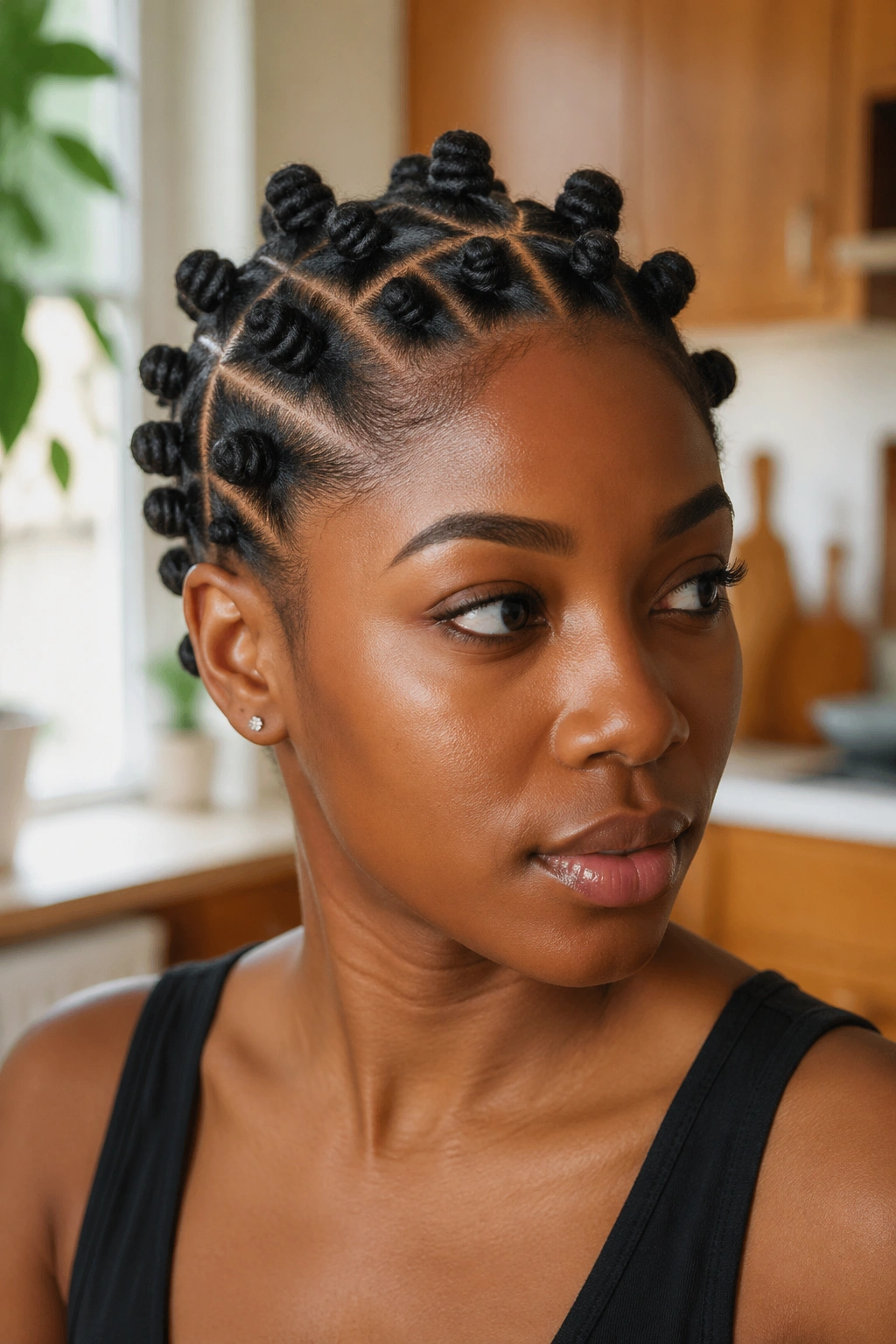
Why do mini Bantu knots work so well on short afro hair? Because the style uses the hair’s own coil pattern instead of asking it to stretch into something it does not want to be. The result is neat, compact, and a little sculptural, which is exactly why it keeps showing up on short natural hair.
The size of the knot matters more than people think. Tiny knots look tidy and give you lots of texture when you take them down later. Slightly larger knots read softer and sit lower on the head, which can be useful if your hair is thick and you do not want the style to look crowded.
What Size Looks Best
For a very short cut, keep each section close to the size of a nickel or a dime, depending on density. Twist the section until it starts to coil around itself, then wrap it flat against the scalp. If the hair resists, do not force it; add a little leave-in or cream and try again.
This style is worth the drying time. That part is boring. It also matters.
Mini Bantu knots are great when you want:
- A protective style that keeps the ends tucked away.
- A knot-out for the next day with soft, springy texture.
- Something neat enough for a dinner, rehearsal, or interview.
- A low-manipulation style that does not need constant fixing.
If you plan to wear the knots out, let them dry completely before you touch them. Damp knots unravel fast, and once that happens the whole shape gets fuzzy at the base. A satin scarf helps at night, but the real trick is patience. The best knot-outs usually come from hair that was left alone long enough to finish setting.
6. A Tapered Frohawk With Height at the Center
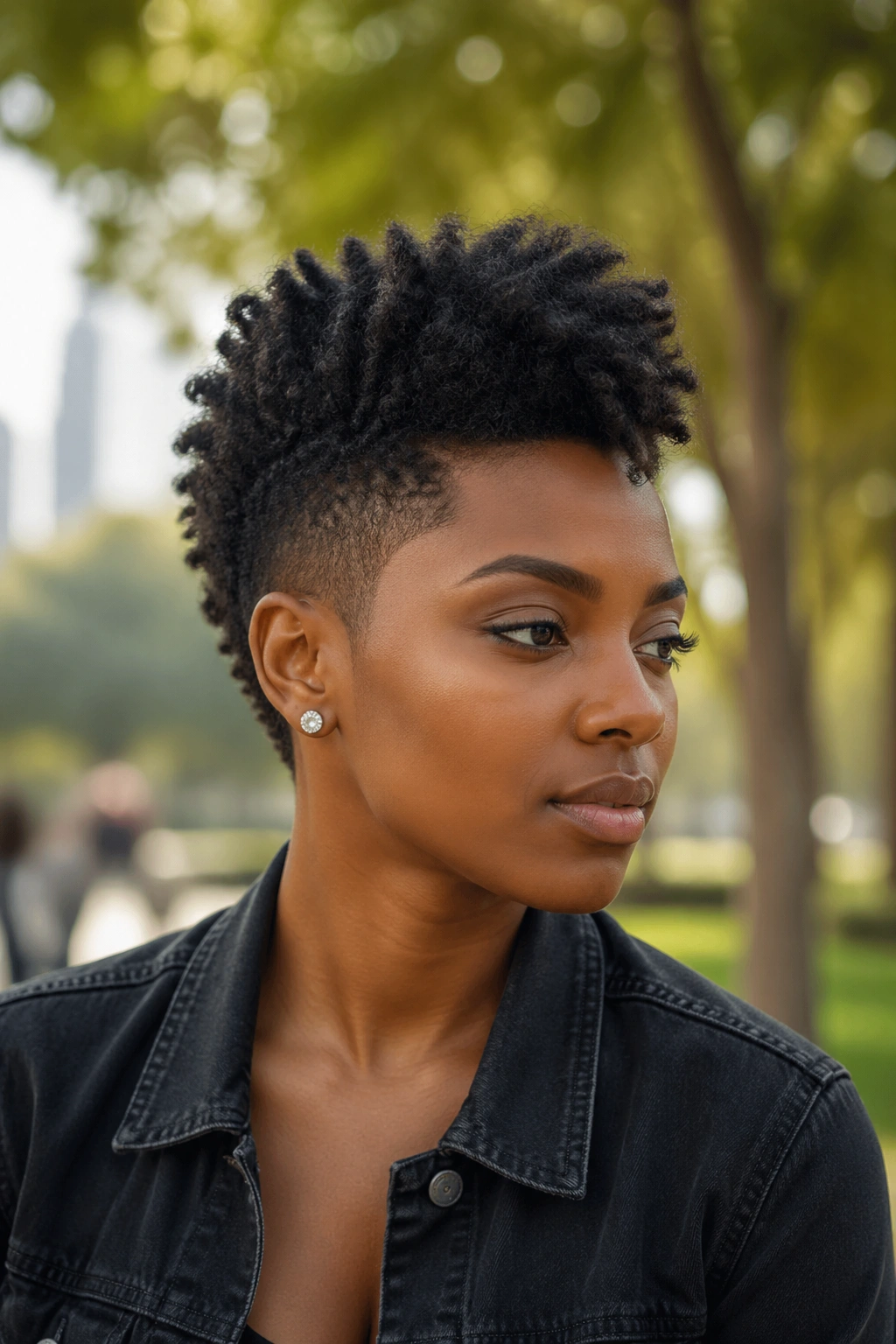
A tapered frohawk is the most efficient way to get attitude without asking short hair to do too much. The sides stay close and neat, while the center strip carries the volume. That contrast is the whole trick.
You can get there with a cut that already has tapered sides, or you can fake the shape for a day with gel and strategic pinning. Either way, the eye reads height first, then outline, then texture. That makes the style feel bold even when the hair is only a few inches long.
Ask for the Taper
If you are talking to a barber, ask for:
- A low taper around the ears.
- A slightly longer strip through the center.
- A rounded top rather than a pointy one.
- A clean neckline so the shape stays crisp as it grows out.
For styling, lift the center with a pick at the roots and smooth the sides down with a small amount of gel or edge control. You do not want helmet hair. You want control at the sides and movement at the middle.
This is one of my favorite short afro hairstyles because it works for people who want edge without losing softness. It also grows out in a way that still makes sense for a while, which is more than I can say for some cuts that go sideways the second the clippers leave the room.
7. A Clean Side Part With a Sculpted Shape
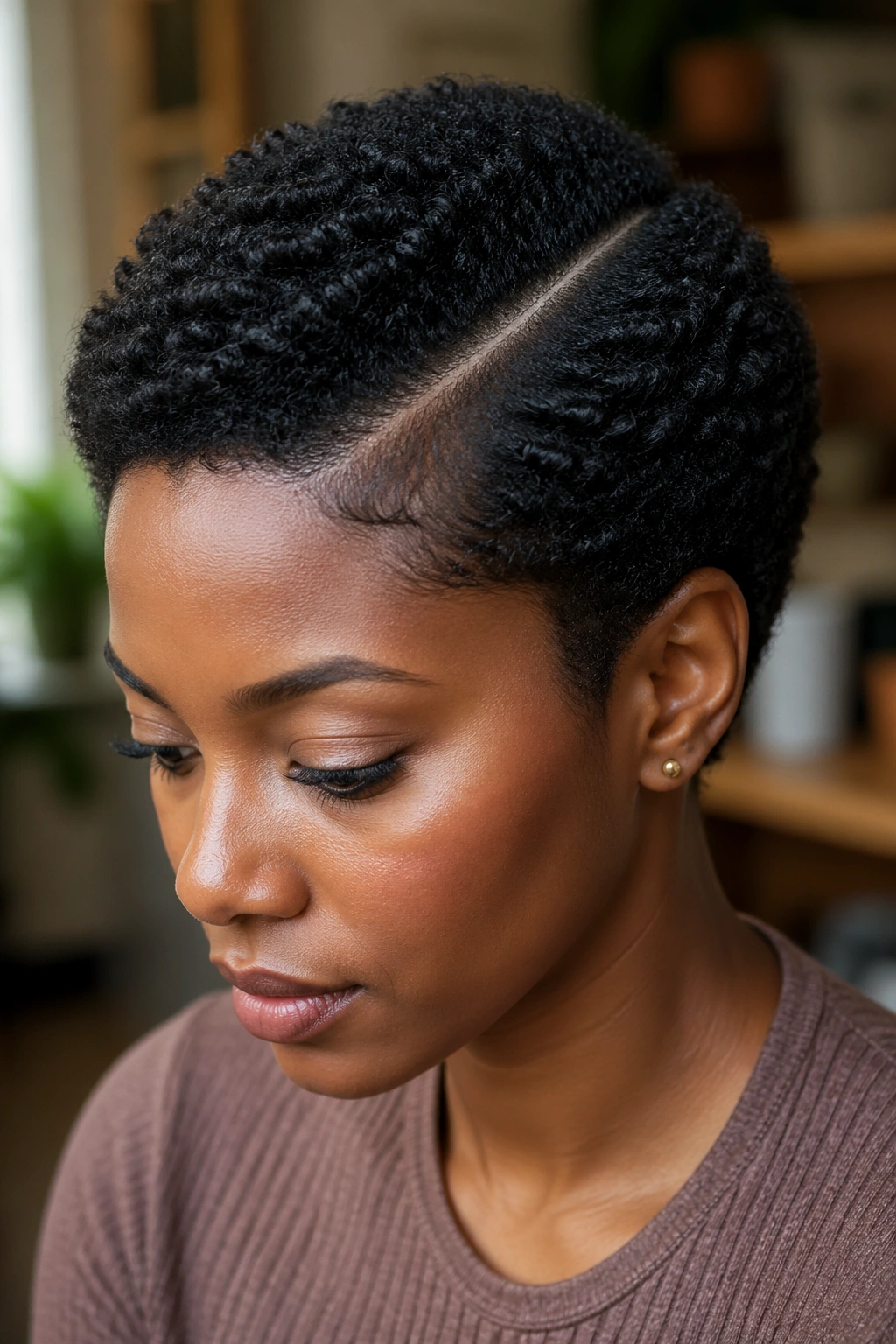
I like a clean side part on short afro hair because it does a lot with almost nothing. One diagonal line changes where the eye lands, and that shift can make a short cut look sharper, taller, or softer depending on how you set the rest of it.
The part works best when the hair is damp and stretched just enough to cooperate. Use a tail comb to draw the line, then clip one side away while you shape the other. A small amount of gel at the root helps the part stay visible, but do not drown the hair in product. A greasy side part tends to collapse into the scalp and lose the shape you were trying to create.
I especially like this style when the hair has uneven growth around the crown. The part gives the style a direction, which can make the whole cut feel intentional even on a grow-out stage. It also flatters a lot of face shapes because you can move the line closer to the temple or farther back depending on how much forehead you want to show.
The best side parts are not stiff. They have a soft lift at the root, a little shadow from the part itself, and enough texture left in the body of the hair that the style still feels like afro hair, not a flattened version of it.
8. Curl-Sponge Texture for a Quick Rough-and-Ready Style
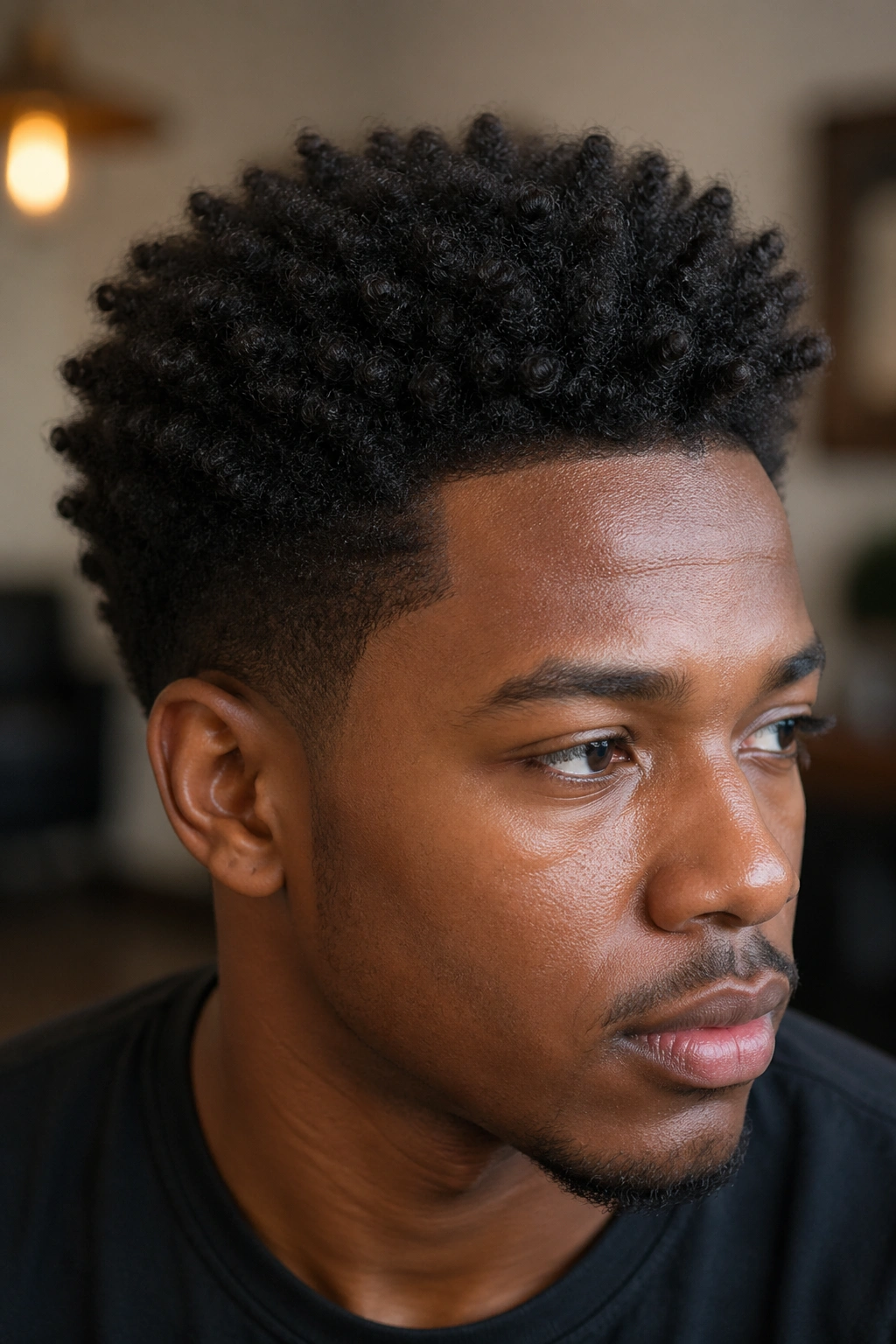
Curl-sponging is what you reach for when you want short afro hair to look active and textured in a hurry. It is not delicate. It is fast, and if you use it with a light hand, it can give the top of the hair a more separated, textured finish in minutes.
The hair should be damp, not dripping. Add a small amount of leave-in or curl cream first, then move the sponge in small circles over one section at a time. The motion should feel light and steady. Hard pressure is the mistake. It roughs the hair up too much and can make the cuticle look frayed instead of defined.
A sponge works best on hair that is already a little coiled or tightly curled. If the hair is longer than an inch or so, you may get more texture than shape, which is fine if that is what you want. If you need more control, use the sponge only on the top and leave the sides mostly untouched.
- Use the sponge for 30 to 60 seconds per section.
- Stop as soon as the curls start grouping together.
- Finish with a tiny bit of oil on your palms.
- Clean the sponge often so old product does not drag through the hair.
I do not love this style for every day, but on rushed mornings it earns its place. It gives short natural hair a rough, lively look that feels deliberate without asking for much precision.
9. A Headband or Scarf Tuck for Bad-Hair-Day Rescue
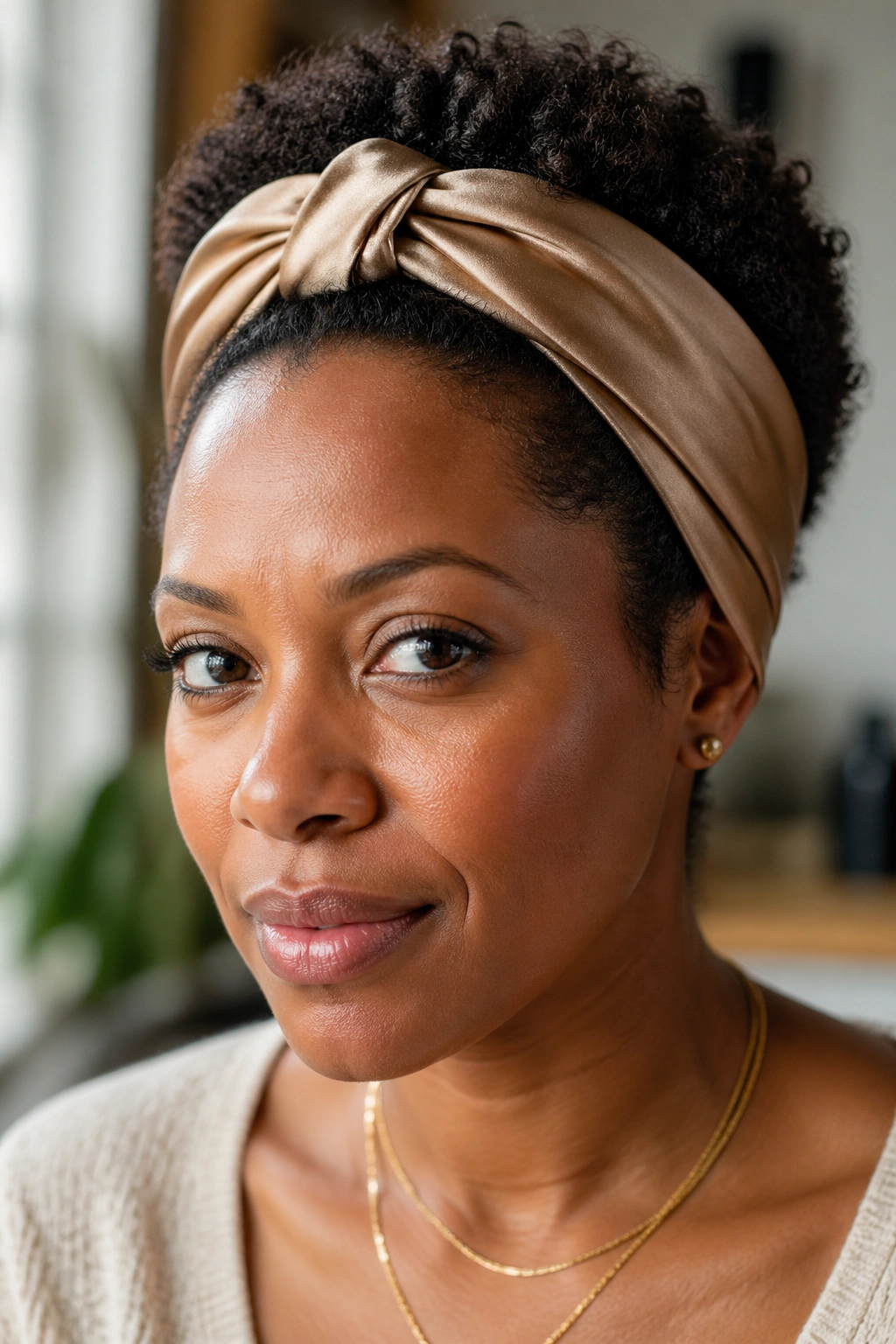
What if you want the hair out of your face without flattening the shape? A headband or scarf tuck is the answer, and on short afro hair it can look polished instead of like a fallback.
Choose the Right Band Width
A band that is about 2 to 4 inches wide usually works best. Anything thinner can dig in and leave a dent. Anything too thick can overpower the hairline and hide the shape you want to keep visible. Satin or silk is kinder to the hair, especially if you are trying to avoid frizz around the front.
Use the band to guide the hair backward or sideways, then tuck the shorter pieces near the temples with a bobby pin if needed. A scarf gives you more room to play because you can fold it into a narrow strip or keep it wide and dramatic. The main thing is not to crush the crown. Leave a little height up top so the style still has breathing room.
This works well with a twist-out, a wash-and-go, or even a grown-out finger coil set. It can also rescue hair that is on day three and not cooperating. The style feels relaxed, but the shape still has to be clean. A crooked band or a sagging tuck makes the whole thing look accidental, which is not the mood.
Keep one ear slightly visible if you want the style to feel lighter. It sounds small. It changes everything.
10. Sculpted Finger Waves on Very Short Hair
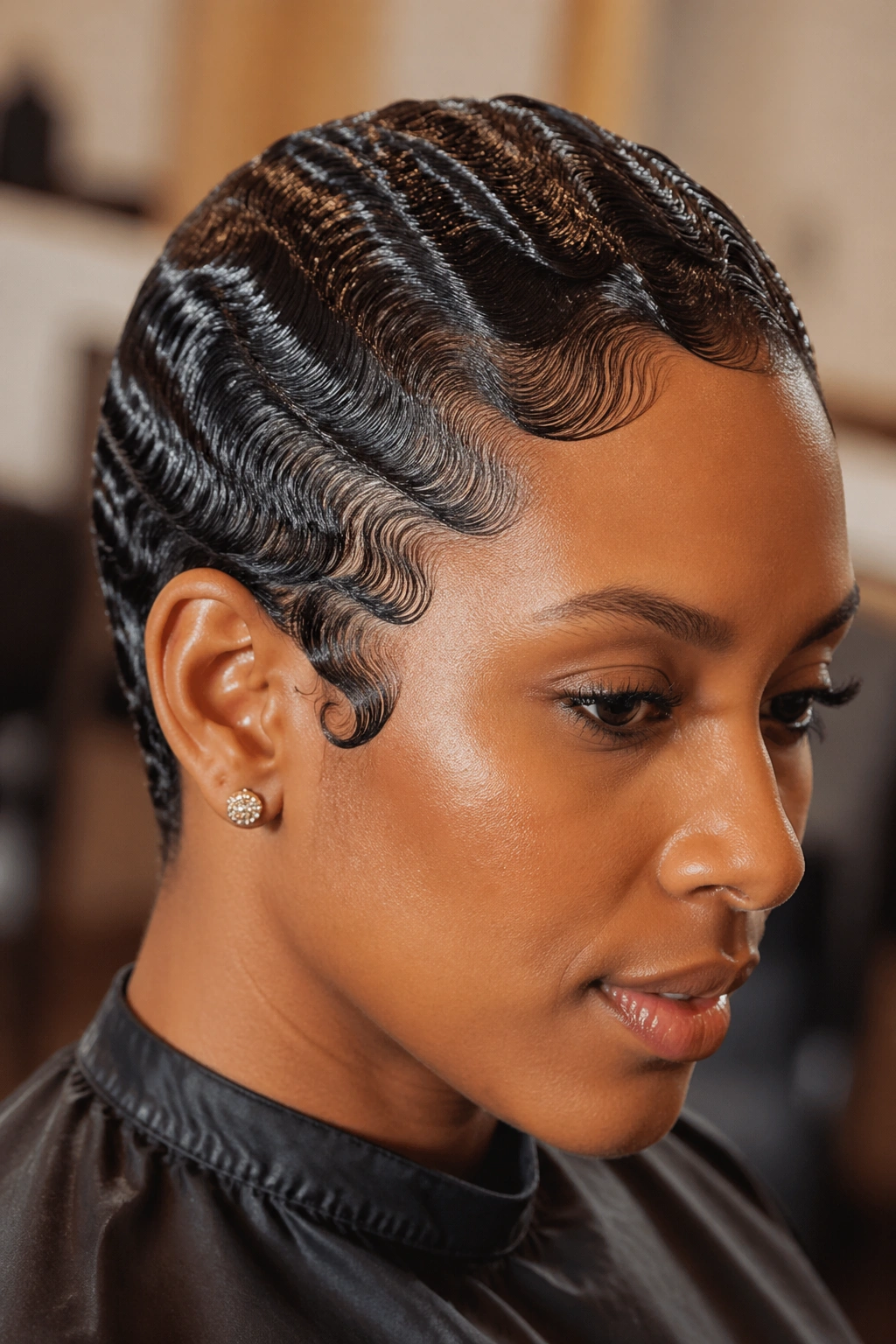
Short afro hair can hold finger waves if you give it enough gel and enough patience. The close length helps, because the waves sit near the scalp and do not have to fight gravity as much as they would on longer hair.
The Setting Step Matters
Work on clean, damp hair and use a strong-hold gel or setting foam, depending on how coarse your texture is. A fine-tooth comb helps push the hair into the S-shaped ridges, while your fingers hold the curve in place. Clip each ridge if needed while you move across the head. That little pause keeps the wave from collapsing before it sets.
This style is a sit-still style. It is not a rush-job style. If you do not let it dry fully, the waves loosen and lose the crisp shape that makes them worth doing.
A few things help:
- Use small sections and keep the parting clean.
- Comb in one direction, then form the next ridge back the other way.
- Let the gel sit long enough to dry hard before you touch it.
- Smooth the surface with a scarf after styling so the waves stay close to the scalp.
Finger waves can look sharp and elegant, but they are not forgiving. If you like a soft, fluffy finish, this is not your style. If you want the hair to sit close and look carefully molded, it is hard to beat.
11. Twist-and-Pin Side Sweeps for Events and Photos
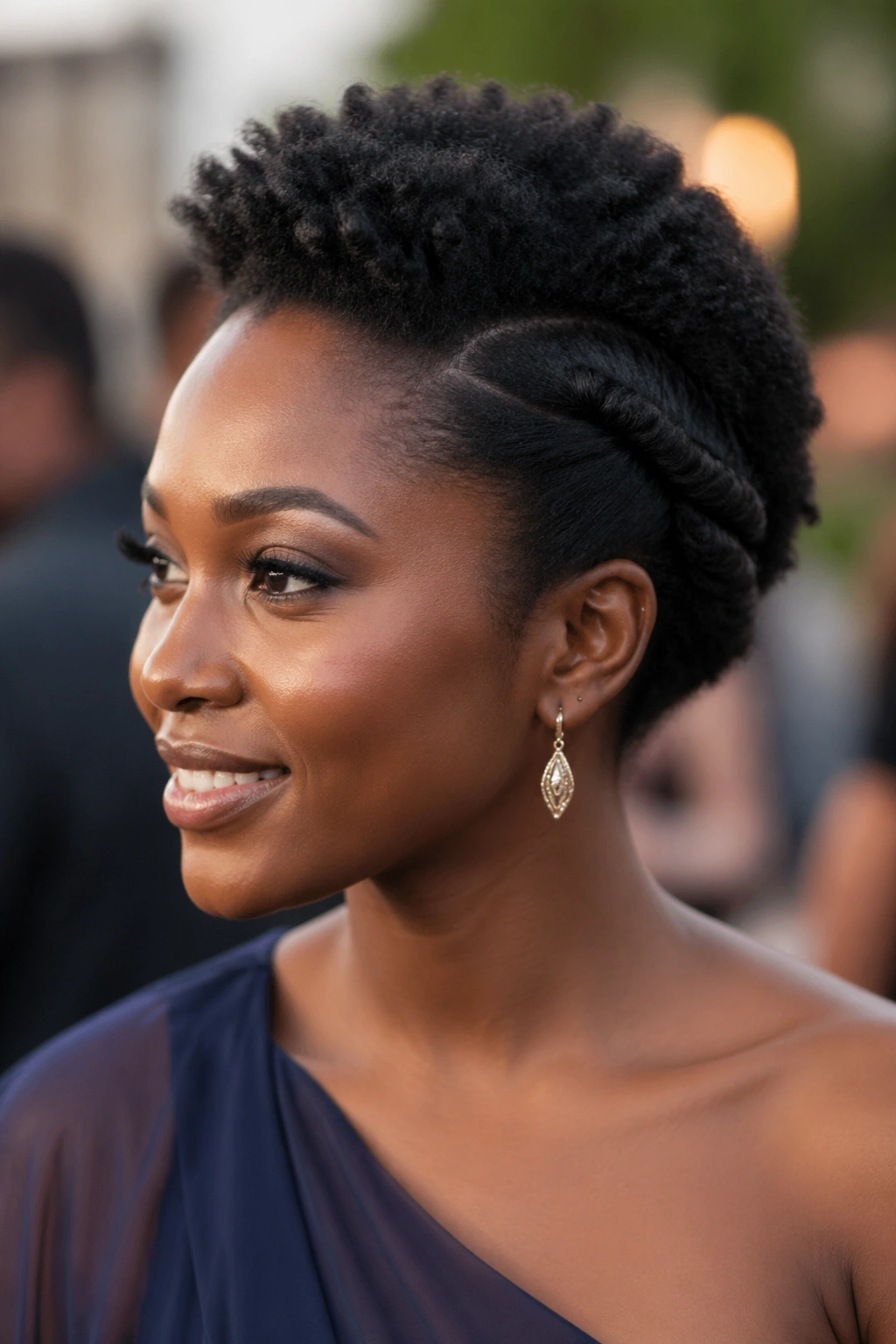
Unlike a full updo, a twist-and-pin side sweep keeps the texture visible. That is why I like it for short afro hair when the plan is to look dressed up without losing the character of the curls.
Start by parting off the front or top section you want to sweep across. Twist those pieces back toward one side, then pin them low behind the ear or just above the nape. Leave the crown a little airy so the style has some lift. If the hair is short enough that the twist ends are too tiny to hide, tuck them under with flat pins and let a small curl pop out if it wants to.
This style works best when the front hairline is neat. A little edge control at the temples can help, but do not use so much that the front looks pasted down. The point is control, not stiffness.
What I like about this one is how flexible it feels:
- Works with a side part or a center part.
- Can be dressed up with a single clip.
- Fits weddings, dinners, or any event where you want your hair off your face.
- Still looks like your hair, not a borrowed idea.
If you have ever wanted a style that sits between casual and formal, this is it. It is one of the easiest short afro hairstyles to make look polished without much length.
12. A Shaped Afro With a Sharp Line-Up
Sometimes the best hairstyle is the haircut itself. A shaped afro with a sharp line-up can do more for short afro hair than a pile of product ever will, because the silhouette does the work before styling even starts.
The outline matters first. A rounded top, clean temples, and a neat neckline give the hair a frame, and that frame is what makes the texture look intentional. If the cut is too flat at the top, the style can look heavy. If the sides are allowed to spread too far, the shape turns fuzzy fast. A good line-up keeps the edges in conversation with the curl pattern instead of fighting it.
I like this style especially on short natural hair that has a little density. The pick lifts the roots, the shape holds the eye, and the clean edge gives the whole thing some order. You can keep it matte and soft, or add a tiny bit of sheen if you want the curls to look richer. Either way, the haircut does most of the talking.
A shaped afro also makes life easier in a practical way. It grows out more gracefully than a style that depends on perfect parting every morning. That matters. A cut that still looks decent two weeks later is worth more than one that only works under ideal conditions.
Short afro hair does not need length to feel styled. It needs a shape that makes sense, a finish that matches the texture, and enough care that the hair looks like it was meant to be that way.
