



Cute afro hairstyles for little girls have a way of making an ordinary morning feel a little sweeter. A neat puff, a soft twist, or a few tiny braids can change the whole mood before shoes are even on.
The trick is not forcing the hair into something it does not want to be. Coily and kinky textures look their prettiest when they still have room to bounce, shrink, fluff up, and move. Tight styles can look crisp for about five minutes and then turn into a tugging match. Nobody wants that.
A child’s hair also changes fast. One week it sits at the crown in a puff that feels easy; the next, the same puff needs a wider band, a cleaner part, or a little more stretch because the hair has filled out. That’s normal. The best styles work with the hair that’s there, not the hair you wish was there.
I’m a fan of styles that look put together but still let a little girl run, climb, nap, and laugh without touching her head every ten minutes. Soft satin bows, gentle parts, and low-tension sections make a bigger difference than most people think. You can keep things sweet, practical, and playful at the same time.
1. High Puff with a Satin Bow
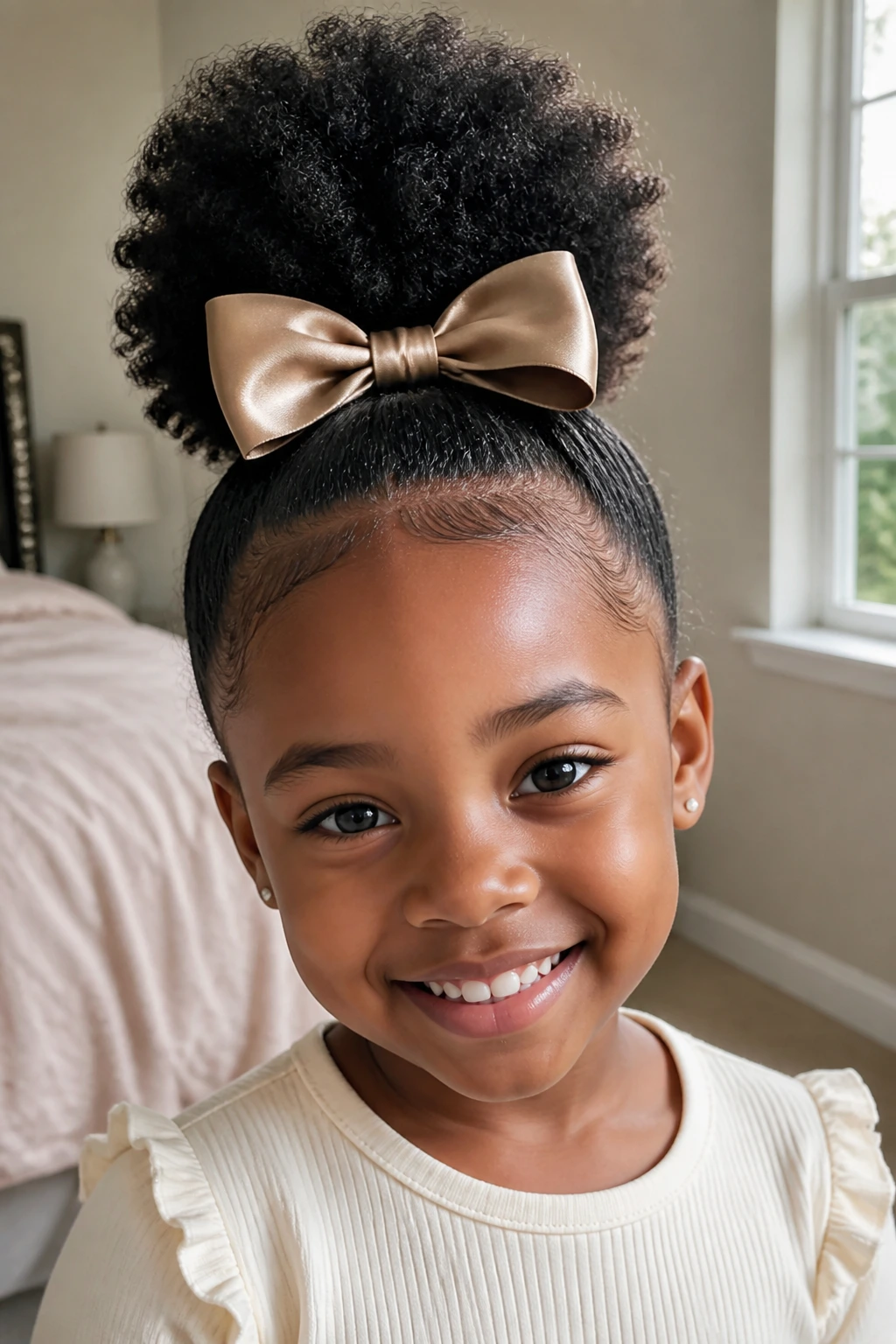
A high puff is one of those styles that earns its keep fast. It lifts the hair up, shows off the texture, and leaves the neck and shoulders clear, which is a blessing on a busy day.
Why it works so well
The shape is cheerful without trying too hard. Gather the hair at the crown with a soft brush or your fingers, smooth the base just enough to shape it, then stop before you start tugging. A puff should sit snug, not tight. If the child keeps reaching back and rubbing the base, it’s too much.
I like this style best when the hair has a little stretch from a twist-out or a light blow-dry on cool, low heat. That gives the puff more height and helps the curls form a round shape instead of collapsing flat. A satin bow at the base or slightly above the puff turns it into a picture-day style without adding much fuss.
If you want the cleanest finish, mist the hair lightly, add a touch of leave-in, and use a wide elastic that won’t snag. A little gel at the front can help the puff stay neat through school, but don’t load it up. Heavy product makes the hair feel stiff, and kids notice that fast.
Tiny tip: place the bow where the child can see it in the mirror. They always care about that part.
2. Two Puff Pigtails with a Clean Middle Part
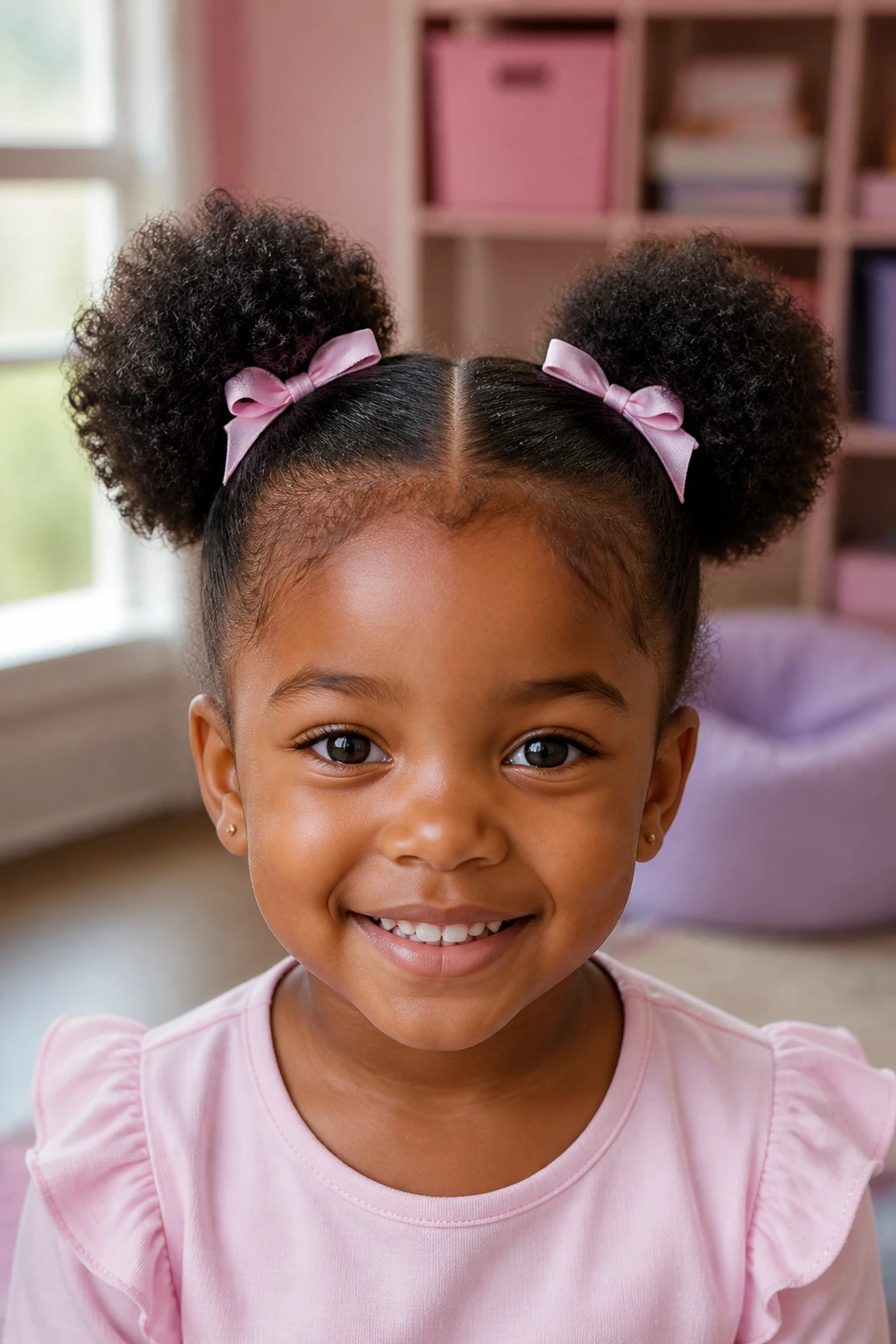
Two puffs are pure charm. They look playful, they balance thick hair nicely, and they work when a child wants something cute that still feels light.
The middle part matters more than people think. Use a tail comb or the edge of a rat-tail comb to draw a straight line from the forehead to the nape, then smooth each side separately. If the hair is very dense, make the puffs slightly above the ears so they sit away from the face and keep their shape. A clean part gives the whole style its neat little frame.
This style is especially nice for girls who like to wear clips, ribbons, or small barrettes. You can keep both puffs even, or make one a little higher if that suits the hair’s natural density. I prefer a small ribbon at the base of each puff over giant bulky bows. It looks lighter and stays in place better.
There’s also a practical bonus: the style is easy to refresh. If one puff gets flattened during play, fluff it back out with clean hands, smooth the base once, and move on. No drama. No full redo. That alone makes it a keeper.
3. Mini Twists into a Side Bun
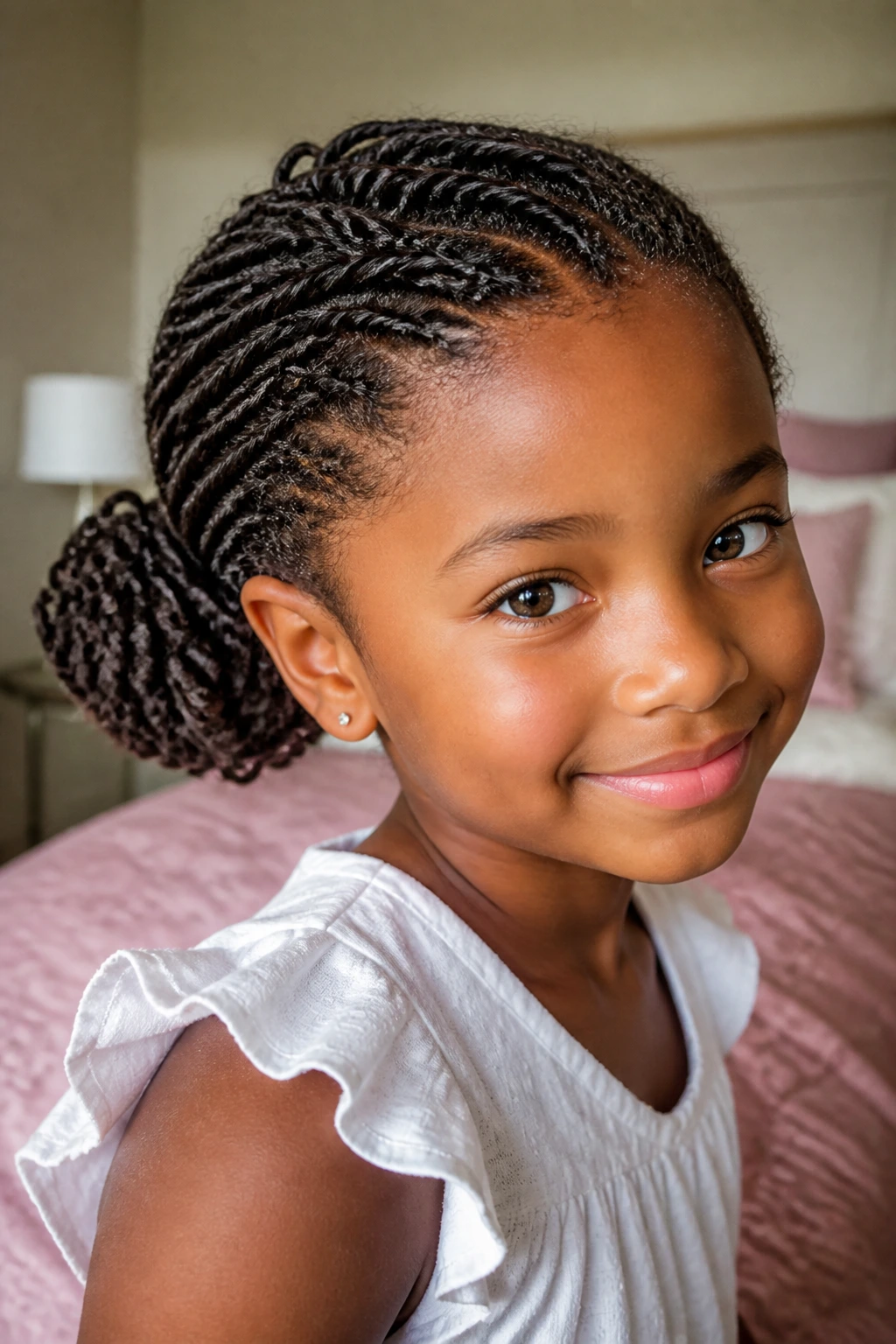
Tiny twists are underrated. They look tidy, they hold shape well, and they can be arranged into a side bun that feels dressy without looking stiff.
What makes this style hold up
Mini twists keep the hair stretched, which helps with tangles later. Start with well-moisturized sections, twist from root to end, and keep the size consistent so the bun doesn’t look lumpy. Smaller sections give a smoother bun; larger sections make the style look chunkier and a little looser. Both can be cute, but they read differently.
A side bun works well when you sweep the twists behind one ear and secure them low near the opposite side of the head. That off-center placement gives the style a softer shape. It also keeps the face open, which is handy for glasses, headbands, or a child who hates hair touching the cheeks.
- Use a soft elastic at the base before pinning or tucking the twists.
- Tuck the ends under instead of forcing them to lie flat.
- Add one small clip, not four. Too many clips can make the head feel cluttered.
- If the child has very short hair, make the bun smaller and let a few twists stay loose around the edge.
The little detail that helps most is patience. Twist styles reward even parting and gentle hands. Rush them, and they show it.
4. Braided Crown with Free Ends
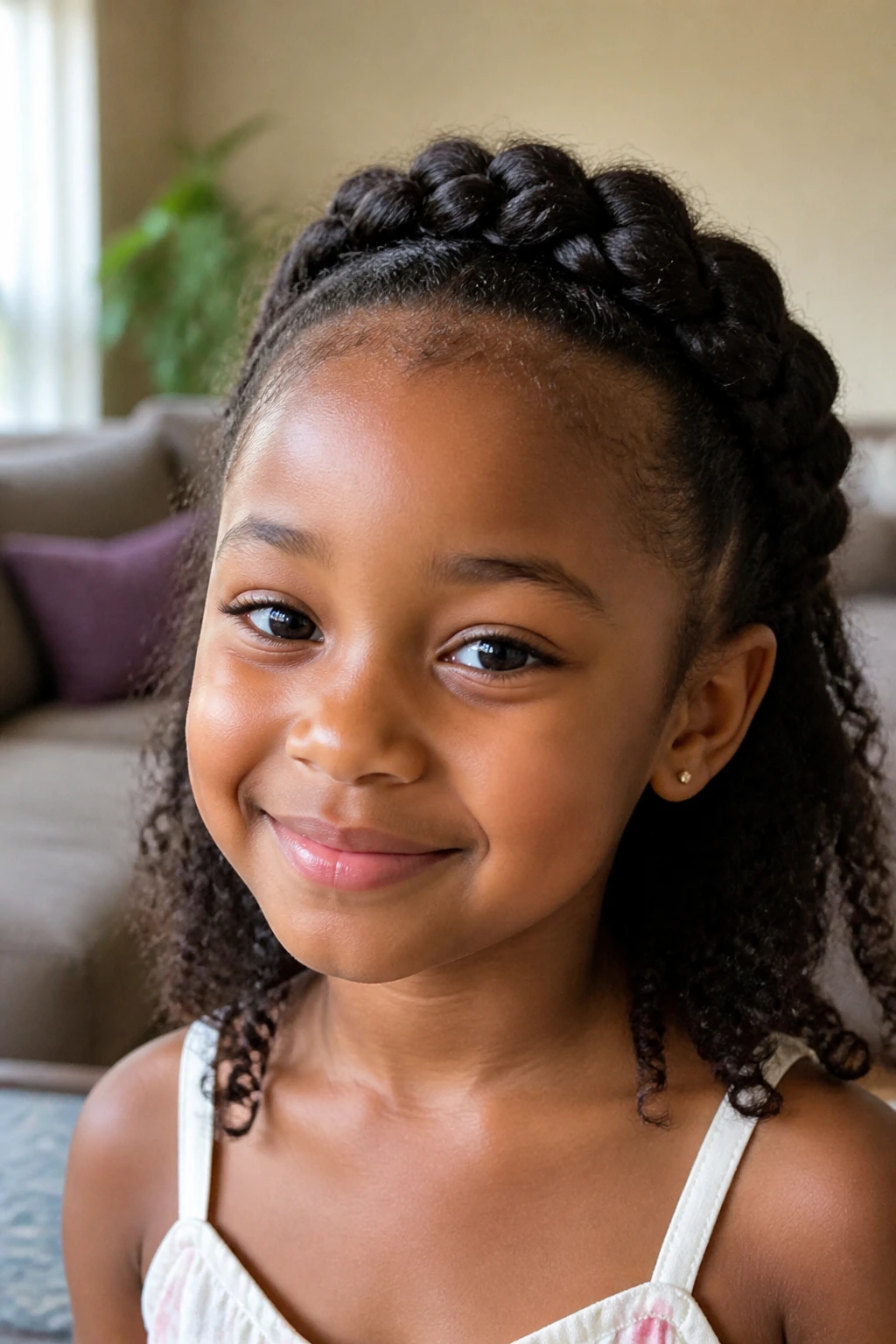
Why do crown styles look so polished on little girls? Because they frame the face without crowding it. The hair sits like a soft halo, and that shape always feels a little special.
A braided crown usually starts near one temple, travels across the top or around the perimeter, then meets the other side. You do not need a tiny perfect braid all the way around for this to work. Two neat braids can do the job just fine if they’re laid close enough to the head and joined smoothly at the back. The free ends can be curled, tucked, or left loose with a few beads.
I like this style for family gatherings, school photos, church, and any day a child wants to feel a little dressed up. It keeps the front tidy, which means less hair in the eyes, and it gives the rest of the hair a chance to keep its texture. The crown shape does the pretty work; the loose ends do the playful work.
A soft edge brush can help smooth the braid path, but don’t chase perfection. A crown that looks handmade and slightly airy is usually more charming than one pulled so tight it loses life. Hair should still look like hair. That’s the sweet spot.
5. Afro Puff Ponytail with Face-Framing Parts
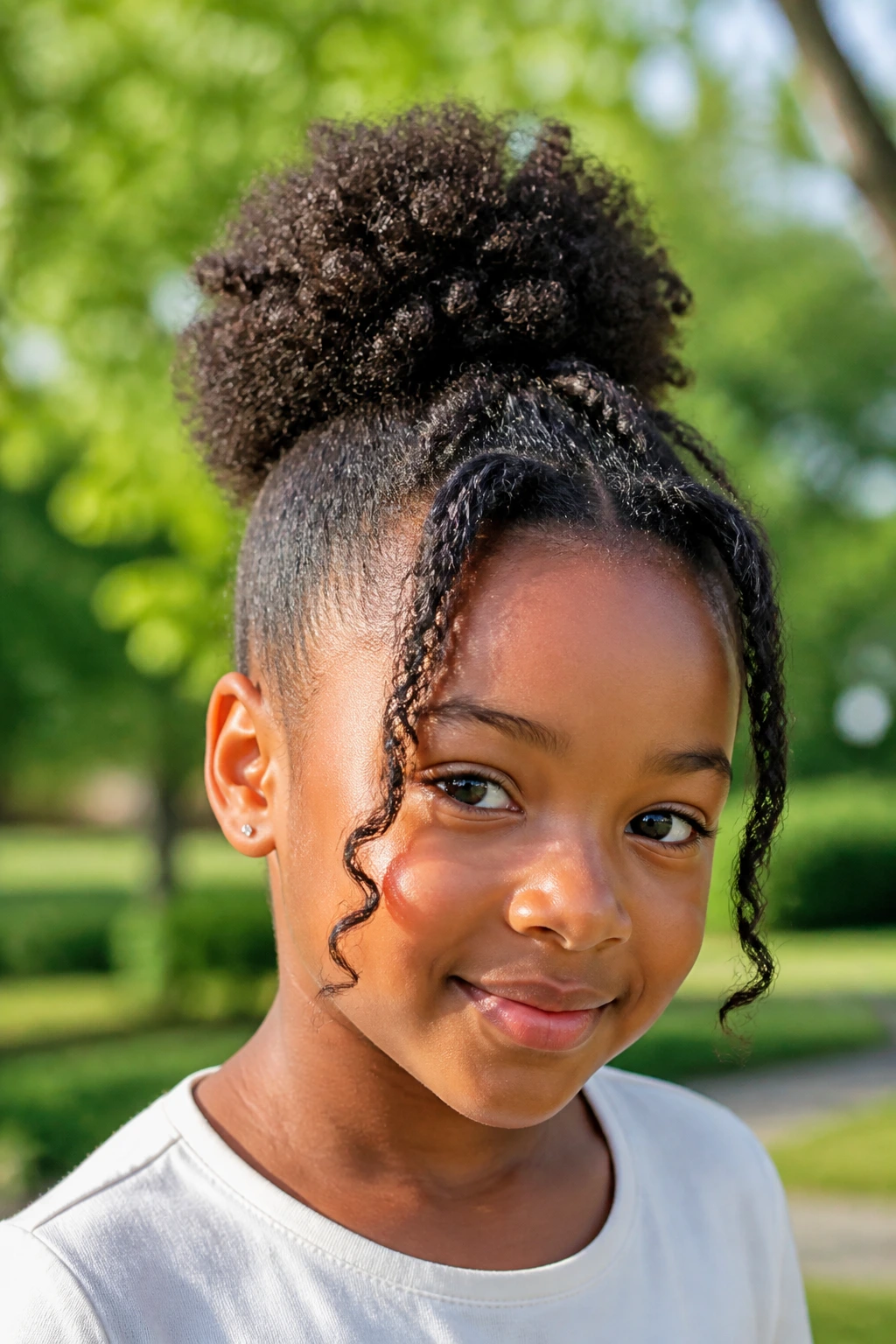
This one is simple, but it never looks boring. A high puff ponytail with a couple of small front sections left out gives the style a softer face and a little more personality.
The front pieces can be flat twists, finger coils, or even just neat parts that hang in soft little sections. That extra bit around the face makes a huge difference on children with round cheeks or fine baby hair that likes to spring out on its own. Instead of fighting it, shape it.
I reach for this style when the hair is medium to long and has enough length to gather cleanly at the crown. If the puff is too low, the front sections can feel disconnected. If it sits too high, the style can pull at the top. Mid-to-high is the sweet zone for most kids. The goal is balance, not height for the sake of height.
A small satin scrunchie works better than a thin elastic because it spreads the hold across more hair. Add a decorative clip near one side of the face-framing section if you want a little sparkle, but keep the clip light. Heavy metal pieces tend to slip on soft curls and annoy little heads.
This is a fast style, but it still looks finished. That’s why parents keep coming back to it.
6. Bantu Knot Buns on a Stretched Afro
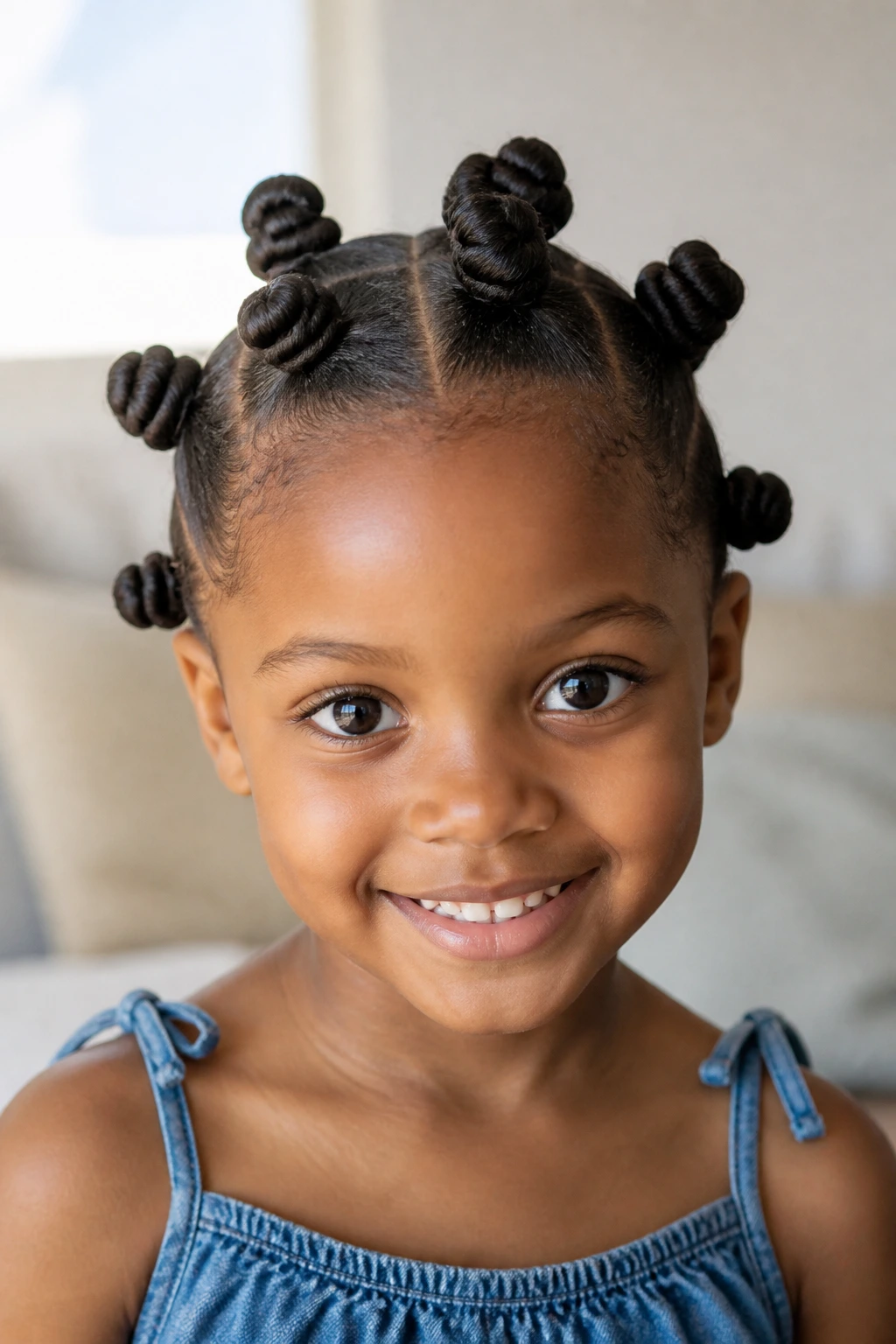
Bantu knots can look bold, sweet, and surprisingly neat on little girls when they’re sized with care. The trick is to keep them medium and rounded, not tiny and too tight.
Unlike a plain bun, Bantu knots create shape all over the head. You can place six, eight, or even ten of them depending on the child’s hair density and the look you want. On shorter hair, they sit more like little buns; on longer hair, they form cleaner spirals. Both versions work. The style gets its charm from the little circles, not from making every knot identical.
I prefer this look when the hair has been stretched first. That makes sectioning easier and helps the knots tuck in neatly. A little cream or butter on each section keeps the ends from fraying while you coil them into place. If the child has a sensitive scalp, keep the parts a touch larger and avoid pulling the hair taut at the root.
The best thing about Bantu knots is that they can do double duty. Wear them as a style for a few days, then take them down for soft curls. That means one styling session can lead to two looks, which is a nice bonus when the morning schedule is crowded and nobody wants to start from scratch.
7. Flat Twists into a Low Puff
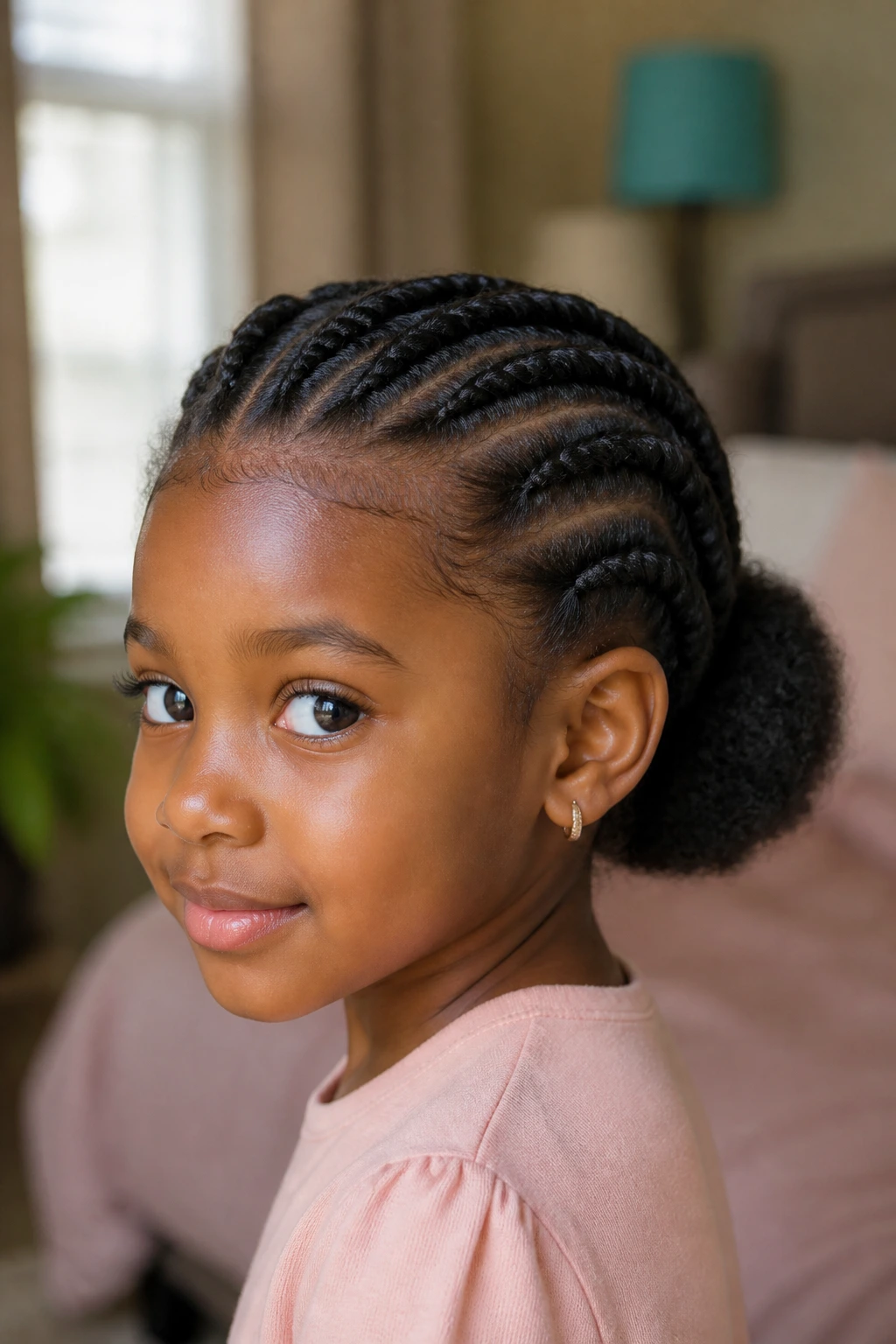
Flat twists at the front with a puff in the back are a smart little combination. The front stays calm, the back stays soft, and the whole thing feels neat without being fussy.
Why this combo works
Flat twists lie close to the head, so they keep the hair out of the eyes and off the forehead. That makes them useful for school days, travel days, and any afternoon full of movement. The low puff at the back gives the style its softness. Without it, the look can feel too tight. With it, the style reads friendly and easy.
I usually part the front into two or four sections, twist each one back toward the crown, then gather the rest into a puff low at the nape. A child with very thick hair may need a slightly looser puff so the base doesn’t get bulky. A child with shorter hair can still wear the style; the puff just sits smaller and closer to the head.
- Keep the twists even so the front looks balanced.
- Secure the puff with a soft band, not a sharp elastic.
- Use a small bow or a fabric flower if you want a dressier finish.
- Refresh the front with a light mist of water and a fingertip of leave-in cream.
The style is neat, but not stiff. That’s what makes it such a steady favorite.
8. Twist-Out with Beaded Ends
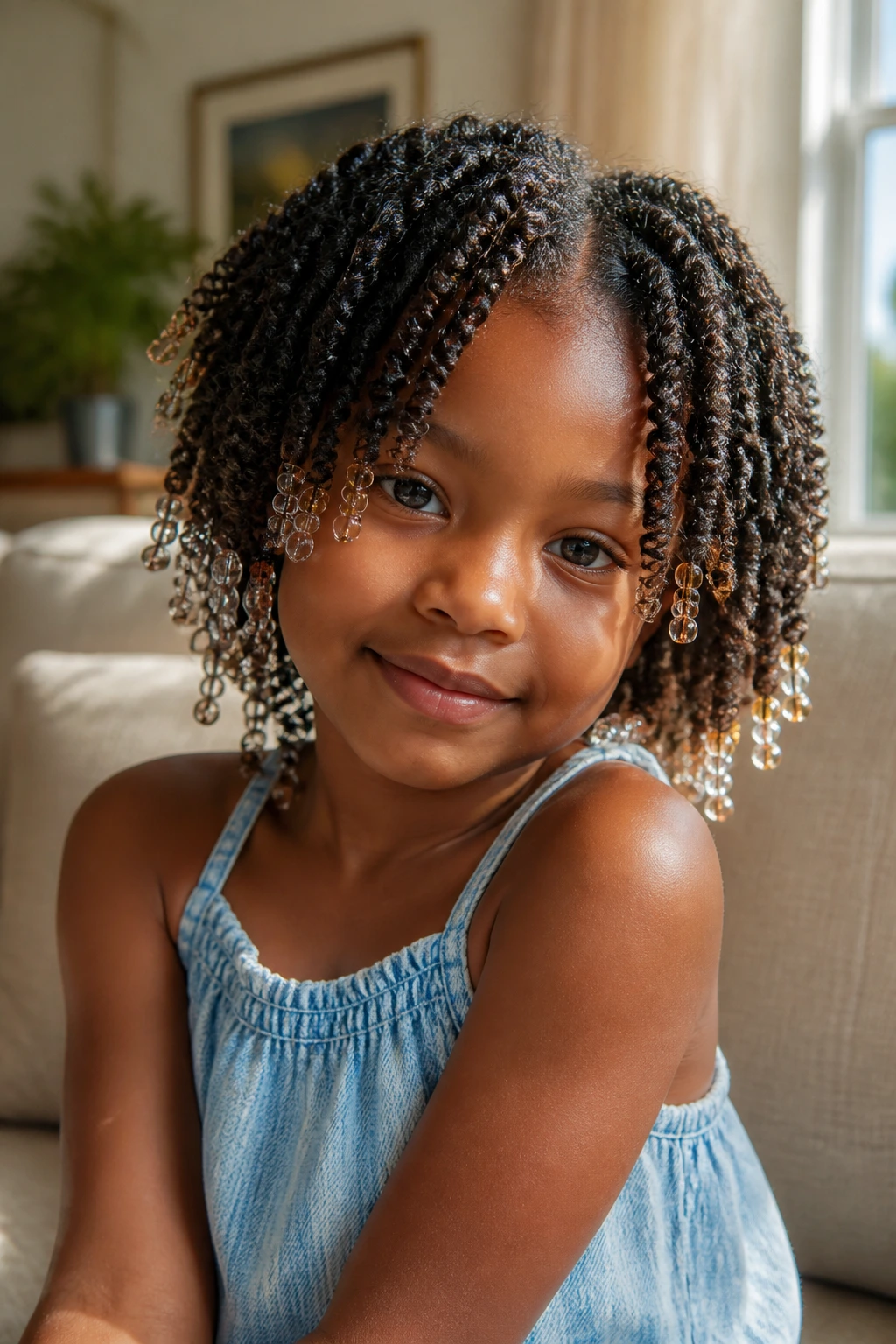
A twist-out on little girls has a soft, fluffy look that feels almost cloudlike. It’s one of the prettiest ways to show off natural texture without locking the hair down too much.
The key is the set. Twist the hair in medium or small sections while it’s damp, let it dry fully, then separate carefully so the curls stay defined. If the hair is still damp when you take it down, the shape falls apart faster and the frizz shows up early. Drying all the way through is non-negotiable if you want the pattern to last.
Beads on the ends can give the style a finished feel, especially when the hair is shoulder-length or a little shorter. Use light beads, not heavy ones. A few on the front twists or the lower layers is usually enough. Too many beads make the style clink and drag, which children notice after about ten minutes of play.
The texture of a good twist-out is what makes it special. Soft, springy, and touchable. Not crunchy. Not greasy. If the curls puff out into a big round shape, that is fine. That is part of the charm. Some styles look better when they’re a little full around the edges.
This one takes more drying time than a puff, but the result is worth it when you want something playful with real texture.
9. Cornrow Front, Curly Back
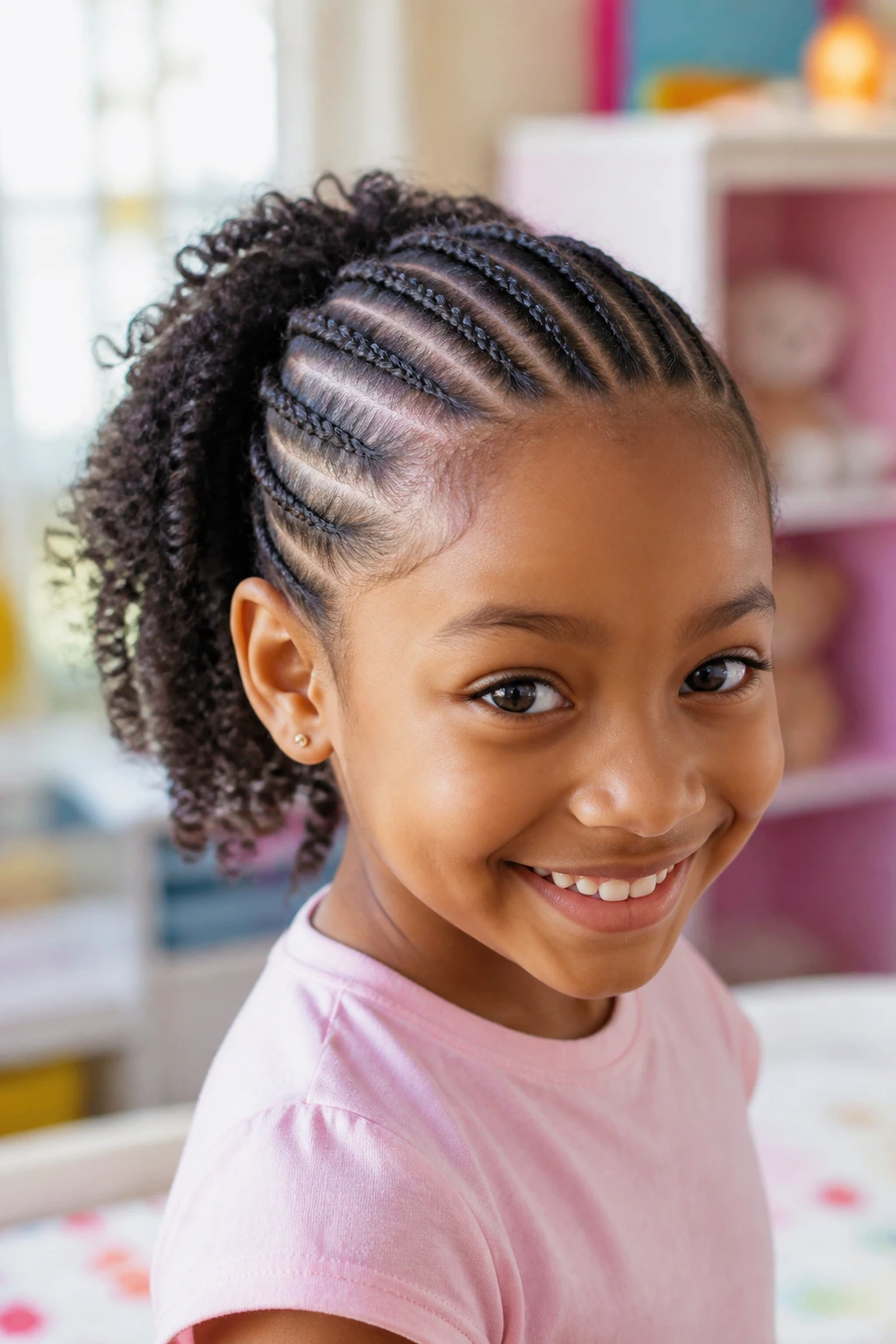
Not every cute style needs a full head of braids. A cornrow front with curly back is proof of that, and I think that’s part of why it’s so useful.
The front cornrows keep the hairline neat and the face open. The back stays loose, so the style still has movement and softness. You can do four, five, or six cornrows across the front, depending on how much hair you want pulled back. The back can be a puff, a set of curls, or simply left in a stretched natural shape.
This is a good choice for active kids because the front stays out of the way. It also works well if a child likes to wear a headband or a little barrette near the front parting. The contrast between the smooth braids and the fuller back makes the style feel balanced, not flat. A neat front and a fluffy back make each other look better.
If you’re worried about the braids being too tight, they probably are. The scalp should not feel sore, and the child should not be wincing when you part the hair. Keep the sections neat, but give them room. That small adjustment makes a big difference by the end of the day.
This style is one of the easiest ways to make natural hair look polished without losing its softness.
10. Space Buns on Natural Hair
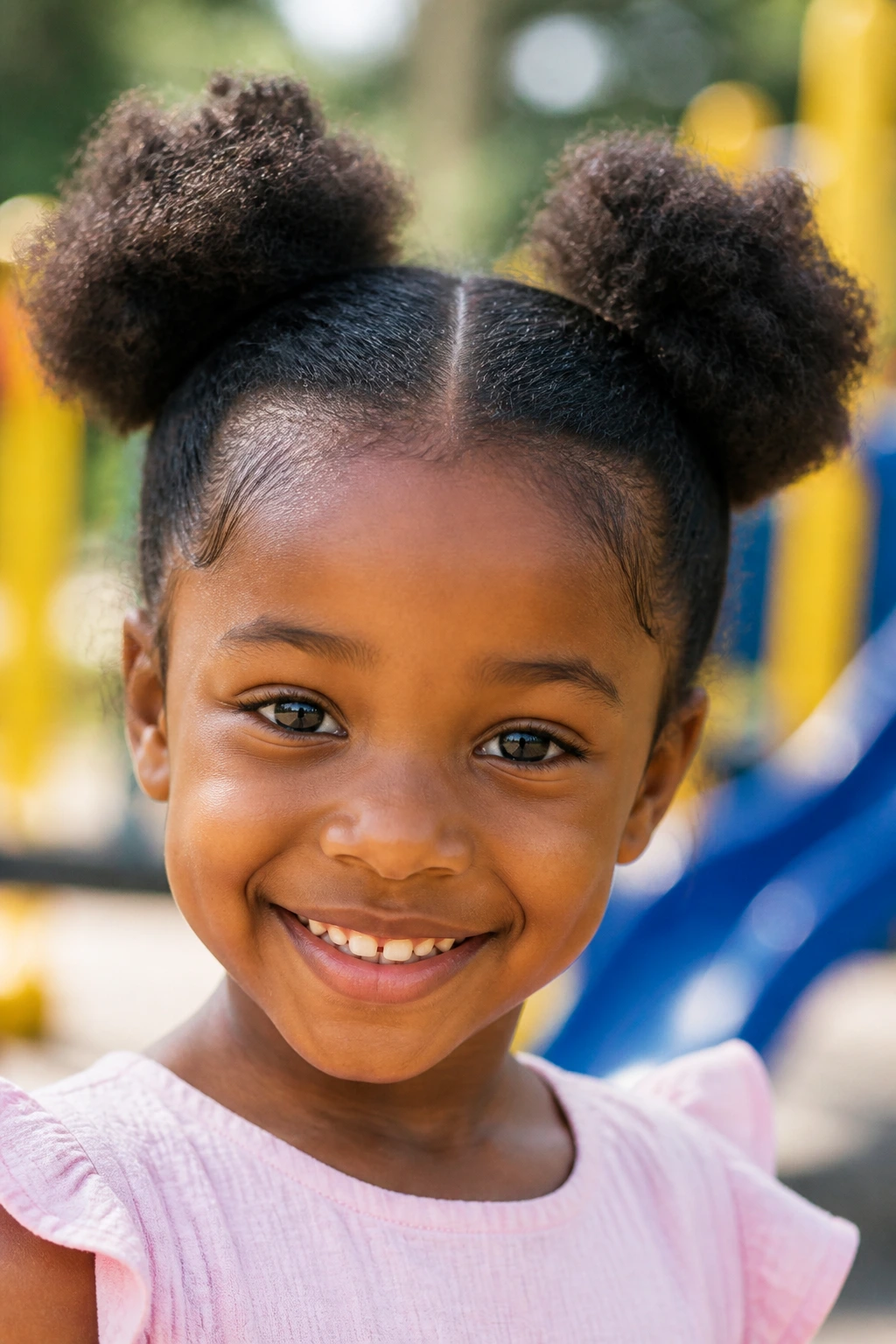
Space buns are playful in the best way. Two round buns, one on each side of the head, give a little girl a fun shape that works for birthdays, weekends, or any day that needs a bit more energy.
The main thing to get right is symmetry. Part the hair down the middle, then gather each side high and secure it with a soft band before twisting or wrapping it into a bun. If one side has more hair, don’t fight it until it looks stiff. Make that bun a touch bigger. Even is nice, but comfortable is better.
I like leaving the ends slightly fluffy instead of hiding every single curl. A little texture makes the buns look softer and less severe. If the hair is very thick, you can split each side into two smaller buns rather than forcing one huge one. That keeps the weight down and gives the style a lighter feel.
- Place the buns a little above ear level for a cheerful shape.
- Keep the part clean so the style doesn’t look messy from the front.
- Use small clips or bows if the child wants extra decoration.
- Re-fluff the buns with your fingers instead of combing them.
Space buns can be a bit silly, and that’s part of the appeal. Kids usually love them for exactly that reason.
11. Frohawk with Soft Side Braids
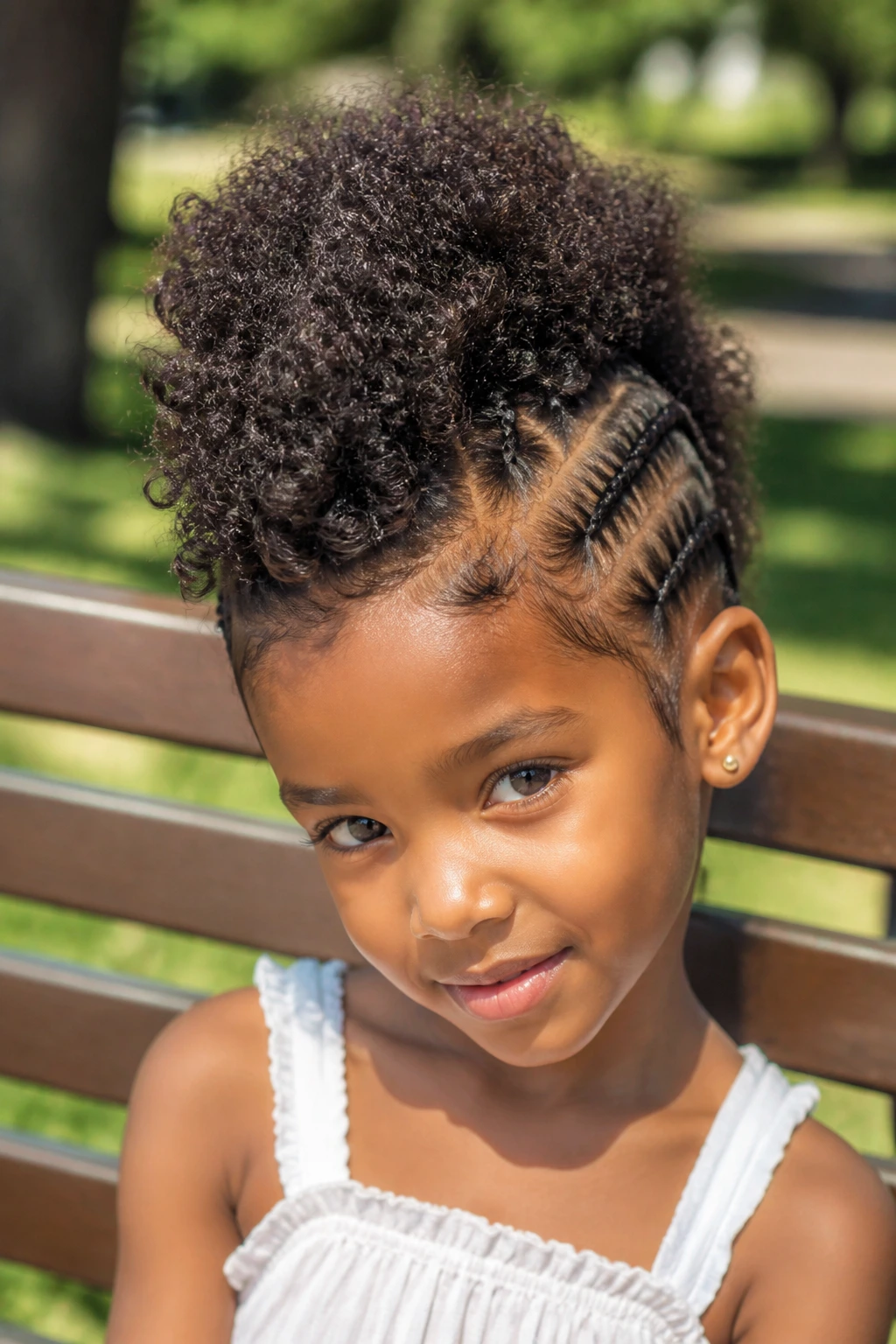
A frohawk has personality. A lot of it. It’s a little bold, a little playful, and still completely age-appropriate when you keep the sides soft and the center full.
The style usually starts with a few flat twists or cornrows on the sides, then leaves the middle section free so the curls can stand up and out. That center strip can be puffed, picked out lightly, or twisted into chunky sections depending on the length of the hair. I like this look because it gives shape without flattening the natural texture. The sides do the tidy work; the middle does the fun work.
This style suits children who like movement in their hair. It can look a little dramatic in the mirror, which many little girls adore. It also photographs well from the front and side, because the shape is easy to see. If the sides are braided too tightly, though, the whole style loses its charm. Keep the tension gentle and the sections even.
How to keep it kid-friendly
- Use soft elastics at the ends of the side braids.
- Leave enough fullness in the center so the hair doesn’t sit flat.
- Add one bright clip near the front if the child wants a little pop.
- Avoid making the side rows too thin, which can pull at the scalp.
It’s a style with attitude, but it should still feel light enough to wear through the day.
12. Headband Afro with Puff Bangs
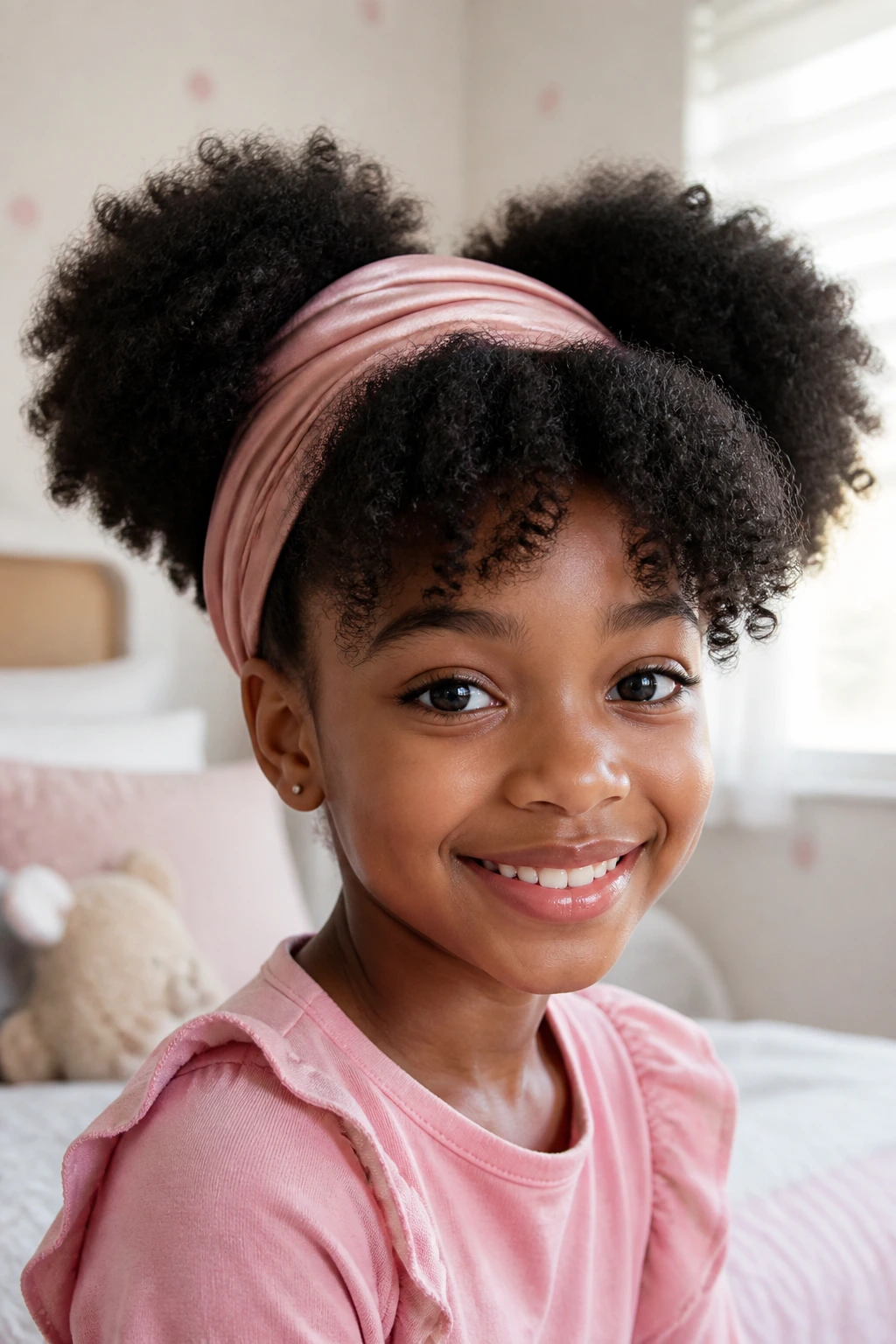
When the morning is rushed and the hair still needs to look lovely, this is one of my favorite answers. A wide fabric headband and a fluffy afro with lifted front sections can look neat in minutes.
The headband helps shape the front while leaving the rest of the hair free. If the hair has been lightly stretched, the puff bangs at the front rise a little higher and frame the face in a soft arc. If the hair is more shrunken, the effect is still cute, just fuller and rounder. Either way, the texture stays visible, which is the whole point.
I like this style for children who do not love a lot of handling. You can freshen it with a mist of water, smooth the front with your fingers, slide the headband on, and be done. No long parting session. No complicated sections. Simple does not have to look plain.
A satin-lined headband is a smart pick because it sits more gently on the hair than a rough elastic band. If you want more detail, tuck in a small clip on one side or pull out a few soft curls around the temples. Just keep the decorations light. The style works because the hair still looks free, not because it’s buried under accessories.
If there’s one thing worth remembering, it’s this: a little girl should be able to wear the style, forget about it, and still feel like herself when she gets home.
