



Short afro styles for 4C hair work best when they respect shrinkage instead of fighting it. Tight coils pull inward as they dry, and that tiny collapse is part of the shape, not a flaw.
The biggest mistake is trying to make 4C hair stay stretched all day. That usually leads to stiff roots, heavy product, and a style that looks tired before dinner. Shape, a clean part, and a little lift at the roots usually do more for a short fro than forcing every strand to behave.
Moisture matters. So does restraint. A damp base, a light leave-in, and a styler with enough hold to keep the silhouette in place will beat a thick cream cocktail nine times out of ten. Sleep on satin, handle the hair with patience, and use a pick only at the roots if you want volume without wrecking the curl pattern.
Some of the styles below are soft and rounded. Others are sharp, sculpted, and a little cheeky. All of them keep the cut short, wearable, and easy to live with.
1. Tapered Fro With Clean Sides
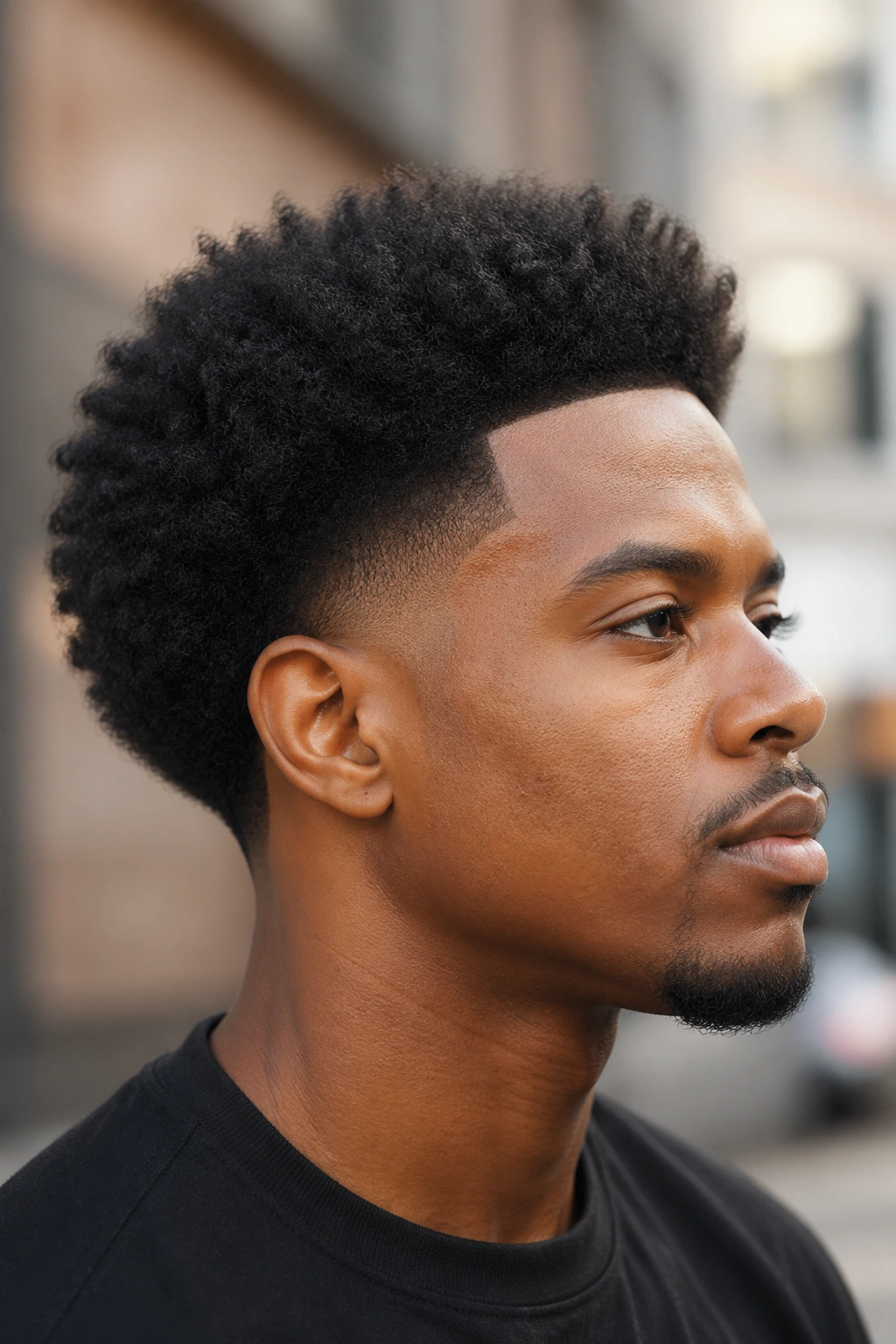
The taper does half the work. When the sides and nape are trimmed close, the top can stay full without turning into a triangle by day three. A tapered fro gives 4C coils a clean outline, which is handy when your hair shrinks a lot and you still want people to see the shape you paid for.
Why the taper works on 4C hair
On very tight coils, a uniform cut can disappear into the head. A taper keeps the bulk where it matters most — around the crown and front — while the lower half stays neat and easy to maintain. You also get a style that grows out gracefully, because the short sides keep their line longer than a blunt edge ever will.
- Ask for a low taper if you want softness around the ears and nape.
- Keep the top around 2 to 4 inches if you want lift without too much shrinkage drama.
- A light shape-up around the hairline makes the whole cut look sharper.
- This style buys you time on wash day because the sides do not need much fuss.
Style the top with a small amount of leave-in and a cream that does not feel greasy. Then pick at the roots only, just enough to lift the crown. Tell the barber or stylist you want the top rounded, not flat. A flat top on 4C hair can read boxy fast, and that is rarely the look people are chasing.
2. Rounded Mini Fro
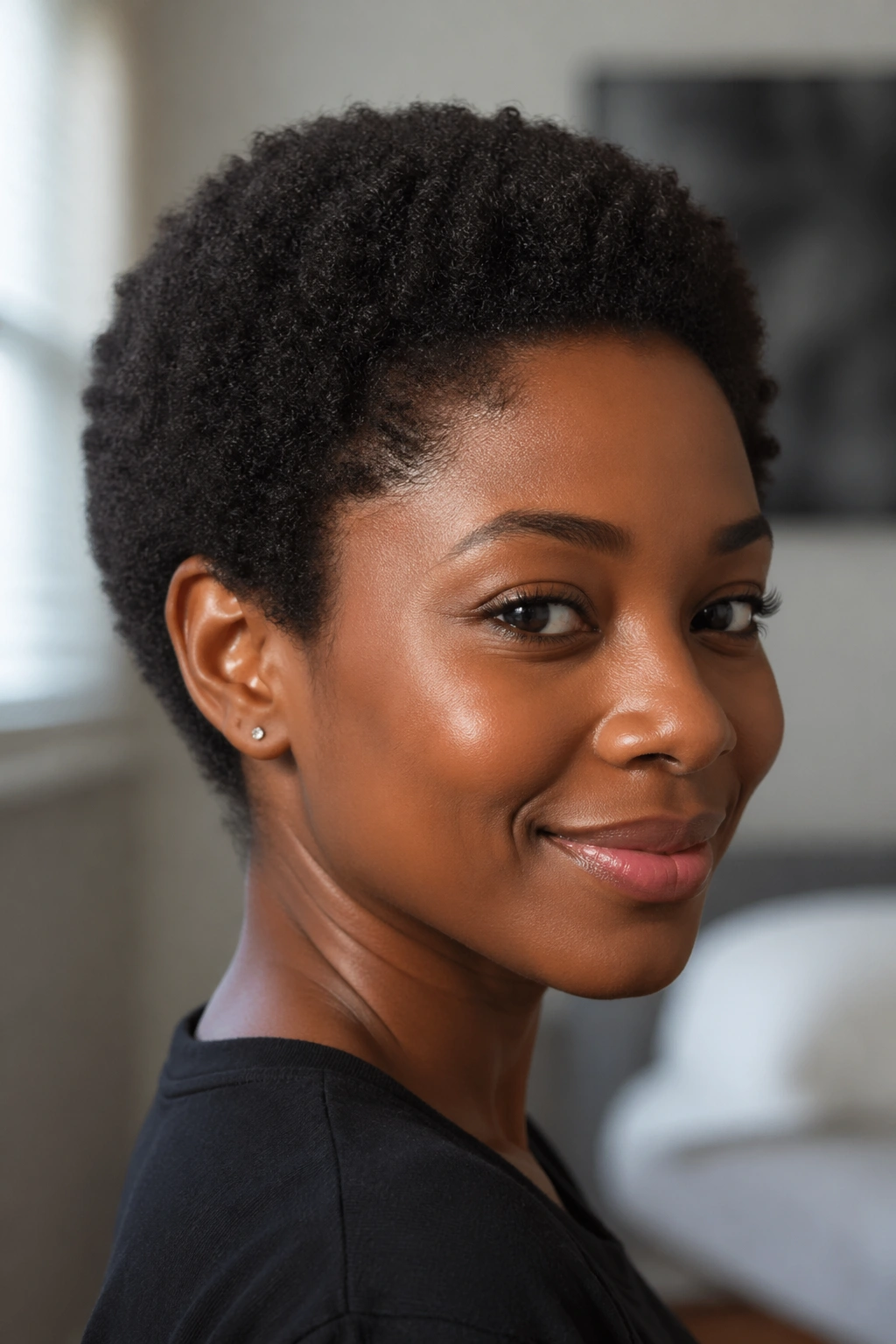
A rounded mini fro is the low-drama choice, and I mean that as a compliment. It sits close to the head, keeps the silhouette soft, and lets the texture look plush instead of fussy. If you like the feeling of hair that does not need constant fixing, this one is hard to beat.
Shape matters here. A mini fro looks best when the outline is even all the way around, with the hairline and crown blending into one smooth dome. I like this cut on hair that has been moisturized with a leave-in and a small amount of cream, because the coils clump better when they are not dry and fluffy in the wrong places.
After styling, pick only at the roots. That gives lift without blowing up the ends. If you rake a comb through the whole head, the style loses its rounded shape and starts to look bigger than it is.
Small style. Big payoff.
This cut also works well when you want something that ages nicely between salon visits. The shape can soften as the hair grows, and it still reads as deliberate instead of messy. That matters more than people admit.
3. Side-Part Afro With Soft Volume
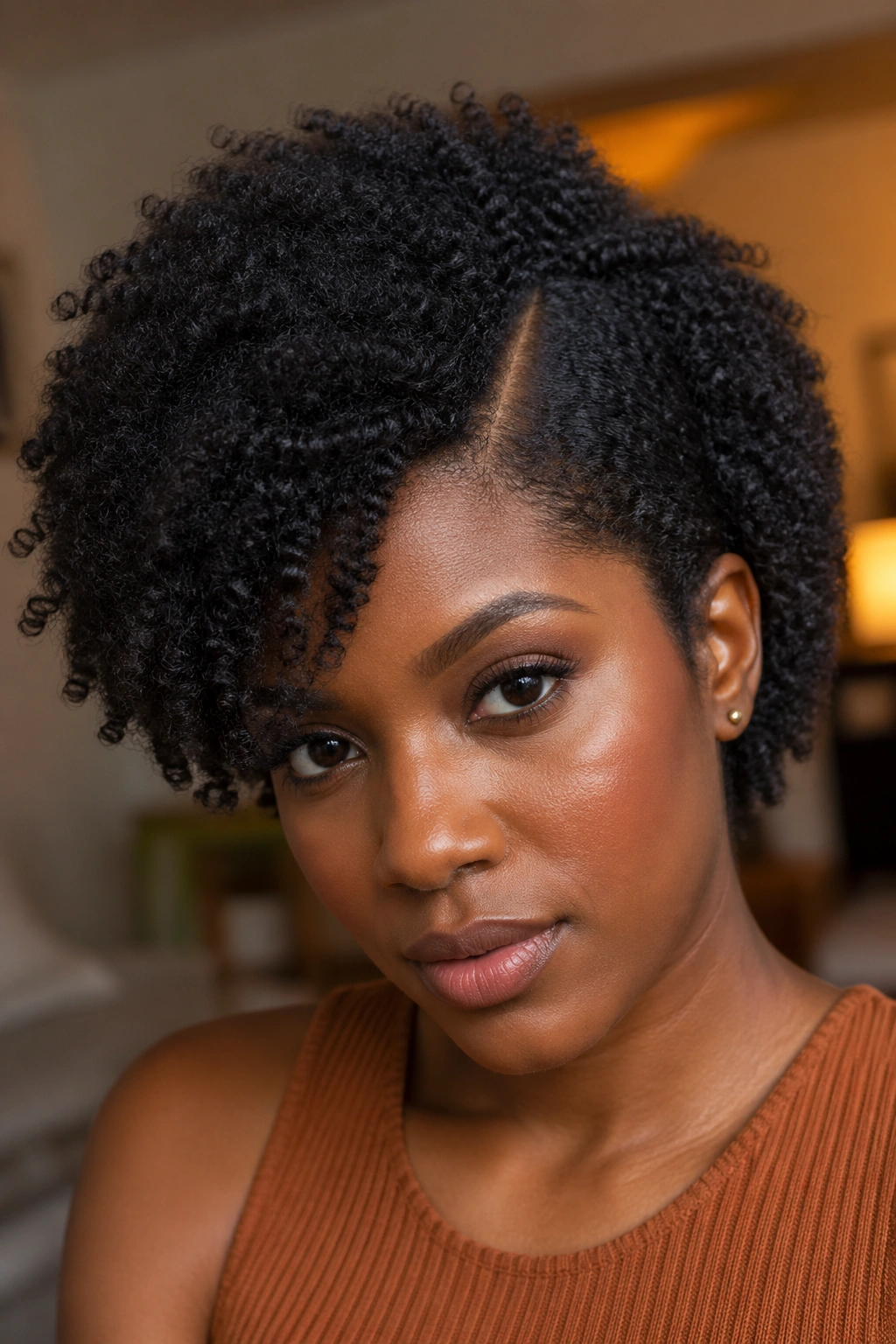
Why does a side part change the whole feel of short 4C hair? Because it breaks up the density. A center part can look neat, but a deep side part adds movement and makes the fro feel fuller on one side without adding a single extra strand.
How to wear it
Draw the part on damp hair with a rat-tail comb, then set the larger side with your fingers so it falls forward a little. The smaller side can tuck behind the ear or sit close to the temple. That asymmetry gives the cut a little drama, which is useful when the hair is short enough that every line matters.
A side part also makes shrinkage feel more stylish. Instead of letting the hair rise evenly into one shape, you give it a direction. That one choice can make a short fro look softer around the face and more open at the top, which is especially nice if your hairline sits lower or your crown is dense.
- Works well when the hair is 2 to 4 inches long.
- Looks good with a subtle side-swept fringe.
- Use a small amount of gel along the part to keep it visible.
- Fluff the crown last so you do not erase the shape.
Do not overdraw the part. A harsh line can make the style feel stiff, and the whole point here is movement.
4. Finger-Coil Crop
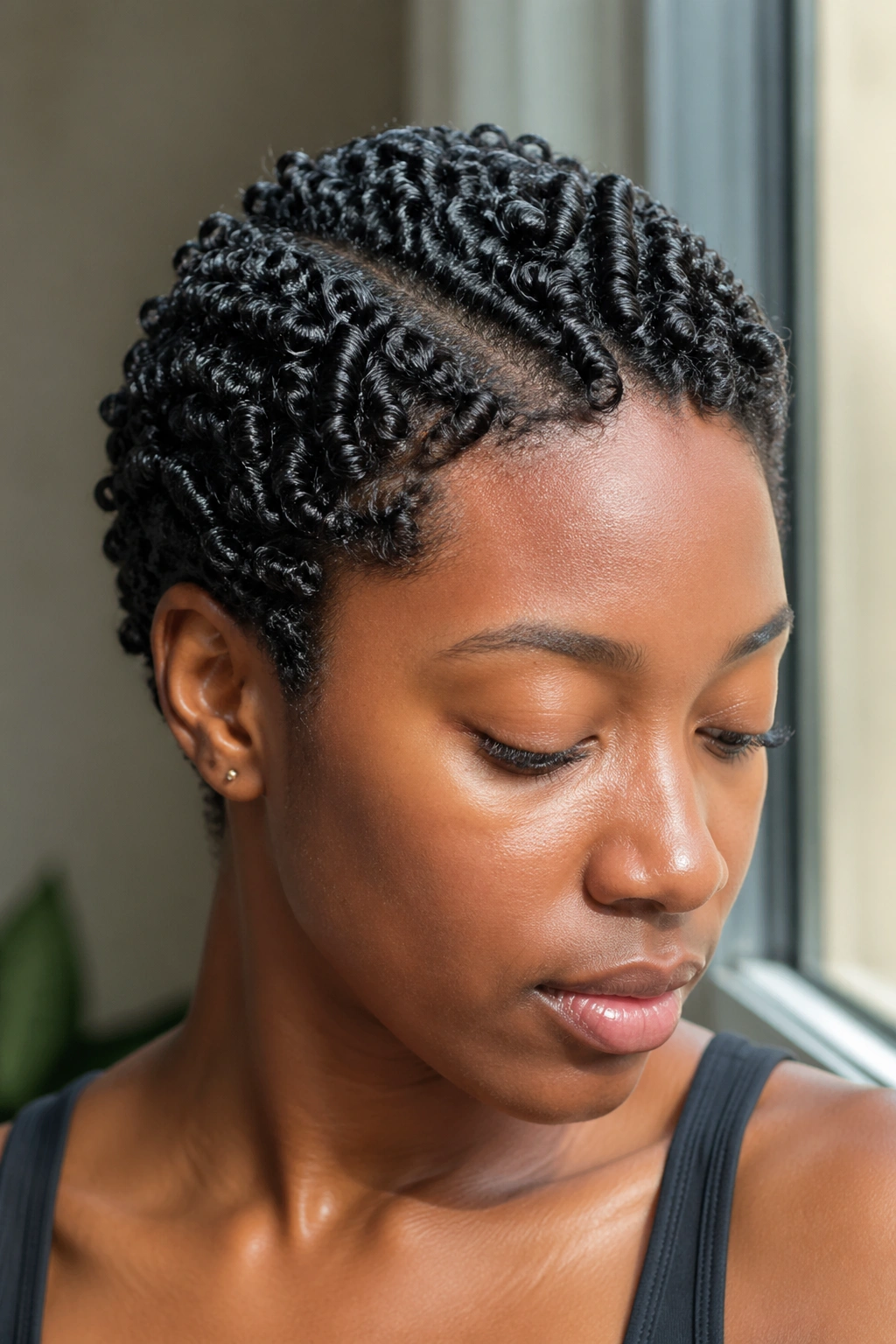
If your coils refuse to clump, finger coils are the cleanest reset. They give short 4C hair a uniform curl shape, and they make the texture look deliberate even on days when the rest of your routine feels a little chaotic.
Start with hair that is damp, not dripping. Work in tiny sections — about the width of a pencil or a small pea if your hair is dense — and smooth a little gel or custard from root to tip. Then wrap the hair around your finger in the same direction every time. Consistency matters here. Messy coils usually come from changing direction halfway through or using too much product.
- Small sections create tighter coils and more definition.
- A rat-tail comb helps keep the parting clean.
- Too much oil makes the coils slip apart.
- Let the hair dry fully before separating anything.
This style wears well for several days if you leave it alone at night and sleep with a satin scarf or bonnet. That part is boring. Still necessary. Finger coils are slow, but they are neat in a way that short 4C hair does not always get to be. When the weather is humid or your hair needs a reset after a rough wash day, this crop is a solid fix.
5. Twist-Out Fro
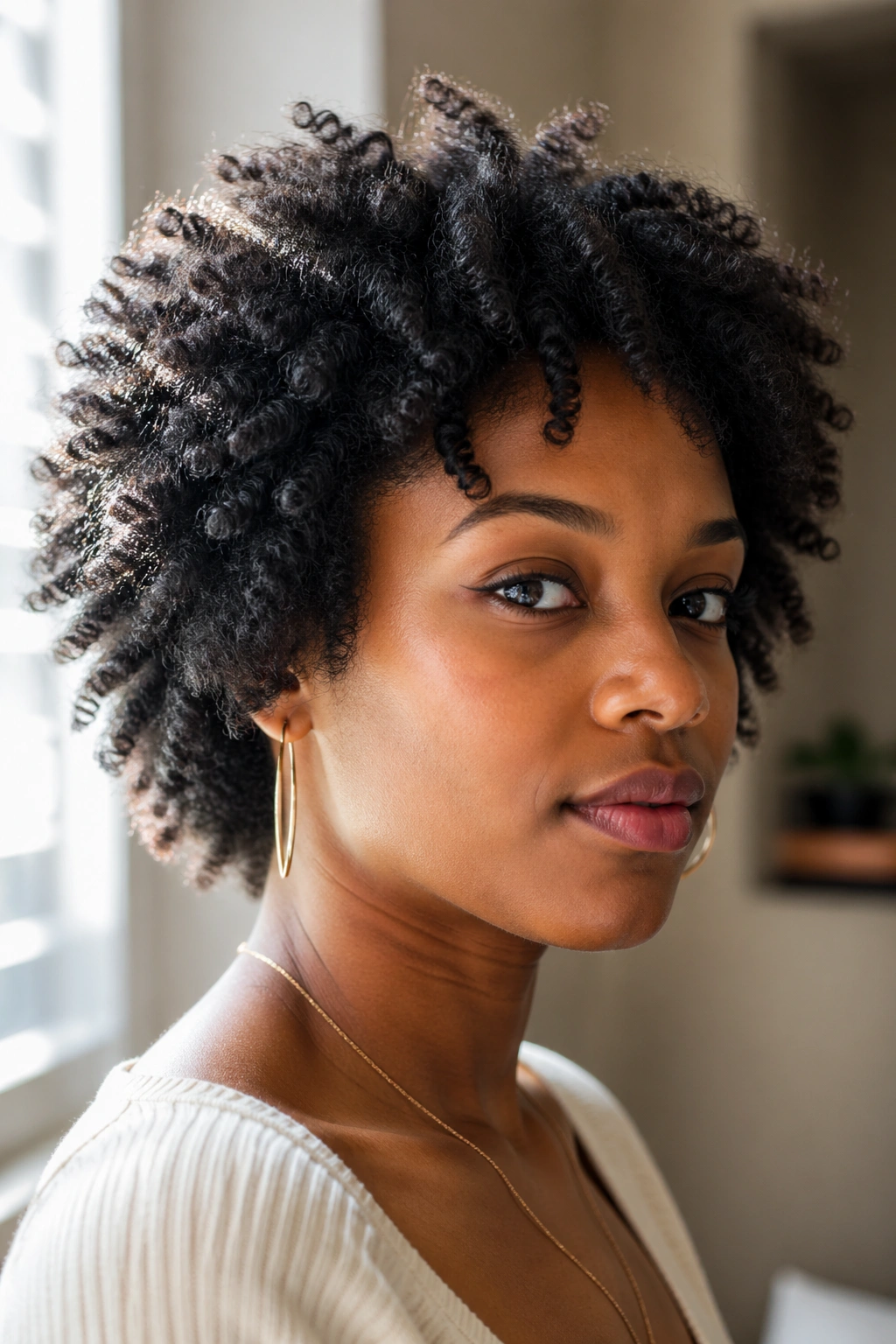
Twist-outs earn their place because they build texture into the hair, not on top of it. On 4C hair, that matters. The set usually looks richer and softer than a style that has been brushed into submission.
Make medium or mini two-strand twists on damp hair after your leave-in and a light styler. Smaller twists give more definition; larger twists give a fluffier finish. On short hair, mini twists often look cleaner because they hold their shape better after you unravel them. If you want a softer halo, go bigger. If you want a tighter pattern, stay small.
The drying part is where people get impatient and ruin a good set. If the center of the twists feels even a little cool or damp, leave them alone. Unraveling too early turns the ends fuzzy, and once that happens, no amount of picking saves the look.
I like to separate each twist with oiled fingertips, then lift the roots with a pick and stop before the top gets too big. A twist-out should look soft, not scraped apart. That is the line people cross all the time.
A twist-out on short 4C hair also gives you room to change the finish over a couple of days. Day one can be neat. Day two gets a little fuller. Day three often looks better than day one if you did the set right in the first place.
6. Braid-Out Fro
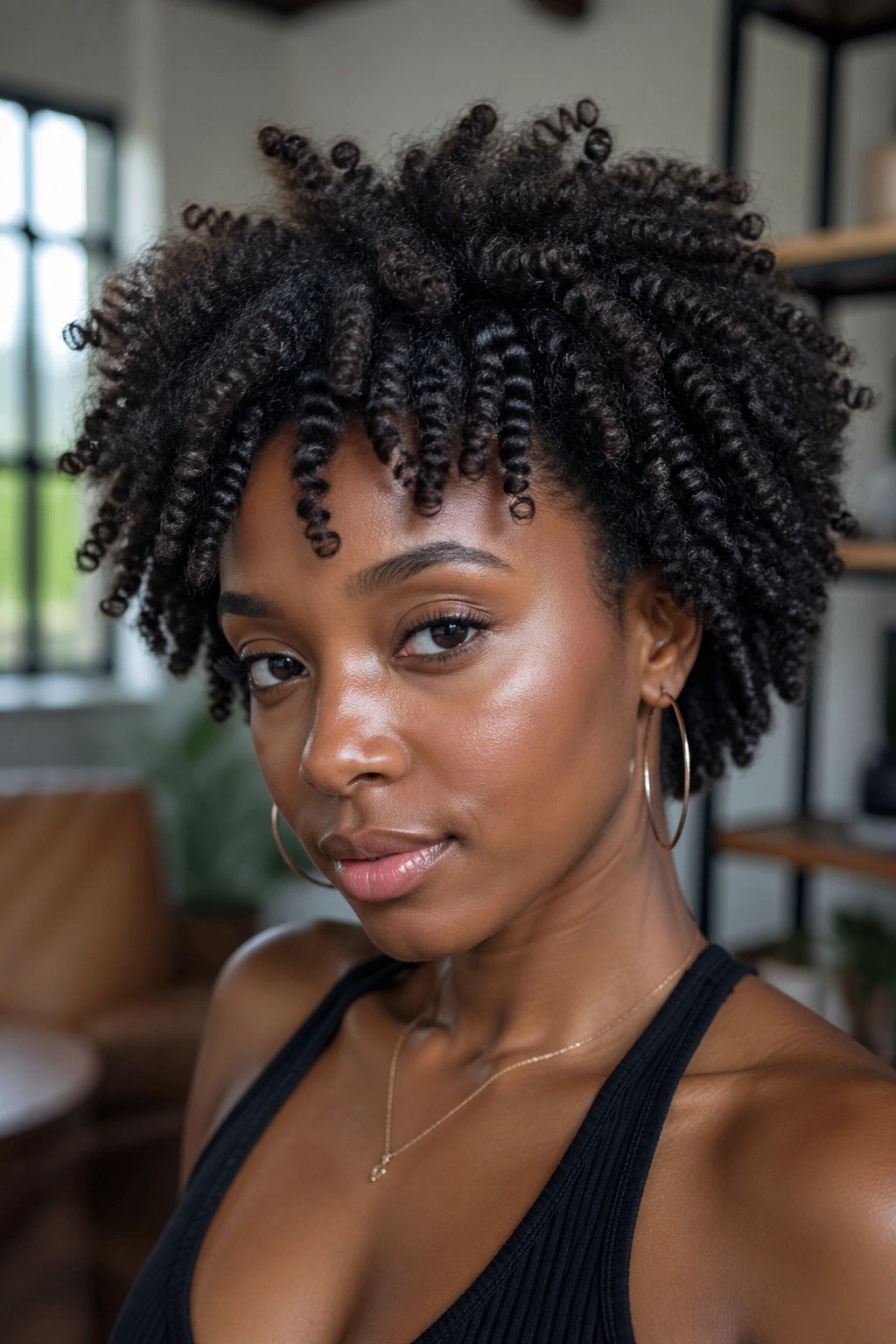
A braid-out is not a twist-out with a different name. The texture is different. The finish is different. Even the way it falls is different on short 4C hair.
Braids create a sharper pattern than twists, and they stretch the hair a bit more, which is useful if you want the fro to read slightly longer. On short hair, that extra length illusion can make a big difference. The style tends to feel more defined at the roots and a little more ribbed through the ends, which I actually like because it keeps the look from going flat.
For the cleanest result, braid on hair that is damp but not soaked. Six to ten braids is enough for many short cuts, though dense hair may need more. Smaller braids around the hairline help the perimeter blend in instead of puffing out first.
A braid-out is a good choice if your hair loves clumping but loses its shape when you twist it. It can take a bit longer to dry than a twist-out, though, so do not plan a braid-out on a rushed morning unless you enjoy walking around with a damp crown.
If you want more stretch and a slightly crisper pattern, braid-outs usually beat twists. If you want softness, twists win. That is the whole trade.
7. Flat-Twist Crown
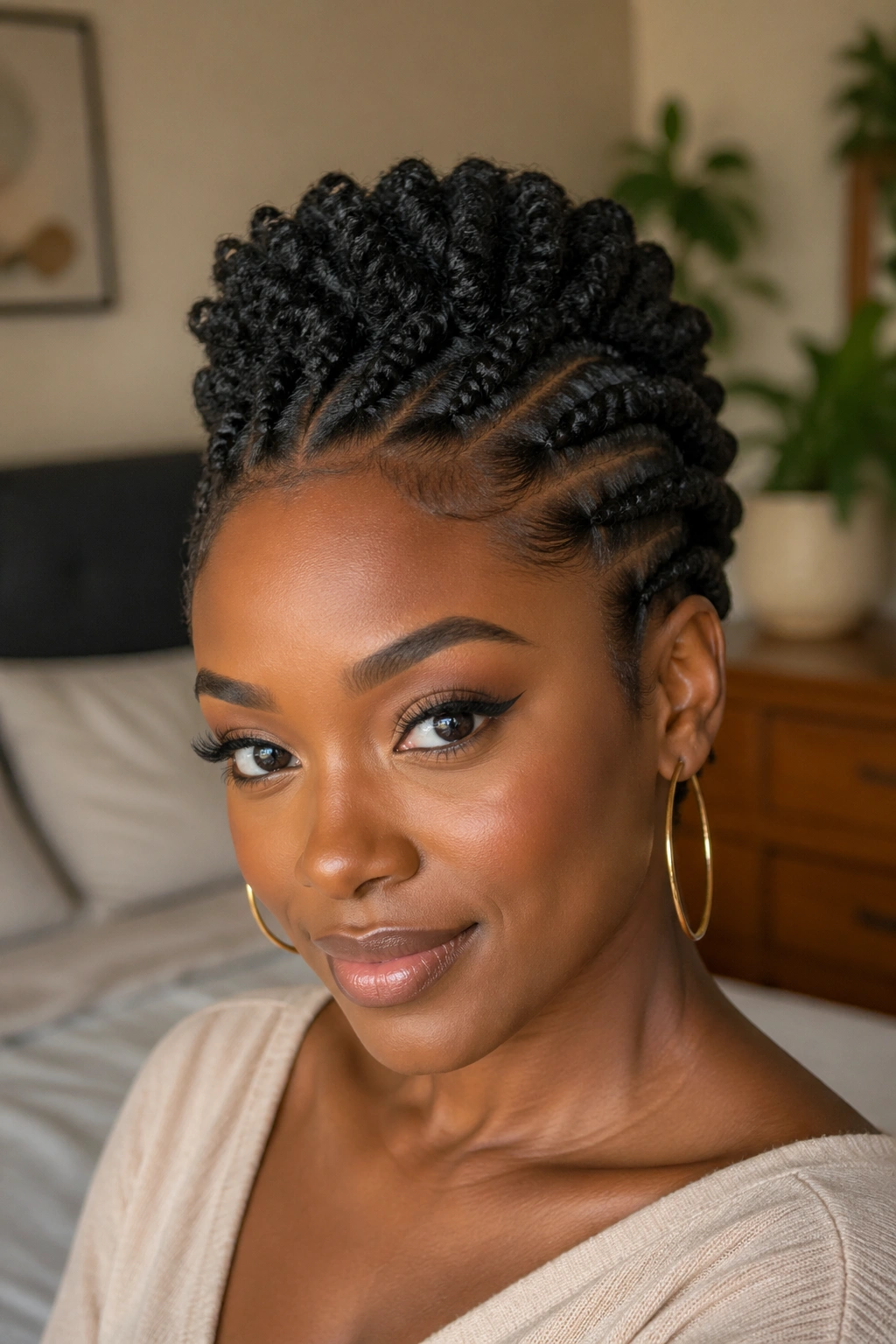
This is the style I point to when someone wants the top to stay full while the sides behave. A flat-twist crown keeps the hair off the face, builds a neat frame, and leaves the center area with enough volume to look alive.
How the shape is built
Flat twist the sides from the temple back toward the nape, then stop before you flatten the whole head. The top can stay rounded, puffy, or lightly stretched depending on how much length you have. On short 4C hair, the crown usually looks best when it is left loose enough to keep texture, not pressed tight like a braid pattern.
- Works well on hair that is roughly 2 inches or longer at the top.
- Use a light cream so the twists stay smooth.
- Pin the ends flat if you want the style to look tidy for several days.
- A little edge control at the hairline is enough. No need to drown the perimeter.
This is one of those styles that makes sense for work, church, family events, or any day when you want to look put together without spending an hour on your hair. It has structure, but it does not feel severe. That balance is hard to find, and honestly, a lot of people overcomplicate it.
A flat-twist crown also pairs well with short earrings and a clean neckline. Tiny detail. Big difference.
8. Mini Puff With Defined Edges
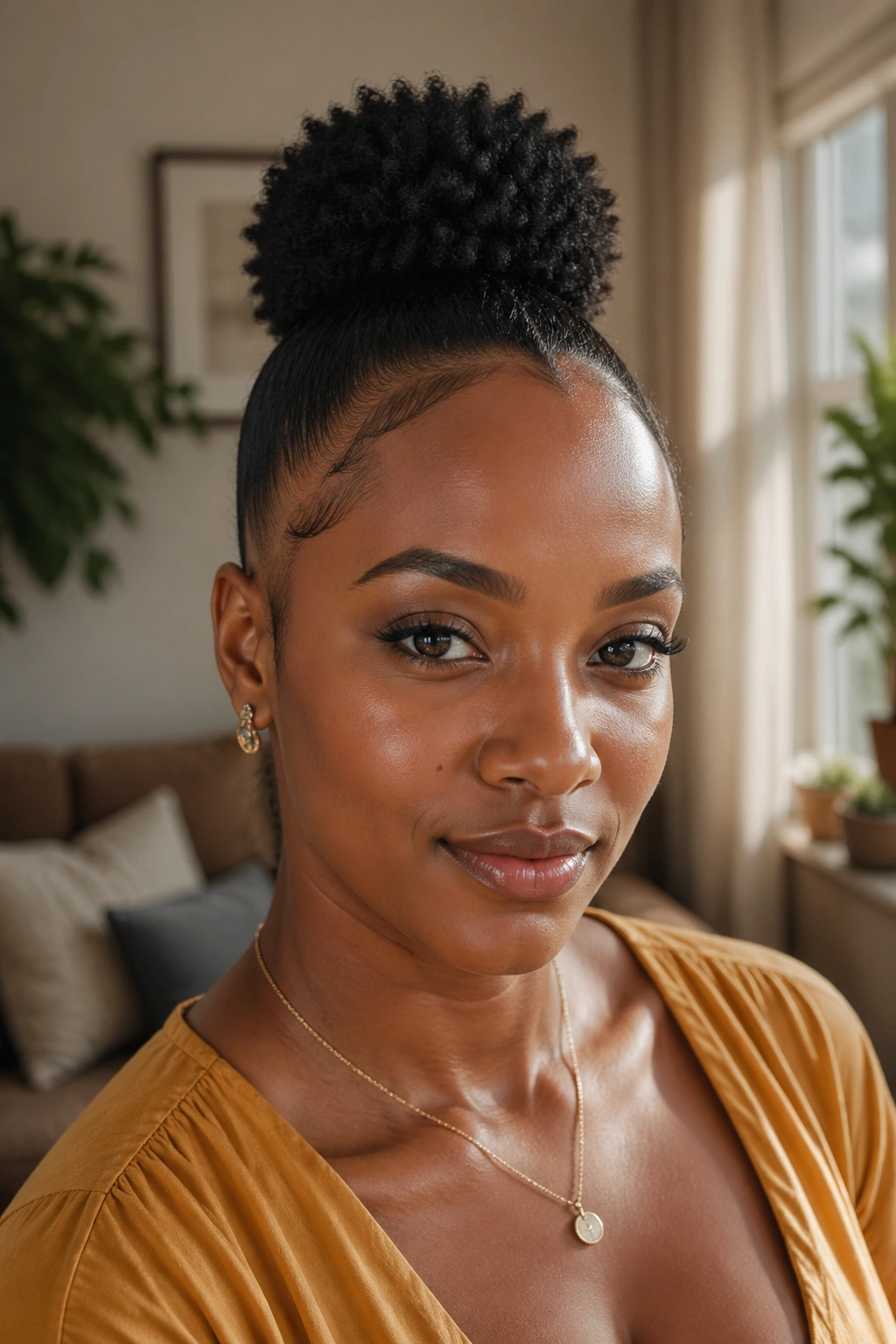
A mini puff can work on short 4C hair. It just needs the right elastic and a little honesty about size.
Small puff. Big effect. On very short hair, the puff may sit higher on the head or lean toward the crown instead of forming a huge rounded ball. That is fine. The style still gives you lift, shape, and a nice contrast between the smooth base and the textured top.
Use a snag-free elastic that does not require six tight wraps. If you have to pull hard, it is too small. Gather the hair with your hands or a soft brush, then stop as soon as the puff sits where you want it. The goal is shape, not tension. Tight puffs look neat for about five minutes and then start tugging at the edges.
I like this style with a bit of definition around the hairline and temples, but not with a thick layer of edge control. Too much product leaves residue, and on short hair that shows fast. A small amount on a toothbrush is usually enough if you want a cleaner frame.
A mini puff works best on days when you want speed. It also handles a few days of wear surprisingly well if you sleep on satin and refresh the base with a mist of water, then a fingertip of leave-in. Easy. Clean. Done.
9. Bantu Knot Set
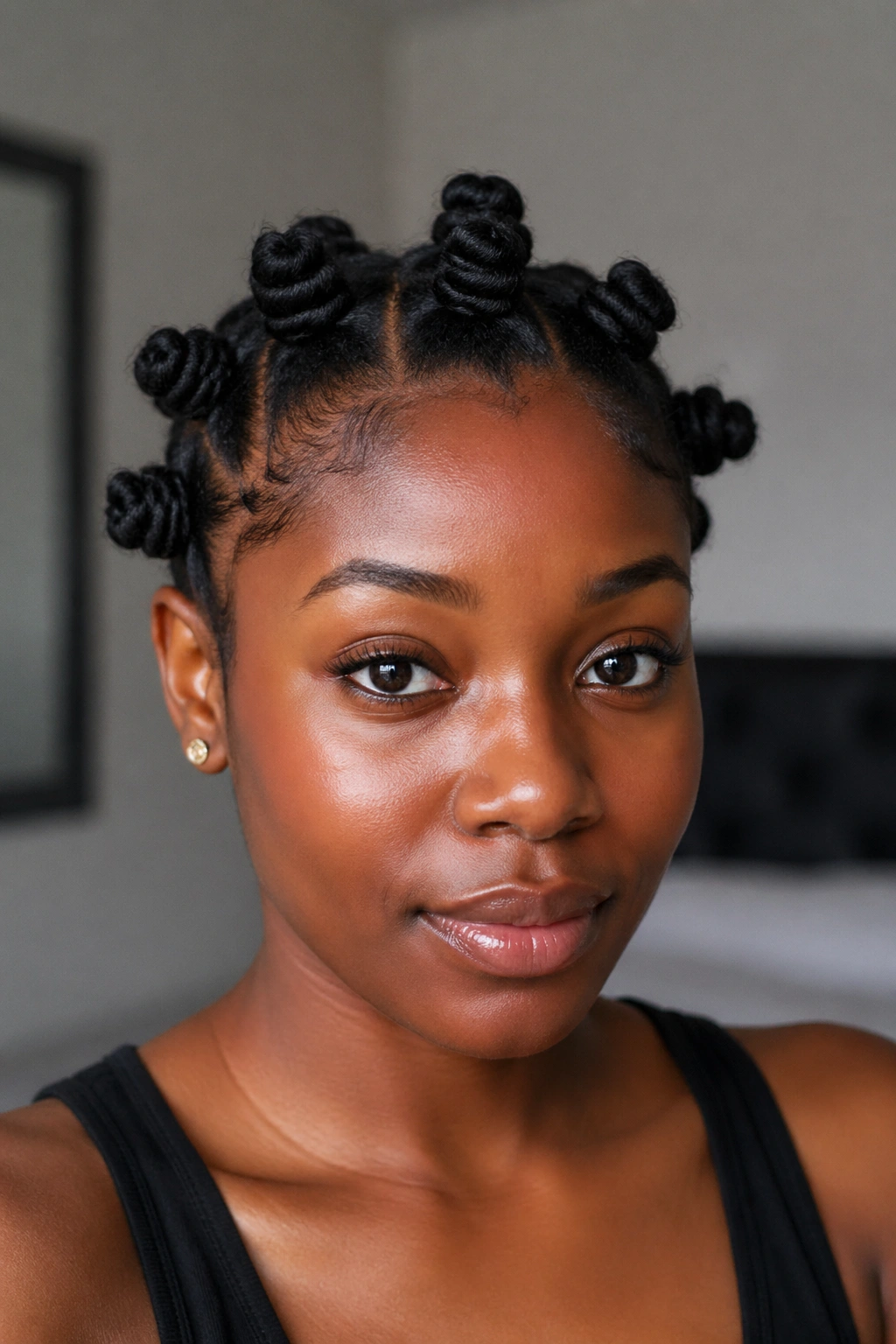
Need a style that looks sculpted on day one and gives you curls after you take it down? Bantu knots do both jobs, and short 4C hair takes to them better than a lot of people expect.
The knot itself is part style, part setting method. You twist a small section until it coils on itself, then tuck the ends down and pin them into a little nub. On short hair, the knots usually sit closer to the scalp, which gives the whole head a neat, almost graphic look. If you take them down after the hair dries, you get a knot-out with springy texture and a little extra shape around the roots.
Wear them two ways
You can keep the knots in place for a clean sculpted look, or you can wear them overnight and unravel them the next day. Both versions work. The difference is in how polished you want the finish to feel.
- Use small to medium sections so the knots stay secure.
- A light gel or styler helps the ends tuck in cleanly.
- Dry time matters more than product amount.
- If you want the knot-out, wait until the inside of each knot feels dry to the touch.
Bantu knots are not the fastest style on this list. They do, however, give you more than one result from the same set. That kind of payoff is hard to argue with.
10. Sponge-Defined Coily Fro
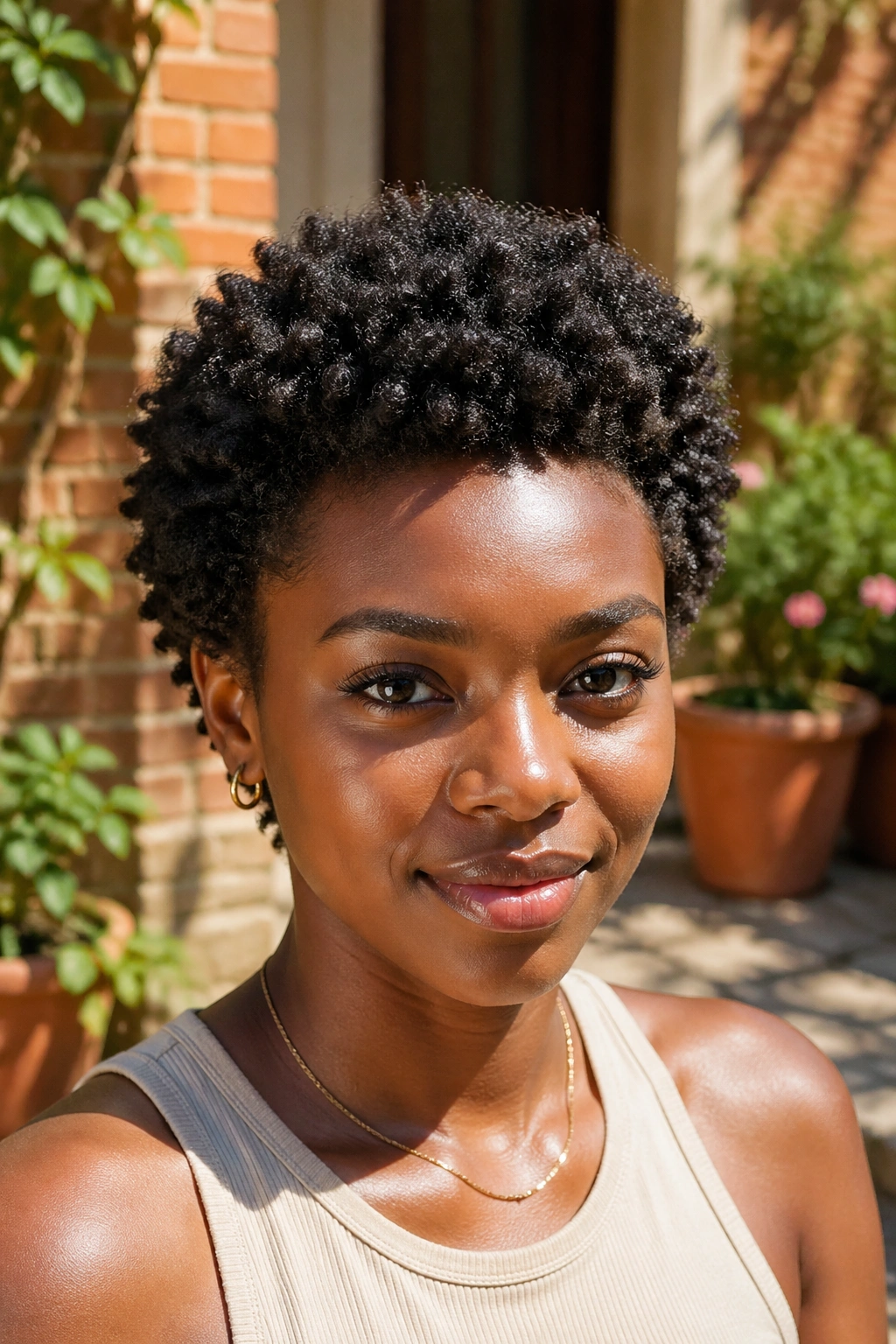
The curl sponge is fast. That is the appeal.
Used right, it gives short 4C hair a tighter, more uniform coil pattern in under 10 minutes. Used wrong, it frays the outer layer and leaves the hair fuzzy in a way that feels more rough than styled. The difference usually comes down to pressure and moisture.
Start with damp hair and a little leave-in. Rub the sponge in one direction, then stop. Do not sit there scrubbing the same patch for three minutes. That is how the cuticle gets annoyed. A few passes on each section is enough, especially if the hair is already short and dense.
- Keep the sponge clean so old product does not build up.
- Use light pressure and short motions.
- Work on small sections, not the entire head at once.
- Stop once the coils start to form.
This is not the style I would choose for a polished event look, but it is one of the easiest ways to get quick shape on a casual week. The sponge is a tool, not a toy. Treat it like a finishing step, not a daily grind, and the result stays sharper for longer.
If your hair gets dry easily, follow up with a tiny bit of oil on your hands rather than dragging more product through the sponge. Less friction. Better finish.
11. Frohawk With Tapered Sides
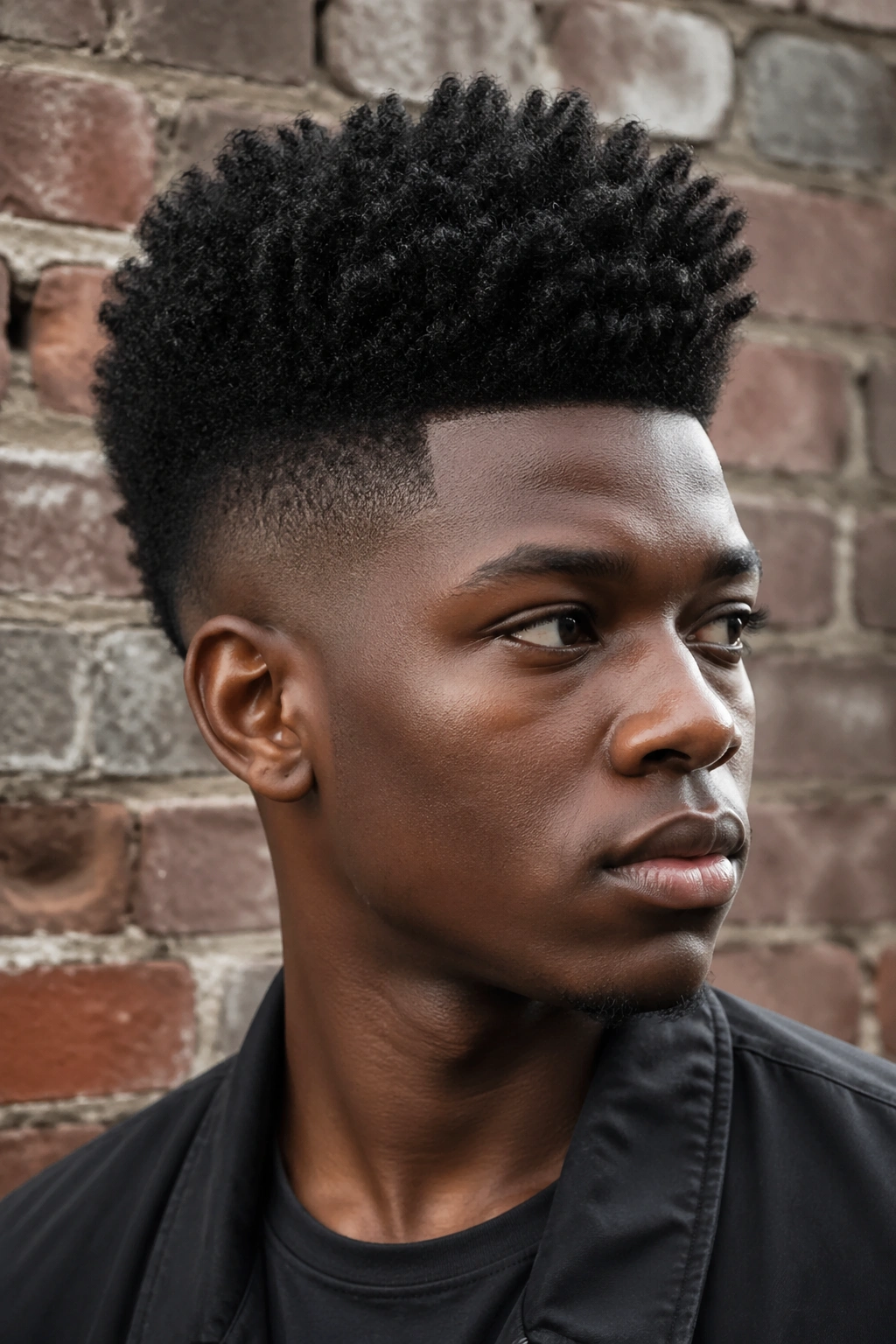
Unlike a full rounded fro, a frohawk keeps the drama in the middle and cuts the bulk from the sides. That change alone can make short 4C hair feel sharper, taller, and a little more confident.
The center strip can be left loose for volume, finger-coiled for shape, or twisted up at the front and back with the middle section fluffed in between. The sides can be tapered, pinned down, flat twisted, or slicked close to the scalp if you want a cleaner line. The whole point is contrast. Tall center. Tidy sides. Easy read.
I like this style when someone wants the feel of an edgy cut without committing to a full undercut. It works on hair that is short enough to stay compact but long enough at the crown to give a little lift. If the center is too short, the style still works — it just reads softer and less dramatic.
A few small choices make a big difference:
- Keep the center strip about 3 to 5 inches wide.
- Add height at the crown with a pick or fingertips.
- Use pins or flat twists to keep the sides down.
- A line-up around the temples sharpens the profile fast.
This style has presence. That is the best word for it. Not loud. Not fussy. Just present.
12. Rounded Fro With Bangs
A rounded fro with bangs has a softness people underestimate. The fringe changes the whole frame of the face, and on short 4C hair that can feel almost immediate.
Bangs help bring the eye upward and forward. They also let you keep the shape compact without losing personality. If the front is slightly shorter than the crown, the style sits like a halo instead of a helmet, which is a much better look for tight coils. I especially like this cut when the hairline is full and the forehead is a feature you want to show off a little.
The trick is not to make the bangs too blunt. Soft, textured bangs usually work better on 4C hair because they move with the rest of the fro instead of sitting there in a hard line. If the front is cut too straight, the style can start feeling heavy. A little irregularity looks more natural here.
This shape grows out nicely too. The bangs blend into the rest of the cut, so you are not stuck with a harsh line after a few weeks of growth. That makes it one of the friendliest short afro styles for 4C hair if you hate feeling like you need a trim every time the front gains half an inch.
If you are choosing between these styles, take a photo of your hair after it has dried fully and settled for a few hours. Side angle. Front angle. Both matter. The picture will usually tell you more than the mirror does. And once you see what your hair naturally wants to do, the rest gets a lot easier.
