



Short hair can carry more personality than long hair ever does.
Mini afro styles for women with short hair have a way of proving that point fast. A little bit of length, if it is shaped well, can look sharp, soft, playful, polished, or all three at once. The trick is not trying to make short coils imitate longer hair. The trick is using the length you have and letting the texture do its job.
I’ve always thought a small afro shape looks strongest when it looks like hair, not a helmet. That means the crown, the sides, and the hairline all matter. It also means shrinkage is not the enemy. On short natural hair, shrinkage can actually help the style sit close to the head and hold its shape without looking overworked.
The American Academy of Dermatology has long advised gentle cleansing and careful conditioning for natural texture, and that advice matters here more than people think. A clean scalp, a light leave-in, and a shape that is trimmed with intention can change how a mini fro sits by a mile. Heavy product at the root will flatten the silhouette. Dry ends will puff in the wrong places. Both are fixable, but it’s easier to start with the right shape.
Some of these looks are quick. Some need a few minutes with a pick, a sponge, or a small set of twists. None of them require waist-length hair. That’s the part I love.
1. Classic Rounded Mini Afro
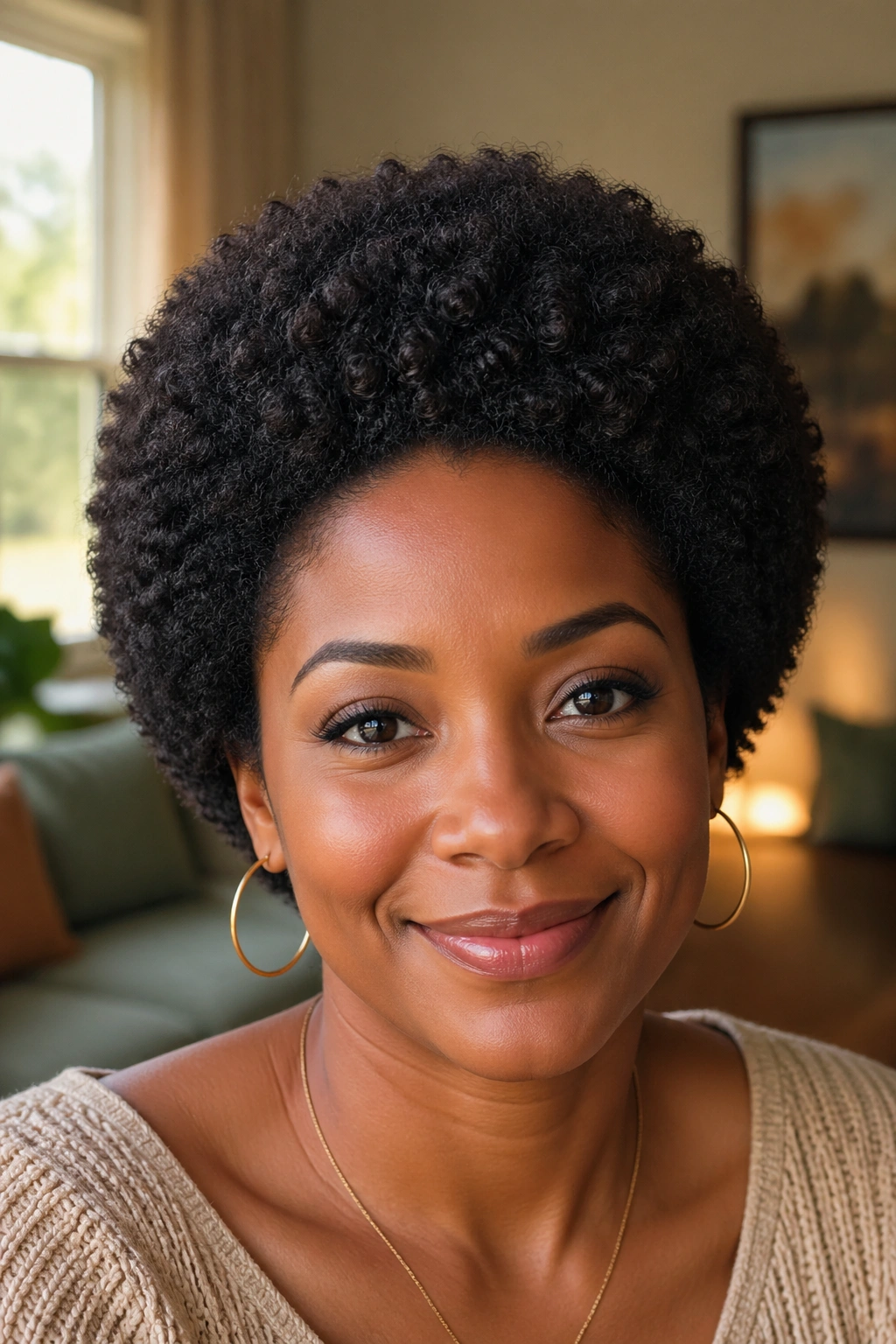
The classic rounded mini afro is the style that makes short hair look finished without asking for too much effort. It sits close to the head, keeps the shape even, and gives you that clean, full outline that always reads as deliberate. There’s a reason this one never gets old.
What matters most is balance. You want the top, sides, and back to feel like one shape instead of three separate decisions. After washing, work in a light leave-in and a small amount of cream or lotion while the hair is still damp. Then let it dry enough to hold some texture before you start shaping. If you pick too early, the curl pattern stretches in odd places. If you wait until it is bone dry, the hair can frizz up and lose the neat outline.
How to shape it at home
- Use a wide-tooth pick or afro pick and lift from the roots only.
- Start at the crown, then move to the sides so the outline stays even.
- Check both sides in a mirror. Short hair can fool you.
- Stop picking before the ends turn stringy. A little fuzz is fine.
A rounded mini afro looks especially good when the cut itself already has a bit of curve. If your hair is cut blunt at the bottom, ask for a softer outline next time so the shape does not feel boxy. That one adjustment matters more than people expect.
My rule: leave the front slightly softer than the crown. It keeps the whole style from looking too rigid.
2. Tapered Mini Afro
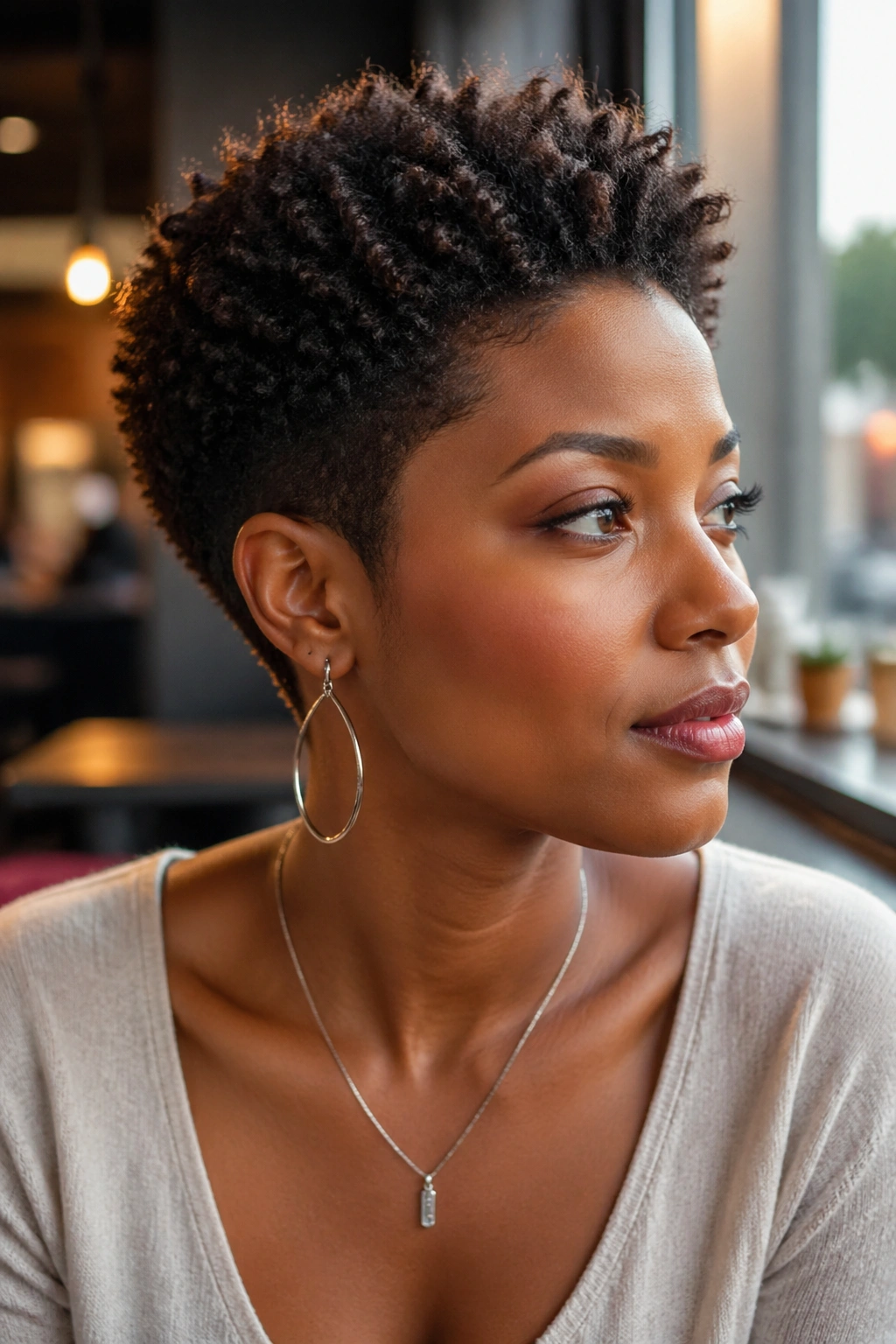
A tapered mini afro gives short hair a cleaner edge with almost no styling drama. The sides and nape sit closer to the head, while the top keeps more length and movement. That contrast makes the face look more open, and it also keeps the style from puffing out in places you do not want.
This is the style I reach for when a full round fro feels too wide. The taper pulls the silhouette in just enough to show the neck, the ears, and any earrings you actually want people to notice. It also works well if your hair grows thick around the temples or nape, because the cut handles that bulk before the style even starts.
The key is asking for the right shape at the chair. A taper is not a fade in the strict, shaved sense unless you want that. It can be soft. It can be gentle. It can keep the haircut feminine and still crisp.
- Ask for the top to stay fuller and the sides to stay close.
- Keep the nape clean so the back does not bulge.
- If your hairline is delicate, leave the edges soft rather than carved hard.
- Use a tiny bit of styling cream, not a heavy gel.
This style looks especially good when the hair is healthy and the cut is fresh. Once the taper grows out, the shape starts to blur. That is not a flaw. It just means the haircut is doing the most of the work.
3. Side-Part Mini Afro
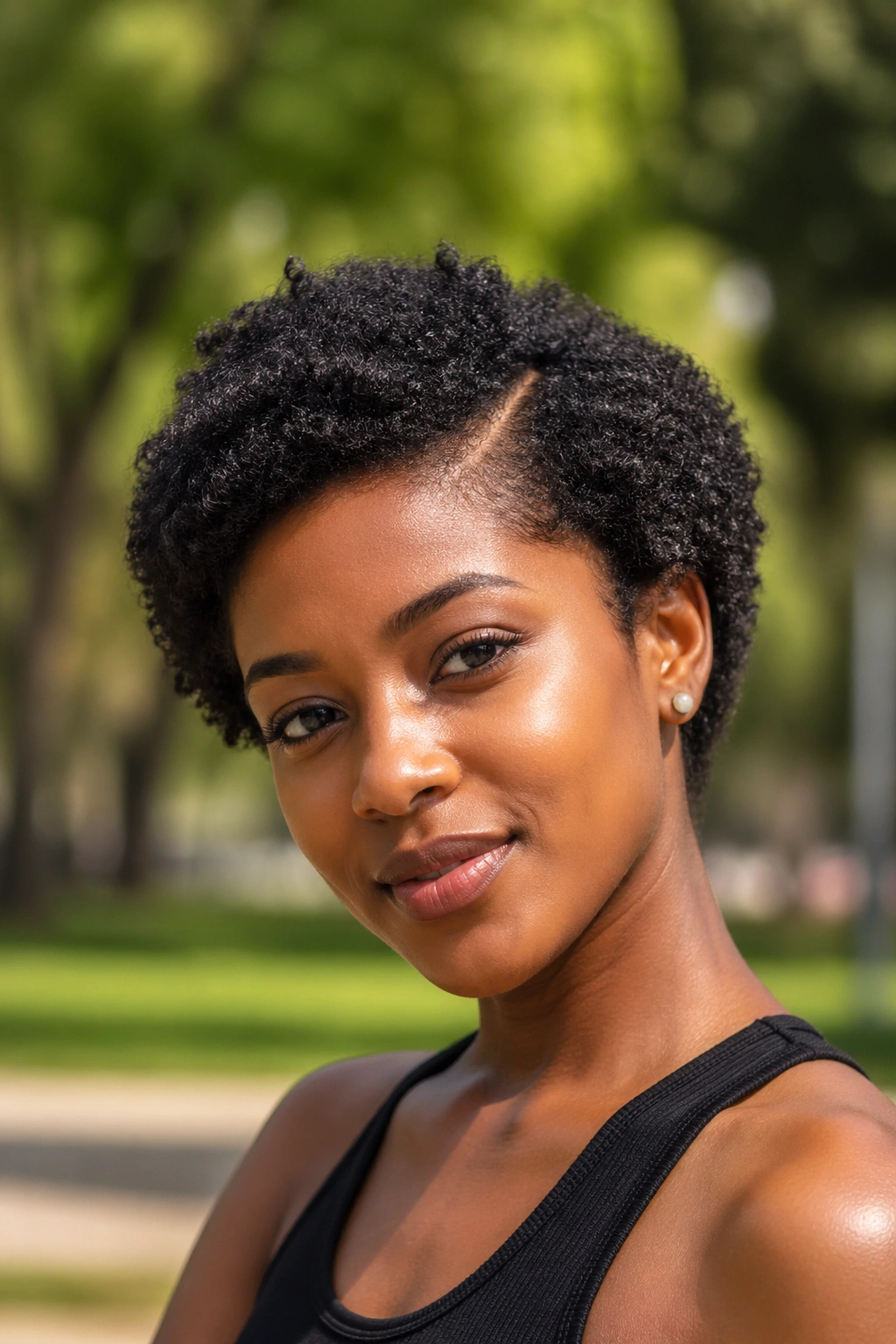
Why does a side part change the whole feel of short hair so fast? Because it breaks the circle. A centered mini afro feels balanced and tidy, while a side part introduces movement before you even touch a pick.
This style is a favorite when you want short natural hair to look a little softer around the face. The part does not have to be deep. Even a small off-center part can change the way the top falls. One side gets a bit more height, the other side hugs the cheek more closely, and the shape ends up looking intentional without feeling stiff.
Where to place the part
A rattail comb works better than fingers here. Part the hair while it is damp, not soaked, and aim for a line that sits about an inch off center. If your hair tends to spring back, clip the part in place for a few minutes while it dries. That tiny pause helps the root remember where it should sit.
After the part is in, fluff the fuller side first. Then lightly smooth the flatter side with your hands, not a brush. A brush can erase the shape too much and make the top lie flat in a sad way.
This one looks good with glasses, small hoops, or a strong brow. It also saves you from that awkward “what do I do with this length?” stage. The answer is simple. Let the part do the styling.
4. Finger-Coiled Mini Afro
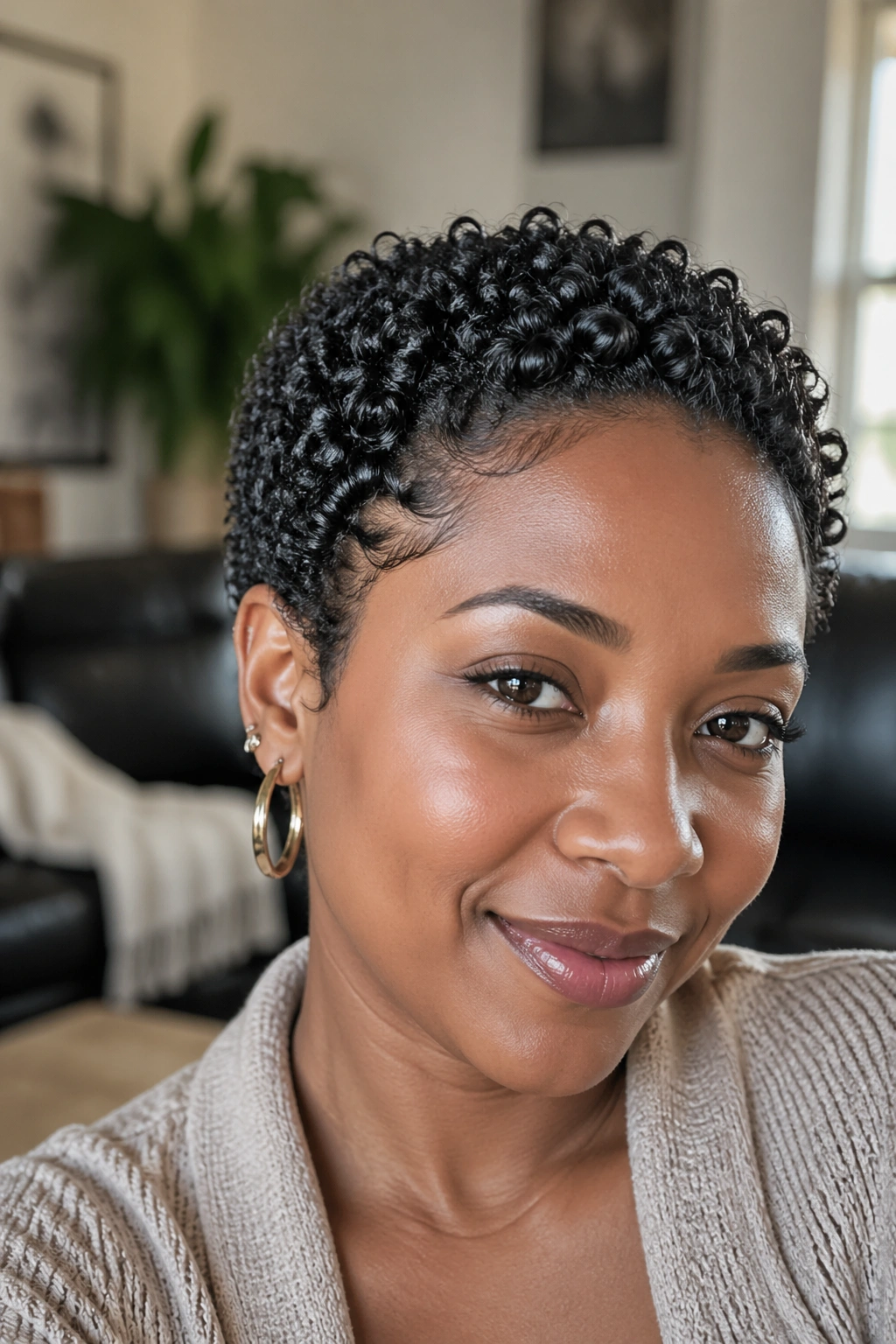
If your short curls tend to clump into tiny ropes when they’re wet, finger coils can turn that into the whole point of the style. Instead of fighting the curl pattern, you define it section by section and let the ends curl in on themselves. The result is tidy, springy, and a little bit playful.
Finger coils take patience, but not mystery. Work on damp hair with a little leave-in and a small amount of gel or styling custard. Take very small sections — roughly the size of a pencil eraser if your hair is tightly coiled, a little larger if your texture is looser — then twirl each section around your finger until it forms a neat spiral. That’s it. Nothing fancy.
What makes the coils stay neat
- Use small sections so the coils do not unravel as they dry.
- Apply product from root to tip, but keep it light.
- Let the hair dry fully before separating anything.
- If the roots feel wet, leave it alone a little longer.
A lot of people ruin finger coils by touching them too soon. Don’t. Let them dry all the way through, even if that means sitting under a hooded dryer for a bit or leaving them overnight. Once they are set, you can separate them gently with oiled fingers for a fuller finish.
This style is good for short hair that grows in tight spirals and needs definition more than volume. It looks neat, but not severe. There’s a softness to it once the coils settle.
5. Fluffy Picked-Out Mini Afro
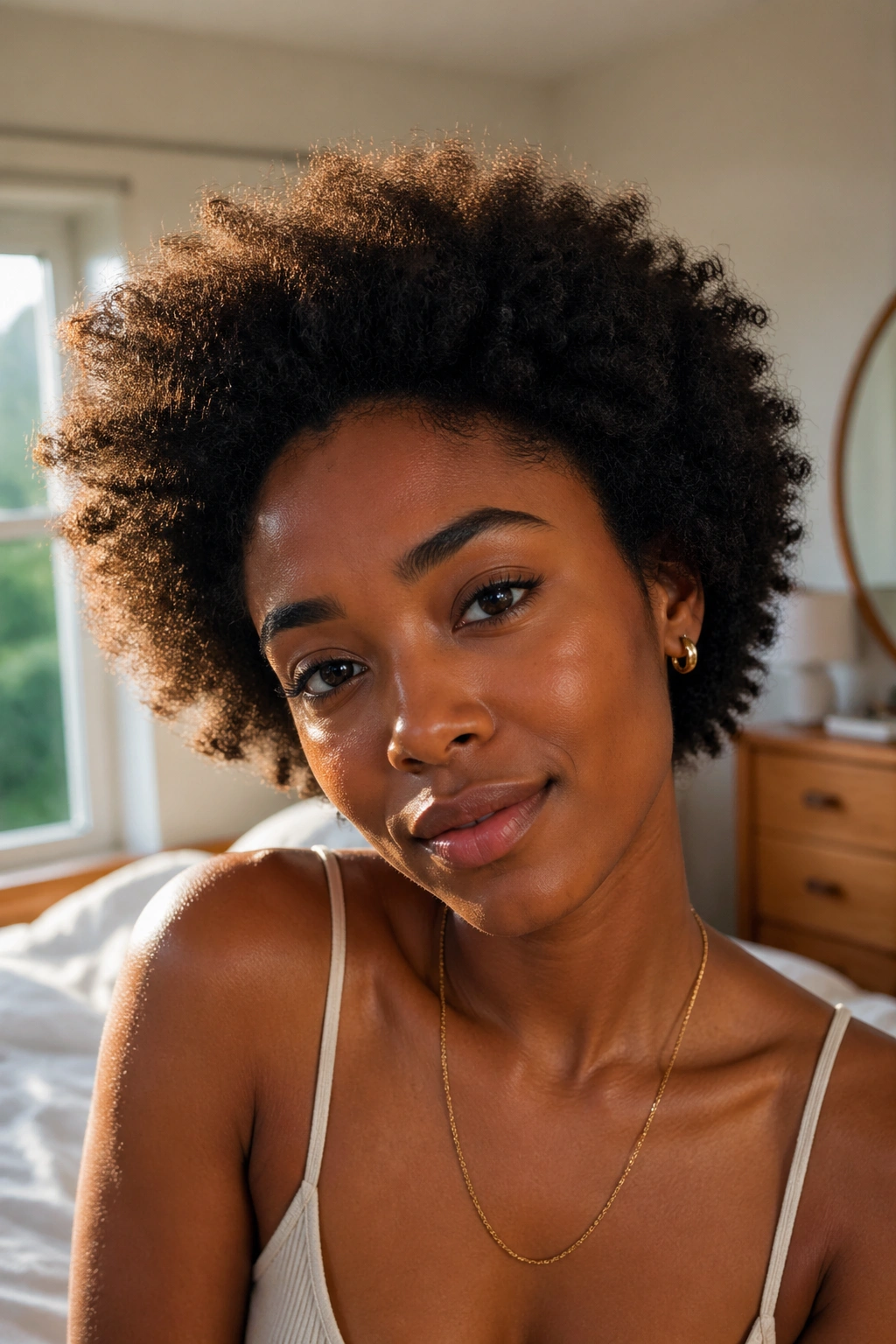
The fluffy picked-out mini afro is for days when you want the hair to feel soft, airy, and a little bigger around the edges. Not huge. Just fuller. There is a difference, and it matters. This style uses the texture itself as the decoration, which is why it can look so good on short hair that has a strong coil pattern.
Start with moisturized hair. Not drenched. Moisturized. A light leave-in, a little cream, and maybe a drop or two of oil on the ends are enough for most short cuts. Then let the hair dry, or mostly dry, before using a pick at the roots. The goal is lift. The goal is not to separate every curl into fuzz.
That is where people go wrong. They pick the ends first, get a tangled cloud, and then wonder why the shape looks tired. Keep the pick at the root line and move upward in small lifts. The ends should stay mostly intact so the style keeps its rounded edge.
This style looks especially strong on dense hair because the volume reads as rich, not messy. It also makes a short cut feel wider without needing length. If your hair shrinks hard after washing, this is one of the few styles where that shrinkage works in your favor.
Sleep on satin. Seriously. A cotton pillowcase will flatten the crown overnight and force you to start over in the morning.
6. Sponge-Defined Mini Afro
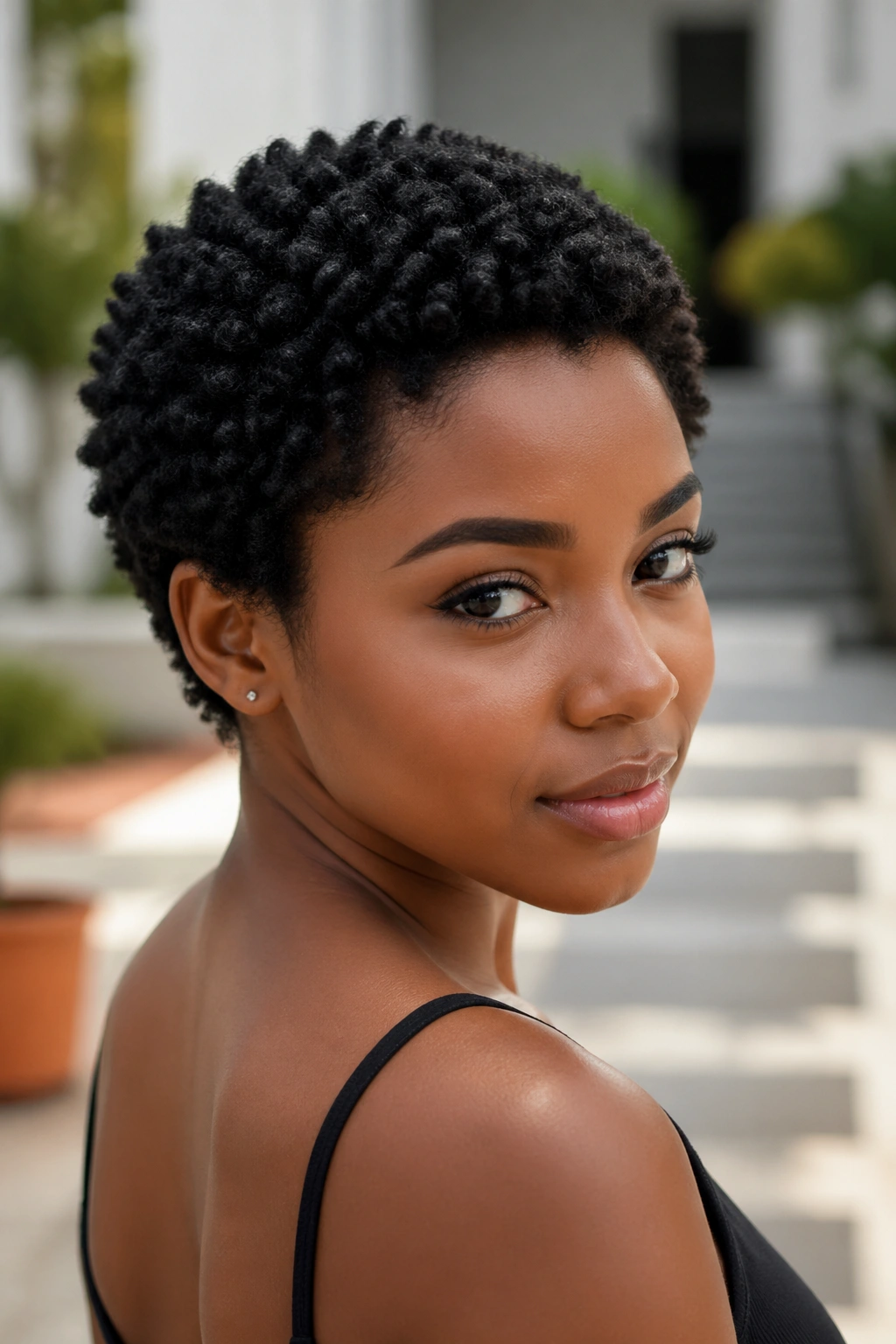
A curl sponge gives short natural hair a tighter, more uniform look without much time at all. Compared with finger coils, it is faster and a little looser. Compared with a picked-out fro, it is neater and more compact. That middle ground is why so many women keep one in the drawer.
Use the sponge on hair that is slightly damp, not dripping. Press it on the hair and move in one direction only — circular motion works for many textures, but do not keep scrubbing back and forth or you will rough up the cuticle and frizz the pattern. Work in small sections, especially around the front and crown, where the eye goes first.
A sponge-defined mini afro usually works best when the hair is short enough for the texture to catch cleanly. If the strands are a little longer, the sponge can grab too much and create knots near the root. That is not the sponge’s fault. It is just the wrong stage for the tool.
- Use light pressure, not a hard push.
- Keep a small towel nearby to blot excess water.
- Stop once the pattern looks even. More passes are not better.
- Finish with a tiny bit of oil if the hair feels rough.
This style is good for mornings when you want definition but cannot spend twenty minutes shaping each coil by hand. It reads casual, but not careless. That’s the sweet spot.
7. Flat-Twist Crown Mini Afro
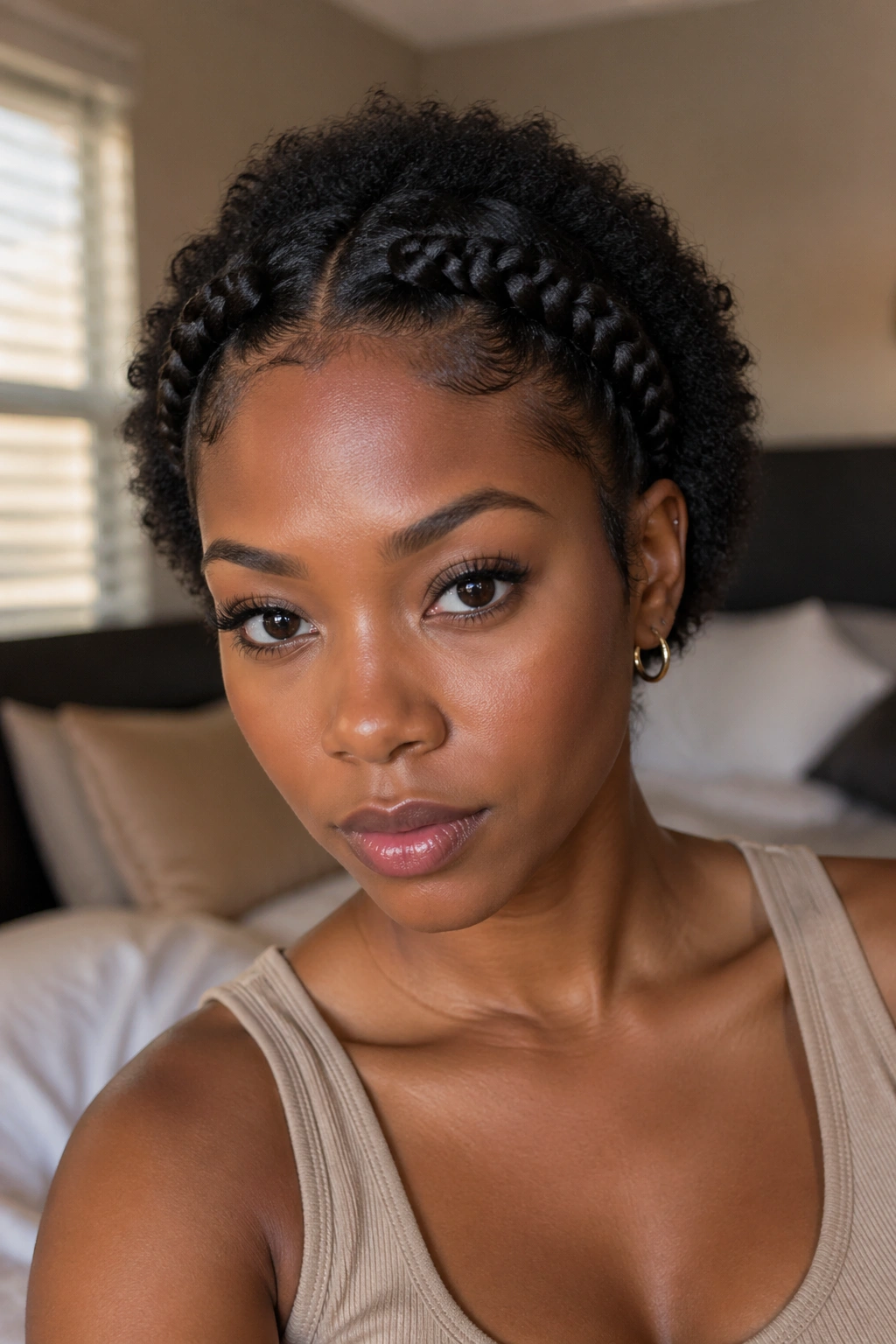
A few flat twists across the front can change a short afro from plain to polished without taking away its softness. The rest of the hair stays loose and airy, while the front gets that neat, framed look that keeps the style from feeling too open.
I like this style because it solves the “what do I do with the front?” problem. Short natural hair often grows differently at the hairline, and the front can puff out faster than the rest. Two flat twists, one on each side, settle that area down and give the crown a clean starting point.
Why the front matters
The front of a mini afro is the first place people look. If it is messy, the whole style reads messy. If it is tidy, the rest of the hair can be as soft as it wants.
How to keep it neat
- Part the front into two narrow sections.
- Twist close to the scalp and stop before the twist gets too thick.
- Pin the ends under the crown with small bobby pins.
- Use a satin scarf at night so the part does not swell.
This look can lean everyday or dressy depending on what you do with the rest of the hair. Leave the back fluffy and it feels casual. Add a clean side part and small earrings, and it suddenly feels more put together. Short hair likes that kind of contrast.
8. Deep Side-Swept Mini Afro
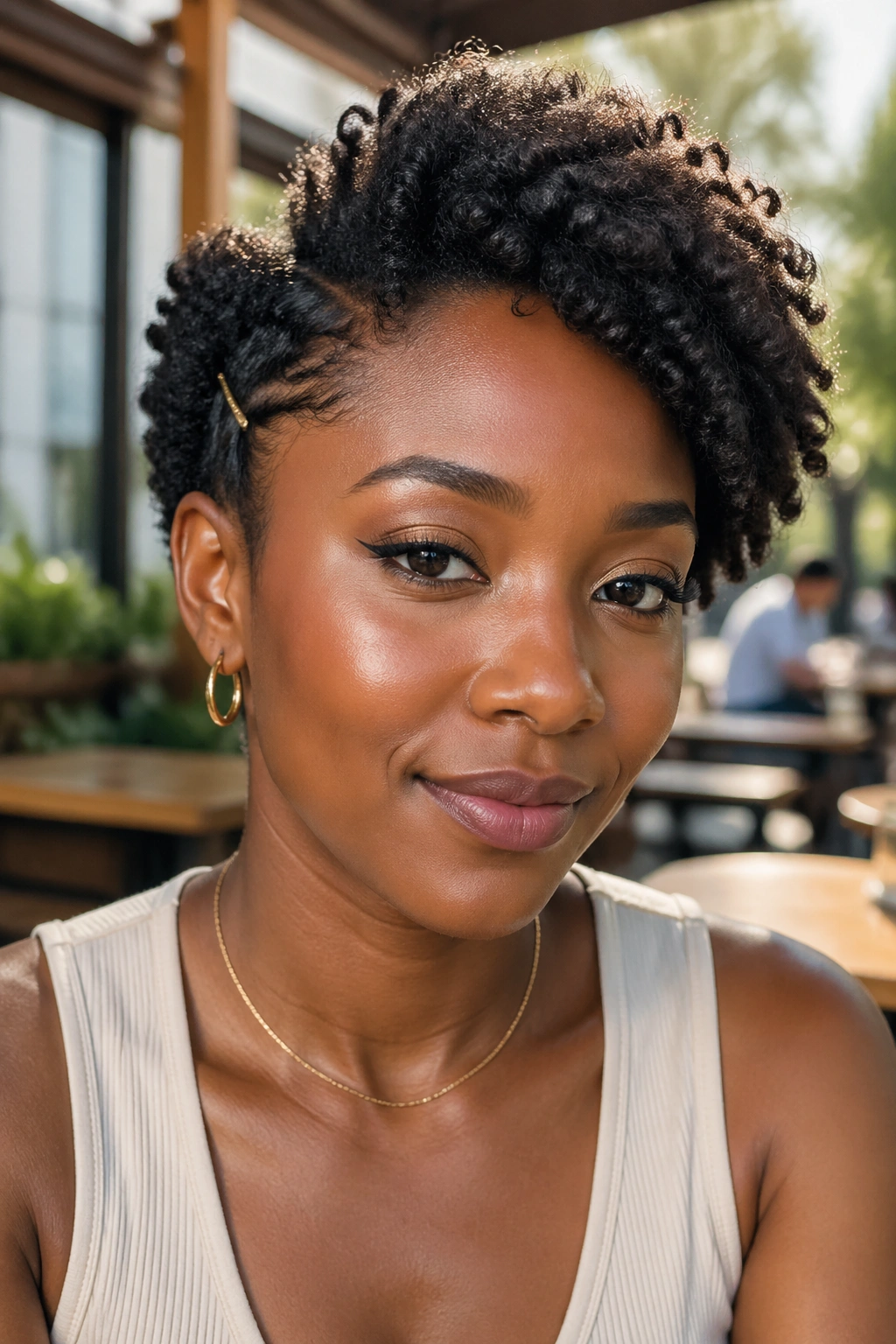
Sometimes the easiest way to make short hair feel longer is to push the whole shape to one side. A deep side-swept mini afro does exactly that. It is not about flattening the hair. It is about guiding the movement so the silhouette feels longer across the forehead and softer around the temples.
This one works especially well when your natural growth pattern already falls in one direction. Instead of fighting it, use it. Create a deeper part than you would with a standard side part, then direct the top over with your hands and a little foam or light cream. The volume should land off to one side, not collapse into a slick sheet.
A single pin near the temple can help if your hair slips forward. Keep the pin hidden under the top layer so the style looks loose, not pinned down. If you use edge control, use a tiny amount and stop at the hairline. Too much and the style starts looking pasted on, which defeats the whole point.
This is one of those short hair looks that can read softer in daylight and sharper at night, depending on how clean the part is. It is also useful when one side of the haircut has grown a little faster than the other. Rather than chasing perfect symmetry, the sweep works with the imbalance.
9. Headband and Scarf Mini Afro
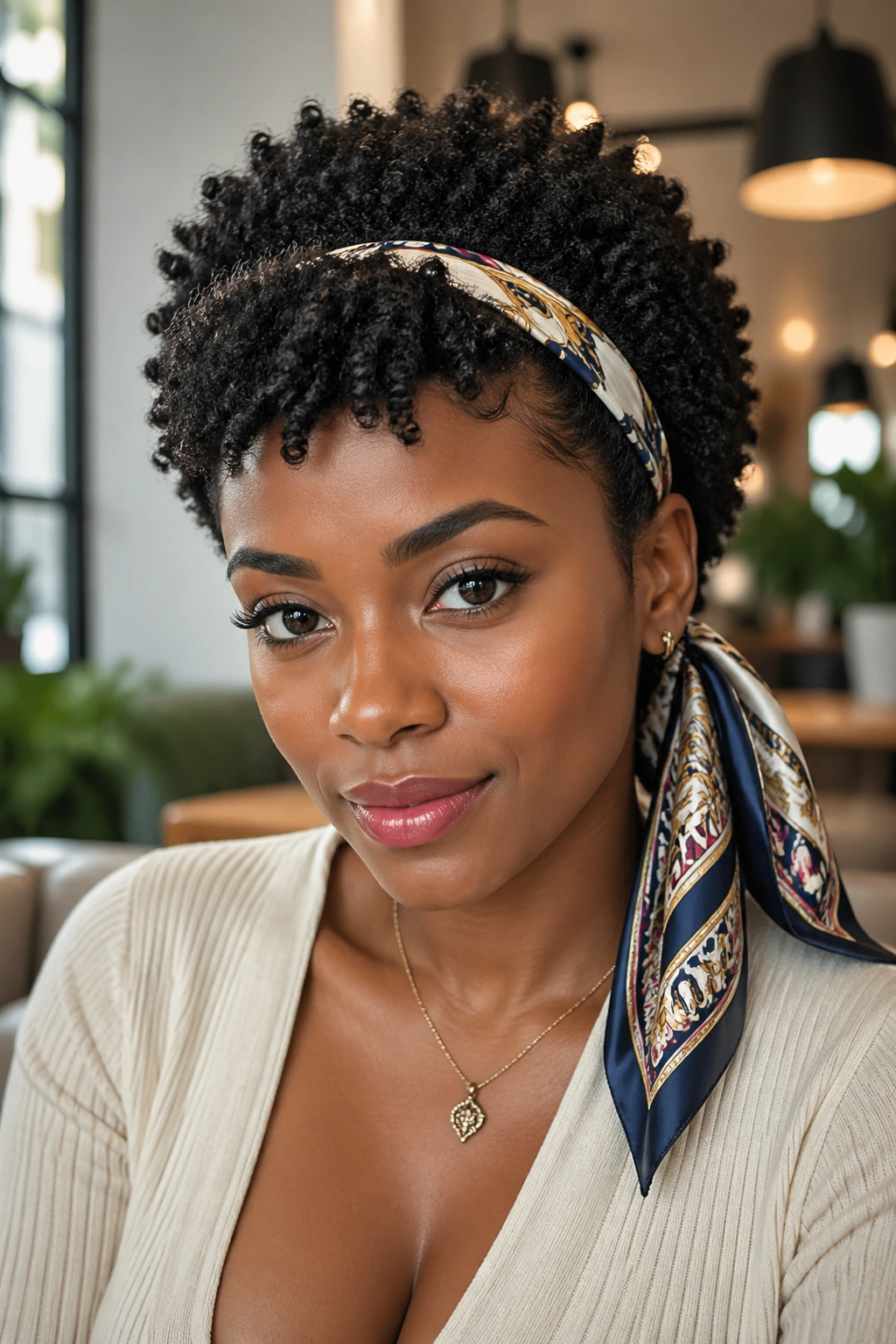
A thin headband or a silk scarf can make a mini afro feel finished in one move. Not overdone. Finished. There is a difference, and on short hair it shows fast. The accessory frames the face, controls the front, and gives the crop a little structure without flattening the curl pattern.
The important part is placement. A headband that sits too low can crush the top and create a ridge where the hair bends under the band. Aim to place it about one to two inches behind the hairline, then let the front puff a little over it. With a scarf, keep the knot off to one side or at the nape so the shape of the afro stays visible.
Satin-lined bands are worth the bother. So are scarves made from smooth fabric instead of stiff cotton. Anything rough will snag at the edges and leave the style looking fuzzy by noon. If the band leaves a red mark on your forehead, it is too tight. Toss it.
This style is good when you need your hair out of the way but do not want to hide the afro shape completely. It also works when the cut is between stages and not quite ready for a pick-out shape. The accessory buys you time, and it looks intentional while doing it.
10. Clean-Temples Mini Afro
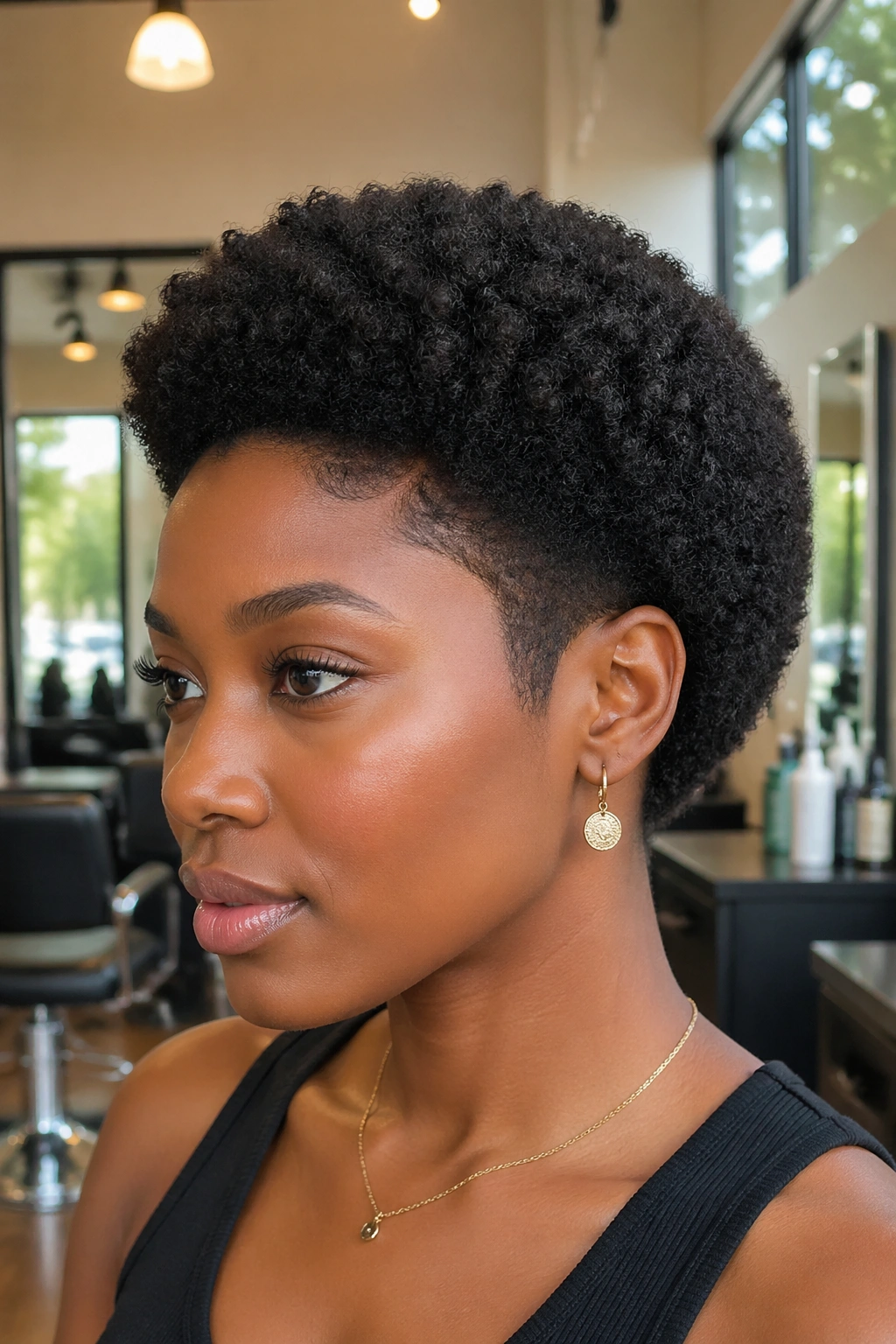
A mini afro with clean temples looks sharper the second you see it. That is the whole appeal. The top stays rounded and full, but the edges near the temples and nape are edged up enough to give the shape more contrast. It reads modern, but not stiff.
Unlike a full rounded fro, this version depends on the haircut more than the styling. If the temples are too bulky, the whole shape starts to spread outward. A soft line-up around the ears and a tidy nape help the top look denser than it really is. That illusion is useful on very short hair, where every inch matters.
Ask for a clean outline, not a hard square. That matters. A boxy temple line can make the hair look cut too sharply and can pull attention away from the curls themselves. A softer cleanup keeps the style feminine and lets the natural texture stay the star.
- Keep the temples lightly shaped, not overlined.
- Let the crown stay fuller so the style does not lose height.
- Use a light cream instead of a heavy gel near the edges.
- Clean up the outline when the shape starts to blur.
This is a good style if you like crisp details and a short cut that feels a little more tailored. It also ages well over a few weeks because the outline can soften without making the whole haircut fall apart.
11. Twisted Front Mini Afro
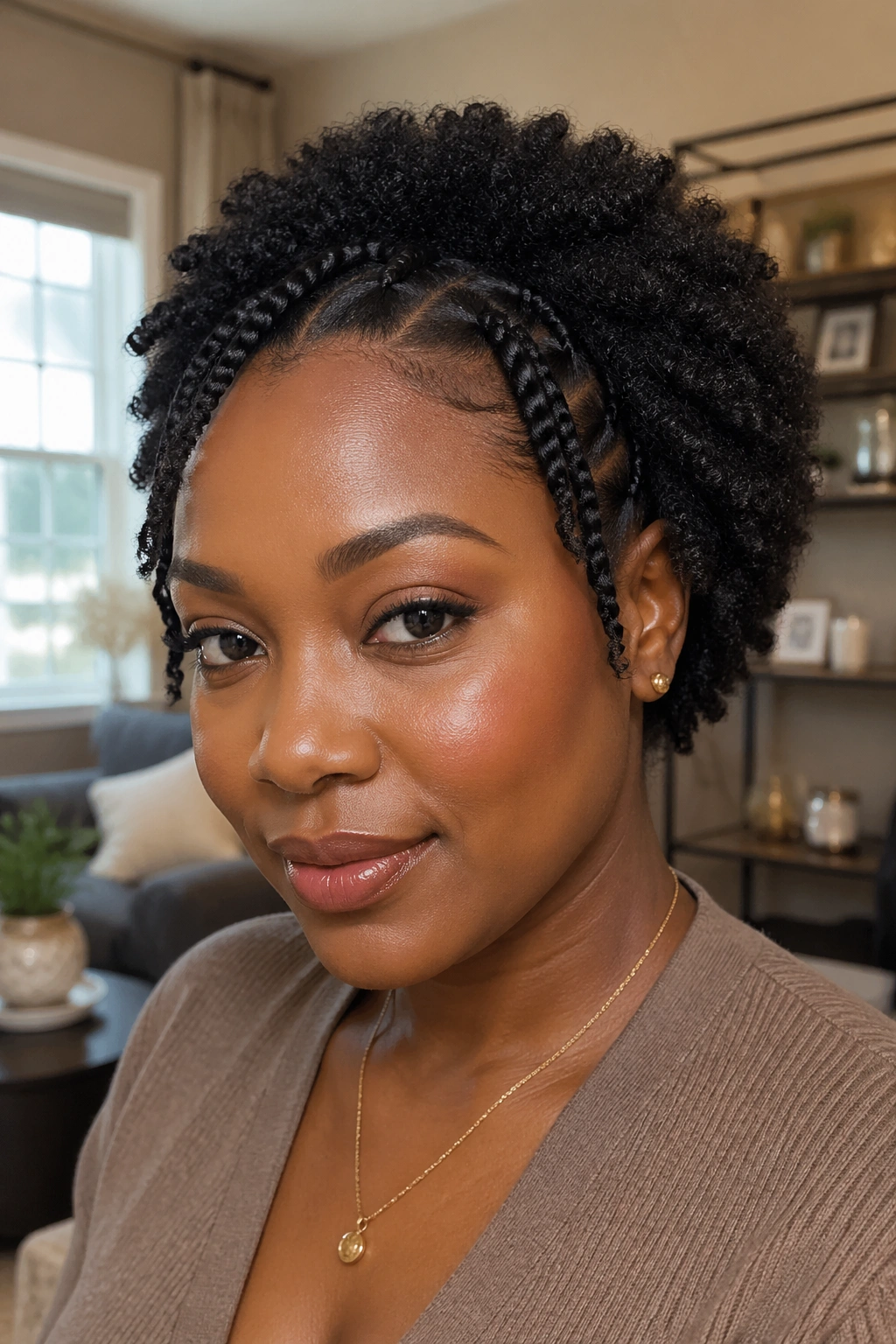
If you want a style that looks planned in under ten minutes, twist the front. That’s the short version. Two, three, or four small twists across the hairline can change the entire mood of a mini afro, especially when the rest of the hair is left loose and rounded.
I like this look because it gives the front some order without turning the whole head into an updo. That matters on short hair. Too many pins and too much pulling can make the style feel tiny in a bad way. A few twists frame the face, hold the front, and let the back keep its softness.
What makes it stay put
Use damp hair. Dry hair can work, but damp hair gives you a cleaner twist and less frizz at the roots. A pea-sized amount of setting lotion or leave-in cream is usually enough for each section. Pin the ends underneath the twists so they vanish into the shape instead of sticking out at odd angles.
A small detail helps here: twist in the direction your hair naturally wants to coil. When you fight the curl pattern, the twists loosen faster. When you follow it, they sit better and last longer.
This style is one of the easiest ways to make a short afro look styled for work, dinner, or any day when you want the front to stay calm. It is practical. It is tidy. And it still leaves room for texture.
12. Asymmetrical Mini Afro
Not every mini afro has to be balanced down the middle. An asymmetrical shape gives short hair more attitude and usually a lot more personality. One side can sit a little fuller, one side can tuck closer to the head, or the cut itself can be shaped so the curve falls longer on one side than the other.
This style is a smart choice if your hair grows with a stubborn bend or if one side shrinks harder than the other. Instead of trying to force both sides into the same shape, use the natural difference. The result looks deliberate, not accidental, and that is the real trick. Hair that fights itself looks busy. Hair that follows its own lines looks styled.
A side tuck near the ear helps the asymmetry show. So does a clean part that is not centered. If you want a little more drama, leave one side slightly fluffier and keep the other side close with a pin or a sweep behind the ear. Keep the edges soft unless you want the shape to feel severe.
This is the style I would pick for women who want short hair to have some edge without getting fussy. It works with statement earrings, glasses, bare necklines, even a plain T-shirt. That range is what makes it useful.
And honestly, short hair does not need to apologize for being short. When the shape is right, a few inches of natural texture can carry the whole look.
