



A good short afro does a lot of heavy lifting.
For a lot of women over 40, the point is not to chase length; it’s to get shape, movement, and a cut that behaves without a fight every morning. That’s where short afro styles earn their keep. They can sharpen the jawline, soften the forehead, show off earrings, and make natural texture look deliberate instead of accidental.
I also think short afro hair gets better with age in a way people don’t talk about enough. Gray strands can create natural contrast. Curl patterns often look richer when they’re cropped and shaped. And when the cut is done well, the whole style feels lighter on the head, which matters more than most salon chatter admits.
The trick is choosing a shape that matches your density, your curl pattern, and the amount of time you actually want to spend in the mirror. Some styles are neat and tailored. Some are fluffy and full of life. Some need five minutes and a pick. Others ask for a little more setup, but they pay you back with definition for days.
1. The Tapered TWA That Sharpens the Neckline
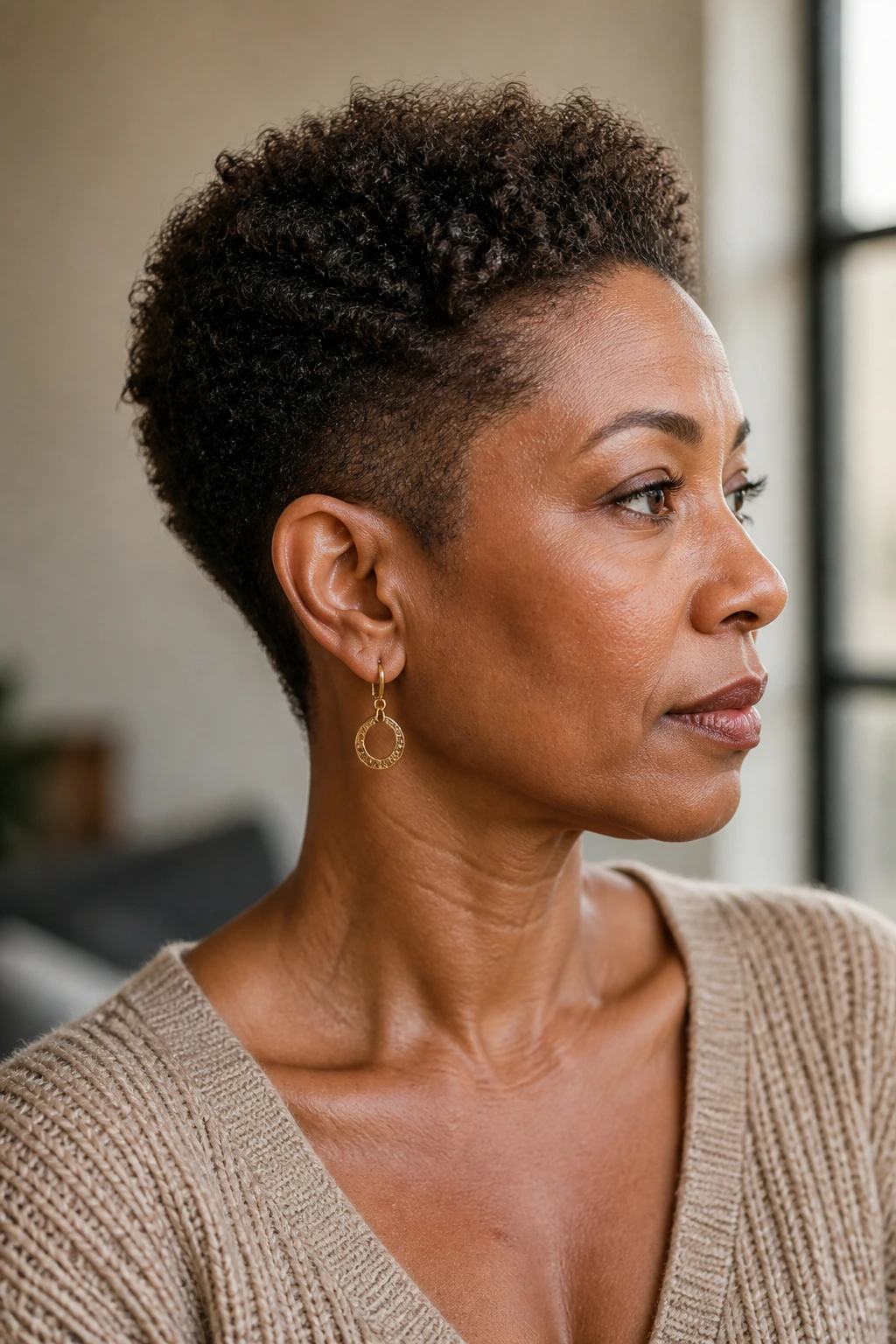
A tapered TWA is the easiest way to make short natural hair look sharp without making it feel stiff. The sides and nape stay close, while the crown keeps a little more length and movement. That small difference changes the whole mood of the cut.
Why It Works
The taper gives your face room to breathe. It keeps the haircut from puffing out at the sides, which is useful if your hair grows wide fast or if you want the eye to go upward instead of outward. On a woman with a strong jawline or a long neck, it looks clean. On a woman with softer features, it reads polished without trying too hard.
A tapered TWA also makes daily styling easier. You can smooth a bit of leave-in through the top, fluff the crown with your fingers, and leave the sides alone. That’s it. No elaborate routine. No wrestling match with the mirror.
- Best for: dense coily hair, tighter curl patterns, and anyone who wants the cut to look intentional even on dry-day hair.
- Styling time: about 10 to 15 minutes.
- Ask for: a soft taper at the temples and nape, with the top left about 1 to 2 inches longer.
- Product note: a light cream or foam is enough; heavy butter can flatten the shape fast.
My favorite part: the neckline looks neat even when the top gets a little fluffy. That contrast is doing real work.
2. The Rounded Mini Afro That Looks Full Even at a Small Size
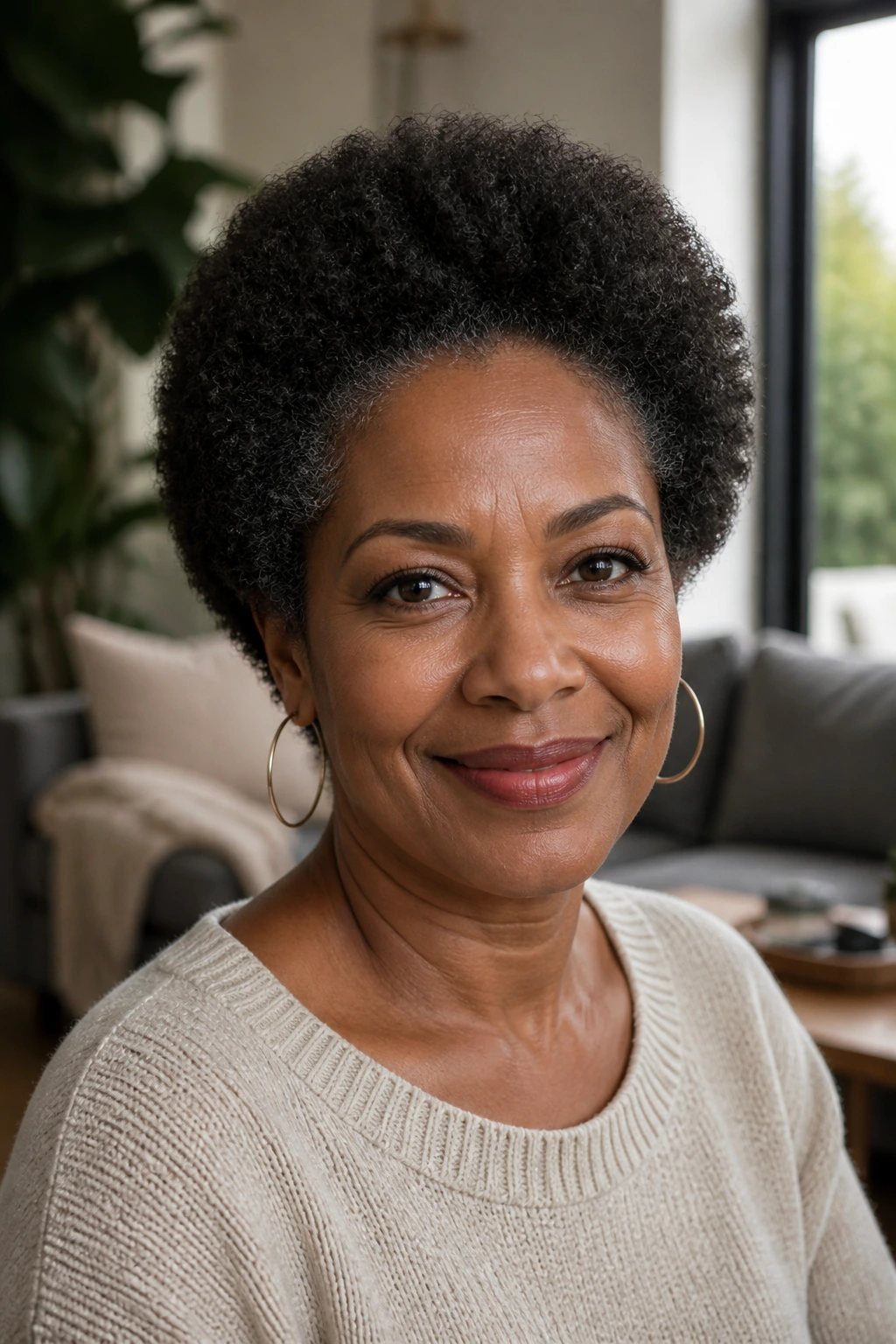
Short hair does not have to look edgy to look finished. A rounded mini afro is proof. The shape is even all the way around, with enough fullness at the crown and sides to create a soft halo effect.
This cut is especially good if you want your hair to sit close to the face without disappearing. It frames glasses well. It works with hoop earrings. And it has that quiet, old-school elegance that never feels dated because it is based on shape, not trend.
The key is balance. If the top gets too tall, the style starts to look top-heavy. If the sides are trimmed too tight, you lose the cloud-like feel that makes a mini afro so good. I like a round shape that follows the head without hugging it too hard.
A little pick at the roots is enough. Do not overdo it. The point is lift, not frizz for the sake of frizz. Keep the ends moisturized so the outline stays soft instead of fuzzy.
3. The Deep Side-Part Short Afro That Softens the Face
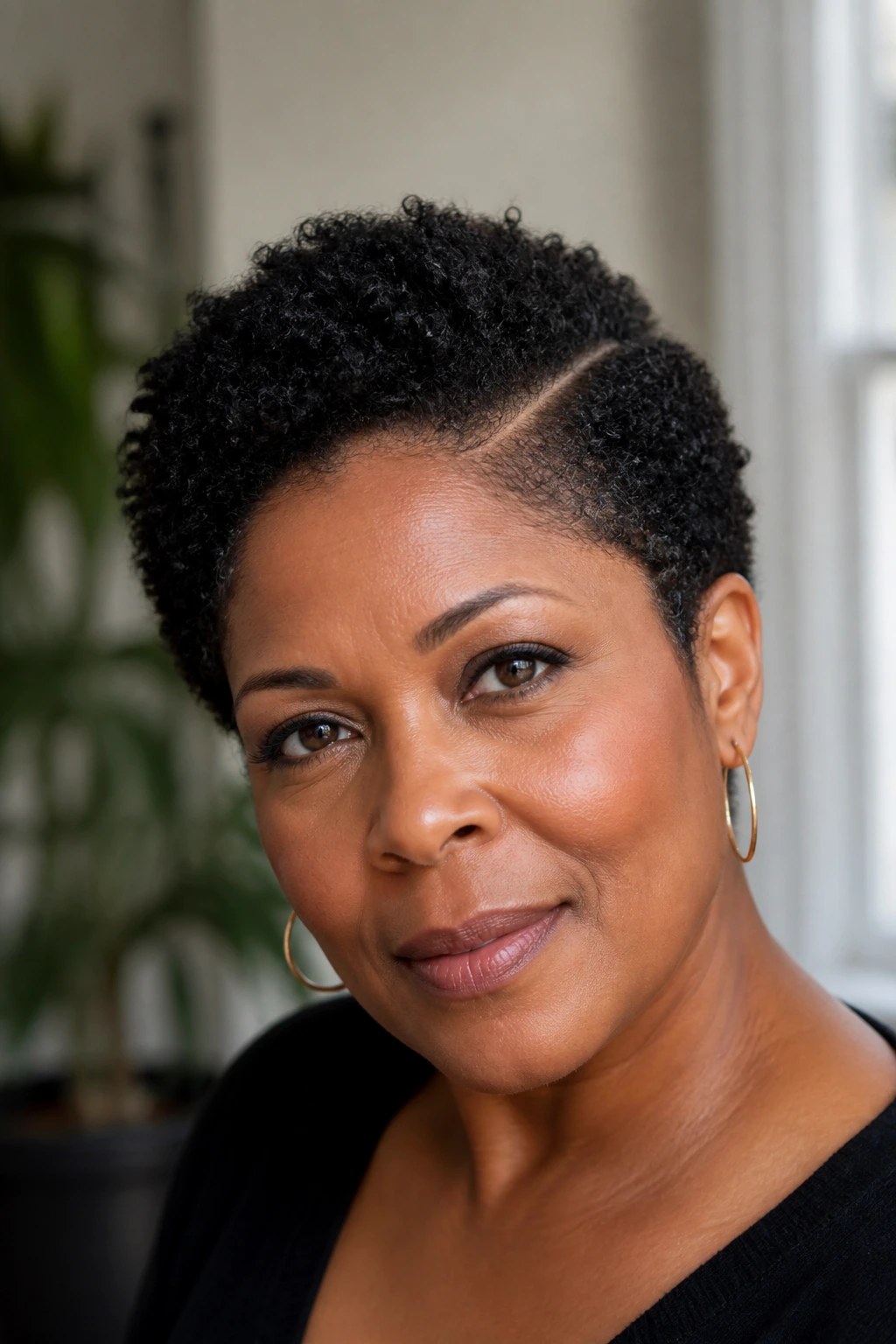
Want more lift without adding height everywhere? A deep side part gives you that in one move.
The part changes the silhouette immediately. One side falls a little flatter, the other side rises with more volume, and the whole style feels less predictable. That matters if you have a round face, a broad forehead, or just want a cut that looks a little more styled on days when you barely did anything.
How to Keep the Part From Collapsing
Set the part while your hair is damp, not soaking wet. A rat-tail comb helps, but your fingers can do the job if you like a softer line. Once the part is in place, clip the flatter side for 10 to 15 minutes while the hair starts drying. That gives the roots a memory.
Then keep product away from the roots on the heavy side. Too much cream right at the scalp will drag the hair down and kill the lift you wanted in the first place.
- Best for: women who want face-framing and a little asymmetry.
- Works well with: side-swept bangs, small earrings, and soft makeup around the eyes.
- Styling note: use a light gel only at the part if you need control.
- Watch for: part lines that are too perfect; a slightly soft part often looks better on textured hair.
This style has a nice side effect, too. It can make a short afro feel longer without actually adding length.
4. The Finger-Coil Cropped Afro That Stays Neat for Days
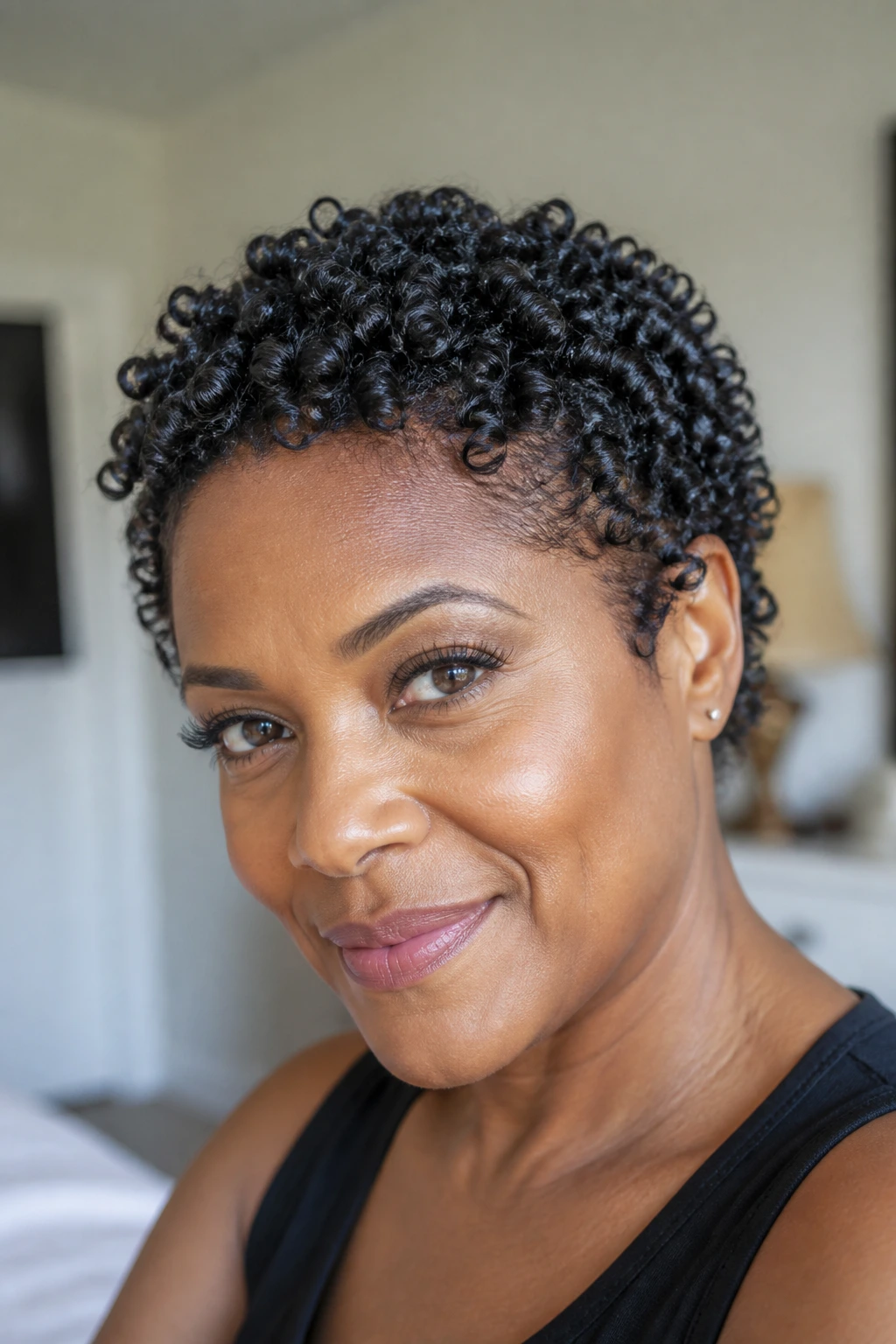
Finger coils are one of those styles that make short natural hair look deliberate on purpose. The curls are shaped one by one, so the finished look has a neat, sculpted feel even when the hair is very short.
I like this style when someone wants definition more than volume. It works especially well on tightly coiled hair that tends to puff into a cloud if left alone. Coils put a border around the texture. They say, “Yes, this is texture. And yes, it was meant to look like this.”
The process is simple but not rushed. Small sections matter. So does damp hair. If the hair is too wet, the coils take forever to dry. If it is too dry, the product won’t glide and the coils won’t hold their shape cleanly.
- Section size: about the width of a pencil for tighter coils, slightly larger if you want a looser finish.
- Drying time: air-dry or sit under a hooded dryer until the coils feel set all the way through.
- Best product type: a slippery leave-in with a soft hold cream or foam.
- Maintenance note: sleep in a satin bonnet or on a satin pillowcase to keep the pattern from roughing up.
The payoff is practical. A good finger-coil set can look tidy for several days, and the style still loosens into something soft instead of collapsing.
5. The Twist-Out Short Afro With Soft Volume
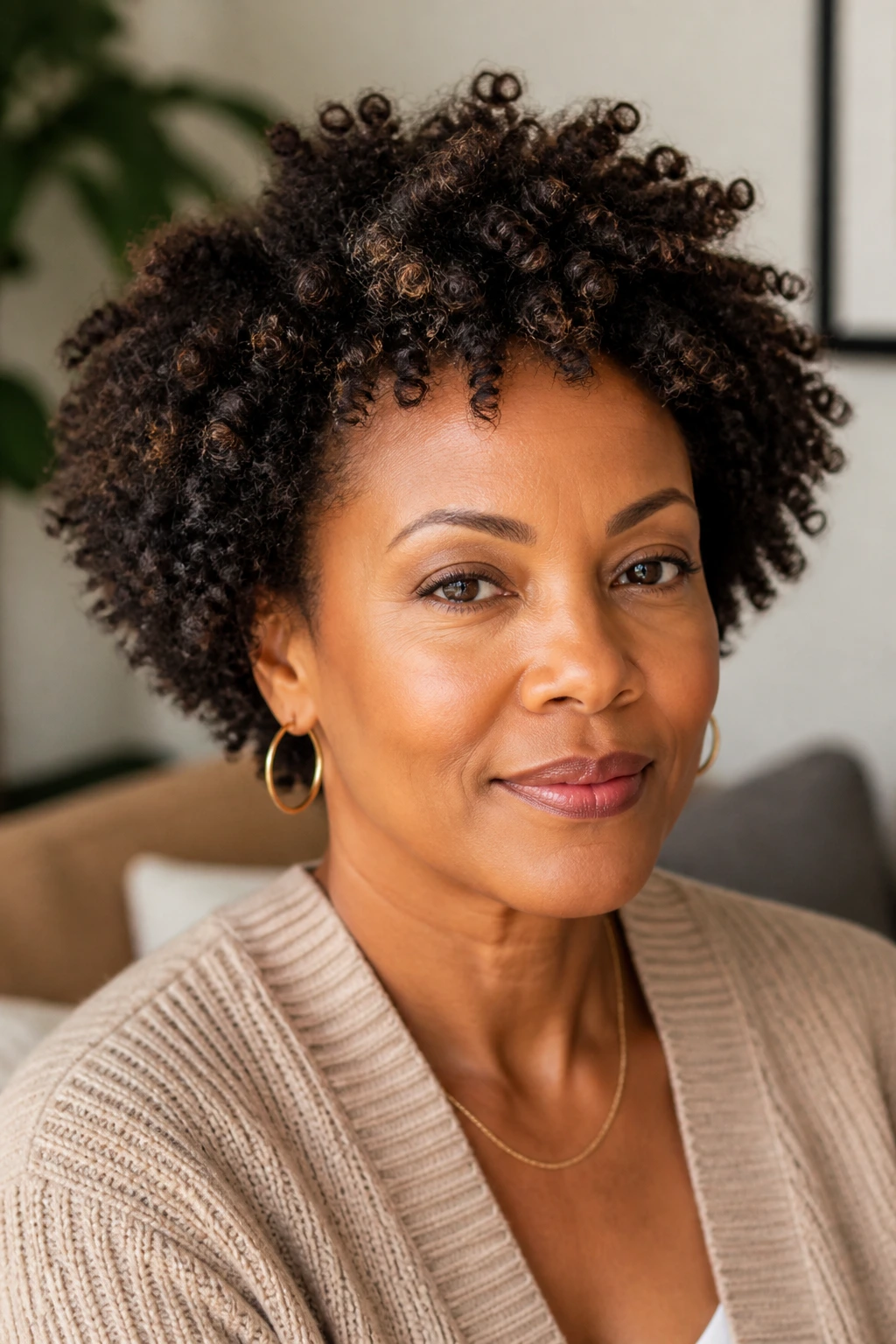
A twist-out is my go-to suggestion when someone wants body without losing control of the shape. On short hair, it gives you that airy, touchable look that sits somewhere between defined and fluffy.
Two-strand twists are the setup. You put them in on damp hair with a cream or mousse, let them dry completely, and unravel them once the hair is set. The twist-out that comes from short coils has a nice lift at the roots and a softer edge than finger coils. It feels a little less formal, which I like.
Dryness is the enemy here.
If you take the twists down early, you get a frizzy mess and no one wins. If you use too much product, the hair can stay tacky under the surface and lose the crisp separation that makes a twist-out look good. A medium-hold foam often does a nicer job than a heavy cream, especially if your hair is fine or your strands are low-density.
I also like that this style gets better as it loosens. Day one can be neat. Day two often looks fuller. That’s a good thing, not a flaw. Short hair should be allowed to relax a little.
6. The Soft Frohawk for a Short Natural Cut
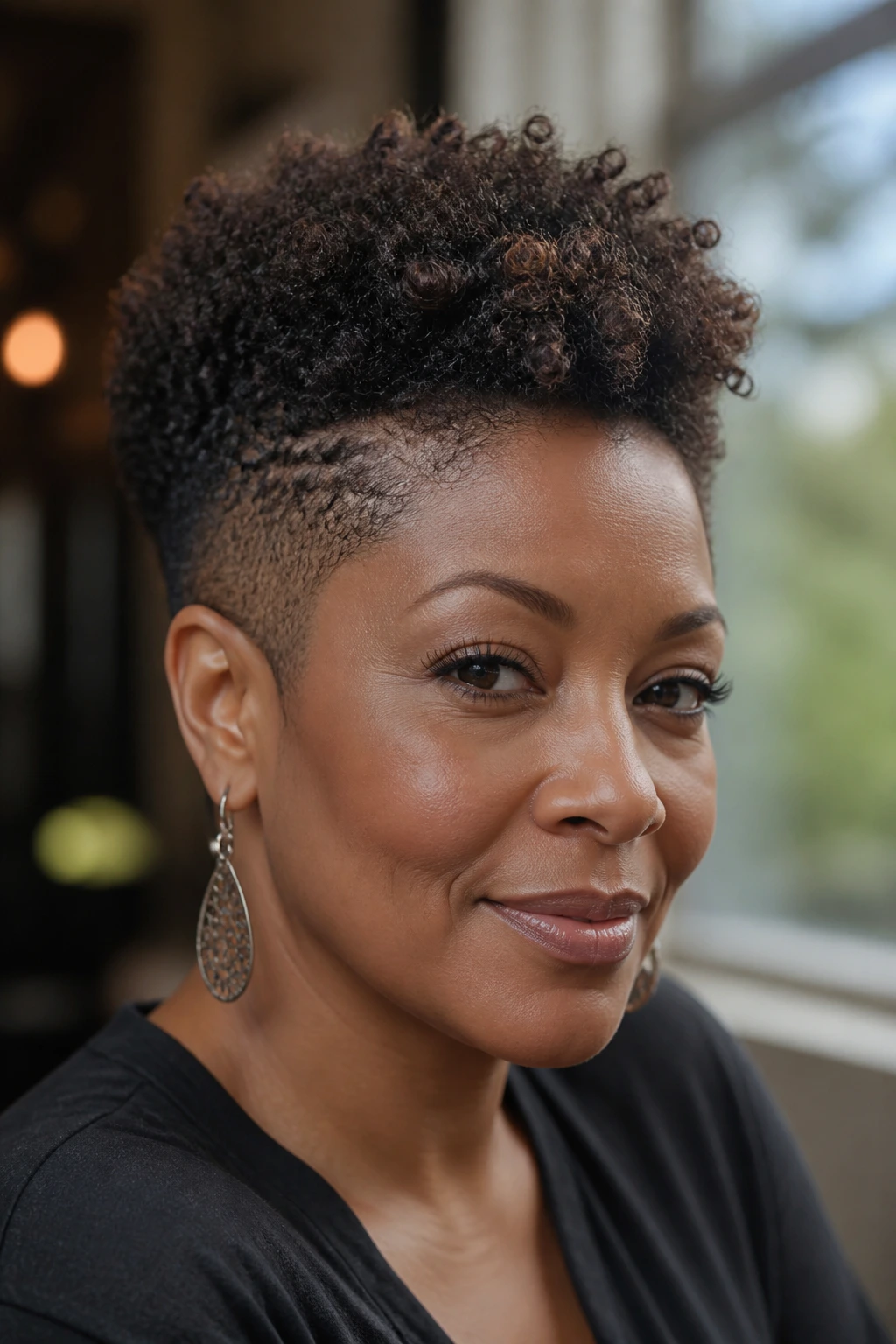
Unlike a severe frohawk, a soft frohawk keeps the sides tapered and leaves enough texture in the middle to stay approachable. That makes it a strong choice for women who want shape and edge without going full dramatic.
The center strip does the visual work. It draws the eye up and down, which can lengthen the face and show off cheekbones. The sides stay close enough to keep the style tidy. If your hairline is delicate or your temples are sensitive, this is one of the kinder short natural styles because it doesn’t ask the edges to do too much.
What to Tell Your Stylist
Ask for a tapered side cut, not a hard shave, unless you want a stronger contrast. The center can stay a little longer than the crown, but it should not flop over into the face. A good frohawk has structure. It should look like the hair is leading the eye somewhere, not like it was left unfinished.
This is also a smart style if you wear statement glasses or bold lipstick. The shape gives those details room to show. And if you like a little lift at the crown, you can get it with a pick and a touch of mousse instead of teasing the hair into a puffed-up mess.
7. The Salt-and-Pepper Short Afro That Lets Gray Hair Shine
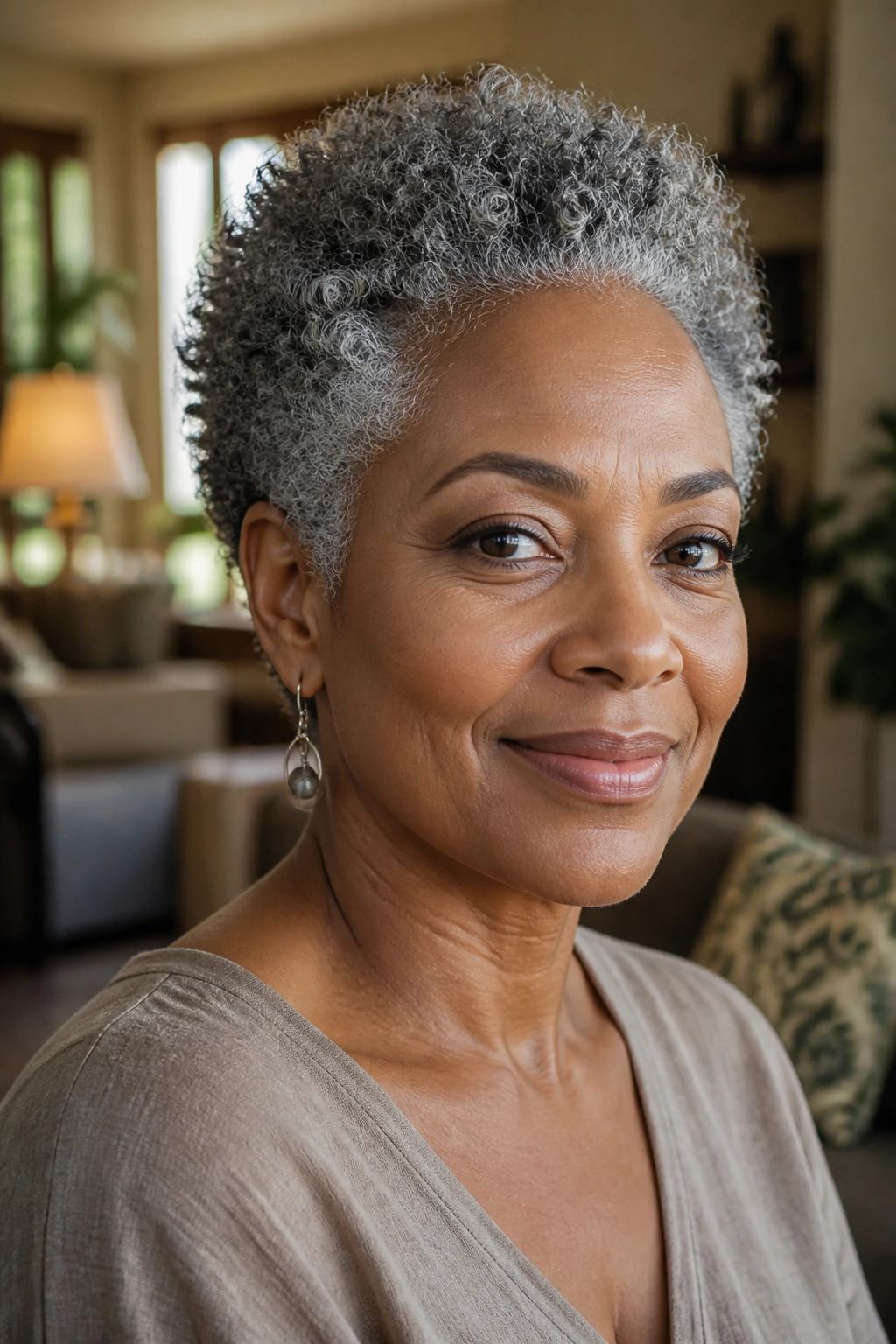
Gray hair looks strongest in a short afro when the cut is shaped, not hidden. The silver strands catch light on their own, and a clean shape makes that contrast look intentional instead of patchy.
This is one of my favorite styles for women over 40 because it does not fight age at all. It uses it. The mix of dark and silver coils gives the hair a natural streaked effect that can look expensive in the plainest sense of the word: rich texture, clean outline, no fuss.
Gray hair can feel drier, though, and that matters. You’ll usually want a moisturizing shampoo, a soft leave-in, and a satin bonnet at night. The short shape helps because it reduces tangling and keeps the ends from looking ragged.
- Best shaping move: keep a little fullness at the temples so the cut doesn’t look too narrow.
- Best styling move: use a small amount of cream and fluff with your hands, not a heavy butter.
- Best accessory match: gold hoops, silver studs, or a dark lipstick if you want the gray to pop.
- Best attitude: let the color do the work. It does not need help.
Some women dye gray. Some do not. Either way, a short afro makes the transition look like a style choice instead of a compromise.
8. The Layered Afro Bob With Enough Length to Swing
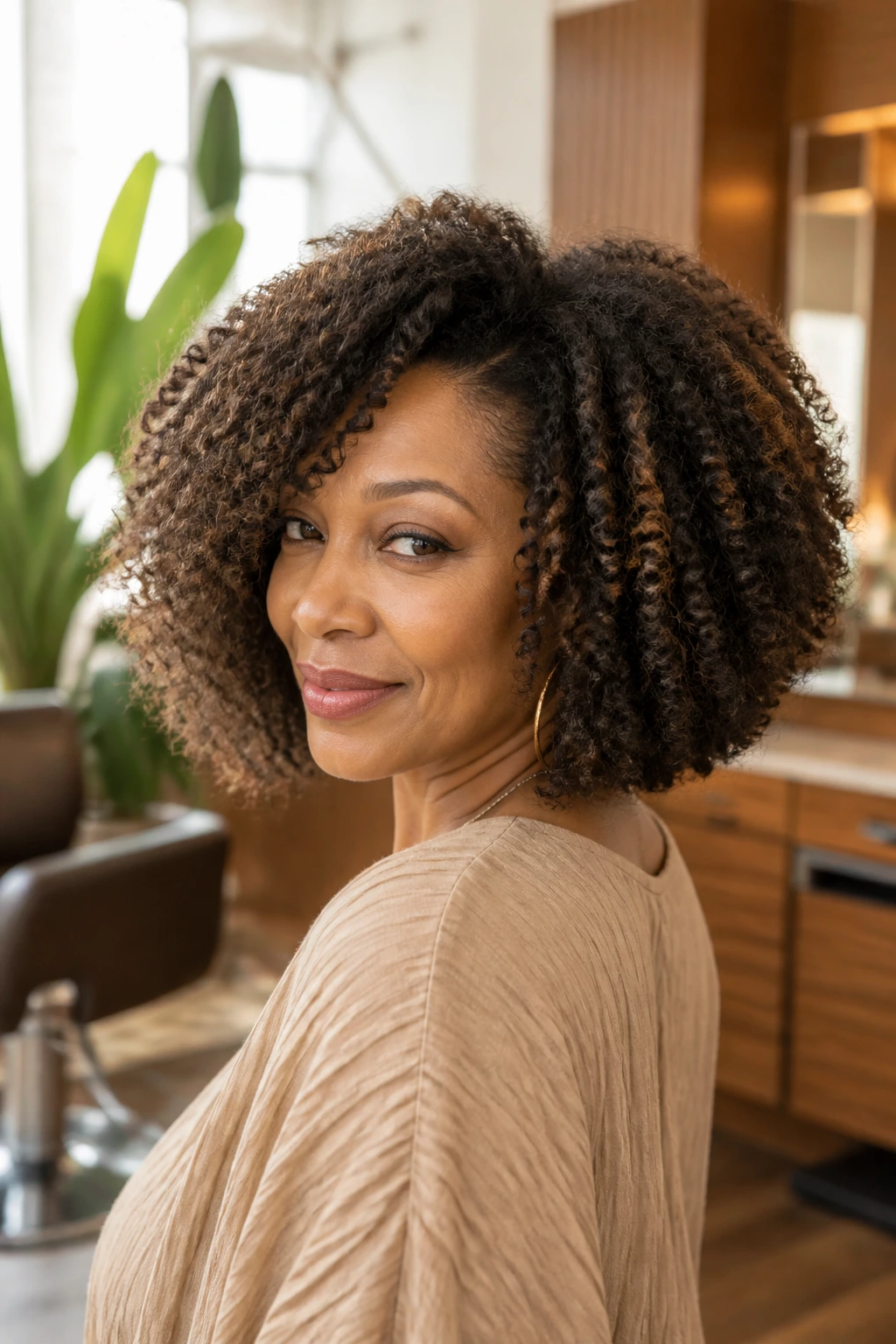
A layered afro bob sits in a sweet spot between short and still-a-little-flirty. It has more length than a TWA, but it stays compact enough to keep the neckline open and the styling time reasonable.
The layers matter. Without them, a short curly bob can feel boxy, especially if the hair is dense. With layers, the shape gets air. The ends lift. The crown stops sitting like a helmet. That’s the difference between a bob that feels bulky and one that moves when you do.
If you like a little swing around the jawline, this cut is worth asking for. A stylist can leave the front slightly longer than the back, then shape the interior so the curl pattern has room to stack. The result is softer than a blunt shape and less round than a classic afro.
What I’d Ask For at the Salon
Tell the stylist you want layers that follow your curl pattern, not choppy chunks that fight it. Ask where your hair tends to swell when it dries. That point usually needs the most careful cutting.
A layered bob also behaves well on second-day hair. A quick mist of water, a little leave-in, and a finger lift at the roots usually bring it back. If your hair is dense and you want polish without flattening the curls, this style hits a useful middle ground.
9. The Bantu Knot-Out Short Afro With Defined Pattern
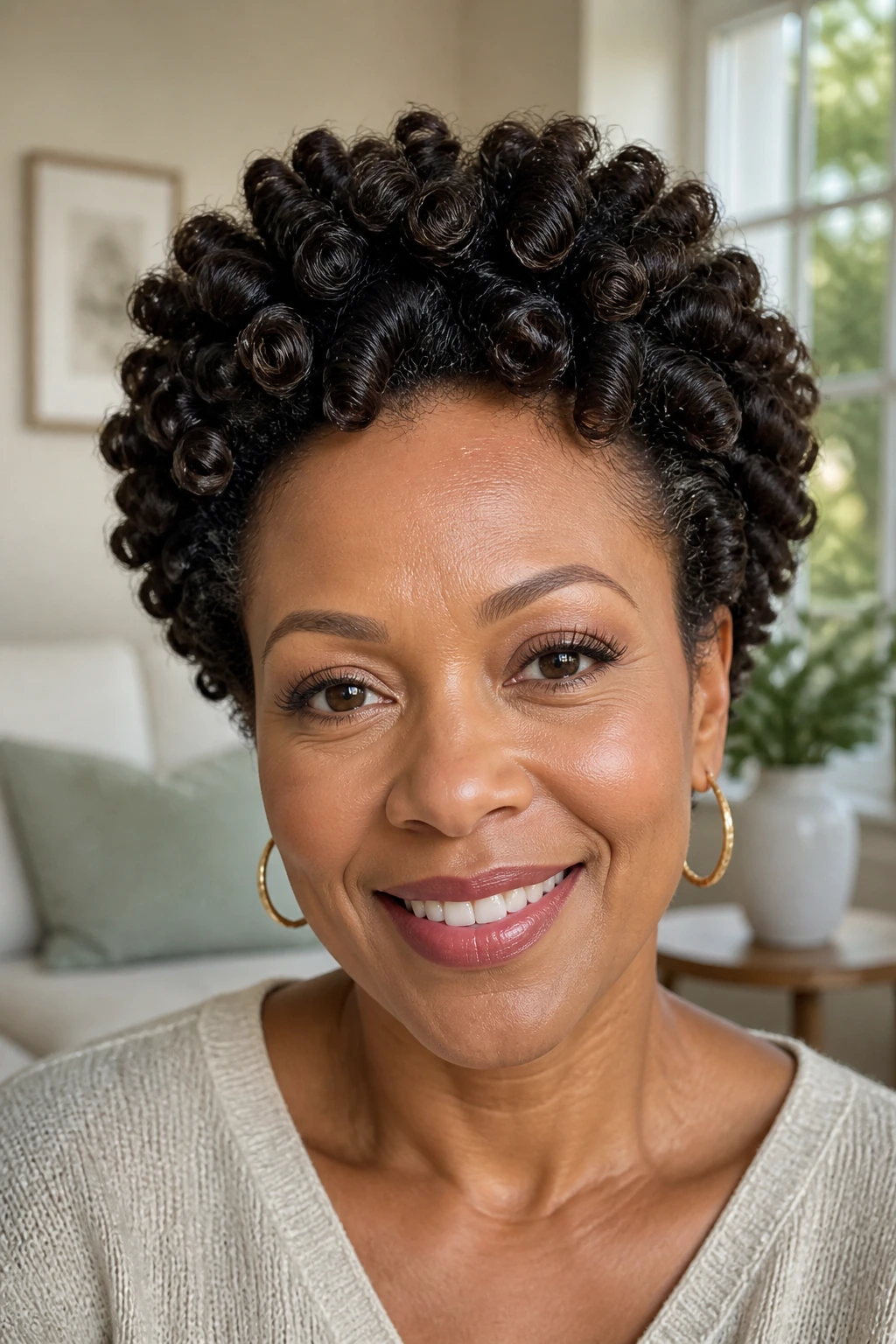
Need a short style that feels dressed up without heat? A Bantu knot-out does that job well. The knots set the hair in a small spiral pattern, and when you take them down, the result is a short afro with shape, definition, and a little bounce.
This style is best when you have time for a full dry. Not rushed, not half-damp, not “I hope this works.” Fully dry. If you take the knots down too early, the hair will frizz fast and the curl pattern will get muddy. Clean sections are part of the appeal, too. Sloppy parts make the finished style look uneven.
Best for Weekends, Events, and Low-Heat Styling
- Section size: keep the parts small if you want tight definition.
- Product choice: use a light cream or setting foam; too much oil makes the knots slide.
- Take-down tip: coat your fingers with a tiny bit of oil before separating to reduce snagging.
- Finish: separate only once or twice. If you break the curls apart too much, the shape turns fuzzy fast.
The nice thing about a knot-out on short hair is that it can look like you spent much longer on it than you did. That is useful. Especially when you want the hair to feel special but not stiff.
10. The Defined Wash-and-Go Afro for Busy Mornings
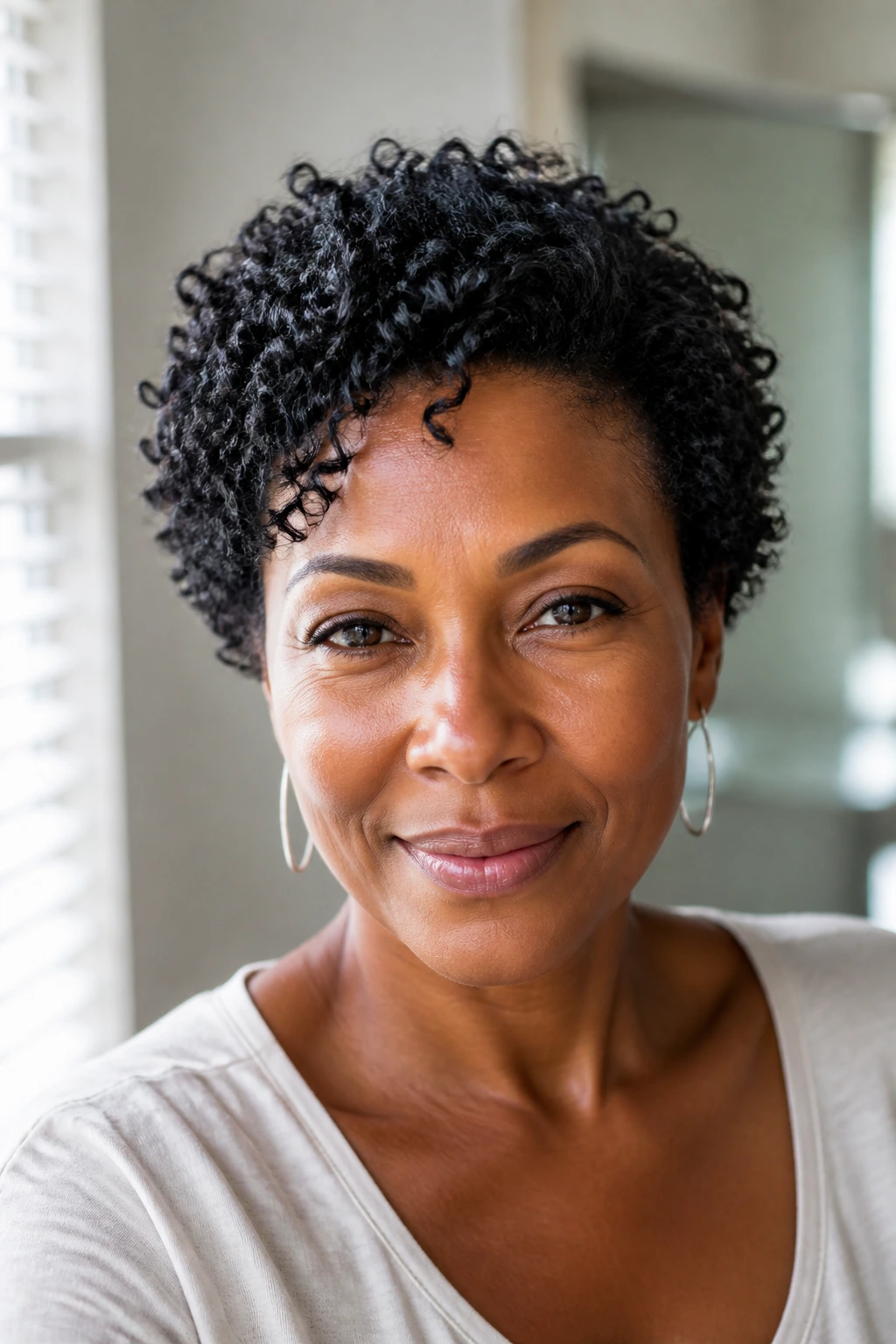
On busy mornings, this is the style I trust when I do not want to wrestle with my hair.
A defined wash-and-go afro starts in the shower, not at the mirror. Clean hair, a good leave-in, a curl cream or gel with enough slip, and a little patience while it dries. On short hair, the whole routine can be quicker than people expect because there is less length to saturate and less weight to hold the curl pattern down.
The danger is using too much product. Short hair doesn’t need a swamp of cream. It needs enough moisture to clump the curls and enough hold to keep the shape from puffing out instantly. I usually think in thin layers: leave-in first, then a small amount of styling product, then hands off.
Drying method matters, too. Air-drying works if your schedule is calm. A diffuser speeds things up and gives more root lift. A T-shirt or microfiber towel helps with scrunching, but don’t rough it up with a terry cloth towel unless you want frizz before breakfast.
If you like hair that looks fresh without looking overworked, this is one of the smartest short afro choices.
11. The Flat-Twist Crown Style for a Cropped Afro
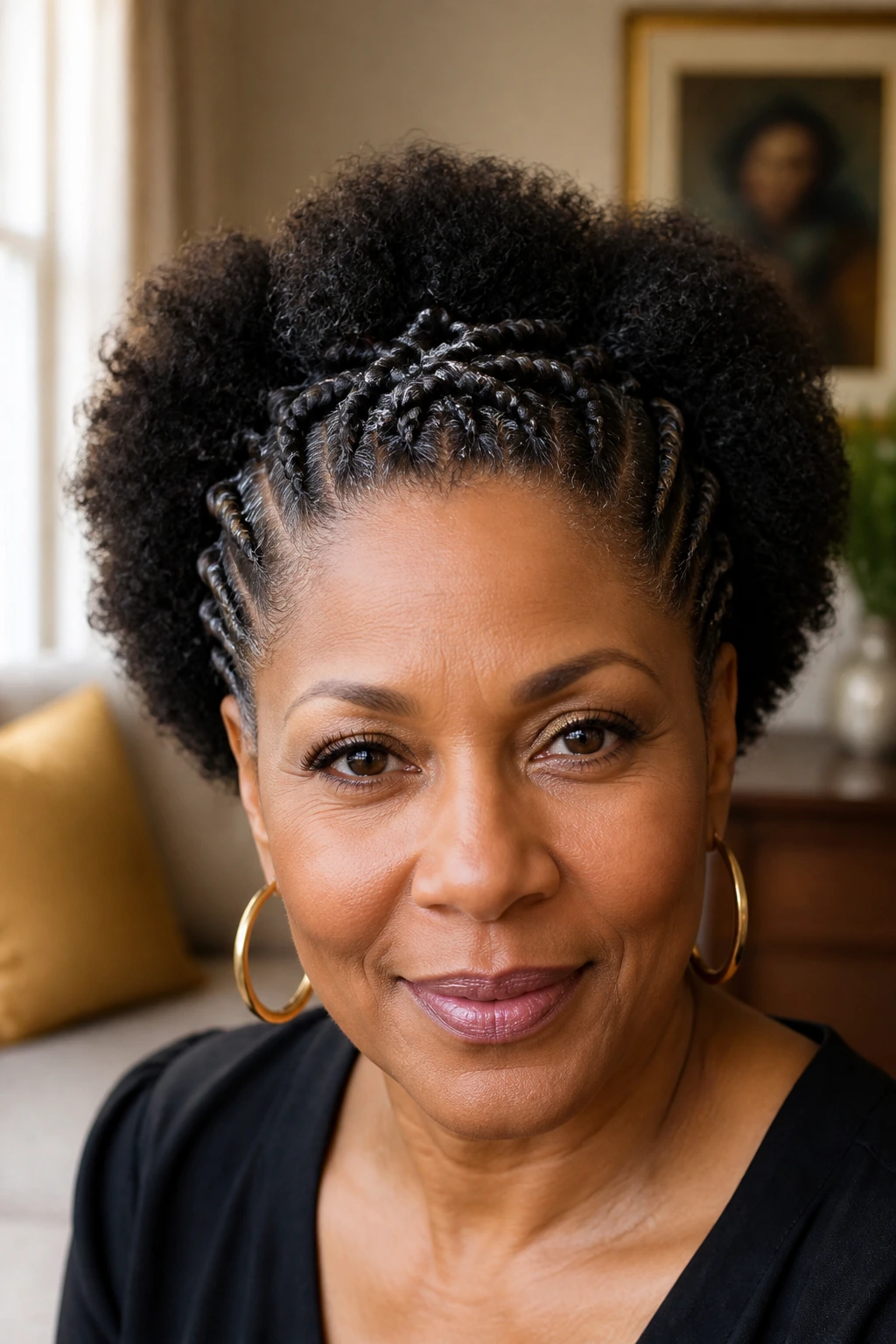
A flat-twist crown style gives you a cleaner front and a softer back, which is a useful combination if you want something polished but not severe. It is also one of the better choices when you want the hair out of your face without pinning everything down.
The front twists create a frame. The back stays fluffy and textured. That contrast keeps the style from feeling flat. It also works well when your hair is shorter on the sides and fuller through the crown, because the twists can guide the eye toward the part and away from any areas that feel awkward during regrowth.
Where It Saves Time
You do not need a full head of twists to get the effect. Two or four flat twists across the front hairline can be enough. Pin the ends back or let them blend into the rest of the fro. If your hairline is sensitive, keep the twists loose. Tight twisting looks neat for an hour and annoying for the rest of the day.
- Best used on: day-two or day-three hair that needs a reset.
- Good companions: a side part, a small clip, or a low bun at the nape if the hair is longer in back.
- Avoid: heavy edge control that makes the front hard and shiny.
- Why it works: it gives the front a finished look without flattening the whole head.
This is a good style when you want a little structure for work or dinner and still want your natural texture to show.
12. The Accessorized Short Afro That Feels Finished Fast
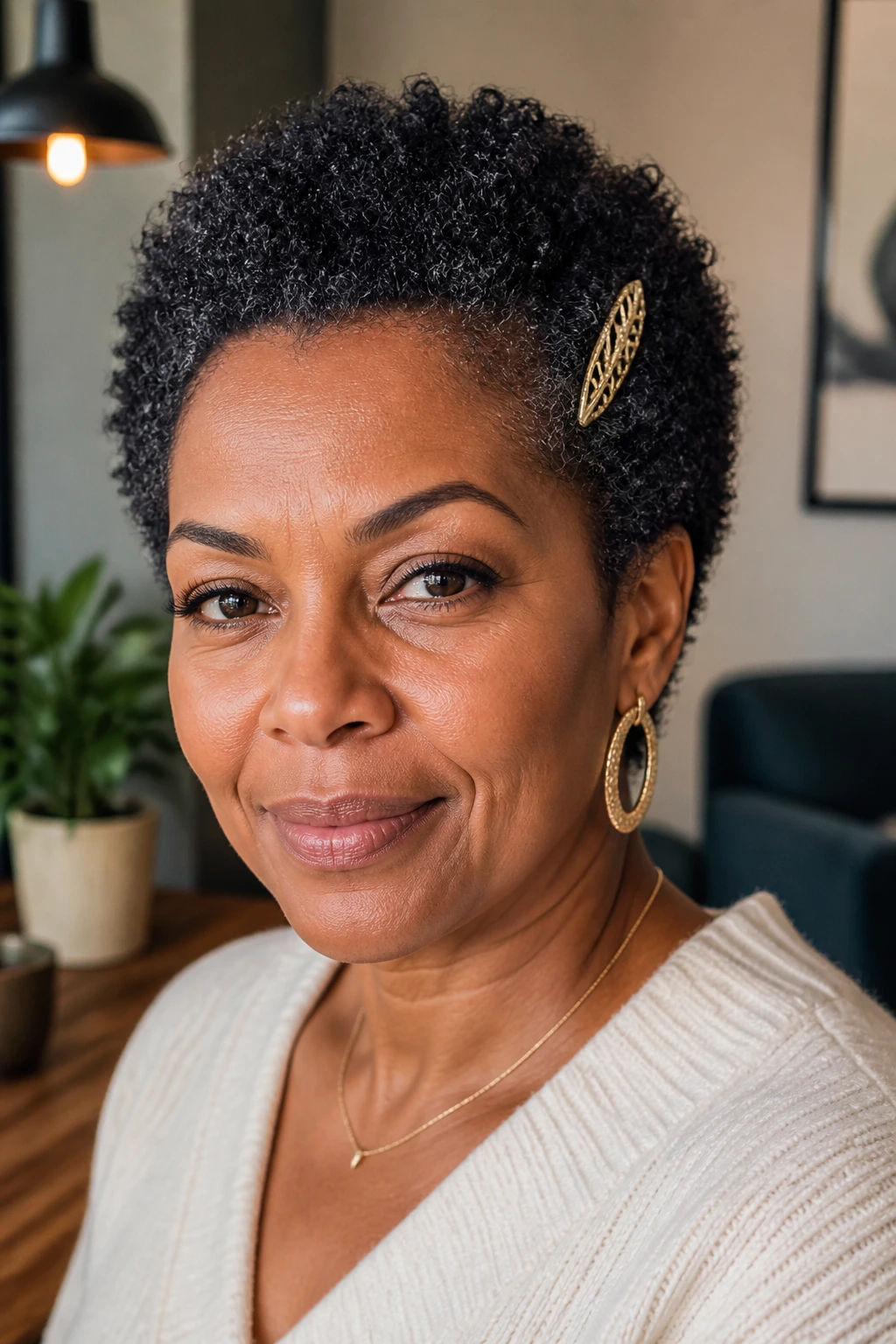
Short afro hair does not need much to look finished — one good accessory can do the job.
I like this category because it gives you room to change the mood without changing the cut. A narrow gold barrette at the temple makes the style feel dressed up. A wide headband can smooth the front and show off the fullness in the back. A printed scarf tied low at the nape can make a simple cropped afro feel intentional on a day when you did not have time for much else.
The trick is restraint. One accent is enough. Maybe two, if they are quiet. Too many clips and cuffs can fight the hair instead of framing it, and that’s a look I can live without. The afro should still be the main event.
If your hair is especially short, accessories also help bridge awkward growth stages. A side clip can hold one side back while the top fills in. A scarf can hide a crown that has not settled yet. A small row of pins can turn a plain shape into something you actually want to wear out of the house.
- Fast options: barrettes, satin bands, small claw clips, metal cuffs, silk scarves.
- Best placement: near the temple, above one ear, or low at the nape.
- Style rule: choose one focal point and let the curls do the rest.
- Good habit: match the accessory weight to the hair density; tiny clips can disappear in a full fro.
If a style only works on a perfect wash day, I skip it. The better short afro styles are the ones that still look like you on a rushed morning, with coffee in one hand and a comb in the other.
