



Bulk twist hairstyles for Afro hair solve a problem that comes up fast: you want fullness, shape, and low-maintenance wear, but you do not want to spend your whole day making tiny parts and squinting at a mirror. Bigger twists give you that heavy, textured look without the fussy finish that smaller twists sometimes ask for.
The catch is balance. A bulk twist that starts too tight at the root can tug at the hairline, and a style that is too loose at the base can fray before it settles in. I pay attention to the first inch of the twist more than anything else. That’s where comfort lives.
Good parting matters. So does stretch. So does how much added hair you pile on, because a twist can look luxurious and still feel heavy if the install is careless.
The styles below range from shoulder-length and easy to dress up to long, beaded, and pinned into shapes that feel a little more formal. Some are neat. Some are soft. Some are the sort of style you throw into a scarf at night and still wear to brunch the next day.
1. Chunky Shoulder-Length Two-Strand Twists
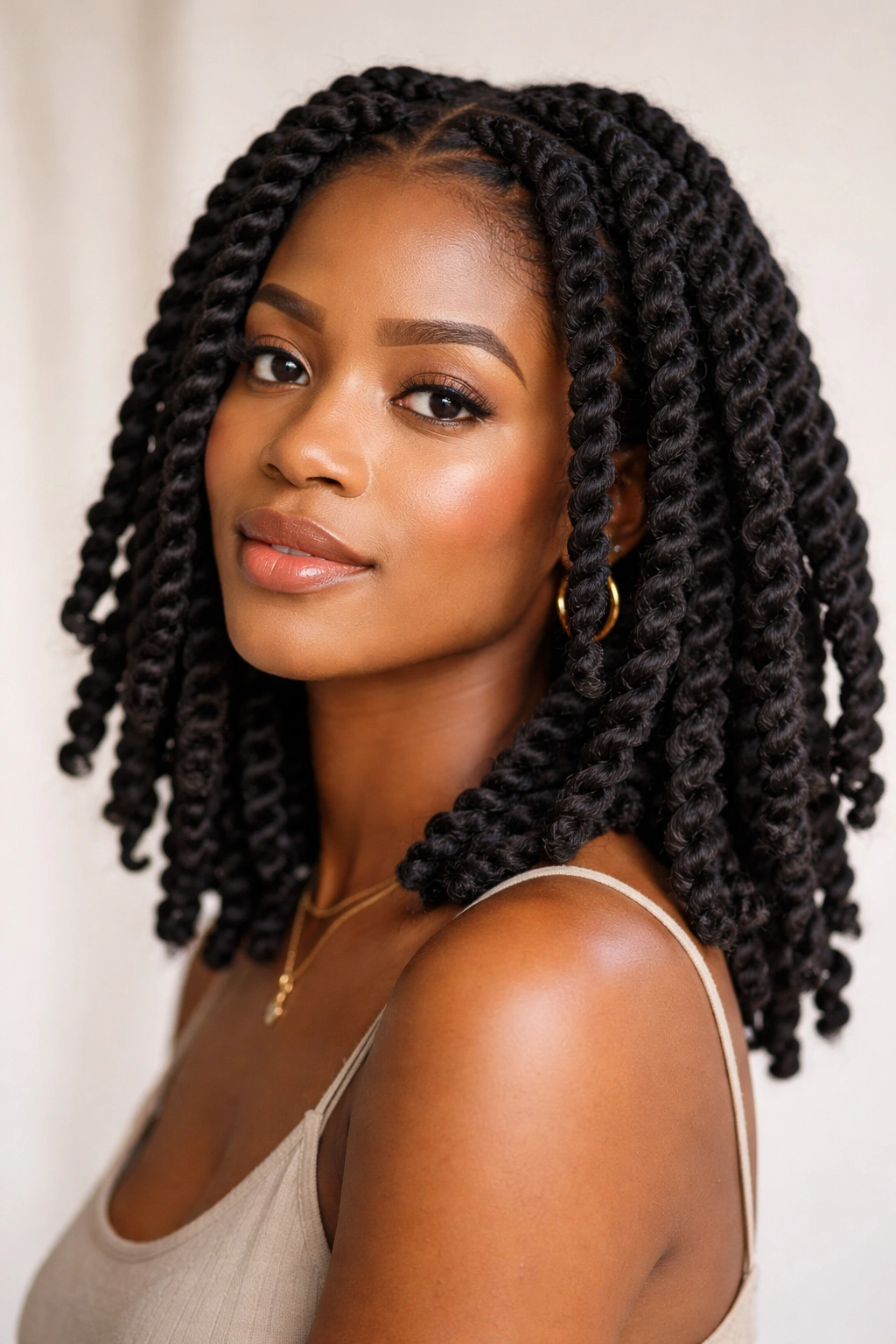
This is the style I point people to first when they want bulk twist hairstyles that feel wearable, not precious. Shoulder-length twists sit in that sweet spot where the hair looks full from every angle, but the weight does not drag on the scalp the way waist-length twists sometimes do.
Why the size works
Chunky two-strand twists work because Afro hair already has a lot of natural body. You are not trying to force the hair into something it is not. You are giving the curl pattern a cleaner shape and letting the volume do the talking.
Keep each section about 3/4 inch to 1 inch wide if you want that full, chunky feel. If the sections get much wider than that, the style can start to look loose at the root. Too small, and you lose the point of the look.
A light leave-in, then a creamy twisting product, usually does the trick. I like a finish that has enough slip to smooth the strands, but not so much oil that the twist slides open after a day or two. The root should feel secure, not crunchy.
- Best for: medium to thick Afro hair that needs a low-manipulation style
- Wear time: usually several days to a couple of weeks, depending on upkeep
- Parting: clean squares or soft rectangles both work
- Maintenance: a satin scarf at night and a light foam refresh at the roots
Tip: Keep the ends neat, but do not overwork them. The best shoulder-length twists look lived-in, not stiff.
2. Jumbo Center-Part Marley Twists
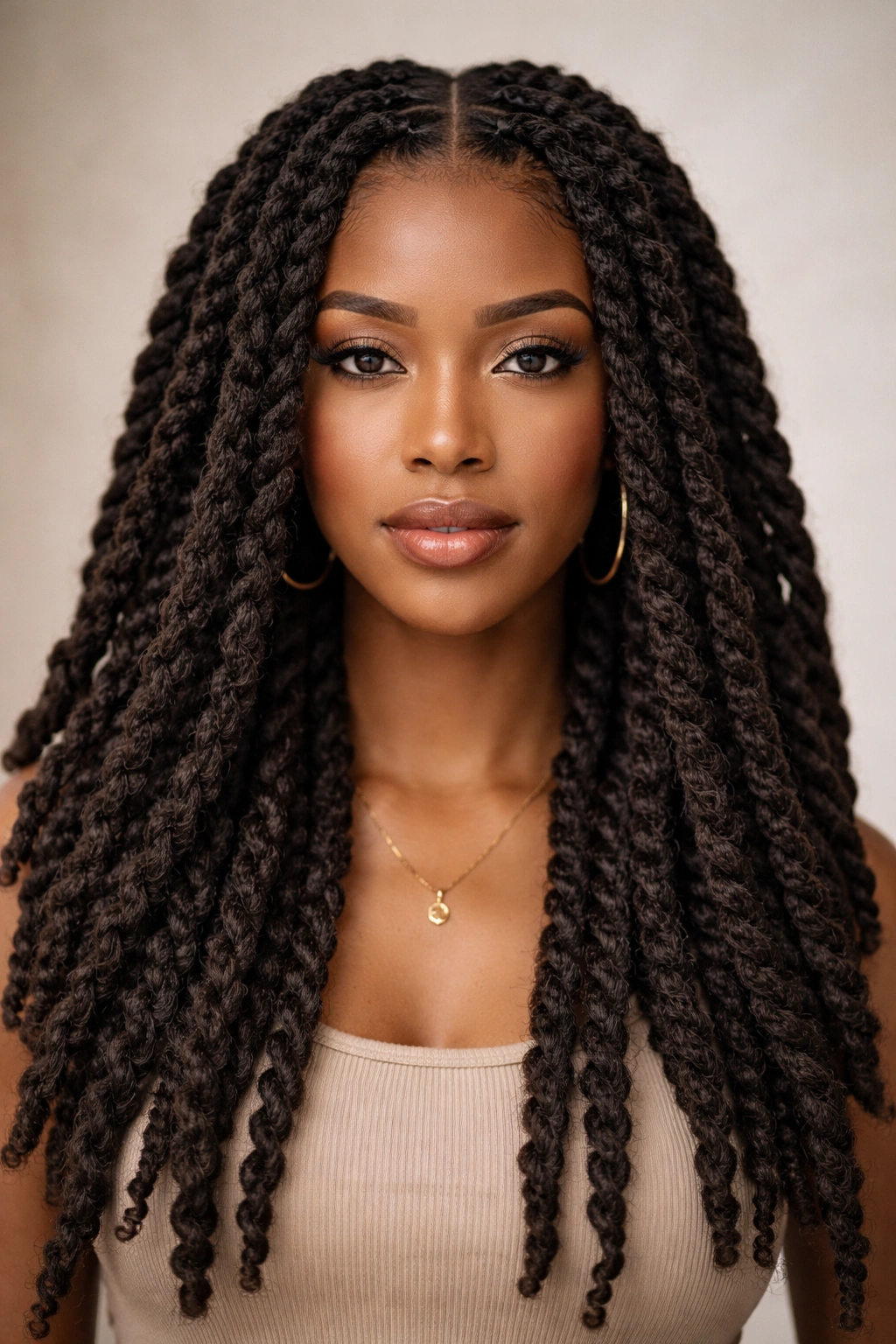
A center part changes everything. Put the same twists on either side of a straight line down the middle, and suddenly the style looks sharper, taller, and more deliberate.
Jumbo Marley twists are especially good when you want texture that feels thick and slightly rugged instead of silky. Marley hair has that matte, fibrous finish that blends well with coily hair, so the twist reads as one solid rope instead of two separate things fighting each other.
What I like about this version is the symmetry. It gives the face a clean frame, and it works well with glasses, hoops, or a strong brow. The part does some of the work for you.
Keep the root area tidy, but leave enough give that the scalp does not feel locked down. A center part should sit flat enough to look clean, not so tight that it leaves your head sore by the afternoon. That’s a bad trade.
If you want the style to feel richer, ask for slightly thicker sections at the crown and a touch more length in the back. The shape ends up looking intentional, not heavy.
3. Half-Up, Half-Down Bulk Twists
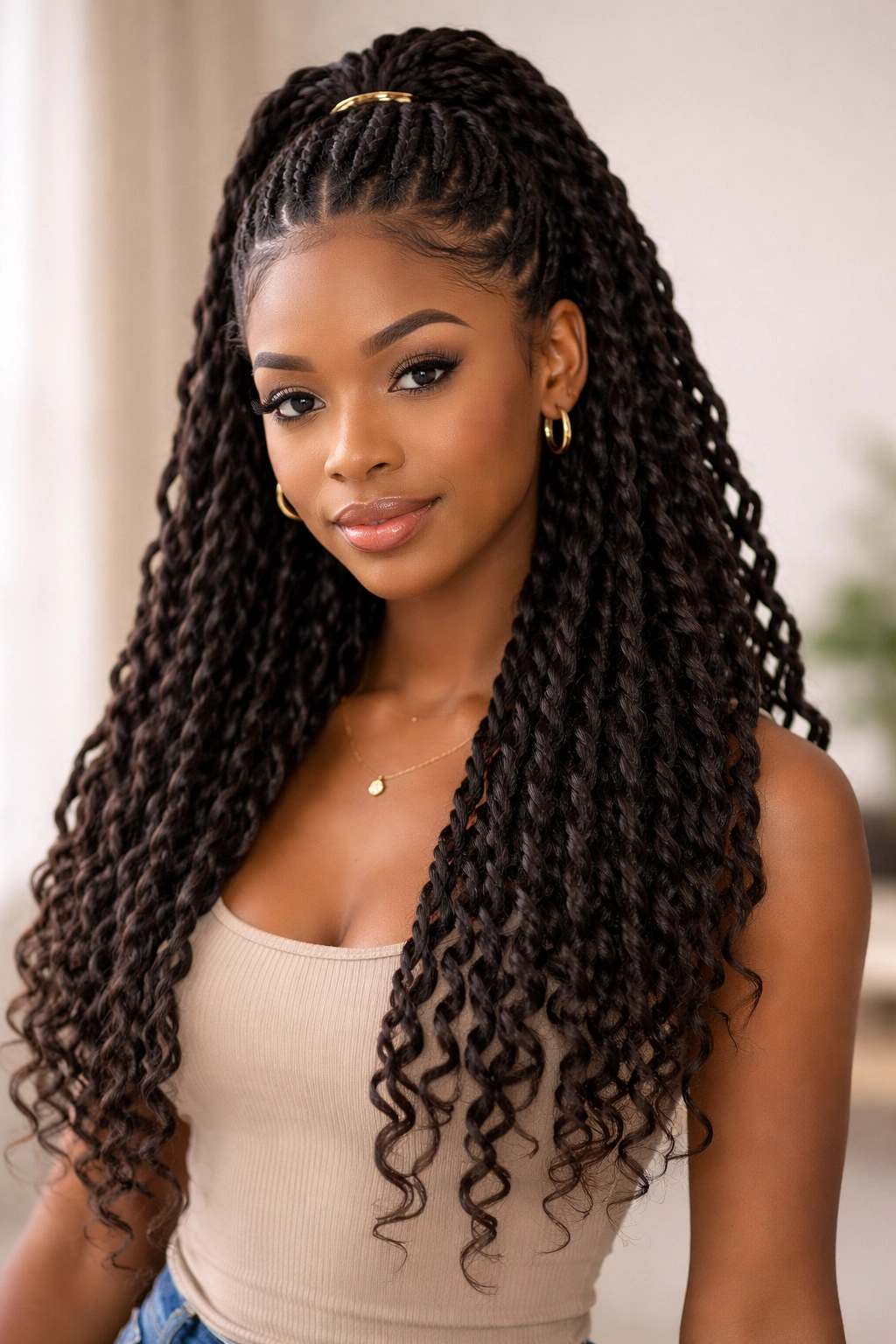
If you want hair off your face without giving up length, this is the obvious move. Half-up, half-down bulk twists give you the lift of an updo and the swing of loose twists, which is why the style feels easy on busy days.
How to keep the crown neat
The top half should start from temple to temple, gathered with a snag-free elastic or a small claw clip that will not crush the twists. Pull too hard and the front line starts to ache. That tension shows up later, usually right where the hairline meets the part.
The bottom half can stay loose and full. That contrast is the whole point. It keeps the style from feeling too formal, and it gives you movement when you walk.
A few little details make a big difference:
- Leave one or two face-framing twists out if the front feels too strict.
- Wrap one twist around the base of the ponytail for a cleaner finish.
- Use a little foam at the top if the crown starts to fuzz.
- Keep the clip or band wide enough that it does not pinch.
This style works best when the twists are medium-long. If they are too short, the gathered top can look stubby. If they are too heavy, the half-up section starts to sag. Medium length is the sweet spot.
4. Side-Swept Twists Over One Shoulder
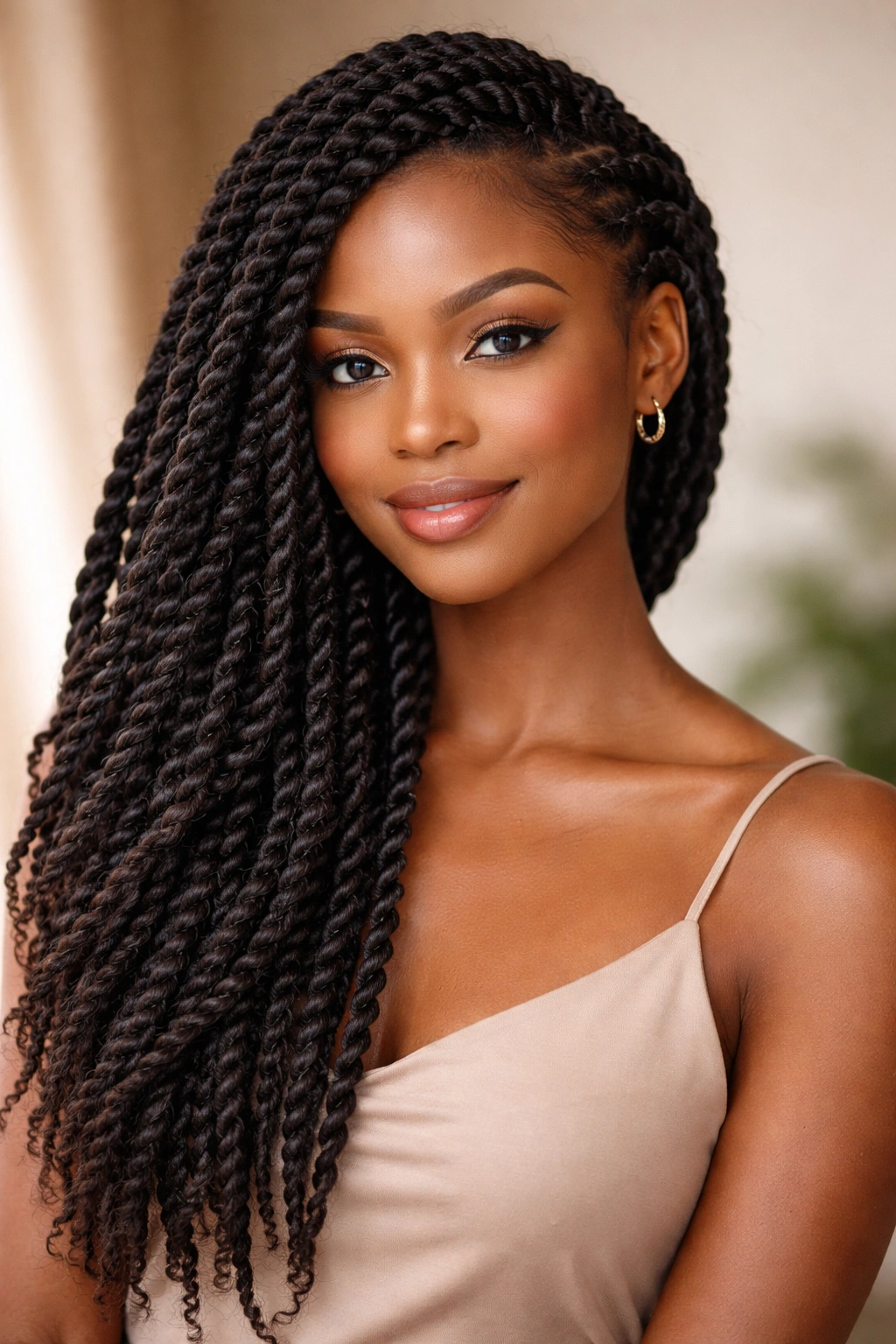
Why do side-swept twists feel softer than they sound? Because the asymmetry changes the whole mood of the style. One side carries the shape, and the other side disappears into the background in a way that lets the twists fall like a curtain.
This look works best when the twists are long enough to reach past the collarbone. If they stop at the jaw, the sweep can look accidental. Past the shoulder, it reads as a choice.
I like this style for anyone who wants to show off earrings or a neckline without putting all the hair up. It also flatters deep side parts especially well, since the part line and the twist direction can pull the eye down and across the face instead of straight on.
The trick is pinning the heavy side without flattening it. Use two or three long bobby pins hidden under the top layer, then let the rest fall naturally. Do not over-pin. The style should look guided, not glued.
A bit of root lift on the open side helps too. If both sides are flat, the sweep loses its shape fast. Give it a little air at the base and it holds better.
5. Chin-Length Twist Bob With Blunt Ends
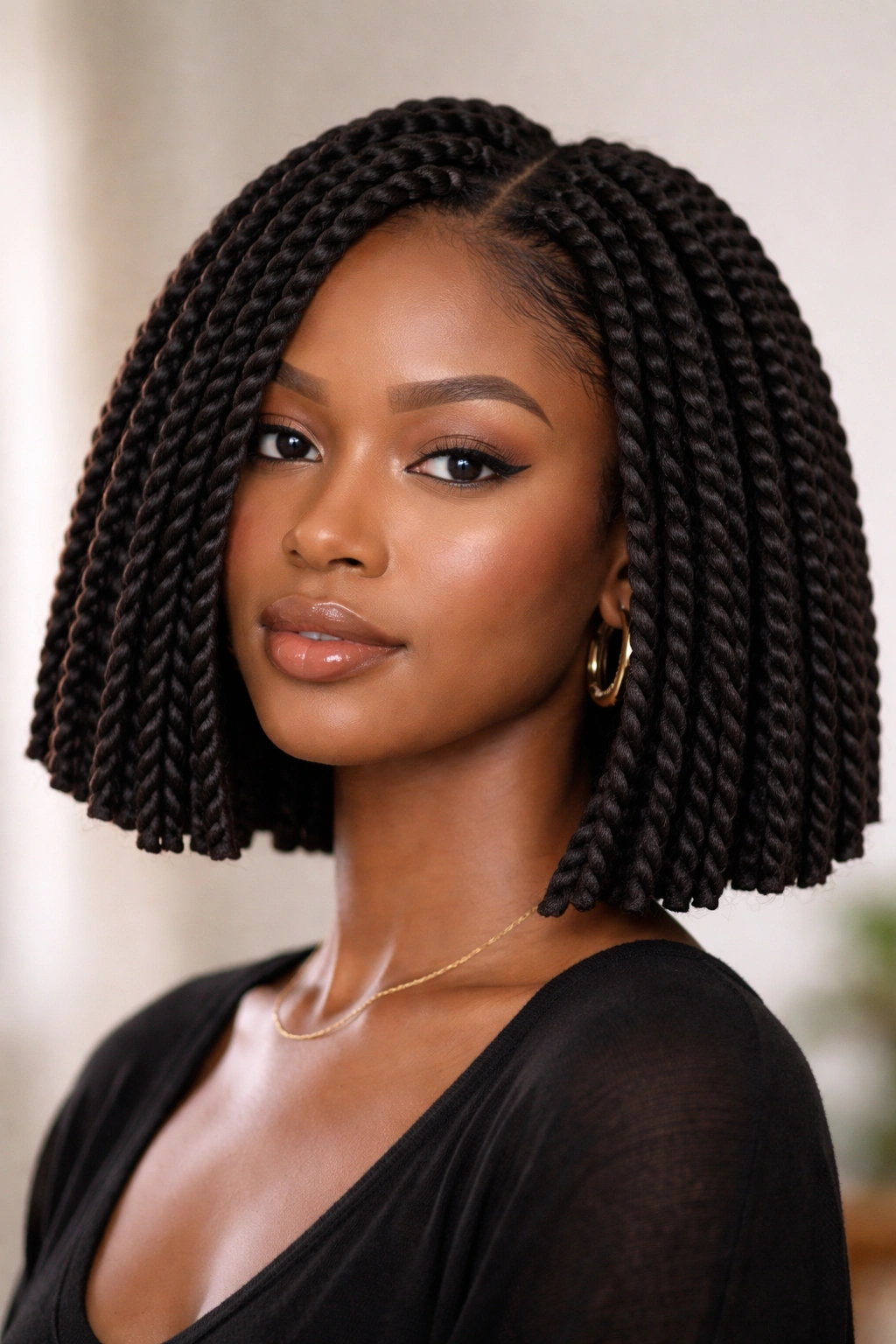
A good twist bob brushes the neck and stops right around the chin or jawline. It feels crisp. It also feels practical, which is probably why people keep coming back to it.
The blunt bottom line matters here. Without it, the bob can look stringy or unfinished. With it, the whole style suddenly has shape. You get the sense that the twists belong there, rather than being borrowed from a longer look.
This is one of my favorite bulk twist hairstyles for Afro hair when the weather is warm or the schedule is packed. The shorter length means less weight, less catching on scarves, and fewer moments where you have to toss the hair over one shoulder just to get on with your day.
A chin-length bob also makes accessories easier. Small hoops, bright lipstick, a bold neck chain — all of it has more room to show.
Keep the ends clean and the twists evenly spaced. If the bottom row is uneven, everyone notices, because the eye lands there first. That’s the one part of a bob that does not forgive sloppy work.
6. High Ponytail Bulk Twists
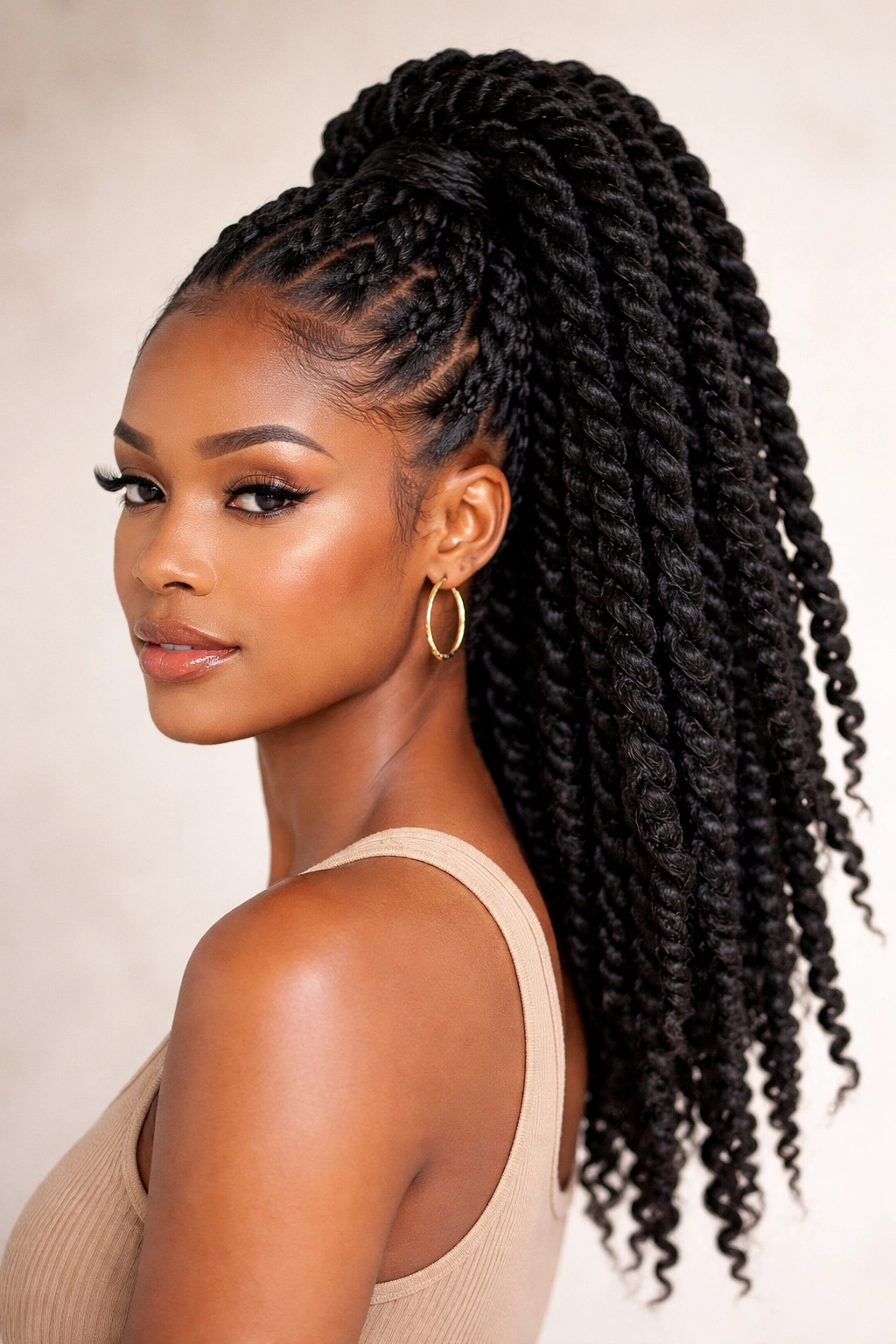
Loose twists are calm. A high ponytail is a little more attitude.
Pulling chunky twists up to the crown changes the shape in a big way. The face opens up, the neck looks longer, and the whole style gets a bit of height. It is a good option when you want the volume of twists but do not want them falling in your face all day.
The base matters most here. Use a thick, snag-free elastic or a bungee band that can handle the weight without digging into the roots. If the ponytail sits too far forward, the tension hits the hairline. Too far back, and the lift disappears.
- Best for: medium to long twists
- Good accessories: wide elastic bands, satin scrunchies, one matching twist to wrap the base
- Watch for: edge tension, especially if the twists are long or extension-heavy
- Revive it: a tiny bit of foam at the roots and a few minutes under a scarf
One thing people skip: the ponytail does not need to be a perfect circle. A little asymmetry makes it look fuller and keeps it from turning into a stiff dome.
And yes, the ponytail can be casual or polished. That depends on the roots, the part, and how much shine you leave in the twists themselves.
7. Low Bun Twists at the Nape
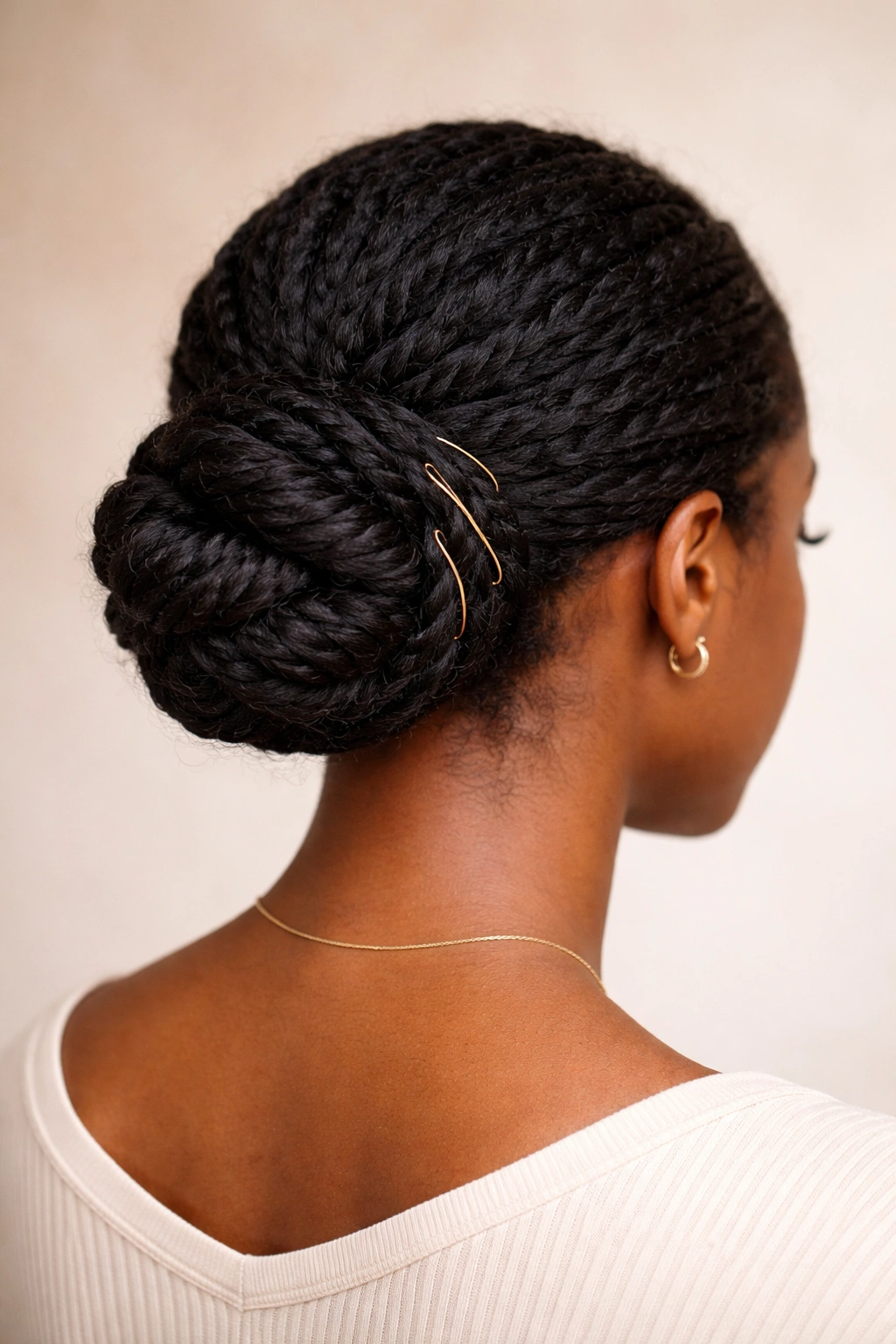
On humid days, I trust a low bun more than almost anything else. It sits close to the head, keeps the ends tucked away, and does not ask the hair to carry extra drama.
Pinning without the lumps
The best low bun starts with twists gathered gently at the nape, not yanked into a tight knot. If the base is too tight, the bun turns lumpy and starts pulling where the hair is thinnest. That is the part people feel later when they take the style down and wonder why their scalp is annoyed.
Use the twists themselves to build the bun. Wrap them in a circle, tuck the ends under, then pin with U-pins or long bobby pins that follow the shape of the bun instead of stabbing straight through it. Straight pins create bumps. Curved placement looks cleaner.
This style can be neat or soft. If you smooth the crown, it gets formal fast. If you leave a little lift at the top and let a few twists sit looser around the hairline, it feels more relaxed.
A low bun also works well with thicker Afro hair because it keeps the bulk controlled. There is less bounce, less swing, and less chance of the style tangling on clothes or chair backs.
8. Twisted Crown Updo With Face-Framing Pieces
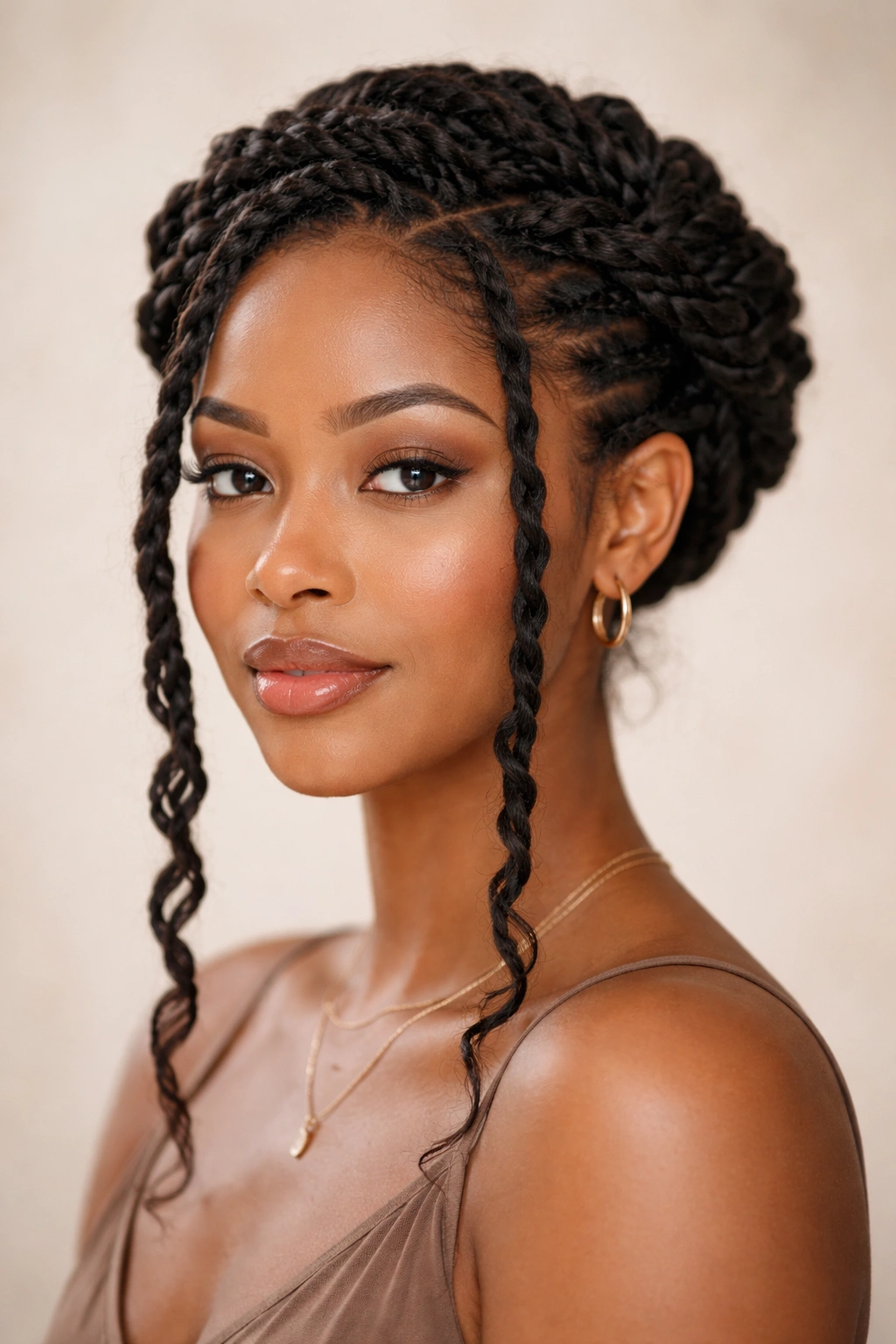
There is a reason people reach for this one when they need hair off the face but still want softness around the edges. The twisted crown updo sits somewhere between polished and easy, which is a very useful place to be.
A few twists wrap around the perimeter of the head like a band, then the rest tuck into the back. Leaving two front pieces out changes the whole thing. The face-framing twists keep the style from feeling too severe, and they give the eye something to land on near the cheeks.
- Start the crown twists from one temple and work around the head.
- Keep the pins hidden under the next twist layer.
- Leave the front pieces slightly longer than the rest if you want movement.
- Use a light mist of water or foam on the edges so the outline stays neat.
This is the kind of style that looks more complex than it is. The secret is spacing. If the crown pieces are packed too tightly, the updo becomes bulky in the wrong way. If they are spaced with a little room, the shape looks airy and deliberate.
It also handles accessories well. A plain gold pin, a shell clip, or a few small beads near the ends can change the mood without wrecking the structure.
9. Triangle-Part Bulk Twists
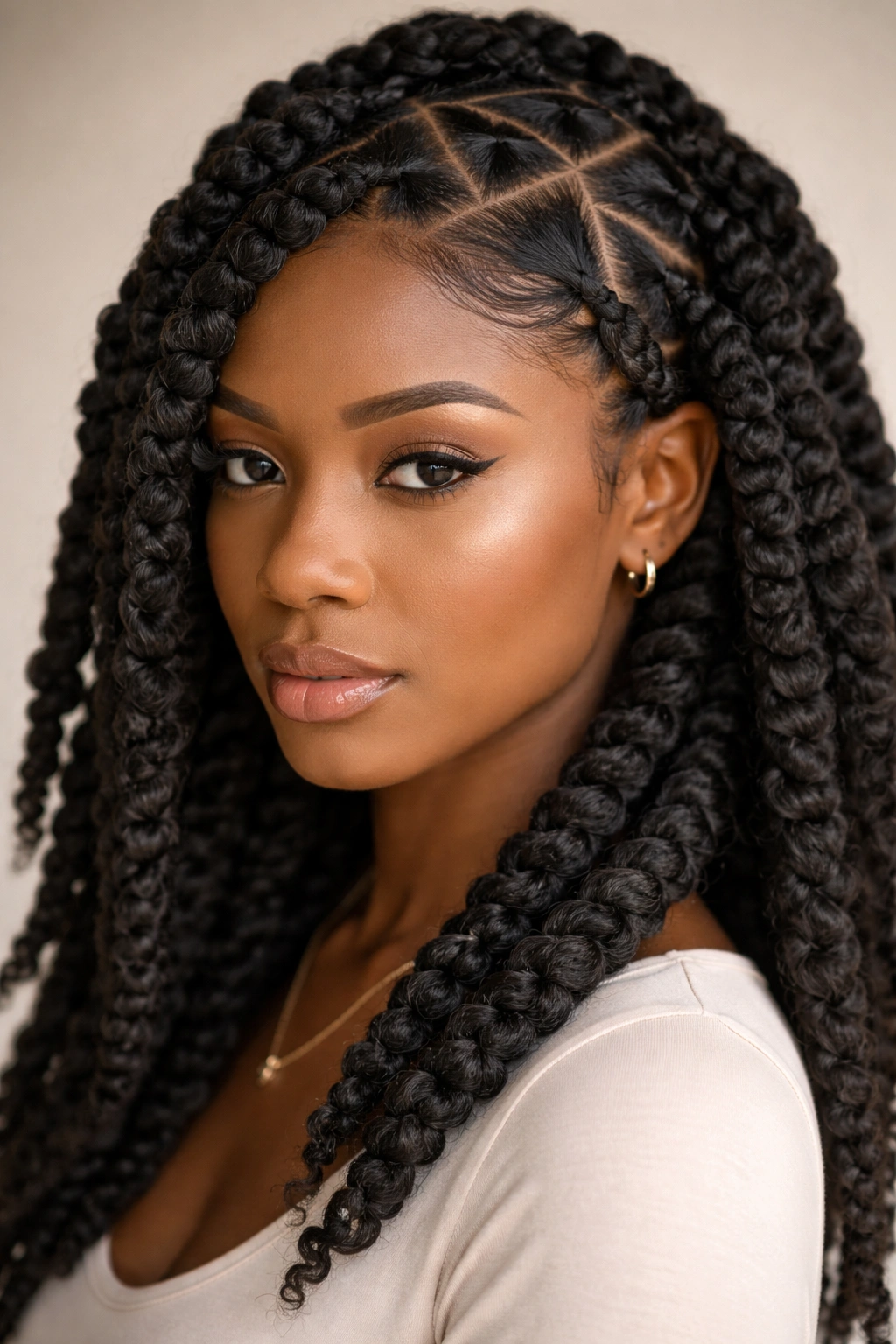
The parting pattern changes the whole style before the first twist even starts. Triangle parts do that. They make the scalp pattern look sharper and less grid-like, which gives bulk twists a fresh finish even when the twist size stays the same.
Why the triangles look different
Square parts have a very orderly feel. Triangle parts break that up. The sections sit at slight angles, and that means the scalp shows a more interesting pattern between the twists. On dense Afro hair, that little shift is enough to make the style look custom instead of standard.
The other advantage is movement at the root. Because the parts are not locked into a perfect box, the twists can sit a bit more naturally against the head. That helps if your hairline is sensitive or if you do not like the feeling of rigid rows.
This style takes more care at the parting stage, so it is not the quickest option. Still, the finished look has a nice pay-off. You get the same bulk and fullness, but the top of the style has more shape, which makes it easier to wear with simple clothes or plain makeup.
If you want the twist pattern to stand out, keep the sections clean and the roots hydrated. Dry, fuzzy roots blur the triangles fast.
10. Flat Twists Into a Full Puff
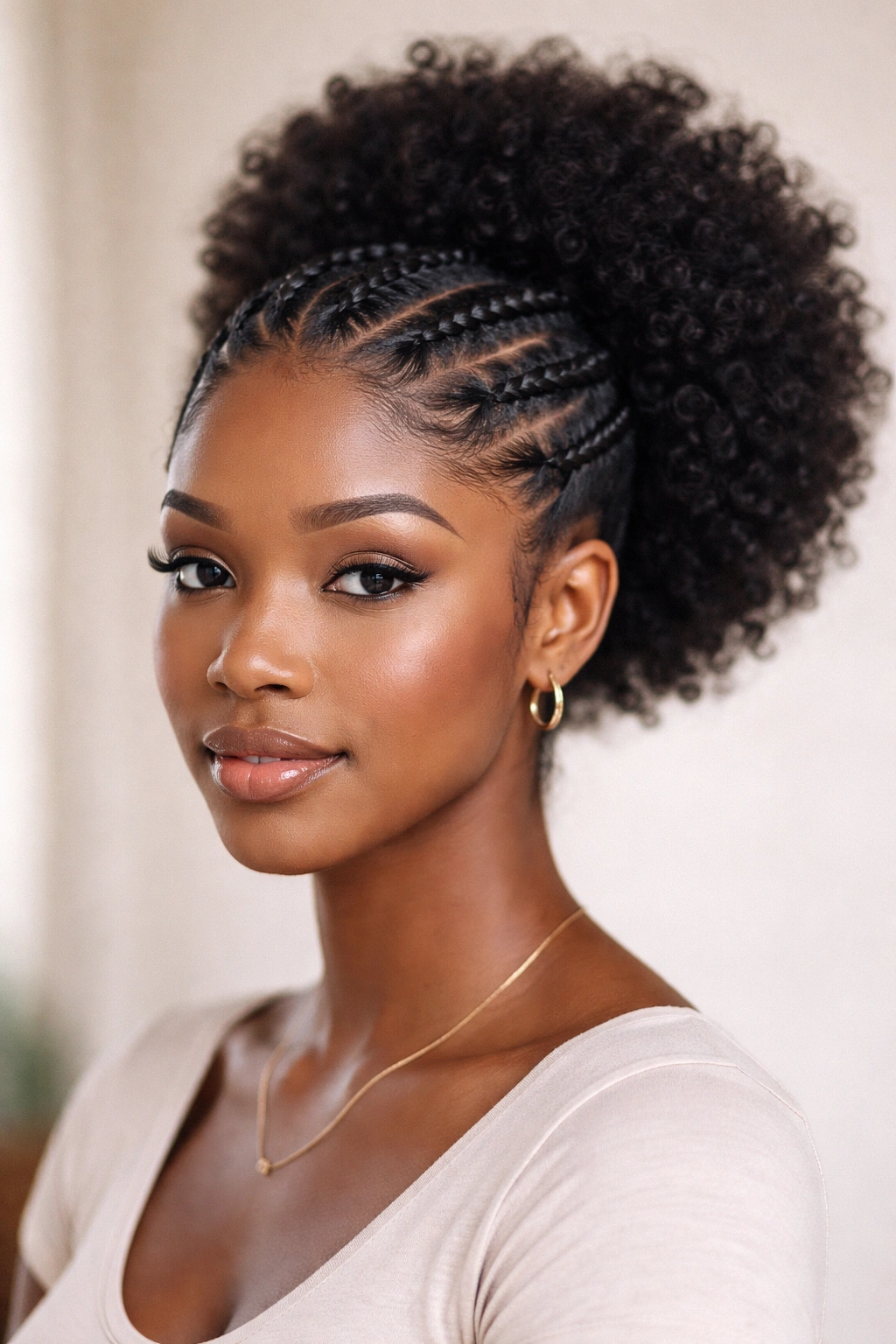
Flat twists do not have to end at the nape. That is the fun of this style. They can feed straight into a puff, giving you a neat front and a full cloud of texture in the back.
It works especially well when the front hair needs less handling. Instead of pulling all of the hair upward right away, you guide it with flat twists, then let the rest gather into the puff. The shape feels controlled without turning rigid.
How to get the puff to hold
The puff needs a little stretch. If the hair is too compressed, the puff sits low and round in a way that can look small. Band the section first, then fluff the outside with your fingers once it is secure. Do not pick the whole thing out. That usually makes it frizzy before the day is over.
A few flat twists are enough. Two twists create a simple frame. Four give more detail. Six can look intricate, but they also take longer and can crowd the scalp if the hair is dense.
This style is a smart choice when you want a twist look without committing to full-length twists all over the head. It gives you a break from loose hair at the front and still leaves enough volume in the back to feel full.
11. Beaded Bulk Twists With a Little Weight
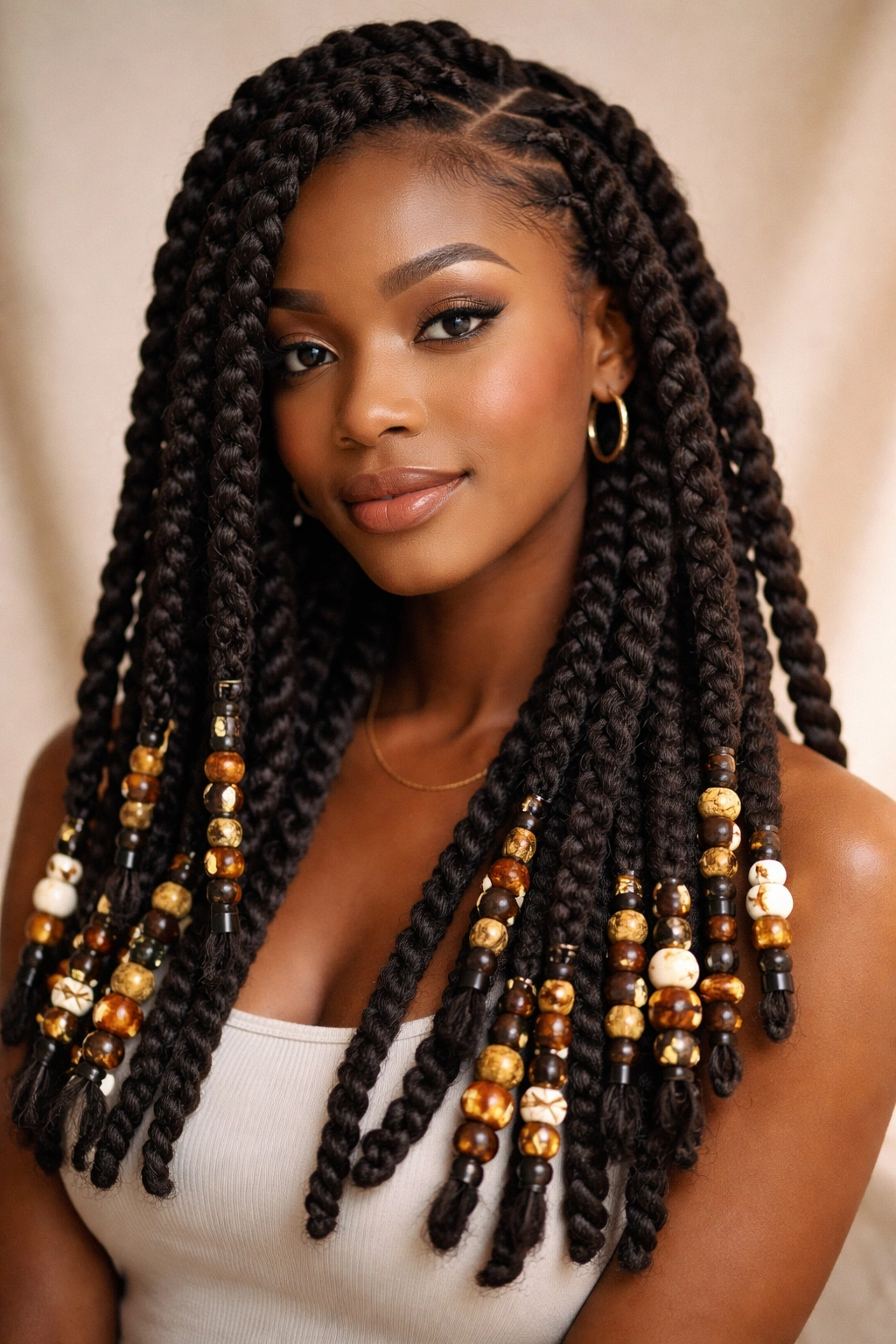
You hear this style before you see it. That little click of beads against each other changes the whole feel of the hair, and if you grew up around beaded styles, the sound lands right away.
Beads work best on bulk twists when the length can support the extra weight. Short twists with too many beads start to sag. Longer twists handle them better, especially if the beads sit mostly on the lower half and not right at the root.
Picking the bead size
Wood beads give the style a matte, earthy look. Clear beads make the twists look brighter and a little more playful. Small metal cuffs can work too, but they need to be placed carefully or they tug.
- Use 2 to 4 beads per twist if you want the style to stay light.
- Keep the heaviest beads away from fragile edges.
- Secure the ends with a tiny elastic or thread wrap so the beads do not slide.
- Choose bead holes wide enough for the twist, but not so wide that the hair slips through.
The nice thing about beads is that they change the mood without changing the base hairstyle. A plain twist becomes more playful. A formal style gets a little edge. A kid’s style gets some movement and sound.
Too many beads, though, can drag the hair down. That part is not negotiable. Let the hair carry the ornament, not the other way around.
12. Layered Waist-Length Bulk Twists
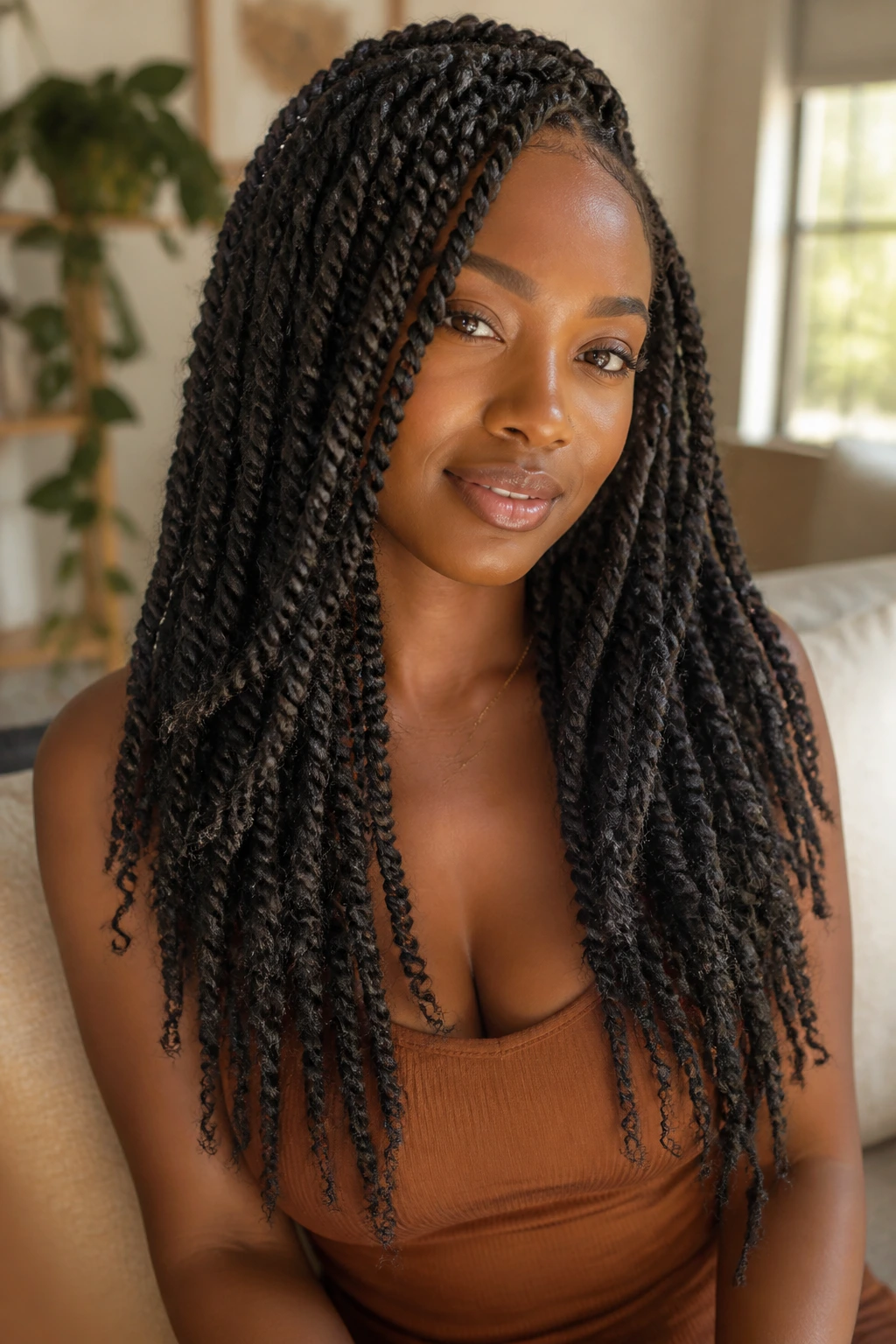
Long twists can look heavy fast if every piece is the same length. Layers fix that. They break up the blocky shape and let the twists move instead of hanging like a curtain with no shape.
This is the version for people who want drama, but not stiffness. The front pieces can sit a little shorter, the mid-length twists can skim the bust line, and the back can stay longer for swing. That staggered length keeps the style from swallowing the face.
I also like layered waist-length twists because they give you more ways to wear the hair later. You can let them fall loose, gather them into a half-up style, pin the front back, or tie the whole thing into a low bun when you get tired of the length. One style. A lot of options.
The weight is the thing to respect here. If the extensions are too heavy or the parts are too large for the density of the natural hair, the roots will complain. Use enough hair to keep the twist full, but not so much that the style stops feeling like your own head.
This is the style I reach for when I want one set of twists to do a little of everything. Loose, pinned, tied, swept to the side. It handles all of that without losing its shape.
