



A good crochet afro should look plush, not pasted on. The texture needs room to breathe, the shape needs to sit naturally around your face, and your own hair should stay tucked away in a way that feels calm, not tight. Get that balance right and crochet afro styles for protective styling can save you a lot of daily fuss.
The part that surprises people is how much shape does the heavy lifting. A rounded halo, a side-parted fro, a cropped TWA-inspired install, even a faux hawk can all read as a crochet afro if the texture and silhouette are right. Same method. Very different mood.
I’ve always liked crochet styles for natural hair because they give you a break without taking away your personality. You can skip heat for a while, cut your morning detangling down to almost nothing, and keep your ends hidden under a flat braided base. That last part matters more than people think. A neat foundation changes how the whole style sits.
The trick is choosing a shape that fits your day-to-day life instead of the other way around. Some styles are soft and rounded. Some are sharp and sculpted. Some keep weight off your neck. Others give you the kind of volume that makes a simple outfit feel finished. The first one most people reach for is the classic rounded afro, and for good reason.
1. The Classic Rounded Crochet Afro
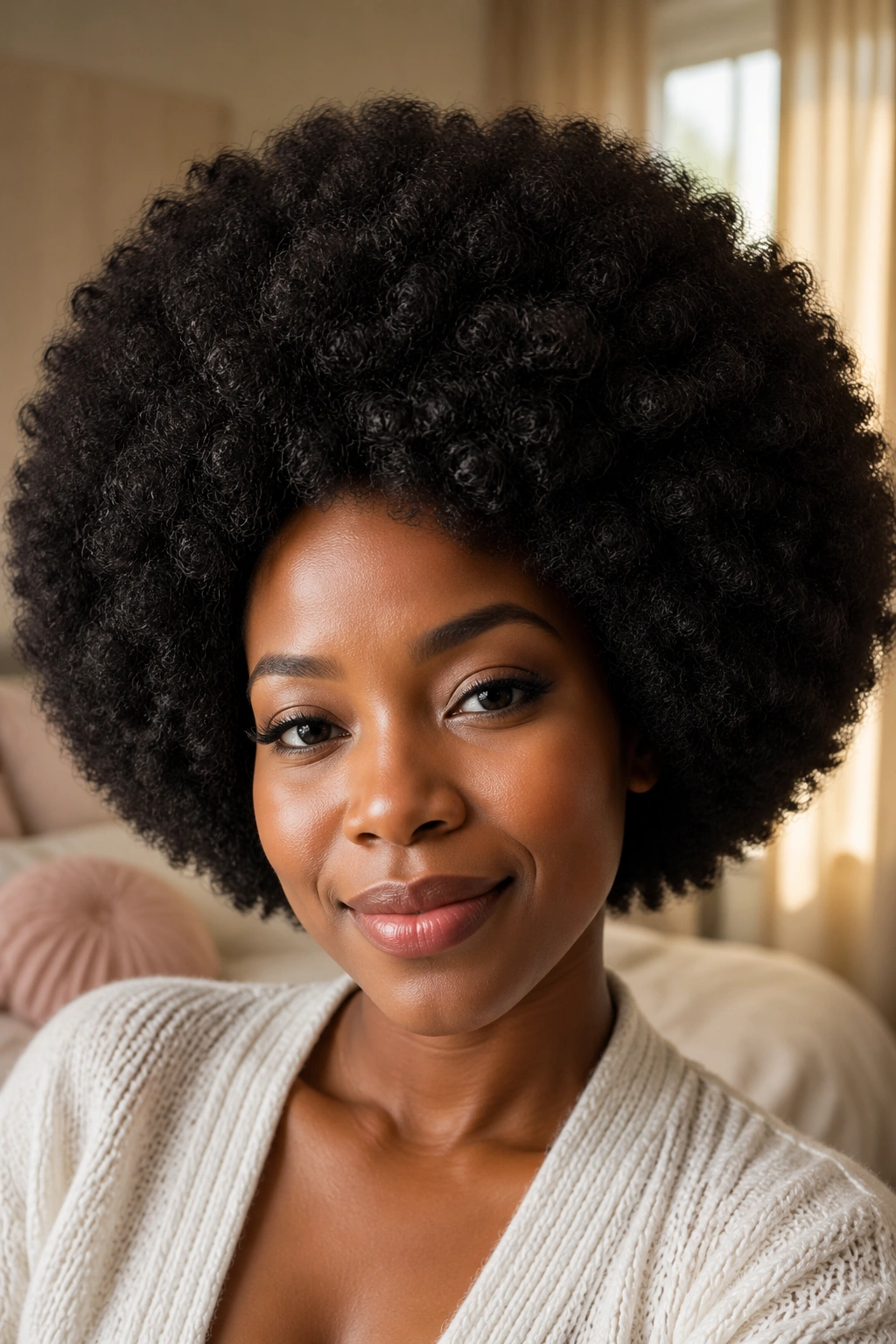
This is the style that made a lot of people fall in love with crochet hair in the first place. A rounded crochet afro gives you that full, cloudlike silhouette that feels familiar, easy, and honestly hard to mess up if the texture is right. It works especially well when you want your hair to frame your face evenly instead of dropping to one side or hanging flat on the crown.
What makes it such a strong protective style is the simplicity of the shape. The cornrow base stays hidden, your ends stay tucked away, and the finished hair sits in a soft halo instead of tugging in one direction all day. If you like hair that looks full from every angle, this is the safe bet.
Why It Works So Well
A round shape smooths out a lot of styling guesswork. You do not have to worry about whether one side is too heavy or whether the front is too flat. The eye reads the whole shape as one clean silhouette, which is why this version looks good on a wide mix of face shapes.
- Best texture: kinky-curly, afro kinky, or marley-textured crochet hair
- Best length: about 10 to 14 inches for a balanced halo
- Best density: medium to full, usually 6 to 8 packs for shoulder-length fullness
- Best vibe: everyday wear, brunch, work, or any setting where you want neat volume
My favorite part: this is one of the easiest styles to fluff with your fingers in the morning and go.
2. The Side-Part Crochet Afro
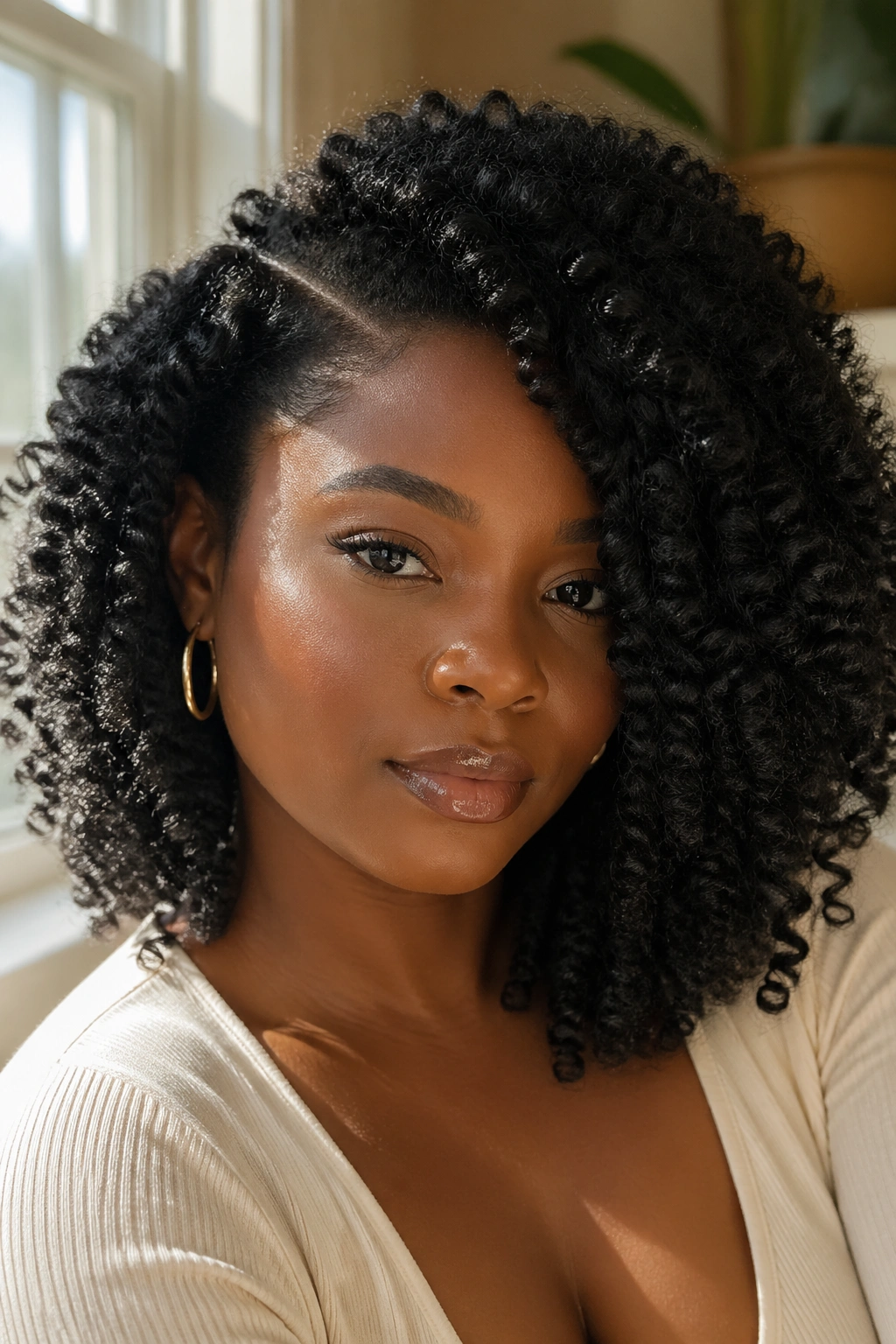
Why does a side part change a crochet afro so much? Because it breaks the shape just enough to make the style feel intentional without making it fussy. A deep or medium side part gives the fro movement, and movement is what keeps big hair from looking like one solid ball.
The side-part version is especially good if you want your cheekbones to show a little more. The angled part pulls the eye across the face, then the volume falls to one side in a way that feels softer than a centered shape. It’s a small change, but it does a lot.
I also like this one for anyone who wears glasses. The part gives the frames space, and the hair can sit behind one ear without looking chopped off. Keep the part shallow if you want a gentle effect. Go deeper if you want drama and a little more lift at the crown.
If you ask for this style, make sure the braid foundation follows the part cleanly. A side part that wanders around under the crochet hair can look messy fast. The best version is crisp at the scalp and fluffy everywhere else.
3. The Tapered Crochet Afro
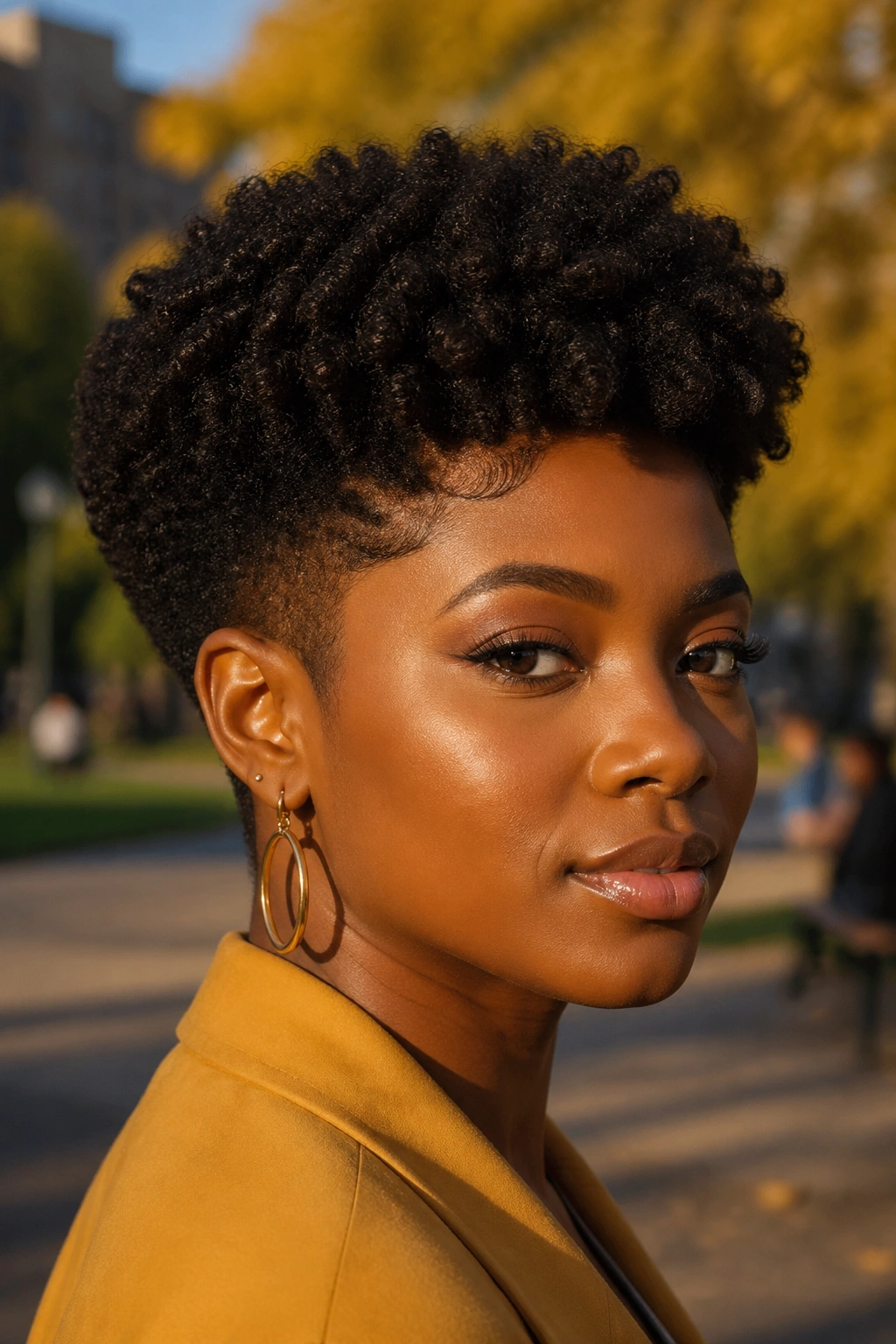
You know that look where the top is full and the sides sit a little closer to the head? That’s the tapered afro, and it solves a real problem: bulk in the wrong places. A tapered crochet afro keeps the crown lush while trimming down the sides and nape, which makes the style feel lighter and more shaped.
What the Taper Changes
The shape works because it adds height where you want it and removes puff where you do not. That sounds obvious, but it matters when you’re wearing synthetic hair all day. Too much width at the temples can make a style feel oversized; a taper reins that in.
- It keeps collars and scarves from fighting your hair.
- It makes earrings show better.
- It can sharpen the cheek area without looking severe.
- It helps smaller heads avoid the “too much hair” problem.
I think this is one of the smartest options for people who want volume but hate that puffy triangle effect. Ask for shorter crochet pieces near the sides and back, then let the crown carry the fullness. If you want the taper to read clearly, keep the difference between crown and edge lengths around 1 to 2 inches. Any more than that and the shape can start looking accidental.
4. The Half-Up, Half-Down Crochet Afro
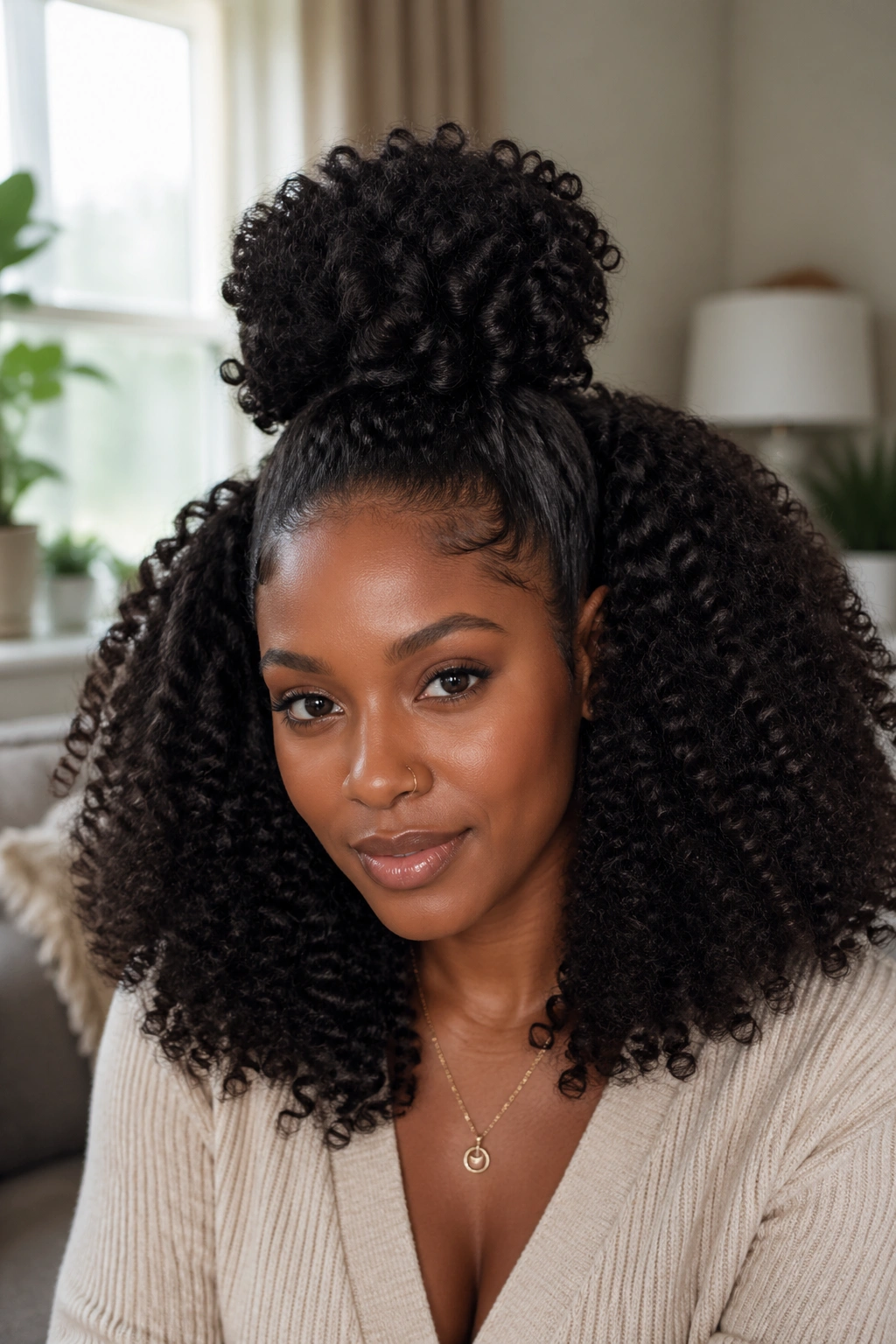
A half-up, half-down crochet afro gives you two looks in one install. The top section gets pulled into a puff, bun, or small ponytail, while the rest of the hair stays loose and full. That split makes the style feel playful, but it also solves a practical problem: hair in your face.
This is the one I’d pick for days when you want some lift without committing to a full updo. The top section keeps the front cleaner, the lower section keeps the volume, and the style still reads as soft and wearable. It also gives you a little breathing room around the hairline, which people appreciate more than they expect.
A snag-free tie matters here. Use a soft elastic or a wrap that won’t dig into the crochet fibers. If the pony sits too low, the style loses its shape. If it sits too high, it can look top-heavy. Somewhere around the crown is usually the sweet spot.
I also like this style because it adapts easily. Wear the top section tight for a neater look, or leave a few curls out around the hairline for a more relaxed finish. It changes the mood without changing the whole install.
5. The High Puff Crochet Afro
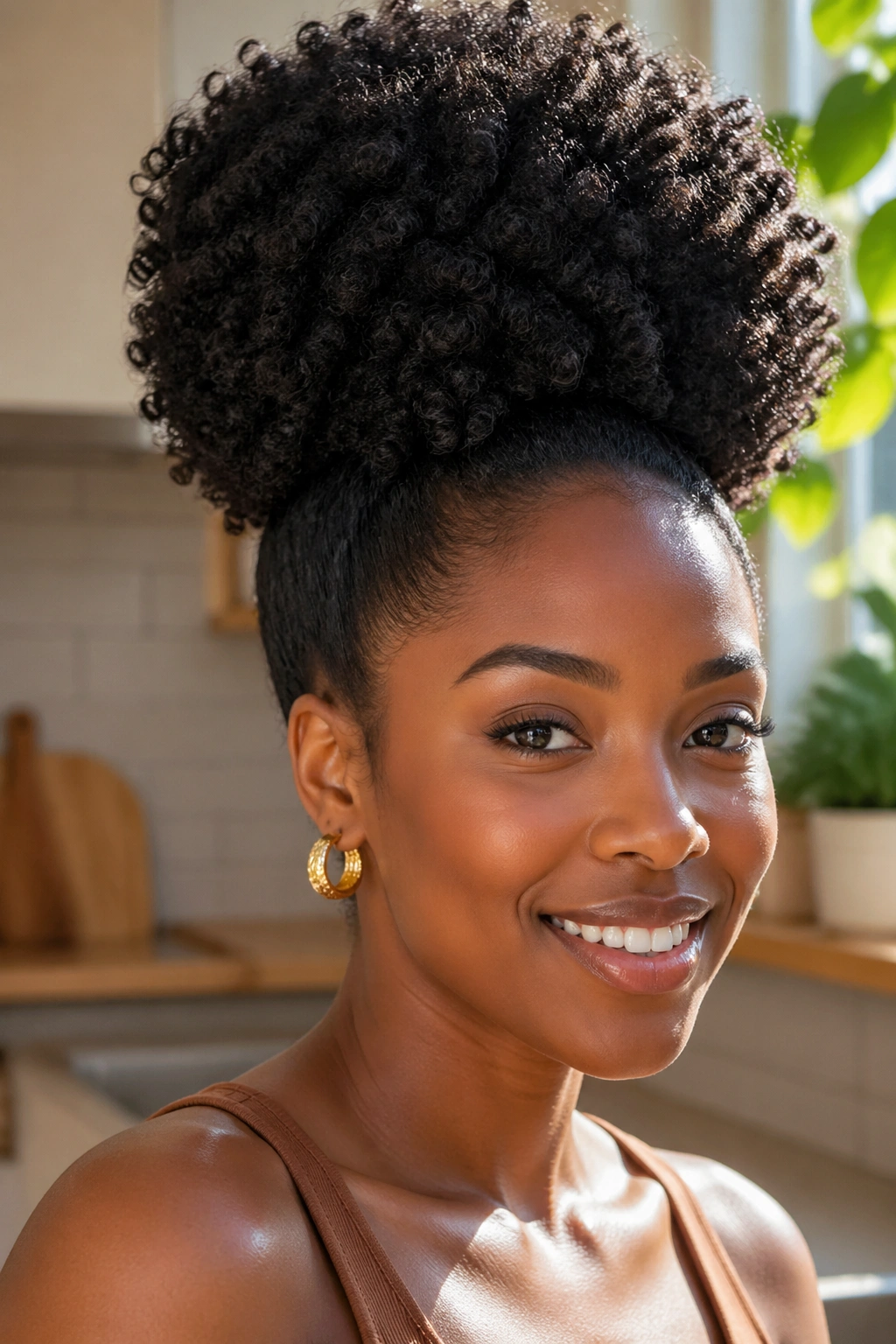
A high puff crochet afro is one of those styles that looks simple until you try it on and realize how much cleaner it feels than a loose, full shape. Lifting the hair up toward the crown changes the whole weight distribution. Your neck feels freer, your face opens up, and the style gets this cheerful, upright energy that works in real life.
It’s also a smart pick if you do a lot of moving around. Running errands, doing school pickup, sitting at a desk, standing in a kitchen for three hours — a high puff stays out of the way better than a style that hangs low on both sides.
Small Details That Matter
The base makes or breaks this one. Place the puff at the crown, not too far back, and wrap the anchor point so it looks neat from the side. If the base is too bulky, the puff starts to feel heavy. If it’s too low, you lose the lift.
- Use medium-density crochet hair so the puff holds shape.
- Keep the front smooth but not pulled tight.
- Choose a texture with some spring, not hair that hangs limp.
- Wrap the base with a strip of satin or a soft tie if you want a cleaner finish.
I’d call this a strong everyday style for anyone who wants protective styling without the feeling of “hair everywhere.”
6. The Layered Shoulder-Length Crochet Afro
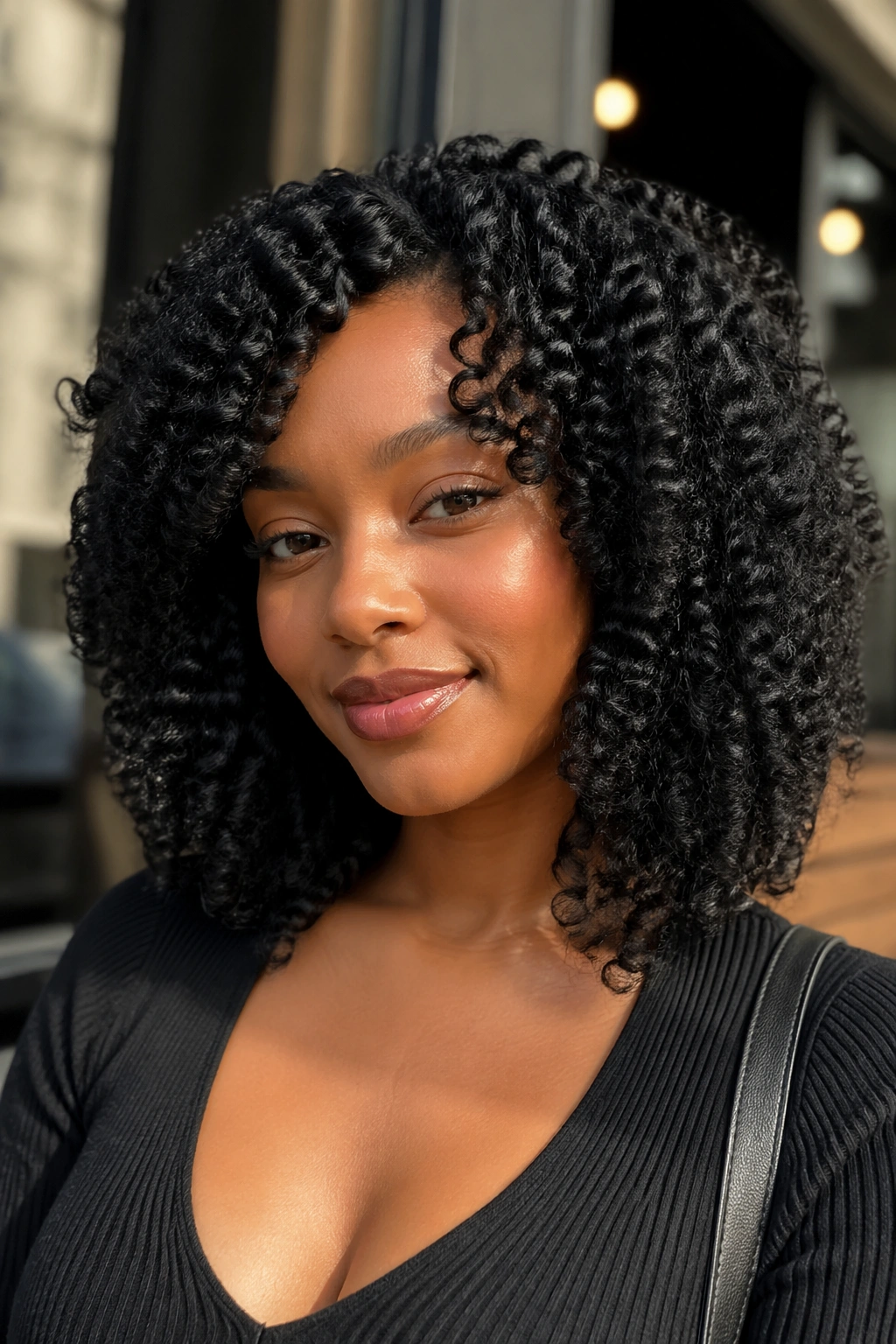
Shoulder-length crochet curls have a swing to them that shorter styles sometimes miss. They move when you turn your head. They brush against your collarbone. They feel easy, but not plain. The layered version takes that and makes it better by stopping the ends from forming one hard line across the shoulders.
What the Layers Change
Layers keep the silhouette soft. That matters more than people think, because a blunt crochet cut can get boxy fast. With layers, the crown can sit a little shorter, the mid-lengths can build body, and the ends can taper just enough to avoid that helmet look.
A layered shoulder-length afro also gives you more control over the density. You can use mixed lengths — say 8, 10, and 12 inches — or trim the longest pieces once the install is done. I usually prefer the second method because it lets you see how the hair falls before you commit to the final shape.
- Better movement around the shoulders
- Less bulk at the ends
- Easier to tuck behind one ear
- More natural-looking from the side
The one thing to watch is weight. Shoulder-length crochet hair can get heavy if every strand is packed in too tightly. Keep the crown full, yes, but let the lower layers stay a touch lighter. That’s the difference between soft volume and a shape that sits there like a block.
7. The Short TWA-Inspired Crochet Afro
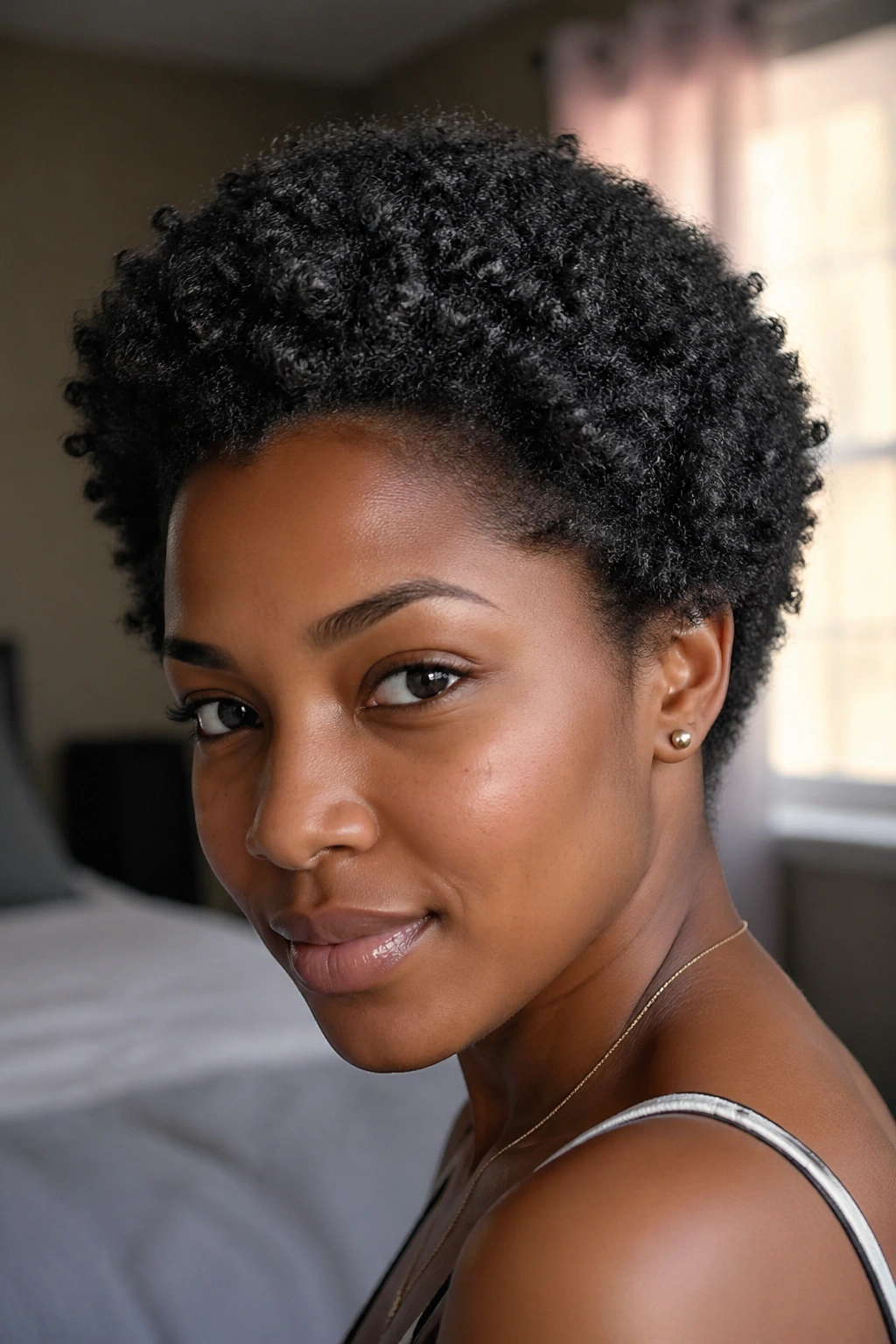
Short. Close. Light. That’s the appeal here.
A TWA-inspired crochet afro gives you the look of a tiny, well-shaped natural afro without the daily shrinkage drama that can come with your own hair. It’s one of the best protective styling choices if you want something neat, low-weight, and easy to live with. You feel the style more in the shape than in the length.
This is a style for people who hate hair brushing their neck. It’s also great if you want to see earrings, collars, or neckline details without fighting your hair all day. The short length keeps the whole install compact, which means less tangling and less maintenance. Not zero maintenance. Just less.
I like this style best with tight, springy curls or very soft afro-textured pieces. Four to six inches is enough for the look to read clearly without turning into a full halo. If you want extra shape, ask for a slightly fuller crown and a lighter edge around the temples. That keeps the cut from looking flat.
It’s not the loudest crochet afro, and that’s exactly why some people love it. Quiet styles can be the easiest to wear.
8. The Faux Hawk Crochet Afro
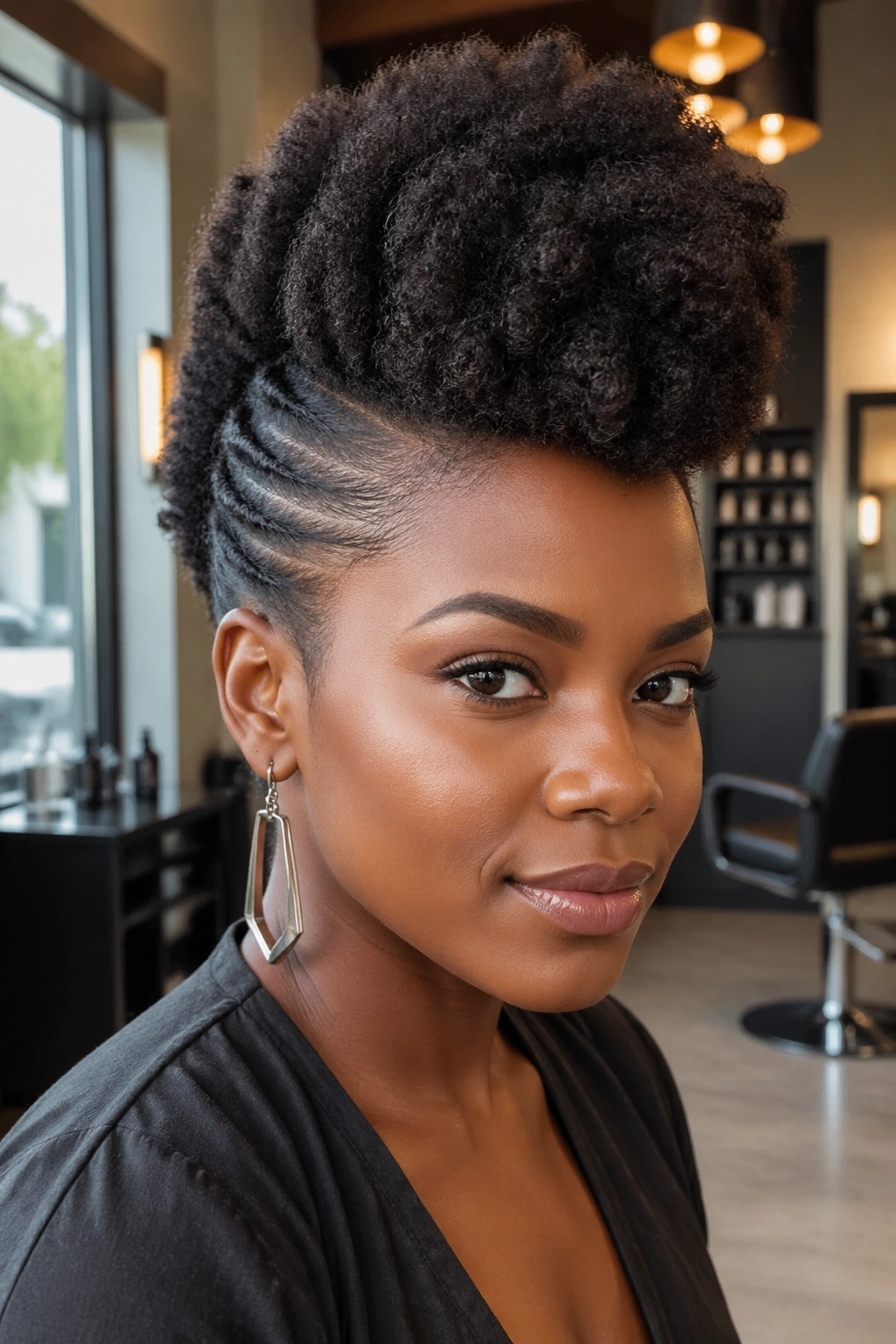
A faux hawk with crochet hair sounds loud on paper, but on the right head shape it can be one of the neatest protective styles around. The center strip gives height, the sides stay tucked, and the whole look lands somewhere between polished and edgy without trying too hard.
The reason this works so well is contrast. Fullness in the middle and control at the edges make each part of the style stand out more. The effect is clean even when the hair itself is fluffy. That’s the trick.
How to Keep the Shape
The braid pattern underneath matters a lot here. You want the side rows flatter than the center rows, and you want the center strip to carry most of the density. If everything is equally full, the faux hawk loses its point and starts looking like a wide afro with no direction.
- Keep the sides close to the scalp.
- Build height only through the middle.
- Use denser hair at the center and lighter pieces near the temples.
- Let the back taper a little so the shape stays sharp.
This is the style I’d recommend if you like a little edge but still want your natural hair protected and tucked away. It holds its shape well, and it gives you room to play with earrings, makeup, or a sharper outfit. No fuss. Just structure.
9. The Crochet Afro With Bangs
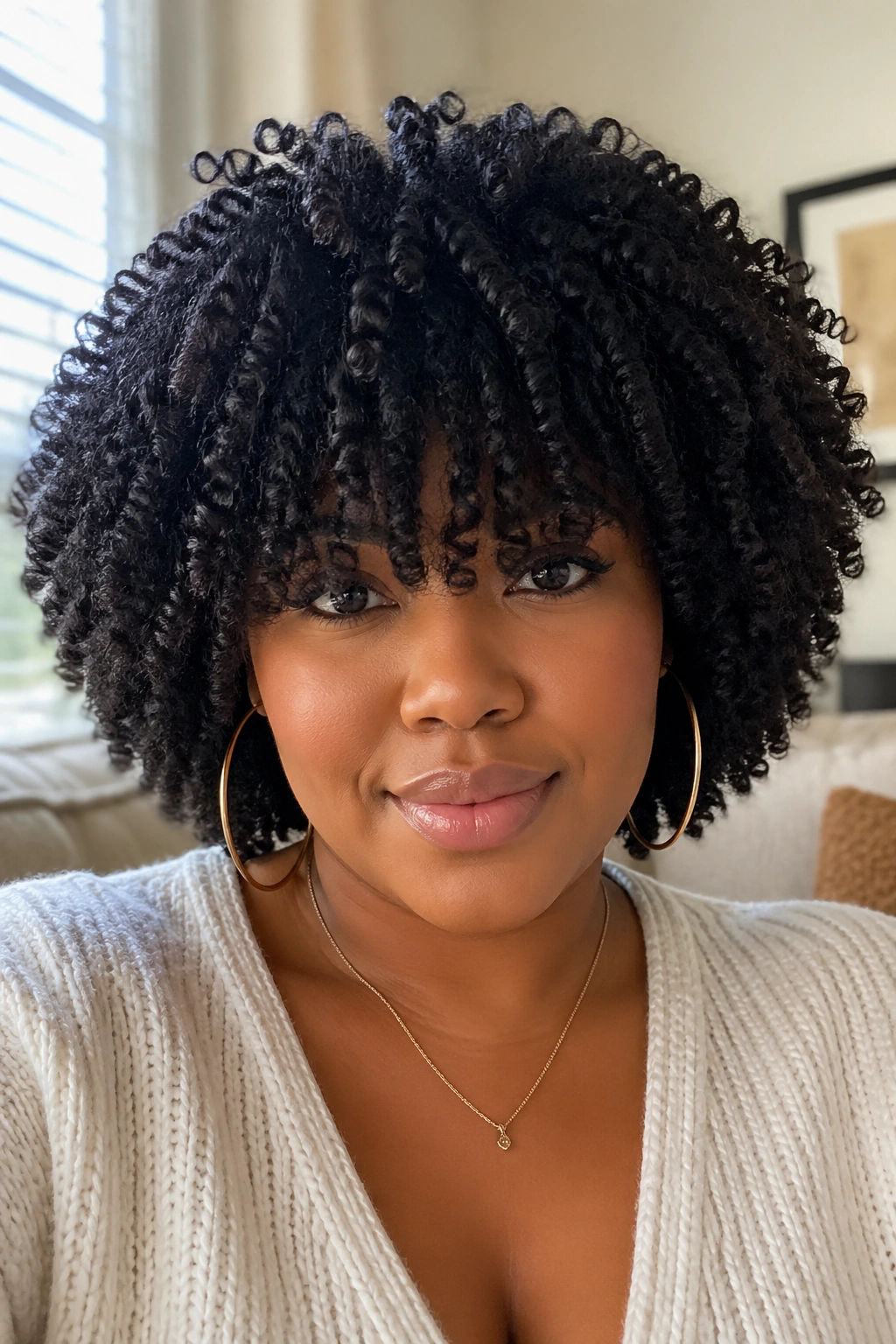
If your forehead is the first thing people notice, fringe can do a lot of work. A crochet afro with bangs softens the front of the style and pulls attention down toward the eyes and cheekbones. It can make a big fro feel more approachable, and it gives a simple install a little character.
I especially like this version when the rest of the hair is full and rounded. The bangs break up the front line, which keeps the hair from feeling too heavy. They can sit at the brow, skim the lashes, or sweep slightly to one side. Each version changes the mood.
Fringe Choices That Actually Work
Bangs need a little planning. If they’re too dense, they can sit like a curtain. Too sparse, and they look wispy in a way that doesn’t match the rest of the afro.
- Brow-length fringe gives the cleanest everyday shape.
- Lash-skimming bangs feel softer and a bit dressier.
- Side-swept bangs work well if you want to open one eye area more.
- Slightly curved fringe blends better into a rounded crochet afro.
A small trim after installation usually helps. The fibers settle once they’re on your head, and the bangs often sit a little longer than expected. Take off a little at a time. You can always trim more. Putting it back is not an option.
10. The Colored Crochet Afro
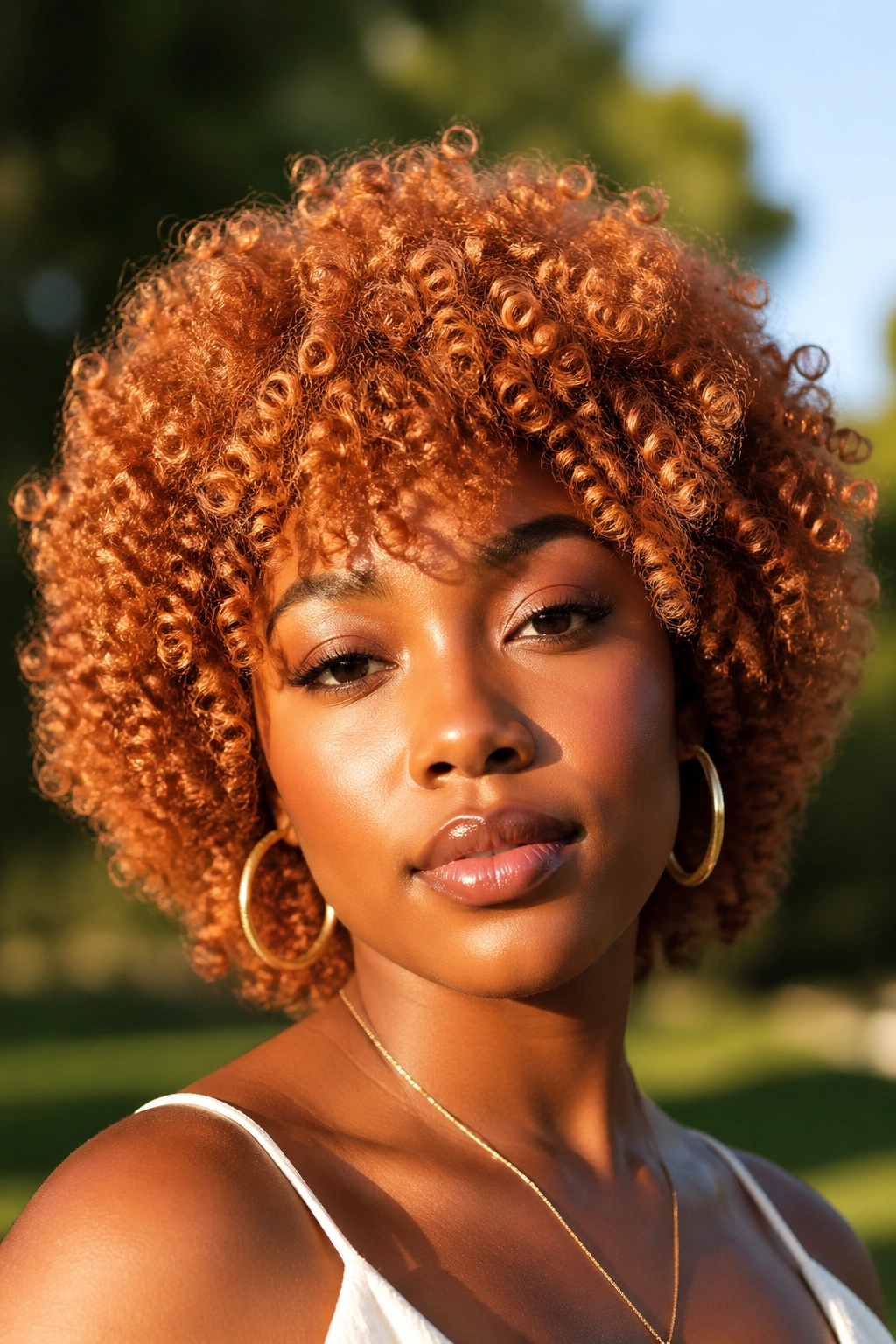
Color does more than change the mood of a crochet afro; it changes how the shape reads from across the room. A warm copper fro looks softer than a deep black one. Honey brown picks up the curl pattern. Burgundy adds depth in shade and turns into a whole different story outdoors. Same afro shape. Different visual weight.
The safest way to wear color is to place it with some thought. Lighter pieces around the face can brighten the skin. Darker roots with warm ends give the style a little shadow, which helps the curls look layered instead of flat. Solid color can be sharp and clean, but it also shows every bit of the silhouette. That can be good if your shape is solid.
I tend to like color best on styles that already have movement — side parts, layers, or asymmetrical shapes. The color catches the shift in the hair and makes the cut feel more alive. If you go too bright with a very bulky shape, the style can start looking heavy. If you keep the shape clean, color feels intentional.
Pick a tone that works with the clothes you actually wear. That sounds obvious, but people skip it all the time. A honey tone can be gorgeous with earth colors and denim. Burgundy reads richer with black and cream. Copper likes warm neutrals and gold jewelry.
11. The Asymmetrical Crochet Afro
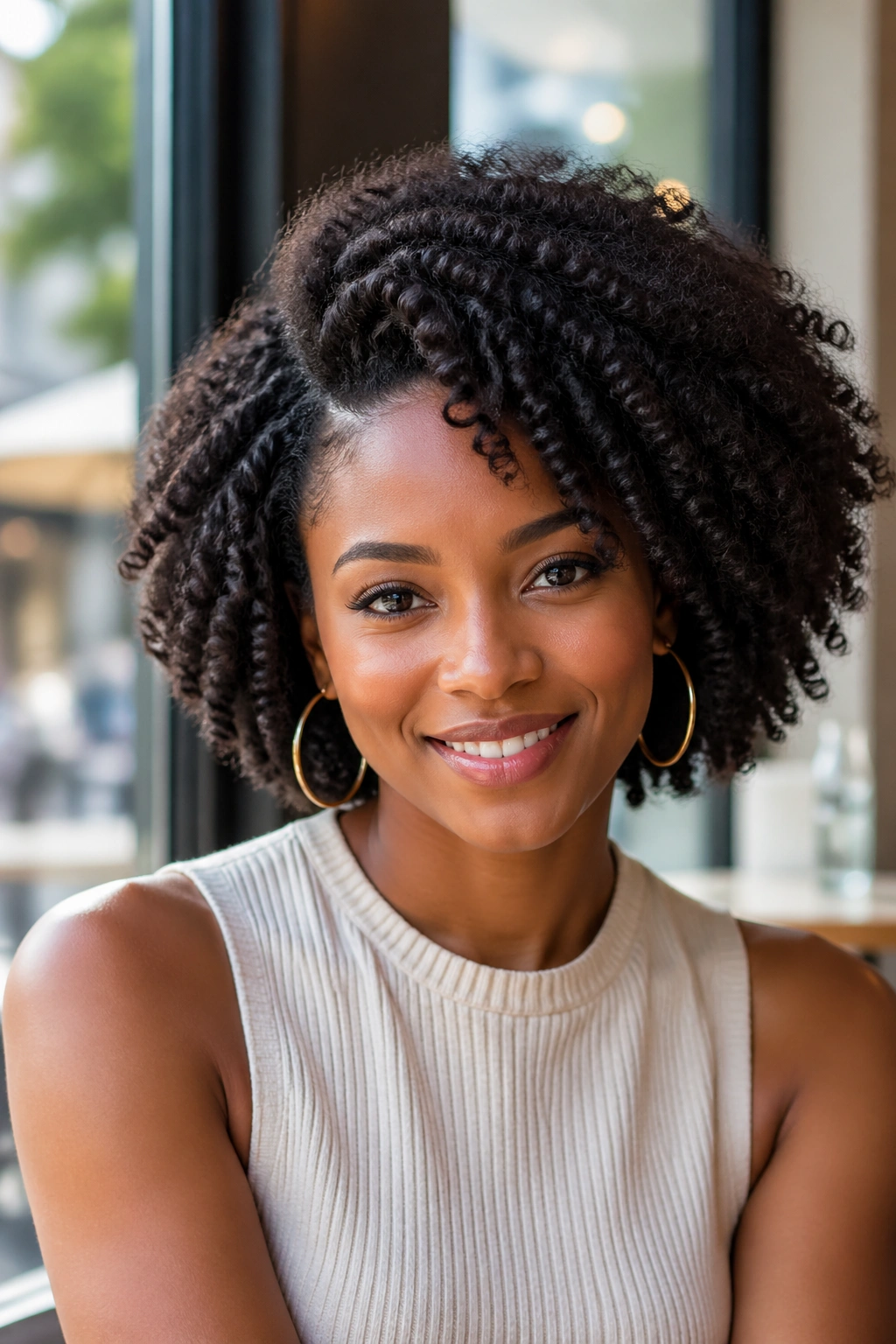
Unlike the classic rounded fro, the asymmetrical crochet afro gives you one side that sits longer or fuller than the other. That small shift changes the whole face shape. It feels more dynamic, a little more styled, and a lot less predictable.
This is one of the best crochet afro styles for protective styling if you want movement without going full dramatic. One side can graze the jawline while the other hits the shoulder. Or the front can sweep across the face while the back stays tighter. The point is controlled imbalance. Not chaos. There’s a difference.
It’s also a useful shape if you wear one side behind your ear a lot. The longer side gives you something to play with, while the shorter side keeps the style from swallowing your features. If your face is narrow, this shape can add width where you want it. If your face is round, it can create a little length and direction.
Keep the difference modest. One to three inches is enough in most cases. Any more than that and the shape can start reading like a mistake instead of a design choice. The best asymmetrical installs look deliberate from every angle, even the back.
12. The Bob-Length Crochet Afro
Want something neat, light, and easy to wear under a scarf, coat collar, or helmet? The bob-length crochet afro is the one to look at first. It sits around the chin or jawline, keeps the weight down, and still gives you enough fullness to feel like you’re wearing a proper style, not a compromise.
There’s a reason bob shapes keep showing up in protective styling. They are practical. Less length means less tangling, less pulling, and less time spent separating curls that have wrapped around each other overnight. The shorter shape also makes the braid foundation easier to hide because the crochet hair does not have to carry as much drag.
I like bob-length crochet afros for people who need their style to work in a lot of settings. Office. School. Travel. Busy weekends. The shape stays tidy, and it does not fight with your clothes as much as longer hair does. If you want it to feel fuller, pick a springier texture. If you want it to feel softer, go with a loose kinky-curly fiber and avoid overpacking the perimeter.
A bob can look plain if it is cut too blunt, so let the ends live a little. A small bit of unevenness makes it feel like hair instead of a helmet. That’s the whole point with crochet styles, really. You want protection, yes, but you also want the style to move like it belongs on a real person.
And if you’re choosing between styles, I’d keep it simple. Pick the shape that matches how you live, not how you imagine the hair should behave in a photo. The classic rounded fro is still the easiest place to start. The bob is the easiest place to land. The side part, layered shape, and faux hawk sit in the middle if you want a little more personality without giving up comfort. That’s the part people miss when they shop for crochet hair: the best style is the one you’ll actually enjoy wearing for more than five minutes.
A strong crochet afro does not need to shout. It just needs to sit well, protect your ends, and make getting dressed easier than it was yesterday. That’s enough.
