



Extra length changes the whole shape of afro-textured hair. Not in a small way, either. A shoulder-skimming coil pattern can turn into a waist-grazing silhouette, and suddenly the same face looks sharper, the same outfit looks dressed up, the whole thing has more movement.
The catch is that Afro extension styles are not all built the same. Some styles add inches but sit heavy at the roots. Others look softer and lighter, but they need more blending work if you want them to feel believable. If you’ve ever seen a style that looked gorgeous for the first day and then started tugging at the hairline, you already know the difference between “long” and wearable long.
Texture matters here. So does density. So does where the weight sits. A style can reach mid-back and still feel wrong if the crown is flattened or the ends look too sleek for the rest of the hair. The best choices keep the roots calm, let the texture do some of the visual work, and give you length that still looks like it belongs on your head.
Some styles are quick and casual. Some are polished enough for a wedding, an interview, or a week when you simply want your hair off your shoulders. And a few are the kind you put in once and keep touching in the mirror because, frankly, they just look good.
1. Afro Puff with a Drawstring Extension
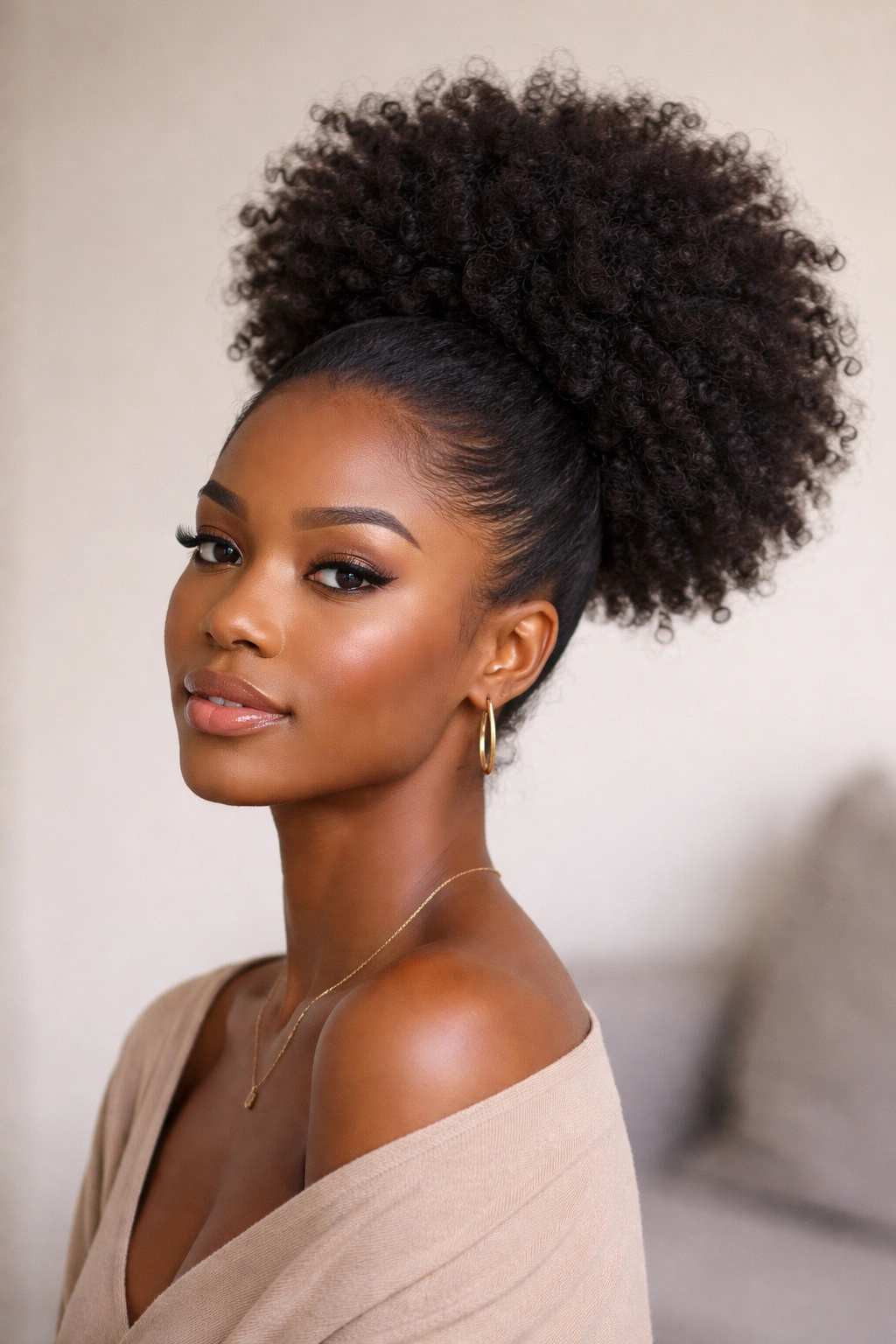
The afro puff is the simplest length cheat in the book, and I mean that as a compliment. When you add a drawstring extension puff, you get instant height and a fuller shape without loading the scalp with a lot of tension. It’s the style I recommend when someone wants visible length but does not want to sit in a chair for half the day.
Why It Reads Longer Than It Is
The trick is that the puff sits high enough to show off the silhouette from the front and the side. A puff placed at the crown gives you a little lift; a puff placed too low just looks like a bun trying to be a puff. That small placement detail changes everything.
Drawstring puffs work especially well when your own hair is blown out, stretched in twists, or slicked into a neat base first. You want the attachment to feel like a natural continuation, not a separate piece that landed there by accident. Texture match matters here more than people admit.
- Choose a puff with kinky-coily or blown-out texture if your natural hair is dense.
- Place the base slightly above the crown for more visible height.
- Wrap the perimeter with a small braid or flat twist if you want the attachment to sit cleaner.
- Keep the drawstring snug, not tight. Tight is the enemy.
My favorite part: this is one of the few extension styles that can look finished in under 10 minutes and still feel playful.
2. Knotless Box Braids with Curly Ends
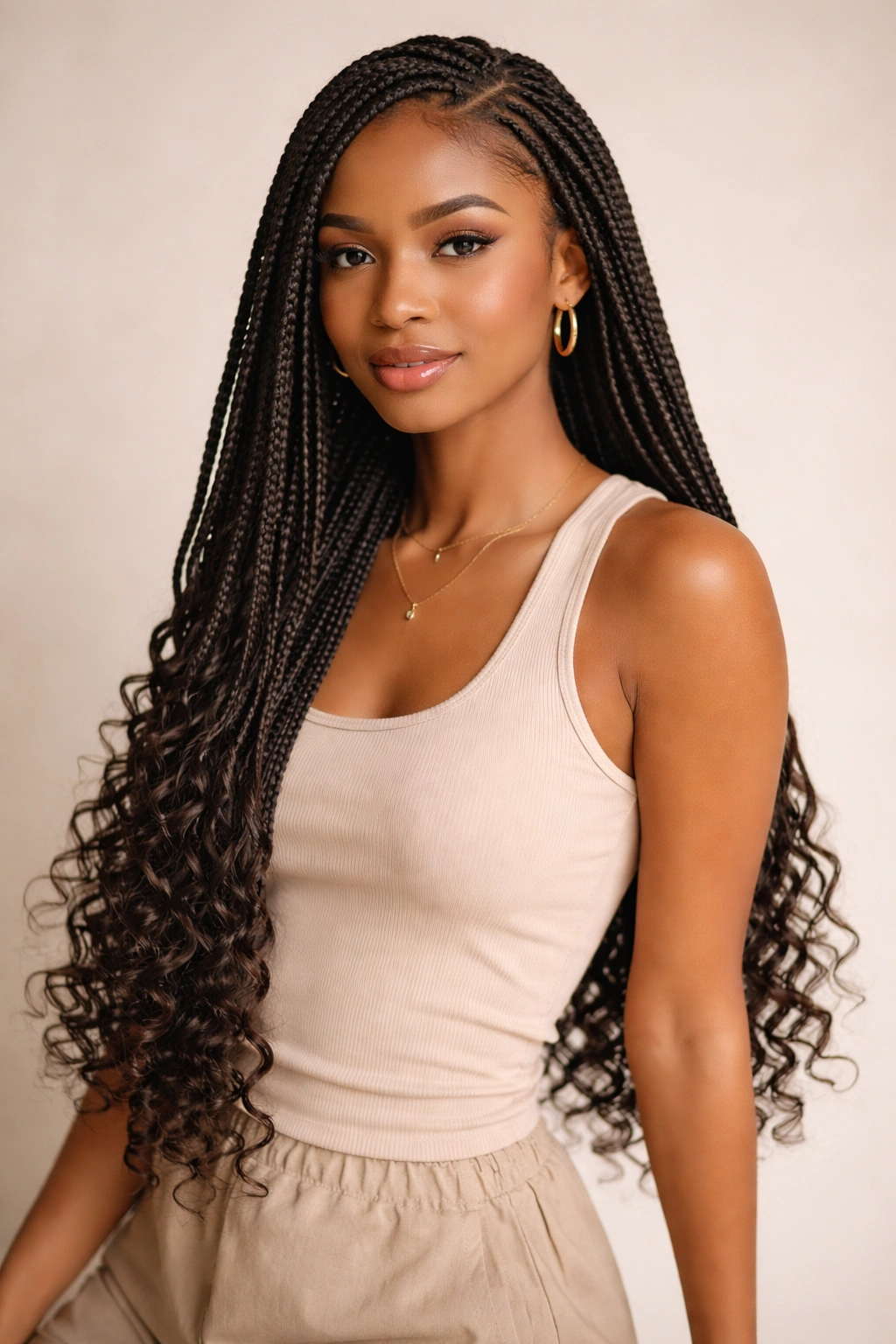
Knotless box braids are the obvious answer when you want length without that hard, bulky braid knot at the scalp. Add curly ends, and the whole style softens. The braids give you the straight-line length; the curls break up the bottom so the style does not look stiff or heavy.
That contrast is what makes it work. The braid section stays neat and controlled, then the curls kick in and create movement. If you want a style that reads long even when the braids are gathered into a ponytail or swept over one shoulder, this is a strong pick.
The best version usually starts with medium parts and a feed-in base. That keeps the root flatter and helps the braids move more naturally as they grow out. I would not go too large here unless you like a chunky look, because thick braids with curly ends can start to feel top-heavy fast.
A little detail people skip: the curl pattern at the bottom should match the density of the braid. If the braid is slim and the ends are huge ringlets, the style feels disconnected. If the ends are soft spirals or loose curls, the whole thing reads smoother.
Length-wise, this is one of the most flexible Afro extension styles. You can go shoulder length for a tidy everyday look or stretch all the way down for something more dramatic. Either way, the braids stay the main event.
3. Passion Twists with Added Length
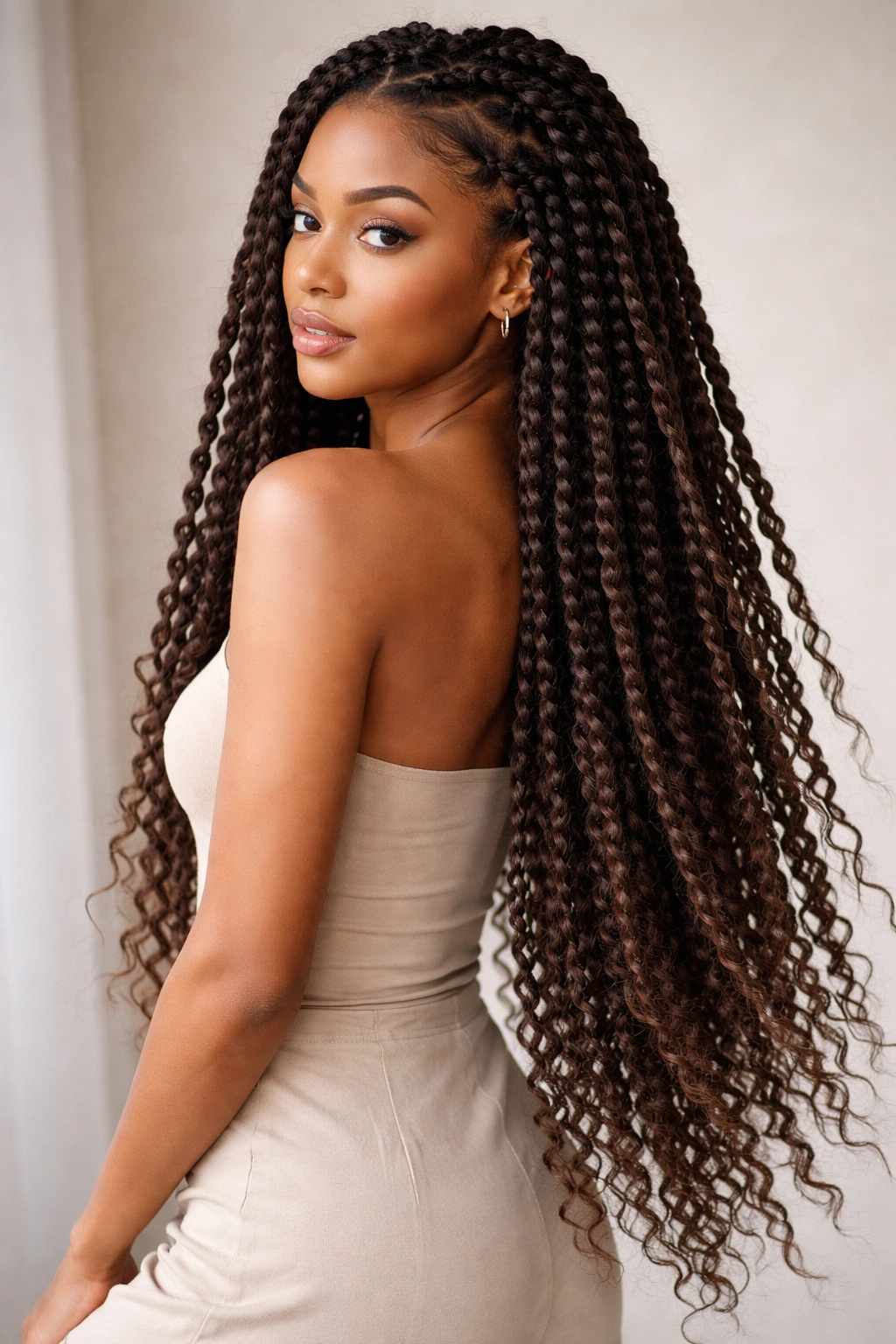
Want movement more than bulk? Passion twists are the answer I reach for. They have that ropey, slightly messy finish that makes length look soft instead of rigid, and when you add long extension hair, the result feels airy rather than heavy.
What Makes Them Different
Passion twists sit somewhere between twist outs and loc-inspired styles. They do not look as tight as box braids, and they do not have the dense, matte feel of Marley twists. That in-between texture is the magic. It lets the hair swing a little when you walk, which sounds small until you actually wear it and notice how much better it photographs from the side.
The key is not to overstuff the twist. If you use too much hair in each section, the twist gets bulky and the length starts to look blunt. Medium-sized parts with 18- to 24-inch extension hair usually give the nicest balance. Longer is possible, sure, but the style starts asking more of your neck and shoulders.
How I’d Wear It
Use a lightweight mousse after installation, then wrap the hair with a satin scarf at night. That part is boring, but it matters. Passion twists fuzz up if you rough them around too much, and once they start fraying, the delicate finish is gone.
A clean middle part looks sharp. A side part makes them feel softer and a little more romantic. Both work. The point is to keep the roots neat so the length has something tidy to fall from.
4. Crochet Afro Curls
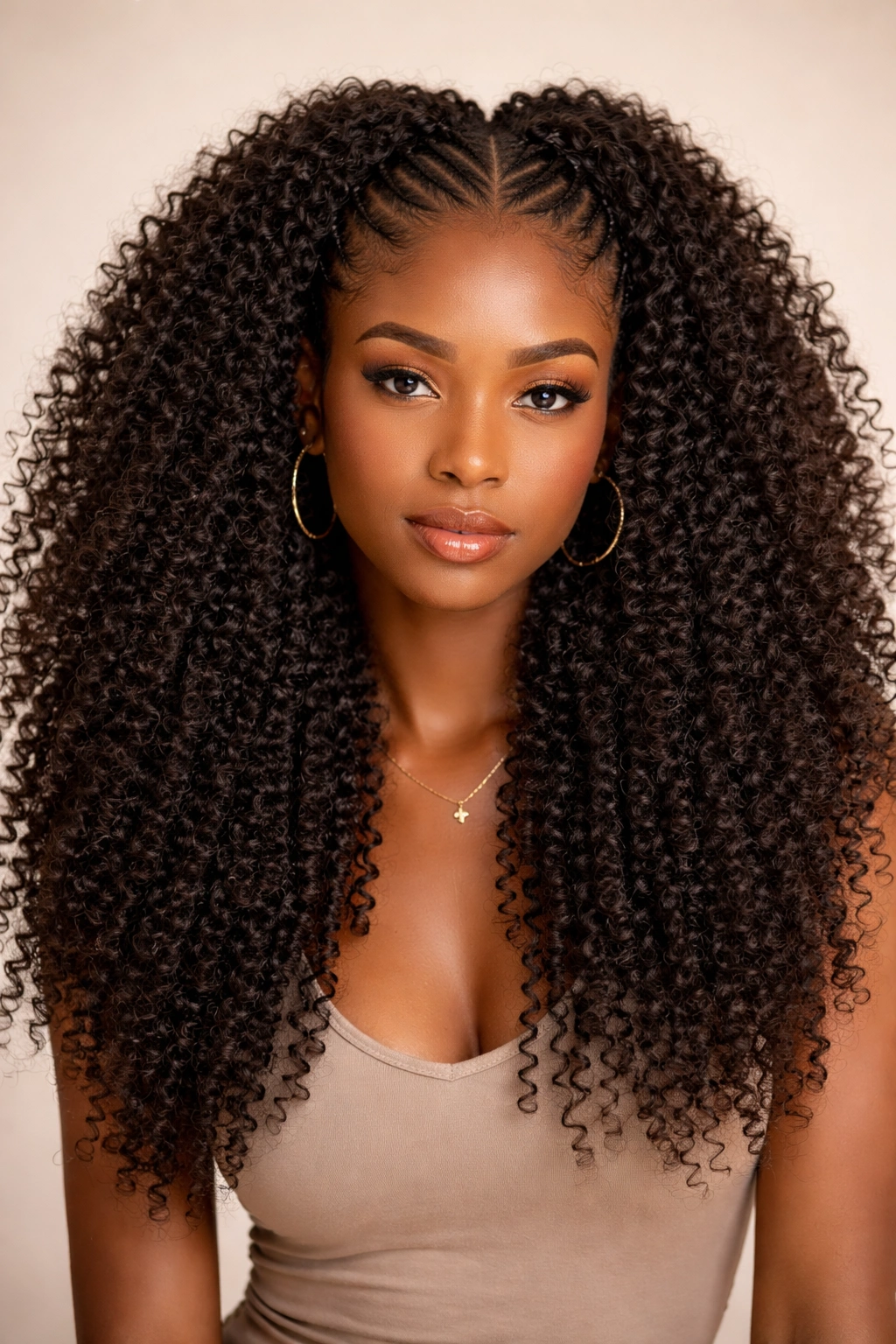
The first thing you notice with crochet curls is how fast the shape appears. One minute you’re looking at cornrows, and the next you have a whole head of springy length sitting where your natural hair used to stop. It’s one of the fastest ways to get the look of a full, long afro without sitting through a long individual install.
Where Crochet Wins
Crochet styles are ideal when you want volume and length together. The base is braided flat, which keeps the scalp neat, and the extension hair is looped in through the braids. That means the bulk lives on top of the cornrow foundation instead of at every single root. If your scalp gets annoyed by heavy installs, that difference matters.
The texture choice makes or breaks this style. Kinky-curly, water-wave, and soft afro curl patterns tend to blend best with natural hair. Shiny, silky curls can work, but they often look too perfect beside textured hair and end up reading a little synthetic unless the whole style is deliberately glam.
- Ask for 6 to 10 flat cornrows as the base if you want easy access and a balanced shape.
- Use a latch hook to attach the hair cleanly.
- Leave a little space around the front hairline so the edge doesn’t look crowded.
- Pick a curl pattern that matches the size of your own coils or the stretched look you wear most often.
The real benefit is scalp access. You can oil the parts, clean the base, and still keep the long look intact. That makes crochet curls a practical choice, not just a pretty one.
5. Marley Twists
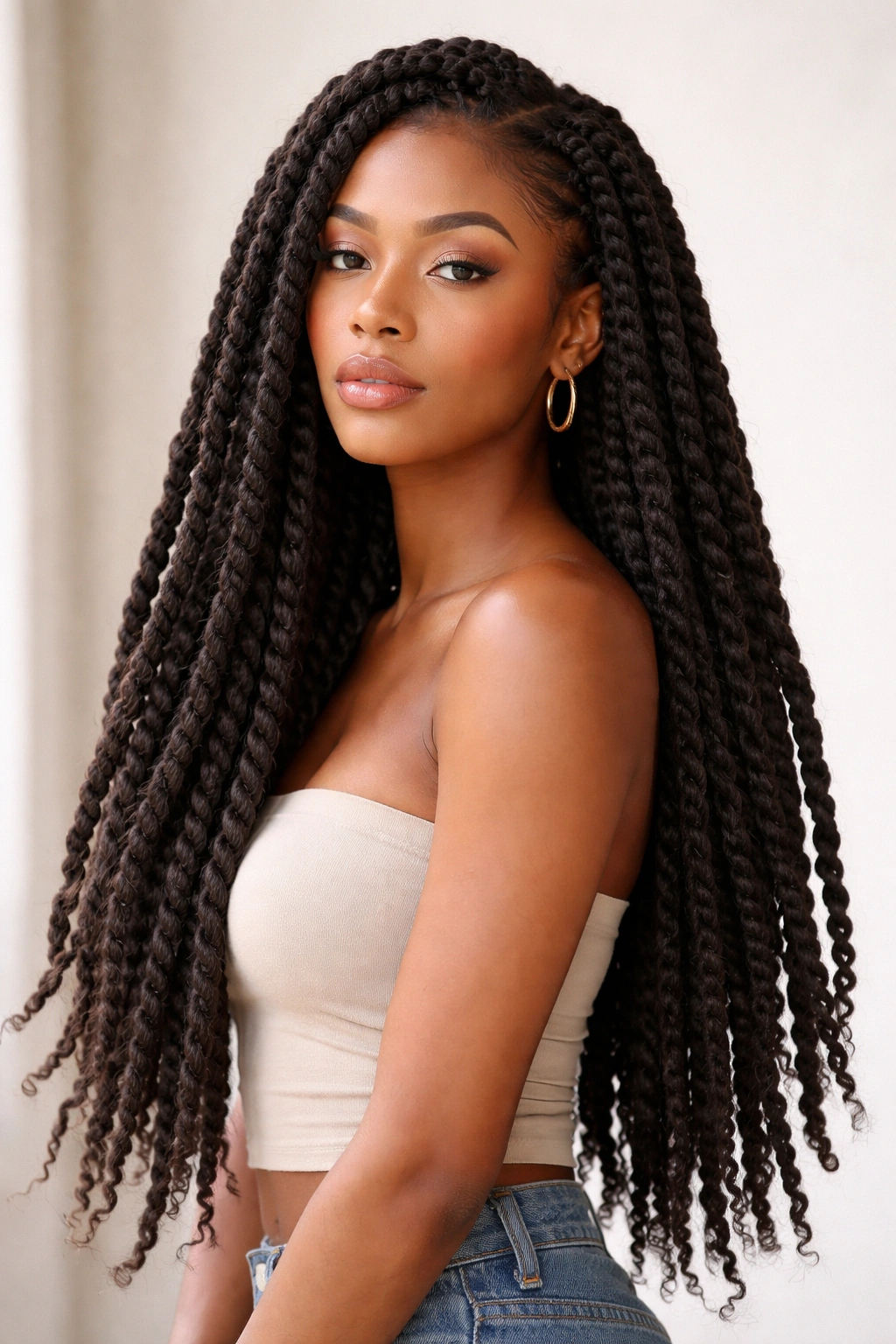
Marley twists are for people who want their length to look thick, not skinny. That’s the difference, and it’s a big one. Passion twists move more. Marley twists sit with a heavier, coarser feel that makes every strand look purposeful and full.
I like them because they have presence. A long Marley twist doesn’t look delicate or airy; it looks deliberate. If you like styles that hold their shape and do not collapse into frizz the second the weather gets humid, this is worth your attention.
The texture of Marley hair gives these twists that matte, almost earthy finish. It blends well with natural hair that has been stretched, blown out, or lightly silk-pressed. You do not need the hair to be bone straight. In fact, if it is too sleek, the twist can feel disconnected at the root.
A medium part size is the sweet spot. Too small, and the install takes forever. Too large, and the length loses that ropey density that makes Marley twists so satisfying. I’d also keep the length somewhere in the 18- to 24-inch range unless you want a lot of swing and a lot of maintenance.
Small warning: these twists can feel heavier than they look. If your neck is sensitive or your edges are tender, keep the size moderate and ask for a gentle base.
6. Faux Locs
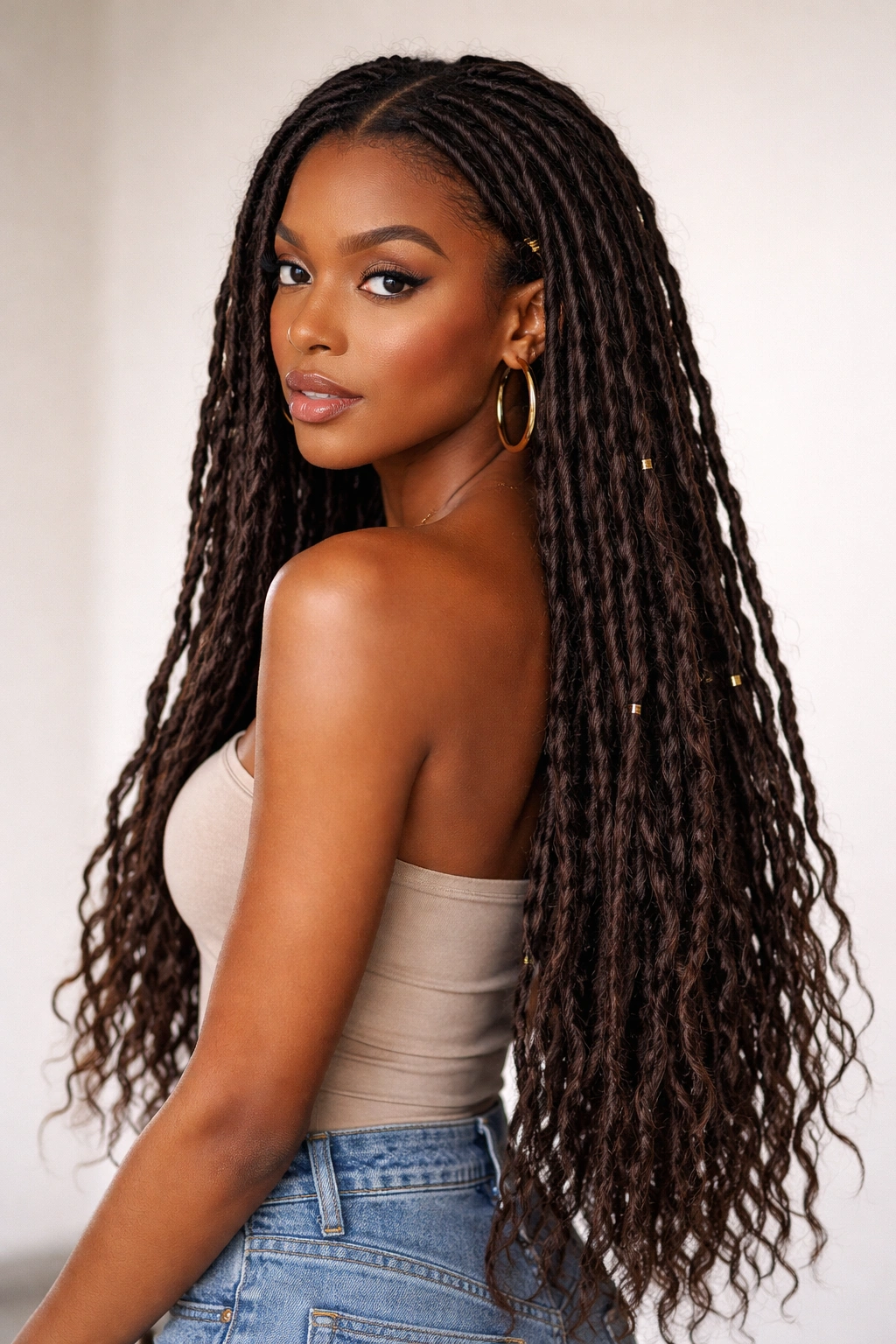
Faux locs are what you reach for when you want length with attitude. They have more structure than braids and more edge than a soft twist style. The best ones look lived-in from day one, which sounds odd until you realize that faux locs are supposed to carry a little texture and weight.
A lot of people like them because they give you the long, locked look without the wait. You can wear them waist length, mid-back, or just below the shoulders, and the style still reads clearly. The finish can be neat and polished or a little distressed and boho. Both are valid. I have a soft spot for the ones with loose curly ends, because they stop the style from feeling too boxed in.
The part size matters more than people think. Tiny parts make the locs feel delicate but take time. Bigger parts speed things up, but the locs can become bulky, especially around the temples and nape. I prefer medium parts for everyday wear because they look balanced from every angle.
What to Watch For
- Heavy faux locs can stress the hairline if the base is too tight.
- A wrapped base should feel secure, not rigid.
- A little scalp oil goes on the parts, not on the loc itself.
- Curly ends need finger separation, not rough brushing.
If you want a long style that looks finished even when you throw on a simple tee and jeans, faux locs do that job better than most people expect.
7. Feed-In Cornrows into a Low Ponytail
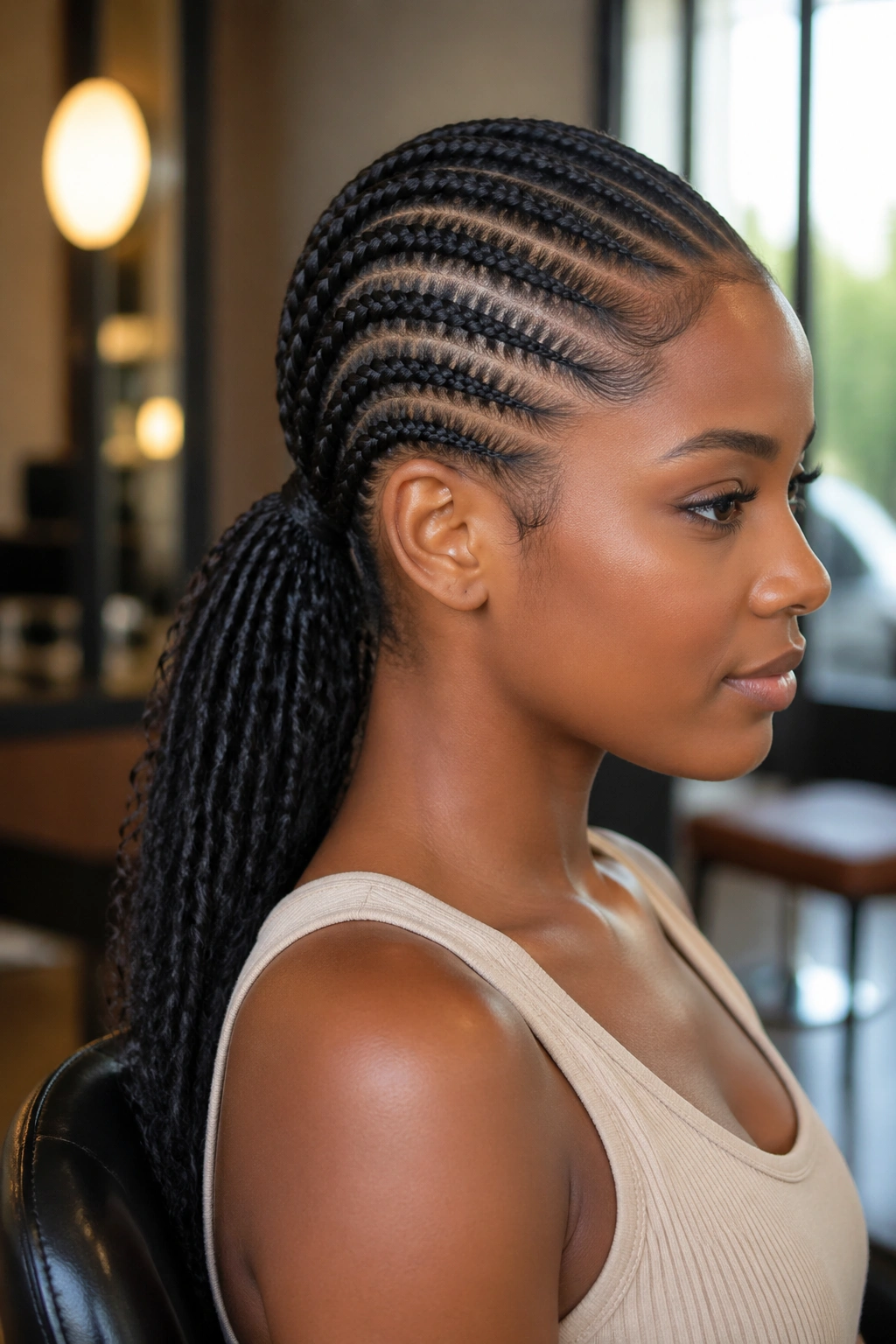
Unlike loose styles, this one keeps everything close to the scalp and puts the length where you can really see it: at the tail. Feed-in cornrows into a low ponytail are clean, sharp, and practical, which is not the same thing as boring. A long ponytail can be dramatic without being fussy.
The feed-in method is what makes the braids look sleek at the root. The stylist starts with small sections and gradually adds extension hair, so the braid appears to grow out of the scalp more naturally. That helps the style look less stacked and more fluid. It also keeps the crown flatter, which is great if you dislike the puffed-up look some braided styles get at the front.
This is a smart option for work, travel, and busy weeks. You can wear the ponytail straight, curly, or braided, depending on how much movement you want. A long curly ponytail gives you softness; a straight ponytail gives you clean lines. I prefer the curly version because the contrast between the sleek cornrows and the textured tail feels more alive.
If you want the look to sit right, ask for 4 to 8 feed-in cornrows leading into one low ponytail. More braids create more detail, but too many can crowd the neck. Keep the nape neat. That part gets sweaty first, and a messy base ruins the whole thing faster than the ponytail ever could.
8. Half-Up Half-Down with Curly Extensions
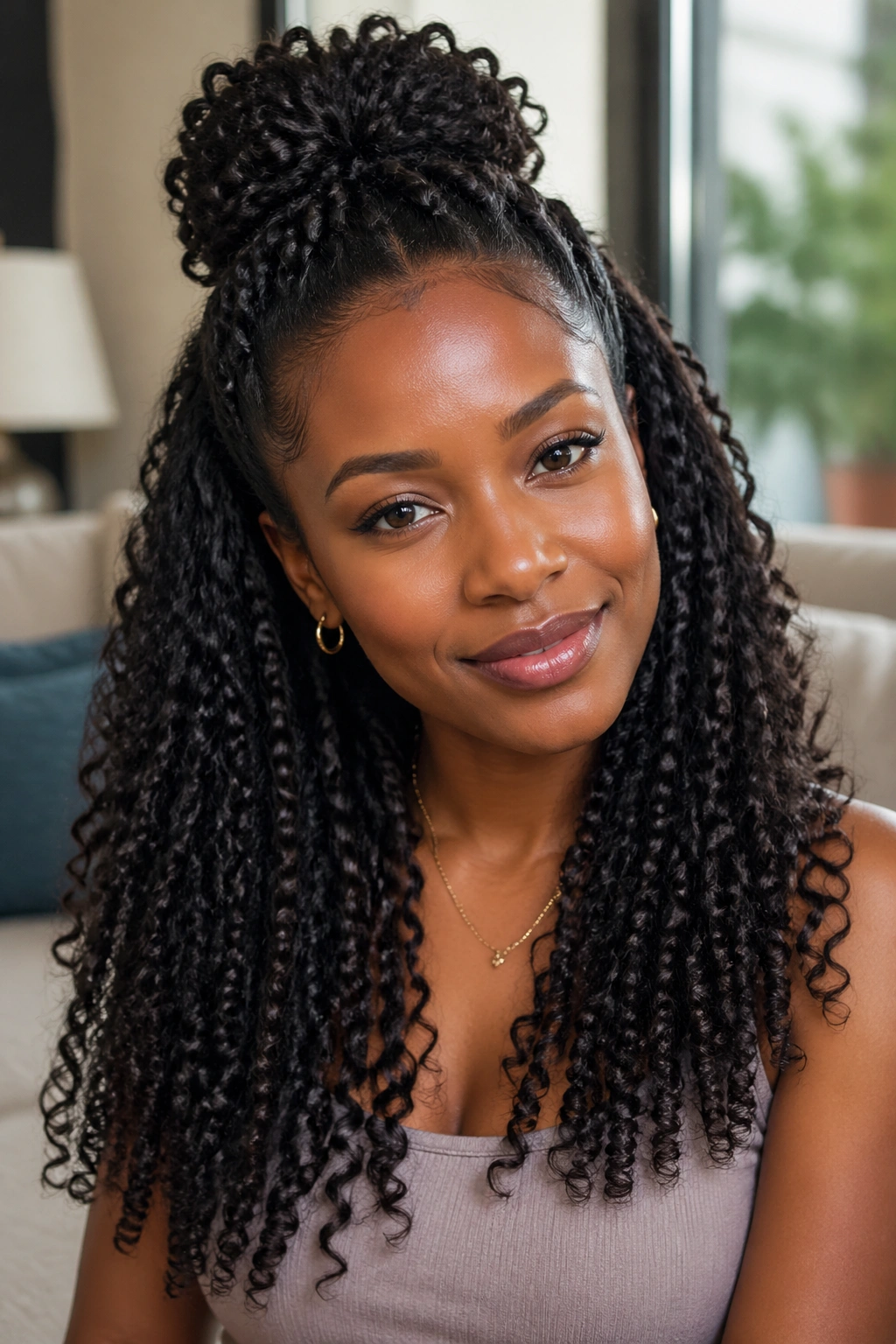
This is one of those styles that looks longer than the measurements suggest. The top half lifts the face, the bottom half hangs free, and the contrast makes the whole shape feel bigger. If you want length without losing all your natural movement, half-up half-down styles deserve a real look.
The magic is in the placement. The upper section should sit high enough to show off the cheekbones and crown, but not so high that it turns into a hard, tight knot. The lower section is where the length lives. Curly extensions work especially well here because they keep the bottom from feeling flat or overly polished.
I like this style on hair that has already been stretched a little. If your natural texture is very tight and short, you can still do it, but you’ll need a strong blend between your own hair and the extension pieces. That blend is what keeps the style from looking like two separate hairstyles stacked together.
Where to Put the Bulk
Keep the heaviest pieces low, around the occipital area and below. That gives the ponytail or loose back section room to move without dragging the crown down. The top section can stay leaner and cleaner.
A little edge control around the hairline is enough. You do not need to glue the whole front flat to make this work. In fact, that usually looks worse. The best versions have enough neatness to look finished and enough softness to feel easy.
9. Goddess Braids with Loose Curly Pieces
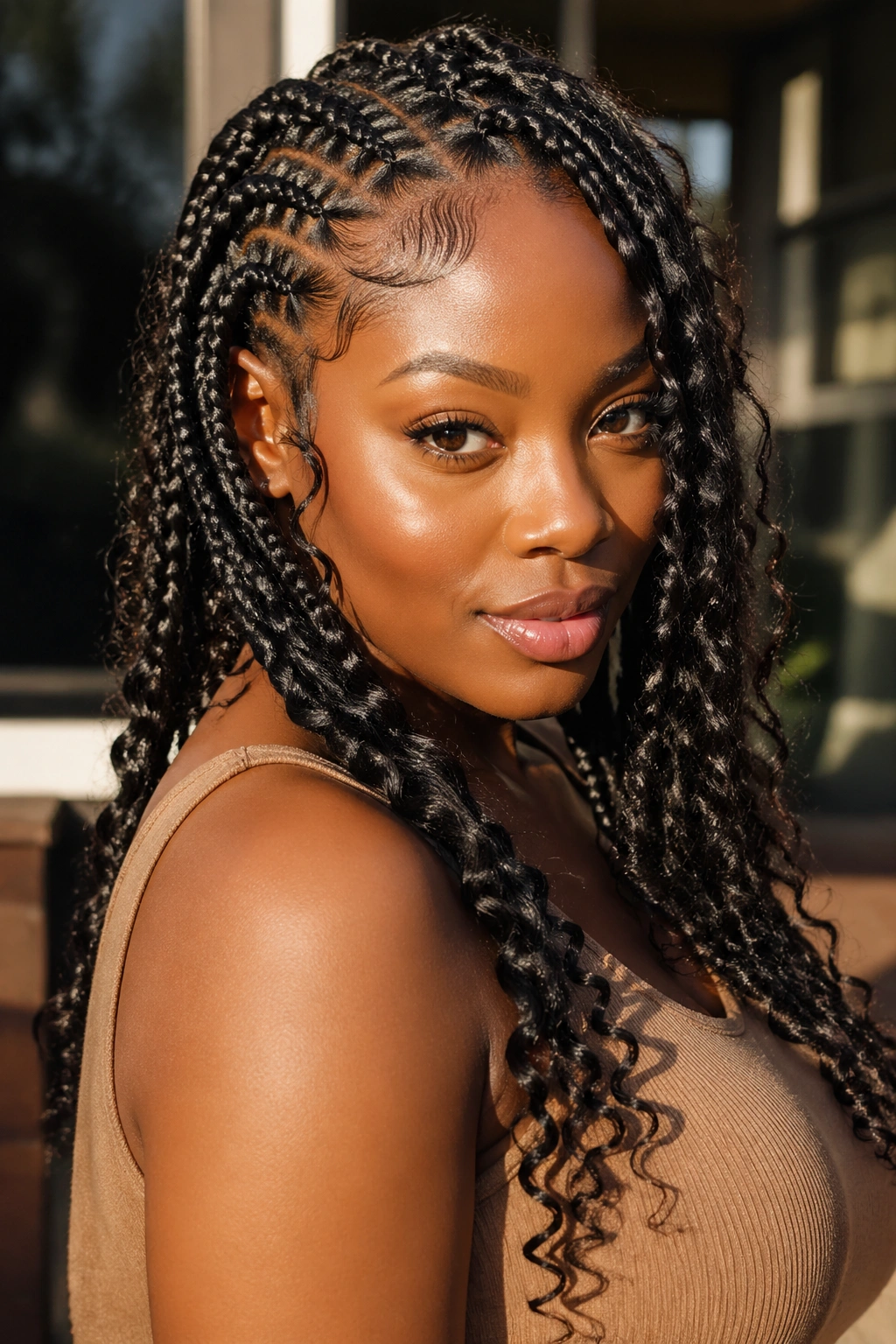
Why do goddess braids read so long on camera? Because they give you two things at once: a strong braid line and soft curls that break up the shape. The braids draw the eye downward, then the curly pieces add motion. That combination does a lot of visual work with not much effort.
The Science Behind the Look
A solid braid creates a clean path for the eye. Add a few loose curly extensions or curly ends, and the style stops looking severe. That’s why goddess braids often feel more romantic than straight-back cornrows. They have structure, but they do not look stiff.
The braid size matters here. Two large goddess braids will feel bolder, while four medium braids can look more detailed and feminine. I’m partial to side-parted goddess braids with curly pieces tucked in every few inches. It keeps the style from going flat and adds length where you want it most.
- Use medium-sized braids if you want movement.
- Add curly pieces at the ends or along the braid for softness.
- Keep the parting crisp so the style doesn’t blur.
- Avoid overloading the braid with too many curls, or it starts looking messy instead of graceful.
This style works well if you want something that feels dressy without being stiff. It also gives you a nice middle ground between protective styling and a more decorative finish.
10. U-Part Wig Blended With Leave-Out
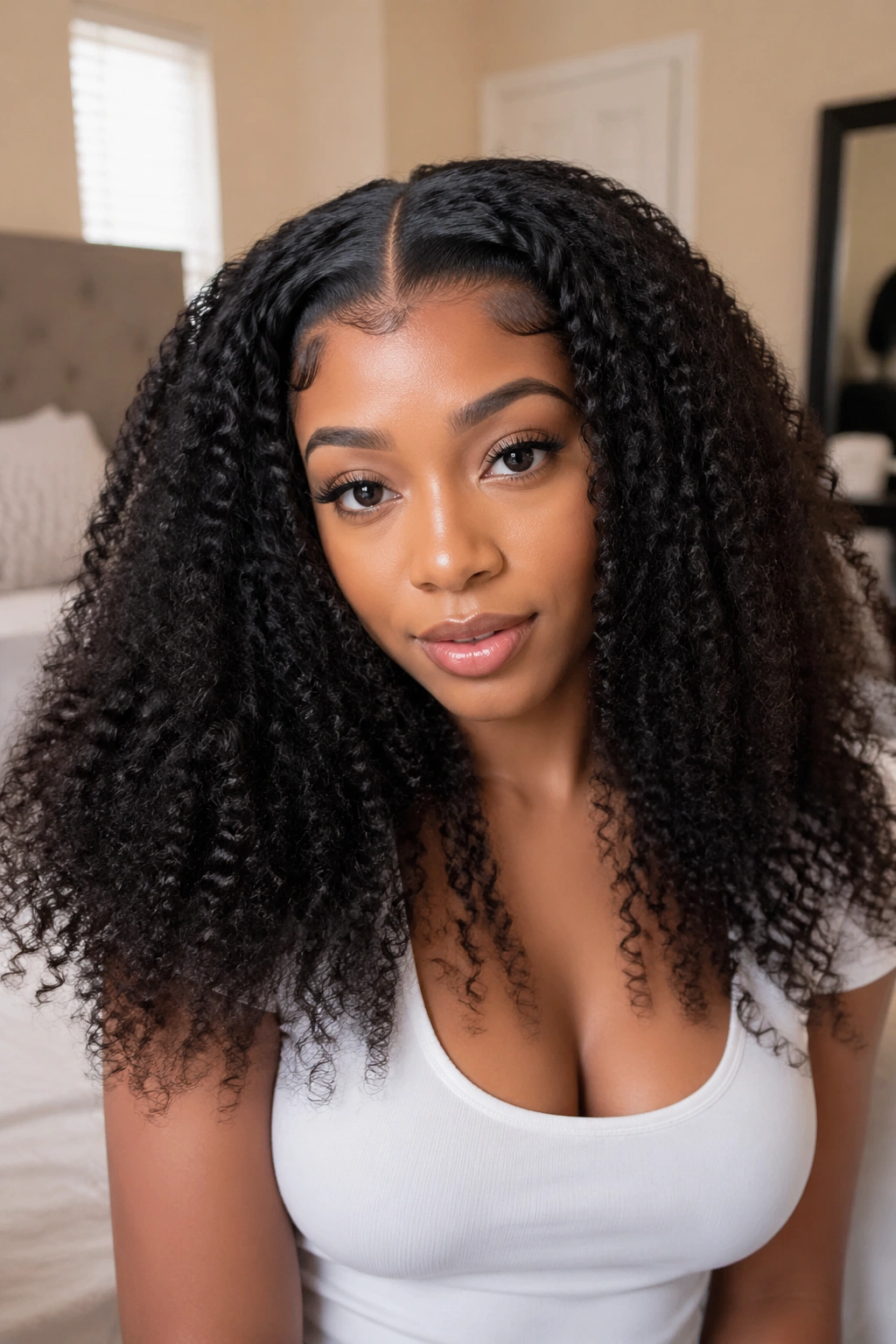
If you want long hair without spending all day in a chair, the U-part wig is one of the smartest options on the table. It gives you instant length and volume, but it still leaves a section of your own hair out so the style can blend with your texture. Done well, it looks like your hair grew overnight. Done badly, it looks like a wig sitting on your head. There is no halfway point.
The foundation matters. The braided base should be flat, neat, and secure enough to hold the cap without pulling. If the braids underneath are lumpy, you will feel it every time you turn your head. A smooth base makes the whole thing sit better and last longer.
Your leave-out needs to match the extension texture closely. That usually means stretching or lightly blow-drying the front and crown hair so it blends with the piece. Too much heat is a bad trade, though. You want enough stretch to make the seam disappear, not so much that your own hair starts getting thin at the line.
What Makes This Style Work
- A snug but not tight fit keeps the wig from shifting.
- Matching the curl or coil pattern at the leave-out is non-negotiable.
- A flat braid base saves your scalp from pressure points.
- A satin scarf at night keeps the top section from puffing up too fast.
I like U-parts for weeks when you want length on demand and a chance to rest your hair from daily manipulation. That rest is the whole point.
11. Braided High Ponytail with Wrapped Base
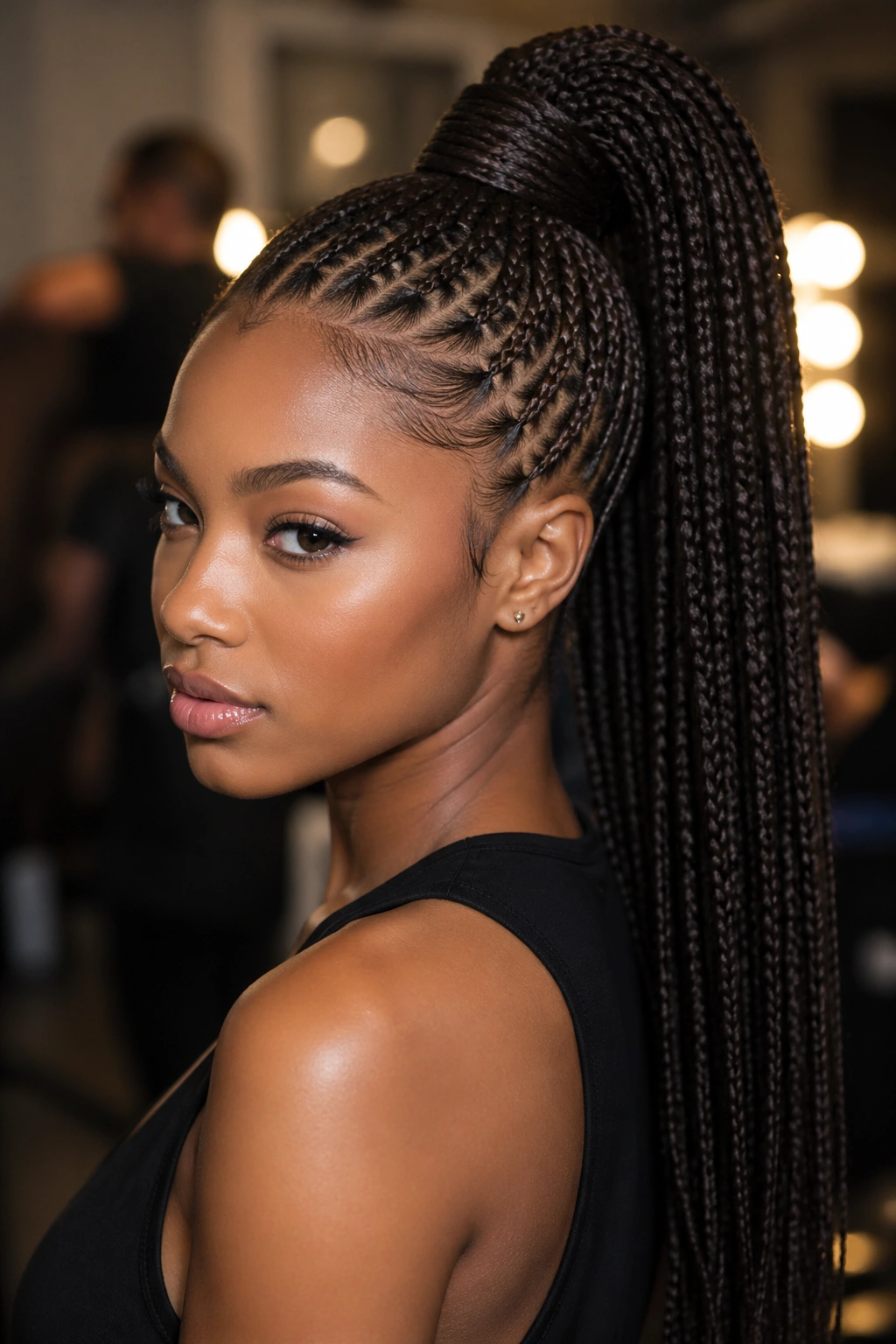
A high ponytail is one of the boldest ways to show off extension length because all the hair hangs in one clean line. The shape pulls the eye upward first, then drops the attention down the tail. It’s sharp. It’s tidy. And when the ponytail is long enough, it has a kind of swing that makes even a plain outfit feel more finished.
The base has to be secure. That’s the part people rush, and it’s the part that fails first. A good high ponytail starts with a braided foundation or tightly gathered base that does not shift when you nod or turn your head. If you feel strain on the temples, it’s too tight. Period.
I prefer a wrapped base over a thick elastic alone, because the wrap hides the join and gives the style a cleaner finish. You can braid the extension tail itself for extra length, leave it curly for softness, or curl the ends if you want the ponytail to feel softer around the shoulders.
The best versions usually keep the front smooth and the nape tidy. That’s where the style either looks crisp or starts to sag. If you’re wearing it for a special event, a little shine serum on the tail helps. Keep it off the scalp. Too much product near the roots makes the style look greasy fast, and nobody wants that.
12. Fulani Braids with Long Side Curls
Fulani braids are one of the prettiest ways to wear length without losing shape. The center braid line, the side details, and the loose curls give the style a lot of visual movement. It feels fuller than a simple straight-back braid set, and it has a face-framing effect that flatters almost immediately.
What I like most is the balance. The braids keep the style rooted and structured, while the long curls soften the sides and ends. You get length, but you also get shape around the face. That matters more than people think. A style can be long and still look flat if all the attention lives at the bottom. Fulani braids avoid that problem by working the length through the entire silhouette.
Beads are optional, not mandatory. Some people love them. Some don’t. If you do use them, keep the bead count controlled so the style doesn’t get too heavy near the ends. A few well-placed beads or cuffs are enough. You do not need to cover every braid just because the option exists.
This is a good choice when you want something decorative but not overbuilt. It photographs well from the side, moves nicely when worn loose, and still looks polished when pulled back behind the shoulders. If I had to pick one style on this list that sits right between everyday wear and dressed-up hair, this would be near the top.
Long hair is fun, but believable long hair is better. That’s the part people remember when a style works. If your roots feel calm, your texture looks like it belongs, and the length moves instead of dragging, you’ve picked well.
