



A chin length razor cut bob has a sharper personality than the average bob, and that is exactly why it keeps finding its way back into salons.
Cut it with scissors, and the line can sit heavy. Cut it with a razor, and the ends soften, flick, and move in a way that keeps the haircut from feeling boxy around the jaw. The catch is placement: at chin length, even a small shift changes the whole read of the cut. Too short, and it can widen the face. Too long, and you lose that crisp frame.
I like this haircut because it does not behave like a neat little helmet. It has edge, but it can still feel wearable on a school run, in an office, or on a night out. That range is why people keep asking for it, even when they can’t quite describe what they want.
The part that gets missed most often is this: razor cutting is not one look. It can be feathered and airy, blunt but softened, shaggy, polished, curled, wavy, or deliberately uneven. The difference lives in the way the ends are handled, where the weight is removed, and how close the shape sits to the chin.
1. Airy Feathered Razor Bob
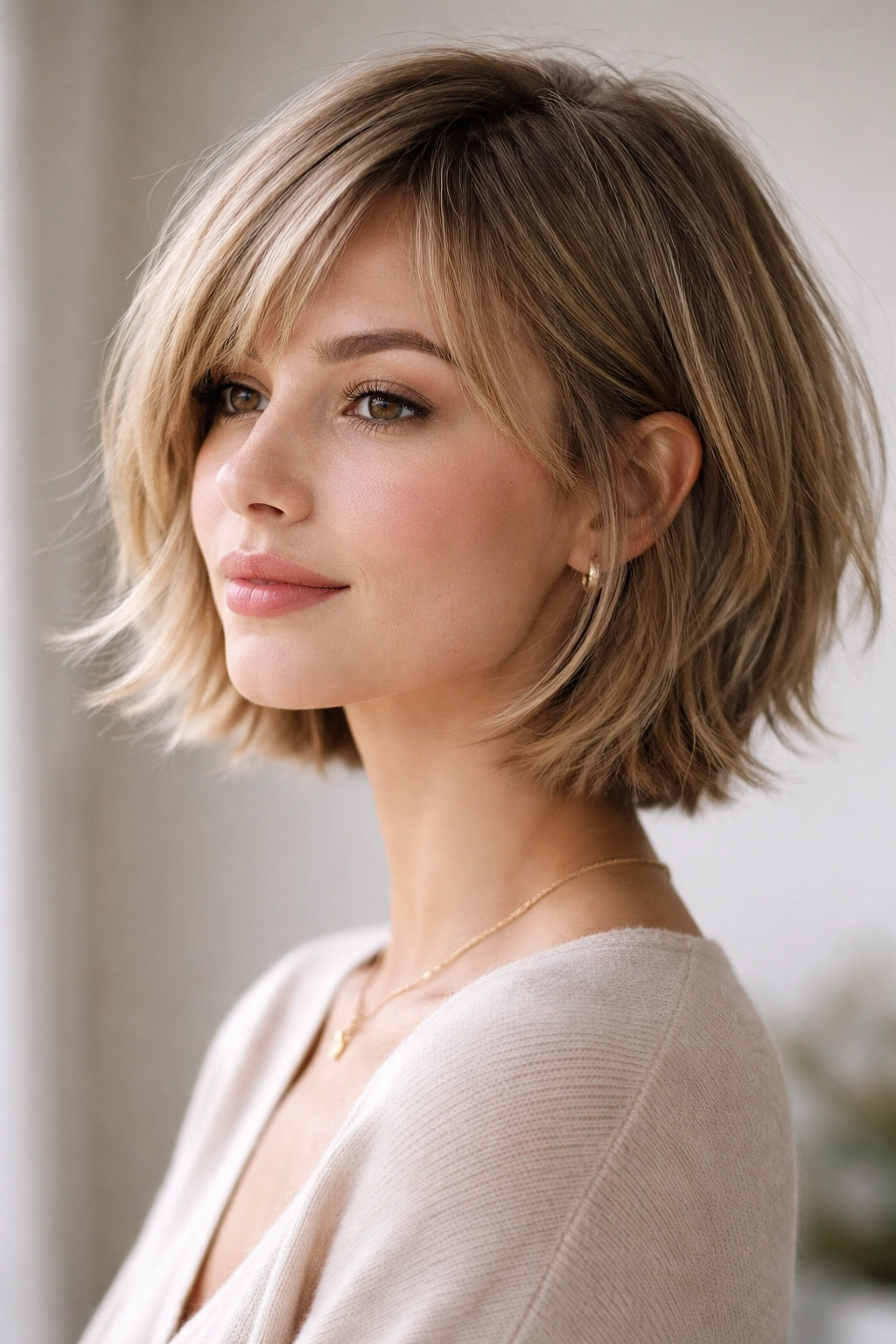
If you want movement before you want drama, this is the version to start with. The airy feathered razor bob keeps the perimeter soft, so the haircut lifts instead of sitting like a solid block at the jaw.
The shape works especially well when the hair has a little natural bend. A stylist can take out just enough weight through the lower half to let the ends flick inward or outward on their own. On straight hair, that creates a light, almost floating finish. On wavy hair, it gives the cut room to breathe.
Why the Feathered Finish Works
The trick here is restraint. You do not want every strand sliced thin, because that’s how a bob starts to look wispy and tired. You want the outer line to stay visible while the inside of the shape feels softer and less packed.
A feathered razor bob usually flatters people who want cheekbone movement without a lot of styling fuss. It’s especially good if your hair sits flat at the crown but gets bulky through the ends. The razor removes that bottom heaviness and keeps the whole cut from drooping.
- Best for fine to medium hair that needs lift.
- Ask for a soft perimeter, not chopped-up layers everywhere.
- A pea-sized amount of mousse at the roots helps the shape stay open.
- Blow-dry with a 1.5-inch round brush and turn the ends under just at the last inch.
Pro tip: keep heavy oil off the tips. It flattens the feathering fast.
2. Blunt Razor Bob with a Soft Edge
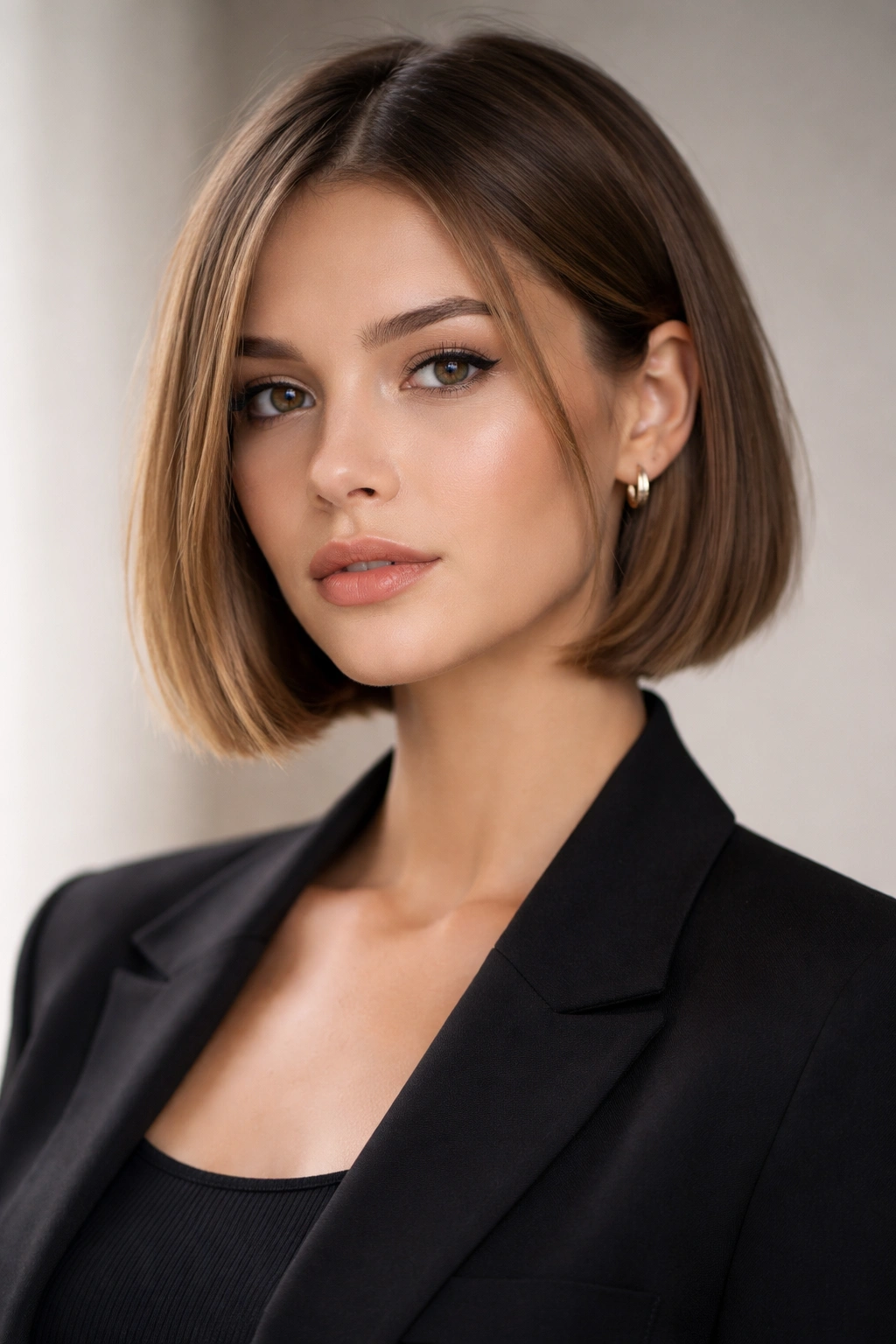
A razor cut does not have to look shaggy. That’s the part people miss. A blunt razor bob keeps a strong line at the chin, but the very edge is softened so it doesn’t feel stiff or severe.
This is the one I reach for when someone wants a bob with some authority. It reads clean from across a room, yet the razor keeps it from looking rigid. The ends almost blur into each other, which sounds subtle, and it is, but the effect is noticeable the second the hair moves.
That line matters. A lot.
The style works best on straight to slightly wavy hair, because the silhouette depends on seeing the edge. If your hair tends to puff or frizz, this version can still work, but it needs a smoothing cream and a careful blow-dry. You want the line to feel crisp, not scratched-out.
The chin length keeps the shape strong around the jaw, which is why this cut can look so polished on oval, square, and heart-shaped faces. It gives structure without making the face look boxed in. If you like a bob that looks expensive with very little decoration, this is the one.
3. Side-Part Razor Bob for Extra Lift
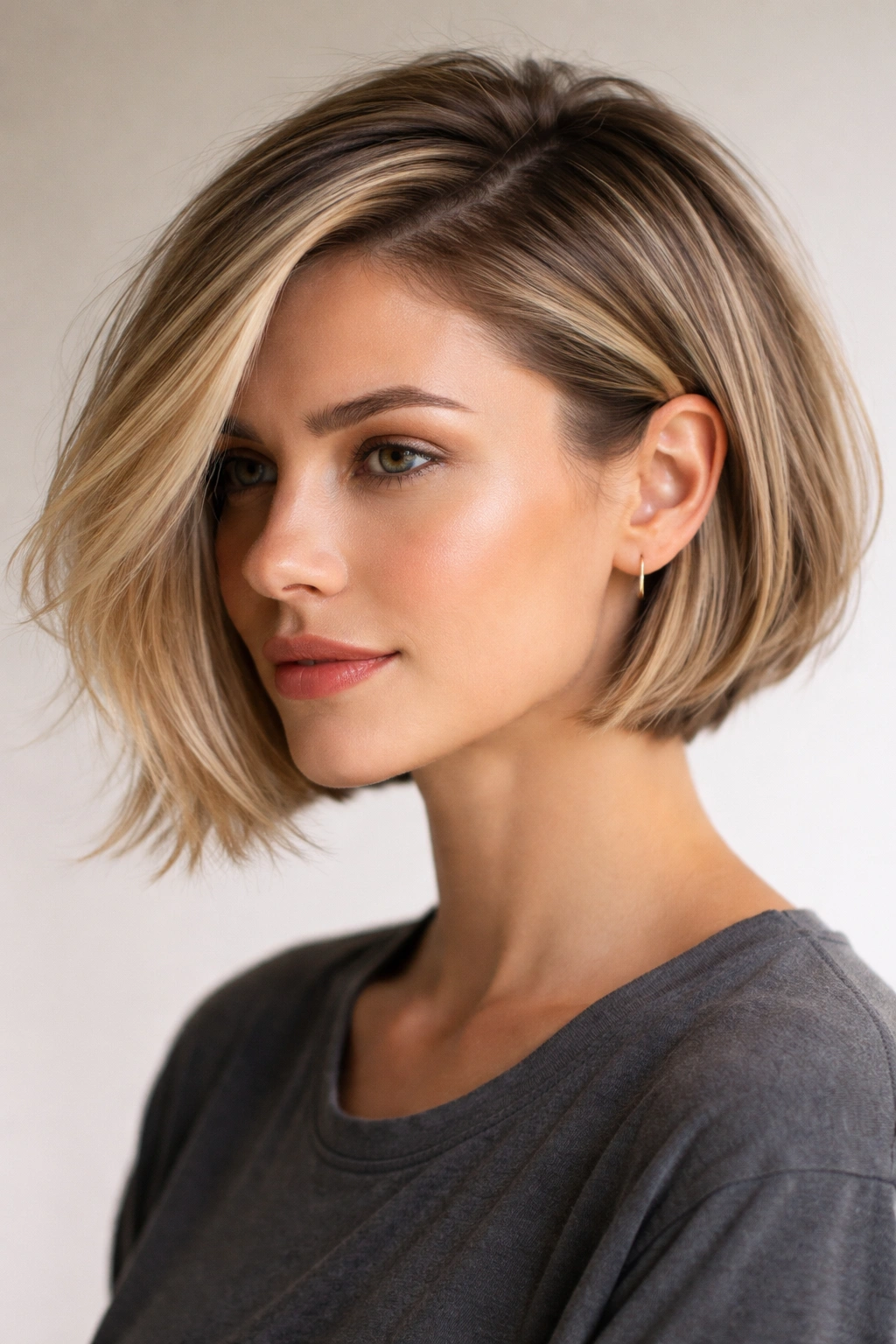
A deep side part changes the whole haircut before you even pick up a brush. It adds height at the crown, creates a little sweep across the forehead, and turns a chin-length bob into something with more attitude.
This version is useful if your hair tends to fall flat at the roots or if one side of your face always feels more prominent than the other. The side part breaks that symmetry in a flattering way. It also gives the razor-cut ends more room to show their movement, especially when one side tucks behind the ear and the other side falls forward.
What to Ask Your Stylist For
You want the cut to stay balanced even if the part moves. That means the stylist should keep the length even at the chin, then shape the interior so it can be worn off-center without collapsing.
- Ask for a part that sits about 1 to 2 inches off center.
- Keep the face-framing pieces a touch longer on the heavier side.
- Use a root-lifting spray only at the crown, not through the ends.
- Blow-dry the front section in the opposite direction first for extra lift.
A side-part razor bob is especially kind to round faces because the diagonal line pulls the eye downward. It also works if you like to tuck one side back and let the cut show your jawline. Small move. Big difference.
4. Center-Part Chin-Length Razor Bob with Tucked Ends
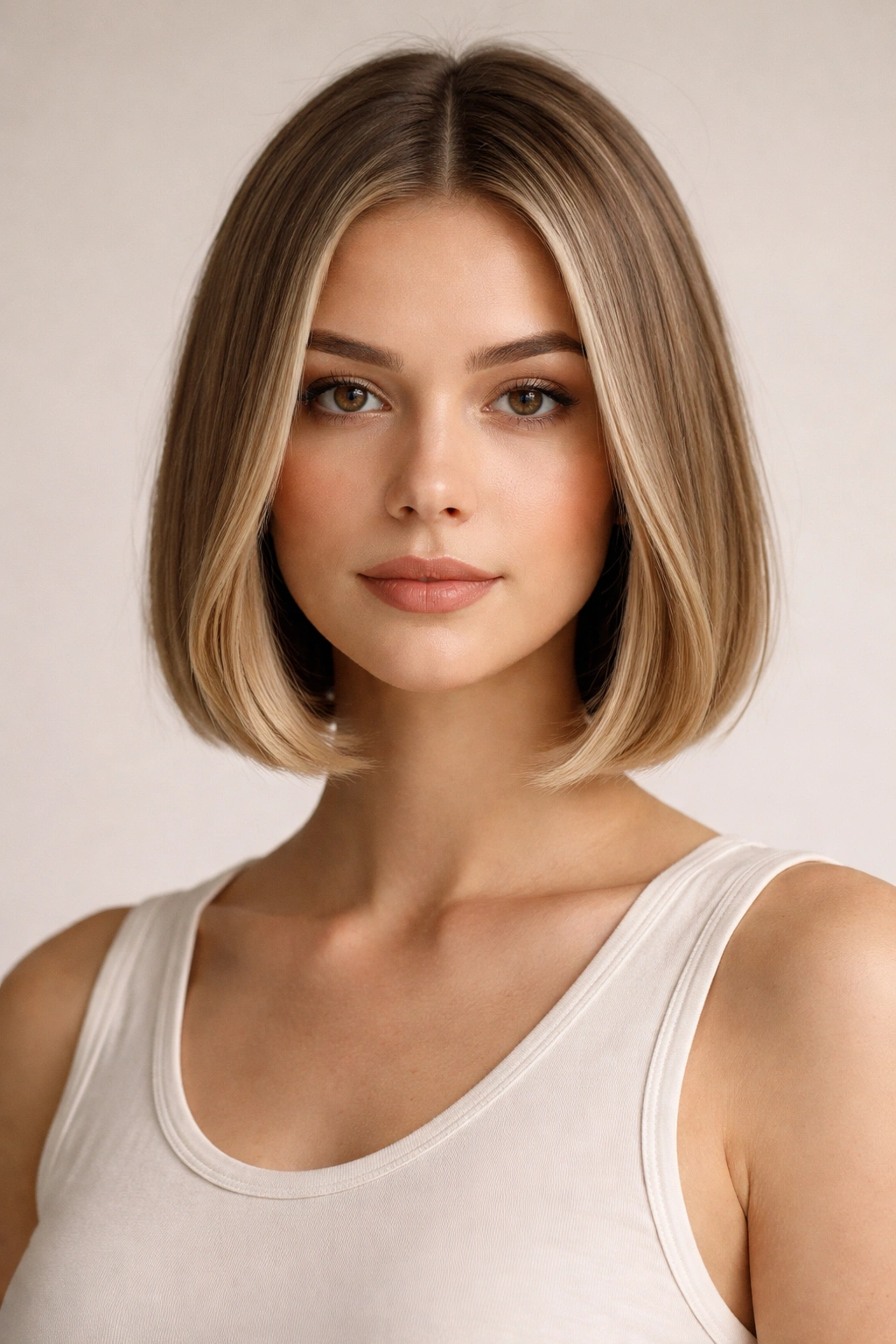
A middle part changes the whole mood of a bob. It makes the cut feel calmer, neater, and more intentional, even when the ends are softly razored and slightly uneven in the best way.
This version sits beautifully when the hair is straight or only slightly wavy. The line down the center pulls the eye straight through the face, which gives the chin-length shape a long, clean read. If the sides are tucked behind the ears, the haircut suddenly looks sharper, almost architectural.
The reason the razor matters here is simple: a scissor-cut bob with a center part can feel a little too solid. The razor keeps the ends from looking cut with a ruler. They still lie close to the face, but they move when you turn your head.
A middle-part razor bob is a smart choice if you want something pared back without losing softness. It can look minimal with a blazer and polished with lipstick, yet it is not fussy. And that is the appeal. The hair does not have to shout to make a point.
5. Chin-Length Razor Bob with Curtain Bangs

Why do curtain bangs and a chin-length razor bob get along so well? Because both pieces work by easing the eye around the face instead of stopping it in one place.
This combination gives you shape at the cheeks, movement at the chin, and a little softness at the forehead. The bangs open in the middle and slide toward the temples, so they connect the top of the haircut to the bottom in a way that feels smooth rather than choppy. When the length lands right at the jaw, the whole style starts to look balanced.
Where the Fringe Should Sit
The sweet spot is usually around the cheekbone or just below it. Too short, and the bangs can feel separated from the bob. Too long, and they start to drag the face down.
A good curtain fringe for this cut should have a loose bend, not a curled roll. You want the bangs to sweep away from the face and settle into the bob, not sit on top of it like a separate piece. That little connection is what makes the haircut look finished.
How to Style It in a Few Minutes
- Blow-dry the bangs forward first, then away from the face with a round brush.
- Use a 1-inch brush or a medium-barrel iron for a soft bend.
- Keep product light; a dime-size cream is enough for most hair.
- If the bangs separate too much, mist them with water and reshape only the front.
This is one of those cuts that can look romantic or sharp depending on your clothes and makeup. Same haircut. Different mood.
6. Choppy Razor Bob for Fine Hair
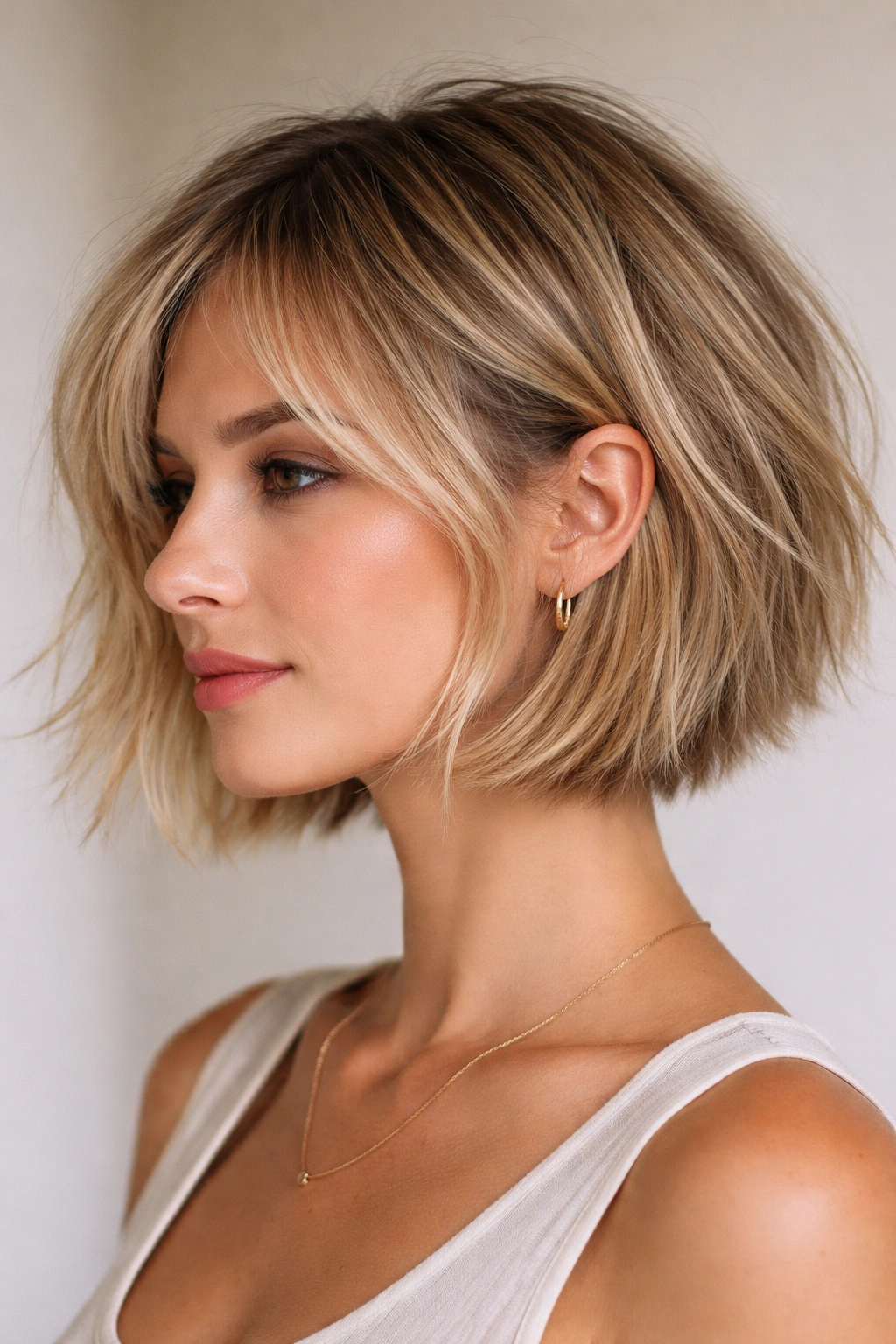
Fine hair does not need more hair; it needs better shape. That is where a choppy razor bob earns its keep.
The goal here is not to make the ends disappear. It’s to create movement so the hair stops lying flat against the head like a single sheet. A little pieceiness through the perimeter gives fine hair body, and the chin length helps the cut look fuller than a longer bob sometimes does. The shape sits where the eye expects thickness, so it reads stronger than it is.
What to Ask for at the Chair
This part matters because over-thinning fine hair is a disaster. You want controlled texture, not a shredded finish.
- Ask for soft internal movement, not aggressive texturizing.
- Keep the bottom line visible.
- Avoid taking too much weight out of the crown.
- Use a light volumizing spray, not a sticky mousse.
The best version of this cut usually looks better with a quick blow-dry than with complete air-drying, but it does not need much. A round brush at the roots, a finger-combed finish at the ends, and you’re done. If the hair starts to look stringy, the razor work was probably too heavy.
One more thing: if your hair is very fragile on the ends, a scissor version with a soft razor finish can be safer. Not every fine head of hair wants the same amount of slice-and-go texture.
7. Razor Bob for Thick, Heavy Hair
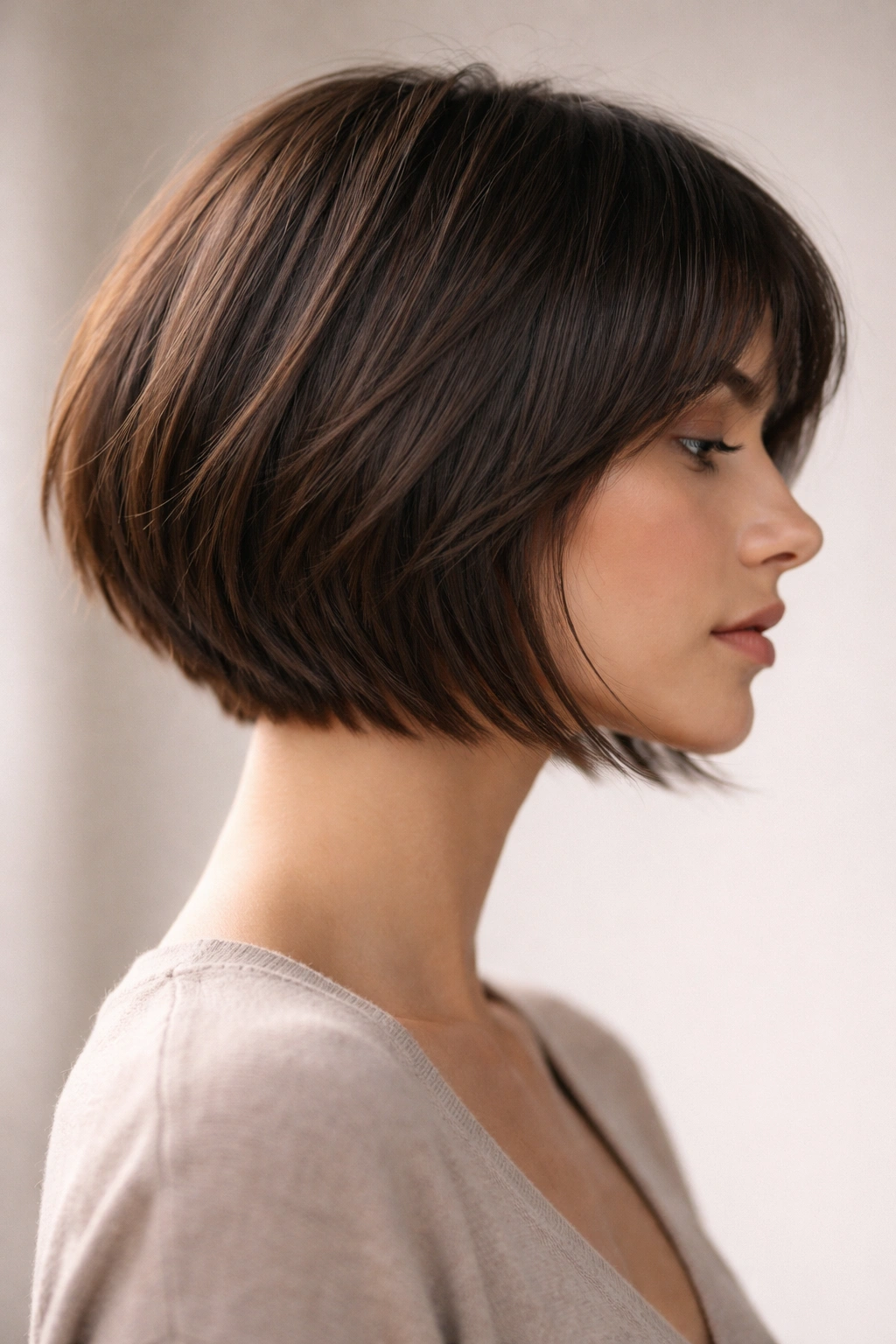
Thick hair can turn a bob into a triangle fast. You know the shape: wide at the bottom, heavier at the sides, and stubbornly unmoving around the jaw. A razor bob fixes that by removing bulk where the hair needs to release it.
The best thick-hair version keeps the outer line clean while softening the mass underneath. That way, the haircut still looks like a bob, not a pile of disconnected layers. If you take too much out, the ends can puff in weird places. If you don’t take enough out, the cut sits like a shelf. The middle ground is the sweet spot.
Where the Weight Should Come Out
A skilled stylist usually focuses on the interior rather than hacking at the perimeter. The heaviest zones tend to be behind the ears, through the lower back section, and sometimes just under the chin where dense hair wants to stack up.
- Remove bulk from the inside, not from the outer line.
- Keep the nape neat so the shape hugs the neck.
- Use a smoothing cream before blow-drying.
- Finish with a paddle brush if you want a sleeker result.
A thick-haired chin-length razor cut bob can be one of the easiest haircuts to live with when it’s done well. It dries faster. It moves more. It does not feel like a block on humid days. And if you wear it with a slight bend at the ends, the whole thing looks deliberate rather than heavy.
8. Wavy Razor Bob with Loose Bend
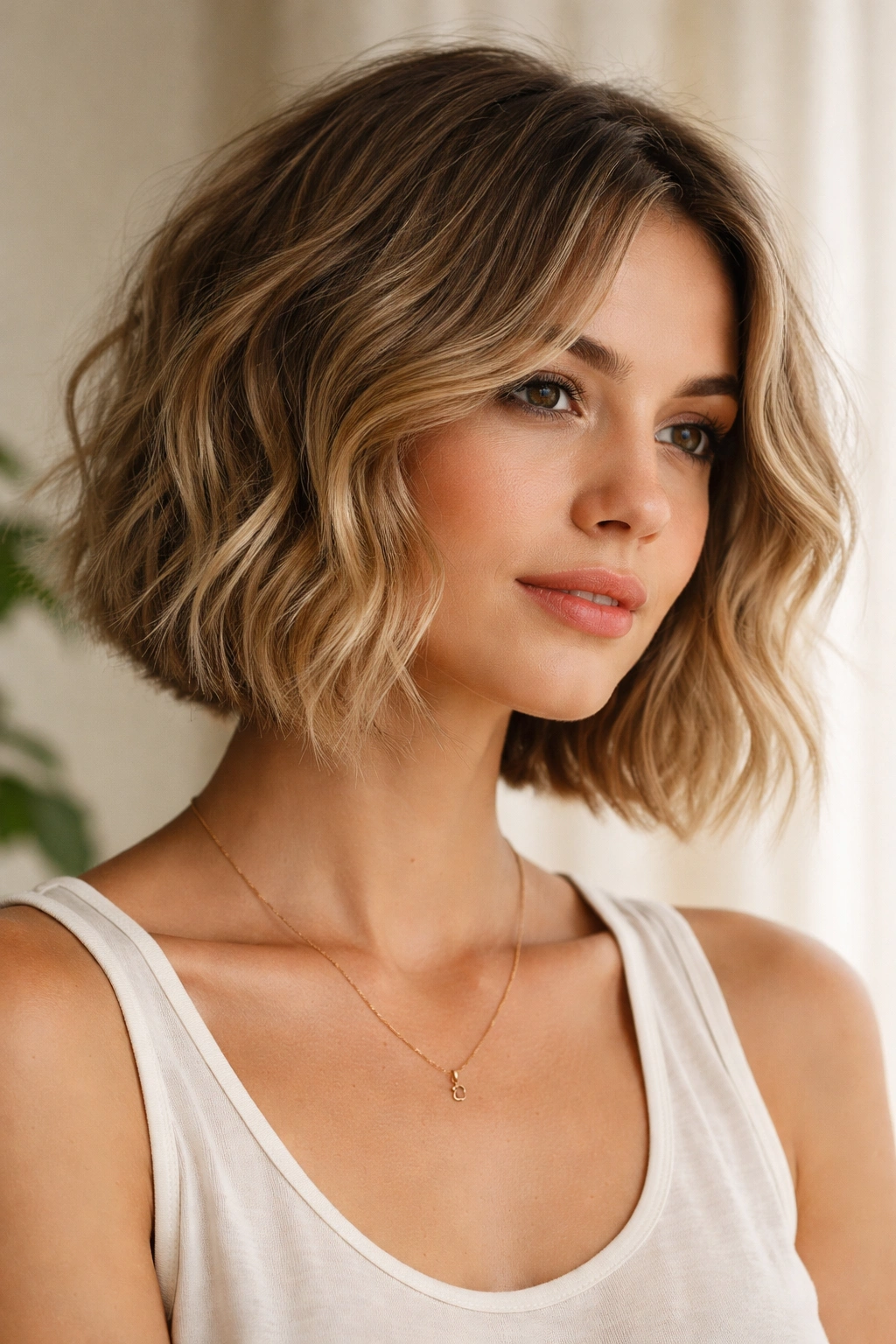
Air-dried, this one looks a little undone. Blow-dried, it looks more deliberate. That range is exactly why a wavy razor bob gets so much wear.
The cut is happiest when the natural wave is left alone enough to do its thing, but shaped enough that the ends do not kick out in random directions. A razor helps here because it takes out that blunt bulk that can make wavy hair expand at the chin. Instead of a bulky triangle, you get movement that follows the face.
A soft bend through the mid-lengths is usually enough. I like a 1-inch curling iron for just a few face-framing pieces, then I leave the rest alone. If you curl every section, the bob can start to look overdone. If you only smooth the front and let the rest fall where it wants, the whole style feels more natural.
The ends should never look crunchy.
A little wave spray, a quick scrunch, and a rough dry with your fingers can be enough on days when you do not want to fuss. The best part is that the cut hides a small amount of bed-head well. Which, honestly, is useful. Haircuts that only look good in perfect conditions tend to get abandoned fast.
9. Curly Chin-Length Razor Bob
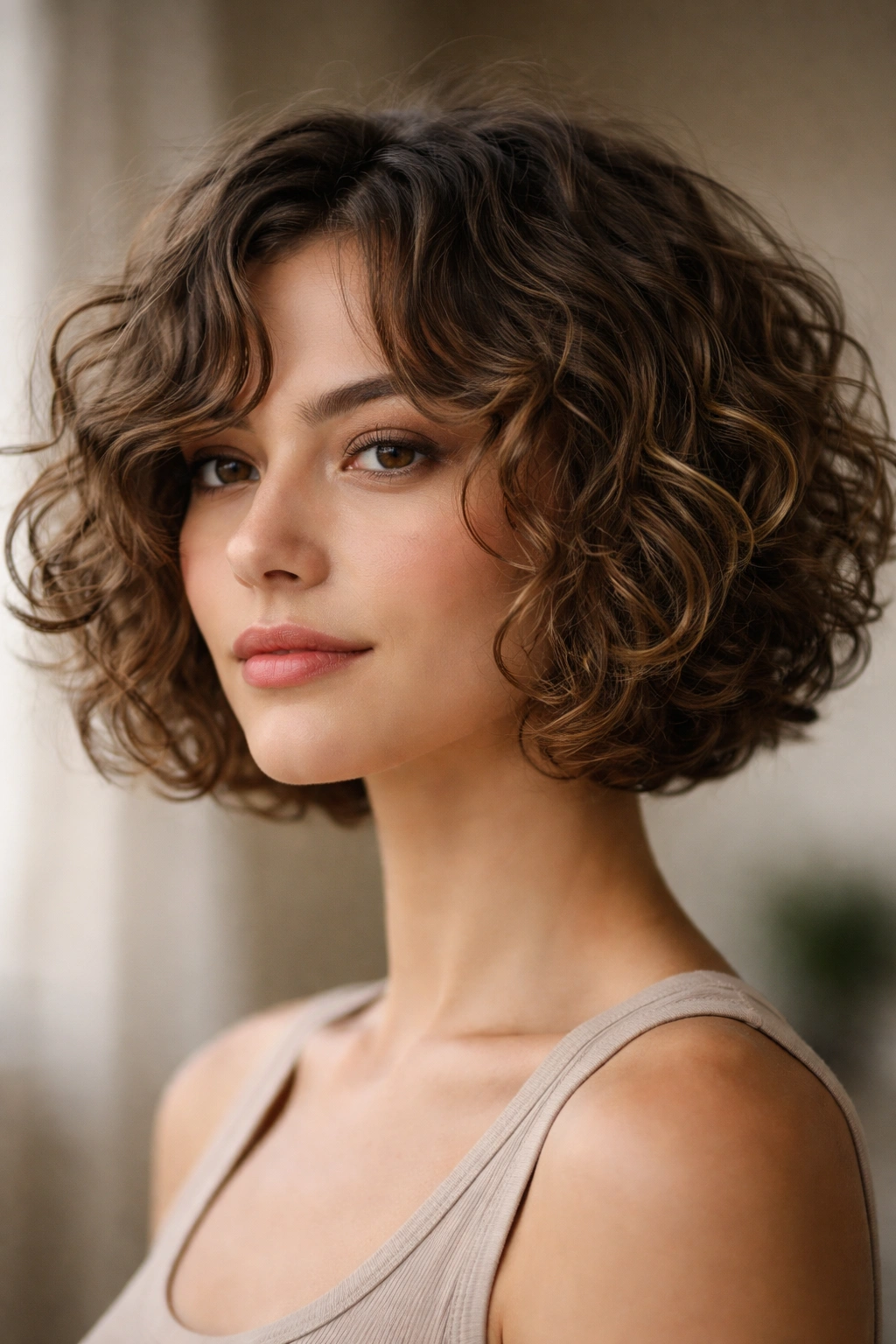
Can curly hair wear a razor bob? Yes — but the cut has to respect shrinkage, spring, and curl pattern.
A chin-length curly bob is tricky because what lands at the chin when it’s wet may bounce up several inches once it dries. That’s not a problem if the shape was planned with that in mind. A good stylist will often cut curls dry or nearly dry so they can see how each section behaves. Razor work can soften the perimeter, but it should be used with care, because curly ends can fray if they are thinned too aggressively.
The Curl Rules Worth Following
- Ask for length a little longer than chin if your curls spring up a lot.
- Keep the perimeter soft, not shredded.
- Do not over-thin the top layers, or the haircut can pyramid.
- Use leave-in conditioner and a light gel for hold.
- Diffuse on low heat, low speed, until the curls are set.
The best curly chin-length razor bob has a round, controlled shape with movement around the face. It can look playful, sharp, or elegant depending on how the curls settle. It should never look like the hair got cut before anyone checked how it falls. That mistake is common, and it is worth avoiding.
10. Asymmetrical Razor Bob with a Longer Side
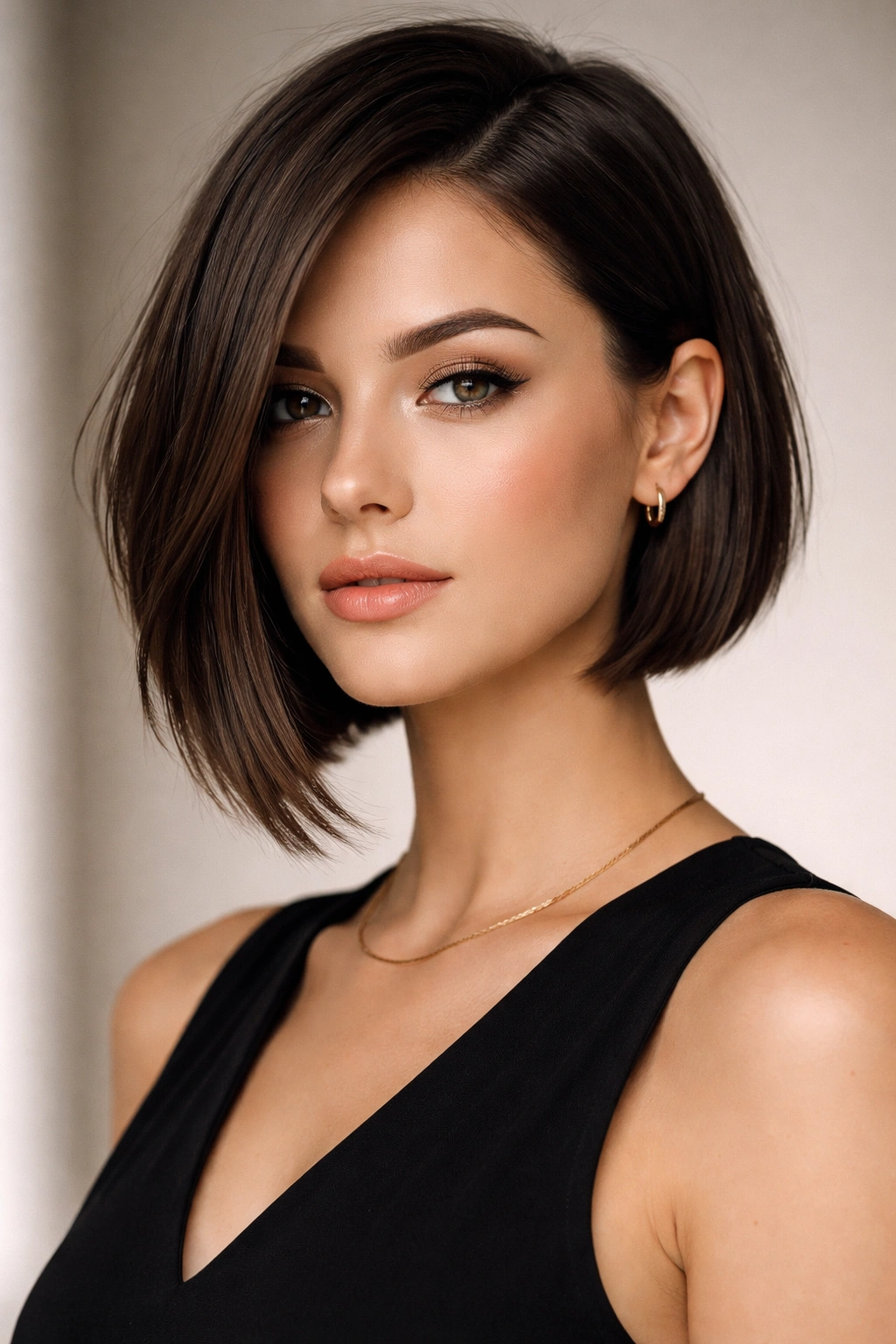
A slight imbalance can make the whole cut look sharper. That is the appeal of an asymmetrical razor bob.
One side sits a little higher. The other side drops a little lower. Not by much. You still want the overall feel to stay around chin length, but that small difference gives the haircut a cleaner line and a bit of edge. It also helps if one side of your face feels stronger than the other, because the length can be adjusted to balance things out.
This style looks especially good when one side is tucked behind the ear and the other side falls forward. The razored ends keep the longer side from looking bulky, so the shape moves instead of hanging there. If you want a bob that feels a touch less sweet and a touch more deliberate, this is it.
I think this version works best on straight or softly wavy hair. On very curly hair, the asymmetry can get lost once the curl pattern springs up. On pin-straight hair, though, the line can look almost graphic in the best way. Clean. A little bold. No extra noise.
11. Shaggy Razor Bob with Soft Layers
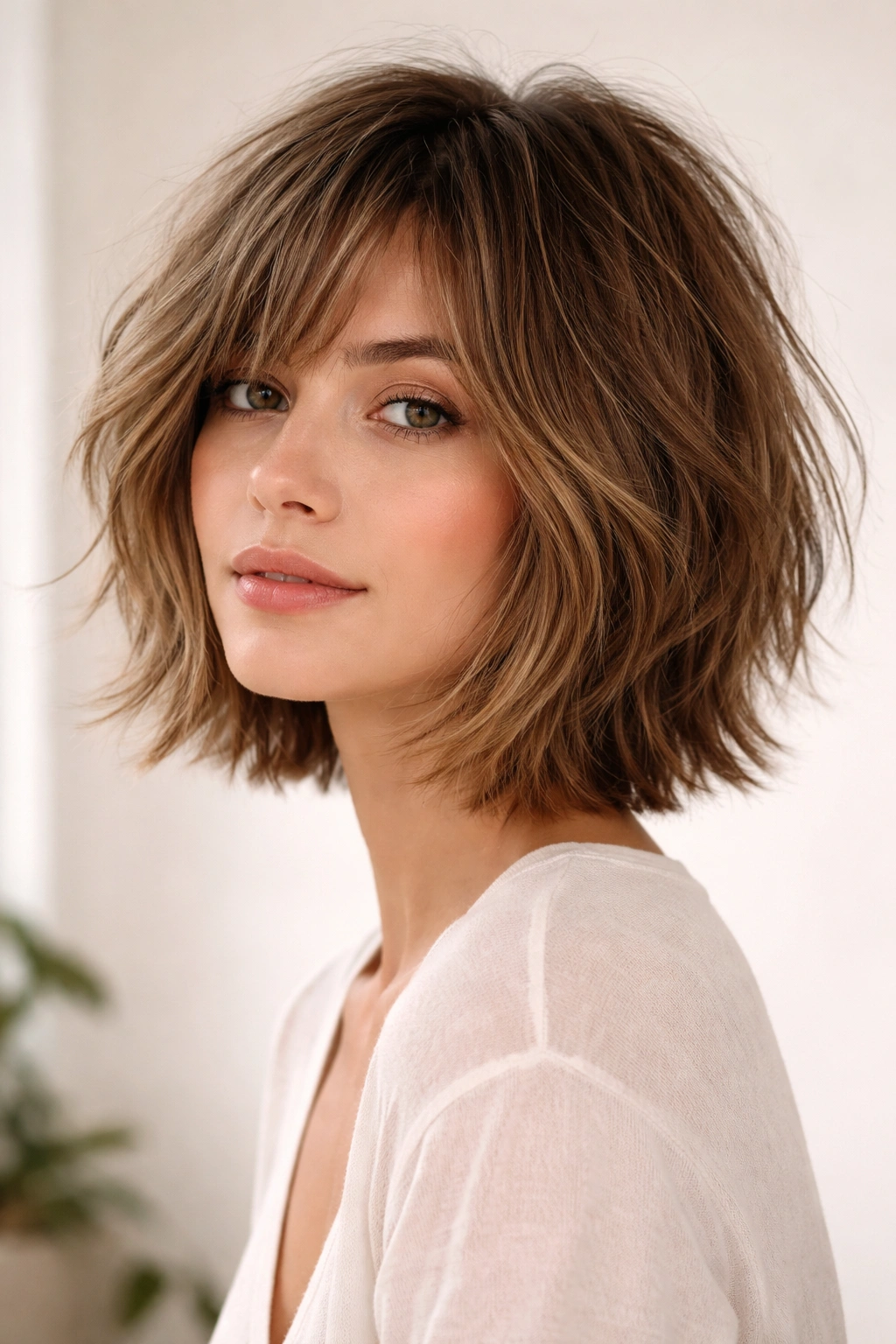
A shaggy razor bob is for people who want a bob, but not a precious one. It has more attitude, more texture, and a little less polish than the center-part or blunt versions.
The shape usually starts with a chin-length base, then soft layers are carved through the interior to break up the mass. The razor is what gives the ends that piecey, slightly lived-in edge. If you want the haircut to move when you walk, this is the one. If you want a hair-helmet, it is not.
How It Differs from a Classic Shag
A shag tends to be heavier on the crown and more layered through the top. A shaggy bob keeps the bob shape first, then adds ragged texture second. That difference sounds small, but it changes the whole haircut. The result is less mullet, more bob with bite.
What to Do on Styling Days
- Mist damp hair with a light texture spray.
- Rough dry about 80 percent of the way before touching the ends.
- Twist a few 2-inch sections around your fingers to encourage separation.
- Use a flat iron only on the front pieces if they need a bend.
There’s a reason this version has a loyal crowd. It forgives some imperfection. It can look better on day two. And if your hair is naturally a little wild, this cut makes that work for you instead of fighting it.
12. Low-Maintenance Chin-Length Razor Bob That Grows Out Cleanly

Not every bob needs to be styled every morning. Some need to hold their shape, stay neat enough for real life, and grow out without turning into a triangle.
That is where the low-maintenance chin-length razor bob comes in. The length usually sits just at or a hair below the chin, with soft internal layers and a gently razored perimeter so the ends do not swell out as they grow. It is the kind of cut that still looks like a bob after several weeks, which saves you from feeling like you need a trim the second it starts moving.
This version suits people who want shape without babysitting their hair. A little leave-in cream, a quick brush-through, and maybe a minute with a round brush around the face is usually enough. If your schedule is packed, or you simply do not want a haircut that demands a ritual, this is the one to ask about.
A good chin-length razor bob should make the morning easier, not louder. If it does that, it has done its job.
