



A razor cut bob is not the haircut for someone who wants the ends to sit politely.
The blade takes weight out in a softer, more broken line than scissors usually do, which is why the shape bends and flicks instead of lying in a flat shelf. On thick hair, that can mean relief the second the hair dries. On wavy hair, it can mean movement that looks natural rather than styled within an inch of its life.
The catch is control. A razor bob done with too much pressure can thin the perimeter until the ends look wispy, and that is a bad trade when you wanted texture, not gaps. Fine hair needs a lighter hand than dense hair, and curly hair needs a stylist who knows when to stop. Hair type matters here more than on a blunt bob, and it matters fast.
The good versions have shape, not fuss. Some sit at the jaw and swing. Some carry soft fringe. Some keep the line strong at the back and soften only the front inch, which is the sort of detail that makes the cut look polished without turning stiff.
The 15 styles below are the bob cuts I would put on a reference board without second-guessing them: airy, choppy, soft, asymmetrical, curly, and a few that look even better after you sleep on them. Start with the shape that matches your texture, not the one that looks best in a single frame. That’s where the good ones live.
1. The Airy Chin-Length Razor Cut Bob
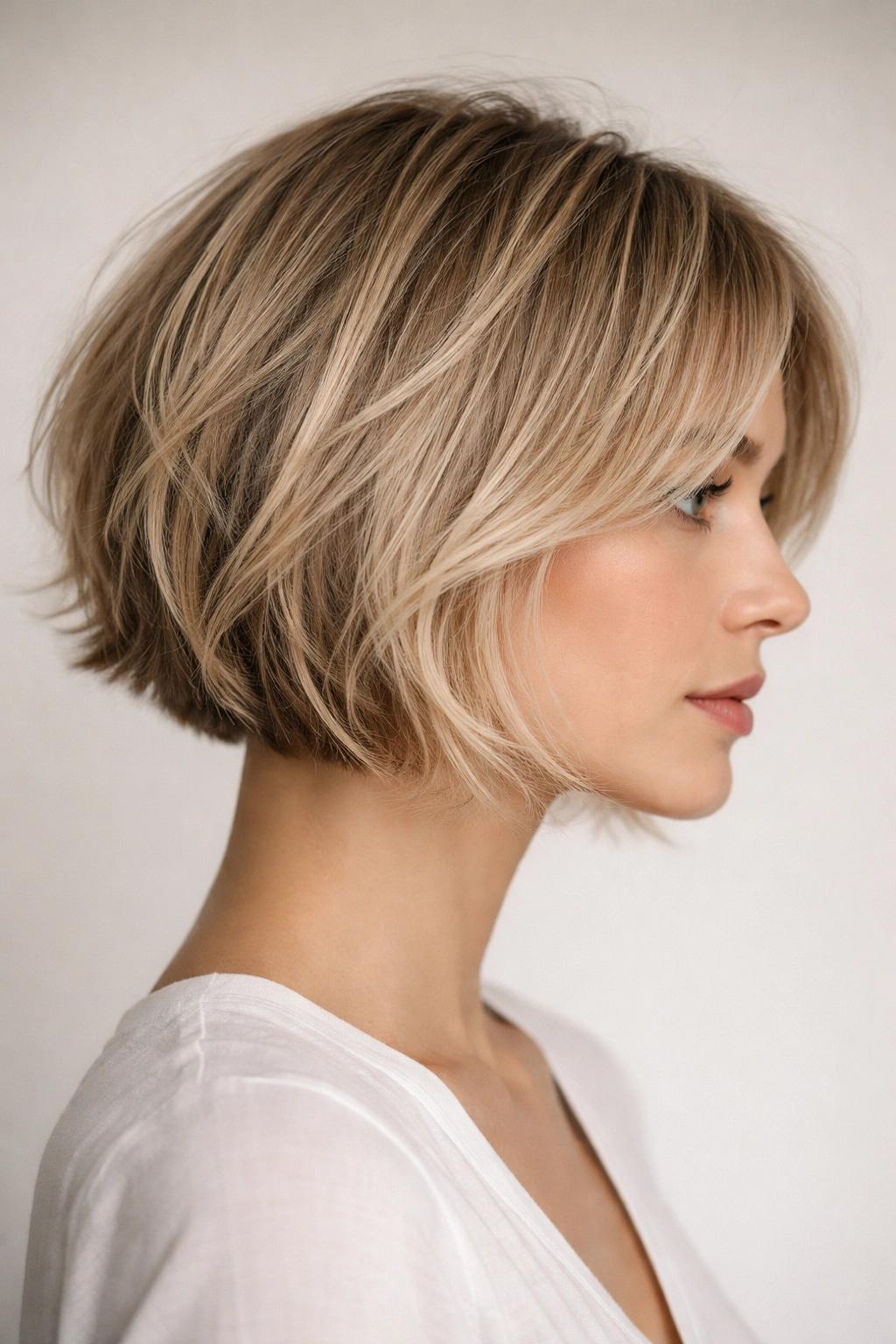
Chin length is where a razor cut wakes up fast.
The line sits right on the jaw, so every little bit of texture shows. A blunt chin-length bob can look boxy if your hair has any natural puff, but a razor-softened edge takes that heavy shelf away and leaves a shape that moves when you turn your head. It still has structure. It just doesn’t feel carved out of one block.
If your hair is dense, ask for the last half-inch to inch at the perimeter to be softened, not the whole interior chewed up. If your hair is fine, the perimeter needs to stay full or the ends can turn see-through after one blow-dry. That balance matters more than people think.
Why It Flatters So Many Faces
The chin is a useful stopping point because it opens the neck and keeps the hair from swallowing the lower face. Round faces get a little length. Square jaws get a softer edge. Heart-shaped faces get lift near the mouth instead of weight at the temples.
- Ask for the front to sit a touch longer than the nape.
- Dry with a 1.5-inch round brush if you want a smooth bend.
- Use a pea-sized cream from mid-length to ends.
- Keep oil away from the roots unless your hair is dry and coarse.
Best move: let the ends flick under on one side and out on the other. That tiny imbalance keeps the cut from feeling stiff.
2. The French Girl Razor Bob with Soft Fringe
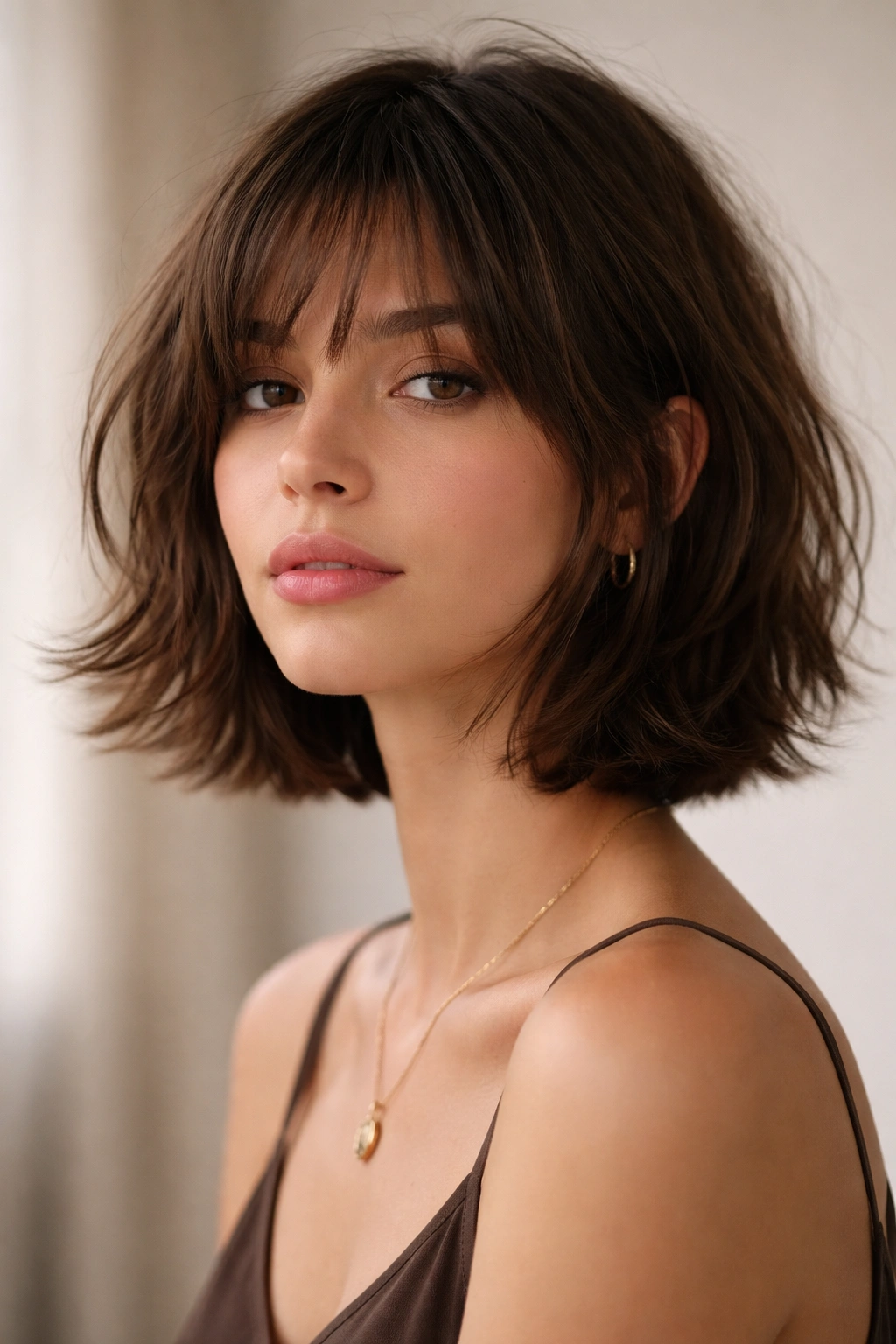
A soft fringe changes the whole mood.
This version lands in that sweet spot between casual and intentional. The fringe skims the brows, or maybe splits a little and falls into the cheekbones, and the bob itself sits around the jaw with feathered ends. Nothing looks pinned down. Nothing looks fussy. That looseness is the point.
The mistake people make is asking for a fringe that is too blunt. A hard, heavy bang can fight the texture of a razor bob and make the cut feel weighty in front. Softness around the fringe keeps the whole shape open, which is why this version works so well on straight, slightly wavy, and medium-density hair.
You want the bangs to have movement when they air dry. If they need a round brush, fine. But if they only look good after a twelve-step styling session, that’s a sign the cut is working too hard.
A little off-center part helps here. It stops the fringe from sitting like a curtain across the whole forehead and gives the haircut that lived-in, slightly messy shape people love on Parisian-inspired bobs. The trick is restraint. Leave enough length that you can tuck the fringe back on a bad hair day, because bad hair days happen.
3. The Asymmetrical Razor Cut Bob
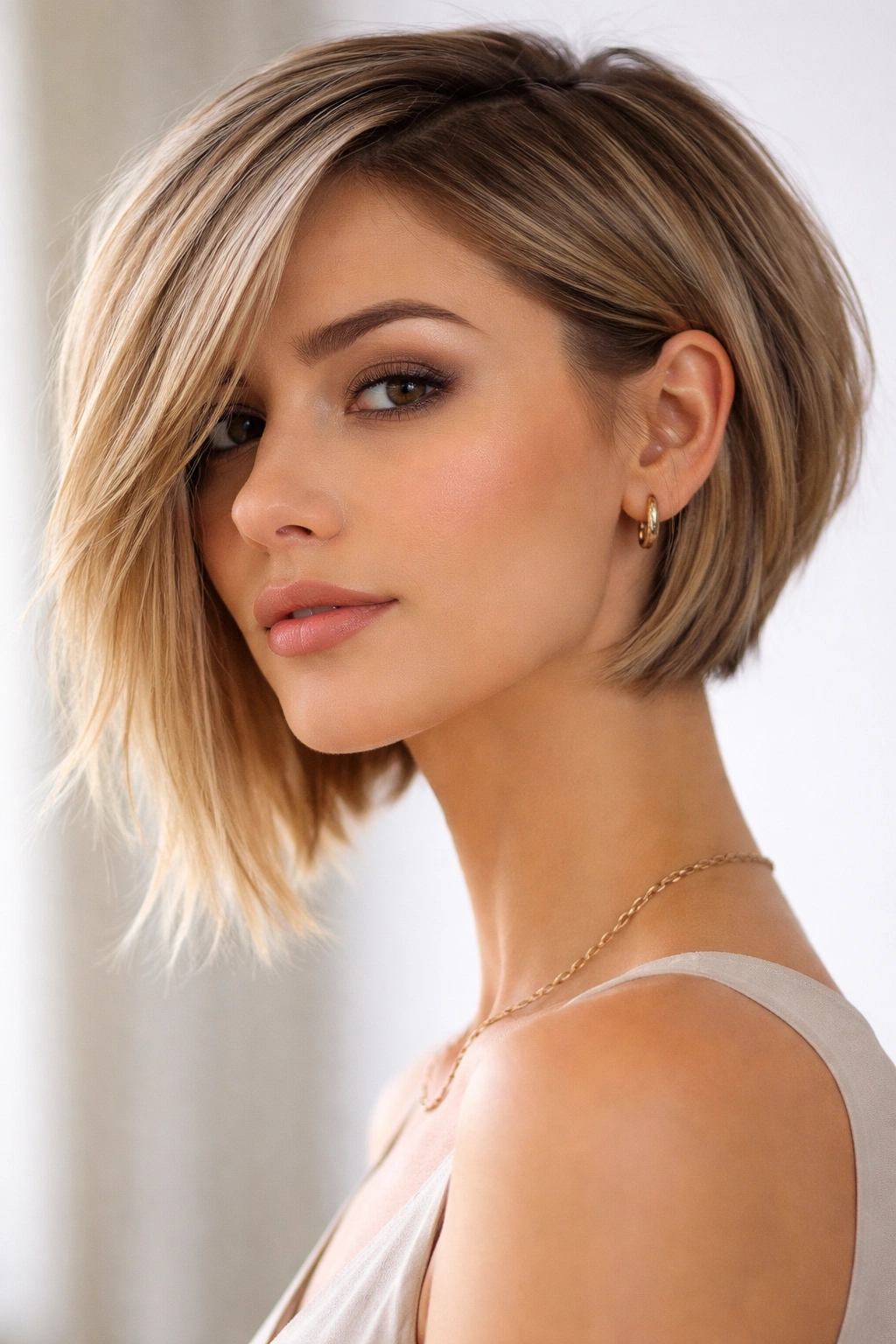
Why does a small imbalance make a bob feel sharper?
Because the eye notices movement before it notices rules. A bob that is a touch longer on one side feels deliberate without turning costume-y, and a razor finish keeps that longer side from looking blocky. If you like clean lines but not severe ones, this is a strong middle ground.
The longest point usually sits somewhere between the jaw and the top of the neck. Nothing needs to drag past the collarbone. The shorter side can tuck behind the ear for a neat line, while the longer side swings forward and softens the cheek. That contrast is what makes the cut interesting.
What Makes the Length Shift Work
- Keep the shorter side crisp at the nape.
- Let the longer side sit about 1/2 inch to 1 inch lower.
- Ask for the front to angle toward the chin, not straight down.
- Finish with a bend at the ends instead of a full curl.
The cut suits people who wear one side tucked often, because the asymmetry becomes part of the style instead of something you have to keep fixing. It also helps if your hair tends to fall flat on one side. Let that tendency work for you instead of fighting it.
4. The Wavy Razor Bob with Face-Framing Pieces
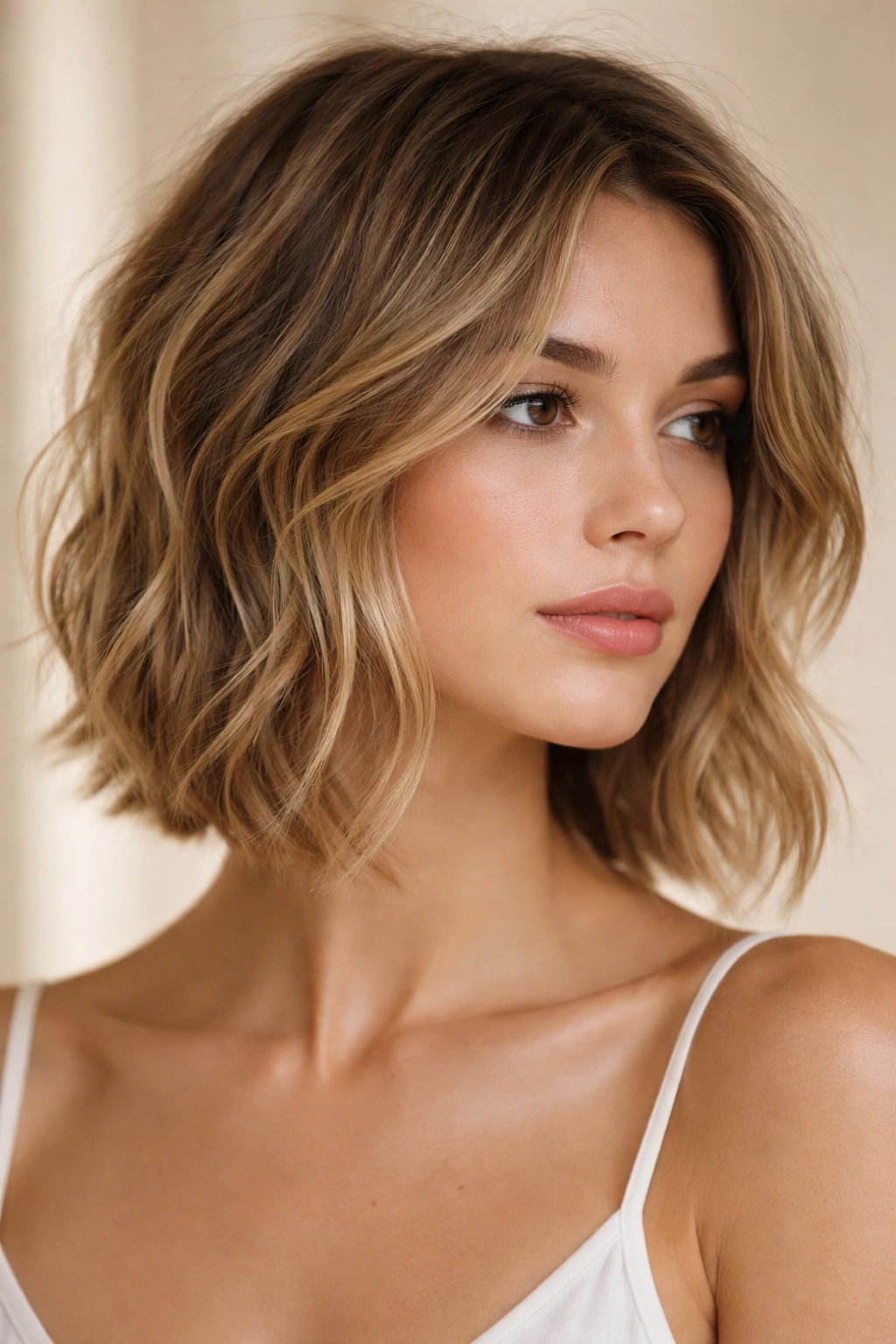
You step out of the shower, scrunch in mousse, and the haircut does most of the work.
That is the dream with a wavy razor bob. The shape should fall into a loose S-curve, with face-framing pieces that hit around the cheekbone or lip line and a softer body through the rest of the cut. The texture comes from the hair itself, but the razor gives the edges enough looseness to keep the wave from looking bulky.
The front matters a lot here. If the face-framing pieces are too short, the wave can jump outward in a weird little triangle. If they are too long, the texture disappears into the rest of the bob. The sweet spot is usually somewhere between the cheekbone and the chin, depending on how much bounce your hair has.
The Pieces That Matter
- Shortest front pieces: around cheekbone level.
- Length at the back: grazing the nape or just above it.
- Product: a light mousse or airy cream, not a heavy curl butter.
- Drying method: diffuse on low heat or let it air dry halfway, then rough dry the roots.
This version is one of the easiest to live with because it rewards imperfect styling. Sleeping on it can make the texture better. So can a little salt spray, a finger comb, and not caring too much about every strand behaving.
5. The Textured Micro Bob
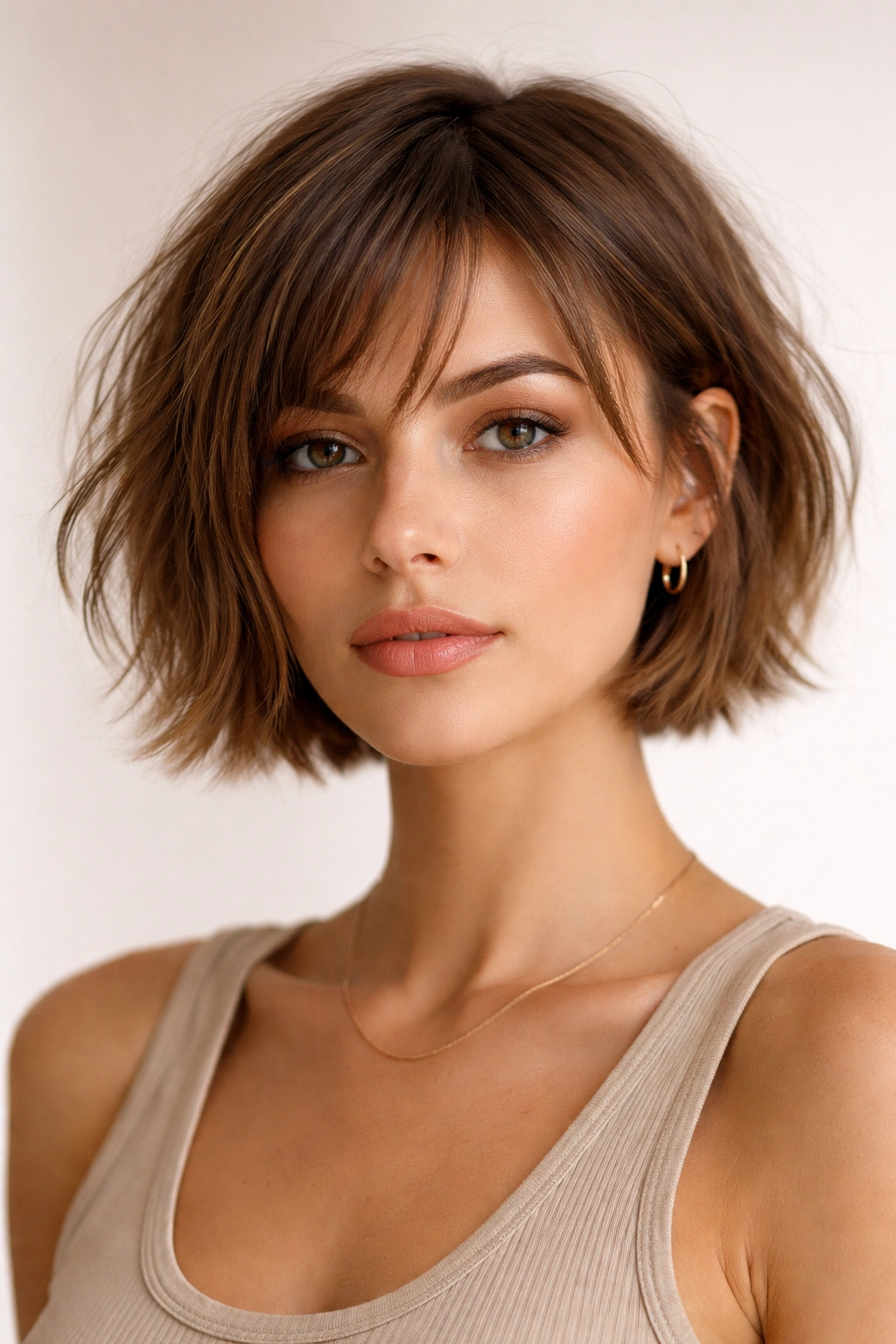
Short hair can have more attitude than longer hair when the ends are handled right.
The micro bob sits above the jawline, often grazing the cheekbones or landing near the ear. It can look sharp and clean, but a razor finish keeps it from reading severe. That softness matters because a short bob has no length to hide behind. Every line shows.
This cut is good when you want a strong shape with a little air around it. It is also honest. A micro bob will show where your part lives, where your cowlick pushes, and whether your neckline needs a tidy trim. That can be a good thing. It means the cut works with your face instead of covering it up.
If your hair is straight or only slightly wavy, the micro bob can look fuller than you expect because the ends are not cut into a blunt block. Thick hair benefits too, as long as the stylist respects density and does not thin the whole head to pieces. Fine hair needs a lighter touch and a perimeter that stays solid.
A tiny bit of paste on the ends can turn this cut from neat to piecey in ten seconds. That is often enough.
6. The Shag-Inspired Razor Bob
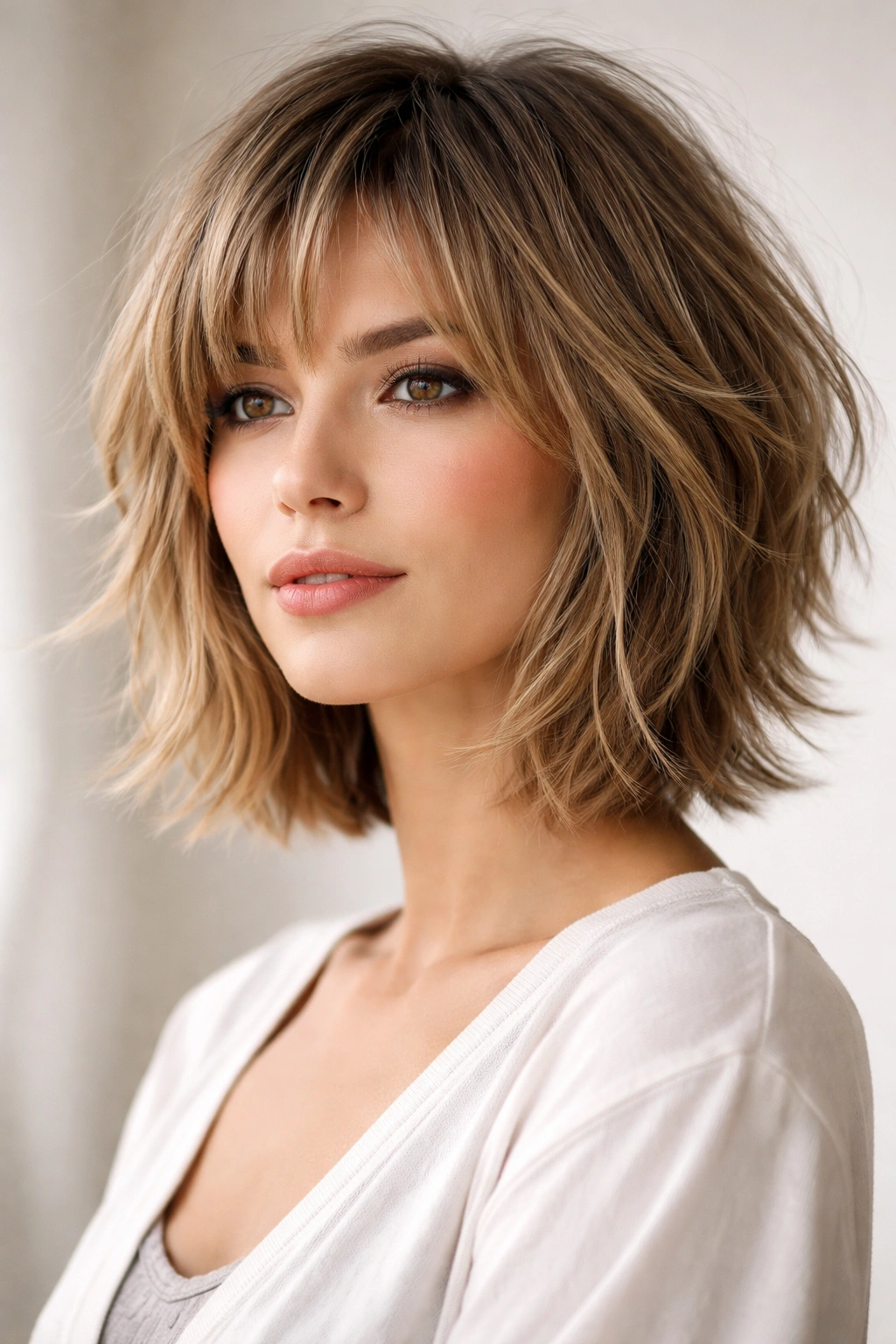
Unlike a classic one-length bob, this version borrows the shag’s movement and leaves the hemline softer.
The crown carries a little lift. The sides have feathered pieces. The back stays bob-like, but the whole shape feels looser and more broken up. That combination works well if your hair gets flat at the roots and puffy at the ends, because the shag influence takes some weight away from the right places without making the cut collapse.
This is a good choice for people who want texture without going all the way into a full shag. That distinction matters. A full shag can feel wild if you are used to cleaner lines. A shag-inspired bob keeps the perimeter close to the jaw or neck, so the shape still reads as a bob first.
The ends should not look shredded. They should look lightly feathered, with enough density to hold a shape in humid air or after a long day. That is why a careful razor hand matters. The haircut wants softness, not hunger.
If your styling routine is low-key, this is one of the easier textured bobs to wear because it looks better a little imperfect. A soft wave, a finger-dried crown, and a touch of cream in the ends are often enough.
7. The Curly Razor Cut Bob
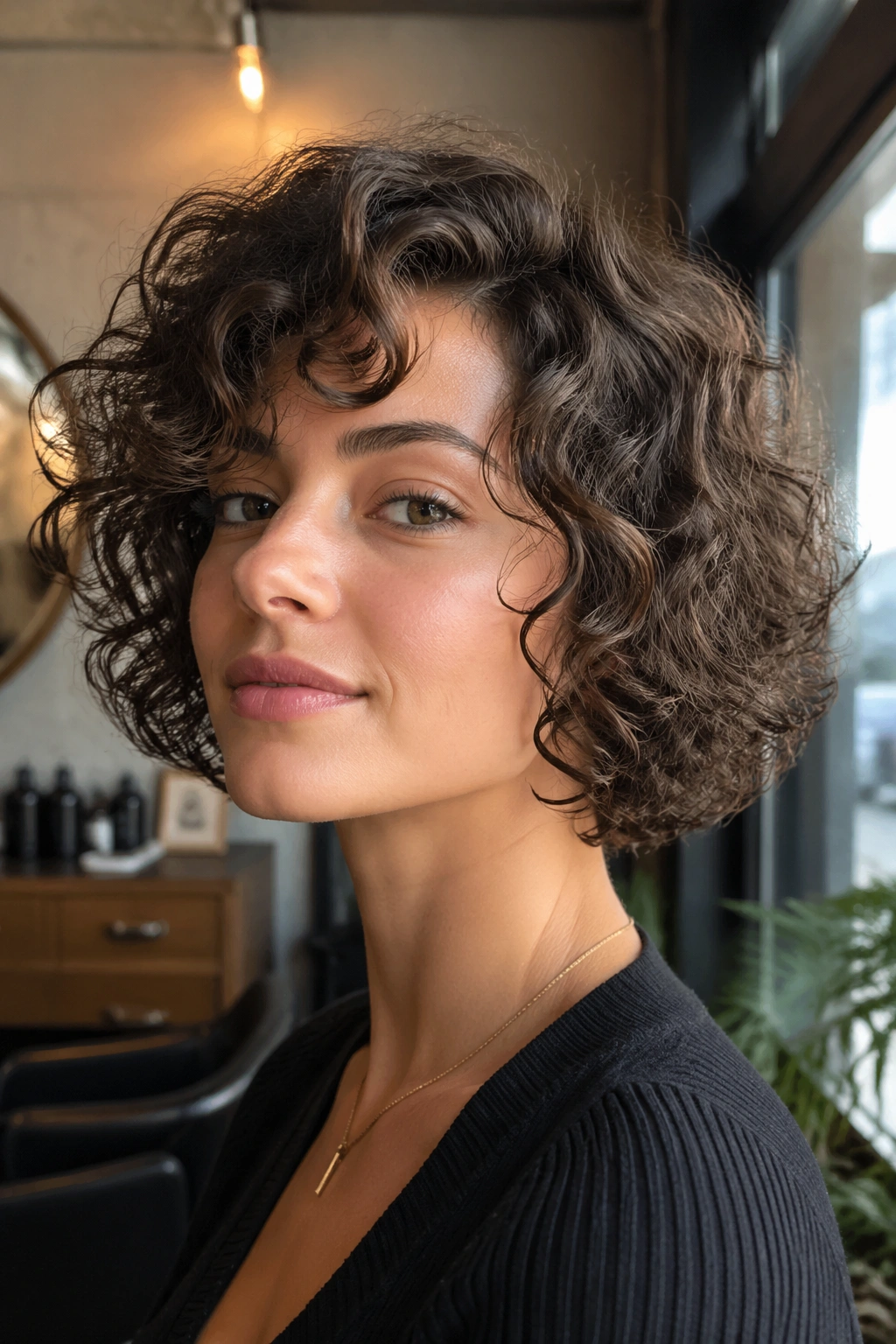
Can a razor be safe on curls? Yes—when the cut is done dry and the curl pattern gets the final say.
Curly hair is not a place for guesswork. A good curly razor bob respects spring, shrinkage, and the way curls stack on top of one another once they dry. If the stylist cuts the hair wet and too aggressively, the shape can bounce up into a triangle or lose its outline completely. Nobody wants that.
The best curly razor bob keeps the perimeter visible while softening bulk in the right places. That usually means removing weight from the interior or the lower sides, not slicing through every section like it is straight hair. The curl needs enough density to hold its shape.
What to Ask for in the Chair
- A dry cut or mostly dry cut.
- Soft weight removal underneath, not random thinning at the surface.
- A perimeter that follows the curl pattern and stops where the hair naturally springs.
- A final check while the hair is in its natural state.
This cut can be lovely at chin length or a touch longer, depending on shrinkage. If your curls are tight, longer can be safer. If they are loose and springy, a shorter bob can show off the shape without becoming a puffball. The right choice comes down to density and how your curls stack when they dry.
8. The Razor Cut Bob with Curtain Bangs

If you like to push hair off your face with one hand and still look pulled together, curtain bangs are the easy win.
The bang splits in the middle and falls to either side of the face, usually grazing the cheekbones or the jaw. That opening in the front keeps a razor cut bob from feeling heavy, especially if the rest of the haircut has a soft, textured edge. It is one of those styles that can look polished without becoming formal.
The bangs should not be too short. A curtain fringe that starts too high on the forehead can feel choppy in a bad way, and it loses the graceful fall that makes the shape work. Keep enough length that the pieces can sweep back or forward depending on how you dry them.
A round brush helps here, but only in the front. Pull each side of the fringe away from the face, then let the ends curve back in toward the cheekbones. The rest of the bob can air dry with a little cream or mousse. That contrast between a styled front and a looser body makes the haircut feel intentional.
This is a friendly shape for people who want movement near the face without committing to a full fringe. It also grows out in a more forgiving way than a blunt bang, which is worth a lot.
9. The Sleek-but-Undone Razor Bob
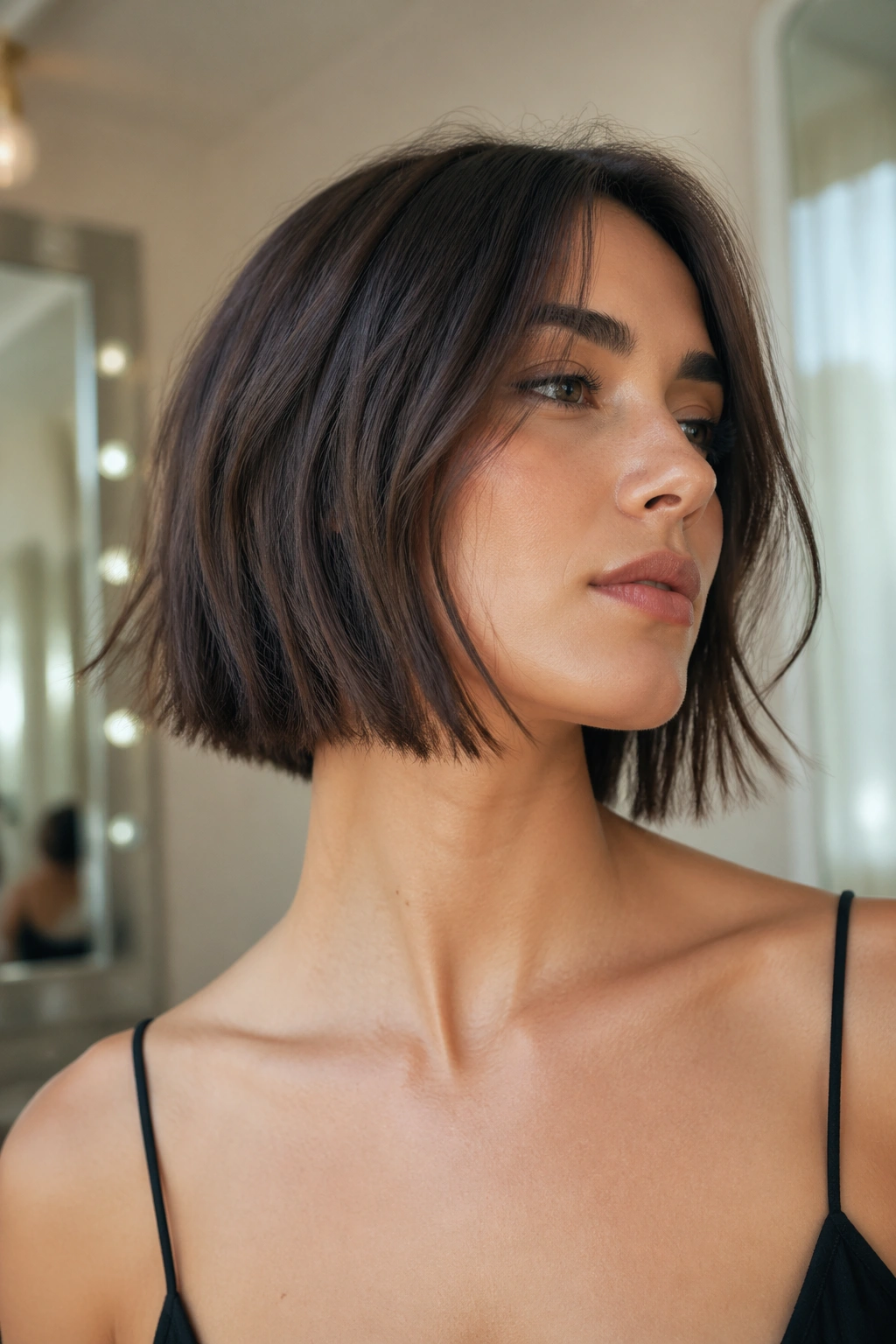
Smooth does not have to mean flat.
A sleek-but-undone razor bob keeps a clean outline, but the ends have a little bend and the interior has enough texture to stop the hair from sitting like a helmet. It is the version I like for people who want the haircut to look neat on the way to dinner and still hold up after a long day. That is harder to do than it sounds.
The styling lives in the last inch or two of the hair. Blow-dry the roots smooth, keep the mid-lengths tidy, and then add a soft bend through the ends with a flat iron or round brush. You are not chasing curls here. You are chasing movement. That difference matters.
A light serum on the surface and a touch of spray wax on the ends can help if your hair frizzes at the perimeter. Keep the product away from the roots or the whole thing goes limp. A razor cut already removes weight, so piling on heavy product only erases the point.
This shape suits medium and fine hair especially well because it gives the illusion of fullness without forcing the hair into a hard shape. It is restrained, but not boring.
10. The Jaw-Length Razor Bob with Invisible Layers
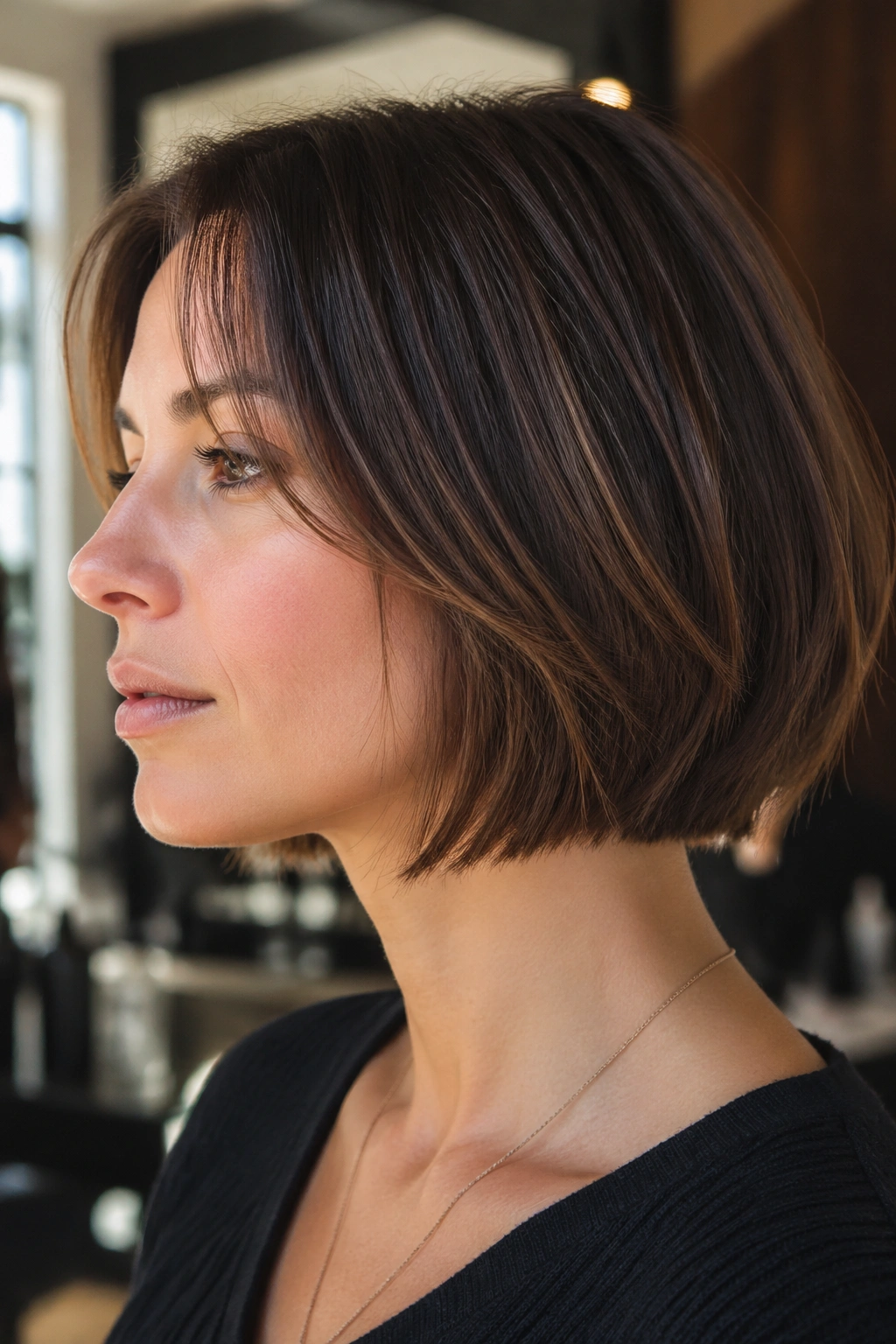
A jaw-length bob with hidden layers can look almost plain when it’s wet and wake up once it dries.
That is the beauty of invisible layering. The outside line stays clean enough to read as a bob, while the inside carries a little movement so the haircut does not sit like a cap. On paper, it sounds subtle. In real life, it is one of the most wearable ways to wear texture without making the cut look choppy from across the room.
This version is especially good if you like work-friendly hair that still has some bend. The perimeter can stay strong at the jaw, which keeps the style neat, and the internal texture gives the ends enough lift that the bob does not collapse after a few hours. If your hair gets heavy fast, that matters.
Why the Layers Stay Hidden
- The shortest interior pieces sit inside the shape, not on the surface.
- The perimeter line stays almost one length.
- Weight comes out from the middle and lower back, where it affects bulk.
- The finished look still reads smooth from the front.
A light blow-dry and a side part can bring the whole thing to life without turning it messy. You get texture, but it stays under the surface, which is useful when you want polish during the day and movement later.
11. The Copper Razor Bob
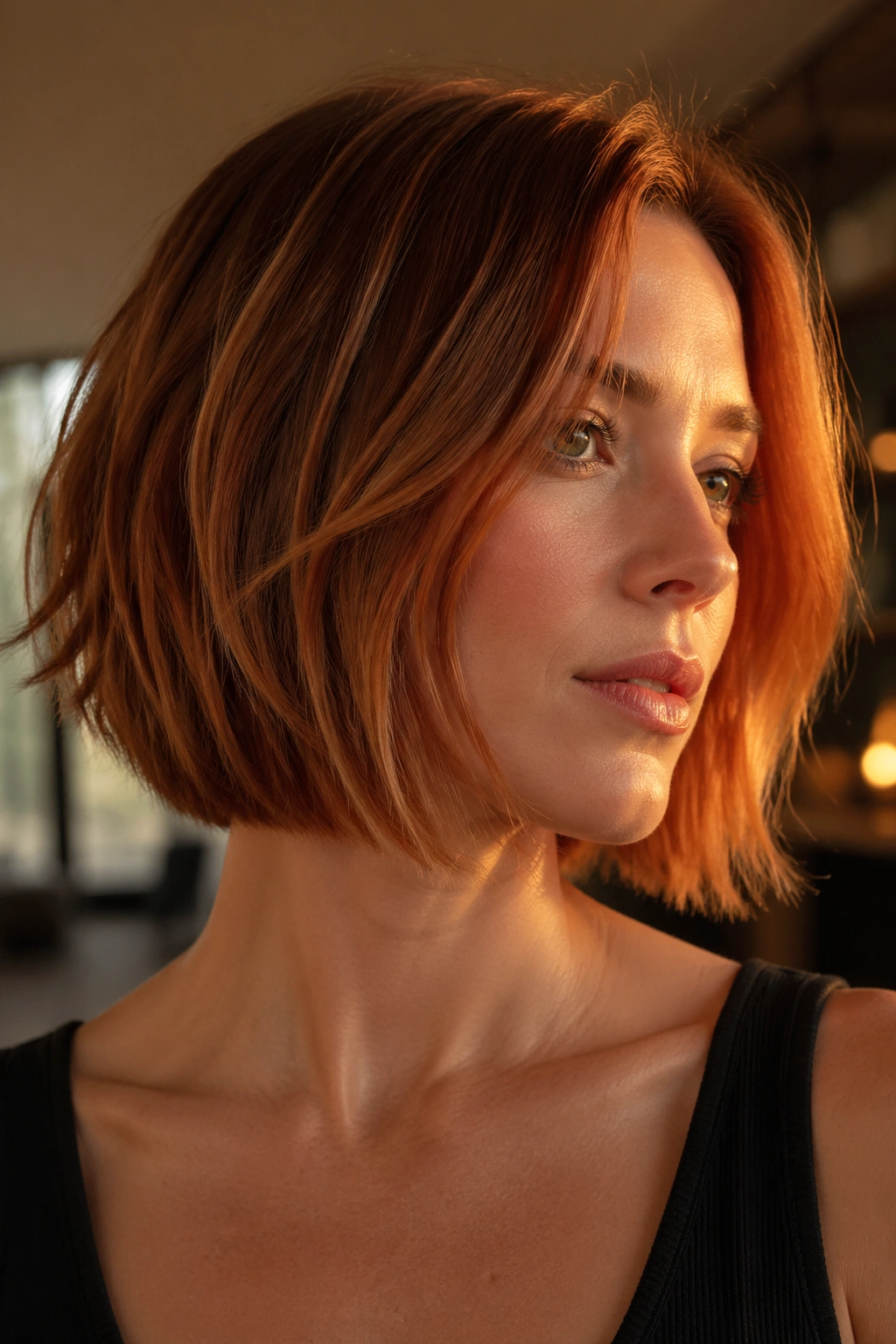
Color changes the haircut more than people expect.
Copper makes a razor bob look brighter because the sliced ends catch light differently from a blunt edge. The shape feels warmer, softer, and a little more alive. If the cut already has feathered pieces or a textured fringe, a copper tone can make those details show up faster without any extra styling.
This works especially well on bobs with movement in the front. The warm tone draws the eye to the cheekbones and jaw, while the textured ends keep the look from feeling too glossy or too neat. If the color leans vivid, the haircut can carry a lot of the personality on its own. If the tone is deeper and earthier, the cut reads richer and more grounded.
Copper does need maintenance if you want it to stay clean at the ends. A glaze or gloss keeps the shade from getting muddy, and a color-safe shampoo helps the texture look intentional rather than dry. If the hair is already processed, keep the razor work gentle so the ends do not start looking frayed.
This is one of those pairings that makes sense because the cut and the color push in the same direction: soft movement, clear shape, no stiffness.
12. The Razor Bob with Underneath Weight Removed
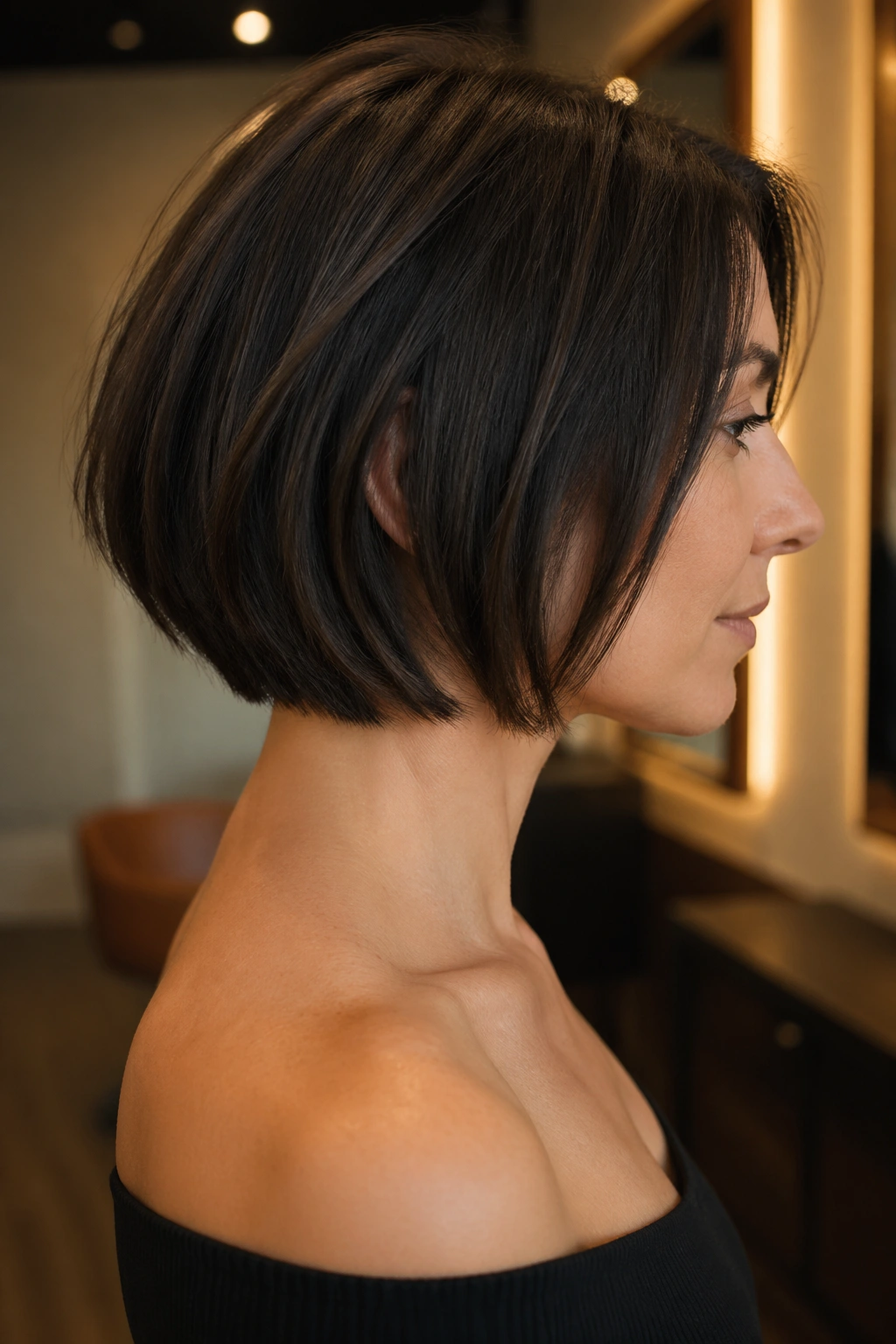
Does your bob puff out underneath and sit wide at the bottom? This is the fix.
The problem is usually bulk trapped in the interior of the haircut. A razor bob that removes weight under the surface can stop the lower half from ballooning out while keeping the outer line intact. That matters on thick or coarse hair, where the shape can go triangular fast if the wrong sections are left heavy.
The key is restraint. You do not want the ends to look thin. You want the inside to feel lighter so the hair can bend and lie closer to the head. A good stylist will work in controlled sections and keep the perimeter strong enough to support the shape. If the line is overthinned, the bob loses its edge and starts to look tired.
Where the Slimming Should Happen
- Under the crown, where bulk collects.
- Through the lower middle sections, especially on dense hair.
- Around the sides if the hair flares outward.
- Not at the outer edge unless the ends are very heavy.
This is one of the best razor cut bobs for people who wear their hair straight most days. The hair falls with less resistance, and that makes the whole style easier to manage. If you have thick hair and hate feeling like your bob grows wider by lunchtime, this version is worth a close look.
13. The Side-Part Razor Cut Bob
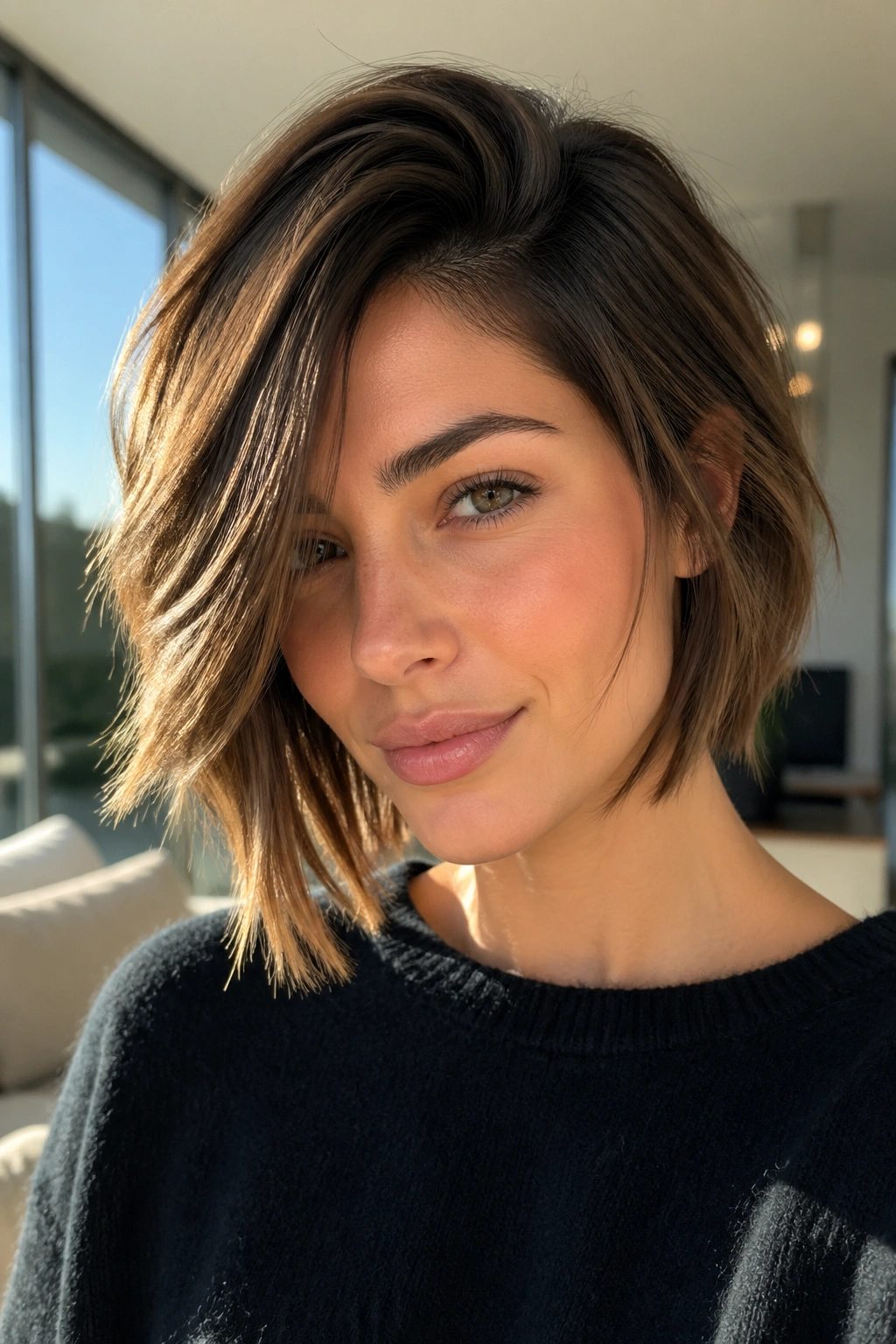
Some mornings a middle part feels too tidy.
A side part changes the whole mood of a razor cut bob in one move. It gives the crown a little lift, lets the front sweep across the forehead, and creates a softer curve through the face. If your hair tends to lie flat at the top, this is one of the simplest ways to give it shape without grabbing a dozen hot tools.
The side part also helps textured ends show up more clearly because the eye follows the line diagonally. That slight diagonal movement makes the haircut feel less static, which is exactly what a razor finish is meant to do. If one side is a touch longer or the front pieces are angled, the part can make those details stand out.
A root spray at the part, dried with the hair lifted away from the scalp, gives a bit of height without turning the top crunchy. Then the ends can stay soft and piecey. That contrast works on fine hair, medium hair, and even thick hair if the cut has enough internal relief.
I like this version when a bob needs a little energy but not a full shape change. It is an easy fix, and sometimes that is enough.
14. The Razored Bob for Thick Hair
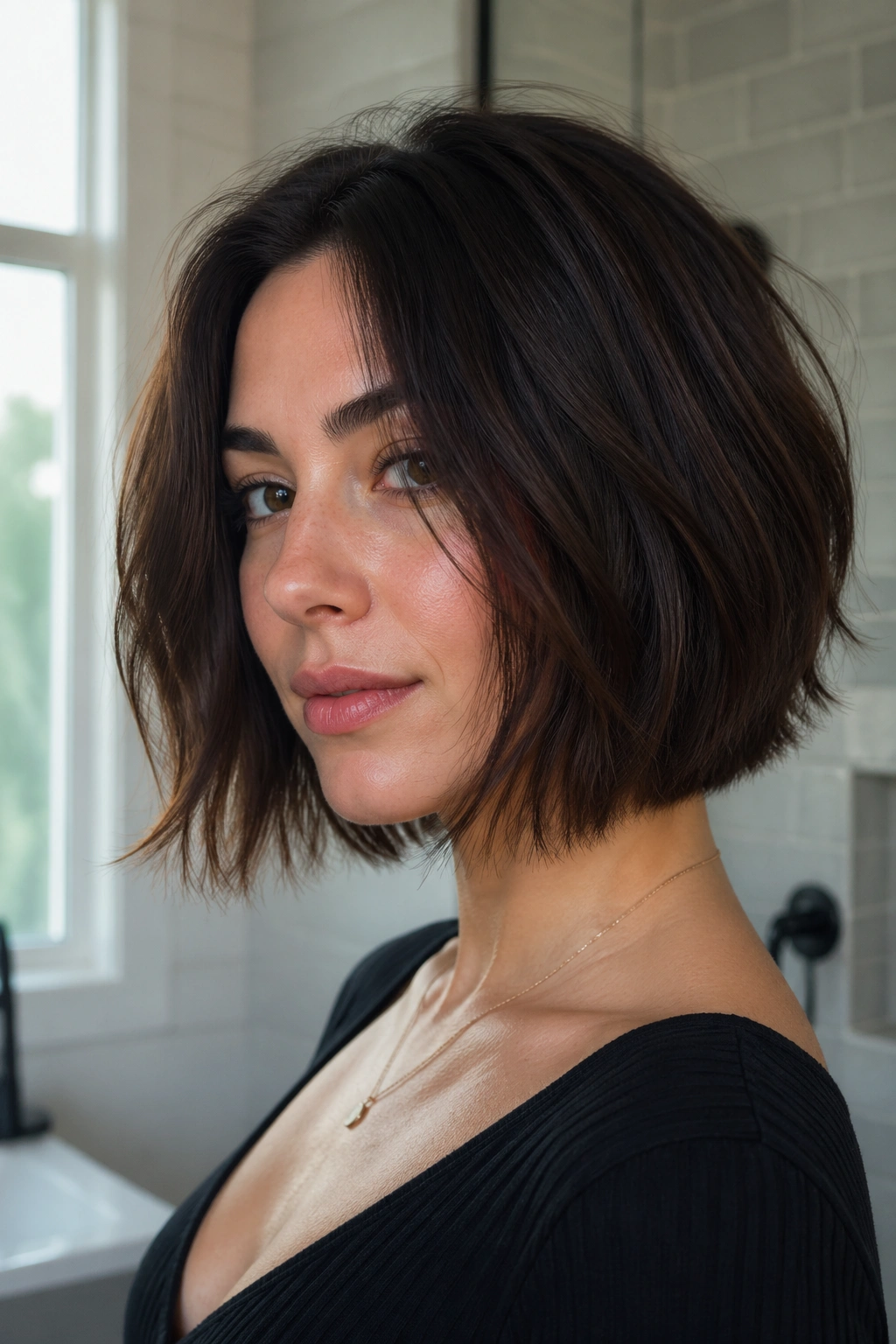
Thick hair needs a plan, not just texture.
That sounds blunt because it is. A thick bob without a smart cut can swell out at the sides, sit heavy at the bottom, or turn into a triangle the second humidity shows up. Razor work can help a lot, but only when it is placed with care. The goal is to remove weight where the hair clumps, not to shred the entire shape.
A good thick-hair razor bob keeps a strong perimeter and softens the interior in sections. It often combines scissor work and razor work, which is the part some people miss. You do not need the whole haircut done with a blade. In fact, that can be a mistake if your hair is coarse and the ends are prone to fray.
What to Ask for
- Keep the outer line strong enough to hold shape.
- Remove bulk from the inside, not all the way around the edge.
- Leave the front pieces slightly longer if your hair puffs at the jaw.
- Avoid over-texturizing the same section twice.
This style is one of the most practical razor cut bobs on the list because it solves a real problem: the haircut feeling too heavy to wear. If your hair has width, density, or a stubborn wave, the right razor work can make the bob move instead of fight you.
15. The Messy, Piecey Everyday Razor Bob
This is the version I like most on real-life hair.
It does not ask for perfect blow-drying. It does not care if you slept on one side of your head. It looks better with a little texture spray, a few finger-tousled pieces, and enough shape in the cut that the mess feels designed rather than accidental. That is a rare trait, and it is why this bob keeps showing up in real life instead of staying on mood boards.
The trick is keeping the ends separated. A tiny bit of wax or cream rubbed between the fingers can break up the perimeter without turning it sticky. If the hair has a slight bend, leave it alone. If the roots sit flat, lift them with your fingers and a blast of air, then stop. Overworking this cut ruins the charm.
It suits a lot of different hair types, but it shines on straight-to-wavy hair that wants movement without constant styling. Fine hair gets a bit more body. Thick hair gets less bulk. The result is not precious, and that is the point.
A razor cut bob should move when you turn your head. If it only looks good in a mirror with perfect lighting, it is doing too much.
