



Fine hair can look flat fast, but the right bob can flip the whole shape in one appointment. That’s the part people miss. It isn’t about piling on product or roughing up the cuticle with half a can of dry shampoo. It’s about giving the hair a stronger outline so it stops collapsing on itself by noon.
Fine hair is a texture issue, not always a density issue. You can have a full head of hair and still need more lift because each strand is slender and tends to lie close to the head. That’s why some bobs make hair look thicker and some make it look like it disappeared two weeks after the trim. The difference is usually in the weight line, the amount of layering, and where the cut ends on the face.
The good bob cuts for fine hair do one of three things: they keep the perimeter clean, they build shape in the right places, or they create movement without stripping away density. Some are blunt and tidy. Some lean soft and French. A few use stacking or an angle to fake a fuller crown. All of them are better than a cut that looks cute in the chair and then goes limp the second you turn your head.
If your last haircut felt too wispy, too long, or too polite, start with the first shape below and work your way through the list.
1. Chin-Length Blunt Bob for Fine Hair
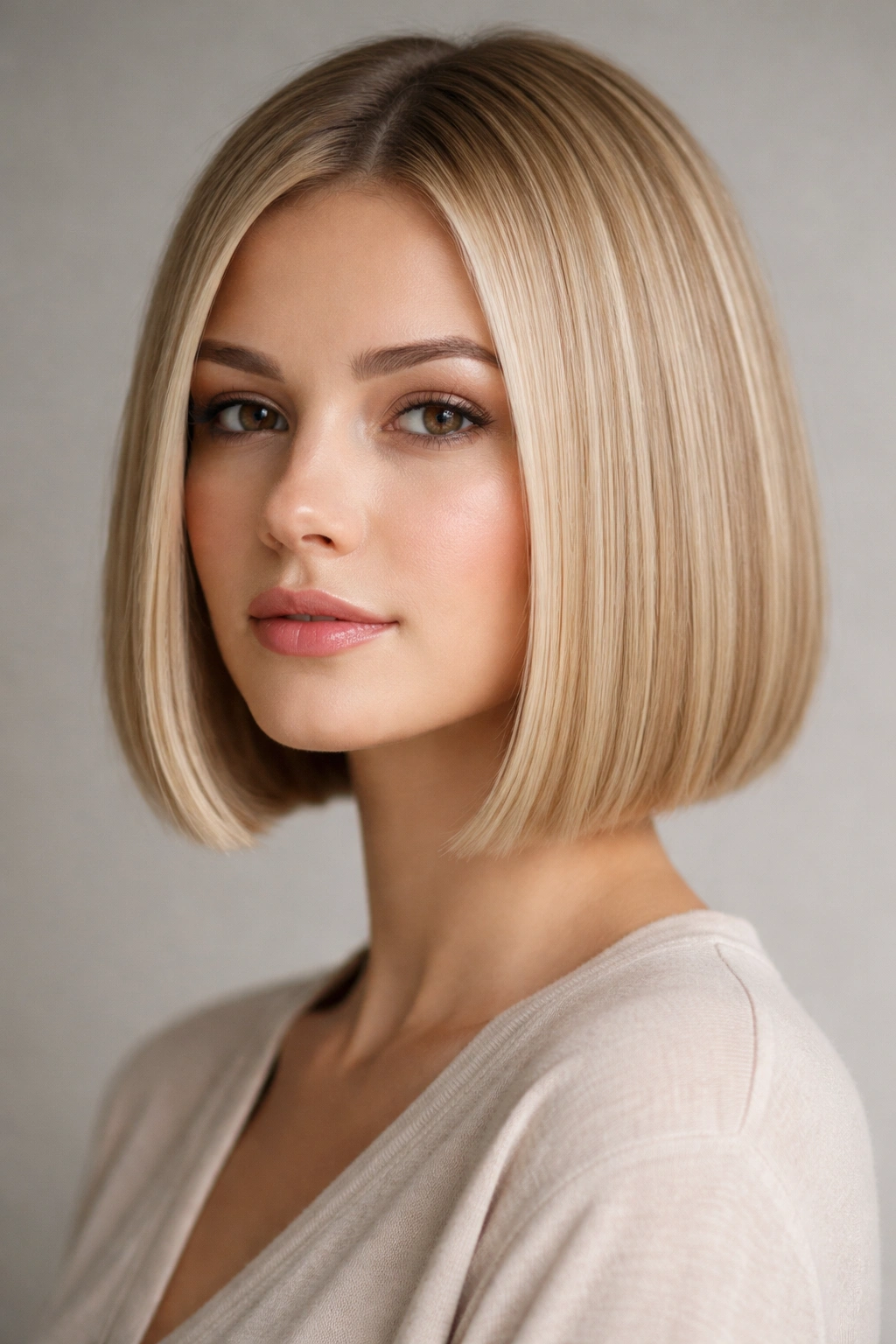
A blunt chin-length bob is the easiest way to make fine hair look denser. One clean edge gives the eye a solid line to follow, and that alone creates the impression of more hair. No fancy trick. No miracle product. Just a strong perimeter.
Why the blunt edge works
Fine strands lose their visual weight fast when the ends are chopped into too many pieces. A blunt cut keeps the bottom line full, so the hair looks heavier and more deliberate. The sweet spot is usually right at the chin or a touch below it, because that length gives the ends enough room to sit with some shape instead of floating out.
Ask your stylist to keep the edge sharp and avoid heavy point-cutting through the last inch. A little softening is fine. A lot of it is not. If the ends look feathered in the mirror before you’ve even left the salon, they’ll look thinner in a week.
- Keep the perimeter one clean length.
- Ask for minimal thinning at the bottom.
- Use a round brush or paddle brush for a smooth finish.
- Tuck one side behind the ear for a quick lift at the cheekbone.
Best for: straight to lightly wavy fine hair that wants structure without fuss.
Watch out for: a cut that lands too low on the neck. That can drag the shape down and make the ends look see-through.
2. Soft A-Line Bob
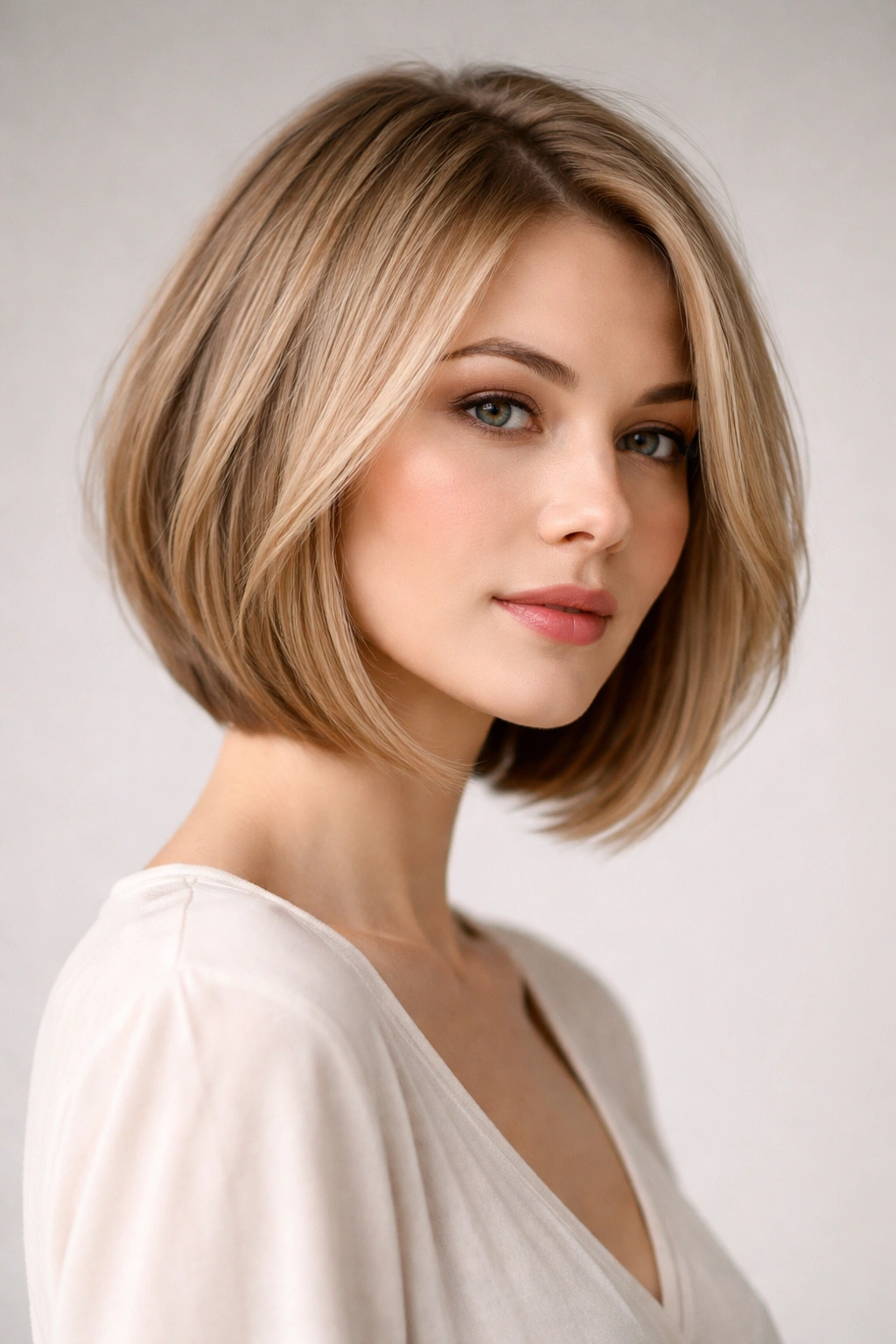
Why does a tiny angle make hair look fuller? Because the back gets a little lift while the front keeps enough length to feel intentional. That slight shift changes the whole balance of the cut.
A soft A-line bob is shorter in the back and gradually longer toward the front, but the angle should be gentle, not dramatic. On fine hair, too much angle can make the front look like it belongs to a different haircut. A small difference — say, the back a half inch to an inch shorter than the front — usually gives the best result.
The shape works especially well if your hair tends to flatten at the nape. The shorter back sits closer to the scalp and creates a bit of buoyancy, while the longer front gives your face a framing line. You get swing without losing density. That’s the real win.
It also grows out gracefully, which matters more than people admit. A precise blunt bob can look a little sad after it grows past its sweet spot. A soft A-line keeps its shape longer, especially if you wear a side part or like to tuck one side behind your ear.
3. French Bob With Micro Fringe for Fine Hair
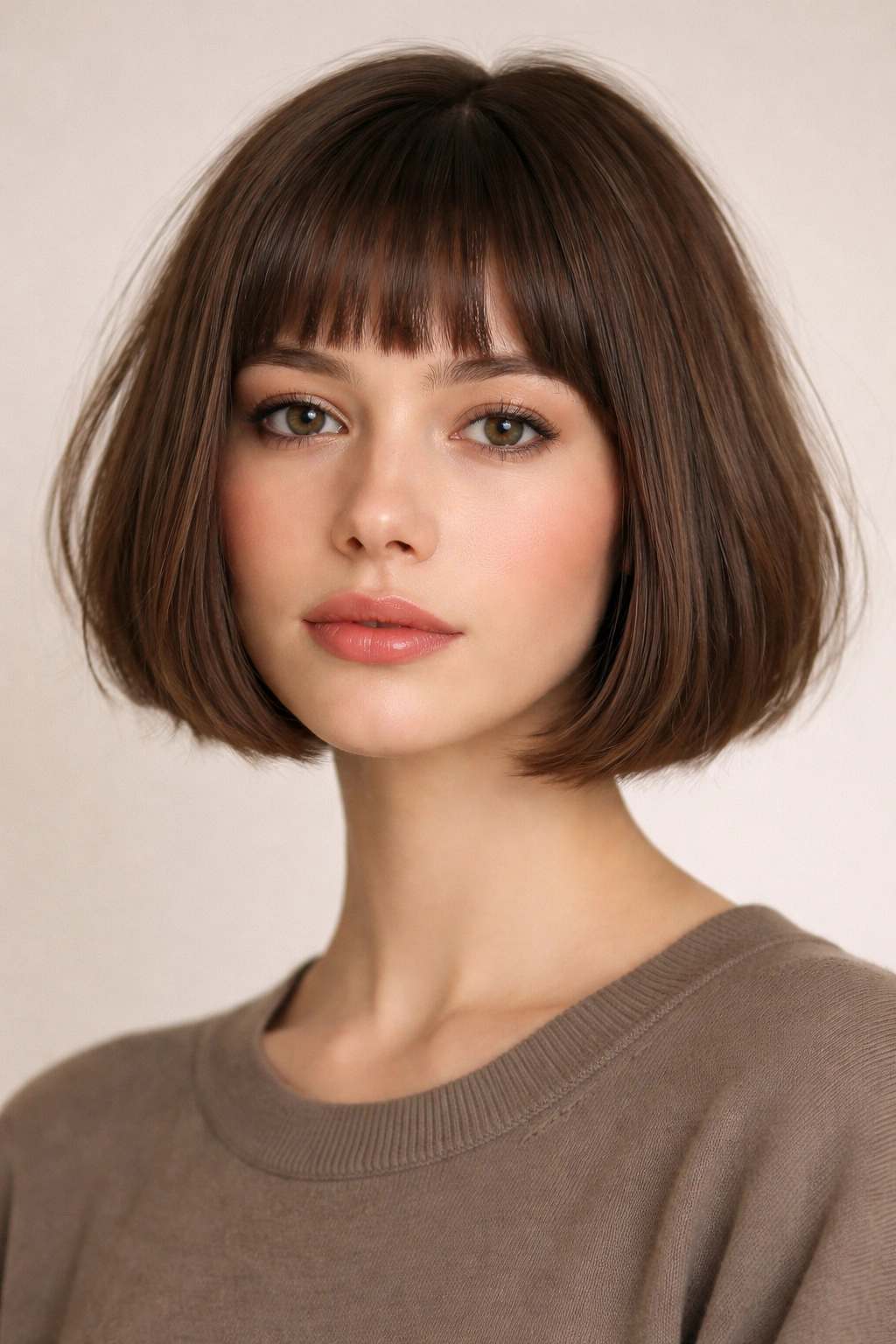
Short bangs can do more for fine hair than another round of layers ever will. That sounds dramatic, but the logic is simple: a French bob with a micro fringe pulls the eye upward and makes the whole haircut feel fuller.
How the fringe changes the shape
The fringe acts like a frame at the top of the face, which gives the bob more presence. Instead of all the visual weight sitting at the ends, the attention spreads out. On fine hair, that matters. A cut can have the right length and still look flat if everything is happening below the cheekbones.
The French bob usually lands around the jawline, with a fringe that sits just above or right at the brows. A micro fringe can be a little shorter, but I’d keep it soft if your hair is very fine. Blunt and short can look chic. Blunt, short, and too thin can look a little severe.
How to wear it
- Ask for the fringe to be cut with softness at the edges, not chopped into tiny bits.
- Keep the bob line clean around the jaw.
- Use a small round brush on the fringe so it bends instead of sticking straight out.
- Plan on regular trims if you want the shape to stay crisp.
My take: this cut is one of the best choices if you like a bit of personality and do not mind visiting the salon more often.
4. Stacked Bob With a Shorter Nape
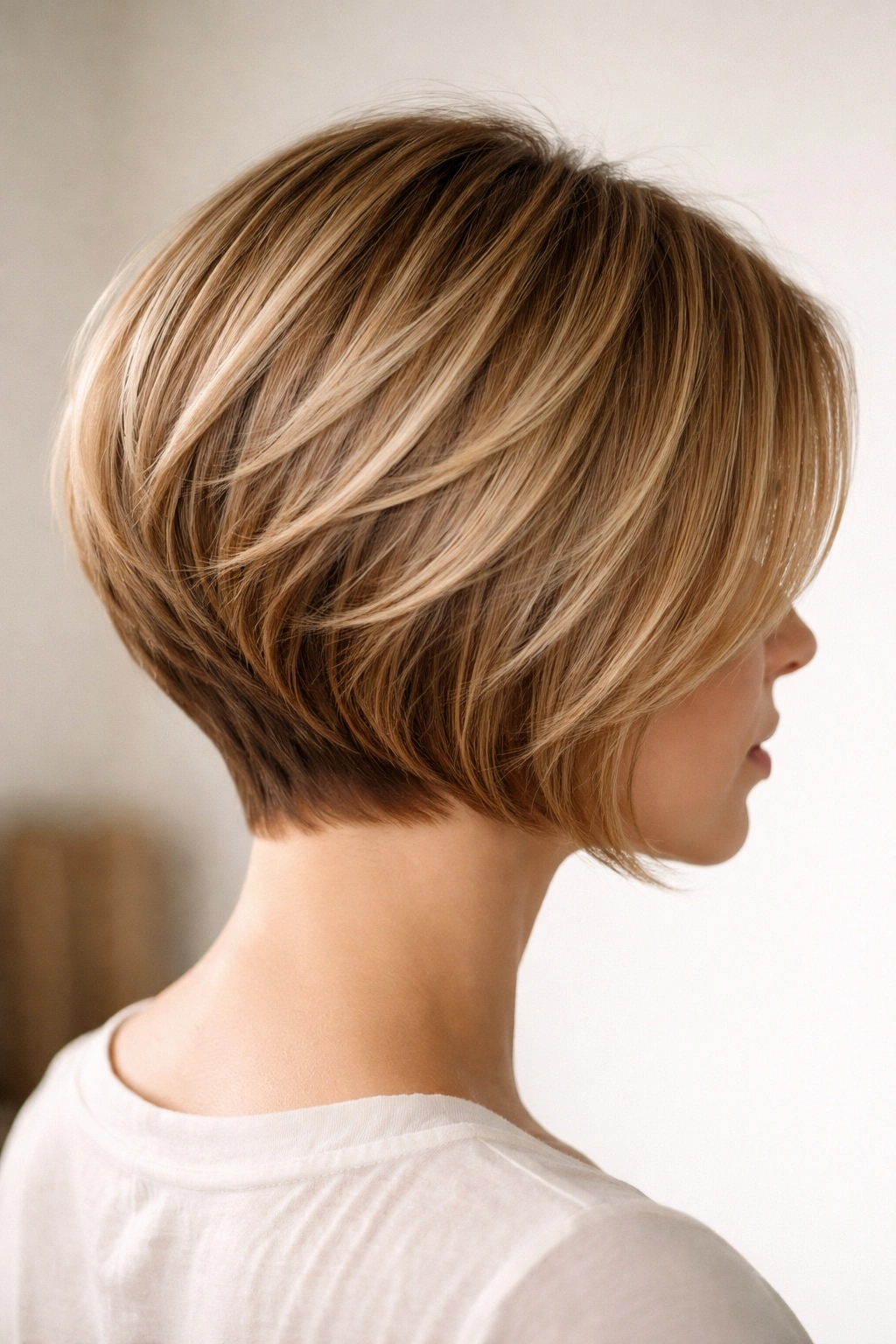
If your crown goes flat by lunch, this is the one worth paying attention to. A stacked bob creates built-in height at the back, which helps fine hair stand away from the head instead of clinging to it.
The stacking comes from graduation through the back, where the layers are cut a little shorter as they move up from the nape. On fine hair, the key is restraint. Too much stacking can show the scalp and make the cut look overworked. Too little stacking and you might as well have worn a blunt bob.
Ask for a short nape with soft graduation and a smooth blend into the top. You want shape, not a hard shelf. The ends should settle into a rounded curve, especially if your hair is straight. If your hair has a bend, the style will look even fuller when air-dried.
- Keep the back lifted, not shaved down.
- Ask for soft graduation through the crown.
- Use root spray at the nape and crown.
- Blow-dry with a round brush, directing the hair back and up.
A stacked bob suits people who like a neat finish. It does ask for trims more often, though. Let it go too long, and the whole architecture gets sleepy.
5. Collarbone Lob With Internal Layers for Fine Hair
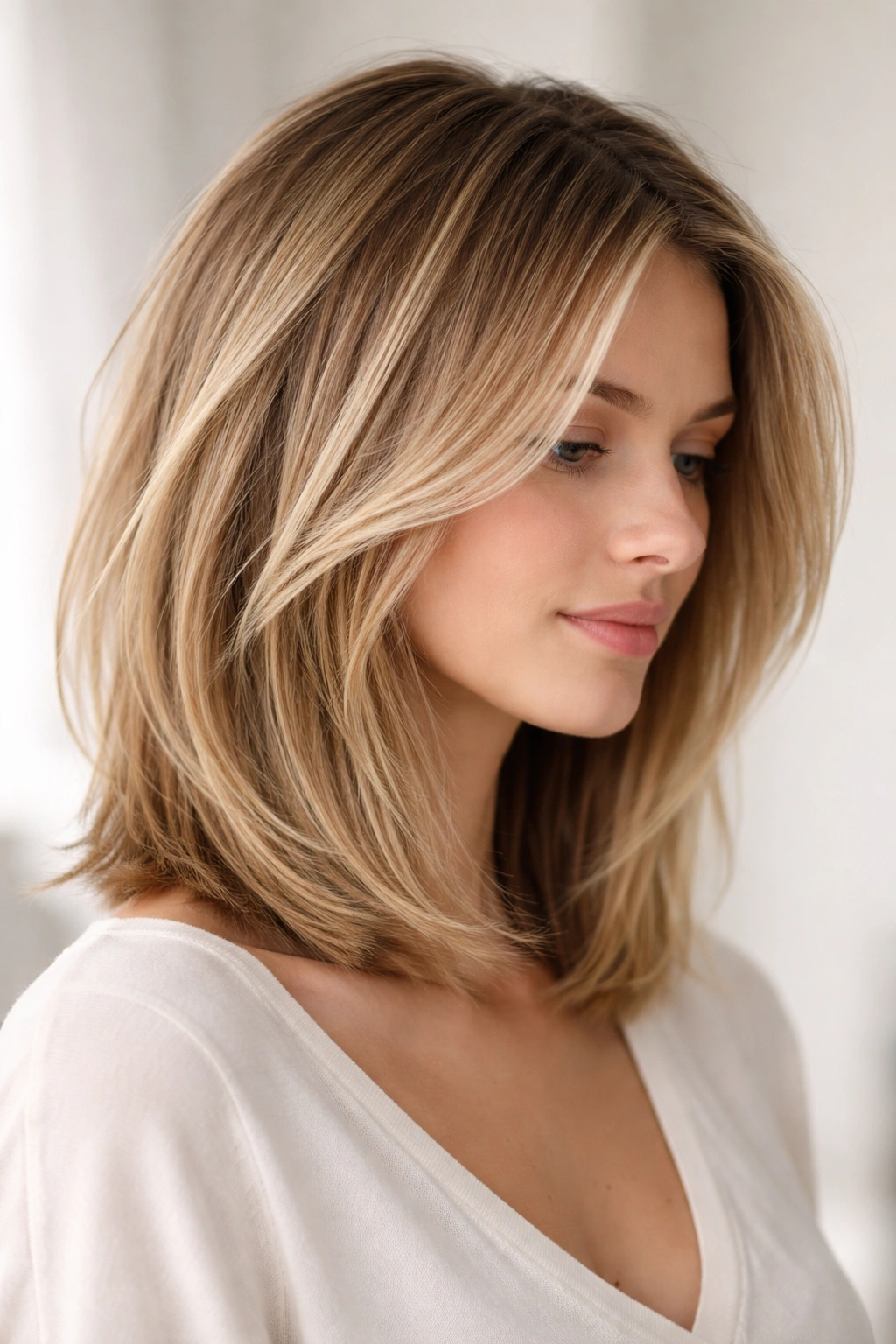
A collarbone lob is the quiet workhorse of fine haircuts. It gives you enough length to tuck it, wave it, or pin it back, but it stops before the ends turn stringy and sad.
The smartest version uses internal layers rather than obvious ones. That means the outside line can stay clean while the inside carries the movement. It’s a nice trick because the hair still looks full from the outside, but it doesn’t sit like a helmet. If your fine hair is dense, this shape can feel especially balanced. If your hair is sparse, the collarbone length helps keep the perimeter from looking too thin.
One thing people get wrong: they let the lob hit right on the shoulders. That spot is a trouble zone. Hair there tends to flip out, kick up, or bend in a weird way that eats the shape. Ask your stylist to keep it at the collarbone or just above it. That small shift matters more than it should.
This cut also works if you like changing your part. Center part, side part, loose bend, smooth finish — it can handle all of it. It’s not the flashiest option on the list, but I’d call it one of the most forgiving.
A good collarbone lob looks calm. It feels fuller. That combination is hard to beat.
6. Side-Parted Asymmetrical Bob
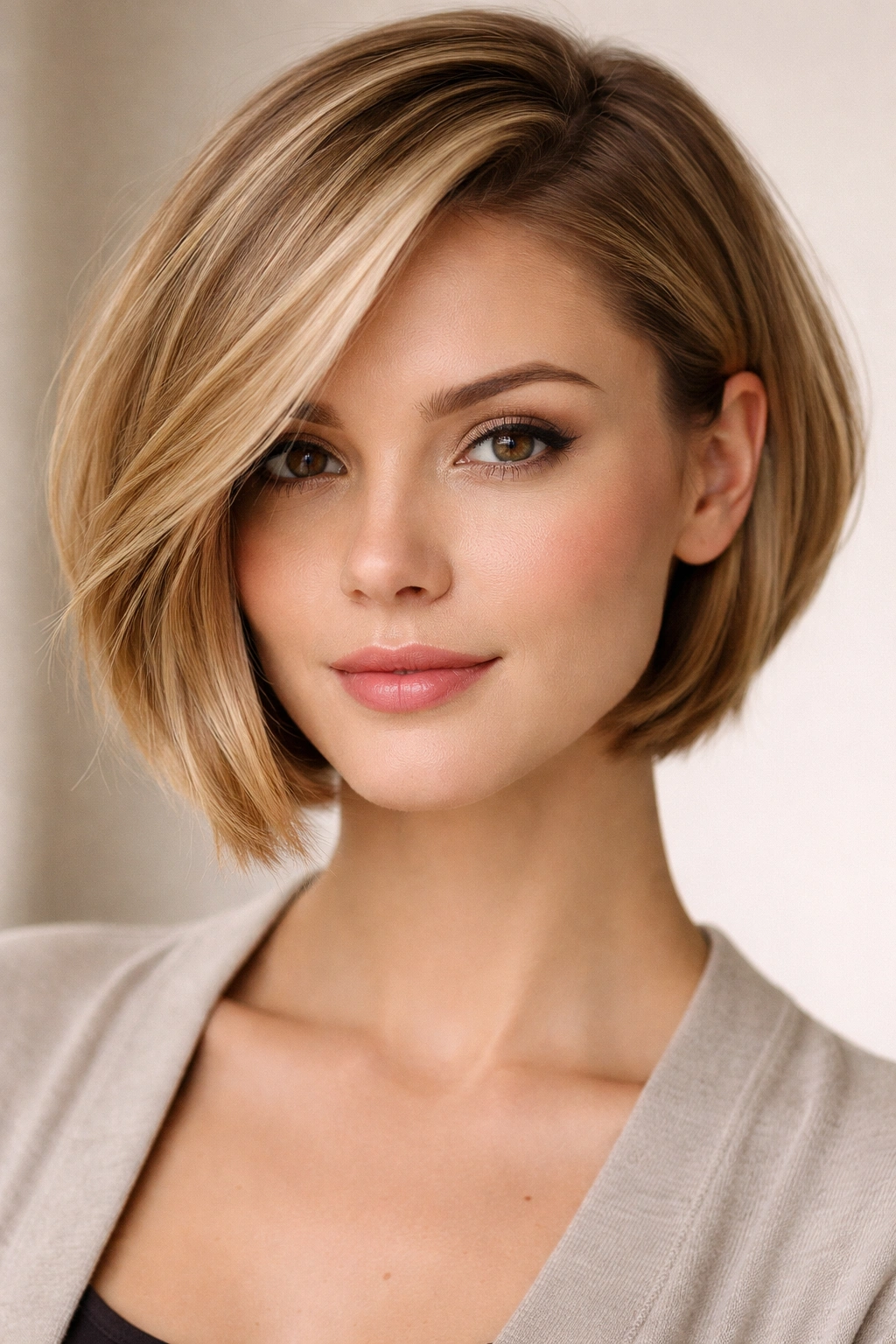
A center part can be honest. A side part is often kinder to fine hair.
The asymmetrical bob uses that idea by shifting the weight of the cut to one side. One side is a little longer, one side a little shorter, and the part itself creates a natural lift at the root. If your hair tends to fall flat at the crown, that extra lift at the side can make the whole cut seem denser.
What makes it different
The difference is subtle if the cut is done well. You do not want a dramatic swing-bob situation unless you enjoy attention. For fine hair, a small asymmetry is usually enough — maybe half an inch to an inch longer on the heavy side. That’s enough to create movement without turning the cut into a style that fights you every morning.
The trick is balance. Keep the shorter side clean around the jaw and let the longer side skim the chin or just below. If the longer side gets too long, the visual weight drops and the whole point goes missing.
Who should ask for it
This is a strong pick if one side of your hair lies flatter than the other, or if you wear your part to the same side every day. It also helps soften a strong jawline or a very square face shape.
Use a blow-dryer to push the roots away from the part and let the longer side curve forward a little. Easy. Effective. Not fussy.
7. Feathered Bob With Face-Framing Pieces
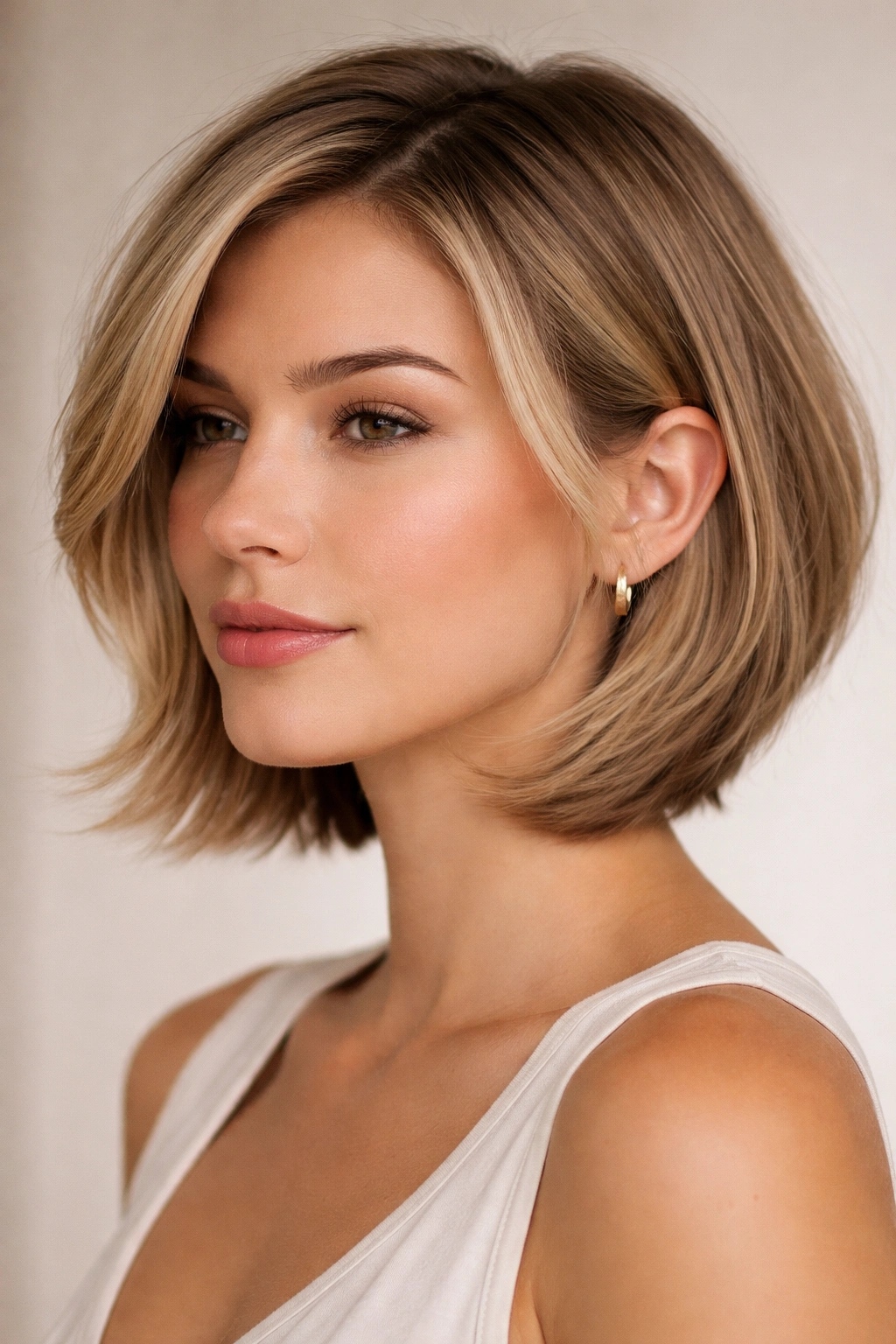
Picture a bob that brushes the jaw on one side and opens up near the cheekbones on the other. That’s the sort of shape that can make fine hair look lighter without making it look thinner.
Feathering works best when it stays around the face and the upper half of the cut. You want the movement to happen where the eye can see it, not all through the perimeter. If the stylist thins the ends too much, the whole bob loses its sense of fullness. That’s the line to watch.
The face-framing zone
Keep the softest pieces near the cheekbones, then let them drop toward the jaw. That gives the face a bit of contour and stops the haircut from looking boxy. The back can stay more solid, which helps maintain weight where you need it.
- Ask for feathering around the face, not through the bottom edge.
- Keep the front pieces long enough to tuck behind the ear.
- Use a light mousse at the roots before blow-drying.
- Finish with a quick bend from a 1-inch curling iron if your hair stays pin-straight.
This version feels softer than a stacked bob and less rigid than a blunt cut. It’s a good middle ground if you want movement but hate the look of shredded ends.
8. Bubble Bob With Rounded Ends
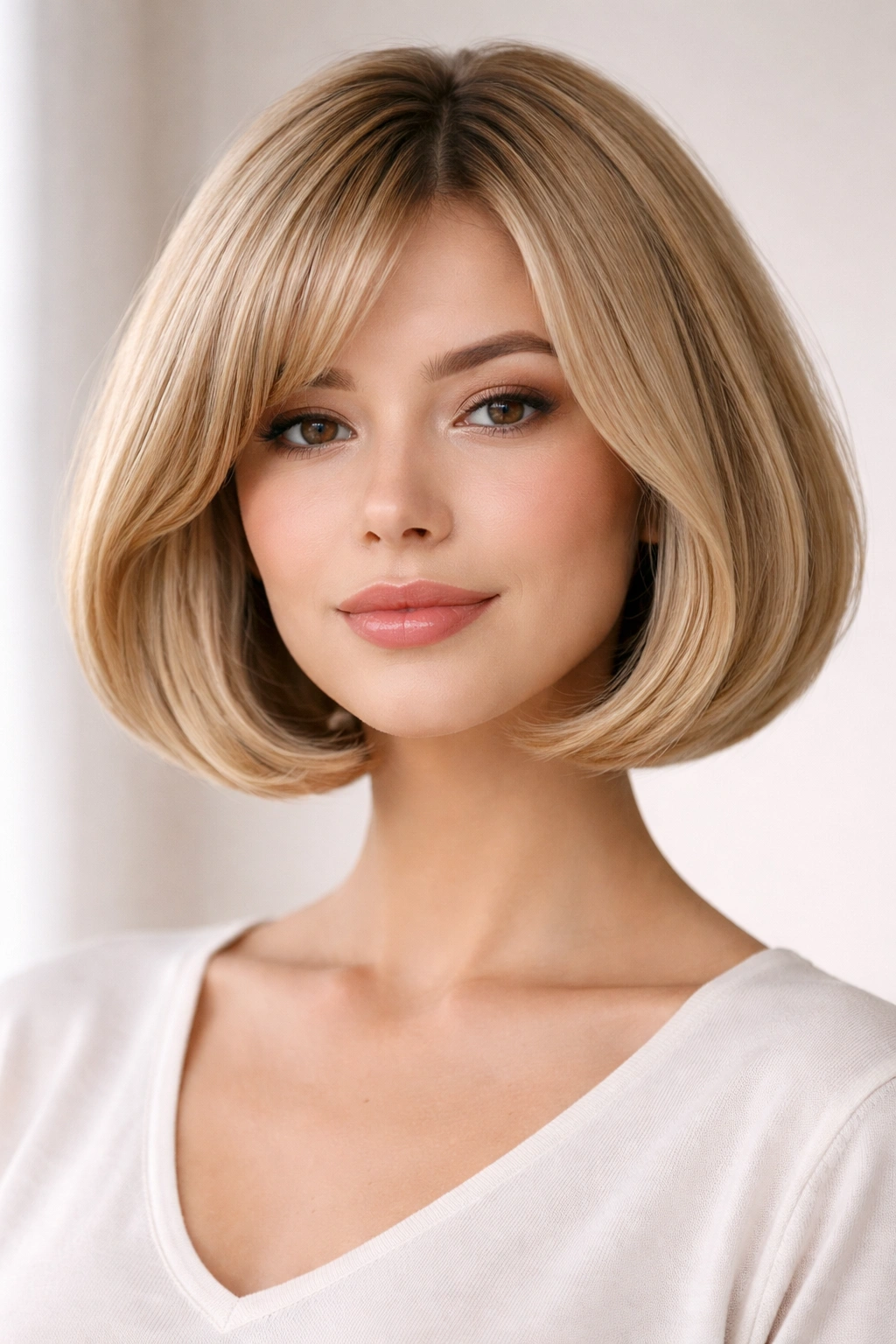
Not every volume haircut needs choppy layers. Sometimes the smartest move is a rounded shape that makes the hair look plush from every angle.
A bubble bob keeps the perimeter smooth and curves the ends inward so the silhouette feels full, almost cushioned. On fine hair, that rounded finish can be a gift. It creates width at the bottom without breaking the line into fragments. Straight hair takes to it especially well, because the curve shows up cleanly after a quick blow-dry.
Round beats ragged here.
The bubble shape usually sits around the chin or just under it. If it goes much longer, the roundness gets hard to hold and the effect disappears. If it’s too short, it can turn puffy in a way that looks accidental rather than styled. The sweet spot is a neat, controlled bend under the jaw.
Use a medium round brush and dry the ends under as you work. A tiny bit of smoothing cream on the mid-lengths helps, but don’t load up the roots or the hair will collapse. The point is shape, not stiffness.
I like this cut for people who want a polished bob that still feels soft at the edges.
9. Textured Bob With Light Piecey Layers
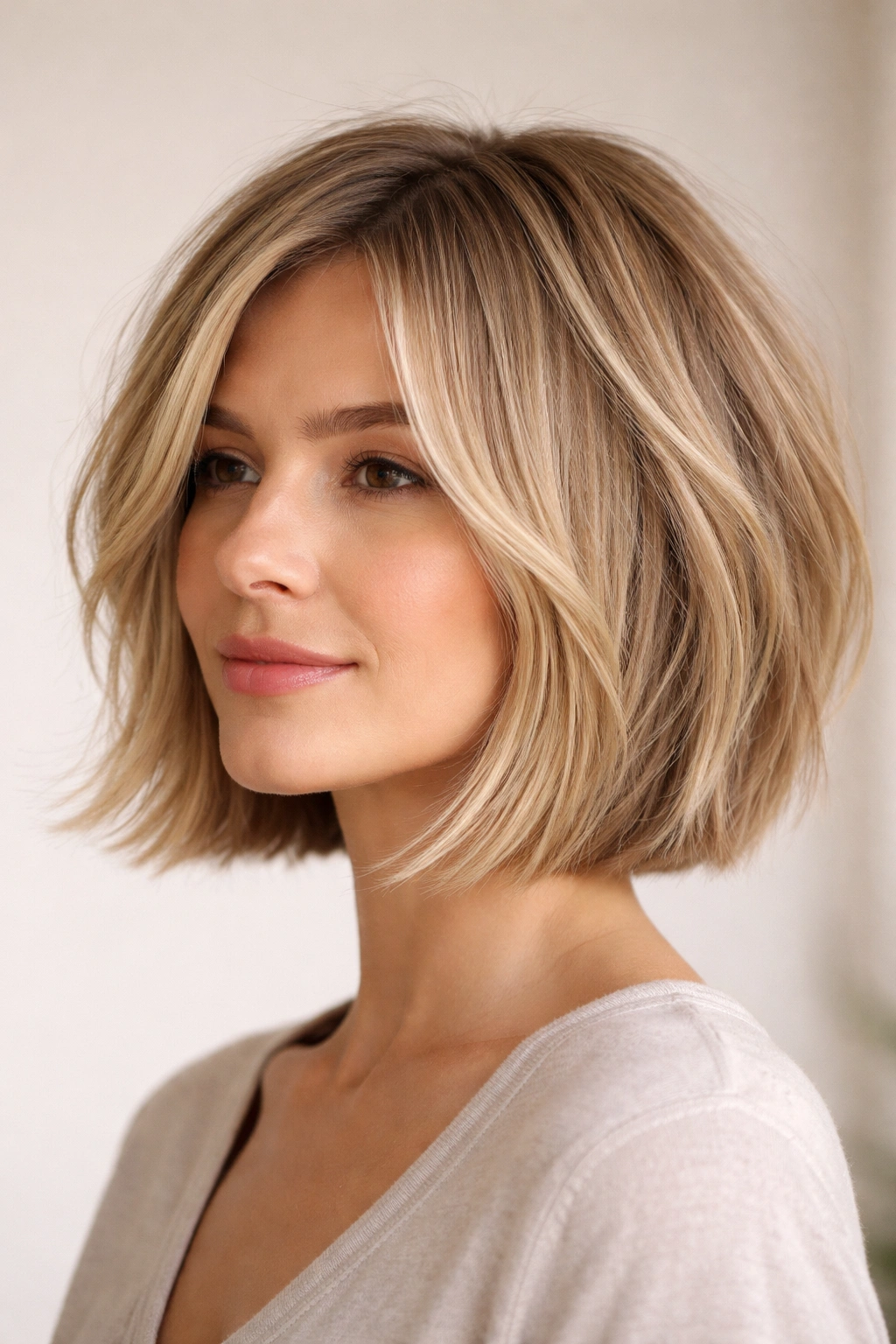
The trick isn’t more layers. It’s better-placed layers.
A textured bob for fine hair should feel airy, not shredded. The pieces should live mostly through the crown and mid-lengths, where they can create lift and movement without taking away the density at the perimeter. If the texture gets pushed all the way to the ends, the haircut starts to look stringy fast.
What to ask for
Ask for light internal texture and a clean outline. That wording helps prevent the classic mistake where a stylist gets enthusiastic with thinning shears and you leave with a bob that looks thinner than when you walked in. The texture should show when you move your head, not when the light hits the ends a certain way.
- Keep the bottom line blunt or only slightly beveled.
- Ask for piecey texture around the crown.
- Use a small amount of mousse on damp hair — about a golf-ball size for shoulder-length hair.
- Finish with a texture spray only at the mid-lengths, not near the scalp.
The best textured bobs on fine hair have a lived-in feel but still hold their shape. That’s the sweet spot. Messy is easy. Controlled messy takes a better cut.
10. Inverted Bob With Clean Lines for Fine Hair
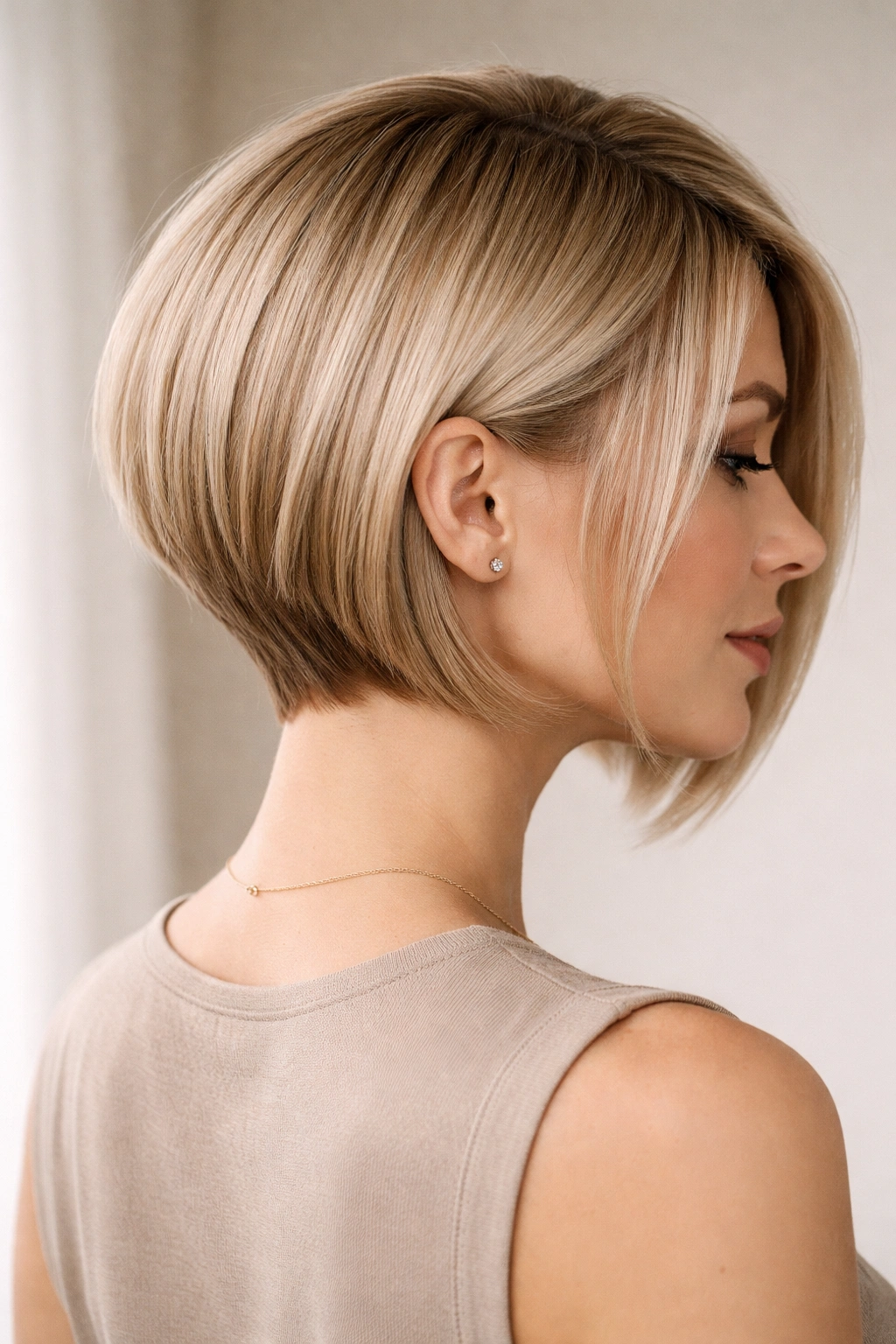
If the back of your bob looks nice in the mirror but flat from the side, an inverted shape fixes that fast. The cut is shorter in the back and longer in the front, with a clean slope that changes how the hair sits around the head.
That angle matters because fine hair often needs help building visual lift near the nape. The inverted bob gives it a little structure there, then lets the front keep enough length to frame the face. It’s a smart cut for straight hair that likes to fall limp, because the diagonal line gives the eye something to follow.
The geometry matters
The back should not be so short that it shows every hairline detail. It should also not be so long that the angle disappears. A good rule is to keep the front at the chin or just below, while the back lifts enough to show a clear slope.
The shape looks especially good when it’s smoothed with a flat brush and tucked slightly inward at the ends. If you like a side part, even better. That extra lift on one side gives the inverted line more presence.
This is one of those cuts that can look severe if it’s cut too sharply, so I’d ask for a softened edge unless you want a very crisp finish.
11. Wavy Bob With Grown-Out Ends
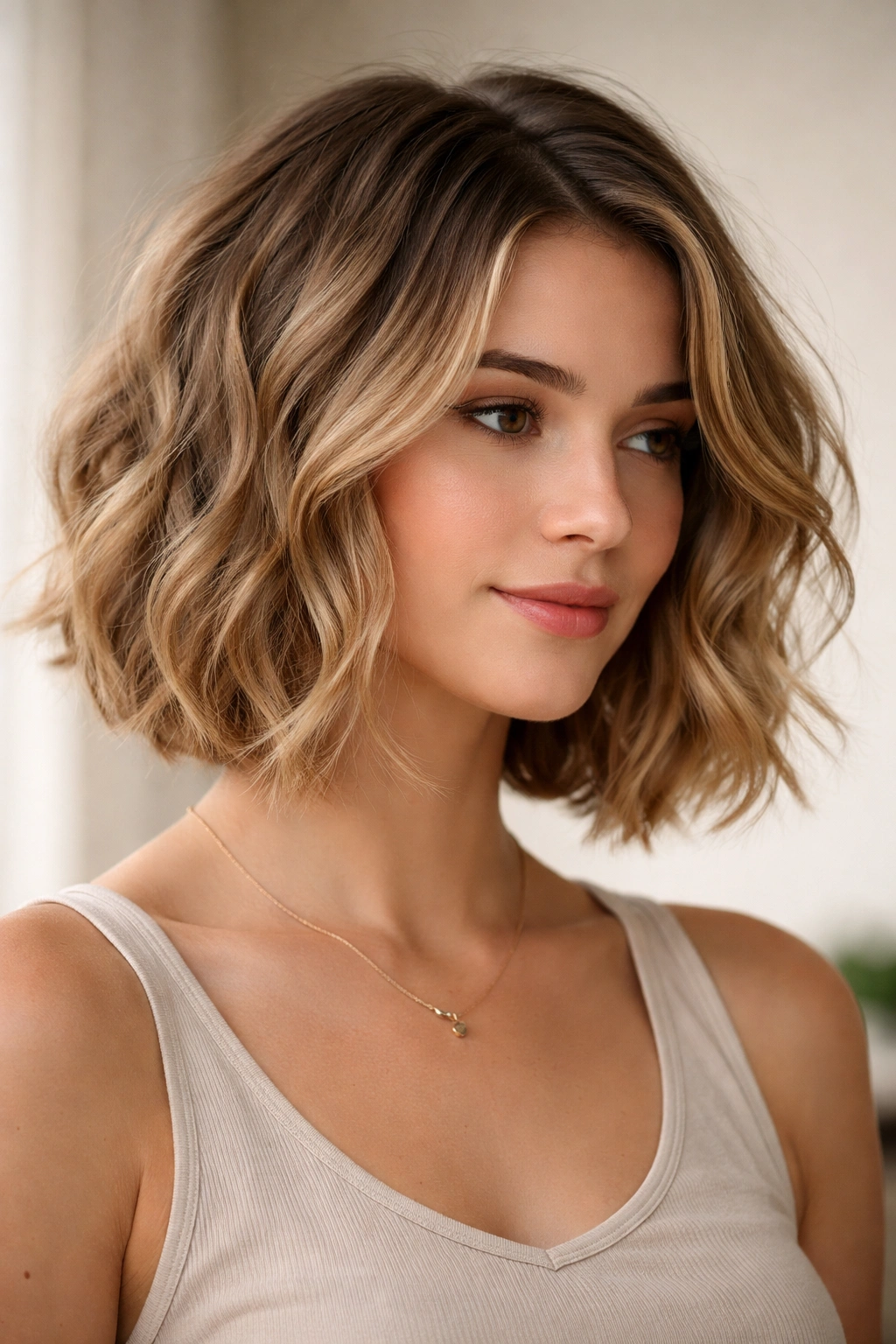
What if your hair already bends on its own? Then you do not need to fight it.
A wavy bob with grown-out ends can look fuller than a tight, over-structured cut because the shape works with the hair’s natural movement. The ends stay a little softer, which means they don’t taper into nothing. Fine hair with a bit of bend often looks best when the cut avoids hard lines that break up the wave pattern.
The length is usually best at the jaw or a touch below, though a collarbone version can work if the wave is loose. Too short, and the bend can spring up in a way that feels triangular. Too long, and the wave can fall out and leave the ends looking sparse. The balance is the whole point.
How to style it
Use a diffuser on low heat until the hair is about 70 percent dry, then let the rest air-dry. If you want a little more definition, wrap only the front pieces around a 1-inch iron and leave the back alone. That keeps the hair from looking overdone.
A touch of cream on the ends can calm frizz, but don’t smother the roots. Fine hair needs lift there, not weight.
This cut has an easy, lived-in feel. It is less polished than a blunt bob, but sometimes that softer look gives fine hair exactly the fullness it needs.
12. Box Bob With a Deep Side Part
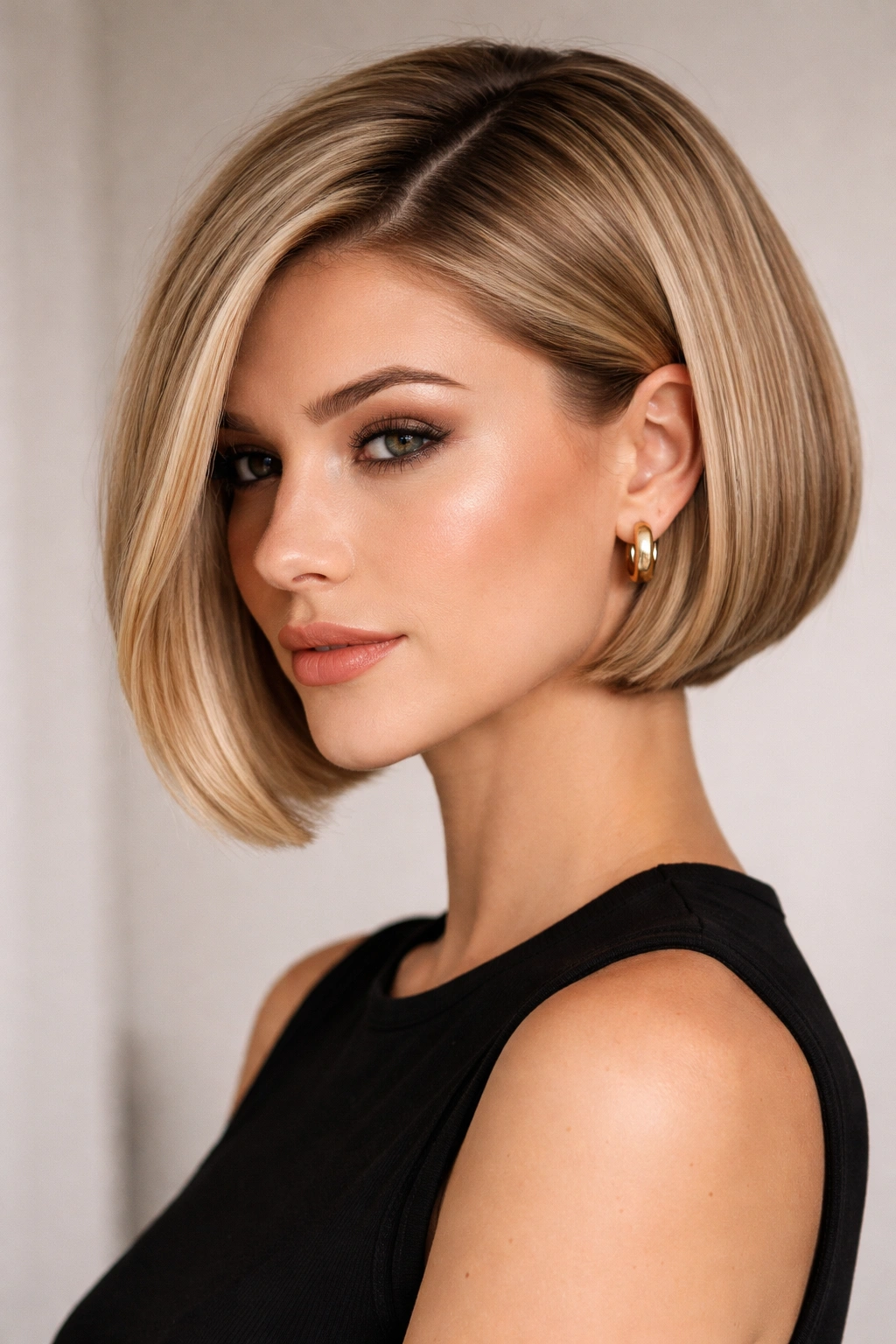
A boxy shape can look expensive on fine hair — if the line is clean.
The box bob uses a straighter, more squared-off silhouette than a rounded bob. That strong edge creates visual density, which is useful when the hair itself is delicate. A deep side part adds extra lift on the heavier side, so the cut feels fuller without relying on a ton of layers.
The key is to keep the perimeter honest. If the ends are too thin, the box shape collapses and looks flimsy. If the line is strong and the part is deep enough, the style has a cool, modern feel that flatters straight fine hair especially well.
It’s not the softest cut in the group. That’s the point. Some people need a little structure to make their hair look thicker, and this is one of the best ways to get it.
A deep side part also helps if your roots sit flat at the crown. It gives the hair somewhere to lift from, especially when you blow-dry the roots away from the part and let the mid-lengths fall straight.
If you like neat, graphic hair, this one is worth a look.
13. Bob With Curtain Bangs for Fine Hair
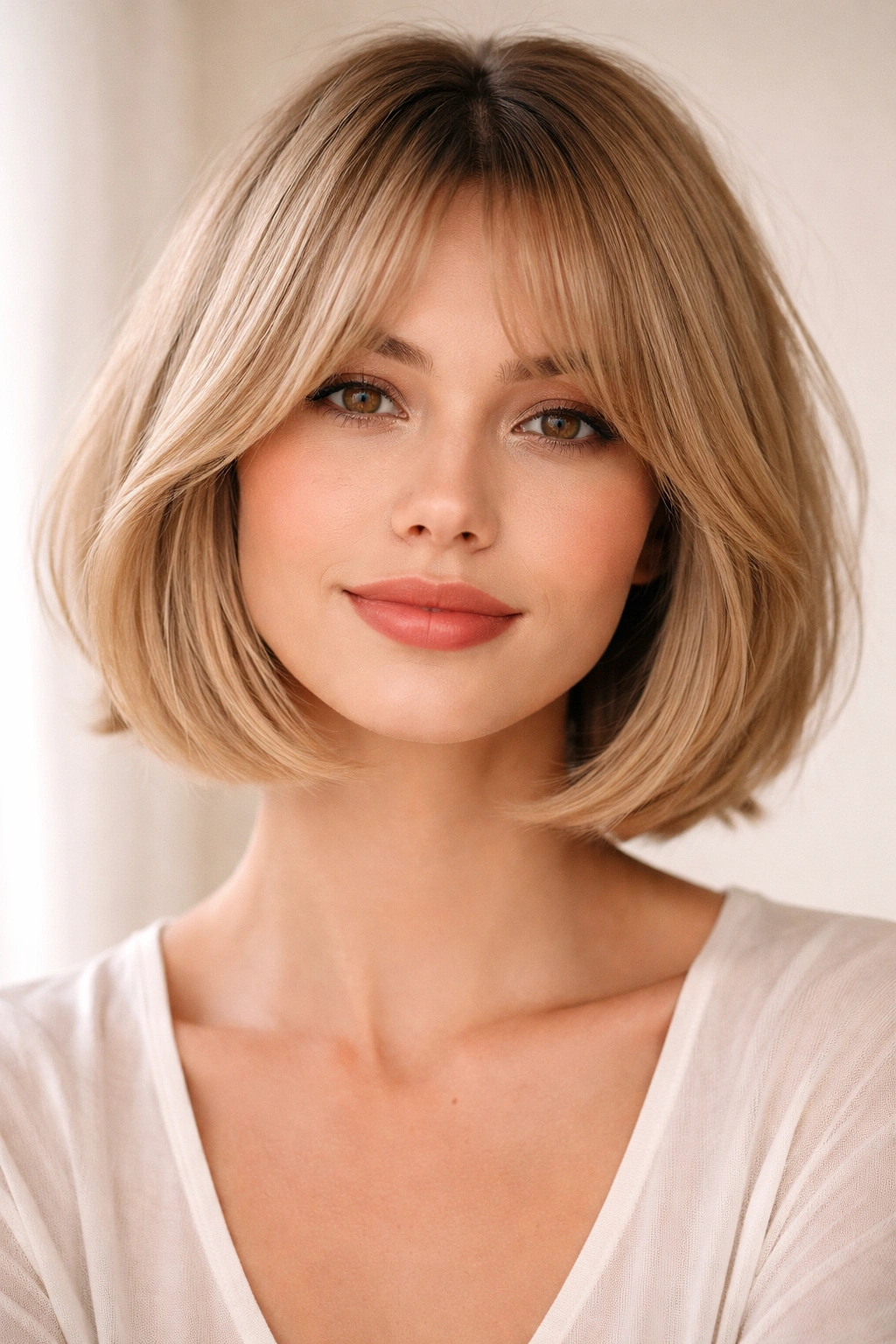
If your forehead feels too exposed with a short bob, curtain bangs fix the balance without making the haircut heavy. They break up the top line, add softness around the eyes, and make the whole style feel fuller in front.
Curtain bangs work well with fine hair because they give the front of the haircut more shape. Instead of all the visual interest sitting at the ends, the bang area carries some of the load. That can make the bob read as thicker even when the strands themselves are fine.
How short should they be?
Start with the center a little below the brows and let the sides drift toward the cheekbones. The longer side pieces blend into the bob, which keeps the cut from looking disconnected. If the bangs are cut too heavy, they can flatten the top and steal the lift you were trying to create. That mistake happens a lot.
- Keep the center shorter and the sides longer.
- Ask for a soft blend into the cheekbone area.
- Wear them with a center part or slightly off-center part.
- Plan for trims every 4 to 6 weeks if you want them to stay tidy.
Curtain bangs are one of the easiest ways to make a bob feel less severe. They also help if your hairline is a little sparse at the front, because they give that area a fuller look without hiding your face.
14. Razor-Light Bob With Airy Ends
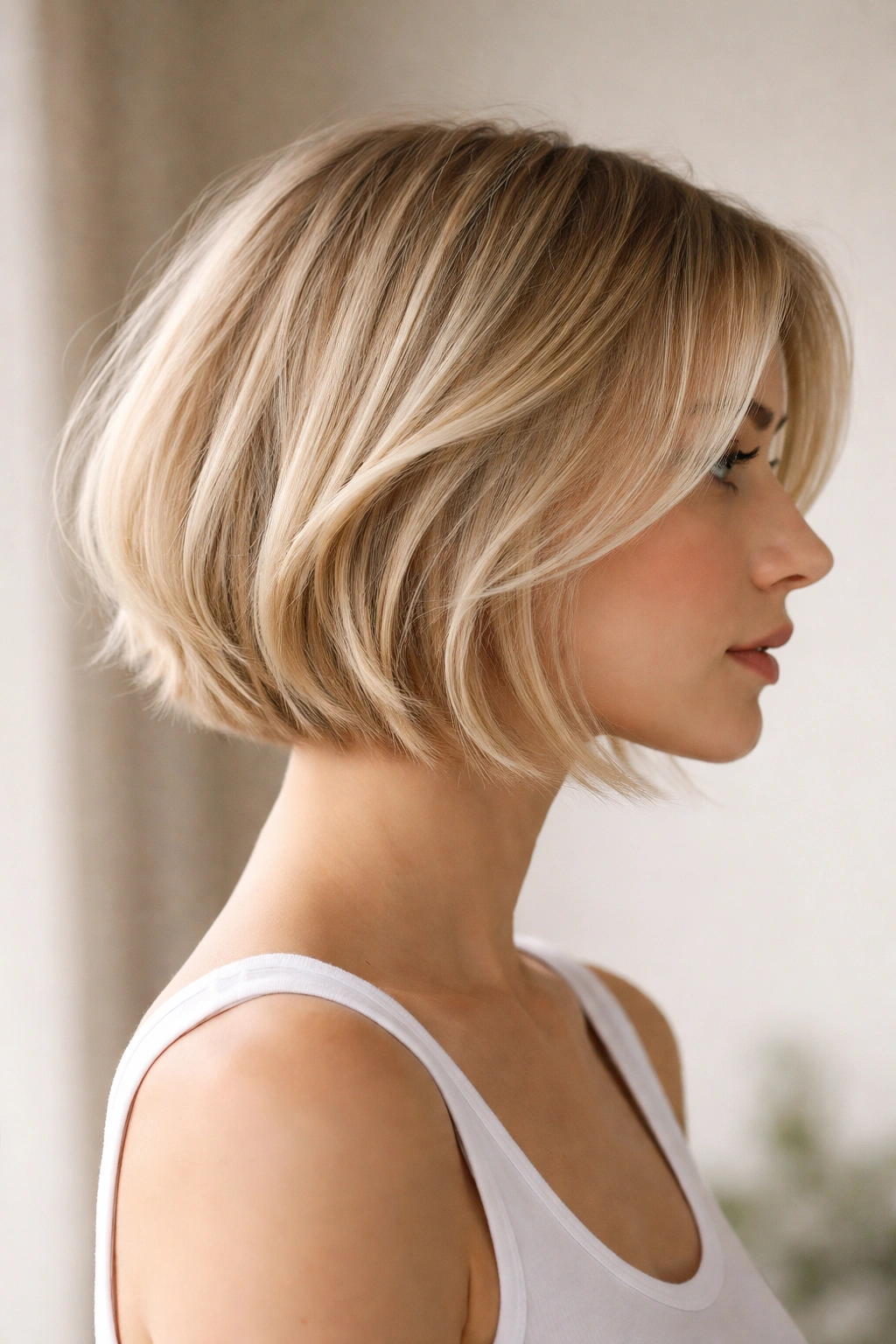
Razor cutting can help fine hair — or wreck it. Both are true, and the difference comes down to restraint.
A razor-light bob uses a blade to remove a small amount of weight from the ends, which can create softness and movement. On the right hair, that makes the cut feel airy instead of heavy. On the wrong hair, it can fray the ends and make fine strands look even weaker. That’s why this one needs a careful hand.
The catch
The razor should be used sparingly, mostly on healthy hair with a bit of natural body. It should kiss the shape, not carve it apart. If your ends are already dry or split, a razor is a bad idea. A sharp scissor cut will usually keep the line cleaner and stronger.
Ask for soft movement near the front or through the mid-lengths, not all over the perimeter. You want the bob to sway, not splinter. If a stylist starts talking about “taking out bulk” on hair that barely has any to spare, I’d pause there.
This cut can work nicely if you like a little edge and don’t mind styling with a light cream or spray. It also grows out in a softer way than a blunt bob, which some people prefer.
Used well, the razor creates a whisper of movement. Used badly, it makes the ends look tired.
15. Graduated Bob With a Tapered Back for Fine Hair
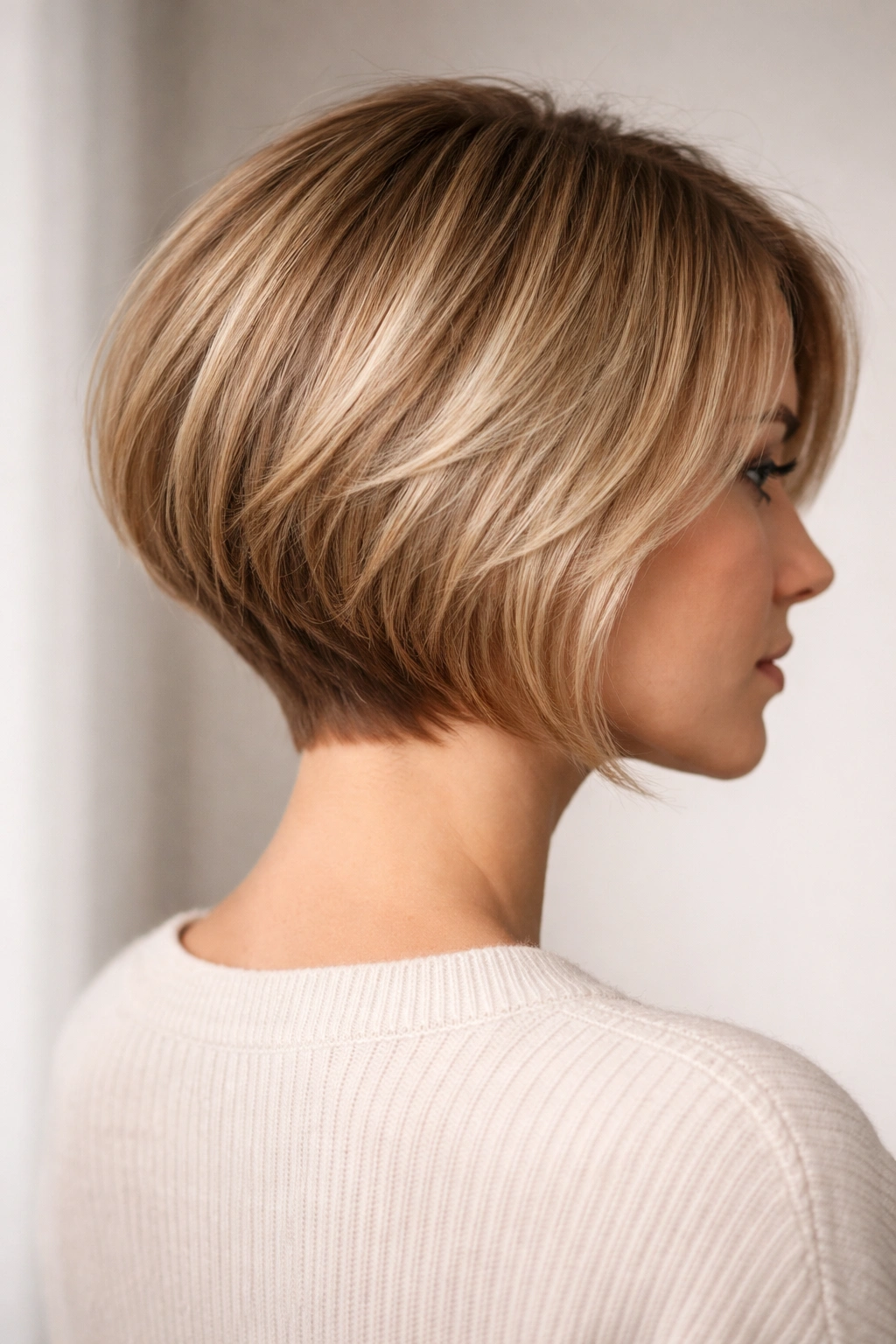
Can a graduated bob give you lift without looking stiff? Yes, if the graduation is controlled and the back is kept neat.
This cut stacks a little more weight through the crown and shortens the back enough to make the head look rounder at the top. Fine hair often benefits from that built-in height, especially when the roots are flat and the ends are prone to hanging straight down. The graduated shape gives the hair a place to sit.
The line should be smooth from the nape to the front. You want a clear shift in length, but not a harsh step. Think of it as a sculpted bob rather than a chopped one. The taper in the back gives lift, and the front keeps enough length to frame the face.
This shape needs regular maintenance. If it grows out too far, the graduation softens and the whole effect fades. Keep trims closer together if you want the back to stay clean and the crown to keep its lift.
A dry check before you leave the chair helps here. Fine hair can lie differently when it’s wet, and a cut that looks balanced damp can sit a little flatter once it’s fully dry. I’d rather see the shape checked twice than discover the flat spot at home.
The Bottom Line
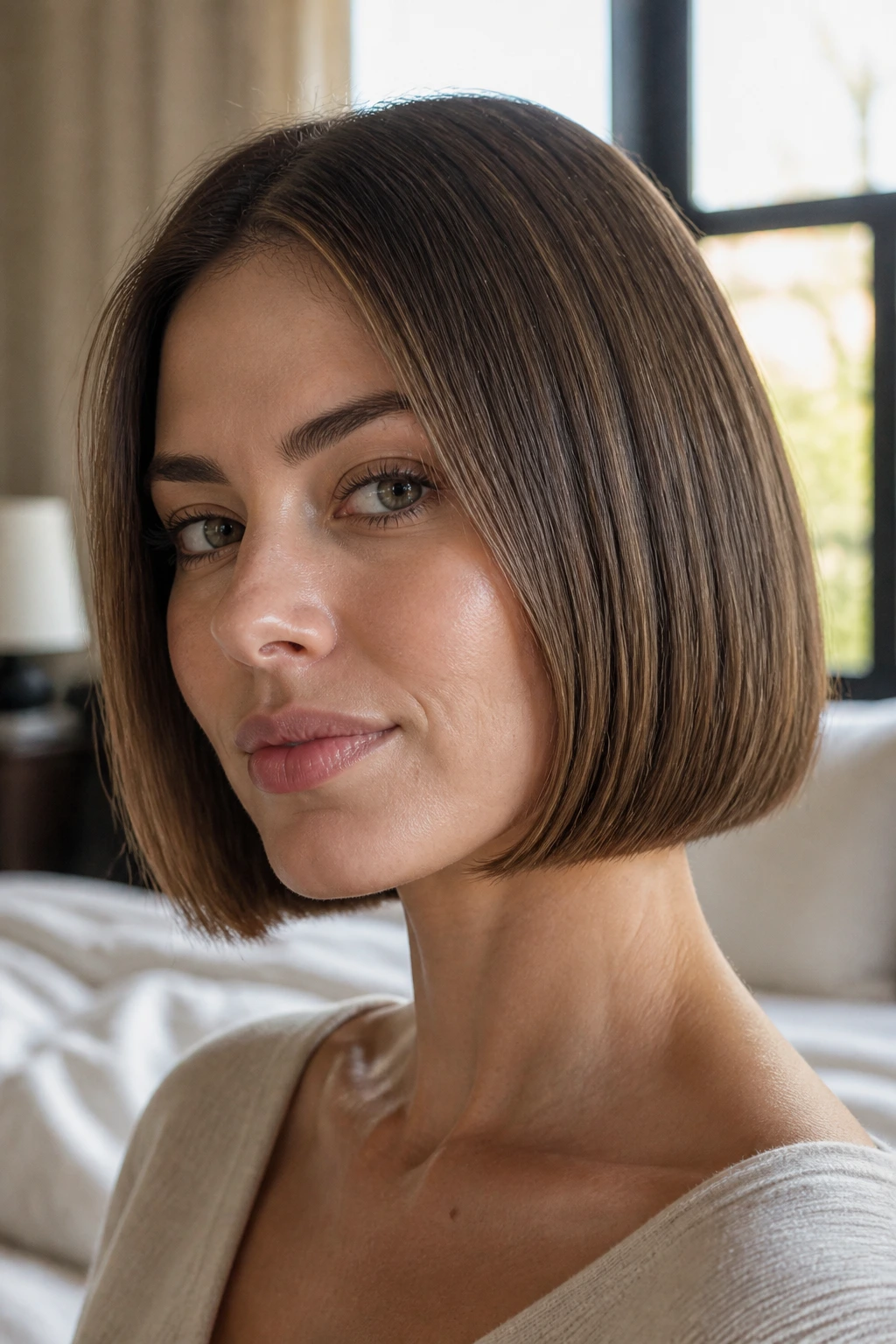
The best bob cuts for fine hair do one thing well: they keep the shape full where the eye needs it most. That might mean a blunt edge, a gentle angle, a little stacking, or a fringe that shifts attention upward. The common thread is control. Not fuss. Control.
If you want the safest bet, start with a chin-length blunt bob or a collarbone lob with internal layers. If you want more lift, stacked, inverted, and graduated shapes do a better job of building height at the back. And if you like softness, the French bob, curtain bangs, or a wavy bob can give fine hair some welcome movement without turning the ends sparse.
Bring photos, yes. But also bring three details: where you part your hair, whether you style it smooth or wavy, and how much time you actually want to spend on it in the morning. That tells a stylist more than vague words ever will.
One last thing. Ask them to check the cut when it’s dry. Fine hair has a habit of telling the truth only after the blow-dryer is off.
