



A bob gets sharper the minute warm color enters the picture. Bob cuts with warm toned color have a way of making the whole haircut feel richer, softer, and more deliberate, even when the shape itself is blunt and simple.
That’s the part people miss. A bob is not just about length; it’s about line. When copper lands on a chin-length cut, the edge looks cleaner. When caramel sits inside a French bob, the layers don’t disappear into each other. When auburn or honey hits a jaw-skimming shape, the haircut stops reading as plain and starts reading as finished.
Warm tones also behave differently depending on the cut. A sleek bob shows off shine. A shaggy bob needs pigment that can hold its own against texture. A rounded bob asks for color that wraps with the curve instead of fighting it. Put the wrong tone on the wrong shape and the whole thing goes flat. Put the right one there and the haircut looks expensive without trying too hard.
The best part is that warm color is not one thing. Copper can be bright and fiery, or muted and earthy. Caramel can look like a ribbon or a glaze. Auburn can lean red-brown instead of full red. That range is exactly why these bob cuts stay interesting.
1. Copper Jawline Bob With Warm Toned Color
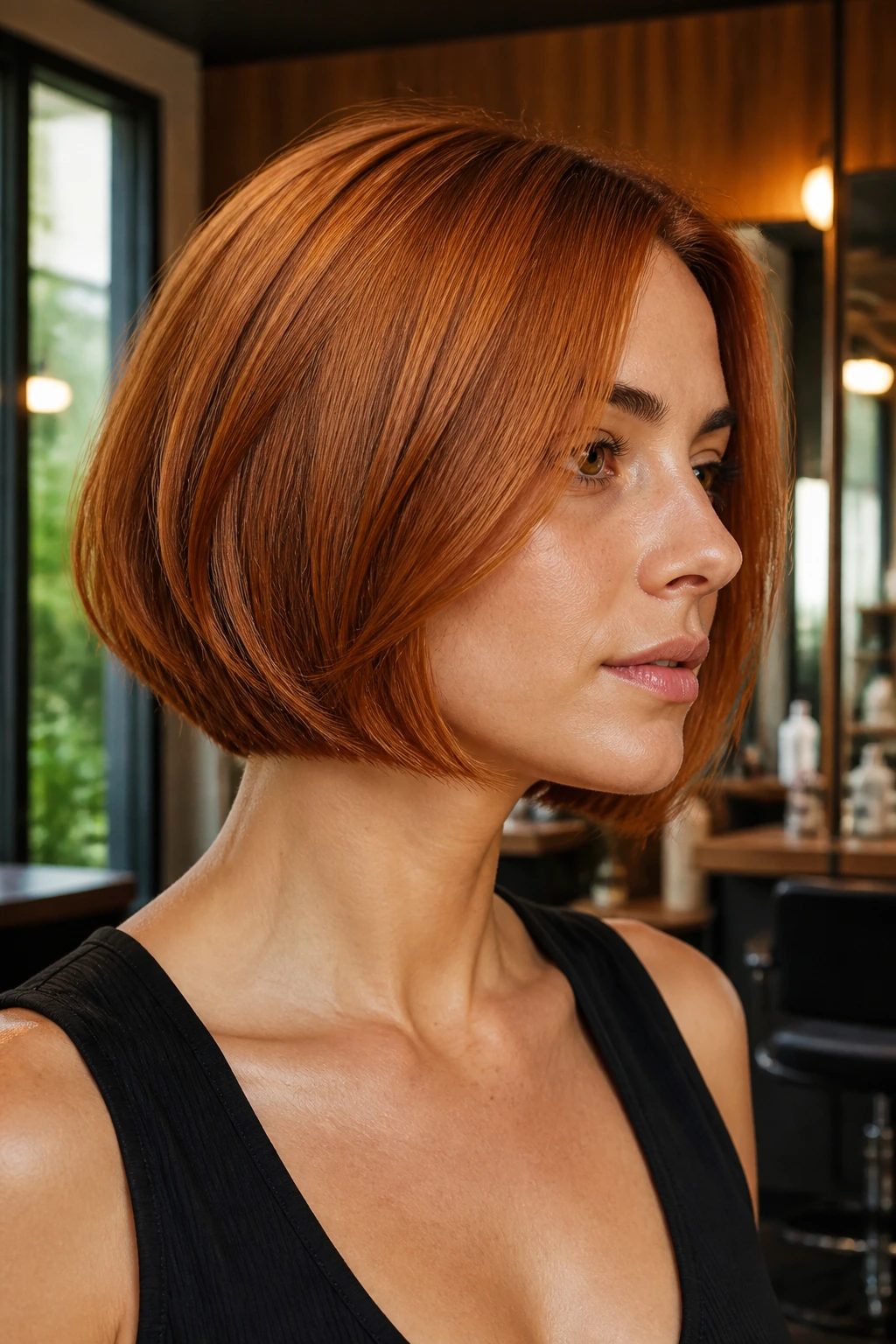
Copper and a jawline bob are one of those pairings that make perfect sense the second you see them together. The cut draws a hard line right where the jaw wants structure, and the copper keeps that line from feeling severe. It adds heat, but not chaos.
What makes this combination work is the balance between shape and shine. A clean bob already has geometry. Copper brings movement by bouncing light across the surface, especially when the hair is blown smooth with a slight bend at the ends. On finer hair, that color can make the perimeter look fuller. On thicker hair, it keeps the cut from feeling bulky.
If you want this look to stay polished, ask for a copper that sits one or two levels deeper than a bright orange-red. The softer version grows out better and feels less costume-like. A subtle gloss every few weeks helps, too. Copper goes dull when it’s neglected, and dull copper loses half its charm.
Best for: straight to softly wavy hair, medium density, and anyone who likes a sharp outline with a little heat.
Watch out for: overly light copper on very damaged ends. That combo can make the bottom edge look dry fast.
2. Caramel French Bob With Airy Ends
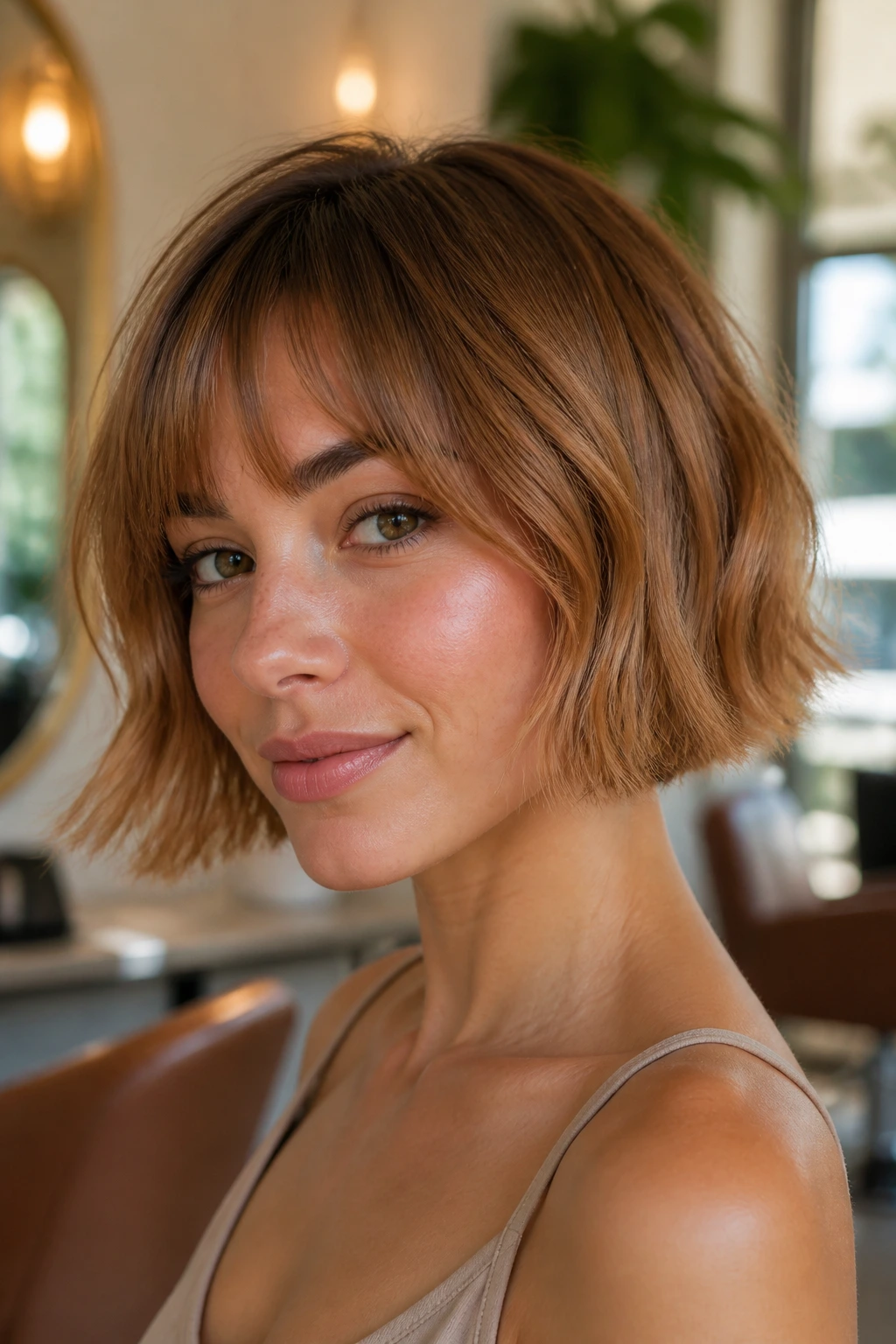
Why does a French bob look so good in caramel? Because the cut is already compact and chic, and caramel gives it breathing room. Without that warmth, a short bob can read a little too hard. With it, the shape feels lived-in and soft around the face.
Why It Works
A French bob usually sits around the cheekbone or just below the ear, sometimes with a fringe that skims the brows. Caramel pieces around the front keep that compact shape from looking boxy. They also help the eyes move upward, which is a nice trick if your face tends to look longer in short hair.
The airy ends matter more than people think. A French bob with blunt, heavy ends can turn helmet-like fast. Keep the ends soft, almost feathered, and let the color do some of the visual work. A few face-framing ribbons that are slightly lighter than the base make the haircut feel intentional instead of accidental.
How To Style It
- Blow-dry with a small round brush for a slight bend under the ends.
- Keep the fringe loose, not stiff.
- Use a pea-sized smoothing cream, not a heavy serum.
- Ask for caramel placement that starts at the temple, not just the mid-lengths.
Best for: fine to medium hair that needs shape without looking stiff.
3. Auburn Blunt Bob With A Center Part
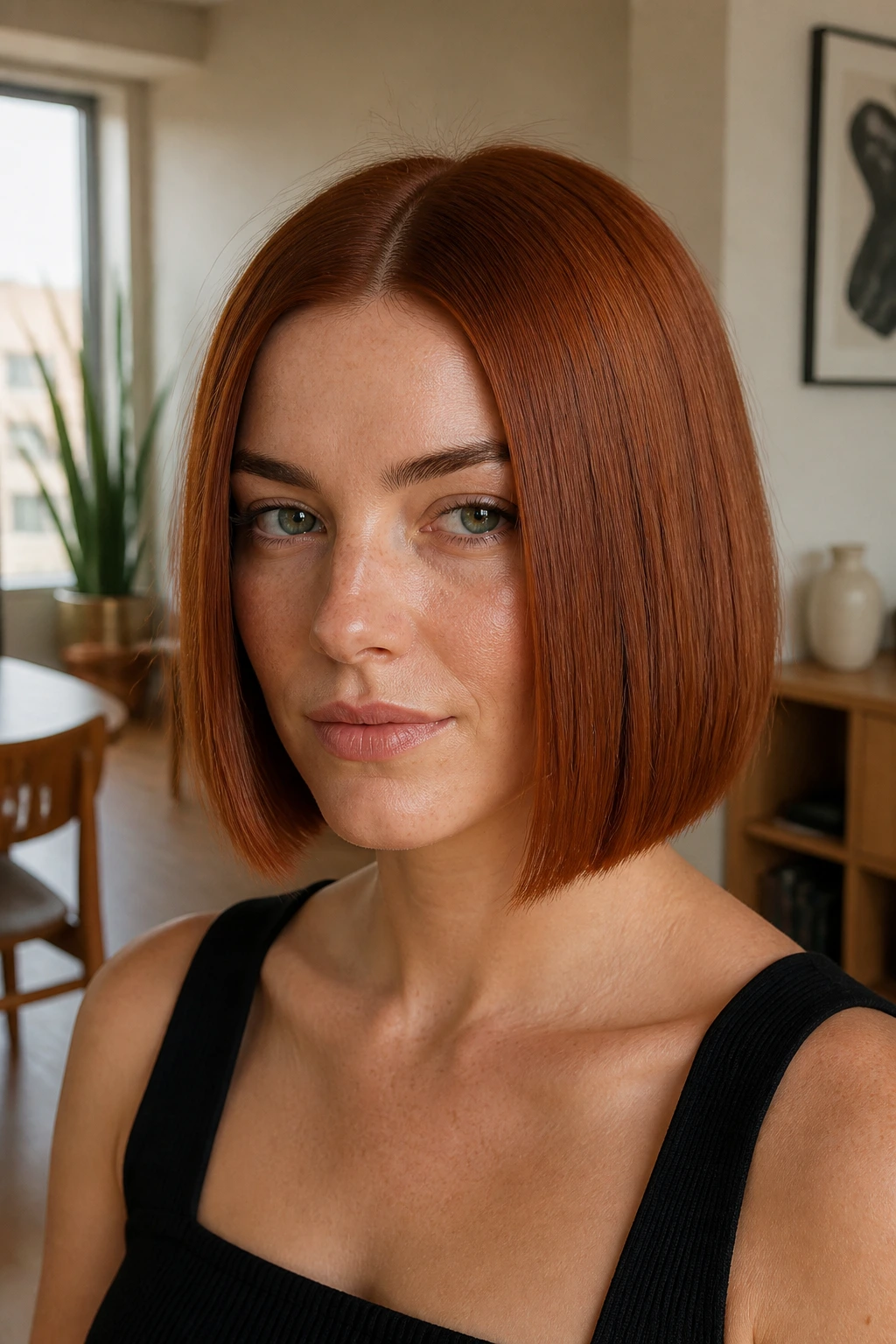
A blunt bob and auburn belong together because both are honest. There’s no hiding behind layers here. The cut gives you a clean edge, and the color gives you warmth that feels rich rather than loud.
A center part makes the whole thing feel symmetrical and sharp. That can sound severe on paper, but auburn softens the effect. The result is a bob that looks polished in a way that doesn’t need extra styling tricks. Air-dry it with a little wave, or blow it straight with a flat brush. Either way, the color does the heavy lifting.
I like this combo on thicker hair, especially when the goal is to remove weight without losing presence. A blunt line at the ends keeps the shape crisp. Auburn keeps the line from looking flat under indoor light, which is where many darker reds fail. They can disappear. This one doesn’t.
One thing to ask for: a deep auburn base with a glossy finish, not a bright cherry red. The deeper version reads luxe and grows out with more grace.
4. Cinnamon Lob With Hidden Layers
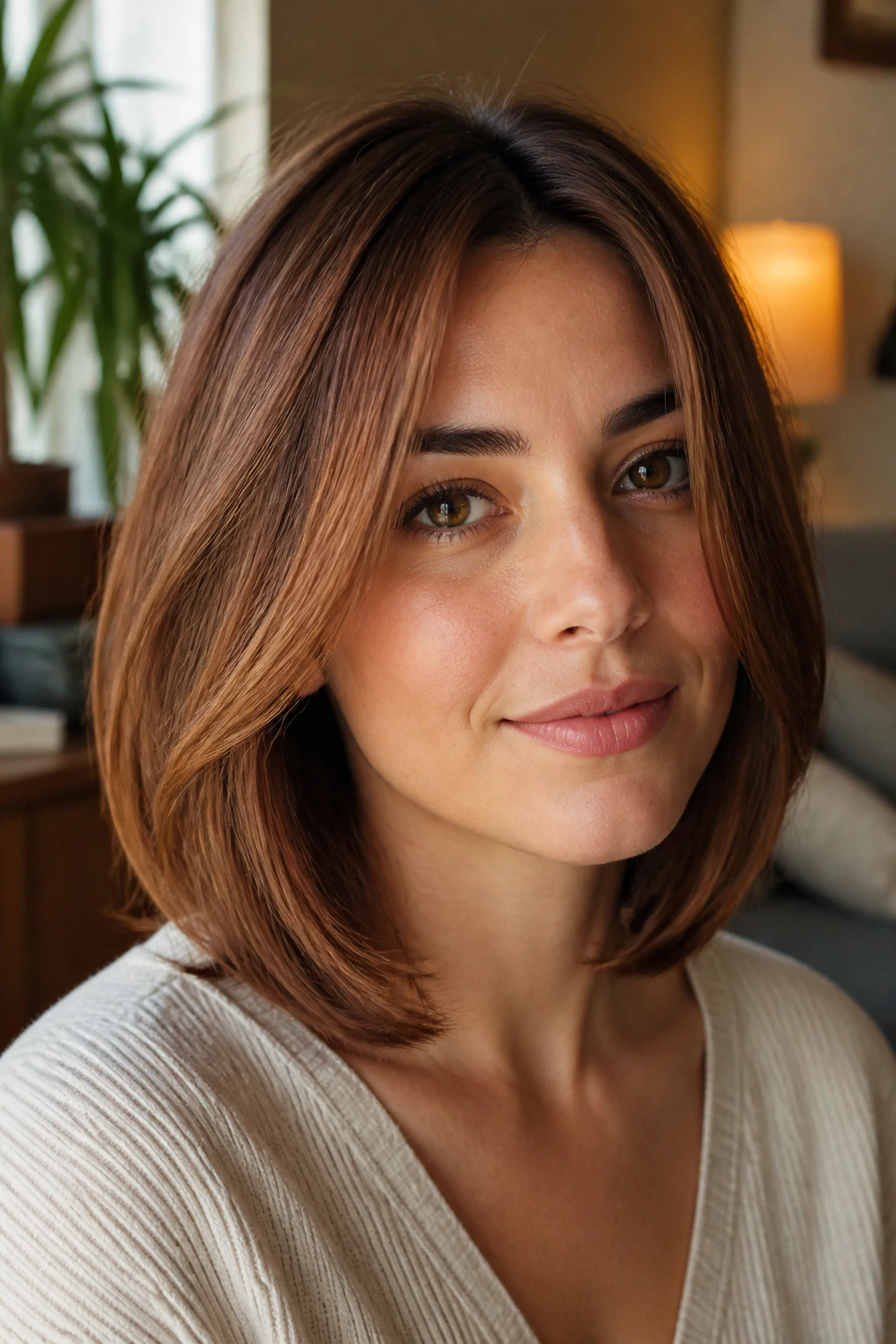
If you want the neatness of a bob but not the commitment of a chin-length cut, a cinnamon lob is the sweet spot. It hits around the collarbone or just above it, which gives you enough length to tuck behind the ears, clip back, or wave with a wand when you feel like it.
The hidden layers are the real trick. They remove bulk without carving obvious steps into the shape, so the hair moves when you do but still looks full at the edges. Cinnamon is a smart choice here because it warms the whole cut without screaming for attention. The color sits somewhere between brown and red, which makes it easy to wear day after day.
This is a good cut for someone who likes a bit of softness around the face but gets annoyed by obvious layering. The shape can be blown smooth for work, then bent into loose waves for a more relaxed look. The color keeps both versions from feeling flat.
A collarbone-length bob can fall into a dead zone if the tone is too cool. Cinnamon fixes that fast. It adds enough glow to make the length feel deliberate, not awkward.
5. Golden Brunette A-Line Bob
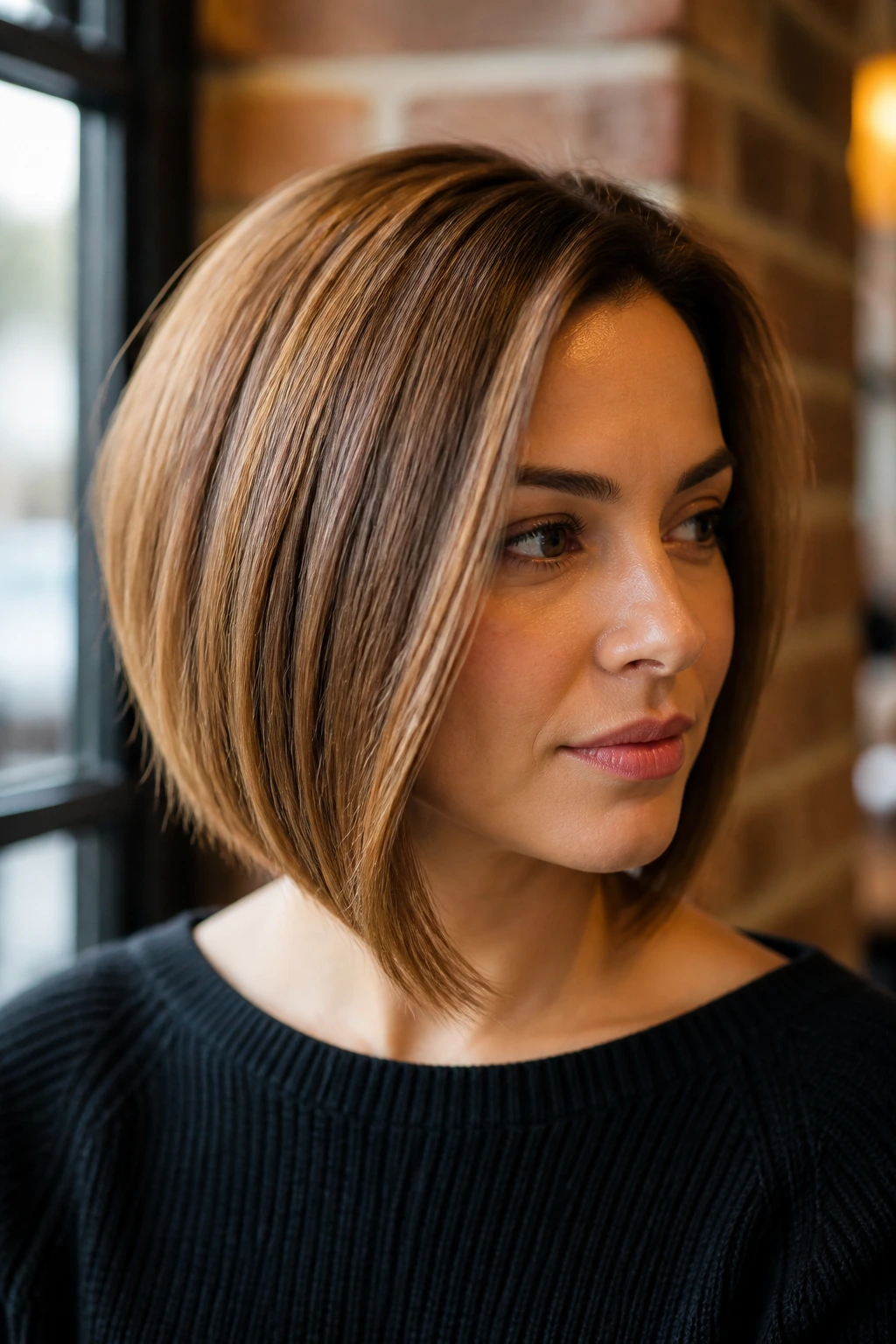
Unlike a straight-across bob, an A-line bob gives you movement built into the silhouette. The front sits a touch longer than the back, so the cut angles toward the face instead of stopping all at once. Pair that with golden brunette color and you get a bob that feels lifted, not heavy.
Where The Angle Matters
The angle changes how the neck looks. A slight A-line can make the neckline feel longer and the jaw a little more defined, which is handy if you want shape without going ultra-short. Golden brunette adds a soft sheen that keeps the cut from looking too severe. It’s especially useful on hair that naturally wants to lie flat.
The color placement matters here. Keep the golden pieces closer to the front and the surface layers. That way the angle shows up even when the hair is tucked behind the ears. If you bury all the warmth underneath, the cut loses some of its best movement.
What To Ask For
Ask for a subtle forward angle, not a dramatic wedge. That keeps it wearable.
A few lighter golden strands around the face can brighten the whole thing without turning it into full highlight territory. On a bob, that small detail goes a long way.
6. Honey Balayage Wavy Bob With Warm Toned Color
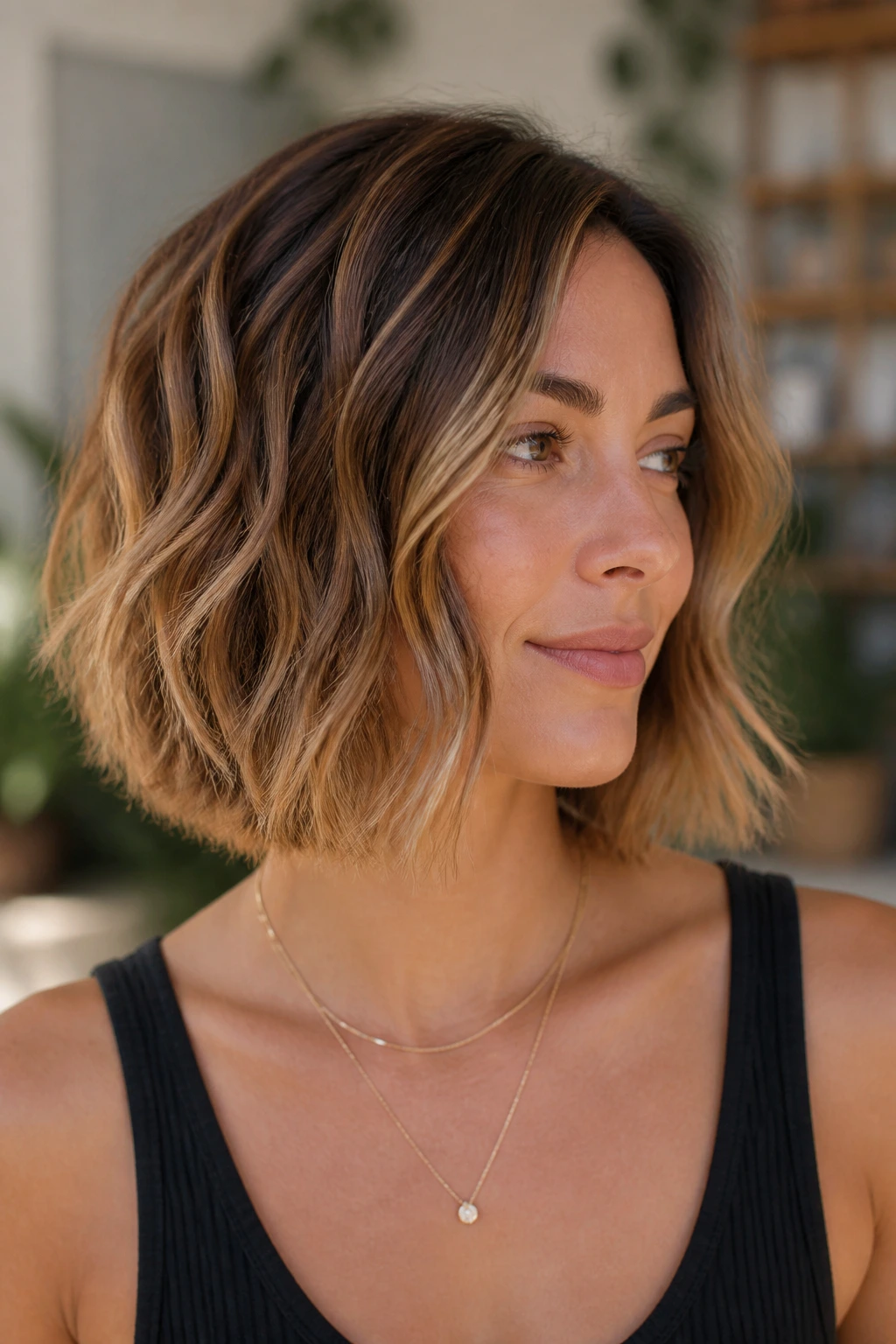
Honey balayage on a wavy bob is one of those pairings that looks easy only because the color placement is doing serious work. Balayage is not about stripes. It’s about soft ribbons of brightness where the hair would naturally catch light, and honey is perfect for that because it sits warm without looking brassy.
Waves help the color do its thing. A flat bob can hide balayage if the contrast is too subtle, but a loose wave opens up the surface and shows off the different tones. I’d keep the wave pattern loose and varied rather than too uniform. Uniform curls can make the color look stamped on. A few bends from a 1-inch or 1.25-inch curling iron feel more natural.
Maintenance is easier than with full foil work, though not maintenance-free. Honey tones can fade into a dull beige if you skip glossing. A sulfate-free shampoo helps, but the bigger win is not over-washing. Once the hair gets stripped, honey starts losing its warmth and the whole cut feels less alive.
This is a strong choice if you want warmth without committing to all-over color. The bob gives the shape. The honey balayage gives the movement. The two together are a good match.
7. Chestnut Micro Bob
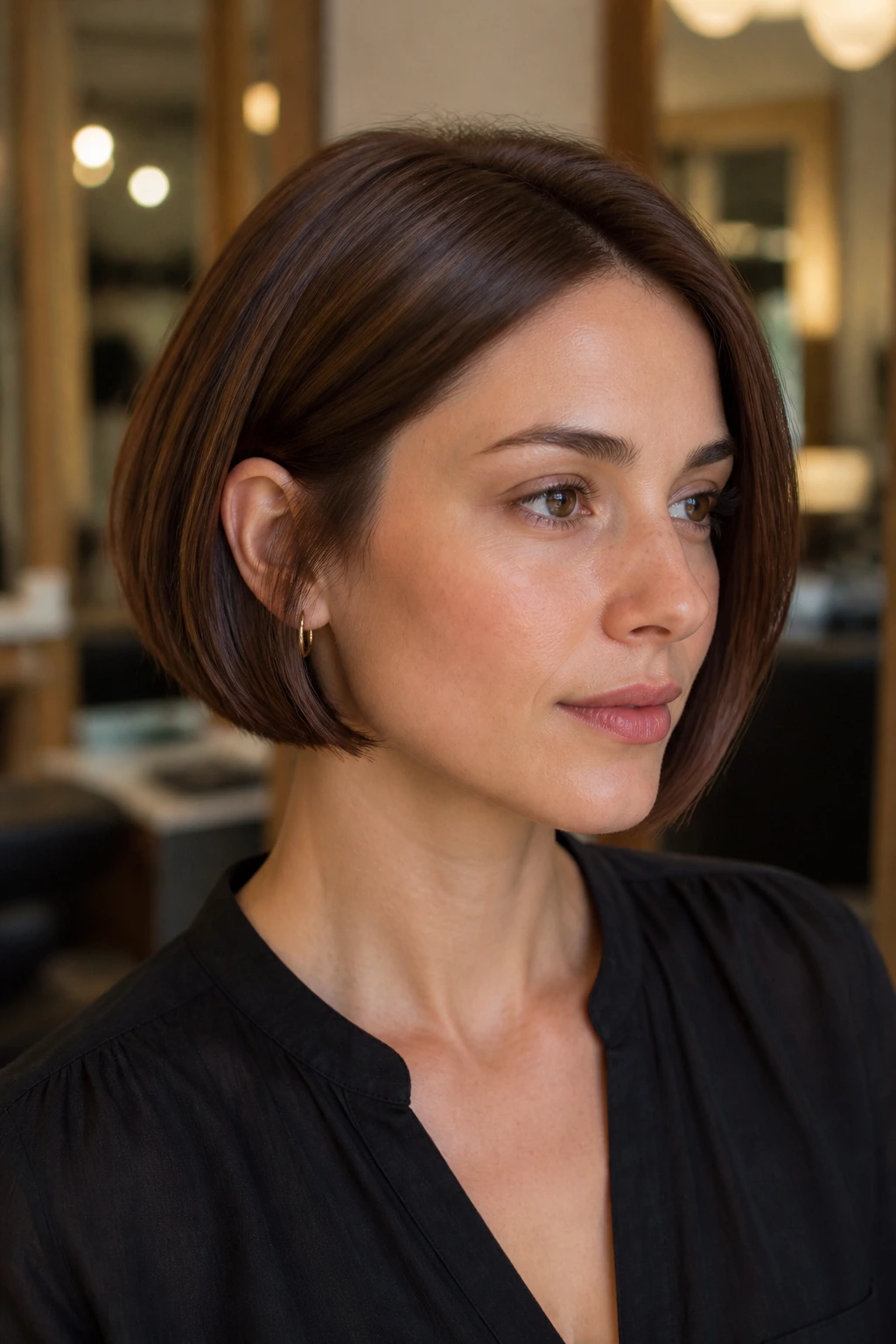
Can a very short bob still feel soft? Absolutely. Chestnut is what keeps it from turning into a hard little helmet. On a micro bob, which sits just below the ear or skims the cheekbone, a deep chestnut color adds weight at the roots and shine through the ends, so the cut looks intentional instead of abrupt.
Not every short cut needs brightness. In fact, a darker warm tone can make the haircut look cleaner because it lets the shape speak first. Chestnut is especially nice if your hair is fine and tends to puff up when it gets shorter. The richer tone creates a denser visual line.
Why It’s A Good Choice
- It softens strong features without hiding them.
- It grows out with less obvious contrast than a lighter color.
- It works well with a side part or a slightly off-center part.
- It can read polished, moody, or casual depending on styling.
A micro bob does not leave much room for damage, so keep the ends trimmed. Every six to eight weeks is a sensible rhythm if you want the shape to stay exact. Chestnut helps hide slight regrowth, which is a nice bonus when you’d rather not fuss over the cut every week.
8. Peachy Rose-Gold Bob
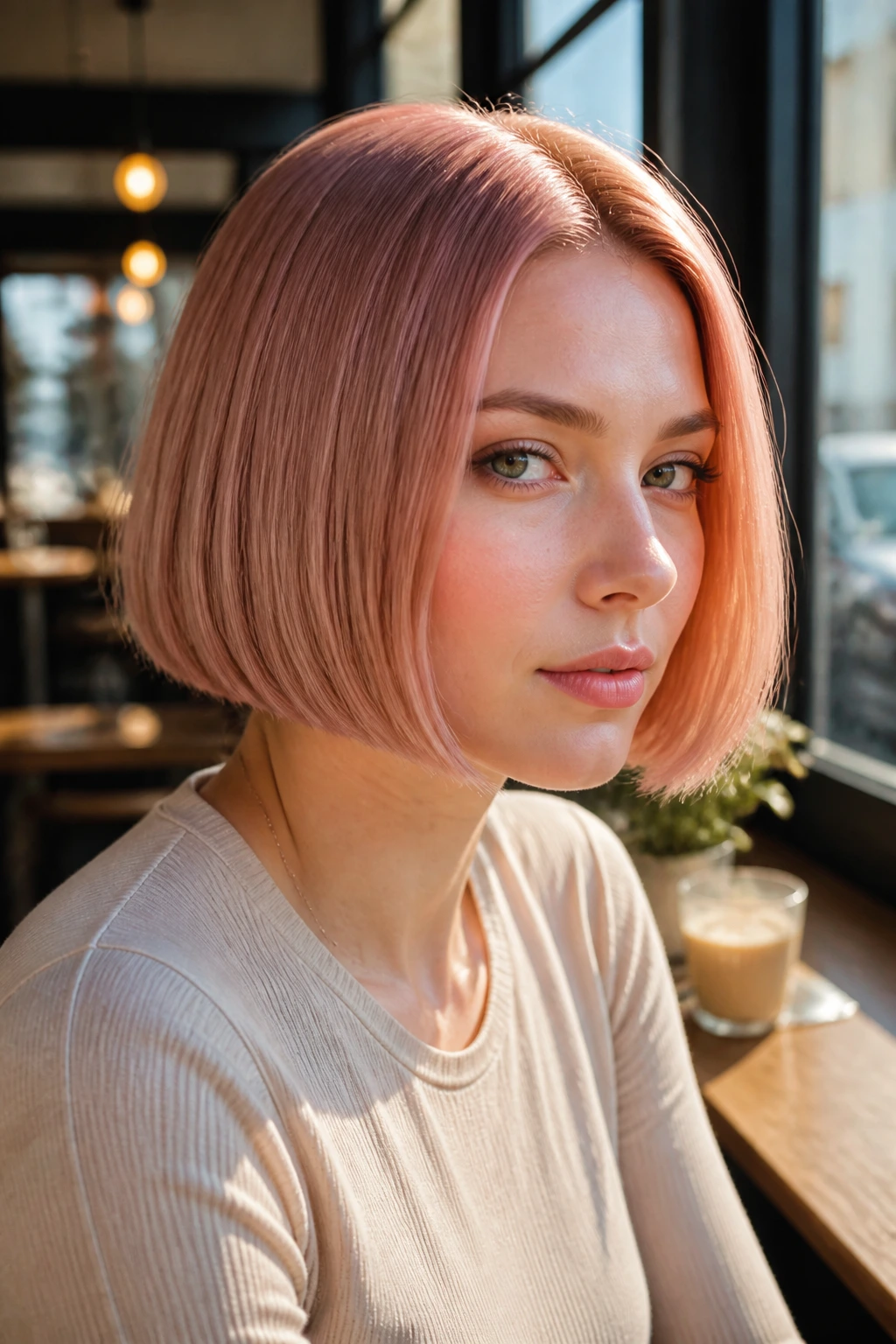
A peachy rose-gold bob has a playful side, but it works best when the cut itself stays simple. Too many layers, too many different tones, too much texture — and the whole thing starts looking busy. Keep the shape clean, then let the color bring the charm.
Picture a blunt bob with soft ends and a peachy wash that looks warmer in sunlight and gentler indoors. That’s the sweet spot. On straight hair, rose-gold reads smoother and more refined. On waves, the peach tones move around more and feel a little brighter. Both versions can work, but the haircut needs a tidy perimeter so the color doesn’t wander everywhere.
If you’re asking a colorist for this look, be specific. Ask for a warm rose-gold glaze rather than a pastel pink. That tiny difference matters. A glaze should tint and shine, not sit on top of the hair like paint. If the base is dark, expect the peach to stay muted unless the hair is lightened first.
One more thing: this color can fade fast if the hair is porous. A weekly mask and a cool rinse help keep the tone from drifting too pale too quickly. It’s a pretty look, but it likes care.
9. Toffee Rounded Bob With Curtain Bangs
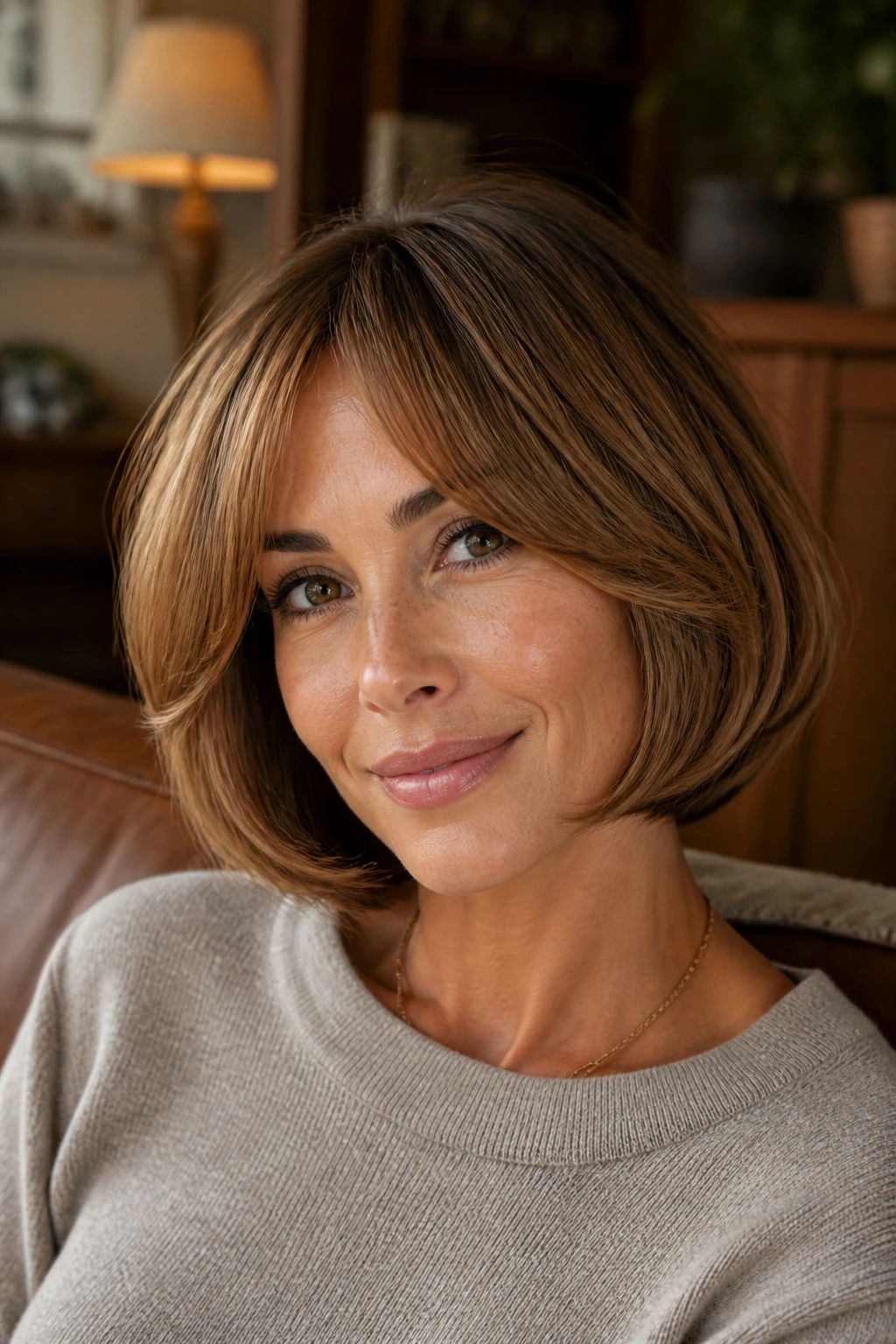
A rounded bob is all about curve. The cut follows the shape of the head, which makes it feel softer than a strict geometric bob, and toffee color makes that curve look even smoother. Add curtain bangs, and the whole style suddenly has a face-framing shape that feels easy to wear.
This is the bob for people who want softness first. The rounded outline removes any hard corners at the jaw, while the bangs split the front so the face doesn’t disappear into one block of hair. Toffee is a smart shade here because it has enough depth to stay rich and enough warmth to keep the style from looking flat.
Curtain bangs need a little attention. Not a lot, but some. Blow them away from the face with a round brush, then let them fall back naturally. If you press them too flat, they lose the bend that makes them work with the rest of the cut. The bob itself should sit full through the sides, almost like it was shaped to hug the cheekbones.
This version flatters when you want a soft frame without going full shag. It’s tidy, but not stiff. That’s the appeal.
10. Ginger Shaggy Bob
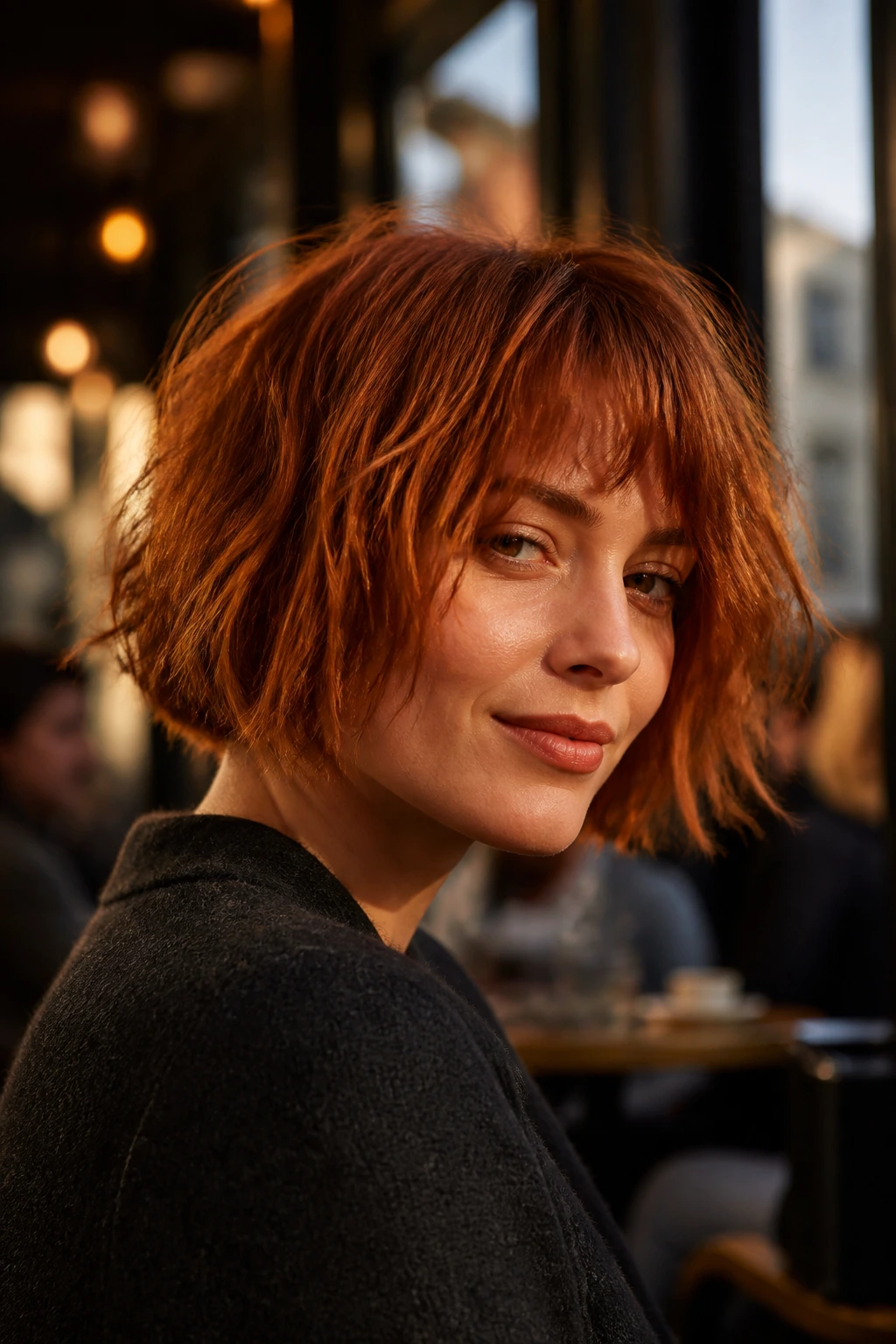
The ginger shaggy bob is the one that looks better when it is a little messy. That’s not a defect. That’s the whole point.
Texture Is The Point
A shaggy bob relies on broken-up ends, uneven movement, and a fringe or face-framing pieces that don’t lie perfectly still. Ginger gives all of that a warm spark, so even when the hair is slightly tousled, the color keeps it from looking unfinished. On straighter hair, it can read edgy. On wavy or curly hair, it feels lived-in and full.
You do need the right styling products, though. A light mousse at the roots gives lift. A touch of cream through the ends keeps the layers from frizzing out. If your hair is dense, a little dry texture spray at the crown can stop the cut from collapsing by midday.
What To Watch For
- Don’t ask for too many choppy layers at once.
- Keep the fringe soft if your forehead is narrow.
- Avoid heavy oils near the roots.
- Refresh the ginger tone with glossing before it gets dull.
This cut suits someone who doesn’t want to spend twenty minutes forcing the hair into place. The beauty is in the looseness. A little bend, a little separation, and the ginger tone does the rest.
11. Bronze Sleek Bob
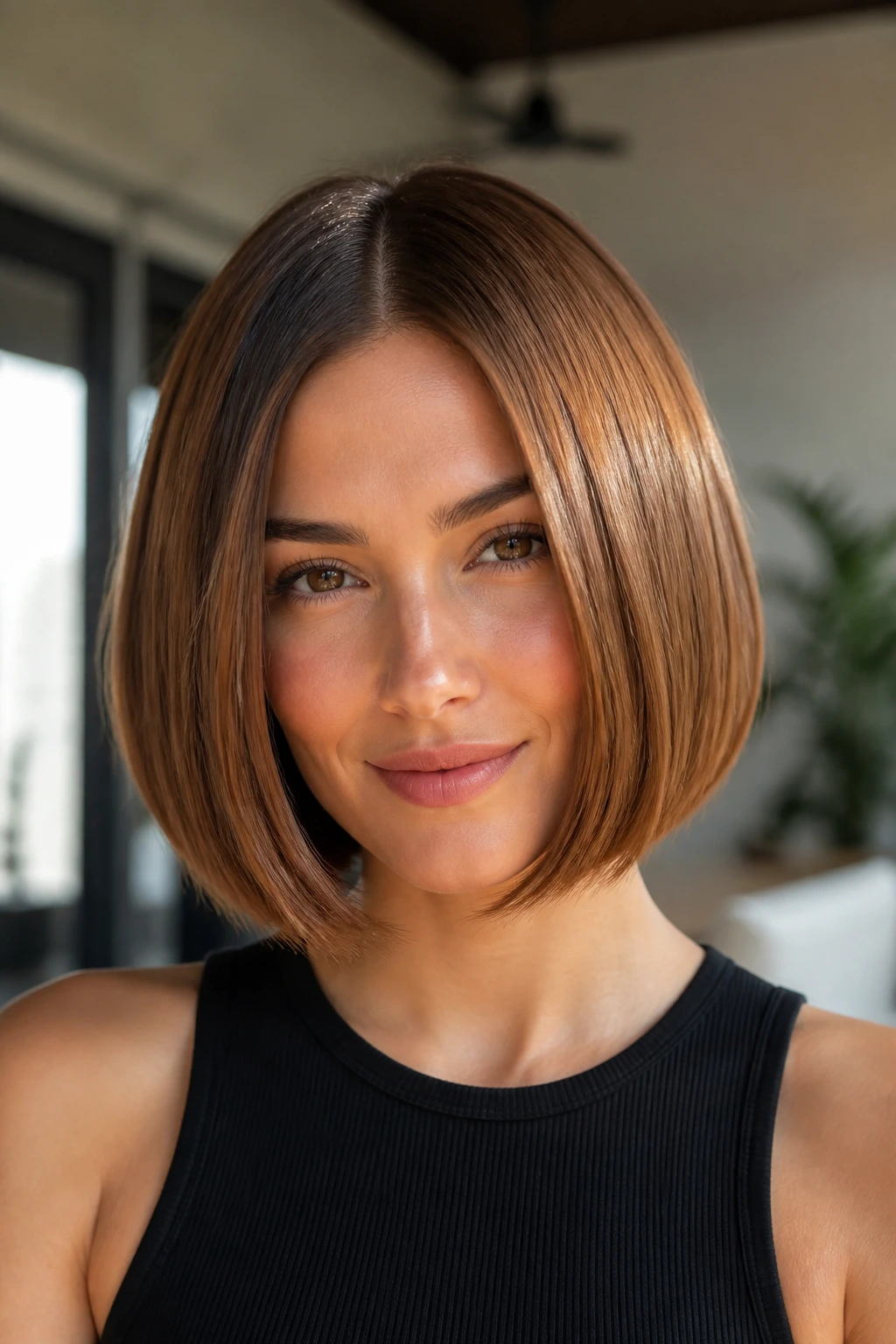
Bronze and a sleek bob have a quiet strength to them. The cut is streamlined, sometimes almost severe, and the bronze tone keeps it from looking cold. That matters. Sleek short hair can easily go flat or hard if the color lacks warmth.
The best version has a smooth, reflective surface. Think blow-dried with a paddle brush, then touched with a flat iron only where needed. Too much iron can make the ends look stiff, which is a shame because bronze looks best when it moves a little in the light. The color itself should sit in the middle ground between brown and gold, rich enough to feel dimensional but not so light that it starts reading brassy.
This is a strong choice if you like clean lines and low visual clutter. No big curls. No heavy layering. Just a precise bob and a color that gives the surface depth. A good heat protectant matters here, because bronze loses its shine fast when the hair gets scorched. And scorched ends are easy to spot on a sleek bob. There’s nowhere to hide them.
If your wardrobe leans simple and you like hair that looks deliberate, this one has real staying power.
12. Mahogany Angled Bob
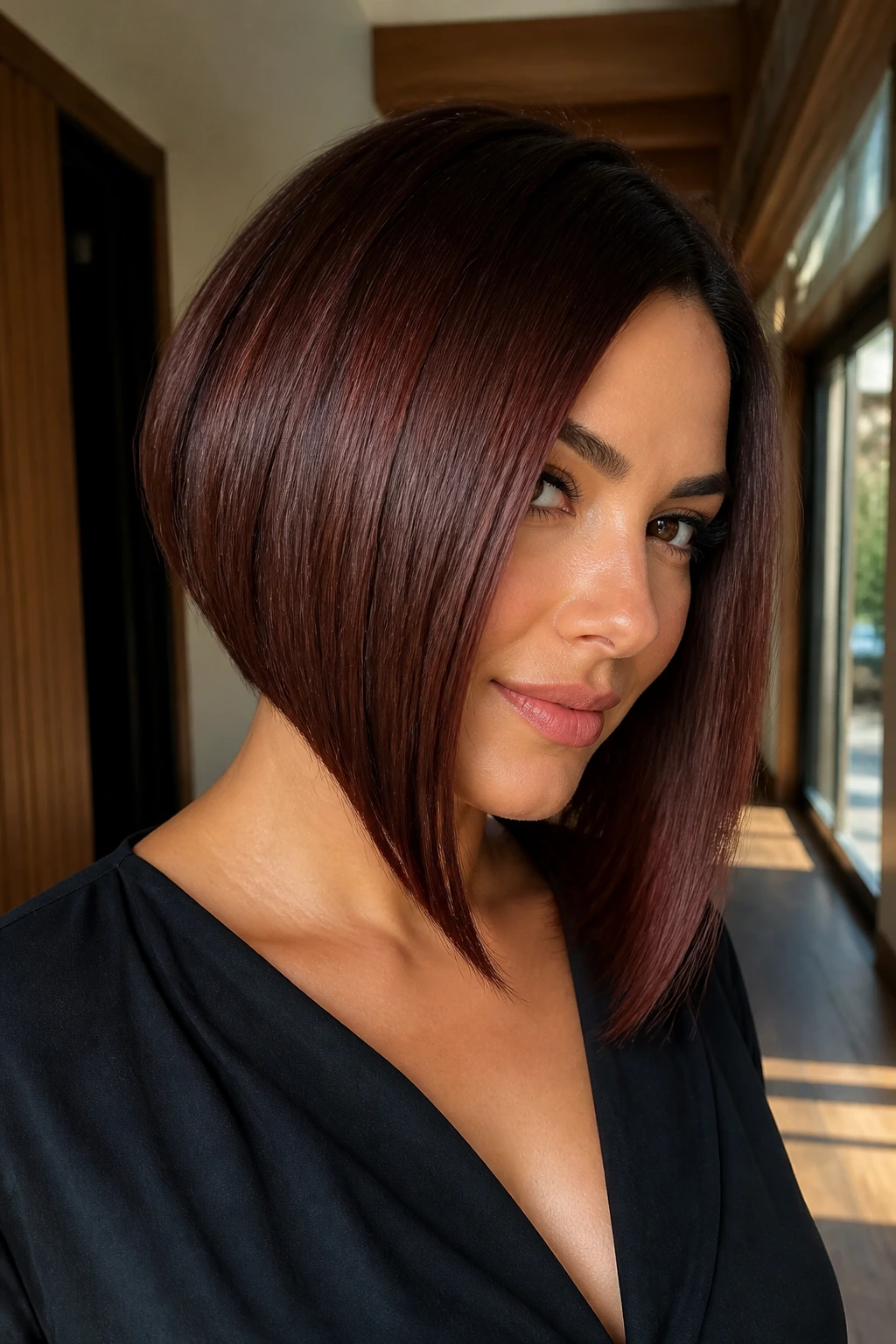
Does a dramatic angle need a dramatic color? Not necessarily. Mahogany proves the opposite. The cut creates the shape, and the color deepens it without making it loud.
An angled bob starts shorter in the back and gets longer toward the front. On dense hair, that angle can remove weight and make the face look a little longer. Mahogany works because it gives the cut depth along that forward line. The color also behaves well in low light, where brighter reds can look messy.
Ask For This If You Want
- A strong line at the front that lands near the chin.
- A shorter back that lifts off the neck.
- A mahogany base with soft red-brown undertones.
- Smooth styling with a slight underbend at the ends.
The best thing about mahogany is that it feels rich without shouting. That makes it a good pick if you want a warm color but don’t want the upkeep of a brighter red. The bob can stay sleek, blow-dried, or tucked behind one ear and still hold its shape.
This is also a good haircut for people who like structure. It gives you a clear outline every single day. No guessing.
13. Apricot Piecey Bob
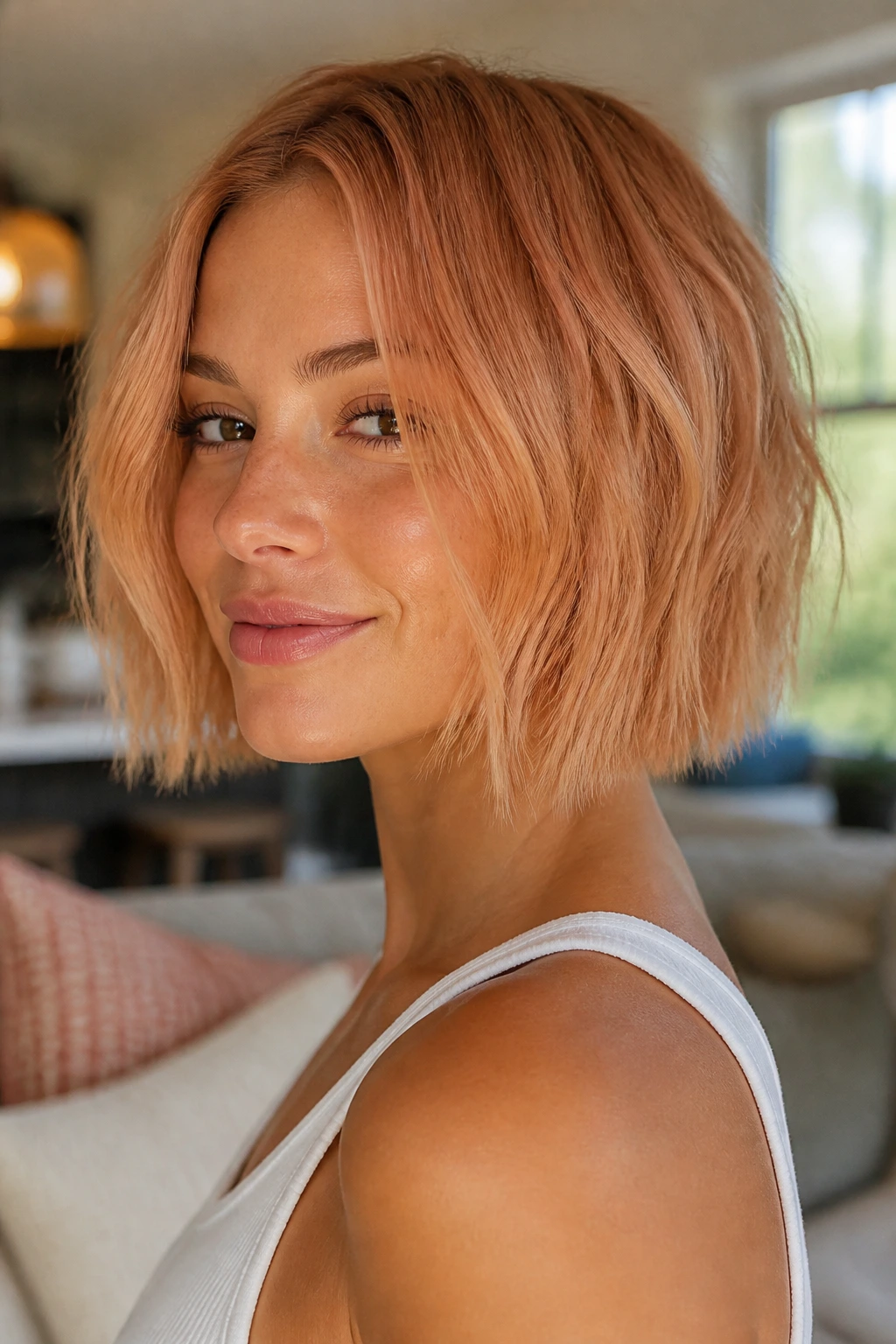
An apricot piecey bob looks easy from a distance, but the balance is touchy. Too much color and it turns cartoonish. Too little texture and it goes flat. Get both right, and the result is airy, modern, and a little unexpected.
The cleanest way to wear it is with a simple bob shape and separated ends. Not choppy in a harsh way. Just lightly undone. Apricot works best when it’s placed as a warm veil over a lighter base or as a glaze over pre-lightened ends. That gives it a soft glow instead of a neon edge. The piecey finish keeps the bob from reading too sweet, which matters because apricot can lean precious fast.
A light styling paste can help the ends stand apart without making them sticky. Use a small amount, rubbed between the palms, then press it into the bottom inch or two of hair. The idea is separation, not crunch.
This look suits someone who wants warmth with a bit of freshness. It’s not the easiest to maintain, but it has a brightness that feels cheerful without crossing into sugary territory. A good cut keeps it sharp. The color keeps it alive.
14. Butterscotch Curly Bob
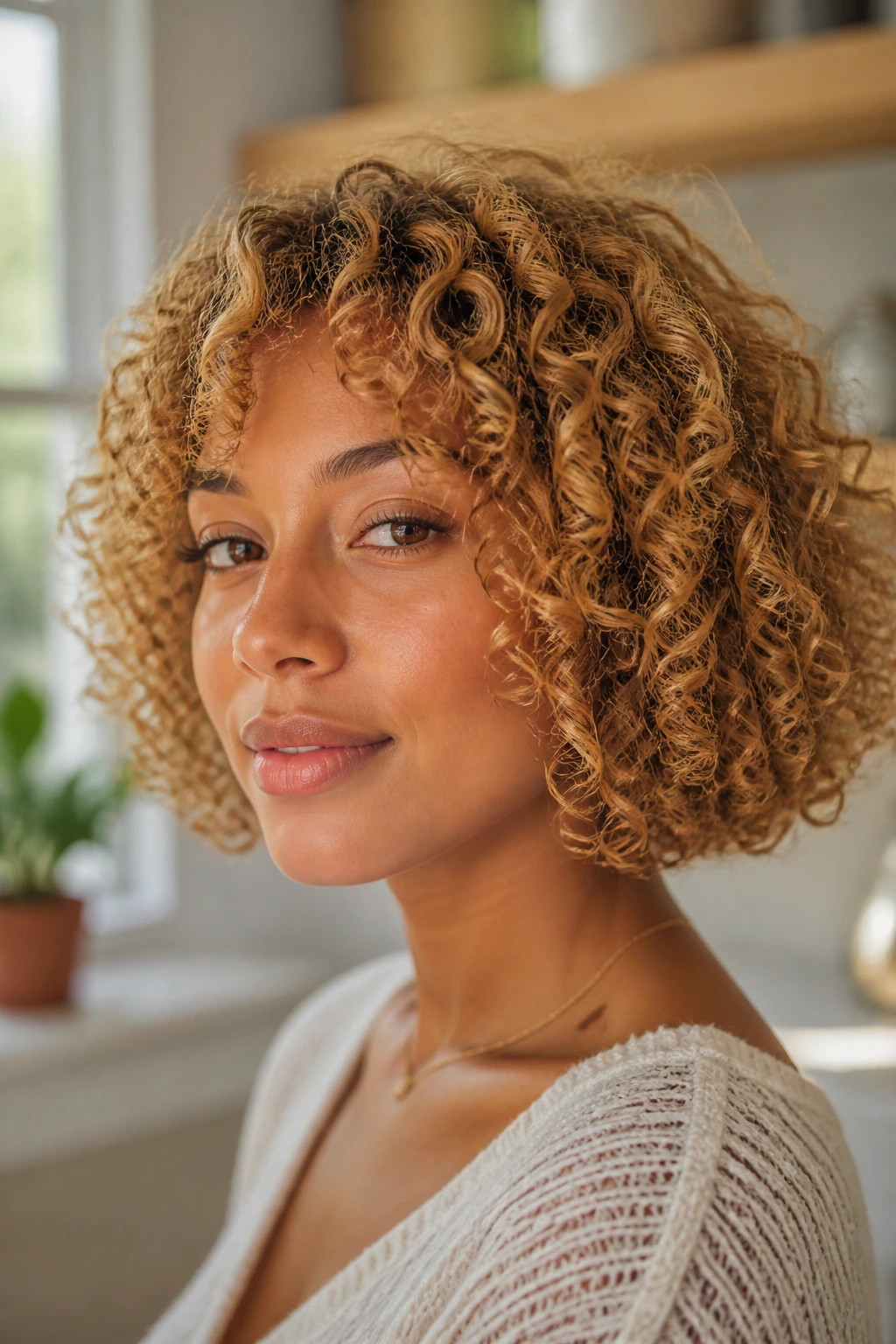
Curly hair changes the whole conversation. A bob on curls needs more length than people expect, because the curl spring will shrink it up once it dries. That’s where butterscotch comes in. The warm tone keeps the shape soft, and the caramel-gold mix makes the curls look full instead of heavy.
Straight bobs and curly bobs are not the same haircut. Curly hair needs room to move, and a butterscotch tone helps define the curl pattern so the shape does not collapse into one big blur. The best cut usually leaves the hair a little longer than you think it should be when wet. If you want it to land at the jaw when dry, ask your stylist to account for shrinkage. That conversation matters.
Why It Works On Curls
- Warm color shows off curl ridges and bends.
- The shade brightens the outer layers without bleaching the whole head.
- A rounded shape keeps the silhouette from getting boxy.
- The color helps each curl read separately instead of merging together.
Diffusing on low heat keeps the curl pattern intact. Rough drying can puff the cut up and hide the color placement. A little leave-in cream helps, but don’t pile on too much. Curls want moisture, not grease.
This one is forgiving, lively, and much more flattering than people expect.
15. Maple Brown Collarbone Bob With Warm Toned Color
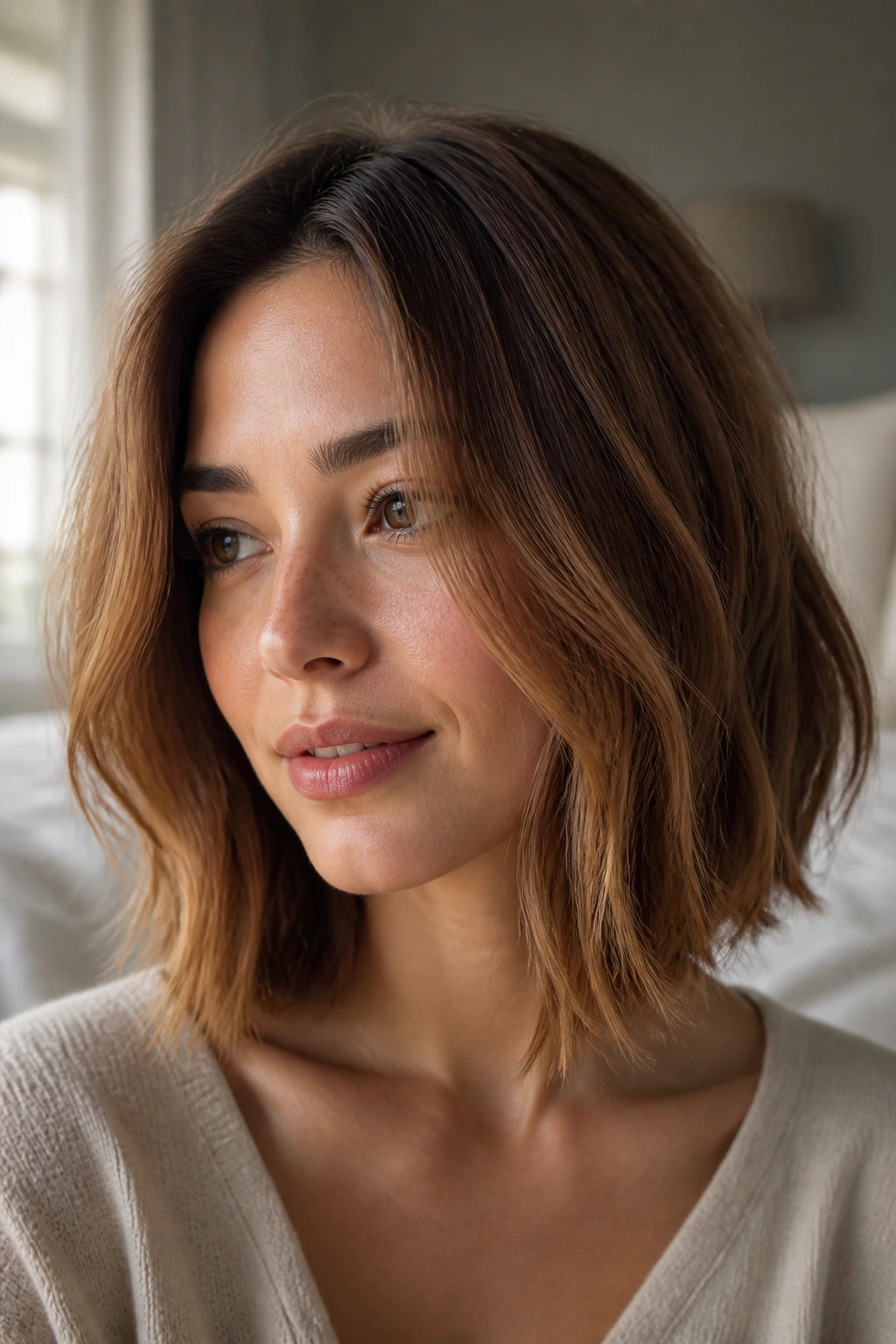
A collarbone bob is the easiest shape to live with, and maple brown makes it feel richer than plain brown ever could. The length is long enough to tuck, braid, or wear in a low twist, but short enough to keep that bob feel. It’s the sort of cut that still looks good on the third day after washing, which is not a small thing.
Maple brown sits in that sweet zone between chocolate and caramel. It’s warm, but not golden to the point of looking light. On medium to thick hair, it gives the cut depth. On finer hair, it can create the illusion of fullness because the color keeps the ends from vanishing. The collarbone length also means the hair moves against clothing, so the warm tone catches a little variation as you turn your head. Subtle. Nice.
This is probably the most wearable option in the whole group. It doesn’t ask for as much styling as a micro bob, and it doesn’t need the careful wave pattern of balayage to look finished. A simple blowout, a soft bend at the ends, and a gloss between color appointments are enough.
Final Thoughts
Warm tones and bob cuts are a better match than people give them credit for. The cut brings the shape; the color changes how that shape feels on the face. Copper sharpens, caramel softens, auburn deepens, honey lifts, and chestnut steadies the whole thing.
The smartest choice is not always the brightest one. Sometimes the best bob is the one that looks the most balanced in bad bathroom light, under office bulbs, and in the sort of mirror nobody posts online. That’s where good warm color earns its keep.
A bob should still feel easy to wear, even when the color has personality. If the haircut looks strong from every angle and the tone sits in the right warm family for your base, you’ve got a style that can carry itself. That’s the real win.
