



A curly bob that collapses into a triangle by lunchtime usually isn’t a “bad hair” problem. It’s a haircut problem.
The best bob cuts for curly hair respect three things at once: shrinkage, weight, and the way your curls stack on top of each other. Ignore any one of those, and the cut can puff out at the sides, sit flat at the crown, or turn boxy in a way that never quite feels intentional.
I’ve always liked bobs on curls because they do something a little magical when they’re cut well. The shape can look precise on day one and still read well after the curls have loosened, swelled, and done their own weird little thing. A quarter inch at the ends can matter. So can the difference between a dry cut and a wet cut, or whether the stylist leaves enough bulk in the perimeter for the curls to sit together instead of fraying apart.
What matters most is not whether the bob is short or long. It’s whether the line is built to survive the curl pattern you actually have. The cuts below do that in different ways, and each one has its own mood, upkeep level, and shape story.
1. Chin-Length Bob for Curly Hair
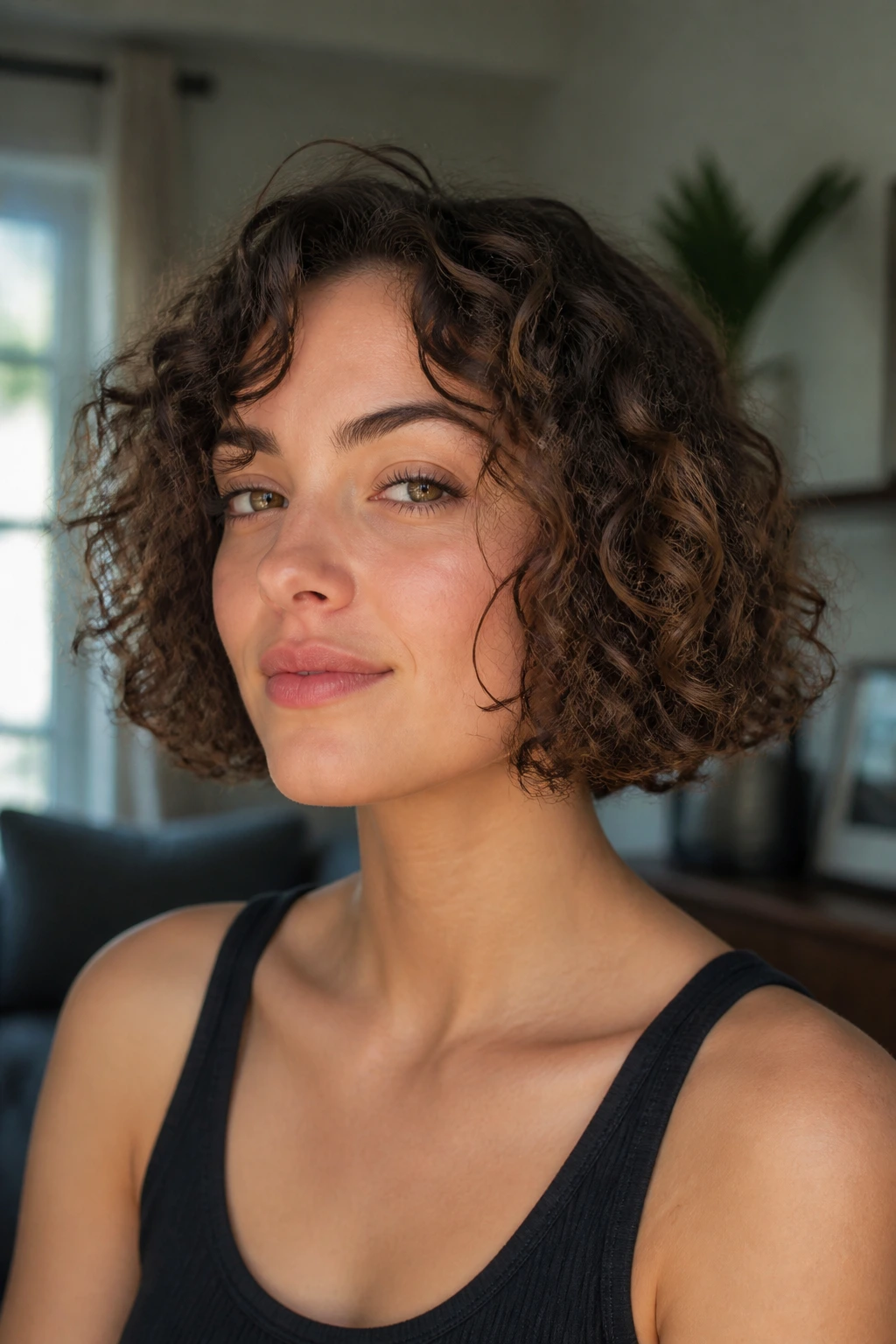
A chin-length curly bob is the one I’d pick when someone wants a clean outline without losing the bounce that makes curls fun in the first place. It lands right where the jaw starts to taper, which gives the hair enough length to move but not so much that it hangs heavy.
The sweet spot is usually a half-inch below the chin on wet hair, sometimes a little longer if the curls are tight or springy. That extra room matters. Curls shrink, and a bob that looks gentle at the bowl can wake up much shorter once it dries.
The reason this shape holds is simple: the ends keep enough weight to clump, while the length stays short enough to keep the silhouette tidy. That combination keeps the bob from turning into a wide, mushroomy puff.
Ask for the perimeter to be checked with the curls in their natural fall. If your hair has a mix of loose and springy pieces, a dry refinement at the ends can save you from that lopsided, one-side-flips-out problem.
2. Soft Layered Curly Bob with Invisible Shape

What makes a layered curly bob hold shape is not the number of layers. It’s where they start.
Why It Stays Round
Layers that begin below the cheekbone let the curls move without breaking the outline into pieces. That matters if your hair has any density at all, because heavy layers too high up can create a frayed top and a weak bottom. The bob loses its line fast.
I like this cut for people who want softness at the sides but still need a solid edge at the bottom. The internal layers remove bulk from the middle, then the perimeter anchors the whole thing. The result feels lighter, but not stringy.
What to Ask For
- Layers that start below the cheekbone, not around the ear
- A clean bottom line with enough weight to keep curl clumps together
- A dry check at the sides, where curls tend to kick out first
- No aggressive thinning shears near the ends, which can make the shape frizz up
If your curls are dense and you hate the “helmet” effect, this is one of the easiest fixes. It gives the cut air without letting it drift into a shag.
3. French Bob with a Soft Fringe

A French bob sits shorter and a little sharper, and that’s exactly why it works so well on curls that like structure. The classic version lands around lip length to just under the chin, with a fringe that skims the brow or splits softly in the middle.
The fringe does a lot of the work here. It pulls attention up, keeps the front from looking too wide, and gives the whole cut a deliberate finish. Without it, the same length can read blunt in a way that feels more severe than stylish.
A cut like this is at its best when the curls are dry-cut or closely checked once they’ve settled. Bangs are sneaky. Cut them wet and they can jump a full inch, sometimes more, which is how people end up with tiny little spring-loaded fringes that won’t stay put.
The shape works best when the curls around the face are slightly longer than the ones at the crown. That tiny bit of length keeps the front from floating upward too much.
4. Stacked Bob with a Tapered Nape
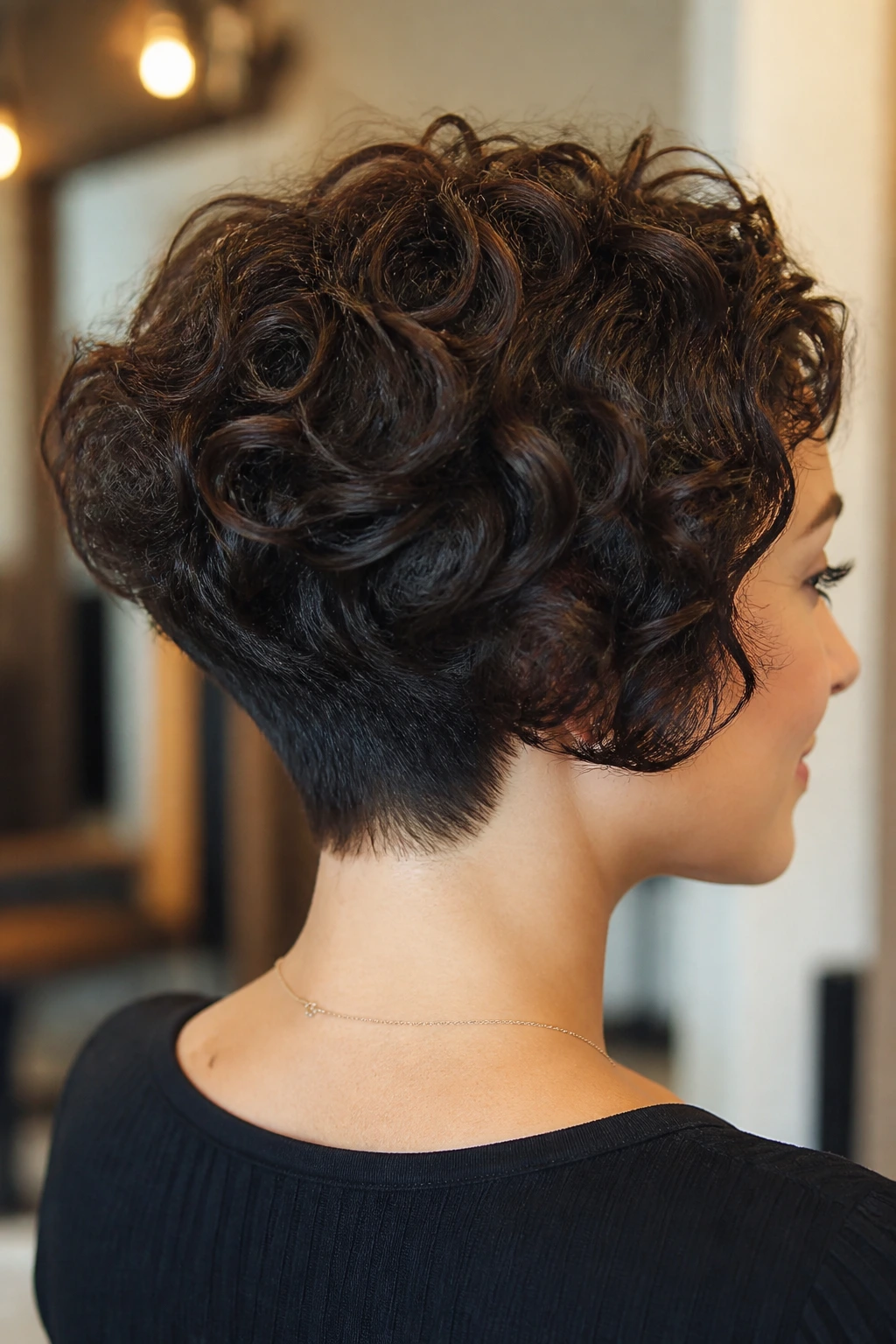
Need lift at the back? This is the one.
A stacked bob uses graduated layers at the nape so the back hugs the head more closely, while the top layers sit a touch longer and looser. On curly hair, that can be a lifesaver. The haircut gains shape before styling even starts, which is half the battle.
The nape stays neat. The crown gets room.
That contrast matters because curls often carry too much volume in the wrong place. A stacked back removes that heavy shelf effect at the neck and makes the cut feel finished, even on a day when the curls are acting a little lazy.
What to Watch For
- The stack should be soft, not choppy
- The back should taper cleanly into the neckline
- The crown needs enough length to keep the curls from sticking up
- Dense curls usually need less layering than fine curls here
This cut can grow out awkwardly if the maintenance slips too long. Once the stack softens, the back starts to balloon. Keep that in mind before you fall in love with the first-day shape.
5. A-Line Bob for Curly Hair
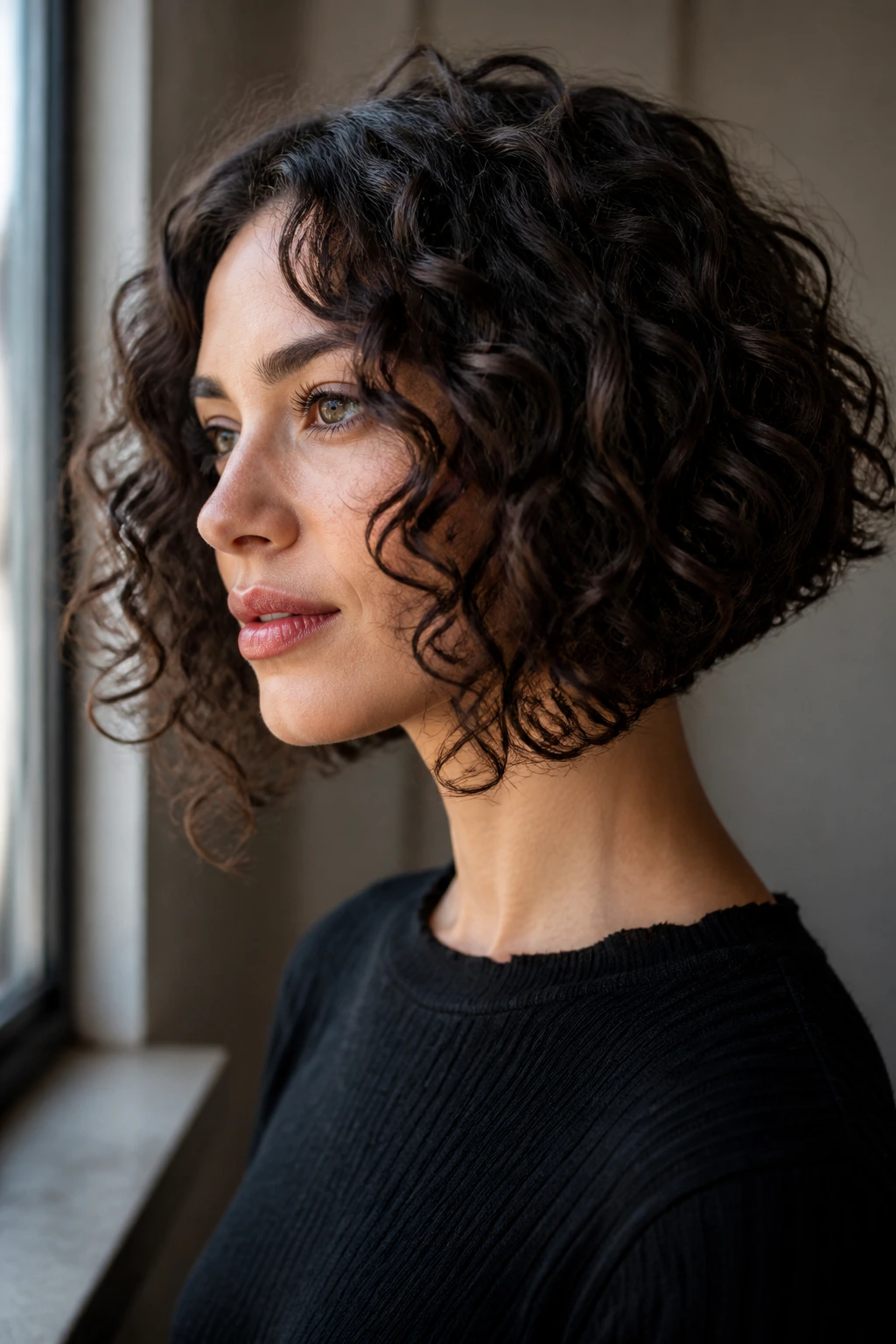
If a blunt bob is a wall, the A-line is a ramp.
The front stays a little longer than the back, usually by about one to one and a half inches, and that small shift changes how curly hair sits against the face. Instead of spreading outward at the cheeks, the curls fall forward just enough to frame the jaw and cheekbone.
This is one of my favorite bob cuts for curly hair when the goal is shape control without losing softness. The longer front pieces keep the cut from feeling boxy, while the shorter back stops the whole thing from dragging down the neck.
It also handles shrinkage well. When the curls tighten up, the line still reads clearly because the front has more length to show it off. That’s the trick. You’re not just cutting length; you’re building a slope the curls can follow.
If your face is round or your curls are thick, ask for a gentle A-line rather than a dramatic one. Too steep, and the bob starts feeling like a graphic shape instead of a lived-in haircut.
6. Asymmetrical Curly Bob
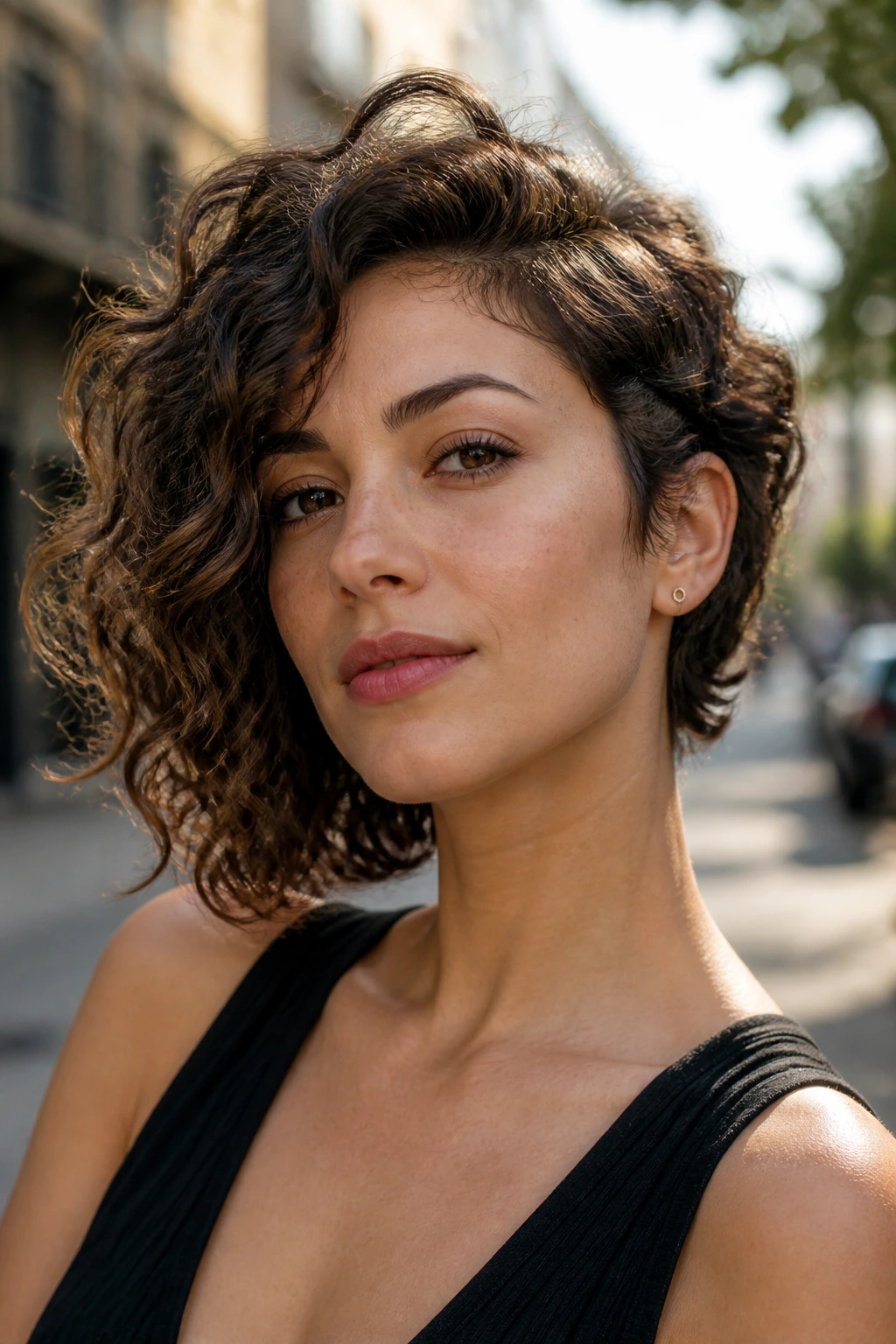
Why does an uneven bob hold shape so well on curls?
Because it breaks up the weight in a way curls already understand. One side carries a little more length, the other side sits higher, and the imbalance keeps the eye moving instead of landing on one bulky line. Curly hair often looks best when it’s not trying too hard to be symmetrical.
The difference between the two sides does not need to be wild. One to one and a half inches is usually enough. Push it too far and the haircut starts to look like an accident instead of a choice.
How to Wear It
- Part it on the heavier side so the longer section doesn’t collapse
- Keep the shorter side soft around the cheekbone
- Style with a diffuser, then pinch the ends apart only after they dry
- Let one side tuck behind the ear if you want the asymmetry to read clearly
I like this cut for people who wear curls with a side part anyway. It gives the hair a little attitude, and it solves the problem of one side always looking flatter than the other.
7. Blunt Curly Bob
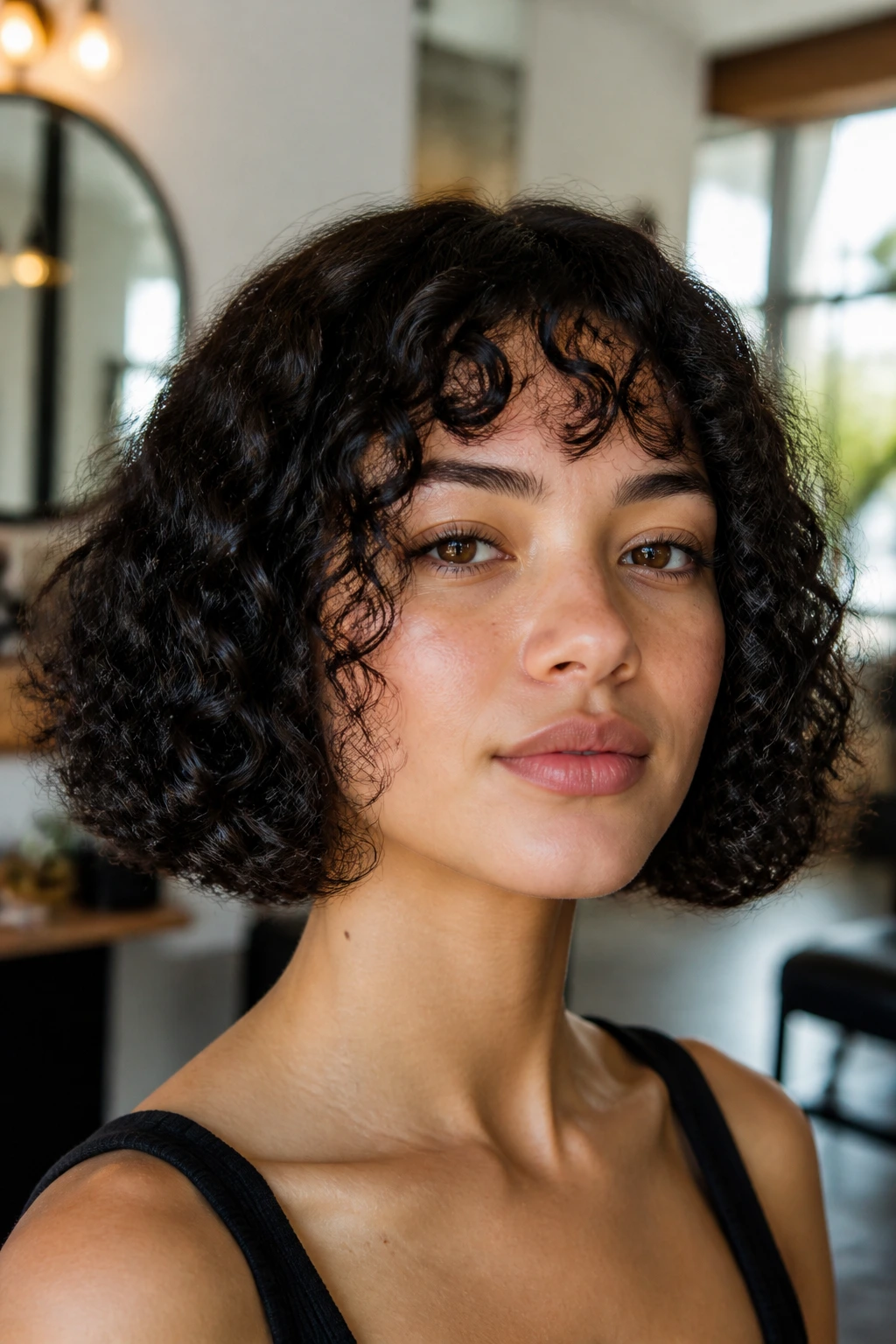
A blunt curly bob can look sharper than a lot of layered cuts, and I mean that in the best way.
When the curls clump well, a clean, straight perimeter gives the whole haircut a strong base. Instead of pieces flicking out in different directions, the ends line up and the shape reads as a single idea. On dense or medium-dense curls, that can look expensive without trying.
The catch is that a blunt bob only works if the ends are healthy and the curl pattern is cohesive. Thin ends, uneven porosity, or lots of breakage will make the line look ragged. A blunt cut shows everything. There’s nowhere to hide.
This cut usually needs regular trims every 8 to 10 weeks to keep the outline crisp. Let it go too long and the bottom starts to puff out, which is exactly what a blunt bob is trying to avoid.
A little curl cream on the ends helps, but don’t drown it in product. The point is definition, not grease.
8. Rounded Curly Bob

The rounded bob looks like it was built to match the head shape, and when it works, it really does.
The curve is the whole appeal. Instead of sitting flat at the bottom or jutting out at the sides, the cut arcs gently around the head so the curls follow a smooth line. It can be especially good if your hair tends to form a triangle, because the rounded perimeter pulls the width back in.
The feeling is softer than a blunt bob, but not sloppy. There’s still a boundary. That matters. Without a boundary, curly hair can spread out in a way that makes the cut look bigger than it is.
- Slightly longer pieces at the crown help the roundness read well
- A soft taper near the ears keeps the sides from puffing
- Dense curls often need less interior layering here, not more
- A little root lift at the top keeps the curve from looking flat
This is one of those cuts that looks almost architectural on the right curl pattern. Neat, but not stiff.
9. Shaggy Curly Bob
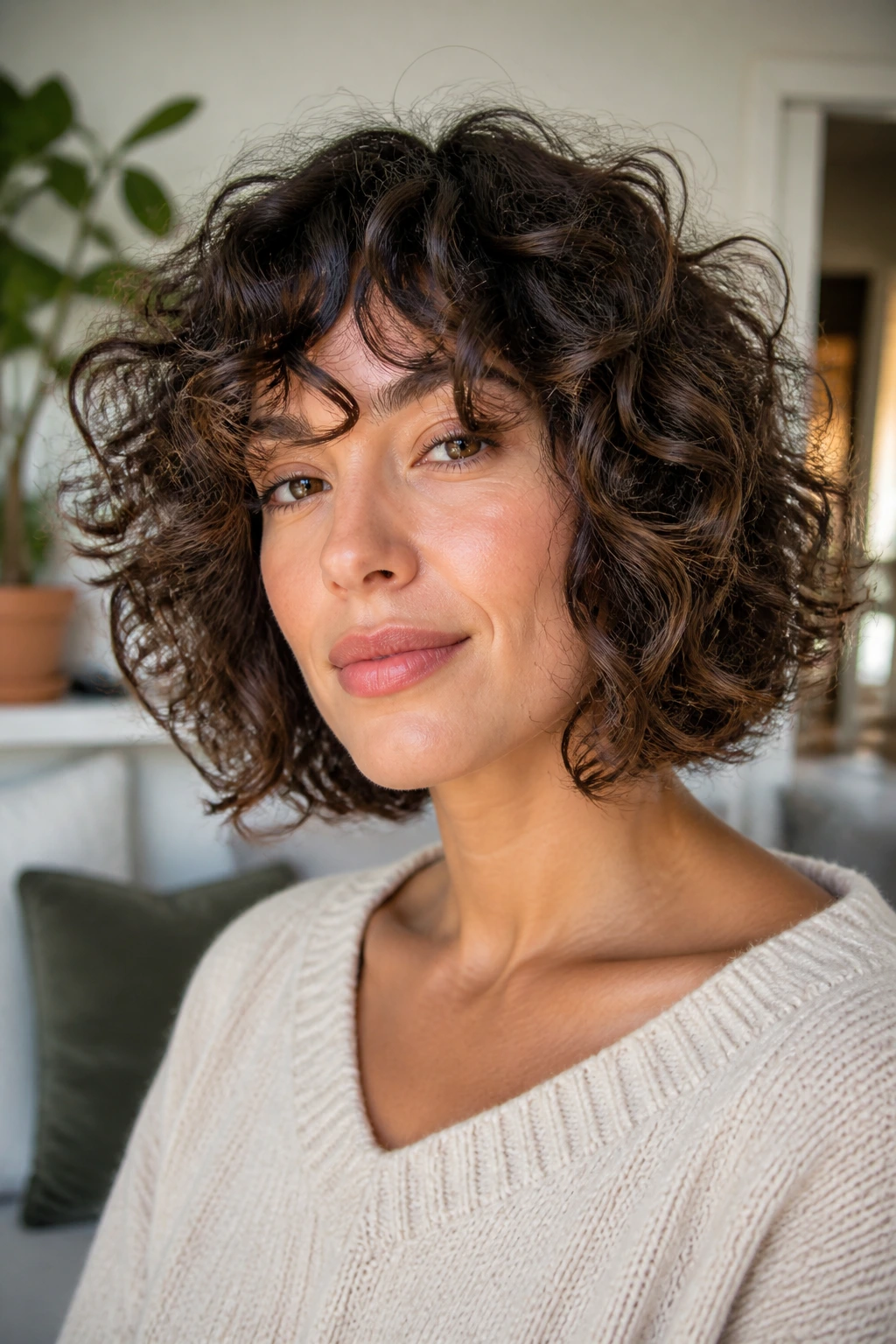
I reach for this cut when someone wants movement first and neatness second.
A shaggy curly bob keeps bob length at the edges, but the inside gets softened with layers so the curls can separate a bit and do their own thing. It’s not a full shag that disappears into the shoulders. The bob line is still there. It just has a looser, more lived-in middle.
The shape stays interesting because the layers take pressure off the bottom edge. Instead of all the curls stacking on one shelf, they sit in little tiers. That creates lift without forcing the top to stand up too much.
Best If Your Hair Does This
- Gets bulky at the sides but flat at the crown
- Forms strong curl clumps, then breaks apart halfway through the day
- Feels too heavy in a one-length cut
- Needs shape but not a lot of polish
A shaggy bob is not the safest choice if you hate fuzz around the face. It’s a little freer than that. But if you want texture that looks intentional even on messy days, this is hard to beat.
10. Curtain Bangs for a Curly Bob
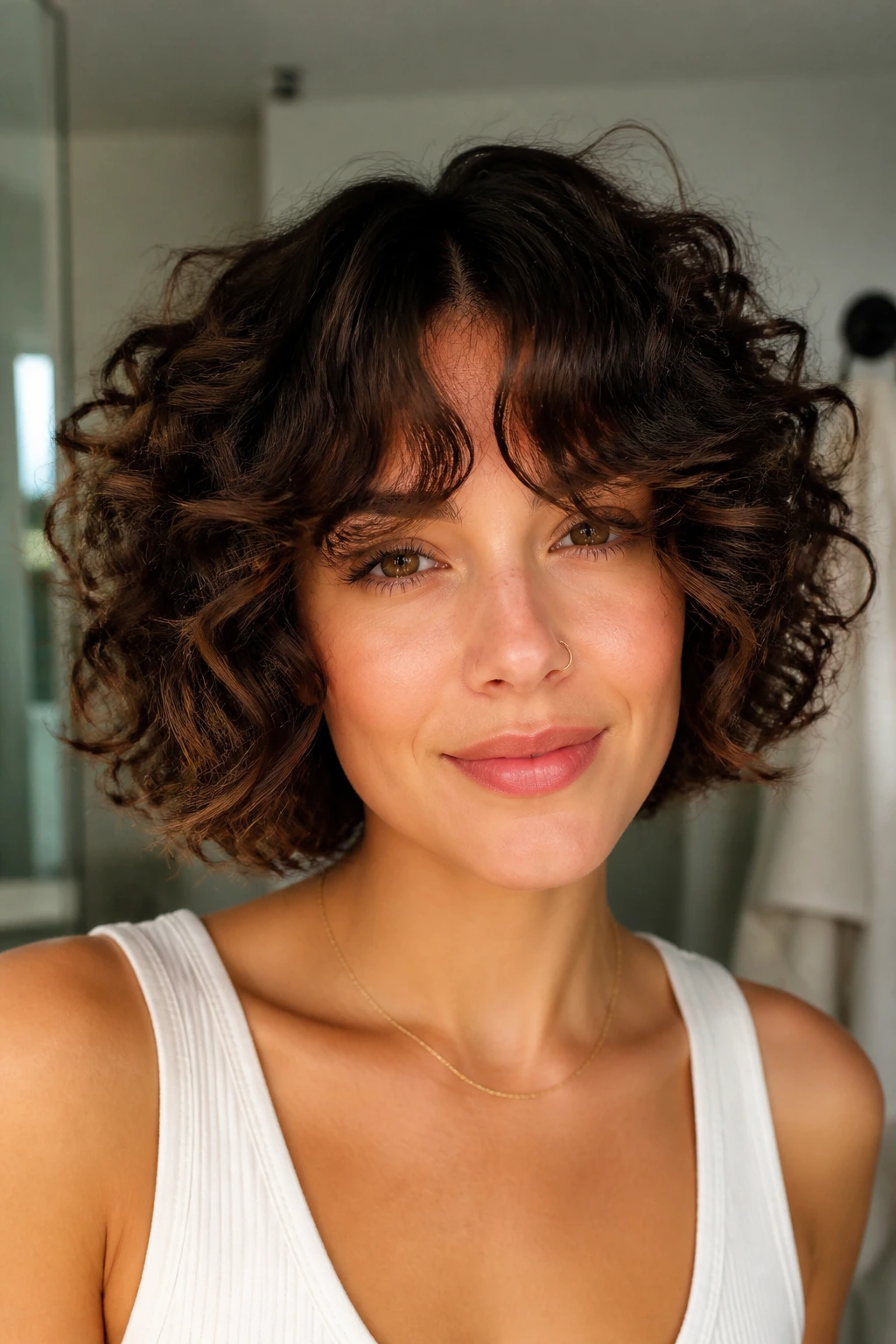
Do curly curtain bangs work? Yes, if they’re cut with restraint.
The middle needs to stay long enough to split open at the brow or cheekbone, not cut so short that it springs into little baby coils above your eyes. I prefer curtain bangs that graze the cheekbones on dry hair, then blend down into the front pieces of the bob. That way the fringe becomes part of the haircut instead of sitting on top of it.
The real trick is balance. Curtain bangs can soften a curly bob that feels too square, and they can also hide a high forehead if that matters to you. They do not need to be dramatic. A soft bend and a little face-framing is enough.
How to Keep Them From Shrinking Too Far
- Trim bangs dry whenever possible
- Leave a little extra length in the center
- Use a light cream, not a heavy butter
- Refresh the front with water and fingers instead of brushing it apart
I like this pairing on medium curls and looser spirals. On tighter curls, it can still work, but the fringe needs more room to shrink.
11. Jaw-Length Box Bob
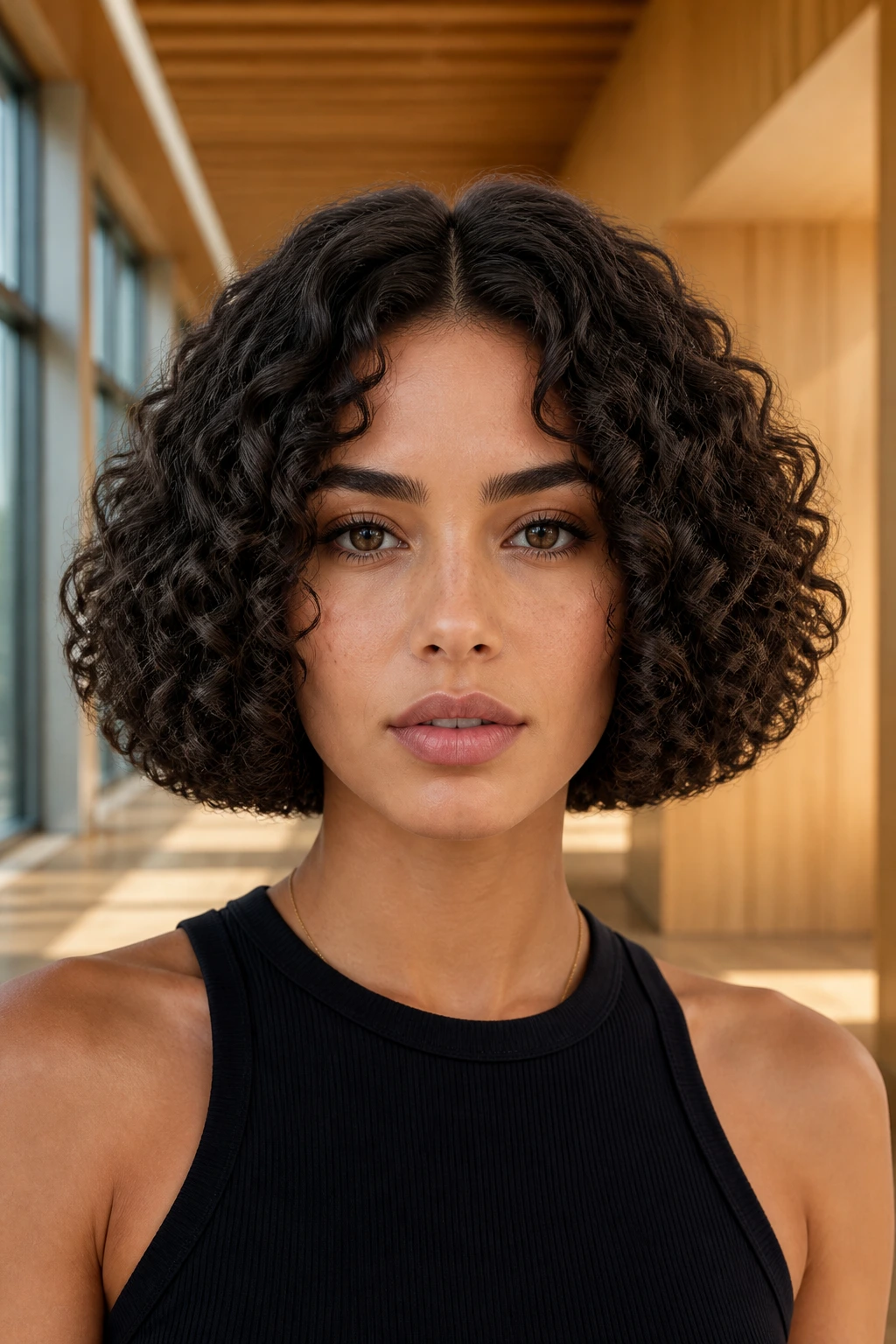
Boxy does not mean bulky.
A jaw-length box bob uses a straighter outline through the sides and bottom, which creates a strong, almost graphic frame around the face. On curly hair, that shape can look incredibly clean when the curls are dense enough to hold their own. The line feels deliberate, not soft for the sake of being soft.
The cut works because the perimeter stays firm while the inside is lightly controlled. If the stylist thins the ends too much, the whole thing loses the box effect and turns fuzzy. That’s the mistake to avoid. The shape comes from the edge, not from over-texturing the whole head.
This bob is especially nice on tight curls and coils that naturally stack upward. It gives the hair a clear boundary so the shrinkage becomes part of the look instead of something to fight.
If your hair is fine and loose, I’d skip this one. The box shape can go wispy fast.
12. Lob with Curly Ends

Not every bob has to be short.
A lob, or long bob, gives curly hair more room to breathe while still keeping a defined cut line. It usually lands somewhere between the collarbone and the top of the shoulders, which means the curls can swing a little instead of bunching right under the ears. That extra length also makes the cut easier to grow into if you’re nervous about going shorter all at once.
The shape holds because the weight is distributed more evenly. The ends still have enough heft to clump, but the top doesn’t feel overloaded. That balance can be a relief if your curls get wild when they’re cut too short.
Why It’s Worth a Spot Here
- Good for curl patterns that shrink a lot
- Easier to refresh with a diffuser and a little curl cream
- Less dramatic grow-out than a chin-length bob
- Works well if you like to tuck hair behind the ears
This is the practical choice. Not boring. Practical. There’s a difference, and I’ll take practical if it means the shape still looks good on day four.
13. Inverted Bob
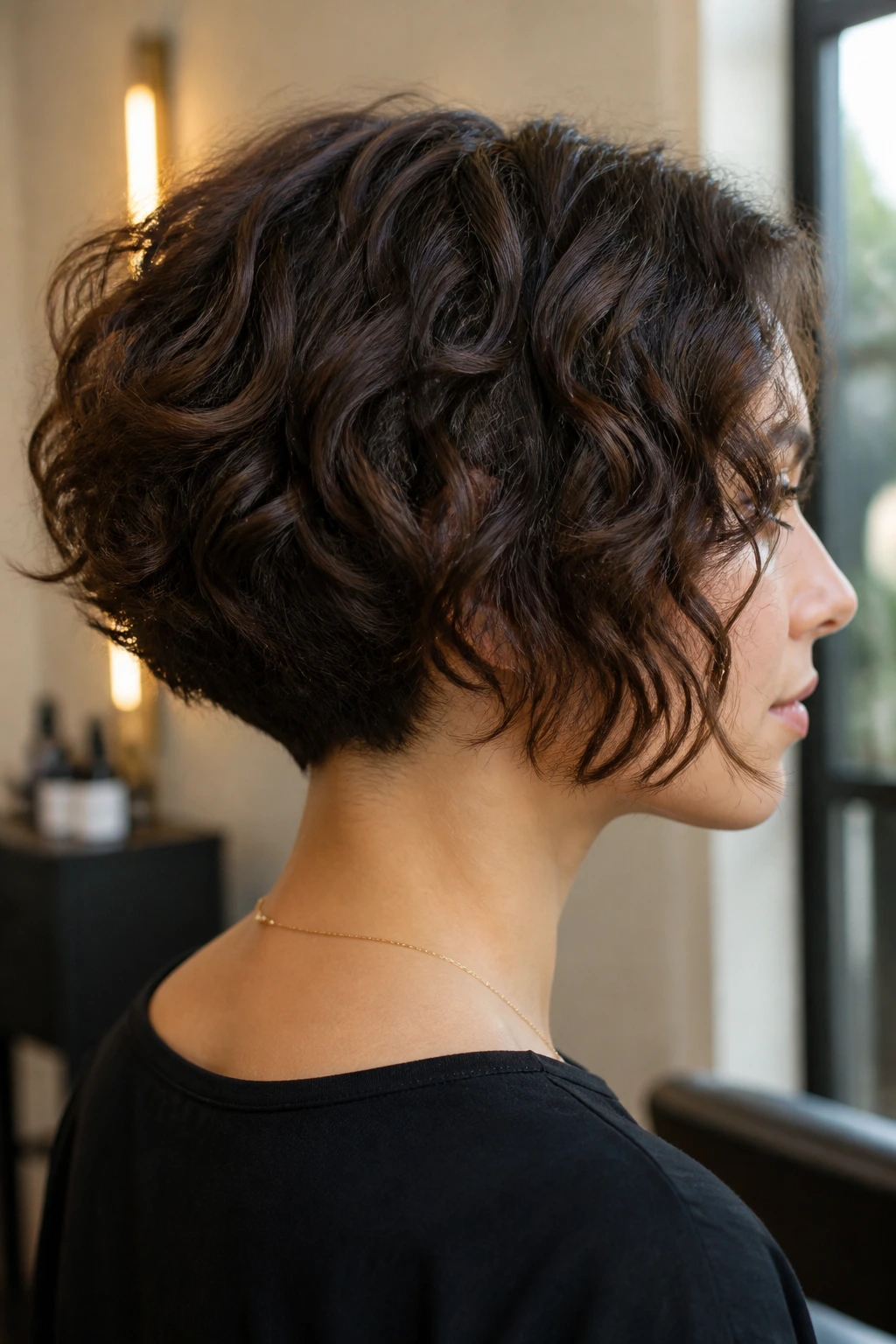
Picture the back sitting neat at the nape while the front brushes the jaw. That’s the inverted bob, and on curls it can look sharper than people expect.
The difference from an A-line is the drama of the angle. An inverted bob usually has a more pronounced rise from back to front, which gives the crown lift and the face a little frame. On curly hair, that built-in structure can keep the cut from puffing out at the neck.
The back should still feel soft, though. If it’s over-stacked, the silhouette can look stiff and helmet-like. A gentle graduation is enough in most cases.
What to Tell Your Stylist
- Keep the nape short, but not shaved close
- Leave the front one to two inches longer than the back
- Blend the transition so the curls don’t form visible steps
- Check the shape after drying, not only when wet
This cut is a good pick for thick curls that need lift and for anyone who wants a little more edge than a standard bob offers. It’s tidy with some bite.
14. Side-Part Curly Bob
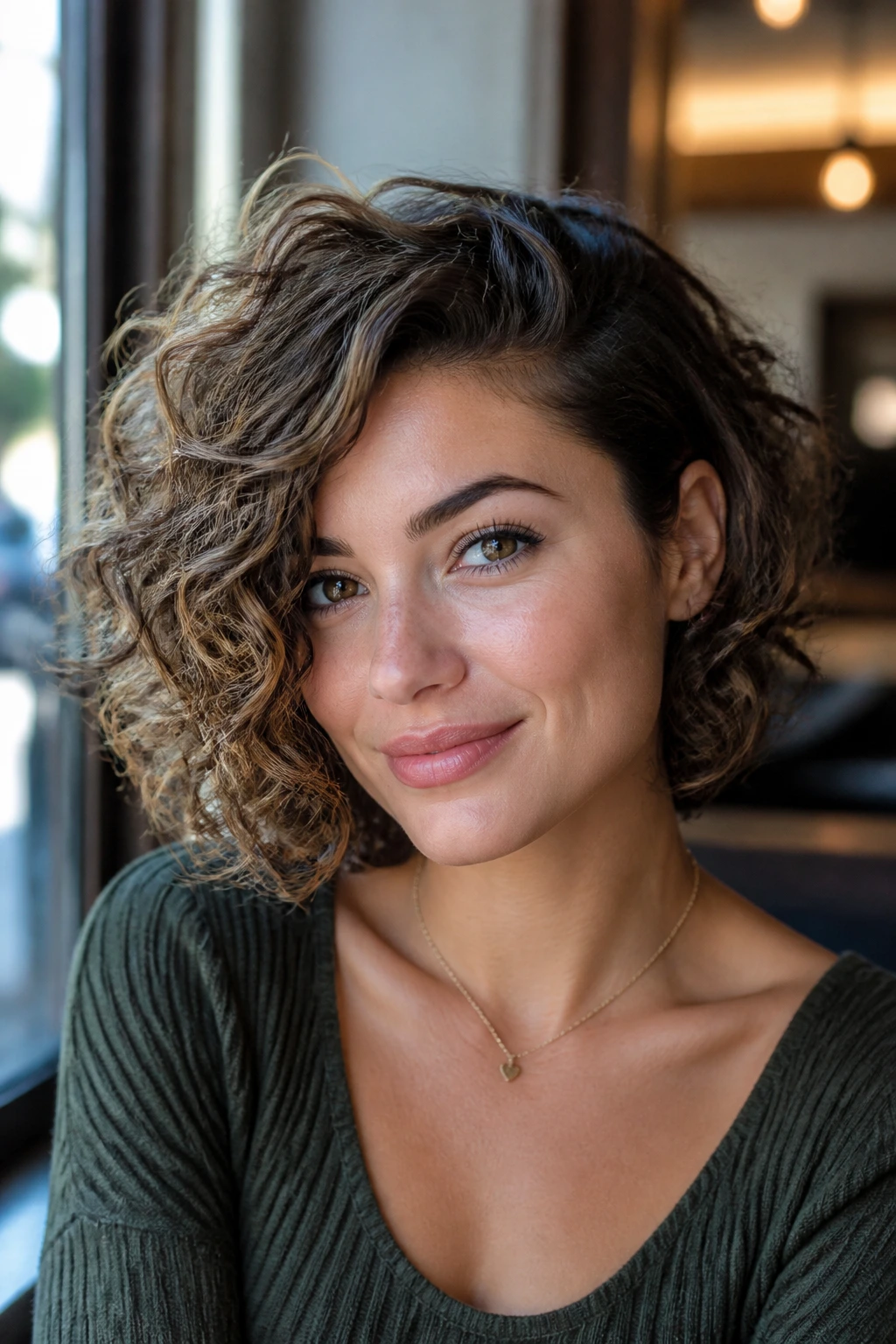
A side part does more for a curly bob than a lot of products do.
Shift the part one to two inches off center and the whole shape changes. The roots on the heavier side lift a bit, the lighter side gets a little sweep, and the bob stops feeling even in a boring way. On curls, that asymmetry can keep the top from flattening and the sides from growing too wide.
I like this especially on days when the curls feel sleepy at the root. A deep side part gives instant shape without adding a lot of effort. You do not need a dramatic flip or a big clip. Sometimes the smallest move makes the haircut behave.
The trick is to use your fingers, not a fine-tooth comb, when you set the part. Comb lines can look too sharp on curly hair and make the top sit strangely. A finger part lets the curl pattern settle on its own terms.
It’s a simple change. It changes everything.
15. Micro Bob for Tight Curly Hair
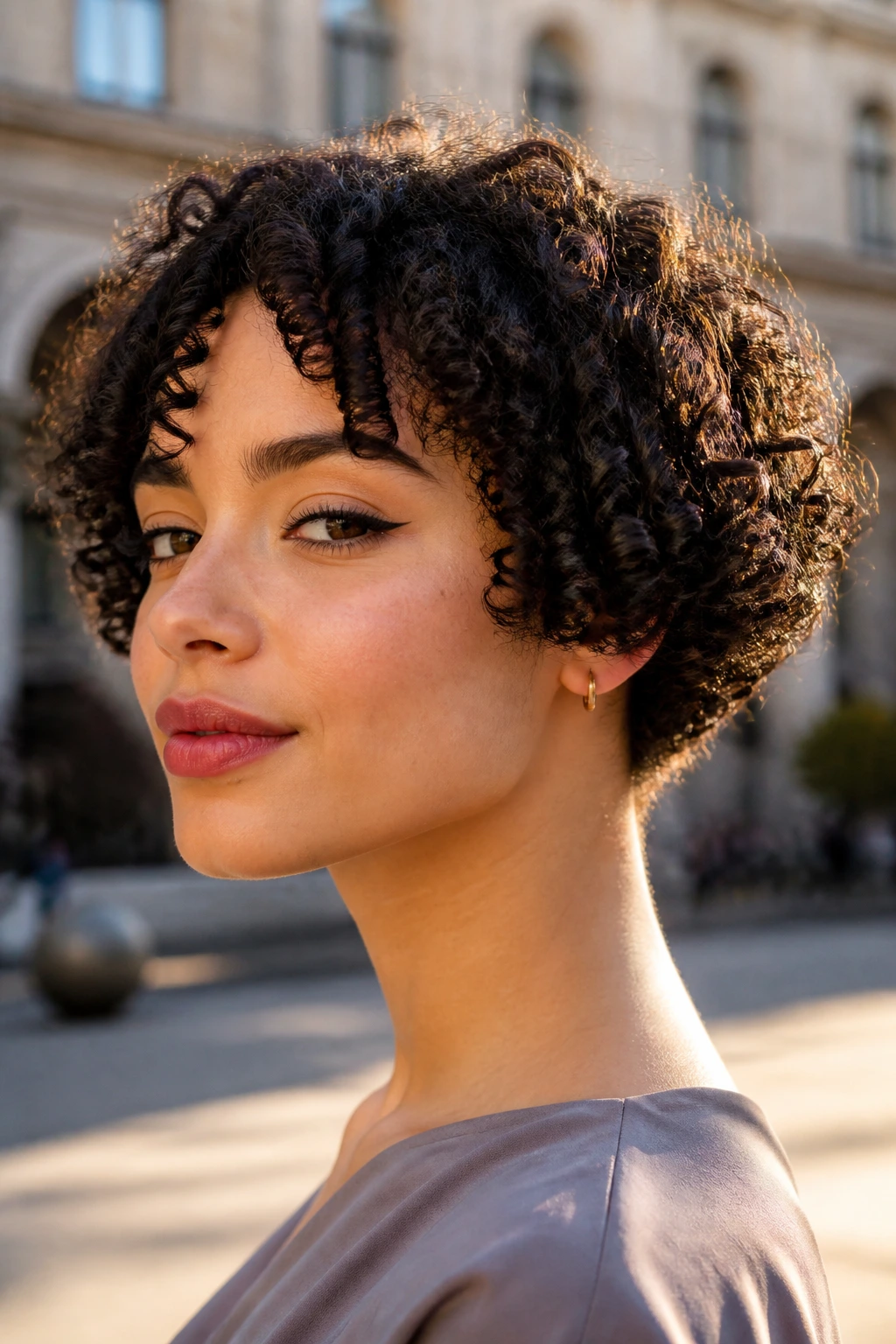
A micro bob is short enough to look crisp and long enough to let coils spring.
This is the one that sits somewhere between the ear and the jaw, sometimes a touch longer in the front. On tight curls, the shrinkage works in your favor. A cut that looks extremely short when wet can land in a neat, rounded shape once it dries, and that shape can hold all day if the perimeter is clean.
The micro bob is not for someone who wants to hide behind their hair. It puts the face right out there. But if your curls are dense and your neck gets hot under longer lengths, it can feel liberating in a practical way, not a dramatic one.
Best When You Want
- A clean neckline
- A defined outline with low fuss
- Enough curl length to keep the shape soft
- A cut that shows off tight coil pattern instead of burying it
Ask for a dry-shaped finish around the ears and nape. That area decides whether the cut looks polished or like it was trimmed in a hurry. And with a micro bob, the margin for error is tiny.
Final Thoughts
The strongest curly bob is the one that matches your curl pattern instead of fighting it. Some hair wants a blunt edge. Some wants a slope. Some needs a little stack in the back or a side part to wake it up.
If you’re deciding between two versions, choose the one that gives your curls a clear place to sit. That matters more than chasing a photo that looked good on someone with a different texture, density, and shrinkage pattern.
One practical rule saves a lot of regret: look at the shape dry, not only wet. Curls tell the truth once they settle. A good bob listens to that truth instead of arguing with it.
