



Long bob cuts are the rare haircut that can make fine hair look fuller, thick hair feel lighter, and curly hair keep its shape without turning every morning into a styling session. That sounds simple. It isn’t.
A lob only looks easy when the cut respects the hair it’s sitting on. Put the wrong version on a head of fine hair and it can fall flat by noon. Put the same shape on dense, wavy, or coily hair and it can balloon, flip, or hide all the good lines you wanted in the first place. The length matters too. A few inches can be the difference between a bob that feels crisp and one that just hangs there.
The sweet spot usually lives between the chin and the collarbone. Shorter than that, and the ends can kick out in odd ways. Longer than that, and the shape starts losing the clean, deliberate edge that makes a long bob such a strong haircut. What really makes the style work is where the weight sits, how the ends are finished, and whether the cut is built for your texture instead of borrowed from someone else’s.
These 18 long bob cuts lean into those differences. Some are blunt and sharp. Some are soft and layered. A few need a dry cut, a few need a side part, and a few need you to leave the thinning shears far, far away. That’s the fun part, honestly. A lob is not one haircut. It’s a shape with enough room to behave differently on different hair types.
1. The Blunt Collarbone Lob for Fine Straight Hair
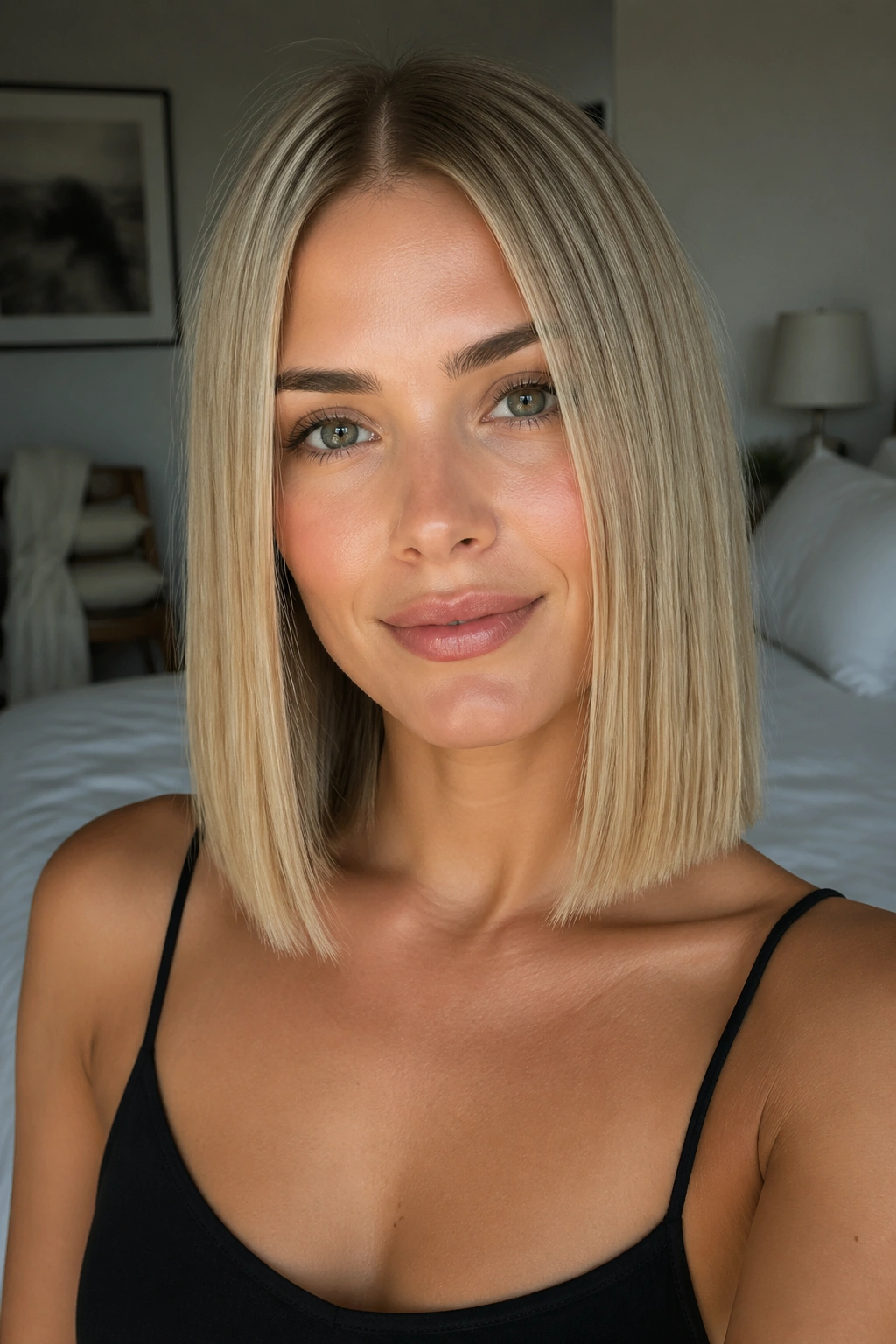
Fine straight hair usually looks best when the ends are given a clean line. A blunt collarbone lob does exactly that. It makes the perimeter feel denser, which matters when every strand is doing a lot of visual work.
The magic is in the simplicity. No heavy layering. No shredded ends. Just a solid line that lands around the collarbone, maybe a touch above if your hair is very fine and tends to break at the shoulders. That length keeps the cut from looking too sweet or too severe. It has enough swing to move, but enough weight to hold its shape.
Fine hair loves certainty.
If you want this cut to do its job, ask for a blunt baseline with minimal internal layering and a tiny bit of bevel at the ends. That little bend keeps the shape from looking boxy. I’d skip aggressive texturizing here. It only steals fullness from hair that already needs every bit of it.
A round brush or a quick pass with a flat iron, turned just at the ends, is usually enough. A root-lifting spray at the crown helps too, especially if your hair collapses near the part line. Keep the finish smooth. This is one of those cuts that looks smartest when it looks clean, not fussy.
2. The Soft Layered Lob for Thick Straight Hair
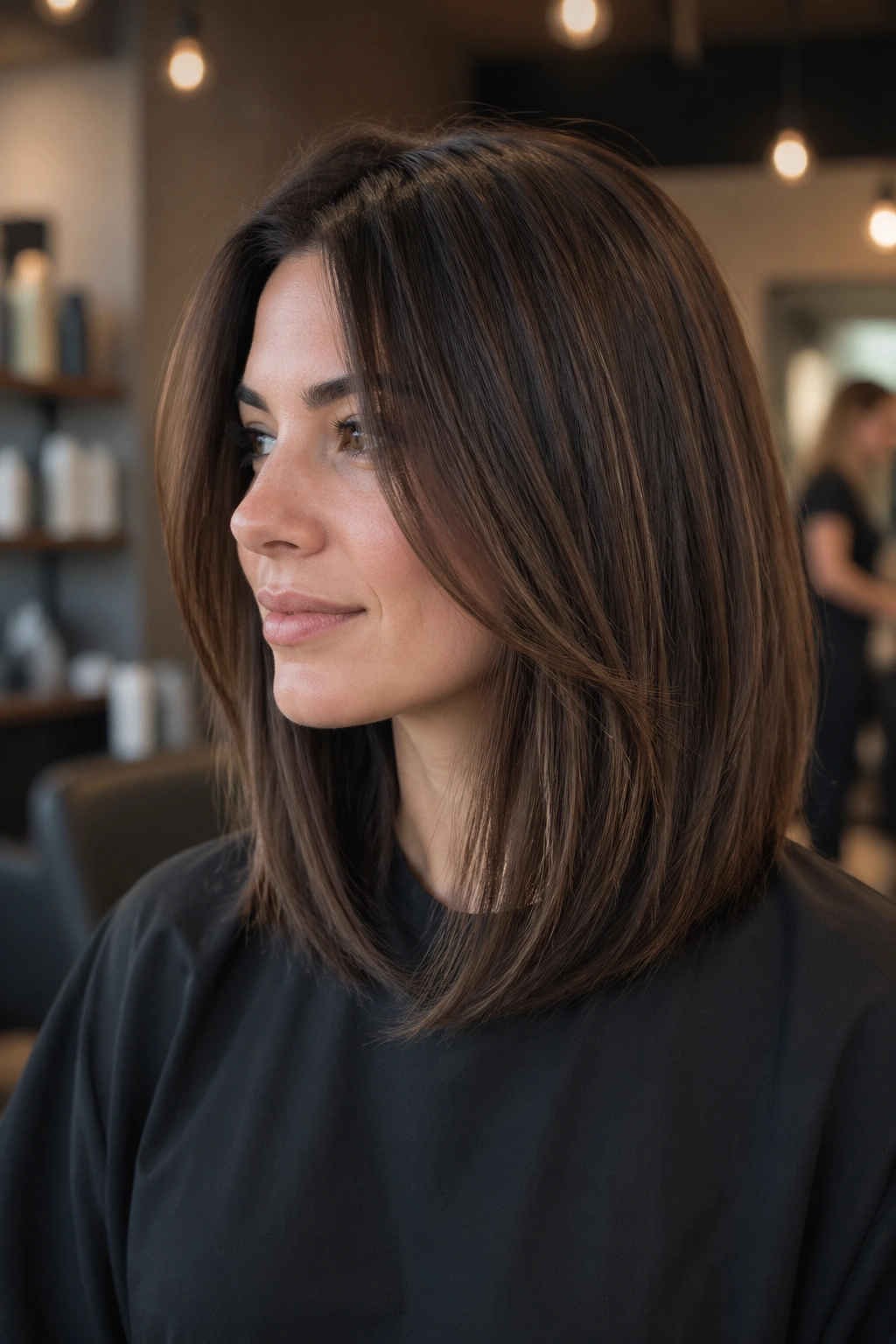
Can thick straight hair wear a lob without turning into a helmet? Absolutely, if the layers are placed with a little restraint. The trick is to keep the perimeter solid while taking weight out from the inside.
Where the Weight Comes Out
A good layered lob for thick straight hair should remove bulk around the mids, not strip the whole head bare. Ask for long internal layers and a slightly curved outline. That gives the hair room to move without making the ends wispy. If the cut is too heavily layered, thick straight hair can start to kick out at the bottom in a way that feels dated fast.
The best version keeps the front a bit longer than the back, but not so much that it turns into a dramatic angle. You want a shape that falls, not one that announces itself from across the room. On a head of thick hair, that usually means sections are cut with the shears held loosely and the stylist checking how the hair swings before taking more off.
- Ask for long layers placed under the crown.
- Keep the bottom edge blunt enough to hold weight.
- Skip over-thinning near the ends.
- Use a medium-round brush if you blow-dry, not a tiny one that exaggerates volume.
This cut shines when it moves. A soft bend through the mids keeps thick hair from sitting like a block, and that small bit of motion is usually enough.
3. The Invisible-Layer Lob for Wavy Hair
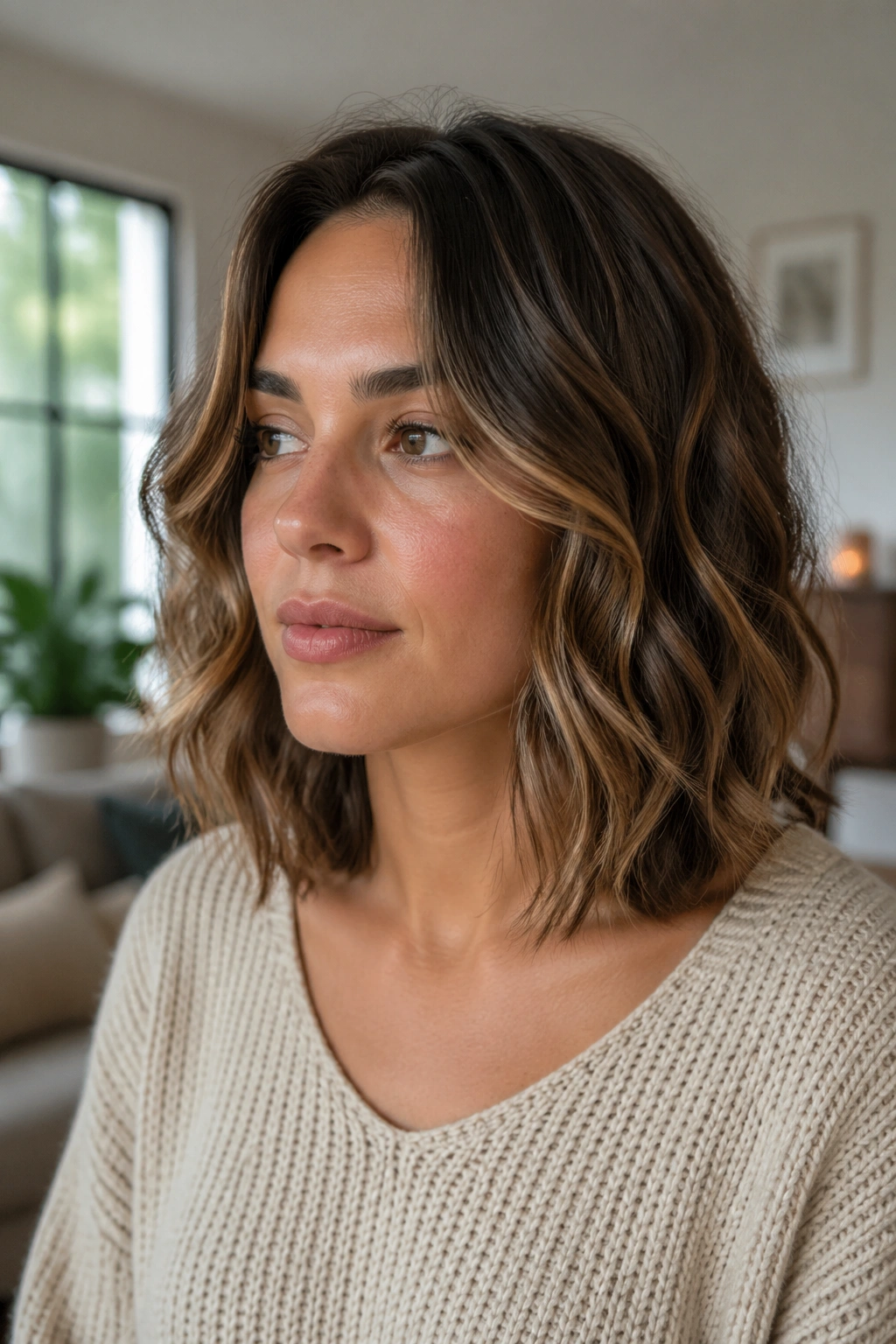
Wavy hair can be strange in the best way. It wants shape, but not too much shape. It wants movement, but not a pyramid. The invisible-layer lob is built for exactly that kind of mood swing.
Picture a lob that looks almost one-length when it’s dry, then reveals just enough layering to let the wave pattern sit on top of itself instead of flaring out. That’s the point. The layers are tucked inside the cut, so the outline stays tidy while the texture gets room to breathe. It’s a smart move for medium-density waves that frizz if they’re overcut.
Dry cutting helps here because wavy hair rarely tells the truth when it’s wet. A strand can spring up two inches, then drop again once it’s dry. Cutting in its natural state lets the stylist read where the wave bends and where the hair needs more weight left in place. That alone saves you from the triangle effect.
I like this cut with a center part and a bit of face-framing near the cheekbones. Not a ton. Just enough to soften the front. A wave cream or light gel, scrunched into damp hair, usually does more than a pile of styling products ever will. Let the texture show off a little. It already knows what to do.
4. The Dry-Cut Curly Lob That Keeps Curl Shape
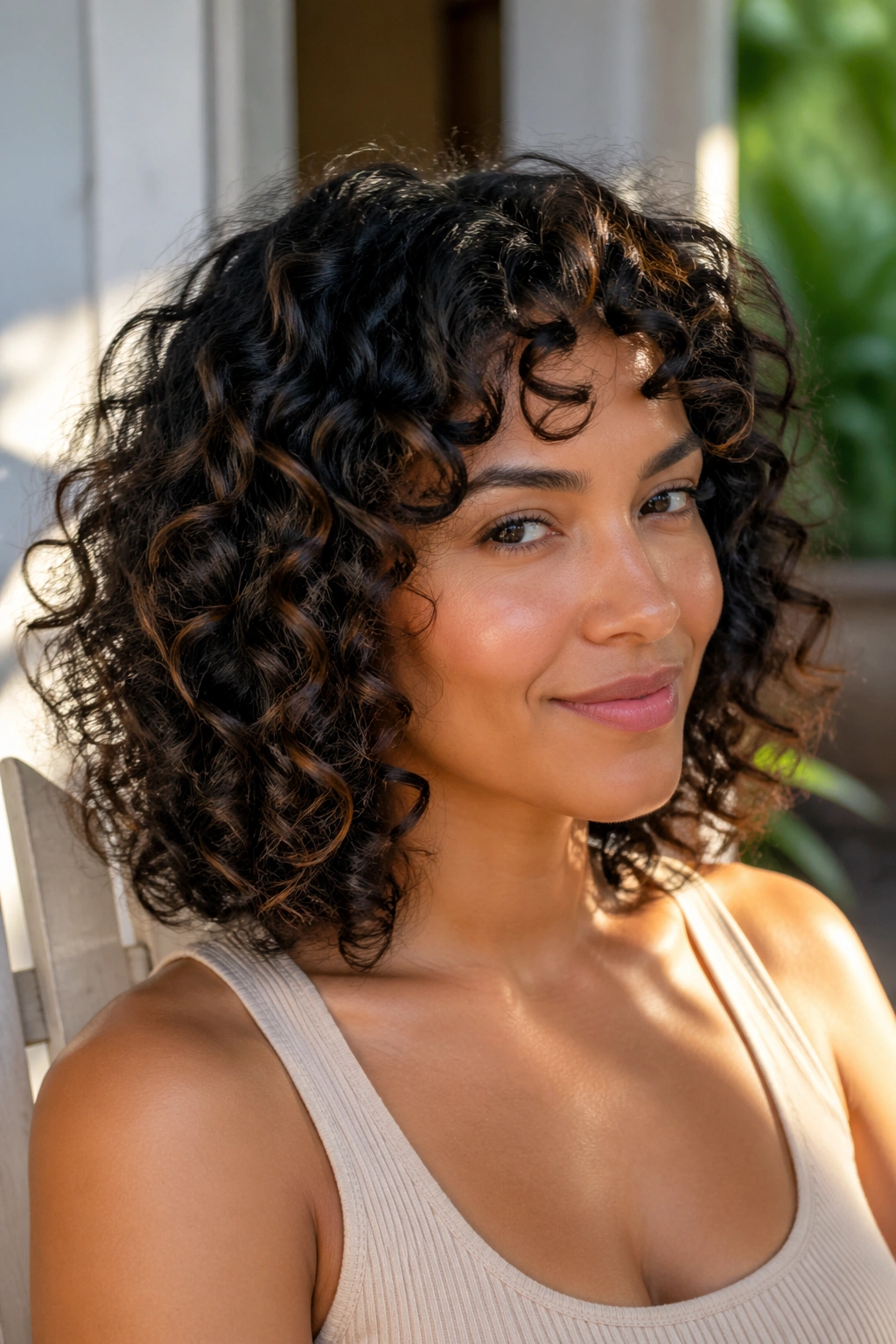
Curly hair does better when the lob is cut on dry curls. That sounds fussy until you see what happens when a wet curly cut springs up into a surprise shape that nobody asked for. Curls shrink, bend, and bunch. Dry cutting lets the stylist see the real silhouette before the scissors close.
What to Ask for in the Chair
Leave enough length for shrinkage. A curl that lands at the chin when it’s wet may jump to the cheek once it dries, and nobody enjoys an accidental mini-bob unless they asked for one. The safest ask is a lob that sits around the collarbone or a little above, then gets refined curl by curl.
- Cut the hair dry and in its natural curl pattern.
- Keep the outline rounded or softly oval, not square.
- Leave extra length if your curls spring up hard when dry.
- Avoid heavy thinning near the ends, where curls need weight to clump.
This cut works because it follows the shape of the curl instead of forcing all the curls into the same line. You get definition without the chunky shelf effect that some curly cuts create. If your curls are looser, a few long layers can help them stack better. If they’re tighter, the shape usually looks cleaner when the perimeter stays fuller.
Moisture matters too. A curl cream plus a light gel often gives more control than a dozen products. Let the hair dry all the way before touching it. Curly lobs punish impatience.
5. The Rounded Lob for Coily Hair
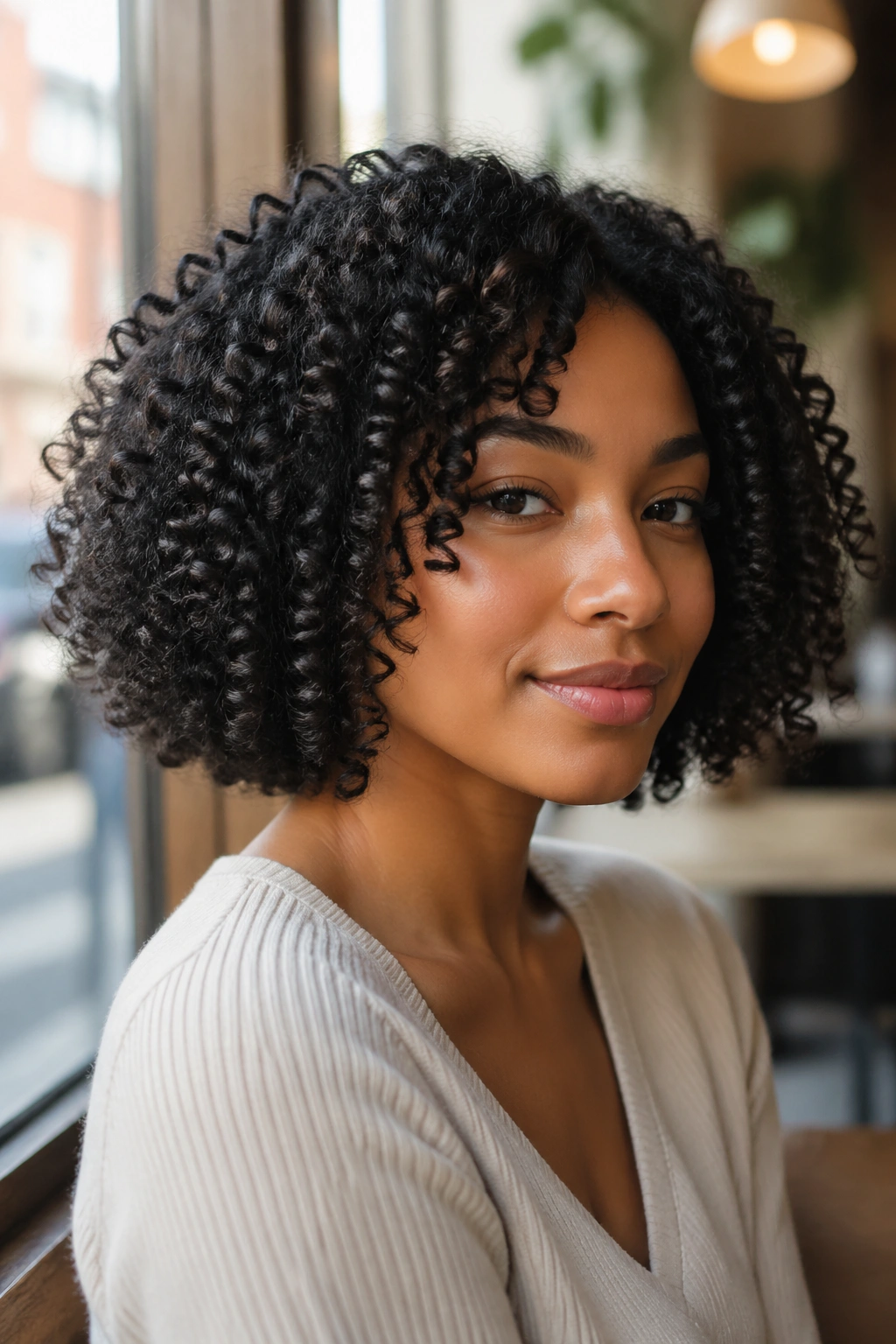
A coily lob does not need to be pin-straight to look polished. In fact, it usually looks better when the shape follows the head a little more closely and lets the coils build their own silhouette. A rounded lob is the cut that understands that.
The line should curve softly around the jaw and neck instead of fighting the natural spring of the hair. That matters because coily hair can shrink a lot, and a blunt line cut too short can leap into a shape that feels tighter than expected. Leaving the ends just long enough for the coils to settle gives the style room to breathe.
The best versions keep the perimeter full and the upper layers light. Too much layering can create gaps, and gaps show fast in coily textures. I’d rather see a strong shape with a little softness than a heavily chopped lob that loses its body in every direction.
Moisture, again, does half the styling. A leave-in conditioner, a cream, and a light oil at the ends are usually enough to keep the cut looking intentional between wash days. The shape should feel rounded, touchable, and sturdy. Not flat. Not fluffy. Just balanced.
6. The A-Line Lob for Dense Hair
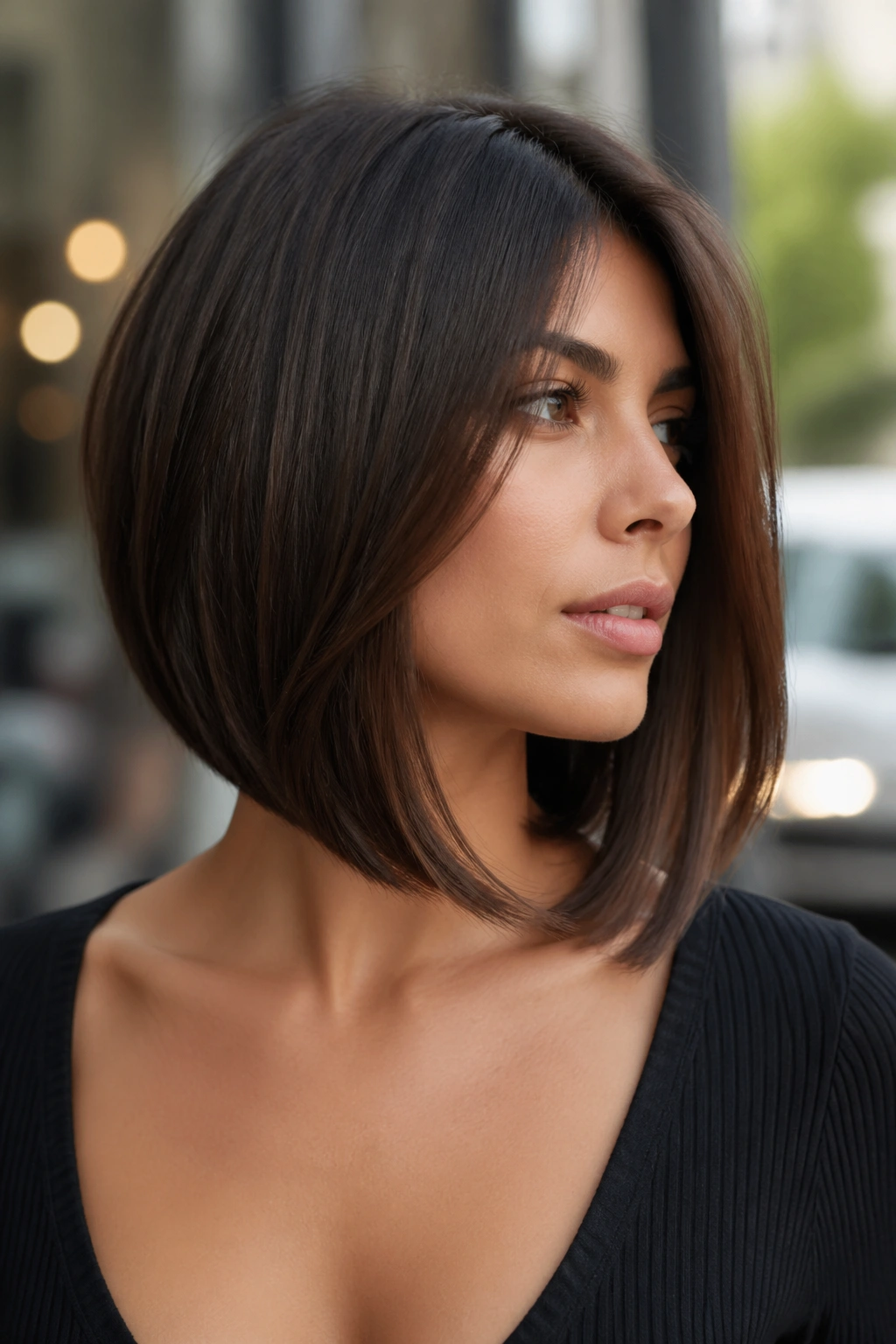
An A-line lob is not the same thing as a stacked bob, and that difference matters a lot for dense hair. The front stays longer. The back sits a little shorter. The line slopes forward just enough to open the shape and make the hair feel less heavy at the neck.
Why the Angle Matters
Dense hair can look bulky in a straight one-length lob if the cut is left too full from root to tip. The A-line shape solves that by changing the weight distribution. The back gets room to lie closer to the head, while the front keeps enough length to move and frame the face.
The angle should be soft, not dramatic. If the front gets too long, the cut stops feeling like a lob and starts reading as a very mild shag with an identity problem. You want the slope to be visible when the hair moves, not so steep that the style looks sharp from every angle.
- Keep the back slightly shorter to reduce neck bulk.
- Leave the front long enough to graze the collarbone.
- Ask for a soft bevel instead of a hard line at the ends.
- Check how the hair falls when it’s dry, not just wet.
This cut is especially useful if your hair grows out wide at the sides. The angle pulls the profile in a little and gives the whole style more swing. Dense hair can handle it. Sometimes it even needs it.
7. The Choppy Lob for Fine Hair That Needs Lift
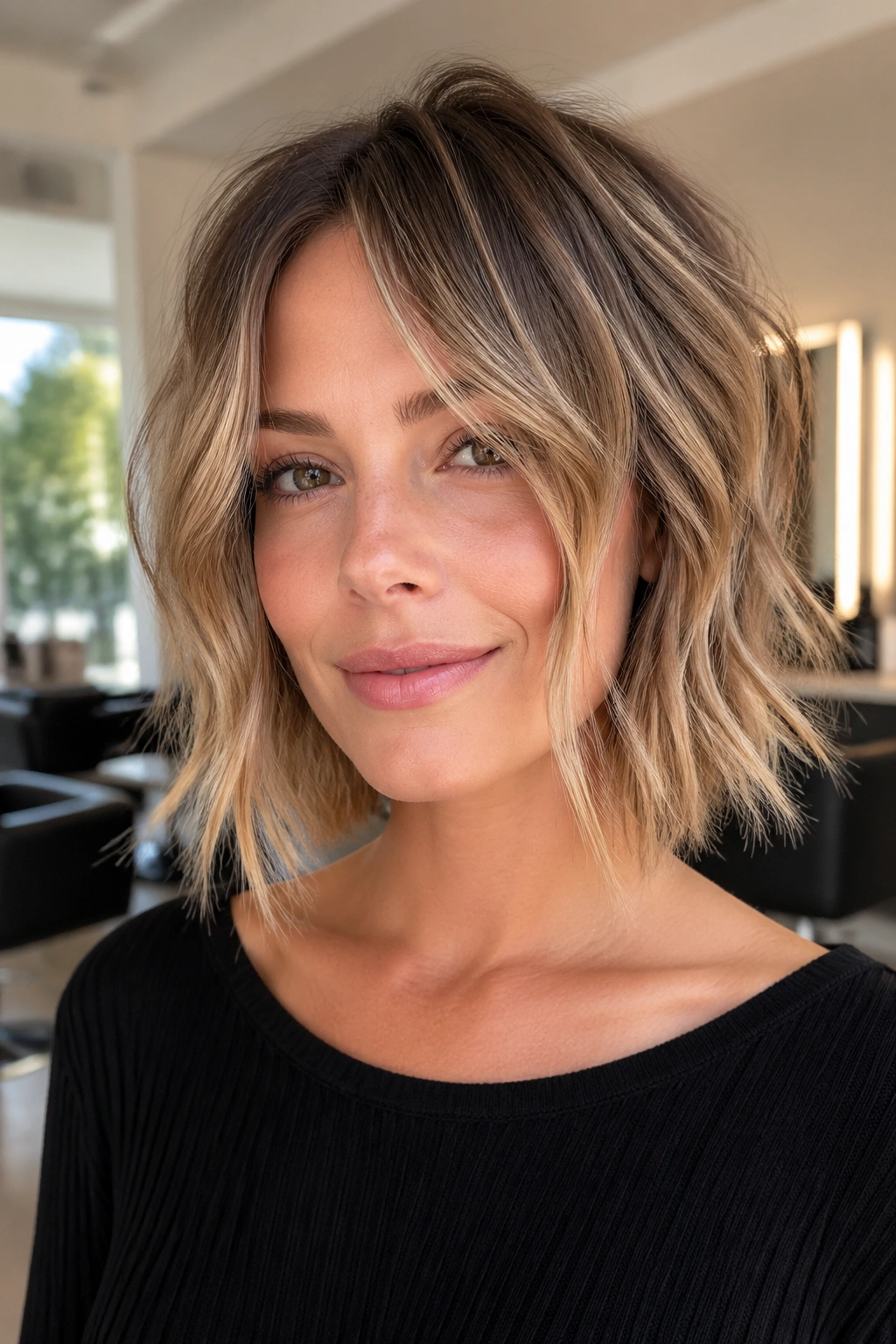
If your hair goes limp by lunchtime, a choppy lob can wake it up. The catch is that the chop has to be careful. Too many short layers and fine hair starts to look piecey in a bad way, like it ran out of hair halfway through the cut.
A good choppy lob uses texture at the ends and a few strategically placed internal pieces to keep the shape from collapsing. Think movement, not shredding. The ends should look light, but not frayed. There’s a big difference. One feels airy. The other feels thin.
Fine hair often benefits from a little irregularity because a perfectly even line can look sparse if the strands themselves are very fine. But you only need enough variation to make the cut feel alive. A few face-framing pieces around the cheekbones help too. They lift the front without stealing too much density from the back.
I’d style this one with a sea-salt spray or a light mousse, then rough-dry it with fingers first and a brush only at the end. Too much smoothing defeats the point. This is a cut that likes a bit of grit.
8. The Razor-Soft Lob for Coarse Hair
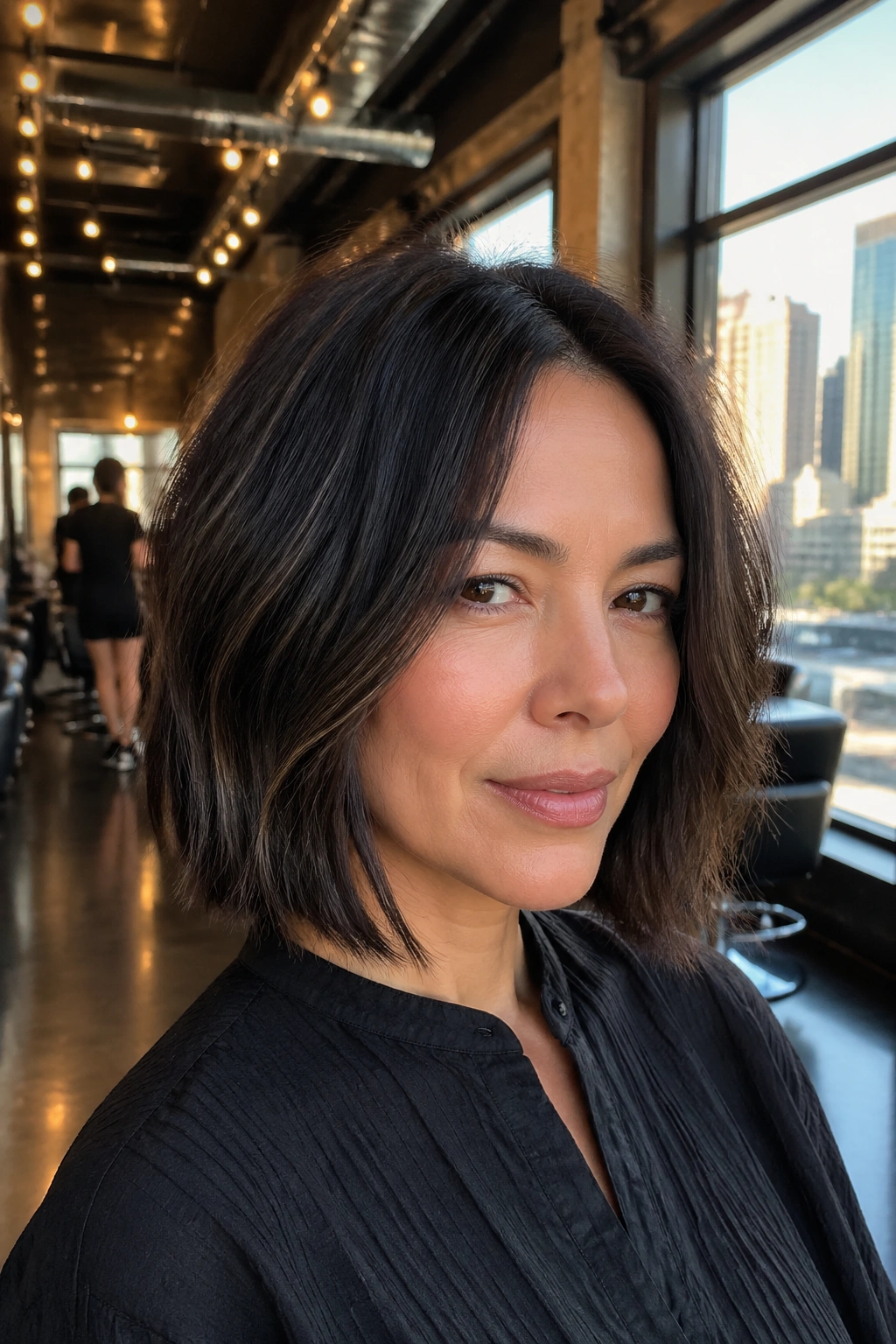
Coarse hair has a different feel in the chair. It resists the scissors a little. It can hold shape beautifully, but it also tends to show every blunt line if the cut is too stiff. A razor-soft lob can soften that edge without making the haircut fall apart.
Used well, a razor takes the hard corners off the ends and creates a softer perimeter. Used badly, it can leave frayed tips that puff out in humidity. That’s why this cut only works when the stylist knows how the hair behaves. Healthy coarse hair usually handles a razor better than rough, overprocessed hair. If the ends are already dry, I’d stay with shears.
The shape should still have some weight. You do not want a wispy finish all the way around. That’s a fast route to frizz city. A blunt base with a softened edge gives you the best of both worlds: clean enough to look deliberate, loose enough to move.
This cut often looks best when air-dried to about 80 percent and then finished with a round brush only at the ends. A little smoothing cream goes a long way. Too much product makes coarse hair look greasy instead of sleek, and nobody wants that.
9. The Shaggy Lob With Curtain Bangs

A shaggy lob with curtain bangs is what you reach for when you want movement without pretending your hair is naturally still. It’s not a tidy haircut. That’s the point. The layers make the lob feel relaxed, and the bangs open up the face without taking the whole front section away.
This cut suits wavy hair especially well, but straighter hair can wear it too if there’s enough texture in the ends. Curtain bangs should start somewhere around the cheekbone and blend into the front layers. If they’re cut too short, they can overpower the lob and start acting like a separate haircut.
The shag element should stay soft. I’m not a fan of a lob that gets hacked to bits just to look edgy. That kind of cut grows out into confusion fast. Better to keep the layers long enough that the shape still reads as a lob first and a shag second.
If you like a little styling time, this cut is fun. Blow-dry the bangs away from the face, pinch the ends with a curling iron if needed, and let the rest stay loose. If you want less work, air-dry the mids and only fix the front. Either way, the haircut should look better a little undone.
10. The Sleek Center-Part Lob for Straight Hair
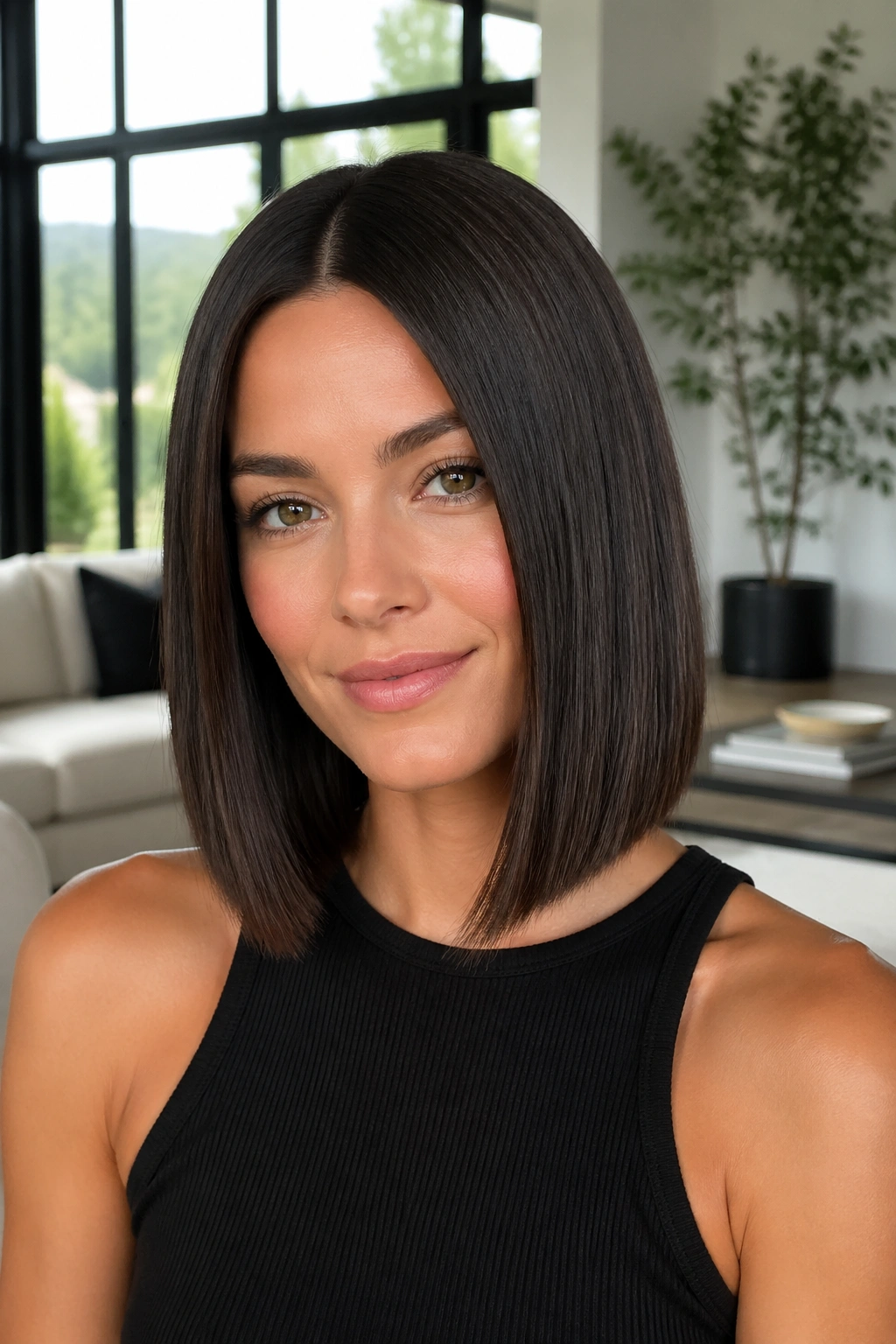
What makes a center-part lob look so clean? Mostly balance. Straight hair loves a clear line, and a center part gives the haircut symmetry that feels calm rather than flat. The result can be almost severe in a nice way.
This cut works best when the perimeter is crisp and the ends are slightly beveled so they don’t hang in a dead straight sheet. A touch of softness at the bottom helps the hair move when you turn your head. That tiny detail keeps the cut from looking like a ruler.
How to Style It Without Overdoing It
The styling should stay simple. Heat protectant first, then a smooth blow-dry or flat iron pass. If you want more polish, tuck one side behind the ear and let the other side fall forward. It sounds small. It changes the whole mood.
- Use a middle part only if your crown supports it.
- Keep the ends barely curved inward.
- Skip heavy layers if your hair is naturally sleek.
- Add a light shine serum only to the mids and ends.
A center-part lob can look sharp on a lot of people because it shows off the actual cut. No hiding. No tricks. If the line is good, you see it right away.
11. The Side-Swept Lob for Cowlicks and Flat Roots
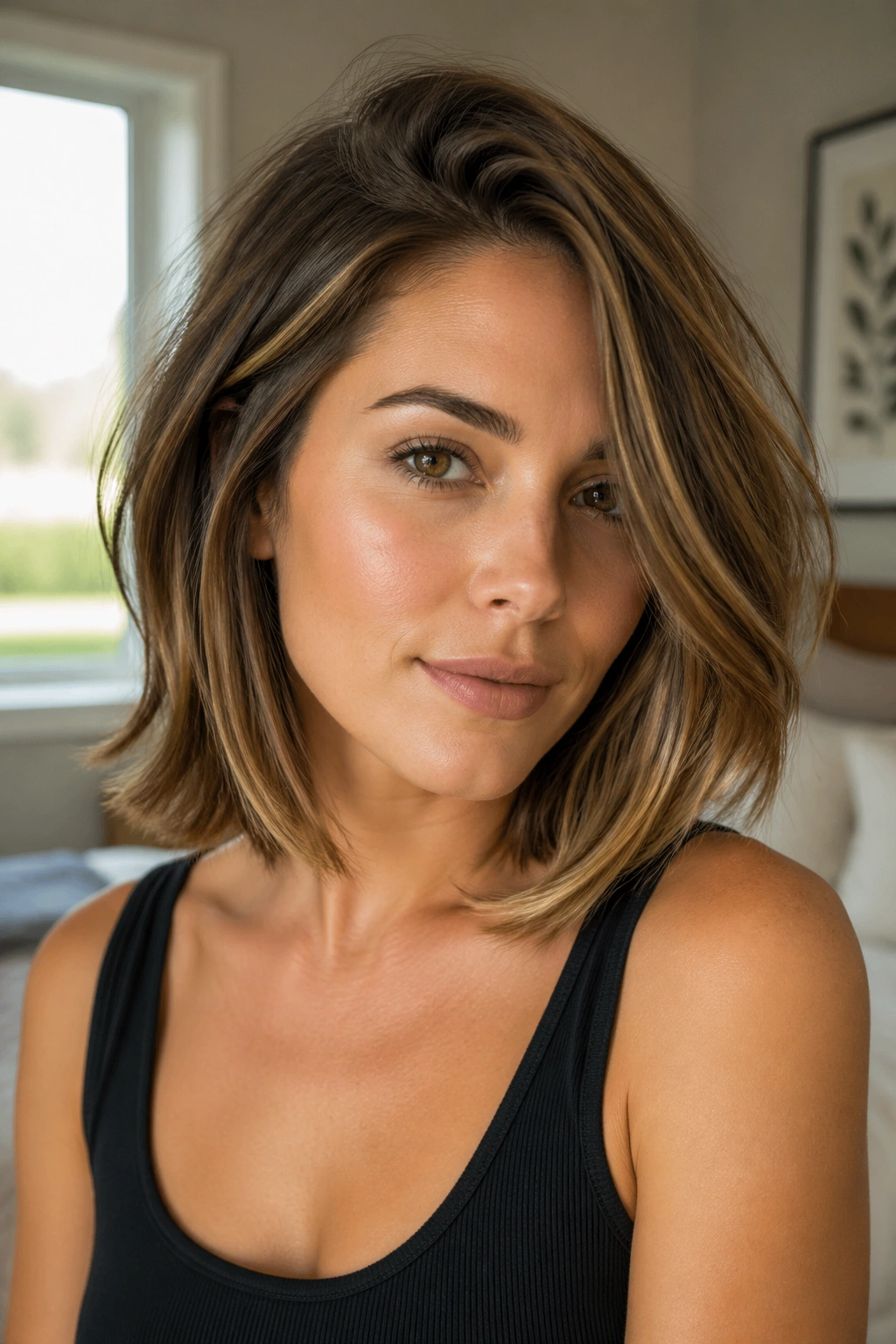
Cowlicks are rude. There’s no kinder word for them. A side-swept lob gives you a way to work with the stubborn growth pattern instead of spending half the morning trying to flatten it into obedience.
A deep side part shifts the weight off the problem area and creates lift where the hair wants to fall. That alone can make the cut feel fuller at the root without changing the length. On flat roots, the side-swept shape adds a little body. On stubborn temples, it keeps the front from splitting in the wrong place.
The cut itself should stay fairly balanced through the back. You are not trying to create drama everywhere. The drama lives at the part. The rest of the lob should stay soft and movable, with enough length to tuck behind one ear when you want a cleaner look.
This is one of my favorite fixes for people who think their hair is difficult when the real issue is just part placement. Switch the part while the hair is damp, dry it in place, and the whole shape can behave better. That sounds almost too easy, but it works more often than people expect.
12. The Stacked Lob for Thick Hair at the Nape
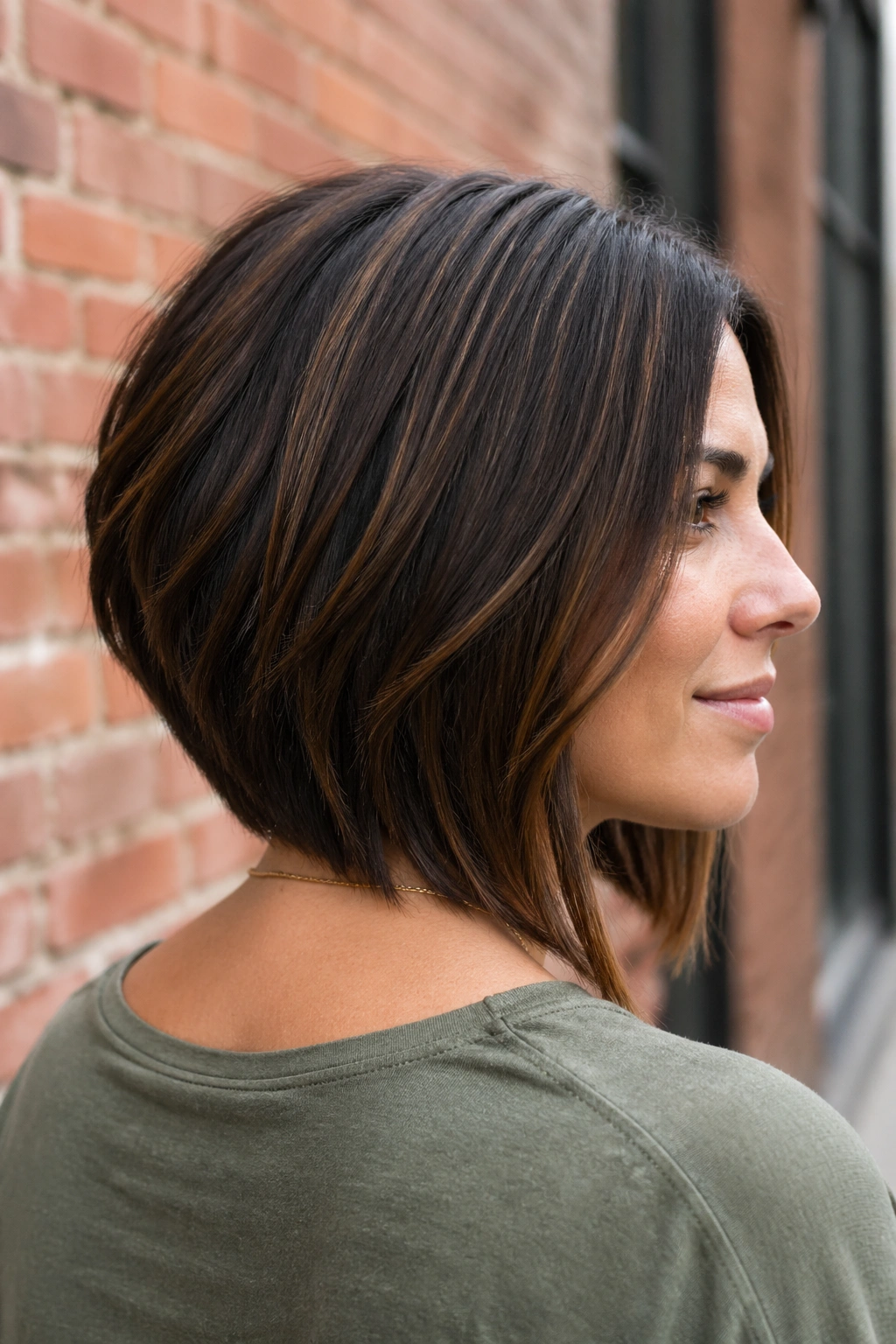
A stacked lob takes some of the old stacked bob energy and gives it more breathing room. The back is lightly graduated so the nape doesn’t feel buried, but the length stays long enough to count as a lob rather than a short crop.
Thick hair at the nape can get hot, heavy, and strangely triangular if it’s all cut at one level. A little stacking helps the hair settle closer to the head and keeps the neckline from feeling packed. The front remains longer, so the haircut still has that shoulder-skimming, grown-up shape people want from a lob.
The stacking should be subtle. If the stylist takes too much off the back, the cut stops feeling modern and starts looking like it wants a flip-out blowout from another era. You want lift, not a wedge. There’s a difference, and thick hair will show it fast.
This cut is useful if your hair tends to puff out at the bottom after a few weeks. The extra shape in the nape keeps the outline controlled for longer. It also makes a ponytail easier, which sounds mundane until you’ve lived with a heavy lob that fights every hair tie you own.
13. The Face-Framing Lob for Growing Out Layers
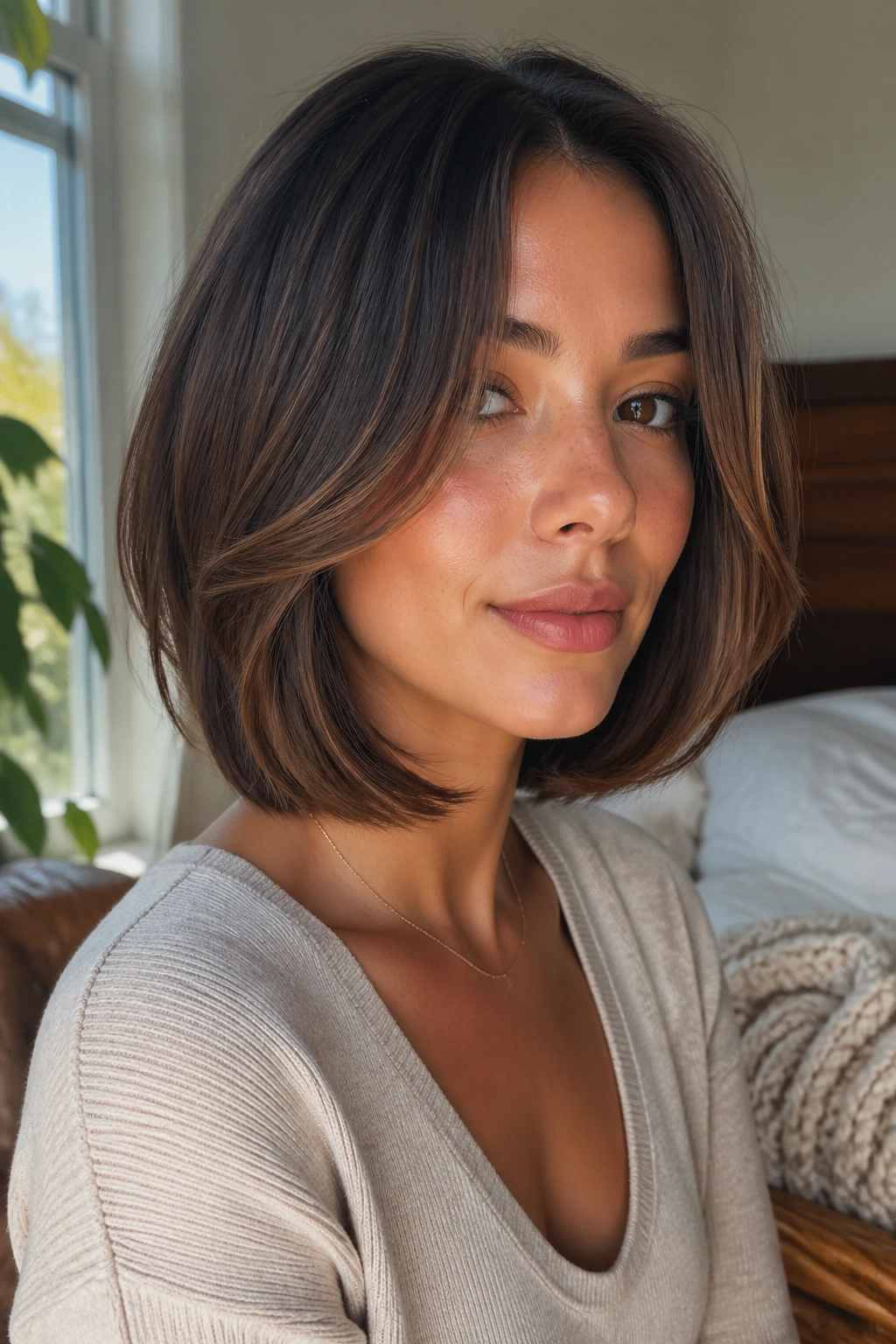
Growing out layers can be annoying. That awkward stage where the shorter pieces refuse to cooperate? It can make a nice haircut feel halfway finished. A face-framing lob smooths that transition instead of pretending the old layers are gone.
The idea is simple: keep the perimeter strong, then add long front pieces that connect the shorter bits to the rest of the hair. Those pieces should start around the cheekbone or jaw, depending on how much grow-out you’re dealing with. Too short, and they look like stray bangs. Too long, and they don’t help the shape.
This cut is forgiving. It can hide uneven lengths, soften a blunt grow-out, and give the whole style a more deliberate line while you wait for the older layers to catch up. If you have been stuck between a bob and a shoulder-length cut, this is the sort of lob that makes the in-between stage look like a decision.
A little bend through the front pieces helps a lot. Straight front layers can look harsh when they’re still catching up. Softening them with a round brush or a wave from a curling iron lets them blend into the rest of the hair without shouting for attention.
14. The Blunt Lob With Hidden Weight Removal
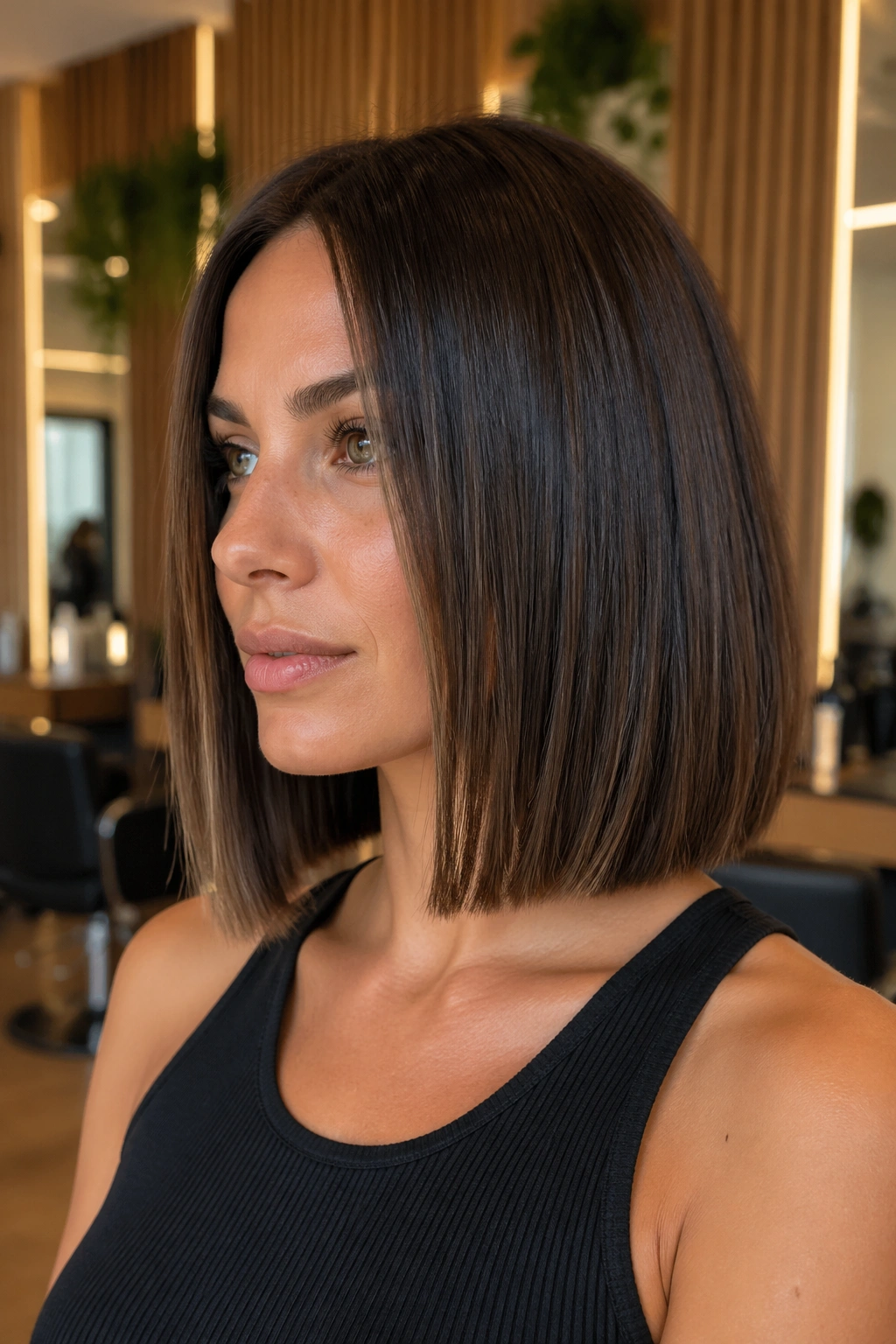
A blunt lob with hidden weight removal sounds boring. It is not. On thick hair, that combination can be one of the smartest ways to keep the haircut strong at the edge while making the inside behave.
The outside line stays blunt, which gives the haircut structure and makes the ends look full. Underneath, the stylist removes some bulk in carefully chosen sections so the lob does not sit like a block. That hidden reduction is the difference between a sharp lob and a heavy one.
The important part is restraint. Too much internal thinning and the cut gets airy in a bad way. Too little, and the hair puffs out around the middle. The balance is delicate, and it usually takes a stylist who knows how thick hair collapses and where it holds volume.
This version is especially good if you like polished hair but hate that bulky triangle shape that thick hair can develop at shoulder length. Keep the styling smooth, maybe with a paddle brush blow-dry, and the haircut lands with a clean edge that still moves when you do.
15. The Air-Dried Lob for Natural Texture

Air-dried hair wants a shape that behaves. If your waves bend on their own or your hair forms soft S-curves without help, the air-dried lob is built for you. It’s a cut that lets the texture do the talking instead of trying to force a salon finish every day.
Products That Help, Not Weigh Down
The shape works best when the perimeter is long enough to hold some weight. That keeps the texture from puffing up too high at the sides. A few long layers can help the hair move, but they should stay long and soft. If the layers are too short, air-dried texture can go fuzzy fast.
- Use a leave-in conditioner on damp hair.
- Add a light curl cream or wave cream from mids to ends.
- Scrunch gently, then leave it alone.
- If the roots are flat, clip them up while drying.
I like this cut because it looks decent on days when you do almost nothing. That matters. Not every haircut needs a blow-dry to make sense. The lob should still look like a haircut after an air dry, not a compromise.
A small amount of unevenness can be a good thing here. Natural texture rarely falls in perfect lines, and the cut should respect that. You want movement, shape, and enough softness around the face to keep the style from feeling stiff.
16. The Deep Side-Part Lob for Thin Density

Can a deep side part make thin density look fuller? Yes, and it does it without changing the length much at all. That’s why I keep coming back to this shape for hair that feels a bit sparse through the top.
A side part builds lift on one side and gives the root line some shape instead of a flat sheet. If the ends stay blunt, the haircut looks thicker than it is. That blunt edge matters a lot. Thin density does not usually need more layers; it needs more illusion.
The front can be tucked, clipped, or swept across the forehead depending on how much volume you want to fake. A little root powder at the crown can help too, though I’d keep products light. Too much product on thin hair turns volume into residue, and residue is not the look.
This cut is especially useful if your hair has grown a little less dense at the temples. The side part can cover that without making the style feel heavy. It’s a low-drama fix, which is probably why it works so often. Sometimes the haircut only needs a better starting point.
17. The Shoulder-Skimming Lob With Soft Ends
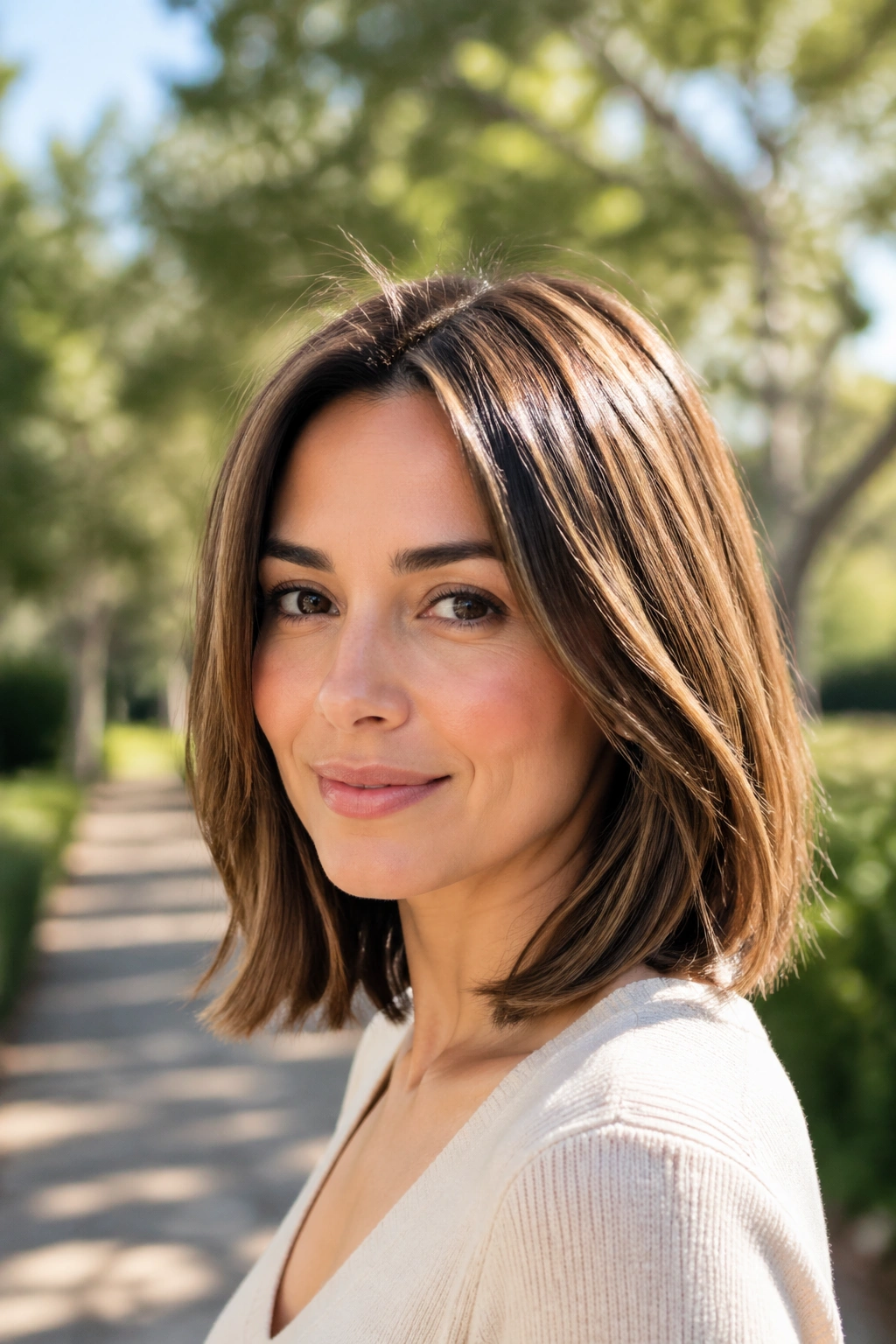
If you do not want a dramatic change, this is the lob people keep coming back to. The shoulder-skimming version keeps enough length to tuck behind the ear or pull back, but it still gives you that fresh, shaped feel that longer hair sometimes loses.
Soft ends matter here. The hair should graze the shoulders without flipping hard or getting stuck on the collarbone every time you move. A gentle bevel keeps the cut from hanging straight down like a curtain. That small curve makes the whole haircut feel easier.
This is a good choice for people who want a lower-stress lob that grows out gracefully. It works on straight hair, wavy hair, and even thicker textures that need some length left in place. The cut doesn’t depend on a lot of styling, which is half the appeal.
There’s something honest about this length. It doesn’t pretend to be ultra-short. It doesn’t ask you to commit to long hair forever either. It just sits in the middle and does its job, which is often more useful than a haircut trying too hard to be interesting.
18. The Grown-Out Lob That Still Looks Intentional
The grown-out lob is the one that keeps its shape when you stop babysitting it. That matters more than people admit. A haircut only earns its keep when it still looks deliberate after a few weeks of living in the real world.
This version usually lands right at or just below the collarbone, with a clean perimeter and only the softest internal shaping. It should move with the hair’s natural bend instead of fighting it. If you wear your hair straight, it reads polished. If you wear it wavy, it reads relaxed. If you air-dry it, it still behaves.
The real trick is keeping the outline honest. Let the ends stay full enough to hold a line. Let any face-framing pieces blend instead of dropping in as separate chunks. And if your hair type needs it, leave a little more length in the front so the cut does not feel blunt in the wrong place as it grows.
A good long bob does not need to shout. It just needs to sit well, last a while, and avoid awkwardness when the trim gets delayed. That’s why this version belongs in the list. It’s the one that still looks like a choice when life gets messy, and that’s usually the test that matters most.
