



Square faces can wear a bob better than most people think. The shape is already strong; the trick is choosing a cut that works with that structure instead of boxing it in. That’s why the smartest bob cuts for square faces don’t hide the jaw so much as soften the edges, break up the straight lines, and keep the whole look moving.
A square face usually has a wider forehead, a defined jaw, and cheekbones that don’t taper as sharply as an oval or heart shape. That means a blunt line ending exactly at the jaw can feel harsh, while a bit of curve, length, or diagonal movement can make the whole face look lighter. Small changes matter here. A side part can do more than a full inch of length.
And yes, a blunt bob can still work. So can a short French cut, a curly bob, or a collarbone-skimming lob. The difference is in the details: where the line lands, how the ends are cut, and whether the style adds softness or just sits there like a ruler across the face.
1. Soft Layered Bob for Square Faces
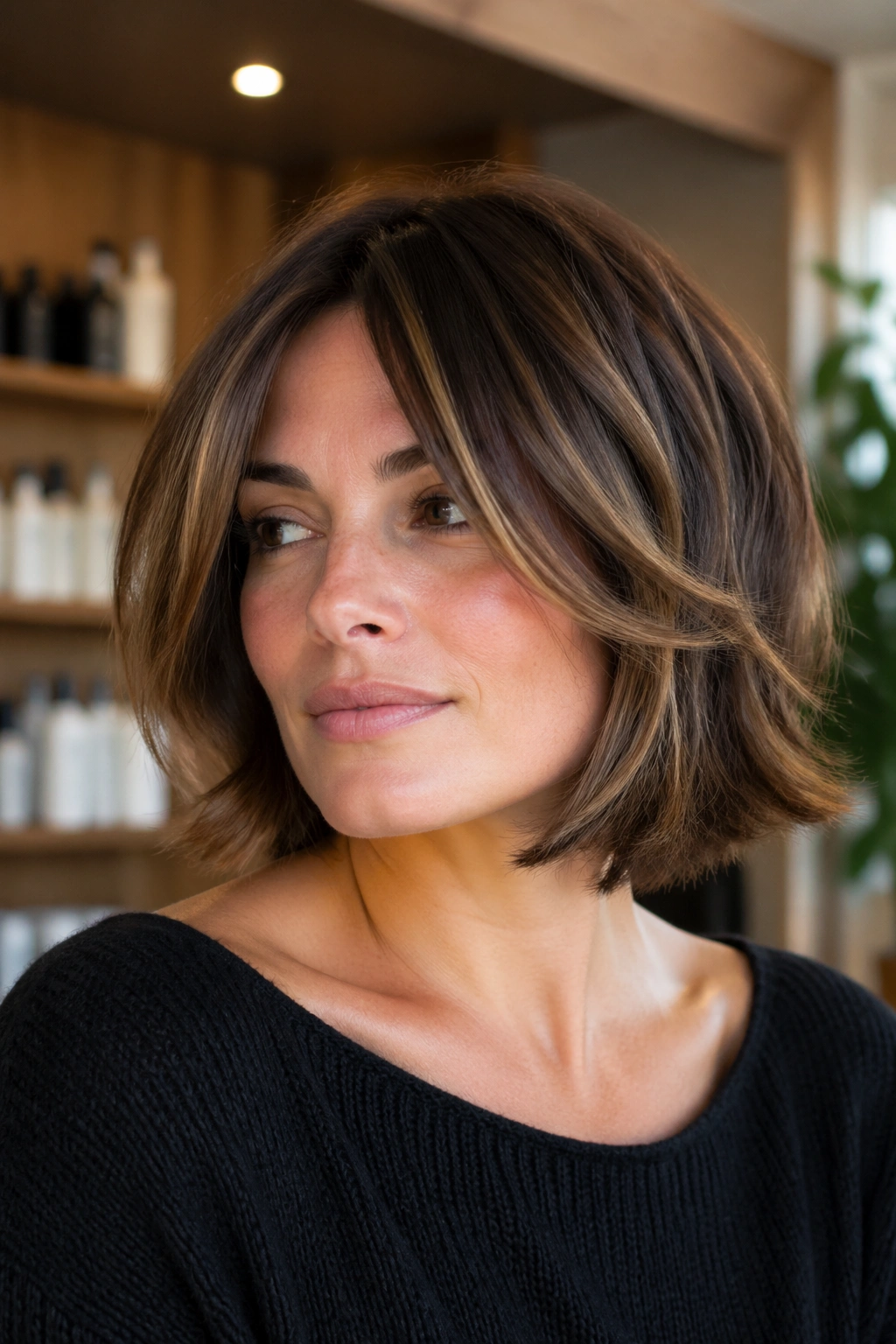
This is the bob I’d point a lot of square-faced clients toward first. It keeps the shape clean, but the layers stop it from turning into a hard block around the jaw. The result feels light, easy, and a little less severe than a blunt cut that lands right at the chin.
Why It Works
The magic is in the internal layers, not the outside outline. You want movement through the mids and ends so the hair bends around the face instead of drawing a straight line across it. A soft layered bob usually sits just below the chin or brushes the top of the neck, which gives the jaw some breathing room.
Ask for the front to be slightly longer than the back, but not so much that it becomes an A-line bob. You want a gentle tilt, not a dramatic angle. If the hair is thick, your stylist can remove weight near the corners of the jaw so the ends don’t puff out into a square shape.
- Length: chin to just below the chin
- Layers: soft, blended, and mostly internal
- Part: center or slight off-center
- Best hair type: straight to wavy
Best tip: tell your stylist you want the haircut to move when you turn your head. That sounds simple, but it keeps them from over-cutting the outline.
2. Side-Part Asymmetrical Bob
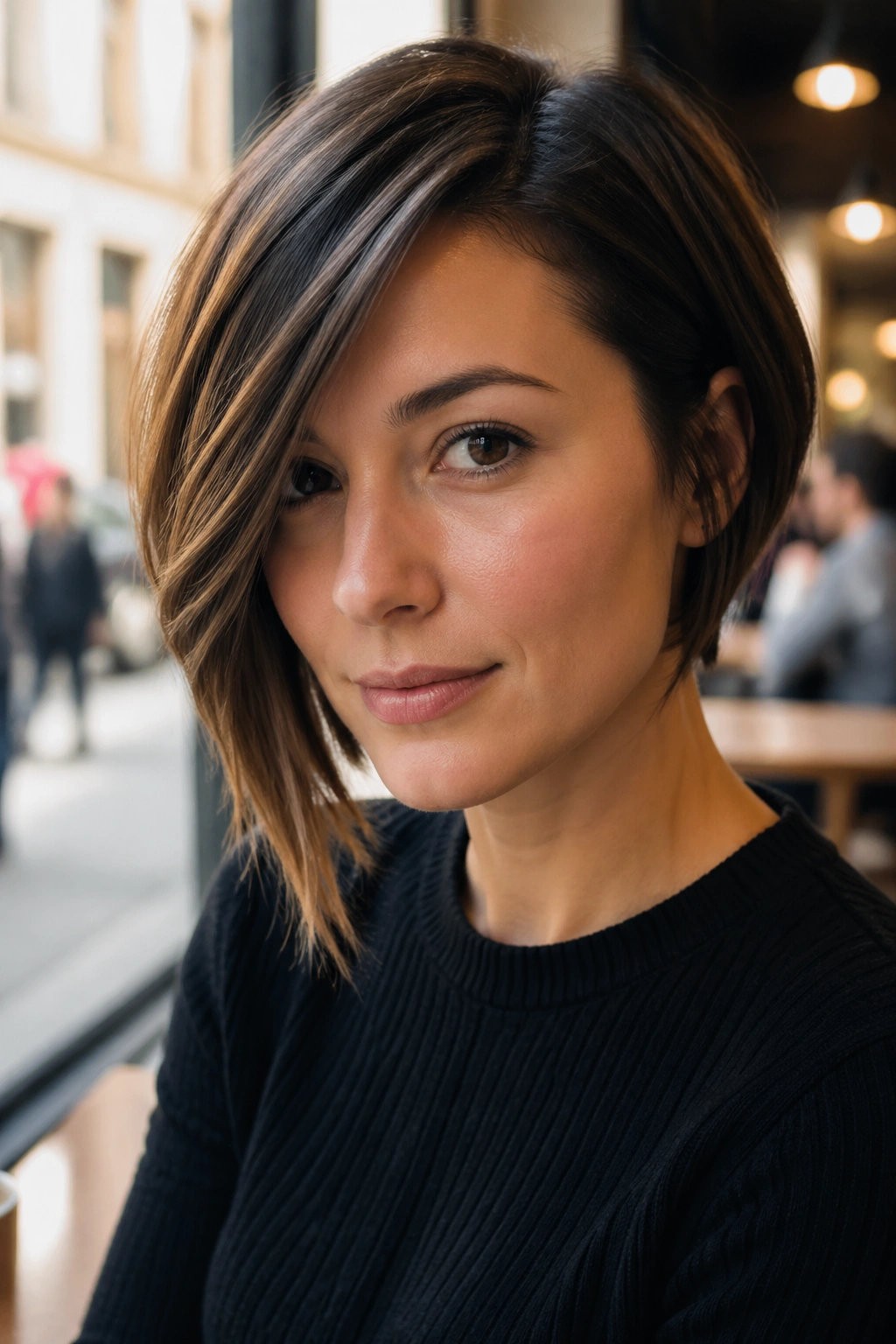
A side-part asymmetrical bob is one of the fastest ways to break up a square jaw without adding extra styling drama. The diagonal line changes how the eye moves across the face, and that alone can make the whole haircut feel softer. It’s a strong look. In a good way.
What I like about this cut is that it doesn’t try to erase the face shape. It works with it. One side sits a little longer, often skimming the jaw or landing just below it, while the shorter side opens the face and gives the cheekbones some space. If you have a broad forehead, the side part helps there too, because it doesn’t carve the face in half the way a blunt center part can.
This cut shines on straight or slightly wavy hair because the line stays visible. On very curly hair, the asymmetry can still work, but the contrast is softer and less obvious. That’s not a flaw. It just changes the mood.
I’d keep the angle subtle. Too steep, and it starts to look dated. Too tiny, and it loses the point. The sweet spot is a difference of about 1 to 2 inches between sides, enough to create motion without turning the haircut into a stunt.
3. Collarbone Bob With Loose Waves
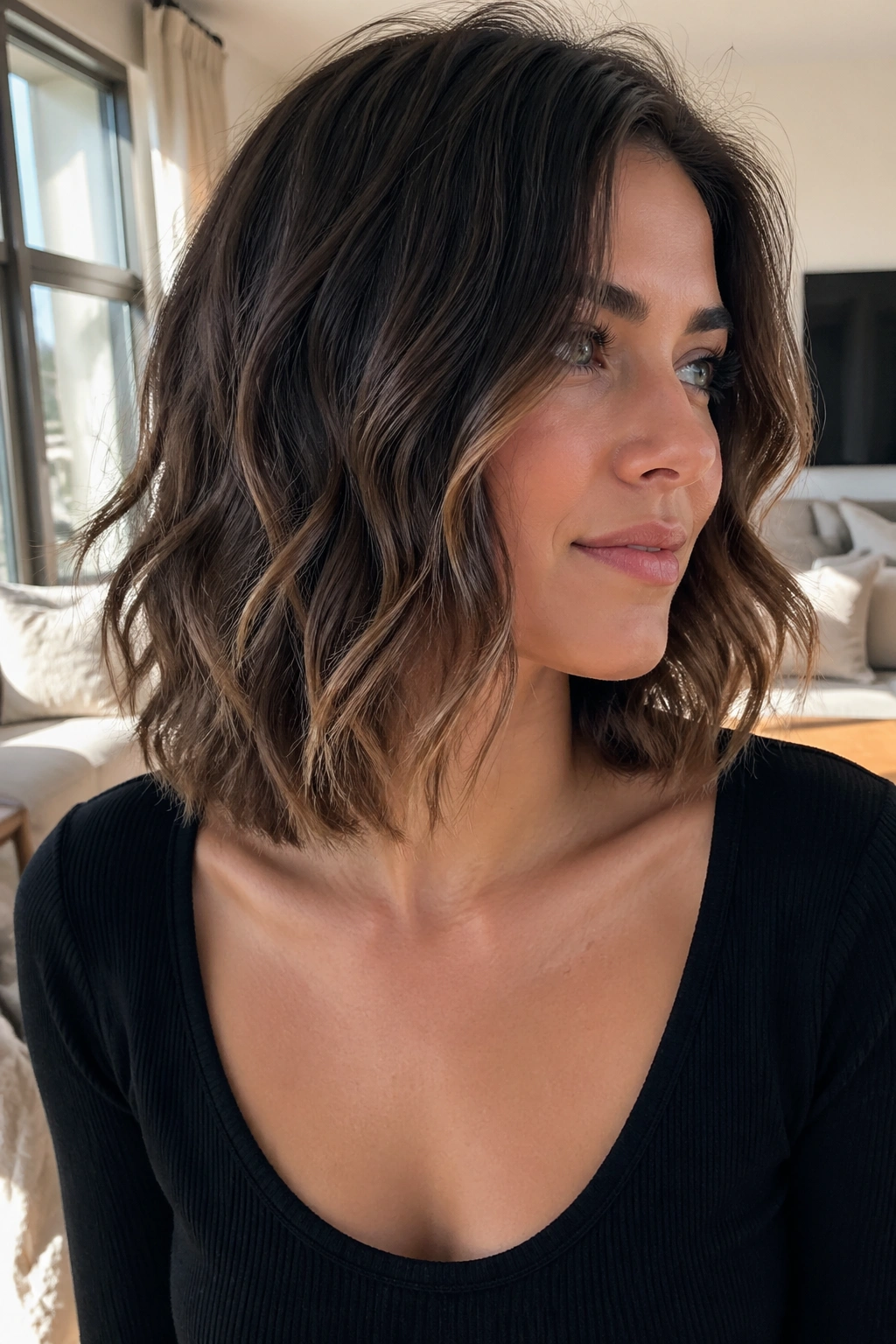
Why does a longer bob work so well on square faces? Because it gives you vertical length where the face wants a little more softness. A collarbone bob is long enough to skim past the jaw, which means it doesn’t sit on the widest part of the face. That tiny shift makes a bigger difference than people expect.
Loose waves help even more. Not curls. Not ringlets. Just a bend through the hair that keeps the outline from feeling stiff. A 1-inch curling iron or a flat iron wave can do the job, but leave the last inch or so out. Straight ends with wavy mids look more modern and less “done,” and they don’t build extra width around the jaw.
How to Ask for It
Tell your stylist you want the length to hit somewhere between the collarbone and the top of the shoulder. That range gives you room to tuck, wave, or air-dry without the haircut collapsing into one shape. Ask for face-framing pieces that start below the cheekbone, not right at it, if your jaw is especially strong.
A collarbone bob is also a smart choice if you’re not ready to lose a lot of length. It feels lighter than long hair, but it still gives you styling options. And that matters. A cut that only works in one position gets old fast.
4. French Bob With Airy Fringe

A French bob can be a great match for a square face when the fringe is soft and the edges stay a little broken up. The old mistake is cutting it too blunt, too even, and too close to the jaw. That can make the face look boxier than it really is. But the right version? Sharp, chic, and oddly forgiving.
Picture a bob that sits somewhere around the cheekbone or just under it, with a fringe that skims the brow instead of sitting like a heavy curtain. That little bit of air in the bangs matters a lot. It creates a soft break across the top half of the face, which helps balance a strong jawline.
Key details to ask for
- Length that lands around the upper cheek or just below it
- Wispy, piece-y fringe instead of a thick wall of hair
- Slight texture at the ends so the line doesn’t look stiff
- A bit of root lift at the crown so the cut doesn’t collapse flat
The best French bob for square faces has a little attitude, but not too much precision. I’m not a fan of the version that looks like it was cut with a compass. A tiny bit of mess is kinder to the face shape.
5. Textured Wavy Bob With Shattered Ends

There’s a reason this cut keeps showing up on people who don’t want to fuss with their hair every morning. Texture hides a lot of sins. More importantly, it softens the hard geometry of a square face without making the haircut look overly layered or thin.
Shattered ends are the key here. Instead of one blunt finish, the ends are point-cut or lightly razored so they fall in little pieces. That keeps the bob from forming a box around the jaw. Add loose waves, and the line starts to read as movement instead of shape. It feels casual, but not sloppy.
This cut is especially good for thick hair. Thick hair can turn into a triangle or a shelf if it’s all one length, and that shape is not friendly to square faces. Texture removes some of that weight. The hair starts to bend instead of sticking out.
A little mousse at the roots and a dab of styling cream through the ends usually beats heavy products here. Heavy cream can drag the wave down and make the cut look wider. Light hands win.
And if your hair is fine? You can still wear this bob. Just keep the texture controlled, not overdone. Too much shredding on fine hair can make the ends look see-through. That’s a fast way to lose the shape entirely.
6. A-Line Bob With Longer Front Pieces
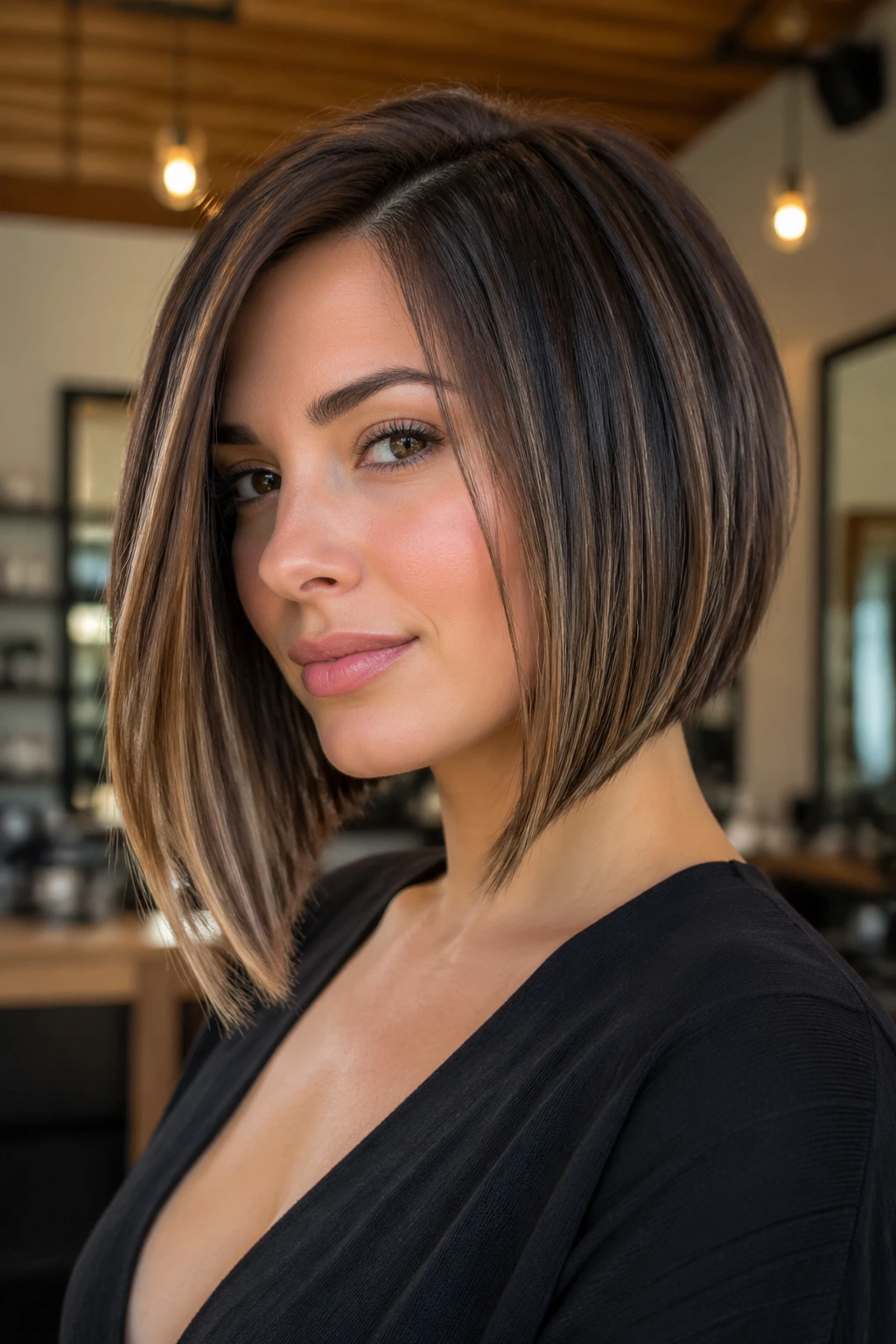
Compared with a blunt bob that stops at the jaw, an A-line bob gives the face a much kinder line. The back sits shorter, often around the nape, while the front stays longer and slides past the jaw. That diagonal shape pulls the eye down instead of across, which is exactly what a square face often needs.
This is one of the more polished options in the bunch. It has structure. It also has enough softness in the front to keep the jaw from feeling boxed in. If you like hair that looks neat even on low-effort days, this is a strong pick.
Who does it suit best? Straight hair, mostly. Slightly wavy hair can work too, but the angle needs to stay visible or the haircut loses its edge. It’s also a good choice if you wear glasses, because the longer front pieces can sit nicely beside the frames without crowding the cheeks.
I’d ask for a subtle A-line, not a steep one. Too dramatic and the haircut starts to shout. A one-inch difference between the nape and the front can be enough. More than that, and you risk turning a flattering shape into something a little too sharp for square features.
7. Curly Bob Shaped Below the Jaw
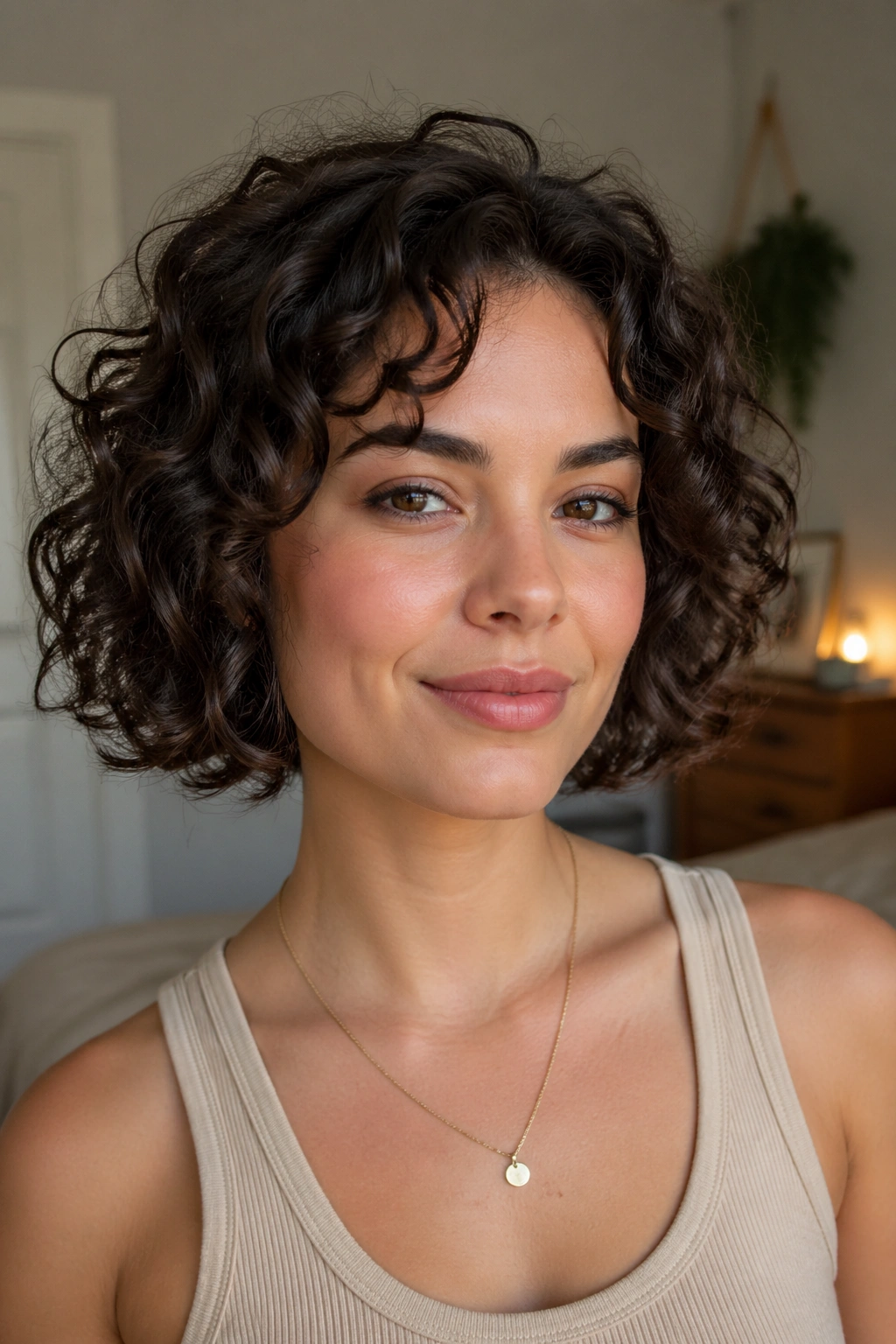
Curls change the whole conversation. The length, the part, even the way the bob sits on the neck all behave differently once the hair has real texture. For square faces, that can be a gift. Curly bobs naturally add softness and roundness, which takes the edge off a strong jaw without much extra work.
The Shape Matters More Than the Length
A curly bob should usually be cut dry, or at least close to dry, so the stylist can see where the curls land when they spring up. That matters a lot. A curly bob that looks perfect when wet can shrink two inches higher and land right at the jaw, which is exactly what you do not want.
The safest version tends to sit a little below the jawline, with the shape rounded out at the sides and a touch of length in front. You want the curls to stack softly, not build outward like a triangle. If the hair is dense, a stylist can remove weight from the inside rather than hacking at the surface.
A few things to ask for:
- Dry or curl-by-curl shaping
- Length that sits below the jaw when dry
- Face-framing curls kept longer near the front
- Minimal bulk at the widest part of the cheek
I love this cut on people who want texture to do the work for them. It looks alive. And it doesn’t need much more than leave-in conditioner and a diffuser.
8. Blunt Bob With Curtain Bangs
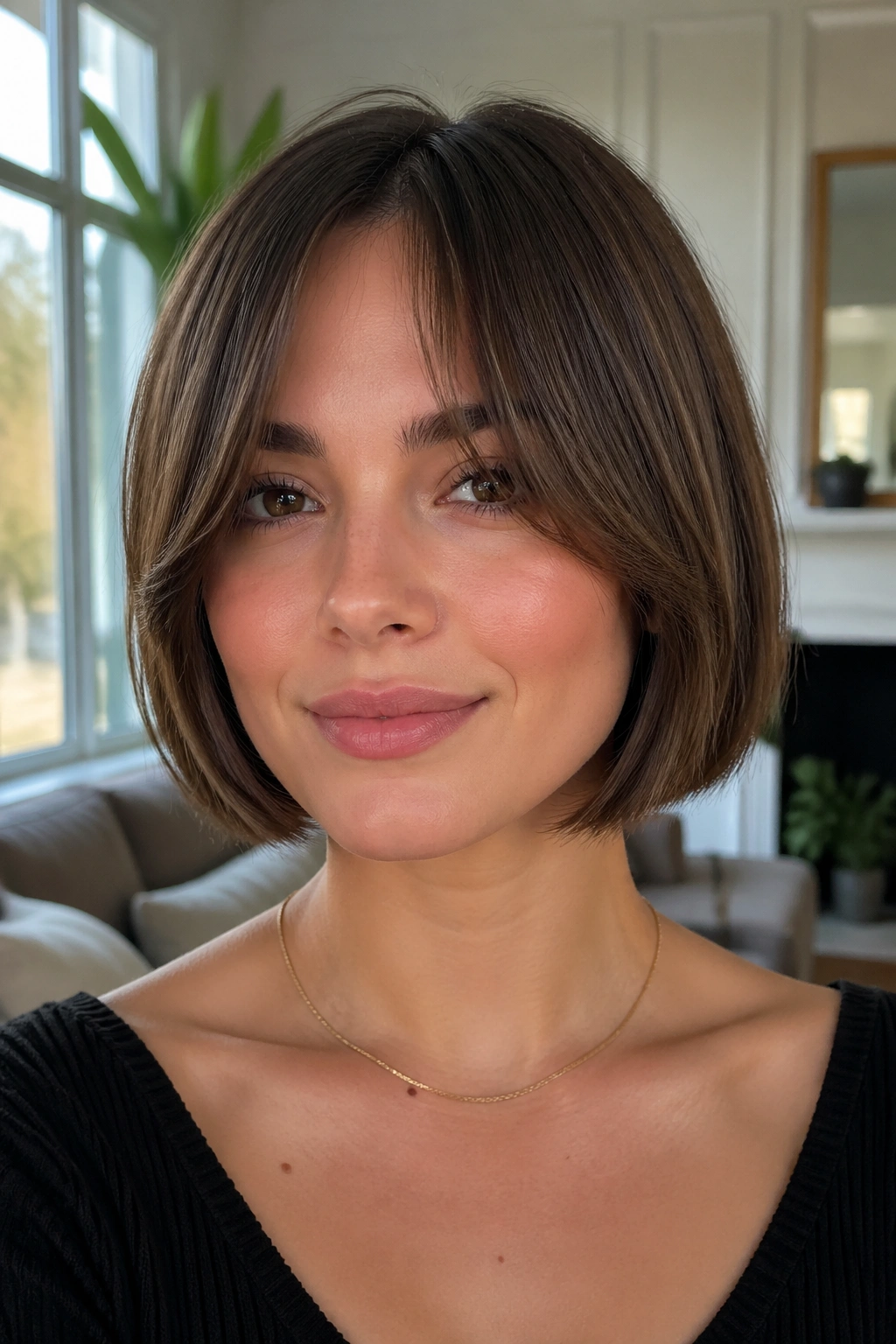
A blunt bob is not off-limits for a square face. That’s the part people get wrong. The problem isn’t the bluntness itself; it’s where the line lands and what sits above it. Add curtain bangs, and the haircut changes fast. The bangs split the width at the forehead, open the center of the face, and keep the bob from feeling too boxy.
Fringe matters here. A lot. Curtain bangs should hit around the cheekbone or a little below, with the shortest point at the bridge of the nose or just under the brows. That length gives you a soft diagonal on each side, which is the opposite of the straight horizontal line a square face doesn’t need.
The bob itself can be chin-length or a touch longer, but I would not keep it exactly at the jaw. That’s where the shape starts to fight the face. A half-inch below the jaw is a small change with a big payoff.
This style works especially well if your hair is straight or has a soft bend. The contrast between the blunt line and the curved bangs keeps it from feeling too severe. It’s a neat haircut. Not soft in the floppy sense. Just balanced.
9. Tucked-Behind-the-Ear Bob
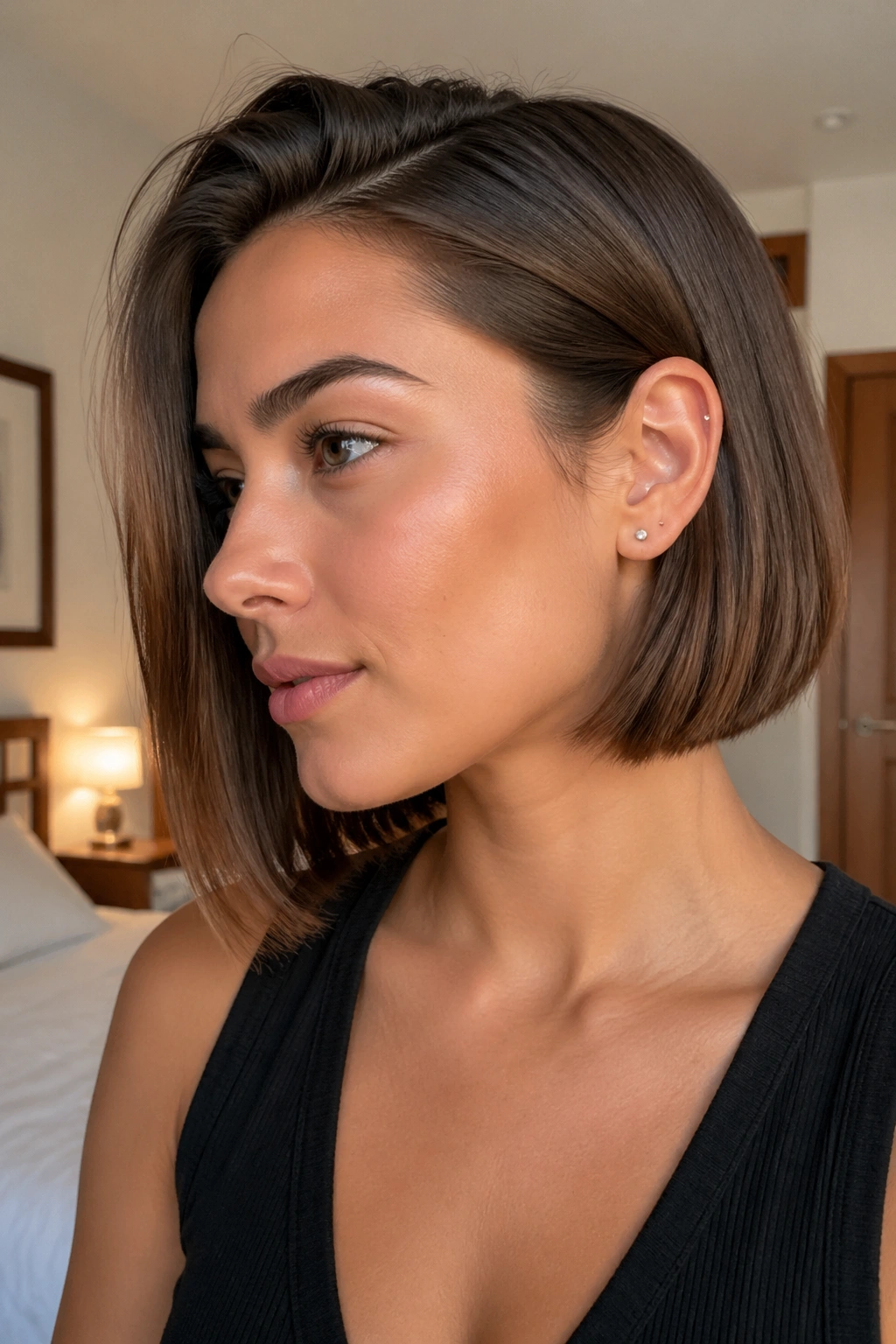
Can a simple tuck change the whole haircut? Yes. And for square faces, it often does. A bob that can be tucked behind one ear shifts some visual width away from the lower face and lets the jaw look cleaner, not wider. One small styling move. Big effect.
This is especially useful if you like a neat, controlled look. The haircut itself can be plain—a chin-to-neck-length bob with clean ends—but the ear tuck creates asymmetry and opens one side of the face. That little imbalance keeps the jaw from feeling overly symmetrical, which is where square shapes can start to look harder than they are.
The trick is length. If the hair is too short, it won’t stay tucked. If it’s too long, the shape loses the crispness that makes this cut work. Somewhere around chin length to the top of the neck is usually ideal. You also want enough weight at the front so the hair doesn’t pop back out after ten minutes.
A side part helps, but it isn’t required. I’ve seen this work beautifully with a deep side part and with a soft off-center part. What matters more is the sweep of the line and the clean space around the jaw.
10. Choppy Bob With Internal Layers
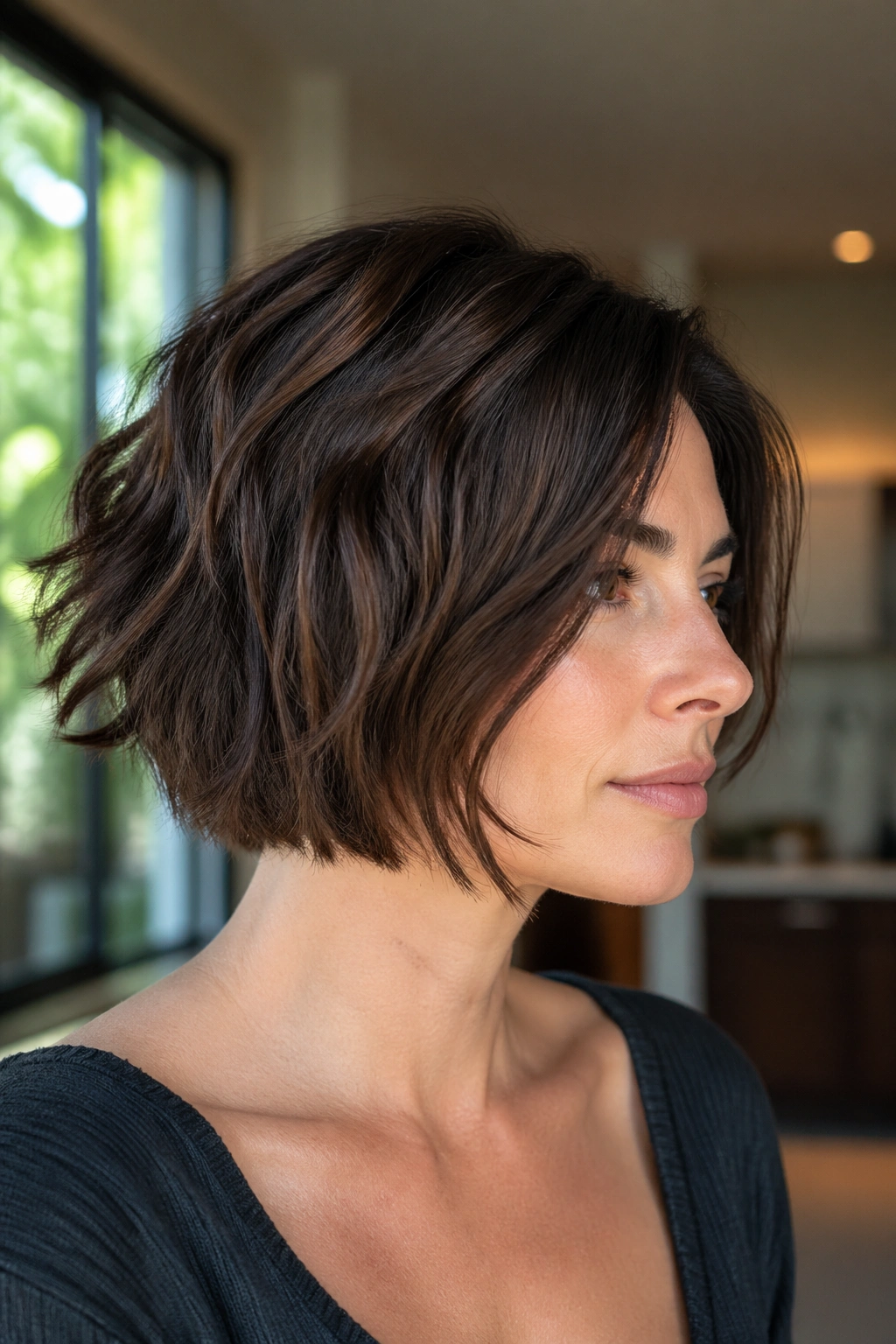
When thick hair feels boxy, internal layers are the fix. Not thinning. Not random razor work. Real internal layers that remove bulk from inside the haircut while keeping the outside outline intact. For square faces, that matters because the shape stays softer around the jaw instead of puffing out in a solid wall.
This bob has a little edge to it. The ends aren’t perfectly smooth, and that’s the point. Choppy pieces catch the light differently and break up the hard line that can make a square face look more angular than it is. If your hair has natural body, this cut often air-dries into something nice without much help.
The danger is overdoing it. Too many layers can leave the ends wispy and uneven, which tends to make the haircut look busy rather than soft. I’d keep the layers internal and let the outline stay mostly controlled. Think of it as reducing bulk, not shredding the shape apart.
A matte paste or light styling cream can help if you want the piece-y finish to show. Use a small amount. About a pea-sized dab is enough for most bobs. More than that and the texture can start to clump.
11. Sleek Side-Swept Bob

A sleek side-swept bob is one of those haircuts that looks simple until you see how much thought went into it. The side sweep pulls the eye diagonally across the face, which is flattering on a square jaw, and the smooth surface keeps the whole style feeling sharp without turning severe.
This cut works especially well if you like a polished finish. Not flat. Polished. There’s a difference. The hair should move as one clean shape, with enough bend at the ends to keep it from reading like a helmet. A round brush blowout or a pass with a flat iron and a slight inward turn at the ends usually does the job.
For square faces, the sweep should start high enough to soften the forehead and fall across one side of the face. That side should not cling too close to the jaw. A little space matters. Hair that hugs the lower face too tightly can undo the whole point.
I also like this on fine hair, which can struggle with heavier cuts. The side sweep gives it direction. The sleek finish gives it shine. And because the silhouette is controlled, you don’t need much product to keep it in place—just a light smoothing serum on the ends and maybe a soft-hold spray at the roots.
12. Rounded Neck-Length Bob for Square Faces
If you want a square-face bob that feels easy to live with, this is the one I’d put near the top of the list. The rounded neck-length shape sits below the jaw, curves inward a little at the ends, and creates a soft frame without asking for a lot of styling every morning. It’s not flashy. It works.
Unlike a straight, blunt bob that stops exactly at the jaw, this shape keeps the line away from the widest part of the face. That extra inch or two changes everything. It gives the jaw room, makes the chin look a little longer, and keeps the profile from feeling boxy. If your hair is straight, the curve can be built in during the cut. If it’s wavy, the shape gets even softer on its own.
This is a good choice for people who want structure but don’t want to babysit their hair. A quick blow-dry with a round brush, or even an air-dry with a little cream through the ends, is often enough. It also plays nicely with a side part, a soft fringe, or a tucked side if you want to switch things up.
The big win here is balance. Not disguise. Balance. A square face has character; it doesn’t need to be hidden. It just needs a bob that respects the lines already there, and this shape does that better than most.
