



Curly hair bob cuts can look airy and playful, or they can turn into a triangle with attitude. The difference is usually not the curl pattern itself. It’s the shape underneath.
Shrinkage is the headline.
A bob on curls behaves in a way straight hair never will. A half-inch at the scissors can become an inch and a half after the hair dries, and that’s why the same cut can look sweet in the chair and startling at home. If you’ve ever watched a fresh bob spring up higher than expected, you already know the game.
What matters most is where the weight sits. Some curls want a rounded edge. Others need a blunt perimeter, a little angle, or a longer front to keep the silhouette from puffing out at the sides. A smart cut works with the curl pattern instead of fighting it, and that’s the whole point.
The twelve styles below cover the curly-bob range I’d actually trust on real hair: soft, sharp, short, longer, layered, and a few that save you from the dreaded helmet effect. Pick the shape that matches the way your curls naturally behave, and the haircut starts doing half the work for you.
1. Rounded Curly Bob
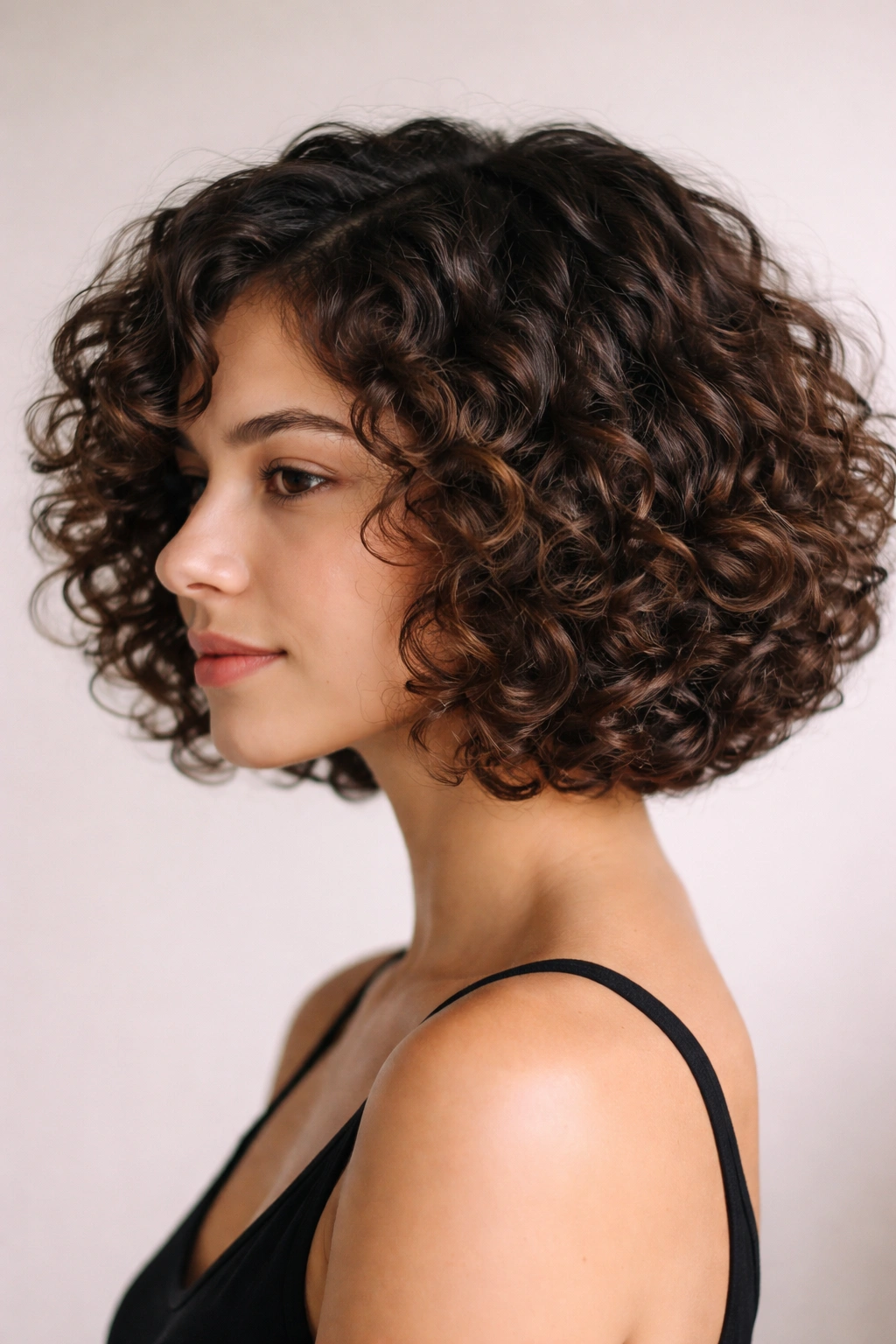
A rounded curly bob is the easiest place to start if you want shape without drama. The outline follows the curve of the head, so the sides don’t jut out too far, and the bottom line stays soft instead of boxy. On curls, that matters a lot.
Why It Works for Curl Clumps
The round shape lets curl groups fall into each other instead of stacking into a wide shelf. That’s useful for girls with medium-density curls who want bounce but do not want the sides to balloon out. It also makes the haircut look finished even on days when you only use a little leave-in and a diffuser.
A rounded bob usually lands somewhere between the chin and the top of the neck once dry. If your curls spring up hard, ask your stylist to check the final length after the hair has been cut in its natural state. Dry cutting or dry checking is the difference between a neat bob and one that shortens itself by surprise.
Quick Fit Check
- Works well on loose ringlets and medium curls that need shape more than removal.
- Ask for a curved perimeter, not a flat shelf.
- Keep the layers soft near the crown so the top does not puff.
- Best styling move: scrunch in mousse, then diffuse on low heat.
Tip: If your curls are uneven from front to back, have the front pieces cut a touch longer. That little bit of extra length keeps the curve smooth when the hair dries.
2. Jaw-Length French Bob
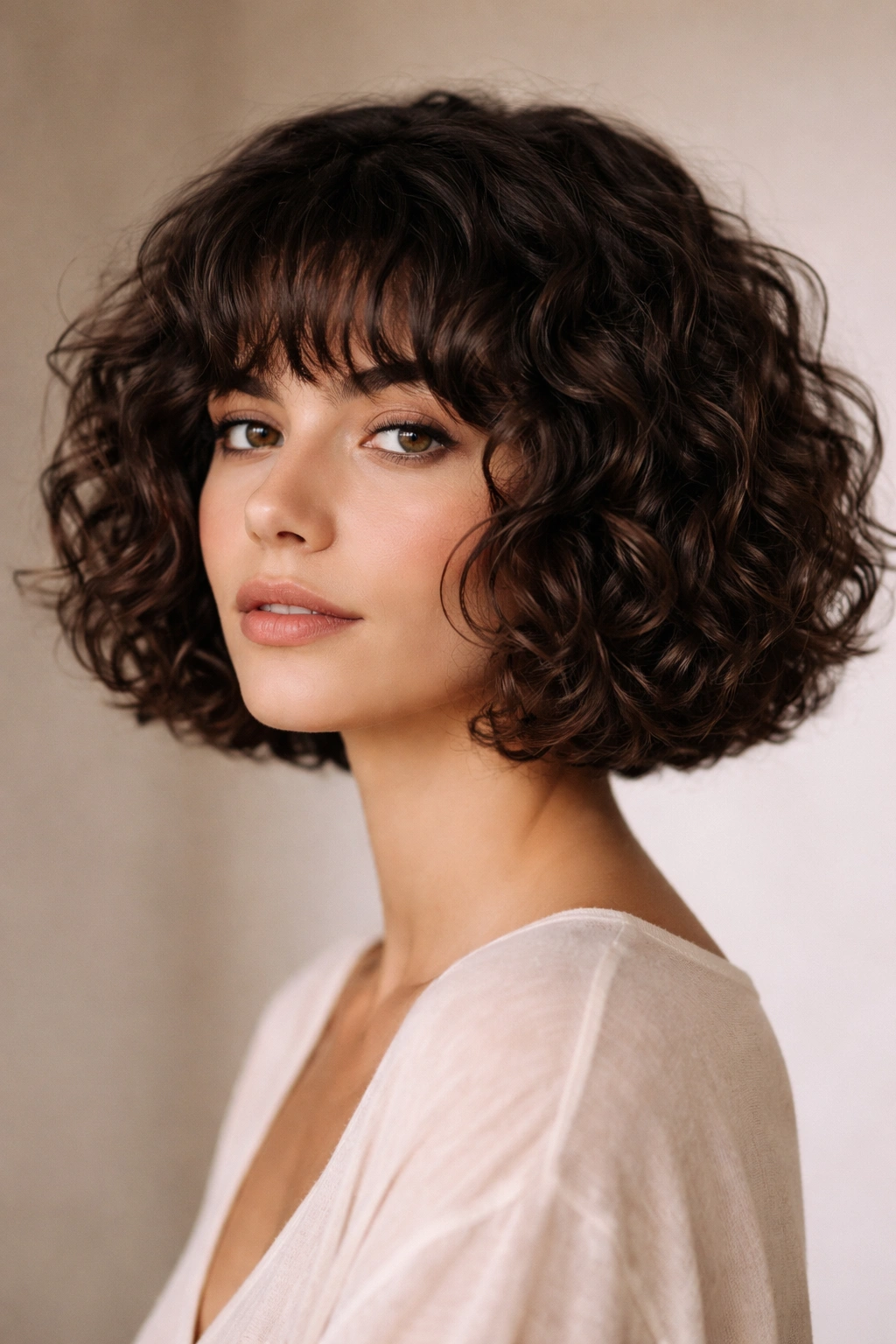
The jaw-length French bob is the sharpest-looking short curly bob on this list, and yes, it can be gorgeous on girls with curls. Short hair does not have to mean bulky hair. It just needs a cleaner outline than most people expect.
This cut sits right around the jaw and usually has a soft, face-framing edge. On curly hair, that means the front pieces can skim the cheekbones while the back stays compact and neat. If you want a haircut that feels tidy even when the weather turns humid, this is one of the strongest options.
The trick is restraint. A French bob can go sideways fast if the stylist thins it too much or stacks too much volume at the back. You want the shape to feel chic, not airy for the sake of being airy. A little density at the bottom gives the cut its little bit of attitude.
Use a light cream and a gel with some hold. Too much heavy conditioner will make the jaw line collapse, and then the whole point gets lost. This is a cut that likes definition. Messy is fine. Puffy is not.
3. Chin-Length Blunt Curly Bob
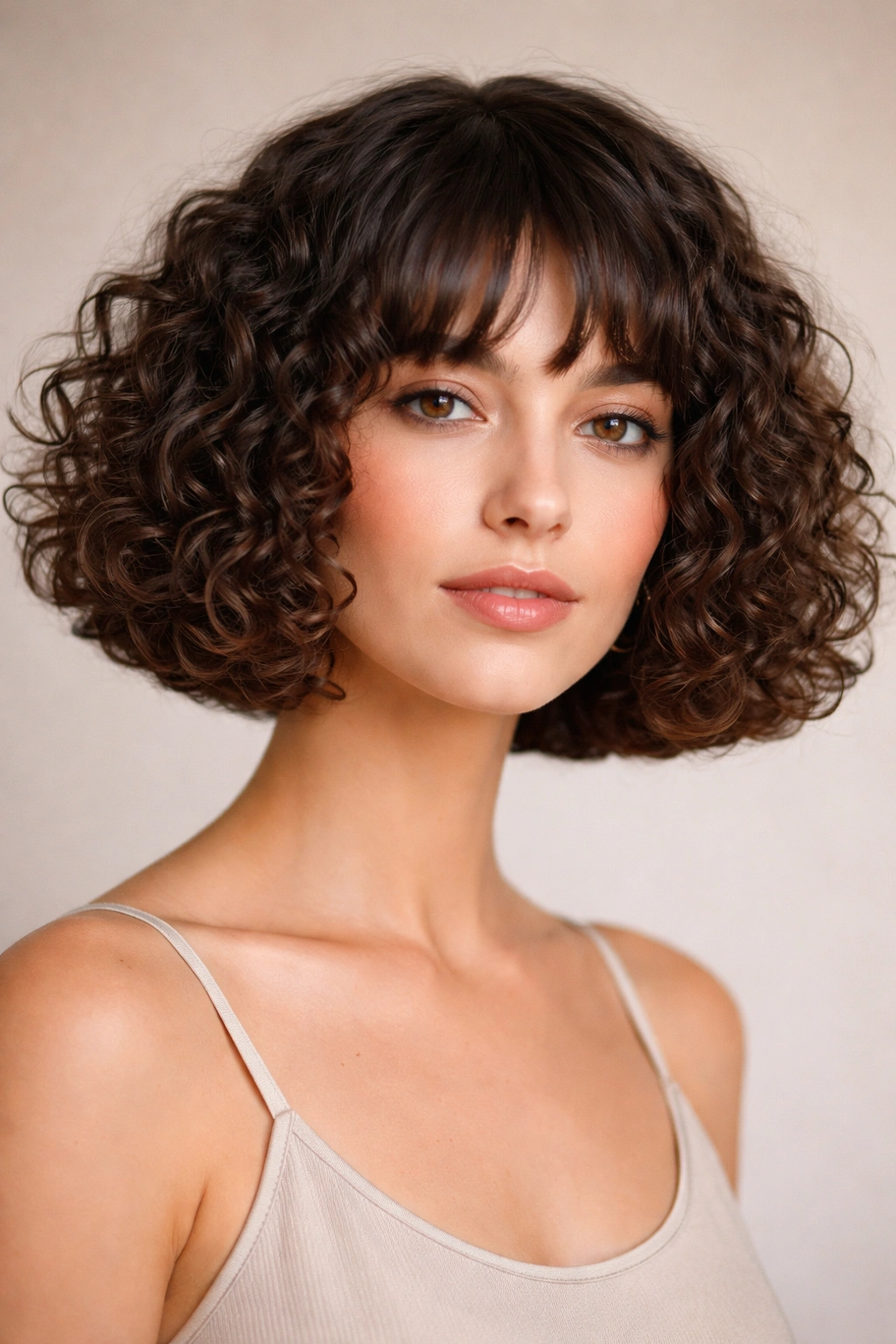
Can a blunt bob work on curls without looking boxy? Absolutely, and when it’s done well, it looks clean in a way layered cuts sometimes miss. The blunt line gives the curls a base, which makes the ends look fuller and more deliberate.
This is a smart choice for dense curls that tend to spread out at the shoulders. A blunt chin-length bob keeps the outline tight and compact while still letting the curl pattern do the visual work. The key is not to over-layer the interior. Once you start carving too much away, the perimeter loses the weight that keeps it grounded.
How to Wear It
Keep the part slightly off-center if your curls split too cleanly in the middle. A tiny shift to one side can stop the cut from looking too symmetrical, which is where some blunt curly bobs start to feel stiff. I also like this shape on girls with stronger jawlines because it draws attention right there without swallowing the face.
Ask for the ends to be cut with a clean line, then let the stylist point-cut only the very tips if the bottom feels too hard. Do not let the haircut get shredded all through the lower half. That usually creates frizz, not movement.
4. Layered Curly Bob With Shaggy Ends
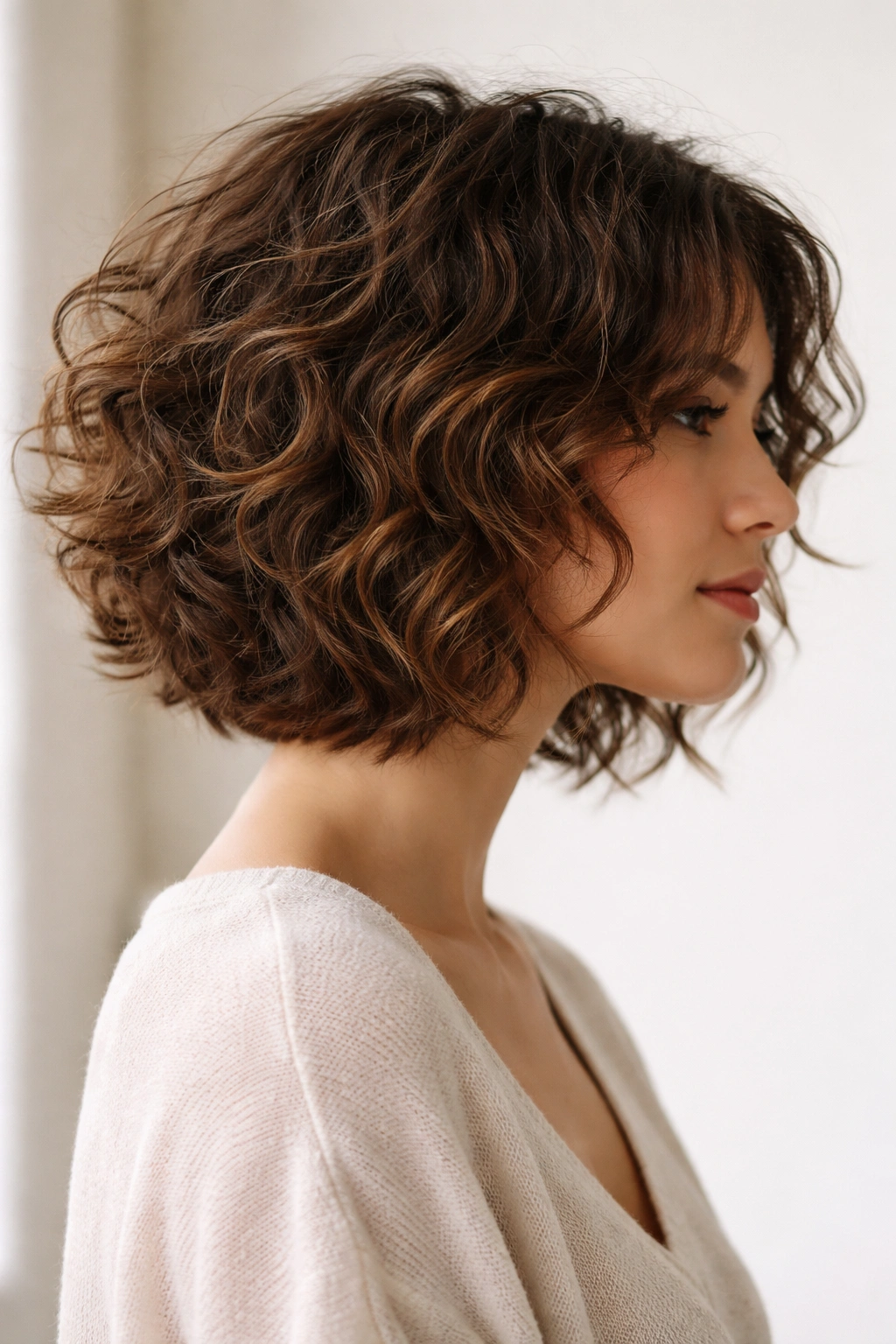
Picture a girl with thick curls that spread outward every time they dry. Now picture the same head of hair after a layered bob with shaggy ends. Much better. The haircut stops fighting the volume and starts arranging it.
The reason this shape works is simple: layers remove bulk where the hair feels heavy, and the shaggy ends stop the bottom from looking too solid. You get a bit of air between the curls, which helps each cluster show up instead of merging into one giant shape. That’s especially useful on coarse curls that can feel heavy after a long grow-out.
A lot of stylists go too far with shaggy layers. They think more texture equals more movement. Sometimes it does. Sometimes it just gives you fuzz around the edges and a hollow-looking middle. Ask for soft internal layers, not a chopped-up outline.
- Best on dense curls that swell at the sides.
- Good if your hair feels heavy at the crown.
- Nice when you want a bob that looks lived-in, not too polished.
- Avoid over-thinning near the nape, or the back starts to look scraggly.
This cut is a favorite of mine for girls who want bounce but do not want the haircut to look precious. It has a little edge. Good edge.
5. A-Line Curly Bob
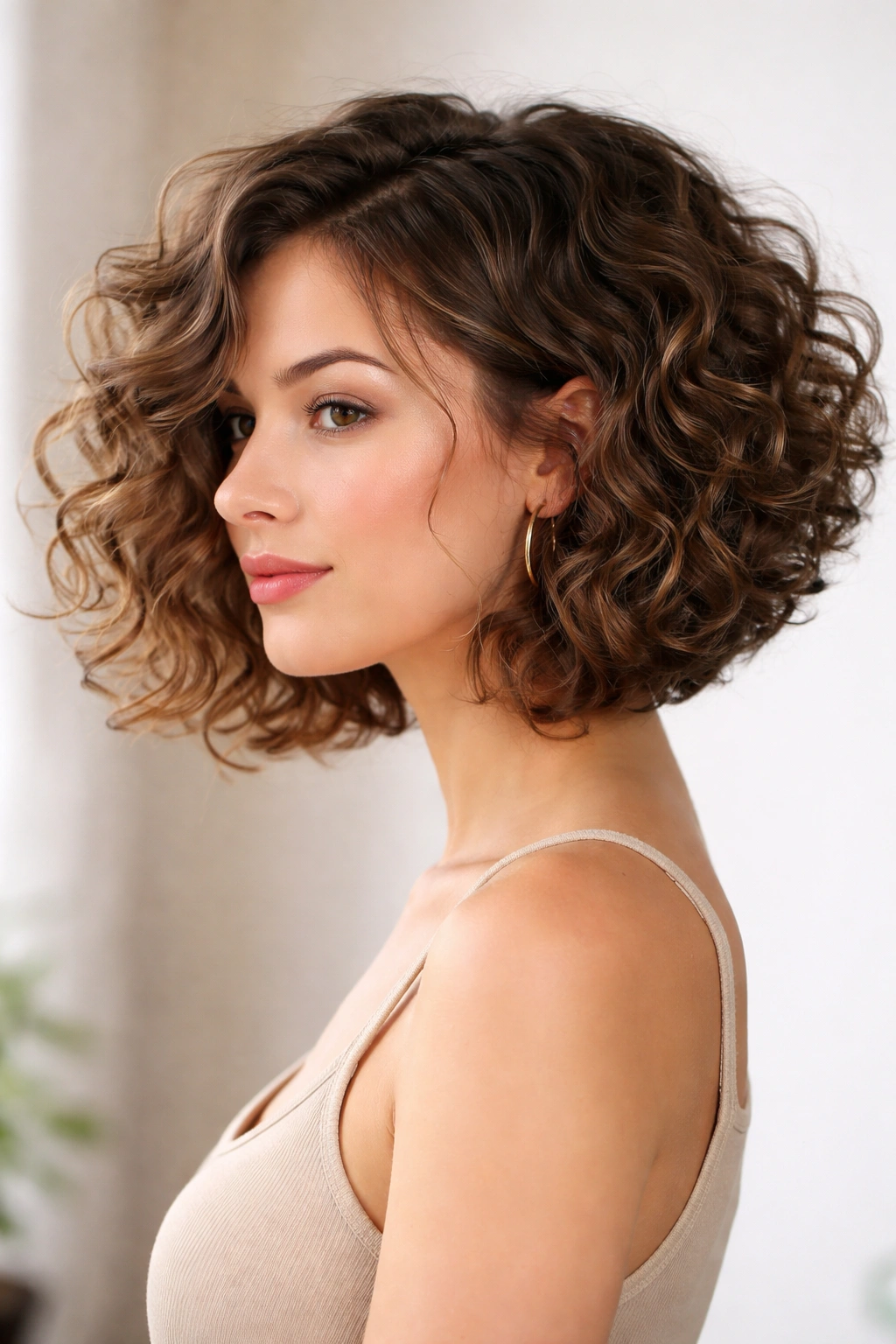
The A-line curly bob is longer in front and shorter in back, and that small angle changes everything. On straight hair, the shape reads as sleek. On curls, it reads as movement with intention, which is rarer than people think.
The front pieces skim the jaw or even the top of the neck, while the back lifts just enough to keep the whole cut from sitting flat. That little graduation can make round faces look longer and can keep thick curls from ballooning at the sides. It also gives you a shape that grows out gracefully instead of turning shapeless after a few weeks of wear.
Curls complicate the angle, though. Because the front and back may shrink at different rates, the cut has to be planned with the dry shape in mind, not just the wet shape in the mirror. That’s where a lot of A-line bobs go wrong. They look lovely on day one and oddly uneven later because nobody respected the spring in the hair.
I like this cut for girls who want a bob that feels polished without being stiff. It works especially well if the front pieces are tucked behind the ear some days and worn loose on others. The movement is half the charm.
6. Curly Bob With Curtain Bangs
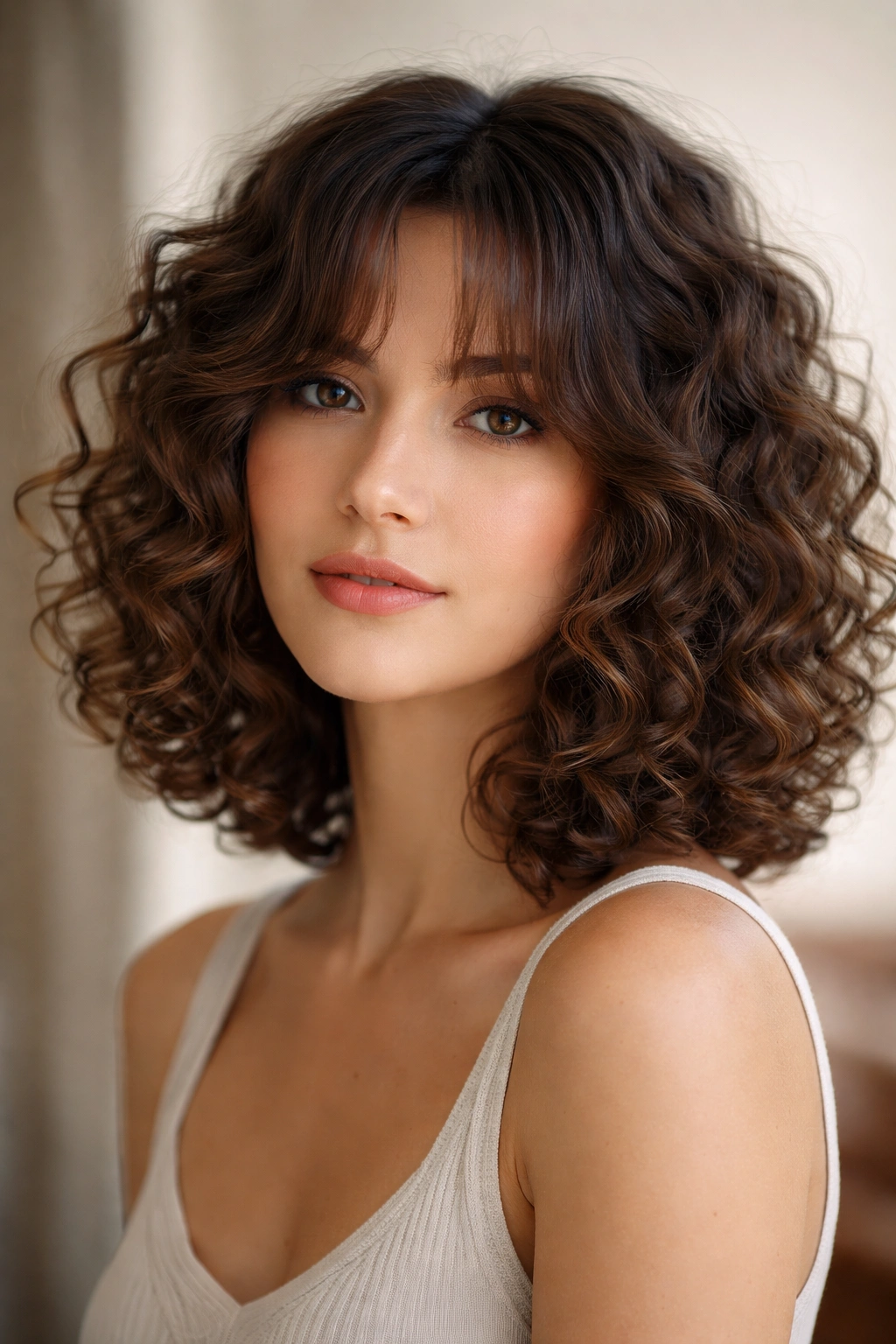
Unlike blunt bangs, curtain bangs give curly hair a little breathing room. They split at the center, move toward the cheekbones, and blend into the rest of the bob instead of landing as one hard line across the forehead.
That soft break matters. Curly bangs can get heavy fast, especially if the curl pattern shrinks tighter near the front of the head. Curtain bangs avoid that problem by starting a bit shorter in the middle and falling longer at the sides. The result is gentler around the face and easier to grow out if you change your mind later.
The cut works especially well on girls who want the bob to feel more romantic than sharp. It frames the eyes without boxing in the face, and it handles a little frizz better than a full fringe because it is not trying to be perfectly even. Perfection is a bad goal on curly bangs anyway. Shape beats symmetry.
Ask for the shortest bang pieces to hit around the brow area when dry, with the longest pieces grazing the cheekbones or top of the lip. Anything shorter can spring up too much and leave you babysitting the fringe every morning. And nobody needs that.
7. Tapered Nape Curly Bob
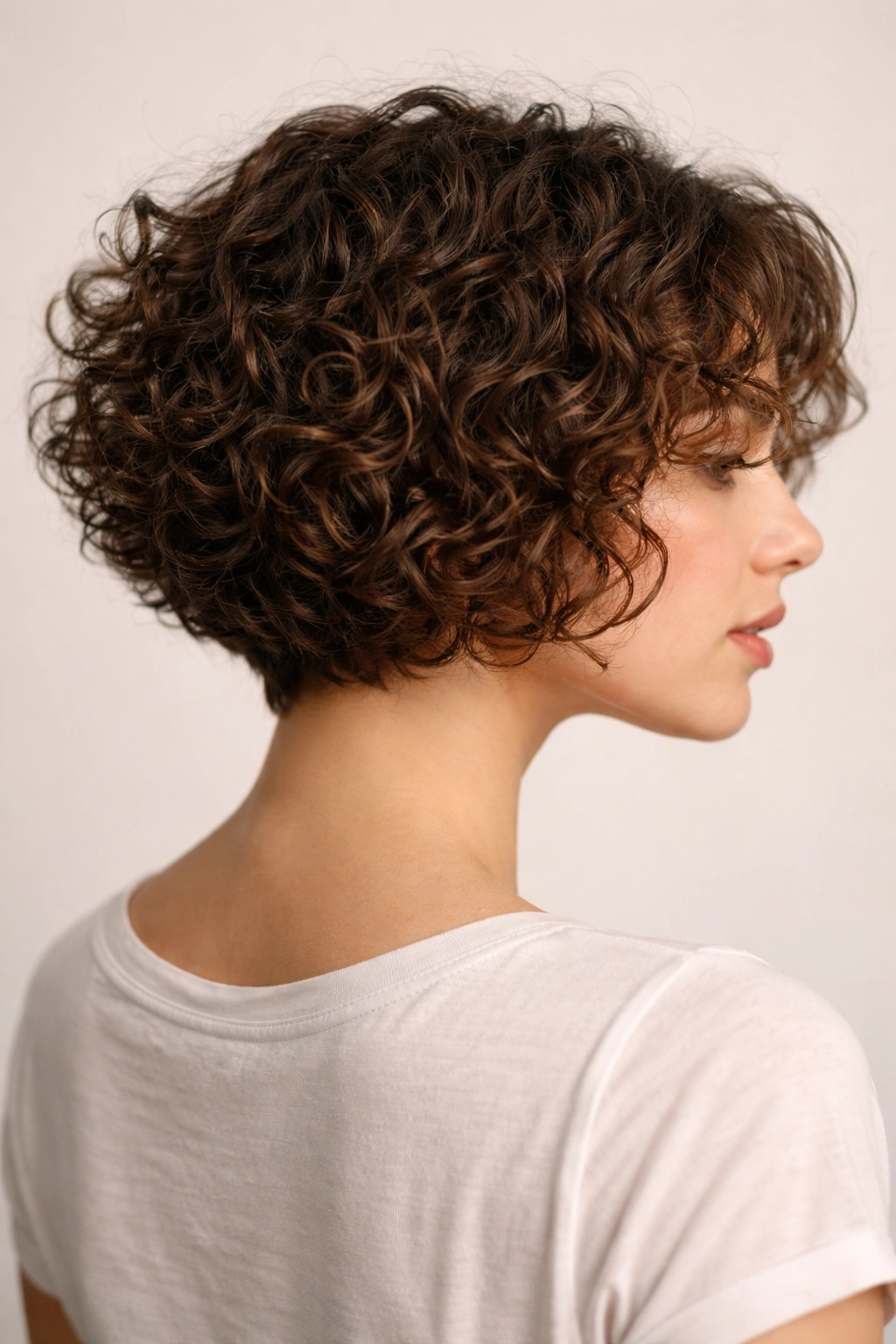
A tapered nape makes the whole cut feel lighter. The back sits closer to the neck, while the sides and top keep enough length to show off the curl pattern. It’s a neat little trick, and it works especially well when curls are thick enough to feel bulky under a standard bob line.
Where It Sits
The back should hug the nape without looking buzzed or overly tight. You want a clean taper, not a shaved effect. That gives the haircut shape when the curls lift, and it keeps the neckline from looking like it disappeared under volume. On kids and younger girls, this can be a smart option because it stays tidy without looking severe.
This cut also helps if the hair at the crown tends to sit flat while the lower half gets wide. The taper removes some visual weight from the neck area, which lets the top become the star. A diffuser helps here, but so does a simple clip lift at the roots while the hair dries.
- Good for thick curls that bunch at the nape.
- Keeps the neck cooler and cleaner-looking.
- Works best when the stylist leaves a little extra length for shrinkage.
- Not ideal if the back hair is already very sparse.
Tip: Tell the stylist to leave at least a half-inch more than the dry length you think you want. Curly napes shrink hard, and that’s one place where overcutting becomes impossible to ignore.
8. Deep Side-Part Curly Bob
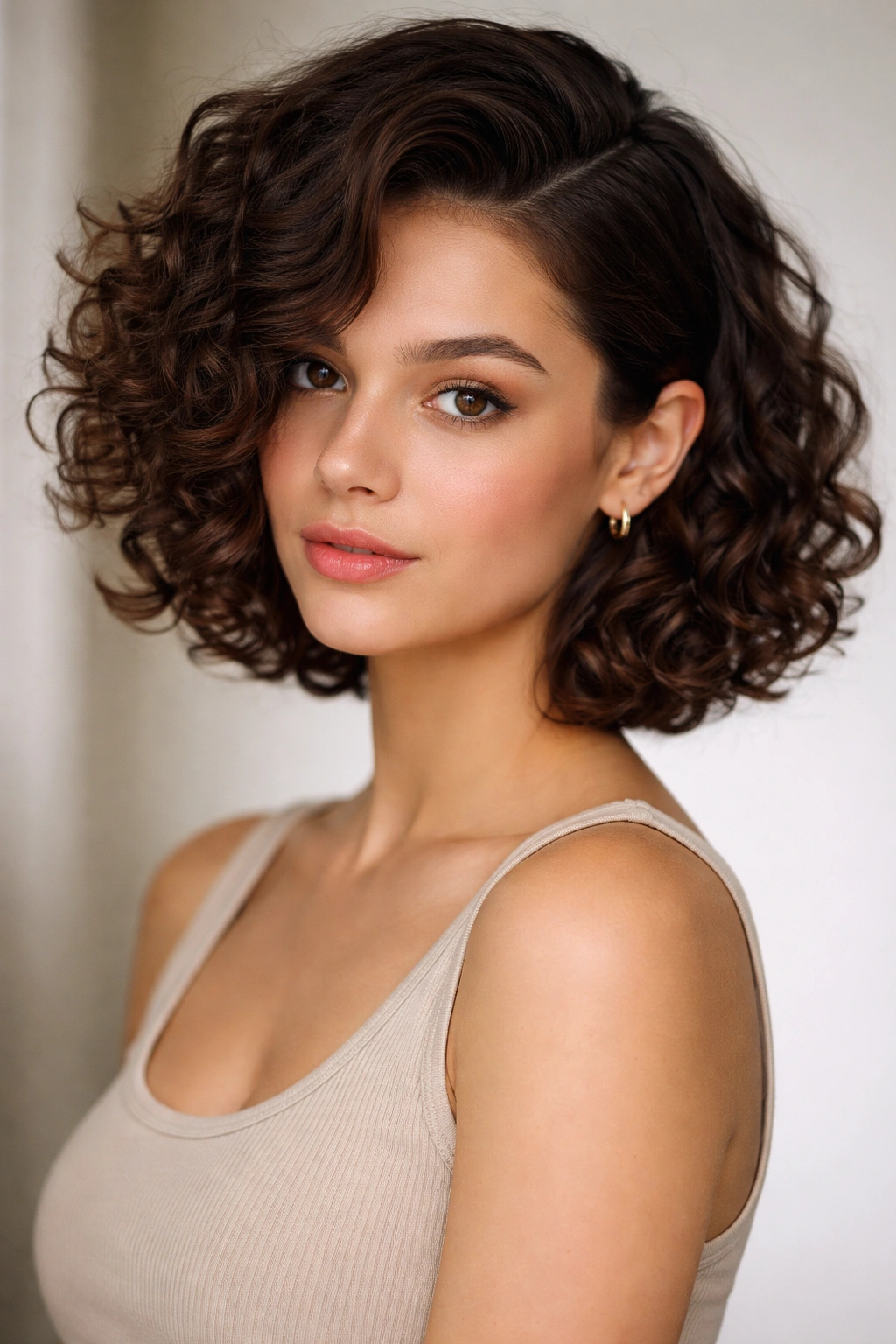
A deep side-part can change a curly bob more than an extra layer ever will. It shifts the weight, breaks up a flat side, and gives the haircut a bit of lift at the roots without changing the actual length. That’s a very efficient fix.
The beauty of this approach is that it works with almost any bob shape. Rounded, blunt, layered, chin-length — all of them look a little more relaxed with a stronger side part. One side falls with more fullness, the other side gets tucked or swept back, and suddenly the haircut has some drama. Not stage drama. Just enough.
This is a good move for girls with one stubborn side that always lays flat. A deep side part can balance a cowlick, help the front pieces frame the face, and make the curls look fuller near the crown. If you dry your hair by flipping the part once or twice while diffusing, the root lift tends to hold better.
Use the side part when the bob feels too centered or too round. It is a small change with a big payoff. And if your curls are looser at the front, a side part can keep them from falling straight into your eyes all day.
9. Inverted Curly Bob
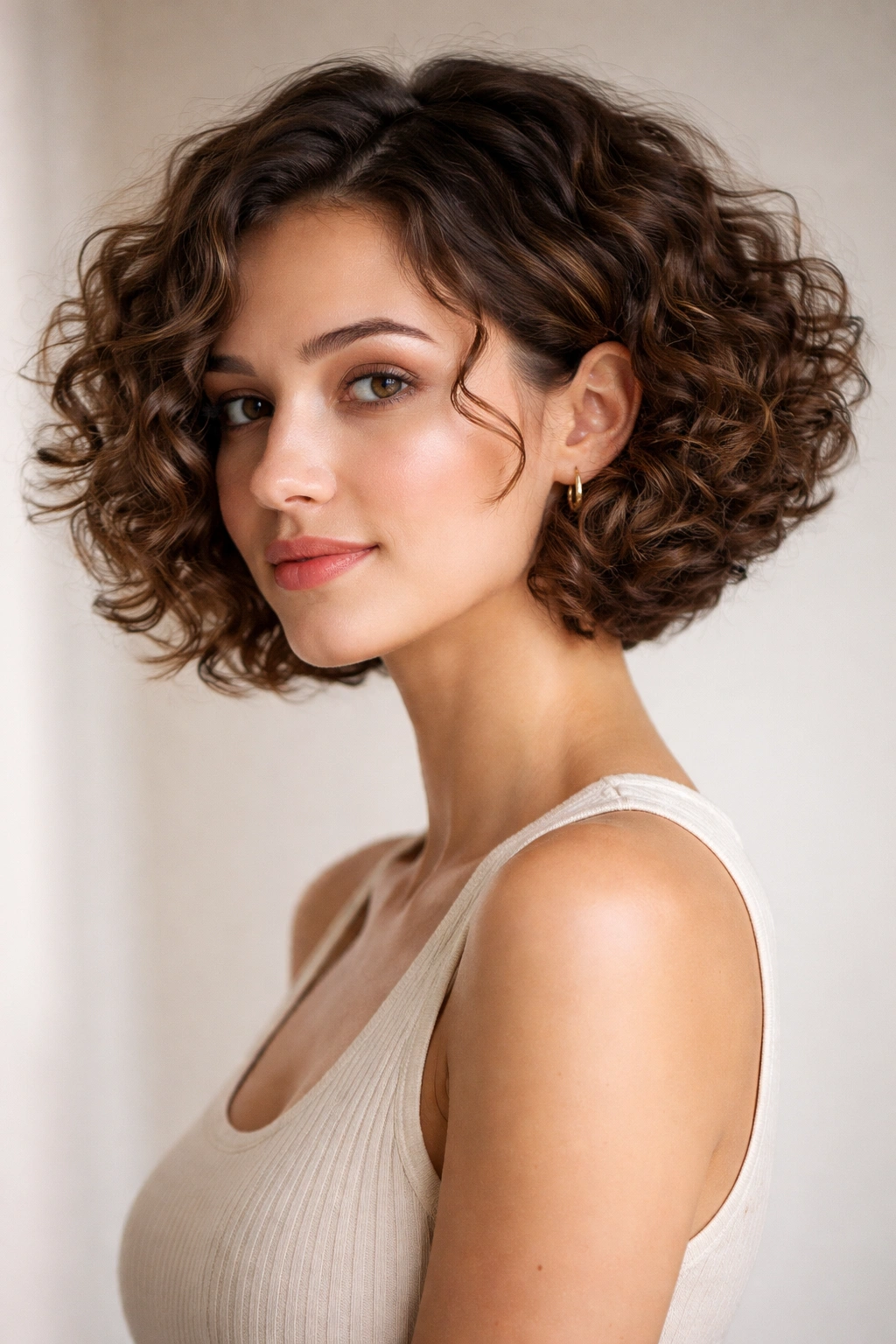
What happens when the front is a little longer than the back? You get an inverted bob, and on curls, that angled line can be a lifesaver for girls who want shape without going super short. The front length softens the face while the back stays neat and lifted.
This haircut is especially useful for round or heart-shaped faces because the front pieces draw the eye downward. The back still keeps things tidy, so the whole style feels light, not heavy. Curly hair adds a nice bonus here: the angle does not need to be razor-sharp to read clearly. Even a gentle difference between front and back will show up once the curls dry.
How to Ask for It
Tell the stylist you want the front to sit around the chin or just below it, with the back hugging the nape a little shorter. Mention your curl shrinkage before anything is cut. That part matters more than the diagram in your head.
A small amount of internal layering helps the angle move, but too much will make the back puff out and ruin the line. The goal is lift, not a wedge. There’s a difference, and it’s a big one once the curls dry and start living their own life.
10. Boxy Curly Bob
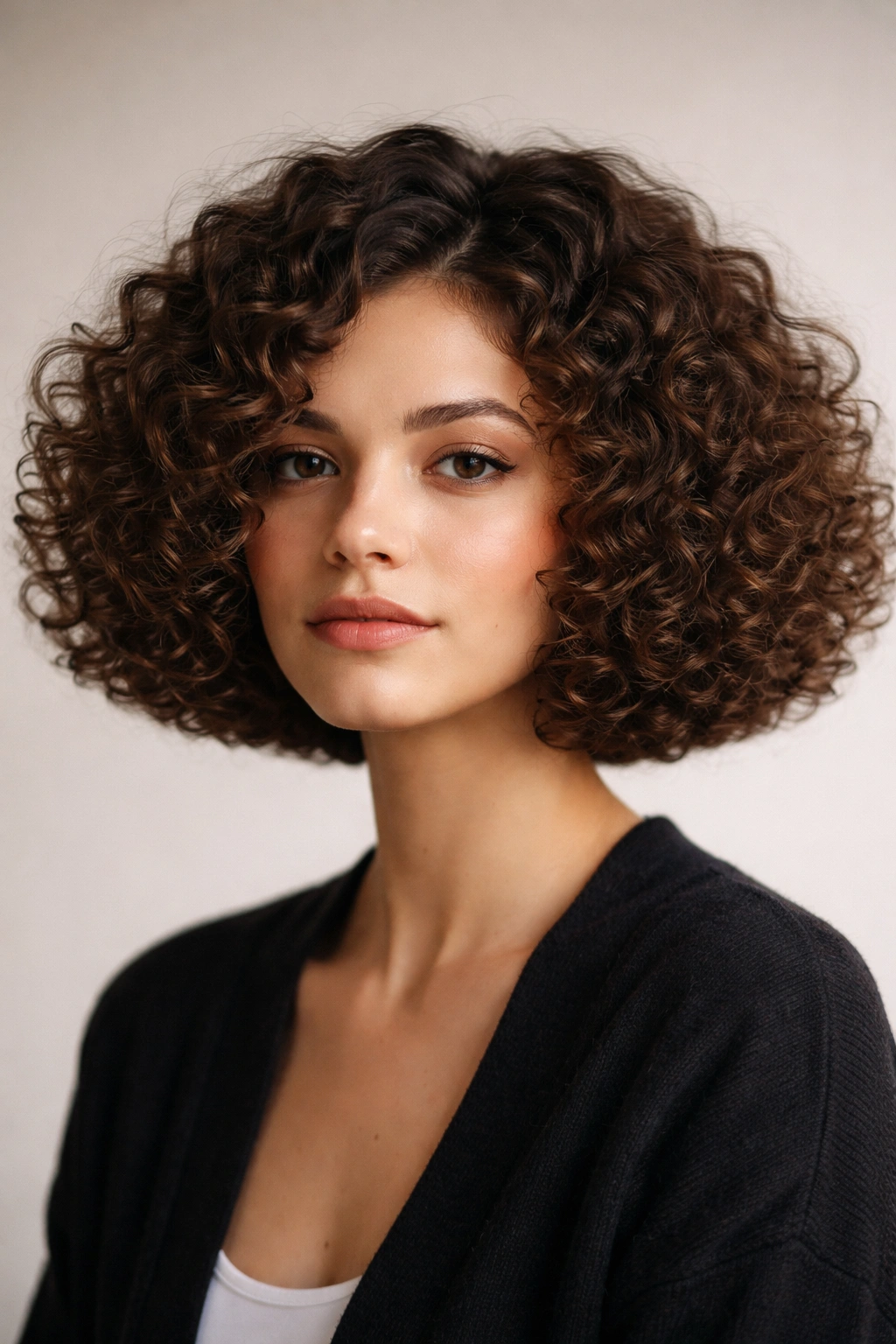
Some curls want a crisp outline. A boxy curly bob gives them exactly that. Instead of a rounded edge or a swept angle, the silhouette stays more square through the bottom, which makes the shape feel bold and compact.
This cut is a smart pick for dense, uniform curls that already form neat clumps. The square line gives the eye something solid to follow, and the curls fill the frame without spilling too far outward. It can look especially good when the curl pattern is consistent from one side to the other. If the texture varies a lot, the box can start looking lopsided fast.
The haircut is not soft by nature, and that is the point. It has presence. Some girls want that. Others want a floating, airy bob and should probably skip this one. If you like clean geometry and hair that looks intentionally shaped, the boxy version deserves a look.
- Best on fuller curls with a steady pattern.
- Ask for a blunt perimeter with minimal rounding.
- Avoid aggressive thinning through the lower half.
- Works well with a center part if the face shape can carry it.
A boxy curly bob does not apologize for taking up space. I respect that.
11. Collarbone Curly Bob
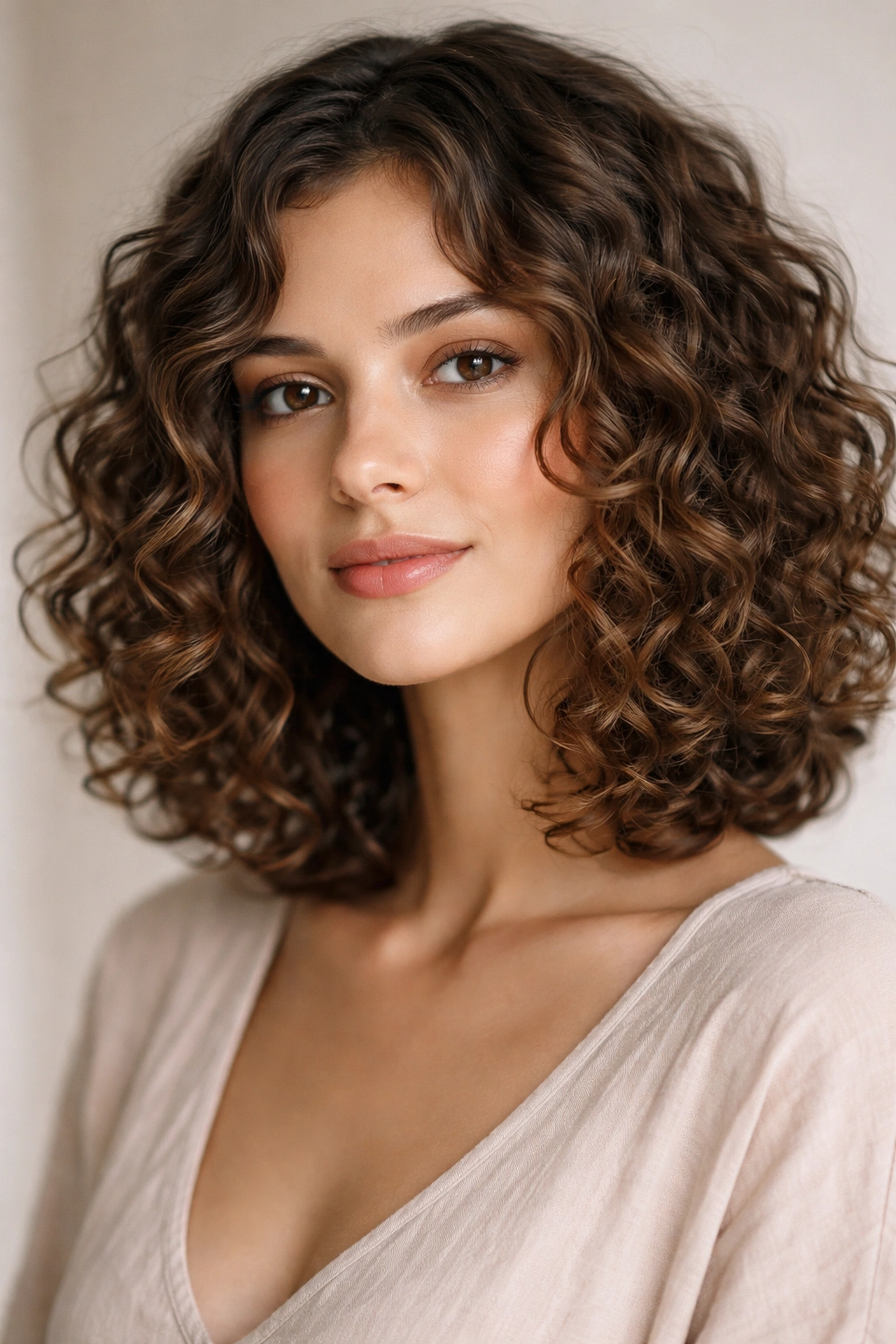
The collarbone curly bob is the haircut for girls who want the bob feeling without giving up too much length. Curls usually spring up enough that this cut still reads as a proper bob, even if it lands a little longer than a classic chin-length shape.
That extra length buys you flexibility. You can wear it loose, half-up, clipped back, or tucked behind the ears on school days when you need the hair out of the way. It also grows out more gracefully than a very short bob, which means fewer awkward in-between weeks. That alone makes it one of the easier curly cuts to live with.
I like this length on hair that is still figuring itself out. Maybe the curl pattern changes from front to back. Maybe one side is looser. Maybe the person wearing it wants shape but is nervous about a shorter cut. The collarbone bob gives enough room to experiment with layers and parting without committing to a severe change.
Use a light curl cream and a gel if the ends puff. Then let the hair dry without touching it too much. This cut tends to reward patience. Rush it, and it can get fluffy. Wait for the curls to set, and it looks relaxed in the good sense of the word.
12. Soft Curly Bob With Invisible Layers
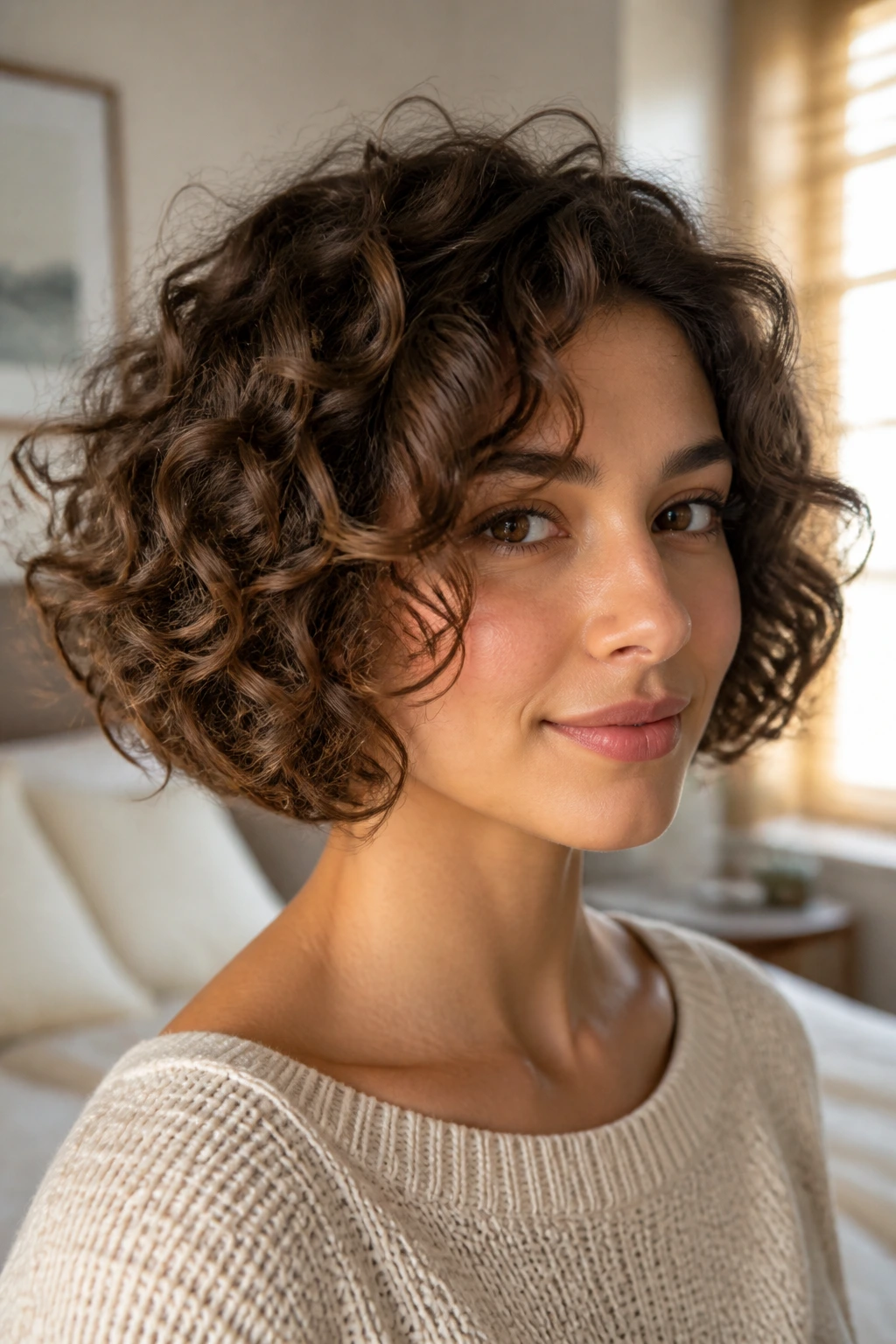
The soft curly bob with invisible layers is probably the most forgiving option in the whole group. It keeps the outer line full and clean, but the interior gets just enough removal to stop the shape from ballooning. You see the result, not the machinery behind it.
That’s what makes it different from a heavily layered curly cut. The layers hide inside the haircut instead of showing up as choppy steps. The bottom still looks like a bob, not a shag pretending to be one. If your hair is thick, this matters. A lot.
This version works especially well on girls with mixed curl patterns — maybe tighter at the nape, looser at the front, or soft waves underneath stronger ringlets. The invisible layering lets the haircut breathe without making the ends look thin. A dry cut or a careful point cut through the interior usually gives the best result, because the stylist can see where the density really sits.
It’s also the easiest bob to grow out. The outline stays soft as it gets longer, which means you can carry it for months without feeling like the shape has gone strange. If you want one curly bob that behaves in real life, not just in the salon chair, this is the one I’d put near the top.
