



A good Deva Cut bob for natural curls can look airy and sculpted at the same time, which is harder than it sounds. Curls shrink, bend, puff, and settle in their own way, and a haircut that ignores that behavior usually ends up fighting the head instead of flattering it. Cut them the wrong way, and the bob can turn boxy fast.
Length lies to curls.
The Deva Cut approach makes more sense because it works with the hair in its real state: dry, springy, and full of little irregularities that become the charm of the cut. A stylist can see where a curl lands at the cheekbone, where it flips away from the jaw, and where the nape needs room instead of a blunt wall. That matters with bobs more than almost any other shape, because a quarter inch in the chair can become a full inch once the hair dries.
When the shape is right, though, a curly bob feels light without looking thin. It moves. It sits close where it should and gets a little wild where it can afford to. The ten styles below cover the versions I keep coming back to: tidy ones, soft ones, sharper ones, and a few that are quietly dramatic without trying too hard.
1. The Classic Deva Cut Bob for Natural Curls
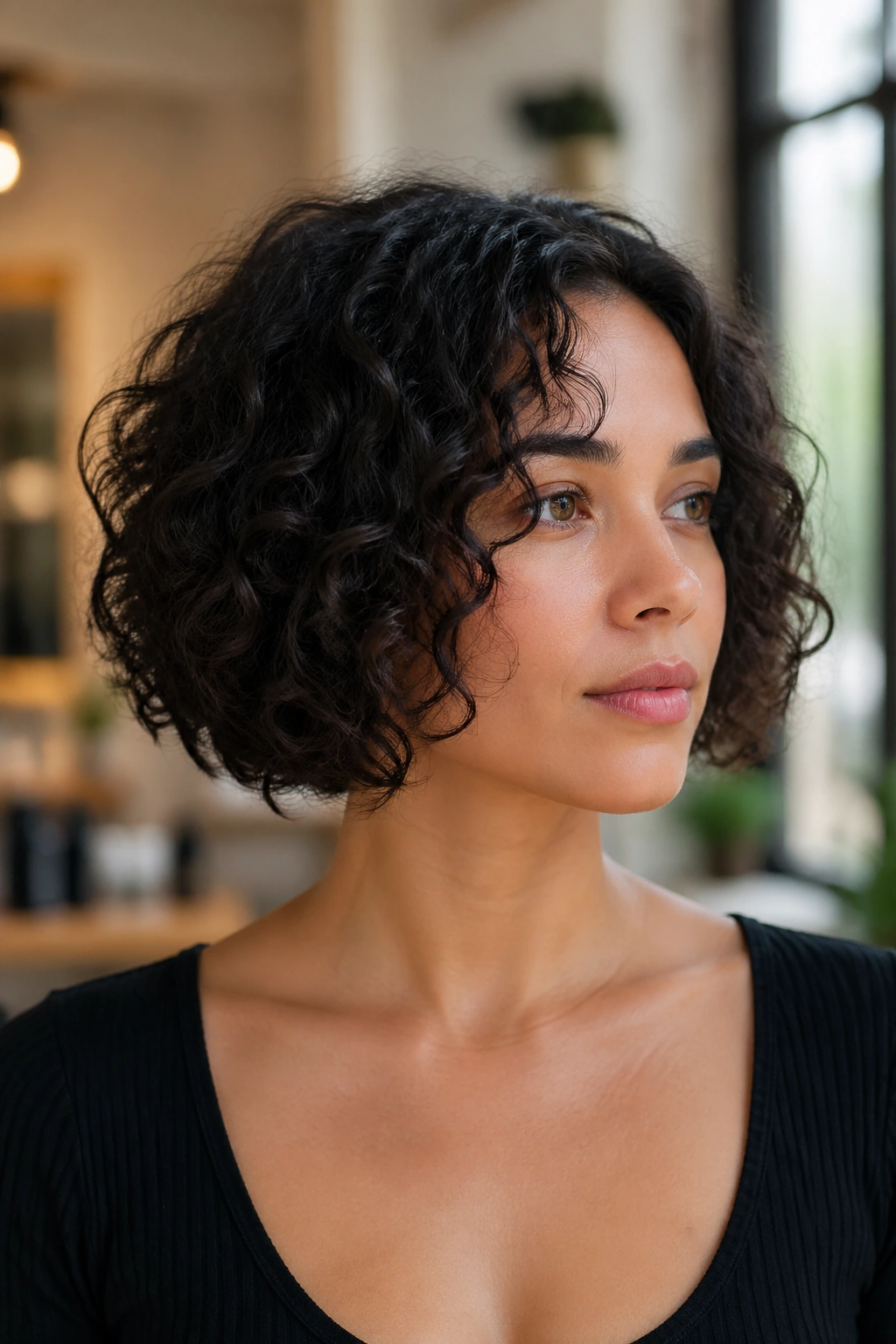
The classic Deva Cut bob is the shape I send people to first when they want curls to look like curls instead of a haircut trying to control them. It usually lands at the chin or just below it, and that small difference matters a lot once shrinkage kicks in. With medium-density curls, that length keeps the line crisp without making the sides flare out like a helmet.
Ask for the perimeter to follow your curl clumps, not a blunt shelf. A stylist who knows curl-by-curl cutting will dry-cut in sections, watch each coil fall, and trim where the hair actually lives. That sounds slow because it is slow, and that’s the point. Curls do not behave like straight hair, so the scissors should stop pretending they do.
What to ask for in the chair
Tell your stylist you want a dry curl-by-curl bob with a clean outline and enough weight at the bottom to keep the shape grounded. If your curls spring up hard, ask for the cut to sit about 1/2 inch longer than your target length. That tiny buffer saves you from a bob that looks perfect wet and too short once it dries.
- Keep the perimeter soft rather than razor sharp.
- Leave a little extra length at the front if your face-framing curls bounce up fast.
- Ask for internal weight removal, not random thinning at the ends.
- Style with a light leave-in and gel so the curl pattern stays grouped.
My rule: if your curls are dense, don’t let anyone over-layer the ends just to “lighten” the shape. It usually makes the bob frizzier, not better.
2. The Rounded Curly Bob That Hugs the Jawline
Why does a rounded curly bob look so soft on some people and so oddly puffy on others? The answer is shape. A rounded bob follows the curve of the head and the natural bend of the curls, so the silhouette feels intentional instead of boxy. That makes it a smart pick for people whose hair wants to expand at the sides.
This cut works especially well when the curl pattern is a mix of loose spirals and tighter bends. The rounded outline gives the top and sides a shared direction, so the hair doesn’t stick out in separate little camps. If you’ve ever looked in the mirror and thought the width came from nowhere, this shape is usually the fix.
How it behaves in real life
A rounded bob is friendlier on humid days than a blunt bob because the shape already expects some movement. It also does well when you wear your hair air-dried with a bit of gel cast, then scrunch out the crunch once the hair is fully dry. The result feels soft, not floppy.
For rounder faces, I like this cut just below the chin. For longer faces, I’d keep a little more width at the cheekbone so the style doesn’t drag the face down. And if the curls are very tight, ask for the roundness to happen through the interior, not by taking too much off the outer line. That one detail keeps the shape from ballooning.
3. The Layered Deva Cut Bob with Crown Lift
If your curls go flat at the crown and then mushroom at the ends, this is the bob that fixes the balance. The layered Deva Cut bob adds lift where the hair needs it and takes away some of the bulk that can make a short curl cut feel heavy. It’s a better answer than just chopping more length off the bottom.
A lot of people think “layers” means “more volume everywhere.” Not quite. Good layers on curls create direction. They let the top breathe while the bottom still holds enough weight to keep the bob looking like a bob.
Where the layers matter most
- The crown should get the softest removal of weight.
- The sides should keep enough fullness to frame the face.
- The back should not be thinned so much that it collapses into a fuzzy triangle.
- The shortest pieces should still belong to a curl family, not be hacked in as random short bits.
This cut is a strong pick for dense hair and curl patterns that bunch up near the nape. It also works when your hair feels too “shelf-like” at one length. Just be careful with razors. On some curl types, a razor can make the ends look wispy in a bad way, and then the bob loses its shape before lunch.
4. The Inverted Bob That Gives Curls a Clean Back View
Inverted curly bobs look sharper than most curl cuts, but the trick is restraint. The shape is shorter in back and longer in front, which gives the hair a little swing without making it feel severe. On natural curls, that angle can be gorgeous because it follows the way the hair stacks over the nape.
I like this version when the back of the head needs definition. Some curl patterns grow out flat at the nape and then puff at the sides, and an inverted bob cleans that up fast. The line through the front also helps lengthen the face a bit, which is handy if the cheeks carry more width than you want.
Keep the angle subtle. A steep inversion on curls can look choppy once the hair dries, especially if the front pieces spring up higher than expected. Ask for a soft gradient rather than a dramatic wedge. That keeps the shape elegant instead of trying too hard.
One small thing people miss: the back should still have enough length to show curl pattern. If the nape is cut too short, it can lose definition and just sit there fuzzy. I’d rather see a back that skims the top of the neck than one that looks over-edged.
5. The Asymmetrical Curly Bob for People Who Hate Perfect Symmetry
Symmetry is overrated in curly hair. Curls already break the rules a little, so a slightly asymmetrical bob often feels more natural than a perfectly even one. One side can sit just a touch longer, the part can lean off-center, and the whole shape starts to look lived in instead of staged.
This is a smart move when one side of your hair behaves differently from the other. Maybe one ear sticks out more. Maybe one side grows fuller. Maybe your natural part insists on sitting somewhere odd and you’ve stopped fighting it. An asymmetrical bob gives that difference a job to do.
Keep the imbalance small if you want it to read as polished. I usually like the longer side to sit about 1 inch to 1½ inches below the shorter side, not a giant dramatic swing. Too much contrast can make the cut feel accidental, and accidental is not the same thing as relaxed.
For natural curls, this cut also helps with movement. The longer side can tuck behind the ear, swing against the jaw, or fall forward with a little drama. The shorter side keeps the neckline open. It’s a simple trick, but it changes the whole mood of the haircut.
6. The Curly French Bob with Micro-Length at the Cheekbone
What makes a curly French bob feel so effortless? Usually, it’s the length. This is the shorter, cheekbone-skimming version of a bob, and on the right curl pattern it looks sharp in a way that longer curls sometimes don’t. There’s a clean, almost cheeky edge to it.
I like this cut on people who want their face to show more and their hair to sit a little closer to the head. It works best when the curls are springy but not wildly unpredictable. If the pattern is very tight, the bob still works, but the stylist has to leave enough length to account for shrinkage. Otherwise the whole thing pops up higher than intended.
How to wear it
- Keep the front grazing the cheekbone or just below.
- Leave the fringe soft, never helmet-like.
- Ask for the nape to stay tidy but not shaved down.
- Use a small amount of mousse at the roots if the crown goes flat.
The French bob can get fussy if it’s over-styled. I prefer it with a rougher finish — soft clumps, a little movement, and just enough polish to keep the shape clear. It’s a cut that loves confidence, but it doesn’t need perfection.
7. The Long Deva Cut Lob for Natural Curls
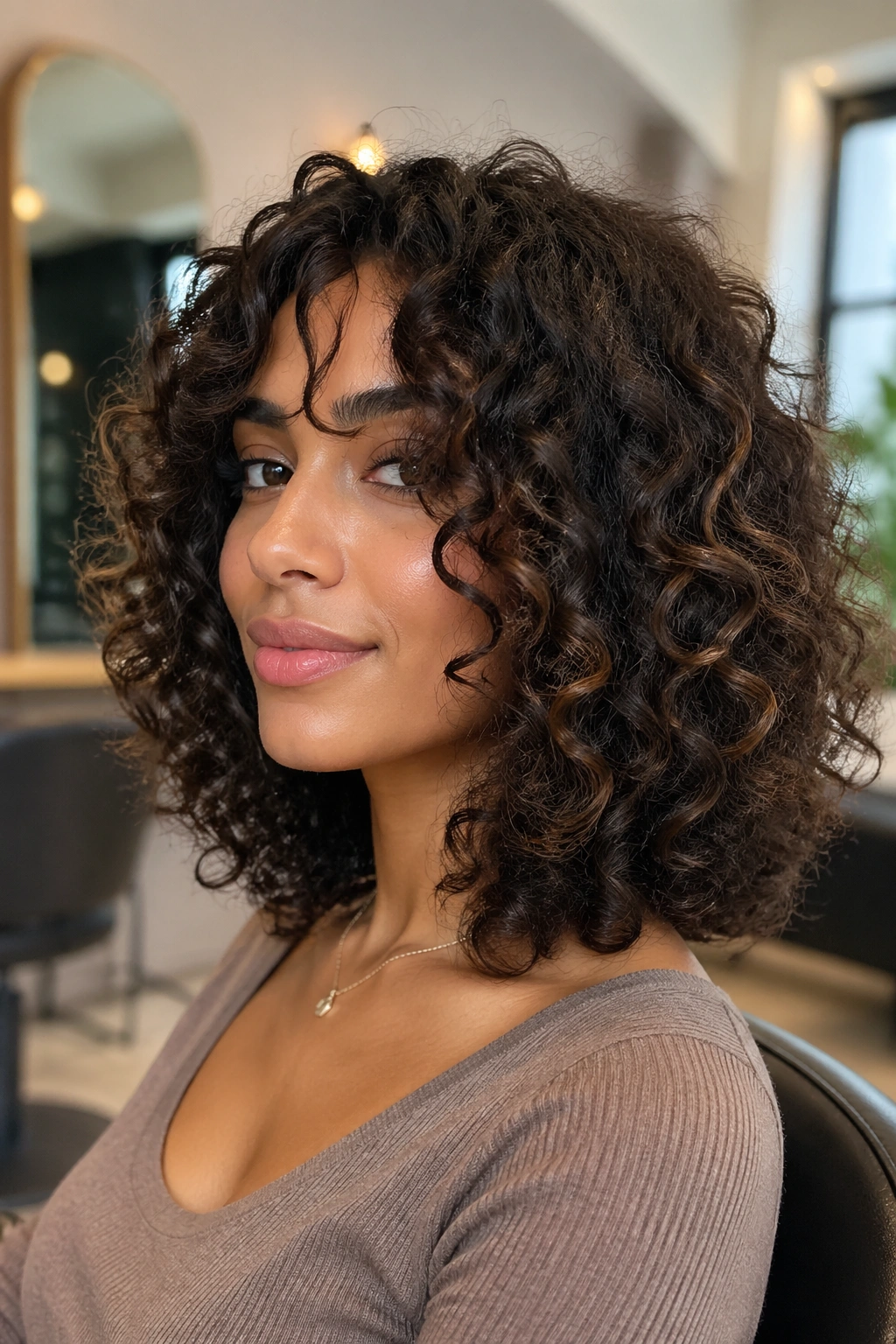
The long Deva Cut lob is the smartest bridge between short hair and a real bob. If you want the spirit of a bob without losing too much length, this is the one to ask for. It usually sits somewhere between the chin and the collarbone, and that extra room makes curl shrinkage easier to live with.
This shape works well for people growing out layers, people nervous about a big chop, and people whose curls need a little more weight to behave. The lob keeps the silhouette long enough to stretch a bit on the second or third day, but short enough to feel fresh. That balance matters more than it sounds.
What makes it work
- The front pieces can graze the collarbone.
- The back can stay slightly shorter for shape.
- The ends should look full, not stringy.
- Dry cutting keeps the outline honest when the curls spring up.
A lob also gives you more styling options. You can wear it with a middle part, a soft side part, or tucked behind one ear when you want the face more open. It’s not flashy. It doesn’t need to be. For a lot of natural curls, it’s the most forgiving bob shape in the group.
8. The Stacked Bob That Builds Volume at the Back
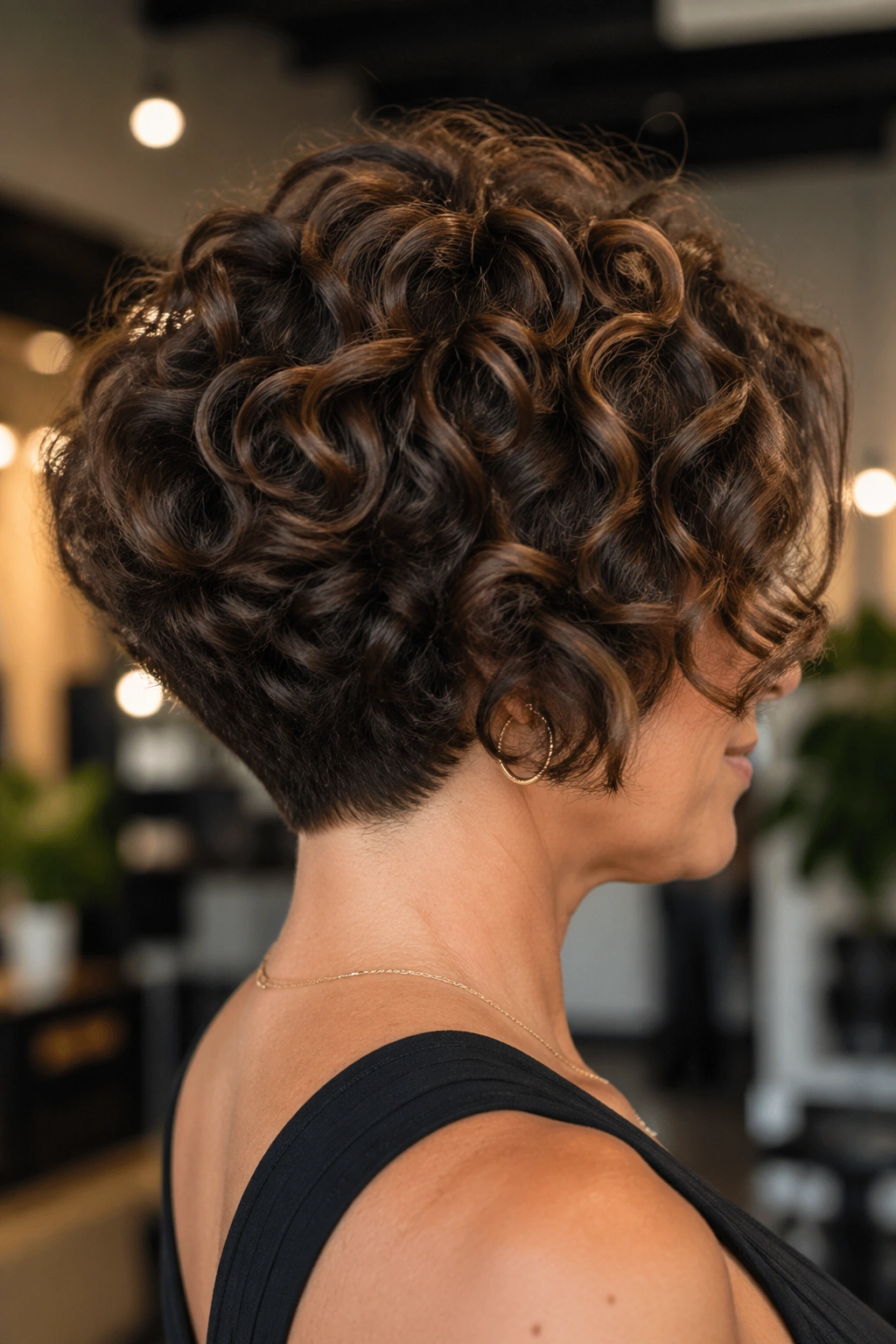
Stacked bobs can be brilliant on curls, and they can also turn into a dome if the stylist gets enthusiastic. That’s why I’m picky about this shape. A soft stack at the back creates lift through the crown and nape, which is helpful for fine-to-medium curls that collapse when they’re too long.
The idea is simple: shorter layers underneath, enough length on top to drape, and a perimeter that still reads as a bob. On curls, the stack should support the shape, not shout over it. If the haircut looks too engineered, it usually means too much was taken from the back too fast.
I like stacked bobs best on people who want the back of the head to look fuller without adding width at the sides. That is a narrow sweet spot, but it exists. Tight curls, especially, can benefit from the extra structure because the back otherwise can sit flat against the neck and lose all outline.
The main warning? Check the cut from the side and from behind before you leave the chair. A stack that looks neat in front can look too high once the curls dry. A good stylist will leave some softness at the crown and keep the transition gradual. That’s the difference between a shape and a mushroom cap.
9. The Curly Bob with Curtain Bangs
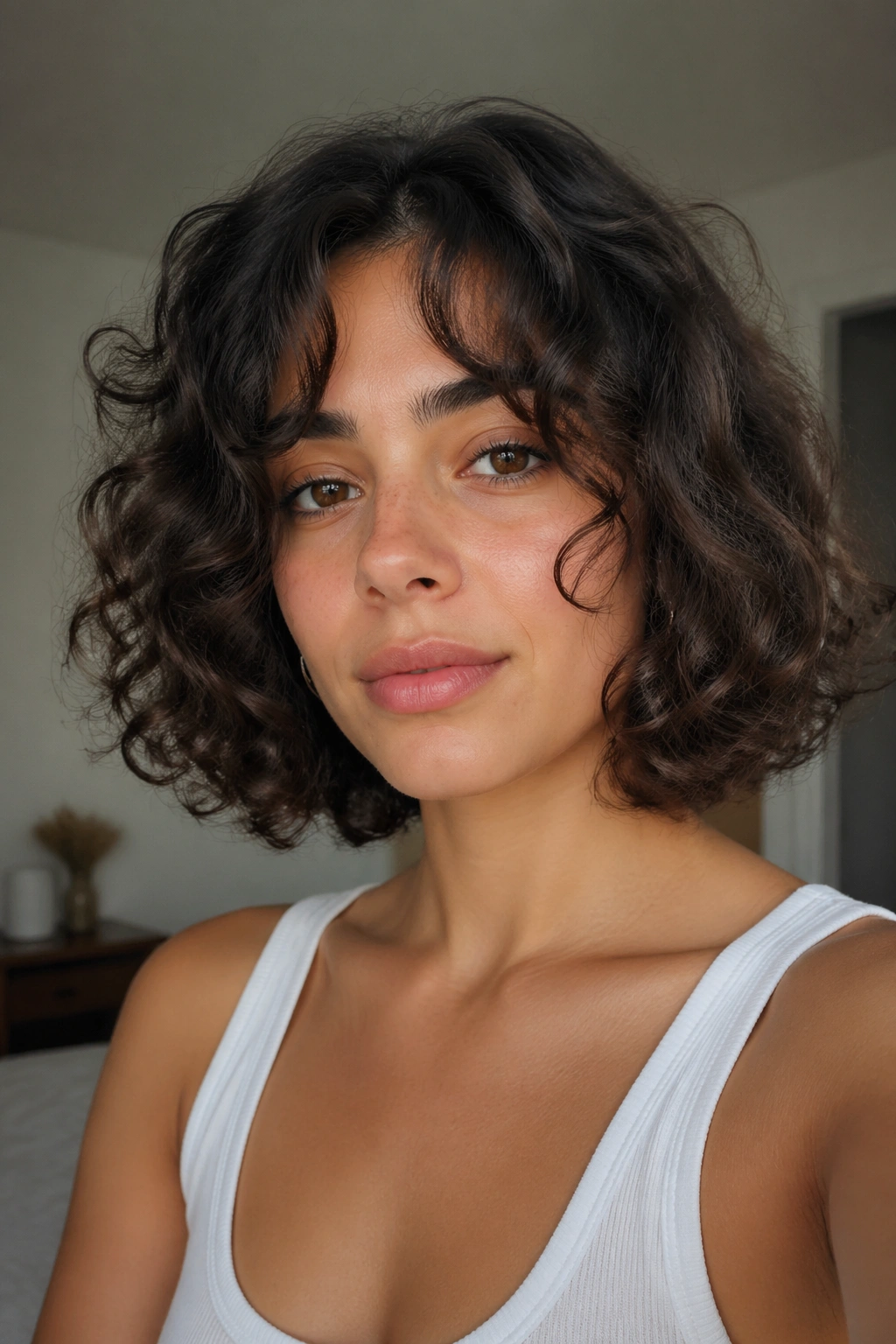
Curtain bangs on curls are not a gamble if they are cut long enough. The real mistake is cutting them too short and hoping the shrinkage will “work itself out.” It won’t. The fringe needs room to spring up, separate, and sit where the curls naturally want to fall.
This cut is one of my favorites for softening a bob around the face. The bangs open at the center, drift toward the cheekbones, and give the haircut a little movement before the rest of the hair even starts. On curls, that framing can be especially flattering because it keeps the shape from feeling blocky.
How to keep the fringe from splitting
- Cut the bangs dry, while the curl pattern is visible.
- Leave them at least 1 inch longer than your dream length.
- Use a light gel or curl cream so the clumps stay together.
- Refresh the front with damp fingers instead of soaking the whole head.
Curtain bangs are not the best choice if you hate touching your hair. They do ask for a little care on wash day. Still, when they work, they make the bob feel softer and more personal. I’d rather see a curly bob with a lived-in fringe than one that hides the whole forehead under a heavy curtain of hair.
10. The Side-Part Deva Cut Bob That Softens the Whole Shape

Picture a bob that changes personality the second you move the part over an inch. That’s the side-part version. It creates lift on one side, a little sweep across the forehead, and a shape that feels less rigid than a center-part curly bob.
This one is especially good if your face shape runs round, square, or heart-shaped, because the side part breaks up the symmetry and gives the eye somewhere to go. It also helps if one side of your hair is naturally flatter or if your cowlick keeps fighting the center line. I’ve seen plenty of curls look better after a side part simply because the part stopped arguing with the growth pattern.
Tell your stylist where your hair wants to part when it’s wet and when it’s dry. Those can be two different things, and the dry part is the one that matters most for the final shape. If the part is forced, the haircut usually looks stiff. If the part is allowed to drift a little, the bob gets movement for free.
A side-part bob can be tucked behind one ear, pinned at the temple, or left to fall over the forehead in a soft arc. It’s not a loud haircut. It’s a shape that shifts with the curl clumps, and that’s exactly why it stays useful on real hair instead of photo hair.
Final Thoughts
The strongest Deva Cut bob for natural curls is the one that respects where your curls land when nobody is trying to boss them around. That sounds simple, but it is the whole job. Shrinkage, density, and curl pattern matter more than a cute name on a mood board.
Bring your hair to the appointment dry if you can. If that’s not practical, bring photos of it dry, frizzy, stretched, and product-free. That gives the stylist a far better read on what your curls actually do, which is the part that counts.
A good curly bob should still make sense on day three, not only in the mirror right after diffusing. That is the real test.
